







Abstract
Despite the well-established empirical evidence of a positive mutual effect of internationalization and innovation, the extant literature provides a limited understanding of factors that could strengthen the adoption of a dual strategy in new ventures. This article addresses this critical gap through the examination of a large dataset on entrepreneurial activity from the Global Entrepreneurship Monitor, which covers 50 countries in both developed and developing contexts. This article advances an estimation of a hierarchical log-linear model designed to uncover the mutual influence of micro (i.e., entrepreneurs and firm particularities) and macro (i.e., industry and environment features) factors and to identify which variables are of great importance with respect to the innovation–internationalization strategy in new ventures. The results suggest that (a) combinations of micro and macro factors explain the adoption of the internationalization–innovation strategy in new ventures; (b) gender barriers to adoption appear in developed countries; (c) opportunity recognition is relevant to adoption in any country; and (d) business skills are significant to adoption only in low-technology sectors. This article adds to the extant literature by providing a comprehensive understanding of how micro- and macro-level factors concurrently affect innovation and internationalization strategies for new ventures.
Introduction
Innovation and internationalization are complementary strategies that reinforce each other, creating a virtuous circle (Golovko & Valentini, 2011). Numerous studies on new ventures and those on small and medium-sized enterprises (SMEs) in particular indicate complementarity between innovation and internationalization at the firm level (Cassiman & Golovko, 2011; Ganotakis & Love, 2011) once they seem to be mutually reinforcing each other (Filatotchev & Piesse, 2009). However, although there is empirical evidence of a positive mutual effect of internationalization and innovation in SMEs, there is still a lack of understanding of what could strengthen the adoption of this dual strategy, especially in new ventures. The extant research focuses either on micro-level factors (i.e., characteristics of the entrepreneurs and firm resources) or macro-level factors (i.e., features of the sector and the competitive environment). As a result, it does not explore the multiple interactions between micro and macro factors.
Considering the macro-level aspect, one issue that is particularly relevant for understanding the relation between innovation and internationalization is the characteristics of the sector where the new venture is developed. Although the available research on international entrepreneurship highlights that young firms that internationalize early are typically knowledge-intensive with a strong orientation towards innovation and technology (McNaughton, 2003), this phenomenon is not necessarily related to high-tech sectors (McDougall et al., 2003). Regarding micro-level factors, Coviello (2015) has argued for the importance of studying various aspects of individuals, such as overconfidence, self-image, experience and skills, since ‘to understand the firm’s entrepreneurial internationalization behavior, we must understand the individual or teams that found and/or drive the firm’ (p. 23). However, this has been understudied in the current literature, as there are gaps that have remained unexplored, like the lack of understanding about how gender stereotypes may hamper women entrepreneurs in high-technology industries.
Because the literature indicates that consensus regarding the micro- or macro-level factors of innovation and internationalization related to entrepreneurs in new ventures has not yet been reached, the objective of this study is to identify how micro and macro factors interact to hinder or foster the adoption of innovation–internationalization strategies in new ventures. Therefore, this article’s focus is on the technological sector level and country development stage as macro factors and gender, skills and opportunity as micro factors. Accordingly, given the multiple potential relationships among these factors and the early stage of this approach in management (Felin et al., 2012), this study begins with an exploratory perspective to investigate this phenomenon.
The study’s major contribution is twofold. First, it clarifies the conditions associated with innovation–internationalization strategy adoption in new ventures (Golovko & Valentini, 2011), thereby extending the current literature, which tends to focus separately on the antecedents of either innovation or internationalization. Second, our exploratory endeavour reveals how micro- and macro-level factors conjointly affect innovation and internationalization in new ventures; in doing so, it strategically addresses the competitiveness of new ventures. In sum, ‘the intersection of innovation, internationalization, and entrepreneurship is a field of study with a number of research gaps’ (Hagen et al., 2014, p. 111). Accordingly, this study contributes to this area of interest by revealing how micro- and macro-level conjointly affect innovation and internationalization in new ventures.
The remainder of this article is organized as follows: the second section presents the literature review and develops the theoretical framework. The third section details the methodology employed. The fourth section reports our results and the fifth section discusses their meaning to the literature. The sixth section concludes the article, along with discussing its implications, limitations and scope for future research.
Review of the Literature
Innovation–Internationalization Strategies in New Ventures
Taken together, the current literature on strategic management and international business suggests that companies go and learn abroad to maintain a competitive advantage. Through internationalization, a company increases its capacity to perceive, seize and apply globally dispersed knowledge and skills and, therefore, to spread these opportunities globally (Riviere & Suder, 2016). This capacity enables high growth potential and provides feedback mechanisms through which it is possible to develop technological capabilities. This is because the companies are exposed to a diversity of market information that contributes to the development of innovations that may increase their competitiveness during the internationalization process (Menezes et al., 2013). Moreover, internationalization is important for innovation because many companies operating only in domestic markets find it difficult to recover their initial investments in innovation due to the scale of production and failed sales. Through international diversification, companies can access larger markets and a greater number of resources, which then generates the ability to more frequently and intensely invest in innovations (Hitt et al., 1997).
However, studies that link internationalization and innovation more commonly use large companies with long lifetimes as samples, and this is perhaps a traditional perspective of internationalization. According to this perspective, firms begin exporting and do so in stages, but only when they already have a robust domestic base. Using the well-known Uppsala model, Johanson and Vahlne (1977) have effectively described the slow and incremental internationalization process of firms. At the same time, as globalization has accelerated since the 1980s, there has been growing evidence of the phenomenon of early and rapid internationalization of new ventures. Oviatt and McDougall (1994) referred to a new international venture as a type of ‘business organization that, from inception, seeks to derive significant competitive advantage from the use of resources and the sale of outputs in multiple countries’ (p. 49). Knight and Cavusgil (2004) adopted the term ‘born global’ and defined it in terms of ‘business organizations that, from or near their founding, seek superior international business performance from the application of knowledge-based resources to the sale of outputs in multiple countries’ (p. 124). Currently, it is not just multinational companies (MNCs) with stable domestic markets that internationalize their businesses; rather, there is a growing tendency for SMEs to initiate international business soon after their inception (Cavusgil & Knight, 2015).
Nevertheless, those studies that link internationalization and innovation when analysing new ventures and, more specifically, the role of entrepreneurs who established the firms, are recent and fewer, according to the Global Entrepreneurship Monitor (GEM). Moreover, as stated by Peiris et al. (2012), the focus of research analysing the internationalization of enterprises has been limited to high-tech companies. Thus, it is considered essential to understand how entrepreneurs evaluate and exploit internationalization–innovation strategies to gain competitive advantages in both global and domestic markets (Peiris et al., 2012).
Theoretical Framework: Micro and Macro Determinants of Internationalization–Innovation Strategies
Based on the extant literature and the GEM database, we built a theoretical framework addressing the micro and macro factors associated with internationalization–innovation strategies (Table 1). In the subsequent sections, we discuss each of the micro and macro factors in more detail in the context of new ventures.
Theoretical Framework.
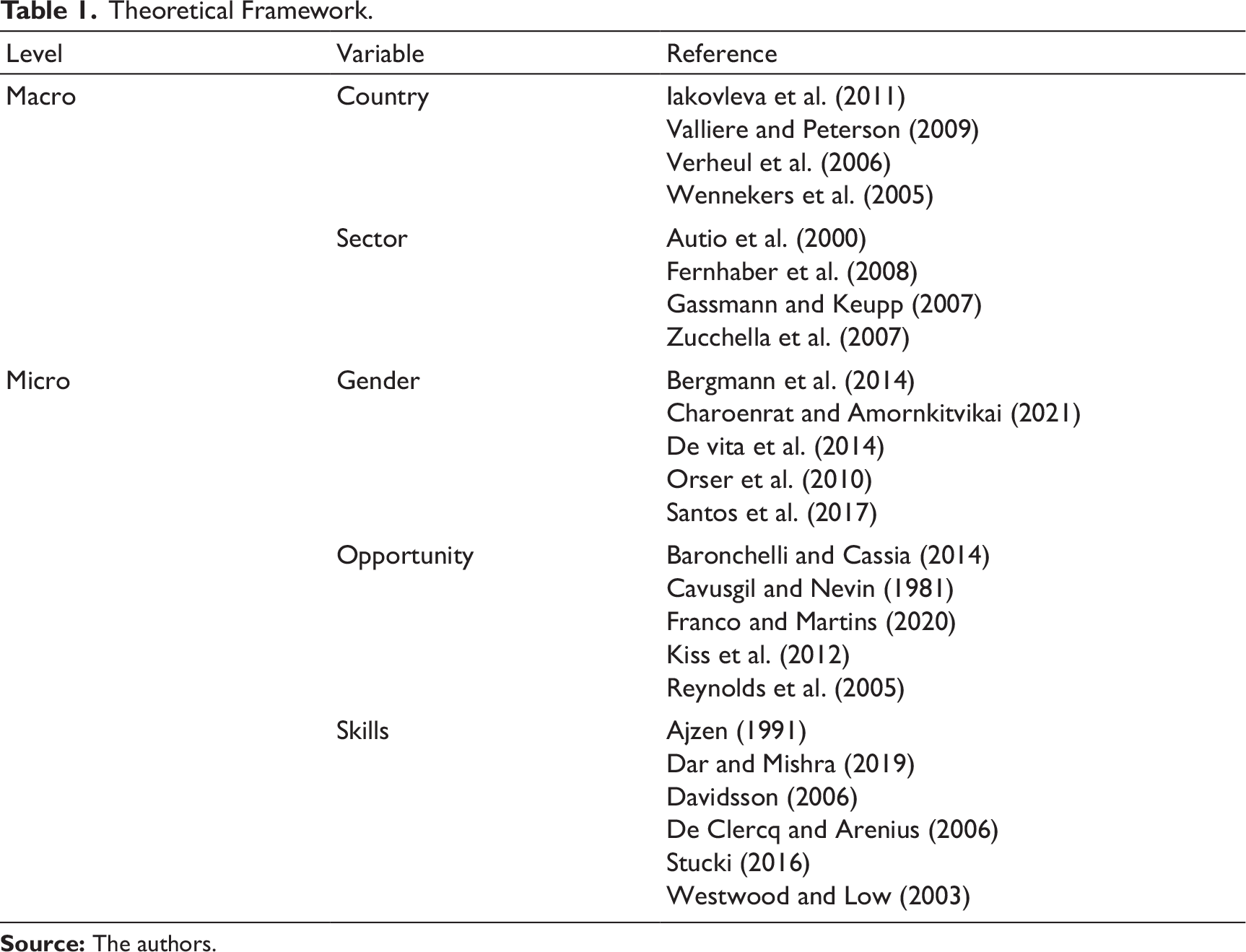
In line with previous exploratory research using log-linear models (Henderson & Stackman, 2010), rather than advancing a specific hypothesis, we oriented our investigation with a relevant research question:
Does the effect of micro-level factors (i.e., gender, skills and opportunity) on innovation–internationalization strategies depend on macro-level factors (i.e., sector and country)?
Micro determinant: Business Skills
Prior research stressed the effect of gender on internationalization and innovation in new ventures and international trade, with further indications that this research area remains relatively underexplored (Bergmann et al., 2014; Orser et al., 2010). As a potential determining factor, gender holds policy implications in promoting entrepreneurship, innovation, economic development and poverty reduction at varying levels of economic development (Minniti & Naudé, 2010).
To date, previous research has found a propensity for gender differences in internationalization (Orser et al., 2010). Alves et al. (2017, p. 900) found that ‘women entrepreneurs have fewer opportunities to export’. Another study documented that statistically significant differences exist between genders in terms of motivation (i.e., opportunity versus necessity) to undertake internationalization (Santos et al., 2017). Thus, we build our work on prior findings by exploring gender as one of the determining factors when studying differences in the propensity to internationalize through innovation in new ventures for two main reasons. First, the role of gender as a determining factor is yet to be fully investigated from a cross-country perspective. Second, there can be gender differences in nascent entrepreneurs as a country’s institutional environment varies in terms of cultural restrictions, business constraints or even attitudes towards entrepreneurs (De vita et al., 2014).
In a study conducted by Charoenrat and Amornkitvikai (2021) with a sample of 1,500 Chinese manufacturing firms, it was found that the gender of CEO exerted a strongly positive and significant influence on export intensity. It was also reported that female CEOs are likely to perform better than male CEOs in engaging higher export intensity for aggregate manufacturing firms, including small, medium and large companies. According to the authors, ‘This evidence highlights female CEOs’ role in promoting higher levels of their firms’ export intensity’ (p. 19).
Micro Determinant: Business Skills
Regarding the influence of business skills, Becker (1993) explains how previous theoretical treatments have distinguished ‘general’ human capital, which is represented by the general educational level of the individual, and ‘specific’ human capital, which refers to the benefit of experience in a particular domain of socio-economic activity. In this sense, education and previous experience are the critical components of an entrepreneur’s human capital, which is reflected in the degree of development of know-how and managerial capacity. There is considerable empirical evidence that higher levels of specific human capital, as indicated by variables like education and experience, increase an individual’s propensity to engage in risky start-up activities (Davidsson, 2006).
Ajzen’s (1991) theory of planned behaviour states that if individuals feel they have the skills, knowledge, and ability to start their own business, they will have a positive and proactive attitude towards pursuing business opportunities. This attitude can increase their ability to perceive opportunities. According to De Clercq and Arenius (2006), there is important literature that supports this argument and indicates that individuals might be more inclined to engage in entrepreneurship-related activities (like recognition of opportunities) if they believe they have the skills to perform these activities successfully.
In a recent survey, Stucki (2016) identified that the characteristics of entrepreneurs, like the general human capital (education and experience) of the founders, affect both the propensity and intensity of internationalization. However, specific internationalization experience only affects the propensity to internationalize and not the intensity. Also, there is evidence that the effect of general human capital is more persistent than that of specific human capital (experience and training in the field of activity).
A study with Indian SMEs, whose goal was to develop a measurement scale for human capital in the context of the internationalization of SMEs, has brought some relevant conclusions (Dar & Mishra, 2019). Exploratory factor analysis and confirmatory factor analysis applied to the data identified that ‘education’, ‘knowledge’, ‘experience’ and ‘skills’ were the main dimensions of human capital in SMEs, and these were evaluated for reliability and validity to measure and approve of this construct (Dar & Mishra, 2019).
Micro Determinant: Opportunity Motivation
Since the 1980s, Cavusgil and Nevin (1981) and Rosson and Stanley (1987) have described the importance of a managerial orientation that is conducive to internationalization in terms of the perceived risks, opportunities and costs of such an enterprise. Entrepreneurs who perceive an opportunity in the foreign market are likely to expand internationally. Thus, the managerial characteristics of decision-making will affect the internationalization process of SMEs.
In this sense, not all owner-managers have the same reasons for becoming entrepreneurs, and this is an important factor in distinguishing different types of entrepreneurs. Opportunity-based motives and need-based motives are the two main aggregate motivations that lead people to engage in initial business activities (Reynolds et al., 2005). Thus, it is possible to extend this reasoning and suppose that reasons based on opportunity and those based on need may not affect the early internationalization of companies in the same way.
From another perspective, recognition of opportunities on the part of the founders/managers for international markets and segments can help reduce the uncertainty related to entry into new markets and overcome cultural differences in international business management (Baronchelli & Cassia, 2014). Moreover, opportunity-based motivations can lead entrepreneurs to seek opportunities more actively in national and international markets. Motivation based on need is more likely to lead entrepreneurs to engage less in the pursuit of innovative opportunities (Kiss et al., 2012). This is because entrepreneurs, who often focus on their own livelihoods and their families, usually do not have the ‘luxury’ of thinking of larger goals by necessity (Carsrud & Bränback, 2011).
In addition, the motivation for opportunity leads decision-makers in SMEs to consider the international market as a good source of growth and opportunities for success that the domestic market may not offer (Franco & Martins, 2020).
Macro Determinant: Technological Sector
The characteristics of the sector, such as product types, production technology and market attributes, may be more relevant to internationalization than the internal dimensions of firms. The degree of internationalization within an industrial sector can also influence the internationalization of new ventures. Exposure to an import and internationalization environment generally stimulates a company’s push to internationalize (Fernhaber et al., 2008). Thus, some new ventures gain advantages in their industrial sector because they have access to information, knowledge and networks that increase the probability of being exporters (Zucchella et al., 2007).
Therefore, the literature on international entrepreneurship emphasizes that young firms that are internationalized early are typically knowledge-intensive with a strong focus on innovation and technology. These companies are born global, as defined by Knight and Cavusgil (1996). For Coviello and Munro (1997), this accelerated pace of internationalization is more closely associated with ‘(...) firms characterized as high technology, knowledge-based, and service-intensive’ (p. 362). This type of company has fewer limitations imposed by distance and national borders and can exploit international opportunities with more flexibility (Autio et al., 2000).
However, Gassmann and Keupp (2007) argue that despite this association of international entrepreneurship with high-technology sectors, early internationalization does not occur only with companies in these sectors. In this sense, it is important to investigate whether the technological level of the company’s sector of activity is associated with some micro factors in the adoption of internationalization–innovation strategies.
Macro Determinant: Country of Origin
Country context is a relevant factor affecting innovation and internationalization strategies for entrepreneurs. To date, there is a paucity of research on developing countries. While prior studies provide an important groundwork for this study, a large number of studies have relied heavily on a single country (e.g., Cassiman & Golovko, 2011; Monreal-Perez et al., 2012) or studied only a few selected emerging countries (Guan & Ma, 2003; Ozcelik & Taymaz, 2004). This calls for an expansion to include multiple samples of other developed and emerging economies, since variability in the country’s level of economic development may influence nascent ventures (Wennekers et al., 2005).
Moreover, other research studies have found cross-country variation in factors contributing to nascent entrepreneurs (Verheul et al., 2006), entrepreneurial intentions (Iakovleva et al., 2011; Valliere & Peterson, 2009) and formal education (Minniti & Naudé, 2010) between developing and developed countries. In this study, we not only provide rigorous cross-country empirical evidence based on 50 countries, but we also include underexplored countries (i.e., Brazil, Japan, and Malaysia) that were neglected by past research (Peiris et al., 2012). As we use more extensive country samples, we will be able to gain additional insights into the varying levels of innovation and internationalization strategies employed by nascent entrepreneurs in both countries.
Methodology
Data Source
The analysis was based on secondary data, more specifically the 2009 APS Global Individual Level Data from GEM, which has supported the studies conducted by Marques (2017), Mickiewicz et al. (2017) and Lafuente et al. (2017), for example. GEM currently performs the largest and most recognized research on entrepreneurship activity, with each edition covering more than 50 countries. Its core activity, upon which this study was based, is the compilation of individual interviews with random samples of at least 2,000 individuals per country, taken from the entire population of active age in each participating country. Thus, it accounts for entrepreneurs as well as non-entrepreneurs.
Sample Frame
To identify the cut-off points for this study, we followed the same characterization of nascent entrepreneurs as GEM, which is based on these three questions:
Over the past 12 months, have you done anything to help initiate a new business, such as looking for equipment or a site, organizing a start-up team, working on a business plan, beginning to save money or engaging in any other activity that could help start a business? (Yes, no, do not know/refuse to answer) Will you be the owner of everything related to this business, part of this business or no part of this business? (All, part, no part, do not know/refuse to answer) Did the new business pay any salaries, wages or cash payments, including your own, for more than 3 months? (Yes, no, do not know/refuse to answer)
An individual was coded as a nascent entrepreneur if he or she answered ‘yes’ to question 1, ‘all’ or ‘part’ to question 2, and ‘no’ to question 3. Thus, according to the GEM standards, a nascent entrepreneur is someone who has, over the 12 months prior to the interview, done anything tangible to begin a new company, who expects to own at least part of that new company and who has not paid salaries for more than 3 months.
Measures
1
The internationalization–innovation strategy is not measured directly by the GEM survey but was identified by the combination of the variables of export and innovation.
The internationalization–innovation strategy is not measured directly by the GEM survey but was identified by the combination of the variables of export and innovation.
Internationalization
According to Sousa (2004), export intensity, given by the ratio of foreign sales to total sales, is the most appropriate form of capturing the internationalization of small firms, as exporting is the primary mode of entry into the foreign market for them (Armario et al., 2008). Thus, this value equals ‘1’ if the start-up has export intensity greater than 1% and ‘0’ otherwise.
Innovation
In line with Block et al. (2013), if an entrepreneur introduces a product or technology representing a novelty to customers or competitors, regardless of the degree of innovation (incremental or radical), the value ‘1’ is assigned and it equals ‘0’ otherwise.
Gender
Gender is measured by self-reporting as a female (assigned as ‘1’) or a male entrepreneur (assigned as ‘0’). Although our contemporary understanding of the expressions of gender, identity and social roles has expanded our comprehension of the topic, we are limited to the categories included in the GEM dataset.
Skill
Skills entail the benefit of training and proficiency to individuals in a particular domain of socio-economic activity (Becker, 1993). Coherent with this notion of human capital (Gonzalez-Alvarez & Solis-Rodriguez, 2011), if an entrepreneur possesses knowledge and skills in the domain required to start a new business, this variable equals ‘1’ and it equals ‘0’ otherwise.
Opportunity
Entrepreneurs have different reasons to start a new venture. To date, the literature suggests that they might be related to opportunity-based motives and need-based motives (Reynolds et al., 2005). Therefore, if the entrepreneur’s motivation to start a new business is the recognition of a market opportunity, the value is ‘1’ and ‘0’ otherwise.
Sector
Entrepreneurs differ in the extent to which they are exposed to knowledge-intensive activities and new technology depending on the sector of activity (Zucchella et al., 2007). For entrepreneurs developing business activities in sectors classified as high/medium technology by the GEM, this variable equals ‘1’; for entrepreneurs in low/no technology sectors, it equals ‘0’.
Country
Whereas the notion of development in a country can differ along many dimensions, the Human Development Index (HDI) has been extensively used because it captures the overall quality of life of the population instead of just economic growth (Bainbridge et al., 2012). Entrepreneurs located in a developed country—HDI greater than 0.800—were coded as ‘1’ for this variable. Entrepreneurs in developing countries were coded a ‘0’. This threshold is in line with prior literature comparing developed and developing countries (Arto et al., 2016; Bainbridge et al., 2012).
Empirical Model
In the face of the dichotomous nature of the sample variables, which assumed the format of a contingency table in which each classification is a response variable, a log-linear model was adopted. The hierarchical log-linear analysis more closely resembles correlation than regression, with a primary focus on the association between variables rather than on the modelling of the response for one with respect to the others (Agresti & Finlay, 2009). Thus, it does not support a straightforward hypothesis test (see Henderson & Stackman, 2010 for an example). This was especially interesting for this study, as it was noted in the second section that it is difficult to observe how the factors combine to generate the capacity to compete abroad.
Log-linear models, or Poisson regression models, are employed to analyse multi-dimensional contingency models even when the probabilistic model is not a product of Poisson distributions, thus exercising an admirable function in the analysis of categorized data analogous to normal regression models in the analysis of continuous data (Paulino & da Singer, 2006). Accordingly, the log-linear analysis made it possible to identify the mutual influences of tested variables and determine those that were more significant.
After satisfying the assumptions of the statistical technique, like the chi-squared test, all cells had expected frequencies greater than one. The effect of the interaction of variables was analysed using log-linear analysis. The backwards-hierarchical method was chosen because, in the log-linear model, the combined effects have priority over low-order effects. Finally, we calculated the odds ratios of the saturated model in the classification contingency tables, which were cross-referenced to estimate the probabilistic effects (Agresti & Finlay, 2009).
Analysis
The sample bounds, delineated by entrepreneurs classified as nascent who answered the 7 selected questions, resulted in 12,663 respondents. In the characterization of nascent entrepreneurs, 53% were found to be from 23 developed countries (Germany, Argentina, Belgium, Chile, South Korea, Croatia, Denmark, United Arab Emirates, Slovenia, Spain, the USA, Finland, Hong Kong, Hungary, Iceland, Israel, Italy, Japan, Latvia, Norway, Netherlands, UK and Switzerland) and 47% were from 27 underdeveloped or developing countries or territories (South Africa, Saudi Arabia, Algeria, Bosnia-Herzegovina, Brazil, China, West Bank and the Gaza Strip, Colombia, Ecuador, Guatemala, Yemen, Iran, Jamaica, Jordan, Lebanon, Malaysia, Morocco, Palestine, Panama, Peru, Dominican Republic, Romania, Russia, Serbia, Syria, Uganda and Venezuela).
Of this sample, the nascent entrepreneurs from developed countries were aged between 17 years and 83 years, with a median age of 37, and worked primarily in the consumer sector (63.4%), followed by the transformation industry (17.9%), the extraction industry (10.9%) and the services sector (7.8%). The median initial investment necessary to start their business was US$ 37,659,352, and the median personal capital invested was US$ 7,274,463. The nascent entrepreneurs from developing countries were aged between 16 years and 88 years, with a median age of 36. They were primarily working in the consumer sector (50.5%), followed by the transformation industry (24.8%), services sector (19.5%) and extraction industry (5.3%). The median initial investment necessary to begin their business was US$ 24,877,254, and the median personal capital invested was US$ 12,283,191.
A seven-way log-linear analysis (internationalization, innovation, gender, skills, opportunity, sector and country) produced a model that retained all effects. The likelihood ratio for this model was χ2 (72) = 67.596, p = 0.625. This likelihood ratio statistic is nothing more than an alternative measure to the Pearson’s chi-square and was based on the comparison of frequencies observed by those projected by the model. Since we chose the backwards-hierarchical method, 72 steps were necessary to remove interactions with high-order effects that did not influence the model. Thus, the likelihood ratio was not significant. This indicated that the expected values generated by the model did not differ from the observed values; that is, the model had good adherence.
Considering the study’s focus on both innovation and internationalization outcomes, Table 2 presents the highest order interactions (p < 0.05) with these two variables retained in the model. These effects are analysed herein. All retained interactions had variables that referred to micro and macro determinants of internationalization–innovation strategies, as proposed in the theoretical section. To break down the effects within the interactions, separate chi-square tests were performed. The results are presented in the graphs, and the effect size was estimated in terms of odds ratios.
Hierarchical Log-Linear Model.

Interaction 1: Country of Origin and Gender
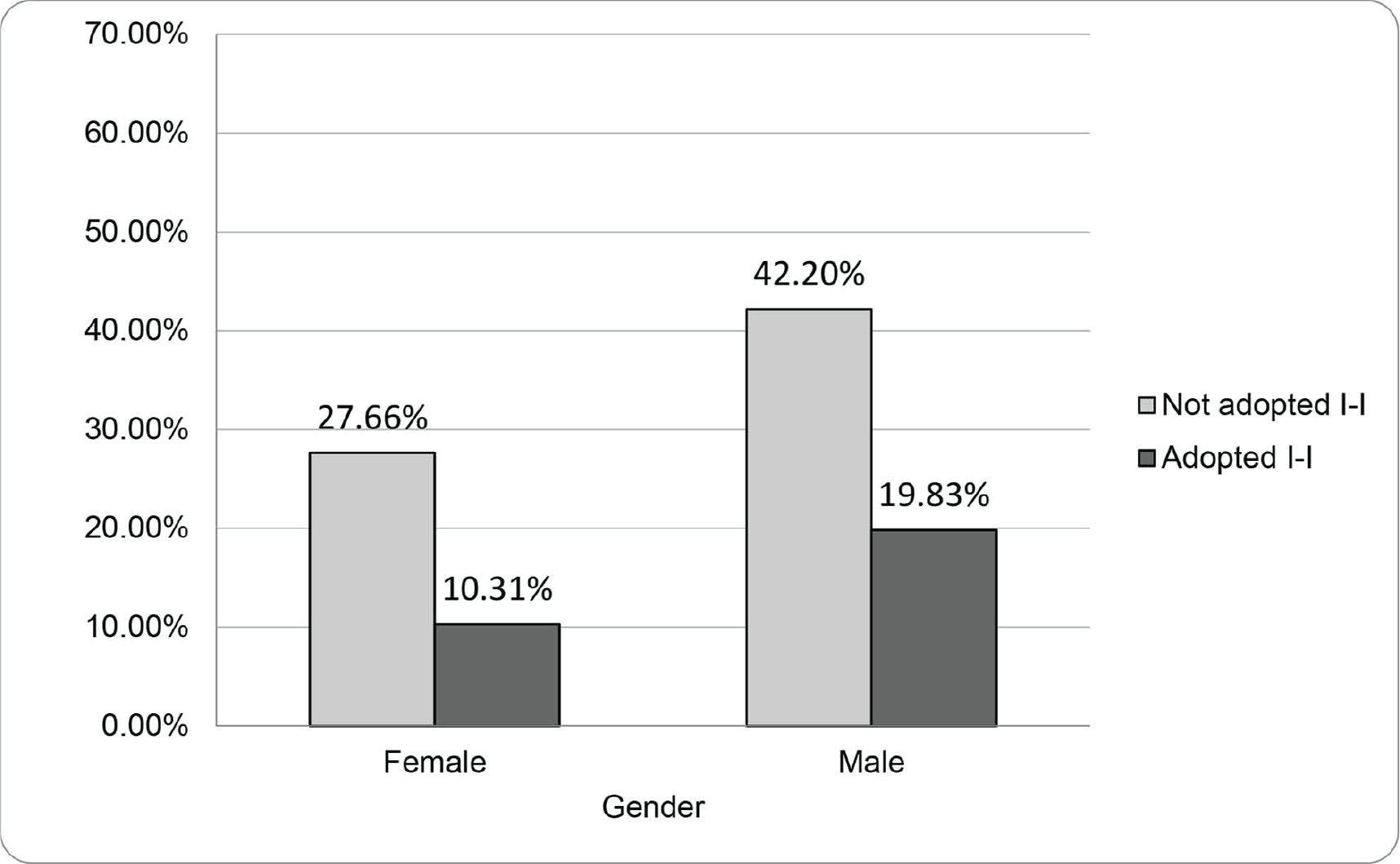
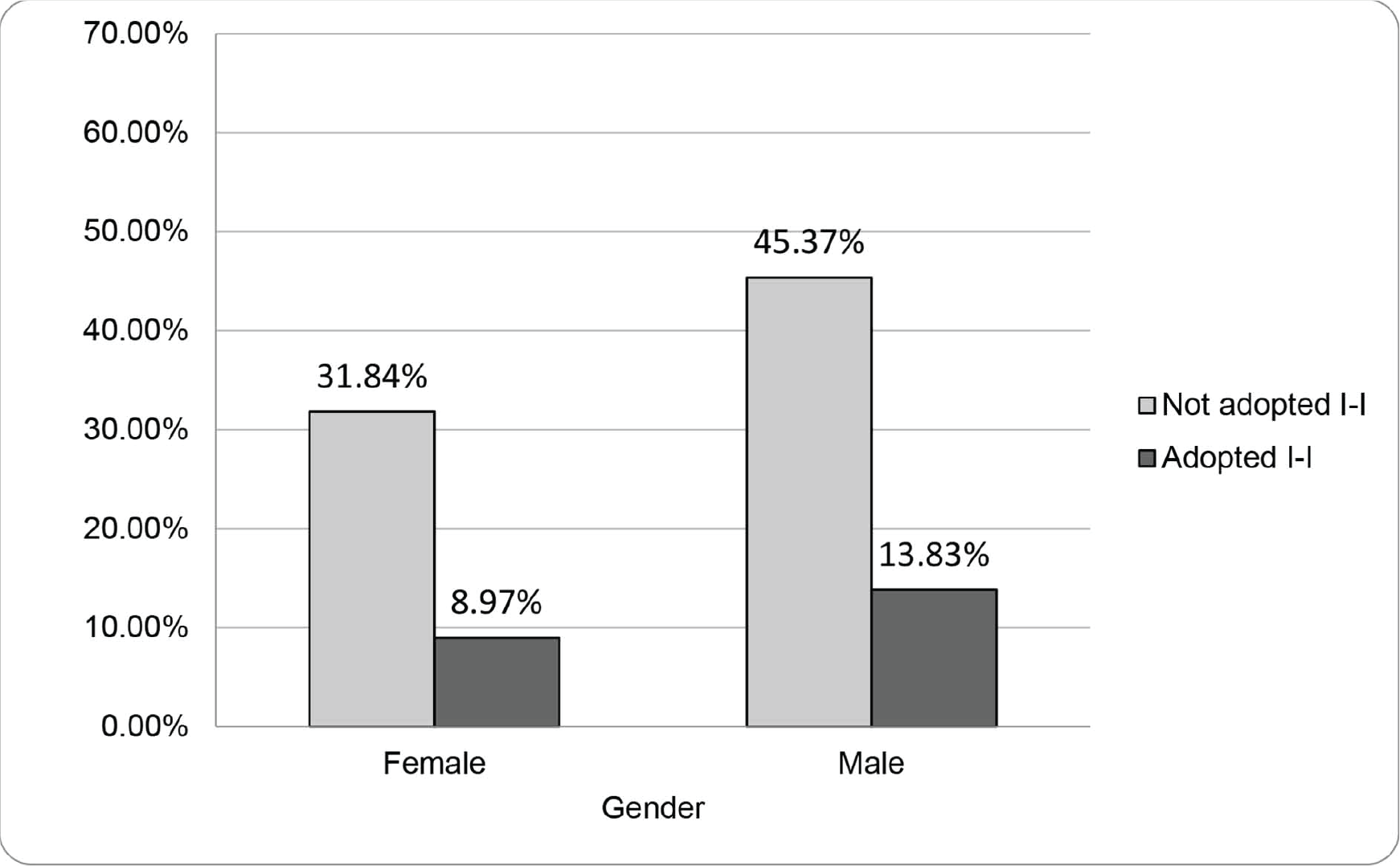
Figures 1 and 2 detail the effect of the first-order interaction. In developed countries, there was a significant association between gender and the adoption of the internationalization–innovation strategy (χ2 (1) = 15.47, p = 0.000), while in developing countries, this was not true (χ2 (1) = 1.75, p = 0.186). This fact is clear when examining the effect size: in developed countries, female entrepreneurs were 1.26 times less likely to follow the internationalization–innovation strategy, while in developing countries, they were only 1.08 times less likely; that is, both genders exhibited similar chances. Therefore, the analysis of interaction 1 indicates that female entrepreneurs in developed countries were the group least likely to adopt internationalization–innovation strategies.
Interaction 2: Country of Origin and Opportunity Motivation
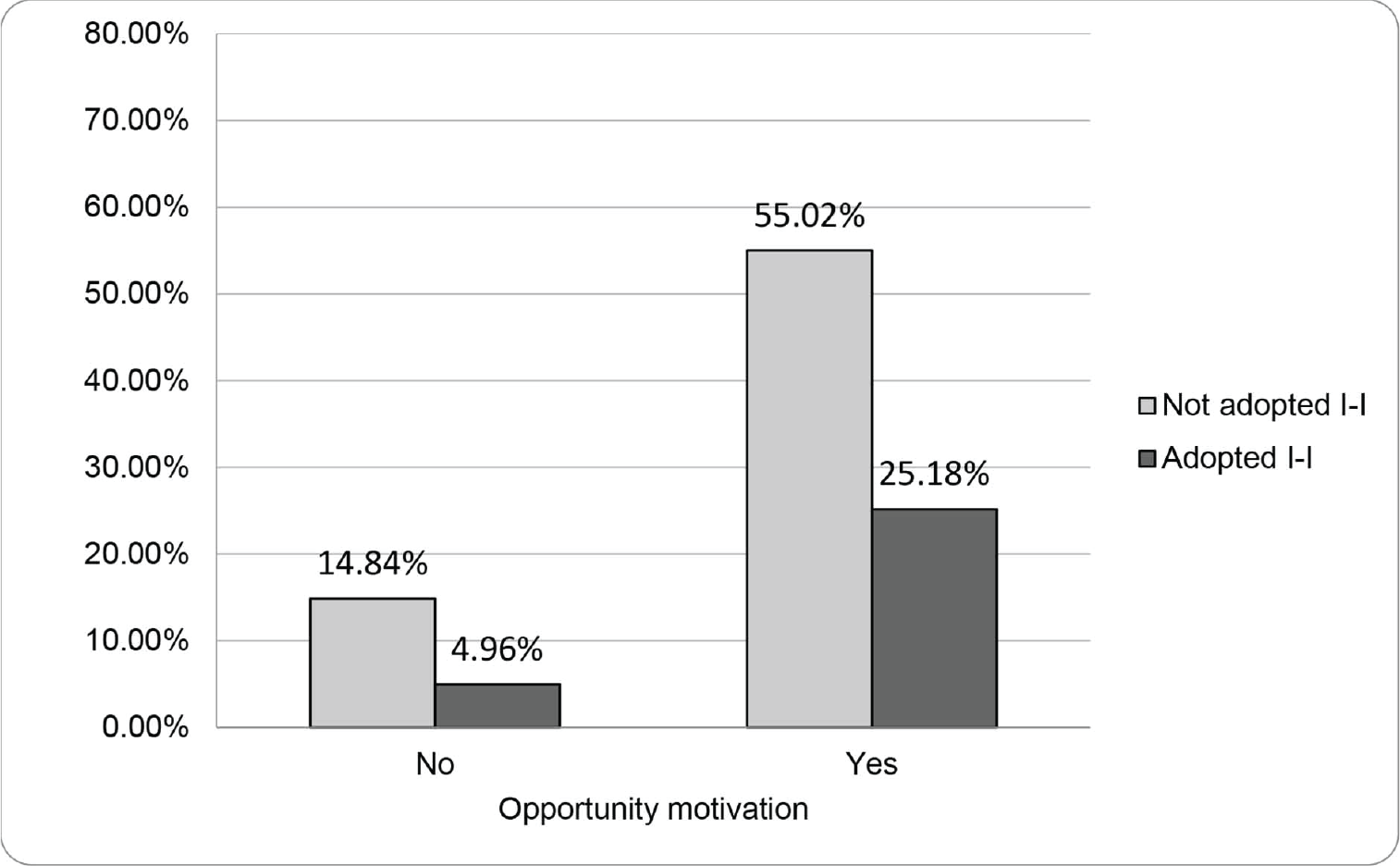
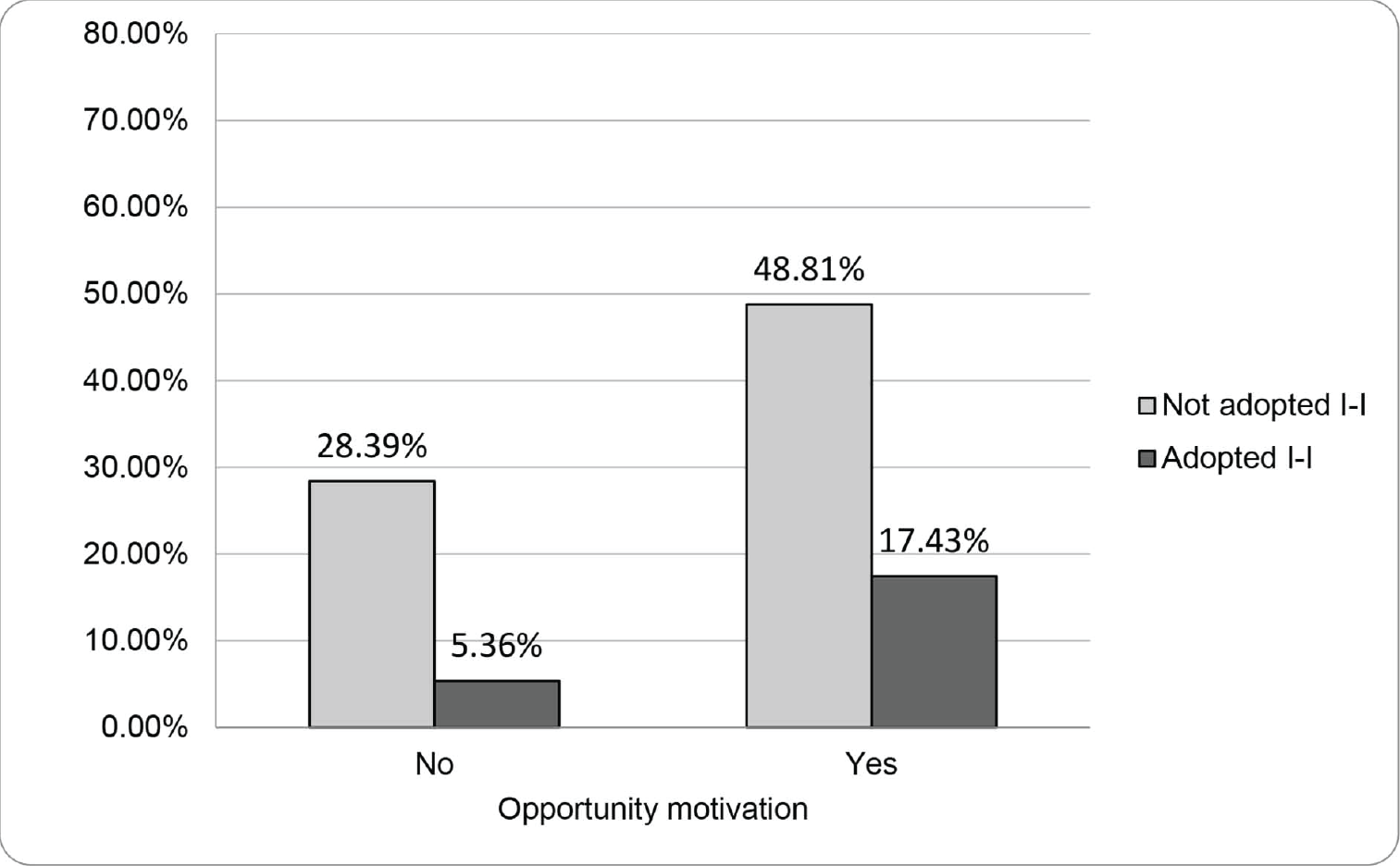
The second-order interaction also retained the variable country of origin but with opportunity motivation (Figures 3 and 4). The association between opportunity motivation and the adoption of the internationalization–innovation strategy was significant for both developed (χ2 (1) = 18.06, p = 0.000) and developing countries (χ2 (1) = 93.16, p = 0.000). The odds ratio shows that the odds of adopting the internationalization–innovation strategy were 1.37 times higher for opportunity-driven entrepreneurs in developed countries. However, in developing countries, the odds were 1.87 times, or almost 37% higher than in developed countries. Thus, opportunity recognition was a relevant antecedent of internationalization–innovation for entrepreneurs mainly in developing countries.
Interaction 3: Technological Sector and Business Skills
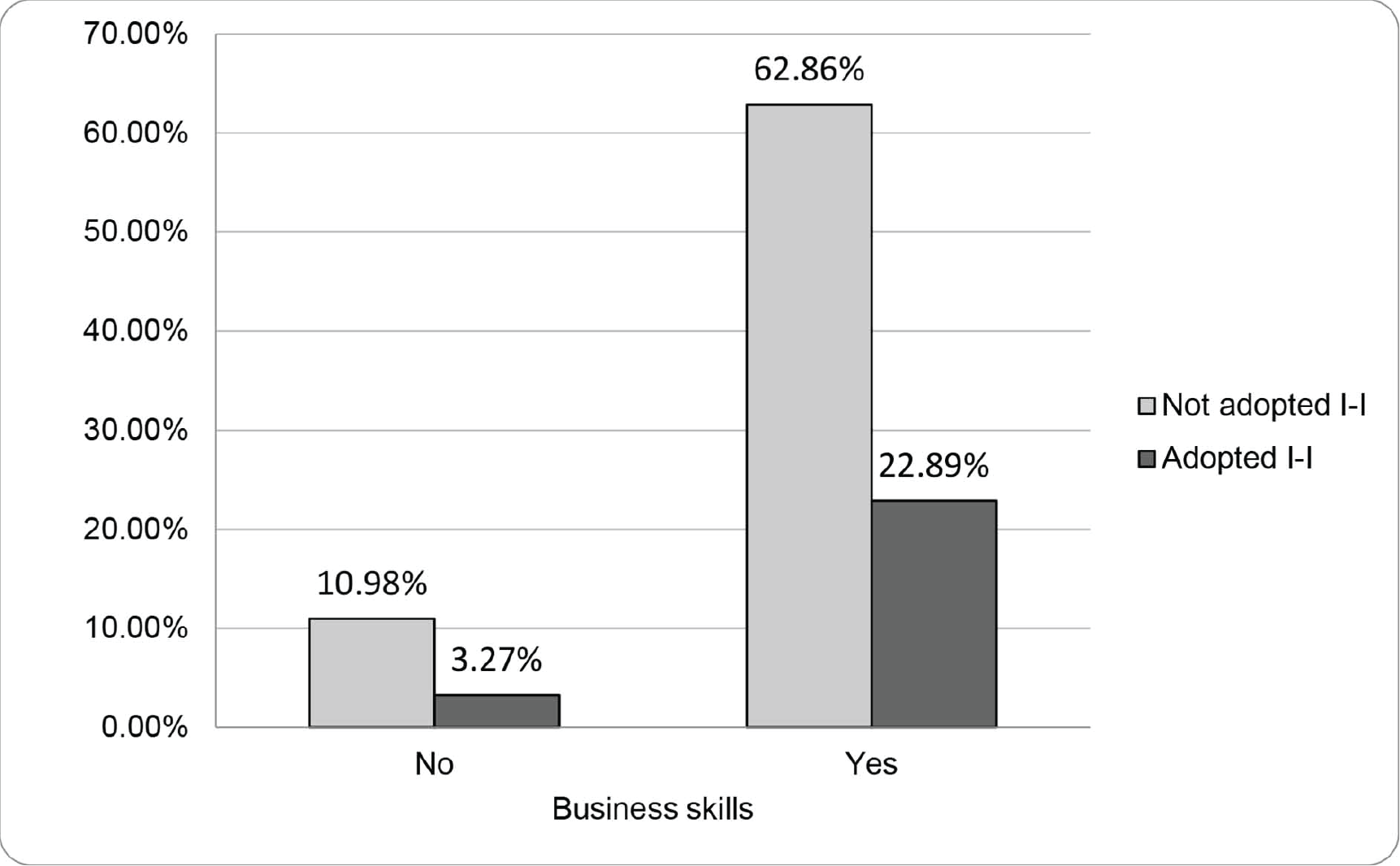
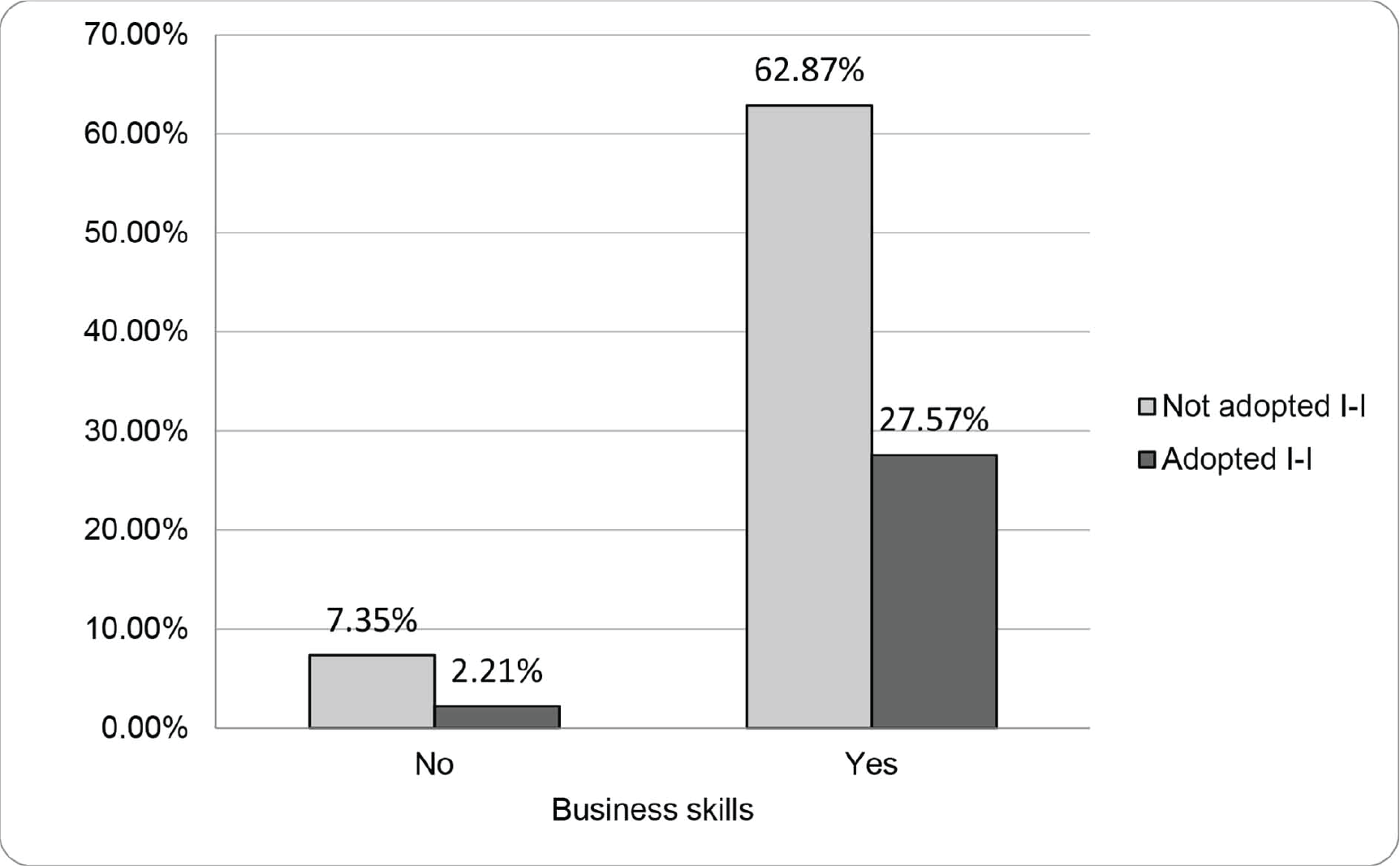
The last interaction indicated a relationship between the variable of technological sector and entrepreneurs’ business skills. As can be seen in Figures 5 and 6, entrepreneurs with business skills were more likely to adopt internationalization–innovation strategies. The odds ratio showed that they were 1.46 times more likely to adopt these strategies in high/medium technological sectors, and 1.22 times more likely in low/medium technological sectors. However, this association between the technological sector and business skills was significant only in the low technological sector (χ2 (1) = 11.08, p = 0.001) but not in the high technological sector (χ2 (1) = 0.62, p = 0.432).
Discussion
Our findings suggest that, in the context of internationalization–innovation in new ventures, gender barriers occur mainly in developed countries (interaction 1); opportunity recognition is relevant in any country (interaction 2); and business skills are significant particularly in low-technology sectors (interaction 3). In sum, these findings support the notion that associations between micro and macro factors can explain the adoption of internationalization–innovation strategies in new ventures. Further, all the factors proposed were proven to be associated with internationalization–innovation.
First, interaction 1 revealed a surprisingly larger gender gap for women in developed nations. Even if the overall adoption level of a sophisticated strategy like innovation–internationalization is reduced in developing countries, the adoption rate between women and men was found to be similar in these countries. This is because ‘women in developing countries tend to be more self-confident about skills and have a less fearful attitude towards failure relative to women in developed countries’ (De Vita et al., 2014, p. 458). Although developing countries may be characterized by poor institutional development that acts as a roadblock in the path towards strategic innovation and internationalization activities, this blockage to goal attainment induces greater freedom of action and greater achievement among women entrepreneurs (De Vita et al., 2014). Thus, we can see that there are some countries’ institutional environments that favour women as entrepreneurs.
Consistent with this, when women, as a traditionally disadvantaged group, are faced with cultural restrictions (e.g., they are less able to respond to opportunities owing to gender beliefs) and institutional discrimination (e.g., barriers to entry in the formal labour markets), there is increased propensity to achieve success through positively deviant means (i.e., innovation and internationalization as a positive form of entrepreneurial activity; Merton, 1938; Messner & Rosenfeld, 1997). Consequently, resorting to entrepreneurship may serve as a means for women to exit out of unemployment and poverty, particularly in developing countries (Minniti & Naudé, 2010).
Second, regarding interaction 2, our result confirms the findings elsewhere indicating that opportunity-based motivations can lead entrepreneurs to seek opportunities more actively in national and international markets (Kiss et al., 2012), especially in developing countries like Chile where one of the factors driving internationalization depends on the entrepreneur having opportunity-oriented motivations (Amorós et al., 2016). In this study, we expand upon this understanding and affirm that in both developed and developing countries, internationalization is associated with innovation, and there is a correlation between internationalization and the entrepreneur who is motivated by opportunity. However, the tendency to adopt an internationalization–innovation strategy when an entrepreneur has an opportunity orientation is stronger in developing countries.
This exception can be observed in developed countries where there is greater competition because the entrepreneur who opens a company driven by necessity rather than opportunity finds more difficulties in the market than their counterpart in a developing country. However, recognition opportunities can help to reduce the uncertainty related to entry into new markets, as noted by Baronchelli and Cassia (2014). In this sense, being in a developed country does not promote integration into global trade flows. Another factor to be considered is that the study sample is based on 2009, immediately after the 2008 crisis. Because of this, entrepreneurs from developed countries who have gone through other recessions know that being driven by necessity in a moment such as this does not bring positive results, as observed in the study by Devece et al. (2016), who argue that during a recession, the performance of necessity-driven entrepreneurs is weak, and that recognition of an opportunity remains a factor of success, that is, a key factor during the recession.
Finally, interaction 3 shows us that when entrepreneurs have business skills, they are more likely to adopt the internationalization–innovation strategy, which is not surprising, since having business knowledge about the entrepreneur market facilitates knowing which markets to export and what kind of innovation would be welcome in the market. However, our findings suggest that skilful entrepreneurs in low technological sectors are significantly more likely to adopt the strategy than those in the high technological sectors. This goes against the literature that shows that most of the new ventures that internationalize operate in the high-tech sector (Coviello & Munro, 1997). Moreover, firms in low-tech sectors face increased difficulty competing in the international environment as their products can be easily replicated (Hirsch-Kreinsen, 2008), which ultimately reduces the incentive to compete through innovation when compared to other strategies.
However, innovation is contextual since what is innovative in a low technological sector may already be outdated in a high technological sector. Therefore, because competitive advantage stem comparing the technological offerings of competitors, there is a reward for innovation investments even in low technological sectors (Rialp et al., 2005). Thus, our result is consistent with the findings of Thornhill (2006) regarding manufacturing firms rather than with those of Zahra and George (2002) with respect to new international ventures. While Thornhill (2006) found that in low technological sector the quality of an innovation is a function of the level of skills within a firm, Zahra and George (2002) stress that new technologies are not supporting success in new international ventures but rather the network linkages among the teams.
Conclusion
This article contributes to the research on the intersection between innovation and internationalization in nascent or new ventures, which is an area scarcely studied, as pointed out by Hagen et al. (2014). Most studies on internationalization have focused on either micro- or macro-level factors. In contrast to prior studies, this article, using GEM data, addresses the gap in the literature regarding the concurrent micro and macro factors that affect the relationship between internationalization and innovation in nascent businesses, which is a relatively underexamined topic (Bergmann et al., 2014). In doing so, we go beyond the prior studies that have examined the impact large companies have had on entrepreneurship and the economy.
This article closely examined multiple micro and macro interactions by covering a wider spectrum of sectors (i.e., high technology and non-technology) and expanding the realm of investigation to include underexplored developing countries in addition to developed countries. Specifically, our study highlights the salient mutual influence of both micro and macro factors (i.e., gender and country, opportunity-driven entrepreneurs and country, and business skills and sectors) in the adoption of internationalization and innovation strategy for competitiveness.
Our findings make several theoretical contributions to the literature. Specifically, the results highlight that the adoption of internationalization and innovation strategies is especially stronger for women nascent entrepreneurs in developing countries. Second, the results highlight the importance of opportunity recognition in developing countries. Finally, the findings suggest that there is a mutual influence of business skills and the low-technology sector in the adoption of internationalization and innovation strategies. The three notable findings in this article expand our extant knowledge of innovation and internationalization strategies, especially in nascent businesses, by providing an understanding of this phenomenon that is more comprehensive.
Managerial Implications
The findings of this study provide several practical implications for firm decision-makers. In this study, innovation is understood as a broader concept that relates to the capabilities of the organization. Innovation is best understood as an answer to a market need rather than a strictly defined concept that relates only to the creation of technology. In responding to market needs and considering innovation and international strategy in new ventures, the findings revealed that the role of individual entrepreneurs (i.e., whether they are women entrepreneurs or opportunity-driven entrepreneurs) is important. At the same time, external environmental factors, like sector and country, are relevant, as their different combinations with other individual factors indicate varied strategies of internationalization and innovation for competitiveness. Firms, therefore, need to evaluate the institutional environments of the countries in which they operate when promoting the adoption of internationalization and innovation strategies.
In developing countries, it was found that the adoption of internationalization and innovation strategy was especially stronger among women nascent entrepreneurs. Thus, firm decision-makers must recognize the economic contributions of women entrepreneurs in leading innovative and internationalized businesses (that are, thus, more competitive and sustainable) in developing countries and encourage programmes (e.g., business support systems and specific business training) for women entrepreneurs to further ease and foster their internationalization efforts. At the same time, this type of support is urgently needed in developed countries where women entrepreneurs are less likely to follow the internationalization–innovation strategy. Therefore, public policies should be vigilant in developing programmes to support women nascent entrepreneurs. Besides, given the varying influence of gender on the adoption of internationalization–innovation strategies in both developing and developed countries, firms need to evaluate the institutional environments of the countries in which they operate. In doing so, they should strive to provide necessary institutional mechanisms and support programmes to encourage the adoption of internationalization and innovation strategies with a consideration of gender as a determining factor.
Second, the results highlight the importance of opportunity motivation as a relevant antecedent of internationalization–innovation for entrepreneurs. Opportunity-based motivation can lead entrepreneurs to adopt an internationalization–innovation strategy in developing countries, whereas necessity-driven entrepreneurs have a low propensity to internationalize through innovation in developed countries. Thus, it would be of great value for firm decision-makers to find ways to reduce uncertainties by considering the entrepreneurial characteristics (i.e., opportunity recognition) of developed countries where nascent entrepreneurs are prevalent. This could lead to the provision of meaningful training and opportunities via access to better education, appropriate institutional incentives for innovation and entrepreneurship and the promotion of university–enterprise cooperation and business incubator support.
Finally, the findings suggest that there is a mutual influence of business skills and the low-technology sector on the adoption of internationalization and innovation strategies. From a firm’s point of view, appropriate training and programmes designed to enhance the business skills of entrepreneurs are important. Also, given that skilful entrepreneurs in low technological sectors are significantly more likely to adopt an innovative strategy than those in the high technological sectors, companies need to provide incentives to internationalize through innovation for low technological sectors, as they may face more barriers than high-tech sectors.
Limitations and Future Studies
Despite the contributions of this study, there are a few limitations that must be addressed by future research. The major limitation is that using GEM data restricts options for construct development (e.g., the operationalization of variables like nascent business and innovation). Although we could have used a more fine-grained measure of the variables, as is common in international business research, we relied on the best available measures to achieve our research objectives. Furthermore, archival data influenced the sample size. Although the log-linear model was an appropriate statistical model for evaluating the association between variables, some analyses became too complex due to the cross-referencing nature of the variables in the retained interactions. Still, our chosen methodological approach allows us to satisfactorily achieve research objectives by identifying factors affecting innovation and strategic internationalization capacity. Future research should consider combining GEM data with micro-level data from other sources to enrich the established understanding of nascent entrepreneurs (Bergmann et al., 2014). We also hope that the World Bank continues to improve the questionnaire (i.e., multi-item measure) for future researchers.
Stemming from the above considerations, our findings provide additional avenues for future research that could be useful to both researchers and practitioners. First, our results concerning firms in low-technology sectors indicate that innovation alone is not sufficient for competing in the international environment. Thus, firm decision-makers may find actions to improve the international competitiveness of nascent businesses in low-technology sectors to be highly desirable. Future research will also benefit from further exploration of female entrepreneurship in developing countries, as our results demonstrate that they are critical drivers of internationalization activity. Another fruitful area of future study would be to explore ways to promote more opportunities in developed countries, as nascent entrepreneurs in this context have a low propensity to adopt internationalization and innovation strategies. Fourth, future research may want to include additional micro or macro factors relevant to internationalization and innovation strategies, such as culture, political stability, legal regime, environment, institutions or economic factors. Finally, future researchers could evaluate hypotheses regarding internationalization and innovation topics using statistical methods or even using data other than GEM.
To conclude, this exploratory study provides a building block upon which our knowledge of the complex, multifaceted nature of innovation and internationalization, particularly with respect to nascent businesses, can be advanced.
Footnotes
Acknowledgement
The authors are grateful to the anonymous referees of the journal for their extremely useful suggestions to improve the quality of the paper. We also thank the participants of the 2017 Annual Conference of AIB US-West Chapter and Seventh Annual Conference of AIB - Latin American Chapter for their valuable comments to previous versions of this manuscript. Usual disclaimers apply.
Declaration of Conflicting Interests
The authors declared no potential conflicts of interest with respect to the research, authorship and/or publication of this article.
Funding
The authors received no financial support for the research, authorship and/or publication of this article.
