







Abstract
This study aims to segment electronic word-of-mouth (eWOM) users in the context of purchasing electronic consumer durables (ECDs) online. It seeks to understand these segments’ unique characteristics and behaviours to tailor marketing strategies. A mixed-method approach was employed, combining qualitative and quantitative techniques. Unstructured personal interviews and focus group discussions (FGDs) were conducted with individuals who had recently purchased ECDs online. Factor analysis was performed on 20 lifestyle statements, followed by hierarchical and k-means cluster analyses to identify distinct user segments. Three segments were identified: Adventuresome Networkers (AN), Sceptical Networkers (SN) and Indifferent Users (INU). One-way analysis of variance and post-hoc analyses assessed variations in behavioural and personality variables across the clusters. AN exhibited high enthusiasm, trusted eWOM information, and actively engaged in online networks. SN doubted eWOM information and relied more on offline peer recommendations. INU showed minimal interest in eWOM, had low trust in eWOM information, and demonstrated limited engagement in both online and offline networks. Marketers can leverage these insights to customize their strategies for each segment. Engaging AN requires creating high-quality content and utilizing social media. Building trust among SN involves integrating traditional WOM techniques. Addressing the low engagement levels of INU necessitates interactive and educational campaigns. This study offers a comprehensive understanding of eWOM user segmentation in the context of online purchases of ECDs, highlighting the unique characteristics and behaviours of each segment and providing practical recommendations for targeted marketing.
Keywords
Introduction
The e-commerce industry in India is rapidly expanding, with a projected market size of $200 billion by 2027 (Statista, 2021). This growth is fuelled by increasing internet and smartphone penetration. As online commerce becomes more popular, Indian business models are transforming, particularly in banking, insurance, retail, hospitality and food services, leading to increased revenues across e-commerce segments. Statista reports that online buyers now make up 70.7% of total shoppers in India (Statista, 2021), with the e-commerce market expected to grow by 9.65% annually to reach $117.6 billion by 2024 (Marketwatch, 2024). The sector is projected to reach approximately $350 billion by 2030 (Statista, 2024a), driven by companies like Amazon, Flipkart, Myntra, Paytm Mall and Reliance Digital. Innovations in online payments, hyper-local logistics, customer engagement through dynamic platforms, analytics-driven tools and digital advertisements have significantly contributed to this growth.
Consumer electronics is a leading category in the Indian online retail market, projected to reach $7,110 million by 2024 (Statista, 2024b). Despite challenges, Indian shoppers enthusiastically purchase gadgets and appliances such as washing machines, microwaves, refrigerators and smartphones. The Consumer Electronics and Appliance Manufacturing Association (CEAMA) estimates the current market at ₹1,000,000 millions, with growth rates of 7%–9% in 2023 and an expected increase of approximately 10% in 2024, driven by under-penetration and higher disposable incomes (The Hindu, 2023). According to the Bain & Company (2025) report, Gen Z now comprises nearly 40% of India’s e-retail consumer base, with half of them shopping across five or more online platforms annually, highlighting their diverse and platform-agnostic shopping behaviour. Additionally, Statista (2025) notes that Gen Y, as the first digitally native generation, has actively shaped the evolution of e-commerce by engaging in online and social commerce, which reflects their deep, multifaceted understanding of the online retail landscape.
Popular online platforms utilized by Indian users include social media sites such as Facebook, Instagram and YouTube, along with online retail websites like Myntra, Flipkart and Amazon, as well as review sites such as TripAdvisor and Yelp. The rise of these platforms has also prompted various digital influencers to share their evaluations or experiences regarding new products (Sokolova & Kefi, 2020; Watkins & Lee, 2016).
The increasing number of internet users and the emergence of new digital platforms have contributed to the rise of electronic word-of-mouth (eWOM). eWOM involves sharing and consuming information online, distinguishing it from traditional word-of-mouth (WOM). According to Liu et al. (2024), the integration of text, voice and video on social media, alongside Web 2.0 technologies, has enabled many-to-many eWOM interactions. Typically, eWOM communications occur on digital platforms between individuals with little or no personal relationship (Dellarocas, 2003; Goldsmith & Horowitz, 2006; Sen & Lerman, 2007). This anonymity can create challenges for consumers in establishing credibility and making informed purchase decisions (Chatterjee, 2001; Schindler & Bickart, 2005).
Although eWOM information is gaining popularity, the infrastructure required to access it remains challenging for users. For instance, accessing eWOM information necessitates technology devices, internet access and an account on the platforms or a subscription. In addition to the infrastructure, Bansal and Voyer (2000) stated that eWOM communication can be influenced by various factors, such as the sender’s expertise, the receiver’s expertise, tie strength and perceived risk among customers. Users’ expectations, beliefs and decisions about what to share regarding eWOM content significantly affect how they consume information online. The acceptance of eWOM information for purchasing a wide range of goods and services is greatly supported by e-lifestyles, which influence users’ motivation and behaviour.
Despite these challenges, eWOM has effectively reduced uncertainties about purchasing various products and services (Cheung & Thadani, 2012). As per Nessel et al. (2021), consumers are increasingly relying on eWOM to evaluate accommodation options in the global tourism market. Consumer durables present particular challenges due to constraints on space, size, specifications and varying personal experiences (Mugge et al., 2018). A PwC (2018) study found electronic gadgets or appliances to be India’s third most challenging category for online purchases. Nonetheless, electronic consumer durables (ECDs) remain among the most frequently purchased segments in the Indian e-commerce market. eWOM significantly influences e-shoppers’ decisions to buy high-priced ECDs online. Therefore, it is crucial to study how eWOM communications persuade consumers to purchase ECDs and to explore the clusters and profiles of Indian eWOM users.
The rationale for selecting consumer electronics in this study lies in its position as the highest revenue-generating category within the broader e-commerce landscape. Given the critical nature of such purchases, consumers tend to invest significant time and effort in reviewing online suggestions and recommendations before making decisions. Accordingly, ECDs were selected as the product category to examine the influence of eWOM on online purchase behaviour.
The study focuses on ECDs due to their high-value, high-risk and high-engagement nature. Consumers generally invest more time and effort in gathering information and opinions before purchasing such products because of the greater financial risk and long-term usage involved. In this context, eWOM is crucial in helping consumers manage uncertainty and make informed purchase decisions. By narrowing the scope to high-value ECDs, the study ensures a focused analysis of eWOM behaviour, reflecting the unique decision-making processes involved in ECD purchases. Including a broader range of product categories, such as low-value or frequently purchased items, may introduce significant variation in consumer motivation, behaviour and platform usage, which could limit the generalizability of the findings. This category-specific approach facilitates generating targeted recommendations for marketers operating in the ECD space.
The remainder of the article is structured as follows: Section 2 reviews the literature on online reviews, eWOM and technology adoption models, following the introduction. Section 3 details the study’s methodology. Section 4 presents the results and discussions. Section 5 offers the conclusion, limitations and directions for future research. Finally, Section 6 discusses the managerial implications.
Literature Review
The rapid growth of e-commerce has disrupted the Indian market, leading to increased online purchases (Chiu et al., 2014; Kim & Eastin, 2011). Research indicates that consumer feedback on online portals has evolved with the advent of the internet (Dellarocas & Narayan, 2006; Park & Nicolau, 2015). This feedback is readily accessible to a broad audience (Litvin et al., 2008). Consumers searching for products tend to rely more on external information available on eWOM platforms (Tsao & Hsieh, 2015). eWOM effectively facilitates the sharing of consumer experiences on online platforms, influencing the success or failure of a company’s offerings (Gruen et al., 2006; Kwon et al., 2013). Post-purchase outcomes often produce positive or negative eWOM (Dwivedi, 2009). Information shared through eWOM channels increases the likelihood of consumer involvement in purchase activities (Bronner & De Hoog, 2011).
Papathanassis and Knolle (2011) emphasize the importance of online reviews in purchase decisions. Numerous studies focus on how consumers shape their cognition from the information available on digital sites (Kudeshia & Kumar, 2017; Shan & King, 2015), influencing their purchase decisions (Erkan & Evans, 2016).
Ismagilova et al. (2020) conducted a meta-analysis of eWOM and consumers’ intention to purchase based on 69 potential studies. They examined various factors that directly or indirectly impact consumers’ intention to purchase a product or service. According to Cheung and Thadani (2012), the quality and credibility of information significantly influence consumer trust and decisions. Lerrthaitrakul and Panjakajornsak (2014) have demonstrated that online community members guide consumers in making purchases on e-commerce websites. Customers who have already experienced a product or service assist other consumers on these platforms in easing their purchase decisions.
Kudeshia and Kumar (2017) reported that positive user-generated eWOM on social media significantly impacts consumers’ brand attitudes and purchase intentions (PIs) regarding consumer electronics. Kunja and Acharyulu (2020) found a positive relationship between value co-creation, eWOM and PI among consumers on Facebook fan pages for smartphone brands in India. Khwaja et al. (2020) discovered that trust in eWOM information reduces the perceived risk users associate with online purchases, leading to greater information adoption when making purchase decisions. Firms have identified that consumers who express positive eWOM are more likely to purchase products or services, influencing brand loyalty (Abubakar et al., 2017).
Platform-specific Effects in eWOM Communication
The influence of eWOM on consumer behaviour can vary based on the characteristics of the digital platform through which a product or service is sold. Various digital platforms—such as online retail websites, social media, blogs, discussion forums and video streaming sites—can differ regarding interactivity, credibility, content nature and engagement. These factors shape user trust and information credibility, and influence eWOM communication and adoption (Agag & El-Masry, 2016). As the nature of eWOM platforms varies, so does their interactivity among eWOM users (Cheung & Thadani, 2012; Litvin et al., 2008).
Online retail websites like Amazon and Flipkart offer structured, text-based reviews and ratings that focus on product-specific attributes, perceived by consumers as credible sources of information (Cheung & Thadani, 2012). In contrast, social media platforms such as Facebook and Instagram present more dynamic and visually rich content, in which anonymity is limited (Evans & Erkan, 2015), and consumer posts exhibit higher reliability and trustworthiness (Walther et al., 2010). Blogs and discussion forums like Reddit and Quora often provide in-depth product evaluations, foster detailed discussions and experience sharing, and attract users with specific interests. Furthermore, video-based platforms like YouTube supply detailed tutorials and product demos, enhancing trust and confidence in purchasing high-involvement products like ECDs.
This study adopts a platform-agnostic approach and focuses on generalized eWOM behaviour without considering platform-specific differences. However, it explores the role of eWOM across multiple platforms in shaping the online purchase behaviour of a specific product category: ECDs.
Adoption of eWOM Across Product and Service Context
Various studies have explored the adoption of online information for purchasing products (Hussain et al., 2017), booking hotels (Leong et al., 2019) and utilizing technology services (Shankar et al., 2020). Prior literature has examined eWOM information adoption using Technology Acceptance Model (TAM), Theory of Reasoned Action (TRA), Unified Theory of Acceptance and Use of Technology (UTAUT), Information Adoption Model (IAM) and the Information Acceptance Model (IACM). Online lifestyles, or e-lifestyles, play a significant role in the acceptance of online technologies such as mobile wallets (Yu et al., 2015), e-commerce (Pandey & Chawla, 2014) and fitness applications (García-Fernández et al., 2020). These e-lifestyles also promote the adoption of eWOM information for intended online purchases. Online users’ e-lifestyles motivate them to utilize technological systems (Hassan et al., 2015), seek electronic information (Virdi et al., 2020), and purchase products or services online (Yu, 2015). Thus, e-lifestyles significantly influence users’ willingness to accept, read and share eWOM information. Furthermore, e-lifestyles shape consumers’ mindsets, encouraging them to invest sufficient time on online platforms and become familiar with the technical requirements for making online purchases (Pandey & Chawla, 2014).
Lifestyle encompasses what consumers do, like and think (Wells, 1975). Consequently, online information consumption depends on users’ expectations, beliefs and shares regarding eWOM information. As e-lifestyles trigger eWOM motivation and behaviour, it is essential to consider e-lifestyles when accepting eWOM information for purchasing various products and services.
Although various theoretical foundations exist for capturing e-lifestyle (Swinyard & Smith, 2003; Pandey & Chawla, 2014), this study adapts Yu’s (2011) theoretical framework to explore the e-lifestyle of users based on their e-activities, e-interests, e-opinions and e-values as Indian eWOM users across numerous eWOM platforms such as online retail reviews, blogs or vlogs, social media posts and discussion forums. The work by Swinyard and Smith (2003) follows the AIO (Attitude, Interest and Opinion) framework to develop e-lifestyle measurements for online shoppers. However, Yu (2011) examines a range of e-activities, e-interests, e-opinions and e-values of online shoppers while adapting theoretical backgrounds for measuring individuals’ lifestyles through psychological and sociological concerns—internal beliefs and external stimuli.
Thus, this study captures the e-activities, e-interests, e-opinions and e-values of eWOM users, explicitly focusing on their acceptance, sharing and utilization of information for purchasing ECDs. In this study, e-activities refer to observable actions in reading, accepting and sharing eWOM information. E-interests denote users’ tendencies to seek, understand and use eWOM information. Moreover, e-opinions and e-values reflect the fundamental responses and beliefs regarding using eWOM information in decision-making (Yu, 2011).
User segmentation studies play a crucial role in the purchase of online consumer durables. They enable businesses to provide personalized service offerings based on customer attitudes, behaviours and demographics. Most existing studies have concentrated on the regression effects of these factors, with little attention given to segmenting users in the context of consumer durables. These studies are summarized in Table 1.
Summary of Prior Studies on Electronic Word-of-Mouth (eWOM): Antecedents, Outcomes and Segmentation.
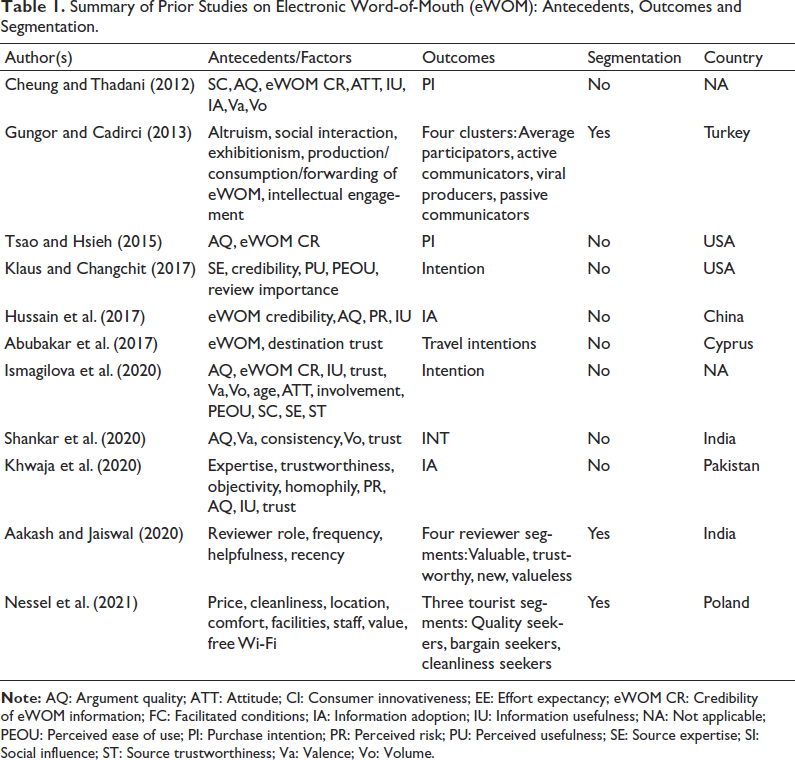
Summary of Prior Studies on Electronic Word-of-Mouth (eWOM): Antecedents, Outcomes and Segmentation.
Thus, e-lifestyle, sociodemographic characteristics and internet behaviours are vital aspects of segmentation studies related to online shopping (Hill et al., 2017; Pandey et al., 2015), mobile banking (Chawla & Joshi, 2017), mobile wallets (Chawla & Joshi, 2019), and the acceptance of electronic information such as text, video and messages (Zhang & Kuo, 2001). Studies have shown that online users searching for health-related information on internet platforms can be segmented and profiled based on their e-lifestyle characteristics (Weber et al., 2020). Similarly, previous studies have segmented online travellers searching for travel destinations and hospitality-related information (Ahani et al., 2019; Levitt et al., 2019). Therefore, Indian internet users seeking internet-based recommendations and opinions (eWOM information) for their intended online purchases of ECDs can be segmented based on their e-lifestyle characteristics.
The following questions may be posed:
RQ1: Can users of eWOM information adoption for intended online purchases of ECDs be segmented based on their lifestyle characteristics? If so, what are their demographic profiles?
RQ2: Do the behavioural and personality variables vary significantly across clusters?
This study employed a mixed-method approach. In Phase 1, the qualitative phase, unstructured personal interviews and focus group discussions (FGDs) were conducted. Guides for both FGDs and interviews were prepared. The unit of analysis comprised individuals who had recently purchased ECDs priced above ₹10,000 in the Indian online market and utilized eWOM information. Respondents were selected from various geographical locations across Tier 1, 2 and 3 cities in India.
Four FGDs were conducted: The first group included seven participants aged 23–27, all single and employed. The discussion lasted 110 min. The second group included 7 participants aged 28–50, both single and married, and the session lasted 90 min. The third group included 8 MBA students aged 21–25, all single. This FGD lasted for 100 min. The fourth group involved engineering students aged 18–21, all single, and the discussion lasted for 80 min.
The outcomes of FGDs and interviews were used to adapt the existing scales to the Indian context. Additionally, five respondents who met the selection criteria were interviewed individually. All but one respondent were over 50 years old, and all but one were married. The duration of the interviews ranged from 20 to 40 min.
Extensive information was gathered regarding their e-lifestyle based on their e-attitudes, e-interests, e-opinions and e-values. Literature and qualitative research obtained data on various constructs such as Purchase Intention, Trust in eWOM, Extraversion, Agreeableness, Personal Innovativeness and eWOM Credibility. The constructs of the instrument underwent content validity assessment by three academicians and one industry executive. Some statements were removed or modified, resulting in 20 statements (Appendix 1) for further analysis.
Factor analysis was conducted on the 20 lifestyle statements. To ensure a valid solution, the Kaiser–Meyer–Olkin (KMO) measure should range from 0.5 to 1, and Bartlett’s test of sphericity must be significant. Principal component analysis with varimax rotation was used to extract the factors. These factors were labelled, and Cronbach’s alpha assessed their internal consistency.
The factor scores were then subjected to hierarchical clustering to determine the number of clusters. Subsequently, K-means clustering was used to identify the final cluster centres and label the clusters. This clustering approach helped to identify distinct groups of eWOM users based on their lifestyle characteristics and responses to eWOM information. The demographic profiling of these clusters was carried out using cross-tables and by computing the chi-square statistic to understand their specific characteristics better. The variations in behavioural and personality variables across clusters were analysed using one-way analysis of variance (ANOVA), followed by post-hoc tests.
According to Dolnicar (2002), most market segmentation studies that involve cluster analysis overlook the validity of solutions obtained from multivariate statistical techniques. To address this issue, discriminant analysis is used in conjunction with cluster analysis. Thus, to predict and validate the groups of 540 online shoppers identified by cluster analysis, discriminant analysis was conducted using the identified clusters as groups and the factor scores of the four factors as independent variables.
Results and Discussion
Data Collection and Respondents’ Profile (N = 540)
A total of 1,100 respondents completed the survey. Of these, 680 online shoppers met the criteria of purchasing ECDs within the last year, specifically using eWOM information on various online platforms. The remaining 420 respondents did not meet the criteria mentioned above. Ultimately, 540 responses were used for the final analysis after cleaning the data. The demographic profile of the respondents reveals diverse representation across gender, age, education, income, work experience and geographic location. In the survey, the gender distribution of the respondents was 65.6% males and 34.4% females. The profile for the other demographic variables is summarized in Table 2.
Respondent Profile.
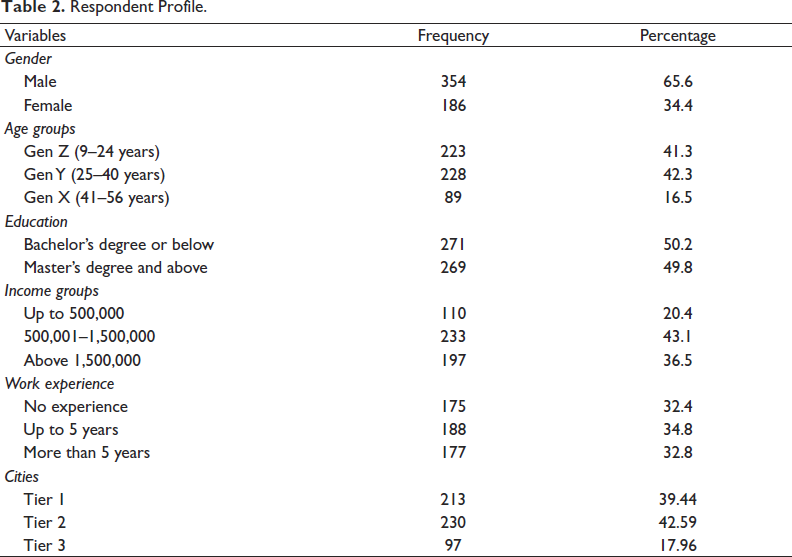
Respondent Profile.
Factor analysis was conducted on the 20 lifestyle statements. The resulting KMO statistic was 0.898, well above the minimum required value of 0.5. Additionally, the p value from Bartlett’s test of sphericity was 0.000, indicating the significance of the correlation matrix and confirming that factor analysis could be performed.
Varimax rotation of the factors resulted in four distinct factors, with items showing a minimum factor loading of 0.6. The four factors are outlined in Table 3.
Labelling of Factors and Their Corresponding Statements.
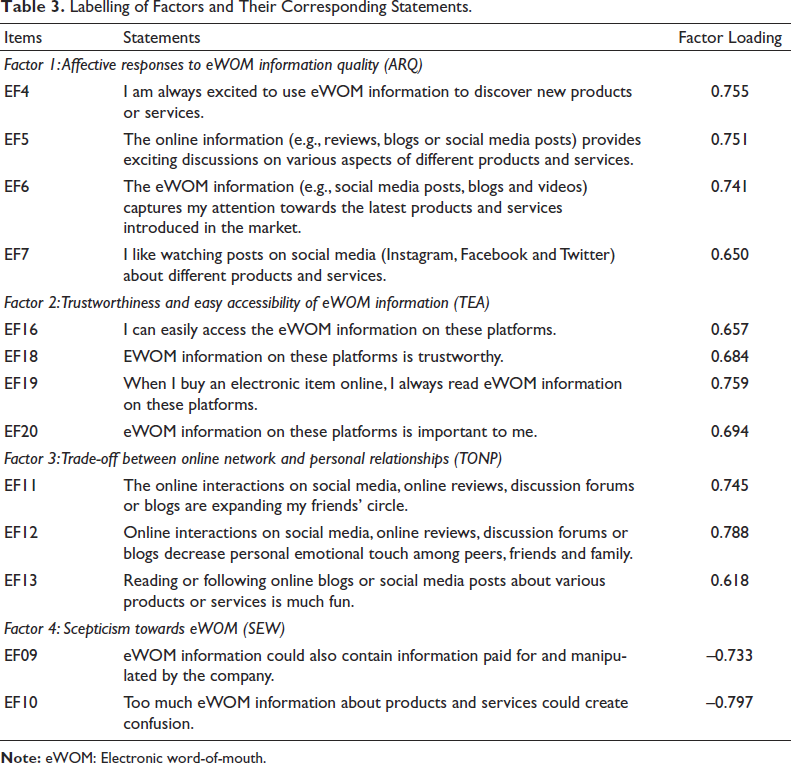
Labelling of Factors and Their Corresponding Statements.
The factors were labelled as follows: Affective Responses to eWOM Information Quality (ARQ). Trustworthiness and Easy Accessibility of eWOM Information (TEA). Trade-off Between Online Network and Personal Relationships (TONP). Scepticism Towards eWOM (SEW).
Cronbach’s alpha values for these factors were 0.826, 0.733, 0.756 and 0.665, respectively.
Figure 1 illustrates the proposed conceptual framework based on the four lifestyle factors identified through exploratory factor analysis. This framework presents these lifestyle factors as antecedents to eWOM credibility, which in turn influences the PI of ECDs. In this framework, the first three factors—ARQ, TEA and TONP—enhance user emotional connection, which positively impacts eWOM credibility. Conversely, the final factor, SEW, negatively affects eWOM credibility, which subsequently influences PI positively.
Conceptual Framework Linking Lifestyle Factors to Electronic Word-of-Mouth (eWOM) Credibility and Purchase Intention.
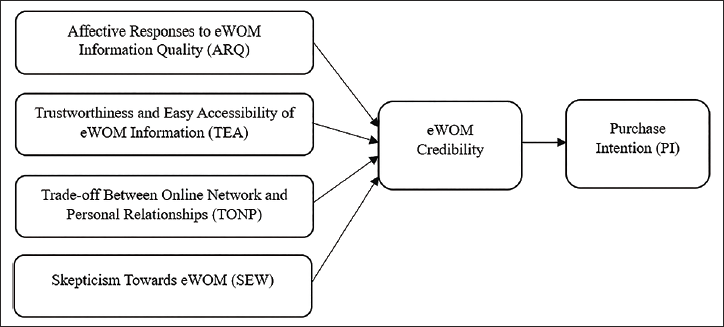
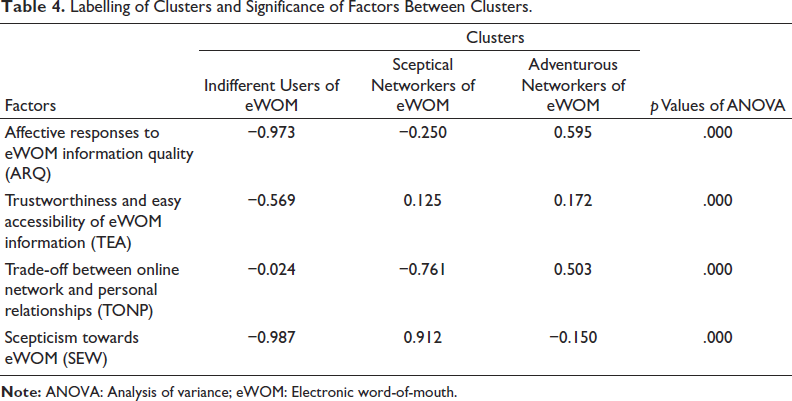
A hierarchical cluster analysis was conducted using the factor scores of these four factors, indicating a three-cluster solution. Following this, K-means cluster analysis was performed with the factor scores to determine the final cluster centres, as shown in Table 3.
Finally, the final cluster centroids were obtained to name the clusters based on the values for each of the four factors (Table 2). The interpretation of the cluster centroids is that a high positive value indicates strong agreement with a particular factor, while a negative value reflects strong disagreement. The p values of .000 in the last column of Table 4 show that all factors significantly differed among the three clusters.
Labelling of Clusters and Significance of Factors Between Clusters.
Labelling of Clusters and Significance of Factors Between Clusters.
Cluster 1: Indifferent Users of eWOM (INU): This cluster received negative scores across all factors identified in the study. They exhibited negative centroid scores regarding trustworthiness, easy accessibility and scepticism towards eWOM information. These individuals showed little interest in understanding new products or services through eWOM information. They did not engage with the nature, quality or accessibility of eWOM content, demonstrating disagreement with effectively responding to eWOM information, its quality and trustworthiness. Furthermore, they displayed low enthusiasm for forming online networks to seek opinions or recommendations on ECDs. Overall, members of this cluster lacked interest, expertise, enthusiasm and motivation to seek eWOM information for purchasing high-value ECDs. They did not prefer to obtain eWOM information for their pre-purchase, purchase or post-purchase actions, thus earning the designation INU.
Cluster 2: Sceptical Networkers of eWOM (SN): Cluster 2 exhibited negative centroid scores on two factors: affective responses to eWOM information quality and the trade-off between online networks and personal relationships. They showed a maximum centroid score on scepticism towards eWOM. Members of this cluster were significantly sceptical about using eWOM information and were reluctant to balance online and personal relationships on eWOM platforms. They demonstrated strong agreement with scepticism regarding eWOM information and notable disagreement with any trade-off between online networks and personal relationships. Due to their reduced trust in eWOM information, they lacked the motivation to explore the nature and quality of eWOM information for any purchase actions related to ECDs. Instead, they preferred communication through interpersonal networks for high-value ECDs, relying on established relationships rather than online networks. Consequently, they were termed SN.
Cluster 3: Adventuresome Networkers of eWOM (AN): Cluster 3 exhibited positive centroid scores across all factors except for scepticism towards eWOM. These individuals had the highest access to eWOM information on ECDs and the greatest trust in that information. They actively read, shared and accepted eWOM information on ECDs, responding positively to the quality of information available on online platforms. They were enthusiastic, motivated and eager to seek eWOM information for their pre-purchase, purchase and post-purchase activities. They utilized eWOM information to explore and discover new products or services, balancing online and offline relationships. They placed high trust in eWOM information for their purchasing decisions and disagreed with scepticism regarding it. Overall, this group was receptive to accepting, trusting and responding to eWOM information. They were eager to form online networks to seek eWOM information, thus earning the title AN.
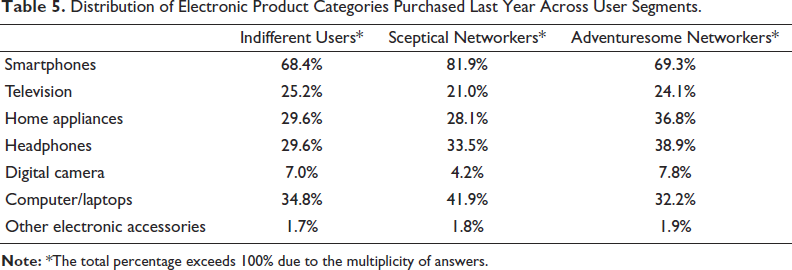
Regarding product categories, the results (see Table 5) indicate that smartphones are the most purchased electronic products across all categories, with Sceptical Networkers having the highest ownership at 81.9%. Adventuresome Networkers follow with the second highest percentage of smartphone ownership at 69.3%, closely trailed by Indifferent Users at 68.4%. Television and home appliances show moderate engagement, with Indifferent Users slightly leading in television purchases at 25.2%, while Adventuresome Networkers display interest in home appliances at 36.7%. Headphones are particularly popular among Adventuresome Networkers (38.9%) and Sceptical Networkers (33.5%), suggesting that these segments are the most engaged consumers of audio technology. Overall, digital cameras rank as the least purchased product category, with a slight preference among Adventuresome Networkers at 7.8%. This trend makes sense, as most users have built-in camera features on their smartphones. Interestingly, Sceptical Networkers exhibit the highest purchase rate of computers/laptops at 41.9%. These results reveal that all segments show interest in essential electronics, especially smartphones, while Adventuresome Networkers demonstrate broader and more diverse engagement across product categories.
Distribution of Electronic Product Categories Purchased Last Year Across User Segments.
Distribution of Electronic Product Categories Purchased Last Year Across User Segments.
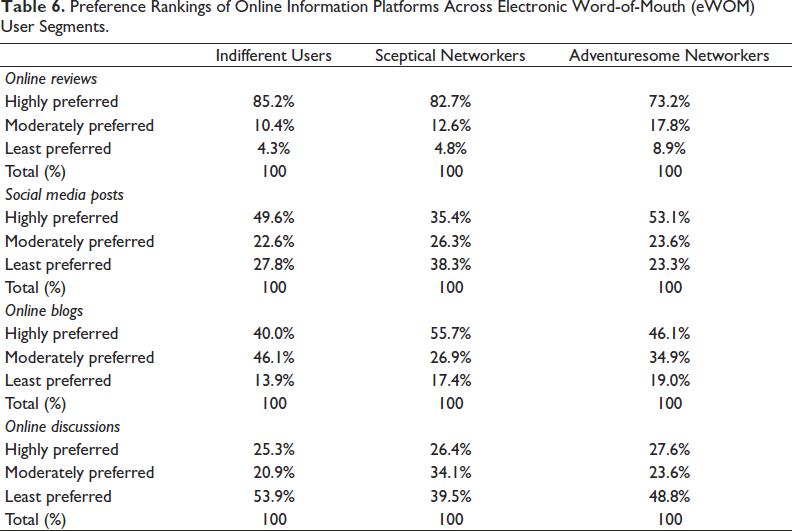
The analysis results regarding online platform preferences across eWOM user segments (see Table 6) indicate that preferences differ among the three user segments. All segments regard online reviews as the most preferred option, with Indifferent Users (85.2%) showing the highest level of preference, followed by Sceptical Networkers (82.7%) and Adventuresome Networkers (73.2%). Adventuresome Networkers consider social media posts (53.1%) to be the second most preferred platform, while Sceptical Networkers rank it as the least preferred at 38.3%. Moreover, Sceptical Networkers favour blogs over other segments (55.7%), reflecting a tendency towards long-format content. Online discussions were the least preferred across all segments (53.9%), particularly among Indifferent Users. These patterns indicate that while users across all segments favour online reviews, preferences for other platforms like social media posts and online blogs follow in that order.
Preference Rankings of Online Information Platforms Across Electronic Word-of-Mouth (eWOM) User Segments.
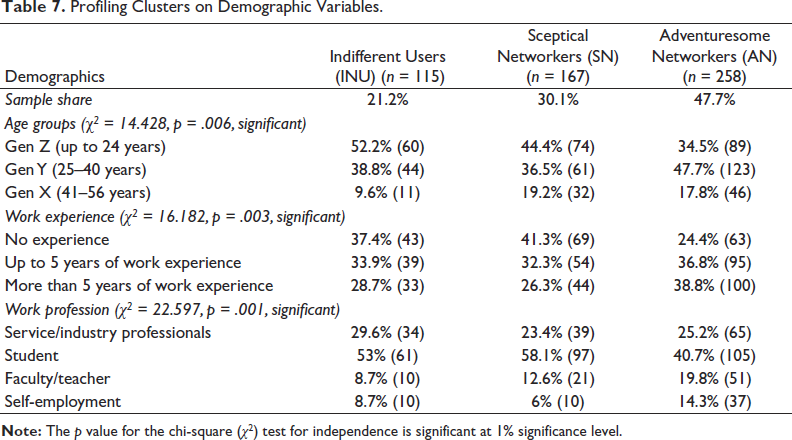
The chi-square test for independence was conducted to evaluate whether the clusters are associated with various demographic variables. A significance level of 1% was used to assess the significance of the clusters across these variables. The results presented in Table 7 indicate that the three clusters are significantly related to demographic variables such as age groups, work experience and work professions, as evidenced by the respective p values of .006, .003 and .001.
Profiling Clusters on Demographic Variables.
Profiling Clusters on Demographic Variables.
Table 8 presents a comparative profile of the three clusters.
Cluster Profile (Demographics, Product and Online Information Platform Preferences).
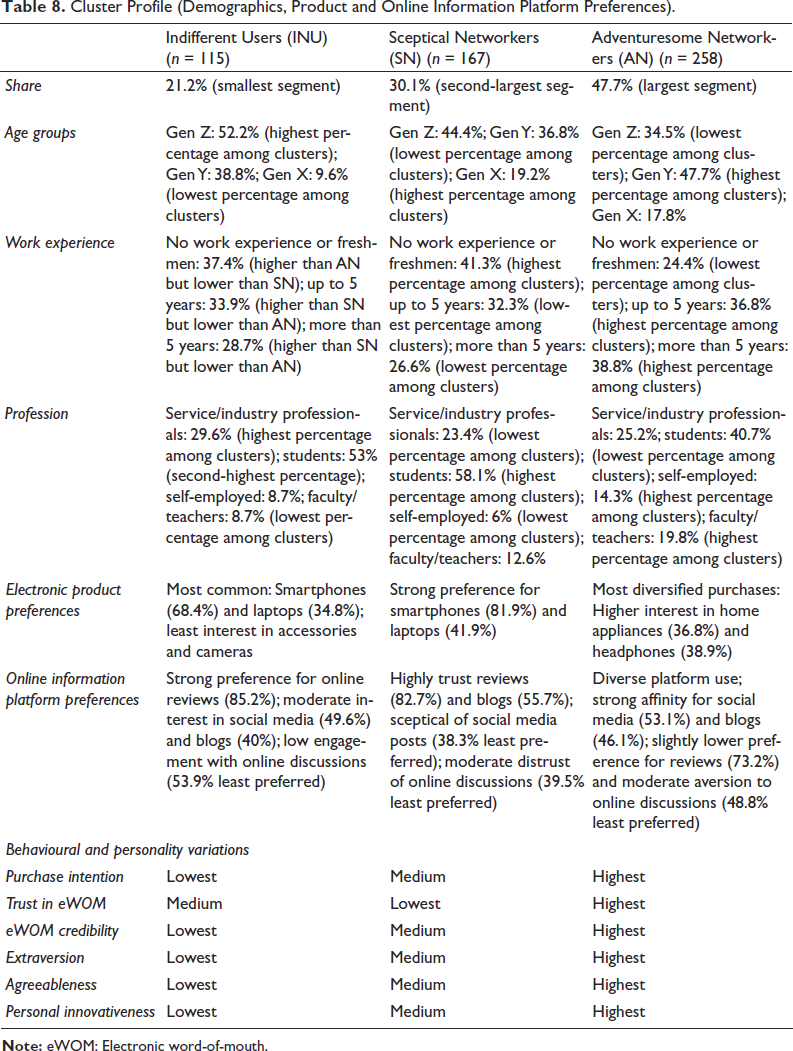
In summary, the INU exhibit little interest and motivation in eWOM, the SN are very sceptical and prefer interpersonal networks, while the AN actively seek and trust eWOM information, forming the largest and most diverse cluster.
A one-way ANOVA test was conducted to determine whether the behavioural variables (PI, involvement, trust in eWOM information and so on) and personality variables (extraversion, agreeableness, personal innovativeness) varied across the three identified clusters. The results showed significant variation in these variables among the clusters (INU, SN and AN), with a p value of .000 for the F-statistic, indicating significance at the 1% level. A post-hoc analysis was conducted to investigate further whether the dependent variables statistically differ across the clusters. The results are illustrated in Table 9.
One-way Analysis of Variance (ANOVA) and Post-hoc Test.
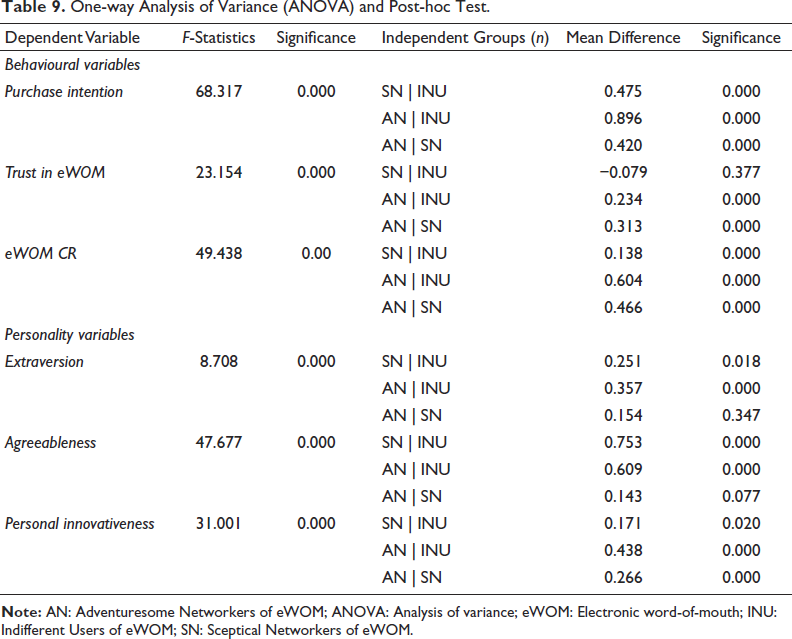
One-way Analysis of Variance (ANOVA) and Post-hoc Test.
For the dependent variable PI, the mean differences between the clusters SN and INU, AN and INU, and AN and SN were 0.475, 0.896, and 0.420, respectively. All these mean differences were positive and significant at the 1% level. This indicates that the segment with the highest intention to purchase ECDs using eWOM information was AN, followed by SN and INU.
Regarding trust in eWOM information, the mean differences between AN and INU, as well as AN and SN, were 0.234 and 0.313, respectively. These differences were positive and significant at the 1% level. However, the mean difference of –0.079 between the SN and INU clusters was negative and insignificant. Therefore, AN trusted eWOM information more than SN and INU, with no significant difference observed between SN and INU.
Lastly, regarding the dependent variable eWOM credibility, the mean differences among the clusters SN and INU, AN and INU, and AN and SN were 0.138, 0.604, and 0.466, respectively. The mean differences between AN and INU, and AN and SN were both positive and significant at the 1% level. However, the mean difference between SN and INU was insignificant. Thus, AN exhibited a higher reliance on credible information than SN and INU, with no significant difference between SN and INU.
For the variable extraversion, the mean difference between AN and INU was 0.375, which was significant at the 1% level. The mean difference between SN and INU was 0.251, significant at the 5% level, while the mean difference between AN and SN was 0.154, which was insignificant with a p value of .347. This indicates that AN and SN were more extroverted than INU, with no significant difference between AN and SN.
In terms of agreeableness, the mean differences between SN and INU, AN and INU, and AN and SN were 0.753, 0.606, and 0.143, respectively. The mean differences between SN and INU, and AN and INU were significant at the 1% level, while the mean difference between AN and SN was significant at the 10% level. Therefore, AN was particularly keen on maintaining prosocial relationships in online networks, followed by SN and INU.
For personal innovativeness, the mean differences between AN and INU, and AN and SN were 0.438 and 0.266, respectively. These differences were both positive and significant at the 1% level. The mean difference between SN and INU was 0.020, which was significant at the 5% level. Thus, AN was the most innovative, followed by SN and INU.
The estimated discriminant function was reliable, achieving a high classification accuracy of over 98% for respondents across three distinct clusters. Overall, the discriminant analysis (Table 10) confirmed that 98.7% of the original cases were accurately classified into these three clusters. This indicates that the discriminant function is highly accurate in predicting the behaviour of respondents within each of the identified clusters. The classification accuracy is calculated as the proportion of correctly classified respondents in each group compared to the total number of respondents in that group.
Predicted Group Membership.
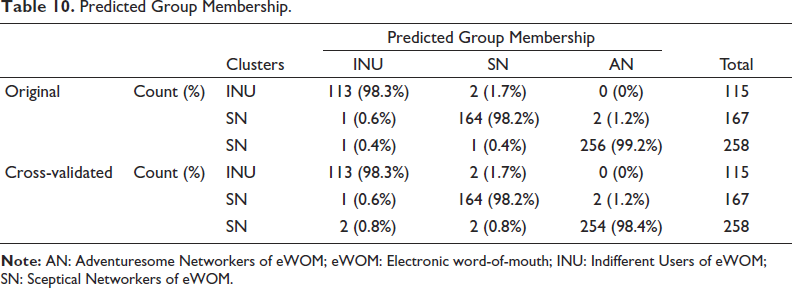
Predicted Group Membership.
This study is one of the few to segment and profile eWOM users based explicitly on their e-lifestyle characteristics. Previous research, however, has approached eWOM segmentation differently by focusing on users’ motivations, benefits sought, personal characteristics or reviewer behaviours.
For instance, Hennig-Thurau et al. (2004) segmented eWOM users based on their motivations for engaging with eWOM. They identified four groups: self-interested helpers, multi-motive consumers, consumer advocates and true altruists. Similarly, Nessel et al. (2021) segmented users by the benefits they sought from eWOM information, resulting in three clusters: benefit-seekers, bargain-seekers and quality-seekers.
Other studies have examined personal characteristics and behaviours. Gungor and Cadirci (2013) identified four clusters of eWOM users based on their engagement styles: average participators, active communicators, viral producers and passive communicators. Meanwhile, Aakash and Jaiswal (2020) segmented online reviewers on TripAdvisor according to their review frequency, helpfulness and recency, identifying four types: valuable, trustworthy, new and valueless.
These various segmentation approaches emphasize the complexity and multiple dimensions of eWOM user behaviour.
This study aims to conduct psychographic segmentation of eWOM users in the Indian market. The study identified three distinct segments: AN, SN and INU. Each segment exhibits unique behaviours and characteristics that provide insights into its users’ engagement with eWOM information and demographic profiles.
The AN segment demonstrated high enthusiasm for reading, sharing and accepting eWOM information for their intended ECDs purchases. They were highly active in online networks, finding eWOM information easily accessible and trustworthy. Despite being highly extroverted, AN members traded off interpersonal communications within offline social networks for online groups. They exhibited the highest motivation to maintain prosocial relationships compared to other segments. AN was innovative in obtaining eWOM information and showed interest in using it for pre-purchase and post-purchase actions. This segment had the largest share of Gen Y users (47.7%), who are most exposed to eWOM information. AN also included the highest number of users with more than 5 years of work experience (38.8%) and the largest share of self-employed users who own small or medium-sized businesses. In conclusion, AN mainly consisted of young professionals with the highest ability to pay, the greatest exposure to eWOM information, and significant spending interest in purchasing ECDs. Marketers can focus on this group by creating new content about newly launched products or services and generating timely and accurate reviews to encourage consumption of online information among AN users.
In contrast, the SN segment exhibited a negative response to eWOM information on various online platforms. They preferred peer-to-peer recommendation systems to obtain opinions or recommendations for purchasing decisions. They did not engage in eWOM activities such as reading online product reviews, blogs, social media posts, or participating in group discussions about newly launched ECDs. This segment displayed very low trust in eWOM information and was highly sceptical about seeking information from pre-purchase to post-purchase actions. Despite having a moderate intention to purchase ECDs online, their decisions were primarily based on opinions, experiences and recommendations from colleagues, friends or family. Since SN users preferred offline networks over online networks to accept eWOM information, marketers could consider that traditional WOM can also encourage online purchases of ECDs. They may focus on generating interest among SN users and increasing their reliance on eWOM communications. This segment had the highest share of Gen X users (41–56 years) and the second-highest share of Gen Z users (up to 24 years). Additionally, it had the highest percentage of students (58.1%) and users with no professional work experience (41.3%). Although Gen X users had the highest spending capacity, they experienced the least exposure to eWOM information on newly launched ECDs. However, Gen Z users in this segment had strong peer groups that helped them acquire knowledge about product specifications, performance and price, resulting in less interest in forming online networks to seek eWOM information actively. They trusted interpersonal communications and were doubtful regarding eWOM information when purchasing ECDs.
The INU segment was not interested in obtaining eWOM information for any pre-purchase to post-purchase actions. They exhibited minimal interest in attractive information about newly launched ECDs and had low trust in eWOM information, displaying little scepticism regarding it. Since these users showed no desire to access information for their purchasing actions, they lacked motivation to form online groups or networks to discuss ECD-related topics. They also participated less in interpersonal peer-to-peer discussions to gain opinions or recommendations about buying ECDs. This group had very little intention of making online purchases, particularly for high-value consumer durables like ECDs. INU members tended to be introverted, demonstrating less motivation to build prosocial relationships with online and offline networks and showing low interest, motivation or excitement to seek information about newly launched products or services. Although this segment was the least innovative in acquiring eWOM information, their low scepticism stemmed from a limited understanding, interest and desire to pursue online information. Consequently, the availability of eWOM information for purchasing ECDs was of little concern to them. This group had the highest percentage of Gen Z users (52.2%), the greatest portion of service/industry professionals (29.6%), and the second-highest share of students (53%) without professional work experience (37.4%). It included young students and professionals who were new to the corporate environment. Given that this segment mainly consisted of introverts with lower levels of engagement and innovativeness, they remained uninterested in acquiring information for their pre-purchase to post-purchase actions related to ECDs. The presence of such information did not impact them. Therefore, marketers can address doubts within this user group to enhance their online information consumption and target them by creating engaging content through gamification or visual demonstrations.
Regarding product category preferences, Adventuresome Networkers, who are tech-savvy and highly engaged with eWOM, are more willing to explore and purchase a broad range of electronics, reflecting their greater digital confidence and purchasing power. Although cautious about eWOM, Sceptical Networkers demonstrate high smartphone ownership due to necessity, but depend more on peer recommendations and restrict their purchases to familiar categories. Indifferent Users, who exhibit low trust and engagement in online platforms, tend to make need-based purchases such as smartphones and televisions, showing limited interest in other electronics. Similarly, concerning eWOM information platforms that influence electronic purchases, online reviews were highly preferred across all segments. For social media platforms, Adventuresome Networkers showed the strongest preference; online blogs were favoured most by Sceptical Networkers, while online discussions were the least preferred platform across all segments.
The discriminant function validated the results obtained from the cluster analysis. Therefore, marketers can use insights from the segments to confidently develop pricing, promotions and distribution strategies to address the specific needs of respondents in each cluster.
While this study offers multiple perspectives on the impact of eWOM communication on the online purchases of ECDs, it has certain limitations. One major limitation is its focus on high-value product categories like ECDs. Because purchasing ECDs is an occasional, high-engagement activity, the attention to detail in eWOM information is greater than that for frequent purchases, such as fast-moving consumer goods (FMCG) products or apparel.
The study does not differentiate between high-value and luxury ECDs. The analysis of eWOM communication was general and overlooked specific platforms like online reviews, social media posts and discussion forums. Consequently, it did not consider the interaction, trust and credibility of these platforms, or the reputation of the companies managing them, which could influence eWOM adoption. Given this diversity, the characteristics of the eWOM platform can affect message credibility and usefulness, which in turn influences consumer behaviour. Future research may benefit from a comparative study of eWOM adoption across platform types to understand the varied role of eWOM on consumer behaviour and the decision-making process.
The study examined factors influencing eWOM adoption for online purchases but did not differentiate among text messages, reviews and visual communications. This represents a notable limitation. It focused on building trust and credibility without addressing biases in information acceptance. Furthermore, the role of a country’s social culture in motivating or demotivating eWOM acceptance was not considered.
Furthermore, while the study captures eWOM from various sources such as social media, blogs, forums and reviews, it treats these sources uniformly. Although there may be inherent differences, the study does not investigate these distinctions. This represents a limitation that future research could explore.
Lastly, the sample in this study skews towards younger generations (Gen Y and Gen Z), with over 83% of respondents belonging to these age groups. While this reflects the current demographic of active online shoppers and eWOM users in India, it may limit the generalizability of the findings to older consumer segments. Future research should aim for a more balanced age distribution to explore generational differences in eWOM adoption and online purchasing behaviour more comprehensively.
For future research, it is crucial to develop segment-specific marketing strategies that address the unique needs and preferences of each group. Longitudinal studies can help understand the evolving behaviours and preferences of eWOM users over time. Expanding demographic analysis to include a wider range of age groups, professions and geographic locations will offer a comprehensive understanding of eWOM user behaviour. By grasping the distinct characteristics and preferences of each segment, marketers can tailor their strategies to effectively engage with eWOM users, enhance their online information consumption experience, and ultimately drive higher PIs for ECDs.
The study offers managerial and academic implications. From a scholarly point of view, the study contributes to the literature on eWOM and gives insights into customer heterogeneity using lifestyle statements. From a policy perspective, the findings highlight the importance of authenticity in eWOM in building consumer trust. The managerial implications are discussed in the next section.
Managerial Implications
For marketers, targeting the AN segment should be a priority. Creating engaging, high-quality content about newly launched products or services can attract and retain AN users. Focusing on generating timely and accurate reviews can further encourage the consumption of eWOM information. Utilizing social media platforms and online communities helps maintain their interest and engagement, as these users are highly active in such networks and rely heavily on the credibility and quality of online information.
Engaging the SN segment requires developing strategies to build trust in eWOM information. Marketers should emphasize peer recommendations and testimonials to bridge the gap between offline and online information sources. Integrating traditional WOM techniques can also effectively encourage online purchases of ECDs among SN users. Since this segment favours offline networks, leveraging their existing trust in interpersonal communications can gradually shift their reliance towards eWOM.
Addressing the INU segment requires enhancing the online information consumption experience by addressing their confusion or misunderstandings. Creating interactive and engaging content through gamification or visual demonstrations can capture their interest. Additionally, introductory campaigns that educate and familiarize INU users with the benefits of eWOM information can help boost their engagement. Given their low motivation and interest in eWOM information, marketers must employ strategies that make eWOM information more accessible and appealing to them.
Tailored marketing strategies are essential for engaging various eWOM user segments effectively. Marketers should concentrate on producing high-quality, captivating content for Adventuresome Networkers, and utilize social media channels to maintain their attention and involvement. The credibility of eWOM can be enhanced by integrating traditional word-of-mouth tactics with trustworthy online strategies to reach Sceptical Networkers, who highly value interpersonal communication. Engaging and visually appealing content, such as gamified experiences, can attract Indifferent Users and foster more in-depth interaction with online content.
Footnotes
Acknowledgement
The authors are grateful to the anonymous referees of the journal for their extremely useful suggestions to improve the quality of the article.
Authors’ Contribution
Rishikesh Bhaiswar: Conceived the conceptual framework, designed the study, data collection, and computer runs.
Deepak Chawla: Helped in data analysis and interpretation.
Himanshu Joshi: Helped in manuscript drafting and policy recommendations.
Declaration of Conflicting Interests
The authors declared no potential conflicts of interest with respect to the research, authorship and/or publication of this article.
Ethical Declaration
The authors abide by all the ethics involved in this academic work and have not submitted it to any other journal.
Funding
The authors received no financial support for the research, authorship and/or publication of this article.

Appendix 1.
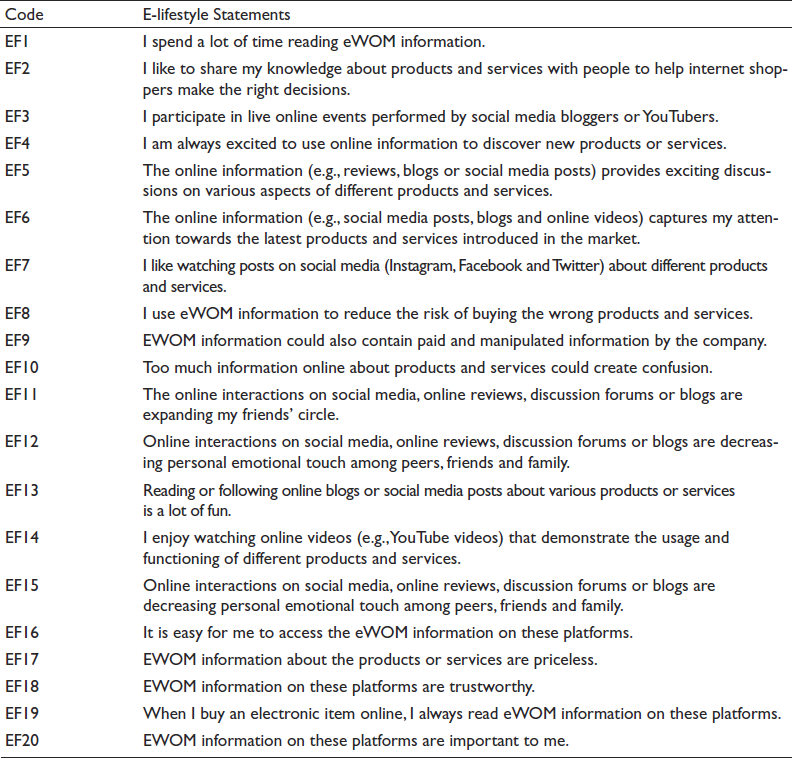
| Code | E-lifestyle Statements |
| EF1 | I spend a lot of time reading eWOM information. |
| EF2 | I like to share my knowledge about products and services with people to help internet shoppers make the right decisions. |
| EF3 | I participate in live online events performed by social media bloggers or YouTubers. |
| EF4 | I am always excited to use online information to discover new products or services. |
| EF5 | The online information (e.g., reviews, blogs or social media posts) provides exciting discussions on various aspects of different products and services. |
| EF6 | The online information (e.g., social media posts, blogs and online videos) captures my attention towards the latest products and services introduced in the market. |
| EF7 | I like watching posts on social media (Instagram, Facebook and Twitter) about different products and services. |
| EF8 | I use eWOM information to reduce the risk of buying the wrong products and services. |
| EF9 | EWOM information could also contain paid and manipulated information by the company. |
| EF10 | Too much information online about products and services could create confusion. |
| EF11 | The online interactions on social media, online reviews, discussion forums or blogs are expanding my friends’ circle. |
| EF12 | Online interactions on social media, online reviews, discussion forums or blogs are decreasing personal emotional touch among peers, friends and family. |
| EF13 | Reading or following online blogs or social media posts about various products or services is a lot of fun. |
| EF14 | I enjoy watching online videos (e.g., YouTube videos) that demonstrate the usage and functioning of different products and services. |
| EF15 | Online interactions on social media, online reviews, discussion forums or blogs are decreasing personal emotional touch among peers, friends and family. |
| EF16 | It is easy for me to access the eWOM information on these platforms. |
| EF17 | EWOM information about the products or services are priceless. |
| EF18 | EWOM information on these platforms are trustworthy. |
| EF19 | When I buy an electronic item online, I always read eWOM information on these platforms. |
| EF20 | EWOM information on these platforms are important to me. |