







Abstract
This study investigates how key exit experiential factors, including efficient checkout processes, employee farewell interactions, cleanliness and security at exit points, and post-purchase engagement influence consumer satisfaction and repurchase intention. Using data collected from 302 respondents via a structured questionnaire, the research applies structural equation modelling to test the proposed relationships. The findings reveal that operational efficiency, interpersonal warmth, and a clean, secure exit environment significantly enhance consumer satisfaction, which in turn drives repurchase intention. By integrating operational, interpersonal, environmental and post-purchase elements into a unified framework, the study offers a holistic view of the exit experience. The results yield both short-term and long-term managerial implications for improving customer experience in physical retail settings.
Introduction
In the contemporary retail environment, delivering a superior consumer experience has emerged as a pivotal strategy for cultivating consumer loyalty and encouraging repeat purchases (Irshad et al., 2025). The traditional determinants of consumer choice, such as product variety and price, remain influential in the choice of store (Nam et al., 2025). However, a growing body of literature emphasizes the significance of holistic consumer experiences shaped by key touchpoints throughout the shopping journey (Sharma & Fatima, 2025). These touchpoints not only mediate perception but also play a defining role in shaping consumer behaviour across retail environments (Salvietti et al., 2025). Extensive scholarship has examined the consumer journey across various stages, particularly focusing on product selection, in-store navigation and checkout efficiency (Ross et al., 2025). This phase includes interactions such as the checkout process, engagement with staff during departure, packaging convenience and the sensory ambience at the point of exit (Sajeesh et al., 2022). Research has increasingly suggested that this culmination point can form enduring impressions that significantly influence overall consumer satisfaction and repurchase intention (Hoo et al., 2026).
Notably, existing literature tends to investigate individual touchpoints in isolation, particularly checkout efficiency or customer service, without integrating them into a cohesive framework that captures the broader ‘exit experience’ (Van Nguyen et al., 2022). This fragmentation leaves a critical gap in understanding how the combined effect of various exit-related interactions can shape consumer behaviour (Agrawal & Mittal, 2024). While prior studies in other service domains have demonstrated that aggregated service encounters influence brand loyalty (Walker et al., 2023), such a holistic view remains underdeveloped in the context of physical retail stores. Furthermore, empirical findings from e-commerce research underscore the importance of the checkout phase in driving consumer loyalty, highlighting parallels that warrant exploration in physical retail spaces (Nusrat & Huang, 2024).
This study distinguishes itself by moving beyond segmented analyzes of checkout or service quality and instead proposes an integrated framework of store exit touchpoints. It is conceptualized as a unified construct encompassing interpersonal and procedural elements encountered during the store departure process. By emphasizing the cumulative effect of exit-related interactions, this research advances a novel conceptual lens to assess how these touchpoints collectively influence consumer satisfaction and repurchase intention. The following research objectives have been formulated in response to this literature gap:
To analyze the impact of store exit touchpoints on overall consumer experience in retail stores. To examine the relationship between store exit touchpoints, consumer experience and consumers’ repurchase intention.
This study contributes to the literature by empirically testing an integrated model of exit touchpoints and their role in consumer decision-making. The findings will contribute to theoretical advancement in consumer experience research and provide actionable recommendations for retailers aiming to optimize post-purchase interactions. By reconceptualizing the store exit as a strategic experiential stage, this research enhances the academic understanding of consumer journey frameworks and supports evidence-based innovations in retail design and management.
The remainder of the manuscript is structured as follows: the review of literature is first presented, followed by an outline of the research methodology. The findings are then reported, after which the results are discussed. The manuscript concludes with key implications, limitations and suggestions for future research.
Review of Literature
Efficient Checkout Process and Exit Experience
A smooth and efficient checkout process is a pivotal service encounter that shapes consumers’ final impressions of a retail visit (Vaneeta et al., 2025). Prior research identifies operational efficiency as a key determinant of perceived service quality (Dangaiso et al., 2022). According to service quality theory (Yang et al., 2024), the perceived speed and ease of process reduce waiting time and increase the overall evaluation of service encounters. Gallino et al. (2023) indicate that reduced checkout time and simplified procedures significantly enhance the likelihood of consumer return, signalling the importance of ease in transactional stages. Self-service technologies such as radio frequency identification (RFID), mobile payments and self-checkout kiosks increase ease of use, thereby lowering cognitive load (Chang et al., 2026). Empirical evidence confirms that consumer perceptions of checkout reliability and speed are directly associated with increased satisfaction at the point of exit (Yang et al., 2025). As the checkout is the final active service touchpoint, its operational efficiency directly frames the emotional and cognitive end-of-journey assessment (Paul et al., 2026). Hence, the following is hypothesized:
H1: An efficient checkout process has a positive impact on the exit experience.
Staff Farewell Interaction and Exit Experience
Human interaction remains a critical element of service delivery, even in increasingly automated retail environments (Noble et al., 2022). The social exchange theory posits that positive interpersonal exchanges create emotional reciprocity and enhance satisfaction (Ahmad et al., 2023). In service contexts, the expressive behaviour of employees functions as affective cues that shape consumer emotions and relational outcomes (Mishra & Mund, 2024). Liu (2025) highlights how brief but warm farewell gestures, such as personalized interactions, elevate perceptions of service warmth and emotional value. Pettersen et al. (2026) observe that verbal appreciation and individualized acknowledgment during departure moments strengthen perceived relational bonds. The servicescape model (Espitia et al., 2025) further suggests that interpersonal cues embedded within the physical service environment leave lasting cognitive and affective imprints. Thus, staff farewell behaviour acts as a social cue, and that amplifies exit evaluations, hypothesizing the following:
H2: Staff farewell interaction has a positive impact on the exit experience.
Clean and Secure Environment and Exit Experience
Physical service environments influence affective responses, perceptions of quality and behavioural intentions (Chen, 2024). The role of ambient conditions (cleanliness, spatial organization, signage) shapes cognitive ease and emotional comfort (Basu et al., 2022). The clean, well-maintained and secure exit areas convey professionalism, attention to detail and consumer safety, linking them to perceived value and satisfaction (Lindberg et al., 2018). Environmental cues such as lighting, clear directional signage and clutter-free spacing reduce cognitive load and enhance comfort during the exit transition (Rahman et al., 2022). Moreover, visible safety measures and monitored exits foster psychological security, particularly for vulnerable consumer segments like elderly shoppers or families (Kajalo & Lindblom, 2016). Accordingly, the following hypothesis is proposed:
H3: A clean and secure environment has a positive impact on the exit experience.
Post-purchase Engagement and Exit Experience
Post-purchase engagement extends the service encounter beyond the physical exit point (Hollebeek et al., 2019). Post-purchase engagement is increasingly recognized in service-dominant frameworks as central to sustaining long-term value creation (Ashaduzzaman et al., 2024). The engagement activities, such as follow-up communication, loyalty programme invitations and feedback solicitation, reinforce positive experiences (Dangaiso et al., 2022). Su et al. (2025) suggest that well-timed follow-ups can mitigate post-purchase dissonance and elevate satisfaction. In omnichannel contexts, seamless integration of offline and online touchpoints enhances continuity of care (Tracogna & Hu, 2024). Recent evidence highlights how post-purchase interactions that express brand appreciation enhance consumers’ retrospective evaluations of their exit experience (Pizzutti et al., 2022). Therefore, the following is hypothesized:
H4: Post-purchase engagement has a positive impact on the exit experience.
Exit Experience and Consumer Satisfaction
The peak-end rule from behavioural science indicates that consumers evaluate experiences partly based on the final moments rather than the full journey (Lin, 2025). Siqueira et al. (2025) extend this in retail settings, arguing that exit interactions and transitional cues strongly shape overall service evaluations. Exit experience encapsulates the cognitive and emotional summation of the retail visit (Harrington, 2023). Positive exit moments increase affective satisfaction and strengthen impression (Ali, 2024). In high-contact retail formats such as fashion, electronics and lifestyle sectors, exit interactions serve as salient cues that consumers incorporate into their overall satisfaction judgments (Song et al., 2025). Thus, a positive exit experience fosters higher consumer satisfaction by consolidating end-of-visit affective and evaluative responses, hypothesizing the following:
H5: Exit experience has a positive impact on consumer satisfaction.
Consumer Satisfaction and Repurchase Intention
Consumer satisfaction remains a cornerstone predictor of repurchase behaviour (Amado-Mateus et al., 2025). This was also established in classic expectancy-disconfirmation theory (Schiebler et al., 2025). It is also established that satisfaction arises when perceived service delivery meets or exceeds expectations and consistently predicts repurchase, loyalty and positive word-of-mouth (Bolton et al., 2022; Wang et al., 2025). Empirical studies confirm that high satisfaction reduces churn and increases customer lifetime value by reinforcing favourable cognitive and affective assessments (Dandis et al., 2023). Additionally, satisfaction mediates relationships between service quality cues and long-term behavioural intentions (Mustikasari et al., 2021). In competitive retail environments, maintaining satisfaction through consistent, personalized and seamless experiences fosters repurchase intentions (Ha et al., 2023). Hence, the following hypothesis is proposed:
H6: Consumer satisfaction has a positive impact on repurchase intention.
Figure 1 shows the hypothesized model.
Hypothesized Model.
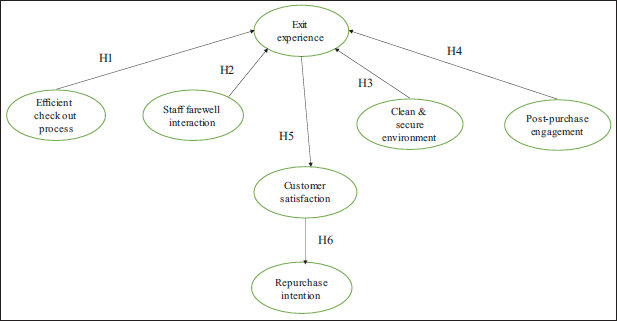
Hypothesized Model.
Research Design
This research utilized a quantitative research approach with a systematic method of gathering and analyzing data. The research utilized a survey design, leveraging a questionnaire to obtain feedback from the participants chosen. The research sought to test relationships between various constructs via structural equation modelling (SEM). Data collection entailed ethical practices such as informed consent from participants. The quantitative approach was used in this research since it enabled empirical study and statistical analysis of relationships between different variables (Creswell & Creswell, 2017). This approach facilitated objectivity, generalizability and replicability of findings. A pre-formulated questionnaire with set variables and response scales was used to gather data from participants. A stratified random sampling method was used in this research to provide equal representation between various strata of the population (Etikan & Bala, 2017). The sample size was based on previous literature suggestions. A total of 350 respondents were given the questionnaire, and 312 responses were collected. A total of 302 responses were valid for analysis after data cleaning and validation. The answers were gathered between July 2024 and December 2024. Respondents were met in shopping malls in India’s major metropolitan cities. Mall intercept surveys were conducted to collect the responses.
Participants were encouraged to fill out the survey electronically using tablets or paper-based questionnaires in the malls (Taherdoost, 2022). To ensure diverse representation, shopping malls were shortlisted based on footfall, geographical location and retail mix (Philp et al., 2022). Permissions were sought from mall management authorities and retail stores within these malls to carry out the study. Store managers facilitated access to shoppers, ensuring a balanced representation of South Asian consumers. India is a prime destination for mall retail due to its rising disposable income, urbanization and increasing preference for organized retail formats (Kushwaha et al., 2017). Participants were provided with informed written consent before filling out the survey. The study adhered to ethical guidelines, ensuring confidentiality and voluntary participation. Since this research does not involve human experiments or clinical trials, university ethical approval was not required. The questionnaire was designed using validated scales from prior research. Each construct in the study is represented by three statements, measured using a Likert scale ranging from 1 (Strongly Disagree) to 5 (Strongly Agree), as shown in Table 1. The questionnaire was pre-tested and reviewed by subject matter experts from academia and the retail industry to ensure content validity (DeVellis & Thorpe, 2021).
Constructs and Measurement Items.
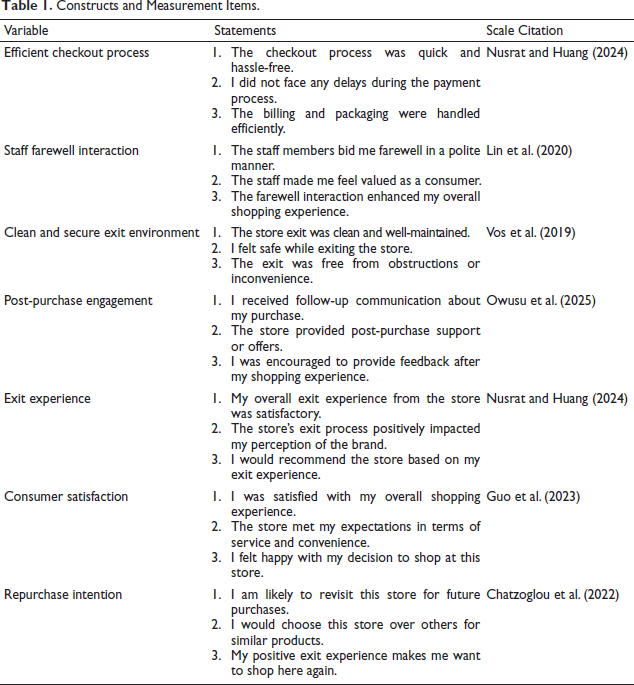
Constructs and Measurement Items.
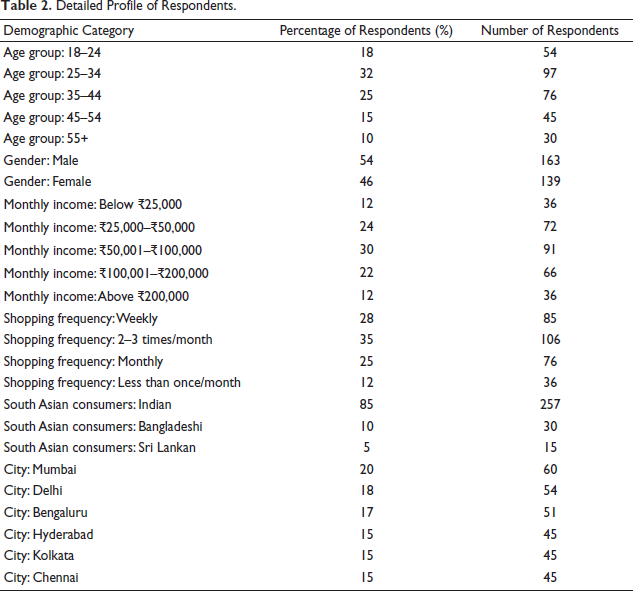
The study focuses on South Asian consumers shopping in Indian malls. The participants represent various age groups, income levels and shopping preferences. The sample includes individuals from different metropolitan cities in India, ensuring a diverse representation (Basu, 2015). The demographic profile of participants is shown in Table 2.
Detailed Profile of Respondents.
The data analysis process involved multiple stages to ensure accuracy and reliability of the findings, which were administered using partial least squares structural equation modelling (PLS-SEM) using Python software (Hair et al., 2019). First, the collected survey responses were screened for missing values and outliers, and incomplete responses were removed. Descriptive statistics were used to summarize the demographic profile of participants. Next, Cronbach’s alpha and composite reliability (CR) were computed to assess the internal consistency of the measurement scales. To confirm construct validity, average variance extracted (AVE), Fornell–Larcker criterion and heterotrait-monotrait ratio (HTMT) were examined. The measurement model was tested using confirmatory factor analysis (CFA), ensuring an acceptable model fit based on indices like CFI, TLI, RMSEA and SRMR. The structural model was then evaluated using SEM in Python, with path coefficients analyzed to test the research hypotheses. Harman’s single-factor test was conducted to detect potential common method bias, ensuring that a single factor did not account for most of the variance. The final results were interpreted to validate the conceptual framework and derive meaningful insights.
Reliability Analysis
The findings in Table 3 show that all constructs exhibit high reliability and validity, validating the measurement model’s robustness. Cronbach’s alpha scores are between .82 and .88, above the threshold of .70 and reflecting high internal consistency among items within each construct. CR scores between 0.86 and 0.91 also validate the constructs’ internal reliability and consistency. AVE for all constructs is above 0.50, ranging between 0.58 and 0.67, providing satisfactory convergent validity and ensuring that a substantial percentage of the variance is explained by the latent constructs. These findings confirm that measures like efficient checkout process, staff farewell interaction, clean and safe exit environment, post-purchase involvement, exit value, consumer satisfaction and repurchase intention are assessed and are thus apt for usage in SEM and subsequent hypothesis testing.
Reliability Analysis (Cronbach’s Alpha, Composite Reliability and AVE).
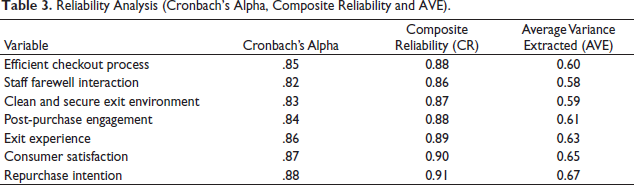
Reliability Analysis (Cronbach’s Alpha, Composite Reliability and AVE).
According to Table 4, the fit indices of the model reveal that the structural model under consideration has a good fit to the data and satisfies the guideline values for goodness-of-fit in SEM. The Comparative Fit Index (CFI) is 0.93, and the Tucker–Lewis Index (TLI) is 0.91, both of which are higher than the bare minimum value of 0.90, which suggests a strong incremental fit of the model against a baseline model. The root mean square error of approximation (RMSEA) of 0.06 falls far short of the recommended 0.08, indicating a tolerable amount of error in approximation per degree of freedom and establishing good absolute fit. The standardized root mean square residual (SRMR) value of 0.05 is also less than the cut-off value of 0.08, implying that residual differences between predicted and observed correlations are small. Overall, these findings lend strong empirical evidence to the validity of the structural model, suggesting that the relationships between variables posited in the hypothesis are adequately represented and that the model may be used for interpretation and further analysis with confidence.
Model Fit Analysis.

Model Fit Analysis.
The Fornell–Larcker criterion results in Table 5 demonstrate that the measurement model exhibits strong discriminant validity, confirming that each construct is empirically distinct from the others (Fornell & Larcker, 1981). This is evidenced by the square root of the AVE for each construct represented by the diagonal values in the matrix being greater than the correlations with all other constructs. For example, the square root of AVE for Efficient Checkout Process is 0.77, which is higher than its correlations with other constructs, such as Staff Farewell Interaction (0.52) and Repurchase Intention (0.62). Similarly, Repurchase Intention shows a diagonal value of 0.82, which surpasses its highest correlation value with any other construct (0.70 with Customer Satisfaction). This pattern holds true across all variables in the model, including exit experience, customer satisfaction and post-purchase engagement, indicating that each construct captures a unique dimension of the theoretical framework. These findings confirm that the model’s constructs are not only internally consistent but also adequately distinct from each other, supporting the structural model’s conceptual soundness and reinforcing the validity of the relationships tested in the study.
Fornell–Larcker Criterion.
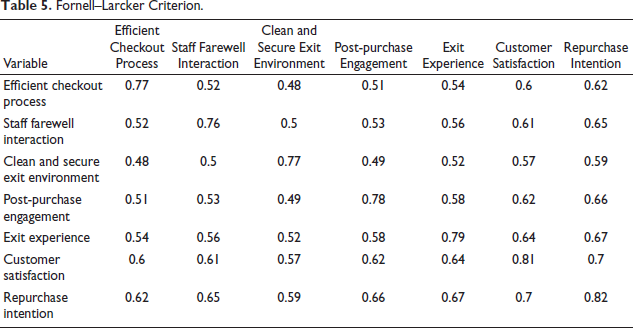
Fornell–Larcker Criterion.
The HTMT in Table 6 provides a robust method for assessing discriminant validity in SEM. It evaluates whether constructs are empirically distinct by measuring the ratio of between-construct correlations to within-construct correlations. According to Henseler et al. (2015), HTMT values should ideally be below 0.85 to confirm discriminant validity. In this study, all HTMT values fall below the 0.85 threshold, ranging from 0.58 to 0.80. For instance, the HTMT value between Efficient Checkout Process and Exit Experience is 0.66, and between Customer Satisfaction and Repurchase Intention it is 0.80. The values are well within acceptable limits. Even the highest HTMT values, such as 0.80 between Customer Satisfaction and Repurchase Intention, do not exceed the cut-off, suggesting that these constructs, while related, are still statistically distinct. These results validate that each latent construct measures a unique conceptual domain, and there is no multicollinearity or overlap that would undermine the distinctiveness of the constructs. Consequently, the HTMT findings strongly support the presence of discriminant validity in the model, affirming the appropriateness of the constructs for use in hypothesis testing and further structural analysis.
Heterotrait-monotrait Ratio (HTMT) Criterion.
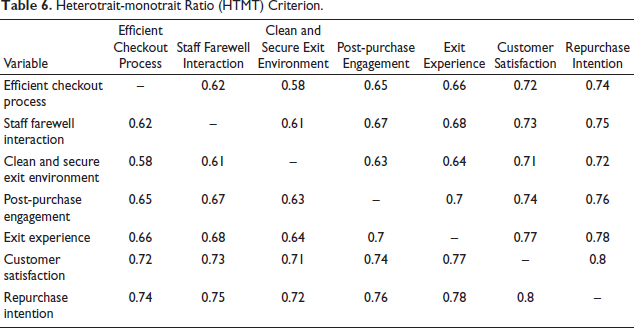
Heterotrait-monotrait Ratio (HTMT) Criterion.
The hypotheses testing outcomes, as shown in Table 7, verify that all the relationships in the structural model are statistically supported and significant, with path coefficients between .27 and .51 and p values below .001. The effective checkout process (β = 0.34), staff farewell interaction (β = 0.29), clean and secure exit environment (β = 0.27) and post-purchase engagement (β = 0.31) all significantly positively influence the exit experience, confirming the importance of operational efficiency, interpersonal interaction, physical environment and ongoing brand interaction in determining consumers’ final impressions. Consequently, exit experience has a strong impact on consumer satisfaction (β = 0.45), indicating that the emotional state of the last service contact point is essential in determining how consumers rate their overall shopping experience. Finally, consumer satisfaction is positively and strongly correlated with repurchase intention (β = 0.51), confirming the long-standing connection between satisfaction and consumer loyalty. These findings constitute strong empirical evidence for the conceptual model and highlight the strategic importance of controlling exit-related touch points to increase satisfaction and lead to repurchase behaviour.
Hypothesis Testing Results.
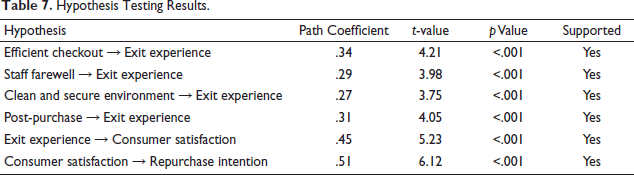
Hypothesis Testing Results.
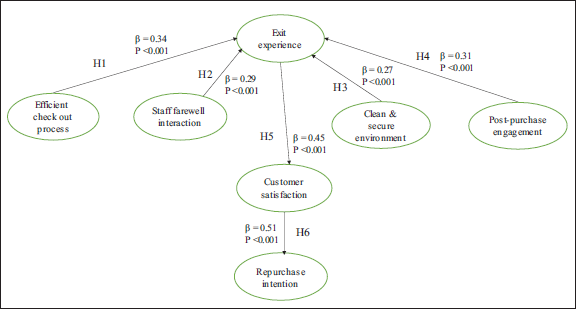
The results of hypothesis testing and the path diagram are shown in Figure 2.
Path Diagram.
The common method bias was determined by Harman’s single-factor test (Kock, 2020). The findings, as per Table 8, show that there is no problem of common method bias in the current study because the total amount of variance accounted for by one factor is only 38.5%, much less than the traditional cut-off value of 50%. This implies that most of the variance in the data cannot be explained by a single underlying factor, thus decreasing the chances that the observed relationships are severely distorted by respondent bias or measurement artefacts. As all constructs were measured with self-reported data gathered at one point in time, common method variance needs to be assessed. The results affirm that the variance is distributed sufficiently across multiple constructs, ascertaining the uniqueness of the variables and response reliability. Therefore, the data employed in the current study are methodologically adequate for further testing and hypothesis confirmation.
Harman’s Single Factor Test.

Harman’s Single Factor Test.
Efficient Checkout Process and Exit Experience
The significant positive effect of an efficient checkout process on exit experience (β = 0.34, p < .001) extends established findings on the role of operational ease in customer satisfaction. The study’s results are consistent with service quality theory, which posits that efficiency and reliability during service delivery enhance perceived service quality (Yang et al., 2024). The adoption of self-checkout systems and digital payment options not only reduces waiting time but also diminishes consumer cognitive load, thereby elevating perceived convenience (Chang et al., 2026). This supports prior conclusions by Gallino et al. (2023) that streamlined checkout processes are instrumental in increasing return intentions. However, while earlier research highlights operational efficiency, this study contributes by emphasizing the emotional valence of the checkout as the final active touchpoint, thus framing it as a pivotal component in shaping exit experiences (Bolton et al., 2022). Unlike general satisfaction studies, the current findings underscore the temporal salience of checkout efficiency in service encounters, offering a more nuanced contribution to the customer experience literature.
Staff Farewell Interaction and Exit Experience
The positive association between staff farewell interactions and exit experience (β = 0.29, p < .001) affirms the critical role of interpersonal touchpoints in emotional evaluation. Drawing from social exchange theory, the findings corroborate the notion that brief, affect-laden social interactions foster reciprocal emotional value (Ahmad et al., 2023). Prior studies by Liu (2025), have demonstrated the positive effects of personalized farewells on relational perception and emotional closure. The current study advances this understanding by linking such gestures specifically to the exit phase, highlighting how interpersonal behaviour during service conclusion enhances emotional resonance. Additionally, integrating the servicescape theory (Espitia et al., 2025), this study positions staff farewell behaviour as both a social and environmental cue, thereby advancing a dual-channel interpretation of exit satisfaction that merges affective and spatial design principles.
Clean and Secure Environment and Exit Experience
A clean and secure exit environment was found to significantly influence the exit experience (β = 0.27, p < .001), reinforcing tenets of servicescape theory (Ahmad et al., 2023) and supporting the empirical findings of Basu et al. (2022) regarding ambient influences on consumer cognition and affect. The present study aligns with recent post-pandemic research emphasizing the psychological comfort derived from perceived cleanliness and spatial order (Lindberg et al., 2018). Unlike prior literature that treats ambient factors as background conditions, the study expands existing knowledge by situating these environmental variables at the exit point, thereby highlighting how final-stage servicescape cues consolidate consumer impressions (Rahman et al., 2022).
Post-purchase Engagement and Exit Experience
The observed relationship between post-purchase engagement and exit experience (β = 0.31, p < .001) is strongly anchored in the service-dominant logic and customer experience management frameworks. As posited by Hollebeek et al. (2019), value co-creation extends beyond the point of sale, encompassing post-transactional interactions that sustain consumer-brand relationships. This study confirms the efficacy of post-purchase mechanisms such as loyalty programmes and follow-ups (Pizzutti et al., 2022) in reinforcing exit experience. It also contributes uniquely by demonstrating that these post-exit engagements shape the cognitive-emotional evaluation of the exit moment and remove dissonance (Su et al., 2025). Thus, exit experience is not only shaped by real-time touchpoints but is also retrospectively modulated by subsequent relational cues, a finding that nuances prevailing assumptions in consumer experience management literature.
Exit Experience and Consumer Satisfaction
The empirical result indicating a strong effect of exit experience on consumer satisfaction (β = 0.45, p < .001) aligns with the peak-end rule (Lin, 2025) and confirms the weight of concluding service moments in overall evaluations. The present findings provide empirical support for this psychological principle within a retail context, showing that exit interactions function as cognitive ‘end-caps’ that finalize consumer judgments (Harrington, 2023). This study uniquely breaks down the exit experience into operational, interpersonal, environmental and post-purchase elements, clarifying how each one influences overall satisfaction (Camilleri, 2022). This multidimensional approach advances customer experience theory by highlighting how distinct elements of the exit encounter collectively shape consumer evaluations.
Consumer Satisfaction and Repurchase Intention
The robust relationship between consumer satisfaction and repurchase intention (β = 0.51, p < .001) supports foundational consumer behaviour theories such as expectancy-disconfirmation theory (Schiebler et al., 2025) and aligns with more recent empirical studies (Wang et al., 2025). This study confirms that consumer satisfaction is a direct predictor of repurchase intention because it strengthens customers’ overall positive evaluations of the retail experience (Amado-Mateus et al., 2025). It also illustrates that satisfaction in this model is not a monolithic outcome but is intricately linked to temporally structured service touchpoints, particularly those at the exit phase (Bolton et al., 2022). This refined causal pathway linking exit experience to satisfaction and, in turn, to repurchase intention provides a clearer framework for understanding customer loyalty in competitive retail environments.
This study offers theoretical contributions by situating exit experience within an integrated service framework that merges operational efficiency, emotional touchpoints, environmental aesthetics and post-purchase engagement. The study extends beyond empirical generalizations by situating the findings within well-established conceptual frameworks such as service-dominant logic, servicescape theory and customer experience management. The study highlights how multiple facets of the service journey, including operational efficiency, human interaction, environmental aesthetics and post-transactional engagement, converge at the point of exit to shape holistic experience evaluations.
Implications
Theoretical Implications
This study makes a key theoretical contribution by introducing an integrated framework of the exit experience, which encompasses operational efficiency, interpersonal interaction, environmental conditions and post-purchase engagement. By conceptualizing the exit not as a single event but as a composite of distinct yet interrelated dimensions, the research advances customer experience theory through a more structured and granular lens. This multidimensional approach helps clarify how various final-stage service elements interact to shape consumers’ lasting impressions and behavioural intentions. It also offers a refined understanding of the exit phase as a unique evaluative touchpoint, rather than merely the closure of a service encounter. Beyond this framework, the study contributes to the service-dominant logic by reinforcing that value co-creation continues after the point of sale, especially through strategic post-purchase engagements. It also extends servicescape theory by repositioning ambient factors such as cleanliness and spatial clarity as cognitively and emotionally salient during the departure phase, rather than background features of the retail environment. Furthermore, the findings deepen social exchange theory by showing that affective exchanges at the point of exit (such as farewell interactions) generate emotional reciprocity and enhance relational satisfaction. Finally, the study strengthens psychological theories of service evaluation, including the peak-end rule, by evidencing that the final moments of the consumer journey disproportionately influence overall satisfaction and future loyalty. By validating constructs such as safety, staff interaction and post-purchase communication within this integrated framework, the study supports a comprehensive, psychologically-informed model of customer experience management that underscores the strategic importance of the exit phase in retail service design.
Managerial Implications
To enhance the consumer’s exit experience and positively influence satisfaction and repurchase behaviour, retailers should implement a combination of short-term operational enhancements and long-term strategic initiatives. In the short term, several actionable changes can be made to improve service delivery at critical touchpoints. Checkout processes can be optimized by installing self-service kiosks, mobile payment options and contactless systems that reduce queue length and enhance convenience. The deployment of scan-and-go technologies can further minimize consumer frustration at the point of payment. Additionally, staff training should prioritize consistent and personalized farewell interactions, which include not only verbal appreciation but also non-verbal cues such as eye contact, smiling and gestures of assistance. Standardized farewell scripts can ensure uniformity in service delivery across different store locations. Post-purchase engagement can be strengthened immediately through follow-up messages that express gratitude and offer exclusive incentives for return visits. Simple mechanisms like scan-code-based exit surveys or short feedback forms can provide valuable insights into service gaps while reinforcing the brand’s attentiveness. Moreover, maintaining a clean, well-lit and organized exit area with visible security features and clear signage can enhance perceptions of professionalism, safety and consumer care.
In the long term, retailers should invest in more transformative service design strategies. Predictive staffing models can be developed using historical traffic and loyalty data to allocate resources dynamically during peak shopping periods, preventing bottlenecks at checkout points. Post-purchase engagement can be deepened through the integration of artificial intelligence-powered personalization systems that deliver tailored product recommendations and content based on consumers’ purchase history. Exit zones should be redesigned to serve as experiential brand touchpoints, featuring digital signage that reinforces loyalty programmes, delivers thank-you messages or highlights social initiatives. Incorporating interactive feedback tools, paperless receipts, recycling stations and reusable bag rewards can further align the store exit with the brand’s sustainability and engagement values. Aesthetically, exit areas should embody the brand’s visual identity while incorporating multisensory elements that evoke emotional connection and closure. Over time, such strategically managed exit experiences can enhance emotional resonance, promote consumer satisfaction and foster enduring brand loyalty. By clearly delineating between immediate actions and future-oriented investments, retailers can create a cohesive consumer experience strategy that aligns operational efficiency with emotional engagement, thereby strengthening both short-term satisfaction and long-term repurchase behaviour.
Limitations and Scope for Future Research
While this research is informative, it has some limitations. The information was gathered from consumers in urban malls, which could restrict the applicability of findings to rural retail environments or online shopping websites. Furthermore, while the research is focused on physical retail spaces, future studies might investigate how digital checkout experiences and online consumer service interactions influence post-purchase satisfaction and retention. Subsequent research might also include cross-cultural comparisons to test whether consumer exit experiences vary across markets worldwide. In addition, exploring the long-term effect of exit experiences on consumer lifetime value (CLV) might offer more insights into the financial payback of improving the last retail interactions.
Conclusion
This study advances the retail experience literature by demonstrating that store exit touchpoints collectively shape consumer satisfaction and repurchase intention, an area that has received comparatively limited attention in prior research. While earlier studies have examined checkout efficiency, service encounters, or store ambience as isolated components of the shopping journey, this research builds upon and integrates these perspectives by proposing and empirically validating an integrated exit touchpoints framework. The findings show that efficient checkout processes, positive staff farewell interactions, a clean and secure exit environment, and post-purchase engagement together create a meaningful exit experience, which significantly enhances customer satisfaction and encourages repurchase intention. By positioning the exit stage as a strategic interaction point rather than a routine transactional closure, this study contributes to consumer experience theory and extends existing service and retail literature. The results also suggest that retailers and mall operators should redesign exit-stage interactions as part of broader customer experience management strategies to strengthen consumer loyalty. Future research may expand this framework by examining exit touchpoints in different retail formats, such as online-to-offline commerce or international retail markets, while policymakers and mall management authorities may consider developing service standards and customer experience guidelines that improve the overall retail ecosystem and consumer well-being.
Footnotes
Authors’ Contribution
KC conceived and designed the study, conducted the literature review, performed data collection and analysis, interpreted the results, and drafted as well as critically revised the manuscript. KC has read and approved the final version of the manuscript.
Data Availability Statement
Data will be available on request.
Declaration of Conflicting Interests
The author declared no potential conflicts of interest with respect to the research, authorship and/or publication of this article.
Ethical Declaration
As per the university’s ethics policy, ethical clearance is required in case the study involves clinical trials for healthcare research. This study involved the collection of survey data from anonymous participants involved in shopping and did not include any clinical trials. Hence ethical clearance was not needed as per Declaration of Helsinki. All participants were informed about the purpose of the study and participated voluntarily, with assurances of anonymity and confidentiality. Participants provided an informed written consent before filling out the survey.
Funding
The author received no financial support for the research, authorship and/or publication of this article.
