







Abstract
This study investigates the determinants of Chat Generative Pre-Trained Transformer (ChatGPT) adoption in higher education within Bangladesh. The rapid integration of artificial intelligence (AI) in education has transformed traditional learning practices, positioning ChatGPT as a powerful AI-assisted learning tool. However, empirical research on its adoption in Bangladesh remains limited, particularly in a context characterized by the absence of institutional AI policies, exam-oriented and rote-learning practices, and growing concerns regarding academic integrity. To address this gap, the study examines university students’ perceptions and usage behaviours to identify key factors influencing ChatGPT adoption. Grounded in the Unified Theory of Acceptance and Use of Technology 2 (UTAUT2) framework, a survey-based approach was employed to analyze determinants of adoption. The findings reveal that habit, hedonic motivation, effort expectancy, social influence and mobility significantly influence students’ adoption of ChatGPT, while gender and university type moderate the relationships. By empirically extending UTAUT2 with validated roles of hedonic motivation and habit in an AI-driven learning environment like ChatGPT, the study contributes to theoretical advancement and contextual understanding of technology adoption in developing-country higher education. The results offer actionable insights for universities, educators and policymakers to design effective AI integration strategies, support responsible usage and enhance digital learning competencies. Overall, the study provides evidence-based guidance for aligning AI-enabled educational practices with national digital transformation goals and fostering equitable and sustainable adoption of AI tools in higher education.
Keywords
Introduction
Advancements in artificial intelligence (AI) and its integration in education have revolutionized the traditional teaching and learning paradigm globally (Habibi et al., 2023). This transformation has been widely researched, highlighting different AI’s role in personalizing learning, automating assessment and enhancing student engagement (Qolamani & Mohammed, 2023). A notable recent advancement in this domain is the development of Chat Generative Pre-Trained Transformer (ChatGPT). Functioning as a language model, ChatGPT enables users to engage with computers in a manner that mimics natural conversation (Lund & Wang, 2023; Sabzalieva & Valentini, 2023). Utilizing natural language processing techniques, ChatGPT learns from vast amounts of online data, offering users AI-generated written responses to inquiries or prompts (Sabzalieva & Valentini, 2023).
ChatGPT attracted significant attention upon its launch in 2022, amassing over 1 million downloads within the first week (Habibi et al., 2023). The GPT-3.5 demo and research version were freely available to the public to facilitate widespread experimentation and gather human feedback for the integration of reinforcement learning into the subsequent version, GPT-4, released in March 2023 (Dempere et al., 2023; Sarker et al., 2023). Specifically, ChatGPT integrates convolutional and recurrent neural networks to excel in natural language processing tasks, offering enhanced accuracy, speed and versatility (Dempere et al., 2023). Given the potential, ChatGPT has swiftly become the world’s fastest-growing app, garnering 100 million users in just 2 months, surpassing the adoption rates of major social media platforms like Instagram and TikTok (Menon & Shilpa, 2023). This has raised the interest of many scholars in understanding what factors stimulate the significant interest in ChatGPT adoption.
Existing literature, which particularly focuses on innovative technological adoption, has started to investigate the factors behind ChatGPT integration in education in diverse contexts in the last 2 years (Wang, 2024). For instance, Maheshwari (2024) investigated the influencing factors of ChatGPT use in the context of Vietnamese students; Strzelecki (2023) looked at the influencing factors of ChatGPT adoption from the context of Polish students; Menon and Shilpa (2023) explored the influencing factors of ChatGPT from the context of India; Abdaljaleel et al. (2024) investigated the factors behind ChatGPT use in Arab countries; and Al-Mughairi and Bhaskar (2024) examined the factors behind ChatGPT use in the context of Oman. However, despite widespread global adoption, empirical evidence on ChatGPT usage in Bangladesh’s higher education remains scarce.
Bangladesh provides an interesting context for evaluating the factors behind the use of ChatGPT (Rana et al., 2024; Yesmin, 2024). This is because, in Bangladesh, first, there is no institutional policy in place for the straightforward integration of ChatGPT in academic institutions (Nurullah, 2023); second, the assessment system is mostly summative, including conventional exams covering learners’ memorization skills, with a mix of 30%–40% written assessment in some universities (Hassan, 2019; Yesmin, 2024); third, there is a lack of resources, access and use of plagiarism-checking software (Dhali, 2021; Rana et al., 2024); and lastly, there is a lack of awareness about ethical considerations and academic integrity (Hamid, 2023). Despite the given situation, studies revealed that a large number of Bangladeshi students adopted ChatGPT in their educational endeavours (Naher et al., 2023), mostly as a learning aid to save time on academic tasks (Niloy et al., 2024). This ChatGPT integration is often seen as useful to combat the shortcomings of the Bangladeshi education system (Ahmed, 2023), although others express different opinions and position it as a threat to academic integrity in the Bangladeshi education system (Ittefaq, 2025; Taiyeb, 2023). Nevertheless, ChatGPT integration in education can have both positive and negative consequences. In order to boost the positive impact and combat the negatives in a particular context, it is crucial to understand why Bangladeshi students are using ChatGPT in higher education. This motivated this study to investigate the following question: What factors influence students’ adoption of ChatGPT in Bangladesh?
To address these research questions, this study uses the Unified Theory of Acceptance and Use of Technology 2 (UTAUT2) model (Caffaratti et al., 2025; Grassini et al., 2024; Venkatesh et al., 2012) to theoretically frame and posit hypotheses. To test the hypotheses, this study conducted a survey by developing a self-explanatory questionnaire. Based on the responses, this study will enlighten on the aspects of ChatGPT use by Bangladeshi students and the factors behind them.
This understanding is expected to generate several important theoretical and practical contributions. First, the study enriches theoretical knowledge on ChatGPT adoption by empirically extending the UTAUT2 model within the higher-education context of Bangladesh, thereby offering a context-sensitive explanation of AI adoption in a developing-country educational system. Second, it provides deeper insights into students’ perceptions, attitudes and behavioural responses toward ChatGPT, highlighting how motivational and habitual factors shape sustained engagement with AI-assisted learning tools. Third, the findings support higher education institutions in formulating evidence-based policies for integrating emerging AI technologies, promoting responsible use and strengthening AI-enabled educational practices. Finally, by identifying key determinants of ChatGPT adoption and highlighting issues related to the digital divide, the study contributes to facilitating effective and equitable AI integration in alignment with Bangladesh’s Smart Vision 2041, which aims to develop a digitally skilled and technologically competent workforce.
The subsequent sections present the literature review, theoretical framework and methodological approach, followed by data analysis and findings. The article then discusses practical implications and limitations and concludes with key insights drawn from the overall discussion.
Literature Review
OpenAI’s ChatGPT is an advanced AI-powered language model meant to generate human-like text based on given prompts, enabling applications such as personalized tutoring and writing assistance, foreign languages and academic research help (Brown et al., 2020). It is changing traditional learning by becoming mainstream in higher education, where students can get immediate support whenever they need it, which creates a more flexible and interactive learning environment (Grassini, 2023). Consequently, this revolutionized development has made an enormous improvement in individual learning styles (Zheng, 2024). Additionally, it becomes a valuable tool for language learning and influencing critical thinking skills because of its ability to simulate conversations and debates (Rudolph et al., 2023). Therefore, it fosters an innovative learning environment with its versatile and dynamic support systems in the evolution of the higher education sector.
Several studies have explored the potential of ChatGPT in diverse educational settings, ranging from translating languages, summarizing text, answering questions and crafting creative content like poetry or fiction. In higher education, students in different fields use ChatGPT for their different purposes. For instance, according to King and ChatGPT (2023), students in higher education use ChatGPT for their research and writing. In research endeavours, ChatGPT is capable of assisting not only with conducting literature reviews but also with generating fresh ideas during brainstorming sessions (Huang & Tan, 2023). Additionally, in technical studies, ChatGPT assists students by identifying and rectifying errors in their code while also proposing programming solutions (Surameery & Shakor, 2023).
Additionally, Imran and Almusharraf (2023) explored the use of ChatGPT as a writing assistant in academic settings for both students and teachers. Their analysis of 30 selected studies revealed that chatbots are generally beneficial tools for facilitating and supporting the academic process. Most of the studies endorsed ChatGPT as a sophisticated AI-generative model capable of providing quality responses to users’ inquiries. Limo et al. (2023) also provided a comprehensive review of current research on ChatGPT as a virtual tutor, emphasizing its role in providing instant feedback and facilitating collaborative learning. Along with that, it offers significant assistance in crafting reports, essays and scientific articles, while also serving as a tool for proofreading text to identify and correct structural, punctuation and grammatical mistakes (Kohnke et al., 2023).
Furthermore, Fauzi et al. (2023) analyzed the role of ChatGPT in improving student productivity in higher education. They found that ChatGPT has a significant contribution to enhancing the quality of student productivity because it helps students in different ways by providing useful information and resources, improving language skills, increasing time effectiveness and efficiency, and providing support and innovation. Based on the literature review, Table 1 is given below to showcase the application of ChatGPT in higher education.
Applications of Chat Generative Pre-Trained Transformer (ChatGPT) in Higher Education.
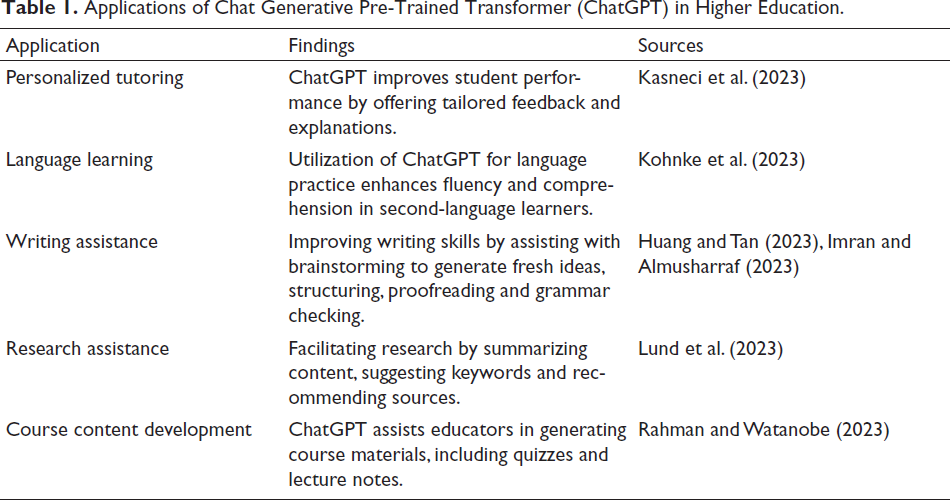
Applications of Chat Generative Pre-Trained Transformer (ChatGPT) in Higher Education.
While there is substantial research focusing on exploring ChatGPT’s applications, the focus on other areas of ChatGPT is still emerging, such as what drives the application and usage, particularly in the unique environment of Bangladesh’s higher education systems (Amin et al., 2024). Understanding the factors influencing technology adoption is crucial for successful integration into higher education.
Existing studies have investigated the factors influencing students to adopt innovative learning technology in their higher education, varying in the contextual focus, theoretical framings and findings. Refer to Table 2, which provides an overview of existing research. Studies from Asian countries have primarily focused on student populations, offering insights into how perceptions of ease of use, usefulness and motivation shape adoption. For instance, Maheshwari (2024) examined Vietnamese students using the technology acceptance model (TAM) and theory of planned behaviour (TPB) frameworks, finding that perceived ease of use (PEU) significantly influences the intent to adopt ChatGPT, while perceived usefulness (PU) has little impact. This contrasts with Tiwari et al. (2024), who studied Omani students and found that usefulness, alongside factors like social presence and motivation, was a key driver, whereas ease of use was less significant. These differences underscore how local educational environments—whether in Vietnam’s more structured, exam-driven system or Oman’s more fluid, interactive learning styles—affect students’ views on technology. In Saudi Arabia, Alshammari and Alshammari (2024) found that performance expectancy (PE) and facilitating conditions (FCs) played a pivotal role in adoption, while social influence (SI) and effort expectancy (EE) were insignificant. This suggests that students in the region may be more influenced by their own performance goals and the resources available to them rather than peer pressure or ease of use. The divergence in findings within these Asian studies points to the importance of understanding how contextual factors shape technology adoption across different educational settings.
Overview of Existing Studies.
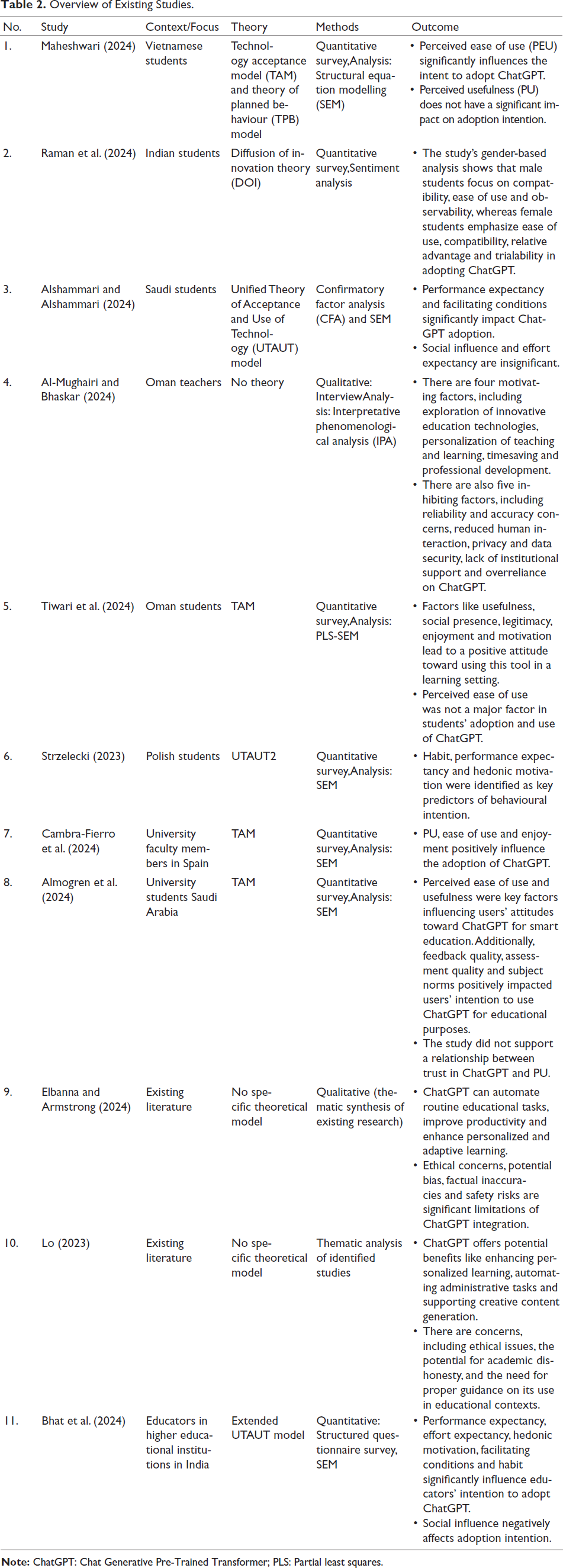
The studies conducted in the Middle East add another layer of insight by contrasting student and educator perspectives. Al-Mughairi and Bhaskar (2024), in a study on Omani teachers, used qualitative interviews and identified both motivating (e.g., personalization, timesaving) and inhibiting factors (e.g., reliability concerns, data security) in ChatGPT adoption. This is quite different from the student-focused studies in the same region, where factors like ease of use and PE were more prominent. Teachers’ concerns about privacy and overreliance on technology reflect a broader tension between embracing AI for efficiency and ensuring its reliability for educational outcomes. This contrast shows that adoption drivers are not only context-dependent but also vary significantly between students and faculty.
Similarly, Bhat et al. (2024) focused on educators and revealed that PE, hedonic motivation (HM) and habit influenced their adoption decisions, but SI negatively impacted adoption intention. These findings indicate that the roles individuals play within the educational system—whether as students or educators—affect how they perceive and use AI tools like ChatGPT.
In European contextual studies, the emphasis shifts towards habitual and motivational aspects of ChatGPT adoption, as reflected in studies like Strzelecki (2023) and Cambra-Fierro et al. (2024). For Polish students, habit, PE and HM were identified as critical predictors, suggesting that ChatGPT is used not just as a functional tool but as part of their daily academic routine. Similarly, Spanish university faculty were driven by PU, ease of use and enjoyment, indicating that the adoption of AI tools is influenced by the pleasure and simplicity it brings to the educational process. This contrasts with studies in developing regions like Asia, where practical factors such as performance or social presence play a more critical role.
The demographic variations highlighted in some studies further underscore the importance of a context-specific focus. In a study of Indian students, researchers used diffusion of innovations (DOI) to conduct a gender-based analysis, finding that male students emphasized factors like compatibility and observability, while female students prioritized ease of use and trialability. This gender-based differentiation adds complexity to the adoption process and illustrates how demographic variables can significantly affect user perceptions.
While these studies provide valuable insights across various regions and demographic groups, there is a notable gap in understanding how ChatGPT is adopted in developing countries like Bangladesh, especially within its distinct public and private university systems. Bangladesh presents unique challenges in terms of technological infrastructure, digital literacy and resource allocation, all of which can significantly influence how AI tools are perceived and utilized by students (Alam & Ahmed, 2024). Public university students, who often face resource constraints and limited access to advanced technology, may have different motivations and barriers compared to private university students, who typically have more access but may approach technology with different expectations (Mazumder, 2014). Understanding these dynamics is key to ensuring equitable access to AI tools across Bangladesh’s higher education system, allowing for more informed decisions on how best to integrate ChatGPT into educational practice.
Currently, universities and colleges in Bangladesh are actively seeking technological solutions to simplify the complexities of teaching, learning and administrative management. This trend is particularly evident in the higher education sector through the increasing adoption of learning management systems (LMS), which have added a new dimension to education (Saha et al., 2023). Platforms like Moodle, Canvas and Google Classroom are being widely used in both public and private universities to facilitate online study, course management and collaborative work among students and faculty members. These systems enable institutions to easily upload study materials, assignments, quizzes, notes and even conduct lectures on digital platforms, making educational resources accessible to a large number of students (Gazi et al., 2023).
In addition to LMS, e-learning has emerged as another significant trend in Bangladesh’s higher education landscape. Universities are increasingly introducing online courses, webinars and virtual classrooms to cater to the growing demand for flexible, contemporary educational solutions (Alam et al., 2023). Through these platforms, students can log in from anywhere, download materials, participate in discussion forums, attend lectures and engage in assignments in interactive virtual environments—activities that are otherwise limited in traditional classroom settings (Sarker et al., 2023).
Despite the progressive integration of technology, Bangladesh’s higher education sector continues to face challenges such as infrastructural limitations, the digital divide and the need for enhanced faculty capacity building (Alam et al., 2023). Reliable internet access, availability of digital devices and training educators to effectively incorporate technology into their teaching practices are areas requiring urgent attention. However, with targeted efforts from stakeholders—including policymakers, educational institutions and technology providers—these challenges can be overcome, paving the way for a more inclusive and technologically advanced higher education system (Sarker et al., 2023).
This context underscores the need to explore how advanced AI tools like ChatGPT can complement existing technologies in Bangladesh’s universities. While LMS and e-learning platforms have transformed higher education (Alam et al., 2023), the introduction of AI tools offers the potential to further enrich the learning experience by enhancing personalization, automating routine tasks and supporting interactive learning (Al-Mughairi & Bhaskar, 2024). However, given the distinct differences in the infrastructure and resources available in public and private universities, it becomes crucial to study the factors influencing ChatGPT adoption in these different institutional contexts (Mazumder, 2014). The findings of this study will fill this research gap by offering localized insights, helping shape future policies and technology adoption strategies in Bangladesh’s higher education sector.
It has been a pressing issue in the information systems (IS) domain to understand how firms and individuals adopt and use IS (Hirschheim, 2007). Therefore, information technology diffusion and innovation have been important areas of research in the IS field. This stream of research focuses on identifying factors that facilitate or impede the adoption of emerging technologies (Fichman, 2000). This section of the study reviews several significant and widely used theories and introduces the UTAUT2 as the theoretical framework for this study.
Many theories and models have been developed so far to explore the adoption of new technologies at the individual level (Hirschheim, 2007). One of the most prominent and widely used theory is the TAM (Davis, 1989). Empirical evidence shows that the TAM accounts for a significant portion of the variance (around 40%) in users’ intentions and use behaviours (UBs). The TAM has more explanatory power than the Theory of Reasoned Actions (TRA) and the TPB, as noted by Venkatesh and Davis (2000). However, the TAM overlooks the social norm factor that was considered important in the TRA (Alsaif, 2014) and fails to incorporate other constructs that are also important (Benbasat & Barki, 2007). To address this gap, Venkatesh et al. (2003) developed the UTAUT, synthesizing several previous models into a unified model. The UTAUT model introduced four independent constructs (EE, PE, SI and FCs) that influence users’ adoption intentions and UBs. The model also included four moderating variables: gender, experience, age and voluntariness of use.
However, the original UTAUT model was developed in organizational settings (Venkatesh et al., 2016). The literature lacked a user behavioural model explaining technology use by consumers rather than employees. This evidence was critical because prior studies suggested that determinants of acceptance differ between organizational and consumer settings (Marikyan & Papagiannidis, 2021). To address this limitation, Venkatesh et al. proposed UTAUT2 (Venkatesh et al., 2012) as an extension of UTAUT. The model introduced three new constructs, namely HM, cost/perceived value and habit, to better explain user behaviour and proposed a consumer TAM, differing from UTAUT’s organizational focus. HM refers to as the fun or pleasure derived from using technology, and it has been shown to play an important role in determining technology acceptance and use (Venkatesh et al., 2012). The inclusion of HM in the model is based on previous IS research, which identified the perceived hedonic nature of the outcome as a key predictor of consumer technology use. On the other hand, the inclusion of cost in the model is justified by the fact that consumers, unlike organizations in a workplace setting, directly bear the financial cost of the technology. Thus, in the context of consumer technology, lower costs lead to more intensive technology use. In UTAUT2, the cost factor was represented by price value, which is defined as consumers’ trade-off between the perceived benefits of the applications and the monetary cost for using them (Venkatesh et al., 2012). Finally, the UTAUT model included habit, which is defined as ‘the extent to which people tend to perform behaviours automatically’ (Venkatesh et al., 2012). In addition to these independent variables, the model also examines how personal factors (gender, age and experience) moderate the impact of HM, price value and habit on behavioural intention (BI) and usage. In our study, we chose UTAUT2 as the theoretical lens to explain the determinants of ChatGPT acceptance. The rationale for choosing this theory is that students in higher education primarily use ChatGPT as a consumer technology, rather than as an institutionally adopted tool. Since students mostly use the free version of ChatGPT, therefore, the price variable is not considered in this study.
Additionally, this study considers gender and university type as moderating variables to examine variations in ChatGPT adoption. Gender differences in PE, SI and technology use, shaped by cultural and socio-economic factors, influence students’ perceptions of ChatGPT (Elshaer et al., 2024; Raman et al., 2024). Additionally, university type plays a crucial role, as public and private institutions in Bangladesh differ in resources, infrastructure and pedagogical approaches, affecting students’ access to and reliance on digital tools (Alam & Ahmed, 2024; Mazumder, 2014). By integrating these moderators, this study provides a nuanced understanding of how demographic and institutional factors shape ChatGPT adoption in higher education.
Therefore, this study incorporates seven key factors and two moderators that serve as the foundation for the research model, as illustrated in Figure 1. Grounded in the UTAUT2 framework, the proposed research model reflects the insights derived from the preceding discussion. The descriptions of these factors, along with their associated hypotheses, are outlined in the following section.
Research Model.
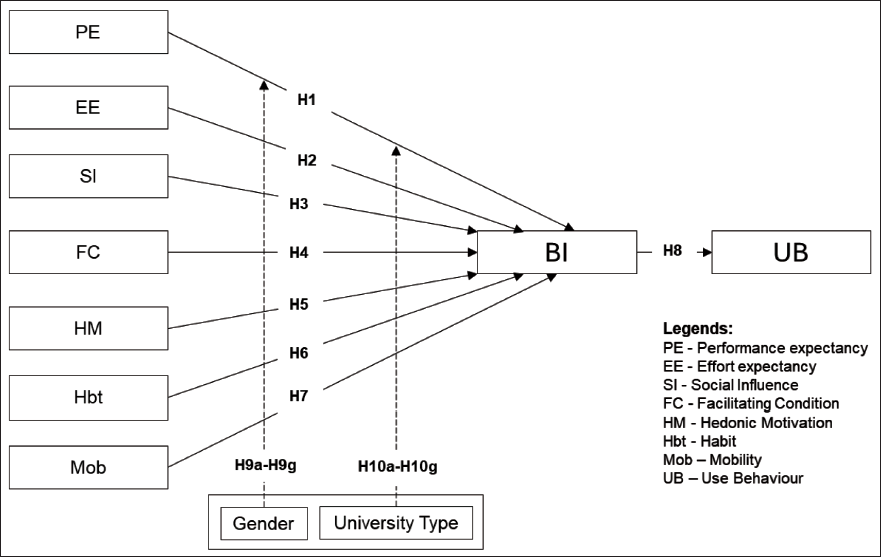
Research Model.
The original UTAUT model proposed by Venkatesh et al. (2003) explained PE as the degree to which using a technology will provide benefits to consumers in performing certain activities (Venkatesh et al., 2003). Previous research has examined that PE is a significant predictor of technology use in the academic setting (El-Masri & Tarhini, 2017). This finding, with other studies, demonstrated that PE has a positive influence on accepting various technologies such as mobile learning (Arain et al., 2019), classroom technology (Kumar & Bervell, 2019) and LMS (Raman & Don, 2013). Additionally, Maheshwari (2024) found that perceived performance benefits significantly influence the adoption of educational technologies among university students. Moreover, Alam et al. (2023) found that, in the higher education system of Bangladesh, students show a tendency to use technologies that improve the quality of their learning outcomes. In this particular study, PE is understood as how much students use ChatGPT in relation to their estimation of improving academic performance, such as with researching, writing or solving problems. The tool’s ability to provide quick answers and streamline academic tasks can increase its perceived utility (Almogren et al., 2024; Tiwari et al., 2024). Thus, we hypothesize the following:
H1: PE positively influences BIs to use ChatGPT.
Effort Expectancy
EE refers to the degree of ease people think a technology will be when they actually use it (Venkatesh et al., 2012). According to Venkatesh et al. (2003), EE was found to have a significant effect on user intention to adopt technology in various studies. For instance, Cambra-Fierro et al. (2024) have tested whether ease of use plays a significant role in the adoption of educational technologies among university students. Hu et al. (2020) and Raza et al. (2022) also reported that ease of use was an important factor in students choosing to adopt mobile learning tools and LMS. The students’ adoption of Google Classroom was also because they found it easy to use (Jakkaew & Hemrungrote, 2017). In this regard, EE in this study is representative of how easy the students think ChatGPT is to use and how little effort will be needed to navigate it. Therefore, we hypothesize that:
H2: EE positively influences BI to use ChatGPT.
Social Influence
SI is defined as the extent to which individuals feel that important people in their lives believe they should use a new technology (Ajzen, 1991; Venkatesh et al., 2003). Numerous studies have established that SI plays a critical role in technology adoption. For instance, Strzelecki (2023) found that peer recommendations significantly drive technology uptake in educational settings. This influence has been observed across various contexts, such as mobile learning (Nikolopoulou et al., 2020), e-learning platforms (Samsudeen & Mohamed, 2019) and LMS (Ain et al., 2016). In the case of ChatGPT, SI captures the effects of peers, instructors and university culture on students’ decisions to adopt the tool. Students are more likely to use ChatGPT if its adoption is supported and encouraged by their peers or mentors. Therefore, we propose the following hypothesis:
H3: SI positively influences BIs to use ChatGPT.
Facilitating Condition
FC is defined as the extent to which an individual perceives that organizational and technical infrastructure exists to support technology use (Venkatesh et al., 2003). Previous research identifies FC as a critical factor in technology acceptance. For example, Teo et al. (2019) noted that the successful integration of digital learning tools in higher education depends on the availability of suitable infrastructure and support systems. Similarly, Bhat et al. (2024) found that FCs play a significant role in determining students’ acceptance of new technologies. In this study, FC pertains to the accessibility of essential resources such as internet connectivity, devices and institutional support, all of which are crucial for fostering an environment conducive to the effective use of ChatGPT for academic purposes. Therefore, we propose the following hypothesis:
H4: FC positively influences BIs to use ChatGPT.
Hedonic Motivation
HM is defined as the extent to which an individual is inclined to use technology for the inherent enjoyment, pleasure or novelty it offers (Van der Heijden, 2004; Venkatesh et al., 2012). Recent research has shown that HM significantly influences technology adoption in the academic sector. For example, university students often engage with animation tools for educational purposes due to the enjoyment they derive from using these tools (Dajani & Hegleh, 2019). Likewise, HM has been found to strongly impact the adoption of mobile learning (Azizi et al., 2020), e-learning platforms (Twum et al., 2022) and LMS (Zwain & Haboobi, 2019). In the context of this study, HM reflects the pleasure that students experience when using ChatGPT. Given ChatGPT’s interactive and engaging features that enhance the learning experience, it is likely to foster academic adoption. Based on these insights, we hypothesize the following:
H5: HM positively influences BIs to use ChatGPT.
Habit (Hbt)
Habit is defined as the extent to which an individual’s use of technology becomes automatic or routine (Limayem et al., 2007; Venkatesh et al., 2012). Previous studies have highlighted habit as a key factor in shaping students’ BIs to adopt technology within higher education. Habit has been shown to play a significant role in various technology adoptions, such as Google Classroom (Alotumi, 2022), e-learning platforms (Zacharis & Nikolopoulou, 2022) and mobile learning (Yu et al., 2022). In this study, habit is conceptualized as a relatively stable pattern of behaviour in the adoption of ChatGPT within higher education. It encompasses the frequency of use, session duration and the extent to which ChatGPT has been integrated into students’ regular study routines. Based on these considerations, we hypothesize the following:
H6: Hbt positively influences BIs to use ChatGPT.
Mobility (Mob)
Mobility refers to the degree to which students can access learning tools anytime and anywhere, aligning with the demands of a mobile lifestyle (Schierz et al., 2010; Sultana, 2020). This concept is increasingly pertinent to educational technologies. For example, a study on Malaysian educational institutions found that easy access to mobile learning platforms significantly influenced users’ adoption of these systems (Sukı & Sukı, 2011). In this study, mobility reflects the extent to which students benefit from using ChatGPT on mobile devices, enabling flexible and real-time learning experiences. Based on these insights, we hypothesize the following:
H7: Mob positively influences BIs to use ChatGPT.
Behavioural Intention
BI refers to an individual’s motivation or plan regarding a specific behaviour (Venkatesh et al., 2003). Numerous studies have identified BI as a key predictor of actual technology usage, as strong intentions to use technology often translate into increased usage (Venkatesh et al., 2012). Similarly, recent research by Strzelecki (2023) and Cambra-Fierro et al. (2024) demonstrates that positive intentions to adopt educational tools significantly influence actual UB. In this study, students’ BI represents their willingness and motivation to adopt ChatGPT for academic activities. It is anticipated that a positive attitude toward ChatGPT will encourage students to develop an intention to use it, ultimately leading to actual usage. So, we hypothesize:
H8: BI positively influences the UB of ChatGPT.
Gender and University Type
This study incorporates gender and university type as moderating variables. This study considered gender drawing on the UTAUT2 model (Venkatesh et al., 2012) and various studies that highlight gender-based differences in technology adoption and utilization within educational contexts (Elshaer et al., 2024; Sakirin & Said, 2023; Yilmaz et al., 2023). Research indicates that gender moderates the relationship between PE, SI and the use of ChatGPT, with male students often exhibiting higher performance expectations and stronger SI compared to female students (Elshaer et al., 2024). These differences are shaped by cultural norms, socio-economic factors and disciplinary variations, which collectively influence access, attitudes and preferences toward digital tools (Elshaer et al., 2024). In the context of Bangladesh, the gender digital divide also contributes to these disparities, as male and female students often have differing levels of exposure to and familiarity with AI technologies (Raman et al., 2024; Saha & Zaman, 2017). By exploring gender as a moderating factor, this study aims to provide deeper insights into how gender dynamics influence perceptions of ChatGPT’s acceptance, relevance and efficiency in higher education. Therefore, we posit:
H9a: Gender moderates the relationship between PE and BI.
H9b: Gender moderates the relationship between EE and BI.
H9c: Gender moderates the relationship between SI and BI.
H9d: Gender moderates the relationship between FC and BI.
H9e: Gender moderates the relationship between HM and BI.
H9f: Gender moderates the relationship between Hbt and BI.
H9g: Gender moderates the relationship between Mob and BI.
The inclusion of university type is particularly considered because in Bangladesh, public and private universities often differ significantly in terms of resources, infrastructure, pedagogical approaches and student demographics, all of which can influence the perception and utilization of ChatGPT in higher education (Alam & Ahmed, 2024). Public universities in countries like Bangladesh typically cater to a larger and more diverse student population, often with limited access to cutting-edge technologies due to budget constraints. In contrast, private universities may have better funding, smaller class sizes and more exposure to advanced digital tools, providing students with greater opportunities to engage with platforms like ChatGPT (Mazumder, 2014). The assessment type further influences their need to use platforms like ChatGPT in assessments (Hassan, 2019). We argue that these institutional differences can shape students’ performance expectations, EE and SI. By examining university type as a moderating factor, this study aims to uncover how institutional characteristics impact the acceptance, efficiency and relevance of ChatGPT across different educational settings. Therefore, the following hypotheses are posited:
H10a: University type moderates the relationship between PE and BI.
H10b: University type moderates the relationship between EE and BI.
H10c: University type moderates the relationship between SI and BI.
H10d: University type moderates the relationship between FC and BI.
H10e: University type moderates the relationship between HM and BI.
H10f: University type moderates the relationship between Hbt and BI.
H10g: University type moderates the relationship between Mob and BI.
Methodology
The primary objective of this study is to investigate the factors that influence ChatGPT adoption in higher education in Bangladesh. The target population was the tertiary students in both public and private universities in Bangladesh. Due to the absence of a comprehensive sampling frame for all ChatGPT users in higher education in Bangladesh, as well as time and access constraints, we employed a non-probability convenience sampling technique, recruiting students from one public and one private university. Convenience sampling is commonly used in social and educational research because it allows cost-effective and rapid data collection from readily accessible participants, particularly when the study aims to examine relationships between constructs rather than to produce population estimates (Nguyen, 2024). Consistent with prior technology-use and ChatGPT-related studies relying on student samples within specific institutions, this approach enabled us to investigate determinants of ChatGPT adoption among university students while acknowledging that generalizability is limited to similar higher education contexts (Mahmud et al., 2024; Narayan & Naidu, 2024). We calculated the sample size using G*Power 3.1 software. For a medium effect size of 0.15, an alpha error probability of 0.05, and a power of 0.95 with a maximum of seven predictors pointing to any endogenous construct (i.e., BI), a minimum of 153 observations is required.
We employed a survey method to collect data using a five-point Likert scale ranging from 1 to 5, where 1 denotes ‘strongly disagree’ and 5 denotes ‘strongly agree’ (Memon et al., 2020). We adapted all measurement items from validated prior studies to fit the context of ChatGPT use in higher education. Constructs—PE, EE, SI, FCs, HM, habit, mobility, BI and UB—were drawn from UTAUT2 (Venkatesh et al., 2012) and related research. Table 3 illustrates the measurement items and their sources.
Measurement Items.
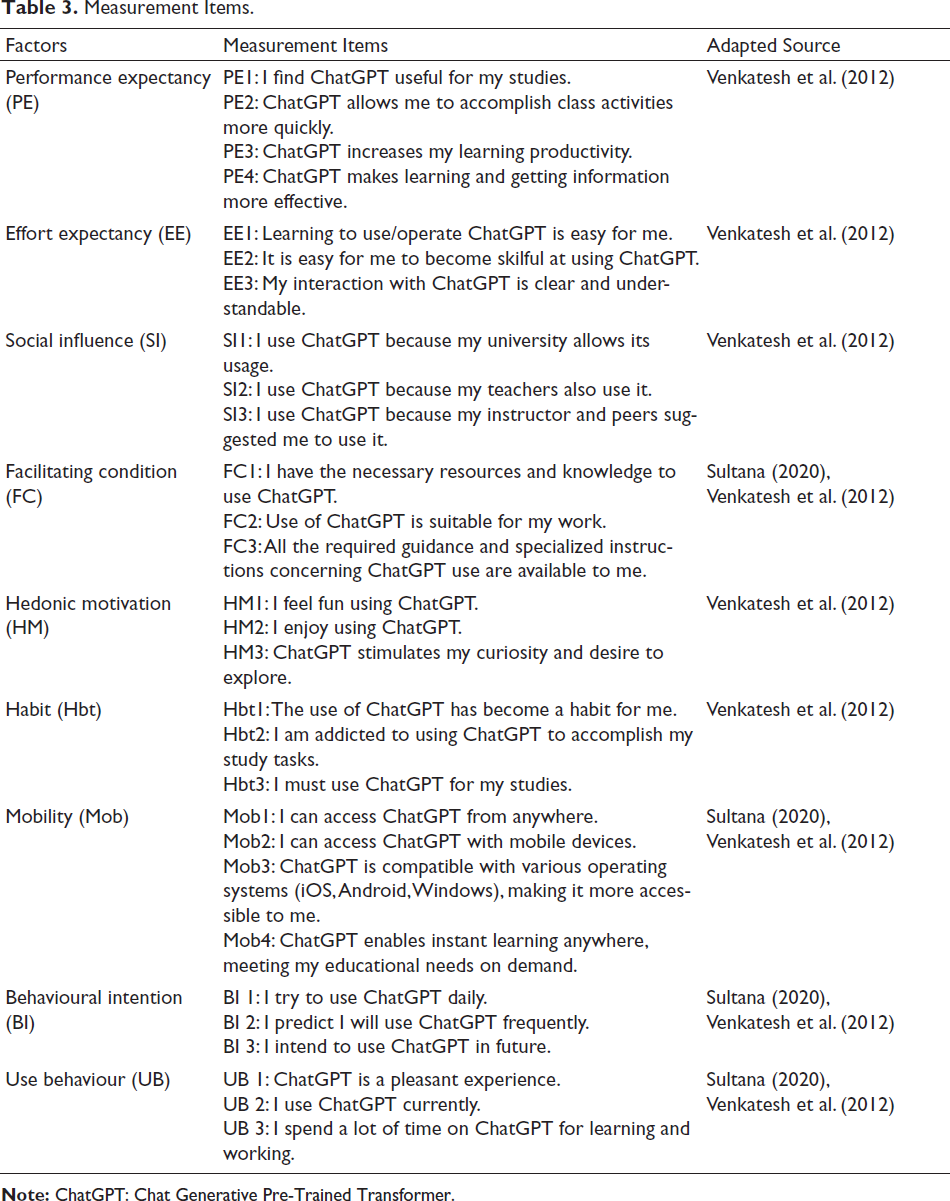
Measurement Items.
To identify and rectify errors before the final instrument administration, we conducted a pilot study to assess the questionnaire’s relevance and reliability. According to Cooper et al. (2003), the size of the questionnaire ranges from 25 to 100. We, therefore, collected responses from 30 students (Johanson & Brooks, 2010). Previous studies also used 30 responses for conducting the pilot study (Urban & Moloi, 2025). We then conducted exploratory factor analysis (EFA) to confirm the factor structure and reliability using Cronbach’s alpha (Rahman et al., 2024). The accepted value for Cronbach’s alpha is ≥.70 (Hair et al., 2010, 2021). Our results show that all constructs demonstrated acceptable Cronbach’s alpha, which ensures the reliability of the questionnaire.
Then, we finally administered and distributed the questionnaire using Google Forms among students. We collected 380 responses. After screening and cleaning the data, 327 responses were validated. Based on our model configurations, the sample size of 327 is sufficient for further analysis (Hair et al., 2021). This study complied with the Data Protection Act 1998 to ensure responsible research conduct and the safeguarding of participant data.
Finally, we employed partial least squares structural equation modelling (PLS-SEM) to test our research model because it is well-suited for complex models with multiple latent constructs, moderating relationships and prediction-oriented objectives. As a nonparametric method, PLS-SEM accommodates non-normal survey data and performs effectively with medium sample sizes. Given the model complexity in this study—including seven predictors, two moderating variables and multiple endogenous relationships—PLS-SEM offers greater flexibility and statistical power than covariance-based SEM (Hanus, 2014). Thus, PLS-SEM is the appropriate method for examining the determinants of ChatGPT adoption in higher education.
To test and validate the hypothesized relationships among the constructs, SEM was performed using the SmartPLS 4 software package. SEM is widely recognized by researchers as a robust technique for evaluating models and examining hypothesized relationships (Byrne, 2016; Gefen et al., 2003; Hair et al., 1986). Given its flexibility in accommodating various sample sizes and handling non-normal data, we employed PLS-SEM to assess both the measurement and structural models for examining the proposed model (Ringle et al., 2023). All the analysis results are presented in the following sections.
Common Method Bias (CMB)
To address potential CMB, we employed Harman’s single‑factor test, which is widely recommended in behavioural and social science studies. Following Harman’s (1967) approach, all measurement items were entered into an unrotated EFA using IBM Statistical Package for the Social Sciences (SPSS) 24. The results indicated that the first factor accounted for 34.77% of the total variance, which is well below the widely accepted threshold of 50%. This confirms that no single factor dominated the variance structure, suggesting that CMB is not a significant concern in our data set. Additionally, the multi‑construct structure demonstrated strong discriminant validity across constructs, further reducing the likelihood of CMB affecting the results.
Sample Demographics
Our demographic analysis focuses on two variables: gender and university type. These two variables provide us with information about the distribution of the data. Table 4 presents the gender distribution. A total of 140 (42.8%) respondents are female, while 187 (57.2%) are male.
Sample Distribution by Gender.

Sample Distribution by Gender.
Table 5 presents the distribution of respondents based on their university type. The results show that the respondents are almost evenly distributed between public (50.8%) and private (49.2%) universities.
University Type.

Assessing the measurement model is essential. This ensures that the study’s hypotheses are statistically supported by the data (Faqih & Jaradat, 2021). The measurement model assessment process comprises construct reliability and construct validity. Construct reliability is measured by Cronbach’s alpha and composite reliability (Hair et al., 2021). Table 6 presents loadings, Cronbach’s alpha, composite reliability and average variance extracted (AVE) values. The results in Table 6 show that the Cronbach’s alpha and composite reliability values are greater than the cutoff value of 0.70 (Hair et al., 2021). Therefore, we conclude that the data possesses adequate internal reliability and consistency.
Loadings, Cronbach’s Alpha, Composite Reliability and Average Variance Extracted (AVE).
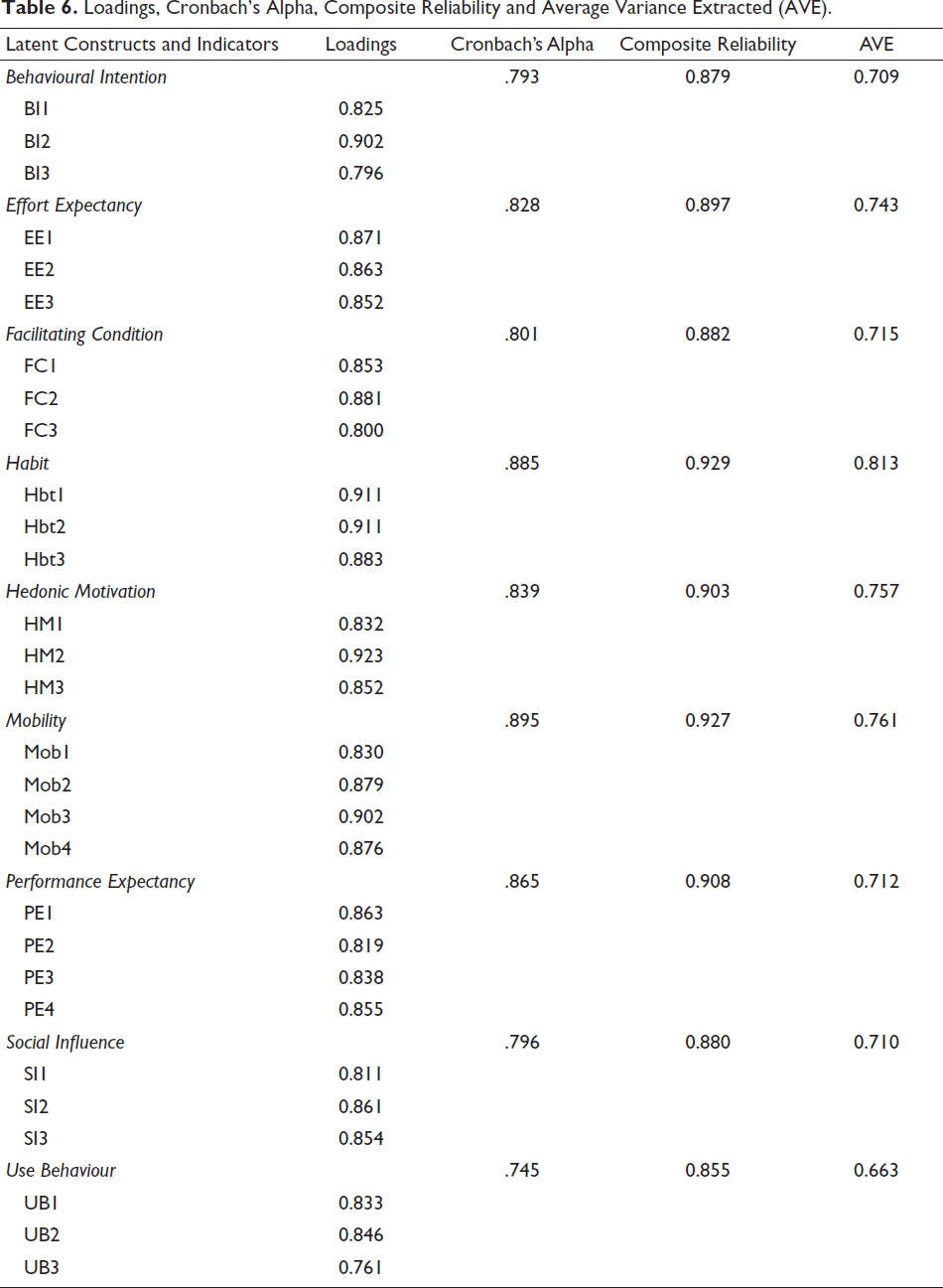
Loadings, Cronbach’s Alpha, Composite Reliability and Average Variance Extracted (AVE).
On the other hand, construct validity is established using convergent and discriminant validity. The convergent validity can be assessed using AVE and outer loadings. A threshold of 0.50 is suggested for AVE (Faqih & Jaradat, 2021). Table 6 shows that all AVE values are greater than 0.50 for each construct. In addition, the outer loadings indicate how strongly each indicator is associated with its respective construct within a measurement model. As a general guideline, outer loadings should be equal to or greater than 0.708 (Hair et al., 2019). The outer loading values in Table 6 show that all values are greater than 0.708. Therefore, it is evident that convergent validity does not pose any issues in this study.
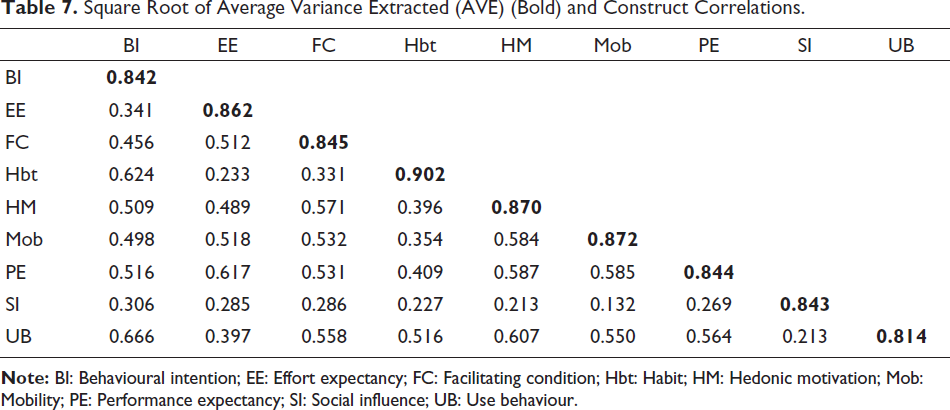
As for the discriminant validity, it can be assessed using the Fornell–Larcker criterion. According to the Fornell–Larcker criterion, the square root of a construct’s AVE should exceed its highest correlation with any other construct. Table 7 presents the square root of AVE for all constructs (diagonal bold values) and the correlations between constructs. Since for all constructs, the square root of AVE is greater than the highest correlation with any other construct, this demonstrates good discriminant validity according to the Fornell–Larcker criterion.
Square Root of Average Variance Extracted (AVE) (Bold) and Construct Correlations.
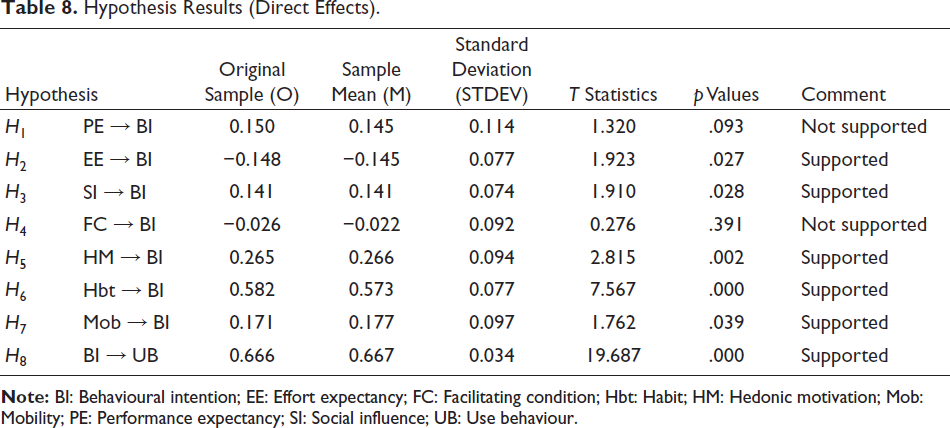
The analysis of factors influencing the adoption of ChatGPT in higher education in Bangladesh reveals several key insights. Collinearity was assessed using variance inflation factors (VIFs). All inner VIF values ranged from 1.16 to 2.23, well below the conservative threshold of 3.3, indicating that multicollinearity is not a concern (Hair et al., 2021). Figure 2 presents the hypothesized results. Tables 8 and 9 present the direct effects and the moderation effects, respectively. A significant positive relationship exists between BI and usage behaviour (β = 0.409, t = 7.130, p < .001), indicating that a higher intention to use ChatGPT leads to increased actual usage. Among factors affecting BI, HM shows a positive impact (β = 0.264, t = 2.814, p = .002), suggesting that the enjoyment of using technology enhances the intention to adopt ChatGPT. Conversely, EE slightly reduces BI (β = −0.148, t = 1.921, p = .027), while FCs have a negligible effect (β = −0.025, t = 0.268, p = .394). SI also positively impacts BI (β = 0.141, t = 1.907, p = .028), demonstrating the role of social factors in shaping intentions. Surprisingly, PE is found not to be a significant predictor of BI (β = 0.150, t = 1.320, p = .093), which contradicts with previous studies (Sultana et al., 2024; Venkatesh et al., 2012). These findings highlight the importance of both intrinsic enjoyment and social factors in promoting ChatGPT adoption, while the impact of FCs remains minimal.
Hypothesized Results.
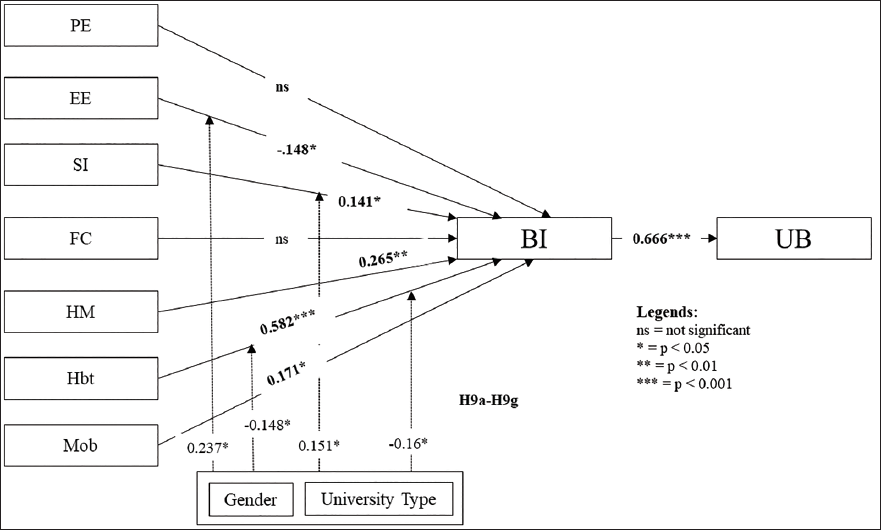
Hypothesized Results.
Hypothesis Results (Direct Effects).
Hypothesis Results (Moderation Effects).
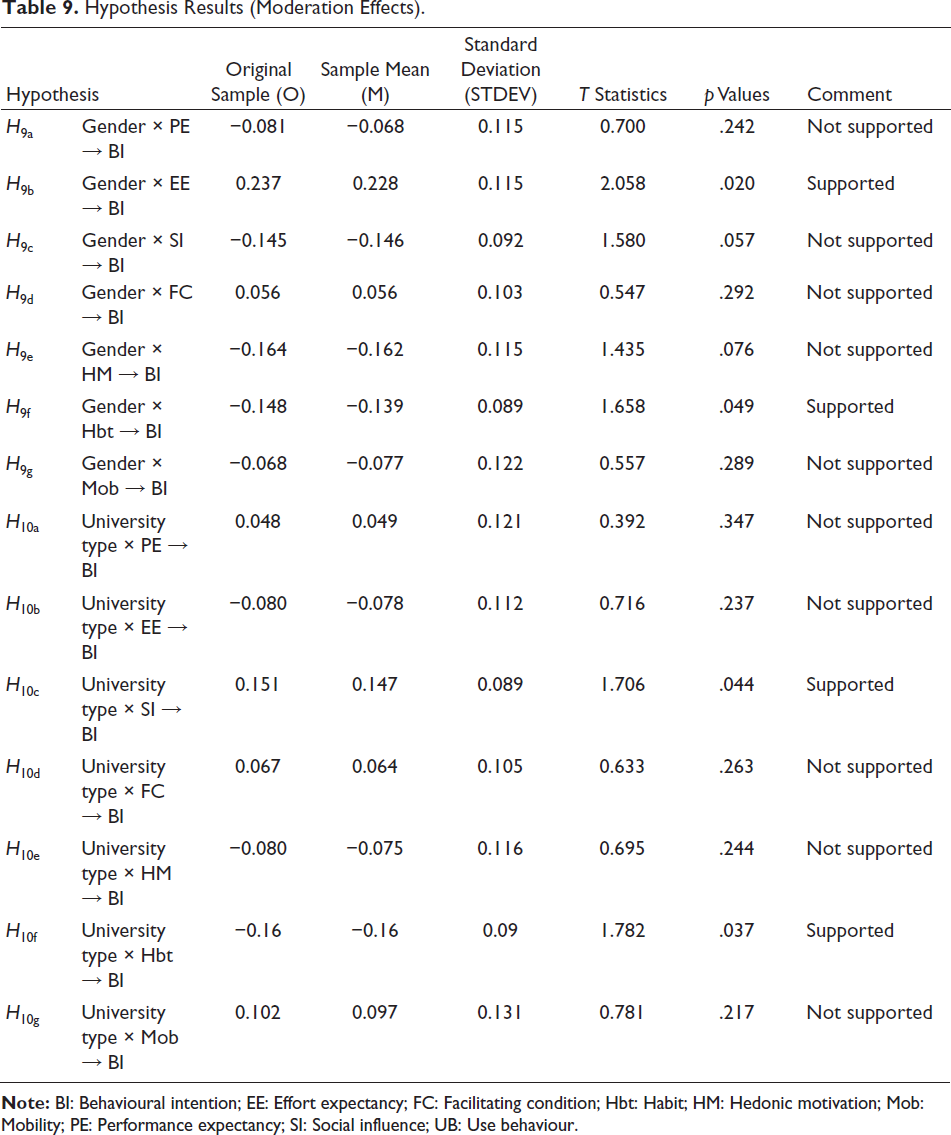
In the moderation analysis, we found that gender moderates the relationship between EE and BI (β = 0.237, t = 2.058, p = .020) and Hbt and BI (β = −0.148, t = 1.658, p = .049). In addition, university type also moderates the relationship between SI and BI (β = 0.151, t = 1.706, p = .044) and Hbt and BI (β = −0.16, t = 1.782, p = .037). Finally, our model explains 53.2% of the variance in BI (R2 = 0.532) and 53.7% of the variance in usage behaviour (R2 = 0.537), indicating moderate explanatory power.
In this study, we adapted and modified the UTAUT2 model to identify the factors influencing ChatGPT adoption in higher education in Bangladesh. Our empirical results indicate that EE, SI, HM, Hbt and Mob significantly predict BI. Additionally, FC, Hbt and BI were found to impact UB significantly. Findings on Hbt extend the UTAUT2 model, and altogether these findings provide insights that both reinforce and challenge the existing literature on technology adoption.
Notably, PE showed no significant relationship with BI (β = 0.150, p = .095). This suggests that students’ expectations regarding ChatGPT’s ability to enhance their productivity or performance do not substantially affect their intention to use the tool. This finding diverges from the traditional assumption that users are more likely to adopt a technology when they believe it will streamline their tasks and improve productivity. However, Venkatesh et al. (2003) suggested that as users become more familiar with technology, factors such as EE and SI may become more influential, potentially diminishing the importance of PE. Furthermore, the study reveals a negative relationship between EE and BI, implying that as ease of use improves, students’ intention to use ChatGPT strengthens. This finding aligns with previous studies, reinforcing that ease of use is a significant driver for the intention to adopt technology (Alalwan et al., 2017; Sultana et al., 2024).
Additionally, SI emerged as a significant positive predictor of BI, which is consistent with existing literature. As a widely recognized new technology, ChatGPT gains traction through SIs from friends, family, colleagues and peers. The importance of SI reflects the role of social dynamics in encouraging technology adoption, especially for innovations with high visibility and applicability in academic settings. Unexpectedly, FC was not a significant predictor of BI, which may be due to ChatGPT’s consumer-friendly design that does not require substantial external support, reducing the need for FCs in its adoption.
Hbt demonstrated a robust positive influence on both BI (β = 0.582, p = .000) and UB (β = 0.275, p = .000), underscoring the impact of habitual behaviour on both intention and actual use of the system. This finding emphasizes the importance of habit formation for sustained use and long-term adoption of the tool. Furthermore, HM was a positive predictor of BI, suggesting that the intrinsic enjoyment students experience while using ChatGPT enhances its adoption potential, which is aligned with the existing literature (Acosta-Enriquez et al., 2025; Noerman et al., 2025). ChatGPT’s engaging and enjoyable interface makes it an appealing educational tool, highlighting the significance of intrinsic motivation in technology adoption.
The moderation analysis revealed that gender positively moderates the relationship between EE and BI for males. This result shows that male students are more influenced by how easy they perceive ChatGPT to be when deciding whether to use it, whereas this factor has a weaker impact on female students’ decision-making. On the other hand, gender negatively moderates the relationship between Hbt and BI for females. This result indicates that while men may develop stronger habitual patterns leading to consistent technology use, women might rely less on habit and more on other external factors, such as social norms.
University type also positively moderates the relationship between SI and BI for private university students. On the other hand, university type negatively moderates the relationship between Hbt and BI for public university students. One plausible explanation for this relationship is that private university students in Bangladesh have greater exposure to technology, as private institutions typically invest more in digital infrastructure and learning resources. This consistent access fosters stronger habitual use of technology among private university students. In contrast, public university students may have limited access to advanced technological tools and platforms, reducing their reliance on technology-based habits.
Finally, the study found a significant and positive relationship between BI and UB (β = 0.409, p = .000), indicating that strong intentions lead to actual UB. This supports established models, such as the UTAUT, where BI is a primary predictor of UB (Venkatesh et al., 2003). This relationship reaffirms that fostering positive intentions toward ChatGPT can drive its practical usage among students, strengthening its role as an academic tool.
Contributions and Implications
This study makes several significant theoretical and practical contributions to the literature on AI adoption in higher education, particularly within the underexplored context of Bangladesh. First, from a theoretical standpoint, the study extends the UTAUT2 framework by empirically incorporating and validating two additional constructs, HM and habit, in explaining ChatGPT adoption in higher education. While prior UTAUT2 studies have predominantly examined traditional educational technologies, this research uniquely applies the model to an AI-powered conversational learning tool like ChatGPT, demonstrating that enjoyment-driven engagement (HM) and repeated behavioural patterns (habit) play a critical role in sustained AI usage. By confirming that both constructs significantly influence adoption, the study enriches the explanatory power of UTAUT2 in AI-mediated educational environments and advances theory beyond conventional technology acceptance contexts. This contributes to the broader discourse on AI’s role in transforming education through personalized engagement and support (Singh et al., 2023), addressing a critical need for context-specific research.
Second, this study contributes theoretically by contextualizing ChatGPT adoption within the distinctive characteristics of the Bangladeshi higher education system, moving beyond mere geographical novelty. The Bangladeshi context is marked by exam-oriented pedagogical practices, limited institutional AI policies, concerns regarding academic integrity, and disparities in digital infrastructure between public and private universities. By embedding these contextual realities into the UTAUT2 framework, the study demonstrates how structural and cultural factors shape technology adoption behaviours, thereby offering a context-sensitive theoretical extension applicable to developing-country educational ecosystems. This contextualization deepens scholarly understanding of ChatGPT adoption in resource-constrained and policy-evolving environments.
Third, the study advances empirical knowledge by identifying key determinants, habit, HM, EE, SI and mobility, that significantly influence ChatGPT adoption among university students. Linking these findings back to UTAUT2 theory, the results indicate that EE enhances PEU, SI reinforces normative acceptance of AI tools, while HM drives voluntary engagement beyond academic requirements, and habit facilitates long-term integration of ChatGPT into daily learning routines. These insights strengthen the theoretical proposition that both utilitarian and affective-motivational mechanisms jointly shape ChatGPT adoption in educational contexts. This empirical approach also expands upon existing literature, which has primarily relied on general discussions or reviews (Maheshwari, 2024), and provides a nuanced analysis relevant to the education sector in developing countries.
Fourth, the study offers important practical implications for universities, educators and policymakers. For universities, the findings highlight the need to develop structured AI literacy programmes, integrate AI-supported assignments, and improve digital infrastructure to support habit formation and sustained engagement. For educators, the results suggest designing pedagogical strategies that leverage the motivational role of hedonic engagement while ensuring responsible and ethical use of AI tools in coursework. For policymakers, the study provides evidence-based guidance for formulating national and institutional AI integration policies that address academic integrity, equitable access and responsible AI usage in higher education. These implications facilitate the strategic and ethical incorporation of AI-driven learning tools in Bangladesh’s higher education system.
Fifth, the moderation analysis contributes to both theory and practice by revealing that gender and university type influence several adoption relationships. Theoretically, these moderating effects reinforce the contextual sensitivity of UTAUT2 by demonstrating that demographic and institutional disparities shape how core determinants translate into actual technology use. Practically, the findings underscore the importance of inclusive technology training, collaborative learning initiatives for female students, and enhanced digital resource allocation in public universities to bridge adoption gaps and foster equitable AI usage.
Finally, this study contributes to national development goals by aligning ChatGPT adoption with Bangladesh’s Smart Vision 2041, which emphasizes building a digitally skilled workforce and promoting a knowledge-based economy. By identifying the behavioural and contextual determinants of AI adoption, the research provides a strategic roadmap for integrating AI technologies in higher education while addressing challenges related to digital inequality, ethical concerns and responsible usage. These insights are critical for building a framework that aligns with Bangladesh’s vision for a digital economy and facilitates the broader integration of AI in education, addressing issues of academic integrity, accessibility and ethical considerations in the process (Romero-Rodríguez et al., 2023). These insights support the creation of AI-enabled curricula that enhance critical thinking, problem-solving and technological readiness among students, thereby preparing them for participation in an AI-driven global economy.
Limitations and Future Research
While the study’s insights are substantial, it also has certain limitations. First, as it focuses solely on Bangladesh, the generalizability of its findings may be constrained. Future research could expand the scope by including multiple countries and a larger sample size to enhance external validity. Additionally, comparative studies across developing and developed higher-education systems would help validate the contextual extension of the UTAUT2 framework and reveal how cultural, infrastructural and policy differences shape AI adoption behaviours.
Second, this study relies on a survey method, which may introduce response bias (Maheshwari, 2024). To mitigate this, future studies could adopt a mixed-method approach, combining surveys with interviews to capture a more nuanced understanding of user perspectives. Future research may also incorporate objective usage analytics (e.g., system logs or learning platform data) to complement self-reported measures and provide more robust behavioural evidence of ChatGPT adoption.
Third, the research employed a cross-sectional design for data collection, which limits insights into changes over time. Future studies could address this limitation by adopting a longitudinal approach, allowing for a better understanding of how ChatGPT adoption and its influencing factors may evolve across different time periods. Such longitudinal designs would be particularly useful for examining the dynamic roles of HM and habit, assessing how initial novelty-driven usage transitions into sustained and routine academic integration of AI tools.
Finally, future research could extend the current model by incorporating additional constructs such as trust in AI, perceived risk and AI literacy, which may further explain students’ BIs and responsible usage of generative AI in higher education.
Conclusion
In conclusion, this study provides valuable insights into the factors influencing ChatGPT adoption among Bangladeshi students, employing and extending the UTAUT2 model to examine key constructs such as PE, EE, FCs, SI, HM, habit and mobility. By focusing on an under-researched and unique context like Bangladesh, this research extends the existing literature on AI acceptance in education and highlights the unique challenges and motivations driving AI adoption in developing countries. In findings it shows that EE, SI, HM, habit and mobility factors are crucial in influencing the UB of ChatGPT uses. Highlighting this, it offers practical implications for educational institutions and policymakers, emphasizing the importance of creating supportive frameworks that facilitate the integration of AI technologies in learning environments, aligning with Bangladesh’s Smart Vision 2041.
Furthermore, the study underscores the need for future research to explore longitudinal and cross-cultural perspectives to understand better the evolving nature of AI adoption and its broader educational impacts. From a policy standpoint, the findings suggest that governments and institutions should prioritize AI literacy initiatives, ethical usage guidelines and infrastructure development to ensure responsible, inclusive and sustainable integration of generative AI tools in higher education.
Footnotes
Authors’ Contribution
Md Golam Kibria: Conceptualization, methodology, formal analysis, validation, writing—review and editing.
Khadija Khanom: Conceptualization, Literature review, Data collection, writing—review and editing.
Jakia Sultana: Conceptualization, Literature review, methodology, writing—review and editing.
Farjana Parvin Chowdhury: Conceptualization, Data collection, writing—review and editing.
Data Availability
Data supporting the findings are available upon request.
Declaration of Conflicting Interests
The authors declared no potential conflicts of interest with respect to the research, authorship and/or publication of this article.
Ethical Declaration
This study was conducted in accordance with ethical standards for research involving human participants. Ethical approval was obtained from the relevant institutional review board prior to data collection. Participation in the survey was voluntary, and informed consent was obtained from all respondents. The data collected were anonymized and handled confidentially.
Funding
The authors received no financial support for the research, authorship and/or publication of this article.
