







Abstract
Drawing from sensemaking theory, this study investigates how socially responsible human resource management (SRHRM) influences employee proactive work behaviour (EPWB) through underlying psychological processes and contextual factors. While prior research suggests SRHRM enhances positive employee outcomes, limited attention has been paid to the mechanisms through which employees interpret and internalize SRHRM practices, and how these interpretations drive proactive behaviours. Using a time-lagged survey of 756 employees in multinational companies in Southeast Vietnam, the study tests a serial mediation model where work meaningfulness and organizational pride sequentially transmit the effects of SRHRM to EPWB. Structural equation modelling results reveal that SRHRM does not directly predict EPWB but operates entirely through this psychological chain. Furthermore, multi-group analysis shows that leadership gender moderates the indirect pathway: female leaders amplify the positive effects of SRHRM on employees’ sensemaking and subsequent behaviours, while male leaders weaken them. These findings contribute to human resource management and organizational behaviour literature by advancing sensemaking theory in explaining how socially responsible practices translate into discretionary employee actions and identifying leadership gender as a critical contextual variable. Practical implications suggest organizations should design SRHRM interventions that foster meaningful work experiences and strategically leverage leadership characteristics to enhance employee proactivity.
Keywords
Introduction
In the context of a rapidly changing global economy shaped by digital transformation, climate change and profound social upheavals, including geopolitical conflicts, widening inequality, erosion of institutional trust and shifting generational expectations (Chang et al., 2025; Pham, Tuan, Le, et al., 2023), organizations face unprecedented pressure to fundamentally reconsider their management paradigms. Employees are no longer merely economic resources but have become critical stakeholders, whose well-being and ethical treatment are core to the organization’s legitimacy and sustainability (Liao et al., 2022; Shen & Benson, 2016). In response to this context, socially responsible human resource management (SRHRM) has emerged as an essential theoretical framework and practical solution (Luu, 2023; Shen & Benson, 2016). Moving beyond the conventional HR approach that focuses solely on performance, SRHRM comprehensively integrates ethical principles, fairness and social responsibility into management practices (Liao et al., 2022; Shen & Benson, 2016). Empirical evidence confirms that SRHRM strongly promotes positive employee attitudes and discretionary behaviours, including commitment, innovation, organizational citizenship behaviour (OCB), environmentally-focused OCB (OCBE) and extra-role helping behaviours (Newman et al., 2016; Wang et al., 2023a; Zhao et al., 2019; Zhou & Zheng, 2024), thereby realizing the organization’s sustainable development goals (Liao et al., 2022; Wang et al., 2023b).
However, the SRHRM literature still faces a fundamental question: Why do these HR systems sometimes fail to elicit proactive behaviour? The current competitive environment demands that employees demonstrate employee proactive work behaviour (EPWB), which comprises self-initiated actions extending beyond formal job requirements (Ma et al., 2023; Parker et al., 2006) to help organizations maintain adaptability and innovation (Crant, 2000; Parker et al., 2006). While traditional management approaches increasingly prove inadequate at nurturing motivation for EPWB (Parker et al., 2006), clarifying how SRHRM influences this behaviour becomes imperative, as EPWB requires deep psychological commitment and profound voluntary dedication (Ma et al., 2023; Parker et al., 2006). If SRHRM successfully fosters EPWB, organizations will gain a sustainable competitive advantage. Thus, investigating this relationship not only addresses theoretical challenges regarding the impact of ethical HR but also provides practical strategic value in enhancing organizational effectiveness.
The first part of the answer lies in decoding the psychological ‘black box’ that has been left open. Although previous studies have confirmed positive relationships between SRHRM and employee outcomes (Wang et al., 2023b; Zhou & Zheng, 2024), they primarily identify correlations without adequately explaining the underlying psychological mechanisms (Jia et al., 2019; Newman et al., 2016; Pimenta et al., 2024). Relying on current generic mediating mechanisms fails to illuminate the specific cognitive processes involved in employees’ receipt, decoding, internalization and response to SRHRM signals. In particular, it remains unclear how employees interpret the meaning of SRHRM practices, what psychological transformations occur during this process and why these lead to proactive behaviours that require intrinsic motivation rather than mere compliance. This theoretical ambiguity hinders a clear understanding of the causal mechanisms linking SRHRM to EPWB, while simultaneously making it difficult to develop evidence-based interventions aimed at maximizing the effectiveness of SRHRM.
The second part of the answer requires a theoretical framework capable of capturing employees’ active interpretive agency. In an era of scepticism towards social responsibility claims and accusations of symbolic ‘greenwashing’ or ‘ethics-washing’ (Aguinis & Glavas, 2019), employees no longer passively trust appearances. Instead, they actively scrutinize whether SRHRM practices are a genuine organizational commitment or merely an impression management tactic. Understanding how employees construct meaning from SRHRM through extracting cues and integrating them into their work identities becomes paramount. Sensemaking theory (Maitlis, 2005; Sandberg & Tsoukas, 2015; Weick, 1995) provides an ideal lens to study these dynamic interpretive processes. However, despite its great explanatory power, this theory remains underutilized in SRHRM research, leaving a significant theoretical gap that this study will address.
The third part of the answer concerns the contextual conditions governing the effectiveness of the SRHRM sensemaking chain. The same SRHRM practices can generate different employee responses depending on who communicates them. Although many studies have explored cultural factors in multinational companies (MNCs) (Björkman & Lervik, 2007; Farndale et al., 2010), the impact of leader gender on the sensemaking process remains largely unexamined (Koburtay et al., 2019; Shen & Joseph, 2021). Unlike the traditional male leadership archetype, female leaders often face a double bind in perception (Purushothaman & Ammerman, 2025). However, in the context of SRHRM, when female leaders promote initiatives emphasizing ethics and care, role congruity enhances the authenticity of the message (Hyun et al., 2022; Koburtay et al., 2019). Conversely, male leaders may encounter an incongruity between agentic leadership stereotypes and the communal values of SRHRM (Johnson et al., 2008; Wang et al., 2013), which risks weakening the process of translating SRHRM into proactive behaviour. Therefore, decoding this moderating mechanism is essential for MNCs to effectively implement SRHRM across diverse leadership contexts.
To address these three core aspects, the study draws on sensemaking theory (Maitlis, 2005; Weick, 1995) to develop and test a moderated serial mediation model. Specifically, we propose a sequential psychological process: SRHRM enhances work meaningfulness, which in turn strengthens OP and ultimately promotes EPWB, while simultaneously examining the moderating role of leadership gender throughout this entire process. The model is evaluated through structural equation modelling and multi-group analysis, using time-lagged survey data from 756 employees at MNCs in Southeast Vietnam. This study brings profound contributions to both theory and practice. Theoretically, the research extends sensemaking theory by linking macro-level policies with employees’ micro-level psychological interpretation processes, and clarifies the effectiveness mechanism of SRHRM through a serial mediation chain (from work meaningfulness to OP and EPWB), thereby affirming that SRHRM promotes proactivity primarily through psychological transformations rather than direct effects. Furthermore, the study contributes to the field of leadership by demonstrating that leadership gender governs the entire depth of this sensemaking chain. In practice, the findings indicate that SRHRM policies are most effective when organizations actively cultivate a sense of meaning and pride through transparent communication, ethical leadership, and community initiatives. To optimize this, managers need to promote gender diversity in leadership and implement targeted practices, such as meaningful work design, disseminating social impact narratives and recognizing ethical contributions to reinforce the psychological pathways that help translate SRHRM into sustained employee proactivity, innovation and adaptability in volatile environments.
Literature Review
SRHRM integrates social responsibility principles into HR practices to promote ethics, fairness and sustainability rather than focusing solely on profit (Shen & Zhu, 2011; Zhao et al., 2019). By treating employees fairly, protecting their rights and encouraging their participation in social activities (Shen & Zhu, 2011), SRHRM conveys strong ethical signals that employees are an integral component of the sustainable development strategy (Liao et al., 2022; Wang et al., 2023a). Perceiving this trust and long-term investment from the organization, employees develop stronger intrinsic motivation and a deeper commitment to their work (Shen & Benson, 2016).
EPWB represents self-initiated, future-oriented actions aimed at creating positive organizational change (Parker et al., 2006). These extra-role behaviours include process improvement suggestions, capability enhancement, feedback-seeking and proactive problem-solving, demonstrating responsibility, creativity and deep organizational commitment. In volatile and uncertain work environments, proactive behaviours are essential for maintaining organizational adaptability, innovation and long-term performance (Crant, 2000; Parker et al., 2006).
Sensemaking theory (Maitlis, 2005; Sandberg & Tsoukas, 2015) provides a robust framework for understanding how employees actively construct meaning from organizational practices rather than passively receiving messages. According to Weick (1995), sensemaking is fundamentally about ‘the ongoing retrospective development of plausible images that rationalize what people are doing’ (p. 15). Three cognitive mechanisms are particularly crucial for understanding how SRHRM influences employee behaviours: Cue extraction, plausibility construction and identity construction.
Cue extraction is the process by which employees selectively filter environmental stimuli to serve as raw materials for sensemaking (Maitlis & Christianson, 2014; Weick, 1995). Because they cannot absorb all information simultaneously, they focus only on salient signals such as policies and leadership behaviours (Maitlis & Christianson, 2014). According to Weick (1995), cues attract attention when they are psychologically distinctive, unexpected or tied to core values. In the context of SRHRM, ethical signals are particularly salient because they contradict purely economic logic. The organization’s prioritization of equity and long-term welfare over cost minimization signals value transcendence (Aguinis & Glavas, 2019). This extraction process is governed by individual cognition and identity (Weick, 1995), as individuals with an ethical orientation will more easily recognize SRHRM cues than those focused solely on economic transactions. Furthermore, SRHRM practices championed by credible leaders will generate clearer cues than superficial window dressing (Maitlis et al., 2013).
Once cues are extracted, employees engage in plausibility construction, which involves retrospectively connecting cues into coherent narratives that ‘make sense’ within their existing belief systems (Maitlis, 2005; Weick, 1995). A fundamental insight is that this process is driven by plausibility rather than accuracy: individuals seek interpretations that are reasonable, coherent and socially acceptable rather than objectively true (Weick, 1995). Employees ask, ‘Does this make sense given what I know?’ rather than ‘Is this absolutely correct?’ When SRHRM practices are perceived as consistent, authentic and value aligned, employees construct plausible narratives such as: ‘This organization genuinely cares about ethics and people, not just profits’ or ‘My work contributes to meaningful social purposes beyond economic transactions’ (Aguinis & Glavas, 2019). These narratives gain plausibility through coherence in that they fit logically with other organizational signals and resonate emotionally with employees’ moral intuitions. Conversely, when SRHRM cues appear inconsistent or superficial (e.g., ‘greenwashing’), employees construct alternative narratives: ‘This is just impression management’ or ‘Leadership doesn’t really believe this’. Importantly, plausibility construction is fundamentally social (Maitlis, 2005; Weick, 1995): Employees test their interpretations through conversations with colleagues and adjust their narratives based on collective sensemaking processes, meaning that leadership communication and organizational culture significantly shape which interpretations become collectively plausible.
Identity construction represents the deepest level of sensemaking, wherein employees ask: ‘Who am I in this context?’ and ‘What does this mean for my self-concept?’ (Maitlis & Christianson, 2014). Weick (1995) emphasizes that sensemaking is grounded in identity: ‘Who I am as indicated by discovery of how and what I think’ (p. 61). Identity serves both as a source and product of sensemaking such that individuals interpret organizational events in ways that maintain coherent self-concepts while simultaneously constructing identities through their interpretations (Weber & Glynn, 2006). When SRHRM signals that employees’ work contributes to social good, environmental sustainability or community welfare, it allows employees to construct work identities as ethical agents contributing to meaningful purposes beyond economic transactions (Aguinis & Glavas, 2019). This identity-based sensemaking is particularly powerful because it connects organizational practices to employees’ core moral values and self-concepts. Employees who construct work identities centred on social contribution and ethical responsibility develop fundamentally different motivational structures, experiencing intrinsic motivation rooted in moral agency, than those who view work purely as economic exchange (Steger et al., 2012). Moreover, identity construction explains why SRHRM does not uniformly generate identical responses: employees with pre-existing identities centred on communal values will more readily construct work identities aligned with SRHRM’s ethical signals, whereas employees with primarily economic identities may interpret the same practices as less relevant (Helms Mills & Mills, 2017).
The integration of these three mechanisms explains how SRHRM promotes employee proactive behaviour: first, extracting salient ethical cues; next, connecting them into plausible narratives about organizational values; and finally, integrating them into work identity. This sequential interpretive process fosters work meaningfulness and OP, thereby triggering intrinsic motivation for proactive behaviours. Notably, sensemaking theory indicates that SRHRM may not directly impact behaviour if this cognitive chain fails (Weick, 1995). This pathway will be disrupted if cues are weak, narratives lack authenticity or messages conflict with personal identity. Therefore, work meaningfulness and OP serve as essential psychological bridges demonstrating a successful sensemaking process.
It is important to note that sensemaking, as theorized by Weick (1995), is a latent cognitive process that cannot be directly observed. Therefore, this study approaches it empirically through psychological manifestations, specifically work meaningfulness and OP as evidence of a successful sensemaking process, aligning with previous research (Maitlis & Christianson, 2014; Sandberg & Tsoukas, 2015). Additionally, the current model does not include ‘failed sensemaking’ (when employees construct implausible, identity-threatening narratives) or ‘contested sensemaking’ (when they resist ethical messages). These boundary conditions open up avenues for future research, particularly in contexts where SRHRM credibility is questioned or where strong counter-narratives exist. The dominant literature often assumes that SRHRM has a positive and direct impact on employee proactive behaviour by providing support, fairness and a sense of being valued. However, through the lens of sensemaking theory, this direct effect may be limited or disappear when considering the process by which employees decode and internalize HR practices. In other words, distinct from the traditional logic that implies a direct relationship, this study argues that SRHRM promotes behaviour primarily through intermediate psychological interpretations rather than producing immediate behavioural change.
H1: SRHRM positively influences EPWB.
Moving beyond the assumption of a direct effect in H1, sensemaking theory also argues that SRHRM promotes proactive behaviour through a sequence of psychological transformations (Maitlis et al., 2013; Sandberg & Tsoukas, 2015). This process fosters work meaningfulness, the state in which individuals perceive their work as worthwhile and directed towards a greater purpose (Steger et al., 2012; Zhou et al., 2023). Specifically, employees extract ethical cues and connect them into plausible narratives about creating social value beyond economic benefits (Aguinis & Glavas, 2019; Nazir & Islam, 2020). When SRHRM signals resonate with personal identity, they position themselves as contributors to the community, thereby strongly activating the sense of work meaningfulness (Steger et al., 2012; Zhou et al., 2023).
OP is a positive affective state experienced when employees are affiliated with a prestigious and ethical collective (Gouthier & Rhein, 2011; Schaefer et al., 2024). According to sensemaking theory, the identity construction process occurs sequentially from the individual to the collective level (Weick, 1995). Therefore, work meaningfulness (individual sensemaking) serves as an antecedent to OP (collective sensemaking). When employees perceive their work as delivering significant social value, they identify more strongly with the organization’s values and external prestige (Schaefer et al., 2024; Zhou et al., 2023). This alignment between personal identity (‘I am an ethical contributor’) and collective identity (‘the organization is ethical’) is the very root that nurtures great pride in being part of the organization (Gouthier & Rhein, 2011).
Based on the identity-construction mechanism in sensemaking theory, OP helps employees internalize collective identity, leading them to perceive threats to organizational reputation as threats to themselves (Weick, 1995). This alignment helps them better recognize their personal responsibility, thereby promoting intrinsic motivation to contribute proactively (Gouthier & Rhein, 2011; Maitlis & Christianson, 2014). They are willing to exceed basic job requirements, taking actions such as suggesting improvements or resolving problems to maintain organizational values (Ma et al., 2023; Parker et al., 2006). In summary, the impact of SRHRM follows a sequential developmental logic: personal sensemaking (work meaningfulness) precedes collective identification (OP), which ultimately activates proactive work behaviours (PWB) aimed at protecting identity. Therefore:
H2: Employee work meaningfulness (EWM) and OP serial mediate the relationship between SRHRM and EPWB.
Leaders play a critical role in sensegiving by interpreting organizational values and communicating them to employees (Gioia & Chittipeddi, 1991; Maitlis et al., 2013). Leader characteristics shape how employees extract cues, construct plausible narratives and integrate meanings into their identities (Antunes & Franco, 2016). Leadership gender represents a contextual variable that has been rarely examined in multinational corporation contexts, despite its theoretical significance for understanding SRHRM effectiveness (Koburtay et al., 2019; Shen & Joseph, 2021). While extensive research has explored cultural dimensions and HR practice transfers in multinational corporations (Björkman & Lervik, 2007; Shen & Joseph, 2021), leader gender as a moderator of employees’ sensemaking processes remains virtually unexamined. This gap is consequential because leader perceptions directly impact credibility and message reception (Purushothaman & Ammerman, 2025).
Female leaders differ fundamentally from male leaders in how they are perceived. They diverge from the historical leadership archetype, which is predominantly male, white and socio-economically advantaged, and face a well-documented double bind where they are viewed as either competent but cold, or likeable but ineffective (Purushothaman & Ammerman, 2025). In SRHRM contexts, these perception differences become theoretically significant. When female leaders champion SRHRM initiatives emphasizing care, ethics and social responsibility, employees may experience role congruity, enhancing message authenticity (Hyun et al., 2022; Koburtay et al., 2019). Conversely, male leaders may experience role incongruity between agentic leadership stereotypes and SRHRM’s communal values (Johnson et al., 2008).
Gender role theory posits that gender stereotypes shape expectations about appropriate behaviours and attributes for women and men (Eagly & Karau, 2002). Women are stereotypically associated with communal traits such as empathy, care and social concern, while men are associated with agentic traits such as assertiveness, competitiveness and task orientation (Koenig et al., 2011). These stereotypes influence how employees interpret leaders’ actions and messages. Research on moral sensitivity indicates that women often display higher sensitivity to ethical issues and moral considerations (Simga-Mugan et al., 2005). When female leaders communicate SRHRM values, employees may perceive greater authenticity and credibility because the messages align with gender role expectations of empathy and social responsibility (Eagly & Carli, 2003).
From a sensemaking perspective, leadership gender influences all three core mechanisms. First, cue salience differs by leader gender. Female leaders’ SRHRM initiatives may prime ethical and communal cues more effectively because employees associate these cues with feminine stereotypes (Koenig et al., 2011). Male leaders’ SRHRM messages may be perceived as less salient because they compete with agentic leadership schemas that emphasize performance and competition (Johnson et al., 2008). Second, plausibility construction varies by leader gender. Role congruity between female leaders and SRHRM values enhances narrative coherence and emotional resonance, making SRHRM claims more plausible (Eagly & Karau, 2002). Role incongruity between male leaders and communal SRHRM values may create cognitive dissonance, reducing the plausibility of SRHRM narratives (Kacmar et al., 2013). Third, identity integration is deeper under female leadership. Employees may experience stronger emotional resonance and authenticity when female leaders champion SRHRM, facilitating integration of ethical meanings into work identities (Helms Mills & Mills, 2017). Male leaders may trigger shallower identity integration due to perceived role incongruity.
Moreover, male leaders are not inherently incapable of effective sensegiving in SRHRM contexts; rather, they face a higher threshold of legitimation arising from the perceived incongruity between agentic gender stereotypes and the communal values embedded in SRHRM. Critically, male leaders who deliberately and authentically adopt communal communication styles, demonstrate genuine ethical commitment through consistent behavioural signals, and engage in transparent social impact communication can actively counteract role incongruity effects and serve as highly effective SRHRM sensegivers (Eagly & Carli, 2003; Gioia & Chittipeddi, 1991). Leadership gender, in this theoretical framework, therefore operates as a contextual and probabilistic moderator of sensegiving effectiveness rather than as a deterministic constraint on leadership capacity or a fixed predictor of employee sensemaking outcomes. This qualification preserves the theoretical integrity of the role congruity argument while guarding against deterministic or reductive interpretations of gender differences in organizational leadership.
These gendered sensemaking mechanisms suggest that leadership gender moderates both the direct effect of SRHRM on proactive behaviour and the indirect effect through the serial mediation pathway. When female leaders implement SRHRM, employees are more likely to extract salient ethical cues, construct plausible organizational narratives and experience deeper identity integration, leading to stronger direct effects on proactive behaviour and stronger serial mediation through work meaningfulness and OP. When male leaders implement SRHRM, stereotype-based role incongruity may reduce cue salience, weaken narrative plausibility and produce shallower identity integration, resulting in comparatively weaker direct and indirect effects, though this attenuation is subject to the contextual qualifications outlined above. Therefore, we propose:
H3: Leadership gender moderates the direct influence of SRHRM on EPWB, such that this impact is stronger if the leader is female and weaker if the leader is male.
H4: Leadership gender moderates the indirect influence of SRHRM on EPWB via serial mediation of work meaningfulness and OP, such that this impact is stronger if the leader is female and weaker if the leader is male (Figure 1).
Conceptual Framework.
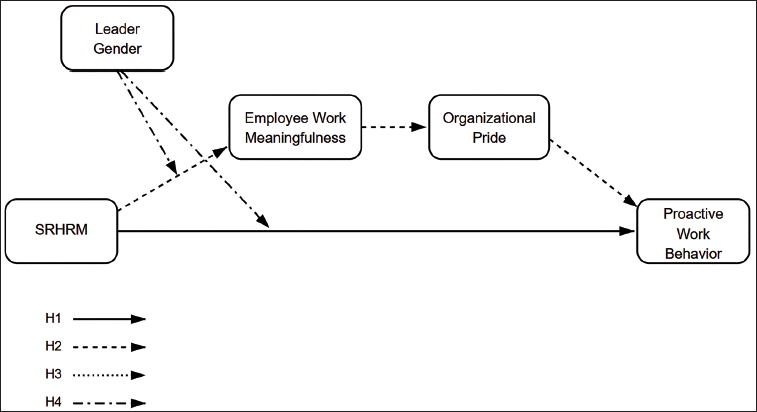
Conceptual Framework.
Data Collection and Method
The study was conducted in MNCs operating in the Southeast region of Vietnam, aiming to explore the relationship between SRHRM, EPWB, work meaningfulness, OP and the moderating role of leadership gender. The Southeast region is currently one of the largest and most dynamic economic centres in the developing country as Vietnam. This region concentrates many leading MNCs with well-established HR policies and clear social responsibilities. Moreover, compared to domestic enterprises or small and medium-sized enterprises, MNCs often possess professional HR management systems, clear and consistent policies, as well as diverse working environments, strongly promoting the values of social responsibility and sustainable development. These characteristics provide an ideal research context to clearly analyze the effects of SRHRM on variables related to employee psychology and behaviour.
We implemented various methods to avoid CMB-related issues (Dhir et al., 2025; Hoang & Ha, 2025). First, after receiving consent from the participating companies, we distributed the survey to 1,038 employees who had worked at the company for two years or more. At the same time, the participants needed to be working in departments directly related to or have a clear understanding of SRHRM policies, such as HR, business, accounting, and marketing. Therefore, the respondents would have experience receiving, experiencing and understanding the company’s SRHRM policies.
Survey data were collected across two temporally separated measurement waves, constituting a time-lagged research design. The use of time-lagged data helps the study to minimize biases associated with single-source cross-sectional measurement and is recognized as appropriate for studies examining process-based relationships in employee behaviour (Dhir et al., 2025; Pham, Tuan, Thuy et al., 2023). Critically, the temporal separation between waves is not merely a procedural convenience but carries theoretical meaning grounded in sensemaking theory (Weick, 1995). At Time 1 (T1), participants reported their perceptions of SRHRM practices, their direct supervisor’s perceived gender, and relevant demographic information. These T1 variables capture employees’ initial exposure to and awareness of SRHRM signals within their organizational environment, which sensemaking theory identifies as the point at which cue extraction begins. The interval of approximately 4 weeks between T1 and Time 2 (T2) was designed to allow adequate time for the intermediate cognitive transitions that sensemaking theory predicts: employees require sustained exposure to SRHRM practices before plausibility construction produces coherent organizational narratives, and identity-based meaning-making requires further temporal consolidation before it manifests as stable psychological states. At T2, participants reported their levels of work meaningfulness, OP and EPWB, capturing the psychological and behavioural outcomes that sensemaking theory predicts will crystallize after the full cue-to-identity cognitive sequence has been traversed.
Measures
The survey was designed in English and then translated into Vietnamese by two language experts. Next, two other language experts performed back-translation from Vietnamese to English. This back-translation process was to ensure that the survey was constructed in clear, accurate language, avoiding errors due to differences in language, culture and context (Sinaiko & Brislin, 1973).
The scales used in this study all used a seven-point Likert scale, ranging from ‘(1) Strongly disagree’ to ‘(7) Strongly agree’.
SRHRM: Consists of 3 sub-scales with a total of 13 items inherited from (Shen & Zhu, 2011). For example: ‘My company applies flexible working hours and employment programs that help balance work and life’.
Employee work meaningfulness: Consists of eight measurement items based on Gusmerotti et al. (2023). For example: ‘My work contributes to the meaning of my life’.
Organizational pride: Consists of four items inherited and adapted from Jones (2010) by Iqbal et al. (2024). For example: ‘I am proud to work for my organization’.
Proactive work behaviours: Consists of four items inherited from Weigelt et al. (2019). For example: ‘I try to apply innovative processes in my work’.
Leadership gender was operationalized as employees’ perception of their direct supervisor’s gender identity, reported by each respondent. This operationalization is theoretically grounded in the study’s sensemaking framework, which centres on how employees interpret and respond to perceived leader characteristics as social cues rather than on any objectively fixed biological property of the leader (Eagly & Karau, 2002; Koenig et al., 2011). Framing leadership gender as a perceived social construct is consistent with role congruity theory’s core premise that gender effects on leadership perception operate through stereotypic expectations activated by perceived gender identity rather than biological sex per se (Eagly & Karau, 2002). In the present study, leadership gender was recorded as a binary categorical variable (male or female) to enable multi-group analysis comparing structural paths across leadership gender conditions (Henseler et al., 2015).
Results
The demographic distribution provides a comprehensive and representative sample, comprising 756 employees from MNCs operating in Southeast Vietnam. Gender representation shows a moderate skew towards males (59.9%), with females accounting for 40.1% of the sample, providing sufficient representation for examining gender-based differences in SRHRM perceptions and behaviours. The age distribution highlights younger to mid-career professionals (25–35 years: 51.5%) as the most significant group, aligning with the study’s focus on contemporary workplace dynamics and proactive behaviours, while including senior professionals (above 40 years: 25.5%) for broader generalizability across career stages.
Educationally, the majority hold bachelor’s degrees (54.8%), with a substantial proportion possessing advanced qualifications, including master’s degrees (27.0%) and MBAs (12.6%), reflecting a highly educated and professionally oriented demographic well-positioned to understand and evaluate SRHRM practices. The organizational tenure distribution shows a balanced mix of relatively new employees (2–5 years: 61.0%) and experienced professionals (above 6 years: 39.0%), ensuring perspectives from both fresh organizational entrants and seasoned employees familiar with established HR practices. These characteristics are summarized in Table 1.
Sample Characteristics (n = 756).
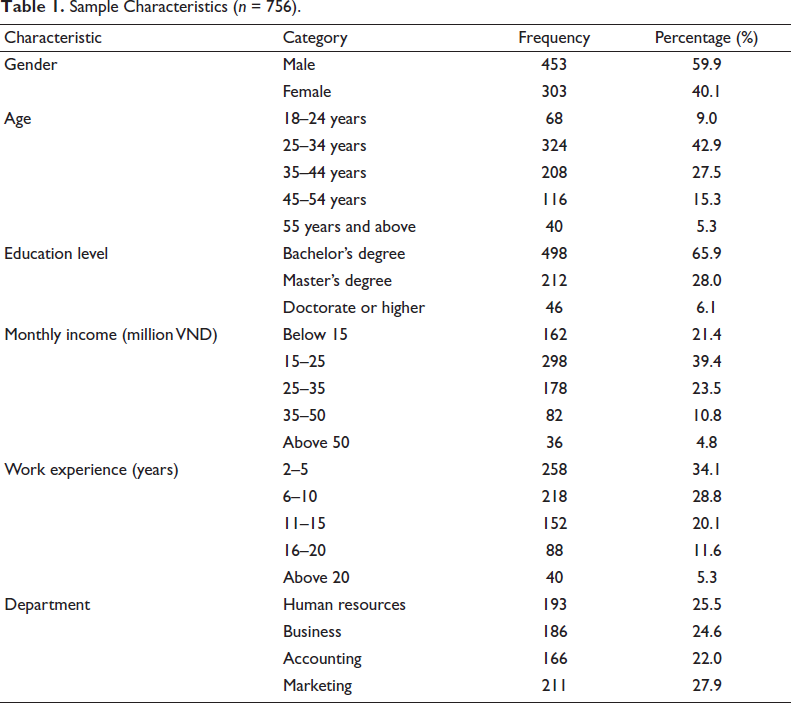
Sample Characteristics (n = 756).
To evaluate the measurement model, we assessed convergent validity, internal consistency reliability and discriminant validity using established criteria for partial least squares structural equation modelling (PLS-SEM) (Hair et al., 2011). Convergent validity was examined through factor loadings and average variance extracted (AVE). All factor loadings exceeded the recommended threshold of 0.70, indicating that the items adequately represented their respective constructs (Hair et al., 2011). The AVE values ranged from 0.687 to 0.777, all surpassing the 0.50 benchmark, confirming sufficient convergent validity.
Internal consistency reliability was evaluated using Cronbach’s alpha (CA) and composite reliability (CR). CA values ranged from .896 to .954, and CR values from 0.900 to 0.955, both exceeding the acceptable level of 0.70 (Nunnally, 1994). These results demonstrate the strong reliability of the measures.
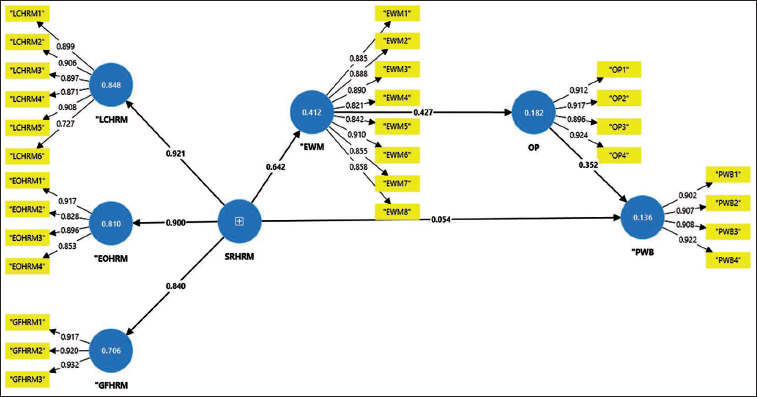
Discriminant validity was assessed via the heterotrait–monotrait (HTMT) ratio of correlations. All HTMT values were below the conservative threshold of 0.9 (Henseler et al., 2015), with the highest value being 0.788 between equal opportunity HRM and legal compliance HRM. This confirms that the constructs are empirically distinct. Figure 2 illustrates the measurement model with lower-order constructs, including item loadings and relationships among LCHRM, EOHRM, GFHRM, EWM, OP and PWB. Detailed results for the measurement model are presented in Table 2.
Measurement Model Assessment Results.
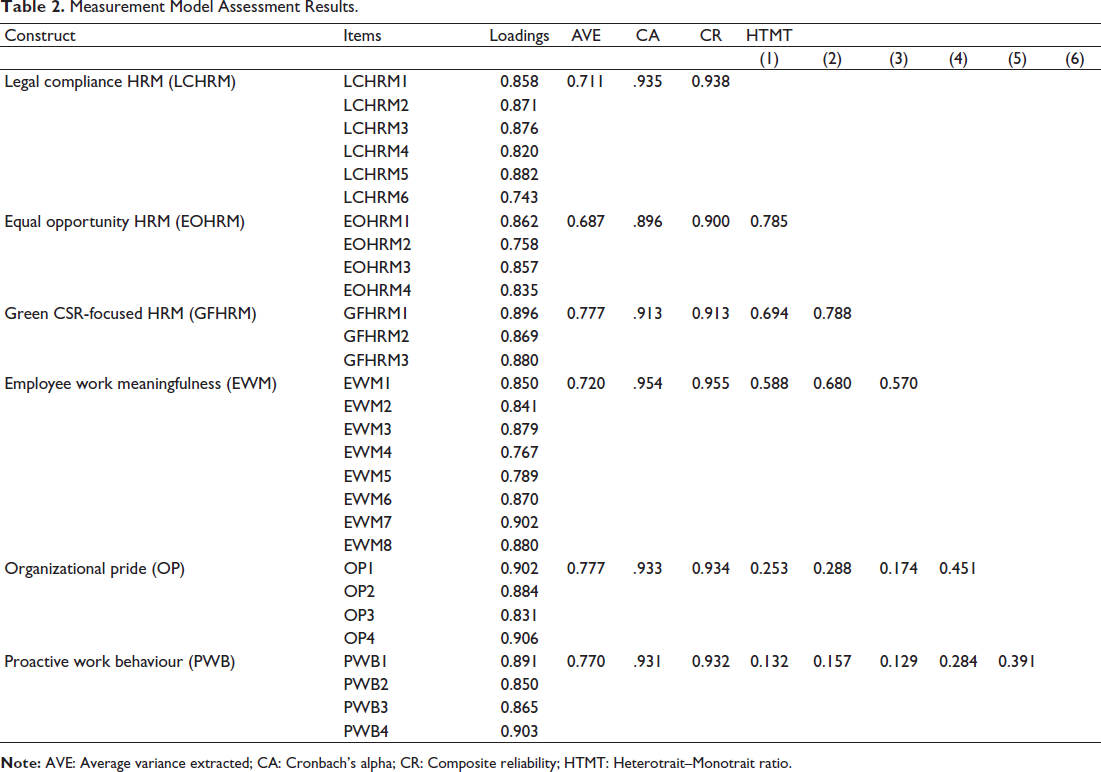
Measurement Model Assessment Results.
Measurement Model Assessment of Lower-order Constructs.
The structural model was evaluated by examining the coefficient of determination (R²), adjusted R², predictive relevance (Q² predict), root mean square error (RMSE) and mean absolute error (MAE) (Shmueli et al., 2019). The R² values indicate the proportion of variance explained in the endogenous constructs: 0.417 for EWM, 0.134 for PWB and 0.182 for OP. Adjusted R² values were similar, suggesting moderate explanatory power after accounting for model complexity. Q² predict values were 0.415 for EWM, 0.018 for PWB and 0.060 for OP, with positive values indicating predictive relevance, though modest for PWB. RMSE and MAE values were below 1.0, supporting model fit. These metrics are summarized in Table 3.
Structural Model Fit and Predictive Indicators.
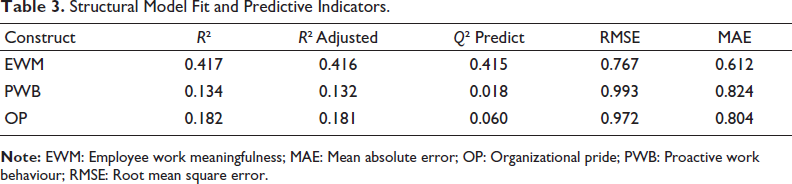
Structural Model Fit and Predictive Indicators.
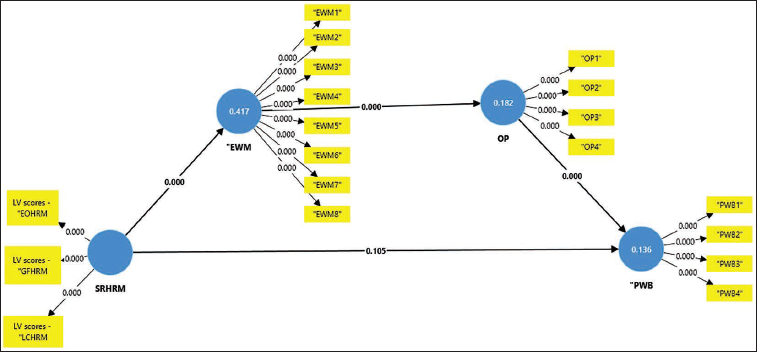
Path coefficients were estimated using bootstrapping with 5,000 resamples to determine significance (Hair et al., 2011). The direct effect of SRHRM on PWB was non-significant (β = 0.056, p = .105), failing to support H1. However, the serial mediation path (SRHRM → EWM → OP → PWB) was significant (β = 0.097, p < .001), indicating full mediation and supporting H2. As shown in Figure 3, the structural model depicts the higher-order construct (SRHRM) and its paths to EWM, OP and PWB, highlighting the serial mediation relationships. These results are detailed in Table 4.
Direct and Mediation Effects.

Direct and Mediation Effects.
Socially Responsible Human Resource Management (SRHRM) and Relationships to Employee Work Meaningfulness (EWM), Organizational Pride (OP) and Proactive Work Behaviour (PWB).
Multi-group analysis (MGA) was employed to test the moderating role of leadership gender (male vs female) (Henseler et al., 2015). The direct path (SRHRM → PWB) showed no significant difference between groups (difference = −0.094, one-tailed p = .903, two-tailed p = .193), rejecting H3. In contrast, the serial mediation path (SRHRM → EWM → OP → PWB) exhibited a significant difference (difference = −0.065, one-tailed p = .990, two-tailed p = .020), with stronger effects under female leadership, supporting H4. Results are presented in Table 5.
Moderation Effects.
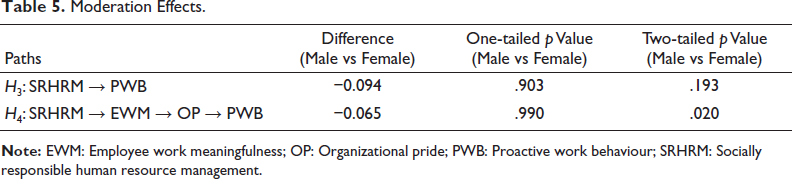
Moderation Effects.
This study investigated how SRHRM influences EPWB through psychological mechanisms and contextual moderators, drawing on sensemaking theory (Maitlis, 2005; Weick, 1995). The findings reveal several theoretically and practically important insights regarding the interpretive processes through which ethical HR practices shape employee discretionary behaviours. Critically, our empirical results both confirm and challenge previous SRHRM research, establishing novel contributions to the literature.
Theoretical Contributions
The non-significant direct relationship between SRHRM and PWB, together with the significant indirect effects through the serial mediation chain, requires the field to stop assuming that ethical HR practices exert direct behavioural influence on self-initiated, future-oriented employee actions. The dominant logic, represented by H1 in the present study and supported by a considerable body of prior SRHRM research (Newman et al., 2016; J. Shen & Benson, 2016; Zhao et al., 2019), posits a direct path from SRHRM to behavioural outcomes on the basis that organizational ethical investment generates proportional employee reciprocation. The present findings disconfirm this assumption for PWB. The finding of full mediation suggests that previously reported direct effects in SRHRM research may partly reflect omitted mediating processes rather than genuine direct causal pathways, a form of model misspecification with compounding consequences for theory accumulation and intervention design. Scholars working in this domain should therefore reframe their theoretical point of departure: SRHRM is not a behavioural lever but an interpretive catalyst, and its effectiveness is entirely contingent on the sensemaking processes it succeeds in activating.
The study requires the field to stop treating work meaningfulness and OP, or analogous psychological states, as independent parallel pathways linking SRHRM to employee outcomes. The prevailing parallel mediation architecture in the SRHRM and CSR literature (Schaefer et al., 2024; Zhou et al., 2023) implicitly assumes that these psychological states operate independently and additively, with each constituting a separate route through which ethical HR signals reach behaviour. The present findings refute this assumption. OP does not arise directly from SRHRM signals but is contingent on the prior development of work meaningfulness, meaning that the causal architecture is sequential and hierarchically staged rather than parallel and independent. This ordering is not merely a statistical finding; it is a theoretical necessity grounded in sensemaking theory’s staged cognitive logic, wherein personal meaning construction at the individual level must precede collective identification at the organizational level (Maitlis, 2005; Weick, 1995). The practical consequence of misspecifying this architecture as parallel is severe: organizations that invest directly in pride-building initiatives without first establishing the individual-level meaningfulness foundation will find that collective identification remains shallow and behaviourally inert. By establishing the empirical necessity of the serial ordering, this study provides a corrective specification that scholars in both the SRHRM and positive organizational psychology literatures should incorporate into future model development.
The fully mediated process established in this study advances SRHRM theory by demonstrating that organizational practices influence employee action through interpretive and identity-based internalization rather than through direct causal transmission (Aguinis & Glavas, 2019; Weick, 1995). While prior work has highlighted meaningfulness and related psychological states as relevant mediators, it frequently assumed the centrality of cognitive processing without formally establishing whether SRHRM effects persist once the intervening psychological mechanisms are fully modelled (Jia et al., 2019; Pimenta et al., 2024). The present findings establish that they do not: when the sensemaking-based serial mediation chain is appropriately specified, the direct SRHRM effect is fully absorbed, indicating that prior correlational studies reporting direct relationships have been capturing indirect effects masquerading as direct ones. This finding demands that future SRHRM research adopt process-theoretic frameworks that specify and test the cognitive and interpretive mechanisms through which ethical HR practices reach employee outcomes, rather than defaulting to black-box correlation models that attribute behavioural variance to organizational policy inputs without accounting for the interpretive labour employees perform in the space between policy and behaviour.
The moderated mediation results require scholars and practitioners to abandon the implicit assumption that female leadership produces better SRHRM outcomes because women are more naturally inclined towards ethical management practices. The evidence from this study challenges this framing at its root: leadership gender did not moderate the direct relationship between SRHRM and proactive behaviour, but it did condition the strength of the serial mediation chain. This pattern means that leadership gender does not determine whether SRHRM is implemented well or poorly; it determines whether employees successfully traverse the cognitive pathway from cue extraction to identity integration. Female leadership amplifies the sensemaking process because perceived role congruity between communal gender identity and the communal values embedded in SRHRM increases the salience and credibility of ethical cues, thereby facilitating plausibility construction and deepening identity integration (Eagly & Carli, 2003; Eagly & Karau, 2002; Koenig et al., 2011). Conversely, stereotypic expectations surrounding agentic male leadership may reduce the interpretive effectiveness of the same cues, not because male leaders implement SRHRM less rigorously, but because perceived role incongruity introduces interpretive friction that attenuates the sensemaking pathway (Johnson et al., 2008). This reframing has important implications for how gender diversity in leadership is theorized and justified: the argument for gender-diverse leadership in ethical management contexts should rest not on essentialist assumptions about female virtue but on the sensemaking dynamics through which leadership gender shapes employee interpretation of organizational ethical signals.
Practical Implications
The absence of a direct SRHRM to proactive behaviour effect indicates that ethical policies alone are unlikely to generate proactive action. Organizations should therefore design SRHRM interventions that actively support sensemaking, particularly cue salience, plausibility construction and identity integration (Maitlis & Christianson, 2014; Weick, 1995).
First, organizations should communicate SRHRM through coherent narratives rather than purely administrative announcements. Storytelling that links everyday work to tangible social outcomes can help employees notice relevant cues and construct credible interpretations of why SRHRM matters (Aguinis & Glavas, 2019). Second, firms should strengthen plausibility by providing visible authenticity signals, such as transparent reporting of outcomes, credible measurement and consistent follow-through that reduces scepticism regarding symbolic responsibility. Third, job and work design should make social value more continuously observable by clarifying how tasks contribute to stakeholder welfare and ethical goals, thereby sustaining cue extraction and meaning construction in daily routines (Nazir & Islam, 2020; Steger et al., 2012).
The serial mediation results also imply that cultivating work meaningfulness is necessary but not sufficient. Organizations must also convert personal meaning into collective pride to translate internal motivation into proactive behaviour. Accordingly, recognition systems should explicitly connect individual ethical contributions to organizational achievements, reinforcing pride and shared identity. Participatory responsibility programs can further strengthen pride by allowing employees to co-design and implement SRHRM initiatives, increasing ownership and identification with collective outcomes (Gouthier & Rhein, 2011; Nazir & Islam, 2020). Regular communication of collective impact metrics can reinforce the link between individual efforts and organizational accomplishment (Schaefer et al., 2024).
Regarding leadership gender, the results suggest that organizations should not reduce the implication to a simplistic recommendation to promote women solely for SRHRM effectiveness. A more actionable approach is to develop leaders’ sensegiving capabilities and ensure SRHRM communication is credible and identity affirming across leadership profiles (Gioia & Chittipeddi, 1991; Maitlis et al., 2013). Female leaders may leverage role congruity by visibly championing responsibility initiatives and sharing authentic narratives, while organizations should also protect against double bind dynamics by framing SRHRM as strategic competence rather than only communal concern (Koenig et al., 2011; Purushothaman & Ammerman, 2025). Male leaders can enhance credibility by demonstrating genuine personal commitment, using inclusive and stakeholder-oriented language, and developing communal leadership behaviours such as empathy and active listening, which may reduce perceived incongruity and strengthen employee sensemaking (Eagly & Carli, 2003; Shen & Joseph, 2021).
Finally, the gendered sensemaking pattern implies the need for cultural and structural interventions. Organizations should address bias in how employees attribute ethical credibility by implementing training that highlights stereotype-driven interpretation and by promoting leadership archetypes that integrate both agentic and communal qualities (Helms Mills & Mills, 2017; Weber & Glynn, 2006). Institutionalizing SRHRM as a core business strategy, embedded in performance management and strategic planning, may also reduce the tendency to treat ethical leadership as gender coded and strengthen the legitimacy of SRHRM regardless of who communicates it (Aguinis & Glavas, 2019; Harjoto et al., 2020).
Conclusion
Drawing on sensemaking theory, the study indicates that SRHRM does not directly foster employee proactive behaviour, but rather operates through a sequential mediating chain: work meaningfulness and OP. This indirect effect is further enhanced under female leadership. Therefore, to promote proactivity, organizations must not only implement SRHRM but also cultivate a work environment that deeply nurtures a sense of meaningfulness, pride, and encourages gender diversity in leadership.
Despite offering significant practical implications, the study still possesses several limitations that guide future research. First, although employing time-lagged data, this design does not permit definitive causal inferences as experimental designs (Ogbonnaya et al., 2018). Future studies should employ randomized controlled trials or long-term longitudinal research. Second, measuring SRHRM solely through the lens of employees overlooks management’s perspective. Future research should use multilevel models for a more comprehensive assessment. Finally, classifying leader gender according to a binary system (male or female) fails to capture the multidimensional complexity of gender (Hyde et al., 2019). Therefore, future studies should use continuous scales of communality and agenticism (Koenig et al., 2011) or more inclusive gender identity measurement instruments to more accurately and thoroughly evaluate the moderating role of gender in the sensemaking process.
Footnotes
Authors’ Contributions
Tuan Tran Hoang: Conceptualization, methodology, investigation, data curation, formal analysis, writing—original draft.
Tri Dinh Minh Le: Methodology, validation, formal analysis, writing—review and editing.
Sandeep Kumar Dey: Supervision, visualization, writing—review and editing, project administration.
Sinh Duc Hoang: Conceptualization, supervision, methodology, writing—review and editing, project administration, correspondence.
Data Availability
The data supporting this study’s findings are available from the corresponding author upon reasonable request.
Declaration of Conflict of Interests
The authors declared no potential conflicts of interest with respect to the research, authorship and/or publication of this article.
Ethical Declaration
The authors abide by all the ethics involved in this academic work and have not submitted it to any other journal.
Funding
The authors received no financial support for the research, authorship and/or publication of this article.
