







Abstract
Past researchers extended the conceptualized model of perceived value to include the effects of multiple extrinsic cues used as indicators of quality. The need for replication as well as extending the research findings has, however, been expressed unequivocally by the researchers as it remains to be seen if the existing relationships would hold for consumers hailing from emerging nations. The present study extends the theoretical and empirical evidences regarding the structural relationships of consumers’ perceptions of marketing cues, namely, price and brand name, with the perceptions of quality, risk, sacrifice and value in the Indian context. Using Partial Least Squares Structural Equation Modeling (PLS-SEM) based analysis of questionnaire-based responses of young Indian consumers, the study reports that high price is associated with the presence of better product features, assuming that a good quality product always comes with a high price attached and there is a possible shifting from looking to lower price-product options to alternatives which boast of a favourable brand name indicated by a higher price level. The study holds implications for marketers in regard to brand name positioning as well as planning communication and retail strategies.
Introduction
Researchers in the past have developed models to investigate customers’ perception of value on the basis of extrinsic cues used as indicators of quality (Akdeniz, Calantone, & Voorhees, 2013; Dodds, 1991; Lee & Lou, 2011; Teas & Aggarwal, 2000; Rao & Monroe, 1989; Steenkamp, 1988; Sweeney & Johnson, 1999; Wheatley & Chiu, 1977; Zeithaml, 1988), sacrifice (Kwun & Oh, 2004; Monroe & Krishnan, 1985; Olson, 1977; Zeithaml, 1988) and risk (Ofir & Bechtel, 1990; Oglethorpe & Monroe, 1987; Wood & Scheer, 1996;). The conceptualized model of perceived value based on actual price though was extended taking care of a multi-cue scenario involving price, brand name, store name, country-of-origin and packaging. Dodds (1991) emphasizes that research is needed to replicate as well as to extend the original findings. It is felt that, at large, researches were focused on low-priced products, and the shift in focus to a wider range of products, situations, settings and populations is required (Rao & Monroe, 1989) to enable a generalization of research findings and also to explore the intricacies of customers’ value perceptions.
Against this background, this study has been extended to one durable and one semi-durable product category (i.e., mobile phones and athletic shoes) and a survey-based design, as against an experimental design, has been used to explore the intricacies of the effect of marketing cues on customers’ value perceptions in the Indian context. Until recently, the focus of consumer researches has shifted from the matured markets of the United States to maturing markets of Japan, China, Austria and the Netherlands (Olbrich & Jansen, 2014). It remains to be seen if the existing relationships would hold for consumers hailing from emerging nations since according to Anderson, De Palma and Thisse (1992) the idiosyncratic nature of consumers’ decision-making delimit the applicability of existing researches.
In a multi-cue scenario, the current research thus extends the theoretical and empirical evidences regarding the structural relationships of consumers’ perceptions of marketing cues, namely, price and brand name, with the perceptions of quality, risk, sacrifice and value in the Indian context. The purpose of the study is to know the way perceptions of price and brand name effect consumers’ perceptions of quality and value as the differences in the effect of price and brand name perceptions on consumers’ value perceptions require special focus in emerging market contexts. Due to the unassailable growing affluence of consumers in emerging markets, particularly in India, there is now a clear shift in inclination from relying primarily on price for their product choice. Further, the increasing influx of branded products warrants the noticeable change in the consumers’ search and evaluation behaviour. Marketers therefore need to be particularly mindful when combining price with brand name. A greater understanding of how the combination of price and brand name is perceived in emerging market contexts would therefore help marketers to leverage brand names in specific buying situations. This is in fact one among very few studies pioneering empirical attempts to assess consumers’ inference of marketing cues in forming value perceptions in an emerging market setting such as India.
Besides, given that consumers rely on extrinsic cues to assess perceptions of risk (Bearden & Shimp, 1982), it is important to examine the way risk perceptions effect value perceptions. According to Agarwal and Teas (2001), when exposed to extrinsic product cues, consumers do not just make judgements about product quality and sacrifice, they also make judgements about uncertainties that may pose potential long-term losses. Therefore, we extend the basic conceptualization of brand name to include the dimensions of perceived risk and argue that by relying on a good and credible brand name as cue, consumers get certain assurances against the various types of risks involved in choice decisions which in turn effect perception about quality. Possibly, lowered risk perception brought about by good and credible brand name effect value perception through higher quality perceptions (Aghekyan-Simonian, Forsythe, Kwon, & Chattaraman, 2012).
Furthermore, unlike past studies where brand name perceptions are controlled through the selection of specific brands having a less or more favourable image (Erdem & Swait, 2004; Erdem, Swait, & Valenzuela, 2006), this study in its research design required the respondents to select the brand they are more familiar with in the specified product category to allow for testing the information inherent in the brand name and not the familiarity with the brand. Besides, the experimental research design used for testing the theorized relationships according to Rao and Monroe (1989) may be incorrect for measuring the effect of actual price on value perception.
Although existing research efforts like Kwun and Oh (2004), Teas and Agarwal (2000), Richardson, Dick and Jain (1994), Dodds and Grewal (1991), Rao and Monroe (1989), Dodds and Monroe (1985) and Olson and Jacoby (1972) have explored the intricacies of the relationships between perceptions of marketing cues and perceptions of quality, risk and value, these efforts according to Akdeniz et al. (2013) are inadequate in terms of presentation of isolated effects of the select marketing cues. Purohit and Srivastava (2001) consider the results of past researches as equivocal for the reason that consumers seldom assess these cues in isolation. Rao and Monroe (1989) also suggest that there is a need to investigate the interactive effect of various marketing cues on consumers’ value perceptions. In this study, through the testing of a conceptualized model, we try to understand the way the price and brand name together influence value perceptions, that is, whether Indian consumers impute a higher value, assigning better evaluations, when brand name works as a stimulus along with price information provided for their cognitive decision processes.
Lastly, the degree of knowledge and familairity about the product possessed by consumers, also varying across different geographies, may have an influence on the relative use of the information cues in assesing product value (Dowling & Staelin, 1994; Garbarino & Strahilevitz, 2004). The current research investigates the level of consumers’ familiarity and knowledge about the product to ascertain the situations when consumers tend to place higher reliance on marketing cues during their search for the product. There are certain segments of consumers who are unable or unwilling to conduct an exhaustive search and evaluation and shift their focus from product characteristics to marketing cues (Dodds & Monroe, 1985; Richardson et al., 1994; Zeithaml, 1988). Given that India is comparatively a novice in its exposure to branded products, it is imperative for managers to get acquainted with differing degrees of the consumers’ familiarity and knowledge of products and brands to formulate better marketing executions for them.
In the remaining sections, the conceptual model is developed along with the hypothesized relationships. The descriptions of research method involving the details of testing of measurement models, model predictability and testing of hypothesized relationships are given next. The last section contains a discussion of the managerial implications, in particular, to emerging market-contexts assisting in strategic development and redefinition of marketing, positioning and communication strategies based on the relationship between perceptions of marketing cues and value.
The Conceptual Model
Considerable theoretical and empirical evidence suggests that consumers impute value for a choice decision by inferring quality of the product/service on the basis of marketing cues identified either as extrinsic and intrinsic cues (Dodds, Monroe, & Grewal, 1991; Olson, 1977; Lichtenstein, Ridgway, & Netemeyer, 1993; Olson & Jacoby, 1972). Intrinsic cues, such as memory and processing speed of a computer, are the internal physical attributes or operational features in-built into the product and are utilitarian and specific to the product itself. Extrinsic cues are outside the product and are not a part of the physical product. They are more general and applicable to a wider range of products, such as price, brand name, store name and country of origin (Bearden & Shimp, 1982; Bilkey & Nes, 1982; Dodds & Grewal, 1991; Dodds & Monroe, 1985; Han, 1989; Han & Terpstra, 1988; Janakiraman, Meyer, & Morales, 2006; Monroe, 2002; Stokes, 1985; Vanhuele, Laurent, & Dreze, 2006; Wheatley & Chiu, 1977; Zeithaml, 1988). Both intrinsic and extrinsic cues are informative cues, acting as frames of reference, and perceived differently by different consumers. Individual differences of familiarity with or knowledge of the product category moderate consumers’ reliance on product attributes.
Researchers, however, believe that consumers rely more on extrinsic cues during their search and evaluation of a product (Dodds & Grewal, 1991; Han & Terpstra, 1988). Existing researches have considered consumers’ perceptions of brand name, price and value and their linkages, as pivotal determinants of their evaluation and choice decision (Brucks et al., 2000; Degeratu, Rangaswamy, & Wu, 2000; Dodds & Grewal, 1991; Zeithaml, 1988). There is also a particular emphasis on consumers’ use of extrinsic cues as indicators of product quality and sacrifice. The extant review of literature also suggests that linkage between extrinsic cues and consumers’ evaluation of a product may not be completely influenced by perceived quality and sacrifice. Perceived risk (including performance risk, functional risk, psychological risk, physical risk and social risk) may affect consumers’ evaluations in the presence of marketing cues (Bicen, 2015; Shimp & Bearden, 1982; Teas & Agarwal, 2000). Wood and Scheer (1996), for example, also suggest that consumers’ evaluations of a ‘deal’ may be a function of its perceived benefits, costs and risks.
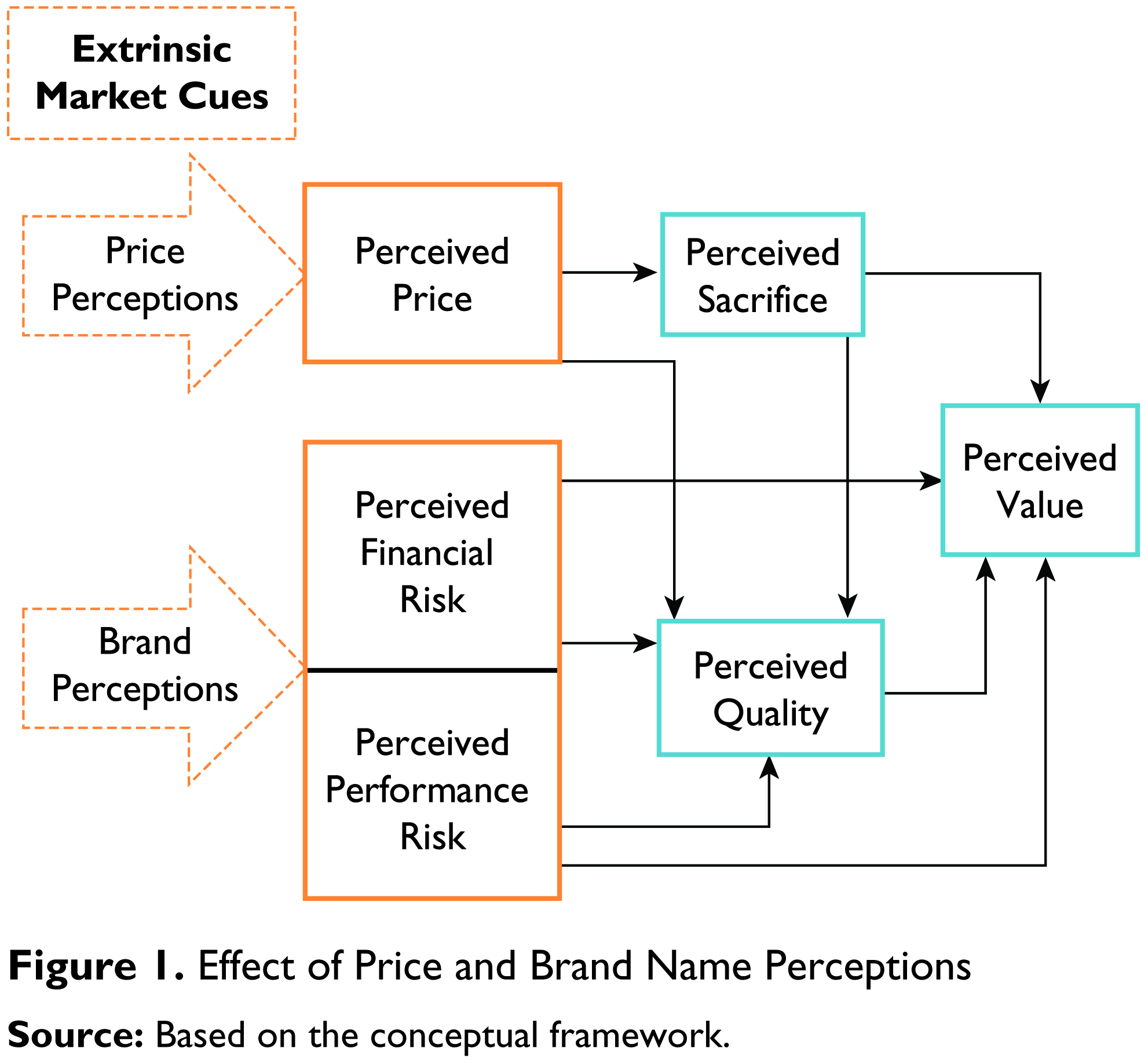
The conceptualized model examined in the study is diagrammed in Figure 1 and suggests the intricate relationships of quality, risk and sacrifice perception with (i) price and brand name used as extrinsic cues and (ii) consumers’ value perceptions based on these cues.
Hypotheses
H1: Price perceptions positively influence perceived value.
Traditional economic theory indicates that consumers perceive price as an indicator of sacrifice, construed as present costs involved in acquiring a product (Agarwal & Teas, 2001). Higher price represents a monetary measure of what must be given to obtain the deal, that is, the amount of monetary sacrifice involved in purchasing a product (Dodds et al., 1991; Erickson & Johansson, 1985; Grewal et al., 1998; Kelley, 1958; Lichtenstein et al., 1993; Marian, Chrysochou, Krystallis, & Thøgersen, 2014; Schmidt and Spreng, 1996; Teas & Agarwal, 2000; Wood & Scheer, 1996; Zeithaml, 1988). Perceived sacrifice, thus, refers to the feeling towards giving up something, that is, money (Dodds, 1995). In relation to price perceptions, the hypothesis is:
H2: Price perceptions negatively affect perceptions for sacrifice.
Though consumers consider price as less or more depending upon their financial situation, higher sacrifice perceptions have a negative impact on value perceptions, leading to reduced willingness to pay (Dodds & Grewal, 1991). Hence, perceived sacrifice is postulated to impact consumers’ value perceptions negatively.
H3: Perceived sacrifice is negatively related to perceived value.
Consumers also use the extrinsic cue of ‘price’ as a suggestion of product quality (Brucks, Zeithaml, & Naylor, 2000; Grewal, Krishnan, Baker, & Borin, 1998; Mastrobuoni, Peracchi, & Tetenov, 2014) under the belief that the forces of supply and demand would lead to a ‘natural’ ordering of products on a price scale, indicating a strong positive relationship between price and quality of product (Scitovsky, 1945). Higher price may represent a belief that expensive inputs are used, thus suggesting to consumers that they are paying for superior quality and so have to pay more for a product of high quality. However, subsequent studies conducted by Kirchler, Fischer and Hölzl (2010), Steenkamp (1988), Bodell, Kerton and Schuster (1986) and Yamada and Ackerman (1984) have postulated a diminishing correlation coefficient for price–quality relationship in the context of food products, asserting that high price might reflect only enhanced competition and thus should not be construed by consumers as an indicator of quality. The studies have, however, confirmed that price effectively indicates higher product quality for non-food products. The hypothesis, therefore, is:
H4: Price perceptions positively affect perceptions for quality.
Consumers’ perception of quality is construed as their ‘belief in the overall goodness of what is received i.e., product or service’ (Dodds, 1995). It is the consumers’ judgement about product’s excellence or superiority (Zeithaml, 1988). Dodds (1995) empirically supports a statistically significant and positive linkage for hypothesized perceived quality and value relationship for all categories of products tested in the research. Based on extant researches, the hypothesis is:
H5: Perceived quality is positively related to perceived value.
Past researches further suggest that there is a dichotomy of information associated with price as a cue which influences consumers’ product choice as consumers’ perception of value involves a trade-off between perception of quality and sacrifice (Agarwal & Teas, 2001; Dodds & Grewal, 1991; Erickson & Johansson, 1985; Lichtenstein et al., 1993; Monroe & Krishanan, 1985; Olson, 1977; Zeithaml, 1988). The trade-off, initially observed by Scitovsky (1945), suggests a paradoxical situation in which consumers view a low-priced product as affordable, but less attractive because of its perceived inferior quality. Monroe and Krishnan (1985) extended this conceptualization to provide a model relating price, perceived quality, perceived sacrifice and perceived value and suggest the possible mediating effects of perceived quality and perceived sacrifice in price–perceived value linkages. The proposed hypotheses for testing these mediation effects are:
H6: Perceived sacrifice influences the effect of perceived price on perceived value. H7: Perceived quality influences the effect of perceived price on perceived value.
Consumers’ perceptions of risk increase with higher levels of uncertainty and/or the chance of greater associated negative consequences (Oglethorpe & Monroe, 1987). Sweeney, Soutar and Johnson (1999) specified two important dimensions of perceived risks, namely, performance and financial, and allowed for the measurement of their role in affecting the linkage between extrinsic cues and perceived value. Performance risk is posited as ‘the uncertainty about whether the product will perform its intended function’, and financial risk is ‘the uncertainty about how much loss may have to be incurred for repair/maintenance of the product’, and also an assessment of future costs involved with acquiring a product (Agarwal & Teas, 2001). Since there is strong support for direct negative linkage between dimensions of perceived risk and perceived value as indicated in past researches (Wood & Scheer,1996), we also hypothesize that:
H8: Perceived risk in terms of perceived performance risk is negatively related to perceived value. H9: Perceived risk in terms of perceived financial risk is negatively related to perceived value.
According to Bearden and Shimp (1982), a known brand name simplifies consumers’ product evaluations and mitigates uncertainty for the product by influencing perceptions of product quality. Given that there is a relationship among the perceptions of brand name, quality, risk and value, we nevertheless hold the opinion that the relationships need further exploration to clearly establish the process by which brand name as a cue affects value perceptions. It appears logical to argue that the effect of uncertainties towards future benefits and cost on value perception, assessed on the basis of brand name as a cue, depends on the assessment of present benefits and cost (Aghekyan-Simonian et al., 2012; Beneke, Flynn, Greig, & Mukaiwa, 2013; Bicen, 2015). Thus, as against the theorized relationship of quality perceptions as a predictor of risk perception (Sweeney et al., 1999), we seek empirical investigations into the reversal of this relationship and hypothesize that:
H10: Perceived performance risk negatively affects perceptions of quality. H11: Perceived financial risk negatively affects perceptions of quality. H12: Perceived quality influences the effect of perceived financial risk on perceived value. H13: Perceived quality influences the effect of perceived performance risk on perceived value.
Based on hypothesized relationships, Figure 1 shows the conceptualized model where both the direct and indirect effects of price and brand name perceptions are assessed to find out value perceptions on the part of Indian consumers. Moreover, in a multi-cue scenario, with the presence of both price and brand name as extrinsic cues, consumers’ evaluations can be expected to differ significantly from a situation where price is the only cue presented (Monroe & Krishnan, 1985).
Further, the extent of effect of extrinsic cues would also depend upon consumers’ level of familiarity and knowledge about the product class (Lee & Lou, 2011; Rao & Monroe, 1988). In the emerging market context, therefore, our effort is to find out the instances of different levels of familiarity and knowledge influencing consumers’ search and so to identify the consumers who are likely to rely more on extrinsic cues for making their value perceptions.
Research Methodology
A structured questionnaire was administered online to students pursuing higher education in the metropolitan city ‘New Delhi’, largely belonging to the age group of 20–25 years. Respondents included 41.4 per cent males and 58.6 per cent females with 87.1 per cent residing in the city. The study was targeted particularly at the specified age group to ensure that those surveyed are purchaser and users of the selected product categories of mobile phones (durable product category) and athletic shoes (semi-durable product category). Since, respondents were asked to respond in the context of both the products, care was taken to ensure that products are of use to both male and female populations, which also helped us in avoiding biasness in their product evaluations. Also, the choice of products differing in terms of their technicality and complexities, allowed us the scope to ensure more variability in responses and thus permitted us to gauge perceptions in general and not specific to the concerned product. The specific choice of product categories also renders replication of previous studies focusing on athletic shoes.
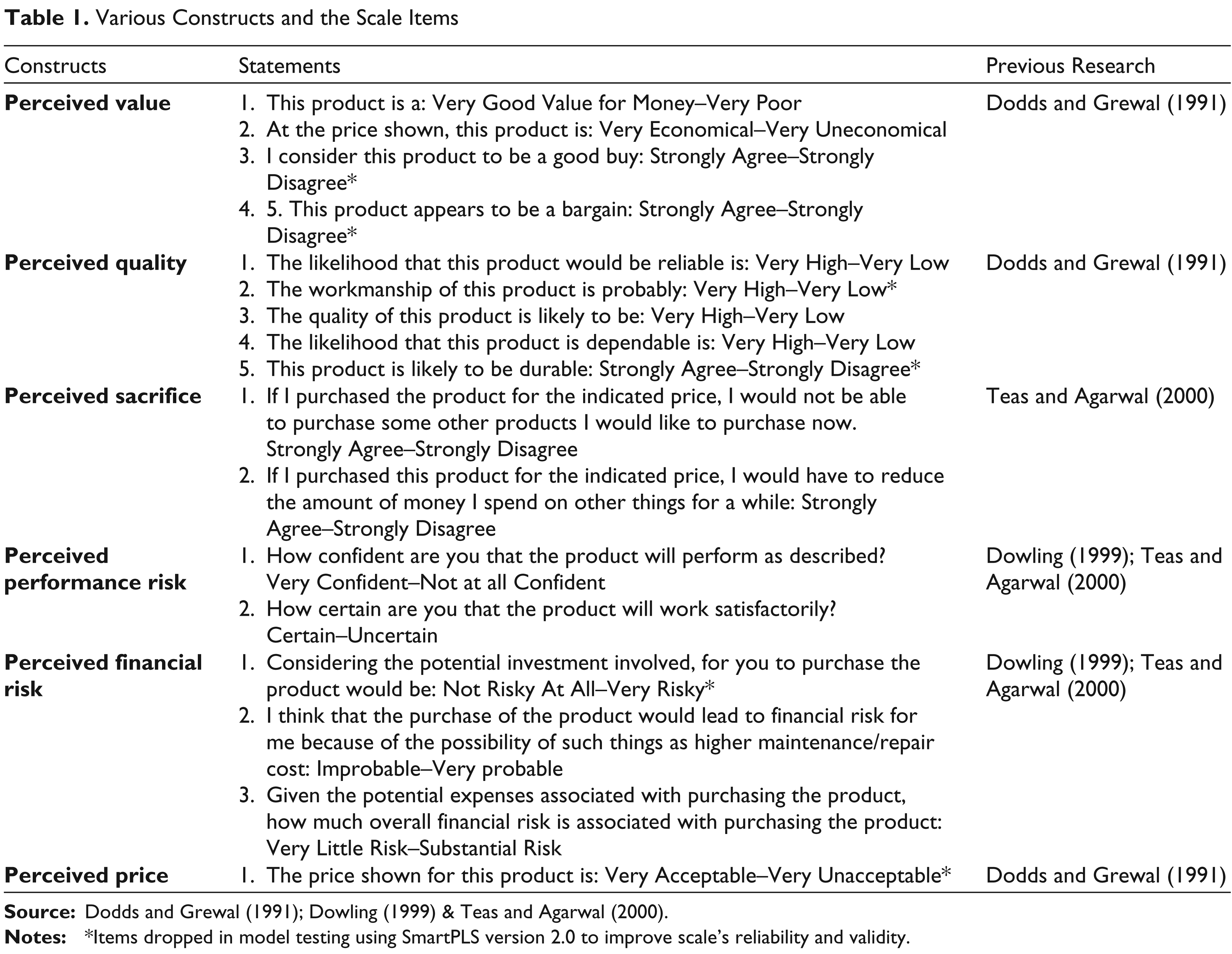
Using convenience sampling, a total of 300 questionnaires were distributed to the sample population and 116 usable responses were received. The choice of sample population in fact allowed us to relate this study with previous researches capturing consumers’ value perceptions while working with the same age group. Table 1 reports the related measures of various constructs based on the scales used by previous studies.
PLS-SEM based analysis was done to test the hypothesized relationships—H1 to H13—shown through the conceptualized model in Figure 1. The use of the PLSSEM framework was facilitated as sample size meets the minimum sample requirement for conducting an analysis in the PLS-SEM framework. Accordingly, sample size is required to be 10 times the maximum number of paths aiming at any construct in the measurement model and the structural model (Barclay, Higgins, & Thompson, 1995).
Respondents were also specifically asked about their level of familiarity and knowledgeability for each of the product categories. Participants provided responses to statements seeking to delineate their search behaviour with respect to search characteristics looked for, search time expended and search source referred to, in the case of both products. They were then asked to provide a brand name for each product category with which they were comfortable in forming opinions about quality, sacrifice, risk (performance risk, financial risk) and value. The idea of seeking a brand name from the participants was to ensure that the name is working as a cue in the consumers’ mind and they are able to assess products on the basis of specified brand name working as a stimulus in their cognitive evaluations. It is assumed that when the brand name is self-specified, participants have paid attention to it, considered it in decision situations and/or purchased it sometime in the past.
Various Constructs and the Scale Items
Results and Analysis
At the outset, the analysis of consumers’ search tendencies with regard to select products shows that consumers with less familiarity and knowledge tend to spend the least amount of time during search, the less knowledgeable consumers include brand in their search characteristics, and advertisements are used as a search source by highly knowledgeable consumers. This analysis is based on analysis of variance results found significant at p < 0.05 (Table 2).
Search Behaviour and Its Relation with Product Familiarity and Knowledge: ANOVA Analysis

2 Four-point scale ranging from ‘Not at all knowledgeable’ to ‘Highly knowledgeable’.
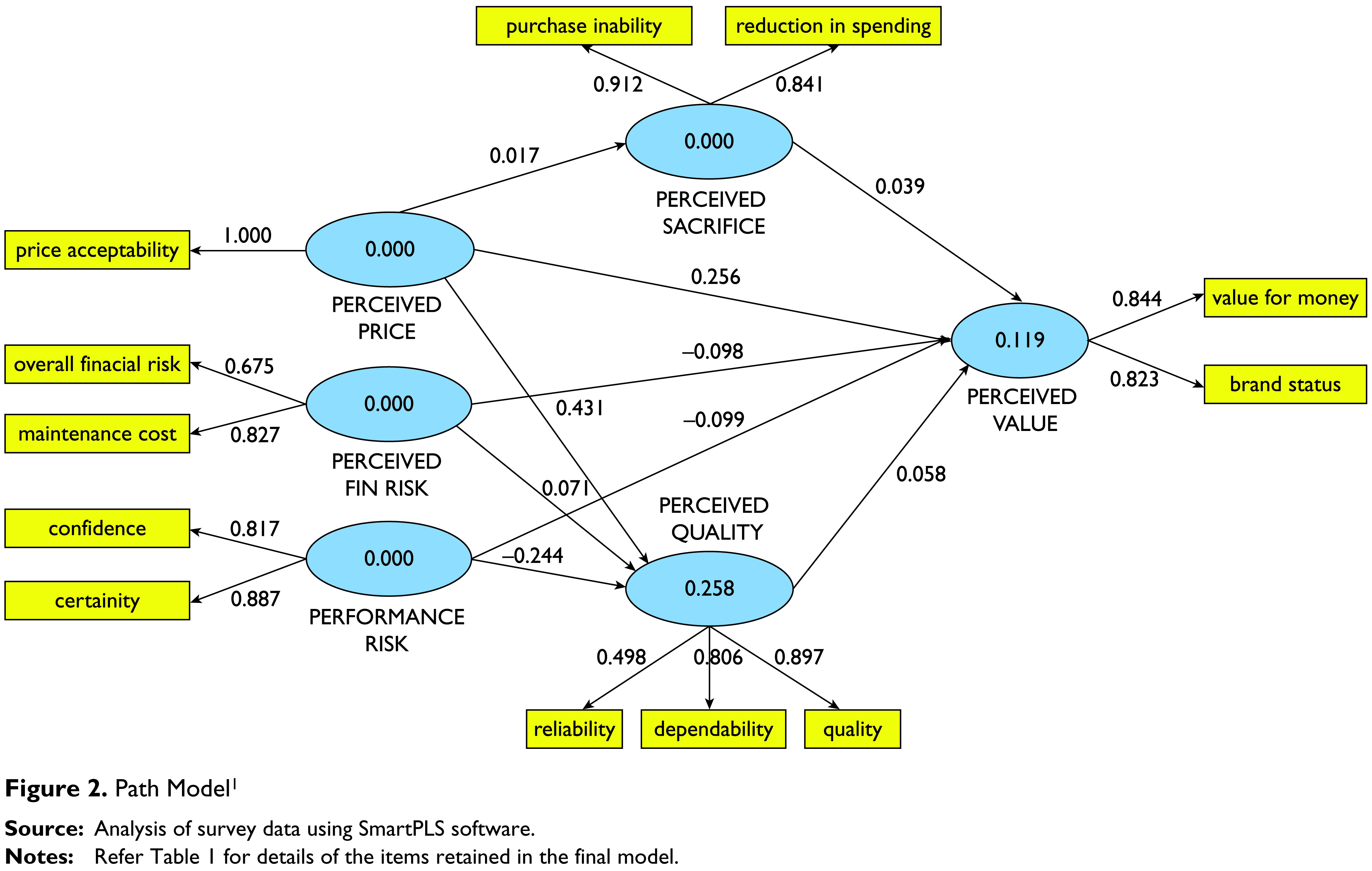
To allow reliability and validity of the constructs as a part of evaluating measurement models, one item of financial risk, two items of perceived value and two items from perceived quality were removed due to their poor loadings on the respective factors. Except one item of perceived quality scale, and one item of perceived financial risk scale, all other item loadings are more than 0.70 for the multi-item constructs, namely, perceived financial risk, perceived performance risk, perceived quality and perceived value.
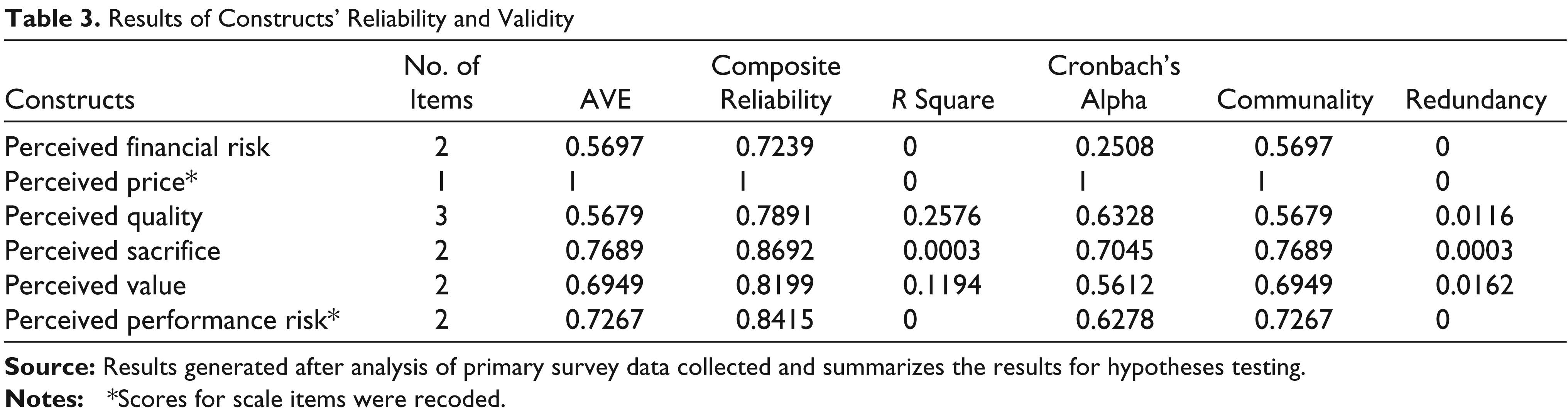
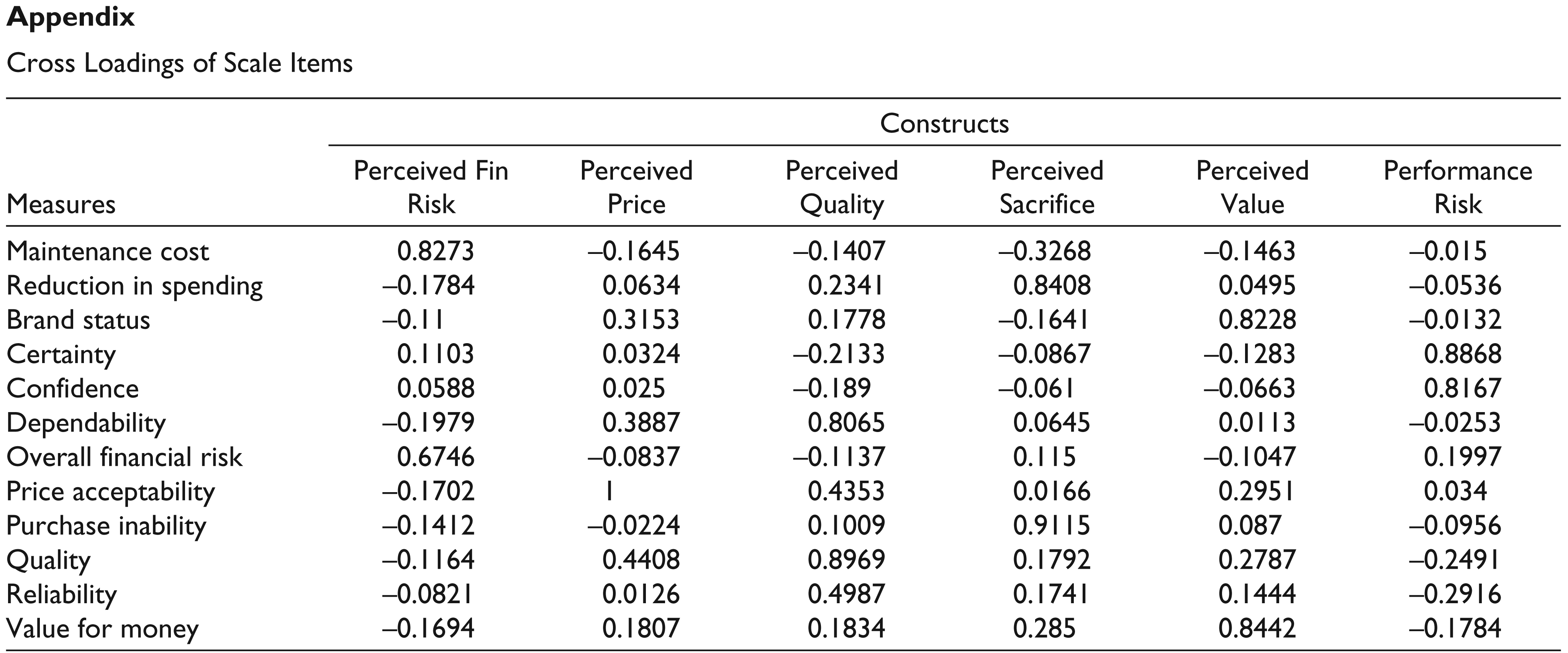
All multi-item measurement scales are internally consistent with their composite reliability scores of more than 0.70, and Average Variance Extracted (AVE) of more than 0.50, this suggests convergent validity of these scales (Table 3). Discriminant validity of measurement scales is also evident as cross loadings of the items constituting these scales are found less than their loading on the constructs (see Appendix) for which they are used as measure.
R2 measure provides the extent of explained variation for each of the endogenous constructs, namely, perceived quality, perceived sacrifice and perceived value, as shown in Table 3; though as a rule of thumb the results suggest weak predictability of the model. Hair, Ringle and Sarstedt (2011) study reports that R2 results of 0.20 are considered high in disciplines such as consumer behaviour. Since, value perceptions are measured as based on effect of price and brand name perceptions only, the inclusion of other marketing and non-marketing cues influencing value perceptions may help in building the higher levels of the variation explained in the model.
Results of Constructs’ Reliability and Validity
Stone-Geisser’s Q2 (Geisser, 1974; Stone, 1974) measure was used to assess the predictive validity of the model, and blindfolding procedure of SmartPLS was used to obtain Q2 value for each endogenous construct. Blindfolding procedure is only applied to exogenous constructs that have a reflective measurement model and cross-validated redundancy measure is used to obtain Q2 value, as it uses PLS-SEM estimates of both the structural model and measurement model for data prediction (Hair et al., 2011). At omission distance—‘d’—chosen to be 8, as per the suggested range of 5 and 10 (Hair et al., 2011), constructs’ cross-validity redundancy value is larger than zero (i.e., Q2 = 0.024) for the construct perceived value. According to Hair et al. (2011), ‘if an endogenous construct’s cross-validated redundancy measure value (Q²) for a certain endogenous latent variable is larger than zero, its explanatory latent constructs exhibit predictive relevance’. The explanatory latent constructs, namely, perceived price, perceived quality, perceived sacrifice, perceived financial risk and perceived performance risk, thus have predictive relevance in assessing consumers’ value perceptions.
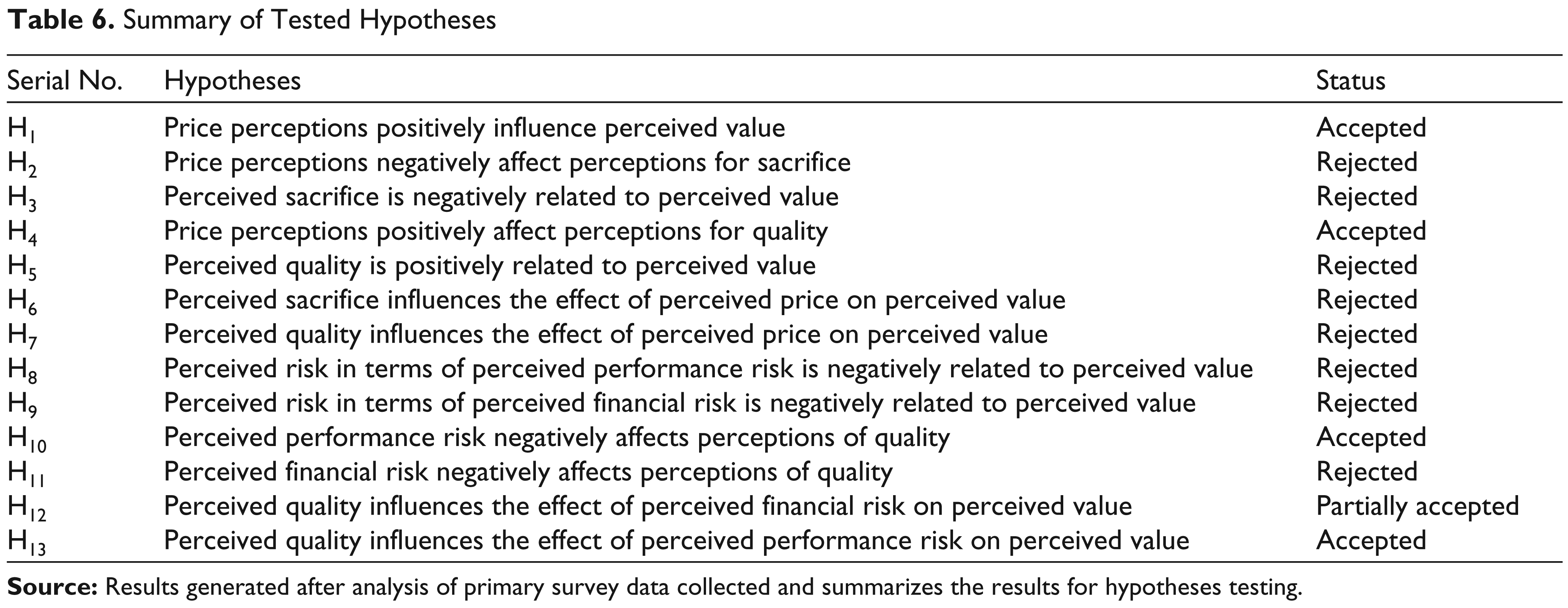
Study supports the hypothesized relationship H4 and H10 at significance level of p < 0.05. Accordingly, price perceptions positively affect perceptions for quality (H4); perceived performance risk negatively affects perceptions for quality (H10). For hypothesis H1, the effect of price perceptions on value perceptions (β value of 0.2558), though found significant at p < 0.10, the total effect is significant at p < 0.05 level. Clearly, this also suggests the need to explore the effect of variables intervening in the price–value relationship. Despite literature support suggesting hypothesized relationships H2, H3, H5, H8, H9 and H11, this study failed to provide sufficient statistical support to hold the relationships in the Indian context. Concerning perceived sacrifice, the lack of support to hypotheses H2and H3 seems to be due to the scale items used for the survey based research design. It is possible that the absence of a specific price point for the reference of the respondents has resulted in their inadequate response to the scale items. In the case of hypothesis H5 suggesting the effect of perceived quality on value perceptions, it could be argued that the lack of support is in the light of the fact that quality perceptions could be formed independently of any cue whether intrinsic and/or extrinsic, whereas value perceptions has some reference point, and generally it is the ‘price’. Besides, in past studies manipulation of quality levels was used to suit the needs of experimental research design. Lack of support for hypothesis H8 can be viewed in the perspective of research findings supporting indirect effect of perception of performance risk on value perceptions (H13). Regarding perceived financial risk, the scale items finally retained in the model, though, have a high composite reliability score (0.7239), the Cronbach alpha value is low. Moreover, scale items do not seem to fit well in the context of one of the selected products, namely, athletic shoes.
Path Coefficients
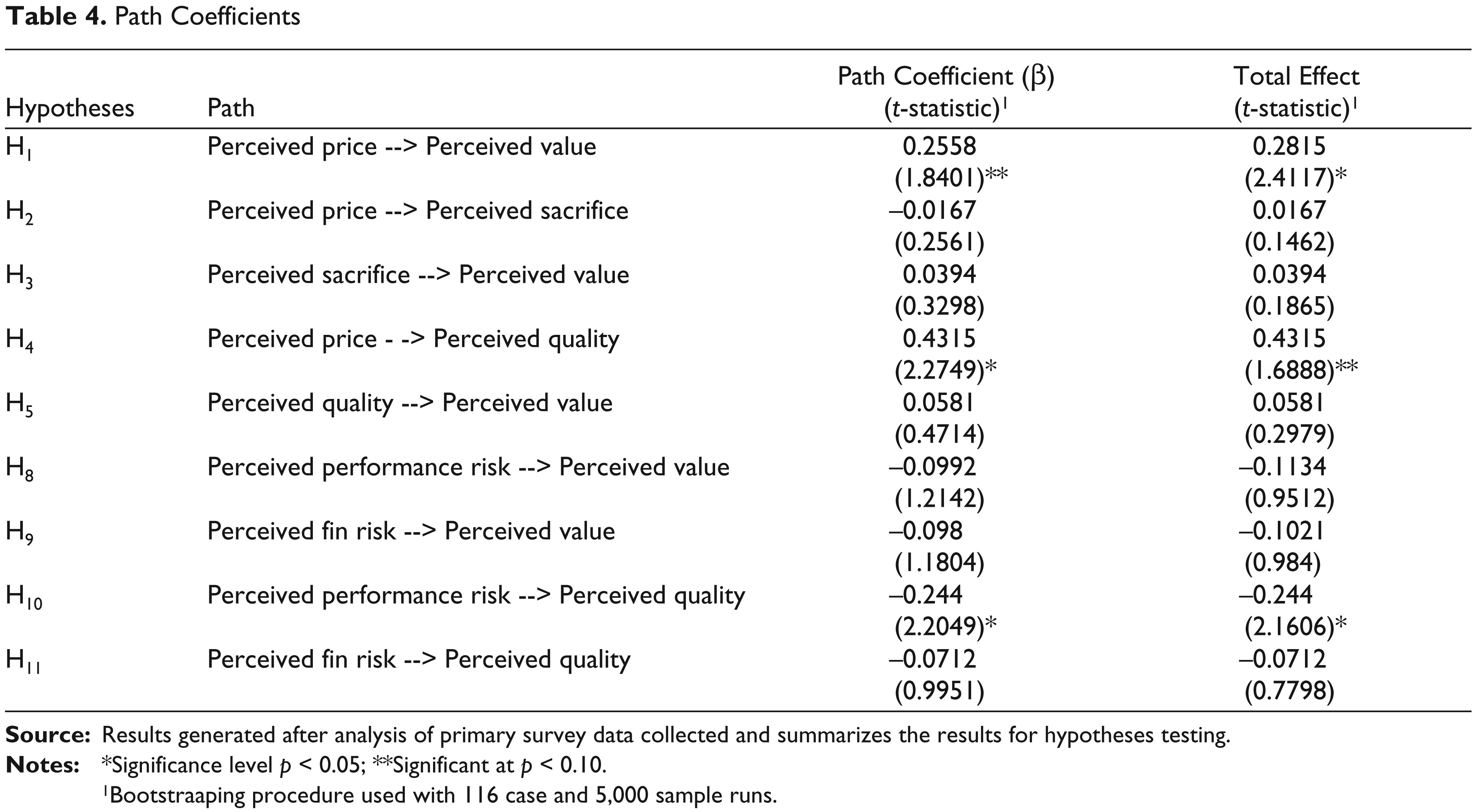
1Bootstraaping procedure used with 116 case and 5,000 sample runs.
Test of Mediation Effect Using PLS and Sobel Test
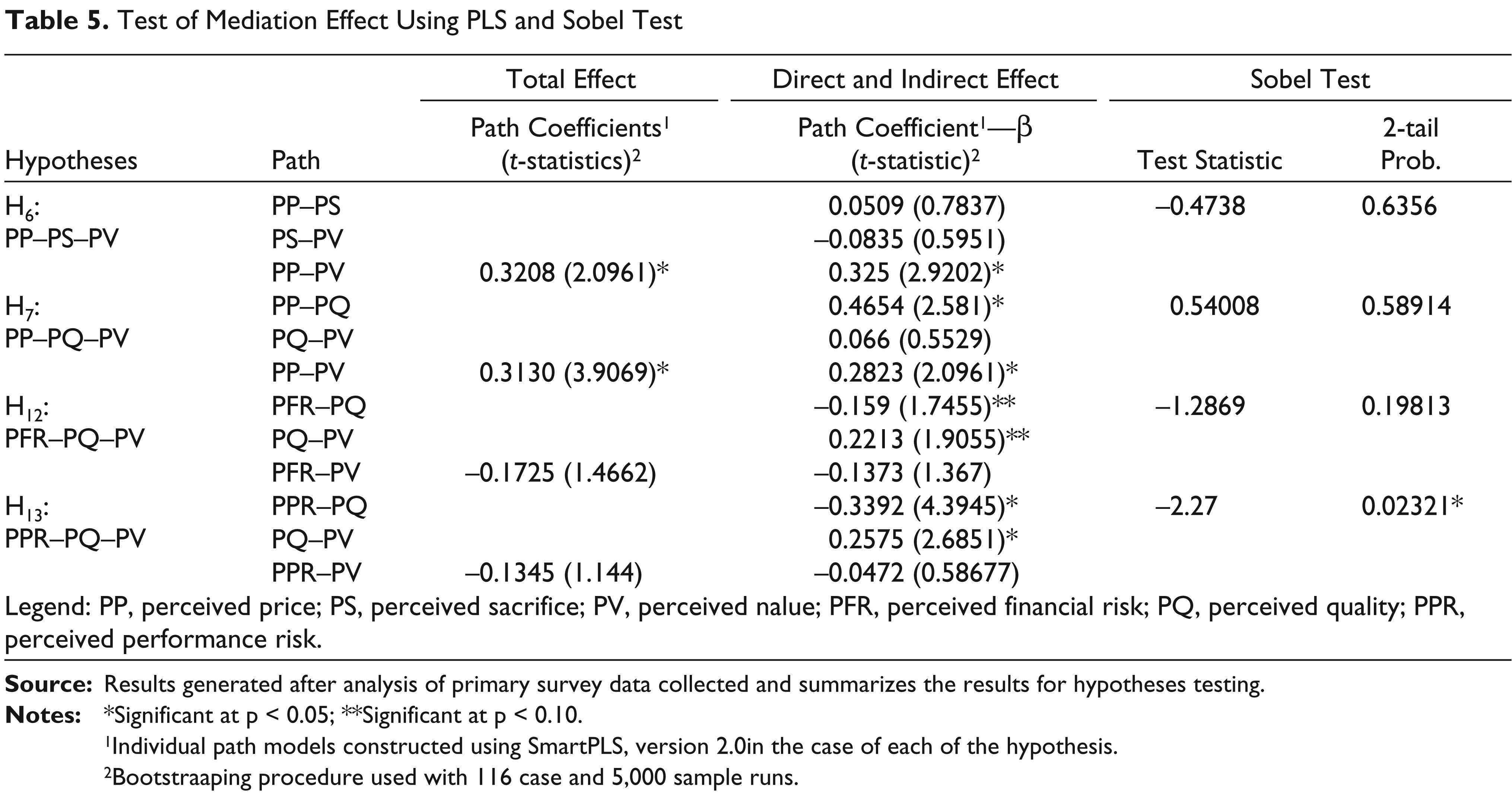
1Individual path models constructed using SmartPLS, version 2.0in the case of each of the hypothesis.
2Bootstraaping procedure used with 116 case and 5,000 sample runs.
In the case of hypotheses H12 and H13, the results confirm Baron and Kenny (1986) conditions for establishing the mediation effect of perceived quality on the relation between consumers’ risk perceptions and value perceptions. The strength of indirect effect as per Sobel test is, however, found to be weak in the case of hypothesized relationship (H12) and in this study we could accept H12 partially only. The hypothesized relationship H13 which suggests perceived quality influencing the effect of perceived performance risk on value perceptions is accepted on the basis of establishing its mediating effect. Quality perceptions fully mediate the relation between brand perceptions and value perceptions, as the direct effect tends to reduce on the introduction of mediating term—perceived quality. Sobel test further supports the full mediation effect as the interacting term is significant at p < 0.05 (Table 5).
Discussions and Implications
In emerging economies, generally, price is one of the major considerations affecting consumers’ decision making. Contrary to the notion of viewing consumers in emerging markets as highly price sensitive, the results indicate that price of a product is increasingly looked upon as an indicator of product quality. Research findings clearly show the positive relationship of price perceptions with quality perceptions and with value perceptions. Consumers associate high price with the presence of better product features, assuming that a good quality product always comes with a high price attached. As the price level increases, simple heuristic, ‘you get what you pay for’ is highly likely to be used by the consumers. Thus, the developing notion around price as ‘economical’ or ‘expensive’ is very important in affecting both, the quality perceptions and value perceptions.
Use of a favourable brand name affecting consumers’ decision is also an important aspect of marketing strategy as consumers give more consideration to brand performance as a pre-requisite to forming their quality perceptions. In the backdrop of strong positive linkage between price and quality perceptions, it seems possible for marketers to build and position a brand name for its higher level of performance in emerging markets too. Here, word of mouth publicity of the brand name may further help marketers in favourable brand name positioning as research findings also suggest word of mouth as one of the search sources, particularly for those who are less familiar and knowledgeable about the product.
In a nutshell, contrary to the notion that Indian consumers consider the price of a product only as an indicator of the sacrifice needed on their part, it is the ‘high price high quality’ notion supported by the branded product that would make the marketer to gain better as Akdeniz et al. (2013) also concluded in their study that ‘consumers did not perceive a higher product quality with a stronger warranty (or higher price) when brand reputation was low’. Thus, it appears that emerging economies are possibly shifting from looking to lower price product options to alternatives which boast of a favourable brand name indicated by a higher price level. This would also imply that marketers can quickly adjust the positioning of a product through price modifications instead of re-instatement of brand name; however, consumers’ expectations of a highly priced product carrying superior features should not be disappointed. The current research, thus, could be seen as extending Dodds and Grewal’s (1991) research which suggests that price is a significant cue in affecting product evaluations and marketers can adjust price to enhance value perceptions.
Furthermore, the investigation into consumers’ search behaviour indicates that those who carry a higher level of knowledge and familiarity focus more on product features and spend a considerable time in searching for the product. Thus, what makes the ‘price’ acceptable to consumers may depend upon what do they search for and this will have an effect on their perceptions about the ‘price’. Targeting, for example, those who are highly familiar and knowledgeable, it is therefore imperative for marketers to clearly establish product advantages in terms of its features, benefits etc. so as to adequately contribute to establishing the favourable price perceptions. However, the information should not fall into the realm of ‘too much information’, as information overload may cause dysfunctional impact on consumers’ decision making (Bartlett, 1969; Kelly & Fiske, 1951; Newell and Simon, 1972; Payne et al., 1993).
On the other hand, those with low levels of knowledge look for appearance and brand name (i.e., deciding on the basis of stimuli (cues) available in the immediate environment). These consumers, who may be in general novice in their decision making, are likely to show stronger tendencies towards impulse buying and on their own seek surrogates, like brand name, for quicker processing that reduces their search and purchase time. Furthermore, a brand name carrying a favourable image allays consumers’ uncertainty regarding brand performance and promises good quality. Creating positive brand perceptions particularly through encouraging a favorable word of mouth opinion could be suggested in the light of the findings of the current research. Offering product demonstrations and self-trial of product may also assuage associated product performance uncertainty and ease product trial. In all, for marketers targeting consumers on the basis of their knowledge and familiarity levels or more specifically those who tend to be more rational in their decision making as against those who are more impulsive or novice in their buying patterns, manipulation of marketing cues, like price and brand name, offers a strong potential for designing marketing strategies in particular communication and retail strategies.
The study paves the way for future studies. In view of the lack of support to many of the hypothesized relationships (Table 6), future researches need to be cautious with regard to the use of tested scale items as these were largely used in experimental research design. Future researches are needed to establish the robustness of the model when cues other than brand name and price, such as store name, warranties, advertising and packaging are presented to the consumers. Along with marketing cues, the non-marketing-controlled cues as suggested by Akdeniz et al. (2013) also have a role in assessing product quality. Extension of the model to include the interactions between marketing and non-marketing controlled cues could help in resolving intricacies involved in understanding consumers’ perception of product value. The study has been confined to two categories of products only, namely, mobile phones and athletic shoes; however, an attempt to explore the underlying conceptual model for a wider range of products is required. Further, only limited search aspects have been investigated in this study as the purpose was to find out those who tend to rely more on marketing cues in their decision making. The more extensive research into search behaviour, particularly including contemporary search sources such as the social media, and internet, may bring out interesting insights for marketers with regard to designing of their communication strategies. While defining the major constructs under study, sacrifice is construed in a monetary sense and other dimensions such as time sacrificed, and efforts needed are not tested. Furthermore, in addition to perceptions of financial risk and performance risk, other dimensions of perceived risks need to be examined for their role in affecting consumers’ product evaluations.
Summary of Tested Hypotheses
Footnotes
Appendix
Cross Loadings of Scale Items
| Measures | Constructs |
|||||
| Perceived Fin Risk | Perceived Price | Perceived Quality | Perceived Sacrifice | Perceived Value | Performance Risk | |
| Maintenance cost | 0.8273 | –0.1645 | –0.1407 | –0.3268 | –0.1463 | –0.015 |
| Reduction in spending | –0.1784 | 0.0634 | 0.2341 | 0.8408 | 0.0495 | –0.0536 |
| Brand status | –0.11 | 0.3153 | 0.1778 | –0.1641 | 0.8228 | –0.0132 |
| Certainty | 0.1103 | 0.0324 | –0.2133 | –0.0867 | –0.1283 | 0.8868 |
| Confidence | 0.0588 | 0.025 | –0.189 | –0.061 | –0.0663 | 0.8167 |
| Dependability | –0.1979 | 0.3887 | 0.8065 | 0.0645 | 0.0113 | –0.0253 |
| Overall financial risk | 0.6746 | –0.0837 | –0.1137 | 0.115 | –0.1047 | 0.1997 |
| Price acceptability | –0.1702 | 1 | 0.4353 | 0.0166 | 0.2951 | 0.034 |
| Purchase inability | –0.1412 | –0.0224 | 0.1009 | 0.9115 | 0.087 | –0.0956 |
| Quality | –0.1164 | 0.4408 | 0.8969 | 0.1792 | 0.2787 | –0.2491 |
| Reliability | –0.0821 | 0.0126 | 0.4987 | 0.1741 | 0.1444 | –0.2916 |
| Value for money | –0.1694 | 0.1807 | 0.1834 | 0.285 | 0.8442 | –0.1784 |