







Abstract
Movies are getting extremely costly and product placement has become inevitable to accommodate brands to support their budgets. Moreover, brands are demanding return on investment for their placements. This article makes an attempt to evaluate the outcome of brand placements in movies. As Indian audiences are exposed to both Hollywood and Bollywood movies, product placement is rapidly turning into a colossal path for brands to achieve their objectives by placing the brand in a subtle or blatant way. It is reasonable to count on that consumer contrast of brands will genuinely get influenced based on the type of the entertainment event (Bollywood vs. Hollywood) and type of the product placement (subtle vs. blatant). A structural equation model was developed to assess the effect of entertainment event and placement type (PT) on brand attitude (AB) and consequently on purchase intentions (PIs). The study also explores the possibility of mediation and conducted multi-group analysis on event type and PT using AMOS and SPSS. The findings help us to comprehend the event type (Hollywood movie vs. Bollywood movie) and the PT (subtle vs. blatant) that has the most significant impact on AB and subsequently on PI.
Introduction
Product placement is the intentional fusing of marketable content into an entertainment set-up. It is also called as a product plug as it blends brand promotions into noncommercial settings (Williams, Petrosky, Hernandez, & Page, 2011). Product placement is prevalently known as brand placement or embedded marketing. The pervasive nature of digital technology and consumer resistance to conservative advertising has expanded the scope of product placement in movies (Elliott, 2008). To tap the target audience effectively, numerous advertisers are progressively utilizing product placement in movies to impact viewers’ attitude or behaviour (Russell, 2002). Brand placements in films provide an extended life to promoters than traditional advertisements (d’Astous & Chartier, 2000). In film analysis, one of the essential disputable point is to bring realism in the movies. Hence, the producers have started adding real products and brands in the movies (Brennan, Dubas, & Babin 1999). Product placement has become a source of budget and support for many movie makers (Magiera, 1990). In recent years, product placement in movies has turned out to be more ubiquitous. Either the producer seeks the permission of the company to display their logo or brand pays the producer to get it displayed in the movies.
Impact of Product Placement
Product placement has come a long way, with more than 1,000 firms placing their products in movies (Argan, Velioglu, & Argan, 2007). The list of brands that have benefitted from product placements is huge. For instance, Tom Cruise is said to have rescued Ray-Ban sunglasses from extinction—his use of Ray-Ban sunglasses in the Risky movie (1983, sale of square-shaped wayfarer glasses increased by 50%), Top Gun movie (1986, sale of aviator sunglasses increased by 40%) and Rain Man movie (1988, sales increased by 15%), which are said to have done wonders to the brand. The enduring courting between Aston Martin and James Bond has existed since 1964, when the car was first featured as Bond’s car in the Goldfinger movie, starring Sean Connery. The ‘bond effect’ persisted over 50 years and helped change an obscure British car brand into a brand that is revered across the world. The BMW Z3 car was featured in the 1995 James Bond movie Golden Eye and generated 9,000 orders after the release of the movie. As indicated by People magazine article (1983), the profits of Reese Pieces candies rose by 65 per cent when it was shown in the 1982, Steven Spielberg blockbuster, ET. From these examples, we can deduce that product placement has an impact on the brand and it can do lot more than we realize.
Product Placement Approaches
Past literature indicates that placed brand can play the main role or supporting role or simply being displayed in the background of the scene (Russell, 2002). For instance, Biba store was shown as a background scene in the movie Krish, Tide brand was placed very prominently in a scene from Chup Chup Ke, character Katrina Kaif riding a Royal Enfield bike in the movie ZNMD, Aamir Khan riding BMW bike in Dhoom 3, lead character Shah Rukh Khan extolling the virtues of the Nokia brand in Chennai Express movie, a character in the movie using the brand again and again; Anushka Sharma using Canon camera in the movie Jab Tak Hai Jaan, or even the movie being about the brand Meri Dad ki Maruti or brand being there even in movie posters; Shah Rukh Khan wearing TAG Heuer watch in Don 2 posters. As seen from these examples, product placements undergo varying levels of modalities in the movies. Further, the placement of the product is either subtle or blatant.
As Indians watch both Hindi and English movies, promoters in India have a choice of two contexts, that is, Hollywood and Bollywood movies, to place their products. Also, there is an option of two placement types (PTs), that is, subtle and blatant.
Need for Study
Brand attachment is an aftermath of attachment theory which suggests that an individual develops a connection towards others or brand due to an intrinsic want of acknowledgment (Thomson, 2006). Similarly, the imitative behaviour is also an outcome of social learning theory which suggests that brand identification behaviour practised or showcased by on-screen actors may motivate audience to exhibit imitative responses to the placed products (Bandura, 1997). When brands are depicted in an aspirational setting (movies), the audience are thrilled to see them, and in real life, when they get engaged with these brands, it allows them to experience the same excitement of settings on a regular basis (Russell, 1998). These theories advocate the significance of product placement in movies. Although product placement has been extensively researched (Russell & Belch, 2005), most of the studies have focused more on its prominence, modality of the product placement and on plot connection (Purnawirawan, Wouters, & Pelsmacker, 2010). As audience, we come across two entertainment contexts (Hollywood and Bollywood) and it is sensible to expect that the entertainment context affects consumer evaluation process of the placed brand. Further, the association between brand placement and entertainment context is an area of speculation. As brands are placed subtly or blatantly in the movies, which type of placement will be beneficial to the promoters needs to be assessed. The influence of entertainment context, PT and their synergies on consumer attitude and subsequently on purchase intention (PI) is an unexplored area. Even though there are problematic issues in evaluating product placement, yet it is the most sought out industry (multi-dollar industry) by advertisers and marketers (McDonnell & Drennan, 2010), making this study pertinent and useful.
Based on the aforementioned discussion, the following objectives have been set up for the study.
Research Objectives
The objectives of this research are given as follows:
To examine the influence of the event type (Bollywood vs. Hollywood) on brand attitude (AB) and consequently on PI. To examine the influence of product PT (subtle vs. blatant) on AB and consequently on PI. To develop a comprehensive model comprising of event type, brand PT, AB and PIs of consumers. To assess if AB mediates the effects of event type, PT and PIs.
Hypothesis Setting
Hollywood Versus Bollywood
Medium for brand placement can be a book, video, TV or movie. The media context has a bearing on the consumer evaluation process and consumer responses differ based on the popularity of the vehicle (Moorman, Neijens, & Smit, 2005). As movies are depictions of society, Hollywood and Bollywood movies vary in their culture and environment. Also, Hollywood movies are entrenched in the low context culture and Bollywood movies with the high context culture (Hall, 1997). Past literature review clearly depicts that cultural differences influence the attitude towards the placed brand (Zhang, 1996). In our present study, we have considered the country of origin as a media context. Hollywood films are produced in a foreign country and in English, while Bollywood films are produced in India and in Hindi. This can be categorized as entertainment industry medium. Indian viewers are widely exposed to both Hollywood and Bollywood movies. Now, the question is, what will be the impact of brand placement on Indian audience, given the presence of Bollywood and Hollywood movies and how would they respond to it? This warrants us to test the hypothesis as given in the following:
H1: Brands placed in an entertainment context (Hollywood vs. Bollywood) significantly influence AB.
Subtle Versus Blatant
Marketers are increasingly using product placement in media to influence attitudes or behaviour of the audiences (Russell, 2002). Now the question is, how to place the brand? For instance, the brand should be subtly placed with no reference to characters on the screen or blatantly placed where the brand is integrated within the plot. The answer to this question will help promoters to effectively place their brand. Subtle placements are usually visuals and may not relate to the character or the plot (Russell, 2002). There are placed in the background without any reference to their existence. As per Law and Braun (200), the audience finds difficulty in recognizing subtly placed brands in movies. However, under the condition of ego-depleted state, individuals resist persuasive knowledge and exhibit favourable attitude towards subtly placed brands (Gillespie, Joireman, & Muehling, 2012).
Blatant placements are conferred with varying degree of audiovisual modalities and are incorporated into the plot or character (Homer, 2009). Blatant placement helps viewers to access information through audio, video and semantic routes. According to Law and Braun (2000), blatantly placed brands are easily recalled and recognized. When advertisers surpass the threshold limits and start bombarding the viewers with their blatant ads, this technique may reverse fire (Mandese, 2006; Wei, Fischer, & Main, 2008).
A research study by d’Astous and Séguin (1999), under vignette methodology, has shown that even if the brand is placed implicitly or explicitly, integrated or not, it does not vary the attitude towards the placed brand. Another study by Cowley and Barron (2008) has found that if programme liking is no longer very high and brand placement is not exposed several times, AB does not differ for subtly or blatantly placed brand. Russell (2002) in his experimental study has found that AB is favourable when there is congruence between modality and plot. Under the condition of incongruency, subtle and blatant placement did not diverge the AB.
From the aforementioned literature, audience prefers blatant placements over subtle placements; however, if the programme is not liked by the audiences, then subtle or blatant placement impact will remain same on AB. This gives us an opportunity to test the hypothesis as stated in the following:
H2: Brand PT (subtle vs. blatant) significantly influences ABs.
Brand Attitude and Purchase Intention
Shwu-Ing Wu and Chen-Lien Lo (2009) study has found that brand awareness significantly influences brand image and indirectly influences AB. Further, AB affects PIs of the customers. Flaherty and Pappas (2000) asserted that PIs of the consumers are greatly influenced by the attitude towards the core brand. As per Türkel, Uzunoğlu, Kaplan, and Vural (2016), a familiar and an unfamiliar brand does not affect consumer attitude when provoked with CSR message; however, the responses are dissimilar for AB and PIs.
From the aforementioned literature review, one can elicit that AB influences PIs. To test the same, the following hypotheses have been set.
The hypotheses for the study are as follows:
H1: Brands placed in an entertainment context (Hollywood vs. Bollywood) significantly influence ABs. H2: Brand PT (subtle vs. blatant) significantly influences ABs. H3: ABs significantly influences PIs of the customers.
Operational Definitions
Research Methodology
The study explored the influence of both entertainment events (Hollywood vs. Bollywood movies) and PT (subtle vs. blatant) on AB and eventually on PIs. In this research, products placed subtly or blatantly were taken from Hollywood and Bollywood movies.
Experimental designs give flexibility to change the existing conditions and verify theoretical underpinnings (Bagozzi & Yi, 1989). Hence, this method is adopted in this research. Postgraduate students (from Bangalore University), who are frequent moviegoers, participated in this research. Three preliminary studies were conducted prior to the main study.
Preliminary Study 1: Selection of Movies with Product Placement
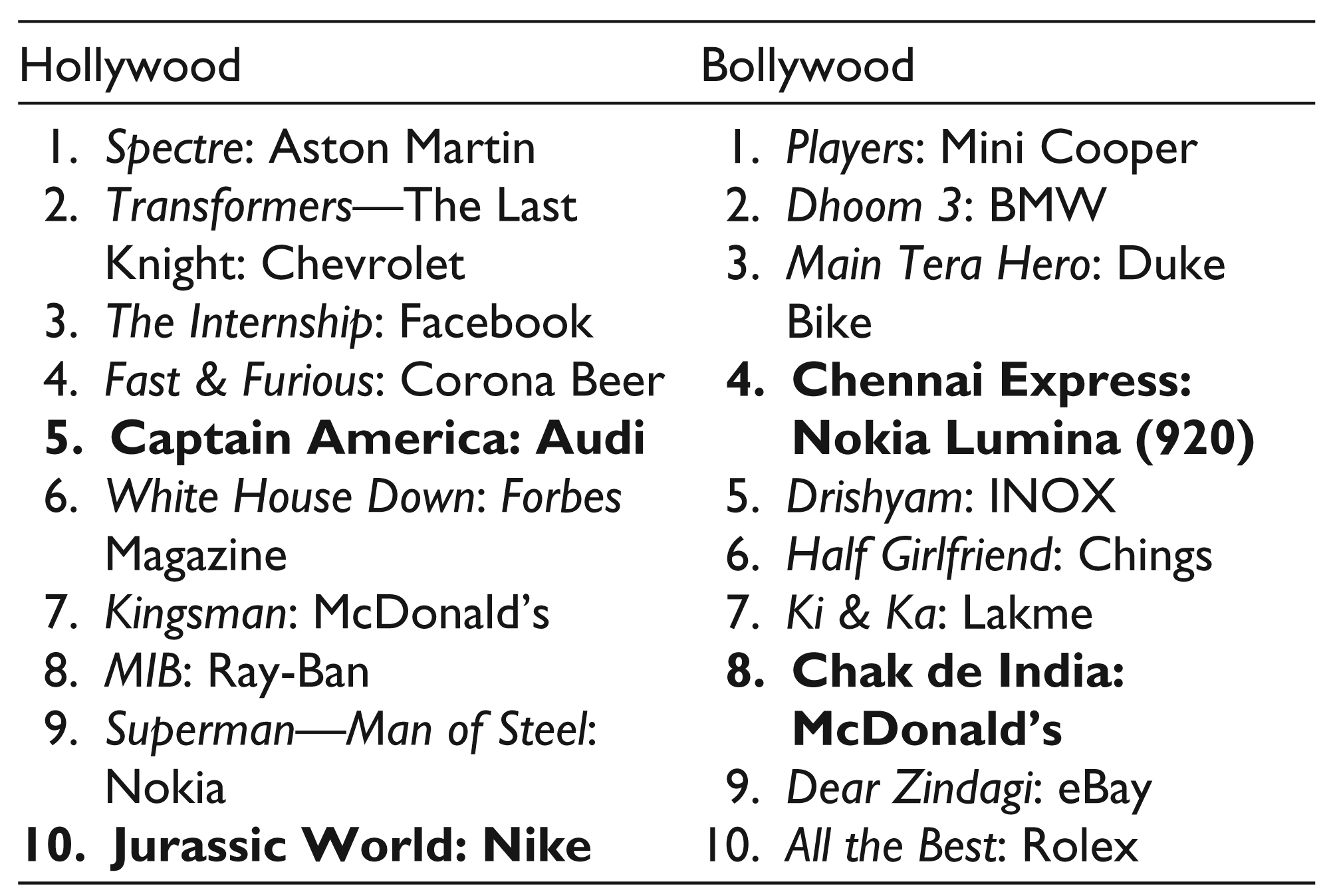
A brainstorming session was held among 20 students—all students were in the age group of 22–25 years and included both men and women. The session yielded the names of several Hollywood and Bollywood movies that used product placements. Based on further deliberations, a list was drawn that included 10 names of Hollywood and 10 names of Bollywood movies that used brand placements. The entire exercise took almost an hour (refer to Table 1).
Preliminary Study 2: Shortlisting Movies
The list of names of 10 Hollywood and 10 Bollywood movies was used to shortlist 4 movies by using mean scores:
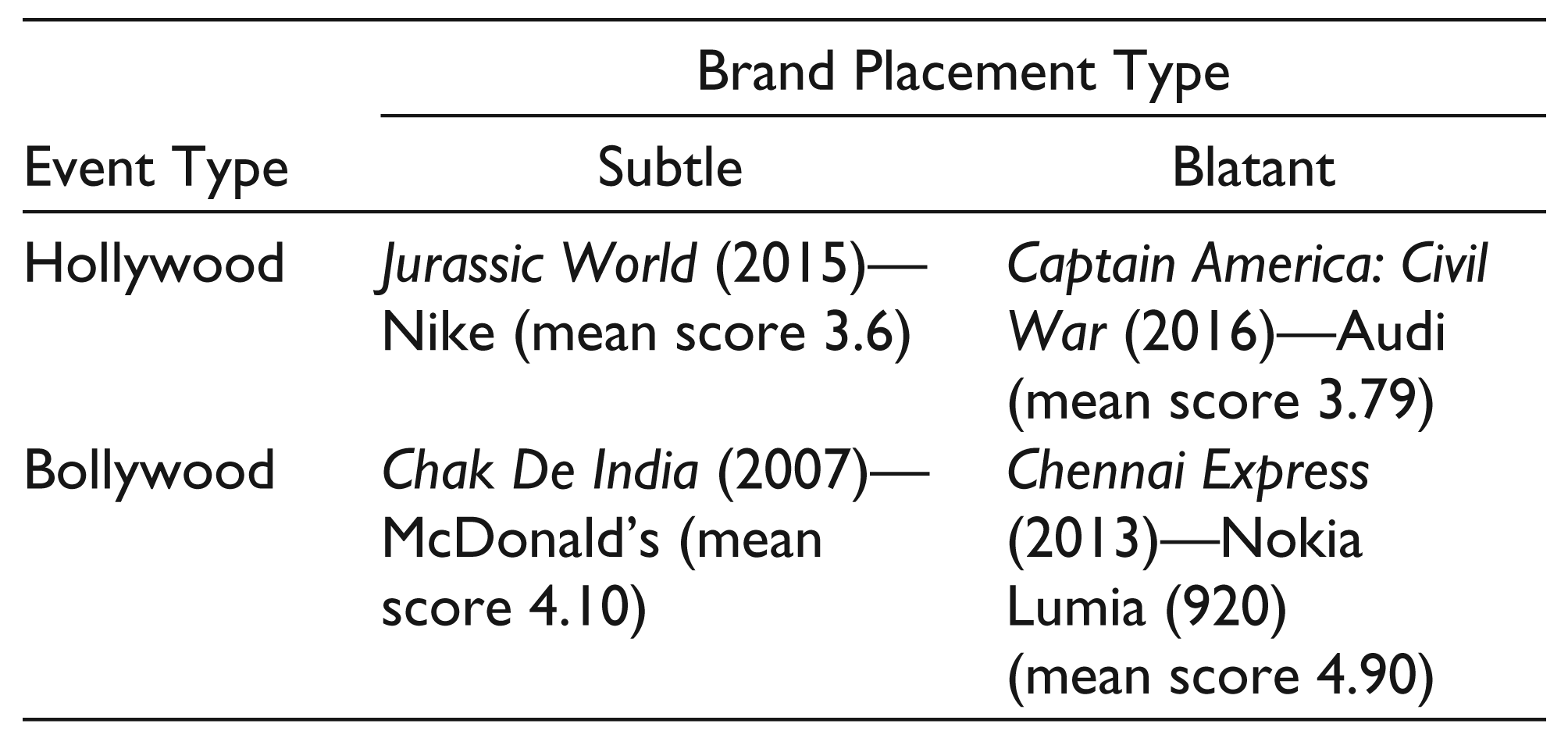
Hollywood movie with blatant product placement (Captain America, Audi car) Hollywood movie with subtle product placement (Jurassic World, Nike shoes) Bollywood movie with blatant product placement (Chennai Express, Nokia Lumia (920) smartphone) Bollywood movie with subtle product placement (Chak De India, McDonald’s fast food joint)
For shortlisting the movies, 40 respondents were asked the following questions about each movie. As movies had several product placements, participants were asked to select a scene which displayed only one brand. The participants were informed to select a brand that had a visual prop or was integrated with the movie story. Both entertainment contexts used this procedure to short list four movies.
The brand was just shown visually in the background (Russell, 2002)
The brand was not associated with the plot or the story of the movie
The brand was very prominently placed and talked about in the scene (Homer, 2009)
The brand was integral part of the story
The brand was shown many times in the movie
List of Hollywood and Bollywood Movies with Product Placements (Shortlisted)
A ‘disagree–agree’ scale with 1–5 rating was used where 1 indicated disagree and 5 indicated agree. Each product placement was classified as ‘subtle’ or ‘blatant’ based on the following parameters:
Subtle: A score closer to 5 for statements 1/2 Blatant: A score closer to 5 for statements 3/4/5
Placements with the highest scores on ‘subtleness’ and ‘blatantness’ were chosen as given in Table 2.
Preliminary Study 3: Brand Prestige, Brand Awareness and Brand Acquaintance
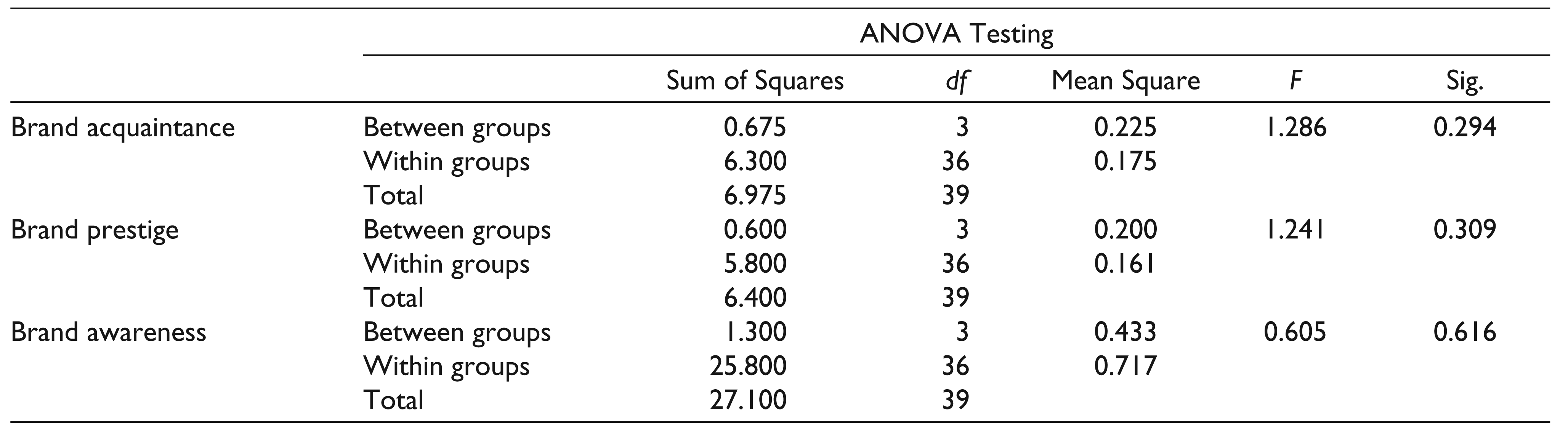
This testing was done to find out whether the chosen brands, namely, Nike, Audi, McDonald’s and Nokia Lumia (920), were similar and had the same stature. A pretest was conducted on the four brands to assess the significant differences, based on brand prestige, brand awareness and the level of brand acquaintance. For this, 40 participants were used and ANOVA test was conducted. The results reflected no significant differences among the four brands (refer to Table 3). The selected brands had the same importance and were perceived to have the same perception and the familiarity level of all the brands was same. This concludes that the selected brands enjoy same status quo.
Hypothesis: All four brands are similar in terms of brand prestige, brand awareness and brand acquaintance.
Main Study
This study used a 2 × 2 grid, which had two levels of the event type (Hollywood vs. Bollywood movies) and two levels of PT (subtle/blatant). All the 120 postgraduate student participants (85 males and 35 females) were found to fall in the age group of 22–25 years. In this research, a purposive sampling method is adopted based on participant interest, their inclination towards movies and knowledge about product placement in movies. As youth are enthusiastic filmgoers and social media influencers, we have selected young adults so that promoters can target these young adults. In total, we identified four independent groups comprising of 30 students in each group. The group was exposed to a movie clip which lasted for 30 minutes and participants were asked to fill the questionnaire supplied to them. The same was repeated for the remaining three groups. An effort was made to ensure that the selected brands were placed at the middle of the movie clip so that respondents are engaged properly in the entertainment situation. The study was conducted in the month of February–March 2018. To validate the constructs of the study, a confirmatory factor analysis (CFA) was conducted. The study employed ANOVA, structure equation modeling (SEM), mediation, bootstrapping and multi-group analysis using SPSS and AMOS.
Movies from Hollywood and Bollywood with Subtle- and Blatant-placed Brands Along with Mean Scores
ANOVA Table to Assess Brand Acquaintance, Brand Prestige and Brand Awareness for Selected Four Brands
Composite Reliability, Convergent Validity and Discriminate Validity to Validate Scales

Analysis of the Research
Confirmatory Factor Analysis
The current study employed CFA to test two objectives: (a) dimensionality check (proposed relationship) and (b) validity of the measurements (Anderson & Gerbing, 1988). The CFA was deployed to test the relationship between latent and measured variables and to assess the construct validity concerns (Byrne, 2010; Kline, 2005). Convergent validity is designed to measure the correlation between the scale items and proves the correlation by providing irrefutable data (Frankfort-Nachmias & Nachmias, 2008). Discriminant validity establishes the fact that a measure of construct does not correspond to another measure of the construct. It also ensures that there is no theoretical relationship between the measures.
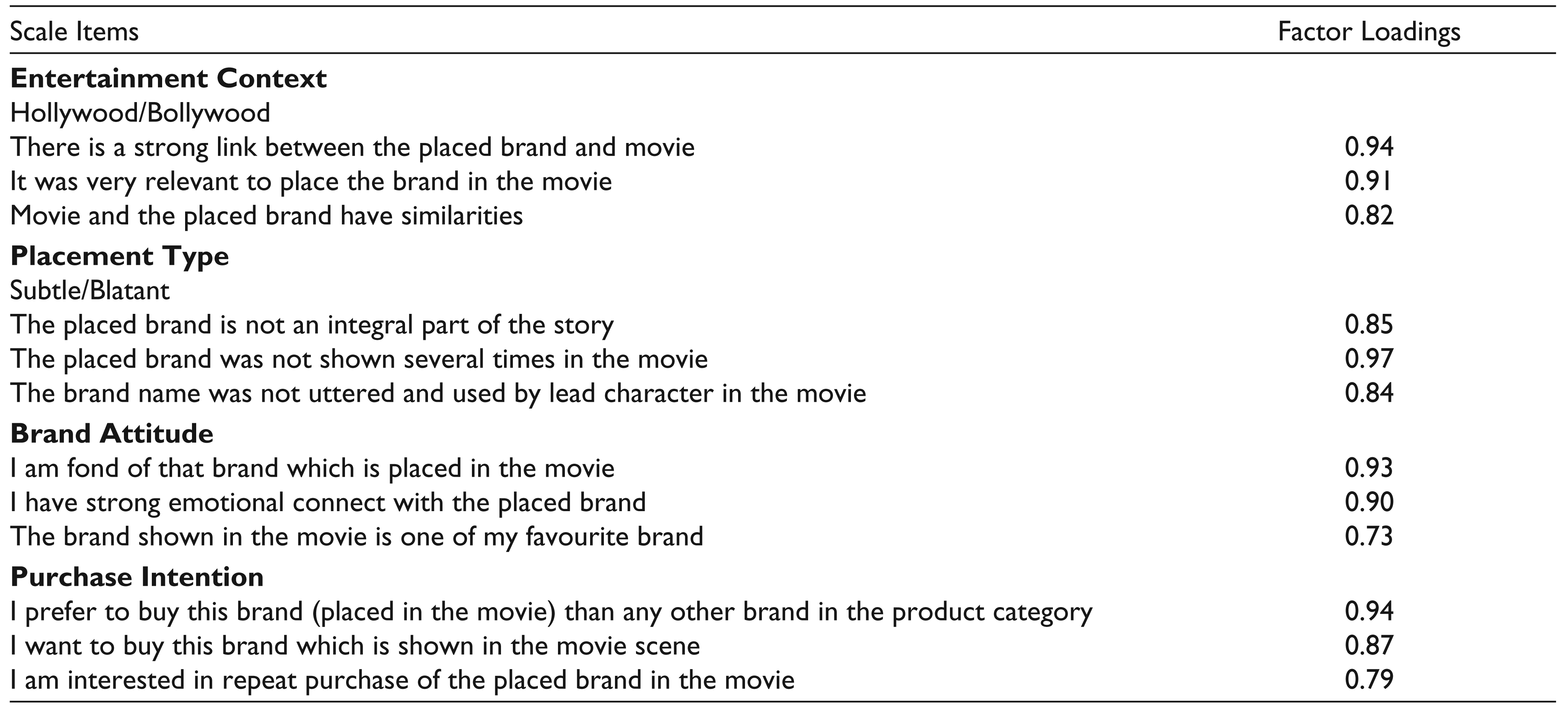
In this study, we have used four constructs, namely, entertainment type (ET), PT, AB and PI. These measures have been arrived at after going through the related literature. Validated scales from past literature have been taken (refer to Tables 4 and 5). For entertainment event type and brand placement, the scale of Speed and Thompson (2000) has been taken and modified to suit our study. Similarly, for AB, the scale of Bruner and Hensel (1992) has be taken and suitably adopted. These scales were subjected to CFA test to gauge their psychometric properties. Each construct had a three-item scale which was rated on five-point disagree–agree Likert scale where 1 stands for disagree and 5 stands for agree.
Validity Test
The average variance extracted (AVE) in the items by the relevance factors ranged from 0.74 to 0.796. Composite reliability measures are also above the threshold levels of 0.7. Both these aspects exhibit that reasonable levels of convergent validity are met. As maximum shared variance and average shared variance (MSV and ASV) values are less than AVE, discriminate validity condition is met. This indicates that the proposed scale fits for measurement (refer to Tables 4 and 5).
Scale Items and Factor Loadings
Model Fit
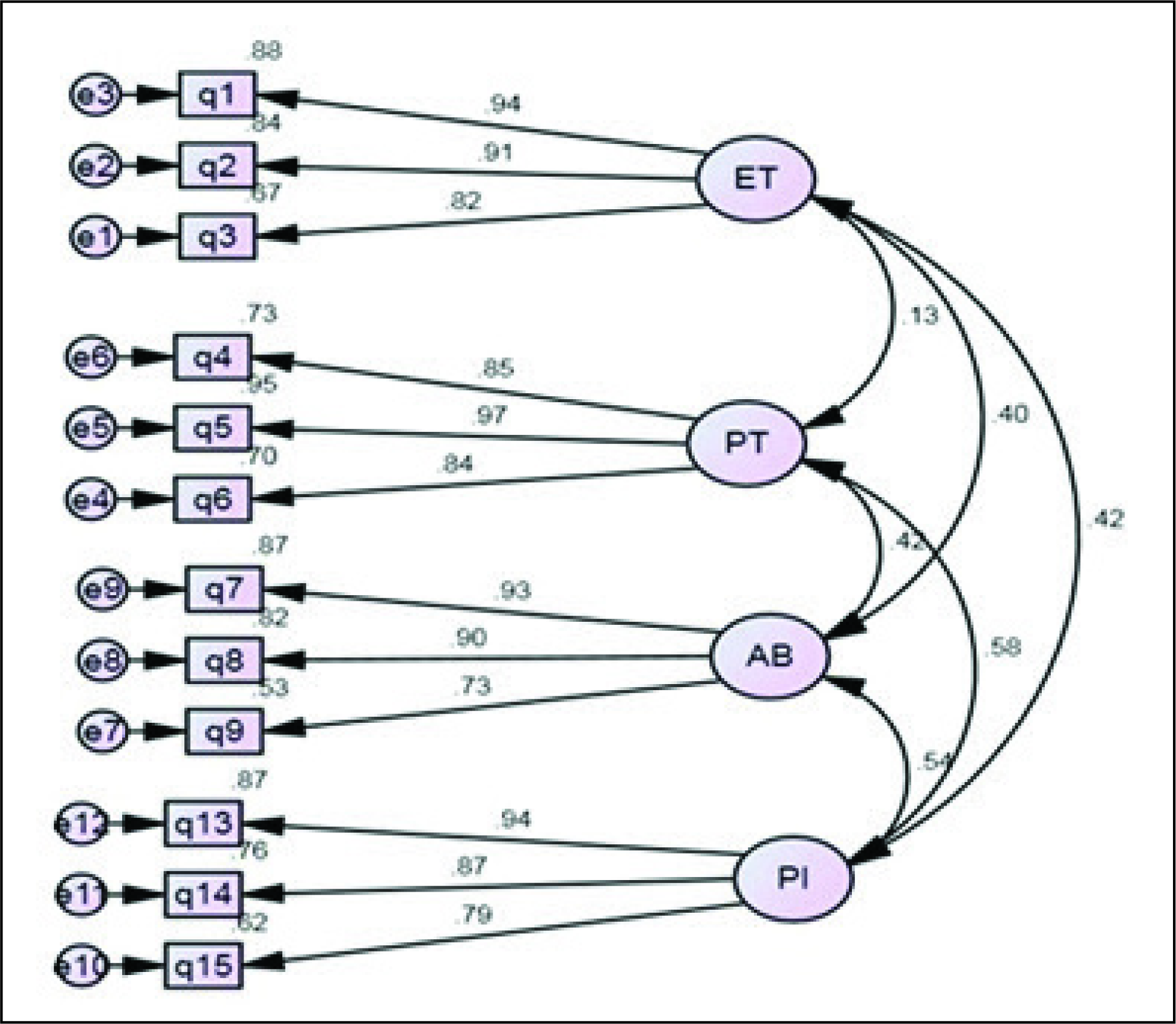
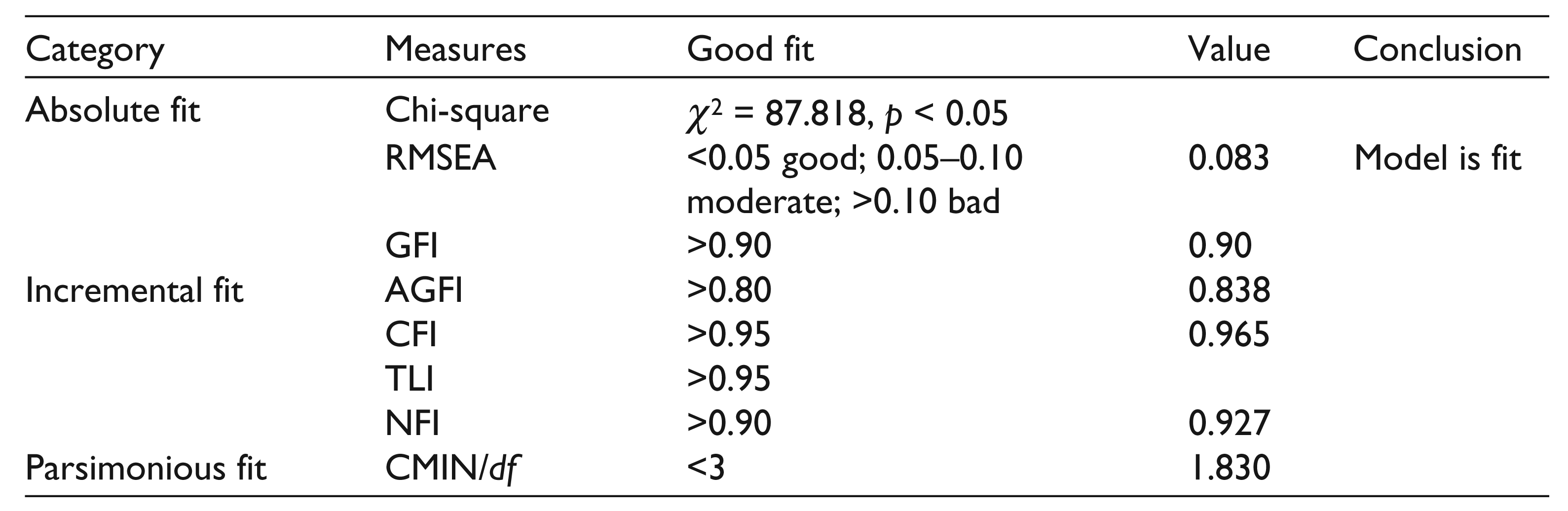
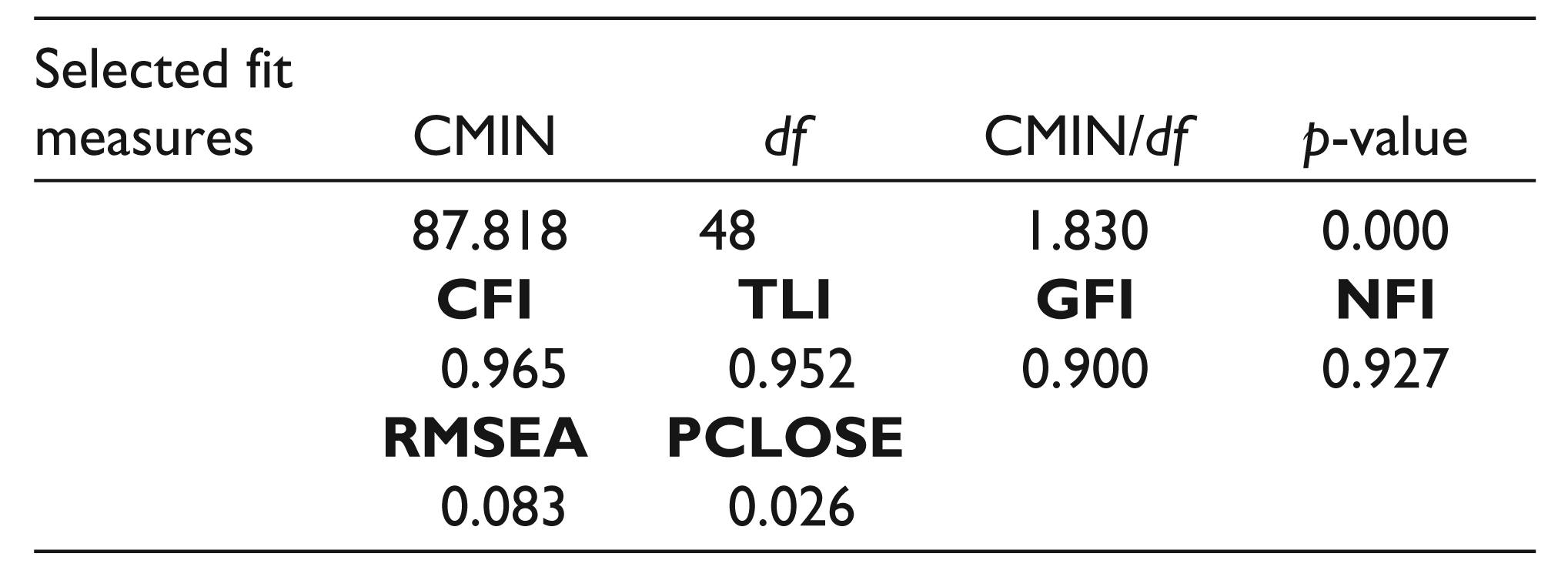
The other goodness-of-fit measures related to modelling (refer to Figure 1 and Table 6) indicate that the model fits the data well. The fit indices of the model are χ2 = 87.818, CMIN/df = 1.830; p = 0.000, RMSEA = 0.083, CFI = 0.965, NFI = 0.927 and AGFI = 0.838.
Structure Equation Modeling
The structure model (refer to Figure 2) consists of latent constructs: ET, PT, AB and PI. The ET and PT are exogenous variables and AB and PI are endogenous variables in the model. By using the multi-item scales, the latent constructs are measured in the proposed SEM (refer to Figure 2).
Model Evaluation
First, all the parameter estimates of the model (refer to Table 7) have critical ratio values greater than 1.96. This indicates that we have enough evidence to reject the null hypothesis. Further, the parameter estimates were found to be positive and met model requirements.
Summary of Model Fit Indices for the Proposed Model
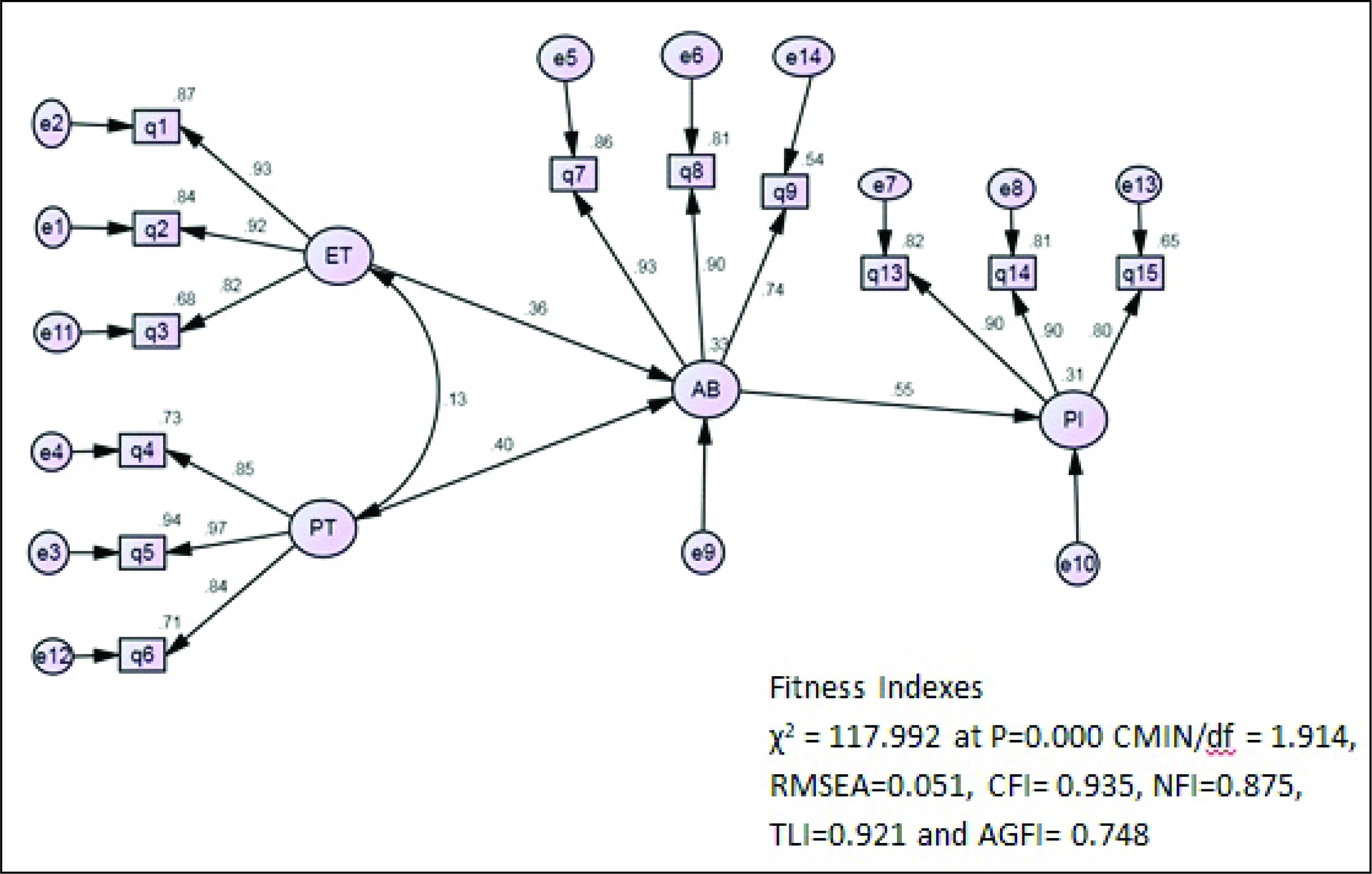
Path Coefficients and R2 of the Measurement Model

Summary of Model Fit Indices for Proposed Model
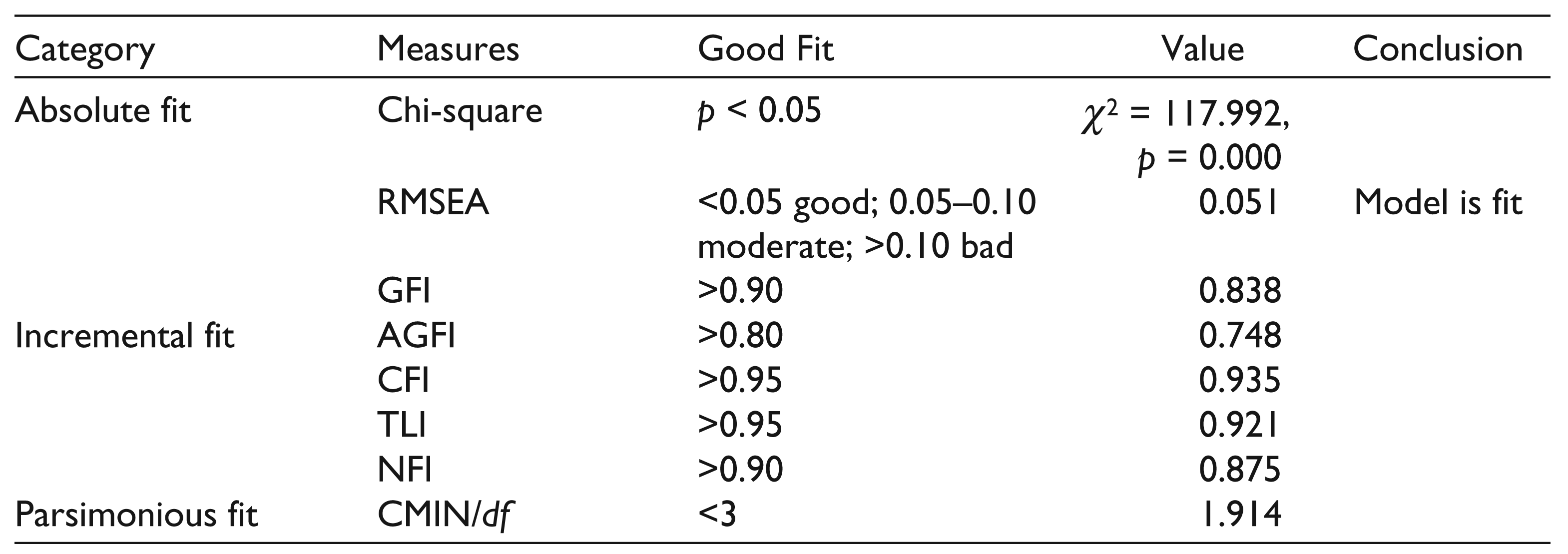
Second, the study takes a confirmatory approach to check whether the data fit the model. The goodness-of-fit measures related to modelling (refer to Figure 2 and Table 8) indicate that the model fits the data well. The fit indices of the model are χ2 = 117.992, χ2 = 117.992; CMIN/df = 1.914, p = 0.000, RMSEA = 0.051, CFI = 0.935, NFI = 0.875, TLI = 0.921 and AGFI = 0.748.
By referring Table 7, one can infer that PT (0.398) has more impact than ET (0.361) on AB. Both the paths are found to be significant (p < 0.05), proving hypotheses 1 and 2, that is, PT and event type significantly influence attitudes towards the brand. The coefficients of R2 reflect the validity of SEM and each R2 value should have a variance that exceeds the minimum threshold value of 10 per cent (Falk & Miller, 1992). In our study, the R2 coefficient value is 0.33 which is greater than the expected threshold value. This means 33 per cent of the variance in AB is explained by ET and PT.
Further, AB significantly influences the PIs (p < 0.05). Thus, proving hypothesis 3, that is, AB, significantly influences PIs. The path coefficient value of AB on PI is 0.554 and R2 value is 0.31. This means 31 per cent of the variance in purchase intent is explained by the AB.
To reconfirm the path significance of ET, PT on AB and AB on PI, bootstrapping for 2,000 samples was conducted (refer to Table 9). The bootstrapping technique helps us to overcome the limitations of the sample size, skewness in the collected data and to overcome assumption violations. The results of bootstrap are indicated in Table 9.
Bootstrapping for 2,000 Samples
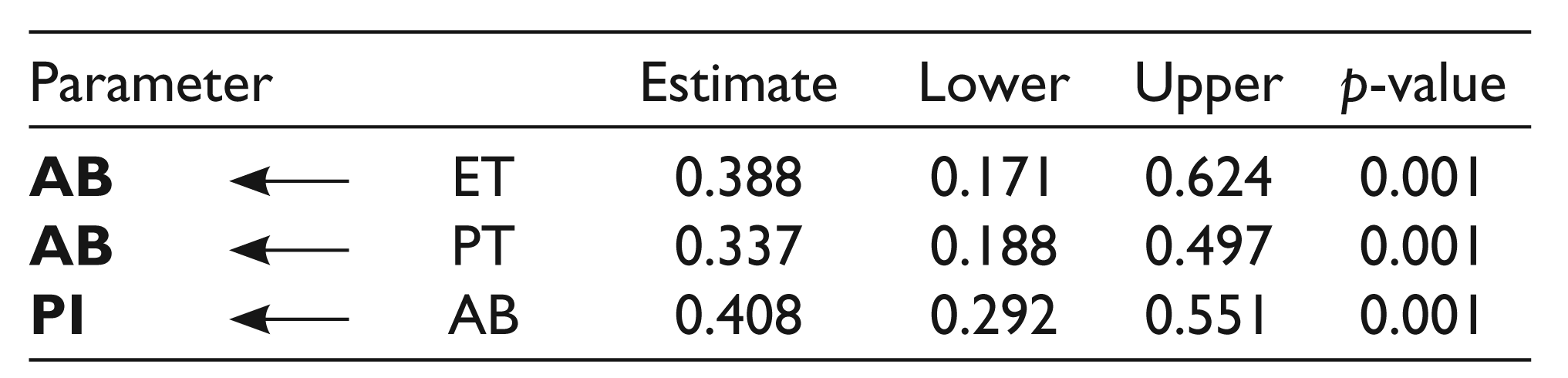
From Table 9, it can be inferred that ET and PT significantly influence AB (p < 0.05) and AB significantly influences PI (p < 0.05), thus proving hypotheses 1 and 2 using a bootstrapping technique.
Testing for Mediation Effect
To analyse the mediating effect, bootstrapping technique is used. Bias-corrected (BC) method is preferred by many scholars to examine the mediating effect as it helps in reducing the type 1 error (Williams & MacKinnon, 2008). Hence, we have also used BC method for assessing the path significance.
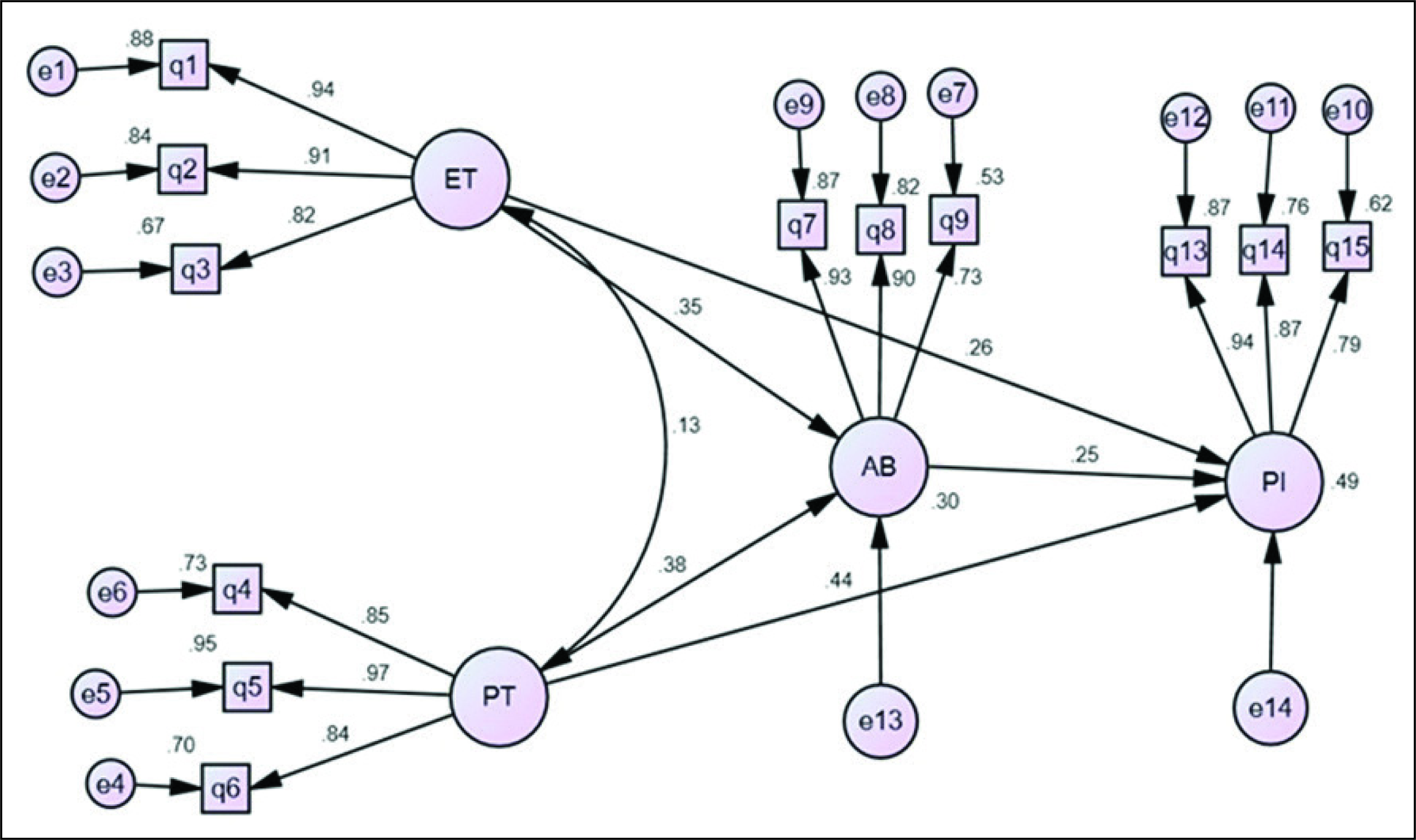
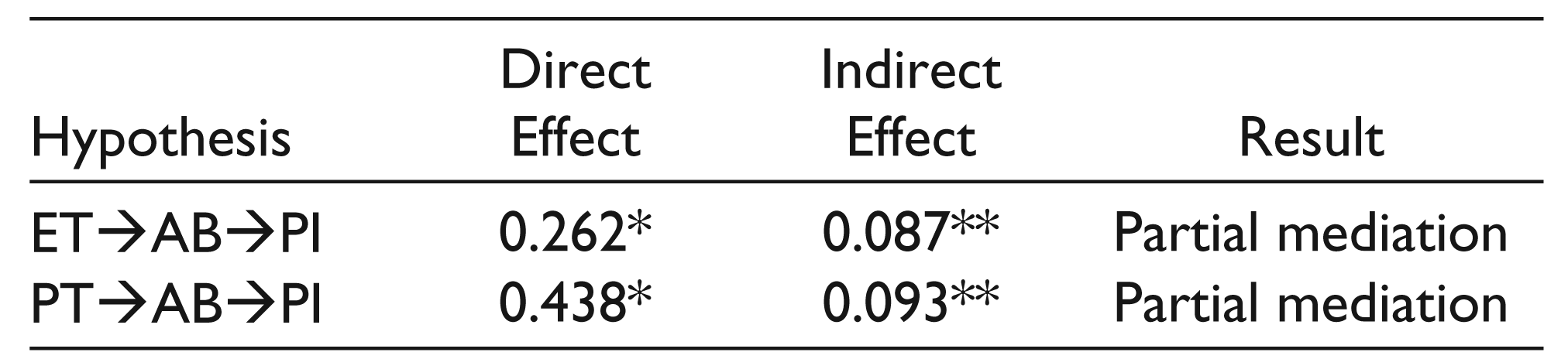
The influence of PT and the ET on PI mediated by AB was tested (refer to Table 10 and Figure 3). The regression coefficient values of the direct effect on PT and event type on PI are beta = 0.44 and beta =0.26, respectively, and the regression coefficient values of indirect effect through the mediator variable are beta = 0.093 and beta = 0.087, respectively. All the paths were found to be significant (refer to Table 11). The goodness of fit related to the model indicates that the model fits the data well and the values are CMIN/df = 1.830 at p < 0.001, CFI = 0.965 and RMSEA = 0.083, GFI = 0.900, NFI = 0.927 and PCLOSE = 0.026 (refer to Table 12).
Regression Coefficients and CR Value of Proposed Model
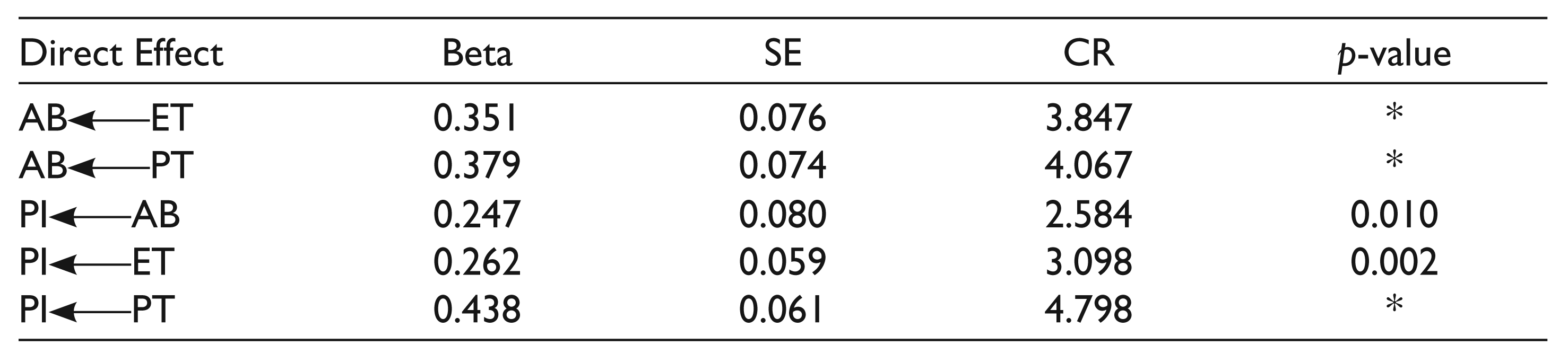
Bootstrapped Results of Direct and Indirect Effects
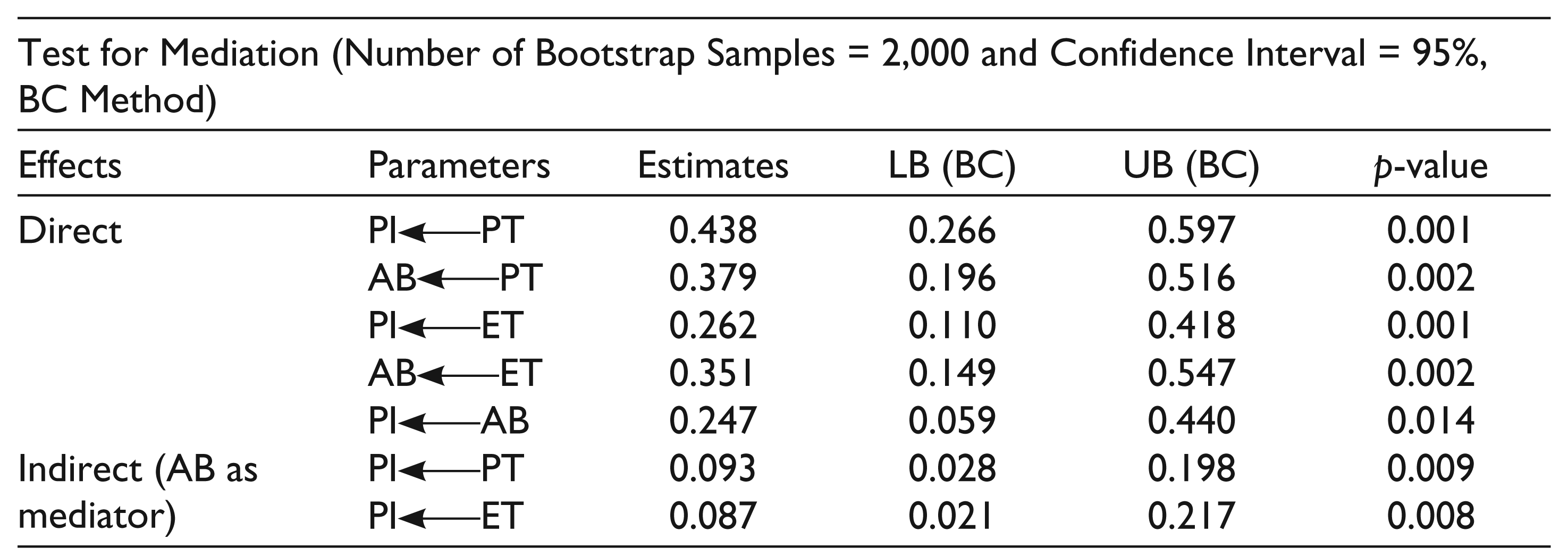
When the mediator variable ‘brand attitude’ enters the model, the direct effects were reduced indicating the effect of mediating. Although the effect is reduced, still it is significant; such an effect is called ‘partial mediation’. As shown in Table 11, regression weights of the direct effect of PT on PI got reduced from 0.438 to 0.093 and for event type 0.262 to 0.087 showcasing the influence of ‘brand attitude’ as a mediator. Here, the mediating variable ‘brand attitude’ is playing a ‘partial mediating role’ and the results of the mediation are shown in Table 13.
Multi-group Analysis
The purpose of the multi-group analysis is to unfold the significant difference between the two groups of interest. In our case, it is Hollywood vs. Bollywood and subtle vs. blatant. From the groups, we need to elicit which path coefficients cause significant differences. To arrive at the pairwise parameter comparison table, the multi-group analysis was run on AMOS. Here, the group samples are considered one by one and the model of SEM was analysed to find significant differences between the two paths.
Summary of Model Fit Indices for Proposed Model
Testing Mediation Hypothesis
Standardized Regression Weights and CR for Event and Placement Type
Pairwise Critical Ratios
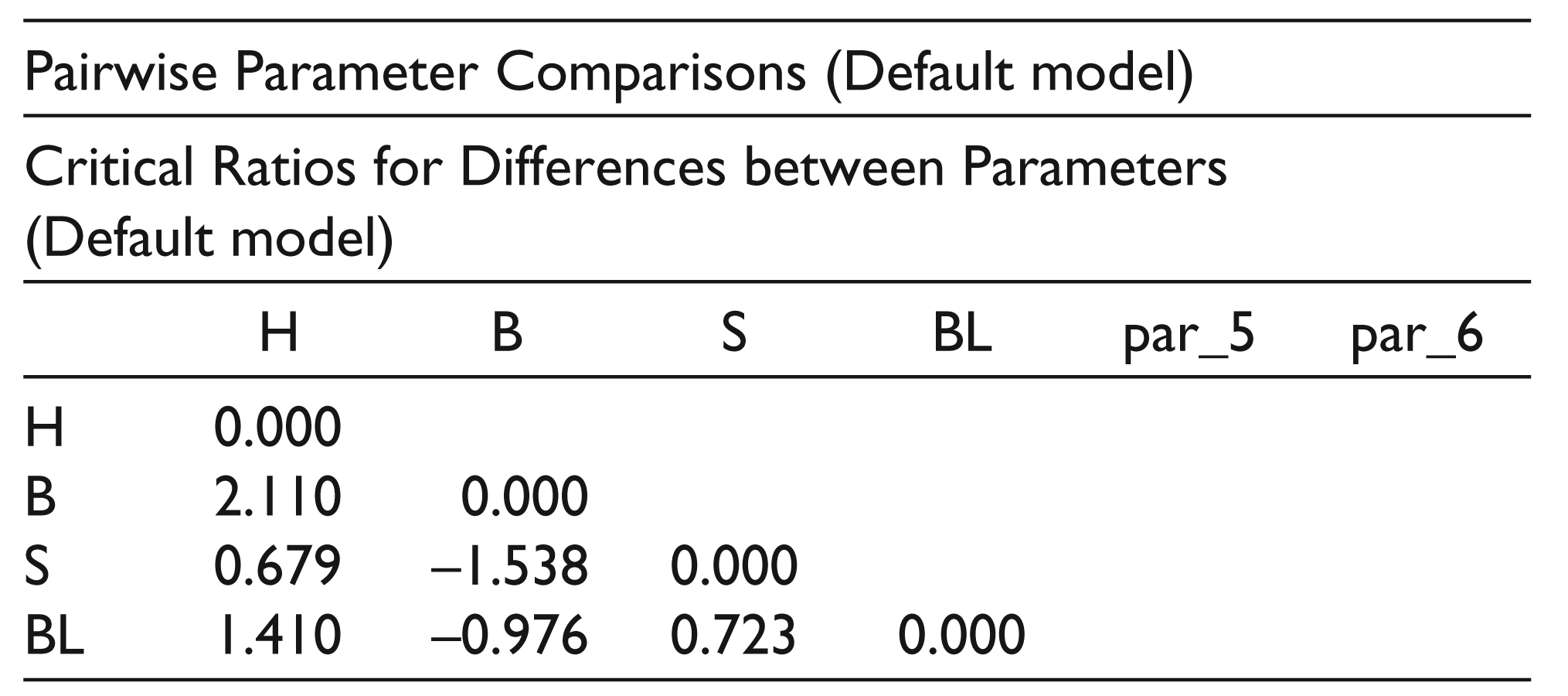
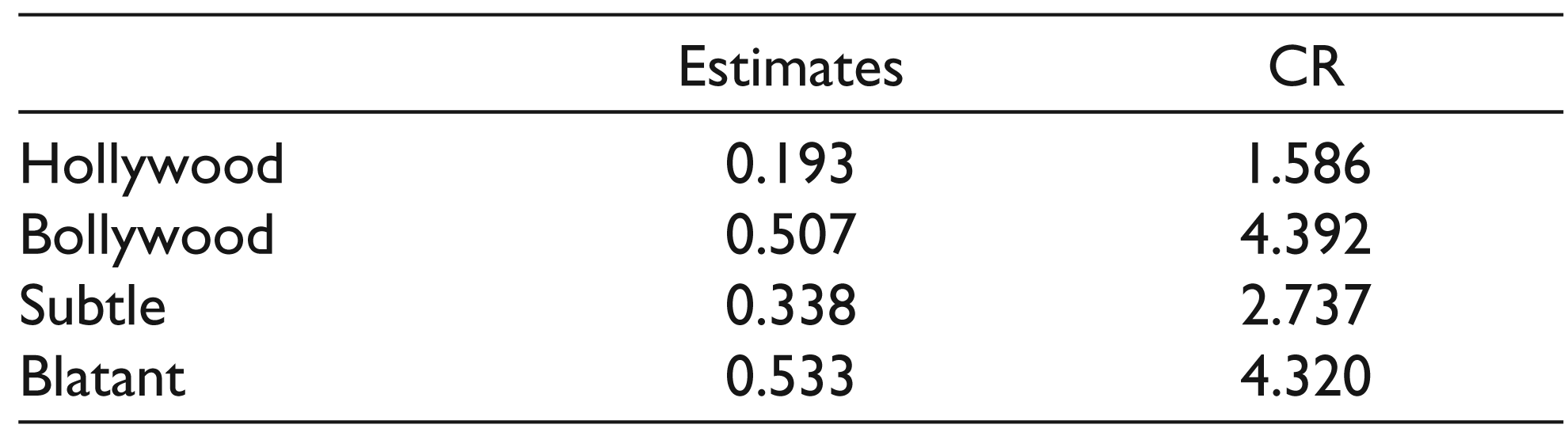
After looking at the pairwise parameter comparison (refer to Table 15), it can be found that the path coefficient of Hollywood is significantly different from the path coefficient of Bollywood, as the z-value of 2.110 is greater than the absolute value of 1.96. If critical ratios for differences between parameters are greater than the absolute value of 1.96, then the two parameters are significantly different from each other. Table 14 also gives us an evidence that there is a significant difference in the estimated population parameters (0.193 vs. 0.507) of Hollywood and Bollywood. However, the path coefficient of subtle was not significantly different from the path coefficient of blatant placements, as the z-value was 0.723 which is less than the absolute value of 1.96 (refer to Table 15). The estimated population parameters of subtle and blatant (refer to Table 14) were not found to be significantly different from each other (0.338 vs. 0.533).
Discussion and Implications
The outcomes of our research study revealed that the brands set in Bollywood movies created more positive customer evaluation than brands set in Hollywood movies. Bollywood movie stars are viewed as demigods in the Indian society (Bhatia, 2000) as they perform incredible feats on the screen. Celebrity aura and glamour provoke customers to imitate their style and follow them blindly. Product placement can be undertaken for a product launch or for a brand repositioning exercise.
Whether the brand must be subtly or blatantly placed is an issue important to advertisers. Our research found that blatantly placed brand has more impact on attitudes towards the brand than subtly placed brands in the movies. Also, blatant PT helps viewers to recall and recognize the brand without much difficulty (Law & Braun, 2000). Care should be taken so that the audience are not drained out with a baseless presentation of the brand that does not fit the plot of the film. This may cause more damage than benefit. Subtle product placements are utilized when the budgets of the brands are low. Subtle placements are able to get the attention of the audience but may not engage them seriously.
Pairwise parameter comparison has revealed that Bollywood product placements are more effective than Hollywood product placements. However, subtle and blatant placement comparisons had similar impacts of product placements.
Based on the research findings, it can be concluded that placement of brands in Bollywood movies has a more positive influence on prospective buyers and companies can resort to blatant placements.
Limitations and Future Directions
Since the stimuli of product placement are not in movie theatres, this becomes one of the limitations of the study. Any examination utilizing student populace is in danger of validity shortcomings. Sampling constraint—the study was among educated youth in a metropolitan city in India. Whether the findings can be generalized to the population from tier II, III cities, towns and rural areas, need to be explored. The study is backed on inherent measures of memory to evaluate brand placements which is by itself a shortcoming. As the study focuses on movie platform, other entertainment platforms such as IPL matches, live concerts, reality shows on television and others can be used to replicate the research findings and get a comprehensive understanding of brand placements. The respondents did not watch the movie clippings in a group. This also becomes a limitation as movies are watched in groups and in theatre. Further, showtime of the movies can affect the respondent responses. Exploring the aforementioned questions will fetch robust understanding of effective product placements.
Declaration of Conflicting Interests
The authors declared no potential conflicts of interest with respect to the research, authorship and/or publication of this article.
Funding
The authors received no financial support for the research, authorship and/or publication of this article.