







Abstract
In the last many years academicians and business practitioners have shown their interest in the study of the activities of Corporate Social Responsibility (CSR). This study describes a deeper understanding of the CSR parameters on the benefits to the stakeholders. It explains the direct effect of the various independent variables like ‘Encourage Employee Volunteer - kinds of incentives’, ‘Improve Employee Welfare and Labour Relations’, ‘Companies/Organizations communicate the Policy to the stakeholders’ and ‘Adoption of CSR practices by Companies/Organizations’ on the dependent variable benefits of CSR to the stakeholders. We had also studied the impact of the variables, that is, ‘Encourage “Employee Volunteers”, kinds of incentives’, ‘Companies/Organizations communicate the Policy to the stakeholders’ and ‘Adoption of CSR practices by Companies/Organizations’ on Employee Welfare and Labour Relations. The outcomes of the research model depend on the data collected from 349 employees across local and international organizations in India. The respondents are employees of various organizations working at different levels of management. This study focuses on middle-level managers. The major findings suggest the positive impact of all the activities of CSR on benefits to the stakeholders. Out of the four CSR activities, Adoption of CSR practices by Companies/Organizations is the strongest predictor followed by Employee Welfare and Labour Relations, whereas the CSR activity Encourage ‘Employee Volunteers’, kinds of incentives has no significant impact on benefits to the stakeholders.
Keywords
Introduction
Economic development, the safety of the atmosphere, and social inclusion are the basis on which organizations are expected to design their growth strategy (World Summit on Social Development, 2005). Profit, planet and people are considered to be the three pillars of sustainable development. Emerging economies are constantly struggling to address the issues related to poverty. Socio-economic inequality can be reduced by empowering the marginalized society through proper education, adequate nutrition, health–sanitation and skill development. This is where Corporate Social Responsibility (CSR) can play a very important role. On one hand, it can enhance the value of the organization in the eyes of the stakeholders and on the other hand, contribute to the development of the society and ultimately to the nation.
The term ‘Corporate Social Responsibility (CSR)’ is the corporation’s inventiveness to evaluate and take responsibility for its activities, their effect on the atmosphere and its influence on society. The term usually relates to the determinations that go outside what may be required by the legislation and environment watchdogs.
CSR encourages companies to be aware of what will be the influence of their activities on all stakeholders including the government and the society. CSR is a trending concept with various definitions and practices. The meaning and implementation are different for each company and country. As McWilliams et al. (2006) mentioned that CSR goes beyond the call of the law, for the larger good of society and as Ismail (2011) says it is a strategy to build the brand and attract investors.
Archie Carroll (1999) stated that CSR has evolved since the 1930s. In earlier times, the main drivers of CSR were charity and philanthropy. CSR was greatly influenced by religion, culture, family values and industrialization.
With greater awareness of their responsibilities, multinational companies (MNCs) across the globe have added value to their CSR policy. CSR has become more strategic and business models are aligned to the CSR policy. In doing so, MNCs have been able to leverage their human resources, supply chains, markets, technology and innovation and thus the global outreach of their companies. The companies have enhanced their responsibilities, yet the need is for greater engagement and commitment.
The domain of interest of this research is the benefits of CSR to its stakeholders. The authors have identified and studied the benefit of certain components of CSR and its effect on the various aspects of the organization. Certain variables like incentives, awareness and communication of CSR policy, employee labour relations, etc. were analysed. It was found that these significantly affect the credibility of the organization in terms of supporting social integration, employees’ retention, livelihood work–life stability, workers motivation, greater efficiency and less waste, developing employment and infrastructure etc. This study will help the managers to formulate an active and efficient CSR strategy.
India is a forerunner in making CSR mandatory. As per Section 135 of the Companies Act, 1 2013 certain companies who fulfil the criteria mentioned have to comply with the provisions relevant to Corporate Social Responsibility Act. This is regulatory compliance by the Ministry of Corporate Affairs, Government of India.
Having worked with leaders of local communities and global businesses, the authors Grayson and Hodges (2017) explain that companies are being influenced by powerful people to implement stringent public, proper and environmental morals and generate newer chances for market development and product origination. The key to utilize such types of chances occurs in putting CSR into business strategy and not implementing it into business operations. To prove their case, they took 200 companies as examples and outlined both in theory and practice a process containing seven steps to be applied by managers to access the consequences of CSR on their corporate strategies and discover newer opportunities for CSR. Business is working in a hurricane of associating worldwide powers: progressive advancements in communications and technology, noteworthy changes in business sectors, shifts in socioeconomics and a change of individual qualities. These worldwide powers have prompted various issues, for example, human rights and diversity, ecology and environment, wellbeing and prosperity for organizations. These were once viewed as ‘delicate’ administration issues, they are presently perceived as difficult to anticipate and tough for the business to deal with when they turn out badly. Corporate social opportunity, by the creators of the best-selling Everybody’s Business, moves the question from the ‘why’ of CSR to the ‘how’ and to a future where CSR is seen as building a brand and opening doors for increasing business.
Raihan and Al Karim (2017) conducted a survey on CSR and employee job satisfaction: A case from Bangladesh MNCs. An organized questionnaire with 7 points Likert scale was utilized to gather the essential primary information for conducting the survey. The sample estimate was 120 and the respondents were chosen on convenient premises from MNCs, the Chittagong city. Data collected was analysed by using SPSS software (variant: 17). The conclusion of the examination said that the magnanimous, moral and legitimate duty of CSR essentially and emphatically affected worker’s work fulfilment where economical CSR was concluding the negative association with employee job satisfaction. It has been generally observed that worker’s job satisfaction is partnered with the association’s CSR rehearses in Bangladesh’s MNCs.
Omer Farooq et al. (2014) examined a mediated connection through administrative belief and structural identification. The outcome of the model reveals that both administrative belief and structural identification entirely mediate the CSR–Affective Organizational Commitment link.
The existing literature talks about the relationship between CSR on organizational commitment (Omer Farooq et al., 2014), CSR and employee job satisfaction (Raihan & Al Karim, 2017), CSR and corporate financial execution or purchase behaviour towards CSR (Ali et al., 2010), CSR Acts and administrative performance (Rettab et al., 2009). Therefore, the gap identified from the existing literature is that earlier researcher had developed the model to comprehend the connexion between CSR and workers job satisfaction whereas we had identified the activities of the CSR which impact the benefits to the stakeholders.
The literature has scarcely investigated the relevance between CSR, employer branding (EB) and job searchers’ states of mind. The point of this study by the authors was to analyse how millennial job searchers’ states of mind are towards CSR. Authors led an experimental study in Poland, gathering information from some of millennials—very sensitive towards CSR issues. The outcomes for the most part affirm that individual states of mind towards CSR play a key part in understanding how to work searchers see CSR signals and in the end affect CSR-based Employer Attractiveness.
Given the change in the CSR Act, this study is very relevant. A total of 99 companies were surveyed which included CRISIL, Reliance Infrastructure Ltd, CitiusTech Healthcare Pvt ltd, Motilal Oswal Financial Services Ltd and others. Through this study, the authors have attempted to find an impact of different variables like communication policy, incentives and adoption of a CSR strategy and its benefits and impact of these variables on labour relations and welfare in an organization.
The motive of this study is to apprehend the impact of the activities of the CSR taken by the organizations on benefits to the stakeholders and Employee Welfare and Labour Relations. Firstly, the study will begin with the analysis of research work on all the parameters of the activities of CSR. Further, the model has been developed to identify the relationship between CSR activities and benefits to the stakeholders with the help of structural equation modelling. To these ends, this study defines the following research problems:
How does CSR play a substantial role in contributing to the benefits to the stakeholders?
How does CSR play a significant role in employee welfare and labour relations?
The study is systematized as these tracks; first, existing and published literature have been reviewed to understand the gaps in the existing study. The second section suggests the theoretical model and hypothesis. The next section involves the research methodology followed by the findings and conclusion. Finally, the managerial implication of the study is presented along with the limitations and future scope of the study.
Corporate Social Responsibility
As Archie Carroll (1999) points out, the debate on the responsibilities of business is equally old as the business itself. The reasons are not difficult to locate. The economic productivity of any society is bound to affect the quality of life of every individual member living in that circle.
Shamir (2017), while explaining the utilizing Alien Tort Claims Act suits against multinational corporations as a prompt setting for discussions, in his article investigates the developing field of CSR. The article contends for comprehension of concrete legitimate battles as a major aspect of more extensive contending.
The book, World Guide to CSR, A Country-by-Country Analysis of Corporate Sustainability and Responsibility is an interesting read. The authors Bimal Arora and Aparna Mahajan speak of India as an antiquated civilization with more than 5,000 long periods of history. India’s rich culture, religious and chronicled conventions have been driven by various explorers, researchers, scholars, invaders and victors from over the world. The cultural, religious and historical customs incorporate the ideals of philanthropy and magnanimity, drawing not simply from Hindu folklore and sacred writings, but rather a few different religious methods of insight and practices, for example, Christianity, Zoroastrianism and Islam. In this way, ideas of philanthropy and charity are profoundly established in Indian culture and installed in customary lifestyle since forever.
Research on CSR significantly portrays its consequences for corporate financial-related execution or purchasers’ behaviour towards CSR. Moderately few investigations have centred on employee’s opinions/sentiments towards CSR. A study by Ali et al. (2010) breaks down the multifaceted impact of CSR on worker’s structural responsibility and execution. This study utilizes experimental tactics; primary information is gathered from 371 experts employed in various parts of Pakistan. The researchers had applied the structural equation modeling (SEM) technique to test the theories. The study discovered an altogether positive connection between CSR activities and worker’s structural duty, CSR and structural execution and workers’ structural accountability and execution. The investigation examines critical ramifications in regard to employments of CSR for upgrading employees’ organizational duty and enhancing organizational performance.
Sprinkle and Maines (2010) in their article ‘The benefits and costs of Corporate Social Responsibility’ initially gave a larger meaning of CSR and arranged the different kinds of socially mindful undertakings to recognize activities related with CSR that create costs. Following this, they articulated the firm’s likely inspirations for participating in CSR keeping in mind the end goal to distinguish potential benefits. The authors then examined the part of accounting and relating linkages amongst accounting and CSR; here, they gave careful consideration to how firms may gauge the expenses and advantages of CSR choices. Lastly, they have given some closing thoughts. All through the article, the authors have offered various true cases from real-world examples.
In their study, ‘Communicating corporate social responsibility (CSR): Stakeholder responsiveness and engagement strategy to achieve CSR goals’, the authors Lim and Greenwood (2017) thought about two existing CSR communication techniques (assignation versus awareness), alongside communication linkages, in accomplishing CSR objectives. They had focused for the online survey through advertisement, commercial messages, CSR, investor associations and sustainability administrators in the organizations recorded on the Wilshire 5000 Total Market Index of publicly traded/open market U.S. organizations. Results demonstrated that the CSR engagement system positively affected in accomplishing each of the three CSR activities that were identified through factor analysis: corporate, public and workers. The responsiveness methodology was connected with occupational and public targets accomplishment. These discoveries lend provision for the tributes from industry CSR reports concerning the advantages of the engagement approach in accomplishing expected organizational objectives, including pulling in and holding capable employees. In dissecting the effect of communication channels on objective accomplishment, the researchers found that print advertisements had a huge part in accomplishing business objectives/goals.
Pomering (2017) in his handbook explains that motivation behind this part was to survey the condition of play as to companies’ promotions of CSR activities, arrangements, as well as accomplishments as a personality building exercise. An association’s utilization of advertising to make a case for socially capable tasks will undoubtedly be hostile and motivate reactions of doubt as well as scepticism, particularly if these types of publicity claims show up inconsistent with shareholder view of the business’s execution. The contentiousness of CSR publicizing claims is extended by perplexity over what constitutes CSR and what does not. Cause-related marketing efforts, for instance, are a type of sales promotion system yet enrolled in the hope of a corporation addressing its responsibility to society. At last CSR execution must remain on effects and results, and anything less will be pronounced spin, greenwashing or minor impression administration
According to the authors, an organization’s promise to collaborate with a socially acknowledged ethical code enhances its notoriety and brand picture, upgrades its associations with partners and with general society and along these lines encourages it to accomplish better long-haul execution. To completely exploit its key potential, CSR requires—more than any other vital program or activity—a dependable framework. Albeit integrated CSR communications dangers being viewed as a vehicle for window-dressing or green-washing attributable to the expanding data and choices that inner and outer partners approach, it is, by the by, a thought little of the key instrument. This study thinks about alternate points of view in overseeing integrated CSR communications at various authoritative levels.
Hypotheses Development
Lots of literature has been created on the usages of monetary incentives and their impact on motivating labour, stakeholders and employees. Incentives have an effectual motivational determination. It establishes an effective way to motivate managers’, labours’ and other’s efforts to perform the given tasks in harmony with the firm’s strategic goals (Merchant & Van der Stede, 2012). Each individual performs any activity under the impression of two different types of motivations, that is, intrinsic motivation and extrinsic motivation. Some people do work for without obvious external rewards whereas some prefer to perform any work or activity to gain incentives for their efforts (Ryan & Deci, 2000). The Government of India formed the committee on labour welfare in 1966–1969 for the functioning of various plantations, statutory, railways and, non-including, mines and they had designed broad recommendations for their improvement. This committee also covered many aspects of the labour welfare scheme, designated it as social security processes that promote to make the better conditions of labours under which they are hired. According to Monappa (2008), the main purpose to form labour welfare is ‘to enable workers to live a richer and more satisfactory life’. Labour welfare is beneficial for the employers, society, labour and employees as a whole (Streeck, 2005). Employers should provide extra incentives to their employees using employee welfare schemes (Patro, 2015). The main objective to provide a welfare scheme is to develop healthy, effective and efficient organizations to improve the living and working situations of employees and their families by providing incentives. The benefits of CSR to the stakeholders can be defined in terms of retention of employees, build customers, support work–life balance, motivate and improve employees’ morale, support social integration, developing employment and infrastructure, attract green and ethical investment and protecting of natural resources. That represents the company’s performance. Better CSR performance cannot be achieved with the help of the use of the CSR targets automatically (Maas, 2018). The number of corporate initiatives can be increased for the benefit of the natural environment and the local community through the adoption of CSR targets in executive compensation considering CSR contracting terms that are well stated.
Hence:
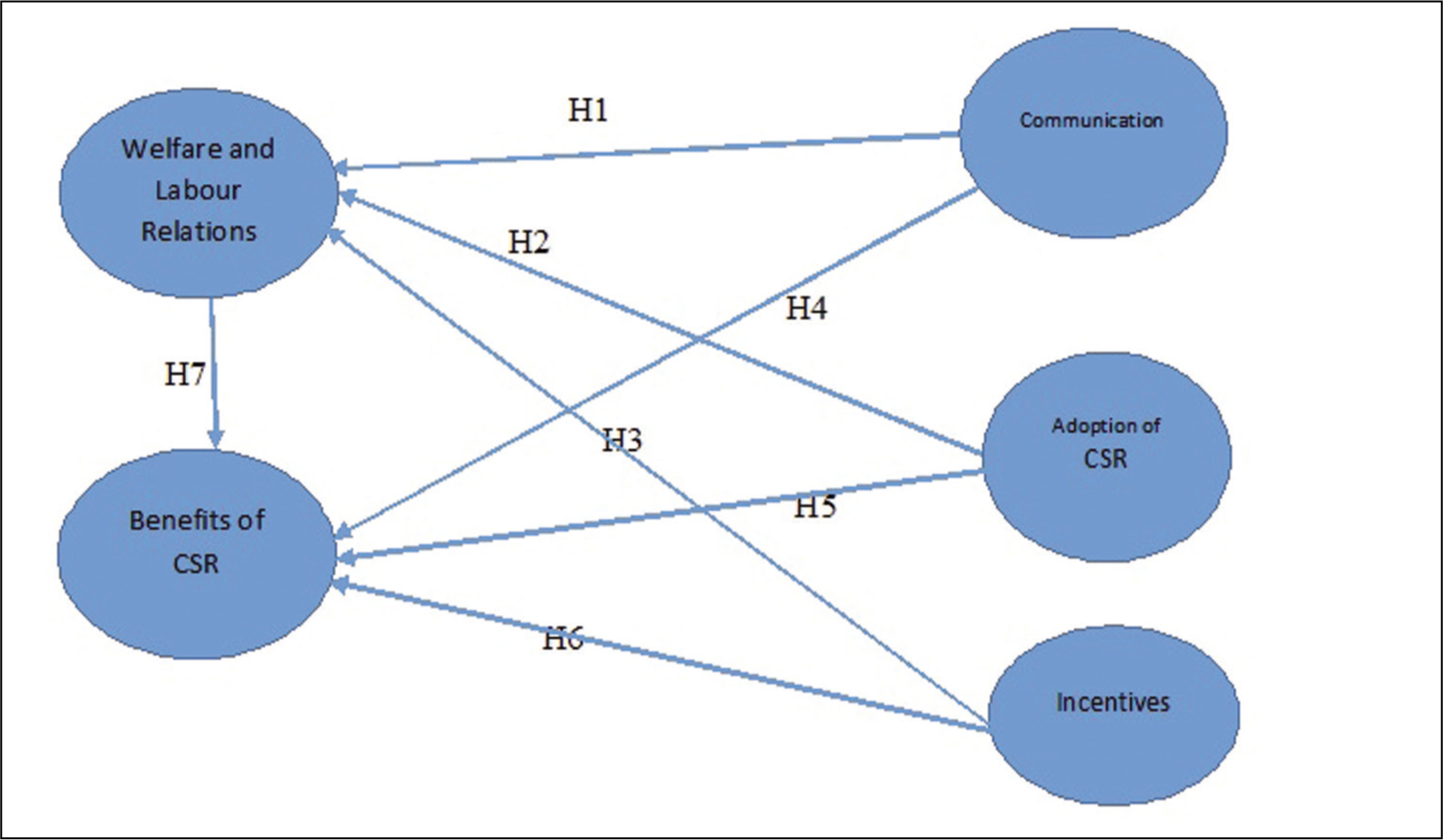
H3: There is a significant impact of incentives on Employee Welfare and Labour Relations. H6: There is a significant impact of incentives on the benefits of CSR to the stakeholders.
Labour relations are a composite and vigorous discipline. It has a tripartite type of relationship. Its core players are employers, employees and states that are associated with the process. Good relationships can be established by effective communication from one person to another. It is predicted that generally, a person devotes four-fifths of her or his working life communicating (Bendix, 2004). Labour relationship is connected with an individual who has some expectations, needs and goals at the workplace (Tustin & Geldenhuys, 2002). Information can be shared in many ways in different companies. It may be communicated through oral and written instructions, website, policy manuals reports, memoranda, personal meetings, in-house magazines and inserts in a pay pocket (Fielding, 2006). The International Labour Organization (ILO) presented an endorsement (No. 129 of 1967), on communication concerning the labour relationships. ILO recommendations talk about the policy that should be endorsed by the rapid propagation and interchange of information, as a finish. Management should adopt an effective communication policy with the employees and other stakeholders. These policies also state welfare facilities. Execution of welfare facilities is based on the tactic of the company on how well it has coordinated the structure to benefit the employees (Cotton et al., 2005; Ichniowski et al., 1996). According to Ferreira (2006), ‘communication as one of the cornerstones of any effective and successful relationship is also part of the labour relationship’. Klimkiewicz and Oltra (2017) explains that CSR has turned out to be progressively important in labour market communication. To express organizational character, reinforcing responsibility to maintainable advancement and stakeholder commitment, organizations report their CSR exercises. The effect of an organization’s EB strategy relies upon how data beneficiaries decipher corporate messages. Consequently, it is accepted that job searchers may demonstrate different attitudes towards CSR.
Hence:
H1: There is a significant impact of policy communication to the stakeholders on Employee Welfare and Labour Relations. H4: There is a significant impact of policy communication to the stakeholders on the benefits of CSR to stakeholders.
CSR may be considered as corporate activities oriented in the direction of the stakeholder’s welfare and committed by ethical or relational concerns (Aguilera et al., 2007). Mainly, stakeholders have expectations from the companies that corporate should be more socially and environmentally responsible in leading their business. Council can define CSR as the commitment at regular intervals by businesses to behave morally and help to improve the quality of life of the employees and their families, society and local community.
O’Connor (2017) states that in recent decades CSR has proven itself to be an emerging field of study. It has gathered a considerable amount of scholarly attention. Rapid practices of CSR by big corporations and the subsequent increase in corporate influence are the major reasons behind its success. CSR are considered to be the activities done by corporations to enhance their status and legitimacy; to return the resources to the society; to make their market positions strong. According to Injodey (2013), the financial statement of any company reflects the investment that has been spent on numerous welfare schemes to the labours or employees. These schemes are now lawfully executable, and the organization has CSR to provide for them.
Hence:
H2: There is a significant impact of the adoption of CSR practices by companies on Employee Welfare and Labour Relations.
Adoption of CSR plays a significant role in terms of benefit stakeholders, employees, labour, society and the environment collectively. In the current phase, CSR has been designated as a sustainable business strategy. Recent research recommends that governments are explicitly and progressively implementing vertical mechanisms of CSR as a policy tool to address environmental management and social needs (Bergman et al., 2019; Frynas & Stephens, 2015; Marquis & Qian, 2013). CSR handles many activities like eradicating hunger, promoting education, promoting gender equality, ensuring environmental sustainability and protecting of national heritage. Many more are measures for the benefit of armed forces veterans, training to promote rural sports, contribution to the Prime Minister’s National Relief Fund, contributions or funds provided to technology incubators located within academic institutions which are approved by the Central Government, rural development projects, slum area development, disaster management and many more (Bergman et al., 2019). Recently the Government of India brought into effect the organization (CSR policy) amended rules. These rules address the pandemic situation.
While different investigations have talked about the significance of CSR in enrolling, according to Puncheva-Michelotti et al. (2018) two imperative however unaddressed inquiries compel the comprehension and routine with regards to displaying firms’ socially cognizant endeavours to their imminent employees. In the first place, are organizations occupied with CSR imparting their CSR practices viably in online enlistment advertising? Second, what CSR data should organizations incorporate into online job notices/ads to enhance their employer engaging quality to forthcoming candidates? The discoveries of this examination demonstrate that CSR communication in recruitment advertising is frequently constrained, an impromptu practice, and for the most part centred around organization works concerning worker support and advancement. Indeed, even organizations with an extraordinary CSR notoriety take a shockingly little preferred standpoint of their CSR picture with regards to pulling in work hopefuls. To enhance business allure, the author suggests that HR directors consider upgrading the structure of online job ads by including an organization review area in which CSR data can be presented effectively. They also expand the extent of CSR measurements in work commercials to incorporate ecological execution and network relations, offering data about opportunities for employee engagement with CSR, and adopting a strategic way to deal with the consideration of CSR content in online job promotions.
Hence:
H5: There is a significant impact of the adoption of CSR practices by the company on the benefits of CSR to the stakeholders.
The research study done by Salaria and Salaria (2016) about the rate of absenteeism of the employees in the organization explains that it can be minimized by providing provision of welfare activities like medical facility, training facility, providing house and many more. This study also stated that implementation of such types of activities in the organization and its success represent an extension of self-govern values in the society. Tiwari (2014) studied labour welfare services and their impact on stakeholders. She identified that if employees or stakeholders are satisfied with the labour welfare services provided by the company then it reflects the growth of the organizations in terms of productivity.
Hence:
H7: There is a significant impact of Employee Welfare and Labour Relations on the benefits of CSR to the stakeholders.
Framework and Hypotheses of this Study
The conceptual framework for this study is represented in Figure 1. This model is designed to identify the impact of ‘Communication about the policy’, ‘Adoption of CSR’ and ‘Incentives to the Employee Volunteers’ on ‘Welfare and Labour Relations’ and ‘Benefits of CSR’.
Structural equation modelling involves the following steps: (a) describe the discrete constructs; (b) stipulate the measurement model; (c) examine the reliability and validity of the measurement model; (d) postulate the structural model; (e) evaluate the model validity. We calculate the composite reliability (CR) to check the reliability of the model, which is defined as follow:

Similarly, for the convergent validity we compute the average variance extracted (AVE), which is defined as follows:

where
η = standardized factor loading τ = error variance n = total number of observed variables. Structural equations of the model are

where Y1 is the latent endogenous variable, that is, benefits of CSR to the stakeholders, Xi, i = 1, 2, 3, 4 are the latent exogenous variables, that is, ‘Encourage Employee Volunteer - kinds of incentives’, ‘Companies/Organizations communicate the Policy to the stakeholders’, ‘Adoption of CSR practices by Companies/Organizations’ and ‘Improve Employee Welfare and Labour Relations’, ε1 is the error vector and θi, i =1, 2, 3, 4 are the coefficients of the endogenous variables.
Similarly, the other structural equation is

where Y2 is the latent endogenous variable, that is, ‘Improve Employee Welfare and Labour Relations’, Xi, i =1, 2, 3 are the latent exogenous variables, that is, Encourage ‘Encourage Employee Volunteer - kinds of incentives’, ‘Companies/Organizations communicate the Policy to the stakeholders’ and ‘Adoption of CSR practices by Companies/Organizations’ and ε2 is the error vector.
Research Design
Instrument and Data Collection
To identify the variables of the study, exploratory research has been conducted. Many questions have been asked to the employees working at different levels of management, regarding CSR activities. These organizations are involved in many CSR activities. Based on the outcome of the discussions, the questionnaires have been designed to collect the primary data. The data was collected from 349 employees across organizations in India. The respondents are employees of various organizations working at different levels of management. This study focuses on middle-level managers. The questions were divided into two parts. The first part consists of the demographic information based on the variables such as age, gender, income and year of establishment of the organization. The second part includes the five sections, and these sections represent the dependent and independent variables of the study.
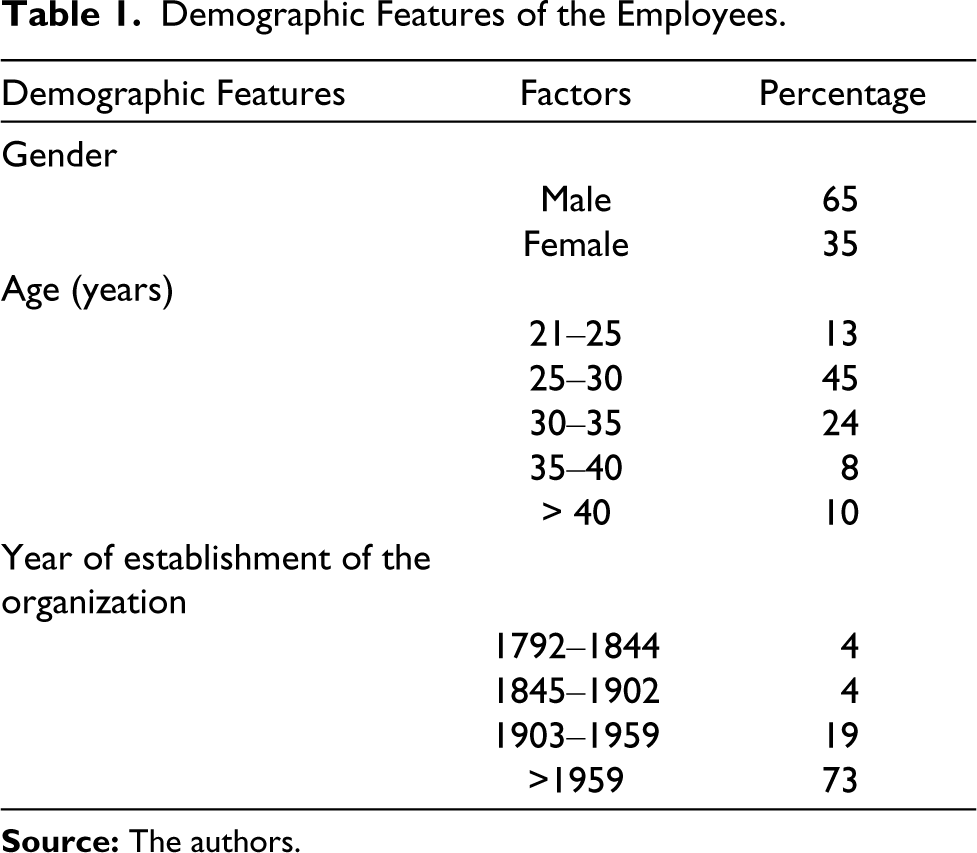
In our study, 65% are male employees and 35% are female employees. Around 45% of the employees are of the age 25–30 years, 24% are of the age 30–35 years. Around 73% of the employees are working in the organizations which are established after 1959.
Analytical Strategy
Three steps were involved to analyse the data. The first step involves the factor loading and reliability of each construct using confirmatory factor analysis (Anderson & Gerbing, 1988). In the second step, we established the convergent and discriminant validity of all the measures and in third step, we estimated the impact of ‘Communication about the policy’, ‘Adoption of CSR’ and ‘Incentives to the Employee Volunteers’ on ‘Welfare and labour relations’ and ‘Benefits of CSR’ by using structural equation modelling (SEM) (Anderson & Gerbing, 1988).
Findings and Discussions
Table 1 depicts the demographics features of the employees. Perception of employees on the components of CSR.
Demographic Features of the Employees
Incentives
To understand the organizations policies in terms of incentives given to encourage the employees, four parameters have been used. Around 51.3% of the organizations always have the paid-time-off policy, 67.3% of the organizations are regularly providing monetary incentives, only 39% of the companies always have a policy for non-monetary incentives and 28.7% of the organizations are giving incentives to their employees for seminars and workshops.
Employee Welfare and Labour Relations
Around 40.7% of the organizations never have the support system, 30.7% of the companies always have stable labour relations, 62.2% of the companies never have the preserve diversity policy and 34.1% of the companies sometimes have the friendly office layout in their organization to improve the employee welfare and labour relationships.
Organization communicate the policy to the stakeholders
Around 40.7% of the companies never communicate the policies to the customers, 39.5% of the companies sometimes share the policies to the suppliers, 64.2% and 53.6% of the organizations never communicate the policies to the employees and investors respectively.
Adoption of CSR practices by company
We analysed the employees’ perception of the adoption of CSR practices by the company on five parameters. Around 46.4% of the employees have the positive perception that their organizations promote corporate image/loyalty, 52.7% of the employees have the positive perception that their organizations increase financial efficiency, and 30.9% of the employees have the positive perception that their organization has the policy for competitive market advantages, for the adoption of CSR. Around 47.6% of the organizations have organizational values, culture, mission and goals whereas only 13.8% of the organizations have pressure from the stakeholders for adoption of CSR.
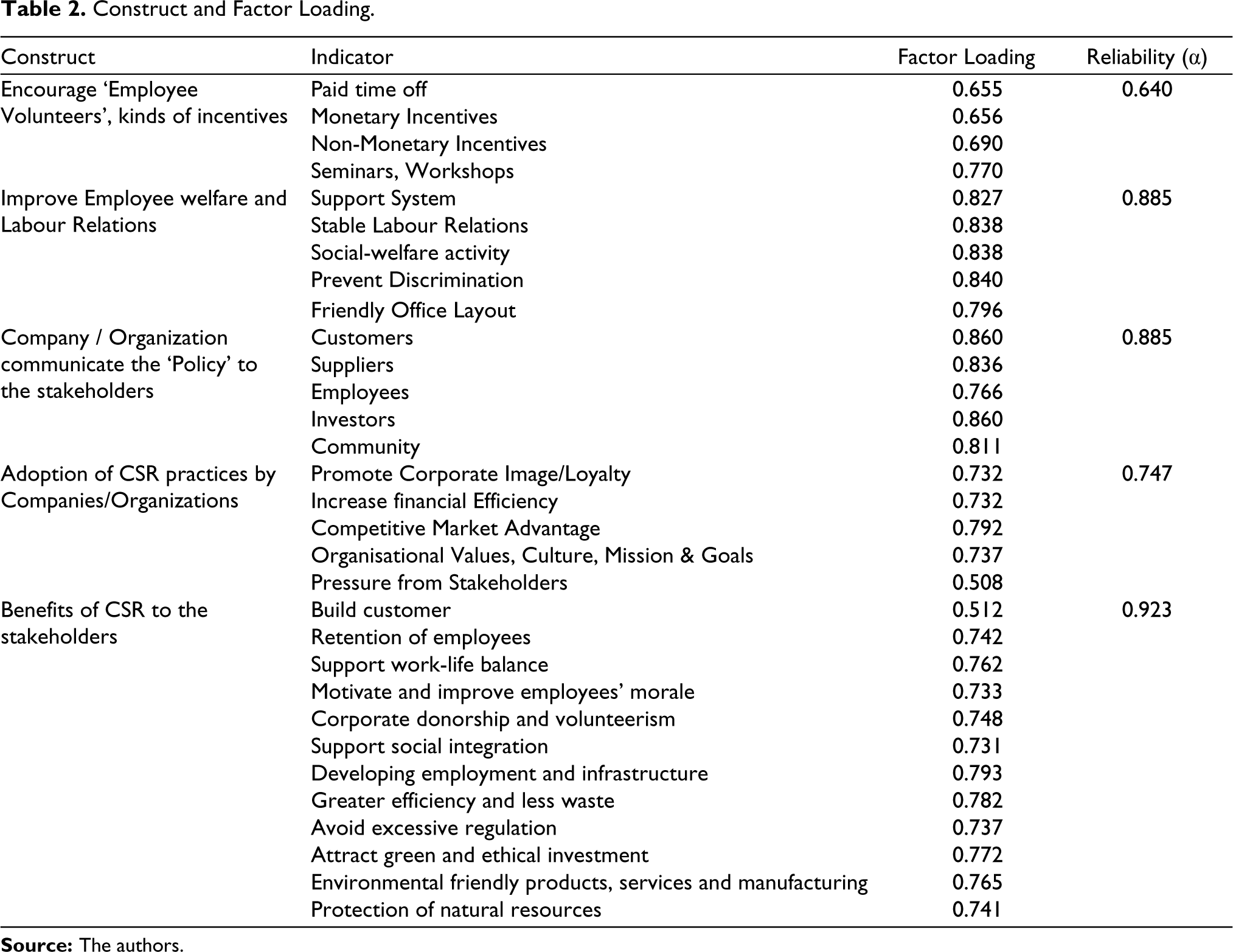
Table 2 displays the factors underlying the employee’s perception about the awareness of CSR with factor loading and Cronbach’s alpha of each factor. The reliability of all the factors is between 0.64 and 0.92, which shows the high internal stability of the construct (Nunnally & Bernstein, 1994).
Construct and Factor Loading
Validity Analysis of All Models
Convergent and discriminant validities have been tested for the model. Convergent validity represents the point to which two measures of hypotheses that tentatively should be connected are correlated. To test the discriminant validity, we try to show that factors that should not be connected are not related.
Convergent Validity and Discriminant Validity of All Models
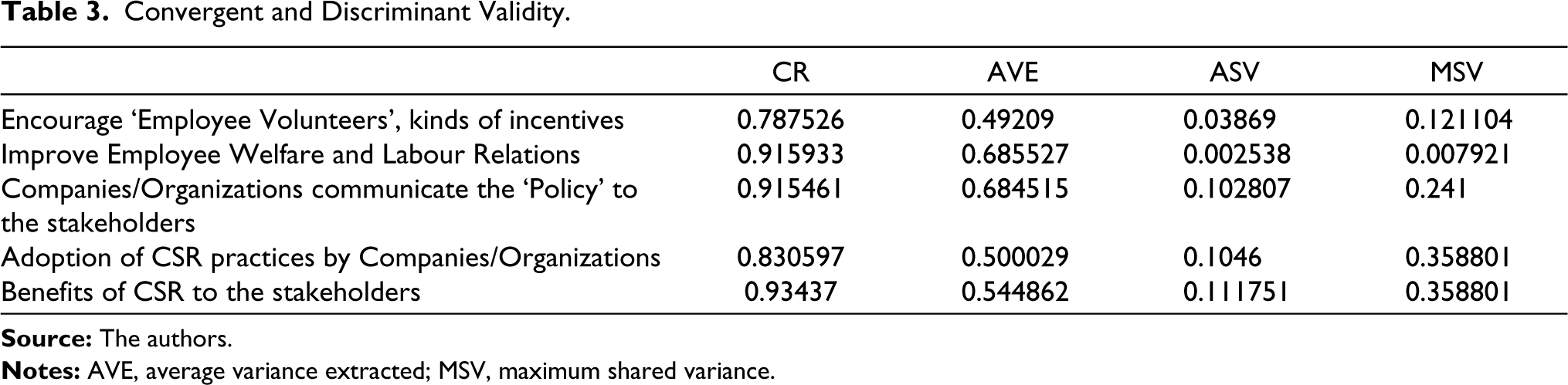
Three measures have been used to test the convergent validity. These measures are factor loadings, AVE and composite reliability (CR). If for any model, CR > 0.7, AVE > 0.5 and CR > AVE, convergent validity validates (Hair et al., 2010).
For our model, CR > 0.7, AVE is higher than 0.5 for all the constructs and CR > AVE, which satisfies the criteria for the convergent validity. Discriminant validity is verified on the parameters AVE, maximum shared variance (MSV) and Average squared shared variance (ASV). MSV < AVE and ASV < AVE (Hair et al., 2010) are the criteria for fulfilling discriminate validity. In our study for all the constructs, the respective MSV is lower than the AVE and ASV is also less than AVE for the model (Table 3).
Convergent and Discriminant Validity
Model Fit Estimates—Measurement Model
This section provides the fitness of the overall measurement model (Figure 2) based on fit indices generated by analysis of a moment structures (Statistical Software) output.
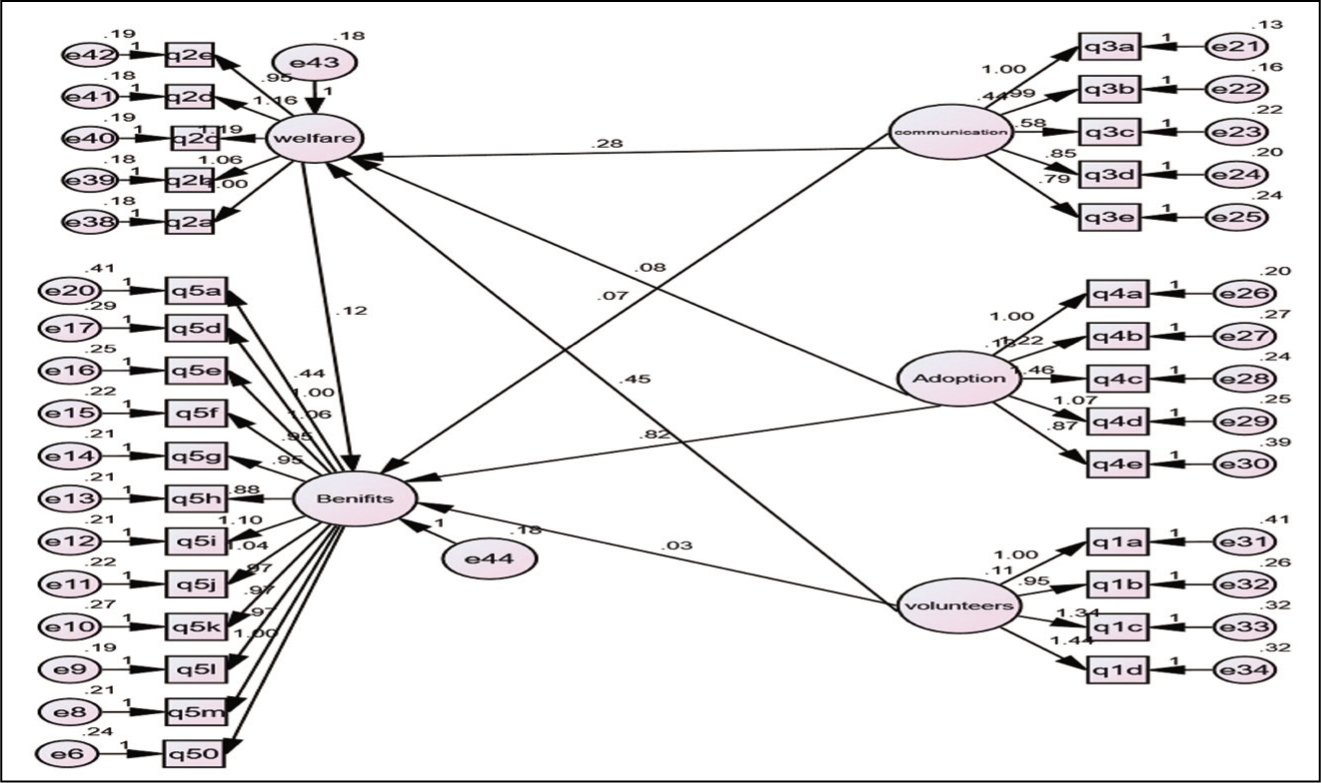
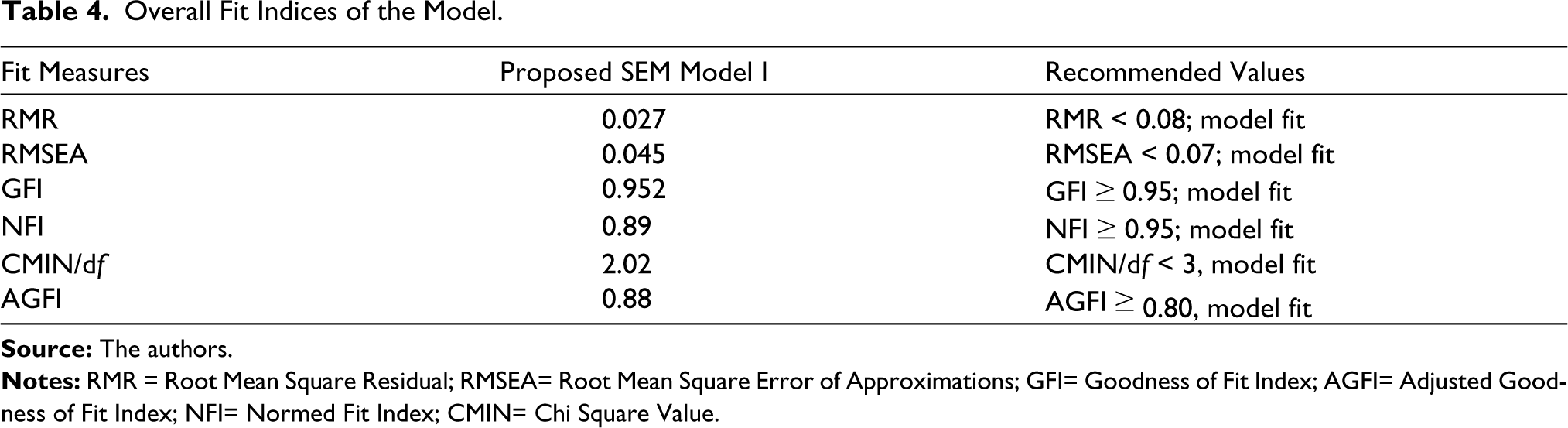
Hair et al. (1998) suggested that the researcher can choose any two or three indices to evaluate the goodness of fit towards the model. In this research, our model creates a very good fit with the data in Table 4.
Overall Fit Indices of the Model
Structural Model Path Analysis
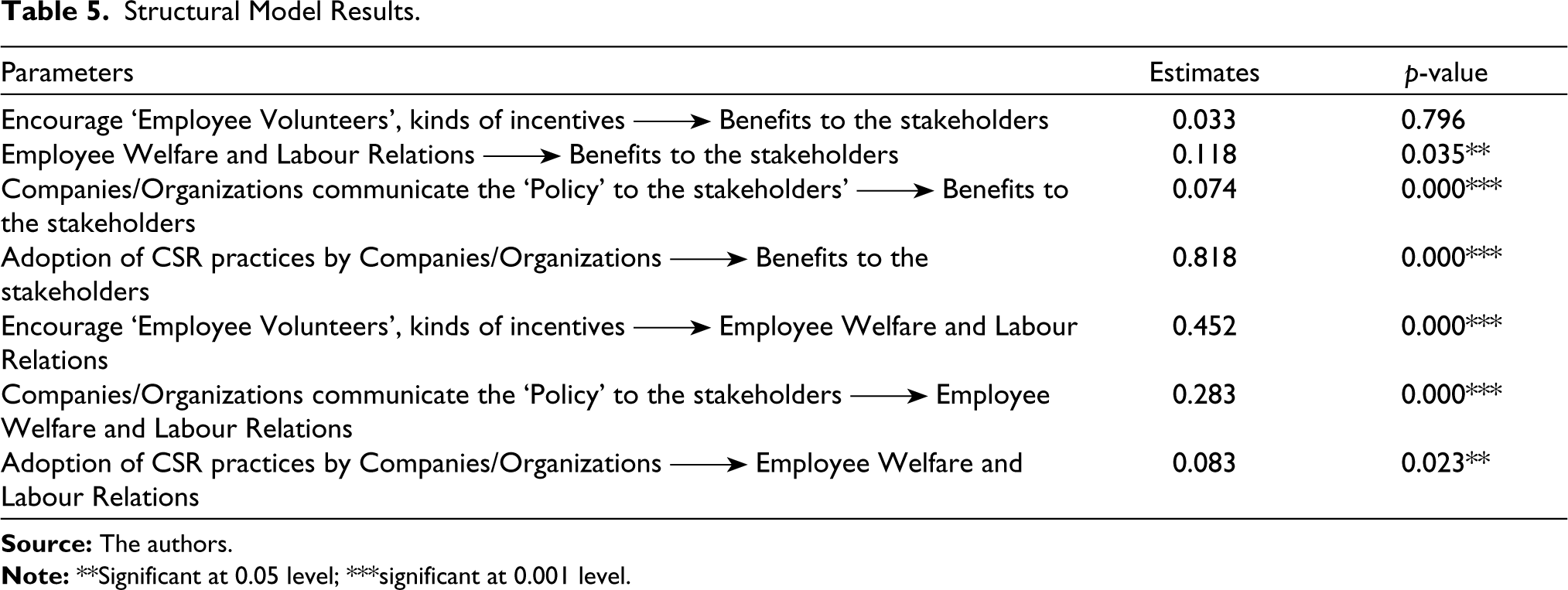
Structural equation modelling analysis revealed that six hypotheses were supported except one (Refer Table 5). All the acts of the CSR, that is, ‘Encourage “Employee Volunteers”, kinds of incentives’, ‘Improve Employee Welfare and Labour Relations’, ‘Companies/Organizations communicate the ‘Policy’ to the stakeholders’, and ‘Adoption of CSR practices by Companies/Organizations’ positively influence the benefits to the stakeholders. The respective p-values are also significant at a 5% level of significance except the component, that is, Encourage ‘Employee volunteers’, kinds of incentives. Similarly, there is a positive and significant impact of the components, that is, ‘Encourage “Employee Volunteers”, kinds of incentives’, ‘Companies/Organizations communicate the Policy to the stakeholders’, and ‘Adoption of CSR practices by Companies/Organizations’ on Employee Welfare benefitted in many ways like employees’ retention, livelihood work–life stability, workers motivation, corporate donorship and volunteerism, developing employment and infrastructure, avoid excessive regulation, etc. The objective of this research is to understand the impact of the activities of the CSR taken by the organizations on benefits to the stakeholders and Employee Welfare and Labour Relations. Using structural equation modelling, researchers identified that the adoption of CSR practices by organizations is the strongest predictor followed by Employee Welfare and Labour Relations, whereas the CSR activity Encourage Employee Volunteer - kinds of incentives has no significant impact on benefits to the stakeholders. Similarly Encourage Employee Volunteer - kinds of incentives CSR activity has a positive and significant impact on the Employee Welfare and Labour Relations followed closely by how the Companies/Organizations communicate the Policy to the stakeholders.
Structural Model Results
Future Implication and Limitations
Our study recommends that various type of CSR activities benefit the stakeholders including Employee Welfare and Labour Relations. Some of the activities are more important than others. Therefore, this study will help the managers to formulate an active and efficient CSR strategy. CSR and Labour Relations at 5% significance level. Finally, we can conclude that mentioned parameters below play an important role in benefits to the stakeholders.
Conclusion
In any organization, stakeholders are the groups that have interests, rights or ownership and activities. The organizations have two types of stakeholders, that is, primary and secondary. Primary stakeholders are clients, dealers, personnel and shareholders, whereas regulatory agencies, unions, NGOs, political action groups and the media are the example of secondary stakeholders. Each has an interest in the organization performance. CSR activities play an important role to create a good relationship between organization and stakeholders. These stakeholders can get benefitted in many ways like employees’ retention, livelihood work–life stability, workers motivation, corporate donorship and volunteerism, developing employment and infrastructure, avoid excessive regulation, etc. The objective of this research is to understand the impact of the activities of the CSR taken by the organizations on benefits to the stakeholders and Employee Welfare and Labour Relations. Using structural equation modelling, researchers identified that the adoption of CSR practices by organizations is the strongest predictor followed by Employee Welfare and Labour Relations, whereas the CSR activity Encourage Employee Volunteer - kinds of incentives has no significant impact on benefits to the stakeholders. Similarly Encourage Employee Volunteer - kinds of incentives CSR activity has a positive and significant impact on the Employee Welfare and Labour Relations followed closely by how the Companies/Organizations communicate the Policy to the stakeholders
Future Implication and Limitations
Our study recommends that various type of CSR activities benefit the stakeholders including Employee Welfare and Labour Relations. Some of the activities are more important than others. Therefore, this study will help the managers to formulate an active and efficient CSR strategy. CSR develops imperceptible firm resources. These variables significantly affect work- and job-related variables like support social integration, employees’ retention, livelihood work–life stability, workers motivation, greater efficiency and less waste, developing employment and infrastructure, etc. This study also has some limitations like including more variables to understand the impact on benefits to the stakeholders. Here convenience sampling has been used for data collection. An in-depth study can be carried out for a particular sector, best practices of companies can be analysed, companies’ resistance to CSR can be studied, the model can be tested for emerging economies or developing countries, organization commitment of employees towards CSR can be studied. A longitudinal study can be done to analyse what are the changes in terms of stakeholder’s perception of CSR over time.
Footnotes
Declaration of Conflicting Interests
The authors declared no potential conflicts of interest with respect to the research, authorship and/or publication of this article.
Funding
The authors received no financial support for the research, authorship and/or publication of this article.