







Abstract
Corporate social responsibility (CSR) initiatives undertaken by a business are significant not only in complying with the legal requirements of the State but also as a strategic tool for brand building. There is evidence in literature of customers being influenced by the CSR commitment of the organization manifested through various channels. This article investigates the role of CSR communication in a psychological dynamics framework using 3E model of brand admiration in generating enrichment benefits for consumers leading to brand respect followed by brand admiration and purchase intentions. Serial mediation effects of enrichment benefits and brand respect on the relation of CSR communication with brand admiration along with the mediating effect of brand admiration on purchase intentions have been examined with partial least square structural equation modelling using data collected from a customer survey of FMCG brands in India. Results indicate that CSR communication on social media has a significant positive effect on brand respect which fully mediates the relationship between CSR communication and brand admiration. Brand admiration mediates the relationship between brand respect and purchase intentions. Findings have important implications for businesses regarding the role of CSR communication as a strategic tool for brand building.
Introduction
Corporate social responsibility (CSR) has been gaining importance worldwide as an organizational phenomenon but there is more to CSR than just the organizational aspect. The customers or clients of the organizations practicing CSR are also the stakeholders who can positively be influenced with the CSR practices of an organization by way of the psychological effect it can have for the enhancement of self-identity and self-esteem of the consumers. CSR has been at the core of several studies that exhibited the impact which such organizational initiatives have on the positive behavioural and cognitive response from consumers (Baskentli et al., 2019; Brown & Dacin, 1997; Creyer & Ross, 1997; Du et al., 2010; Ellen et al., 2006; Murray & Vogel, 1997; Ozhan et al., 2022; Sen & Bhattacharya, 2001; Sen et al., 2016; Tan & Rasoolimanesh, 2022; Xie et al., 2019). But the existing literature has not focussed on the dynamic process of consumer psychology which plays the role in effecting consumer purchase intentions as a result of CSR communication by the brands.
CSR communication has gained greater significance with social media becoming prevalent (Beig & Khan, 2018; Boyd et al., 2016; Chu et al., 2020; Furlow, 2011; Gupta et al., 2021b; Sreejesh et al., 2019). Social media is considered to be a medium which offers a wide reach (Curley & Noormohamed, 2014; Du & Vieira, 2012; Dutot et al., 2016) along with effective technology-based targeting of customers (De Keyzer et al., 2019; Harrigan et al., 2017; Yang et al., 2020) and CSR communication on social media has multidimensional effects in terms of its propagation and endorsement (Fernández et al., 2022). CSR communication on social media has been shown to generate positive consumer responses (Ahmad et al., 2021; Fatma et al., 2020; Loureiro & Lopes, 2019; Saxton et al., 2019; Wang & Huang, 2018) and a significant positive effect on brand perception (Schivinski & Dabrowski, 2016; Shankar & Yadav, 2021) and purchase intentions (Cheng et al., 2021; Gupta et al., 2021a; Mohammed & Al-Swidi, 2019; Rohit et al., 2022).
This article investigates the role played by CSR communication as a strategic tool for generating enrichment benefits for the consumers which in turn leads to brand respect followed by brand admiration and purchase intentions among consumers. The dynamics of consumer psychology operating behind the effect of CSR communication on purchase intentions has been analysed using the 3E framework of brand admiration (Park et al., 2016). The mediation effects of enrichment benefits on the relationship between CSR communication and brand respect, mediating role of brand respect on the relationship between CSR communication and brand admiration and the mediating role of brand admiration in the relationship between brand respect and consumer purchase intentions have been examined with partial least square structural equation modelling (PLS-SEM) using data collected from survey of consumers of FMCG brands in India. FMCG sector in India is one of the sectors which has the largest customer base (Joshi & Yadav, 2017) and the major corporate players in the sector such as Godrej Consumer Products, ITC, Hindustan Unilever, Marico, Tata Consumer Products, Nestle and Coca Cola feature in India’s top 100 companies for CSR and sustainability as per Futurescape Responsible Business Rankings 2021 (Majumdar & Rana, 2021). FMCG firms are also known to be highly active in social media communication. Therefore, this sector was considered appropriate for the study of the role of CSR communication on social media in affecting purchase intentions of the consumers.
Literature on effects of CSR has been focussed more on aspects of financial performance (Cochran & Wood, 1984; Okafor et al., 2021; Oware, & Mallikarjunappa, 2023; Rhou et al., 2016), and effect on employee perspective (Chaudhary, 2017; Duthler & Dhanesh, 2018; Ferreira & Real de Oliveira, 2014; Gujrati, 2023; Jain et al., 2021; Jiang & Luo, 2020) with fewer studies covering the effect of CSR on branding (He & Li, 2011; Khan & Fatma, 2019; Lai et al., 2010; Pratihari & Uzma, 2018). The effect of CSR communication on consumer purchase intentions has been studied even less with very few studies grounded in consumer psychology on the effect of CSR on a brand’s consumer purchase intentions mediated by variables like brand respect and brand admiration. Even the studies that have taken the effect of CSR communication on brand admiration into consideration (Gupta et al., 2021b) have not examined the complete dynamics from generation of perceived enrichment benefits by the CSR communication and the resulting brand respect eventually leading to brand admiration which is expected to have a positive effect on purchase intention. The present study is an attempt to fill this gap in the existing literature and aims to contribute to the body of knowledge in CSR research by presenting an analysis of the effects arising from CSR communication in terms of psychological perceptions which lead to brand respect, brand admiration and finally purchase intention.
The present study contributes to the literature on CSR as well as strategic communication for brand building by providing insights into the effect that CSR communication on social media has on the various dimensions of consumer psychology process leading to increased purchase intentions for the brand. The study integrates the psychological concepts of respect and admiration with the literature on the effects of CSR initiatives on the consumers when those initiatives are communicated strategically through social media. The analysis of this dynamics has implications for targeted CSR communication through which consumer perceptions can be positively influenced in a more effective manner to garner positive brand perception that leads to higher consumer demand for the brand. In this way the study is novel in bringing together the aspects of CSR, strategic communication and consumer psychology process into an integrated framework which operates simultaneously in building an admired brand through brand respect. It also highlights that CSR initiatives evoke brand respect which has not been discussed in the existing literature which has majorly focussed on brand love rather than respect.
Theoretical Framework and Hypotheses
The study employs the 3E model of brand admiration (Park et al., 2016) as the theoretical framework to study the effect of CSR communication on social media on consumer psychology process which leads to brand admiration. The brand admiration model proposes that the admiration of consumers for the brand leads to the creation of value of brand to the companies and, thus, generating and leveraging brand admiration is an essential element of branding. Grounded in the consumer psychology concepts, the 3E model proposes three crucial benefits for customers that emanate from admired brands, namely the enabling benefits, enticing benefits and the enrichment benefits called the 3Es which significantly strengthen the customer–brand relationship by building brand trust, brand love and brand respect, respectively. The trust, love and respect for the brand combine to create brand admiration. Brand admiration model is highly appreciated in terms of its insights and practical implications for brand building and resultant benefits in terms of brand value (Jun et al., 2023).
Enrichment benefits proposed as the third ‘E’ in the 3E model of brand admiration are closely linked with the self-identity and self-esteem of the consumers. CSR initiatives, if communicated well to the consumers, can generate enrichment benefits which arise from the connectedness that consumers feel as individuals to a cause and initiatives being taken by the brand for that cause and result in garnering respect and admiration for the brand. In psychology theory, great emphasis is put on group status which refers to the extent to which an individual is respected and admired by others in their social groups (Anderson & Kilduff, 2009).
Respect and admiration have been differentiated in psychological literature (Khalil, 1996) and therefore need to be investigated as separate variables. Brand respect is expressed in the customers looking up to the brand and having a high regard for it which makes them commend the brand as they feel it reflects their beliefs, hopes and aspirations as individuals (Jahanvi & Sharma, 2021) while brand admiration is generated through brand trust, brand love and brand respect acting together (Park et al., 2016).
The process of decision-making in consumers is influenced significantly by their emotions (Maxian et al., 2013; Pawle & Cooper, 2006; Song et al., 2019), and therefore, the emotions triggered by brand respect and brand admiration are expected to have an influence on the brand purchase intentions of the consumers. Psychological consumer empowerment is suggested to be a significant mediator in the relationship between CSR communication and purchase behaviour (Fernández et al., 2022).
Enriching benefits, as postulated by the 3E framework, arise when the customers feel that their beliefs, values and hopes are being shared and reflected by the brand. In the context of this study, when a brand communicates CSR initiatives on social media, it creates enrichment benefits for the consumers as they become aware of the initiatives being taken by the brand, the products of which they are consuming and feel that their values and sense of self are being resonated by the brand (Han et al., 2018). Enrichment benefits are also perceived if the customer feels connected to others in the society through the brand or assumes a unique status by being the customer of a brand which is giving back to the society through its CSR efforts. When the customer feels connected with the purposes for which CSR efforts are being undertaken by a brand, they respond favourably to the brand (Barbarossa et al., 2022). If the customers believe that CSR efforts being undertaken by the company are significant in bringing the desired change for the future of the community, they are expected to perceive the enriching benefits from the CSR communication made by the brand on social media. Thus, the following hypothesis has been formulated for the study:
H1: CSR communication has a positive effect on perceived enrichment benefits.
The enrichment benefits arising from CSR communication are expected to lead to brand respect due to the connectedness factor which exists between the customer and the brand undertaking such as CSR initiatives which the customer values (Jahanvi & Sharma, 2021). The perceived enrichment benefits associated with the awareness of CSR efforts being undertaken by the brand which the customers buy, lead to the feelings of pride, validation, connectedness, inspiration and of being influential which evoke brand respect (Park et al., 2016). Therefore, following the 3E framework of brand admiration, the following hypothesis has been formulated:
H2: Perceived enrichment benefits have a positive influence on brand respect.
Richins (1994) elaborates on four different types of values that a brand creates for its customers and the enriching benefits are linked to the fourth type referred to as identity and self-expression. CSR efforts by a brand when communicated to its customers reinforces their sense of self by a way of expression to their personal values leading to enrichment benefits. Enriching benefits thus have a strong influence on the attachment relationship of a customer with the brand due to their association with a consumer’s self-identity (Johnson et al., 2011; Park et al., 2013). Therefore, enrichment benefits are expected to mediate the relationship between CSR communication and brand respect.
H2a: Perceived enrichment benefits mediate the relationship between CSR communication and brand respect.
Brand respect is one of the most significant factors leading to brand admiration as postulated in the 3E framework of brand admiration. People tend to respect the brand which they recognize for its values and social responsibility and, by extension, the customer using that brand is also respected (Aaker, 2004). The feeling of being influential and unique in creating a better future through the CSR efforts being undertaken by the brand which a consumer patronizes, along with the connectedness to the brand, are expected to lead to higher brand respect and subsequently brand admiration (Park et al., 2016) when the customer comes across CSR communication by the brand on social media.
H3: Brand respect has a positive influence on brand admiration.
Enriching benefits are suggested to be creating a high impact on brand admiration through their impact on brand respect (Park et al., 2013). It has been confirmed in various sociological and psychological studies that respect is the foundation of a strong and lasting inter-relationship between consumers and a brand (Han et al., 2020; Jahanvi & Sharma, 2021). This leads to the following hypotheses related to the role of brand respect:
H3a: Brand respect mediates the relationship between perceived enrichment benefits and brand admiration. H3b: Brand respect mediates the relationship between CSR communication and brand admiration. H3c: Positive serial mediation effect of enrichment benefits and brand respect exists between CSR communication and brand admiration.
CSR communication is also expected to exert a significant influence on brand respect that acts as a mediator in affecting consumer intentions (Han et al., 2019). Research shows evidence of individuals manifesting self-value to the group for attaining status (Berger et al., 1972). A person may achieve a higher status if he or she appears to be having relatively greater competence than others (Anderson & Kilduff, 2009), or by placing the interests of the group before their individual interests (Flynn et al., 2006). Interdependence and social responsiveness are valued by people and lead to a positive social response among people (Kraus & Stephens, 2012). This psychology of consumers can influence their perception of brand image (Kervyn et al., 2022) and make the customers respect and admire the brands which they perceive to be making greater efforts in CSR arena. Also, the CSR communication which builds consumer perception about the organizational CSR initiatives can lead directly to brand admiration (Beauchamp & O’Connor, 2012; Gupta et al., 2021a) providing rationale for the following hypotheses:
H4: CSR communication influences brand respect positively. H5: CSR communication influences brand admiration in a positive manner. H6: Brand respect has a positive impact on purchase intentions. H6a: Brand respect mediates the relationship between CSR communication and purchase intentions.
Positive consumer reaction to CSR efforts of brands has been well documented in literature and its effect on purchase intentions has been established in various studies (Cheng et al., 2021; Eastman et al., 2019; Gupta & Wadera, 2021; Jufri et al., 2022; Rathore et al., 2022), thus providing rationale for the following hypothesis:
H7: CSR communication has a positive effect on purchase intentions.
Brand admiration is postulated to have a significant direct effect on purchase intentions (Trivedi & Sama, 2020) and it is expected to play a significant mediator from CSR communication to purchase intentions of the consumers (Gupta et al., 2021a). As brand respect leads to brand admiration (Park et al., 2016) and is also expected to have an association with the positive consumer reactions in terms of purchase intentions and brand loyalty (Jahanvi & Sharma, 2021), brand admiration is expected to mediate the relationship of respect to purchase intentions. Hence, the hypotheses have been formulated to be tested as under:
H8: Brand admiration affects consumer purchase intentions positively. H8a: Brand admiration is a mediator in the relationship of brand respect and purchase intentions. H9: Brand admiration mediates the relationship of CSR communication to purchase intentions
Finally, the study hypothesizes the serial mediation effect of enrichment benefits, brand respect and brand admiration in the relationship between CSR communication and purchase intentions based on the consumer psychology process as proposed in the 3E model of brand admiration (Park et al., 2016) and grounded in various psychological studies done in the area of respect and admiration focussed on their role in consumer–business relationships (Johnson et al., 2011; Park et al., 2013; Richins, 1994).
H10: There is a significant serial mediation effect of enrichment benefits, brand respect and brand admiration between CSR communication and purchase intentions.
Methodology
Sample
The sample for the study was drawn through purposive sampling technique and comprises of customers of FMCG brands in India who are active on social media. The data were collected through an online survey circulated through social media platforms to gather responses from customers who actively engage in social media communication in order to get genuine responses regarding their perceptions of CSR communication made by the FMCG companies of which they are the customers. The survey was also posted on the official pages of the FMCG brands in comments section of the posts and in the social media groups following various FMCG brands in India at weekly interval for a period of three months.
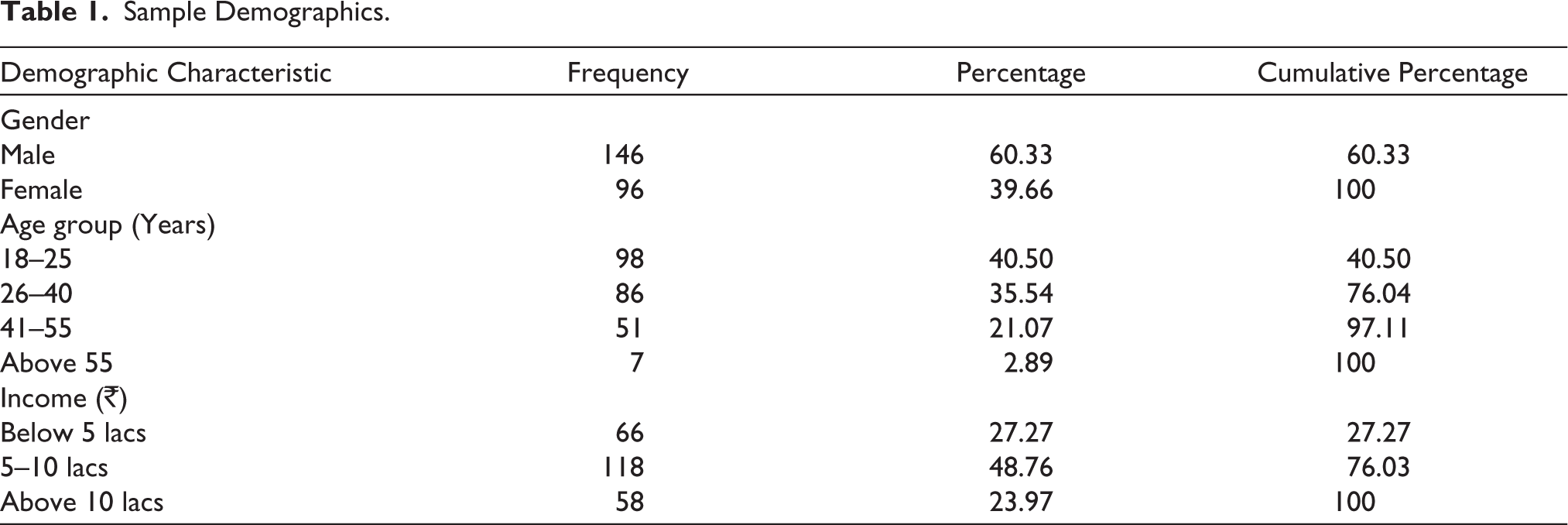
To determine the sample size for the study, power analysis was conducted using the G*Power software (Faul et al., 2009). At a significance level of 0.05 and power of 0.95, the required minimum sample size was of 218. Finally, 242 complete responses received were analysed for the study which were greater than the minimum requirement and hence adequate for running the model. Sample demographics have been presented in Table 1.
Sample Demographics.
Measurement Instrument
The instrument started with two screening questions, followed by three questions on demographic variables and 17 items measured on a 5-point Likert scale with anchors ranging from Strongly Disagree to Strongly Agree. The first screening question aimed at verifying that respondent was a customer of one or more FMCG brands existing in India and the next screening question aimed at determining whether the respondent was active on social media. The qualified respondents after the screening were then continued to the next section for providing their response to the demographics related questions and their agreement level to the further Likert scale statements in the instrument.
The items related to enrichment benefits (ENRB), brand respect (BRES) and brand admiration (BADM) were developed based on the 3E framework of brand admiration (Park et al., 2016) and adapted for CSR communication context. A preliminary pool of statements for the instrument was generated using concept description and sample measurement items suggested by Park et al. (2016) for the three variables. Initial five items generated for enrichment benefits asked the respondents to express their degree of agreement to the statements mentioning that they feel (a) that the brand shares their beliefs and principles, (b) connected to others in society, (c) that the brand helps them express their identity, (d) the brand gives them a unique status and makes them proud and (e) influential and validated, when they read about the brand’s CSR initiatives on social media. The five items for brand respect asked the respondents to express their degree of agreement to the statements mentioning that they (a) feel inspired by the brand, (b) hold the brand in high esteem, (c) look up to the brand, (d) feel great respect for the brand and (e) commend the brand for its values, when they come across the brand’s CSR initiatives on social media. Four items were initially generated for brand admiration asking the respondents to express their degree of agreement to the statements mentioning that they (a) feel personally connected to the brand, (b) feel the brand is part of them and who they are, (c) thoughts towards the brand come to their mind effortlessly, (d) thoughts towards the brand come to their mind instantly and (e) thoughts towards the brand come to their mind naturally. Data were collected by circulating the initial instrument online to a convenience sample of 146 respondents through social media platforms and an exploratory factor analysis using principal component analysis with Varimax rotation was conducted on these data. All the items loaded on their respective constructs as expected with a loading between 0.61 and 0.93 except the fifth item of enrichment benefits, and the second and third items of brand admiration which were dropped from the final instrument as their loadings on the factor were below 0.4.
Three items were used to measure the engagement of customers in CSR communication on social media following van Asperen et al. (2018). These measures related to the familiarity of customers with social media activities of the brand, their degree of following these activities on social media and engaging with the communication through likes, comments or shares. Purchase Intentions were measured using three items as suggested by Kang and Hustvedt (2013) measuring the degree of agreement of the consumer regarding positive inclinations for purchasing products of the brand for which they come across CSR efforts communication through social media. The final instrument was tested for reliability and validity of the constructs by collecting a separate set of data from 242 respondents as described in the preceding section.
Data Analysis
This study employed PLS-SEM to analyse the relationship between CSR communication and purchase intentions with perceived enrichment benefits, brand respect and brand admiration as mediators in the model. PLS-SEM is a non-parametric technique and therefore does not require the multivariate normality assumption to be met. The data were examined for multivariate normality through WebPower analysis tool (Zhang & Yuan, 2018) and Mardia’s multivariate skewness and kurtosis measures were found to be significant indicating non-normality and therefore covariance-based SEM (CB-SEM) would not be appropriate for the analysis. Another major reason for adopting PLS-SEM instead of CB-SEM was the greater predictive relevance offered by PLS-SEM as a technique (Hair et al., 2019). As this study aims at predicting the effect of CSR communication for strategic purpose of brand building and enhancing brand purchase intentions among consumers, it was found useful to apply PLS-SEM which can give a measure for out of sample predictive power through PLSPredict procedure which is helpful in taking managerial decisions. As the model consisted of all reflective constructs, therefore, consistent PLS (PLSc) algorithm was run in SmartPLS 4 software (Ringle et al., 2022) to estimate the model. PLSc applies a correction factor for estimating consistent construct correlations and indicator loadings in case of a common factor model being in place (Dijkstra & Henseler, 2015).
Results
Common Method Bias
Before estimating the model, the data were checked for common method bias (CMB). CMB may exist in researches where variables are latent and measured through instruments on similar type of scales. Common method variance occurs when a bias exists due to the method of measurement used in research and not by the structural relationships in the model. This type of bias can occur because of various reasons such as the effect of general instructions in the beginning of instrument in influencing different people to give response in a similar direction reflecting social desirability, thus leading to a shared common variance among the various items (Kock, 2015). As this study employed a 5-point Likert scale to measure the variables, full collinearity assessment was conducted to rule out the presence of CMB in the data. According to full collinearity approach, inner VIF values of the constructs are tested against a random endogenous variable and any value coming above 3.3 indicates problem of CMB (Kock & Lynn, 2012). As none of the inner VIFs for the variables under study exceeded 3.3, it implies that the problem of CMB does not exist (Kock, 2015).
Measurement Model Assessment
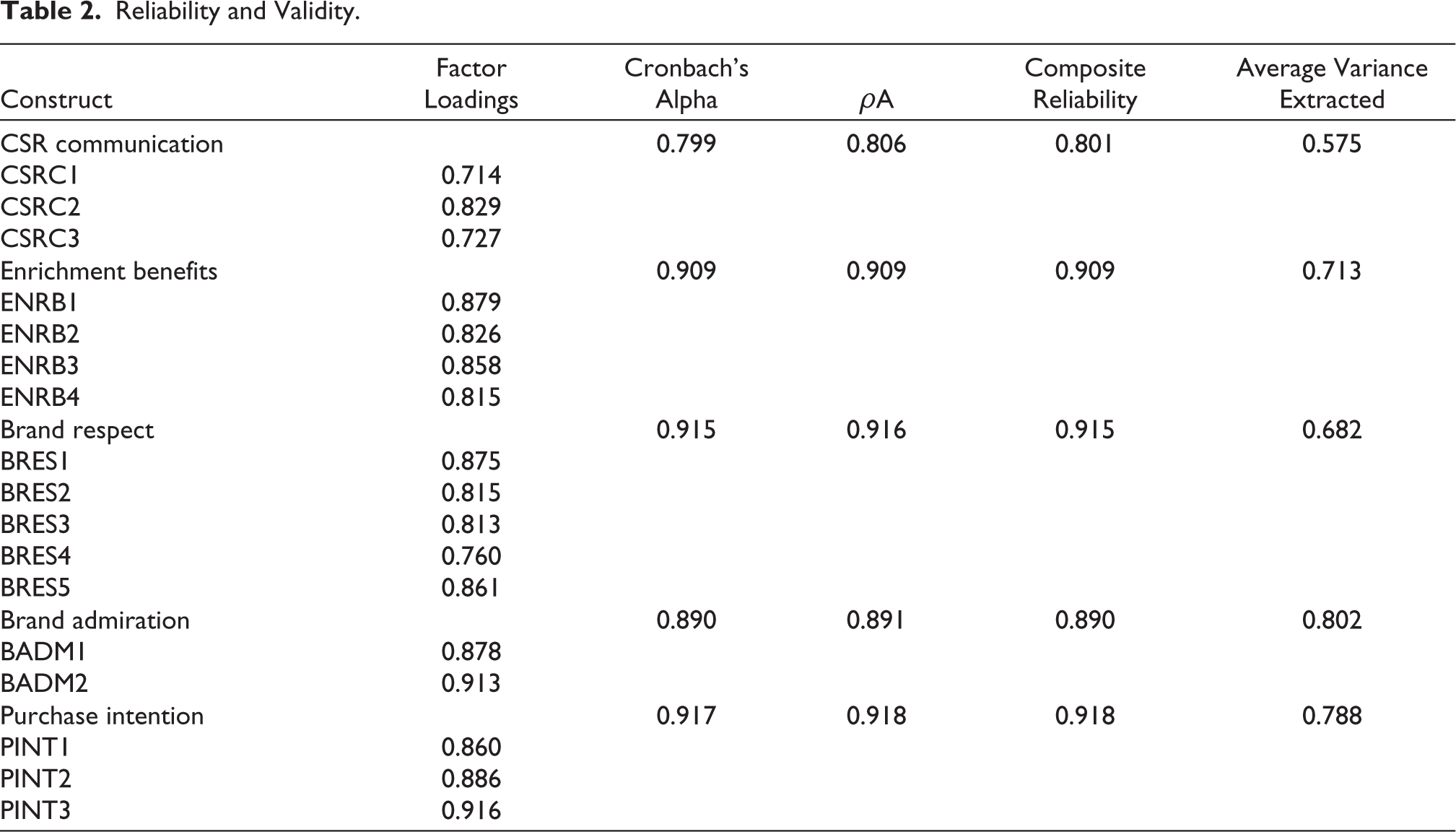
The measurement model assessment involves the examination of the indicator reliability and the internal consistency reliability, convergent validity and discriminant validity of the constructs. Indicator reliability is established if the item loadings have a value of 0.707 or above (Chin, 2010; Hair et al., 2019). Reliability of the constructs was examined by calculating composite reliability and Cronbach’s alpha with former being a liberal measure and latter a conservative one. The actual reliability of a construct falls within these two and is represented by Rho A (ρA) as suggested by Dijkstra and Henseler (2015). The above measures falling between 0.70 and 0.95 are recommended for establishing the reliability of constructs (Hair et al., 2022). A construct’s convergent validity is established by its average variance extracted (AVE) being above 0.5 (Hair et al., 2010) as this indicates the variation of the measured items being more than 50% explained by the construct.
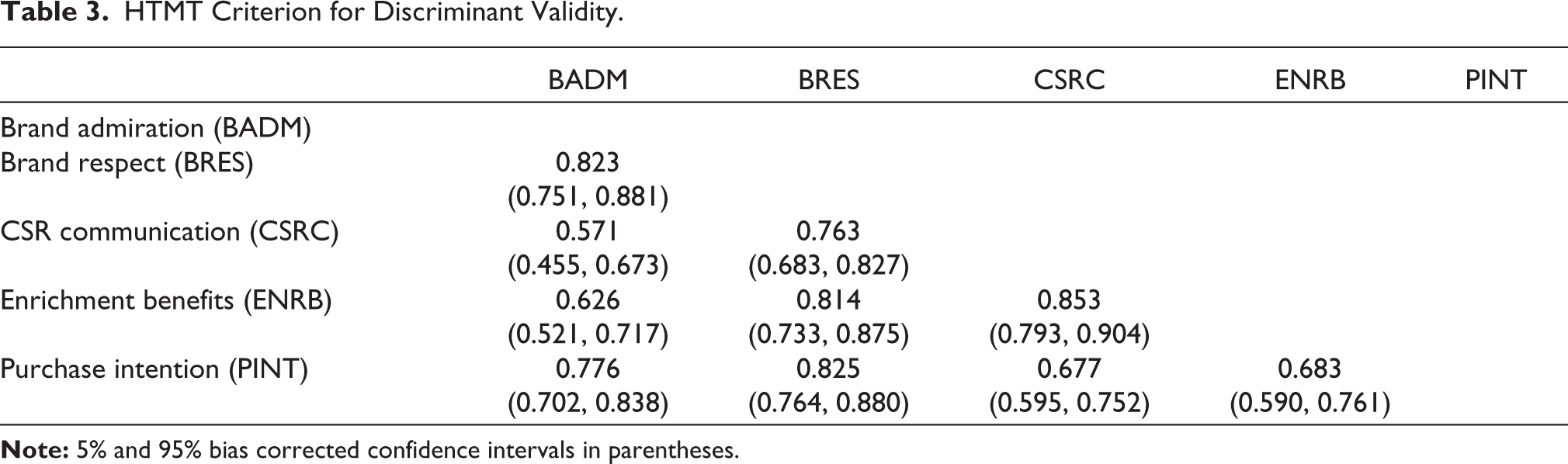
Discriminant validity of a construct refers to the degree by which it is empirically distinct relative to other latent variables in the structural model. Heterotrait–Monotrait (HTMT) ratio was suggested to be better in comparison to Fornell–Larcker criterion (Fornell & Larcker, 1981) for examining the discriminant validity of constructs (Henseler et al., 2015); therefore, the data were analysed for discriminant validity using HTMT criterion. HTMT values less than 0.85 for conceptually distinct constructs establishes discriminant validity. Bootstrapping was run to infer the significance of HTMT value being different from 1.00.
Assessment of reliability and convergent validity measures are given in Table 2, and Table 3 demonstrates the discriminant validity assessment with HTMT criterion. Results indicate that the reliability and validity of all the constructs in the model is established as per the recommended criteria. '
Reliability and Validity.
HTMT Criterion for Discriminant Validity.
Structural Model Assessment
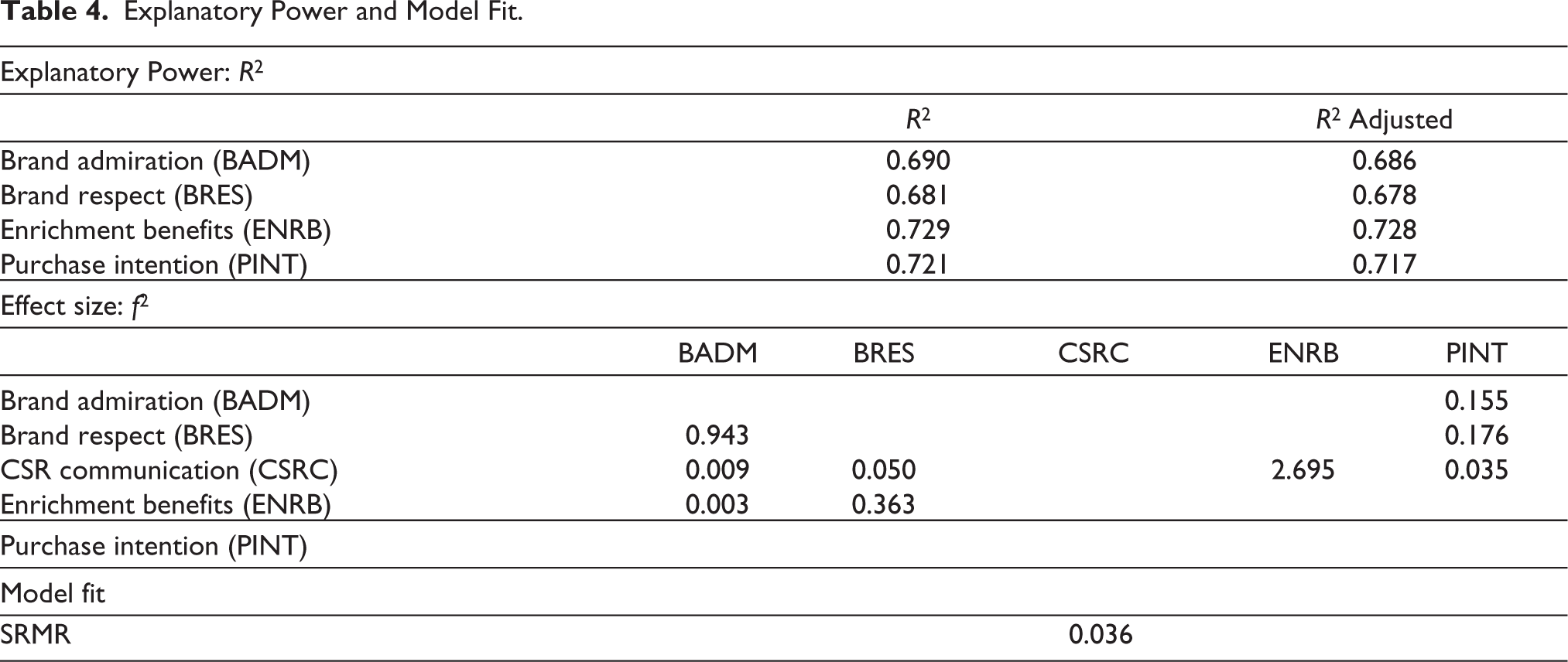
As the first step in structural model analysis, the inner VIF values were examined to rule out any major multicollinearity issues and all inner VIF values were found to be below 5, thus ruling out any serious multicollinearity issue among the variables in the model (Hair et al., 2019; James et al., 2013). Model was assessed for explanatory power through coefficient of determination (R2), and the path coefficients were calculated followed by significance tests being done through bootstrapping procedure for the assessment of structural relationships. Effect size (f2) of individual predictor constructs was also calculated. Model fit assessment in PLS-SEM is recommended to be done through the standardized root mean square residual (SRMR) value (Henseler et al., 2014) with SRMR value below 0.08 indicating a satisfactory model fit (Hu & Bentler, 1998).
Table 4 presents the results of explanatory power and model fit for the estimated model. Results demonstrate a high explanatory power with R2 values above 0.68 for all endogenous variables. The f2 value refers to the effect size of the independent variables on the dependent ones. As suggested by Cohen (1988, 1992), the effect sizes of 0.02, 0.15 and 0.35 are treated to be small, medium and large, respectively. CSR communication demonstrates a large effect on enrichment benefits which subsequently demonstrate a large effect size on brand respect. Brand respect exhibits a large effect on brand admiration while both brand respect and brand admiration exhibit medium effect on purchase intentions.
Explanatory Power and Model Fit.
Hypotheses were tested by running the model in SmartPLS 4 software using consistent PLS algorithm. Bootstrapping was run using 5,000 subsamples to test the significance of the coefficients. Table 5 presents the structural model results for direct, indirect and total effects and Figure 1 shows the model estimation results. All the direct path coefficients were found to be significant except the path coefficients of CSR communication to brand admiration and that of enrichment benefits to brand admiration. The path coefficient of CSR communication to purchase intentions was found to be significant at 10% but not at 5% level of significance. Therefore, hypotheses H1, H2, H3, H4, H6, H8 and H10 stand supported but H5, H7 and H9 are not supported.
Model Estimation Results.
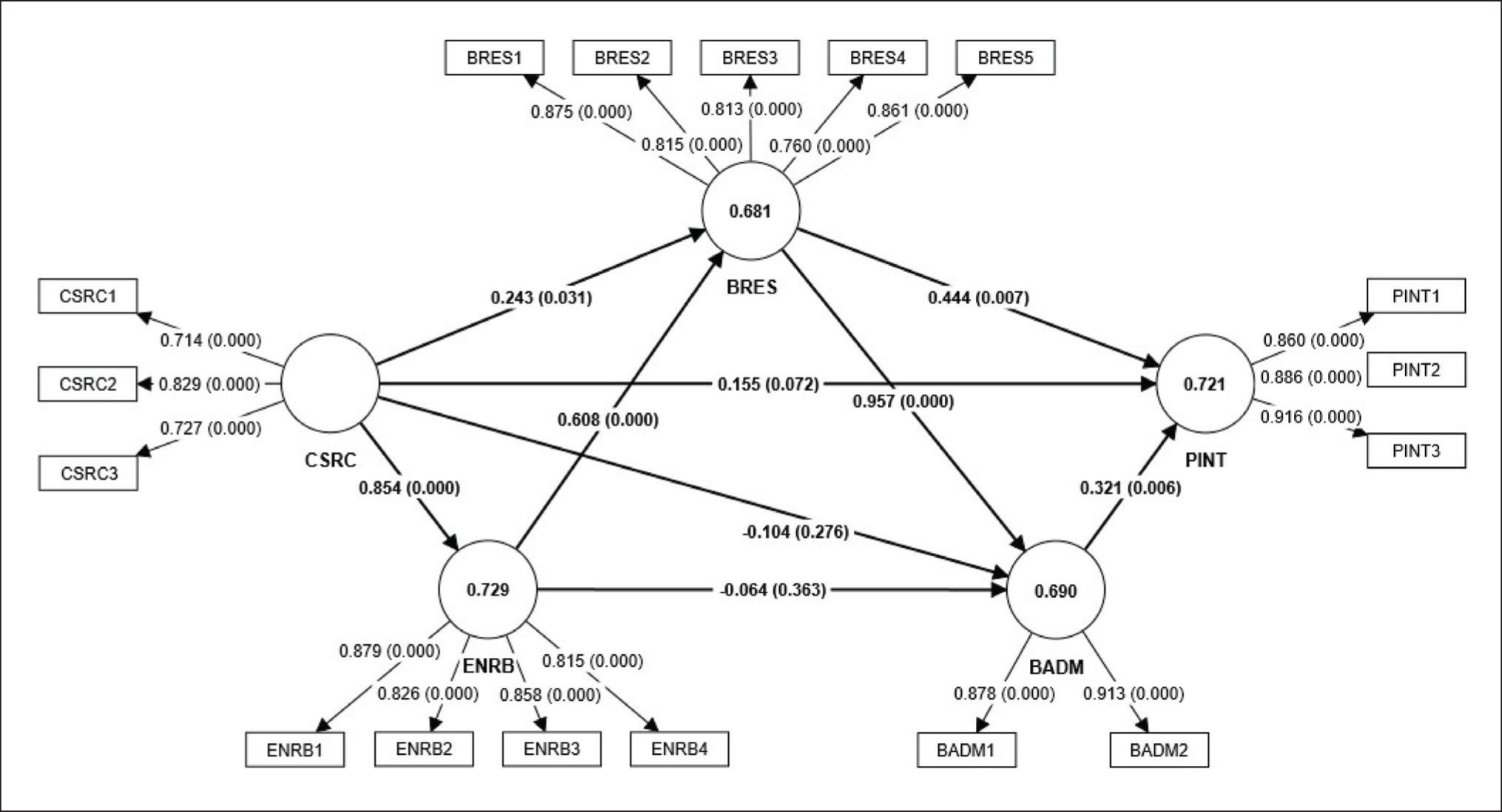
Structural Model Results.
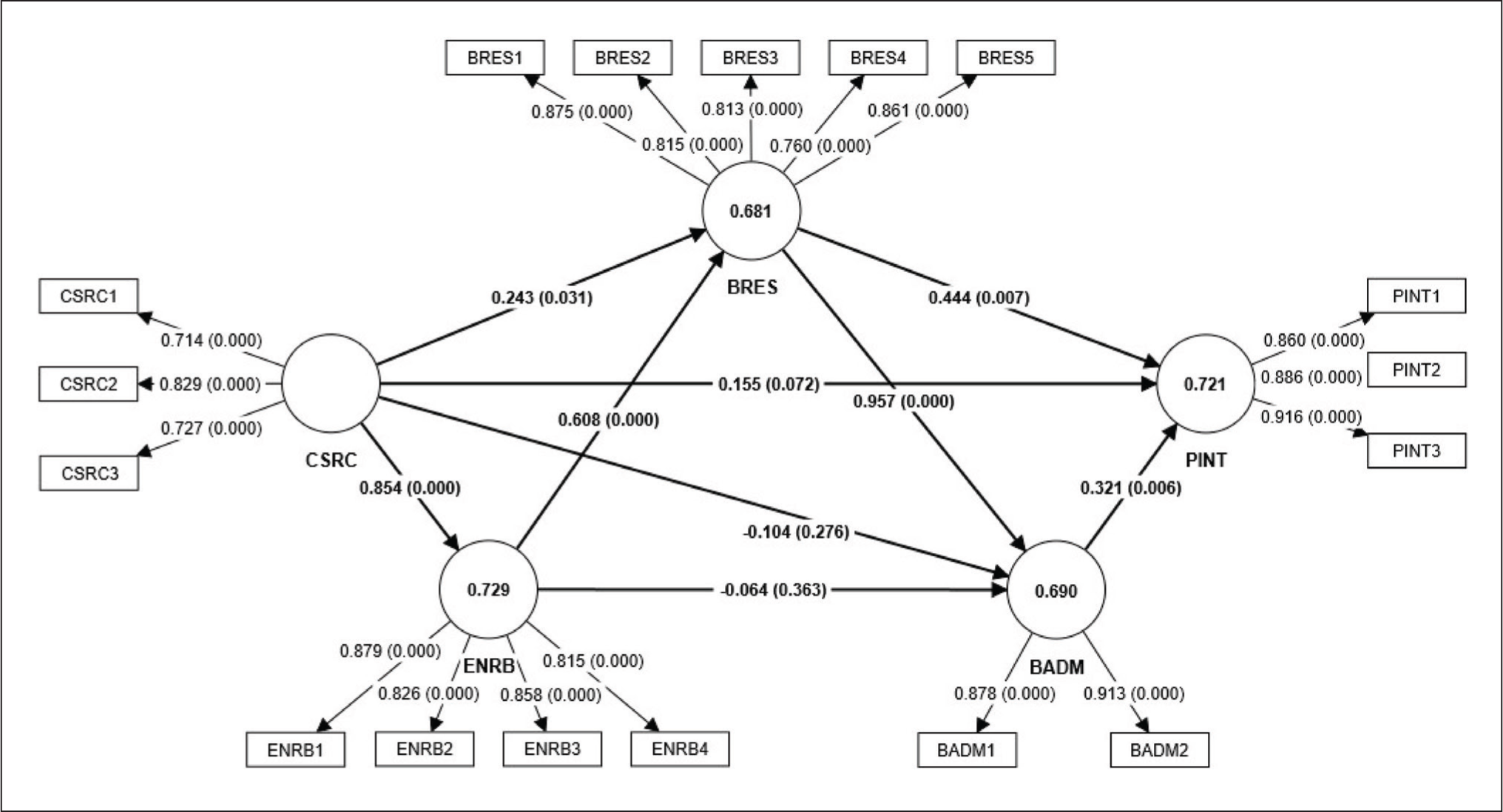
To test the mediation effects, procedure laid down by Zhao et al. (2010) was followed. The specific indirect effects were examined for the significance and compared with the direct effect between corresponding variables. Total indirect effects were examined for significance to assess the joint mediation effects in case of serial mediation and parallel mediation relationships as hypothesized in the model. All total indirect effects as well as total effects were found to be significant establishing the dynamics of the process through which CSR communication on social media can influence purchase intentions of the consumers for the brand through the generation of enrichment benefits leading to brand respect and brand admiration.
The specific indirect effects of CSR communication to enrichment benefits to brand respect and that of enrichment benefits to brand respect to brand admiration are significant and in the same direction as the direct effects between the corresponding variables, thus the mediation relationships hypothesized in H2a, and H3a, H3b and H3c are established as partial complementary mediation. Also, the direct effect of CSR communication to brand admiration is insignificant while specific indirect effect through brand respect is significant which shows that brand respect fully mediates the relationship between CSR communication and brand admiration. Similarly, the specific indirect effect from CSR communication to brand respect to purchase intention and that from brand respect to brand admiration to purchase intention when compared with the direct effects also establishes the mediation relationships hypothesized in H6a and H8a as partial complementary mediation.
PLSpredict
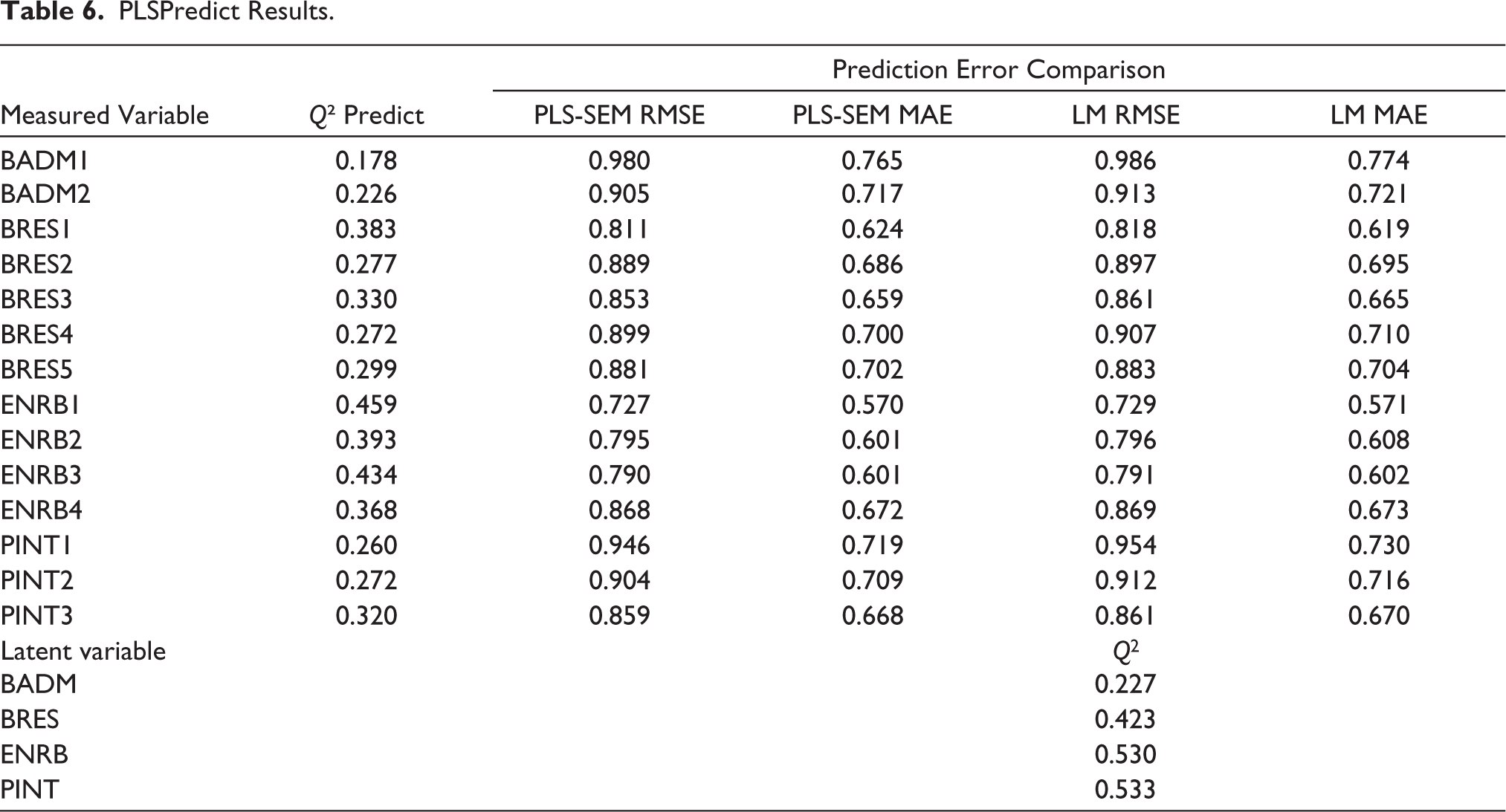
Further, the out of sample predictive power of the model was analysed using the Q2 values and prediction errors obtained from the PLSpredict procedure in SmartPLS 4. Out of sample prediction through PLSpredict is considered to be a major advantage of using PLS-SEM-based causal-predictive models (Chin et al. 2020). PLSpredict results are presented in Table 6. The comparison of prediction errors of the PLS-SEM model used for the study with a naïve benchmark linear model also shows that the PLS model has lower errors for all measured variables indicating the high predictive power of the model and Q2 values for all the measured as well as latent variables are above zero confirming the out of sample predictive power of the model (Shmueli et al., 2016).
PLSPredict Results.
Conclusion
Discussion
The article aimed to analyse the complete dynamic psychological process of the effect which CSR communication on social media exerts on the purchase intentions of the consumers. The whole dynamics built on consumer psychology is initiated with the perceived enrichment benefits leading to brand respect which further leads to brand admiration and finally purchase intentions. The results of this study manifest a significant conclusion in terms of this dynamics by bringing out the actual mechanism through which CSR communication influences purchase intentions. The relative strength of relationship between CSR communication with enrichment benefits is found to be stronger as compared to the direct relationship of CSR communication with brand respect confirming the significant role which enrichment benefits play in the process. This is even more compelling to note that the direct relationship between CSR communication and brand admiration was insignificant, thus providing an important and interesting insight on the mediation effect of enrichment benefits and brand respect in generating brand admiration through CSR communication.
Similarly, the effects of enrichment benefits on brand respect and of brand respect on brand admiration are stronger than the direct effect of CSR communication on brand respect. These results elucidate the importance of enrichment benefits and brand respect as serial mediators in the consumer psychology process and support the 3E framework (Park et al., 2016) proposition. Findings have significant implications for communication and branding strategists to devise communication campaigns for CSR initiatives with a targeted approach of resonating with the beliefs and values of the customers so as to induce brand respect (Jahanvi & Sharma, 2021) through generation of enrichment benefits. Finally, the findings confirm the positive effect of brand admiration on purchase intentions which is in line with existing literature (Gupta et al., 2021a,b).
This article has attempted to fill a significant gap in CSR and branding literature by examining the effect of CSR communication on purchase intentions with mediating role of enrichment benefits, brand respect and brand admiration. Findings have theoretical as well as practical implications in devising well-structured and targeted CSR campaigns and communicating them well in order to maximize the economic and social benefits from the CSR initiatives as discussed in the following sections.
Theoretical Implications
There has been a dearth of studies measuring the effect of CSR communication on consumer perceptions with most of the previous CSR literature focussed on CSR disclosure effects on financial performance variables (Cochran & Wood, 1984; Choi et al., 2010; McGuire et al., 1988; McWilliams & Siegel, 2000; Nair & Bhattacharyya, 2019; Wang & Sarkis, 2017), sustainability performance (Abdulaziz-al-Humaidan et al., 2022) and effect of CSR communication on employee perceptions and engagement (Schaefer et al., 2020). This study has important theoretical implications which add to the limited literature on the effect of CSR communication on consumer perceptions of a brand and their purchase intentions.
First, the previous literature on effect of CSR communication on purchase intentions has not delved into the complete process of the effect creation and has completely missed the role which enrichment benefits and brand respect play in this process. Thus, this article makes a significant contribution in exploring the mediation process in generating the final effect of CSR communication on purchase intentions.
Second, the article finds that brand admiration has an effect on the relationship between CSR communication and purchase intentions (Gupta et al., 2021a, b) but it is only through the mediating effect of brand respect which signifies the importance of the role of brand respect which has not been investigated in CSR context previously. The findings of this study thus bring forth an important theoretical implication in understanding the effect of CSR communication by highlighting the actual psychological influence of such communication which leads to high brand respect but does not have a significant direct effect on brand admiration or purchase intention.
Third, the study confirms the relevance of the 3E model of brand admiration in the context of CSR initiatives communicated by a brand through the findings of significant serial mediation effects of enrichment benefits and brand respect in generating brand admiration.
Practical Implications
The findings are also of significant practical value for branding and communication strategists as well as CSR practitioners who need to emphasize on effectively communicating CSR efforts for positive outcomes (Chaudhri, 2016). First, it is interesting to note that CSR communication in itself does not lead to brand admiration directly. The association is established with the full mediation of brand respect. Consumers feel respect for the brand through the enrichment benefits they derive out of the awareness about CSR initiatives being taken by the brand they consume and only through this respect, the admiration is instilled. Therefore, the communication regarding CSR initiatives on social media should be focussed on convincing the existing and potential customers of their shared beliefs and values that the brand reflects and connect to their self-identity (Marin et al., 2009) so as to garner respect for the brand rather than expecting brand admiration to be generated directly by the communication of the initiatives as a general information.
Second, the positive effect of CSR communication on purchase intentions has been established which implies that CSR initiatives should not only be a matter of following the minimum compliance requirements laid down by law and regulations; rather, they should be seen as a strategic tool to generate higher revenues. As this article established the complete consumer psychology process that leads to higher purchase intentions, the practical strategy of communicating CSR initiatives of the brand must focus on creating content for social media that engages potential and existing customers by optimizing it to focus on the values, beliefs and causes that are important in context of the society the brand is functional in (Nan & Heo, 2007).
Third, the brand building efforts must incorporate the use of communication of CSR initiatives as a strategy for building a brand which is respected by its customers. This will lead it to become a brand that is admired and has a connect with customers’ self-identity leading to higher brand recall and purchase intentions.
Limitations and Scope for Further Research
This research is not without its limitations. The study focussed on the effect of CSR communication only on the enrichment benefits and further on brand respect as the context of CSR fitted in a better manner theoretically with conceptualization of the enrichment benefits as compared to the enabling or enticing benefits in the 3E model of brand admiration. But we cannot ignore the empirical findings in existing literature regarding the effect of CSR on brand love and brand trust. Further research is needed to assess if CSR communication affects brand love for commercial brands the way it does for sports team brands (Baena, 2018) as this effect has started gaining attention only recently (Lee et al., 2022; Quezado et al., 2022). Also, as this study could not establish the direct effect of CSR communication on brand admiration, the components of brand admiration apart from brand respect need to be assessed in an integrated model to derive conclusions about the relative importance of brand love and brand respect and also brand trust to gauge the overall effect of CSR communication on brand admiration.
There is also evidence of the longitudinal effects of CSR on consumer relationships (Lacey & Kennett-Hensel, 2010) which this study has not been able to focus upon due to the cross-sectional research design. Future studies may be conducted for measuring the effects of CSR communication over a period to establish the longitudinal effects.
This study focussed on FMCG sector in India. Further studies may also be conducted to test the relationships for other sectors and countries which may be characterized with different type of consumers so as to establish the generalizability of the process dynamics explored in this article.
Footnotes
Declaration of Conflicting Interests
The authors declared no potential conflicts of interest with respect to the research, authorship and/or publication of this article.
Funding
The authors received no financial support for the research, authorship and/or publication of this article.