






Abstract
The development of any nation crucially depends on the efficient utilisation of its human resources. Despite enjoying a favourable demographic dividend, the Indian labour market suffers from the underutilisation of its female workforce, who mostly remain confined to agriculture, whereas the more remunerative non-farm sector is dominated by men. Assam, one of the states of north-east India, has the lowest share of female employment, but also witnessed the highest share of non-farm employment in recent times. Despite the growing importance of the rural non-farm sector in providing remunerative jobs and a stable source of livelihood, the participation of females remains limited compared to that of males. Therefore, it is pertinent to understand the reasons behind the limited participation of females in the non-farm sector in rural Assam. With the use of a multinomial logistic regression model, our findings reveal that although status maintenance is prevalent in rural Assam, it is largely confined to married women. Education plays a transformative role by enabling women to participate in non-farm activities rather than maintaining household status. It further facilitates women from Scheduled Caste and Scheduled Tribe households to participate in self-employed and regular non-farm activities. The findings highlight the need for investment in education and skill development programmes to strengthen female participation in the non-farm economy of rural Assam.
Introduction
For any developing economy, a desirable rate of growth and development is possible only when human resources are efficiently utilised, and equal opportunities of employment are provided to both males and females. With a favourable demographic dividend in India, women constitute a significant portion of the labour force (Srivastava & Srivastava, 2010). Female empowerment through employment is a crucial determinant of inclusive growth and well-being (Joshi & Mitra, 2020). About 65% of the population comprises the working-age group, and efficient utilisation of the female workforce would contribute substantially towards the growth of the economy (Sarkar et al., 2019). Despite considerable economic growth, a decrease in fertility rate and a rise in female education, a continuous fall in female labour force participation rate (LFPR) in India could be witnessed since the 1980s (Deshpande, 2020). The female LFPR declined from 24.5% during 1987–1988 to 24.9% during 2004–2005 (Abraham, 2009). Of a total of 380 million female working-age population, only 125 million are employed, which is approximately 33% (Das et al., 2015). This situation was aggravated after the COVID-19 pandemic, which caused massive loss of lives and livelihoods. The pandemic has affected females more than males as sectors and industries predominantly clustered by females experienced a sharp contraction (Deshpande, 2020; Saroj et al., 2022). Globally, in the aftermath of the pandemic, about 31 million women faced job loss compared to only 13 million job losses in the case of males (Deshpande, 2020). The pandemic also led to a rise in domestic and unpaid work. Besides these pandemic impacts, females in rural India more generally also face deprivation in terms of equal employment opportunities as compared to their male counterparts due to stringent social norms and restrictions (Drall & Mandal, 2020; Mehrotra et al., 2013). Another crucial factor that lowers female LFPR (FLFPR) in India is the non-inclusive nature of economic growth, where growth is not led by the labour-intensive manufacturing sector but is driven by the skill-based, low-employment-generating service sector (Sarkar et al., 2019). Furthermore, even if females actively partake in the labour market, they face the double burden of work as household responsibilities fall primarily upon them (Srivastava & Srivastava, 2010). Therefore, female employment can be considered empowering only when they engage in highly remunerative jobs (Srivastava & Srivastava, 2010).
Among several factors that determine female employment, caste remains the crucial determinant, particularly in rural areas (Nakajima et al., 2018). Upper-caste women mostly remain engaged in status production, thereby refraining themselves from participating in any economic activity (Eswaran et al., 2013), but lower-caste women, who also suffer from low human capital and material deprivation, tend to participate more in economic activities so as to maintain the subsistence level of household income (Srivastava & Srivastava, 2010). If they follow the path of ‘Sanskritisation’, however, then it is likely that females may refrain themselves from participating in the labour market (Eswaran et al., 2013). Furthermore, female employment is also influenced by the household’s financial status (Abraham, 2009). At a low level of household income, females prefer to be employed in remunerative jobs to meet household consumption needs, but beyond a certain income threshold, most females withdraw from the labour market (Eswaran et al., 2013). If they are educated, then they may continue to work despite being financially affluent (Lahoti & Swaminathan, 2016). Therefore, women’s economic participation, particularly in rural India, is dependent on a complex interplay of various factors.
In this context, the rural non-farm sector (RNFS) has emerged as an important avenue in providing better remunerative jobs. With the expansion of the RNFS in India, it is crucial that females get equal opportunities to participate in this sector. Although RFNS was initially regarded as a residual sector and was expected to wither away with economic growth, it has contributed significantly towards the growth of income and employment (Haggblade et al., 2010; Reardon, 1997). In India, RNFS contributes 55.9% and 34.8% of total rural output and employment generated, respectively (Chand et al., 2017). Higher participation in RNFS is particularly important for rural women, as they have always been concentrated in the agriculture sector, which is both low-return and physical labour-dependent (Abraham, 2009). Women’s employment can be considered empowerment only when they are provided with equal opportunities to work in the more rewarding jobs in the non-farm sector (Joshi & Mitra, 2020). As such, any shift towards more remunerative non-farm employment would enable women to be financially empowered. However, it is observed by extant studies (Drall & Mandal, 2020; Jatav & Sen, 2013; Srivastava & Srivastava, 2010) that occupational diversification towards RNFS is a common livelihood strategy for rural males, while participation of females in this sector is determined by several demographic, social and economic indicators (Drall & Mandal, 2020).
The present article examines the determinants of female non-farm employment participation in rural Assam. Compared to other states of India, particularly the north-eastern region (NER), Assam witnessed the highest share of non-farm employment in 2019–2020, which was 58.5% (Das & Deka, 2023). Given the growing importance of RNFS for overall household well-being and the underdeveloped nature of agriculture in Assam, a thorough analysis of the various determinants that affect women’s participation will expand our understanding of the multitude of factors affecting women’s work. Although some studies perceive that the NER has a more egalitarian social structure that allows greater freedom and autonomy for females (Thomas, 2020), others contradict this view and highlight the low degree of freedom of mobility and marginalisation that adversely affect women’s growth (Mahanta & Nayak, 2013). Our study focuses on the role of caste, education and household economic status, which are used as proxies for socio-economic factors, to explain female non-farm employment participation in rural Assam.
Literature Review
The labour market in India, particularly in rural regions, is marked by the existence of several stratifying factors that are responsible for influencing the occupational choice of individuals, particularly women. Among them, caste, economic status and gender are the most significant ones (Nakajima et al., 2018). Studies have demonstrated that socio-economic, cultural and demographic factors determine women’s engagement in the labour market, whereas with regard to males’ employment participation, the focus has largely been on economic factors (Srivastava & Srivastava, 2010). Among the several factors affecting women’s occupational choice, extant studies have found that factors such as enrolment of females in educational institutions and improvement in household incomes adversely affect their economic participation (Bordoloi & Bedamatta, 2022). While factors such as proper transport, communication facilities and educational attainment are significant in improving their employment share (De Janvry & Sadoulet, 2001). Previous studies on women’s employment consistently highlight that, unlike men, women’s involvement in the labour market is affected by a number of social, cultural, economic and regional factors. These influences tend to be more pronounced in rural India than in urban India (Srivastava & Srivastava, 2010).
The study by Das et al. (2015) points out that the FLFPR is adversely affected by household responsibilities. Even though education opens the pathway for female employment in high remunerative jobs, the presence of children, especially for married women, reduces their likelihood of employment. Eswaran et al. (2013) further argue that household ‘status’ plays a critical role, with many families perceiving their social standing to remain high where women refrain from any kind of economic participation. Their findings reflected the strong adverse impact of status on married women’s employment probability. Their participation also decreases in the presence of a greater proportion of males with primary education. Similarly, Abraham (2013) also stated that to maintain household status, females shift their focus towards status production, such as the education of children, health care and performance of religious activities. Even when educated, women’s qualifications are often used to enhance the household’s status rather than encouraging their participation in the labour market. Joshi et al. (2018) further demonstrate that compared to women from the Scheduled Castes (SC), upper-caste females have significantly lower LFPR. Again, within the upper caste, women from different jatis like Rajputs and Brahmins enjoy less decision-making power related to the choice of employment.
It is further found that women experience more job transitions compared to men, and their entry into the labour market is positive only when they are the head of the household and belong to socially backward castes. Their probability of exiting the labour market increases when they are married or when the household comprises educated males, suggesting that women’s participation is driven mostly out of compulsion (Sarkar et al., 2019). Beyond socio-cultural norms, the fall in FLFPR is also linked to limited suitable work opportunities, particularly in the non-farm sector (Lahoti & Swaminathan, 2016). However, growth in the agriculture and construction sectors increases the share of female employment, whereas it is adversely impacted when growth is led more by the manufacturing sector.
There are a few literature studies that focus more on the several factors that shape women’s participation in the RNFS. Srivastava and Srivastava (2010) observe that education boosts women’s involvement in self-employed and regular non-farm activities. Also, women from lower-caste households diversify more towards non-farm employment. Yet, women are disproportionately engaged in subsidiary roles, underscoring their disadvantaged position. On the other hand, Drall and Mandal (2020) highlight the greater dependence of female-headed households on non-farm income, while for households headed by males, farm income constitutes the major income source in the eastern and semi-arid regions of India. Although non-farm employment is equally important for females, they are mostly employed as wage workers and are more risk-averse compared to males. Furthermore, employment of females in the RNFS is influenced by transportation facilities, but its effect varies between regions according to the nature of gender norms (Lei et al., 2019). Lei et al. (2019) found that transportation facilities, like access to roads, create non-agricultural job opportunities for both rural men and women. For women, the effect of transportation facilities on non-farm participation weakens in regions where the purdah system is more practised. Even though non-farm employment opportunities are available, women are unable to utilise them because of restrictions on their physical mobility.
Studies focusing on women’s employment in India’s NER, particularly Assam, remain limited. The study by Bordoloi and Bedamatta (2022) focuses on female labour force participation in the NER of India. They observe that FLFPR is lower in the NER compared to the all-India average, and unemployment is also high here. Despite gender relations being considered more equal in the NER as compared to other regions of India, women still suffer from inadequate employment opportunities (Bordoloi & Bedamatta, 2022). Boruah and Das (2022) demonstrate that in Assam, women with higher education and belonging to land-owning households have better chances of labour market participation. Their findings, however, imply the influence of patriarchal norms in determining women’s economic participation. Similarly, Das and Mishra (2018) also found that economic compulsion is one of the prime reasons for female employment, as women from low-caste and small land-owning households are more likely to engage in employment.
From the foregoing review of existing literature, it is apparent that the role of the RNFS as a livelihood option for women in rural Assam has received limited scholarly attention. The focus of this study is on the state of Assam despite being the largest economy among the north-eastern states (Roy & Barua, 2022), and Assam also records the lowest share of FLFPR (Boruah & Das, 2022; Das & Mishra, 2018; Roy & Barua, 2022). Furthermore, the majority of women work in the agriculture sector, which is already overburdened, contributing to what has been described as the feminisation of agrarian distress (Bhuyan & Mitra, 2018). Moreover, the declining capacity of the agriculture sector to provide rural livelihoods, particularly to women, calls for renewed attention to the potential of alternative employment opportunities in the non-farm sector. In light of the growing importance of the non-farm sector, this study contributes to the existing body of literature by focusing on the factors that determine women’s participation in the non-farm sector in rural Assam and also highlights the role of education, caste and household economic status in this respect.
Methodology
Data Source
The nationally representative Periodic Labour Force Survey (PLFS), which provides annual data on employment and unemployment, is utilised to fulfil the objectives of this article. This data source is available since 2017–2018, and we have used it for analysing the various determinants of female non-farm employment in the post-COVID-19 period, particularly the year 2022–2023. Also, for descriptive statistics, information from 2017–2018 and 2020–2021 has been used. The rural sample for the year 2022–2023 consists of 12,176 individuals, out of which 5,820 are women. The analysis is limited to women in the working-age group of 15–59 years. The study is based on the sample of rural women, and the classification of their occupation is derived by combining the activity status with the industrial category (i.e., whether farm or non-farm sector). Activity status shows whether the individual is in self-employed, regular/salaried or casual employment, whereas the industrial category provides us the information of whether the worker is in agriculture or in the RNFS. Using information from both these variables, we are able to create different occupational groups, which form our dependent variable. Further, we have used the idea of usual principal and subsidiary status (UPSS) to define labour force participation, thereby capturing a broader measure of employment. UPSS considers both the principal status and subsidiary status of work. Individuals who were either employed or were available for work for a relatively longer period of time in the last year (preceding survey year) are considered working in the principal status, and those who were identified as non-workers as per their principal status but have worked for a minimum of 30 days preceding the survey year are considered as subsidiary status workers (Bordoloi & Bedamatta, 2022).
Econometric Model
To empirically estimate the determinants of participation of women in farm and non-farm sector occupations, we have applied a multinomial logistic regression model. The model is given below:

Here Pr(Yi = j) implies the probability of employment in occupation j by the ith individual belonging to household h (Nakajima et al., 2018). j includes the following occupational categories: employment in the agriculture sector (0), self-employment in the non-farm sector (1), regular employment in the non-farm sector (2) and casual employment in the non-farm sector (3). Here, employment in agriculture is the base category against which we will compare our findings of non-farm occupational choices. Although the model is taken from Nakajima et al. (2018), the explanatory variables differ from those included in their paper.
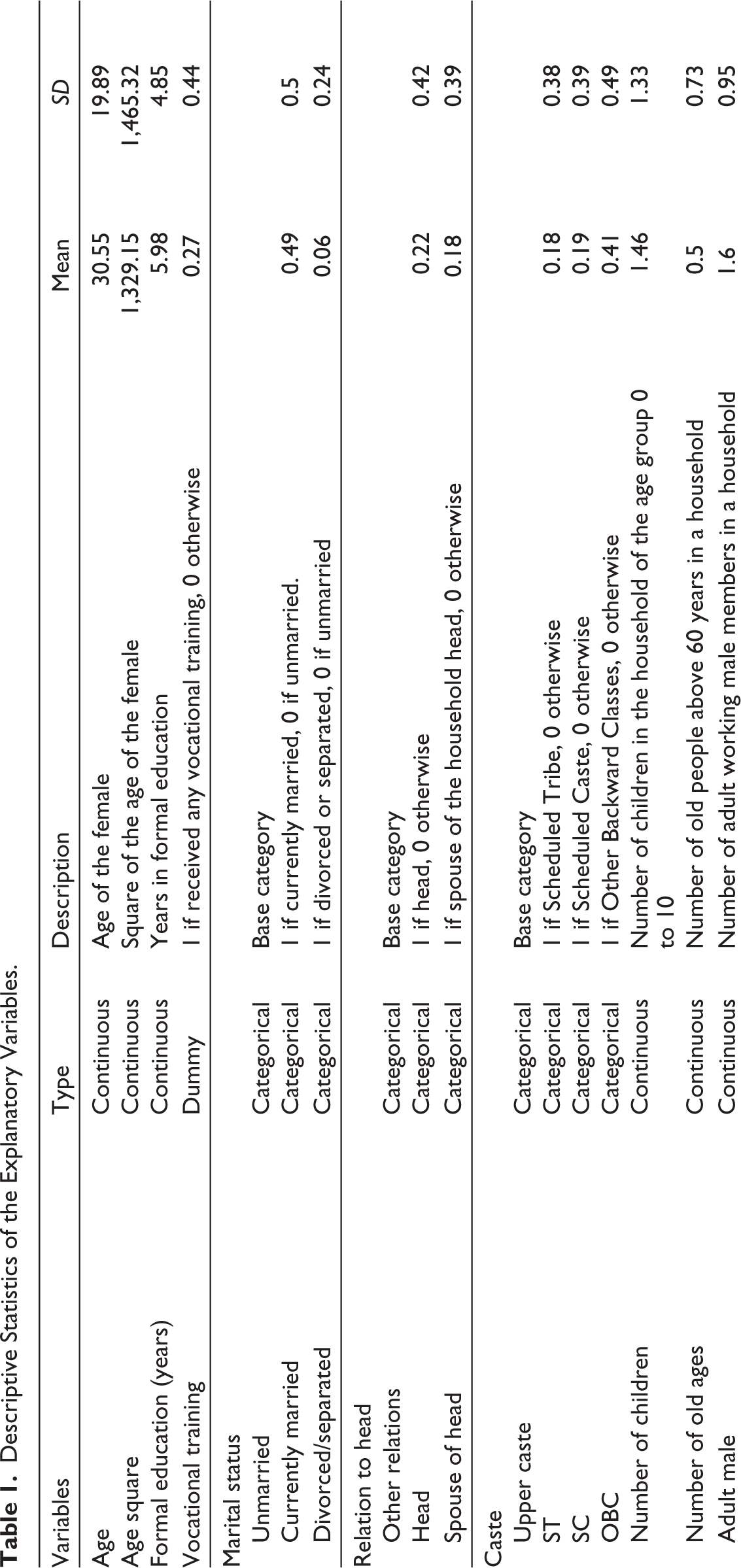
The explanatory variables are represented by Xi, Xn and Xl . The individual factors denoted by Xi include the age and age square of the female workers, years of formal education, vocational training, marital status and relation to household head. Xn represents determinants at the household level and includes caste, monthly per capita consumption expenditure (MPCE), number of adult male working members in a household, number of children below the age of 10 years and old-age members 60 years and above in a household. The locational factor is captured by the National Sample Survey (NSS) state regions. 1 Furthermore, certain diagnostic tests are used to assess the goodness of fit of a multinomial logit model. One of them is the likelihood-ratio chi-square (LR χ²) statistic that measures whether the model gives a statistically significant improvement in explaining the dependent variable compared to a model with no explanatory variables. The larger the value of LR χ², the better the fit of the model. Similarly, the pseudo-R2 value and the log-likelihood value measure the predictive power of the explanatory variables compared to a model with no predictors. The higher their value, the better the fit of the model. Descriptive statistics of explanatory variables are given in Table 1.
Descriptive Statistics of the Explanatory Variables.
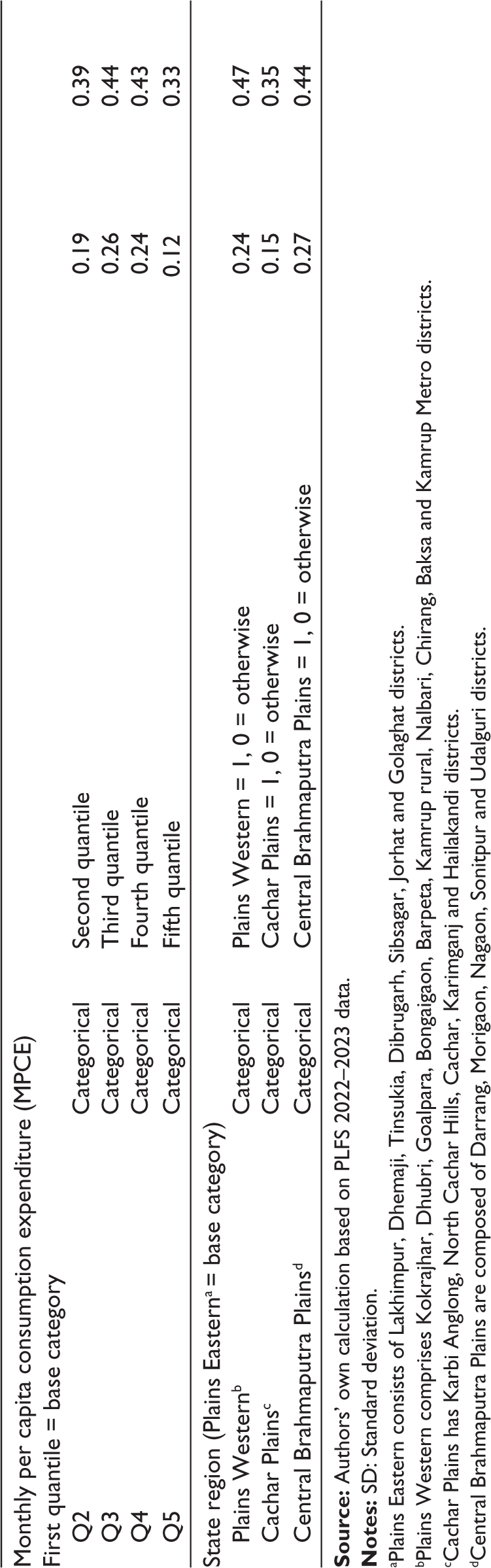
aPlains Eastern consists of Lakhimpur, Dhemaji, Tinsukia, Dibrugarh, Sibsagar, Jorhat and Golaghat districts.
bPlains Western comprises Kokrajhar, Dhubri, Goalpara, Bongaigaon, Barpeta, Kamrup rural, Nalbari, Chirang, Baksa and Kamrup Metro districts.
cCachar Plains has Karbi Anglong, North Cachar Hills, Cachar, Karimganj and Hailakandi districts.
dCentral Brahmaputra Plains are composed of Darrang, Morigaon, Nagaon, Sonitpur and Udalguri districts.
Results
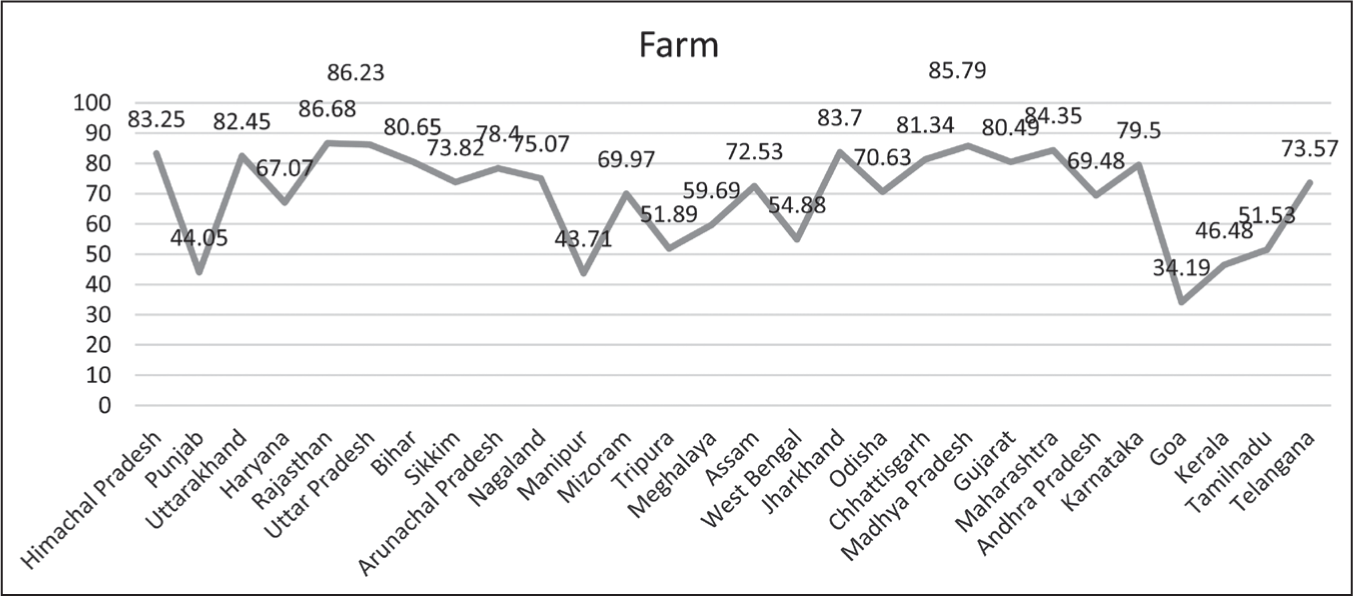
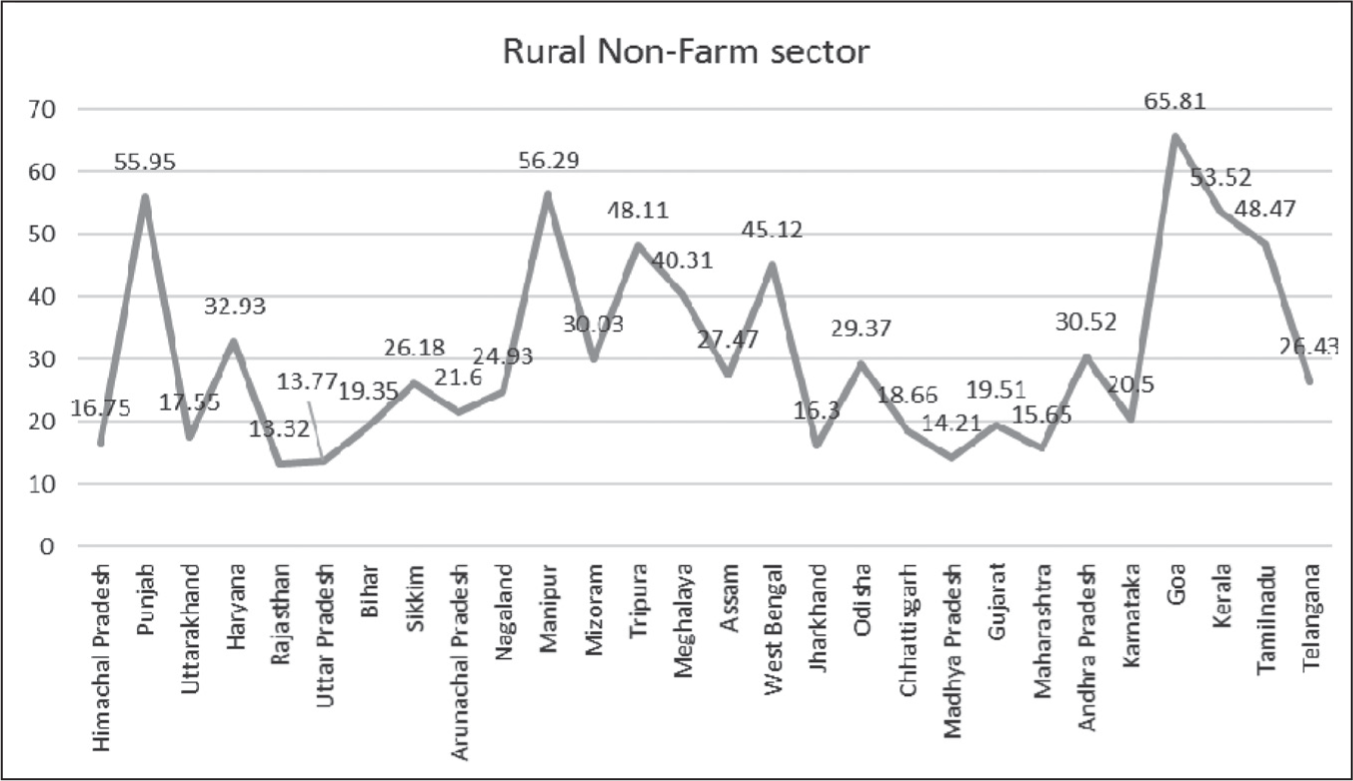
First, we show a graphical representation of the proportion of female workers engaged in the farm and RNFSs in Assam in comparison with other states of India using data from the PLFS 2022–2023 to understand the relative position of Assam with regard to its generation of employment for rural women.
Figures 1 and 2 clearly depict that diversification of female workers from agriculture to the RNFS is lagging behind in Assam compared to most other Indian states, particularly those in the north-eastern and southern regions, but in comparison with some of the eastern states like Bihar, Jharkhand, Uttar Pradesh, etc., the female share in rural non-farm employment is better in Assam. However, within the NER, the share of females in the non-farm sector in Manipur, Mizoram, Tripura and Meghalaya varies between 40% and 56%, whereas that in Assam is only 27.47%. Such a low share of women in Assam’s non-farm sector demonstrates their weak representation in this sector, where returns generally remain higher compared to those in the farm sector (Srivastava & Srivastava, 2010). Furthermore, in the case of agriculture, Assam’s share of female employment in this sector is lower than that of states such as Himachal Pradesh, Uttarakhand, Rajasthan, Madhya Pradesh and some southern states where more than 80% of women are actively participating in the primary sector. Within the north-eastern states, the share of female employment in agriculture is highest in Arunachal Pradesh (78.4%), followed by Nagaland (75.07%) and Assam (72.53%). It is evident that engagement of women in RNFS is still lagging behind in Assam, and measures to raise their access to non-farm employment are crucial, as this sector holds stable and better income-earning opportunities.
State-wise Distribution of Women Workers in Agriculture.
State-wise Distribution of Women Workers in the RNFS.
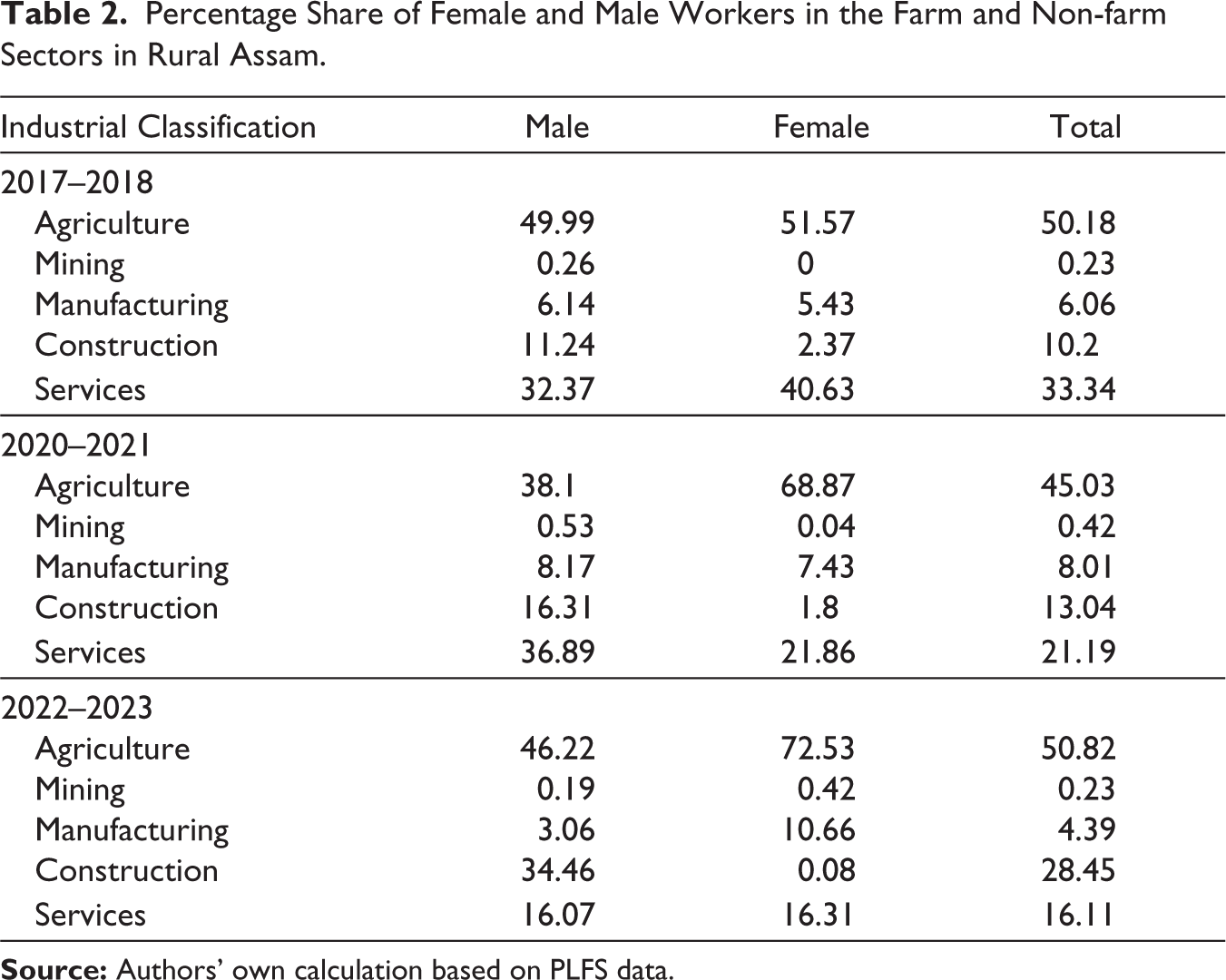
From Table 2, we see that in the case of men, the share of employment in the agriculture sector has reduced from 49.99% to 46.22% during 2017–2018 and 2022–2023, whereas for females, participation in agriculture, which was approximately 50% in the pre-COVID-19 year, increased drastically to 72.53% in 2022–2023. Although reverse migration to rural regions is one of the reasons behind the rise in agricultural employment, for females, their participation continued to rise even after the pandemic period. This demonstrates that the dependence of rural females on agriculture has increased after the pandemic. Also, the adverse impact of the pandemic was felt more in the non-farm sector as production and marketing activities were hampered (Chand, 2023). It is further pointed out by Chakraborty and Sutradhar (2024) that skill mismatch is a crucial factor that adversely affects females to shift from agriculture to the non-farm sector. In the context of non-farm employment, the share of both female and male workers in the service sector witnessed a significant fall between 2017–2018 and 2022–2023. The share of males in the service sector declined drastically to 16.07% in 2022–2023 from 32% in 2017–2018, whereas for females, their share fell from 40.63% in 2017–2018 to 16.31% in 2022–2023. One of the causes behind this sharp fall in service sector employment can be attributed to the nature of activities that were being generated during this time period. Most of the jobs generated between 2017–2018 and 2022–2023 were in the construction sector (Chand, 2023). As such, employment share in the construction sector doubled, especially for males, whereas their share in services declined. In the case of female workers, employment share increased in agriculture, whereas that in construction and services declined. We observe that between 2017–2018 and 2022–2023, about 20% of rural females have shifted from non-farm to farm sector employment, which implies a reversal of the diversification process in rural Assam. Table 3 shows the activity status of rural male and female workers in the pre- and post-COVID-19 period.
Percentage Share of Female and Male Workers in the Farm and Non-farm Sectors in Rural Assam.
Percentage Share of Male and Female Workers in Different Activity Statuses.
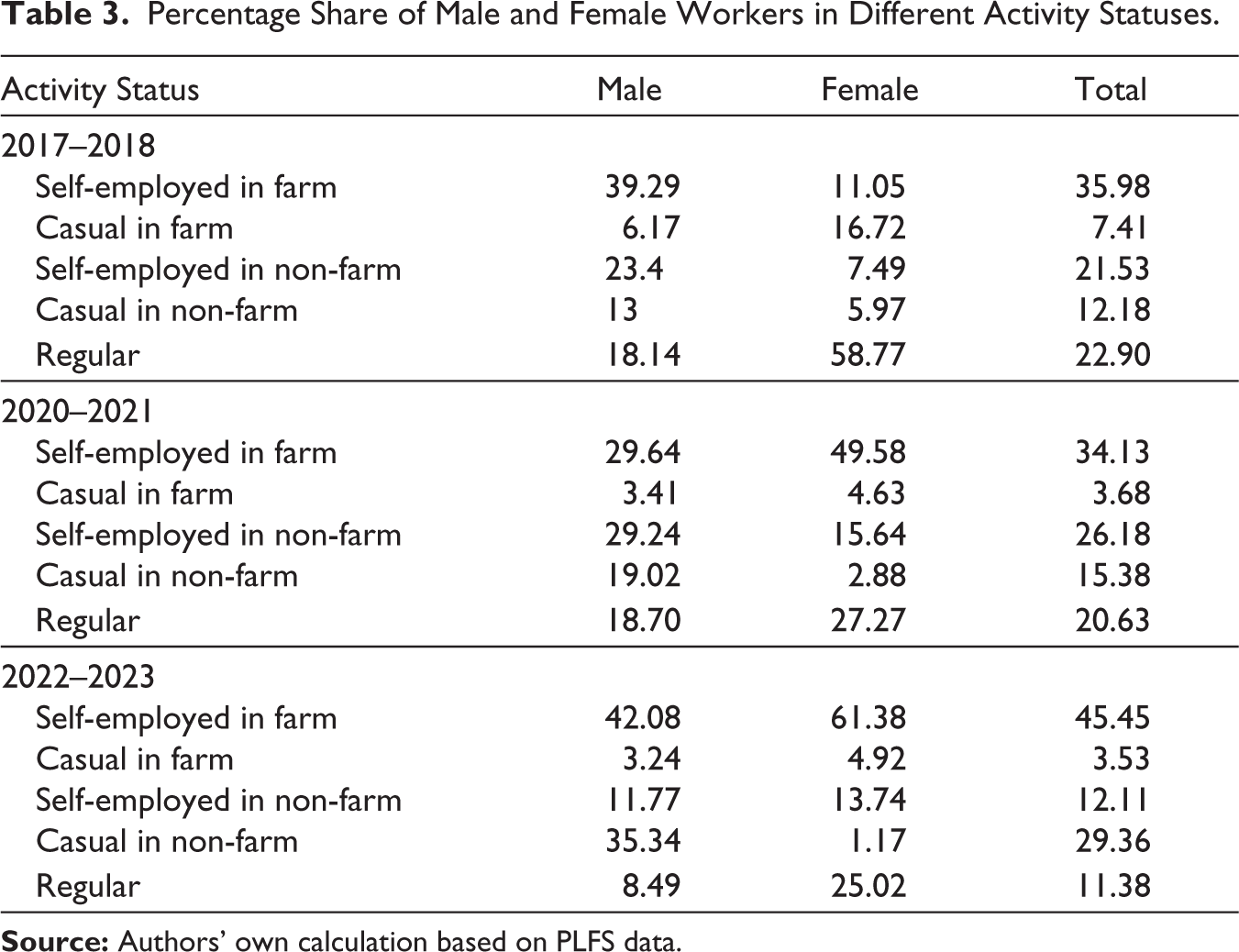
The activity status shown in Table 3 describes the percentage of workers in different occupational categories. We observe a considerable rise in the share of female workers in agriculture, mostly in the self-employed category, in the post-COVID-19 period, which increased to 61.38% in 2022–2023 from a mere 11.05% in 2017–2018. In the case of males, the share of self-employed farm workers increased marginally from 39.29% to 42.08% during the same time period. One of the factors contributing to such a high share of women workers in the agriculture sector is the reverse migration that occurred at the time of the pandemic (Joshi & Mitra, 2020). Also, the education and skill level of women being lower than that of males further lessens their ability to diversify into activities outside agriculture due to skill mismatch (Abraham, 2013; Srivastava & Srivastava, 2010). This suggests that the agricultural sector accounted for a sizeable share of the increase in female employment in the post-COVID-19 era, which is also evident in other studies (Roy & Barua, 2022). Even though agriculture continues to be a prime source of livelihood, its declining share in India’s gross domestic product and increased fragmentation of land holding within the sector have led to a fall in its productivity (Binswanger-Mkhize, 2013). As a result, involvement in this sector cannot be considered empowerment because of low returns and the unskilled nature of work, but if we look at the share of casual farm work, then the share of both rural males and females has declined considerably. Among the non-farm occupations, the share of females in self-employed non-farm activities rose from 7.49% to 13.74% between 2017–2018 and 2022–2023. As far as their participation in regular employment is concerned, we observe that the share of females in regular employment during 2017–2018 is as high as 58.77%, whereas that of males is 18.14%. This large share of females in regular employment in rural Assam is partly due to their high engagement in the tea sector industry of Assam, which is an organised industry (Mishra et al., 2012). The Human Development Report of Assam (Government of Assam, 2014) also states that engagement of females in the tea industry has led to their greater participation in regular employment compared to other states of India (Roy & Barua, 2022). However, in the post-COVID-19 years, their share in regular as well as casual employment has fallen considerably. One of the reasons highlighted in the extant literature is that females were the worst sufferers of the pandemic, and in addition to this, as the pandemic adversely affected the services sector where females mostly remain concentrated, it has also led to a fall in their share in regular employment (Deshpande, 2020; Joshi & Mitra, 2020). For males, however, participation in casual non-farm activities has increased considerably in the post-COVID-19 period. Table 4 provides the regression results of the determinants of female employment in the RNFS.
From Table 4, we observe that although rural females have a higher probability of engaging in all three non-farm sectors as age increases, their probability of participation lowers after attaining a certain age. This suggests that elderly women are more likely to exit the labour market. Sarkar et al. (2019) also found that women in their early 40s start exiting from the labour market. Most females in their study were engaged in agriculture and manual work, which required more physical labour, and after attaining a certain age, the likelihood of females exiting the labour market was found to be higher due to a decline in their physical capacity to perform such menial work. Srivastava and Srivastava (2010) showed that non-farm employment is mostly preferred by younger females, whereas older women are likely to remain in agriculture. This is because, as age increases, it becomes difficult to shift to other sectors due to skill mismatch. Again, education and vocational training that improve workers’ skills and proficiency also significantly affect female employment. Women are more likely to participate in self-employed and regular non-farm activities and less likely to be employed in casual activities as the years of education increase. Similar is the case in vocational training. This demonstrates the favourable impact of human capital in enabling females to compete for remunerative non-farm jobs. This also suggests that attaining a higher level of education and skill acquisition can help overcome barriers that restrict females from shifting towards more remunerative non-farm jobs. Furthermore, we observe that currently married women are less likely to engage in all three non-farm sector economic activities that require taking up employment outside the household. This suggests that although the NER is considered more egalitarian in terms of gender relations (Bordoloi & Bedamatta, 2022), in rural Assam, even today, the responsibility of upholding household status falls primarily on the female members, which adversely affects their economic participation. Working outside is regarded as a low-status activity (Eswaran et al., 2013). Furthermore, the likelihood of non-farm employment is also less for divorced and separated women. As pointed out in the Ministry of Labour and Employment (2023) report, rural married women suffer from ‘time poverty’ as household responsibilities fall disproportionately on them, discouraging their economic participation.
Determinants of Female Non-farm Employment in Rural Assam.
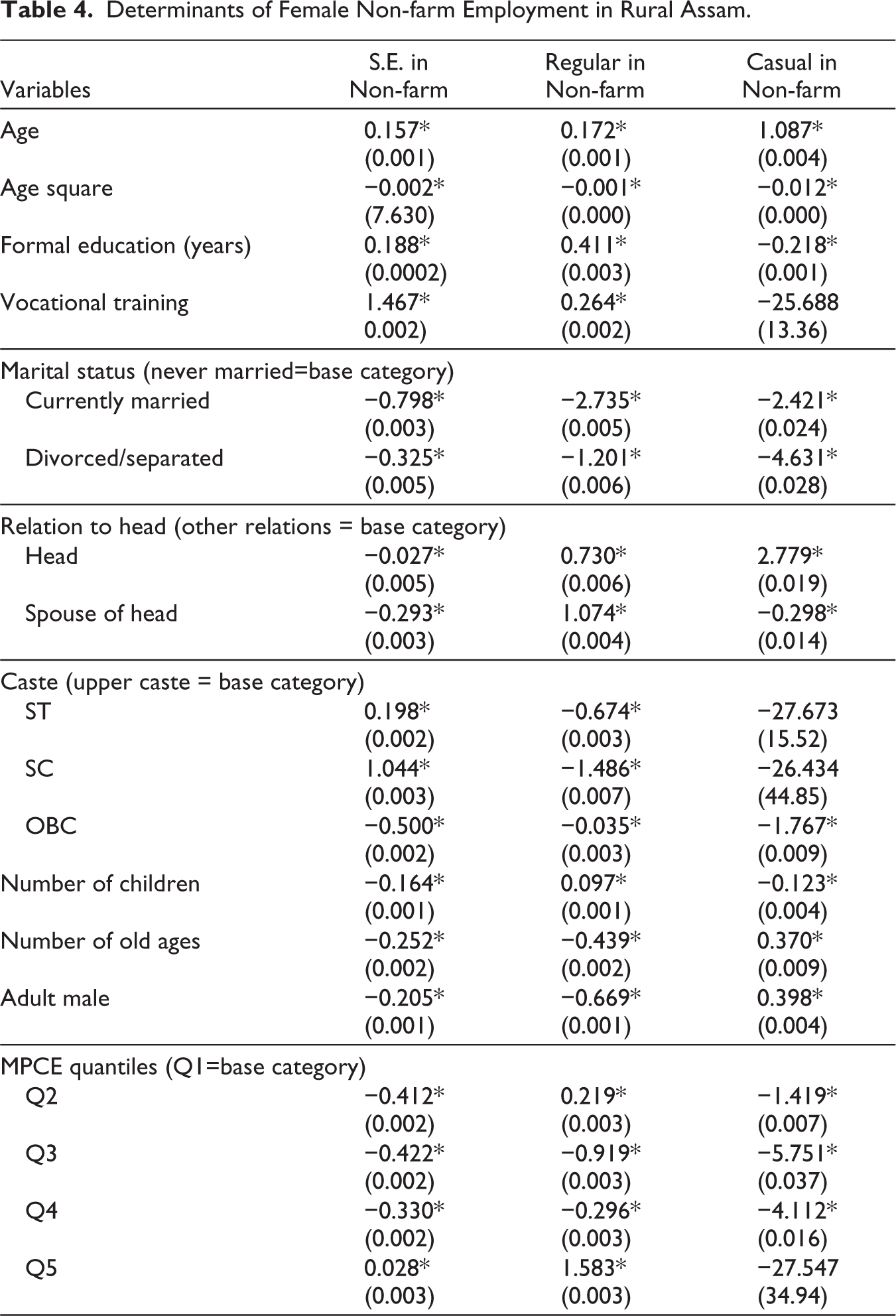
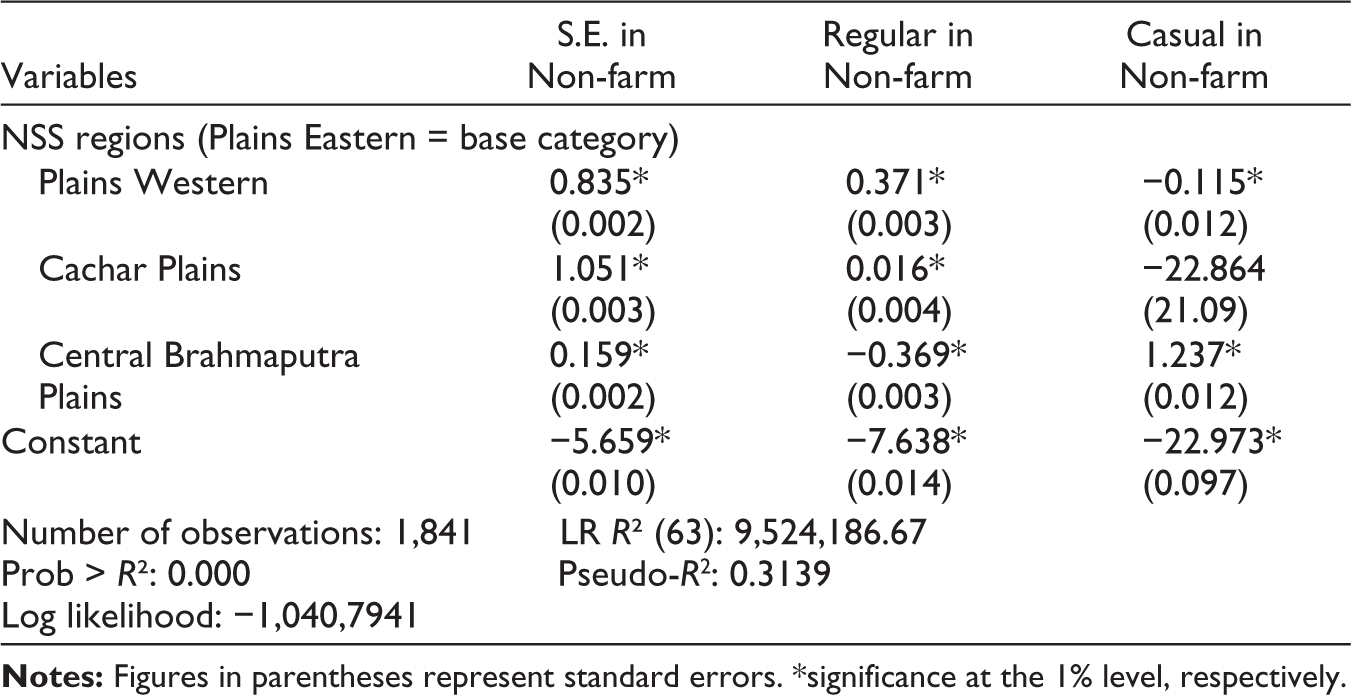
An interesting observation from our analysis is that when rural women are the household head, they are more likely to work in regular and casual non-farm employment. Even being the spouse of the household head enables them to engage in regular non-farm activities. Several factors may affect their participation, but studies have pointed out that female heads either enjoy greater freedom of movement or need to participate in the labour market for survival (Sarkar et al., 2019). In Assam, a significant portion of rural women work in the tea industry, which is regarded as regular employment, but despite being regularly employed, these women do not enjoy any social security benefits nor do they enjoy high remuneration (Roy & Barua, 2022). As such, it can be stated that even though being the household head or spouse of the household head enables women to make decisions on employment choices, it does not guarantee a decent job. Again, the impact of caste on women’s non-farm participation depicts that women from Scheduled Tribe (ST) and SC households participate more in self-employed non-farm activities and are less likely to join regular employment. Their lesser participation in regular activities in the non-farm sector might also be because of their low level of human capital (Das & Mishra, 2018; Srivastava & Srivastava, 2010). The results also show that women from Other Backward Class (OBC) households engage more in agriculture and its related activities and are less inclined to be in any non-farm employment.
Again, household MPCE, which is used to represent a household’s economic condition, shows a negative influence on non-farm employment participation for female workers. This finding is consistent with other literature (Eswaran et al., 2013; Sarkar et al., 2019), where it is observed that the need to maintain household status by females becomes more binding as they move up the economic ladder, consequently adversely affecting their chances of employment. Females from the highest income quantile are likely to work in regular/salaried and self-employed non-farm activities. This, on the contrary, depicts that household status maintenance may not be stringent for females from affluent households but may enable them to engage in high-remunerative non-farm jobs. Furthermore, women’s participation in self-employed non-farm activities is adversely affected by the presence of children, adult males and older members. The presence of children does not hamper them from engaging in regular non-farm activities, whereas the presence of old-age dependents and adult males has a positive impact on casual work. This clearly implies that women’s participation in economic activity becomes highly casual and irregular when more working male members are already present. They might engage in casual activities only when there is an economic compulsion. NSS regions show that females have a greater participation in self-employed activities in all three NSS regions compared to the Eastern Plains region. However, the probability of employment in regular and casual non-farm activities differs across regions. In the Plains Western and Cachar Plains, females have a high participation probability in regular employment, whereas females from the Central Brahmaputra Plains are engaged more in casual employment. The Central Brahmaputra Plains region is agriculture-dominated compared to the other regions, and given that farm employment is mostly seasonal in nature, the share of casual employment among females is also high here (Das, 2022).
Next, we attempt to analyse whether educated women from ST, SC or OBC households participate in remunerative non-farm jobs or whether low-paying work is the only option available to them. For this, we have included an interaction term of years of formal education with caste category, keeping other factors constant. Furthermore, we look at the relationship between years of formal education and the household MPCE to assess the relative importance of the income effect versus the substitution effect in determining the employment choice of rural females. This is established by interacting the variable ‘years of formal education’ with the variable ‘household MPCE’. Women with higher education would like to engage in any economic activity, as the opportunity cost associated with not being employed would be costlier for them, even if they belong to affluent households. Here, the substitution effect may become more significant. To maintain household status, even educated females may refrain from any economic participation, and as such, the income effect will be more crucial. The findings are given in Table 5.
Interaction of Education and Caste on Female Non-farm Employment.
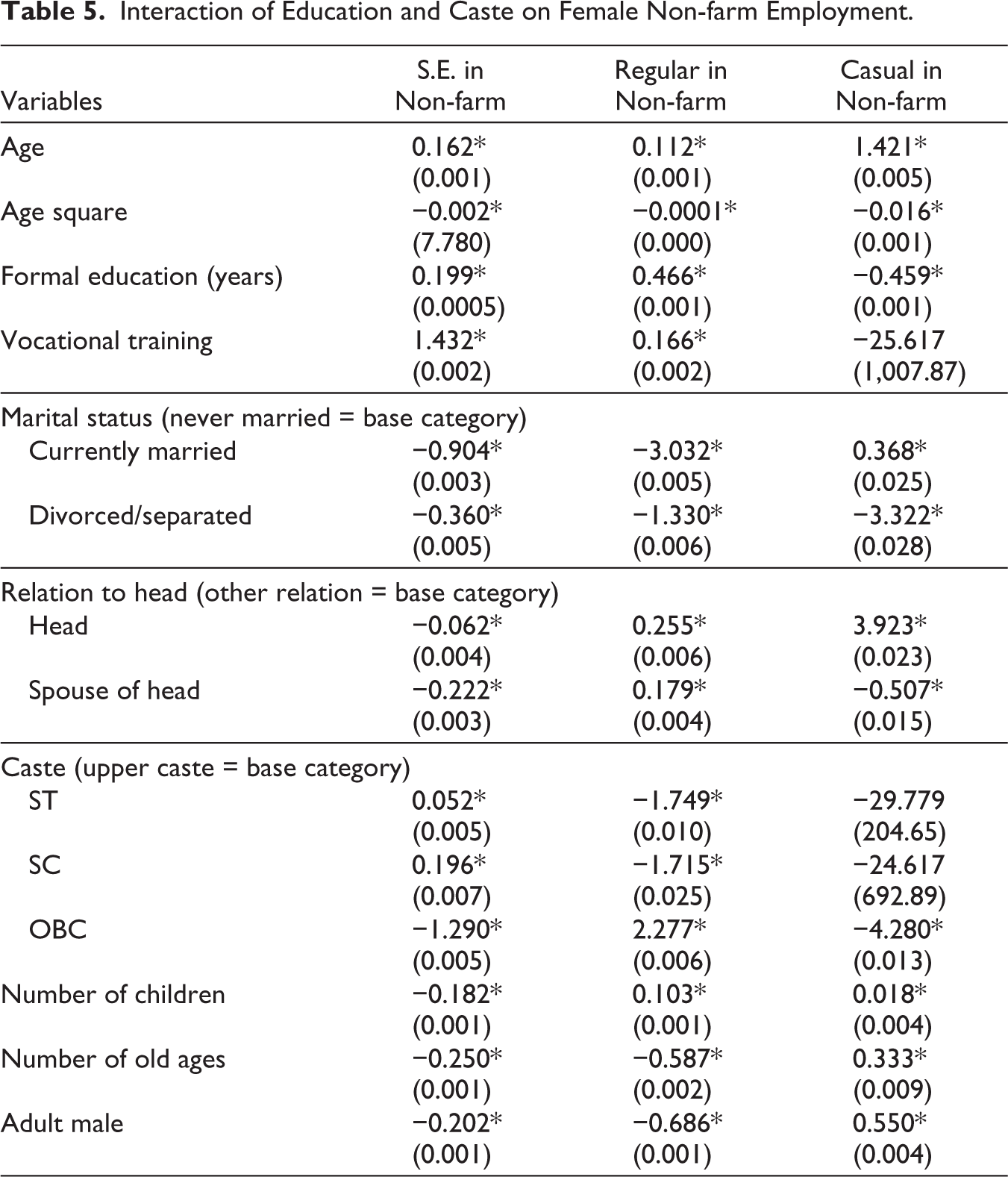
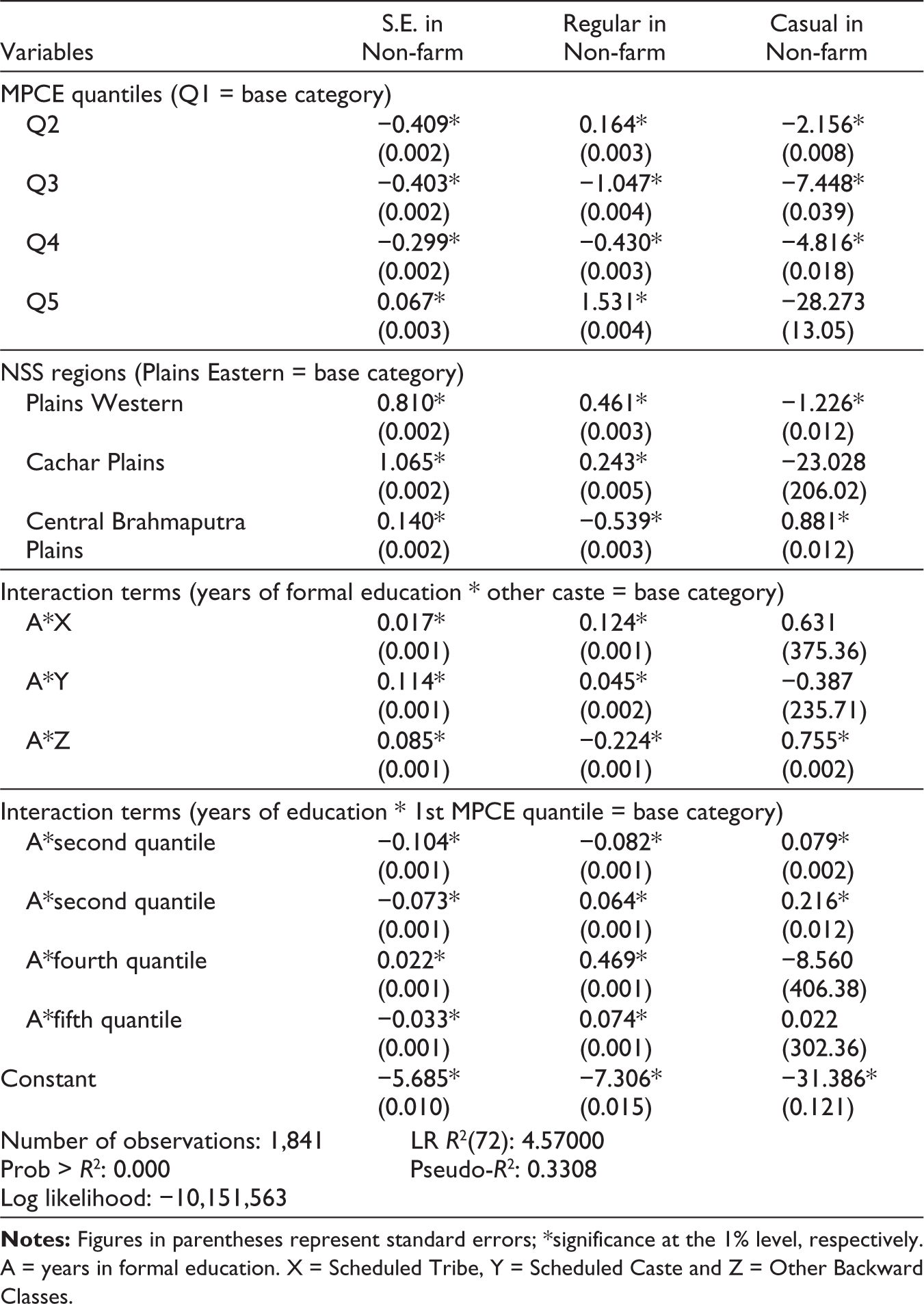
From Table 5, we observe that the interaction of the caste variable with years of formal education shows a positive value of the coefficient for regular non-farm employment. This clearly demonstrates the favourable role of education in enabling women from even the ST and SC communities to participate in non-farm regular activities, which are comparatively the most rewarding and secure jobs. However, without education, these females would have remained confined to agricultural activities. In contrast, educated women from OBC households have a greater likelihood of work in the casual non-farm sector and are less likely to be in regular employment. Education further facilitates women to start any self-employed non-farm activities, irrespective of the caste to which they belong. Even Das and Mahanta (2023) found that low-caste women in the absence of education are likely to engage in construction and trade-related activities.
The interaction of years of formal education with household MPCE demonstrates a dominant role of the substitution effect in the case of regular non-farm employment. Despite belonging to high-income households, females with more years of formal education have a positive probability of working in regular non-farm activities. Their participation in casual employment is also positive if they belong to the second and third quantiles of household MPCE. This finding might imply that women’s opportunities of employment in the non-farm sector are increasingly determined by education, where household wealth might be an added benefit. Lahoti and Swaminathan (2013) also found that educated women from affluent households are highly concentrated in the service sector employment, where jobs are more skill-intensive. This further reflects that educated women from affluent households in rural Assam are less likely to maintain status production and more likely to utilise their skills and capabilities. The fall in status maintenance may also be an after-effect of the pandemic, which might have shifted social norms that define the gendered pattern of labour market participation, as pointed out by Deshpande (2020).
Summary of Findings and Conclusion
Our study is an attempt to examine the various demographic and socio-economic factors that influence the choice of non-farm employment of females in rural Assam. Our multinomial logit regression results demonstrate that although education and vocational training facilitate females to engage in self-employed and regular salaried work, being married, divorced or separated lowers their chances of non-farm participation, which clearly reflects the burden of household responsibilities falling more heavily on married women compared to their unmarried counterparts. We further observe the adverse impact of social group and household income in determining women’s participation in non-farm employment. However, when we interact caste and household MPCE with years of education, we find that education not only facilitates low-caste females to work in regular non-farm employment but also enables those belonging to wealthier households to diversify to various non-farm occupations, thus lowering the burden of household status maintenance.
Our findings suggest that a lack of employment opportunities suitable for females might lower their participation. Also, the existence of socio-cultural norms, particularly for married women, influences their employment decisions negatively. To increase female employment, the expansion of skill training programmes is a crucial requirement. Investment in education is a must for females to raise their human capital level and to compete for high-return non-farm jobs. Furthermore, developed transport and infrastructure facilities that ease the process of communication will significantly raise their labour market participation. Formal sector jobs, such as in services where females are more concentrated, should be made available to enhance their participation.
Footnotes
Declaration of Conflicting Interests
The authors declared no potential conflicts of interest with respect to the research, authorship and/or publication of this article.
Funding
The authors received no financial support for the research, authorship and/or publication of this article.