







Abstract
Food taboos are studied from varied perspectives. Breastfeeding, antenatal, and postnatal practices in most of the cultures have a special place: certain taboos are often attached to them. Breastfeeding has a plethora of positive health outcomes for infant and mother alike. Some of these practices are taboos, like abstention from feeding the newborn with mother’s milk immediately after birth or for some stipulated period. Or restrictions placed on would-be or new mothers from consumption of certain food items. This article shows that breastfeeding is natural, and its benefits accrue to the Koya Dora, while “antenatal” and “postnatal” food taboos are from outside. We conclude that Koya Dora breastfeed their children in harmony and as expected, while the food taboos do occur due to outside influences rather than as one expects would occur due to local cultural environmental reasons.
Introduction
Food taboos are studied by anthropologists from varied perspectives. Breastfeeding, antenatal, and postnatal practices in most of the cultures have a special place: certain taboos are often attached to them. As of now, there is enough documented evidence regarding the central role played by breastfeeding in human societies (Hill & Kaplan, 1999). The evolutionary nature of breastfeeding is also clearly brought out in far-reaching studies (Hamilton, 1968). Breastfeeding has a plethora of positive health outcomes for infant and mother alike (Wiley & Allen, 2009). But it is also recorded that in some communities, there are some practices associated with breastfeeding, which attenuate these positive outcomes. Some of these practices are taboos, like abstention from feeding the newborn with mother’s milk immediately after birth or for some stipulated period. Or restrictions placed on would-be or new mothers from consumption of certain food items.
The foremost concept developed for understanding food taboos is ethnographic enlistment of a series of food items which are prohibited from consumption. The second aspect relates to the group of people or a culture, which prescribes and prohibits from consumption of a specific food item or a set of items. By definition food taboos could be at the entire group or culture level or at clan or lineage level, moving further down to a family level. Such taboos could also have gender specificity or applicability differentiation for various age groups. Therefore, at the beginning of this study, we would like to state that we specifically focus on understanding the food taboos which are practiced by Koya Dora women during their antenatal and postnatal stages of conceiving and practices of breastfeeding the newborn child.
During the childbirth stages and both the antenatal and postnatal stages, there are a set of food taboos which are practiced. The general interpretations of food taboos were cultural analysis, mostly narratives. Early ethnographic and comparative studies were the hallmark of anthropologists’ believing on the influence of culture on food taboos. Later, the focus developed on both symbolic and structural dimensions. Here, in the present study, we focus on food taboos in the context of the environment. Certain functional analyses have been drawn; such ecological interpretations show strong bases of food taboos on the cultural adaptation of the group (see Patnaik, 2007).
The cultural–ecological analyses of food taboos have given additional insights into the existence of certain food taboos playing a role in the conservation of recourses. The arguments between the culture and environment cannot be separated into watertight compartments as far as food taboos are concerned. The present study, while being based on environmental parameters, does take into consideration the cultural aspects also. Here, we wish to state that the cultural aspects help us to understand the “change process,” which occurs among the tribals. An ethnographically based environmental analysis is undertaken of food taboos, which are being practiced by Koya Dora women during antenatal and postnatal periods. The practice of breastfeeding is also examined in depth. The article can be broadly divided into two parts. In the first part, we present the breastfeeding practices among Koya Dora women. In the second part of this article, an attempt is made to understand certain food taboos, including prescribing of special foods.
Koya Dora Environment
Koya Dora tribe is one of the largest groups of tribals found in the districts of Khammam, West and East Godavari districts of Andhra Pradesh. Some of them are even found in the district of Visakhapatnam. Koya Dora have a close relationship with Gond tribes. Their culture patterns are more or less similar. Both phratry and clan systems are similar. They use a dialect of a Dravidian language. It is interesting to point out that Gond and Koya Dora tribes do not live in the same area—they have a similar niche adaptation; thus, they avoid recourse competition. Like Gond can be separated as Maria Gond, Raj Gond, and Bison Horn Gond, Koya can also be separated as Lingadhari Koya, Gumpa Koya, Gutta Koya, and Koya Dora. The existence of these subdivisions were anthropologically examined by Elwin, Ayappan, and many other scholars (Nani Babu, 2006). But there appears to be very limited agreement regarding subdivisions among the scholars. The present study, which was undertaken in Gangavaram Mandal of East Godavari District of Andhra Pradesh, comprised Koya Dora only; this Mandal is largely populated by Koya Dora but also have Konda Reddies. The tribe practice dryland agriculture with minimal irrigation. The major crop in this area is dry paddy, very similar to what is practiced by other non-tribal communities belonging to the lower hierarchy of caste. The dependence on forest produce is observed in the areas that are adjoining the forests. In the socioreligious aspects, the Koya Dora of the region do practice “kotha pandugas,” which are new eating ceremonies, and the cycle is dependent on the seasonal variations. Koya Dora are found in the forests and semi-forest areas of the Mandal.
Koya Dora tribe is found in East Godavari, West Godavari, and Khammam districts. The environmental condition of the region is hilly with low-level slopes in the study area. The forest is designated as southern moist deciduous riverine forests found along the banks of Godavari River and other hill streams in a narrow belt. The most common trees in these forests are Terminalia arjuna, Anogeissus acuminate, Mitragyna parviflora, Tamarindus indica, Bombax ceiba, Derris indica (Pongamia pinnata), Barringtonia acutangula, Crataeva nurvala, Alangium chinense, Butea monosperma, Strychnos nux-vomica, etc. In the rocky and sandy banks of Godavari, liable for submersion, shrubs such as Homonoia riparia, Tamarix ericoides, Rotula aquatica, Syzigium heyneanum are common. Pedalium murex, Indigofera linnaei, Euphorbia dracunculoides, etc., are the common herbs. Brachiaria distachya and Digitaria ciliaris are some of the grasses found here.
Part 1
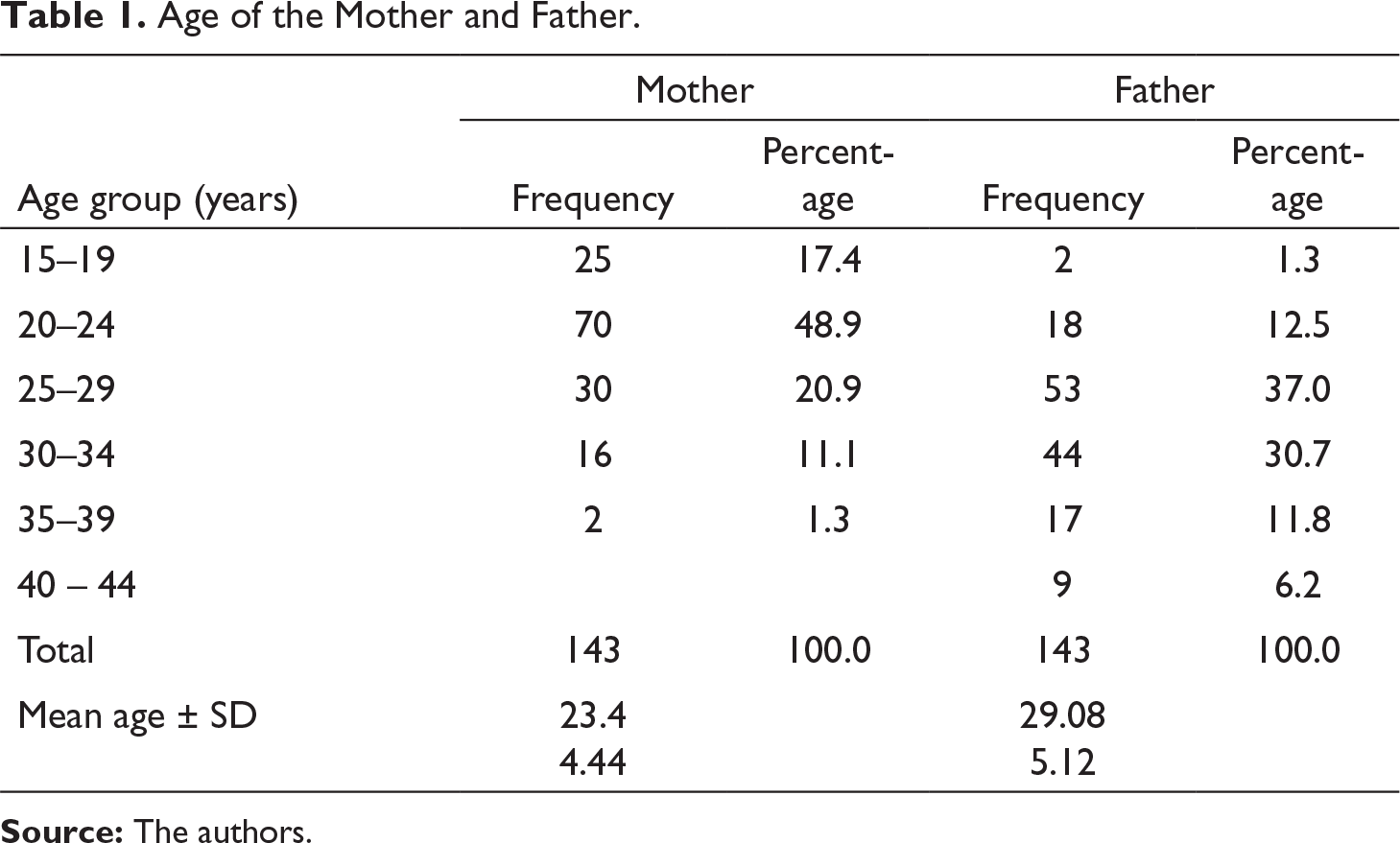
Age of the Mother and Father.
Source: The authors.
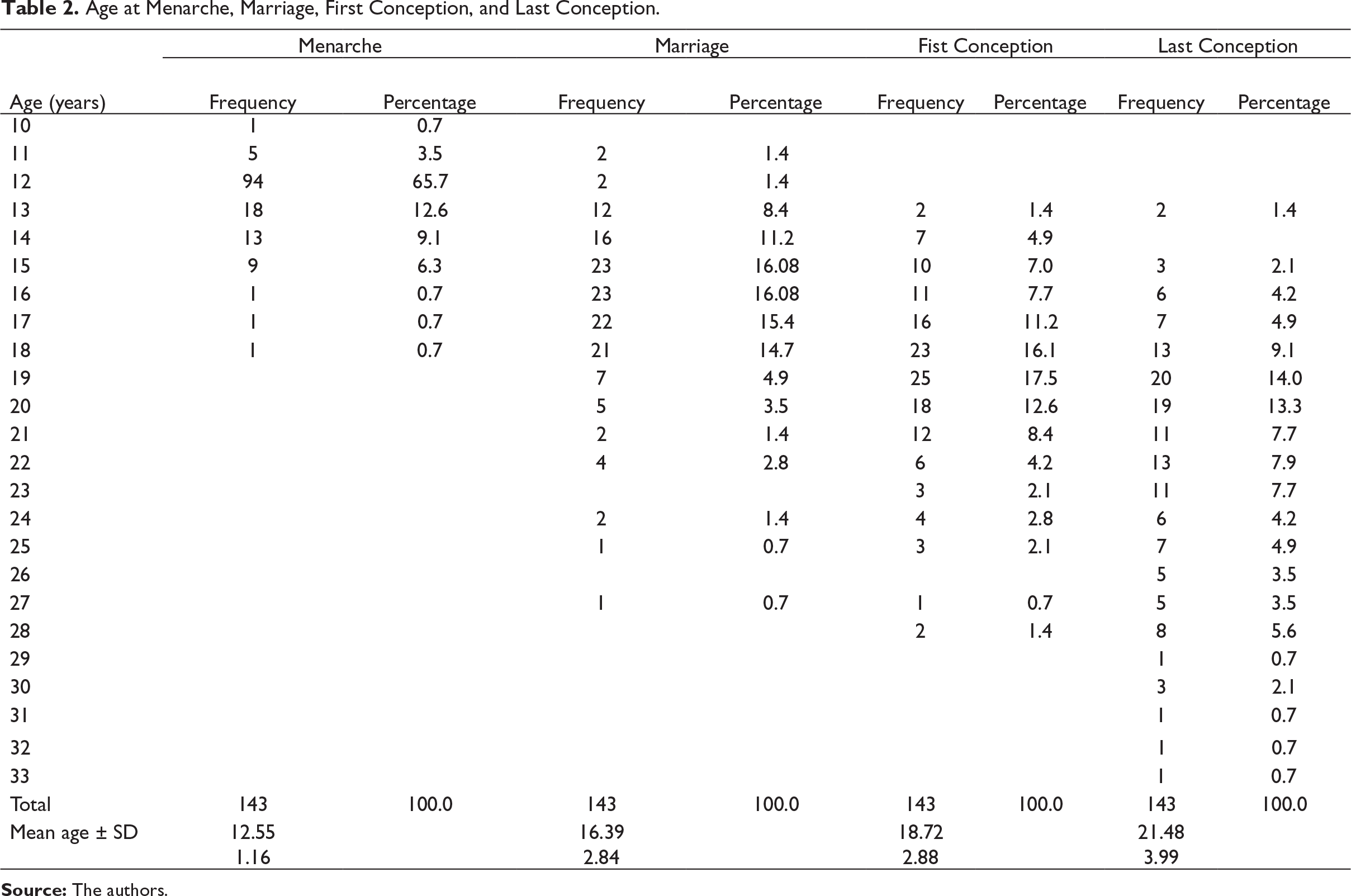
Age at Menarche, Marriage, First Conception, and Last Conception.
Source: The authors.
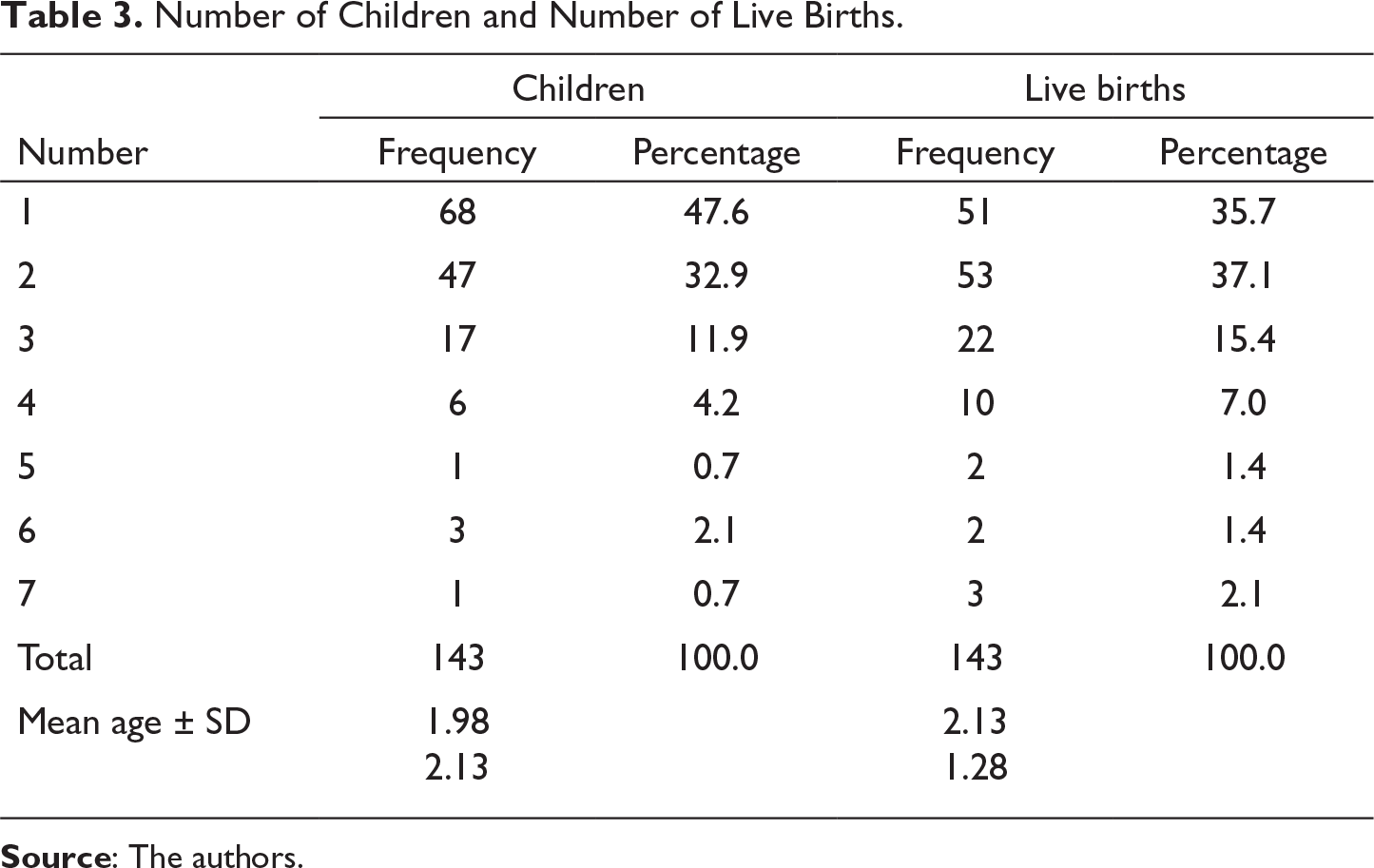
Number of Children and Number of Live Births.
Source: The authors.
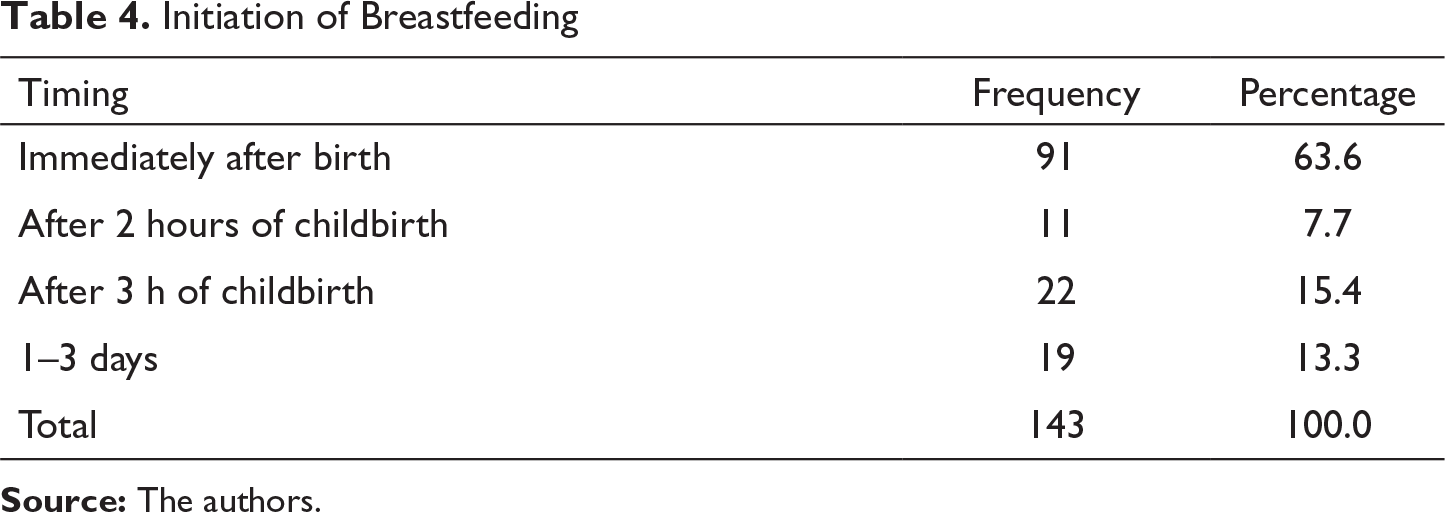
Initiation of Breastfeeding
Source: The authors.
Pre-lactating Food.
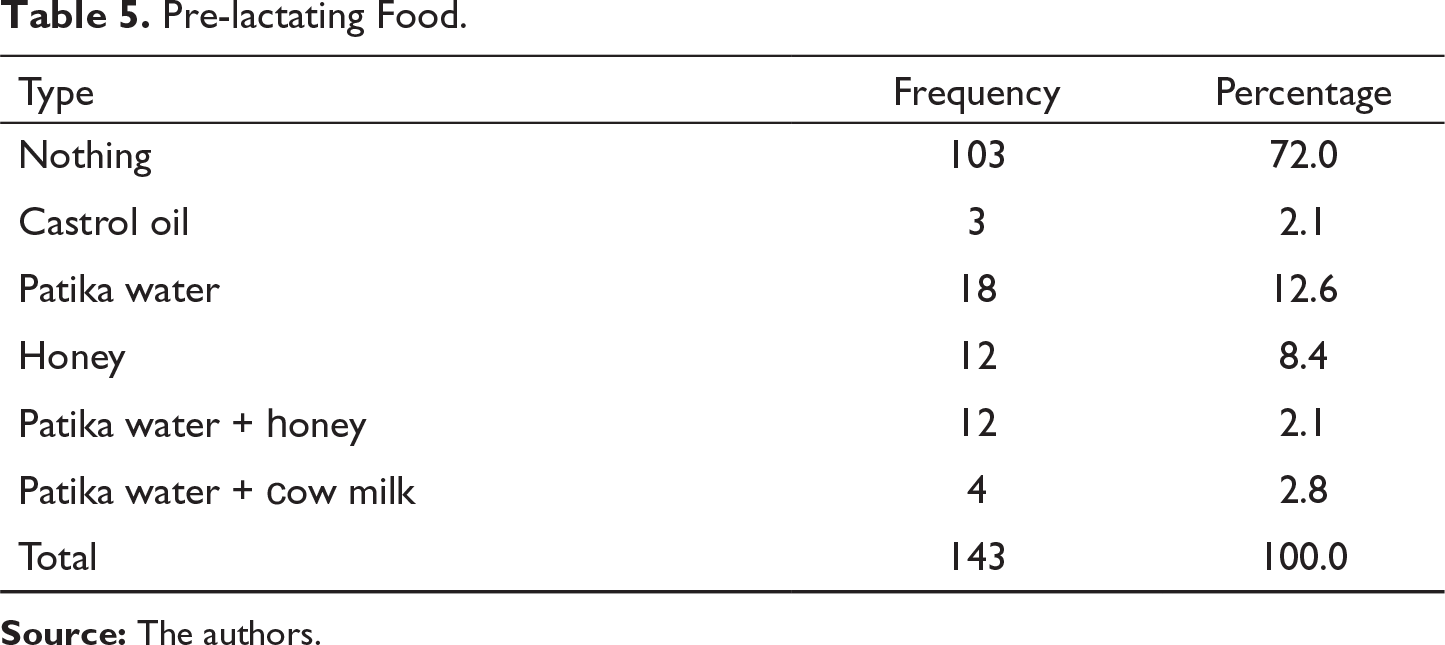
Source: The authors.
Table 6 presents one of the most important practices followed by Koya Dora women. It is seen that over 78% of the Koya Dora women do not squeeze out the colostrums, thus the newborn baby is in a position to intake the most vital component of the breast milk, which is available immediately after the child’s birth. In the Koya Dora society, the lactating mothers continue to feed the child with breast milk for a considerably long period of time. Table 7 shows this reality. This practice is further aided by introducing complementary feeding from quite an early age of the child. This can be seen in Table 8. In the summary from the information from these tables, we see that breastfeeding with balanced complementary feeding is well practiced in this society.
Squeezing Out Colostrums.
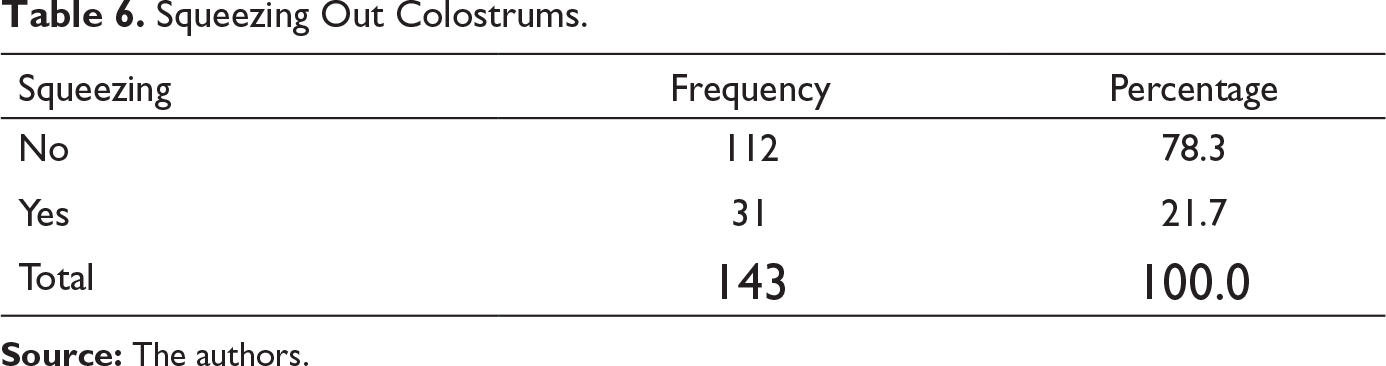
Source: The authors.
Duration of Lactation.
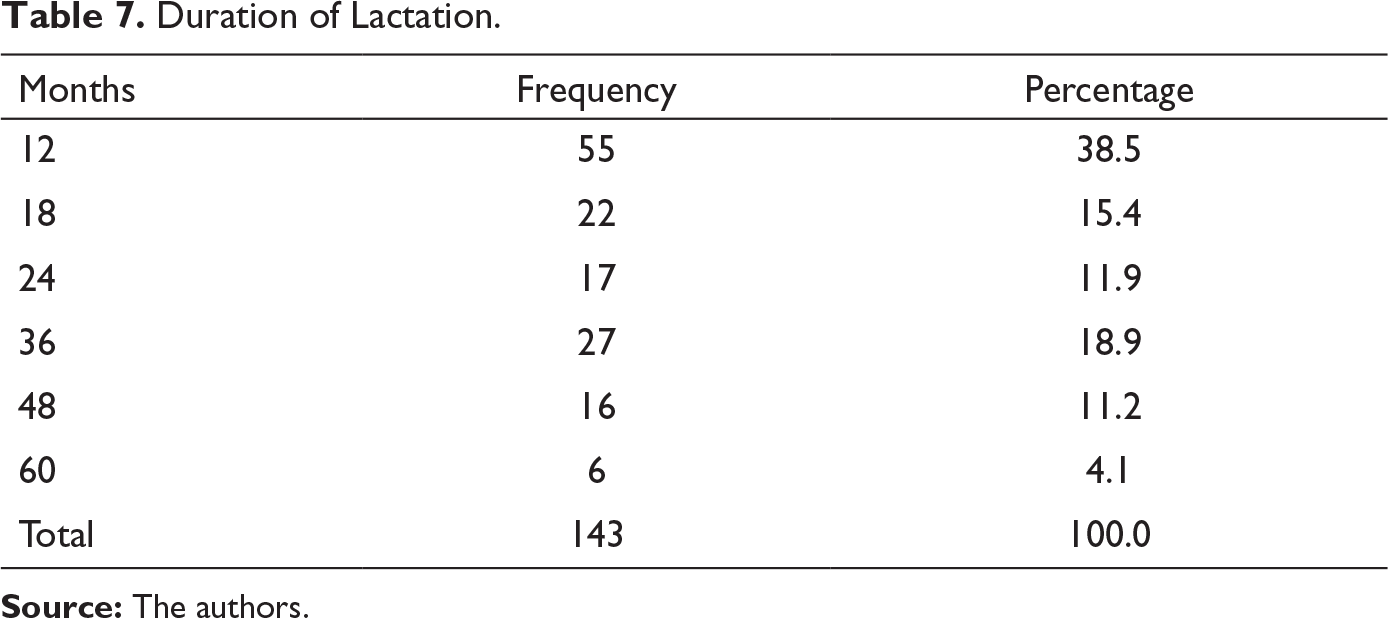
Source: The authors.
Complementary Feeding.
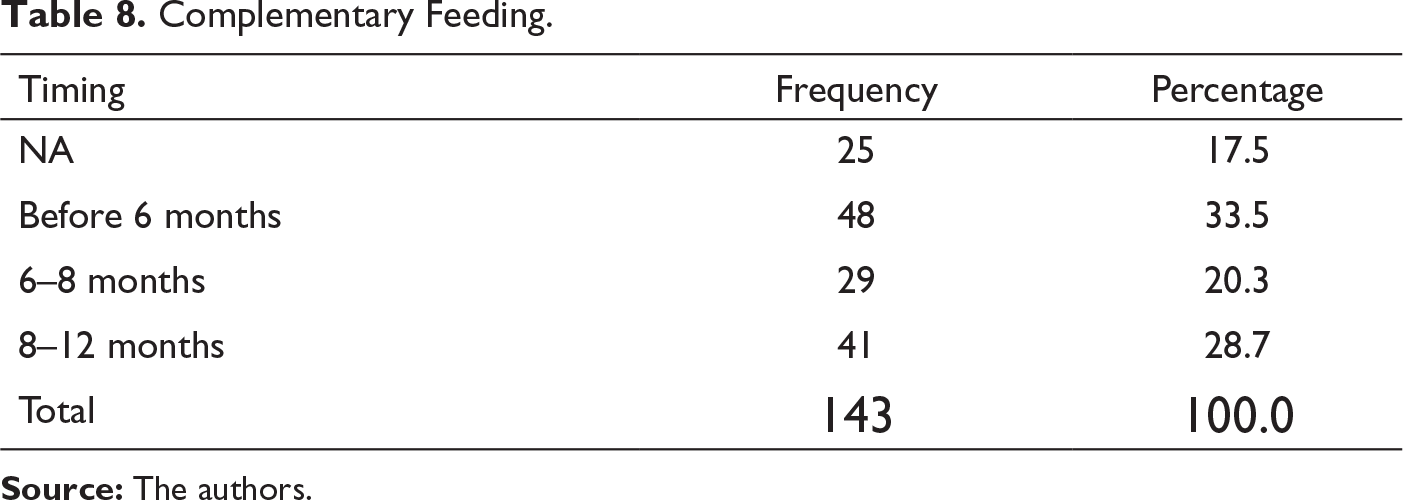
Source: The authors.
Part 2
In this part of the article, we encounter a rather different approach adopted by Koya Dora women during their antenatal and postnatal food habits and certain food taboos, which appear to be a part of acculturation process rather than belonging to the core Koya Dora culture. This inference can be seen Tables 9 and 10.
Antenatal Food Taboos Among Koya Dora Women.
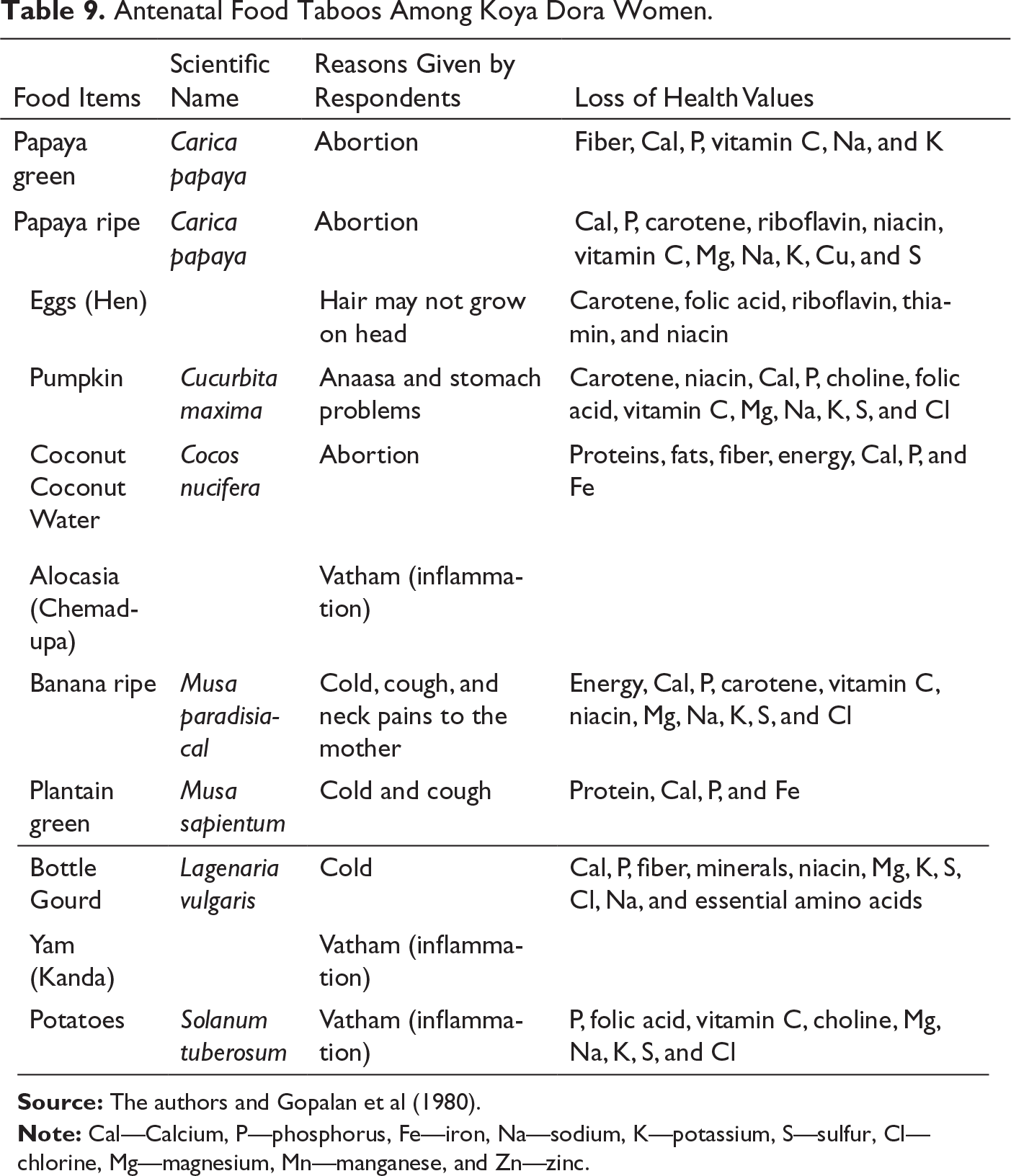
Source: The authors and Gopalan et al (1980).
Note: Cal—Calcium, P—phosphorus, Fe—iron, Na—sodium, K—potassium, S—sulfur, Cl—chlorine, Mg—magnesium, Mn—manganese, and Zn—zinc.
Postnatal Food Taboos Among Koya Dora Women.
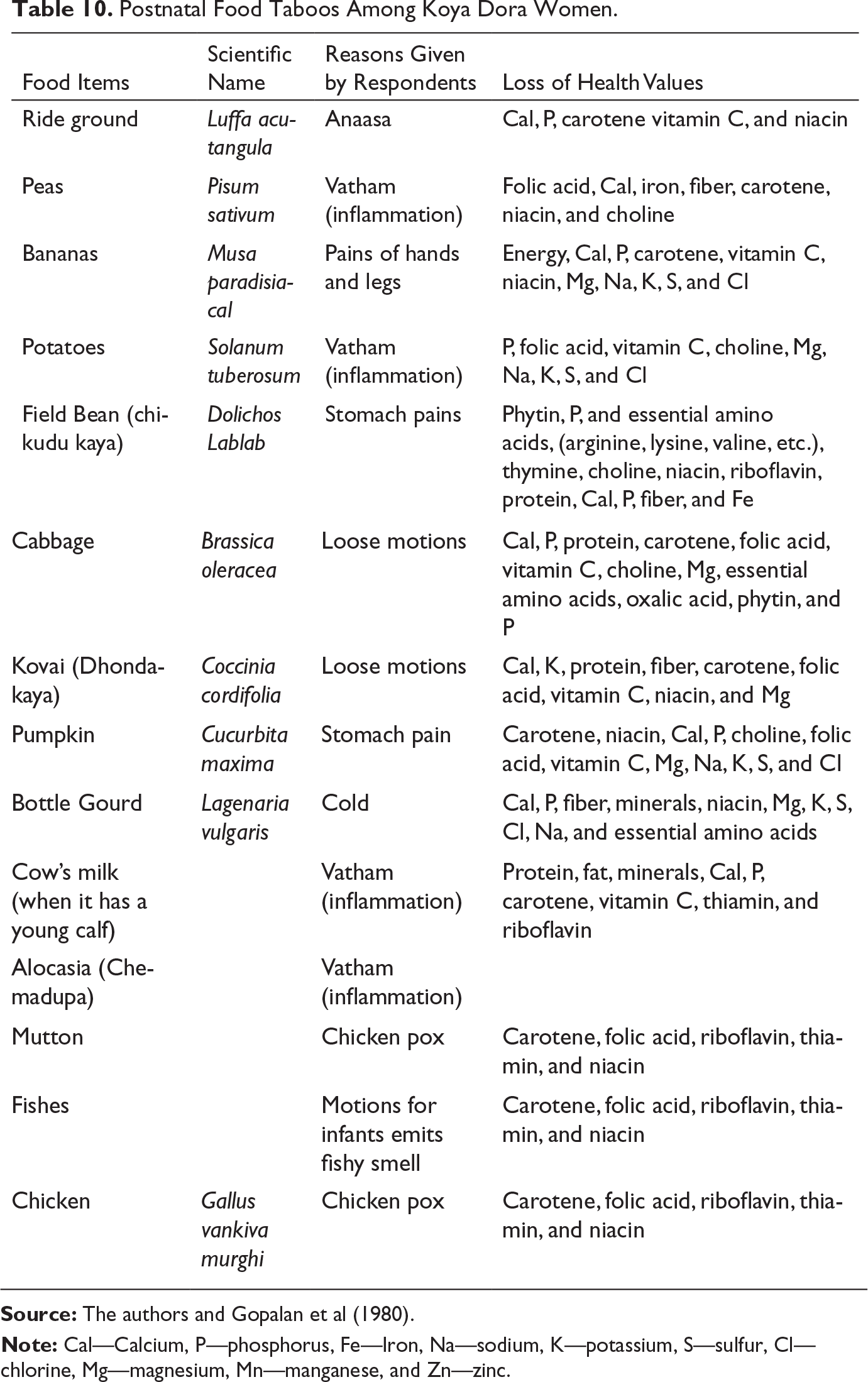
Source: The authors and Gopalan et al (1980).
Note: Cal—Calcium, P—phosphorus, Fe—Iron, Na—sodium, K—potassium, S—sulfur, Cl—chlorine, Mg—magnesium, Mn—manganese, and Zn—zinc.
Conclusion
The outside influence could be the untrained health worker’s attitude such as that of “Anganwadi” staff or migrant midwives belonging to villages in the plains. One of the ill effects of such taboos can be tentatively inferred as causing loss of nutritive intake of the women during antenatal and postnatal phases. We would like to conclude, here, that these food taboos are rather fictive in nature as they are nonlocal in origin. Therefore, they could be just attitudinal taboos of non-tribal communities. These taboos are easy to practice as their utilization significance is of no cultural importance from Koya Dora. We feel that those traits have been included due to acculturation. In the earlier part of the article, we saw that breastfeeding was natural and its benefits accrued to the Koya Dora, while we cannot say that about “antenatal” and “postnatal” food habits. Thus, we conclude that Koya Dora breastfeed their children in harmony and as expected, while the food taboos do occur due to outside influences rather than, as one expects, would occur due to local cultural environmental reasons.
Footnotes
Declaration of Conflicting Interests
Funding
The authors received no financial support for the research, authorship, and/or publication of this article.