






Abstract
This study examines the role of parks as age-friendly open spaces in Guwahati city, Assam, India, through an analysis of 12 urban parks. Using mixed methods of inquiry, the research explores how people of different age cohorts—elderly (60 years and above), middle aged (30–59), youth (15–29), and children (0–14) utilize and perceive these spaces and whether parks contribute to achieve Sustainable Development Goals 3 (good health and well-being) and 11 (making cities and human settlements inclusive, safe, resilient, and sustainable) through exercise promotion, stress reduction, and community engagement. The findings reveal that while parks serve as vital community spaces, their effectiveness varies significantly based on safety features, accessibility, maintenance, and available amenities. Children prioritize safe play areas and interactive features, young adults value esthetic elements and social engagement, while older adults mostly emphasize the need for essential amenities like walking paths, ergonomic seating, drinking water filters, and toilets. The study identifies critical gaps regarding basic amenities, security measures, and inclusive design elements preferable for different age groups and specially-abled people. The study concludes that transforming parks into truly age-friendly spaces requires regular maintenance, enhanced safety measures, and thoughtful design that promotes intergenerational engagement while accommodating diverse user needs.
Keywords
Introduction
Importance of Outdoor Spaces
Outdoor spaces play an important role in enhancing community well-being and health. Parks, gardens, and public recreational spaces provide an environment for physical activity, social interaction, and mental rejuvenation. A Netflix series, “Live to 100: Secrets of the Blue Zones (2023)” by Dan Buettner, has highlighted the importance of outdoor spaces for the elderly (Lozada-Martinez & Anaya, 2024). Singapore has developed extensive green spaces, allotting around 10% of its land area for parks and nature reserves, ensuring easy access to outdoor areas for physical activity, social interaction, and relaxation, with the aim of transforming into a “Garden city” (Ministry of Foreign Affairs, Government of Singapore, 2018). The health benefits of outdoor spaces might be facilitated by physical activity, which impacts the mental and physical aspects of people, as well as social interactions and interpersonal engagement with other people in these settings (Bowler et al., 2010). Spaces like parks, designed with varied amenities, such as walking trails, playgrounds, and seating areas, can accommodate the needs of adults (Moran et al., 2014). Triguero-Mas et al. (2015) found in their study in Spain that increased surrounding greenness significantly reduces the risk of poor general health, depression, and anxiety. Green space exposure is associated with significant reductions in physiological stress markers, such as salivary cortisol and blood pressure (Twohig-Benette & Jones, 2018). A 31% reduced risk of all-cause mortality among individuals with higher green space exposure was demonstrated by them. Parks, forests, and natural places with greenery have demonstrated a capacity to lower stress, anxiety, and depression levels (Beyer et al., 2014; Johnson et al., 2018). Furthermore, these settings can enhance mood, boost focus, and foster healthy social interactions (Ulset et al., 2017). Physical activity is positively related to mental health among adolescents, and it mediates the positive effect of outdoor time on mental health (Bélanger et al., 2019). Aliyas (2019) found in her study among aged people in Bandar Abbas city of Iran, that access to parks was linked to both physical and mental health. Participants with cardiovascular conditions tended to visit parks more regularly, whereas those with hypertension visited less frequently. The duration of time spent in parks, rather than the number of visitation, was positively correlated with overall health status. Physical activity is positively related to mental health among adolescents, and it mediates the positive effect of outdoor time on mental health (Bélanger et al., 2019).
Age-friendly Parks in India
As one of the components of urban infrastructure, parks play an important role in catering to the cognitive and physical well-being and socialization of different groups of people (Gaikwad & Shinde, 2018). Agarwal et al. (2021) found that parks in Lucknow served as critical spaces for children’s cognitive and physical development, with younger children prioritizing biotic elements like trees, water bodies, and flowers, while older children focused more on play amenities, social interaction, and adventure sports. The study also highlighted that safety and security are significant concerns. In India, the concept of age-friendly parks is slowly gaining traction, particularly in major urban centers, such as Pune, Bhubaneswar, Udaipur, and others, with the expansion of open spaces and the construction of sensory parks, garden corners, and parks specifically designed for specific age groups and people with different abilities (NIUA, 2023).
Conceptual and Theoretical Framework
The World Health Organization Age-friendly Cities Framework
This study is theoretically grounded in the age-friendly cities framework developed by the World Health Organization (WHO), which has become the globally recognized standard for evaluating how well urban environments support the health, well-being, and active participation of people of all ages. The framework identifies eight interconnected domains that a city must address to be considered genuinely age-friendly: outdoor spaces/buildings, transportation, housing, social participation, respect and inclusion, civic participation and employment, communication and information, and community support and health services (WHO, 2007). Of these, the domain of outdoor spaces and buildings is most directly relevant to the study, as it explicitly includes parks as core components of an age-friendly city.
Within this domain, the WHO framework sets out a detailed set of criteria for outdoor public spaces. These spaces should be clean, well-maintained, and pleasant; free from hazards such as uneven surfaces, poor lighting, and structural decay; accessible to people with varying physical abilities; equipped with adequate seating and rest facilities; provided with functional toilets and drinking water; protected from noise and air pollution; sufficiently green; and designed to promote physical activity, social interaction, and intergenerational engagement. Importantly, the framework views these criteria as interconnected rather than separate, meaning that the absence of even one can undermine the overall age-friendliness of a space (WHO, 2007).
The framework is also intergenerational by design. While it was originally focused on older adults, subsequent work, particularly UNICEF’s Child-friendly Cities initiative (UNICEF, 2018), expanded its scope to include children and young people. Rather than promoting age-segregated spaces, it advocates for inclusive environments where people of all ages can participate, interact, and feel welcome, which is directly relevant to this study.
Sustainable Development Goals 3 and 11
The study is additionally situated within the normative framework of the United Nations Sustainable Development Goals (SDGs), specifically SDG 3 (good health and well-being) and SDG 11 (sustainable cities and communities) (Department of Economic and Social Affairs, United Nations). These two goals are selected not arbitrarily, but because they together capture the dual purpose that age-friendly parks are designed to serve; the promotion of individual health and well-being through access to safe, green, and physically enabling outdoor spaces and the creation of inclusive, safe, resilient, and sustainable urban settlements in which all residents, regardless of age, ability, or socio-economic status, can participate fully in public life.
SDG 3 calls for ensuring healthy lives and promoting well-being for all at all ages, with specific targets relating to the reduction of non-communicable diseases, the promotion of mental health, and the creation of environments that support physical activity and healthy lifestyles across the lifespan. Urban parks, when well-designed and maintained, can function as significant, cost-effective, and widely accessible mechanisms through which cities can contribute to these targets (Gaikwad & Shinde, 2018; Lorenzo-Sáez et al., 2021; Nieuwenhuijsen, 2021; Wolch et al., 2014). SDG 11 calls for making cities and human settlements inclusive, safe, resilient, and sustainable, with specific targets relating to the provision of safe, inclusive, and accessible green and public spaces, particularly for women, children, older persons, and persons with disabilities. This goal establishes inclusivity and safety as non-negotiable standards against which public spaces must be evaluated, not as aspirational extras, but as fundamental rights of urban citizenship (Buffel et al., 2012; Facer et al., 2015; Wolch et al., 2014).
Operationalization of Frameworks into Analytical Indicators
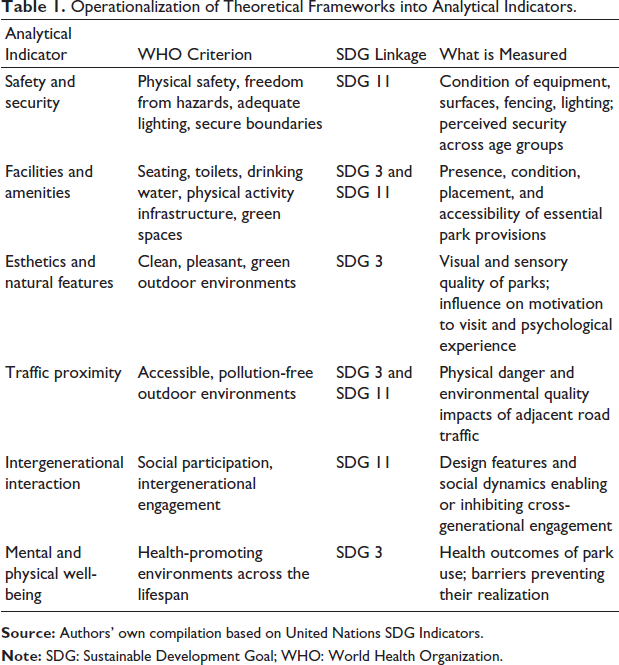
The translation of these frameworks into concrete analytical indicators required systematically converting broad conceptual standards into specific, observable, and evaluable dimensions of park infrastructure and experience, guided by three considerations: the WHO outdoor spaces criteria, SDGs 3 and 11, and the existing empirical literature on age-friendly park design. These indicators are summarised in Table 1.
Safety and security extend beyond objective physical conditions—surfaces, equipment, fencing, and lighting, to encompass subjective perceived safety, directly operationalizing SDG 11’s safe public spaces requirement. Facilities and amenities derive from WHO criteria on seating, toilets, drinking water, and activity infrastructure, supporting SDG 3 by enabling health-promoting activity and SDG 11 by ensuring inclusive usability. Esthetics and natural features are grounded in the WHO criterion of clean, pleasant, green environments, and existing literature on natural environment exposure benefits, supporting SDG 3’s mental health targets. Traffic proximity, absent from the WHO framework explicitly, was included based on consistent empirical evidence identifying it as a critical determinant of park accessibility and environmental quality for elderly visitors, families, and non-motorized users, relevant to both SDGs. Intergenerational interaction was operationalized from WHO social participation principles and UNICEF’s child-friendly cities framework, supporting SDG 11’s inclusivity requirements and SDG 3’s recognition of social connectedness as a health determinant. Mental and physical well-being served as the overarching outcome indicator, anchored in SDG 3 and park-related health benefits across the lifespan, as different studies have shown (Aliyas, 2019; Bowler et al., 2010; Gaikwad & Shinde, 2018; Hartig et al., 2014; Kabisch et al., 2021; Triguero-Mas et al., 2015).
Operationalization of Theoretical Frameworks into Analytical Indicators.
Definition of Key Concepts
Three concepts are central to this study and require explicit definition before the analysis proceeds, both to ensure terminological clarity throughout the article and to establish the analytical precision expected of academic inquiry into urban infrastructure and public space.
Age-friendly infrastructure, as conceptualized in this study, denotes the physical structures, design features, spatial arrangements, and amenities within urban parks that collectively enable people across all age groups, from children to older adults, to access and benefit from park spaces safely, comfortably, and equitably. Rather than catering to a single cohort, such infrastructure simultaneously accommodates the diverse and sometimes divergent needs of all age groups, integrating provisions for physical activity, rest, social interaction, safety, and accessibility without privileging any one group over others (Moran et al., 2014; WHO, 2007).
Inclusivity, as operationalized in this study, denotes a park’s capacity to be genuinely accessible, welcoming, and usable by all urban residents, regardless of age, gender, physical ability, or socio-economic background. An inclusive park can satisfy four conditions: it can be physically reached without prohibitive barriers; its internal facilities accommodate users of all ages and abilities without marginalizing design features; its social atmosphere ensures all age groups feel welcome; and its functioning serves a demographically diverse population. Inclusivity is therefore simultaneously a physical infrastructure condition and a social environmental condition.
Intergenerational interaction refers to meaningful social contact across age cohorts—children, youth, middle-aged adults, and older adults, within park settings, encompassing shared activities, conversation, mutual assistance, collaborative play, and cultural exchange. Rather than assuming such interaction is automatically positive or inevitable when age groups share space, this study recognizes it as shaped by physical design, social, cultural, and programmatic factors. It is therefore evaluated not as simply present or absent, but as enabled or inhibited by specific design and management choices.
Objectives of This Article
The purpose of this article is to explore the significance of urban parks as age-friendly open spaces and their utility as places providing opportunities for recreation, social interaction, physical activity, and mental relaxation across various age groups—elderly, youth, middle aged, and children, and specially-abled people, with a focus on their usage and perceptions among people within the city of Guwahati, Assam, India. The primary objectives of this study are to analyze patterns of park visitation, assess the accessibility, safety, and inclusivity of various park features, and identify existing gaps in infrastructure and amenities that may hinder their ability to serve as effective age-friendly spaces. By employing a combination of surveys, semi-structured interviews, and observational methods across 12 parks, the research aims to provide detailed insights into how these public spaces endeavor to promote intergenerational interaction, enhance mental and physical health, and cultivate a stronger sense of community among users from different age groups.
City Description
Guwahati is the capital city of the state of Assam, with a total area of 216.79 sq km having a population of around a million, with a population density of 2,695.43 per sq km (as per Guwahati Metropolitan Development Authority (GMDA), Guwahati Development Authority, 2025 data). It is administered by the Guwahati Municipal Corporation (GMC), and the GMDA is in charge of ensuring the planned formulation and execution of schemes for the development of the GMC metropolitan area. Spanning 60 municipal wards (GMC Final Draft of Delimitation, 2024), Guwahati has mapped a total of 1.099 sq km of open spaces within the GMC boundaries (Atlas of Open Spaces, Guwahati, ASDMA, 2016).
Methodology: Selection of the Parks and Data Collection
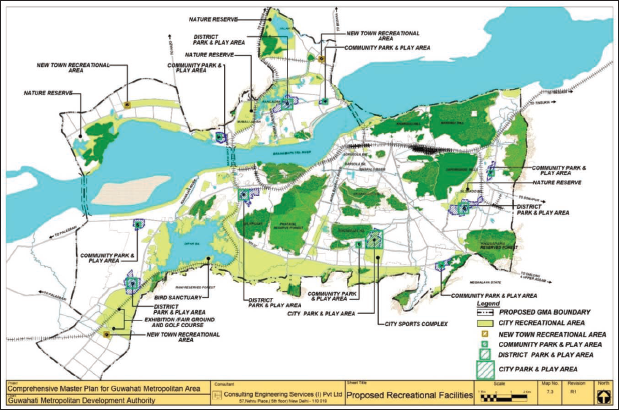
We selected a total of 12 parks in different locations of the city (Map 1) , with different sizes, constructed by the GMDA, the Assam Tourism Department, the GMC, and the Railway Department. The parks are studied for their value in imparting cognitive and active well-being and socialization prospects for people of all ages, groups, and abilities.
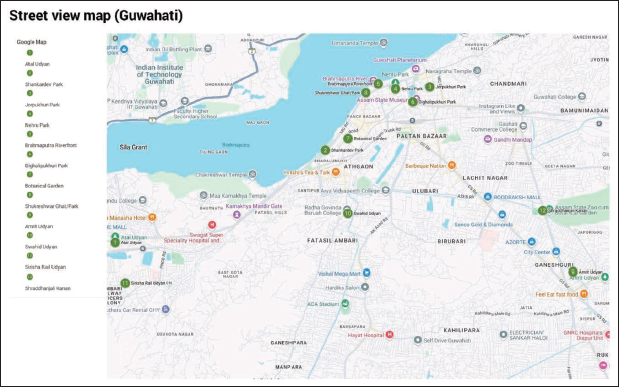
The parks where the study was conducted are Atal Udyan, Sankardev Udyan, Jorpukhuri Park, Nehru Park, Shraddhanjali Kanan, Brahmaputra Riverfront Park, Dighalipukhuri Park, Botanical Garden Park, Sukreshwar Ghat Park, Amrit Udyan, Swahid Udyan, and Sirisha Rail Udyan within the city of Guwahati (Map 2), which were studied during September to December, 2025.
A Brief Description of the Studied Parks is Given Below
Summary of Key Characteristics of the 12 Studied Parks in Guwahati.
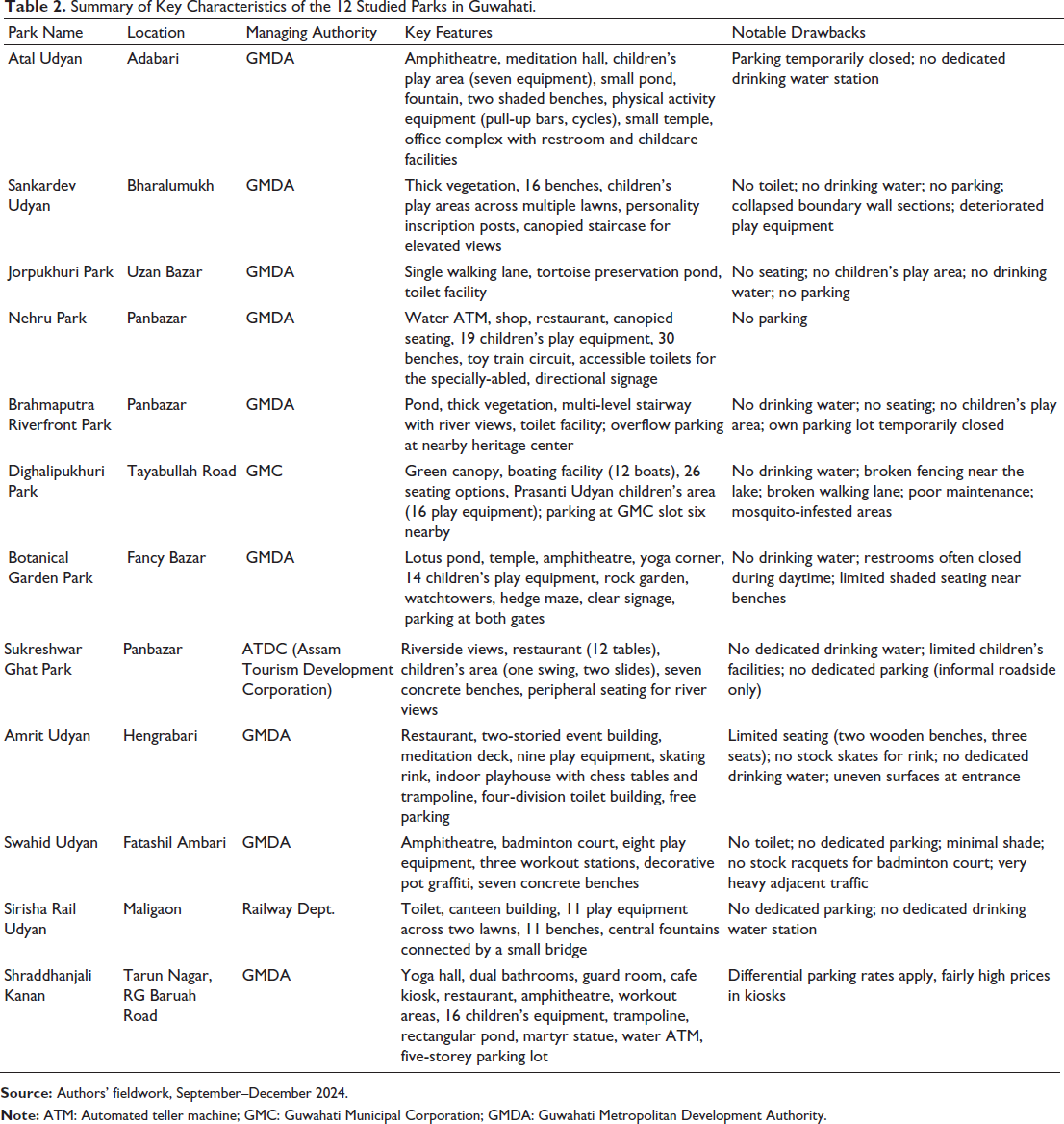
Across the 12 parks, several structural patterns are immediately apparent (key characteristics summarised in Table 2). First, there is significant variation in the comprehensiveness of facilities provided, with GMDA-managed parks—particularly Nehru Park, Atal Udyan, Shraddhanjali Kanan, and Amrit Udyan—generally offering a broader range of amenities than parks managed by other authorities; however, facilities and maintenance differ to a significant degree in the GMDA-managed parks too. Second, the absence of basic provisions—particularly toilets, drinking water, and seating, is a recurring deficit across multiple parks, regardless of size or managing authority, suggesting a systemic gap in baseline standards. Third, parking availability varies significantly, with some parks offering no parking at all and Shraddhanjali Kanan offering dedicated multistorey facilities, a disparity with direct implications for accessibility. Fourth, while most parks offer some children’s play equipment, the condition, variety, and safety of this equipment vary considerably, and several parks lack the complementary provisions that transform equipment into a genuinely child-friendly environment. These patterns establish the infrastructural context within which the findings on age-group-specific park use are situated and interpreted.
Research Design
This study employs a mixed-methods research design, integrating quantitative survey data with qualitative insights from 48 semi-structured interviews and systematic field observations. The mixed-methods approach was deliberately chosen because understanding how urban parks function as age-friendly spaces requires two complementary types of knowledge, first, a structured, measurable account of people visiting parks, how frequently and what they do—best captured through a standardized survey; and second, a contextually rich account of what park users feel, prefer, and desire—which requires the depth and flexibility of qualitative inquiry. The integration of both allows findings to be mutually reinforcing. Fieldwork was conducted between September and December 2024 across 12 selected urban parks in Guwahati.
Sampling Strategy and Survey Administration
A structured survey was conducted among 177 park visitors across the 12 parks using purposive sampling guided by the age cohort categories as provided by the WHO. Purposive sampling ensured meaningful representation across the four age cohorts central to this study: children (0–14), youth (15–29), middle-aged adults (30–59), and older adults (60+), since leaving sample composition to chance risked underrepresenting groups such as the elderly, who visit parks less frequently and at specific times. Within each cohort, participant selection was based on their presence during observation periods.
Inclusion criteria required that respondents be physically present within the park and engaged in park use activities, belong to a defined age cohort, and provide informed consent, or, for minors, have an accompanying parent or guardian to provide consent. Exclusion criteria covered people who were passing and not engaged in using park facilities, park staff, and anyone unable or unwilling to engage comfortably with the study survey schedule. To minimize temporal sampling bias, data collection was distributed across early morning, afternoon, and evening sessions on both weekdays and weekends, ensuring representation of the full range of park users across different demographic groups. The survey collected data on age, gender, visit frequency, distance travelled, mode of transport, duration of stay, and primary activities. Visitor counts were cross-referenced with park entry registers wherever available, though several parks had unreliable or non-digitized registers, which are acknowledged as a limitation.
Semi-structured Interviews and Field Observations
Semi-structured interviews were conducted with park visitors, management personnel, and security staff across the 12 parks. Participants were drawn from willing survey respondents and visitors encountered during observations, while staff were interviewed separately to obtain an operational perspective on management challenges and visitor behavior patterns. The interview guide was structured around thematic indicators derived from the WHO Age-friendly Cities framework and the existing literature on safety and security, facilities and amenities, esthetics and natural features, traffic proximity, intergenerational interaction, and mental and physical well-being. Each indicator was covered through open-ended anchor questions with flexible follow-up probes, allowing consistent thematic coverage while preserving the freedom to explore analytically important territory that emerged organically during conversations. Audio recordings were made where consent was given and transcribed verbatim; detailed field notes were taken where recording was not feasible.
Systematic observations were conducted across all 12 parks during multiple visits at varied times of the day and across weekdays and weekends throughout the study period. Observations served two functions: documenting the observable physical characteristics of each park independently of respondent accounts and observing actual visitor behavior by age group in naturalistic conditions. A structured checklist covered equipment condition, surface quality, seating placement, amenity availability, lighting adequacy, boundary integrity, security staff presence, and signage. Beyond the checklist, narrative field notes captured social and behavioral patterns—elderly adults gathering in shaded areas in the morning, young people occupying esthetically appealing spaces in the afternoon, and children filling play areas in the evening—as well as avoided zones, underused infrastructure, and moments of intergenerational friction or engagement. Observational data were triangulated with survey and interview findings throughout the analysis, strengthening the reliability of the conclusions by grounding them in multiple independent streams of evidence.
Thematic Analysis
Qualitative data were analyzed using thematic analysis following Braun and Clarke’s (2006) six-phase framework. Thematic analysis was selected because this study works with a partially pre-defined framework of six indicators drawn from the literature, while remaining open to patterns that complicate or extend those indicators. The study’s concern is with experiential and perceptual content.
The six phases were applied as follows. Phase 1 involved repeated full readings of all transcripts and field notes before any coding began, building holistic familiarity with the dataset and generating preliminary marginal annotations. Phase 2 involved initial open coding, in which transcripts were coded line by line using descriptive labels close to the data language—for example, “gap in boundary fencing—proximity to water—fall risk—elderly female” under safety, or “absence of seating—knee pain—early departure—elderly” under amenities. Phase 3 involved searching for themes by grouping related codes into candidate themes aligned with the six indicators—for instance, codes relating to broken equipment, poor lighting, and inadequate fencing clustered under safety and security, while codes relating to absent toilets, non-functional water stations, and missing shade clustered under facilities and amenities. Phase 4 involved reviewing and refining themes against the full dataset, merging where distinctions were not analytically meaningful, and splitting where important internal variation was being obscured, for example, intergenerational interaction was refined to distinguish design-facilitated interaction from incidental or actively avoided interaction. Phase 5 involved formally defining the scope of each finalized theme before the write-up. Phase 6 involved writing up the findings of the article, with representative quotations incorporated as illustrative evidence of each theme.
Open codes were subsequently organized through focused coding into six indicator-aligned code groups. Under safety and security, codes distinguished between objective physical hazards and subjective felt insecurity. Under facilities and amenities, codes distinguished between absent facilities, non-functional facilities, and inadequately placed facilities. Under esthetics and natural features, codes captured relationships between esthetic qualities and park use behavior across age groups. Under traffic proximity, codes addressed both physical danger and ambient environmental quality. Under intergenerational interaction, codes distinguished structurally enabled, spontaneous, and avoided cross-generational engagement. Under mental and physical well-being, codes captured both positive health outcomes and barriers preventing their realization. This two-stage coding process ensures that all interpretive claims in the findings are traceable to specific, documented field data.
Ethical Considerations
This study followed standard social science ethical principles. Informed verbal consent was obtained from all adult participants after clearly explaining the study’s objectives. For child participants, prior consent was obtained from an accompanying parent or guardian, who remained present throughout the engagement. Children’s experiences were captured through caregiver accounts, and parental permission was asked in each case for brief interaction. Health information shared voluntarily by elderly respondents is reported only in aggregate and anonymized form, at a level of generality that prevents individual identification, and solely for the purpose of contextualizing the relationship between park use and older adults’ health needs. No physiological or clinical measurements were conducted; all health-related information comprises respondents’ own voluntary accounts of perceived park-related benefits, treated as descriptive self-reported narratives rather than clinical evidence. No names or identifying information were recorded at any stage to maintain proper anonymity; respondents are identified in this article only by age and gender. Participation was entirely voluntary, with free withdrawal at any point, and all data were stored securely and used solely for research purposes.
Results and Findings
The aim of this study is to understand how parks serve as age-friendly spaces for providing the necessary parameters, like social participation, leisure, physical activity, and others. The findings are orchestrated based on the following indicators.
Park Visits and Usage Patterns
Summary of Park Visitor Demographics and Usage Patterns (n = 177).
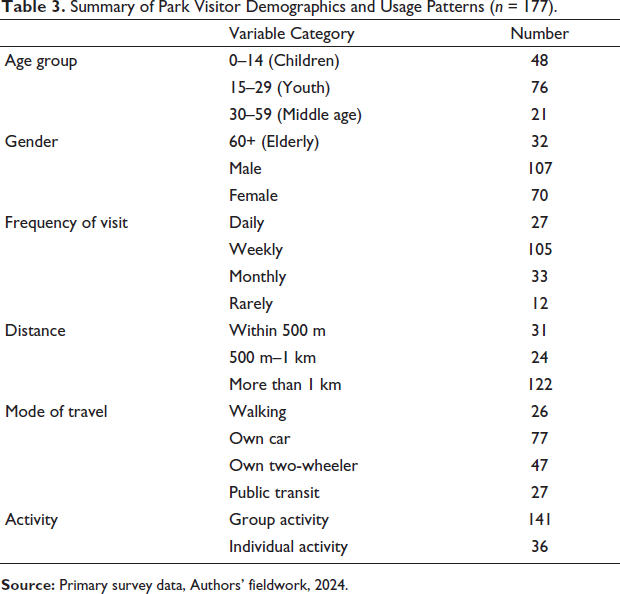
The survey of 177 park visitors across 12 parks reveals a demographic and behavioral profile that carries significant analytical implications (Table 3). Youth (15–29) constituted the largest cohort (76, or 42.9%), consistent with the finding that most parks are currently better configured—esthetically, spatially, and infrastructural for this group than for any other. Children (48, 27.1%) and elderly visitors (32, 18.1%) together form a substantial share, yet they are also the two cohorts most deterred by infrastructural deficiencies. The comparatively low representation of middle-aged adults (21, 11.9%) reflects occupational and domestic time constraints rather than disinterest; they typically visit as accompanists rather than primary park users.
The modal transport pattern—77 visitors by private car and 47 by two-wheeler, together 70.05% of the sample, signals a structural accessibility concern: parks in Guwahati are predominantly reached by those with personal transport, raising questions about equitable access for elderly visitors without vehicles, lower-income residents, and children dependent on walkability or public transit. That 68.9% of respondents travel more than 1 km to reach the park they visit, while only 17.5% live within 500 m, underscores that parks function as deliberate destinations rather than accessible neighborhood amenities. The strong predominance of group activity (141, or 79.7%) across all cohorts confirms that the social function of parks is coequal with, rather than subordinate to, the physical activity function—a finding that has direct implications for amenity design and functioning.
Safety and Security
Safety emerges from the data not as a single, uniform condition, but as a layered, age-differentiated phenomenon whose specific manifestations vary according to the physical capacities, social vulnerabilities, and behavioral patterns of each user group—while its structural causes remain consistent across parks.
For children and their caregivers, safety concerns are proximate and physical, centering on the immediate play environment. Broken swings, rusty seats, and sharp-edged structures at parks such as Dighalipukhuri and Sankardev Udyan create injury risks, compounded by unkempt lawn areas with fallen bamboo and tall grasses.
I come to Dighalipukhuri with my mother who always holds my hand while I climb on the slide and the swings and does not let me run alone. Once while playing hide and seek with my friends, I fell over a bamboo fallen on the ground while running, after which my mother asks me not to go to that side of the area. (Informant, aged 8 years, male) [Quoted with accompanying parent’s consent who was present throughout the interaction]
Soft, cushioned surfaces present at Amrit Udyan, Shraddhanjali Kanan, and Nehru Park in the form of trampolines and playhouses were cited as critical safeguards. Caregivers also emphasized the importance of dedicated fencing around play zones near water bodies, supervisory staff, seating positioned for visual oversight, and adequate evening lighting.
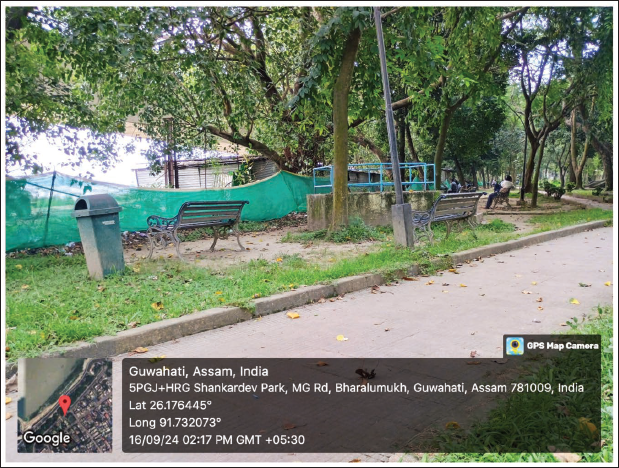
For young women visiting in small groups, safety is experienced primarily through the park’s broader environmental and social conditions. Deteriorating boundary infrastructure at Sankardev Udyan—with sections of the perimeter wall collapsed and gaps opening onto unlit adjacent areas—was directly cited as precipitating avoidance of evening visits (Figure 1):
The walls of Sankardev Udyan park have been in pathetic condition, with open areas on the other side which adds safety issues with poor lighting in the evening adding to the problem, in addition the guards are not available at all the times. We have avoided hanging out in the park from the early evening times. (Informant, aged 19, female)
Illustrate the Deteriorated Boundary Wall Condition at Sankardev Udyan Described by Young Female Respondents as a Primary Driver of Their Avoidance of the Park During Evening Hours, Providing Visual Evidence of the Infrastructural Deficit Underlying the Safety Perceptions Reported in This Section.
For elderly visitors, safety deficits intersect with age-related changes in mobility, balance, and sensory capacity to produce disproportionately severe consequences. Poorly maintained paths, non-ergonomic seating, and absent handrails along slopes were recurring concerns. Critically, aged visitors with mobility limitations were consistently observed to be accompanied by family members—as were young children—suggesting that infrastructural neglect effectively transfers the burden of safety provision from the park to the family.
There is a big gap in the fencing from the left side of the entry towards the lake abruptly without any sign of caution, which poses a risk of someone with less eyesight and weak knees like me to lose balance and fall into the water, the walking lane has also been broken on the right side in front of Prashanti Udyan of the park which is dangerous for us to walk freely without support. (Informant, aged 62, female)Age-differentiated Safety Concerns and Associated Infrastructure Deficits.
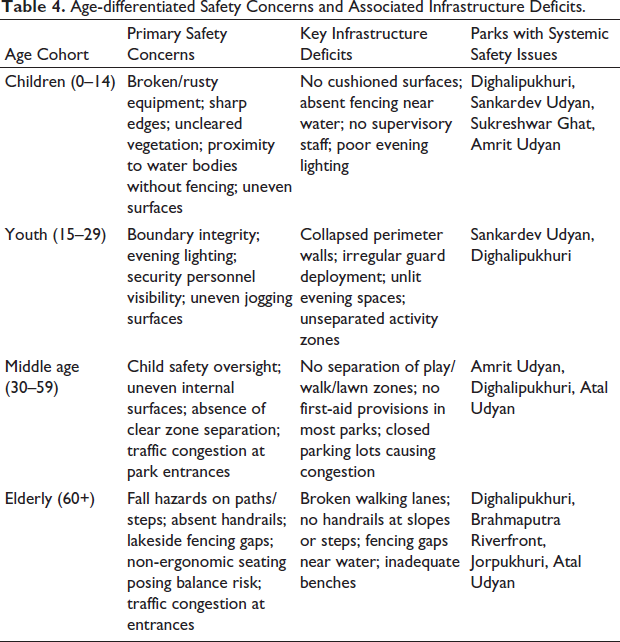
The parks that consistently emerged as comparatively safer—Nehru Park, Atal Udyan, and Shraddhanjali Kanan, shared four structural characteristics: functional boundary enclosures, visible security personnel, adequate evening lighting, and well-maintained walking surfaces. Sankardev Udyan and Dighalipukhuri, by contrast, were identified across all age cohorts as presenting systemic safety deficits. The cross-cohort convergence of these assessments confirms that safety failures are structural rather than age-specific in origin, even as their consequences are experienced differently (Table 4). Two security guards at Sankardev Udyan stated that the park was too large for them to manage effectively, pointing to a management gap that physical improvements alone cannot resolve. This evidence collectively underscores the urgency of targeted, regular safety audits with enforceable remediation timelines.
Facilities and Amenities
Facility adequacy is the indicator for which the gap between infrastructure aspiration and operational reality is most pronounced across Guwahati’s parks. The findings reveal three analytically significant patterns: a clear, age-differentiated hierarchy of facility priorities; a troubling pattern of facilities that exist but fail to function; and a demonstrable relationship between comprehensive, multi-amenity provision and broader demographic diversity of park use.
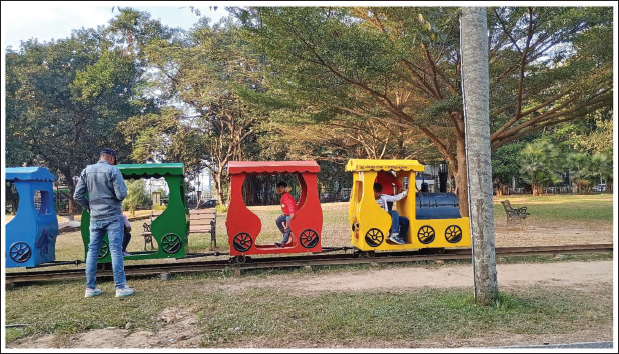
Documents the Toy Train Facility at Nehru Park, Which Emerged Across Multiple Age Groups—Children and Their Caregivers, Young Adults, and Even Elderly Visitors Accompanying Grandchildren—as One of the Most Frequently Cited Examples of Creative, Age-appropriate Play Infrastructure That Successfully Draws Diverse Visitor Demographics and Supports Extended Park Stays.
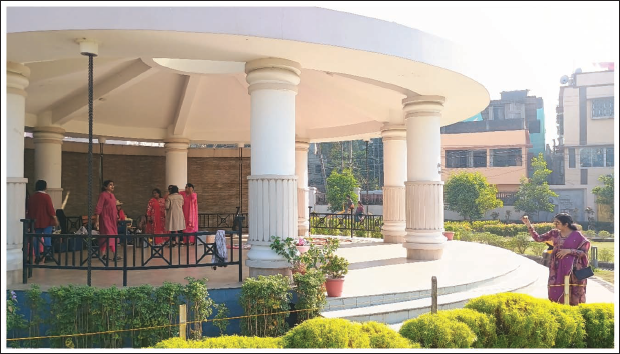
Across cohorts, restroom availability was the most consistently and urgently cited deficiency. Operational water automated teller machines (ATMs) were identified only at Nehru Park and Shraddhanjali Kanan; in the remaining parks, people were observed drinking from plant-watering taps. Shade was universally valued, not as a luxury comfort, but as a functional precondition for extended park use in Guwahati’s hot and humid climate (Figure 4). Strategically placed benches along walking paths, near play zones, and under canopy cover were similarly cited by all groups, though for different reasons: caregivers need proximity for supervision, elderly visitors need regular rest intervals, and young adults seek social gathering nodes.
The hierarchy of priorities diverges meaningfully between cohorts, however, with analytically significant implications for inclusive design. Elderly visitors converge on a small set of non-negotiable provisions whose absence constitutes a barrier to participation rather than a reduction in enjoyment: a functional toilet, drinking water within walking distance, ergonomic shaded seating, and smooth, accessible paths with grab bars at slopes.
I visited Brahmaputra riverfront with my family. The place is very satisfactory for walking, with dense vegetation and the bottom stairways with river view decorated with flowering plants and hedges. But there was not a single seating bench for people like us to sit properly. While my grandchild sat on the concrete tree decks and the lawns, I found it difficult to sit on the steps and we could not stay there much longer due to my knee pain issues. (Informant, aged 71 years, female)
Young adults, by contrast, tolerate absent seating by improvizing on grass or steps, and are more responsive to food and beverage availability: parks featuring cafes—Sukreshwar Ghat, Nehru Park, and Shraddhanjali Kanan, recorded longer stays and higher youth satisfaction. Children and caregivers additionally prioritize creative and varied play infrastructure (Figure 2), hygiene facilities, and shaded picnic areas. First-aid provisions in larger parks were identified as an important but largely absent safety feature.
Illustrate the Colocation of Workout Infrastructure and Food and Beverage Facilities at Shraddhanjali Kanan, a Design Combination That Respondents Across Age Groups Identified as Particularly Effective in Enabling Extended Visits by Supporting Both Physical Activity and the Social Interaction That Follows It.
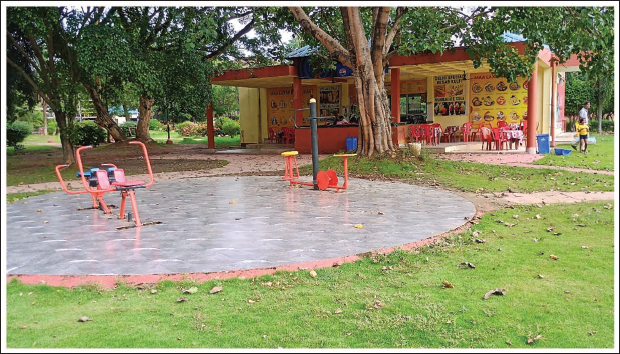
Table 5 makes visible a systemic pattern: no park simultaneously fulfills all six baseline facility criteria except Shraddhanjali Kanan, and the most critical deficiencies—toilets, drinking water, and shaded seating, cut across parks of different sizes, locations, and managing authorities. The second pattern, facilities that exist but cannot be used, signals failed operational management rather than absent design intent. Swahid Udyan has a badminton court but no racquets; Amrit Udyan has a skating rink but no stocked skates.
I visit Swahid Udyan occasionally for solitude- to sit or write. Barely anyone comes here because of the heavy traffic and pollution from the main road. The benches lack shade, so I prefer the grass under the trees. I play in the badminton court with my brother, but we bring our own equipment as there is none present here. (Informant, aged 22 years, female)
Facility Provision Status Across All 12 Parks.
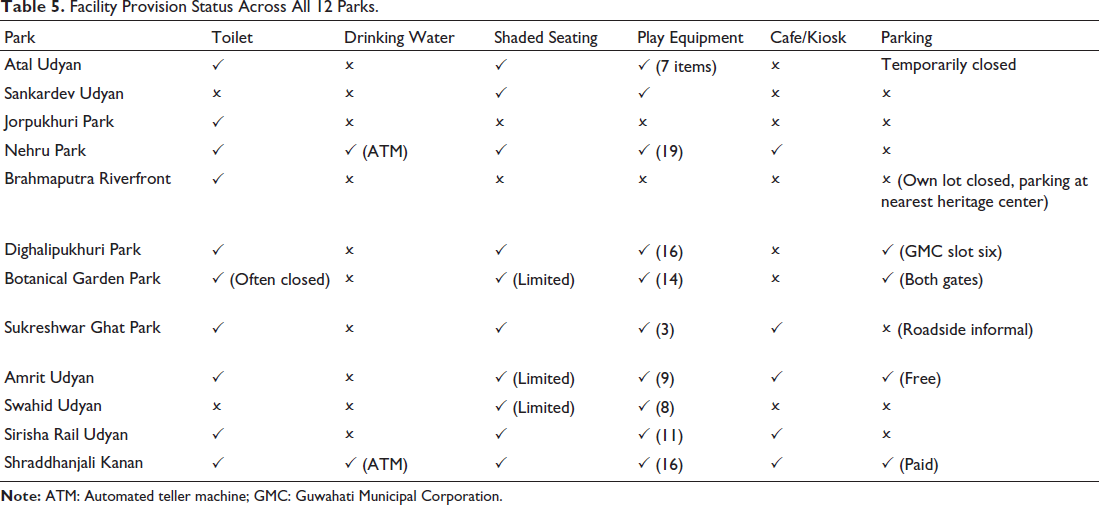
Parks with comprehensive, multi-amenity profiles—Nehru Park, Shraddhanjali Kanan (Figure 3), and Atal Udyan, consistently attracted broader demographic diversity and longer stays, providing empirical support for the principle that age-friendly parks require integrated rather than selective infrastructure investment.
Documents the Shaded Gathering Spaces That Respondents Across All Age Cohorts Consistently Identified as Among the Most Valued Features of Any Park, with Shade Functioning Not Merely as a Comfort Provision but as a Fundamental Enabler of Prolonged Park Use, Particularly During Guwahati’s Hot and Humid Summer Months.
Esthetics and Natural Features
Esthetic quality functions differently across age cohorts—as an exploratory and sensory stimulus for children, a primary motivator of park selection and social media content creation for young adults, and a restorative and culturally resonant experience for elderly visitors—but its relationship to overall park effectiveness is mediated by whether it is paired with basic infrastructure provision. These differences are summarised in Table 6.
Children engage esthetically with parks through interactive, multi-sensory, and explorable features rather than passive visual appeal. Colorful play equipment, murals, ponds, fountains, flower gardens, and hedge mazes—prominent at Atal Udyan, Shraddhanjali Kanan, and Botanical Garden Park, drawing enthusiastic responses and prolonged engagement. Areas with soft grass were preferred over bare surfaces both for esthetic and safety reasons. Poorly maintained or littered landscapes deterred families, regardless of locational convenience.
For young adults, visual appeal operates as the primary determinant of park selection and the duration of stay, sometimes overriding the absence of other amenities. Well-manicured lawns, water bodies, scenic trails, contemporary sculptures amid greenery, and distinctive design features—such as the rock garden, bamboo tunnel, and hedge maze at Botanical Garden Park—were cited as primary motivators. Photography and social media content creation emerged as significant contemporary drivers of park visitation.
I like making content on Instagram and hence I visit different places for photos and videos. Botanical park is one of the most aesthetic parks out there and its distinct rock garden and hedge areas are great for taking pictures. (Informant, aged 27 years, female) I visited Amrit Udyan with friends for a birthday outing and dined at the in-park restaurant. Though prices ran a bit high, the aesthetics were great for photographs and the lawns under the tree canopy were spacious. Seating benches were scarce, but since we were mostly moving around, we managed sitting on the grass and the yoga room steps. (Informant, aged 24 years, female)
The pattern observed here of esthetic satisfaction compensating for amenity deficiencies is distinctive to the youth cohort and does not generalize to other age groups.
For elderly visitors, esthetic preference is oriented toward restorative and culturally resonant qualities: large tree canopies, dense vegetation, heritage elements, and areas conducive to contemplation and bird-watching, complemented by seating spaces. Parks such as Dighalipukhuri, Sankardev Udyan, and Shraddhanjali Kanan were preferred for these qualities.
Esthetic Preferences and Motivational Role by Age Cohort.
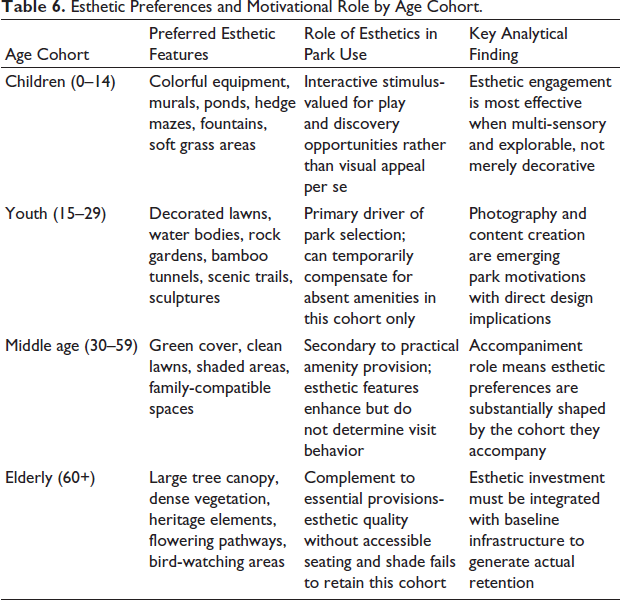
The critical finding is that esthetic quality and basic amenity provision are complementary requirements rather than alternatives. For young adults, esthetics can temporarily override absent amenities; for elderly visitors, esthetic appeal in the absence of accessible seating, shade, and safe paths fails to enable extended stays, regardless of visual quality, as illustrated by the Brahmaputra Riverfront case. For children, esthetic engagement is most effective when it is interactive rather than merely visual. These distinctions imply that esthetic investment is most impactful when integrated into rather than prioritized over baseline infrastructure provision.
Traffic Proximity and Safety
Traffic proximity functions as a multidimensional barrier to park usability, operating simultaneously through physical danger, environmental quality degradation, and logistical inconvenience. Its consequences, while differentially experienced across cohorts, are structurally determined by park location and the availability of parking and traffic-calming infrastructure.
For families with children, traffic proximity generates direct physical safety anxiety. Caregivers at Amrit Udyan described the main entrance sloping toward a busy road without traffic personnel and uneven internal surfaces as compounding concerns, particularly when wet. Noise pollution near road-adjacent parks was reported to disrupt children’s concentration and interaction. For young adults, whose tolerance for ambient urban noise is comparatively higher, the primary concern shifts to environmental quality: air and noise pollution from heavy traffic were cited as deterring physical activity, while parks with natural buffers, such as Dighalipukhuri’s perimeter tree line, were strongly preferred.
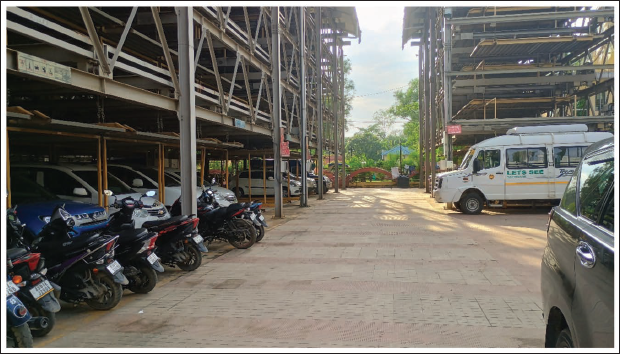
Documents the Parking Infrastructure at Shraddhanjali Kanan, Which Respondents and Observational Data Consistently Identified as a Significant Contributor to the Park’s Capacity to Attract and Retain a Demographically Diverse Visitor Population, Illustrating the Direct Relationship Between Parking Provision and Park Accessibility That Recurs as a Theme Across Multiple Study Sites.
For elderly visitors, traffic proximity creates compound barriers that simultaneously encompass environmental quality, physical safety, and logistical accessibility. Parks with dedicated drop-off zones, proximate parking, and traffic-calming measures were consistently rated as more accessible and safer, while the others, devoid of them, were flagged as accident-prone, such as Atal Udyan.
In just the few seconds it took me to get out of the car due to my cervical pain, traffic had already backed up, vendors piled on the left side of the road, bikes and cars parked along the edges, and the GMDA-managed parking lot locked shut, leaving people no choice but to congest the road. (Informant, aged 70 years, female)
The comparative evidence is explanatory. Sankardev Udyan, despite having no dedicated parking, attracts visitors because it is situated back from the main road, and its partial seclusion, enhanced after flyover construction reduced traffic, creates a buffer that compensates for the parking deficit. Shraddhanjali Kanan’s five-storey parking facility directly enables its high and demographically diverse visitor numbers (Figure 5). Swahid Udyan, by contrast, despite possessing relevant facilities, including a badminton court and workout equipment, records the lowest visitor numbers of any park in the study (Figure 6).
I have worked at Swahid Udyan since its inauguration and have watched footfall decline sharply, monthly collections now barely reach ₹300–₹400, mostly on Sundays. The heavy two-way traffic, absent parking and surrounding markets and factories are the reasons; the badminton court and cycling equipment sit largely unused. (Informant, aged 43, male)
Documents the Heavy Two-way Traffic Conditions Immediately Adjacent to Swahid Udyan That Park Staff and Visitors Identified as the Primary Deterrent to Visitation, Illustrating the Environmental and Safety Conditions That Render an Otherwise Equipped Park Effectively Unusable for the Majority of Potential User Groups.
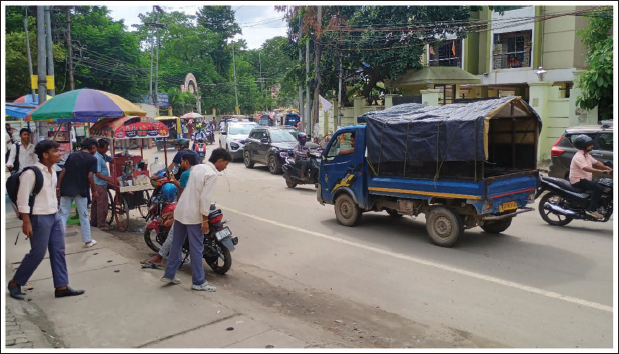
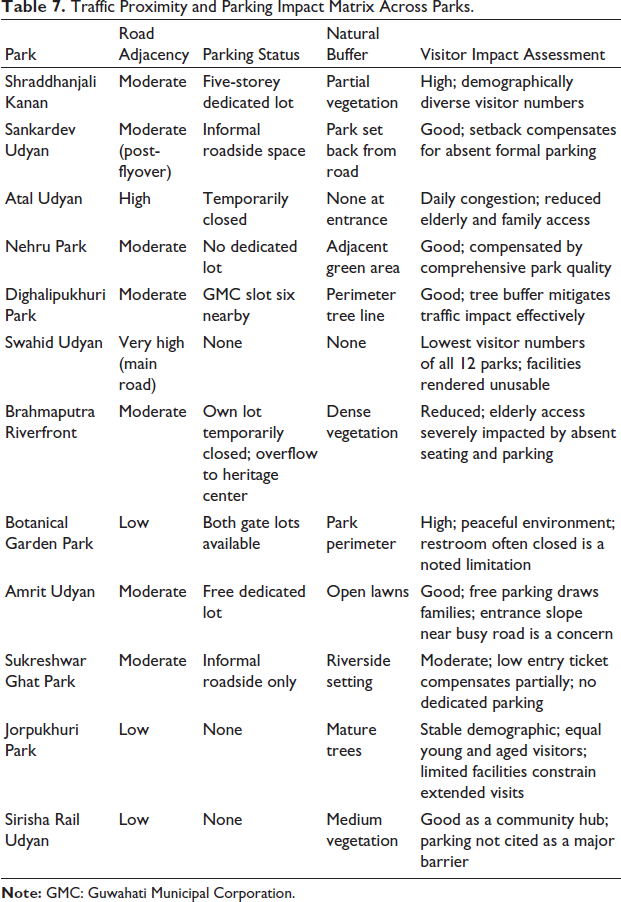
Table 7 shows that parks combining adequate parking, natural buffers, and setbacks from main roads—Sankardev Udyan and Shraddhanjali Kanan demonstrate consistently higher and more demographically diverse visitation. This reinforces the case for traffic-sensitive park siting and parking impact assessment as non-negotiable components of age-friendly urban planning, considerations entirely absent from the design process of several parks in this study. Swahid Udyan’s case establishes a critical planning principle: park infrastructure quality cannot compensate for fundamental locational and accessibility failures. Despite a badminton court and workout equipment, it records the lowest visitor numbers of any park in the study.
Traffic Proximity and Parking Impact Matrix Across Parks.
Intergenerational Interaction
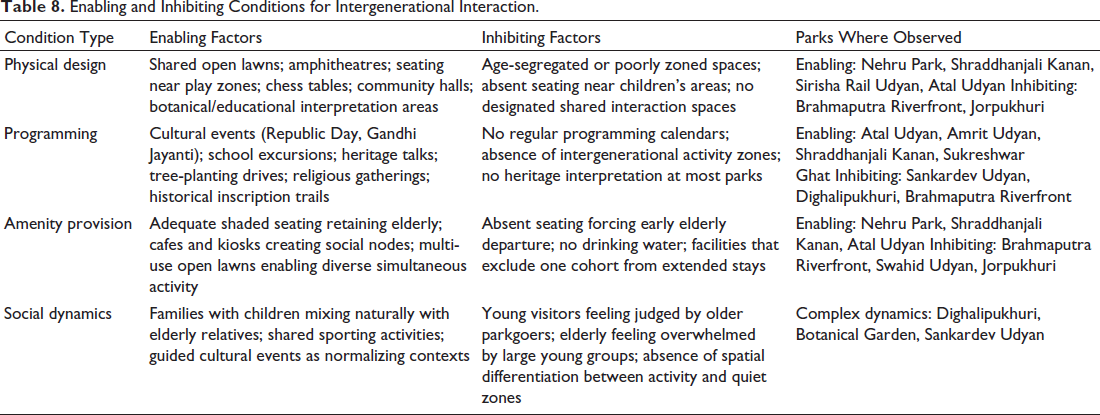
The data reveal that intergenerational interaction in park settings is neither automatic nor uniformly positive, but is a conditional outcome determined by the simultaneous presence of enabling physical design, appropriate programming, and sufficient basic amenity provision to retain visitors from all age groups for extended periods.
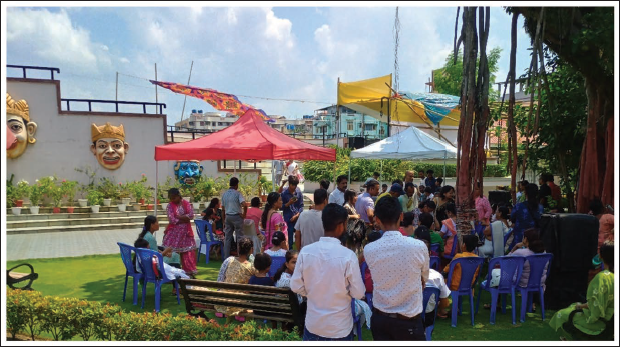
Children engage in intergenerational contact most naturally through shared family activities and informal games on open lawns. Parks with adequate shared space facilitated bonding across generations, while poor zoning and the absence of seating near play areas represented missed structural opportunities. Cultural and educational events—school excursions, competitions, and tree-planting drives—were identified as effective mechanisms for bringing children and elderly visitors into purposive contact (Figure 7).
Sirisha Rail Udyan serves as a social hub for my daughter, where she plays with her new friends made here, including a specially-abled child whom we help with playground equipment. The park has become a place for both children’s play and adult socialization beyond our homes. (Informant, mother of a 10-year-old)
For young adults, peer socialization remains the dominant motivation for park use, but cross-generational contact emerged meaningfully in specific structured contexts—shared physical activities, cultural events at amphitheatres, and programmed occasions at Atal Udyan, Amrit Udyan, and Shraddhanjali Kanan during Republic Day and Gandhi Jayanti. Informants suggested that parks could do more through educational programming linked to heritage elements.
While Brahmaputra riverfront and Sankardev Udyan attract young visitors with their green elements, they lack educational features. In contrast, Sukreshwar ghat park’s historical inscriptions about the North brook gate and Battle of Saraighat memorial, Shraddhanjali Kanan’s martyr statue provide opportunities for conversations for intergenerational learning and engagement. (Informant, aged 67 years, male)
Illustrates the Programmed Cultural and Community Events Hosted in the Amphitheatre Space at Atal Udyan, Which Respondents Across Age Groups Identified as Among the Most Effective Mechanisms for Generating Genuine Intergenerational Interaction in Park Settings, Demonstrating That Designed Infrastructure Alone is Insufficient to Foster Cross-generational Engagement Without the Programming That Activates It.
Elderly respondents expressed a strong desire for purposive intergenerational programming—storytelling, shared games, yoga, and cultural exchange—rather than passive copresence. Parks with chess tables, community gathering spaces, and heritage elements were specifically valued. However, several elderly respondents also reported feelings of exclusion or discomfort in parks dominated by younger users, particularly large student groups, and preferred visiting during the early morning or late evening hours when visitor demographics were more mixed. Seeing couples, mostly college students, in the parks makes me a bit uncomfortable, so I prefer visiting early mornings or late evenings, when the crowd is more mixed, with families and children around. (Informant, aged 58, female)
However, some young visitors also reported discomfort about feeling socially judged by older parkgoers for loud engagement with peers, indicating that intergenerational copresence does not automatically produce positive interaction.
Table 8 illustrates that intergenerational interaction is shaped as much by social dynamics and programming as by physical design. Synthesizing across cohorts, three conditions must be simultaneously met for meaningful cross-generational engagement: physical design that draws different age groups into proximity; structured programming or cultural events providing shared purpose; and basic amenity provision sufficient to retain diverse cohorts for extended periods. When any condition is absent, parks tend toward age segregation in practice. The finding that some elderly visitors feel overwhelmed by younger users—while some young visitors feel socially monitored by older ones—points to the importance of park design that creates both deliberate shared spaces and sufficient spatial differentiation between zones of activity and zones of quiet. The introduction of intergenerational activity zones with storytelling, games, or yoga, suggested by multiple elderly respondents, represents a low-cost, high-impact intervention currently dormant in all 12 parks studied.
Enabling and Inhibiting Conditions for Intergenerational Interaction.
Mental and Physical Well-being
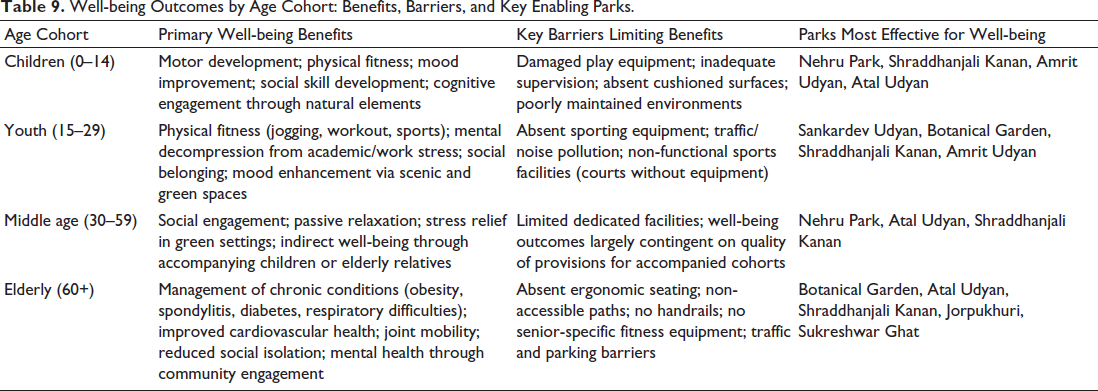
Parks make meaningful contributions to the active and mental well-being of users across all cohorts, but these contributions are unevenly distributed, contingent on park quality, and frequently compromised by the infrastructural deficiencies documented in the preceding sections. Table 9 summarises well-being outcomes by age cohort.
For children, parks can contribute primarily to motor development, coordination, and active fitness through adequate play space and equipment. Caregivers consistently reported that access to open-air play produced observable improvements in mood, focus, and social skills, with natural elements—trees, ponds—cited as having calming effects. Structured activities such as yoga and nature trails, available only at Atal Udyan, Shraddhanjali Kanan, and Amrit Udyan, were highly valued, where present but conspicuously absent from most parks. My friends and I mostly play here (Atyal Udyan) because of less space near our houses, we love running along the lawns up to the swings and see-saw area (Informant, aged 9 years, female) [Quoted with accompanying parent’s consent who was present throughout the interaction].
For young adults, parks serve a dual well-being function as spaces for physical activity and mental decompression, most effectively served by parks combining green cover, relative quiet, and sufficient space for both active and passive use. Informants described escaping academic and work stress in quiet, vegetated corners—particularly Sankardev Udyan’s thick canopy—and cited scenic trails as having a disproportionate positive impact on mental well-being.
The well-being case for elderly visitors carries the most urgent policy implications. Of the 32 elderly respondents, 23 reported one or more health conditions, including obesity, spondylitis, diabetes, and respiratory difficulties, attributing their park visits directly to managing these conditions, according to physician advice for fresh air and exercise. Multiple informants described tangible health improvements from regular park use:
We live in Fancy Bazar area and the place is always occupied with shopkeepers and workers and there are no fields where I can walk or have fresh air nearby. I have issues in breathing due to obesity and later I started visiting Botanical park early in the morning at around 6:30 a.m. and there has been significant improvement in my health, especially the garden of this park is my favourite spot. (Informant, aged 60 years, male) I have been facing health issues due to heavy breathing and headache. Apart from medications, I have been advised to go for long walks. Walking in the nearby barren field did not benefit me much, so I have started going for early morning walks since 3 months in the Jorpukhuri park from 6 a.m. with free entry and less visitors and I get to meet some acquaintances for talks and that has helped me feel fresh and gradual improvement. The whole area witnesses minimal traffic and is pleasant for a walk early morning. (Informant, aged 71, male)
These accounts establish what the aggregate data confirm, for elderly urban residents living in congested, polluted, and socially isolating residential environments, access to a well-maintained, accessible, and safe urban park is not a recreational provision but a public health necessity. The failure of parks to meet basic accessibility and amenity standards for elderly users, therefore, constitutes not merely an urban planning shortcoming but a public health failure with direct consequences for one of the city’s most health-vulnerable populations. Social gatherings, religious programs in in-park temples, and musical events were additionally cited as enhancing mental health for both young adults and elderly visitors—confirming the inseparability of the physical and social dimensions of park-based well-being.
Well-being Outcomes by Age Cohort: Benefits, Barriers, and Key Enabling Parks.
Discussion
The study finds that, while all 12 parks meet some age-friendly criteria to varying degrees, none does so fully or consistently. The most significant gaps are in seating, toilet availability, drinking water, surface maintenance, and security, which are the very provisions that matter most to elderly visitors and families with young children. These are not gaps caused by a lack of resources alone; they reflect a deeper failure in age-friendly design.
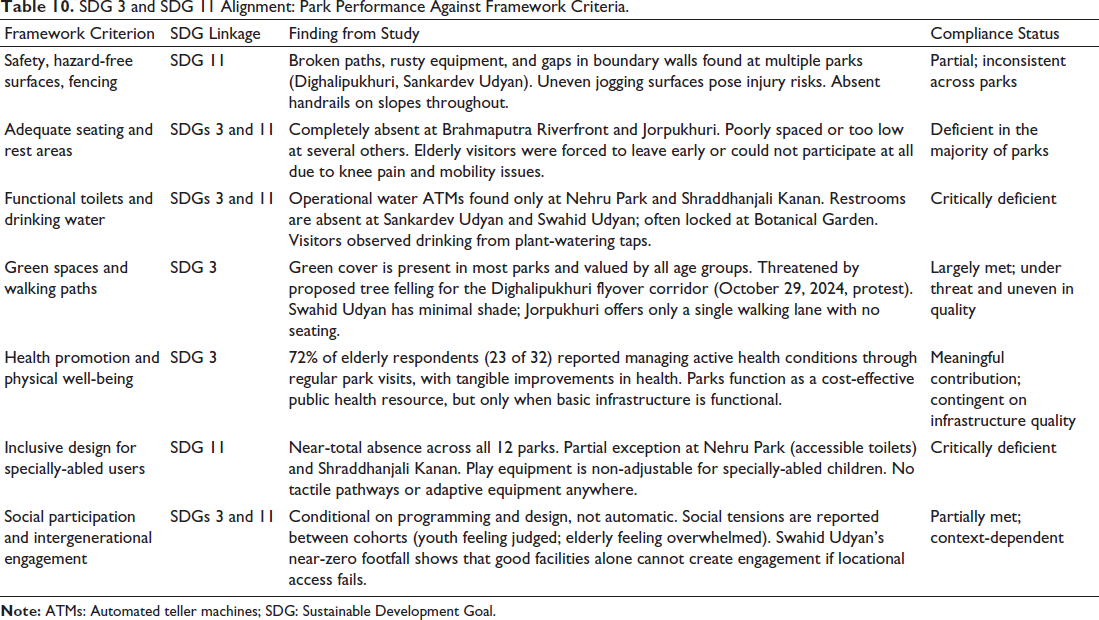
In terms of SDG 3, parks do contribute to physical and mental health, but these benefits are repeatedly undermined by poor infrastructure that limits access for those who need it most (Figure 8). A telling finding is that 23 out of 32 elderly respondents reported managing active health conditions through regular park visits, with improvements in active health, breathing, and joint mobility. This positions parks as a low-cost public, active well-being resource, but one whose value depends entirely on basic infrastructure being functional and reachable. Regarding SDG 11, parks may be designed with inclusion in mind, but in practice, significant barriers remain, such as inaccessible paths, missing amenities, traffic deterrents, and an almost complete absence of features for specially-abled users. The accessible toilets at Nehru Park stand as a rare exception, which itself highlights how lacking such provisions are across the rest of the park system (as observed from the findings in Table 10).
A key theoretical finding is that park effectiveness is not just about what gets built, but about what gets maintained, managed, and where it is located. Facilities that exist but remain unusable, badminton courts with no racquets, skating rinks with no skates, restrooms locked during the day, point to failures in operational oversight, not just design. Swahid Udyan further shows that even a reasonably equipped park becomes inaccessible when placed on a heavily trafficked road with no parking or noise buffer. This calls for integrated park governance that treats design, maintenance, and location as equally important.
The study also challenges the assumption that putting different age groups in the same space automatically builds social cohesion. Intergenerational interaction depends on thoughtful design, programming, and adequate amenities, not mere copresence. Ticket pricing matters too. The significant price differential between Sukreshwar Ghat Park (₹5 for adults and ₹2 for children) and the adjacent Brahmaputra Riverfront (₹50 for adults) shapes visitor patterns in ways that intersect with but do not fully determine esthetic and amenity preferences.
SDG 3 and SDG 11 Alignment: Park Performance Against Framework Criteria.
Overall Satisfaction by Age Cohort.
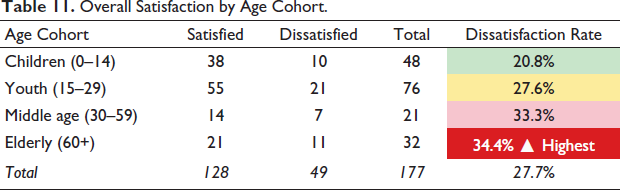
Table 11 shows the age gradient in dissatisfaction is analytically consistent with the study’s broader findings, elderly and middle-aged visitors, who prioritize non-negotiable basic provisions, are most frequently disappointed by parks that fail to deliver them. For elderly visitors, absent seating, toilets, and accessible paths not only reduces enjoyment, but they also prevent participation to a great extent. This distinction is critical, aggregate satisfaction figures obscure a structural pattern in which the most vulnerable park users are also the most systematically excluded. The standard for age-friendly infrastructure must therefore be evaluated at the cohort level, through the specific lens of whether parks are genuinely accessible and usable by those whose needs are most basic and whose alternatives are most limited.
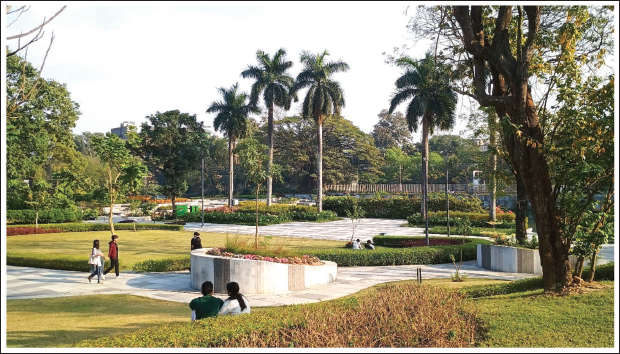
Illustrates the Absence of Seating Infrastructure at Brahmaputra Riverfront Park, Documenting the Condition Described by Elderly Respondents as Making Extended Park Visits Impossible Due to Mobility Limitations and Visually Demonstrating the Contrast Between the Park’s Esthetic Appeal—Evident in Its Well-maintained Lawns and Palm-lined Pathways—and Its Failure to Provide the Basic Amenity Provisions Necessary for Age-inclusive Use.
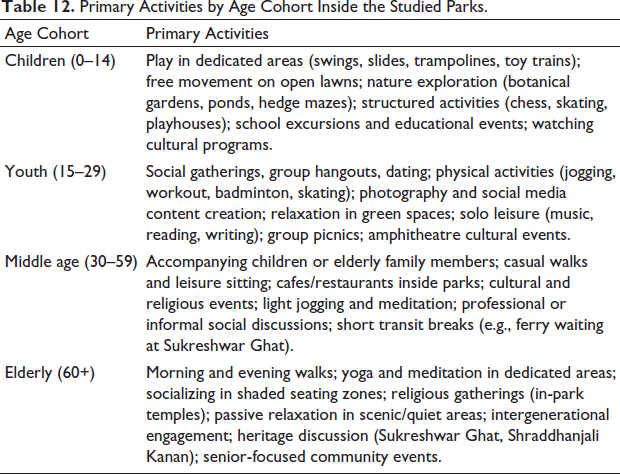
The activity profiles in Table 12 reveal three significant patterns. First, elderly park users engage in a far more diverse range of activities, such as yoga, spiritual practice, heritage discussion, and intergenerational engagement, than the conventional emphasis on walking and passive rest acknowledges; parks designed only with walking paths structurally underserve this cohort. Second, photography and content creation as youth motivations have direct design implications, positioning esthetic investment as a functional priority rather than a supplementary one. Third, the middle-aged cohort’s accompaniment-centered profile confirms that improvements for children and elderly users generate secondary benefits for this group, strengthening the efficiency case for age-inclusive infrastructure investment.
Primary Activities by Age Cohort Inside the Studied Parks.
Conclusion
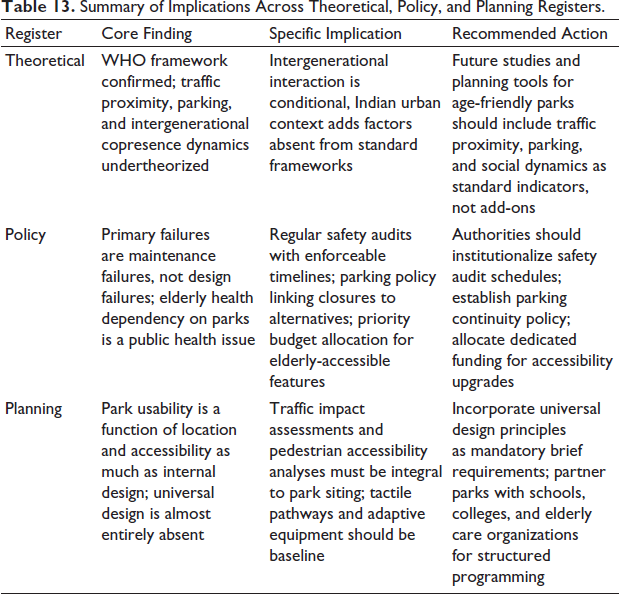
Urban parks in Guwahati are genuinely valued spaces, but this study demonstrates that being valued and being age-friendly are not equivalent conditions. Across the 12 parks studied, the distance between intended provision and lived experience is not incidental but systematic. Three areas of implication emerge from the findings synthesised in Table 13.
Theoretical Contributions
This study situates the WHO Age-friendly Cities framework within a rapidly growing Indian city and finds that, while the framework provides a sound foundation, it does not fully account for what shapes park usability in this context. Variables such as traffic proximity, parking availability, and the social tensions arising from age group copresence fall outside standard assessment tools, yet demonstrably influence park use patterns. The study further complicates the assumption that intergenerational parks are inherently cohesion-building. Cross-generational engagement is not a natural byproduct of shared space but a conditional outcome shaped by design, programming, and whether facilities are adequate enough to retain different age groups at the same time. Where these conditions are absent, shared space produces age segregation in practice, regardless of inclusive intent. By translating established frameworks into field-testable indicators within the Indian context, this study offers a replicable methodological approach for comparable cities across the Global South, where empirical work on age-friendly public spaces remains limited.
Policy Implications
The central policy finding is that the deficiencies documented here are not failures of original design but rather failures of sustained operational management. Parks were built with reasonable intent. The deterioration that followed—equipment unrepaired, water facilities non-functional, restrooms inaccessible, and parking removed without alternatives, reflects a gap in post-construction governance. Addressing this requires the city’s authorities (GMDA and GMC) to institutionalize regular safety audit schedules, with enforceable timelines, and to establish a parking continuity policy ensuring alternatives are in place before any existing facility is closed. For older adults, these deteriorations do not simply diminish the park experience—they eliminate the possibility of participation. Since a significant proportion of elderly visitors use parks to actively manage chronic health conditions, exclusion carries consequences that extend into public health. The economic argument is that restoring functional seating, accessible pathways, drinking water, and sanitation costs considerably less than the cumulative health and social costs of structural exclusion.
Planning Implications
A park’s usability is determined as much by where it is as by what it contains. A park on a heavily trafficked road without parking or environmental buffering will remain underused regardless of internal facilities, a failure that no internal improvement can correct after the fact. Traffic impact analysis and pedestrian accessibility evaluation must therefore be integral to site selection for any new park. Within existing parks, the near-total absence of inclusive design features for persons with disabilities and older adults must be addressed by treating universal design as a mandatory planning requirement rather than an optional enhancement. Finally, the amphitheatres, open lawns, and community halls already present across many of these parks remain largely unprogrammed. Structured intergenerational initiatives through partnerships with schools, colleges, and elderly care organizations represent a high-impact, low-cost intervention requiring no new construction. Making parks age-friendly in Guwahati does not require rebuilding from the ground up, it requires sustained, accountable stewardship of what already exists.
Summary of Implications Across Theoretical, Policy, and Planning Registers.
Footnotes
Acknowledgments
The authors express our sincere appreciation to the Department of Anthropology, Gauhati University, Guwahati, Assam, for providing the necessary academic support to conduct this doctoral research and the subsequent research article work since August 2023.
The authors extend their heartfelt thanks to all the respondents who generously shared their experiences and insights, making this research possible. The authors are also immensely grateful to the park authorities for their cooperation throughout the data collection process.
Declaration of Conflict of Interests
The authors declared no potential conflicts of interest regarding the research, authorship, and/or publication of this article.
Funding
The authors received no financial support for the research, authorship, and/or publication of this article.
