







Abstract
The research aims to deconstruct trust in beauty service into underlying latent variables with observable predictors. It further analyses the influence of these latent variables on the service recommendation behaviour of customers for beauty service. Factor reduction using EFA and structural equation modelling using CFA with AMOS 18 was applied on two samples of 214 and 225 respondents. The two latent constructs strongly representing trust were identified as “trust due to customer education” and “trust due to safety and hygiene.” These factors were found to play a significant role in service recommendation when it comes to beauty service.
Introduction
Trust is a significant driver of consumer engagement especially in the context of personalized services such as beauty service, spa, and hair salons.(1,2) Salon services, which form a majority of the overall set of beauty service, are classified in the personal-interactive service category(3) where the interaction between the consumer and the service provider is high and the service transaction is personal in nature. Beauty service is one of those services, which have a significant information asymmetry due to the lack of knowledge among customers about the service solution for the problem or need at hand. For such services, trust plays a crucial role.
However, a service offering is a complicated combination of multiple dimensions and sub-dimensions,(4) and an overarching trust construct may not be enough to understand its significance and strength on consumer behaviour. Further, since salon service often rely on word of mouth and recommendations for its marketing, the role of recommendations from an existing customer cannot be overstated in this context. This is especially true for services, which are targeted at a younger target audience including beauty service.(5)
Service quality and service experience play a significant role in shaping outcome variables like service recommendation by customers to other potential customers. Service quality in turn plays a predicting effect on trust as identified by Gabarino and Johnson,(6) and Ibrahim and Najjar.(7) The information asymmetry and control imbalance between the customer and the service provider(3) creates a reliability gap, which can be abridged by the curated trust. This is because customers exchange value for a service, which is to be believed in since services are intangible in nature and are experience or credence based.(8)
While the importance of trust is well understood, it is equally important to understand what does “Trust” really stand for, especially in high contact service like salon services? A service is a combination of multiple attributes that come into play to form a service experience,(4) for example, service process, set up, and people.(8) Experience with various touch-points in the service experience starting from walking-ins to the beauty service job and the overall environment may create an impression on the customer This experience, in turn, defines the customer’s attitude towards recommending the service in her or his circle.
A focused study with such sub-dimensions of trust in beauty service industry is not present in the extant literature. Similarly, research on the trust dimension and its impact on service recommendation for beauty service is limited. Lagrosen and Grunden(9) posited that albeit the beauty and wellness industry is expanding in most parts of the world, the research remains to be at best, limited.
Downar(3) argued that despite the higher importance of trust in service activities, the role played by trust in services is only marginally addressed. Further, hardly any study looks at dimensions of trust influencing recommendation behaviour in the Indian context. Services that have a higher intensity of contact suggesting intimate interaction between the service customer and service provider, coupled with a higher degree of customization would often represent higher strength of trust in the relationship. Salon service is a high contact service with a very high degree of customization and hence trust can be an important factor in the outcome variables of customer behaviour, including that so service recommendation. Thus, our understanding about trust and how it plays a role in encouraging service recommendation from customers is limited and must be explored.(5) These limitations in the understanding of the underlying elements of trust, and its subsequent influence on the consumer behaviour, especially in the service industry, and more specifically for high contact beauty services, have been identified as critical research gaps, which the article has tried to address.
As discussed earlier, trust should not be treated as a monolithic term, and must not be defined as an isolated latent variable. We argue that trust should be treated as a combination of multiple latent variables that come together to form the larger trust construct. These latent variables in turn must be explained with the help of specific predictor variables. Finally, the combination of these constructs must be able to explain the direction and measure of the service recommendation by customers for the given beauty service provider.
This article is divided into two parts. The first part explores various possible sub-dimensions through a range of items that form the larger trust construct. Further, these sub-dimensions are established with the help of Exploratory Factor Analysis (EFA).
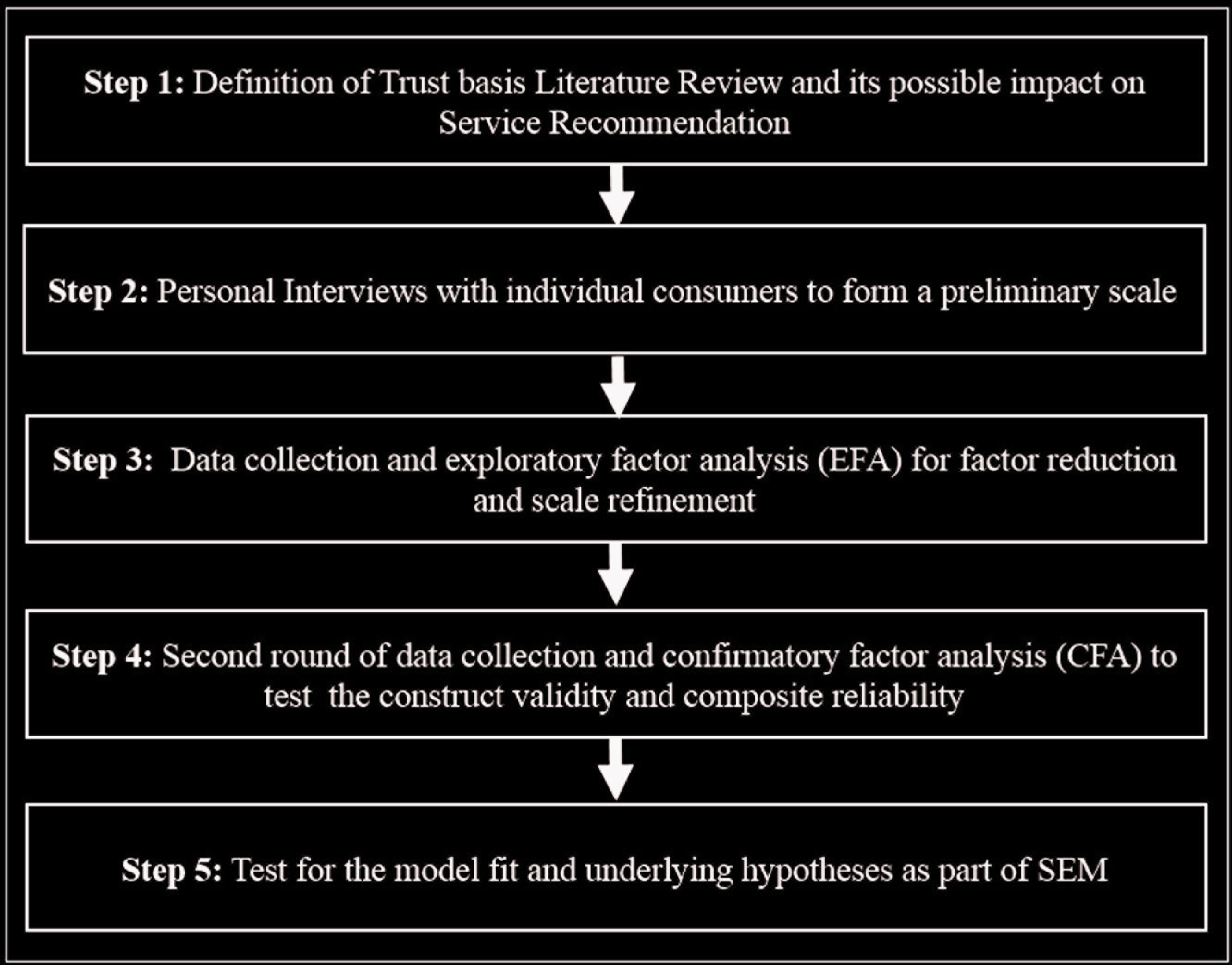
Once the definitive underlying factors are identified, a CFA analysis with CB method is applied for SEM to test the construct validity and composite reliability of the underlying measurement models. Further, the model fit of the structural model is tested along with the underlying hypotheses. Figure 1 explains the process undertaken for the research. Further sections lay down a theoretical basis of these constructs, research methodology, and results.
Beauty Service Sector in India
The beauty service sector in India employs about 70 lac people, directly or indirectly. Women make the majority of this workforce, who also happen to be single earning resources in certain households.(10) While the Indian market for beauty and wellness has been pegged at $12 bn, the annual growth at 18.6% is faster than the global growth of 15%.(11) The salon industry in particular is estimated to be about $4 bn which is a third of the overall beauty and wellness sector, while the number of salons ranges between 6 million and 7 million.(10)
The rising middle class and younger population are credited to be important sources of growth in the sector. The changing perception of beauty and physical appearance has further fuelled the growth of the sector.(12) This has reflected in the rising market size due to higher penetration.(10)
Research Variables
Trust
Trust is not a standalone dimension, but instead an interdisciplinary concept that transcends the boundaries of sociology, psychology, and even law.(13) It can help transform a transaction relationship between the customer and the service provider into an enduring one.(14) Researchers have also identified trust as the core of the relationship between a customer and a service provider.(15) Services that are high on experience and credence(8) have a higher perceived risk and hence trust plays an especially important role for these services. The idea of trust as a medium to reduce the perceived risk has been looked at as a mental mechanism that extends the trust construct to the rationality domain.(16)
Further, Hawass(17) firmly identified trust as a core of emotional and rational interaction between the customer and the service provider. Table 1 highlights the definition of trust as propounded in various literature related to a buyer–seller relationship.
Trust Pivots and Definitions from Existing Literature
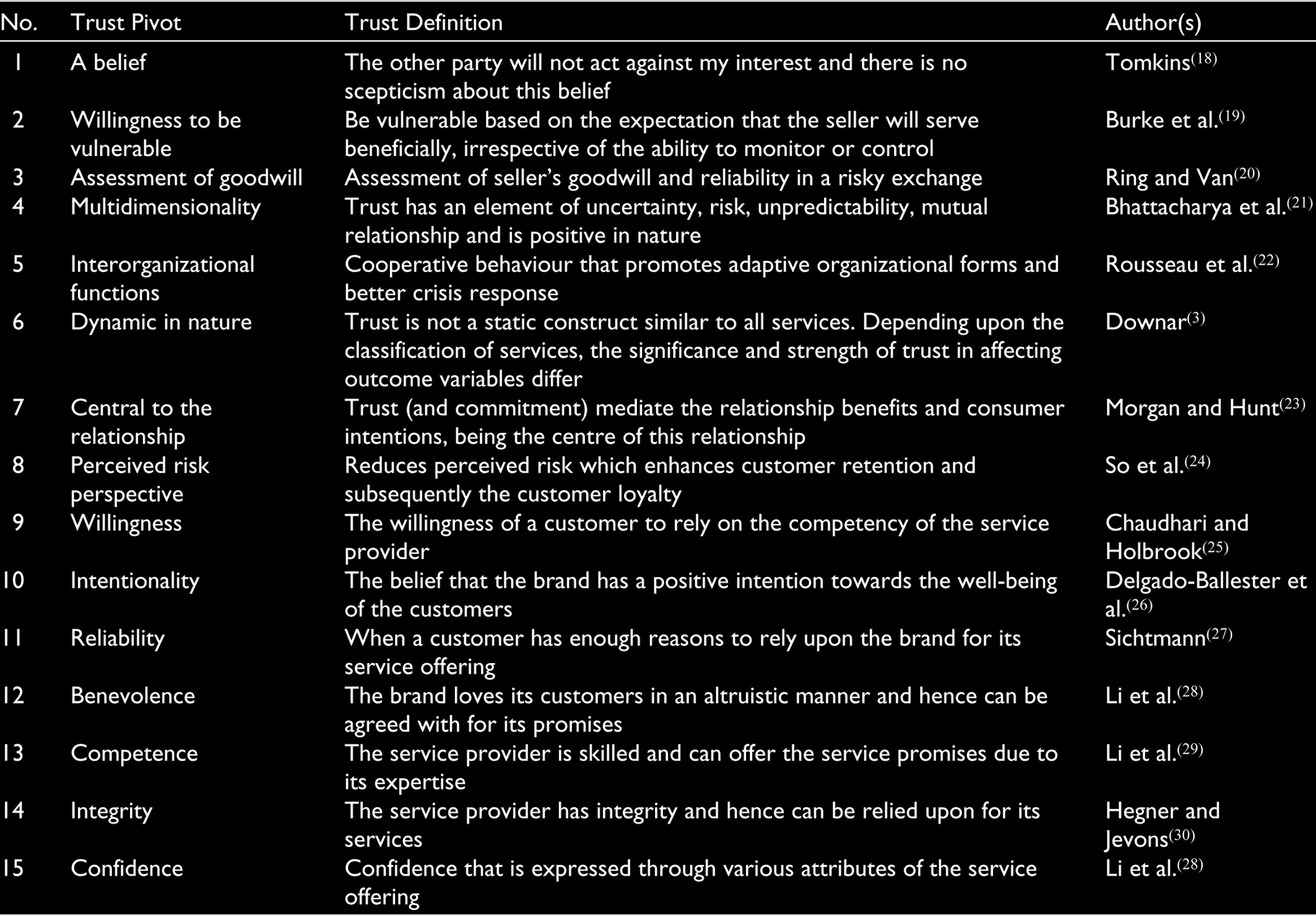
In addition to Table 1, the idea about trust being a multidimensionality construct, which cannot be seen as a single overarching construct, has also been supported by various researchers.(31)
Service Recommendation
Consumer purchase and customer loyalty concerning the beauty service segment have been discussed at length by various researchers. However, what exactly drives the recommendation behaviour for beauty service has not been discussed with similar comprehension.
Since reposing trust in a service is especially difficult due to the intangible nature(32,33) recommendations are often a win-win situation for both the potential customer, and the beauty service provider itself. This is because customers are always looking for help in cutting short the decision cycle while also reducing the acquisition risk involved.
While researchers have often focused on the choice made by customers based on their knowledge of the brand,(34) in real life the choice decisions are seldom routine and simple,(35) and hence an “outside push” from an acquaintance in form of recommendation could be critical in getting a new customer. This is more to do with services that involve higher perceived risk, including the physical and social risks, which are high in beauty service.
The inner-circle endorsement or recommendation is by the typical consumer endorser who is a consumer like anyone else, and not a celebrity or influencer. These are often considered to be more credible and hence have a higher influence on consumers.(36) Due to the common traits and usage behaviour between such endorsers and consumers, there is a sense of relatability that adds to the credence of the recommendation.(37) It could be fruitful to understand if trust in a service would lead to recommendation by customers in their respective inner circle.
The service recommendation scale for this research has been adapted from the existing scales from past research.(38) These scales are however tested again for validity and reliability and are found to be acceptable.
Scale Development for Trust and Recommendation Constructs
The discussion earlier pointed towards underlying sub-dimensions that define the trust construct with the help of specific indicators. This section describes the process used to establish these sub-dimensions and to validate the scale. The method adopted to consolidate the scale for this purpose is as given by Churchill.(39)
Development of an Initial Set of Items
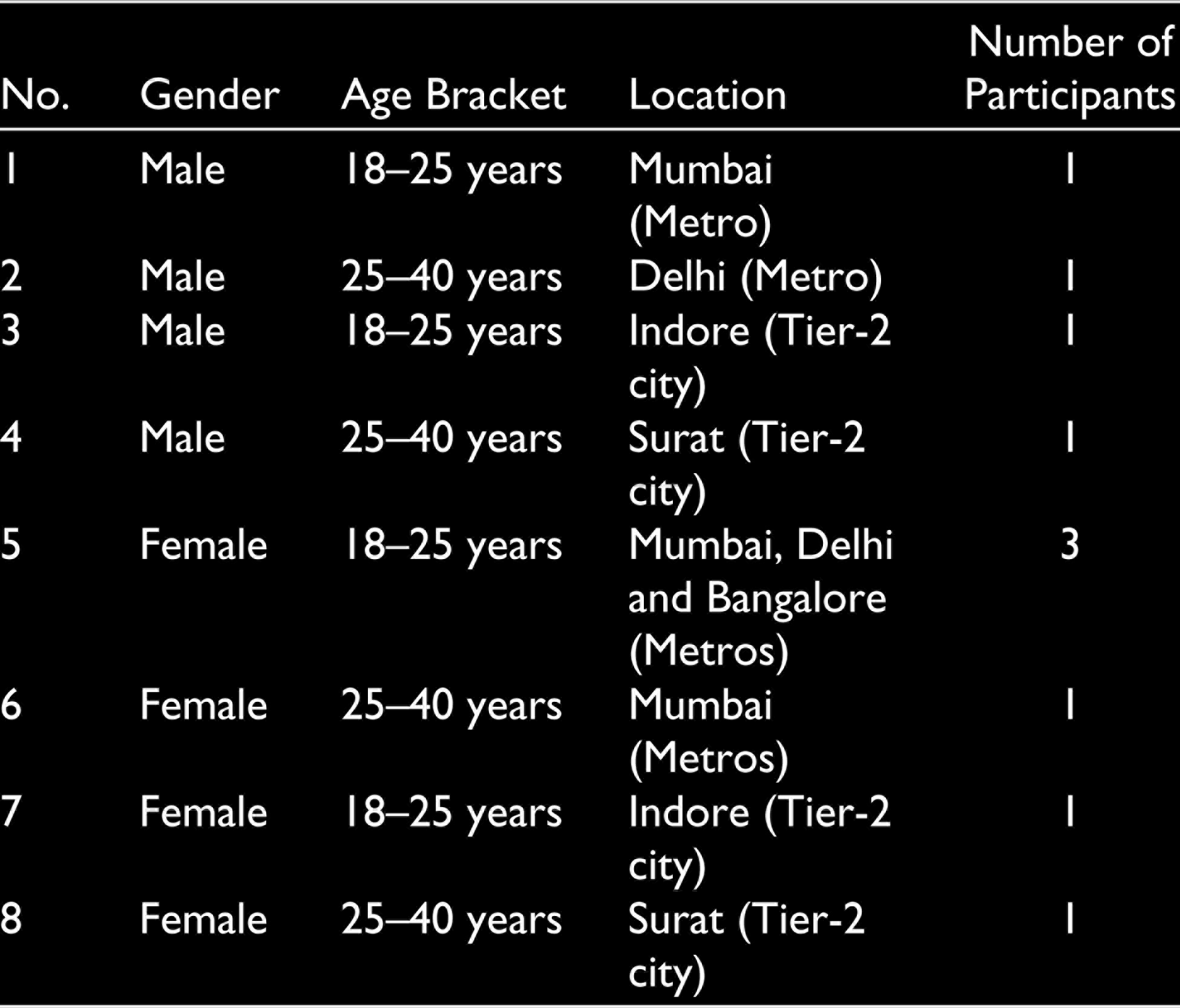
To develop a preliminary list of items for exploratory research, 10 consumers were reached out individually for telephonic interviews owing to the movement restrictions due to COVID-19. The respondent information has been detailed in Table 2.
Respondents Break-Up for Exploratory Research
In the first stage of the interaction, respondents were asked to dictate their journey for taking a service at a beauty salon. The first part of the interview was an unstructured free flow discussion with no leading questions. This allowed us to understand the choices made by the customers before, during, and after taking a service at a beauty salon. It also helped us find out recall moments in the customer journey for a beauty salon service. After this stage, we asked more structured questions from the respondents to define trust and how it is related to taking service from a beauty salon. Finally, we asked each of the respondents to tell us about elements in the overall service experience which evoke feeling of trust in the service.
As a result of this exploratory phase, 48 unique elements were listed down from all the respondents which were highlighted to be responsible for building trust in a beauty salon service. Barring a few, most of the elements were common across all respondents. An analysis of the elements thus generated, indicted that these elements were devoid of epistemic or conditional effect and hence were considered to be fit for further processing. The four predominant themes that came out of the items were as follows: service brand, hygiene, and safety, service employees, and service products. Further, these items were discussed with two service experts who largely agreed with the item list, except for a few items that they argued could have been misconstrued by the customers. However, to establish the result quantitatively, and to finalize a scale that could measure trust with the help of rightful sub-dimensions, a pilot survey with 25 respondents(40) was conducted on the items that supposedly defined sub-dimensions of the trust in beauty service. Basis feedback from the service experts and the pilot survey, the number of items in the survey instruments were reduced to 35 from the initial count of 48 items.
Data Collection: Stage 1
Sample
A convenience sample comprising students from both the genders was used in this study. Students from a set of institutes affiliated to the University of Mumbai participated in the study voluntarily. A total of 290 respondents were reached out to for filling the survey, out of which 251 responses were received (response ratio of 86.5%) (Table 3).
Respondent Detail: Data Collection—Stage 1
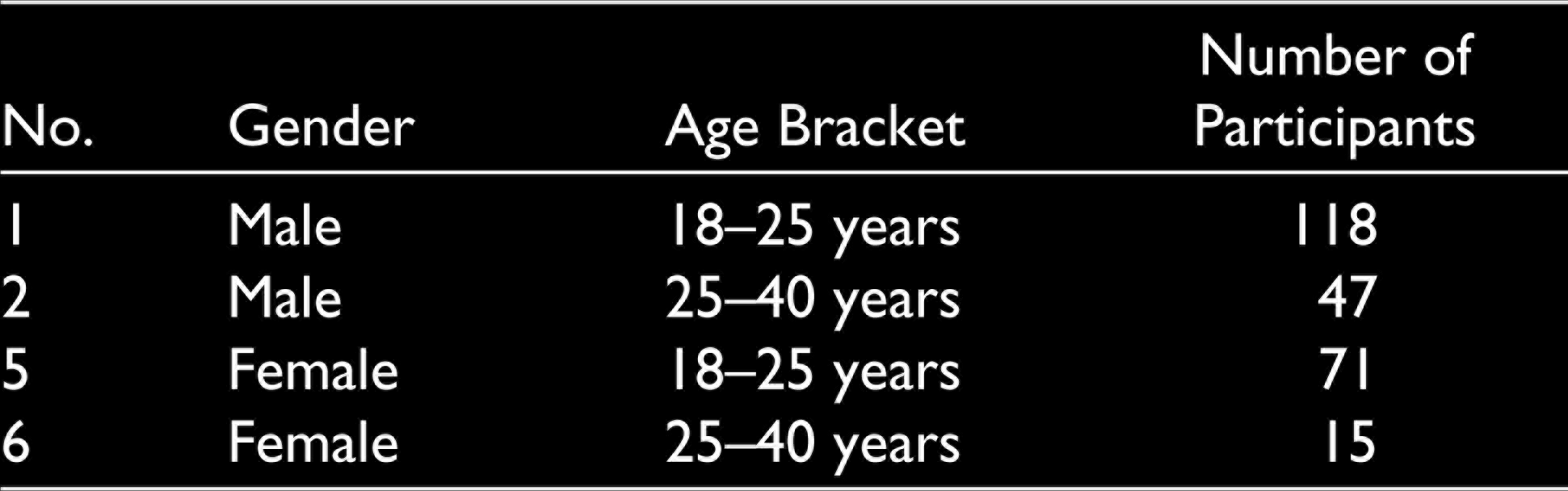
After discarding the incomplete responses or responses that did not meet the entry criterion, the final count of complete and correct responses was 214 (85.2%). This was sufficient for a factor analysis as it satisfied both the criteria of minimum responses per item (5 per item in a scale of 35 items), as well as that of minimum 200 responses to conduct EFA.(41,42) Almost three-fourths of all respondents visited a beauty salon at least once a month.
The KMO measure of sampling adequacy was at 0.852 indicating the adequacy of the sample size while Bartlett’s test of sphericity (<0.001) indicated that factor analysis could be useful for the analysis.
Survey Instrument
The survey instrument was comprised of scales, which were developed, with the help of exploratory research conducted with the customer interviews. The survey was administered online. The respondents were only asked basic demographic questions, a set of usage questions, and a group of 35 items to generate a response on various elements of a beauty salon service that evoked trust. Response on these items was measured on a seven-point Likert scale anchored by “1 = strongly disagree” to “7 = strongly agree.”
Item Reduction and Exploratory Factor Analysis
Iterative factor analysis was done on the data with factor reduction using principal component analysis with varimax rotation. The items with factor loading less than 0.5 were suppressed. Multiple iterations were conducted, and 20 items were dropped over 13 iterations. The items were removed due to lower test-retest correlations (<0.5) as it would mean that these items generated noise in the analysis.(43) Items with lower anti-image correlations (<0.7) and lower communalities (<0.5) were also dropped suggesting a poor fit of these items for the overall construct definition.(44)
Finally, those factors that did not load with a minimum loading of 0.5 were also dropped.15 items were retained which formed three factors in groups of 6, 6, and 3 items each. This resulted in a stable structure of 3 factors and 15 items, where the items were loaded on to at least one of the factors.
Reliability of the Scale
The three factors were checked for reliability using Cronbach’s alpha and each one was found to be reliable (>0.7).(45)
Data Collection: Stage 2
Sample
To refine the scale further and extract a final set of latent variables that will together define trust as a larger construct, second round of data collection was conducted. Data was collected from students belonging to a different set of institutes affiliated to the University of Mumbai. Out of 300 respondents that were reached out for survey, 228 responses were received (response ratio of 76%). After discarding the incomplete responses, or incorrect responses, the final count of complete and correct responses was 225 (Table 4).
Respondent Detail: Data Collection—Stage 2
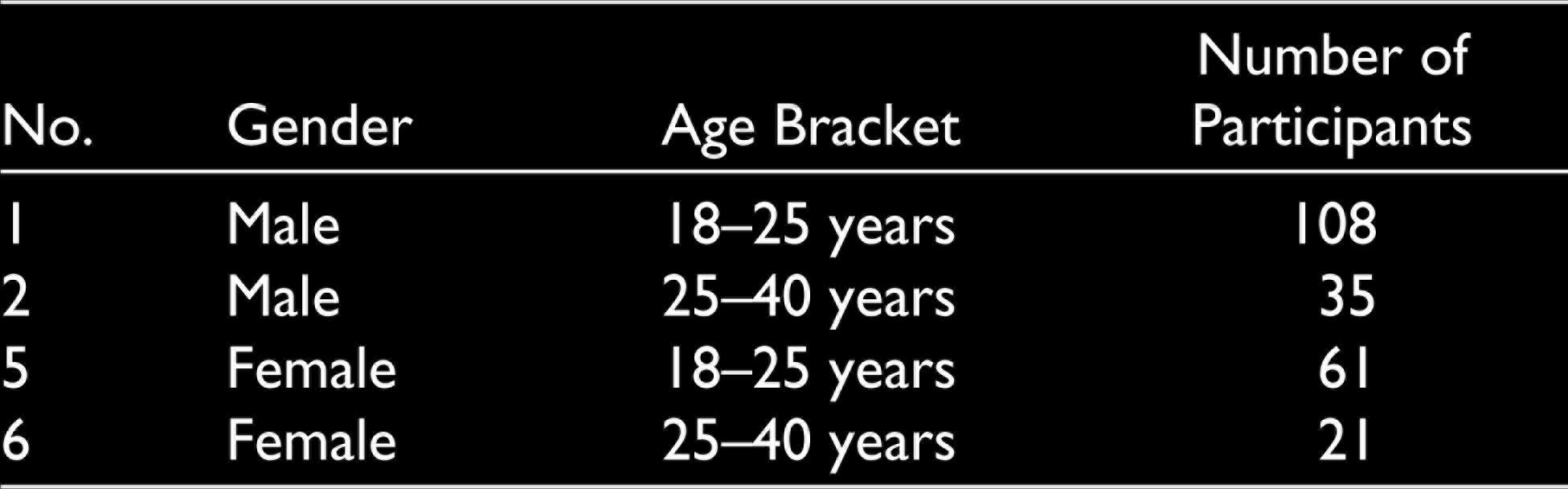
The KMO measure of sampling adequacy was at 0.811 indicating the adequacy of the sample size and null hypothesis for Bartlett’s test of sphericity was rejected to indicate that EFA would be useful for this analysis.
Survey Instrument
The survey instrument was comprised of scale refined after the first round of EFA. Additional scale items were introduced in this scale to include the service recommendation aspect of the service. The scales were adapted from existing scale but were tested for reliability and validity nevertheless. The survey was administered online. Respondents were only provided with basic demographic questions, and a group of 18 items to generate a response on various elements of a beauty salon service that evokes trust, and that of service recommendation items. Response on these items was a measure on a seven-point Likert scale anchored by “1 = strongly disagree” to “7 = strongly agree.”
Item Reduction and Exploratory Factor Analysis
The item reduction for the second set of data followed the same procedure as explained for the first set of data. Iterative factor analysis led to the dropping of 9 items from the group of 15 items that represented service elements that evoked trust, over a total of 4 iterations. The three items representing service recommendations were all retained
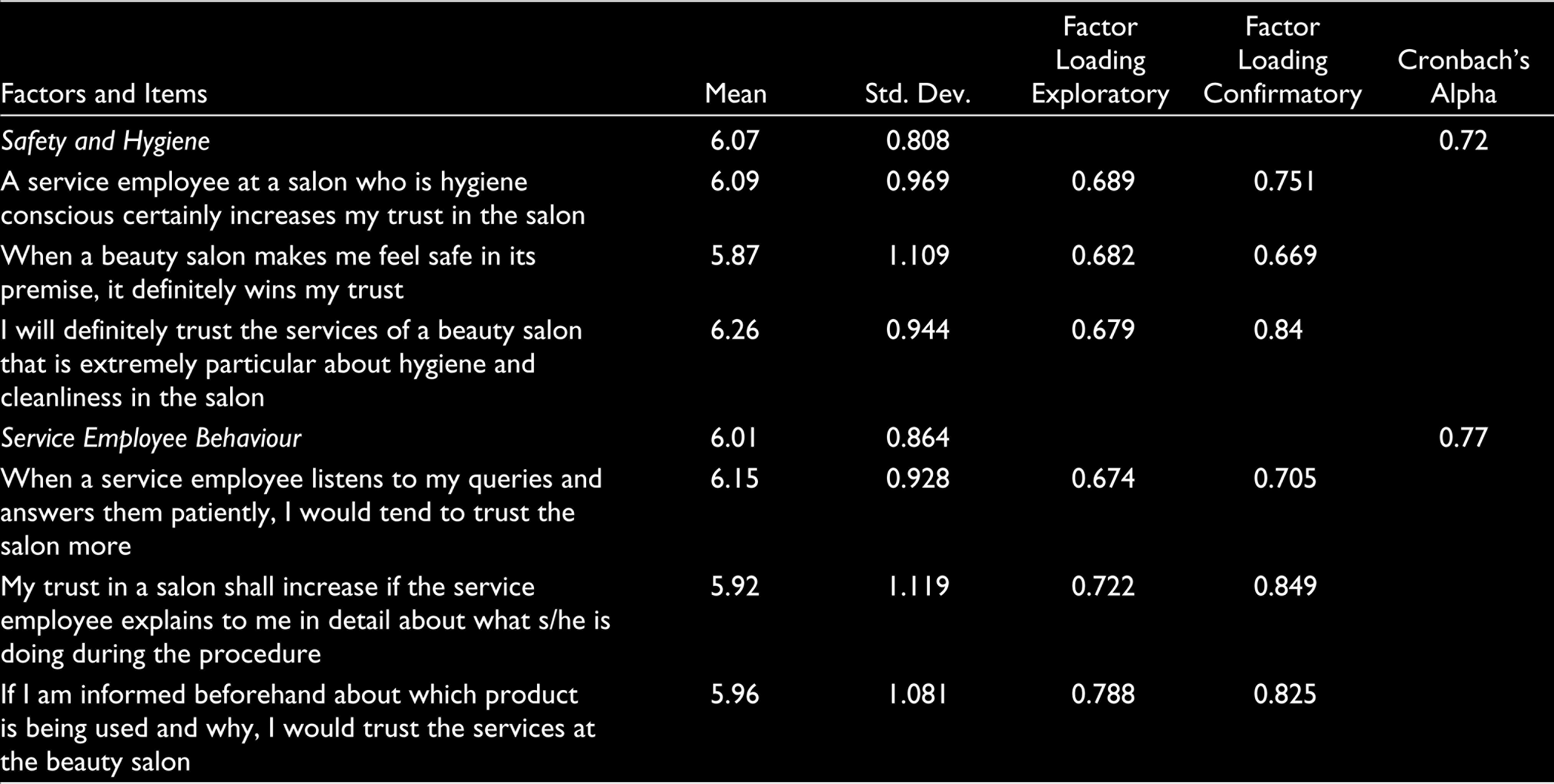
This generated two factors with 3 items each which came together to represent elements of service which evoked trust (Table 5). The indicators that came to define the trust construct were as follows: (a) salon hygiene; (b) salon safety; (c) employee hygiene; (d) employee explaining the service procedure to the customer; (e) employee giving details about the products that are being used in the service job; and (f) ability to answer queries from customers patiently. These six items were bucketed into two themes.
Hygiene and safety: Salon hygiene, salon safety, and employee hygiene.
Service employee behaviour: Explanation of procedure, detailing product information beforehand, and listening and answering to customer queries with patience.
Exploratory and Confirmatory Factor Analysis
Construct Validity and Composite Reliability for Measurement Models
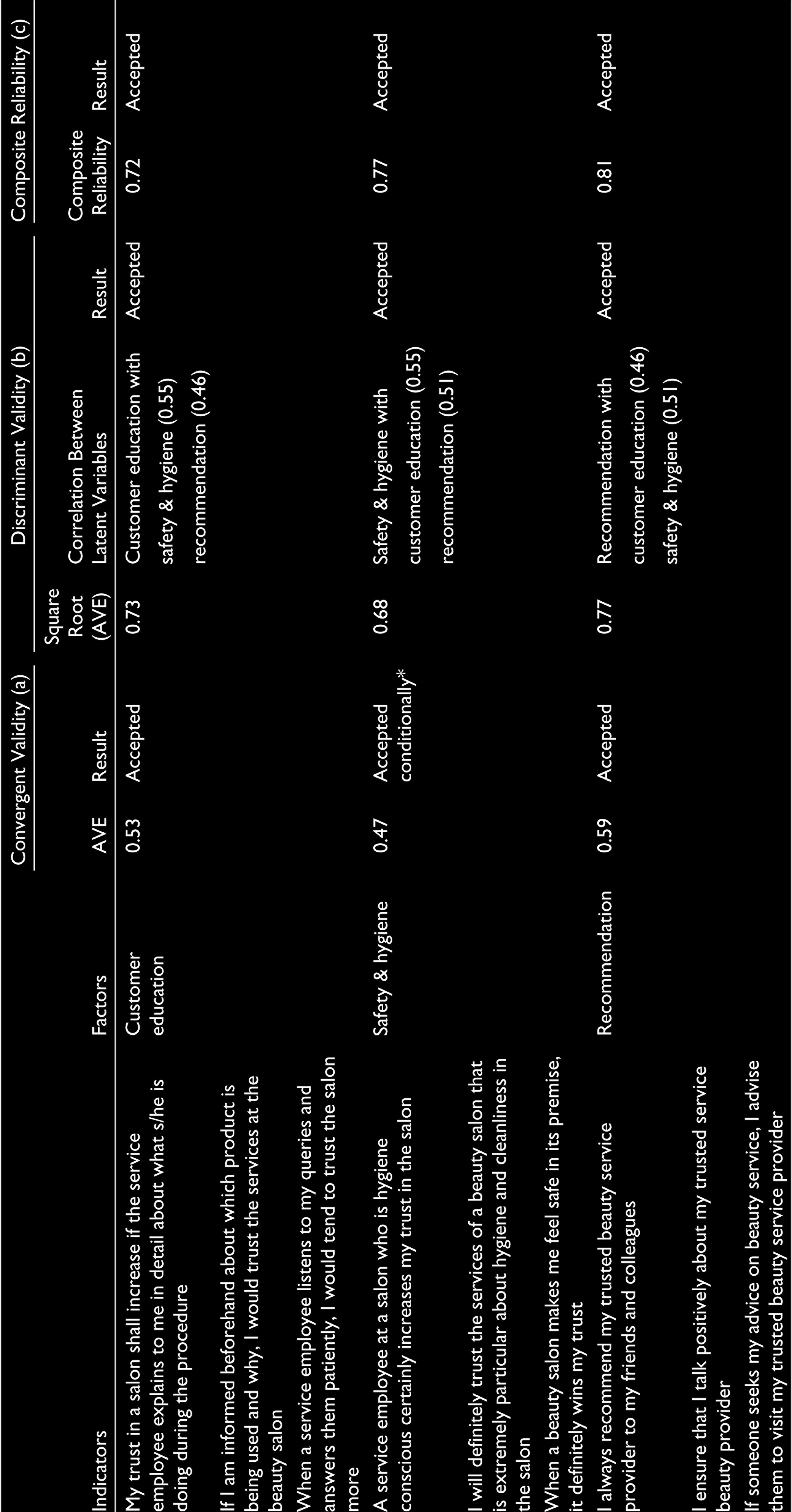
Three measurement models were thus created with two exogenous variables (Safety & Hygiene and Service Employee Behaviour) which were based on the exploratory factor analysis and one endogenous variable (Service Recommendation) which was based on the existing scales as discussed earlier. The construct validity and composite reliability were also tested for the adapted scales on service recommendation (Table 6). It must be noted that AVE for Safety and Hygiene is accepted for 0.47 as the composite reliability is higher than 0.70.(46,47)
Construct Validity and Composite Reliability for all Measurement Models
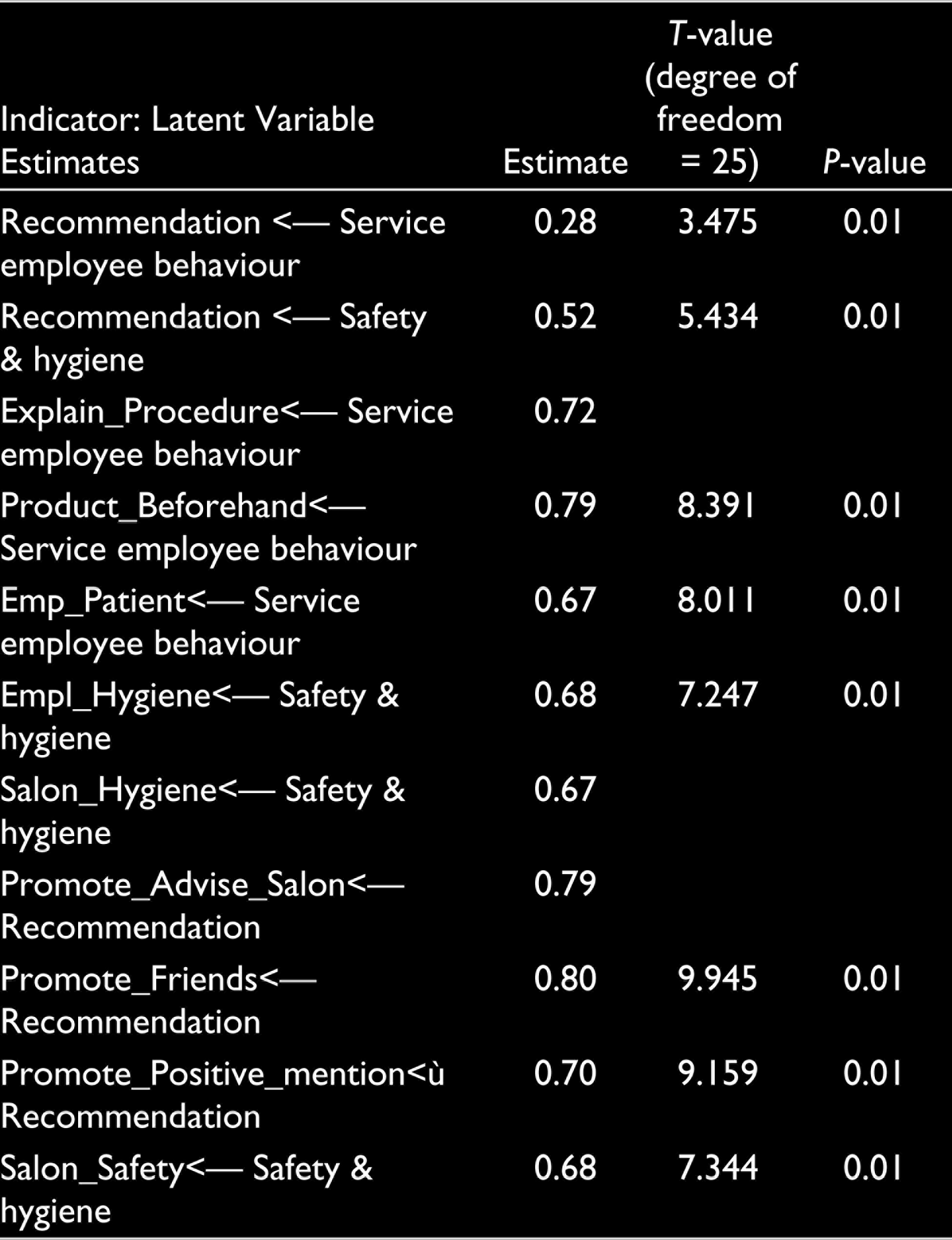
The t-values of all indicator loadings exceeded the critical value of 2.7 (for degree of freedom = 25) at the 0.01 significance level,(48) which has been shown in Table 7. The further sections lay down the conceptual model based on the outcome of the two-step data reduction process and propose hypotheses for predictive validity of the model.
T-values and P-values for Indicators: Latent Variables
Conceptual Framework and Hypotheses Development
Based on the research parameters discussed and analysed thus far, a conceptual model for the study was developed (Figure 2). Each of the three latent variables—Trust due to Safety & Hygiene, Trust due to Service Employee Behaviour, and Service Recommendation, which is the endogenous variable in the model—are shown to have a simple linear association.
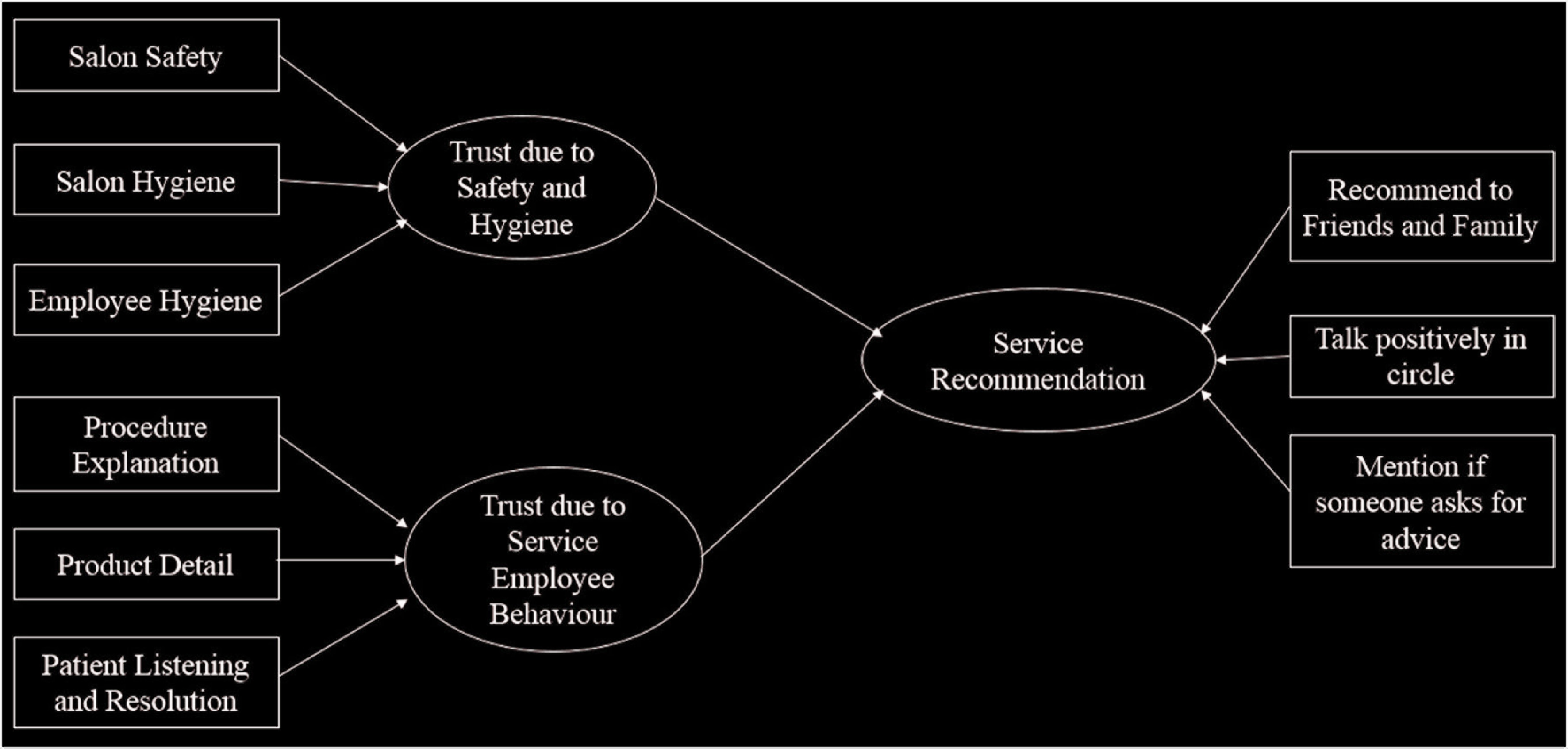
The conceptual model shown in Figure 2 was analysed primarily using SEM, supported by AMOS 18 using a two-stage model-building process.(49) First, a confirmatory factor analysis (CFA) was conducted to examine the reliability and validity (convergent and discriminant) of the measurement model which has been explained in the preceding section. After having established the latent constructs and the underlying indicators, the further sub-section lays down the hypotheses about the influence of exogenous variables based on trust, upon the endogenous variable based on service recommendation actions by the customers. The model fit is also tested based on the model fit indices.
The covariance-based SEM modelling is used as we aimed at minimizing the differences between the observed sample covariance matrix and the covariance matrix estimated after the revised theoretical model is confirmed.(50) Since CB-SEM is a parametric statistical method with standard output for statistical significance, it has been preferred over the PLS where the immediate determination of inference statistics is sometimes hindered.(50)
Influence of Trust Built by a Beauty Service Brand Through Service Employee Behaviour on Customer’s Willingness to Recommend the Service
Services have a strong manual component in them, which makes various elements of service such as frontline employees, tangible elements of services, and the overall experience play a critical role in customer’s perception of the service.(8) Service employees often play a role beyond their expected in-role behaviour to providing additional help to customers such as re-educating customers and often guiding them in the co-delivery process.(51) Service employees are thus judged based on their attitude,(26) competence,(29) and expertise.(52)
It is thus understood that customers trust beauty service setups where the service employee details out the procedure as well as the products used during the service job. Further, the ability to listen to customer queries and answer them patiently also helps in evoking trust between the customer and the beauty service provider. Since a customer’s perception of service is important before making a recommendation, the role played by trust built due to the service employee behaviour might play a critical role. Hence,
H1: Trust developed through customer education would influence customer’s willingness to recommend the service to others.
Influence of Trust Built by a Beauty Service Brand Through Safety and Hygiene Measures on Customer’s Willingness to Recommend the Service
Customers try to reduce their inherent risks in a service acquisition and are often dependent on explicit and implicit cues. This behaviour is heightened when the service in question is affects our physical self and may cause bodily harm.(53)
Service hygiene factors including the environmental conditions such as cleanliness, and safety are known to be critical for prevention of customer dissatisfaction for beauty service.(54) Hence, customers naturally seek hygienic and safe environment when it comes to beauty service.
As discussed in the earlier sections, trust in salon hygiene, salon safety, and employee hygiene have been identified as critical indicators of overall trust in the service set up.(55,56) It is however critical to understand if this trust built on the salon safety and hygiene enough for customers to recommend the beauty service outlet within their network? Hence,
H2: Trust developed through safety and hygiene would influence customer’s willingness to recommend the beauty service to others.
SEM Model Fit and Hypotheses Testing
Model Fit and Associated Indices
To examine the predictive validity of the trust-related latent variables on the service recommendation behaviour of the customer, structural equation modelling using maximum likelihood technique was used. The overall model fit statistics suggest that the model has a reasonable model fit (Chi square = 1.72. AGFI = 0.92, CFI = 0.97, and RMSEA = 0.05). Table 8 details the observed and acceptable values for the model fit indices based on AMOS 18.
Model Fit Indices from Confirmatory Factor Analysis
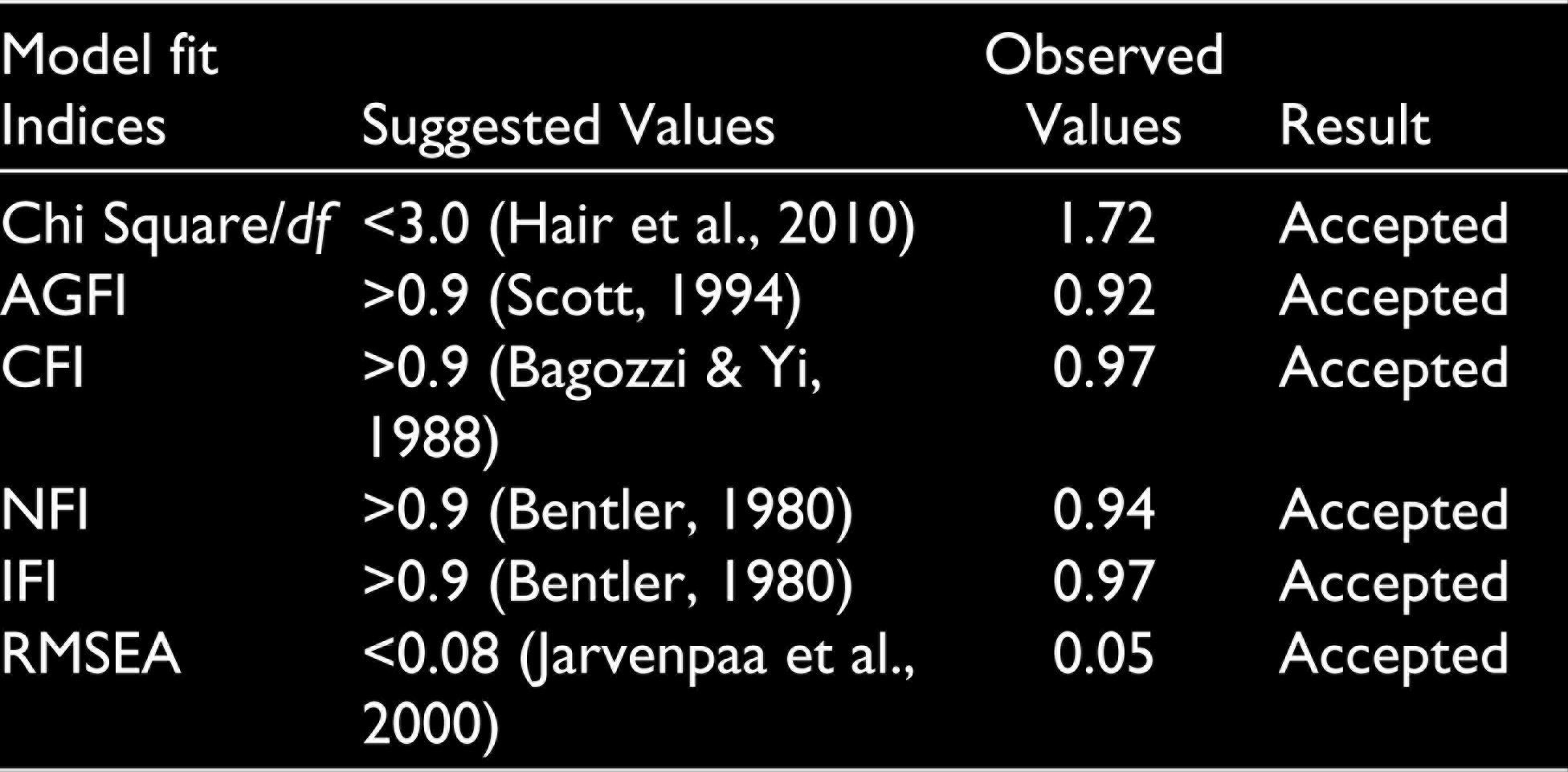
The SEM results as given in Table 8 hence qualify the criterion given by Hair(44) for a model fit. Thus, the model can be said to represent the hypothesized construct of trust and its association with a recommendation for beauty service. Further, the path analysis in the next section would test the hypothesis about the impact of trust and its latent constructs on the service recommendation.
Ultimate Path Analysis
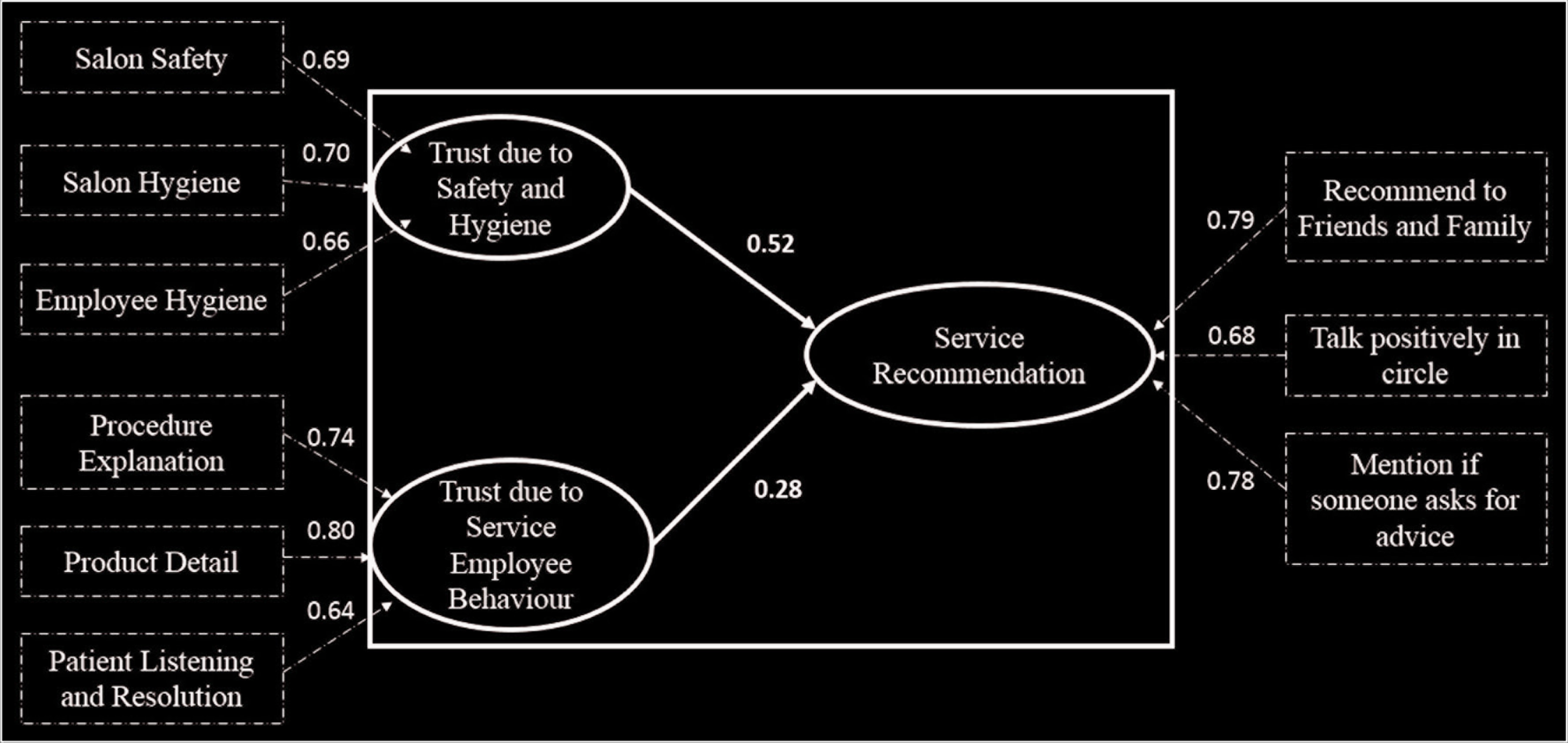
The ultimate path diagram in Figure 3 shows that there a significant impact of trust in customer education and trust in-salon safety and hygiene, on the service recommendation behaviour displayed by the customers. The results of path analysis show that trust in customer education (β = 0.28, p < .001), and trust in-salon safety and hygiene (β = 0.52, p < .01) are positive and significant. These were hypothesized as direct effects on the endogenous variable here—the service recommendation. Hence, H1 and H2 are both supported.
Conclusion and Discussion
Research Results
The dimension of trust has not been detailed in existing beauty service literature. This article looked at beauty service elements from the perspective of trust building and their influence on the service recommendation behaviour of customers. Thus, the two major findings from the research have been the definition of trust deconstructed to reflect two sub-dimensions, and the influence that these sub-dimensions with underlying elements have on the service recommendation aspect of consumer behaviour. The study brought out two major latent variables that defined trust for beauty service—trust due to safety and hygiene and trust due to service employee behaviour. It is important to note that despite other service elements present such as brand and pricing, when it came to trusting the service experience, safety and hygiene, and service employee behaviour held higher importance. For example, service elements such as pricing, warranties, and discounts were dropped owing to poor communalities and test–retest statistics. Thus, the research showed that safety and hygiene and service employee behaviour were critical in invoking trust from the customer’s end for the beauty service.
It must be noted that the importance of safety & hygiene was not limited to the service set up only, but also considered employee hygiene. This reflects the consumer’s attitude towards safety and hygiene for the overall service experience that is a function of all elements that contribute towards safety and hygiene. Similarly, the service employee behaviour is also reflected through various interaction with customers. For example, trust due to the service employee behaviour was a factor of elements like making consumers aware of the service process and products, as well as listening to customer suggestion and feedback patiently.
The scale for trust construct was built from scratch with the help of personal interviews and expert opinions. This was then refined with the help of multiple EFAs and CFA. The research also supported the predictive validity of the two dimensions of service employee behaviour and safety and hygiene for service recommendation behaviour. Service recommendation itself is defined as a latent construct. The resulting model fit and ultimate path analysis proved that the model fit was good, and the exogenous variables had a significant and positive influence on the endogenous variable of service recommendation.
While there are ample of studies that have discussed the factors of a service that lead to building of trust,(3,17) and the role of trust in consumer decision-making, this study presents the findings with a novel approach and on a new area of application. Beauty service literature is majorly based on factors that define consumer experience; however, there are barely any comprehensive studies in this area in Indian beauty service context. This study argued against trust being looked at as a monolithic construct, and segregated the dimension based on further sub-dimensions. This helped us in understanding that the overall trust that consumer has on the service is the sum total of trust on various dimensions that in turn are represented through elements of service experience.
The study attempted to validate these results through a multi-stage data collection and analysis methodology, which was robust owing to preceding evidence as cited in the study. Finally, while service recommendation has been shown to be influenced by trust in previous studies,(5) this study looks at this influence on an individual predictor-latent variable level, where an individual service element is shown to affect service recommendation with the help of ultimate path diagram. Thus, we expect this study to make key contribution to the area of services marketing, especially in the service experience (based on findings) and service communication (based on recommendations ahead) domains.
Marketing Implications
The high-contact nature of the beauty service industry makes it especially vulnerable due to the behavioural change across the world, courtesy the ongoing pandemic. Beauty service providers must react empathetically to manage short-term profitability woes and to build long-term relationships with customers. The reaction must reflect in multiple handles of engagement, ranging from service design, service communication, and service delivery.
Recommendation plays a significant role in services, as services require building of trust between the service provider and customers due to social and physical risks involved as is in the case of the beauty service. Hence, finding ways to generate service recommendations is important for business managers. This research has shown that trust influences the customer propensity to recommend a beauty service in their circle, insert positive mentions in conversations, and advise in case asked to make suggestions.
Further, this article has also highlighted service elements that can help beauty service providers build trust with their customers. It was found that trust is a combination of two sub-dimensions—service safety and hygiene, and service employee behaviour as discussed earlier.
Thus, beauty service providers must incorporate this in their service operating procedures (SOPs) and not leave it to the service employee who is providing the service. This would help standardize the process thus getting over any inconsistency in service experience for customers. Service standardization is critical in building and managing consumer trust.
Service employee behaviour that comprises of ability to listen and answer the customers patiently must also be nurtured as it goes a long way in winning consumer trust. Service providers must give due focus in hiring service employees who have the right attitude to cater to customers with these qualities.
Further, beauty service providers must also make efforts to nurture and enhance skills that would make them more trustworthy for customers. Consistent trainings and incentive programmes must be held to develop and enhance soft skills and knowledge about the set SOPs. Finally, considering the importance of service recommendation and advocacy, existing customers must be encouraged to discuss service elements with their friends and acquaintance. Incentive programmes and promotions must be designed around encouraging customers to spread the word about the strict safety and hygiene practices, as well as about positive service employee behaviour. This must also be highlighted through all explicit communications, and efforts must be made to ensure that it is reflected in all implicit communications as well. Thus, service managers stand to gain by implementing the findings from this study by focusing on key service elements that help in building trust with customers that would in turn encourage the service recommendation behaviour of consumers.
Limitations and Future Research
The study has its limitation, which also lead to the areas for future research. The beauty service sector is expanding fast, and there has been a rise in medical and cosmetic procedures being classified as beauty services. This article did not include these procedures and services in is study, as the scope of beauty services was set to the routine services that patron approach beauty service providers for. The exploratory research was based on a mix of respondents from Tier-1 and Tier-2 studies, which may have restricted the discovered views about service journey and expectations. The study looks at service elements generated through exploratory research only, and no moderating or mediating roles were evaluated.
Finally, COVID-19 situation restricted our ability to conduct any personal interviews or discussions, which may have led to more insights. Further research can be based on the findings of this research by comparing the service recommendation behaviour based on trust for consumers from different geographies. This would be especially helpful for multinational beauty service providers to assess the differences in consumer behaviour for the same set of service elements. This would help them tweak their marketing strategy for different markets. Finally, while brand name and pricing were used as the service elements for this research which did not make it to the final list of items that shaped trust sub-dimensions, these consumer brand consciousness or price–action response could be studied as moderating variables to assess their impact on the service recommendation behaviour. This would help beauty service providers to evaluate their marketing strategy for different customer groups based on varying idea bout brand name and price.
Footnotes
Declaration of Conflicting Interests
The authors declared no potential conflicts of interest with respect to the research, authorship and/or publication of this article.
Funding
The authors received no financial support for the research, authorship and/or publication of this article.