






Abstract
This study examines the resource dependency and signalling role of independent directors from the perspective of institutional investor’s and also investigates if the presence of large blockholder moderates the signalling effect. This study uses the quasi-natural experiment to examine this relationship. The difference-in-difference (DiD) analysis of 5,298 firm observations covering 618 National Stock Exchange (NSE) listed Indian firms for the period 2001–2011 provides empirical evidence that board composition does matter to institutional investors. We find that non-compliant firms who adopted the board independence requirement experience a significant increase in institutional ownership relative to previously compliant firms. We also find that institutional investors have invested more in family-owned firms during post-mandate period compared to government-, private- and foreign-owned firms. Overall, this study contributes to the existing literature on resource dependency theory and signalling theory and shows that the board independence acts as a signal to institutional investors and decreases the agency cost and cost of monitoring.
Keywords
Introduction
The concentrated shareholders act opportunistically and take advantage of available information at the expense of other shareholders (Roe, 2005). The presence of significant ownership enables them to have information advantage compared to rest of shareholders. In the presence of restricted information, other investors tend to use secondary information like board composition and governance parameter as a signal for firm’s attributes (Deutsch & Ross, 2003; Sanders & Boivie, 2004) and consider independent director as a critical resource for the firm (Hillman, Cannella, & Paetzold, 2000). The independent director plays an important role and can solve the agency problem of controlling shareholders and non-controlling shareholders (Helland & Sykuta, 2005). Markets such as India where ownership is concentrated and the average promoters (non-institutional) ownership is 48.01 per cent (Sarkar, 2010), the role of the independent board becomes more crucial as the board is responsible for protecting the rights of both depressed shareholders and institutional investors. Hence, in this article, we examine the resource dependency and signalling role of independent directors on institutional investor’s ownership and see if the presence of large blockholders moderates the impact of independent directors on institutional investor’s ownership.
The conventional belief in managerial theory suggests that independent directors of board monitor and control discretionary power and self-serving behaviour of management to reduce agency cost (Helland & Sykuta, 2005; Shleifer & Vishny, 1997). Board independence controls the CEO’s discretion over the board and is more likely to take strict action against non-performing CEO’s (Guo & Masulis, 2015; Weisbach, 1988). The board independence is positively related to firm performance (Liu, Miletkov, Wei, & Yang, 2015) and reduces its variability (Pearce, Robinson, & Schepker, 2014). The recent literature on board independence also highlights the role of independent directors in increasing the corporate innovation (Balsmeier, Fleming, & Manso, 2017; Lu & Wang, 2018). There are many studies which highlight the role of independent directors on crucial board decisions such as anti-takeover defences (Byrd & Hickman, 1992), restructuring (Johnson, Hoskisson, & Hitt, 1993), corporate social responsibility (Zhang, Zhu, & Ding, 2013) executive compensation (Sonenshine, Larson, & Cauvel, 2015; Vafeas, 2000) and impacts stock volatility (Christy, Matolcsy, Wright, & Wyatt, 2013), IPO’s valuation (Bertoni, Meoli, & Vismara, 2014) and cost of debt (Bradley & Chen, 2015), but no study has examined their signalling role on institutional investor’s ownership.
Security Exchange Board of India (SEBI) enacts the rules and regulations of corporate governance to supervise and ratify the managerial decisions and the board monitoring rule of revised Clause 49 (2005) compel firms to have minimum 50 per cent of independent directors and 33 per cent in case chairman is a non-executive director. This particular mandate may drive institutional investors’ attention to board composition as an indicator of better governance. Besides, it becomes critical to analyse the signalling role of independent directors taking into consideration the presence of large blockholders, who reduce the agency cost. Thus, this study is the first to contribute to the literature by examining the resource dependency and signalling role of board composition towards institutional investors with the help of exogenous shock to board independence in the Indian public listed firms arising from the change in Clause 49 of listing agreement. This will also help us in addressing the important issue of endogeneity. Generally, institutional investors have information disadvantage compared to insiders and they use information like board composition and governance parameter as a signal for firm’s financial and non-financial attributes like profitability and environmental responsibility (Deutsch & Ross, 2003; Sanders & Boivie, 2004). McCahery, Sautner, and Starks (2016) provide survey evidence that institutional investors give due importance to the governance and exit the firms which have a poor governance structure. Particularly, institutional investors tend to prefer independent board (Schnatterly & Johnson, 2014) and give importance to the role of independent directors in arbitration among internal management in case of any disagreement and in monitoring any conflict of interest between shareholders and management (Fama & Jensen, 1983). The board also provides a critical resource in the form of networks and guidance to management in strategic decisions of the firms (Hillman et al., 2000; Zahra & Pearce, 1989). This resource supplying capacity of the board may be used as an effective way to mitigate the resource constraint enforced by the highly competitive environment (resource dependency theory). The board’s social capital will also act as an asset to board and help in improving overall board effectiveness (Kim & Cannella, 2008). The existing literature on board composition highlights board as resource provider and a medium to signal in the presence of restricted information. In India where concentrated ownership is significantly present, the function of the independent director becomes more important as controlling shareholders restrict the information and investors largely rely on independent directors for the information. Hence, in this study, we analyse the nexus between the existence of independent directors and institutional investors’ ownership in the Indian context.
We use pooled and panel OLS regression model by adopting difference-in-difference (DiD) analysis technique on a sample which consists of 5,298 firm observations covering over 618 National Stock Exchange (NSE) listed Indian firms for the period 2001–2011 and spanning over 113 different industries. The independent director mandate was not applied to all firms at the same point in time and different classes of firms have implemented it at different point in time. Hence, there are firms which have already complied with it and others who are yet to comply with the norms and this creates the treatment (firms yet to comply) and control (firms complied) groups for the study.
The analysis shows that non-complaint firms had lower institutional investors’ shareholding but they have experienced higher institutional investors’ shareholding after adopting the board independence requirement in the post-mandate period compared to other firms. The results indicate that the institutional investors welcome board independence norm and they reward the affected firms by investing more in the post-mandate period. Thus, our results show that the presence of more independent directors is linked to larger institutional investors’ ownership. We also document that institutional investors have invested more in family-owned firms in the post-mandate period compared to government-, private- and foreign-owned firms. Several robustness tests are also performed to test the sensitivity of results to firm-, industry- and time-specific effects. Our analysis shows that institutional investors perceive board independence positively and they have rewarded the firms by increasing their shareholding in the post-mandate period.
Development of Hypothesis
The extant literature in the field of institutional investors and corporate governance shows mixed results. While Aggarwal, Erel, Ferreira, and Matos (2011) show that the changes in institutional ownership over time enhances firm-level governance, Sarkar and Sarkar (2000) and Bushee, Carter, and Gerakos (2013) find no association between governance and institutional investors. However, Mohanty (2003) and Chung and Zhang (2011) observed that institutional investors invest in companies that have better governance records considering the mixed evidence in the literature on the relationship between institutional investors and corporate governance. In this study, we examine the causal relation between board independence and institutional investors’ holdings using an exogenous shock to board independence in the Indian public firms arising from Clause 49. Clause 49 (2005) mandate of SEBI compels firms to have minimum 50 per cent of independent directors and 33 per cent in case the chairman is a non-executive director; this will bring substantial change in the board composition of firms and compel them to change their existing board structure. Each firm chooses the structure of its board, which maximises its value (Coles, Daniel, & Naveen, 2008; Lehn, Patro, & Zhao, 2009). In agreement with this view, if all the firms have adopted the best optimal and beneficial board structure in the pre-mandate era, we should not find any inconsistency (differences) in the institutional investors’ shareholding after controlling all the relevant firm-specific variables in the post-mandate era. Moreover, firms that made substantial changes in their board structure to comply with norms (affected Firms) will experience decrease in the institutional investors’ ownership in the post-reform era over the remaining firms because the mandate compels them to shift from their suitable governance structure. On the contrary, if the mandate is beneficial for the firm and decreases the agency cost and cost of monitoring for the institutional investors, the affected firms will experience increase in the institutional investors’ ownership over the remaining firms in the post-reform era. In other words, if the resource dependency theory and signalling theory hold in the market, we will find an increase in the institutional shareholding of the firms. Hence, we propose the following hypothesis:
The presence of large blockholders in a firm assures better monitoring (Admati, Pfleiderer, & Zechner, 1994) and acts as a signal of good governance to the market (Ayres & Cramton, 1993). However, large blockholders may lead to intense monitoring, which may result in poor performance and inefficiency in the firm (Bebchuk, Kraakman, & Triantis, 2000; La Porta, Lopez-De-Silanes, Shleifer, & Vishny, 2002). Nevertheless, the role of blockholders in governance is critical and can impact the signalling role of board composition to institutional investors. Better monitoring by blockholders will decrease the agency cost and the cost of monitoring for the institutional investor. Hence, institutional investors’ shareholding may be affected by the presence of blockholders and the form of blockholders in the firm. Probably, the presence of large family ownership leads to an increase in agency cost between the promoter and minority shareholder, while the government blockholder guards the interest of all stakeholders. Therefore, we examine whether the impact of board independence on institutional investors’ shareholding varies with the types of firms and blockholder categories, namely, state-, private-, family- and foreign-owned, and propose the following hypothesis:
Data and Methodology
The sample is constructed from the Prowess database managed by the Centre for Monitoring Indian Economy (CMIE). Our initial sample consists of all NSE listed firms, but after eliminating the financial and utility firms and depending on the availability of data, our final sample comprises of 5,298 firm observations covering 618 NSE listed Indian firms for the period 2001–2011 and spanning to 113 different industries.
The primary dependent variable is institutional investors’ shareholding (INSTI), which is evaluated as the percentage of shares held by the non-promoter institutions. The ratio of the independent directors to total directors (Non-Ex/Dir) data is not available from the published databases, but the author from the audited annual reports of each firm has compiled it for each year. Similar to Schnatterly and Johnson (2014), we use the following firm-specific variables as control variables, that is, log firm size is measured as the natural logarithm of total assets to control for the institutions’ preferences for larger firms hoping for the higher liquidity and the presence of lower information asymmetries (Gompers & Metrick, 2001). Firm’s recent good performance act as an attractive mechanism for some institutional investors, so to control for that we use cash flow measured as profit after tax before depreciation and amortisation by total assets. Cash flow volatility is measured as rolling standard deviation of cash flow taken 3 years at a time. Dividend is measured as the dummy variable equal to 1 if a firm declared the dividend or else 0 to control the institutions preferences for firms that pay dividends (Falkenstein, 1996; Gompers & Metrick, 2001). We use market to book ratio measured as book value of assets less book value of equity plus market value of equity divided by book value of assets to control for the preferences for growth firms. We proxy the risk of losses in case of bankruptcy by the leverage ratio, which is measured as the total borrowings to total assets net of cash holding because prior research has shown that institutional ownership is negatively associated with the level of leverage in the firm (Badrinath, Gay, & Kale, 1989; Gompers & Metrick, 2001). We also control for the presence of liquidity in the firm by controlling for the net working capital, which is measured as a difference of current assets and current liabilities net of cash to total assets. Finally, we control for the research and development ratio, which is measured as the research and development expenses over total assets as research and development (R&D) expenses have been used in the literature (Hessel & Norman, 1992; Wahal & McConnell 2000) for analysing institutional myopia and find that institutional ownership prefers the firm having high R&D intensity.
In order to examine if institutional investors’ holding is influenced by the presence of large blockholders, we define blockholders as those who hold more than 20 per cent of the shareholding in line with La Porta et al. (2002). We manually compiled the data on the family-owned firms from the individual balance sheet of each firm for each year and other categories based on the CMIE Prowess database. The identified mutually exclusive large blockholders are (a) government firms which are the public sector undertakings or government-owned corporations, which are ‘not privatised’, (b) the family firms which are non-government family owned firms, (c) private firms which are non-government-owned firms comprising non-family-owned firms and (d) foreign firms which are non-government-owned firms by foreign origin promoters.
We examine the relationship between board independence and institutional investors by using the pooled and static panel regression model with firm, industry and time fixed effects based on the Hausman specification test (χ2 = 29.14). Similar to Aggarwal, Schloetzer, and Williamson (2014), we follow the DiD approach to analyse the relationship between independent directors and institutional investors. The DiD approach helps us to examine how an exogenous shock to board independence in the form of Clause 49 affects institutional investor’s ownership and helps us in catering to the problem of endogeneity. Clause 49 compels firms to have minimum 50 per cent of independent directors on a board and 33 per cent in case chairman is a non-executive director. So, the DiD approach helps us in examining the effect of changing board structure on institutional investor’s ownership. The DiD approach uses the firms in compliance with Clause 49 as control firms and firms that make change in the board composition to comply with Clause 49 as affected firms. This will help us in isolating the problem of endogeneity (Guo, Lach, & Mobbs, 2015) and in analysing the effect of board independence on institutional investor’s ownership that exceeds this common time trend. The criterion for Clause 49 implementation is based on firms paid up share capital and net-worth, and the firms have to implement the norms by the year 2005. Hence, we chose the year 2004 to identify the firms, which will make substantial changes in their board structure to comply with the listing norms. The firm with a presence of less than 50 per cent of independent directors and less than 33 per cent in case the chairman is a non-executive are classified as sub-optimal board firms (affected firms) and the remaining firms are classified as optimal board firms (remaining firms). We exclude the year 2005 from our analysis, as it was the year of transition. The following regression model is used for analysing the effect of board independence on the institutional investor’s ownership:
where the dependent variable INSTI is evaluated as the percentage of equity held by non-promoters’ institutions. AFFECTED is a variable representing all firms that will make substantial changes in their board structure to comply with the mandate. The POST is a dummy variable equal to 1 from year 2006 to 2011 indicating post-mandate period and equal to 0 from year 2001 to 2004 indicating the pre-mandate period. AFFECTED × POST is the interaction term of AFFECTED and POST which indicate the effect of board composition norms on institutional investors’ ownership for affected firms in the post-reform period compared to remaining firms. SIZE, MKTB, CFLOW, NWC, LEV, RD, DIV and CFV are the firm-specific controlled variables as defined previously, Ui represents the industry/firm fixed effects while Vt absorbs the time fixed effects and Ɛi,t is the error term. The analysis has been done for all the firms together and then for each blockholder group separately to see if the signalling effect changes with the presence of a type of large blockholder, that is, for government-, family-, private- and foreign-owned firms.
The descriptive statistics reported in Table 1 shows that on average institutional investors hold 11 per cent of the shareholding in Indian firms. On analysing the pre- and post-mandate eras, we find that the average institutional investor ownership has increased from 10 per cent to 12 per cent in the post-mandate period. Table 1 also reveals that the average ratio of independent directors to the total directors on the board is 33.6 per cent. On separating the firms, we observe that the ratio of affected firms is 28 per cent and for the remaining firms, it is 38 per cent. The ratio in the pre-mandate period was just 17 per cent and it increased to 43 per cent in the post-mandate period, which shows that there is a significant increment in the number of independent directors after the implementation of the mandate. The correlation matrix in Table 2 shows that all the variables are significantly correlated with the institutional investors. Firm size, market to book ratio, cash flow and R&D are positively related, but leverage ratio, networking capital and cash flow volatility are inversely related to institutional investors’ shareholding. The correlation among independent variables suggests that there is no problem of multicollinearity among the variables.
Descriptive Statistics

Descriptive Statistics
***, ** and * indicate significance at 0.01, 0.05 and 0.10 levels, respectively.
Correlation Matrix
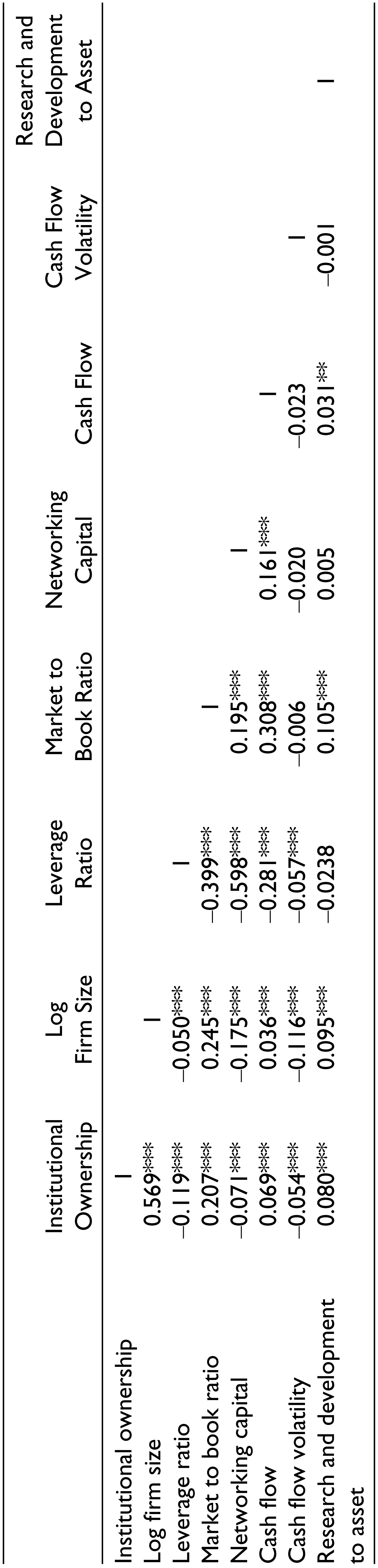
*** and ** indicate significance at 0.01 and 0.05 levels.
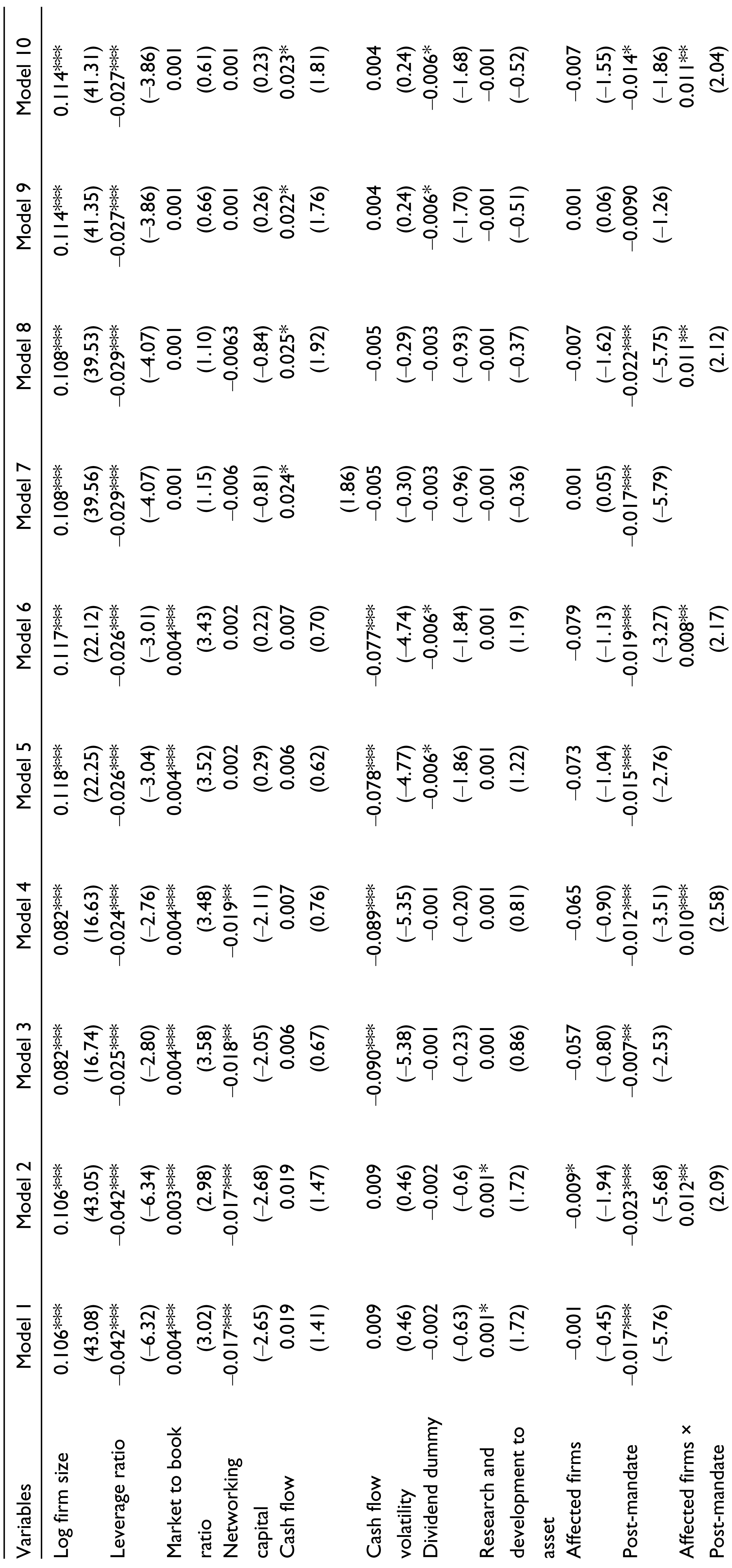
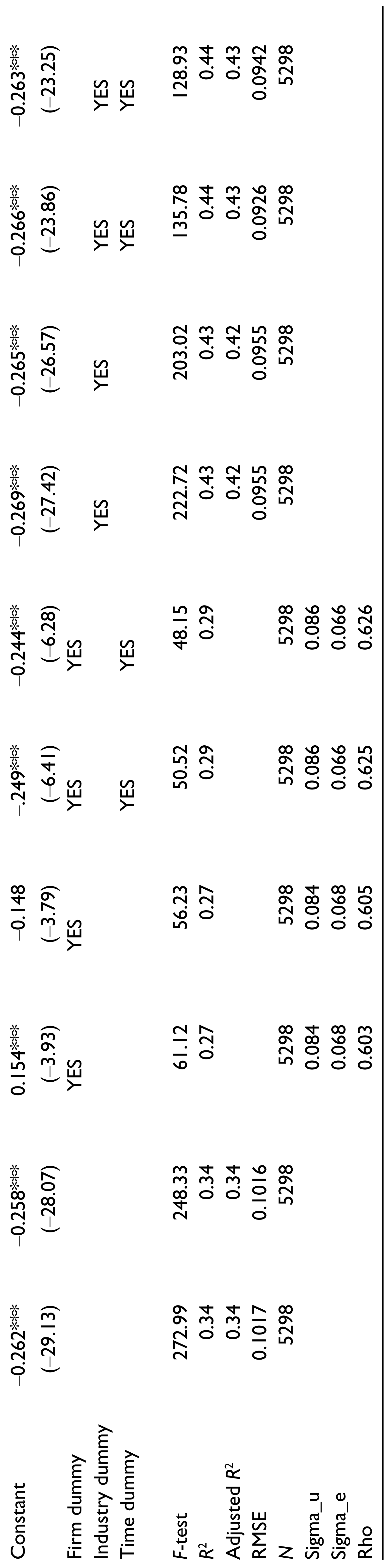
Models 1 and 2 given in Table 3 report the results of linear pooled regression. Model 1 shows that firm size, R&D and market to book ratio are positively associated with institutional investors’ ownership. Hence, institutional investors are more attracted towards the larger firms and firms with better investment opportunities, and they reward the firms that invest in innovation and new product development. Moreover, institutional investors’ shareholding is negatively related to high leveraged firms and firms with high working capital, thus indicating that institutional investors are not encouraging high leverage and holding of excess cash in the firms.
Impact of Board Composition on Institutional Investors Ownership
Impact of Board Composition on Institutional Investors Ownership
This table examines the impact of board composition on institutional investors’ ownership for a period 2001–2011. Models 1 and 2 are the results of pooled regression. Models 3–10 are results of fixed effects panel regression, controlling for firm, industry and time. The dependent variable is Institutional Ownership measured as the percentage of equity held by non-promoters institutions. Log Firm Size: natural log of total assets. Leverage Ratio: total borrowings to total assets net of cash holding. Market to Book Ratio: book value of assets less book value of equity plus market value of equity divided by book value of assets. Networking Capital: difference of current assets and current liabilities net of cash to total assets. Cash Flow: profit after tax before depreciation and amortisation by total assets. Cash Flow Volatility: rolling standard deviation of cash flow taken 3 years at a time. Research and Development to Asset: research and development expenditure to total assets. The variable in the table are measured as: Affected Firms is a dummy variable equal to 1for the firms with a presence of less than 50% of independent directors in the board and less than 33% in case the chairman is a non-executive or else 0. Post-Mandate is a dummy variable equal to 1 from 2006 to 2010 indicating the post-mandate period and equal to 0 from 2001 to 2004 indicating the pre-mandate period. Affected Firms × Post-Mandate is the interaction term between Affected and Post.
***, ** and * indicate significance at 0.01, 0.05 and 0.10 levels, respectively.
Model 2 presents that the coefficient of affected firms and the post-mandate period is negative and significant, which indicates that firms affected by the mandate have lower institutional investors’ shareholding compared to the remaining firms. But the coefficient of the DiD term (interaction term) AFFECTED × POST is positive and statistically significant thus indicating that the firms which enacted the board composition norms experienced the higher institutional investors’ ownership in the post-reform period than the remaining firms. It shows that the board mandate was beneficial for the firms and helped the firms to shift their board structure towards optimal board structure for the institutional investors. The results highlight the board’s role as resource provider and a medium to signal the institutional investors. The result shows that board independence decreases the agency cost and cost of monitoring for the institutional investors.
To ensure the robustness of our results across time, firms and industry, we use the fixed effect panel regression model to examine the impact of mandate on institutional investors’ ownership. Models 3–6 report the panel regression results after controlling for firm-specific effects and time trend. The results indicate that affected firms have higher institutional investors’ shareholding after the governance enactment relative to the other controlled firms even after controlling for time and firm effects. We further test by controlling for industry-specific factor and time trend (models 7–10). The coefficient of affected firms × post-mandate remains positive and is statistically significant for all the models, that is, it indicates that the results support the conjecture that governance mandate focussed on board structure had a positive implication on the institutional investors’ shareholding even after controlling for industry effect, firm effect and time trend. However, we need to further probe whether this effect changes with the presence of a large blockholder.
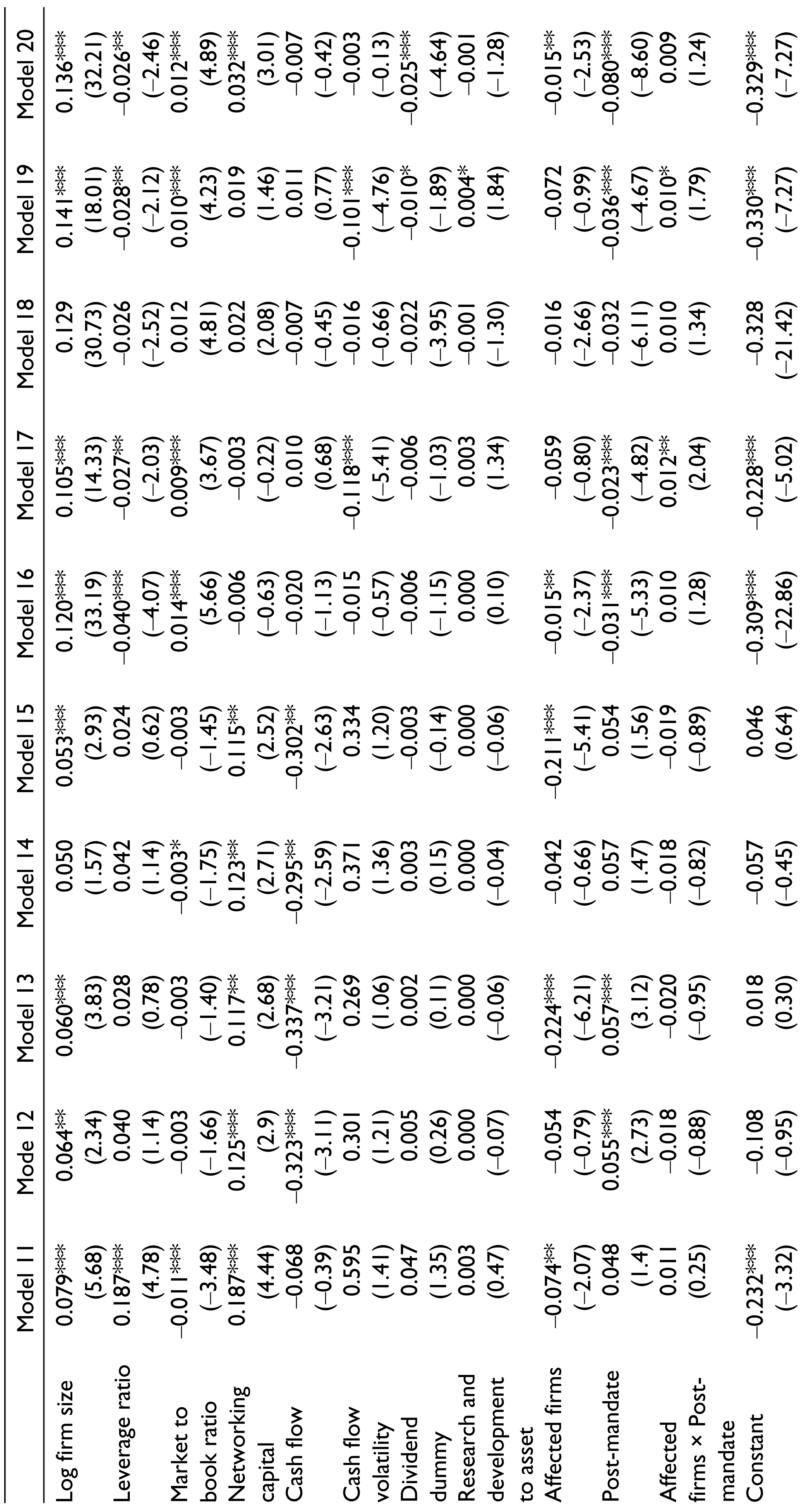
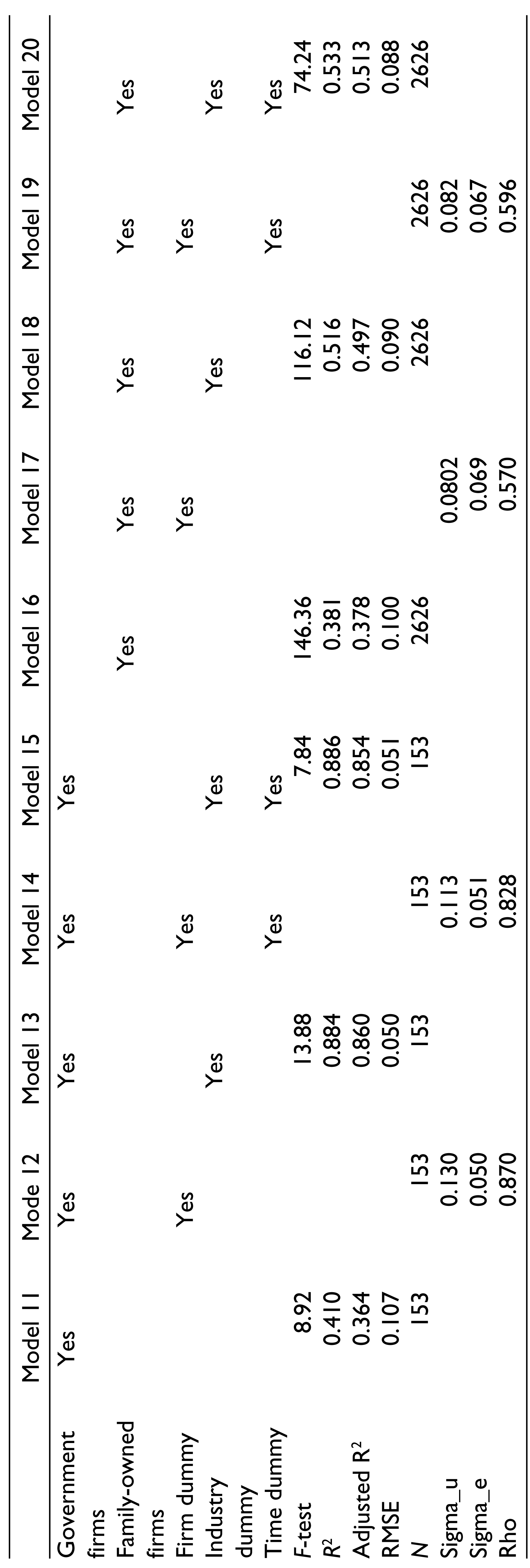
In this section, we study the role of blockholders in the relationship between board composition and institutional investors’ shareholdings and analyse this using the DiD method for blockholders categories namely, government-, private-, family- and foreign-owned firms. Models 11–15 (Table 4) report the results of government as a blockholder. The coefficient of affected firms is negative and significant, whereas the coefficient of post-mandate is positive and significant. This shows that the government controlled affected firms have lower institutional investors’ shareholding compared to unaffected firms and these firms have higher institutional investors’ shareholding in the post-mandate period than the pre-mandate period. The coefficient of affected firms × post-mandate is positive and insignificant, and shows that affected government-controlled firms have not experienced any significant increase in the institutional investors’ shareholding after the mandate enactment relative to the other controlled firms. This may be due to the complex bureaucratic system that might act as a discouraging factor for the institutional investors.
Impact of Board Composition on Institutional Investors Ownership with Respect to Government and Family Firms
Impact of Board Composition on Institutional Investors Ownership with Respect to Government and Family Firms
This table examines the impact of board composition on institutional investors’ ownership with respect to government firms and family-owned firms for a period 2001–2011. Models 11–15 represent the results of government firms and models 16–20 are the results of family-owned firms. The dependent variables are as follows. Institutional Ownership: measured as the percentage of equity held by non-promoters institutions. Log Firm Size: natural log of total assets. Leverage Ratio: total borrowings to total assets net of cash holding. Market to Book Ratio: book value of assets less book value of equity plus market value of equity divided by book value of assets. Networking Capital: difference of current assets and current liabilities net of cash to total assets. Cash Flow: profit after tax before depreciation and amortisation by total assets. Cash Flow Volatility: rolling standard deviation of cash flow taken three years at a time. Research and Development to Asset: research and development expenditure to total assets. The variable in the table are measured as: Affected Firms is a dummy variable equal to 1 for the firms with a presence of less than 50% of independent directors in the board and less than 33% in case the chairman is a non-executive or else 0. Post-Mandate is a dummy variable equal to 1 from 2006 to 2010 indicating the post-mandate period and equal to 0 from 2001 to 2004 indicating the pre-mandate period. Affected Firms × Post-Mandate is the interaction term between Affected and Post.
***, ** and * indicate significance at 0.01, 0.05 and 0.10 levels, respectively.
Models 16–20 (Table 4) report the results of family-owned firms. Model 17 shows that coefficient of affected firms is negative and insignificant and the coefficient of post-mandate is negative and statistically significant, indicating family-owned firms in the post-mandate era have lower institutional investors’ shareholding compared to the pre-mandate era. However, the coefficient of the interaction term affected firms × post-mandate is positive and statistically significant, and shows that family-owned affected firms that enacted the governance mandate experienced higher institutional investors’ ownership in the post-mandate period compared to remaining firms. It shows that family-owned group firms got a positive and significant reward from institutional investors in the form of investment in their firms. In general, the board structure of family-owned firms is predominantly controlled and influenced by family members and executives. However, the mandate ensures board independence, and it has compelled the family-owned firms to change the board composition. The institutional investors’ community welcomes this particular move by the family-owned firms and invested more in affected family-owned firms in the post-mandate period with respect to other firms.
Models 21–25 and models 26–30 (Table 5) report the results of private firms and foreign firms, respectively. The co-efficient of affected firms is positive and significant, but the co-efficient of post-mandate is negative and significant, suggesting that institutional investors are maintaining significant shareholding of affected private and foreign firms and experiencing a drop in its shareholding in the post-mandate period relative to pre-mandate period. Since the coefficient of affected firms × post-mandate is positive and insignificant, the affected private and foreign controlled firms have not experienced any significant increase in the institutional investors’ shareholding after the governance enactment compared to other firms. One of the reasons for this may be the prior presence of significant shareholding by institutional investors in the private and foreign firms, institutional investors are already maintaining higher shareholding in the firms in the pre-mandate period.
Impact of Board Composition on Institutional Investors Ownership with Respect to Private and Foreign Firms
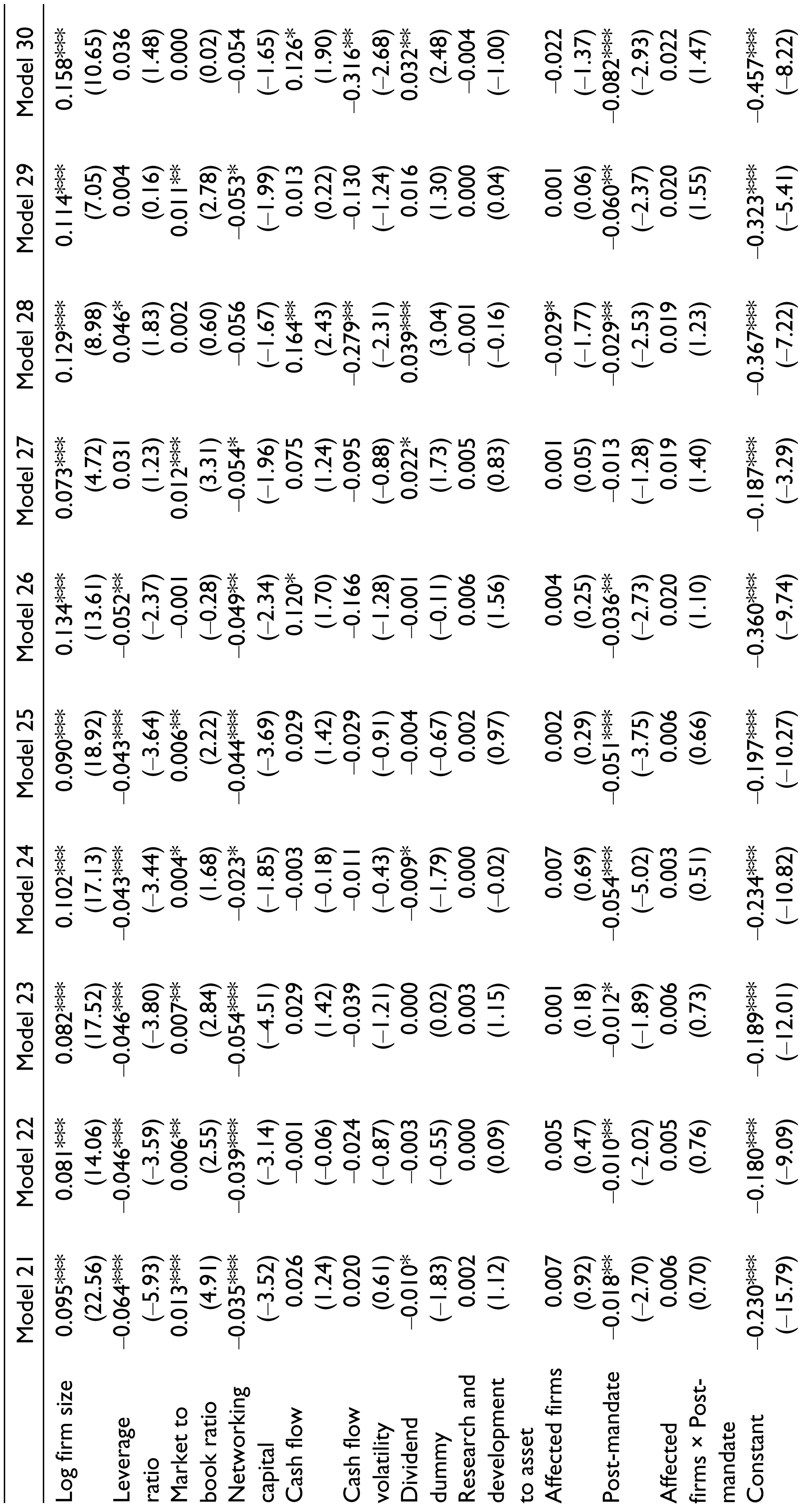
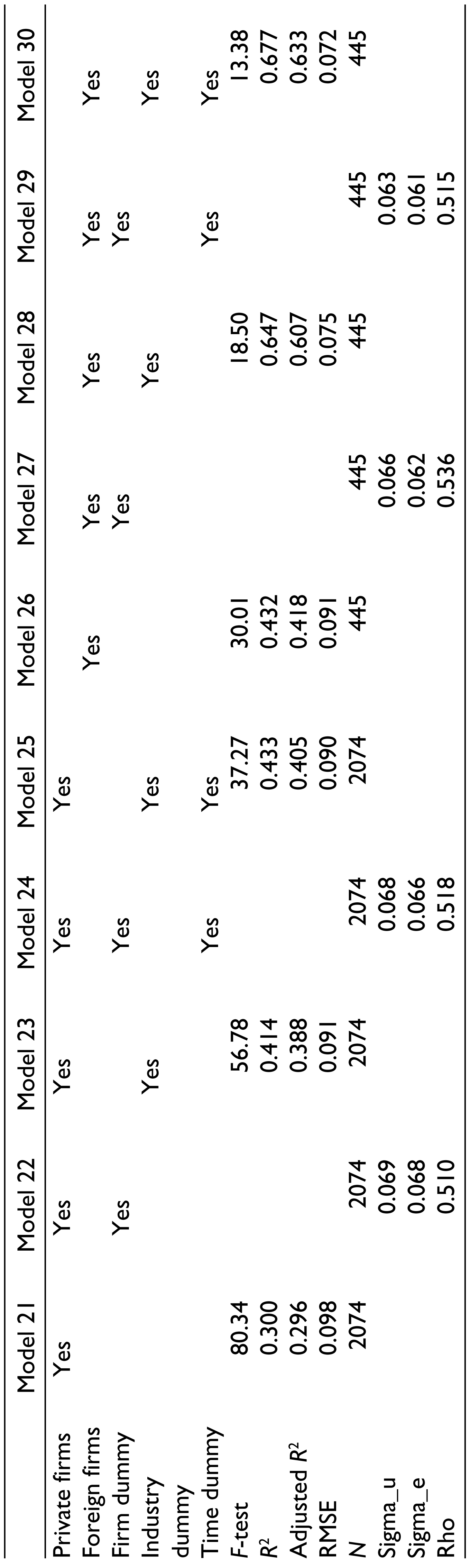
This table examines the impact of board composition on institutional investors’ ownership with respect to private firms and foreign firms for a period 2001–2011. Models 21–25 represents the results of private firms and models 26–30 represents the results of foreign firms. The dependent variable is Institutional Ownership measured as the percentage of equity held by non-promoters institutions. Log Firm Size: natural log of total assets. Leverage Ratio: total borrowings to total assets net of cash holding. Market to Book Ratio: book value of assets less book value of equity plus market value of equity divided by book value of assets. Networking Capital: difference of current assets and current liabilities net of cash to total assets. Cash Flow: profit after tax before depreciation and amortisation by total assets. Cash Flow Volatility: rolling standard deviation of cash flow taken three years at a time. Research and Development to Asset: research and development expenditure to total assets. The variable in the table are measured as: Affected Firms is a dummy variable equal to 1 for the firms with a presence of less than 50% of independent directors in the board and less than 33% in case chairman is a non-executive or else 0. POST-MANDATE is a dummy variable equal to 1 from 2006 to 2010 indicating post-mandate period and equal to 0 from 2001 to 2004 indicating pre-mandate period. Affected Firms × Post-Mandate is the interaction term between Affected and Post.
***, ** and * indicate significance at 0.01, 0.05 and 0.10 levels, respectively.
Stock market dynamics may play a significant role in the investment decisions of institutional investors and invest more in firms during the economic boom and sell off their shares in the period of financial crisis. Hence, it becomes crucial to examine the relationship between institutional investors’ shareholding and board structure after controlling for the stock market movement. We use market return as a proxy for the market condition and include that in the existing model (Table 6). To make our results more robust, we used two alternative ways to calculate the market return. First, we calculate the market return by taking the yearly Nifty return. Second, we calculate the average annual return after taking an average of the daily return for each year of Nifty. We find that the inclusion of market return does not change the results which indicate that our findings are robust, and market factor does not affect the relationship between institutional investors and board structure. We also repeat all the analysis after including data pertaining to the year 2005 and find that the result remains unchanged after using this new sample (results are available on request). In addition, we also perform the same analysis by using an alternative definition of affected firms to check the sensitivity of result, we repeat the analysis after defining affected firms as the firms which have the ratio of the independent directors to total directors below the median ratio. Table 7 shows that the coefficients of the DiD term affected firms × post-mandate are still positive and statistically significant in all sets of analysis. It indicates that our results are robust to the change in the definition of the affected firms as well.
Impact of Board Composition on Institutional Investors Ownership After Controlling for Market Return Average and Market Return Yearly


Impact of Board Composition on Institutional Investors Ownership After Controlling for Market Return Average and Market Return Yearly
This table examines the impact of board composition on institutional investors’ ownership after controlling for market returns for a period 2001–2011. Market return average is measured as the average daily return of Nifty and market return yearly is measured as the yearly return of Nifty. The dependent variable is Institutional Ownership measured as the percentage of equity held by non-promoters institutions. Log Firm Size: natural log of total assets. Leverage Ratio: total borrowings to total assets net of cash holding. Market to Book Ratio: book value of assets less book value of equity plus market value of equity divided by book value of assets. Networking Capital: difference of current assets and current liabilities net of cash to total assets. Cash Flow: profit after tax before depreciation and amortisation by total assets. Cash Flow Volatility: rolling standard deviation of cash flow taken three years at a time. Research and Development to Asset: research and development expenditure to total assets. The variable in the table are measured as: Affected Firms is a dummy variable equal to 1 for the firms with a presence of less than 50% of independent directors in the board and less than 33% in case the chairman is a non-executive or else 0. Post-Mandate is a dummy variable equal to 1 from 2006 to 2010 indicating the post-mandate period and equal to 0 from 2001 to 2004 indicating the pre-mandate period. Affected Firms × Post-Mandate is the interaction term between Affected and Post.
***, ** and * indicate significance at 0.01, 0.05 and 0.10 levels, respectively.
Impact of Board Composition on Institutional Investors Ownership (Below Median)

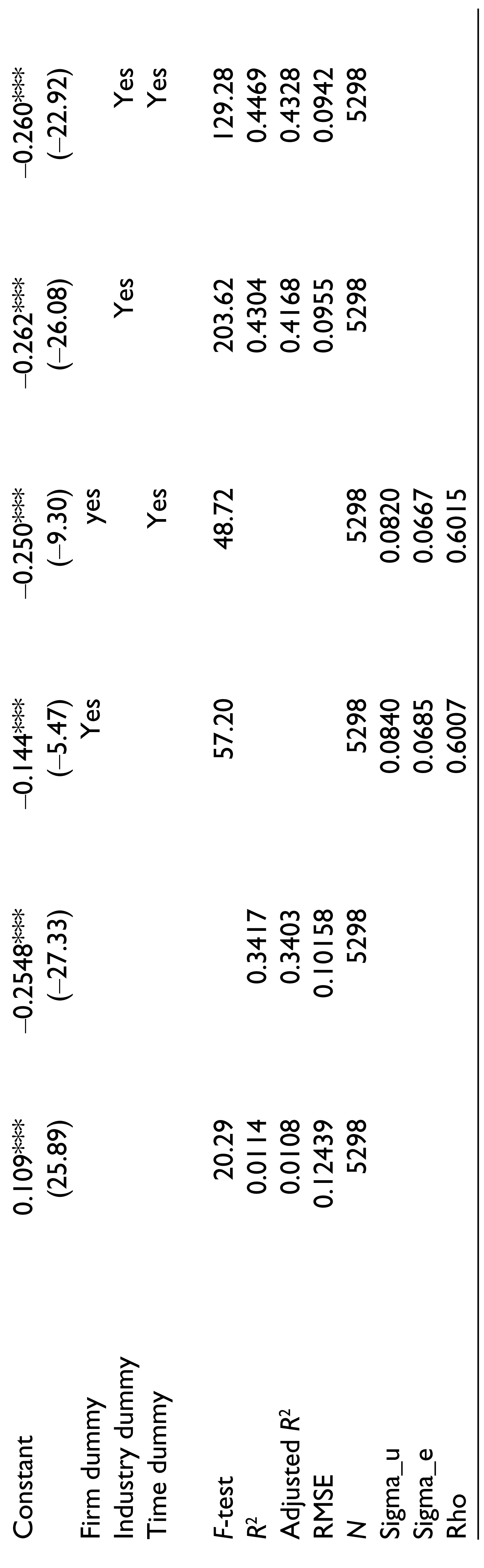
This table examines the impact of board composition on institutional investors’ ownership for a period 2001–2011. The variable Below Median is a dummy variable equal to 1 for the firms which are below the median ratio of Independent Director to Total Director or else 0. Below Median × Post is an interaction term of below median and post. The dependent variable is Institutional Ownership measured as the percentage of equity held by non-promoters institutions. Log Firm Size: natural log of total assets. Leverage Ratio: total borrowings to total assets net of cash holding. Market to Book Ratio: book value of assets less book value of equity plus market value of equity divided by book value of assets. Networking Capital: difference of current assets and current liabilities net of cash to total assets. Cash Flow: profit after tax before depreciation and amortisation by total assets. Cash Flow Volatility: rolling standard deviation of cash flow taken three years at a time. Research and Development to Asset: research and development expenditure to total assets. Post-Mandate is a dummy variable equal to 1 from 2006 to 2010 indicating the post-mandate period and equal to 0 from 2001 to 2004 indicating the pre-mandate period.
***, ** and * indicate significance at 0.01, 0.05 and 0.10 levels, respectively.
We differ from previous studies by focusing on firms that have to make substantial changes in their board structure (affected firms) to comply with the governance norms and compare their institutional shareholdings to the firms that are already compliant by the mandate. Our study is the first study to examine the resource dependency and signalling role of board composition towards institutional investors. SEBI revised Clause 49 to improve the corporate governance standard, and we use this setup as a quasi-natural experiment to examine if the composition of the board signals information to institutional investors is in the post-mandate era. We find that non-compliant firms have experienced significantly higher institutional investors’ shareholding in the post-reform period compared to previously compliant firms. Thus, board independence is linked to higher institutional investors’ ownership and it decreases the agency cost and cost of monitoring for the institutional investor. As a result, institutional investors have increased their shareholding in the affected firms in the post-mandate period. Our results are similar to Rhe and Lee (2008), who finds that demographic characteristics of non-executive directors serve as signal to foreign investors in the Korean market and Schnatterly and Johnson (2014) which infer that institutional investors prefer independent board.
We further find that our results are consistent with the resource dependency theory, which states that the board of directors enable easy access to external resources for the firms; they also minimise the transaction cost, improve exchange relationships and bring specialised skills and expertise. These linkages and board independence might decrease the agency cost and cost of monitoring for the institutional investors and could improve the performance of the firms. Therefore, the institutional investors have increased their shareholding in the firms in the post-mandate period. We also find evidence that institutional investors have invested more in family-owned firms in the post-mandate period, than the government-, private- and foreign-owned firms. Historically, the board structure of family firms is controlled and influenced by family members and insiders, but in the post-mandate era family firms have considerably increased the number of independent directors on the board. This has reduced the information asymmetry between institutional investors and insiders.
Overall, our study contributes to the existing literature on the resource dependency theory and signalling theory and shows that board independence act as a signal to institutional investors and reduces agency and monitoring cost. This study is the first study that uses the quasi-natural experiment to study the relationship between the board independence and institutional ownership. The use of exogenous shock to board independence also enables us to address the crucial issue of endogeneity which is present in the existing literature. Our study has policy implications as it provides empirical evidence about the importance of independent board and role of independent directors in improving corporate governance and strengthening the impact of regulatory measures. The finding that institutional investors pay attention to the board independence may influence the firm board strategy and operations, and a firm’s top management can structure their board including independent directors to signal better governance. Future research may be done to examine if these findings are valid for different types of institutional investors, that is, domestic and foreign institutional investors and explore if the demographic composition of the board of directors also signals institutional investors.
Summary of the Finding

Footnotes
Declaration of Conflicting Interests
The authors declared no potential conflicts of interest with respect to the research, authorship and/or publication of this article.
Funding
The authors received no financial support for the research, authorship and/or publication of this article.