







Abstract
Rohit Prashar, director of Globate 360 Solutions Private Limited, a Chandigarh-based third-party logistics company with a global presence, faced a pivotal challenge on 25 August 2020. He secured a project to transport 200 consignments of crucial medical equipment for COVID testing machines to multiple locations in north-eastern states, Kashmir and Leh, India. This project was awarded by a US-based freight forwarding company authorized by The Indian Council of Medical Research. It was a prestigious achievement, hard-won through extensive negotiations during the national lockdown. However, he knew that the real battle had just begun. The stringent government restrictions during the COVID-19 lockdown added complexity. The consignments had to be transported delicately to maintain the testing equipment’s accuracy, necessitating minimal jolts. Deciding between air and road transport posed another challenge. Furthermore, he grappled with the choice between a multinational company with a premium price tag and a regional player with more budget-friendly options. Securing skilled labour was an ongoing concern. In this predicament, he sought cost-effective solutions for each shipment, strategizing to minimize costs while delivering top-notch service to his clients.
Discussion Questions
Explain the significance of comprehending third-party logistics (3PL) concepts and their importance within the supply chain.
Outline the selection criteria for 3PL service providers at Globate 360 Solutions Private Limited (Globate) and elucidate the evaluation process for these criteria.
Assess the range of services offered by Globate.
Examine the challenges confronting Globate.
Conduct a sensitivity analysis on the following aspects:
Calculate the total cost of transporting consignments between Delhi and Kolkata via road or air and justify the preferred transportation method. Compute the total cost of consignment transportation from Kolkata to Northeast India and substantiate the choice of transportation mode. Determine the total cost of moving consignments between Delhi and Jammu via road or air and provide reasons for the optimal mode. Calculate the total cost of transporting consignments from Jammu to Leh and Srinagar and explain the preferred transportation method. Evaluate whether Globate’s decision to engage a specialized medical engineering and logistics company instead of local logistics or a multinational corporation was rational and beneficial.
Globate was a privately held company headquartered in Chandigarh, India. It was officially incorporated on 15 April 2019, under the Ministry of Corporate Affairs, India and subsequently registered with the Registrar of Companies in Chandigarh. Globate extended its presence across India with offices in Baddi, Chandigarh, Ludhiana and Gurugram.
The company was led by its directors, Rohit Prashar and Shivani Prashar, who were dedicated to upholding the firm’s core values of innovation, quality, safety, respect, integrity, transparency and competitiveness (Falcon eBiz Private Limited, 2019). Despite its expansive operations, Globate maintained a lean workforce. Nagender Singh held the pivotal position of Operations Head, contributing significantly to the planning and execution of logistics operations. His responsibilities included overseeing coordination within the logistics framework. Preeti Singh served as the Head of Finance and Human Resources.
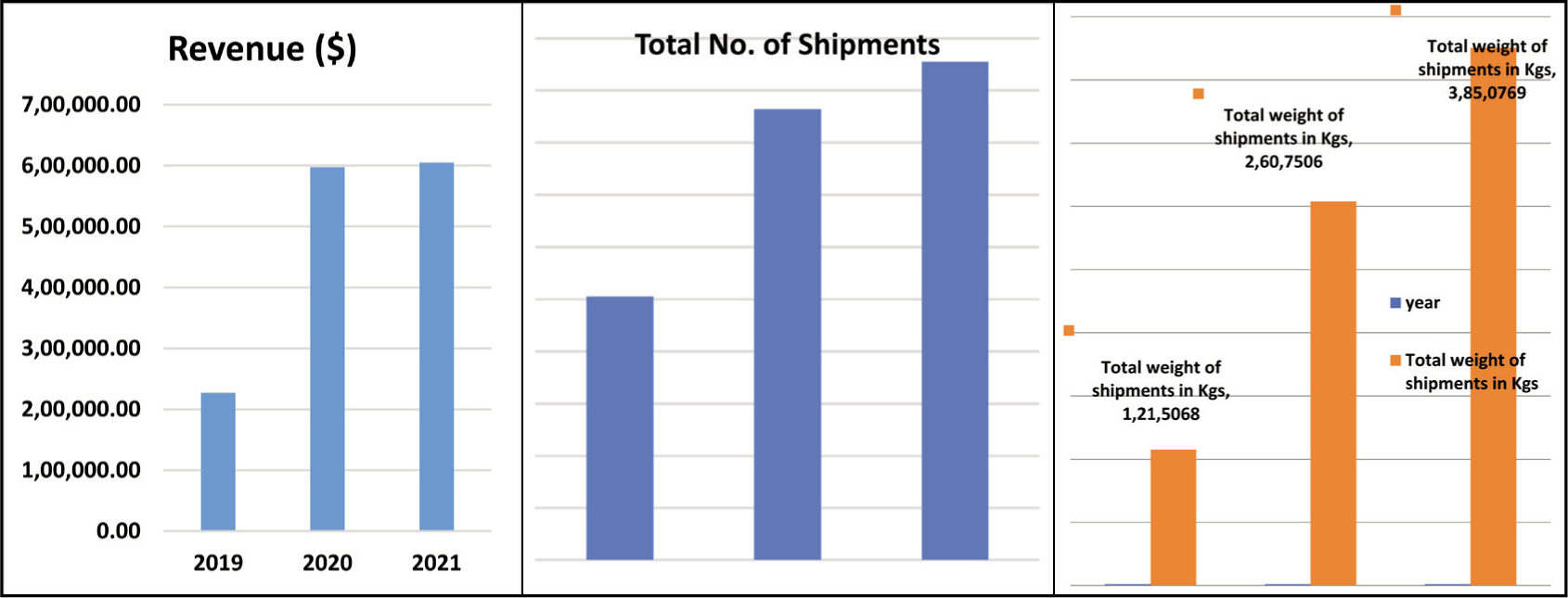
Figure 1 provides a snapshot of the company’s key performance indicators, showcasing the impressive growth trajectory. Globate’s revenue surged from $227,200 (₹16 million) in 2019 to $605,120 (₹49.6 million) in 2021. 1 The total number of shipments also exhibited remarkable growth, surging from 10,108 in 2019 to 19,111 in 2021. Equally notable was the increase in the total weight of shipments, which escalated from 215,068 kilograms in 2019 to 607,506 kilograms in 2020 and further to 850,769 kilograms in 2021. These statistics underscore the company’s significant growth potential over the years.
Services Provided by the Globate
Globate provided 3PL and fourth-party logistics services. As a non-asset-based company, it specialized in delivering comprehensive supply chain solutions to a diverse range of industries. These included the pharmaceutical, healthcare, high-value, high-security and fast-moving consumer goods (FMCG) sectors.
In the pharmaceutical and healthcare sector, Globate handled a wide array of items, such as machinery, equipment, apparatus, medicines and raw materials. The high-value and high-security goods category encompassed precious metals like silver, ornaments, gems and jewellery. For FMCG, the company managed the transportation of perishable and temperature-sensitive goods like frozen food, meat and vegetables. For these items, Globate provided refrigerated vehicles to maintain the required temperature.
Additionally, Globate offered an extensive range of 3PL services within India. These services included air, train, surface transportation and full truckload and less-than-truckload options. The company also provided warehousing solutions, project handling and consultancy services to cater to various logistics needs.
For international customers, Globate offered services such as ‘international express cargo’, ‘freight forwarding (air/ocean)’ and ‘international express parcels’ for export and import businesses. Domestically, the company facilitated express air cargo services across major airports in India. It maintained dedicated staff at these airports to ensure efficient operations, enabling swift cargo connection and retrieval.
The company’s services also included express train transportation to major towns across India. The surface express network was outsourced to national players for long-distance haulage and regional players for last-mile deliveries, which involved door-to-door pickup and delivery services. Additionally, it handled project cargo to move oversized and unusual dimensional shipments across India, including outside delivery area locations.
Globate catered to both premium and economy segments. To enhance tracking and visibility, the company leased GPS enabled trucks 2 , allowing customers to monitor their shipments online in real-time. For clients with cold storage supply-chain needs, it provided access to refrigerated trucks, ensuring the safe transport of temperature-sensitive goods. Its services also included cargo packaging and palletization, offering a complete logistics solution. It also facilitated proof of delivery services across India, enhancing transparency and providing documentation of successful deliveries. The company engaged specialised logistics professionals to optimize cost and time efficiency, further enhancing their services’ quality and effectiveness.
Standard Operating Procedure (SOP) at Globate
Globate had established a well-defined SOP for vendor selection. Rohit utilized various public sources such as the internet, credit ratings, blogs and reviews to assess the credibility of potential vendors. Additionally, referrals from reliable sources were considered. To leverage his network, he monitored the performance history of these companies. Once a vendor was chosen, he thoroughly reviewed their essential documents and the condition of their vehicles. He also utilized government-approved online applications like ‘Parivahan’ to verify vehicle fitness. Lastly, the driver’s license status and track record were meticulously examined.
Rohit employed closed-body trucks equipped with specially designed door seals to ensure cargo safety and security. These seals featured unique codes that could not be duplicated. A meticulously planned route was shared with the driver, which they had to adhere to strictly. Communication with drivers occurred through walkie-talkies or their cell phones. Meanwhile, the company’s back-end team at the head office tracked the vehicles using GPS. This real-time monitoring allowed the company to stay informed about the entire transit process, including distance covered, stoppage times, speed, fuel consumption and other activities. Any deviations from the planned route were immediately detected, and drivers faced consequences accordingly.
Rohit implemented a last in, first out approach for loading and unloading consignments. This meant that items slated for unloading last were positioned towards the front of the truck, while those to be unloaded first were placed at the rear. To maintain thorough records of the process, photographs and videos were captured using smartphones during both loading and unloading. These visuals were then transmitted to the head office to ensure the safe progress of goods throughout the journey.
3PL Industry Overview in India
The 3PL market was valued at $1,027.71 billion in 2019. It was projected to approach $1,789.94 billion by 2027, with a compound annual growth rate of 11.5% expected between 2020 and 2025 in the Indian 3PL market, compared to the global rate of 7.1% (Mordor Intelligence, 2019). Several factors drove the consistent growth of the 3PL market, including the expansion of e-commerce, a notable surge in reverse logistics, a booming retail sector and ambitious manufacturing plans. These factors stimulated the demand for FMCG.
Developing key infrastructure components such as dedicated freight corridors, free trade warehousing zones, logistics parks and container freight stations significantly enhanced the efficiency of the Indian 3PL market. The Indian government had set an ambitious target to reduce the logistics cost, which represented 14% of India’s GDP, to 9% by 2022. They called upon the Ministries of Railways, Transport, Shipping and Aviation to collaborate closely to achieve this goal.
Key players in the Indian market included DHL International GmbH, Mahindra Logistics, Allcargo Logistics Limited, Kuehne + Nagel and TVS Logistics Services Limited. These entities played pivotal roles in shaping and advancing the Indian 3PL landscape.
DHL International GmbH
DHL International GmbH, established in 1969, ushered in a logistics revolution and stood as the world’s leading logistics company. With a global presence in over 220 countries and territories, DHL employed 360,000 individuals to facilitate international trade, market expansion and business growth. DHL’s key focus areas included globalization, digitalization, sustainability and e-commerce. The company operated a formidable fleet of 112,460 vehicles, including 19,400 e-bikes and e-trikes. 3
Allcargo Logistics Limited
Allcargo Logistics Limited, founded in 2006 and headquartered in Mumbai, India, was a comprehensive logistics service provider. The company specialized in a range of logistics services spanning multimodal transport operations, container freight station operations and project and engineering solutions. Its service portfolio encompassed non-vessel operating common carrier (multimodal transport solutions), container freight stations, contract logistics, e-commerce logistics, project logistics, logistics parks, air freight, integrated logistics solutions and crane rentals. Allcargo Logistics was India’s pioneer in multinational supply chain management, boasting revenues exceeding $2.6 billion. With a global network comprising more than 300 offices across 180 countries, 69 warehouses within India and a fleet of over 5,000 trucks in operation, the company was known for its innovation, commitment to sustainability, adherence to social and regulatory standards, making it a trusted leader in the Indian logistics and supply chain industry (All Cargo Logistics, 2022). 4
Mahindra Logistics Limited
Mahindra Logistics Limited, established in 2000, was a prominent integrated logistics and mobility solutions provider. The company boasted a strong nationwide presence and offered supply chain solutions to a diverse range of industry verticals, including automotive, engineering, consumer goods, pharmaceuticals, telecom, commodities and e-commerce. It also provided integrated employee transportation solutions to enterprises spanning IT, information technology enabled services, manufacturing, banking, financial services, insurance and consulting businesses. As a portfolio company of Mahindra Partners, the $1 billion private equity division of the $20.7 billion Mahindra Group, Mahindra Logistics was an integrated 3PL service provider specializing in supply chain management and people transport solutions. The company’s global footprint extended to more than 100 countries, with 16 offices, a fleet of over 10,000 vehicles in operation, 50-plus network hubs and collaborative partnerships with over 1,450 business associates. 5
In August 1890, Kuehne and Friedrich Nagel laid the foundation for Kuehne + Nagel by establishing a freight forwarding company in Bremen, Germany. Over the past 130 years, Kuehne + Nagel transformed from a conventional shipping company into a global logistics partner, specializing in tailored solutions for various major industries worldwide. The company boasted nearly 1,300 locations worldwide, operated in 106 countries, employed approximately 780,000 individuals and was ranked as the world’s top sea freight and air freight forwarder. Kuehne + Nagel reported a net turnover of $15.23 billion in sea logistics, $12.01 billion in air logistics, 3.7 billion in road logistics and $5.12 billion in contract logistics, among other figures. 6
TVS Logistics Services Limited, established in 2004, rapidly emerged as a dynamic 3PL provider, serving diverse verticals, including automotive, distribution, electronics and discrete component manufacturing. As a flagship company of the esteemed TVS group, TVS Logistics extended its integrated supply chain solutions globally, directly or through joint ventures and subsidiaries. With a robust global footprint and extensive expertise in supply chain logistics, TVS Logistics consistently delivered unparalleled customer satisfaction. Their service portfolio encompassed transportation services, material management solutions, warehouse material management and freight management solutions. 7
The New Order in COVID-19 Pandemic
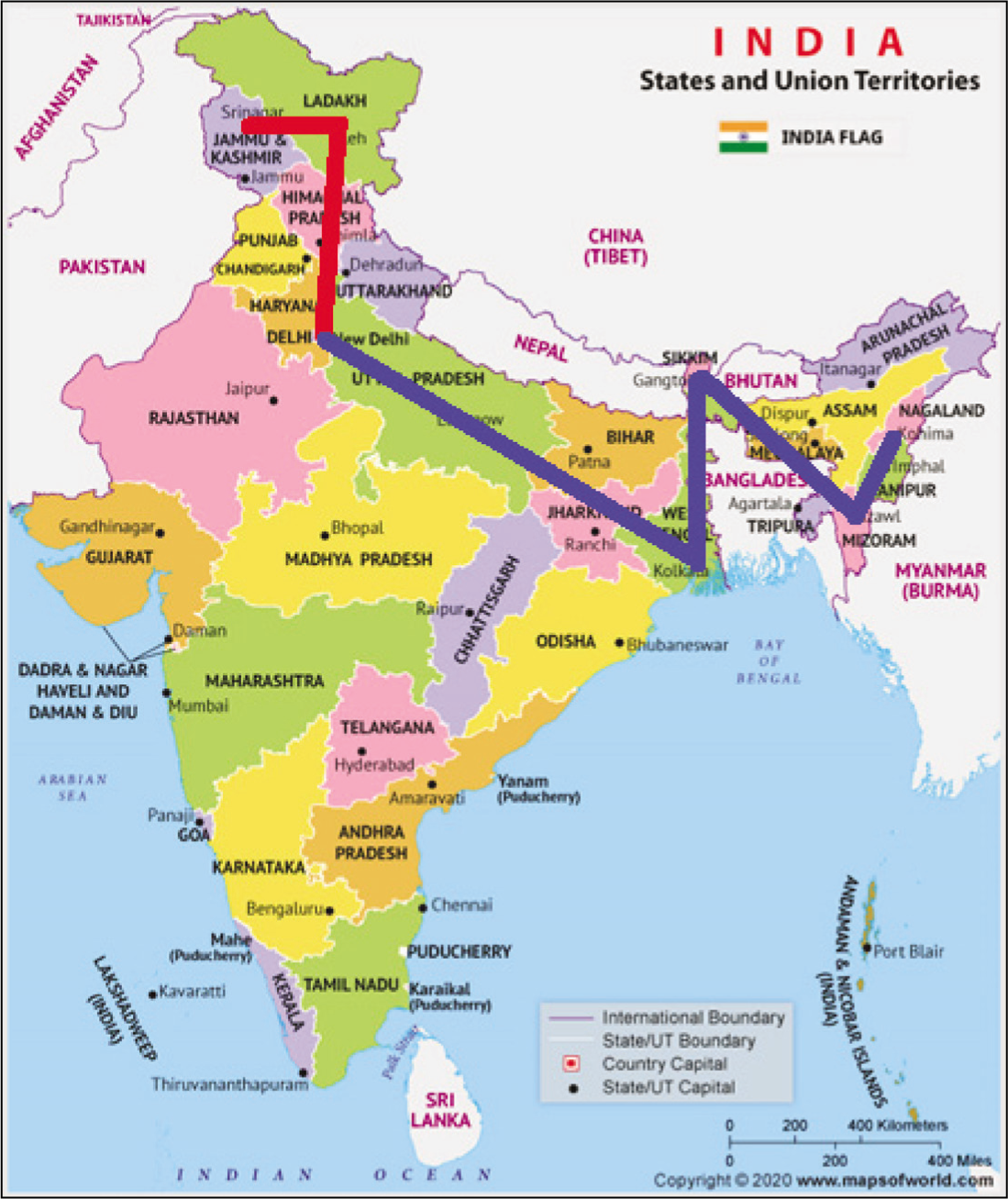
On Saturday, 25 August 2020, Rohit received an order to transport 200 consignments of medical equipment machines used for COVID testing to two different locations within India. This project was commissioned by The Indian Council of Medical Research. The first consignment needed to be transported from Delhi to various north-eastern states of India (highlighted in red in Figure 2). The second shipment was destined for Srinagar and Leh (highlighted in purple in Figure 2).
Accepting this offer posed several challenges for him. The foremost concern was the requirement to maintain a specific orientation for the consignments throughout the entire journey. A tilt meter (Exhibit 1) would trigger an alert if the equipment exceeded a certain angle, potentially compromising the quality of the machines. A shock absorber meter (Exhibit 2) would also record any mishandling or impacts during transportation. Hence, extreme caution was essential when handling and transporting these delicate machines.
A significant challenge entailed delivering and installing the equipment at its final destination. Cranes (Exhibit 3) needed to be organized to hoist the consignment boxes (Exhibit 4) to either the first or second floor. This demanded seamless coordination of machinery, the expertise of professionals and skilled workers.
During 2020, the entire world was dealing with the COVID-19 pandemic. A national lockdown significantly impacted people’s lives and disrupted logistics and supply chain operations in India and globally. The central government closely monitored and assessed COVID-19, issuing necessary guidelines periodically. Despite the restrictions, medical and health-related activities continued with precautionary measures. Given that most deliveries were destined for COVID-19 care hospitals and centres, he secured all the essential permissions in advance to ensure seamless operations.
During the pandemic, a shortage of labour was a critical challenge. Finding skilled labour at the unloading points posed a major concern. Consequently, he had to dispatch skilled labourers with vehicles to unload the machines. Furthermore, the safety and well-being of each team member were paramount. Therefore, PPE suits, masks, hand gloves and hand sanitizers (Exhibit 5) were provided to every team member to safeguard their health.
The choice between various transportation modes, such as air or road, posed another major concern for him. He needed to select the fast but also safe and cost-effective mode. He also had to decide whether to engage a global logistics company, a specialized medical engineering and logistics company or a local logistics company, further adding complexity to the decision-making process.
Proposal
Rohit was tasked with the delivery of medical equipment machines required for COVID-19 testing to two distinct locations within India, commencing on 1 September 2022. These consignments originated from Delhi and were to be transported as follows:
Consignment Requirement 1
Delhi to Kolkata and then from Kolkata to the north-eastern cities in India: Shillong, Mizoram, Imphal, Kohima and Gangtok, as highlighted in purple on the map. The ‘north-east’ was a collective name for the states comprising Assam, Arunachal Pradesh, Sikkim, Nagaland, Mizoram, Meghalaya, Tripura and Manipur. The major challenge was that dense forests and formidable mountains obscured north-eastern states.
Consignment Requirement 2
Delhi to Jammu and then from Jammu to Srinagar and Leh, as highlighted in red on the map.
Rohit faced pivotal decisions regarding transportation mode options, whether to opt for an air–road combination or a road–road combination. He had to strategically choose between engaging a global logistics company, a specialized medical engineering and logistics company or a local logistics company. To navigate these choices effectively, he needed to craft a comprehensive roadmap that transcended mere cost optimization. This roadmap aimed to achieve several key objectives. It aimed to optimize overall transportation and delivery processes for cost-effectiveness and timeliness, select transportation modes and logistics partners that ensured high service quality, prioritize reliability in the supply chain to minimize disruptions and delays, focus on customer satisfaction by ensuring on-time deliveries and equipment integrity and navigate the various COVID-19 protocols and restrictions imposed by the external environment to ensure compliance and safety while considering the specific requirements and conditions set by the consigner.
Roadmap for Consignment from Delhi to Kolkata
Rohit’s logistical challenge revolved around delivering the consignment from Delhi to Kolkata, with shipments slated to commence on multiple dates starting 1 September 2020. He was presented with two distinct transportation choices for this leg of the journey. The first option involved an air–road combination that would leverage air and road transport methods. The second option was a road–road combination, focusing solely on road-based transportation for these consignments. These alternatives required careful consideration to determine the most efficient and cost-effective approach for ensuring timely deliveries while meeting all necessary criteria and constraints.
Option 1
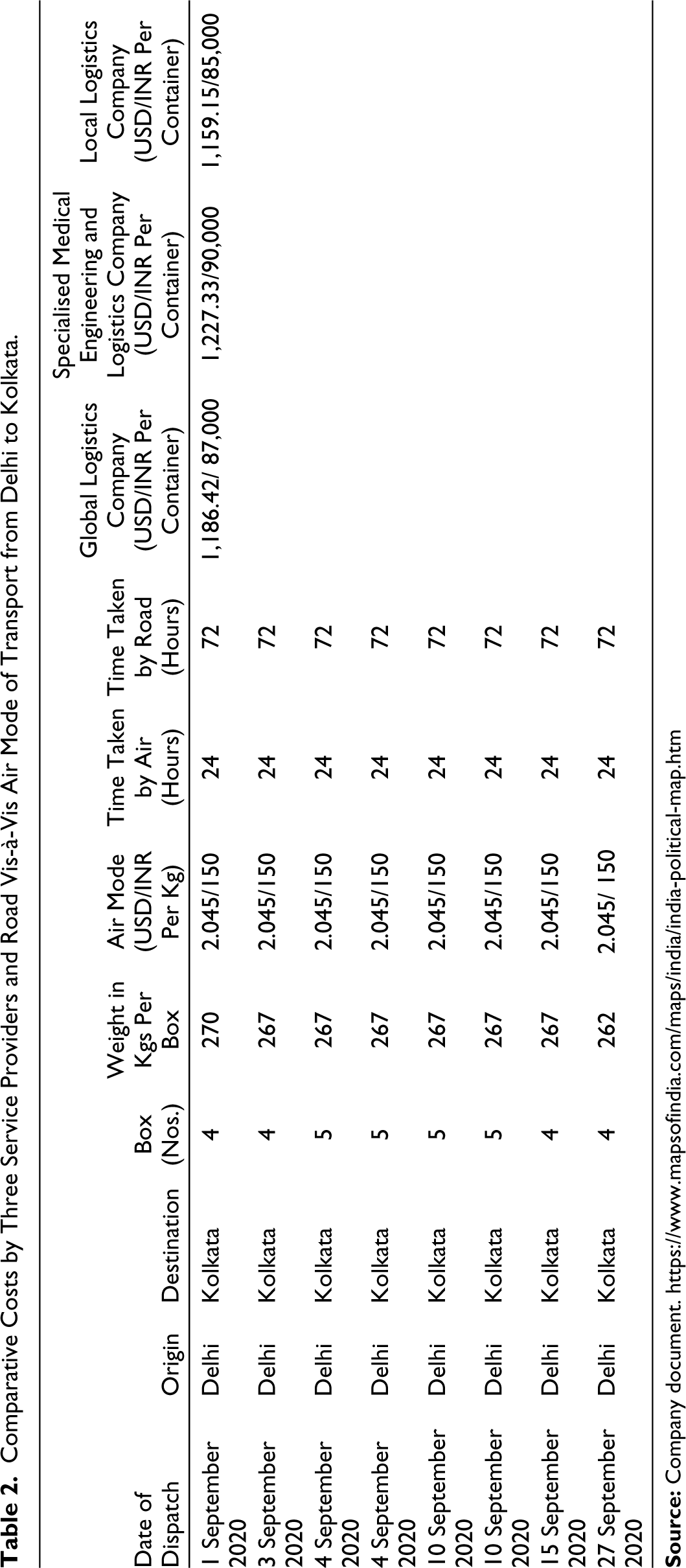
The chosen method for transporting the consignment from Delhi to Kolkata involved utilizing air transport services. The Airways would charge $2.045 per kilogram (₹150 per kilogram) for each shipment. This mode of transport offered the advantage of swift delivery, with an estimated transit time of 24 hours from Delhi to Kolkata. The details of the weight of each box and the total number of boxes to be transported are given in Table 2. A critical requirement for this transportation was the need for consignments to be moved on the same day they were received, underscoring the urgency and timeliness of this delivery.
Option 2
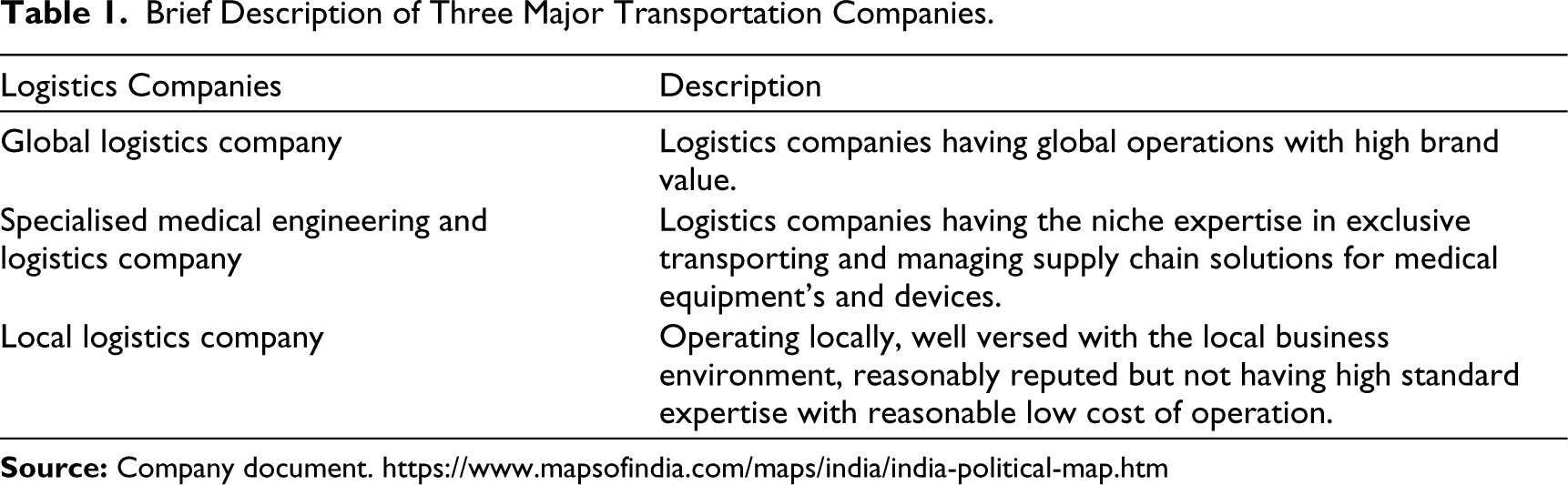
In this scenario, the consignment was planned to be transported from Delhi to Kolkata via road, utilizing a large container. He had the flexibility to select from three options for logistics services (Table 1):
Global logistics company: Opting for a globally recognized logistics company with extensive reach and resources. Specialized medical engineering and logistics company: Choosing a specialized logistics company specifically equipped to handle medical equipment and sensitive cargo. Local logistics company: Considering the services of a local logistics company, which might have a more localized understanding of the route and regional nuances.
Brief Description of Three Major Transportation Companies.
Each choice presented unique advantages and considerations, making the decision-making process crucial for ensuring efficient and secure transportation of the consignment to its destination.
He could opt for a globally renowned logistics company, which would charge $1,186.2 (₹87,000) per container. Alternatively, he could consider a specialized medical engineering and logistics company, with a corresponding cost of $1,227.33 (₹90,000) per container. Lastly, there was the option of a local logistics company offering services at a rate of $1,159.15 (₹85,000) per container.
Each container had a maximum capacity of 8 machines, and the detailed weight and quantity of the consignment boxes are given in Table 2. Regardless of the chosen logistics service, the paramount requirement remained consistent: the consignment needed to be transported on the same day it was received, underlining the critical importance of timely and efficient delivery.
Comparative Costs by Three Service Providers and Road Vis-à-Vis Air Mode of Transport from Delhi to Kolkata.
Roadmap for Consignment from Delhi to Jammu
Rohit faced the task of transporting the consignment from Delhi to Jammu and subsequently to the destinations of Srinagar and Leh in India, with various shipment dates commencing from 1 September 2020. He had to ensure the prompt transportation of each consignment upon receipt. To tackle this challenge effectively, he had two distinct transportation choices for the journey from Delhi to Jammu. These options encompassed the selection between air–road or road–road transportation combinations for the consignments as follows:
Option 1
The chosen approach for transporting the consignment from Delhi to Jammu involved utilizing air transport services, with the airways charging $2.045 per kilogram (₹150 per kilogram) for each consignment. This mode of transportation offered the advantage of swift delivery, with an estimated transit time of 24 hours for the journey from Delhi to Jammu. The primary imperative in this transportation arrangement remained consistent: the consignment had to be moved on the same day it was received, underscoring the urgency and timeliness associated with this delivery.
Option 2
This transportation phase involved the movement of the consignment from Delhi to Jammu via road, utilizing large containers. Rohit had three distinct options to consider (Table 4):
Utilizing the services of a global logistics company, which would charge $1,022.78 (₹75,000) per container. Opting for a specialized medical engineering and logistics company, with a corresponding cost of $1,091 (₹80,000) per container. Considering the services of a local logistics company for this transport segment.
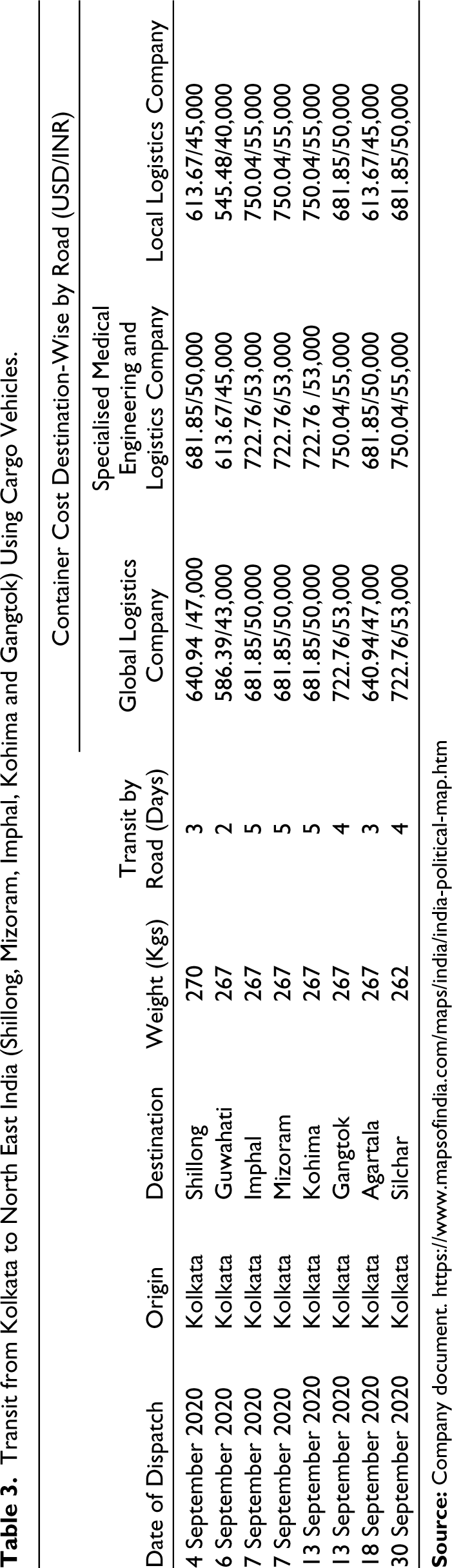
Transit from Kolkata to North East India (Shillong, Mizoram, Imphal, Kohima and Gangtok) Using Cargo Vehicles.
Comparative Costs by Three Service Providers and Road Vis-à-Vis Air Mode of Transport from Delhi to Jammu.
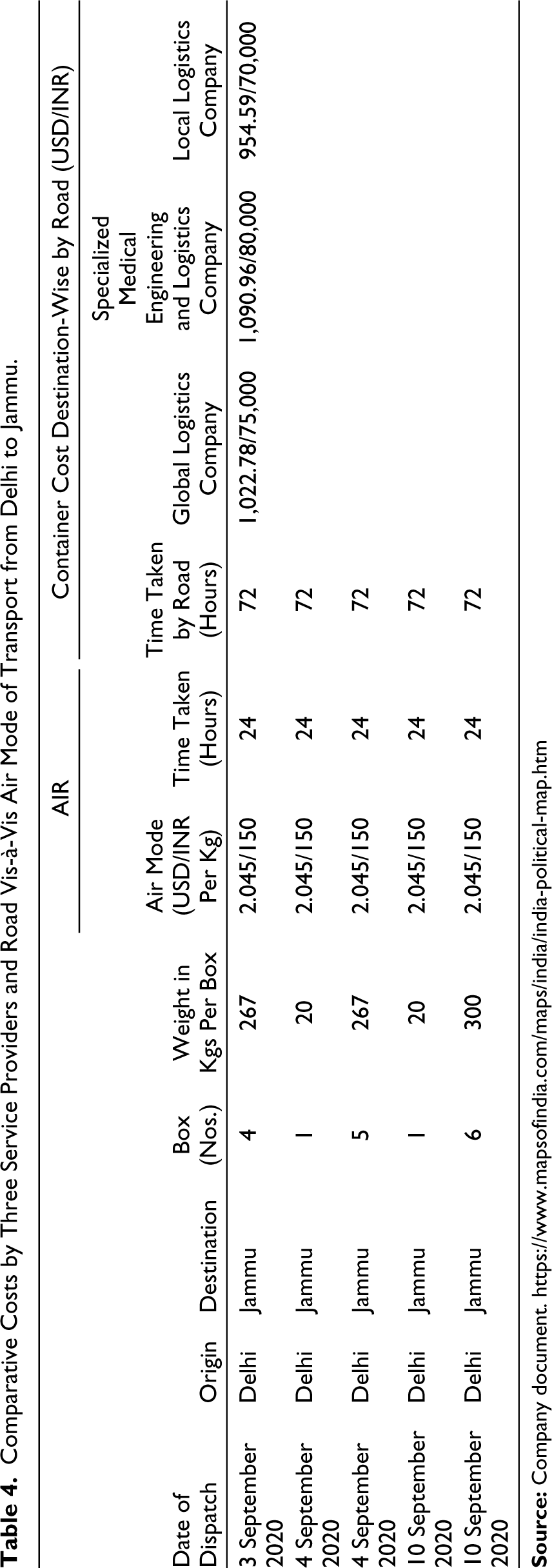
The central requirement for this transportation leg remained unaltered: the consignment had to be moved on the same day it was received, emphasizing the critical need for punctuality and efficiency in the process.
Roadmap for Consignment from Kolkata to North-East India
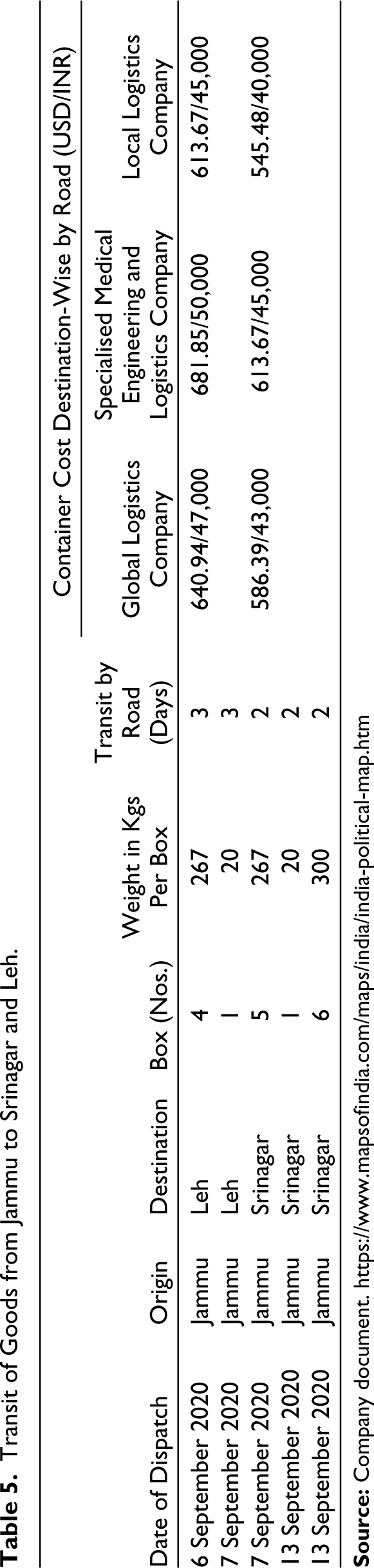
The logistics roadmap for transporting the consignment from Kolkata to various destinations in north-east India, including Shillong, Mizoram, Imphal, Kohima and Gangtok as well as from Jammu to Srinagar and Leh, involved the use of cargo vehicles. Rohit faced a choice among three options for this leg of the journey:
Engaging the services of a global logistics company. Opting for a specialized medical engineering and logistics company. Considering the services of a local logistics company.
The associated costs for cargo vehicles for each of these destinations are detailed in Table 3 and Table 5. Each cargo vehicle could transport four machines in one container. Specific information regarding the weight of each box and the total quantity of boxes for transport was provided in these tables. The overarching requirement remained consistent: ensuring the consignment’s movement on the same day it was received, underscoring the importance of timeliness and efficiency in this process.
Transit of Goods from Jammu to Srinagar and Leh.
Decision Dilemma
Rohit faced a significant challenge in navigating the multitude of choices available to his company. The critical task was to identify the most cost-effective solution for each shipment, a decision that weighed heavily on his mind. As he contemplated the various logistics options, he grappled with a dilemma: Should he opt for the air–road or road–road transportation combination to optimize the overall transportation and delivery costs, the quality of service and customer satisfaction?
His chosen strategy would be pivotal in minimizing expenses while ensuring top-notch service delivery to his clients. Additionally, the crucial decision of whether to engage the services of the global logistics company, the specialized medical engineering and logistics company or the local logistics company added complexity to the equation. He was tasked with the formidable challenge of making choices that would align with his company’s objectives and deliver the best possible outcomes in terms of efficiency and client service.
Footnotes
Declaration of Conflicting Interests
The authors declared no potential conflicts of interest with respect to the research, authorship and/or publication of this article.
Funding
The authors received no financial support for the research, authorship and/or publication of this article.