






Abstract
This study investigates the causal link between women’s participation in the labour force and intimate partner violence (IPV) in Punjab, Pakistan, using household data from the 2017–2018 Demographic and Health Survey. To address endogeneity, we use a novel instrumental variable constructed from the interaction between historical district-level female labour-force participation rates and the inverse of the number of adult male household members. Applying an IV probit model, we find that, on average, women’s employment does not significantly influence most types of IPV, except for sexual violence, which is notably decreased. Heterogeneity analysis shows that the protective effect of employment varies; it is strongest and most accurately measured for women with four or more children, aligning with a household bargaining framework. Employment also reduces sexual violence more significantly for women in couples with smaller spousal age gaps, while a large age difference completely negates this protective benefit. Husband’s alcohol use and the intergenerational transmission of violence are identified as the most consistent and powerful predictors of IPV. These findings highlight the need to focus employment policies on the most economically vulnerable women and to reform curricula to change social norms and acceptable behaviours.
Introduction
Violence damages women’s physical, mental and reproductive health and endangers children’s well-being. This study aims to explore the relationship between the prevalence and extent of IPV, including its three different aspects (physical, emotional and sexual), and female labour-force participation in the province of Punjab, Pakistan. Our analysis shows that, on average, we fail to reject the null hypothesis of female labour-force participation, impacting the incidence of intimate partner violence (IPV). Nonetheless, we argue that the average impacts conceal the true effect of female labour-force participation and that women in these scenarios face significantly lower IPV if they belong to households in urban areas, have educated husbands and have more children, whereas the risk increases significantly if the wife’s age gap from the husband widens.
IPV is defined by the World Health Organization (WHO) as ‘behaviour within an intimate relationship that causes physical, sexual, or psychological harm’. The WHO considers IPV both a human rights violation and a public health issue directly linked to Sustainable Development Goal 5. Globally, 26% of ever-partnered women have experienced physical and/or sexual IPV during their lifetime (WHO, 2021). Regional lifetime prevalence rates are highest in central sub-Saharan Africa (65.6%), western sub-Saharan Africa (41.8%) and South Asia (41.7%) (Devries et al., 2013). In most Pakistani provinces, more than 30% of married women aged 15–49 report experiencing IPV (DHS, 2017–2018).
Many studies, such as Xu et al. (2024), found that in Pakistan, women who experienced IPV were less likely to utilize proper antenatal and postnatal care. Similarly, IPV exposure is connected to stunting in children across Pakistan, India, Nepal and the Maldives (Lakhdir et al., 2024) and to under-five mortality, diarrheal diseases and incomplete vaccination in Bangladesh and Nicaragua (Asling-Monemi et al., 2003; Silverman et al., 2009). We see that intergenerational transmission is well documented as well: women who saw maternal abuse and men who observed paternal abuse are much more likely to experience or commit IPV as adults (Amir-ud-Din et al., 2018; Aslam et al., 2015; UNICEF, 2018). Therefore, effective policy must include an understanding of the causes of IPV in general, as well as those particularly relevant to working women.
Although promoting female labour-force participation (FLFP) is a popular way to fight violence against women, the IPV–FLFP link is complex and bidirectional. According to relative-resource theory, when women’s earnings come close to men’s, their bargaining power within the household tends to grow, thus lowering the risk of being abused. However, some husbands may react negatively to women’s employment, using violence to reassert control and dominance, which raises the risk of IPV for their wives. Therefore, FLFP can both provoke and protect against IPV. Moreover, their spouses’ behaviour may influence women’s labour market outcomes. Some men might use violence to prevent their wives from seeking or keeping jobs. Conversely, others may attempt to force their wives into paid employment to gain financial benefits, then take a share of the earnings for themselves. Therefore, violence may drive women into work to gain exit options or may inhibit employment through compromised productivity due to physical health and/or emotional trauma.
The feedback loops and reciprocity in IPV–FLFP links violate OLS assumptions, leading to biased estimates unless endogeneity is addressed. In addition to bidirectional causality, unobserved factors such as cultural norms, gender attitudes and household power dynamics simultaneously influence both variables. To gain a more accurate understanding of the causal relationship, endogeneity must be addressed and suitable econometric techniques should be used to improve the reliability of the findings. Prior studies have used household male composition as an instrument (Arif et al., 2023). Building on that literature, this study proposes a novel two-way interaction IV: (a) historic district-level female labour-force participation rates (capturing persistent cultural and market conditions) and (b) the inverse of the number of adult males in the household (reflecting within-household labour-supply constraints). Historic FLFPR is relevant because district-specific participation rates are highly persistent; the inverse-male multiplier yields positive predicted variation in current FLFP. The exclusion restriction is plausible: while both components shape women’s employment prospects, they arguably affect IPV only through FLFP.
Our research examines the impact of female labour-force participation and the prevalence and extent of IPV, including its three aspects: physical, emotional and sexual, specifically in the province of Punjab, Pakistan. It addresses: (a) How much does women’s participation in the labour-force influence the likelihood of experiencing IPV (physical, emotional and sexual) in Punjab, Pakistan? (b) How does the rate of IPV against women differ between urban and rural areas in Punjab, Pakistan? (c) How does a woman’s age impact her risk of experiencing IPV in Punjab, Pakistan? (d) Does a woman’s education level influence her chances of facing violence from her partner? (e) Does a husband’s level of education serve as a protective factor against IPV for women in Punjab, Pakistan? (f) Does the number of children a woman has moderate the protective effect of employment against IPV in Punjab, Pakistan? (g) Does the spousal age gap influence the relationship between women’s employment and IPV, and does a larger age difference in favour of the husband weaken the protective effect of employment?
Using the latest 2018 Demographic and Health Survey dataset for Punjab, Pakistan, this study examines how FLFP influences IPV while controlling for education, urban–rural divide, household head characteristics and other covariates. We introduce a new instrumental variable that yields more accurate and reliable estimates. Notably, this IV has not been used in prior research on IPV, offering a unique perspective for the analysis. IPV’s bidirectional channels, unobserved confounding and bargaining dynamics are explicitly modelled. It is important to note that Punjab makes up over 50% of Pakistan’s population. Punjab, therefore, offers a large, policy-relevant setting, but the results should be viewed as specific to the province.
The study is structured as follows: The first section states the objectives. The second section reviews theoretical and empirical research. The third section describes the theoretical framework. The fourth section describes the DHS data. The fifth section explains the methodology and econometrics. The sixth section presents the findings. Section 7 concludes with suggestions for future research.
Literature Review
The relationship between IPV and FLFP is bidirectional. As per Collective Household Bargaining theory (Alderman et al., 1995), women’s employment can enhance their autonomy, financial independence and bargaining power, thereby reducing their vulnerability to spousal abuse. However, in patriarchal societies, female earnings may disrupt traditional gender hierarchies and provoke male backlash, increasing IPV risk when men perceive women’s economic independence as a threat to their authority. Dasgupta (2000) and Dasgupta (2001) also suggest that labour-force participation affects women through complex interactions between market dynamics and household bargaining, often yielding findings that contradict the common view that more work automatically leads to better welfare.
Similarly, research from Turkey shows women who work are more likely to face IPV, with male partners sometimes controlling earnings or demanding a share, known as ‘forced rent extraction’ (Kibris & Nelson, 2022). This underlines the need for programmes supporting women’s employment that also address IPV risk. Zafar et al. (2024) found that employment does not protect women from all violence; employed women face more Less severe physical and emotional violence, but less sexual violence.
In addition, numerous studies show that education influences spousal violence through multiple economic and behavioural channels that intersect with FLFP. Higher educational attainment enhances women’s human capital, bargaining power and opportunity cost of tolerating abuse, while also delaying marriage and fertility. Empirical evidence from Nepal (Ghimire et al., 2015) and India (Ackerson et al., 2008) shows that both partners’ education reduces IPV and shifts social norms towards gender equity. Weitzman (2018) exploits compulsory schooling reforms in Peru as a natural experiment, finding that additional schooling lowers the likelihood of physical, psychological and sexual violence by improving women’s agency and partner selection.
Education’s impact extends beyond individuals to community-level spillovers. Higher literacy rates foster social environments that challenge patriarchal norms, thereby lowering IPV prevalence even among less-educated women (Ackerson et al., 2008), reinforcing education’s broader role in shaping gender-equitable behavioural and institutional outcomes. Cultural norms critically mediate the relationship between women’s empowerment and IPV. Patriarchal socio-cultural norms thus moderate the effectiveness of policies and programmes to protect women from spousal violence (Singh & Babbar, 2022). In patriarchal contexts like Pakistan, where violence is often justified as a response to female disobedience (Nadeem & Malik, 2021), women’s workforce participation may challenge entrenched gender roles, provoking male backlash and increasing IPV risk. Thus, there is value in targeting the entire community for intervention.
The link between family size, child sex composition and IPV has also received growing attention. A related strand of the literature considers how fertility dynamics and child composition may shape women’s exposure to IPV in South Asia. Kamei (2025), using DHS data from India and Nepal, shows that failing to have at least one son by the third birth is associated with a higher domestic violence index, with part of this increase operating through a larger completed family size. This study is relevant to the present analysis because it demonstrates that family size may be endogenous to household-level pressures—including fertility-preference norms and financial stress—that are independently associated with IPV. At the same time, Kamei (2025) examined the mechanism.
Moreover, several individual and relationship-level factors also affect the likelihood of IPV. Husbands who drink alcohol are more likely to commit IPV. Studies in Zimbabwe and Nigeria have shown a strong link between alcohol consumption by husbands and IPV, with drinking often increasing conflicts and leading to violence (Adebowale, 2018; Lasong et al., 2023). IPV is more common where men have multiple wives. The reason may be power struggles and competition among wives.
The age gap between partners can also impact the incidence of violence. If the age difference between spouses is slight, they might struggle to establish clear roles. This can lead to conflict and, at times, abuse (Adebowale, 2018). Spousal age differentials have emerged as a significant predictor of IPV in South Asian and lower-middle income country contexts. Using NFHS-5 data from India, Chandra et al. (2023) find that the spousal age gap is significantly associated with IPV prevalence, with the relationship varying non-linearly across the magnitude of the age differential. At a broader cross-national level, Amir-ud-Din et al. (2024), analysing DHS data from 29 developing countries, find that larger spousal age gaps are associated with a lower probability of multiple forms of IPV, suggesting that the age differential between spouses shapes household power dynamics in ways that condition violence risk. These findings motivate the inclusion of the spousal age gap as a dimension of heterogeneity in the present analysis.
More recent literature, such as that by Zafar et al. (2024), found that marrying a cousin on the mother’s side offers protection against IPV. Witnessing spousal violence as a child increases the risk; women who saw their fathers abuse their mothers are more prone to violent relationships (Shinwari et al., 2021). Amir-ud-Din et al. (2021) linked observing wife-beating to accepting spousal violence. Malik et al. (2024) noted that women marrying cousins young and watching their mothers face IPV are more likely to justify violence, while wealthier, empowered women are less so. Breaking this cycle requires education and community support.
Lastly, numerous studies argue that instrumental variable (IV) techniques address the issue of causality. For example, women who experience IPV are possibly less likely to work, and it is hard to separate cause from effect, that is, whether IPV keeps women out of the labour force, or unemployment and resulting economic dependence on a spouse lead to facing abuse. To address this issue of bidirectional causality, researchers have used education reforms in Peru and Turkey as IVs. The reforms led to a random increase in education levels, allowing researchers to isolate the effect of education on IPV (Özer et al., 2023; Weitzman, 2018).
Using literature on the intergenerational transmission of violence, Gedikli et al. (2023) investigated the impact of IPV on women’s labour-force participation in Turkey. The instruments for IPV were a woman’s childhood experience of watching her mother face IPV and her husband’s family history of violence. The findings suggest that spousal violence can encourage women to enter the labour market. The reason could be a woman’s coping mechanism, such as reducing her time at home, or her husband’s rent extraction.
Shrestha (2022) examined the determinants of IPV among working women in Nepal and addressed potential endogeneity by constructing an empowerment index based on education, occupation and asset ownership instrument. Although the instrument proved weak, the study suggests that the positive association between IPV and female labour participation may reflect exposure reduction or rent extraction mechanisms within abusive relationships.
Erten and Keskin (2021) examined how women’s employment influences IPV in Turkey, using the uneven influx of Syrian refugees as an exogenous labour market shock. Instrumenting refugee intensity by provincial distance from Syrian governorates, they found that reduced economic opportunities for women, especially in informal sectors, corresponded with lower IPV, suggesting diminished incentives for resource extraction through violence.
Our study contributes to the body of knowledge by examining in detail the factors affecting IPV in Pakistan. We use household-level microdata from the Demographic and Health Survey for the years 2017–2018 to analyse the impact of different factors on the overall risk of experiencing IPV and the risk of experiencing three different types of violence, that is, physical violence, emotional violence and sexual violence.
We address endogeneity and simultaneity bias between FLFP and IPV using an instrumental-variables (IV) approach. We develop a novel instrumental variable, constructed as the interaction between a historical division/district-level female labour-force participation rate and the inverse of the total number of adult males in the household, both of which are positively correlated with the current level of female choice to participate in the labour force but are uncorrelated with IPV.
To examine the nuanced relationship between FLFP and IPV, the study further explores heterogeneity across several socio-economic and demographic factors, including urban versus rural residence, the woman’s age, the woman’s education status, the husband’s education, family size and the spousal age gap. These factors are examined in relation to four binary outcomes: whether the woman has ever experienced any form of IPV, whether she has ever experienced physical violence, emotional violence or sexual violence from her husband. The interaction-variable approach is employed to determine whether the causal effect of employment on IPV differs systematically across these subgroups, as described in detail in the fourth section.
Theoretical Framework (Bargaining Power Versus Male Backlash)
Eswaran and Malhotra (2011) consider a household with different utility functions for the husband and wife. The study shows that equilibrium violence is non-monotonic in the wife’s reservation utility: as her outside option improves, the husband may respond with more violence (male backlash theory) or less violence (bargaining theory), depending on whether the wife’s elasticity of autonomy with respect to abuse exceeds unity. We use this framework to motivate our empirical analysis of female labour-force participation and IPV in Punjab, Pakistan. Limited exit options for women and strong male breadwinner norms in Pakistan suggest that the backlash channel is likely at work. They argue that the equilibrium level of violence is defined as follows:

where v* is non-monotonic in the wife’s reservation utility ŪW, specifically when the wife’s outside option improves. Other important insights are as follows:
As b* decreases (husband inflicts violence less often) But λ* (b*) increases (wife exercises more autonomy in response) Whether v* = λ* (b*) rises or falls depends on the elasticity of λ* with respect to b.
The study shows that the equilibrium level of spousal violence a woman endures may be non-monotonic in her reservation utility. Thus, both the bargaining and backlash channels operate within the same model.
Methodology
Endogeneity Issue
As discussed, the existing literature suggests that IPV is significantly influenced by a woman’s labour-force participation (FLFP). Conversely, IPV can affect a woman’s ability to engage in the labour market. This interrelationship prompts a key question: Do women remain in abusive relationships due to their economic dependence, or are they unable to enter the labour market because they face violence at home, potentially fearing retaliation from their partners? Partners who perceive a reduction in their bargaining power may resort to aggression to reassert dominance. Therefore, a comprehensive analysis requires addressing endogeneity, as both IPV and LFPR influence each other. A standard probit model would fail to provide valid estimates due to potential confounding factors or simultaneity bias.
Instrumental Variable
To address this endogeneity, the study employs the IV technique, which helps identify the causal effect of a woman’s labour-force participation on her experience of IPV and, in cases of abuse, the intensity of the violence.
For an instrument to be valid, it must be both relevant and exogenous. A relevant instrument must influence the explanatory variable (in this case, LFPR), while an exogenous instrument must affect the dependent variable (IPV) only through the endogenous variable (LFPR). To satisfy these conditions, this study employs an instrument based on the interaction between historical female labour-force participation rates in the region and the reciprocal of the number of adult male household members.
The use of historical LFPR ensures exogeneity, as it is unlikely to be directly influenced by current IPV rates. The inverse of the number of adult male household members serves as a proxy for the availability of potential male earners, which, in turn, affects a woman’s need to earn a living. A higher number of adult male household members is hypothesized to reduce a woman’s probability of participating in the workforce. This approach follows the methodology of Mansuri (2006) and Arif et al. (2023), who have utilized this variable to explain regional variation in female labour-force participation.
To construct the IV, historical female labour-force participation rates in the region are used. This historical FLFPR has been computed using data from the Labor Force Survey 2010–2011. LFS provides district-level data on women’s employment in rural areas and division-level data on women’s employment in urban areas. This helps account for the variation in workforce participation across urban and rural areas.
Empirical Estimation
We estimate the following empirical equation for our analysis.

where yi comprises a dummy variable for IPV that takes a value equal to 1 if a woman has been subjected to any IPV and zero otherwise, as our first dependent variable. Dummy = 1 if subjected to physical violence and zero otherwise for our second dependent variable. Dummy = 1 if subjected to emotional violence and zero otherwise for our third dependent variable. Last, dummy = 1 if subjected to sexual violence and zero otherwise for our fourth dependent variable. Endogenous dummy variable wi, woman’s working status = 1 if the woman works, 0 otherwise.
A valid IV will separate the effect of IPV on FLFP and give us the effect of FLFP on IPV. Thus, the following set of equations is used to estimate the true impact of w
The second-stage equation is as follows:

where wi* is the predicted value of the variable Woman Works. It takes the value 1 if the predicted value is positive and 0 otherwise. We get the value of wi* from the coefficients estimated in the first stage (measures the predicted probability of women working in the labour force explained by the exogenous instrumental variable, that is, positively correlated with the decision to participate in the labour market but uncorrelated with the outcome variable) and use probit to estimate the value of yi.
The first-stage specification is as follows:

where Wi is a woman’s working status that takes a value of 1 if the woman works and zero otherwise, Zi comprises the characteristics of the woman, characteristics of her husband and her household characteristics, and υi is the random error term. Fij is the instrumental variable defined as an interaction between historic FLFPR for area j * (1/Adult Males in the family of woman i). The historical LFPR provides regional variation, while the number of adult male members offers individual-level variation. To ensure the instrument’s validity, we test its relevance by regressing the binary variable ‘whether the woman works’ on the IV (historical FLFPR × 1/no. of adult male family members). We regress the IV on other controls and on wi to assess its validity and strength.
Since the dependent variables are binary (whether a woman faces violence or not), we will be using the probit model to explore the relationship between the two variables of interest, the incidence of IPV and women’s labour-force participation.
To examine heterogeneity in the causal effect of women’s employment on IPV, we extend the baseline IV probit specification by interacting the instrumental variable with six binary indicators: urban residence, age (30 years or younger), women’s education status, husband’s education (6 or more years of schooling), family size (four or more children) and spousal age gap (husband four or more years older than the wife). For each heterogeneity dimension, a new interaction term is constructed by multiplying the instrument with the relevant binary indicator and both the original instrument and the interaction instrument are included in the first stage. The corresponding interaction between the endogenous variable and the binary indicator is then included as an additional endogenous regressor in the second stage. This approach allows us to identify whether the causal effect of employment on IPV differs systematically across subgroups without splitting the sample, thereby preserving statistical power and enabling direct tests of heterogeneity within a unified IV framework.
Data
This analysis utilizes data from the Labor Force Survey 2010–2011 and household-level secondary data from the Demographic and Health Survey (2017–2018) for 36 districts of Punjab and the capital territory, Islamabad, Pakistan. Punjab is the most populous province of Pakistan and can be considered representative of the majority of the population’s trends and behaviours. The dataset includes responses from 949 married couples with wives aged 15–49 years. The survey questionnaire contains a set of questions designed to assess IPV. Specifically, the questionnaire includes the following 13 questions, of which the first seven are regarding physical violence, the next three are related to emotional violence, and the last three are concerning sexual violence.
Questions regarding IPV included in the DHS questionnaire are:
Has your husband ever done any of the following to you: (a) pushed you, shaken you or thrown something at you? (b) slapped you? (c) twisted your arm or pulled your hair? (d) punched you with his fist or with something that could hurt you? (e) kicked you, dragged you or beaten you up? (f) tried to choke you or set you on fire on purpose? (g) threatened or attacked with a knife, gun or other weapon? Has your husband ever: (a) said or done something to embarrass you in front of others? (b) threatened to harm you or someone important to you? (c) insulted you or made you feel bad about yourself? Did your husband ever do any of the following things to you? (a) physically force you to have sexual intercourse with him when you did not want to? (b) physically force you to perform any other sexual acts you did not want to? (c) force you with threats or in any other way to perform sexual acts you did not want to?
Based on these responses, four dependent variables are analysed. All four variables are binary (yes/no) with values 1 and 0. These are: (a) whether the woman has experienced any IPV (physical, emotional or sexual), (b) whether she has ever experienced any form of physical violence from her husband, (c) whether she has ever experienced emotional violence from her husband and (d) whether she has ever experienced sexual violence from her husband.
The variable in (a) shows whether a woman has ever experienced violence of any of the three types from her husband. Responding ‘Yes’ to any of the 13 questions sets this variable to 1. The value will be 0 if she answers ‘No’ to all 13 questions.
Answering ‘Yes’ to any of the seven questions about physical abuse will set the value of the variable in (b), Physical Violence, to 1. The value will be zero if the response is ‘No’ to all seven questions. Similarly, an answer of ‘Yes’ to any of the questions about emotional abuse will set the value of the dependent variable in (c), Emotional Violence, to 1, and an answer of ‘Yes’ to any of the questions about sexual abuse will set the value of the dependent variable in (d), Sexual Violence, to 1.
Descriptive Statistics
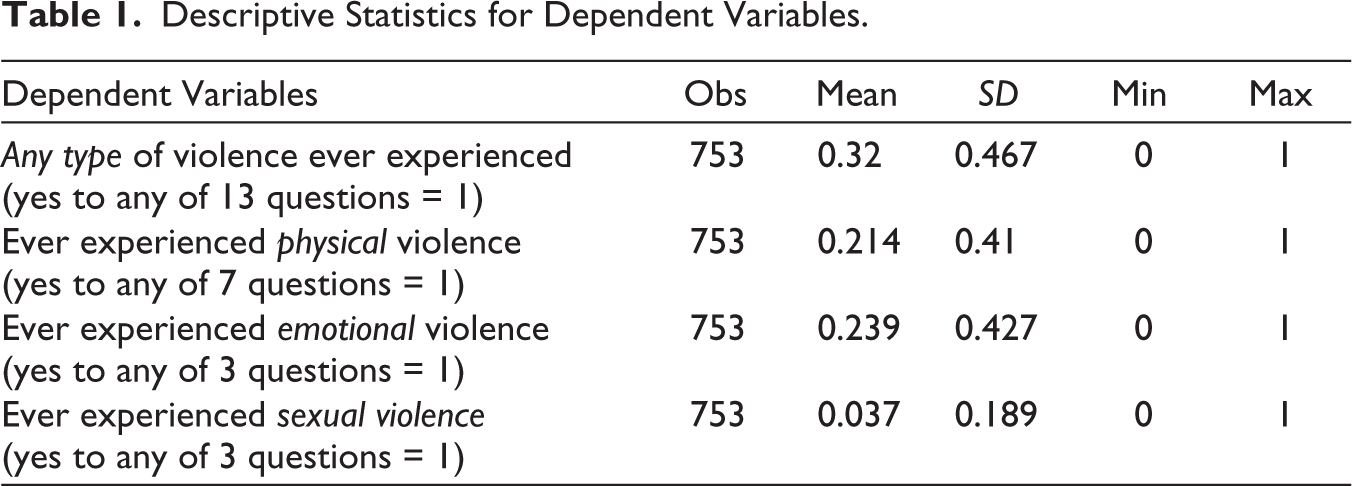
First, we report the descriptive statistics for the dependent variables related to IPV, encompassing multiple dimensions: any violence, physical violence, emotional violence, sexual violence and the extent of IPV.
Table 1 reports the means and standard deviations of the dependent variables used in the study. Approximately a third of the sample reports experiencing some form of IPV, highlighting its prevalence. Emotional and physical violence are the most common types, while sexual violence is reported less often. The low percentage might reflect societal stigma, underreporting or cultural taboos around discussing sexual violence, so careful interpretation and additional qualitative research are needed. Next, we report the descriptive statistics of the independent variables used in our analysis. Table 2 presents the means, standard deviations and ranges of the characteristics we will be studying.
Descriptive Statistics for Dependent Variables.
Descriptive Statistics for Key Observable Characteristics of the Sample.
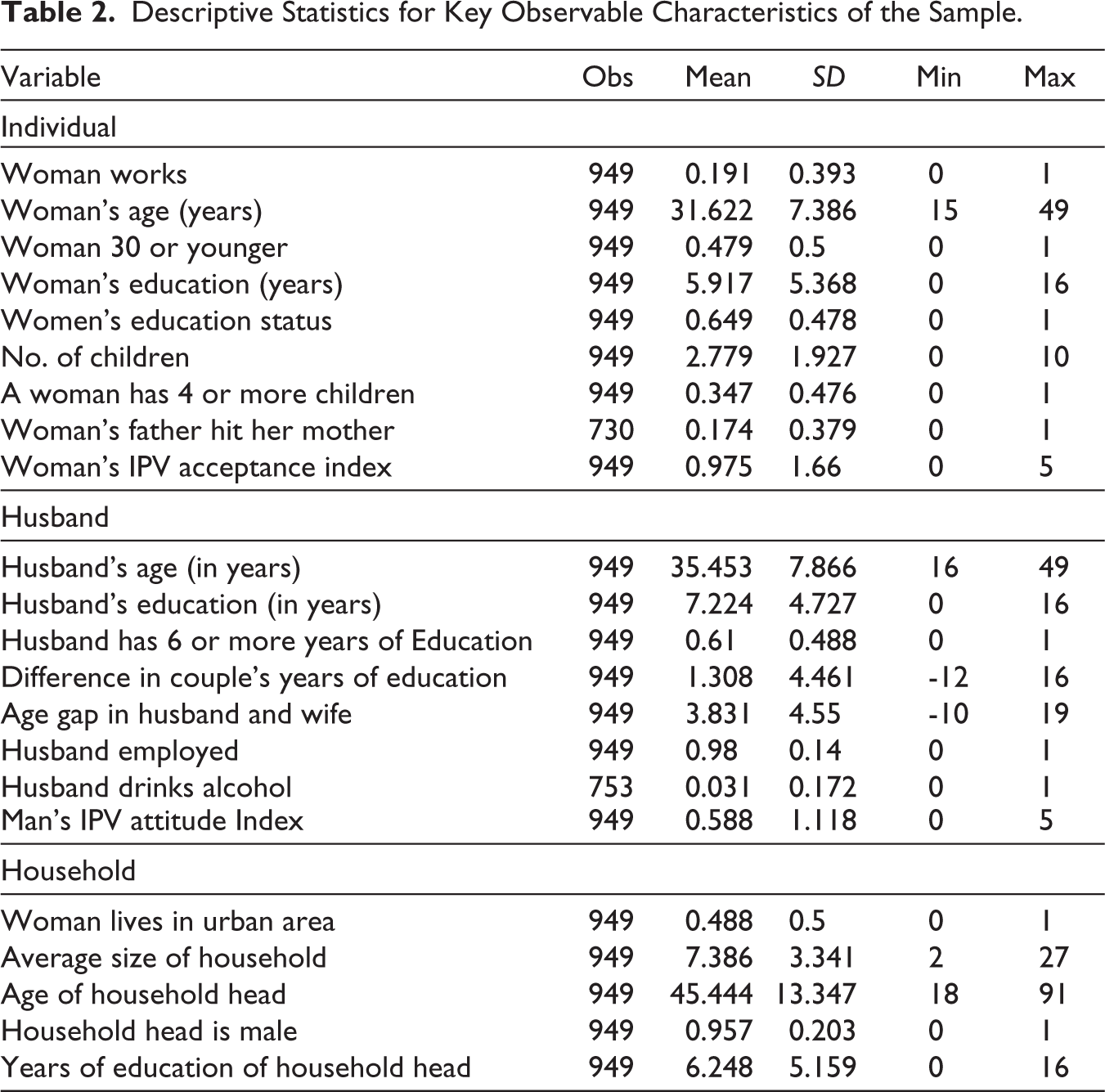
Only about 19.1% of women in the sample are employed, indicating relatively low female labour-force participation. The high standard deviation (0.393) indicates significant variation within the sample. With low female labour-force participation, understanding the role of employment in IPV risk and empowerment is crucial. Roughly 48.8% of women live in urban areas, indicating an almost equal split between rural and urban respondents. The average age of women is 31.6 years, with a range from 15 to 49 years. This indicates a diverse age range, including younger and older women.
The mean years of education is 5.9, with a high standard deviation of 5.37. This suggests a very diverse sample, with some women having little or no education and others with substantial schooling (up to 16 years). The relatively small family size, with an average of 2.78 children, suggests a trend towards smaller households, though some women have up to 10 children.
For women, the mean score of 0.975 (out of 5) indicates a relatively low level of acceptance of IPV, though a standard deviation of 1.66 reflects substantial variation in attitudes. The average of women’s acceptance of IPV is higher than men’s acceptance of IPV (mean score 0.588), potentially pointing towards the normalization of abuse in the culture. Husbands are, on average, slightly older and more educated than their wives, but the wide range of both variables suggests the existence of extreme exceptions. More than 60% of husbands have at least 6 years of education.
Children who witness IPV between parents are at a higher risk of either being victims or perpetrators of IPV in their adult relationships. About 17.4% of women report witnessing their mothers experience physical violence by their husbands. Nearly all husbands (98%) are employed, indicating high male labour-force participation and the cultural norm of men being the primary breadwinners. Only 3.1% of husbands report alcohol consumption, likely due to cultural and religious norms in the region. As we will see later, this factor is a significant predictor of increased IPV risk.
The average household size is 7.6 members, even though the average number of children is 2.78, suggesting extended-family living arrangements. The household size range (2–29) encompasses both nuclear and joint family structures. Nearly all households (95.7%) are headed by men. Household heads have an average of 6.25 years of education, which is only slightly higher than the average of 5.9 years for women.
Results
We present results for both the OLS regression used to test the relevance and strength of the instrumental variable and the second-stage Probit regressions estimated by maximum likelihood, followed by a heterogeneity analysis using interaction terms to examine the sample with respect to important characteristics.
Relevance of the Instrument
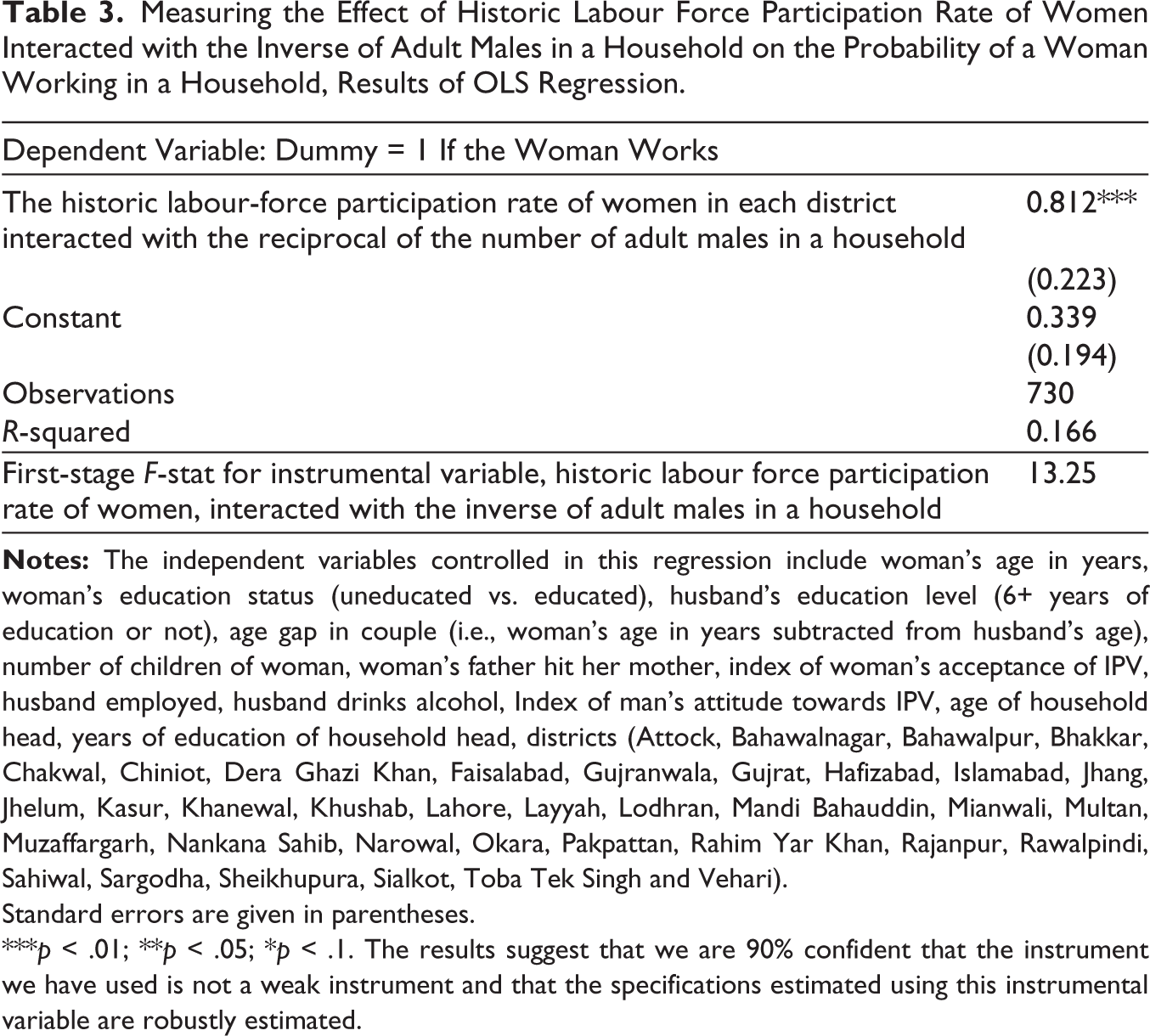
We begin by examining the relevance of the instrumental variable using the first-stage results reported in Table 3. The instrument is constructed as the interaction between the district’s historical female labour-force participation rate and the reciprocal of the number of adult male household members. It enters the first-stage regression with positive and significant coefficients, indicating that women are more likely to participate in the labour force in districts with historically higher female labour-force participation and in households with fewer adult male earners.
Measuring the Effect of Historic Labour Force Participation Rate of Women Interacted with the Inverse of Adult Males in a Household on the Probability of a Woman Working in a Household, Results of OLS Regression.
Standard errors are given in parentheses.
***p < .01; **p < .05; *p < .1. The results suggest that we are 90% confident that the instrument we have used is not a weak instrument and that the specifications estimated using this instrumental variable are robustly estimated.
The intuition behind the positive first-stage coefficient is that each interacted term has individual-specific effects on the probability that a woman works within a household. The first interacted term, that is, historical female labour-force participation, captures persistent district-level differences in labour market opportunities, local norms and the social acceptability of women’s work, so districts with higher historical rates are also more likely to have higher current rates of women working. The second component is defined as the reciprocal of the number of adult male household members, which interacts to create household-level variation in the instrument. We argue that households with fewer adult male earners are more likely to rely on women’s employment because of fewer earning hands. The interaction of these two components should therefore enter positively in the first stage, because it is largest where women’s employment is both more socially feasible and more economically necessary.
The first-stage coefficient on the instrument is positive 0.812 with a p value less than .01, and the corresponding first-stage F-statistic is 13.25. This exceeds the conventional rule-of-thumb threshold of 10 commonly used in the applied economics literature (Staiger & Stock, 1997). We report the first stage in Table 3 using OLS only as a diagnostic exercise to assess instrument relevance, while detailed first-stage results are provided in Appendix A. 1
More broadly, the use of historical female labour-force participation supports the plausibility of the exclusion restriction because past district-level participation cannot plausibly be affected by current household-level IPV, and Appendix D shows no evidence of heteroskedasticity in the first-stage OLS specification based on the White test.
Second-stage Results and Marginal Effects
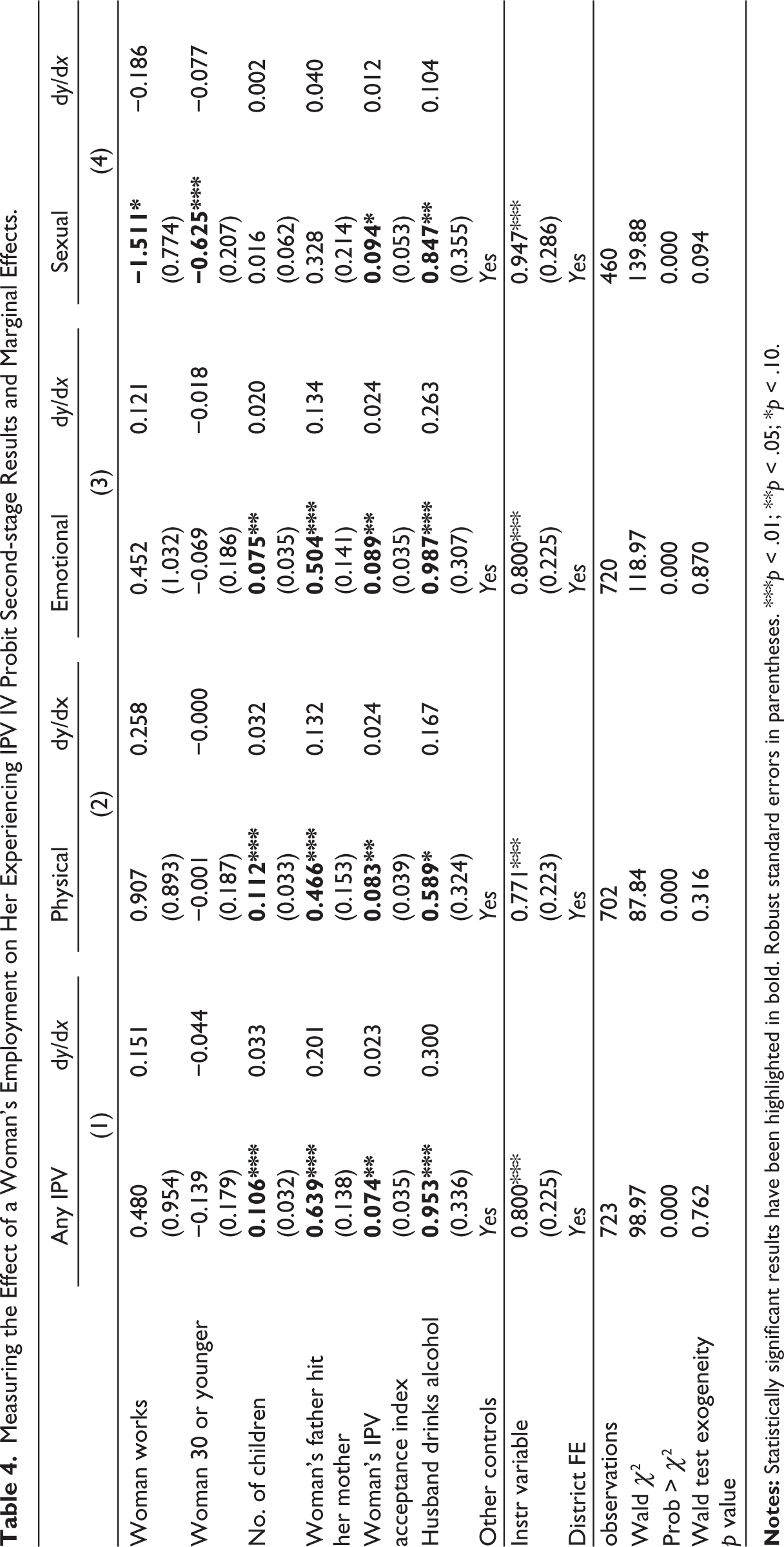
We report the results of the second-stage regression for the four dependent variables in Table 4. In addition, we present a diagram of the average marginal effects of key covariates on the probability of IPV in Figure 1. The model is estimated using the ivprobit command in Stata, which employs full-information maximum likelihood to jointly estimate the first- and second-stage equations. This approach produces consistent and efficient estimates. Joint first-stage Wald Chi-square to demonstrate first-stage Wald Chi-square to demonstrate the strength of the IV and interaction terms is reported for all models. Detailed probit results are available in Table A2 in Appendix B.
Measuring the Effect of a Woman’s Employment on Her Experiencing IPV IV Probit Second-stage Results and Marginal Effects.
Average Marginal Effects of Key Covariates on the Probability of IPV.
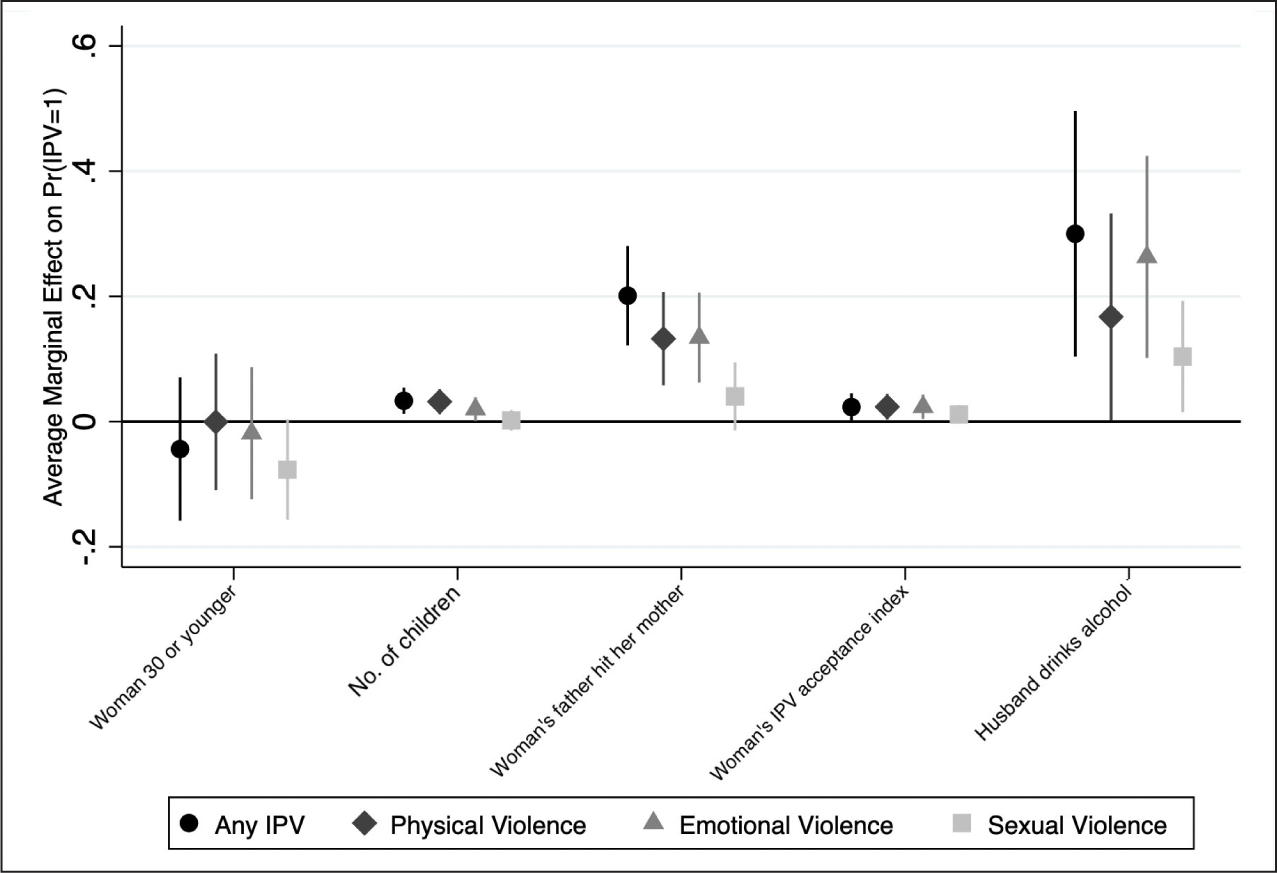
Results in Table 4 show that a larger number of children in the family may lead to financial and emotional strain, thus increasing the probability of physical and emotional abuse from the husband. Alcohol consumption (though in a small percentage of the population) is consistently a triggering factor for violence towards wives. Younger women, that is, women aged 30 years or less, are 7.7% less likely to experience sexual violence compared to those over the age of 30.
The number of children a woman has is positively and significantly associated with the increase in probability of experiencing any IPV, physical violence and emotional violence. Specifically, each additional child is associated with a 3.3 percentage point increase in the probability of experiencing any type of IPV, a 3.2 percentage point increase in the probability of physical violence, and a 2 percentage point increase in the probability of emotional violence. This finding is consistent with the hypothesis that larger family size intensifies household stress and reduces women’s bargaining power, thereby increasing vulnerability to violence. The effect is not significant for sexual violence.
The intergenerational transmission of violence hypothesis is supported in this sample. Witnessing parental violence during childhood is a strong predictor of spousal violence in adulthood. Individuals exposed to such violence face a 13.2 percentage point higher probability of physical IPV, a 13.4 percentage point higher probability of emotional violence and a 20.1 percentage point higher probability of experiencing any form of IPV.
A woman’s tolerance of IPV, though marginally, is positively and significantly associated with experiencing spousal violence. It increases the probability of experiencing any IPV by 2.3 percentage points, physical violence by 2.4 percentage points and emotional violence by 2.4 percentage points. This suggests that women who normalize or accept IPV as justifiable are more likely to experience it, possibly because such attitudes reduce resistance and help-seeking behaviour.
Husband’s alcohol consumption is the largest and most consistent predictor of IPV across all outcomes. Women whose husbands consume alcohol face a 30 percentage point higher probability of experiencing any IPV, a 16.7 percentage point higher probability of physical violence, a 26.3 percentage point higher probability of emotional violence and a 10.4 percentage point higher probability of sexual violence, underscoring the well-established link between male alcohol consumption and domestic violence in the literature.
The IV remains significant in all four cases and demonstrates strong predictive power. A woman’s own beliefs about IPV as acceptable social behaviour significantly impact her chances of being mistreated, both physically and emotionally. A robustness check is carried out by running the probit regression using the same instrumental variable and all (except the woman’s IPV acceptance index) variables mentioned in Appendix B, Table A2. Second-stage results for this regression are available in Appendix D, Table A3.
Heterogeneity Analysis
To examine heterogeneous effects, we use interaction-based specifications instead of split-sample IV estimation. This approach avoids weak-instrument problems in sub-samples and allows testing for differential effects.
Descriptive Heterogeneity (Unconditional Mean Differences)
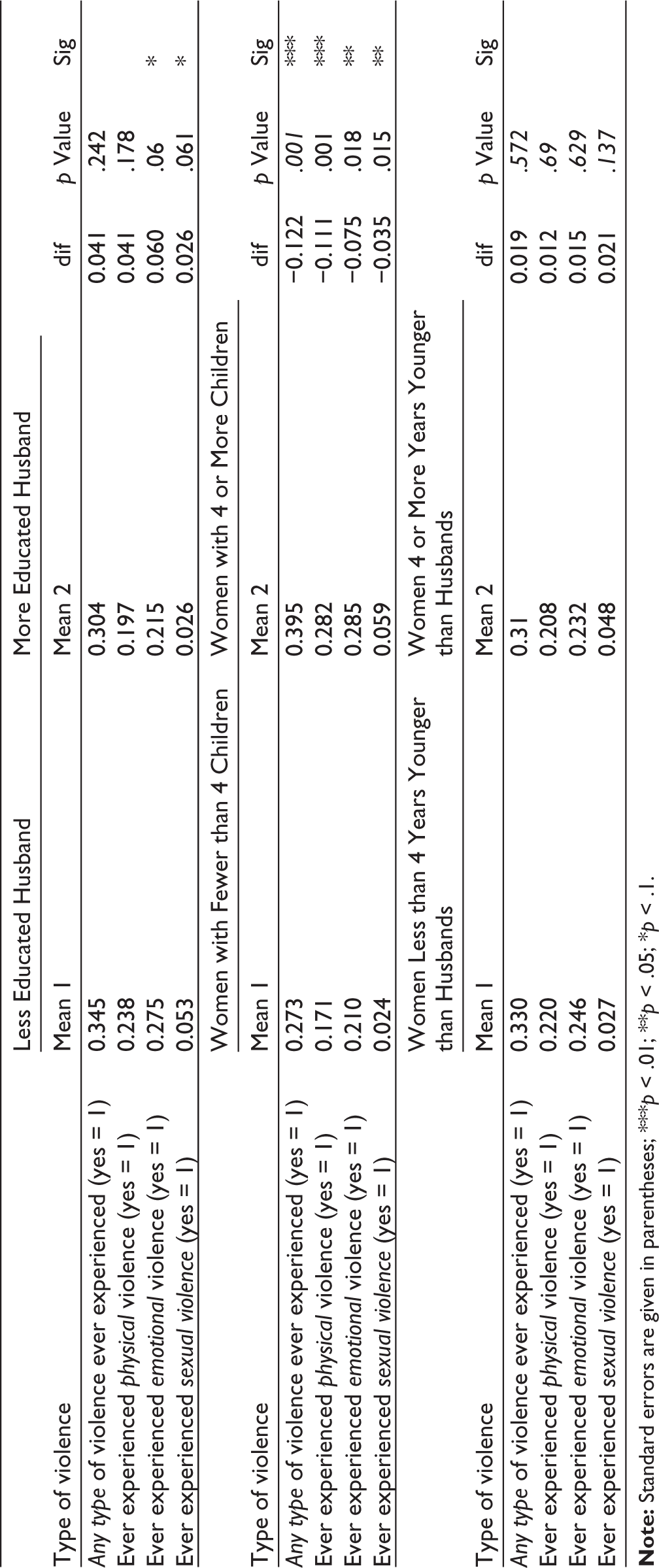
Next, in Table 5, we examine differences in IPV prevalence across six subgroups based on important observable characteristics that might create significant variation in the data: urban versus rural residence, women’s age, women’s education, husband’s level of education, number of children and couple age gap (husband’s age – wife’s age). Two-sample t-tests are conducted for each subgroup, and the results are presented in Table 5.
Unconditional Mean Differences (Descriptive Heterogeneity).
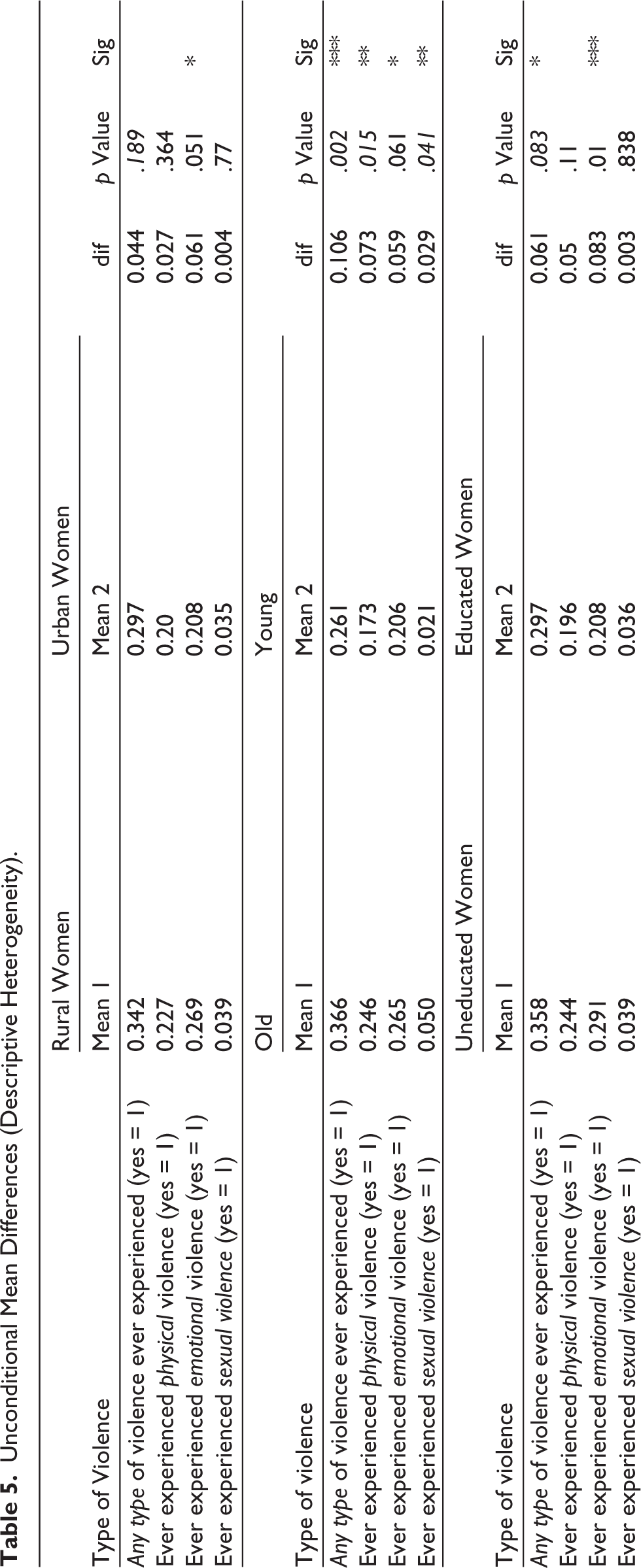
The inferential statistics reveal that the incidence and prevalence of violence of any type are not significantly different across urban and rural settings. While rural areas report slightly higher prevalence, the lack of significance indicates comparable IPV risks in both settings. No significant differences in physical or sexual violence suggest these forms of IPV might be driven by similar dynamics across rural and urban areas. Emotional violence, however, shows a marginally significant rural–urban difference, with higher prevalence in rural areas. This could be due to rural-specific factors, such as patriarchal norms and societal expectations.
There are significant disparities across IPV types, with older women reporting a higher prevalence of all IPV types compared to younger women. The significant difference in mean value suggests that emotional violence might also accumulate over time or could be more openly recognized by older women. Sexual violence is less common overall, but older women nevertheless report a higher prevalence. The difference in mean values of violence experienced may also be due to acceptance of IPV and cultural norms among the older age group. This might also suggest a cumulative risk among older women with possibly longer-duration marriages.
The significant difference in the mean value of overall IPV of any type experienced and emotional violence experienced by uneducated and educated women points to the substantial protective role that a woman’s education plays in reducing the likelihood of experiencing IPV of all forms. Although uneducated women report higher physical violence, the lack of significance suggests other factors may mediate this relationship. Emotional violence shows the most significant disparity between uneducated and educated women, reinforcing the protective effect of education.
Husband’s education provides a protective effect against emotional and sexual violence, with the mean differences being statistically significant at the 10% level. Combined with the finding that educated women experience significantly less emotional abuse from their partners, this highlights the critical role of education in reducing violence within couples. By fostering healthier, safer relationships between husbands and wives, education can break the cycle of violence and promote positive outcomes for future generations.
When compared with women who have fewer than four children, women with four or more children exhibit substantially higher rates of IPV across every dimension examined, and all differences are statistically significant at conventional levels. The gap in any IPV prevalence is the largest observed across all heterogeneity dimensions in this analysis. Physical violence follows closely, with an equally significant and similarly sized difference. Emotional violence also differs significantly between the two groups. Sexual violence, though uncommon in the overall sample, is more than twice as prevalent among women with larger families. The consistency and strength of these differences across all four violence types make family size the most robust dimension of heterogeneity in the descriptive analysis.
Despite the cultural salience of spousal age differentials in Pakistan, unconditional mean comparisons reveal no statistically significant differences in IPV prevalence between the two groups across any of the four outcomes examined. The absence of descriptive heterogeneity by age gap is itself informative, suggesting that the raw age differential does not straightforwardly predict IPV exposure and that its moderating role may operate specifically through the employment channel. This motivates the conditional heterogeneity analysis that follows.
These descriptive patterns are consistent across all four measures of violence and suggest a robust positive association between family size and IPV vulnerability. Women with larger families are likely to face greater economic dependence, reduced mobility and diminished bargaining power within the household, all of which are theoretically associated with higher vulnerability to IPV. These findings provide strong prima facie motivation for the heterogeneity analysis conducted in the subsequent section, in which the moderating role of family size in the relationship between women’s employment and IPV is examined within an IV framework.
Conditional Heterogeneity Analysis (Interaction-Variable Approach)
We perform a heterogeneity analysis to explore how responses to FLFP vary across distinct groups of society or demographic characteristics. We argue that due to the substantial heterogeneity present in the population, average results mask the true effects of female participation on the experience of different forms of spousal violence. Therefore, it is important to disaggregate data at various levels to see context-specific impacts in Punjab. For exploring heterogeneity in the effects of demographics, we study all four binary dependent variables discussed earlier: whether a woman has ever experienced IPV of any type, whether a woman has ever faced physical violence from her husband, whether a woman has faced emotional violence, and whether she has experienced sexual violence from her partner. As discussed earlier, DHS datasets include questions about all three aspects of violence. Even though we suspect underreporting of sexual violence due to cultural norms, we study the important aspect of violence experienced by married women.
To examine heterogeneity in the effect of women’s employment on IPV, we employ an interaction-variable approach. Specifically, the instrumental variable is interacted with six binary indicators: urban residence, age (30 years or younger), women’s education status (educated versus uneducated), husband’s education (6 or more years of schooling), family size (four or more children) and spousal age gap (husband four or more years older than wife). The resulting interaction terms are incorporated into the ivprobit framework alongside the original instrument, allowing us to identify whether the effect of women’s employment on IPV differs systematically across these subgroups. Joint first-stage Wald χ 2 is reported in every model to show the relevance of the IV. Marginal effects are computed on the predicted probability scale using the ‘margins’ post-estimation command in Stata.
We argue that urban women may face different IPV risks than rural women, despite the nearly equal distribution. Similarly, the cultural preference for older husbands may influence power dynamics within households. An increase in a woman’s age and her life experiences may endow her with more maturity and offer her better skills to deal with abusive partners. The two subgroups we study are old (over 30 years old) and young (30 years or less).
Similarly, women’s education is not only a tool for accessing better employment opportunities but also potentially equips them to deal with adverse circumstances. Moreover, the husband’s education may change their attitudes towards IPV and their spouse’s rights and responsibilities, leading to improved social and cultural norms over generations. We classify women into two groups, educated and uneducated, and similarly divide husbands into less educated (fewer than six years of schooling) and more educated (six or more years of schooling) subgroups for the heterogeneity analysis to be carried out using interaction variables.
Family size is an additional dimension of heterogeneity, given its potential influence on women’s economic dependence and bargaining power within the household. Women with a larger number of children may face greater constraints on their mobility, employment prospects and ability to exit abusive relationships, rendering them more vulnerable to IPV. At the same time, employment-generated income may matter more for women in larger families precisely because their dependence on their husbands is greater. We therefore classify women into two groups, those with fewer than four children and those with four or more children, and employ the interaction term approach to examine whether the protective effect of employment against IPV is stronger for women in larger families. Spousal age gaps shape intra-household power dynamics. Larger gaps often put husbands in a stronger position, limiting women’s bargaining power. This may influence how employment affects IPV. To examine whether the protective effect of employment against IPV is conditioned by spousal age asymmetry, we compare couples with age gaps of four or more years to those with smaller or reversed gaps.
Heterogeneity by Urban Versus Rural Residence
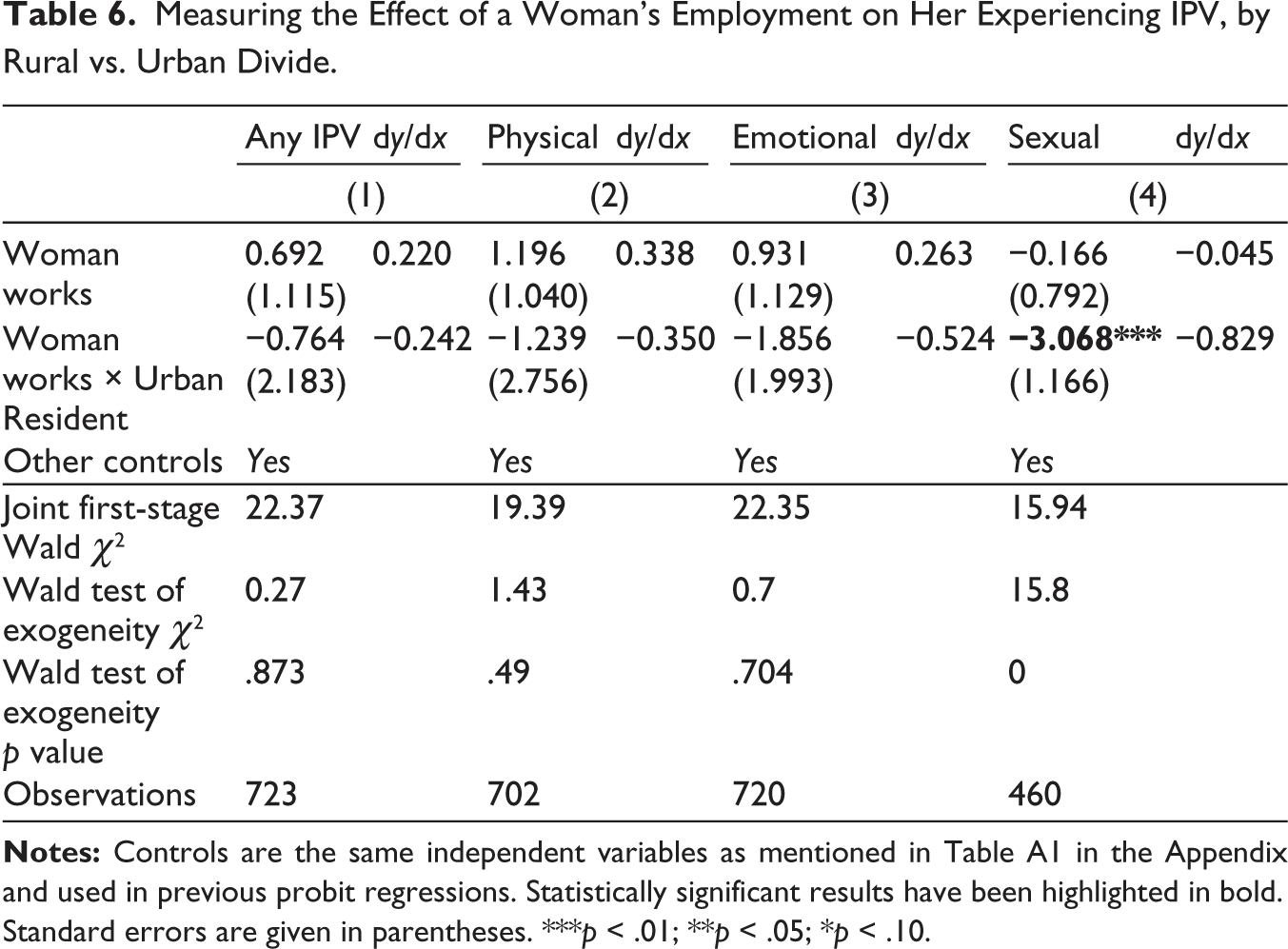
First, we explore how the relationship between women’s employment and IPV varies across rural and urban areas, using an interaction and the term created by multiplying the independent variable Woman Works by the independent control Urban Resident. The binary dependent variables examined include overall IPV/any violence and all three types of violence, that is, physical, emotional and sexual.
Table 6 shows that amongst urban women, employment is associated with a significantly stronger reduction in the probability of experiencing sexual violence relative to their rural counterparts or urban women who are not employed. The interaction term is negative and statistically significant for sexual violence. Women in urban areas who participate in the workforce have an 82.9 percentage point lower probability of experiencing sexual violence. A diagrammatic representation of the heterogeneous effects of women’s employment on the probability of experiencing IPV across the rural-urban divide is shown in Figure 2.
Measuring the Effect of a Woman’s Employment on Her Experiencing IPV, by Rural vs. Urban Divide.
Standard errors are given in parentheses. ***p < .01; **p < .05; *p < .10.
Heterogeneity Effects of Women’s Employment on the Probability of Experiencing IPV, by Urban and Rural Residence.
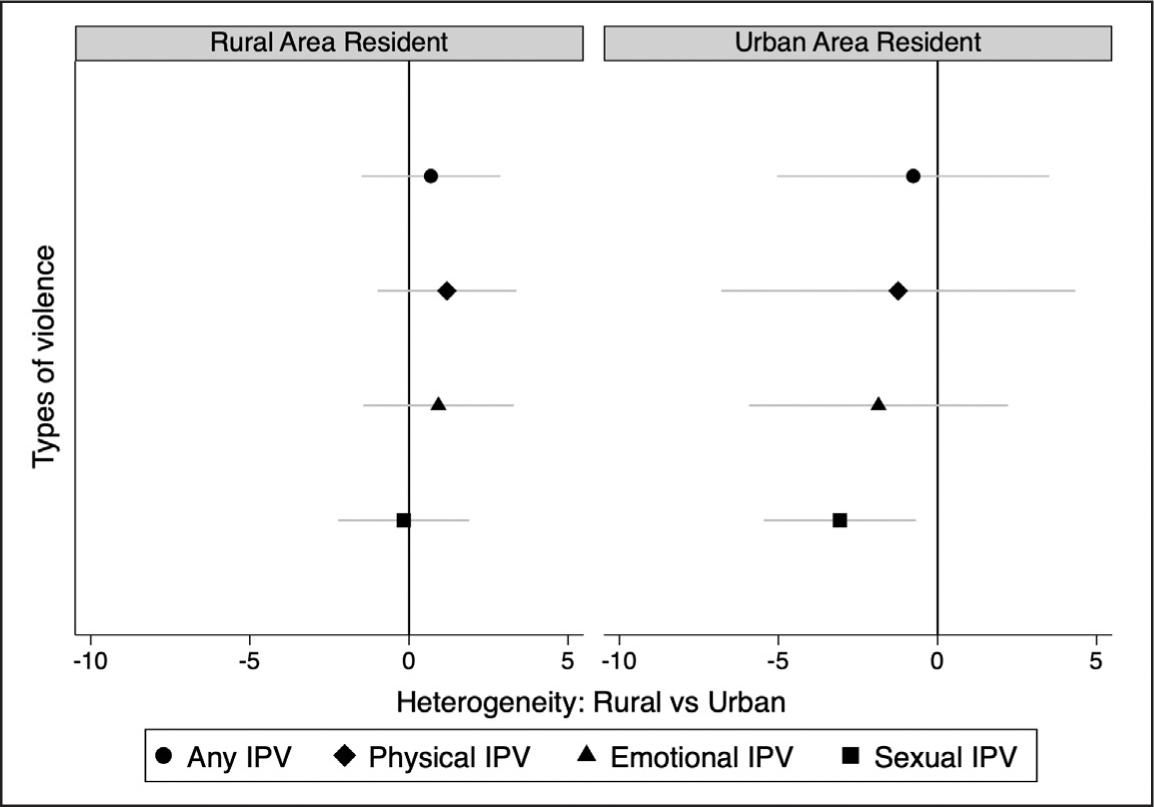
Urban environments may offer working women greater access to legal resources, social networks and institutional support, which could amplify the protective effect of employment against sexual violence specifically. Additionally, urban social norms may be more receptive to women’s economic participation, potentially reducing the likelihood that employment triggers retaliatory behaviour from partners.
Heterogeneity by Women’s Age (Younger Versus Older)
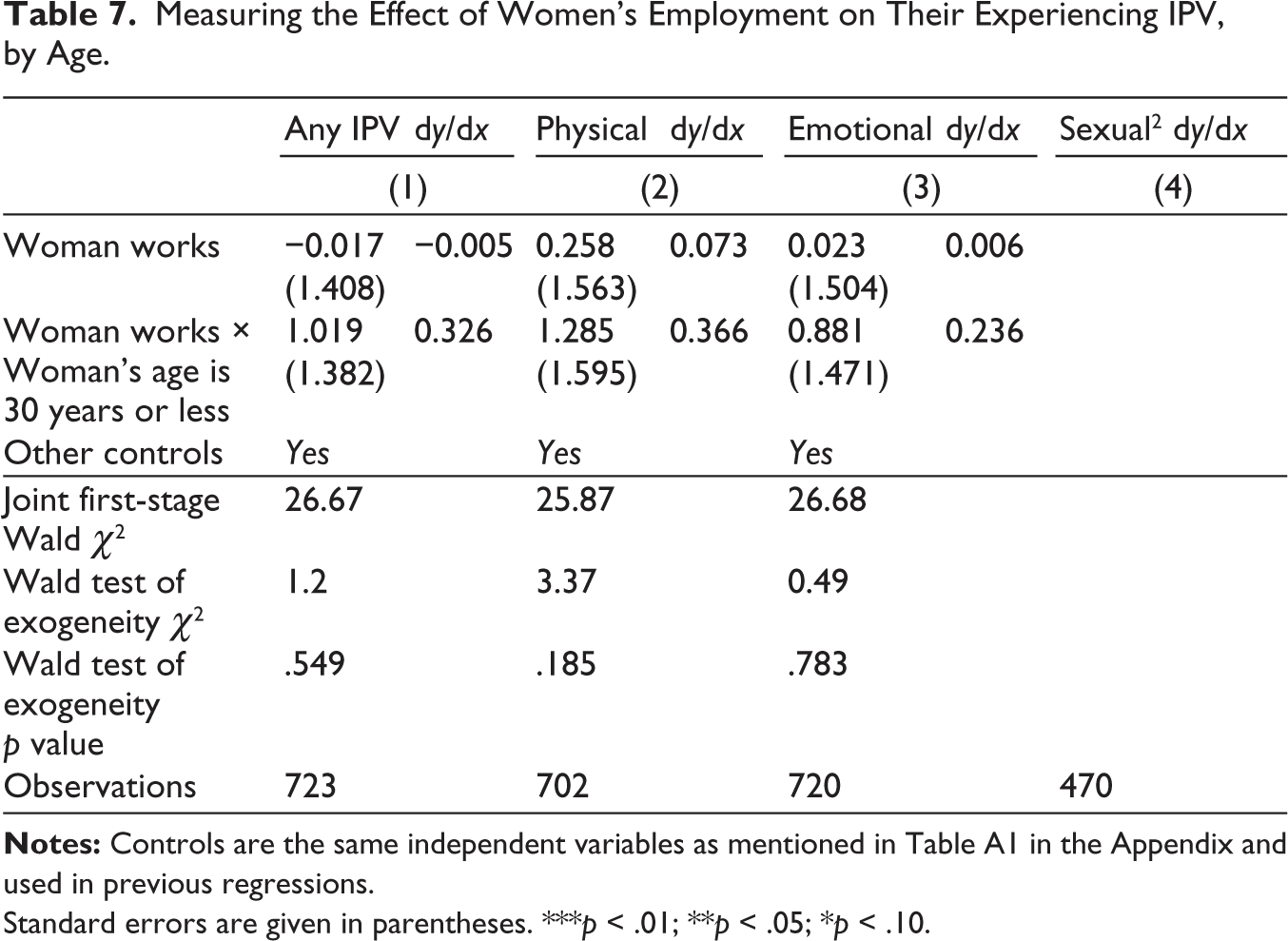
Second, Table 7 examines whether the effect of women’s employment on IPV differs by age, with older women serving as the base group. A diagram showing the heterogeneous effects of women’s employment on the probability of experiencing IPV by age group is presented in Figure 3.
Measuring the Effect of Women’s Employment on Their Experiencing IPV, by Age.
Standard errors are given in parentheses. ***p < .01; **p < .05; *p < .10.
Heterogeneity Effects of Women’s Employment on the Probability of Experiencing IPV, by Age Group.
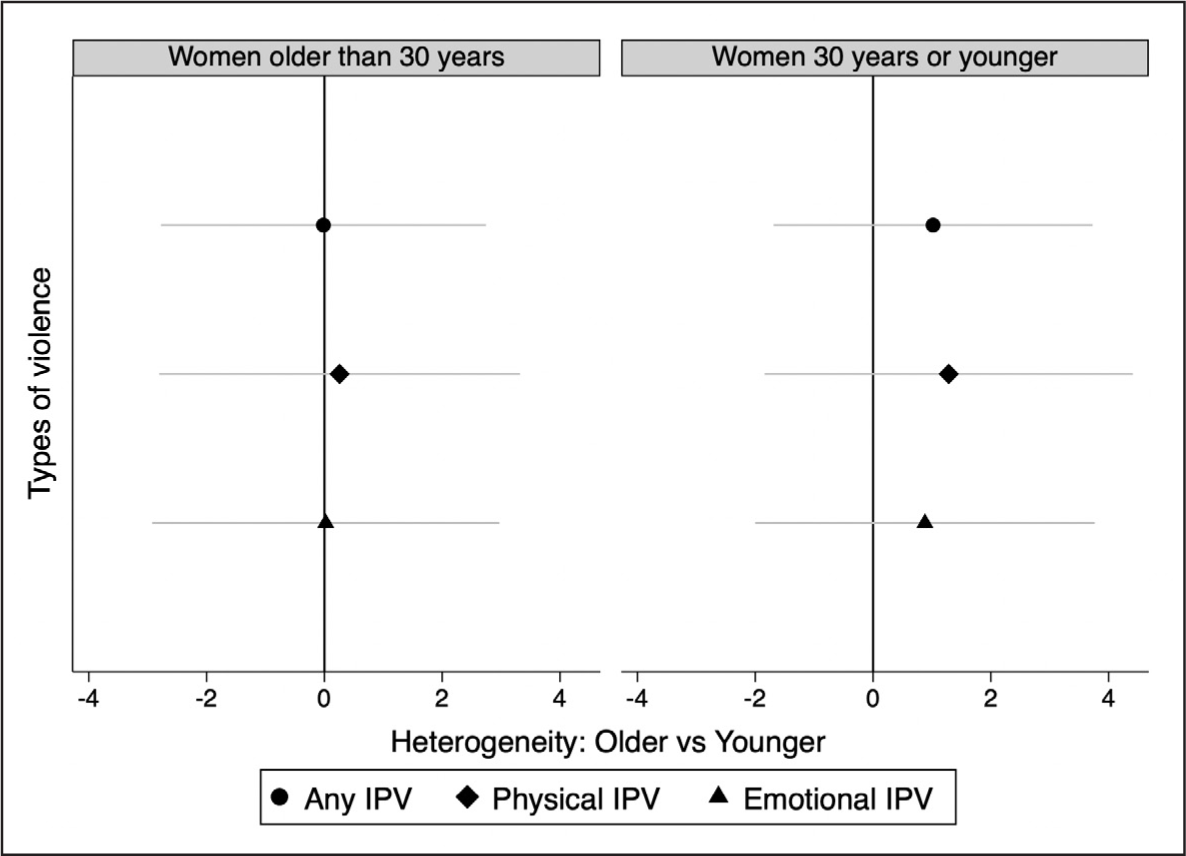
For older women, employment has no statistically significant effect on any form of IPV. The coefficients and corresponding marginal effects are insignificant across all three outcomes, indicating that employment alone does not meaningfully alter IPV risk among women aged 30 and older.
The consistently positive but insignificant interaction terms across these outcomes suggest that if anything, the protective effect of employment may be weaker for younger women, though this pattern does not reach statistical significance in the present sample. This pattern, while not significant, is consistent with the hypothesis that younger women with less established household authority may be more vulnerable when entering employment, as husbands may perceive their economic participation as a threat to traditional power dynamics
Heterogeneity by Women’s Education Status
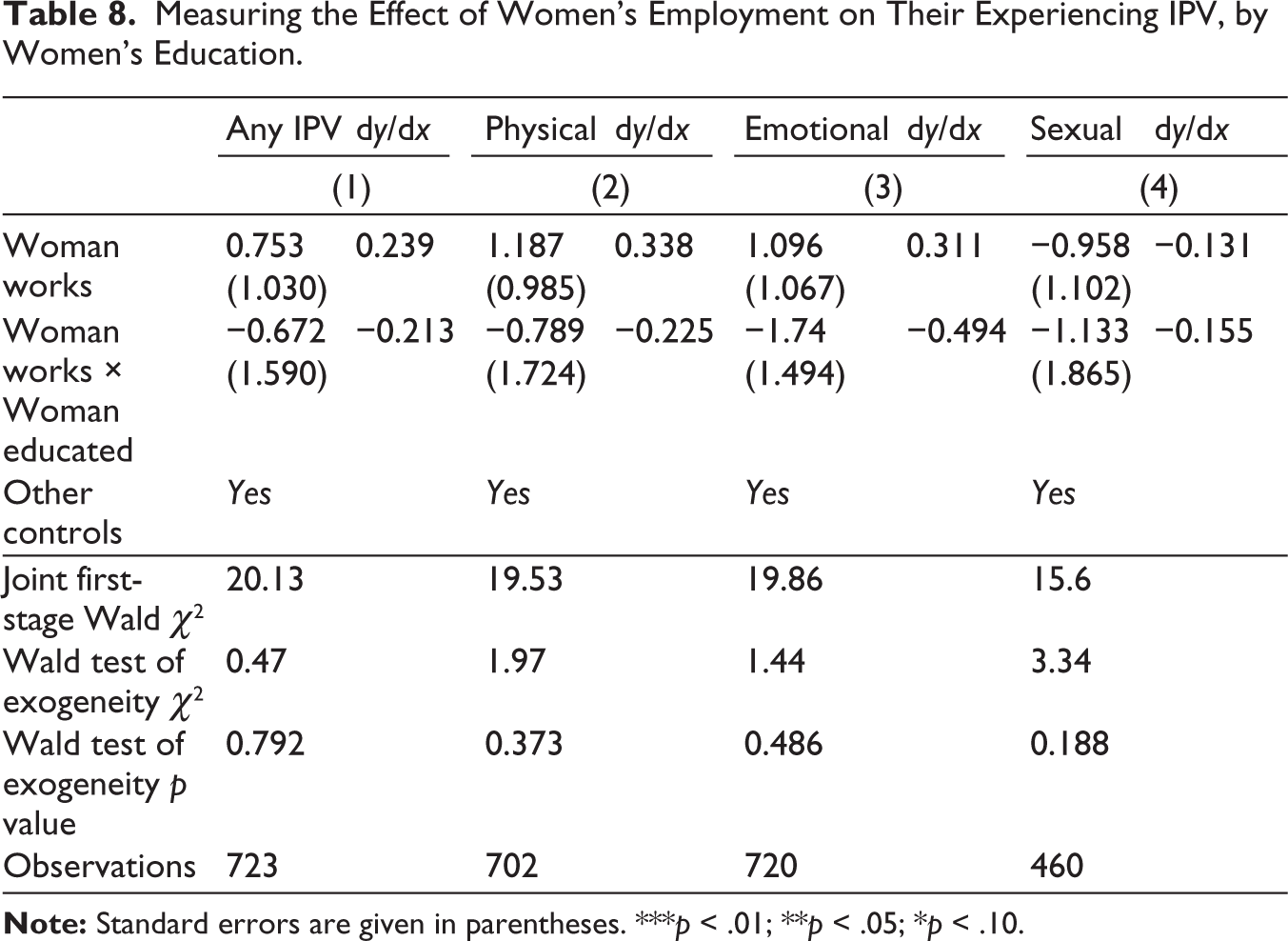
Table 8 examines whether the effect of women’s employment on IPV differs by education status, with uneducated women serving as the base group. A diagram showing the heterogeneous effects of women’s employment on the probability of experiencing IPV by women’s education status is presented in Figure 4.
Measuring the Effect of Women’s Employment on Their Experiencing IPV, by Women’s Education.
Average Marginal Effects of Women’s Employment on the Probability of Experiencing IPV, by Women’s Education Status.
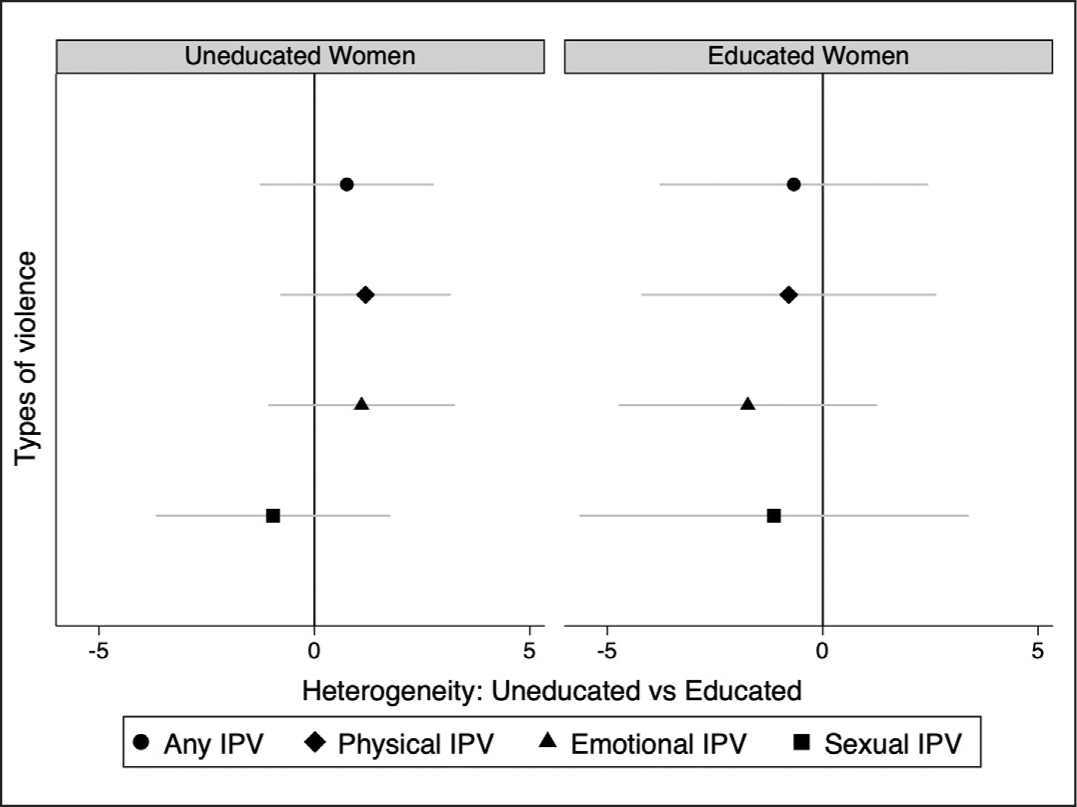
For uneducated women, employment is associated with a positive but statistically insignificant effect on IPV across all three outcomes. The interaction term is negative across all four outcomes: any IPV, physical, emotional and sexual violence. While the results provide no statistically significant evidence of heterogeneity by women’s education, the consistently negative interaction terms nonetheless suggest a directional pattern in which education amplifies the protective effect of employment against IPV.
Heterogeneity by Husband’s Education Status
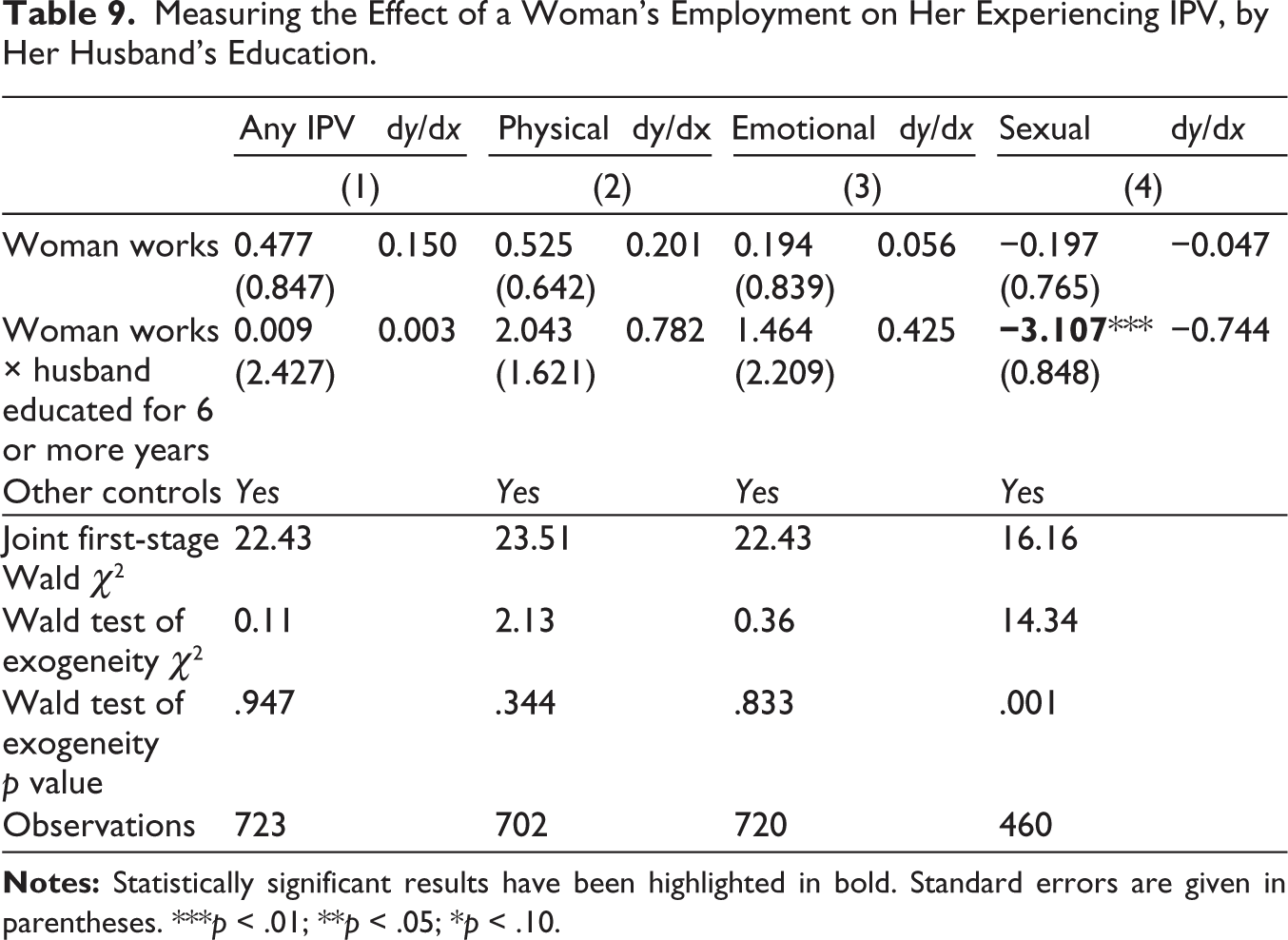
Next, in Table 9, we examine whether the effect of women’s employment on IPV differs based on the husband’s education, with women whose husbands have fewer than six years of schooling serving as the base group. The interaction term captures the differential effect of employment for women whose husbands are more educated. A diagram showing the heterogeneous effects of women’s employment on the probability of experiencing IPV by husband’s education level is presented in Figure 5.
Measuring the Effect of a Woman’s Employment on Her Experiencing IPV, by Her Husband’s Education.
Heterogeneity Effects of Women’s Employment on the Probability of Experiencing IPV, by Husband’s Education Level.
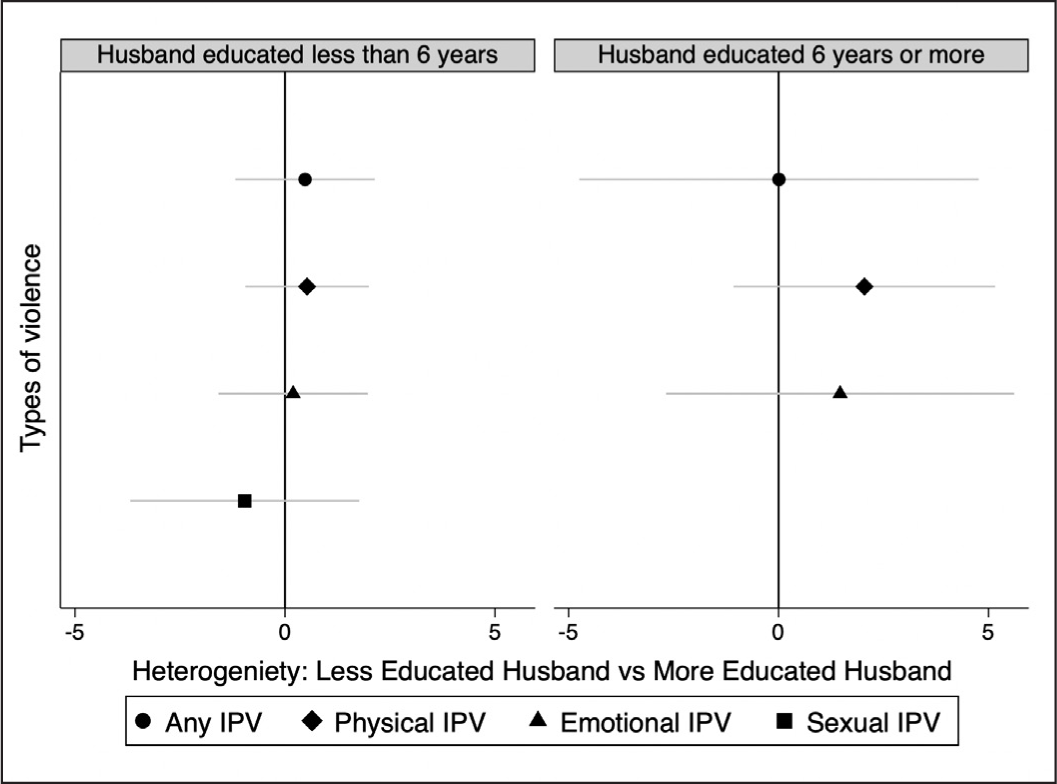
The interaction term is statistically insignificant for any IPV, physical and emotional violence, providing no evidence that the husband’s education moderates the employment–IPV relationship for these outcomes.
For sexual violence, however, the interaction term is large, negative and significant at the 1% level. This indicates that among women whose husbands are more educated, employment is associated with a 74.4 percentage point lower probability of experiencing sexual violence relative to working women with less-educated husbands. The results provide strong evidence of heterogeneity by the husband’s education, specifically for sexual violence. More educated husbands may hold more egalitarian attitudes towards women’s economic participation, making them less likely to use sexual violence as a means of asserting control in response to their wives’ employment.
Heterogeneity by Number of Children in the Family
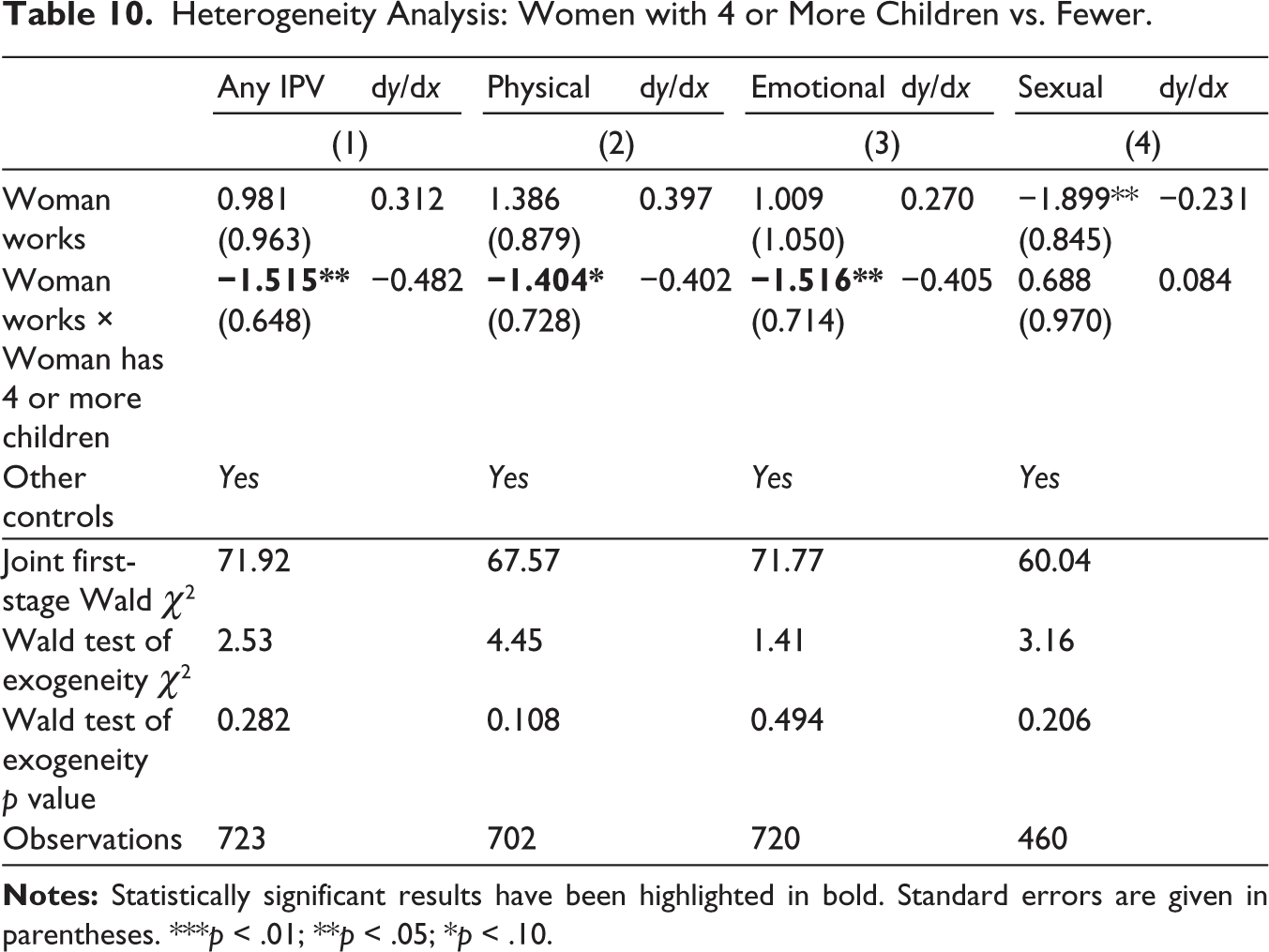
In Table 10, we present the results of the heterogeneity analysis, examining whether the effect of women’s employment on IPV differs by family size, specifically between women with four or more children and those with fewer children serving as the base group. A diagram showing the heterogeneous effects of women’s employment on the probability of experiencing IPV by family size is presented in Figure 6.
Heterogeneity Analysis: Women with 4 or More Children vs. Fewer.
Heterogeneity Effects of Women’s Employment on the Probability of Experiencing IPV, by Number of Children.
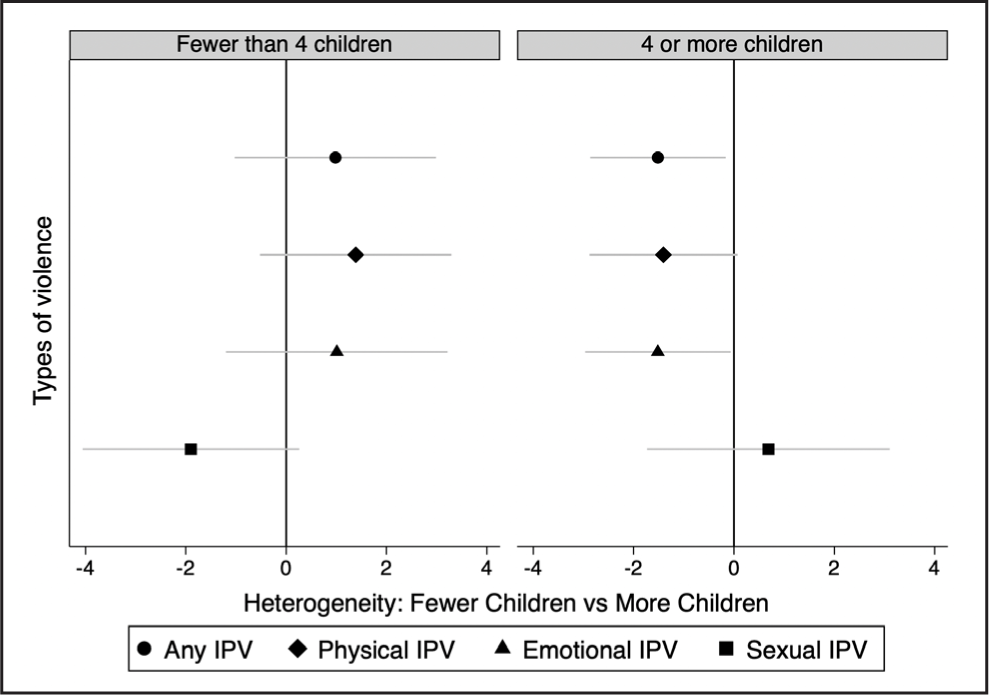
For women with fewer than four children, employment does not significantly affect the probability of experiencing any IPV, physical or emotional violence. The exception is sexual violence, where employment is associated with a 23.1 percentage point lower probability of victimization, suggesting that the independence conferred by work may be particularly relevant for reducing this specific form of violence among women in smaller families.
From Table 4, we see that more children generally increase IPV risk. However, when a woman with many children works and earns income, the protective effect of that employment is so strong that it more than offsets the effects, resulting in lower IPV specifically among working women in larger families. The interaction term is negative and statistically significant for any IPV, physical violence and emotional violence. These results indicate that the protective effect of women’s employment against IPV is significantly stronger for women with four or more children than for those with fewer. Employed women with 4 or more children have a 48.2 percentage point lower probability of facing any IPV, and almost 40 percentage points lower probability of facing physical and emotional violence from their spouses. These findings may also be read alongside recent South Asian evidence linking fertility-related household pressures to IPV. Kamei (2025), for example, shows that son preference may increase IPV partly through its effect on family size. However, the main focus of our study is not on examining child sex composition or son preference specifically. To capture information related to the children the women have borne, we have included the total number of children alive for each woman in the sample, which captures the impact of financial and emotional strains associated with varying family sizes. Our evidence is narrower: It suggests that, in Punjab, the association between women’s employment and IPV differs by family size, with stronger protective effects observed among women with four or more. The interaction term for sexual violence is insignificant, suggesting that family size does not moderate the employment–sexual violence relationship in a meaningful way.
The results provide meaningful evidence that family size is a significant moderator of the employment-IPV relationship. Women’s employment has a substantially stronger protective effect against physical, emotional and any IPV for women with four or more children. This pattern is consistent with a household bargaining framework, where employment income is proportionally more consequential for their bargaining position within the household.
Heterogeneity by Spousal Age Gap
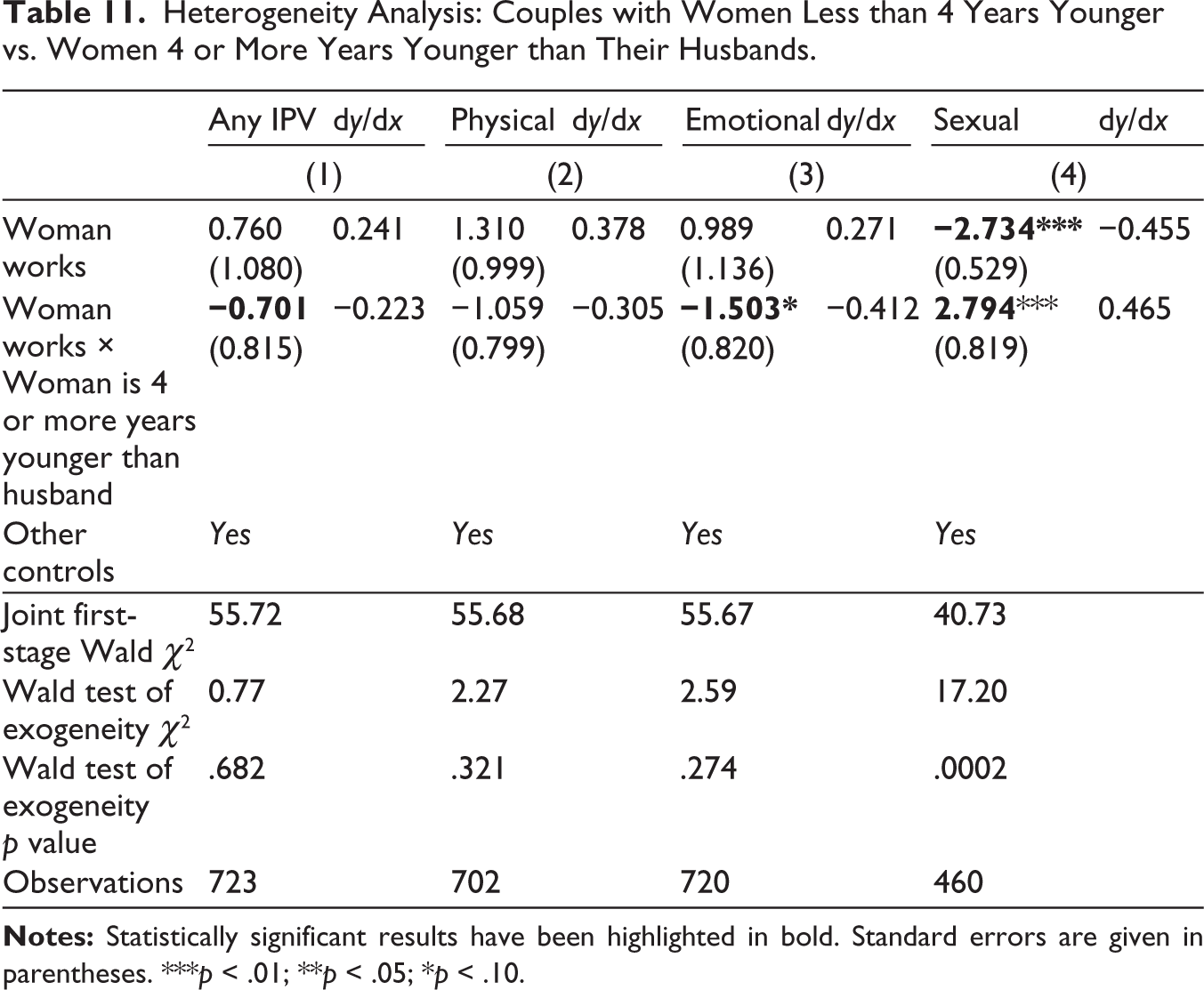
In Table 11, we examine whether the effect of women’s employment on IPV differs by the spousal age gap, specifically between couples where the husband is less than four years older than the wife (including couples where the wife is the same age or older), serving as the base group, and couples where the husband is four or more years older. It is worth noting that the base group is heterogeneous, comprising 141 women who are older than their husbands, 72 same-age couples and 265 women whose husbands are between one and three years older. The treatment group of 471 women represents couples with a more pronounced age differential in favour of the husband. A diagram showing the heterogeneous effects of women’s employment on the probability of experiencing IPV by spousal age gap is presented in Figure 7.
Heterogeneity Analysis: Couples with Women Less than 4 Years Younger vs. Women 4 or More Years Younger than Their Husbands.
Heterogeneity Effects of Women’s Employment on the Probability of Experiencing IPV, by Spousal Age Gap.
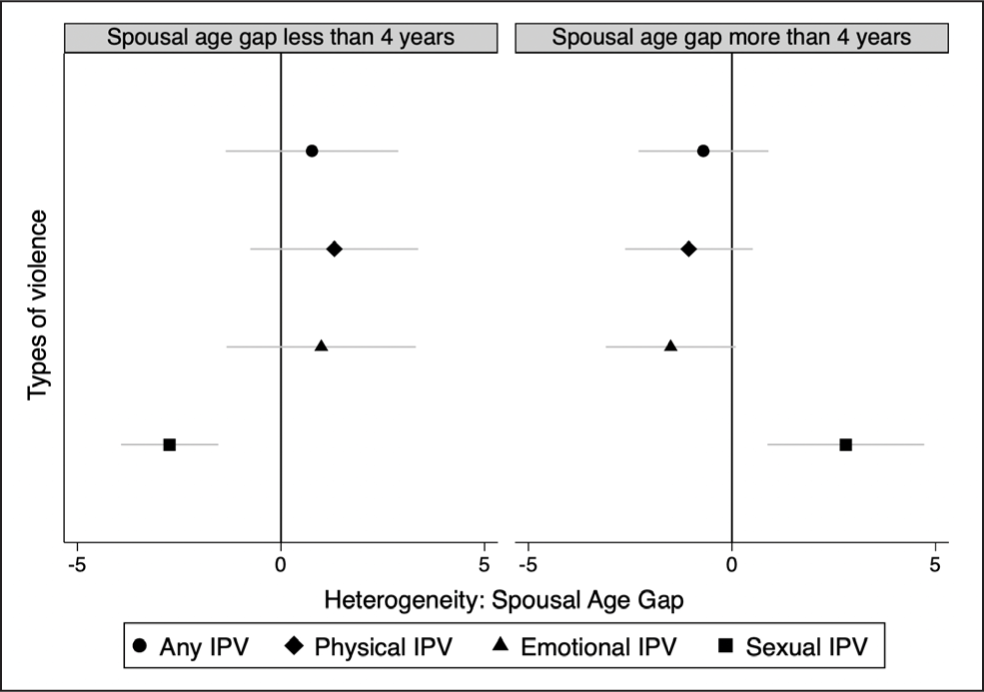
For women in couples with a smaller or reversed age gap, employment has an insignificant effect on any IPV, physical or emotional violence. For sexual violence, however, the coefficient is negative and significant, indicating a 45.5 percentage point lower probability of being exposed to sexual violence. This result is consistent with the finding in Table 4, where employment significantly reduces sexual violence on average, and suggests that this protective effect is concentrated among women in couples with smaller age differentials.
Employment provides a stronger protective effect against emotional violence for women in couples with a larger age gap, reducing the probability of experiencing such violence by 41.2 percentage points. The direction, however, reverses for sexual violence, wherein the interaction term is positive. Women in the workforce have a 46.5 percentage point higher probability of experiencing sexual abuse from their partners. The strong protective effect of employment against sexual violence observed in the base group is completely offset for women whose husbands are four or more years older, leaving employment with virtually no net protective effect against sexual violence in couples characterized by a pronounced spousal age differential.
Thus, for women in couples with a smaller age gap, employment is strongly protective against sexual violence. However, this protective effect is largely offset for women in couples with a large age differential, i.e., the positive and significant interaction term for sexual violence nearly cancels the negative base effect entirely. This pattern suggests that in couples characterized by a pronounced power imbalance rooted in age, women’s employment may be insufficient on its own to protect against sexual violence. This interpretation is consistent with the male backlash hypothesis and aligns with broader evidence from patriarchal contexts where women’s economic gains are met with resistance rather than acceptance.
Conclusion
This study explores the complex two-way relationship between women’s participation in the labour force and IPV in Punjab, Pakistan. While employment can boost women’s autonomy and offer an escape from abusive relationships, in areas with strong traditional gender norms, it may also trigger violence from spouses trying to reassert control. Using data from the 2017–2018 Demographic and Health Survey for Punjab, Pakistan, the study investigates how women’s employment influences IPV exposure, utilizing a novel instrumental variable to address endogeneity issues and better understand the social and cultural factors involved.
The results of this study, which reveal a complex relationship between women’s employment and IPV, hold important implications for policymakers and practitioners. The initial analysis confirms that the instrument variable is strong and valid. In the second-stage regression, women’s acceptance of IPV as normal behaviour for husbands significantly influences their vulnerability to abuse. Additionally, the husband’s alcohol habits significantly increase the chances of violence towards the women.
The heterogeneity analysis reveals that the protective effect of women’s employment against IPV is not uniform across all demographic groups but varies systematically with family size, age and residential location. Most notably, women with four or more children benefit significantly more from employment in terms of reduced exposure to physical, emotional and any IPV, consistent with a household bargaining framework in which income-generating opportunities matter most for women with the greatest economic dependence. Among younger women and urban residents, employment is associated with a significantly lower probability of sexual violence, specifically suggesting that the pathways through which employment reduces violence may differ across subgroups. These findings collectively underscore that policies aimed at promoting women’s labour-force participation are likely to generate the greatest protective benefits for the most economically vulnerable women, particularly those in larger families with fewer outside options.
The heterogeneity analysis makes a particularly important contribution by demonstrating that aggregate estimates mask substantial variation in the employment– IPV relationship. The most robust finding of this study is that women with four or more children benefit disproportionately from employment, with marginal effects on IPV reduction exceeding 40 percentage points for physical and emotional violence. This result has direct policy relevance: Interventions promoting female labour-force participation are likely to yield the greatest protective dividends precisely among women who are most economically dependent and least mobile. The finding that spousal age gap moderates the protective effect of employment against sexual violence further suggests that power asymmetries within households condition the channels through which economic empowerment operates. Policies aimed at increasing female labour-force participation should concurrently address additional factors influencing IPV. Actions such as encouraging late marriages, enhancing educational attainment for both genders and revising curricula to confront norms that tolerate spousal violence may lead to improved safety and well-being for women in Pakistan.
Future research could usefully examine the role of community-level norms, peer networks and institutional support in amplifying or constraining the protective potential of women’s employment, particularly in high-fertility, patriarchal contexts where the mechanisms identified in this study are most consequential. The gender composition of children represents a further avenue worth investigating: Recent evidence from South Asia suggests that son preference and fertility decisions may constitute an important pathway linking household structure to IPV (Kamei, 2025). Because the present study was not designed to identify those mechanisms, both questions remain important directions for subsequent research.
Footnotes
Authors’ Contribution
Haleema Salman Umaar: Conceptualization, methodology, software, formal analysis, investigation, data curation, writing—original draft, writing—review and editing. Rabia Arif: Conceptualization, methodology, validation, formal analysis, data curation, writing—review and editing.
Data Availability Statement
The data can be made available by the corresponding author on request. These are also directly downloadable from the website of the Demographic and Health Survey, 2017–2018, and Pakistan Labour Force Survey, 2010–2011.
Declaration of Conflicting Interests
The authors declared no potential conflicts of interest with respect to the research, authorship and/or publication of this article.
Funding
The authors received no financial support for the research, authorship and/or publication of this article.