







Abstract
This study explores the pervasive issue of academic dishonesty among higher education students in Deogarh, Odisha, a reflection of broader socio-economic challenges in India. The findings indicate that students’ behaviours, such as cheating in examinations, are shaped by limited capabilities rooted in economic conditions and societal expectations. Students, often from economically disadvantaged backgrounds, are driven by the need for immediate success and job security, leading them to view cheating as a pragmatic solution. This study applies Amartya Sen’s capability approach to demonstrate how the lack of economic, educational resources and opportunities constrains students’ ability to achieve their full potential, further worsening the problem. This research underscores the need for comprehensive educational reforms that address both academic integrity and the socio-economic factors contributing to academic dishonesty, aiming to foster a more ethical and equitable educational environment in higher education.
Introduction
Academic dishonesty has become increasingly normalised in educational institutions and is often overlooked (Pell & Amigud, 2023). This behavioural issue is longstanding and widespread (Bantick, 2001; Marsden et al., 2005; Schemo, 2001) and is growing post-pandemic (Elsalem et al., 2021; Wahab et al., 2022). Dishonest behaviours include plagiarism, copying classmates’ work (Bachore, 2016) and cheating during examinations (Crittenden et al., 2009). Research indicates that between 60% and 95% of undergraduate students engage in dishonest practices at some point in their academic journey (Bacon et al., 2020; Burton et al., 2011; Qualls, 2014; Simkin & McLeod, 2010), with some scholars suggesting that the actual prevalence may exceed survey estimates (Anderman & Won, 2019).
Within the academic dishonesty spectrum, cheating practices in research have received increased attention in recent years, but it remains a significant concern and a persistent threat to education systems globally (Ives & Cazan, 2024; Surahman & Wang, 2022). It is closely linked to subsequent unethical behaviour in higher education 1 and beyond (Callahan, 2011). Across various social and economic contexts, individuals often face decisions involving opportunistic or even unlawful actions to secure personal gains, frequently at the expense of others (Chala, 2021). This issue transcends moral concerns and has practical implications. If students succeed through cheating, it raises questions about the actual knowledge acquired, potentially undermining their professional competence. Graduates lacking the expected skills and knowledge can have serious consequences for employers and the broader workforce (Bacon et al., 2020; Lawson, 2004; Thompson, 2000).
The culture of academic dishonesty is often considered an ‘epidemic’ and ‘endemic’ (Michaels & Miethe, 1989). Many factors potentially influence students’ misconduct, including age, gender, academic level, course difficulty and cultural background (Marsden et al., 2005; Wilkinson, 2009). Peers also play a major role in spreading the cheating culture (Carrell et al., 2008; McCabe et al., 2001). The most common reason students mentioned for engaging in cheating behaviours was to pass exams or achieve better grades. While good students work hard for their grades, the temptation to cheat for top marks is strong. Those who cheat feel a need to do so and have their own justifications (Asokan et al., 2013). Students are aware of their actions and justify cheating as a competitive advantage. Educational institutions frequently uncover these cheating behaviours (Crittenden et al., 2009).
This study aims to examine the phenomenon of academic dishonesty in India, particularly where educational resources are scarce and students face socio-economic disadvantages. By focusing on a rural area, it seeks to uncover why students resort to cheating practices in examinations to achieve success and identify the sociocultural factors that contribute to this behaviour. Through a qualitative approach combining empirical data with narrative discourse analysis, the study examines academic dishonesty as a symptom of broader socio-educational issues. Primary data were gathered through semi-structured face-to-face interviews and observations with students, teachers and parents, supplemented by a structured questionnaire via Google Forms. Research was conducted across three colleges in Deogarh district, Odisha, including one government institution (co-educational) and two aided colleges (co-educational and one exclusively for women). Drawing on Amartya Sen and Martha Nussbaum’s capability approach, the findings reveal that students’ behaviours, such as exam cheating, are shaped by limited capabilities rooted in economic conditions and societal expectations. The framework (see Figure 2) helps to evaluate individual well-being and social structures, emphasising how the lack of students’ capabilities leads them to academic dishonesty.
Conceptual Framework of the Study.
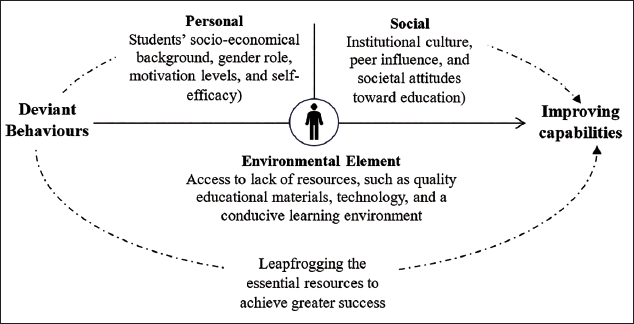
Academic Dishonesty in Higher Education: Capabilities and Constraints
In the research of Crittenden et al. (2009), they identified three primary factors characterising academic dishonesty in higher education: (a) tolerance of cheating behaviour, (b) belief in the necessity of cheating to achieve goals, and (c) perception that everyone around them is cheating to succeed. In rural communities, where educational attainment is often low and opportunities for advancement limited, cheating is often seen as a pragmatic tool rather than a moral failing. Furthermore, economic constraints and the competitive job market may foster a belief among rural students that academic dishonesty is essential for success. Students, observing peers and listening to anecdotes, may perceive that cheating is widespread and even essential for achieving similar success. This social perception of widespread dishonesty can create a ‘bandwagon effect’, where individual students justify their actions based on the belief that everyone else is doing it. Consequently, cheating becomes a widely accepted norm within the community. Likewise, Anderman and Koenka (2017) discovered three fundamental questions underlying academic dishonesty. First, ‘what is my purpose?’ refers to students’ goals when undertaking academic tasks, such as achieving good grades, understanding the material, demonstrating ability or avoiding looking incompetent. These goals significantly influence their decisions about cheating. Second, ‘can I do this?’ pertains to students’ beliefs about their abilities and skills to complete tasks successfully. Low self-efficacy and perceptions of unfair grading can increase the likelihood of cheating. Third, ‘what are the costs?’ addresses the consequences of cheating, including punishment and guilt. If students perceive the risks of getting caught as acceptable and can rationalise cheating, they are more likely to cheat (Anderman & Murdock, 2007; Bandura, 1997; Finn & Frone, 2004; Pintrich, 2000).
Moreover, Grijalva et al. (2006) differentiate between two types of academic cheating: planned cheating and panic cheating. Planned cheating occurs when an individual intentionally plans to cheat, while panic cheating is driven by desperation and fear, such as a student copying answers out of fear of failing (Asokan et al., 2013). Further, Eric Anderman and colleagues (Anderman & Midgley, 2004; Anderman et al., 1998) identified a significant link between competitive educational environments and the prevalence of student cheating, even among those who knew it was wrong. Competition can negatively affect relationships, diminish intrinsic motivation, undermine academic self-confidence, and hinder the development of higher-order thinking skills (Anderman & Murdock, 2007; Kohn, 1992).
However, such behaviour also reflects deeper inequalities within society. Instead of simply labelling these students as ‘cheaters’, we must examine the capabilities they lack, such as access to quality education, resources or support systems (Mäki-Opas et al., 2022; Robeyns & Byskov, 2011). There is a direct relationship between aspects of academic motivation and cheating behaviours, influenced by the social contexts in which students learn, such as their homes, classrooms and schools (Anderman & Koenka, 2017). If students believe cheating is socially disapproved, it leads to shame and less cheating (O’Neill & Pfeiffer, 2011). However, society often tacitly endorses cheating. Laws targeting cheating have proven ineffective due to ‘organised criminals’ with influential connections disrupting examinations (Henry, 2024). Evidence further indicates that students are more likely to engage in academic dishonesty if they perceive it to be common and believe there is minimal risk of detection or punishment (Bacon et al., 2020; Genereux & McLeod, 1995). Also, Merton’s strain theory explains that when academic success is valued but access to legitimate means is unequal, students may respond in various ways: conforming, cheating (‘innovators’), disengaging (‘retreatists’), ritualistically attending without real learning, or resisting institutional norms (‘rebels’) (Hagan & Daigle, 2020; Merton, 1938; Nickerson, 2023; Passas, 1997).
In India, a study sample comprising 1,261 undergraduate students and 131 teachers from 6 randomly selected dental colleges in Tamil Nadu revealed that students primarily justified cheating behaviour to pass examinations (59.3%) or to achieve better grades (31.3%) (Asokan et al., 2013). Another study highlighted that nearly 70% of participating students admitted to engaging in examination malpractice at least once (Monica et al., 2010). Academic dishonesty also extends to high-profile examinations, such as the Civil Service exams (Hanna & Wang, 2017). Notably, there have been allegations of question paper leaks in Bihar’s Civil Service examinations and similarly in the National Eligibility cum Entrance Test (NEET), where widespread attention was drawn after 67 students scored full marks (720 out of 720), raising unresolved questions about examination integrity (Khurana, 2024; Naik, 2024). Additionally, in the Joint Entrance Examination (JEE) Mains, several students received external technical assistance through remote access during exams, resulting in arrests (Anand, 2021). Advancements in technology have further facilitated these corrupt practices, especially within a hyper-competitive environment marked by scarce employment opportunities and prevalent casual labour, increasing the incentive for unethical shortcuts and potential financial gains (Tierney & Sabharwal, 2017). Consequently, existing anti-cheating laws in India are inadequate to address the systemic nature of this issue (Kalra & Dwivedi, 2023). In societies facing pervasive corruption, including India, cultural norms and ethos significantly influence individual behaviours and choices (Sabharwal & Tierney, 2020).
This article employs a capability approach to demonstrate theoretically why students in rural areas engage in cheating during examinations. Sen’s capability approach offers a comprehensive framework to examine enduring constraints by focusing on individuals’ quality of life through the concepts of functioning, capabilities, freedom and agency. ‘Functionings’ refer to what individuals are able to ‘do or be’, such as maintaining health, participating in social life or sustaining self-respect, while capabilities represent the real freedoms to achieve these functionings. Central to this approach are conversion factors, which affect how resources are transformed into capabilities. These include personal factors (e.g., socio-economic background, gender roles, motivation, self-efficacy), social factors (e.g., institutional culture, peer dynamics, societal attitudes) and environmental factors (e.g., access to quality materials, technology and supportive learning conditions) (Dang, 2014; Sen, 1985, 1992, 1999).
Martha Nussbaum, while aligning with Sen’s framework, places particular emphasis on women and the structural inequalities they face in health, wealth and educational factors that significantly limit their freedom and agency in society (Nussbaum, 2000, 2002; Nussbaum & Glover, 1995). Within this context, education is viewed as a critical instrument in expanding individual capabilities and addressing structural inequalities (Nussbaum, 2006; Unterhalter, 2013). Sen and Nussbaum both employ the capability approach, but differ in its articulation. Nussbaum proposes a fixed list of core capabilities for assessing human development, aiming for universal application, while Sen avoids such a list, arguing that capabilities should be shaped by public reasoning and adapted to specific social, cultural and political contexts (Kenchaigol, 2017). Sen emphasises the role of education in empowerment and social equity, whereas Nussbaum links it to the development of critical thinking, global citizenship and narrative imagination. For both scholars, education remains central to expanding capabilities and promoting human freedom (Walker, 2012). However, in context, both Sen and Nussbaum regard education as intrinsically valuable and instrumentally powerful.
Caroline Hart (2012) offers a significant contribution to the discussion on educational aspirations 2 by integrating Sen’s capability approach. She argues that aspirations are not merely individual choices but are socially constructed and shaped by one’s social environment and access to resources. Hart identifies aspirations as a capability in themselves, linked to how individuals perceive their real opportunities for achieving a better life, particularly through education. In context, capability and aspiration are not the same, but they do overlap in some areas. This overlap happens when a person’s aspiration is actually turned into a real capability. Education, when equitable, promotes personal development, democratic participation and economic mobility (Jain, 2020; Walker, 2019). Assessing this well-being requires looking beyond achieved functionings to include the real freedoms or capabilities individuals possess (Karimi et al., 2016; Sen, 1999). Moreover, long-term gains in health, education and opportunity rely on investing in public infrastructure and social sectors (Alexander, 2007; Chakraborty & Chakraborti, 2015; Kuhumba, 2018; Nussbaum, 2006).
Methods
Study Area
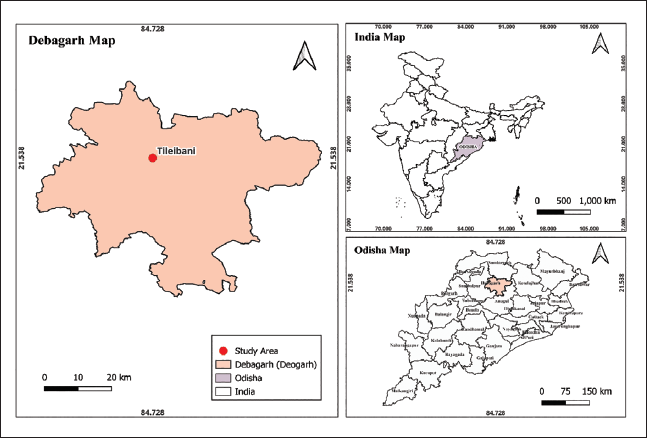
The present study was conducted in the Tileibani block of Debagarh (Deogarh) district, Odisha, India (see Figure 1). The district is surrounded by hills and dense forest and has one of the lowest densities of population. According to Census of India (2011), literacy rate in Deogarh is 63.29%, which is significantly lower than the national average of approximately 74% and the state average of approximately 72%. It is one of the educationally backward districts of the state with zero industrial penetration. According to Census of India (2011), most of the people are wage labourers, cultivators and marginal workers.
The district has a population of 312,520, with 92.83% residing in rural areas. The district’s population comprises 35% Scheduled Tribes (110,400 individuals) and 17% Scheduled Castes (52,112 individuals).
Data Collection and Analysis
The study’s impetus came from the author’s experiences as an invigilator in one of the district’s educational institutions. During an examination, the author observed widespread and overt cheating. Even after confiscating several cheat sheets and warning students of consequences, some students resisted, even threatening physical violence if they were to fail. The author later discovered that this behaviour was recurrent across colleges. In March 2019, another institution in the district experienced protests related to cheating during the Intermediate Board examinations (Times Now News, 2019). These experiences prompted the author to investigate why students in this area engage in academic fraud and to explore the sociocultural dynamics contributing to this behaviour.
This qualitative research began in 2022, following the conclusion of the COVID-19 pandemic. Data were collected through two methods: (a) direct interviews and (b) Google Forms. Initially, the Google Forms were distributed to students and teachers via WhatsApp groups and direct contacts. Subsequently, semi-structured interviews were conducted using purposive sampling, selecting students through various teachers. A total of 185 respondents, including students, teachers and parents, participated in the study. Interview data and responses were recorded in a diary and through mobile recordings, which were later coded and analysed using narrative discourse analysis.
This study was conducted across three institutions in Deogarh district: one government college (co-educational) and two-aided colleges (one co-educational college and one women’s college). As mentioned, the total sample size of the study was 185 across students, teachers and parents. Out of 166 sample students (aged between 18 and 22), 30 students participated in semi-structured interviews and 136 participated in the online survey through Google Forms (using a five-point Likert scale questionnaire). Furthermore, 15 teachers (representing various disciplines across different colleges in the district) and 4 parents participated in interviews, providing a comprehensive perspective on the study.
For analysis, the study used the narratives provided by the respondents. As mentioned, the total student respondents’ sample size of the study was 166. Apart from the responses from questionnaires, the face-to-face interviews lasted about 45–60 min. In this study, the information was analysed in SPSS Statistics 22, including the questionnaire. Second, the qualitative information obtained from in-depth interviews and experience shared by students, teachers and parents was analysed using Narrative in Critical Discourse Analysis (CDA). In this method, we analysed the words (discourses) of respondents. This qualitative information was analysed alongside the quantitative data to offer factual evidence and a deeper understanding of the issue.
Ethics
Ethical considerations were rigorously adhered to throughout the research process. Informed consent was obtained from all participants, and measures were taken to ensure the confidentiality and anonymity of their personal information. All the names mentioned in this article are pseudonyms. The author actively monitored and addressed potential biases and assumptions through reflexivity. The research was conducted in accordance with ethical guidelines and principles, ensuring the protection of participants’ rights and welfare and maintaining the integrity and credibility of the research findings (Hammersley & Atkinson, 2007).
Results
Sociocultural Demography of the Study Area
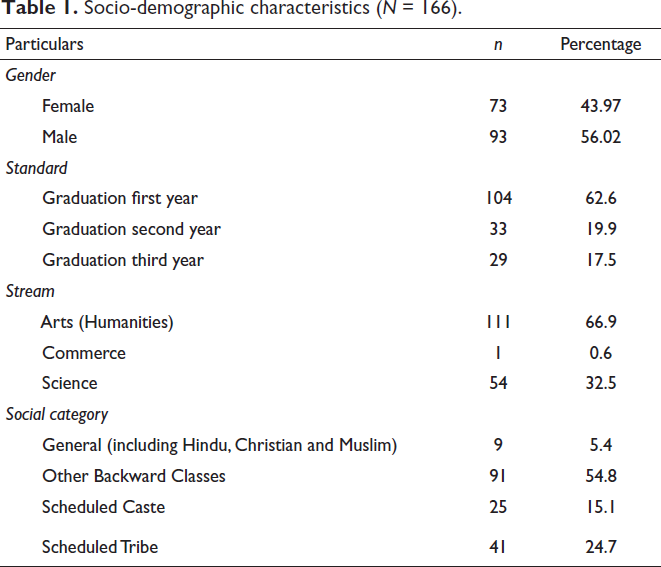
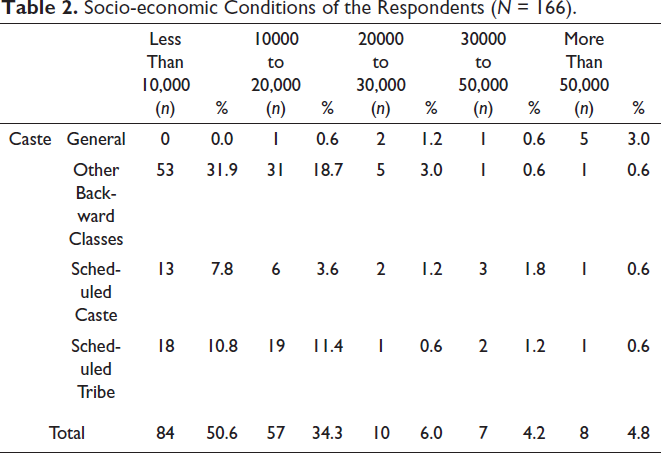
The data (see Table 1) show that a total of 166 students participated in the study, of which 43.97% (n = 73) were female and 56.02% (n = 93) were male. Regarding caste composition, 15.1% (n = 25) of the participants were from Scheduled Castes, 24.7% (n = 41) from Scheduled Tribes, and the majority, 54.8% (n = 91), belonged to Other Backward Classes. Only 5.4% (n=9) of the participants were from the General category. The participants represented diverse religious backgrounds, including Hindu, Muslim and Christian communities. Additionally, the data reveal that approximately 85% of the students come from low-income households, earning less than ₹20,000 ($232.08) per month (see Table 2), which is considered the benchmark for sustaining a basic living standard in rural areas.
Socio-demographic characteristics (N = 166).
Socio-economic Conditions of the Respondents (N = 166).
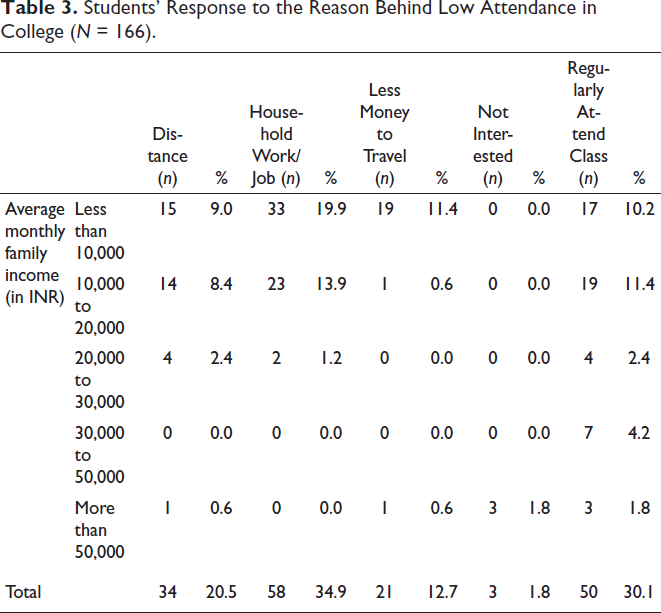
In Table 3, approximately 12.7% (n = 21) reported insufficient funds to cover basic travel and food expenses. Additionally, 20.5% (n = 34) cited the long distance between home and the classroom as a significant barrier, while 34.9% (n = 58) struggled to balance household responsibilities and part-time jobs. Notably, only 1.8% (n = 3) of students admitted a lack of interest in studies as the reason for their absence. However, 30.1% (n = 50) of students expressed a positive attitude towards attending classes regularly.
Students’ Response to the Reason Behind Low Attendance in College (N = 166).
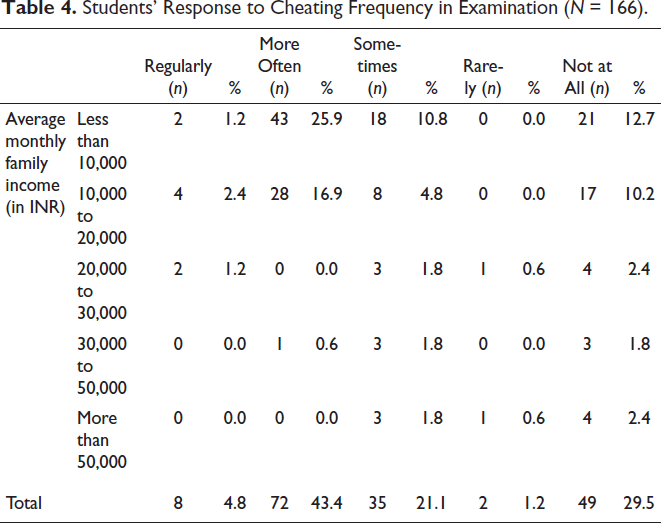
Moreover, in response to the frequency of cheating (see Table 4), approximately 48% of students admitted to regularly resorting to cheating, while approximately 21% reported engaging in it occasionally. Interestingly, approximately 5% of students openly admitted to habitual cheating during examinations. On the other hand, 29.5% (n = 49) of students expressed a preference for opposing cheating practices.
Students’ Response to Cheating Frequency in Examination (N = 166).
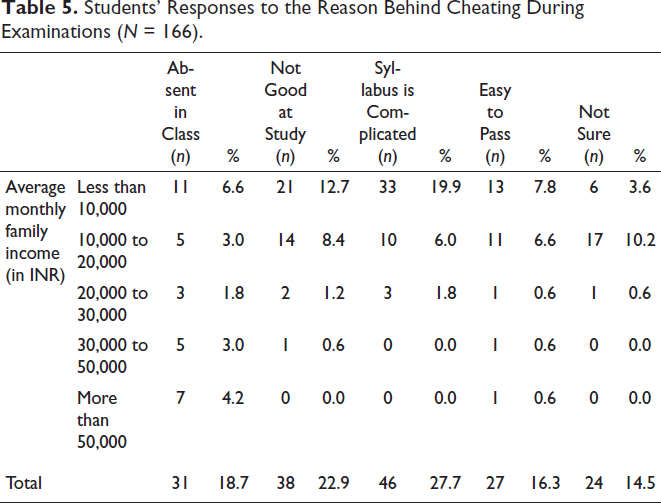
When asked about the reasons behind cheating (see Table 5), 22.9% (n = 38) of students reported that they were not good at studying, while 16.3% (n = 27) admitted that they found it easier to pass exams by cheating. Additionally, 27.7% (n = 46) of students cited the complexity of the syllabus as a significant factor, and 18.7% (n = 31) believed that absenteeism contributed to their reliance on cheating. However, 14.5% (n = 24) of students stated that they were unsure why they engaged in cheating.
Students’ Responses to the Reason Behind Cheating During Examinations (N = 166).
Student, Academic Dishonesty and Culture
Students from the study area, after completing their intermediate exams or during their graduation, try to earn money by working in shops in Deogarh town to meet their daily expenses. Some even contribute financially to their families. Other students leave the district for better income opportunities and return during exam periods to take holidays and sit for their exams. For instance, when I asked Oram why he cheated in the exam, he explained:
Sir, if we don’t cheat, we’ll fail in the examinations. We have jobs to secure and can’t afford to focus solely on studies. Both the certificate and the job are equally important for us because we need to support our families. That’s why we resort to cheating during exams.
In the study area, it was observed that many children do not attend school regularly, as their parents, who are often engaged in labour, take them to work. Even those attending primary school often receive inadequate instruction due to resource limitations. Observations of local schools revealed that a single teacher frequently teaches multiple grades in one room, as many schools have only one classroom and one teacher for the entire student body. While sharing these types of experiences, Nayak, a female student, observed:
Since childhood, our school teachers have encouraged us to cheat in exams. Even in high school, teachers helped us during exams. However, during the Plus Two exams (Intermediate), we couldn’t cheat due to CCTV surveillance, and as a result, we received lower marks. Here in graduation, we don’t fully understand what the teachers teach in the classroom, so we cheat in the exams. It feels boring to read all the time.
Similarly, Majhi explained that:
If teacher or parents taught us not to do cheat, we wouldn’t do it. We sometimes do not want to cheat in the examination but when students around us do this kind of stuffs and pass, we feel bad about it. Most of the students get involved in cheating because some teachers help students (to cheat) of their department but not of others.
Such students repeatedly accused teachers of helping students by providing cheat sheets during the examination. They also said that during school days, teachers helped select students by dictating short answers and objective-type question-answers.
On another occasion, I spoke to a student who had finished his exam an hour early. I asked him if the questions were easy. The student responded with a smile, ‘yes, the questions were easy. I answered all of them except two, for which I had to cheat’. Additionally, some students reported that the distance to college significantly contributes to their academic challenges. Many commute from distant villages, where limited or unavailable bus services hinder regular attendance. When asked about commuting difficulties, one student shared, ‘It’s not feasible for us to buy bus tickets every day and come to college. Staying in town is quite expensive, with costs for rent, food, and other daily expenses’.
Further, early marriage is a prevalent issue in the study area, particularly among girls, who find it extremely difficult to resist the pressure for long. Parents often force their daughters into arranged marriages. Among tribal students, early marriage is culturally accepted and even preferred. Sahu, a female final year student of graduation, expressed her concerns, saying:
We just want to complete our graduation. We don’t really care about the marks at all. My parents have already told me that after graduation, they will arrange my marriage. Most of the students are getting married, and it’s considered good for society. They say, if the girl gets higher education, she will get good groom. Even if we resist, no one listens to us. In my family, no one listens to a female’s voice.
Teacher, Education System and Consequences
Teachers’ experiences differ substantially from those of students. Teachers point out that students often neglect their studies, remain absent for months, and then suddenly reappear for exams. Das, a teacher, argues:
Students here are extremely poor in their studies. They don’t know how to write or speak properly. Most of them can’t even write a simple application letter or form a structured sentence in any language, whether it’s English or Odia. Their handwriting is so messy that it’s barely legible. What can we do? Should we focus on teaching our course material, conduct general language classes, or even teach basic math? Most students are absent during classes, yet the government expects us to cover the entire syllabus within a limited time frame. Is that even possible?
Teachers also expressed the overwhelming work pressure they face during college hours. Due to a shortage of clerical staff, they are often required to manage administrative tasks in addition to their teaching duties. This added responsibility, coupled with the expectation to complete the syllabus within a tight schedule, makes it difficult for teachers to provide extra guidance to students who struggle academically. One teacher shared an experience where, after attempting to correct a student’s English and offering additional instruction, the student stopped attending classes for several months. Despite efforts to reach out, the student provided multiple excuses for not returning to class.
Other teachers agreed that cheating begins with internal exams and practical assessments, eventually extending to semester examinations. The prevalence of cheating is so widespread that even high-performing students are not exempt. Bek, a teacher, said:
Several students reported that some individuals manage to obtain examination question papers in advance, approximately 30 minutes before the semester exam, which are then circulated among peers for a price of around 1,500 rupees per question. This widespread practice involves multiple students, and it’s not uncommon for entire departments to be aware of or even complicit in these activities. Solutions to the exam questions are also provided, with many students acquiring these answers through local vendors or Xerox shops, often paying a fee for the service. This arrangement benefits all parties involved: the students who purchase the questions, those who facilitate the distribution, and others eager to obtain the answers. Even senior students also provide cheat sheets during the examination. Additionally, some students use ChatGPT to answer exam questions, and I discovered several instances where students had micro-photocopied ChatGPT-generated answers for use during the exam. There have even been cases where teachers assist in this dishonesty, solving questions during the exam and providing answers to students when they leave the room, such as during a restroom break.
Most of the college teachers are fearful of the consequences if students fail their examinations due to potential repercussions from the government, as well as the humiliation that could result from poor student performance. To avoid these outcomes, teachers often feel compelled to assist students in passing their exams. Roul, a teacher, critically remarked that while the cheating culture is detrimental, halting it abruptly would likely result in a large number of students failing their exams. ‘This would damage our reputation’, he explained, ‘and the government might accuse us of not teaching effectively. We need to address this issue gradually, rather than making sudden changes’.
During a conversation with Dara, a teacher, he said:
During examination if you take one cheat sheet from a student, s/he will get another. Students know that teachers will take away their cheat sheet, so, they bring three or four cheat sheets for one question. Sometimes, they’re so clever that they divide these sheets among their friends and in exam they exchange them one by one. Some students hid their cheat sheets in toilets or any other place which is unknown to teachers. Both girls and boys do the same things. If one cheat sheet is taken away, all friends become agitated. Some students get emotional during the examination when their cheat sheets are seized. They beg the teacher to let them cheat else they will fail the exam. They say that next year they will study but we know that they won’t. This is the story of maximum students; we implicate the whole college in malpractice.
However, at times, students resort to threatening teachers when they attempt to confiscate cheat sheets during examinations. Several teachers have reported instances of students becoming aggressive during exams. When a teacher takes away a cheat sheet, students often respond with direct threats, saying things like ‘bahare bhet’, which translates to ‘meet me outside’. One teacher recounted an incident where a student grabbed his collar and threatened to beat and kill him. The teacher chose not to retaliate, citing his status as an outsider in the area. Other teachers have shared similar experiences, mentioning that ‘students have vandalised college property and scribbled offensive messages on walls. Some students even intimidate teachers outside the campus by making threatening remarks. As a result, many teachers are fearful of confiscating cheat sheets during exams’.
Parents’ Perspective on Academic Dishonesty
In interviews, parents expressed concern that if their child fails an exam, they face bleak future prospects. For example, Behera, a parent, shared his view, ‘cheating should be permitted in exams because it ensures students pass and obtain certificates, which are essential for job security’.
During a meeting with parents, one parent even requested, ‘If possible, please help our child to pass the examination, even if it means assisting them with cheating’. When the potential consequences of academic dishonesty were explained, the parent appeared confused, finally repeating, ‘Please help him in any way you can’. This sentiment was consistently observed across all interviews, underscoring that parents have a limited understanding of cheating’s long-term impact.
Discussion
The reasons behind academic dishonesty in India are multifaceted and cannot be attributed to a singular cause due to the inherent sociocultural diversity (Błachnio et al., 2021). In rural contexts, particularly in Odisha, academic dishonesty arises from structural constraints within the educational system and societal expectations which restrict individual capabilities. Existing literature, respondents’ narratives and empirical evidence suggest that students facing resource scarcity in their immediate environment often pursue alternative methods to fulfil their aspirations. In other words, students’ behaviours towards academic integrity is predominantly shaped by contextual factors, including poverty, restricted economic opportunities, inadequate educational infrastructure and limited access to healthcare. Within these socio-economically constrained settings, students often internalise the belief that their chances for upward mobility are restricted, which in turn diminishes their academic ambitions. This lack of aspiration is not merely personal but structurally conditioned capability deprivation, influencing how students navigate educational spaces. When aspirations are suppressed by systemic deprivation, choices such as engaging in academic dishonesty may emerge as perceived necessities rather than moral transgressions. Analysing this intersection of constrained capabilities and low aspirations provides a deeper understanding of the behavioural patterns observed. Ultimately, students are primarily driven by the immediate necessity of securing employment to enhance their socio-economic status.
Figure 2 utilises the conceptual framework of the capability approach to identify the underlying causes of academic dishonesty in rural areas within developing countries. This approach highlights how limitations in essential resources restrict individuals’ capabilities, consequently influencing students’ educational choices and behaviours. In the study area, structural inequalities are intensified by the scarcity of critical resources, including industrial development, economic opportunities and robust educational infrastructure, as well as poverty, income disparities, gender issues and limited access to healthcare. Such constraints significantly limit students’ genuine opportunities for quality education. Consequently, even when educational resources are partially accessible, the immediate pressures of job security and economic stability compel students to prioritise short-term objectives, often at the expense of academic integrity.
As noted by Caroline Hart (2012), “if an individual is unable to convert their aspiration into a capability, this will lead to reduced well-being and/or agency freedom(s) and may compromise well-being/agency achievement. There are three main possible outcomes of this scenario. First, an individual who is unable to realise their aspiration by conversion to a capability may adopt goals set by others. Second, a ‘default’ position may be reached due to the lack of capability to realise any alternative aspiration. Third, the inability to realise an aspiration may lead to the formation of alternative aspirations, which may constitute ‘adaptive preferences’.” In other words, at the individual level, factors such as students’ educational backgrounds, motivation levels and self-efficacy play a pivotal role. For instance, students with low self-confidence or inadequate study skills perceive it as a necessary means to success due to a lack of personal resources or support. Social influences, including institutional culture, peer pressure and community attitudes towards education, also shape students’ perspectives. In settings where academic dishonesty is normalised or where high academic performance is prioritised over ethical conduct, students may feel compelled to cheat to meet these expectations. Additionally, the absence of academic support services, such as tutoring or counselling, further limits students’ capacities to succeed honestly.
This lack of capabilities fosters deviant behaviour, as explained by Merton, whereby students resort to cheating as a means of coping with the pressures of academic and economic uncertainty (Merton, 1938; Nickerson, 2023). Consequently, students who initially avoid cheating may be encouraged by their peers to engage in dishonest practices (McCabe et al., 2001). This behaviour perpetuates a cycle where individuals seek certificates through dishonest means rather than through hard work (Isakov & Tripathy, 2017), ultimately using these qualifications to improve their quality of life by securing unskilled or semi-skilled jobs in nearby industrial districts such as Jharsuguda, Angul and Sundargarh. Some students may even hope to gain promotions through these qualifications.
Later, these students attempt a form of ‘leapfrogging’, a notion originally introduced by Alexander Gerschenkron in relation to ‘latecomers’ in economic development and enabling them to bypass certain developmental stages (Gerschenkron, 1962; Lee, 2019; Schlogl, 2020). Here, students attempt to escape poverty, disparity and inequality by bypassing quality education and a proper understanding of knowledge. They overlook the conventional step-by-step approach necessary for achieving a better quality of life, seeking instead to leap ahead by obtaining certificates. While they recognise that the knowledge acquired in college may not directly benefit them in the industry or other jobs, they believe that possessing a certificate will provide them with better job opportunities or help them get into jobs. In this process, they inadvertently learn to navigate the demands of the industry, focusing on the qualifications that they perceive as essential for their economic advancement. By prioritising certification over genuine knowledge acquisition, students inadvertently compromise the development of essential skills and competencies necessary for sustainable career advancement. This perspective is especially prevalent among first-generation learners, whose families heavily depend on their success, prompting minimal hesitation towards engaging in dishonest academic practices.
The analysis further reveals a deeply entrenched acceptance of academic dishonesty within students’ socio-economic contexts, driven by immediate survival needs. Additionally, educators’ roles significantly influence this phenomenon. During examinations, some teachers become complicit, endorsing cheating practices, whereas strict teachers may inadvertently reinforce negative stereotypes by labelling students as academically deficient or unmotivated. Such dynamics contribute to the ‘Pygmalion effect’, whereby low teacher expectations result in poorer student performance (Szumski & Karwowski, 2019). An overwhelming syllabus, inadequate instructional guidance and perceived academic difficulty further exacerbate the pressure on students, driving them towards dishonest practices as a means to evade academic failure. Institutional expectations for high pass rates, driven by societal and governmental pressures, may further reinforce tolerance for academic dishonesty.
Moreover, limited parental income additionally restricts supplemental educational support, compelling students to adopt a utilitarian approach to education focused on immediate economic outcomes rather than personal and intellectual growth. However, promoting academic integrity is feasible through strengthened relationships among students, teachers and parents, emphasising education’s intrinsic value in enhancing skills and critical thinking beyond mere employment prospects.
The prevalence of academic dishonesty within the study area reflects broader trends across India and similar developing countries, where intense socio-economic pressures compel students towards unethical practices. Mitigating academic dishonesty requires stringent academic integrity measures coupled with an educational shift away from a narrow emphasis on marks. Instead, promoting diverse talents, practical skill-based assessments, and enforcing robust supervision during examinations could reduce dishonest practices (Desalegn & Berhan, 2014; Joshi, 2024). Moreover, cultural change cannot avail itself of cookbook solutions so that one adds one ingredient and then another and then another as if a recipe exists for reform (Tierney & Sabharwal, 2017).
Although technology holds a critical place in students’ education and future careers, teaching ethical use of technology and encouraging critical engagement with tools like cloud computing, mobile devices, AI and open-access content is the key. Promoting collaborative projects and fostering critical-thinking and problem-solving skills can cultivate a culture of academic integrity (Johnson et al., 2010; Piascik & Brazeau, 2010).
Policy considerations should focus less on punitive measures and more on enhancing students’ capabilities. As Sen’s capability approach suggests, providing students with greater access to resources, or ‘conversion factors’, could empower them to maximise their educational outcomes. By improving these factors, such as economic support, academic resources and institutional encouragement, policymakers can foster an environment where academic success becomes more attainable without compromising ethical standards.
Conclusion
The issue of academic dishonesty in Deogarh, Odisha, serves as a microcosm of broader challenges in India. By far, economic policies for human development within India continue to be a neglected domain (Nayyar, 2023). Accordingly, cheating is not merely a moral failing; it is deeply entrenched in the resource limitations faced by students. It is driven by urgent needs such as poverty, economic necessity and a lack of awareness regarding the value of education; students often resort to dishonest practices as pragmatic solutions to their dilemmas. This behaviour is reinforced by teachers and parents, who, concerned about students’ futures, may inadvertently condone or overlook such actions.
To address academic dishonesty effectively, a multifaceted approach is essential, one that considers both academic integrity and the socio-economic factors influencing student behaviour (Siaputra & Santosa, 2016). Students require guidance in developing critical skills that enable them to assess the quality of the information they encounter. It is vital that they understand the implications of plagiarism, which includes taking another’s ideas and thoughts without proper attribution (Piascik & Brazeau, 2010).
Education plays a critical role in shaping individual values that influence important life decisions, rendering its policymaking more important than in many other public sectors (Walker, 2012). Therefore, educational policy must align with societal needs rather than adhering to a one-size-fits-all academic framework across the country. While some parts of India have achieved remarkable academic excellence, rural areas often struggle to meet basic educational standards, particularly in higher education. Current policies have failed to address the unique challenges faced by rural students, particularly in enhancing the resources available to foster holistic human development. A shift towards practical understanding, as advocated by Sen’s capabilities approach, is crucial. This involves not only improving educational infrastructure but also ensuring that students receive substantial support and utilities that facilitate a comprehensive understanding of their subjects. By nurturing an educational environment that prioritises real-world applications and ethical conduct, we can better equip students to navigate their academic journeys and contribute positively to society.
Footnotes
Acknowledgement
The author would like to extend his sincere gratitude to the teachers and students of Model Degree College, Deogarh, for providing valuable insights that greatly enhanced his understanding of the phenomenon. He is also deeply thankful to Professor Arun Kumar Acharya for his valuable inputs.
Declaration of Conflicting Interests
The author declared no potential conflicts of interest with respect to the research, authorship and/or publication of this article.
Funding
The author received no financial support for the research, authorship and/or publication of this article.
