






Abstract
This study attempts to bring some clarity to the relationships among genre-related television (TV) exposure, body image perceptions and body dissatisfaction. Female undergraduates (n = 417) completed measures of thin-ideal reality TV viewing, perceptions of social value of thinness, peer and parental attitudes towards thinness, as well as the internalization of the thin ideal and body dissatisfaction measures. First-order effects (perceptions of social reality) and second-order effects (personal attitudes) were examined. Additionally, media exposure was juxtaposed with social influences such as perceptions of peer and parent attitudes to form a model of TV use, body image attitudes and body dissatisfaction. Results suggest thin-ideal reality TV viewing and other social sources such as peer and parent attitudes are linked directly to perceptions of the social value of thinness (first-order effect). However, thin-ideal reality TV exposure was indirectly related to the internalization of the thin ideal (second-order effect) and body dissatisfaction. A model of body dissatisfaction including thin-ideal reality TV viewing as well as perceptions of peer and parent attitudes was supported.
Introduction
The mass media such as magazines, television (TV), movies and Internet websites or portals provide us with a constant reminder of the desirable size and shape of the female body. These messages are evident in entertaining dramas where beautiful actresses appear as police detectives, secretaries, doctors, lawyers, etc. They are evident in TV news magazines and reality TV programming that feature hosts, reporters, competitors that are chosen to some extent based on their appearance. The programming content is also complemented by a flood of advertisements that target women and use thin, attractive models in desirable circumstances to fulfil a goal of selling clothes, cosmetics and other beauty products. The body image that serves as the norm for TV and other media has been described as one in which women’s bodies do not conform to reality—they are artificially thin, have exaggerated waist-to-hip ratios, and the clothing size associated with models, in particular, has been decreasing over many years (Hendriks & Burgoon 2003). The pervasive messages in the media about women’s body shape and appearance have been observed as a source of information about how women should look and a source of ideas about what is socially desirable (Hendriks 2002).
Body image research has reported that the women who consume more media that perpetuate the ideal body types are likely to develop the attitude that body shape (particularly thinness) is an important social value, be less satisfied with their own body shape, engage in dieting activities and other weight loss behaviours and even seek cosmetic surgery in an attempt to achieve the media standard (Hesse-Biber et al. 2006). Media messages tend to present thin models and characters in a positive light and build a connection between thinness or physical beauty and success and/or social desirability (Hesse-Biber et al. 2006). Hendriks and Burgoon (2003) found that attractive people are viewed as more successful and happier with their lives. People who have this perception may be inclined to view the media figures (body shape and weight) as a measure against which to gauge their own social value (Hesse-Biber et al. 2006).
During the past few decades, much research has been conducted regarding body dissatisfaction in women and the factors that influence it. Some researchers argue that viewing specific kinds of television programming—particularly containing portrayals of the thin ideal—is directly linked to body dissatisfaction in women (Tiggemann & Pickering 1996). However, some areas of the research, such as TV’s effect on body image, are unclear or contradictory. For example, there has been a lack of clarity regarding how the internalization of the thin ideal relates to body dissatisfaction as well as how the TV exposure interacts with other social forces such as peers and parents. The purpose of this study is to help clarify the role TV plays in conjunction with other social factors (peer and parent attitudes) associated with body dissatisfaction. Social cognitive theory and cultivation are used as frameworks for understanding how TV exposure relates to perceptions of how society values physical appearance, the internalization of the thin ideal and body dissatisfaction.
Literature Review
Female Body Image in Mass Media
American researchers (e.g., Park 2005; Wiseman et al. 1992) have observed that many actresses and media figures were significantly thinner than the average American woman. Additionally, many attractive media characters are presented as holding successful positions and the actors/actresses are depicted at glamorous events where they are symbols of success. To the contrary, models and actresses that are overweight can be the subject of ridicule in the programming. The term ‘thin-ideal media’ encompasses programming that perpetuates these perspectives (Harrison 2000). ‘Thin-ideal media’ is used to describe fashion magazines and TV programmes, such as soap operas, that contain noticeably thin female main characters and promote the idea that a person’s physical appearance provides an advantage, ascribing the attribute to the most ‘desirable, and successful protagonists’ (Harrison 2000, p. 121). Hendriks and Burgoon (2003) observed that women with heavy exposure to thin-ideal media are likely to accept this perspective as a norm. Holstrom (2004) posited that body dissatisfaction arises when heavy viewers begin to see this mediated ideal not only as normal but also as physically attainable. This internalization of the thin ideal may subsequently lead to body dissatisfaction when women are unable to emulate the mediated body shapes. Two theories that researchers have used to examine the effect of thin-ideal messages on women are cultivation theory and social cognitive theory.
Cultivation Theory
Cultivation theory is defined as ‘the independent contributions television viewing makes to viewer conceptions of social reality’ (Gerbner 1998, p. 180). Cultivation suggests that media have a cumulative effect over time through frequent, repetitive exposure. The research suggested that people who consumed large amounts of TV programming were more likely to hold perceptions of the real world that reflected their TV experience, i.e., their perceptions of reality were more comparable to TV reality (Morgan & Shanahan 2010).
First- and Second-Order Effects
Cultivation has been associated with two levels of effects, described as first- and second-order effects (Hawkins & Pingree 1982; Potter 1991). The first-order effects involve the connection between TV exposure and judgements of the prevalence of occurrences in society (e.g., violent acts). Second-order effects describe the relationship between TV exposure and attitudes towards societal issues. Recent attempts to understand the processes behind these two levels of effects in cultivation theory have pointed to heuristic and online processing. Shrum and Bischak (2001) suggest that: ‘Research has shown that people often construct their judgments on probability of occurrence on the basis of the attributes of the information they retrieve from memory’ (p. 189). The authors suggest first-order effects are a product of heuristic processing. That is, people’s judgements of the prevalence of things in society (for example, percentages of people who are doctors or quantitative measures of crime rates) are made quickly using the most accessible information (Shrum 1995). The phrase ‘heuristic processing’ describes how, when people retrieve cognitive information, they tend to seek out small amounts of relevant information, rather than search their entire cognitive bank of available data (e.g., Shrum 2009).
Second-order effects address a person’s attitudes and beliefs (e.g., Shrum 1995), such as the idea that the world is a mean and dangerous place or the notion that thinness is associated with success. Second-order effects are the result of online processing (Shrum 2009). That is, we are constantly evaluating and modifying our schemas while watching TV, which results in the easier activation of nodes of information and stronger connections among them. The constructs and ideas that are frequently activated become more available over time and most readily available during systematic retrieval (Shrum 2009).
When considering body image effects, it is important to consider the distinctions between these processes and the notion that cultivation may not always create attitudes, but can serve to reinforce them. One of the primary ways TV consumption is connected to effects is through repetition. The more that women observe ‘thin-ideal’ images or messages projecting the notion that physical beauty is a primary social value for women, the more accessible these notions become. Additionally, the social benefits that are associated with the thin ideal may become more accessible. Contrastingly, the more a person observes negative associations with overweight people, the more retrievable those messages may be, augmenting the sense of importance of maintaining an attractive body shape. These retrieved associations may serve to enforce social attitudes regarding weight and the social implications of body shape and size—i.e., thinness is good, while being overweight is bad.
Resonance
Another aspect of cultivation theory that should be considered in the context of body image is that TV messages are not transmitted and received in a vacuum. TV is one important source of social information among many, such as parents and peers. The impact of TV within this social sphere has been described as resonance (Gerbner et al. 1980). According to Shrum and Bischak (2001), resonance is the notion that viewers’ life experiences affect their perceptions of televised messages. If the viewers’ life experiences are similar to the media content that they are viewing, the media messages are more likely to have an effect. Shrum and Bischak (2001) tested the resonance concept and observed that direct experience interacted with heavy TV viewing to enhance the relationship between TV exposure and prevalence judgements. The direct experience with a social issue or attitude was effectively confirmed through TV messages and combined in the viewers’ minds. As a result, it was more difficult for them to distinguish which experience was direct and which was viewed on TV. The combination of the experiences makes the content more easily retrieved during cognitive processing (Shrum & Bischak 2001). Applying this perspective to body dissatisfaction, if a viewer directly observes a situation in which thinness and physical appearance are socially rewarded and observes a similar situation portrayed on TV, the message linking social desirability and thinness may be more readily retrieved during judgements regarding appearance—via resonance. Additionally, Morgan and Shanahan (2010) noted that viewers often seek programming that reflects and reinforces their existing beliefs, thus further strengthening those attitudes.
Social Cognitive Theory
Cultivation theory addresses subconscious effects that cumulative exposure to TV can have on audiences regardless of motivations for viewing. However, TV viewing can be a purposive activity and as such social cognitive theory can also inform our understanding of relationships that exist among factors such as media exposure, perceptions of reality as well as personal attitudes and judgements. The framework of social cognitive theory provides a transactional perspective that suggests personal factors, behaviour and the environment interact and influence each other (Bandura 2001). The media and other social influences are particularly important to two aspects of social cognitive theory: the human capabilities of self-regulating motivation and self-reflecting. In terms of self-regulating motivation, media exposure can influence the internal standards we set for ourselves and how we judge our own behaviour (Bandura 1991). Regarding self-reflection, the media can provide sources of ‘reality’ that audiences may use to validate and determine the functional value of their thoughts and ideas.
Our understanding of social cognitive theory and cultivation has improved over the past decade and the two theories are appropriate for helping us understand the role of media in body image effects.
Media Exposure and Body Image Attitudes
Tiggemann and Pickering (1996) observed that watching genres of TV in which the thin ideal is evident, such as soap operas, was correlated with body dissatisfaction. Schooler et al. (2004) also observed links between exposure to genres of TV and body dissatisfaction. Hendriks (2002) focused on the importance of the type of media as well, noting that other researchers (e.g., Hawkins & Pingree 1980) have observed that cultivation effects are stronger when people watch specific genres of TV, and suggested that cultivation effects on body image may be more evident in women who consume thin-ideal media. Indeed, a focus on genre-specific cultivation effects has fostered the notion that narrower views of the TV exposure may be more useful for understanding cultivation effects (e.g., Bilandzic & Rossler 2004; Hawkins & Pingree 1981; Potter 1990).
One issue with body image research is that the first-order effects (i.e., perceptions of prevalence) have often been overlooked. In typical applications of cultivation theory, first-order effects address perceptions of social reality and are frequently measured using prevalence estimates. One focus of the current project is to examine how genre-specific TV exposure is connected to a first-order effect. Prevalence questions, such as percentages of lawyers or incidents of crimes, do not have a satisfactory parallel for the body image issue. It might be suggested that, for example, prevalence estimates such as the average weight of American or German women who are 5’7” could serve as a first-order measure (e.g., Hendriks 2002). However, the specificity of such a measure appeared less desirable than a broader judgement of social reality, i.e., perceptions of how society values thinness. To that extent, the following proposed hypothesis addresses connections between TV exposure (genre) and first-order effects:
H1: Exposure to genre-related, thin-ideal TV will be positively related to perceptions of thinness as a social value reflecting desirability and success.
Internalization of the Thin Ideal
The internalization of the thin ideal is defined as ‘the extent to which an individual cognitively “buys into” socially defined ideals of attractiveness’ (Thompson & Stice 2001, p. 181). In a meta-analysis, Grabe et al. (2008) observed a significant relationship between media use and the internalization of the thin ideal. These observations and the definition of the internalization of the thin ideal suggest that it may be viewed as a second-order cultivation effect; i.e., an attitude that results from information availability rather than heuristic judgement (Shrum 2007, 2009). Research suggests that second-order effects based on the availability of information can be reduced through source discounting as well as rehearsal and systematic processing of counterarguments (e.g., Shrum et al. 1998). The fact that dissonance-based interventions (e.g. voicing and acting out arguments against the thin ideal) have been successful (Kraemer et al. 1997; Stice et al. 2001) provides support for the view of the internalization of the thin ideal as a second-order effect.
However, other researchers argue that TV viewing has a limited association with the acceptance of the thin ideal. Tiggemann (2003) observed that TV consumption is related to body dissatisfaction, but not the internalization of the thin ideal. She observed that the internalization of the thin ideal only occurred through TV viewing when the viewing motive was social learning, such as for beauty tips on how to look or act (Tiggemann 2003). In other words, Tiggemann (2003) observed that the relationship between TV viewing and body dissatisfaction is generally not mediated by the internalization of the thin ideal. Although Tiggemann suggested that the relationship between TV exposure and body dissatisfaction is not mediated by internalization, she did suggest that viewers may be resistant to thin-ideal imagery if they are aware of the advertising purpose behind it, which may be indicative of a second-order effect.
Such conflicts in findings indicate that the relationship between the internalization of the thin ideal and body dissatisfaction should be examined further. To that end, the following hypotheses involving genre TV exposure and second-order effects are proposed:
H2: Exposure to genre-related, thin-ideal TV will be positively related to the internalization of the thin ideal. H3: Perceptions of thinness as a social value reflecting desirability and success (first-order effect) will be positively related to the internalization of the thin ideal (second-order effect).
Peer and Parental Influence
Peers are also an important influence on body image attitudes, especially when considering the potential for resonance. Keefe (1994) observed that conforming to peer norms often results in the adoption of peer behaviours. Krcmar et al. (2008) reported that young women who surrounded themselves with friends who place a high value on body shape or thinness and viewed it as an important quality were more likely to also place a high value on the value of thinness. They suggested that peer interactions serve to reinforce the mediated thin ideal, thereby strengthening their thin-ideal attitudes. Hohlstein et al. (1998) noted that these sources often emphasize the importance of thinness, which factors into the internalization of the thin ideal. Peer influence can have a significant impact on what is considered the desirable body weight and shape.
Additionally, parents can influence body image attitudes. Krcmar et al. (2008) noted that parents who make comments about their children’s physical appearance can impose norms about body image and weight—norms that lead to a negative association with being overweight. It has been suggested that parental attitudes are one of the primary influences on body dissatisfaction (Ata et al. 2007). Rodgers et al. (2009) observed a direct relationship between parental comments, body dissatisfaction and drive for thinness. Levine et al. (1994) observed that parents who place an importance on dieting and other weight control behaviours can have a negative impact on a child’s body satisfaction. If parental messages about body shape and weight are corroborated by media messages, there is a potential for resonance. Given that first-order effects such as perceptions of social reality are not generally considered in body image studies, we formulate the following hypotheses regarding the connections linking peer and parent attitudes to first- and second-order effects as well as body dissatisfaction:
H4: The perception of peer’s attitudes towards weight and body shape will be positively related to (a) the perception of thinness as reflecting the social value of desirability and success and (b) the internalization of the thin ideal.
H5: The perception of parent’s attitudes towards weight and body shape will be positively related to (a) the perception of thinness as reflecting the social value of desirability and success, (b) the internalization of the thin ideal and (c) body dissatisfaction.
Body Dissatisfaction
Some research suggests that TV has a direct effect on body dissatisfaction (e.g., Tiggemann 1992; Tiggemann & Pickering 1996; Tiggemann & Slater 2003). Yet, other studies maintain that TV predicts the internalization of the thin ideal and then body dissatisfaction (e.g., Holstrom 2004; Thompson et al. 1999).
Van den Bulck (2000) observed that women who are exposed to thin-ideal TV demonstrate higher body dissatisfaction and express a desire to lose weight. Myers and Biocca (1992) also observed that cultivation effects are related to body dissatisfaction, and that it only takes 30 minutes of TV viewing to influence the perceptions of body shape. Tiggemann & Pickering (1996) noted that specific types of media—particularly those that show women in stereotypical roles (i.e., soap operas)—are positively correlated with body dissatisfaction in female viewers.
However, Stice et al. (1994) observed that the internalization of the thin ideal led to body dissatisfaction because it sets unrealistic body shape goals for the women who are internalizing these ideals. Thompson et al. (1999) similarly observed that the internalization of the thin ideal is a predictor of body dissatisfaction because the mediated ideal is physically unattainable by most women. Considering these diverging perspectives, it should be useful to examine the relationship between media exposure and body dissatisfaction as well as the relationship between the internalization of the thin ideal and body dissatisfaction. Therefore, the following hypotheses addressing the relationship between overall and genre TV viewing and body dissatisfaction are proposed:
H6: Exposure to genre-related TV (thin-ideal TV programming) will be positively related to body dissatisfaction. H7: Internalization of the thin ideal will be positively related to body dissatisfaction.
Modelling the Media Effect on Body Dissatisfaction
Having examined the relationships among the primary variables connecting an individual’s TV exposure to body dissatisfaction, there appears to be value in proposing and testing a model of the relationships among these variables. Process models can provide the depth of understanding as well as help address questions of inconsistency in theoretical research. Recent models of body image have favoured addressing the media’s role by measuring individuals’ perceptions of media pressure to be thin in lieu of measures of media exposure (e.g., Keery et al. 2004; Tylka 2011; Van den Berg et al. 2002). While that approach may be effective for bypassing inconsistencies that have been observed in the research examining body image, from a communication perspective, there is still value in forming a better understanding of the role of media exposure in body image.
Cultivation theory predicts a relationship between TV viewing and perceptions of social reality as well as individual attitudes. For example, the mean world syndrome suggests that, compared to light viewers, heavy viewers of TV are likely to (a) estimate more incidences of crime (first-order effect), (b) perceive the world to be a mean place (second-order effect), (c) perceive themselves to be personally vulnerable and (d) be more inclined to take protective measures (e.g., Gerbner et al. 1980, 1994; Nabi & Sullivan 2001; Signorielli 1990). Although there may not be a satisfactory prevalence judgement relating to the body image, a parallel of the ‘mean world syndrome’ in body image research might suggest that women who are heavy viewers of thin-ideal TV (e.g., soap operas) would be more likely to (a) perceive that society places a high value on thinness (first-order effect), (b) internalize the thin ideal themselves (second-order effect) and (c) subsequently experience body dissatisfaction (self-evaluation). Furthermore, the action a person takes towards self-protection associated with the mean world syndrome is paralleled by weight loss activities and even cosmetic surgery associated with the body image issue. Given that first-order or proximal effects have been observed to mediate second-order or distal effects (e.g., Shrum et al. 2011), the model tested here suggests perceptions of the value society places on thinness mediates a link between TV exposure and the internalization of the thin ideal. Similarly, social cognitive theory predicts that active viewing of media messages can influence attitudes regarding societal standards for body shape as well as personal evaluations of one’s own body shape.

Of course, TV is one of several social sources of information about the values of thinness (e.g., parents and peers). Media messages can resonate with those from peers and parents (e.g., Busselle 2003). Perceived attitudes of peers and parents have been observed to have direct and indirect relationships with the internalization of the thin ideal and body dissatisfaction. These connections suggest a resonance model linking TV exposure to perceptions of the value society places on thinness, the internalization of the thin ideal and body dissatisfaction (Figure 1).
Methods
Procedure
Participants were drawn from communication courses at a large university in the south-eastern United States and offered course credit for completing the survey. The survey included measures of media consumption, socio-cultural attitudes towards appearance, internalization of the thin ideal and body dissatisfaction. Men and women were included in the original participant pool.
Participants
A total of 707 undergraduates in large communication courses at a state university in the south-eastern United States completed the survey. Fifty-nine per cent of the participants were female. Given that this project focused on women’s body image attitudes, only responses by female participants were included in the analysis (n = 417). Responses by male participants were intended for a different project. The women in the sample ranged in age from 18 to 36 years (M = 19.34, SD = 2.93). The ethnicity of the sample included 67.5 per cent Caucasian/White; 16.6 per cent Latino/Hispanic; 4.8 per cent Black/African American; 5.2 per cent Asian/Asian American; 5.0 per cent multiracial; and 1.0 per cent other.
Although there may be concerns that students are not representative of the general population and its media consumption habits, Bearman et al. (2006) observed that roughly half of girls and young women experience body dissatisfaction.
Independent Variables
Genre-Specific Television Consumption Measure
In order to construct an index for thin-ideal TV viewing (i.e., programming that presents socially defined ideals of attractiveness), a list of TV genres as well as a list of the 10 most popular programmes in each genre was acquired from the Most Popular Shows list on the website TV.com (CBS Interactive Inc. 2011). The measure included attitudes towards the different TV genres (such as drama, reality, crime drama and soap operas). Participants used a 7-point scale to report how much they enjoyed the different genres (ranging from ‘hate it’ to ‘love it’) and used a 7-point scale ranging from ‘never’ to ‘as often as possible’ to report how frequently they watched each of the top programmes.
A review of the means for all the programmes indicated only a few programmes were of interest to the target population, particularly reality TV programmes. Two reality programmes—Keeping up with the Kardashians and Jersey Shore—appear to conform to notions of thin-ideal media. The two programmes fit Heinberg et al.’s (1995) definition of thin-ideal programming (i.e., programmes containing female characters that reflect societal ideals of attractiveness and emphasize the connection between physical appearance and social desirability). Additionally, these kinds of reality programmes are likely to have female audiences who think a person’s value is based on their looks and would rather be recognized by outer beauty than inner beauty (Girl Scout Research Institute 2011). The two programmes are also among the kinds of reality programmes, like dating programmes, that feature attractive female characters wearing revealing clothing with favourable responses by male characters (e.g., Gray 2009) and are found to be attractive to people who are status oriented and perhaps fantasize about being celebrities (Reiss & Wiltz 2004). The two programme-oriented items and the general reality genre item were averaged to create a 3-item, thin-ideal reality TV index (M = 2.9, SD = 1.39, α = 0.78).
Peer Attitudes Regarding Weight
The SATAQ-revised (Cusumano & Thompson 1997) was adapted to measure perceptions of peer body image attitudes. The SATAQ-revised awareness measures were modified so that they read ‘my friends think’ or ‘my friends believe’ before the statements, giving an indication of how important participants perceived their peers to consider weight and body shape. Participants reported their level of agreement with six statements using a 7-point scale from ‘strongly disagree’ to ‘strongly agree’. Statements included ‘My friends think it’s important for people to look attractive if they want to succeed in today’s culture’ (M = 5.39, SD = 1.17, a = 0.93).
Parental Attitudes regarding Weight
An adaptation of the Tripartite Influence Model of Body Dissatisfaction and Eating Disturbances with Adolescent Girls (Van den Berg et al. 2002) was used to measure parental body image attitudes. Participants used a 7-point scale ranging from ‘strongly disagree’ to ‘strongly agree’ to report their agreement with six statements. Statements included ‘My parents often talk about weight and dieting’ and ‘Weight and shape are important to my parents’ (M = 3.34, SD = 1.51, a = 0.89).
Dependent Variables
Perceptions of Social Value of Thinness
The SATAQ-revised (Cusumano & Thompson 1997) was adapted to measure participant’s perceptions of body image attitudes prevalent in society. The SATAQ scale is divided into two subscales—awareness and internalization. Eleven items from the awareness subscale were used in this measure. Participants used a 7-point scale ranging from ‘strongly disagree’ to ‘strongly agree’ to report their agreement with statements focused on social attitudes regarding weight and body shape, such as ‘attractiveness is very important if you want to get ahead in our culture’ (M = 5.53, SD = 0.88, α = 0.86).
Internalization of the Thin Ideal
Participants’ level of the internalization of the thin ideal was measured using the ideal body internalization scale revised (Stice et al. 1996). Participants used a 7-point scale from ‘strongly disagree’ to ‘strongly agree’ report their agreement with 10 statements. Statements focused on personal attitudes towards body shape and attractiveness, such as ‘Thin women are more attractive’ and ‘Women with toned bodies are more attractive’ (M = 4.49, SD = 1.10, α = 0.83).
Body Dissatisfaction
Body dissatisfaction was measured using the body dissatisfaction subscale from the Eating Disorder Inventory (Garner et al. 1983). Participants used a 7-point scale from ‘strongly disagree’ to ‘strongly agree’ to reported their agreement with nine statements. The statements revolved around their level of satisfaction with numerous physical characteristics. For example, ‘I think that my waist is too big’ and ‘I think my buttocks are too large’ (M = 3.90, SD = 1.41, α = 0.90).
Results
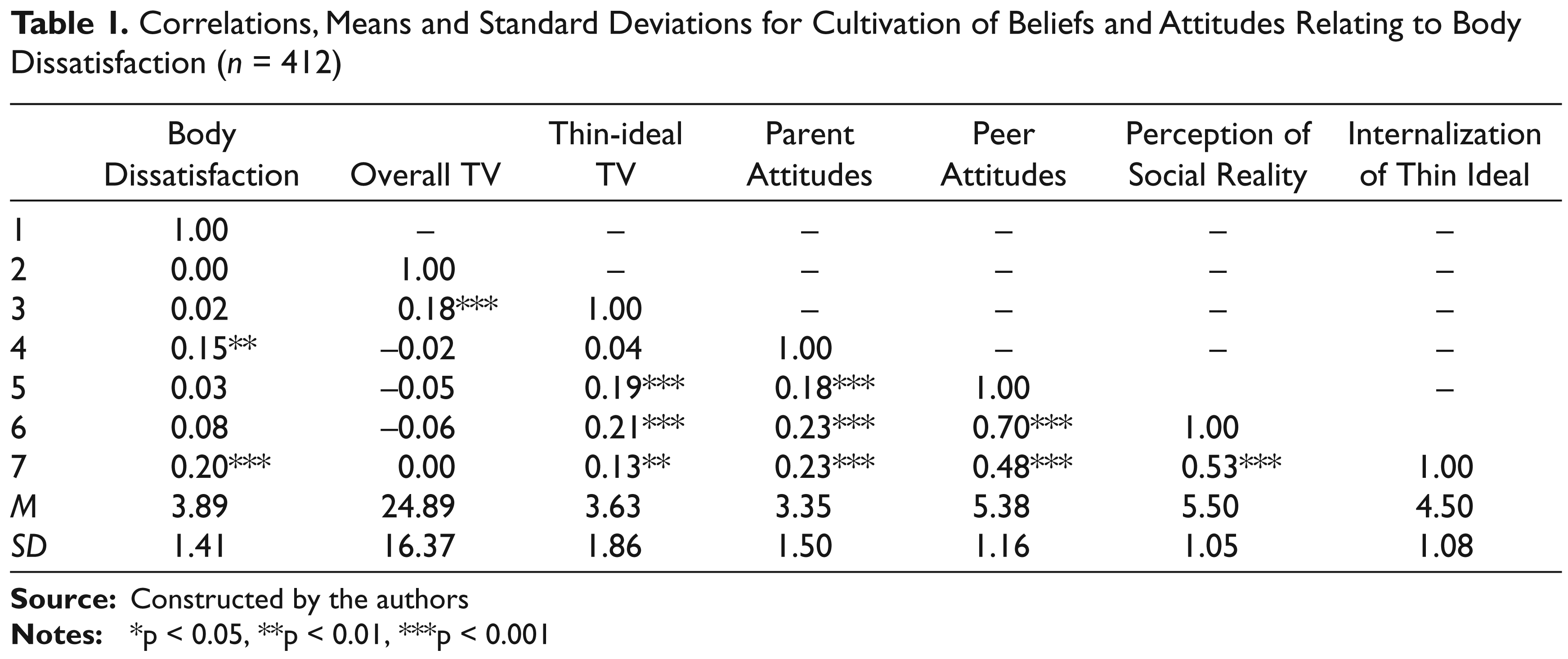
Our first goals were to examine body image effects as well as a model of resonance in the context of body dissatisfaction. Each set of hypotheses was evaluated by considering the correlations among the variables. The significant relationships evident in the correlation analysis (Table 1) were subsequently used to inform the model analysis.
TV Exposure Hypotheses
The first hypothesis (H1) predicted that genre-related exposure is positively related to perceptions of social attitudes towards thinness. There was a small but significant relationship between thin-ideal reality TV and perceptions of the social value of thinness (r = 0.21, p < 0.001). Therefore, H1 was supported.
Correlations, Means and Standard Deviations for Cultivation of Beliefs and Attitudes Relating to Body Dissatisfaction (n = 412)
Internalization of the Thin Ideal
The next hypotheses examined connections between media exposure measures and the internalization of the thin ideal. First, exposure to genre-specific TV programming was expected to be positively linked with the internalization of the thin ideal (H2) and a small, positive correlation was observed (r = 0.13, p < 0.01). Second, the perception of the value society places on thinness was expected to be positively related to the internalization of the thin ideal (H3) and a strong correlation was observed (r = 0.53, p < 0.001). Therefore, H2 and H3 were supported.
Parent and Peer Attitudes
The third set of hypotheses sought to explore the role of other social influences on the perception of the value society places on thinness as well as the internalization of the thin ideal. Peer attitudes towards the social value of thinness were expected to be positively related to the perception of the value of thinness in society and the internalization of the thin ideal (H4a, b and c). Strong correlations were observed between peer attitudes and perceptions of societal attitudes towards thinness (r = 0.70, p < 0.001) and the internalization of the thin ideal (r = 0.48, p < 0.001). Meanwhile, parent attitudes towards weight and shape were expected to be positively correlated to the value society places on thinness, the internalization of the thin ideal and body dissatisfaction (H5a, b and c). Small-to-moderate relationships were observed for social perceptions of the value of thinness (r = 0.23, p < 0.001), the internalization of the thin ideal (r = 0.23, p < 0.001) and body dissatisfaction (r = 0.15, p < 0.01).
Body Dissatisfaction
The fourth set of hypotheses focused on relationships between media exposure and body dissatisfaction and the internalization of the thin ideal and body dissatisfaction. Genre-specific TV exposure was also expected to be linked to body dissatisfaction (H6) but no significant relationship was observed (r = –0.02, p > 0.05). Finally, the internalization of the thin ideal was expected to be positively related to body dissatisfaction (H7) and a small correlation was observed (r = 0.20, p < 0.001). Therefore, H6 was not supported but H7 was supported.
Resonance Model of Thin Ideal and Body Dissatisfaction
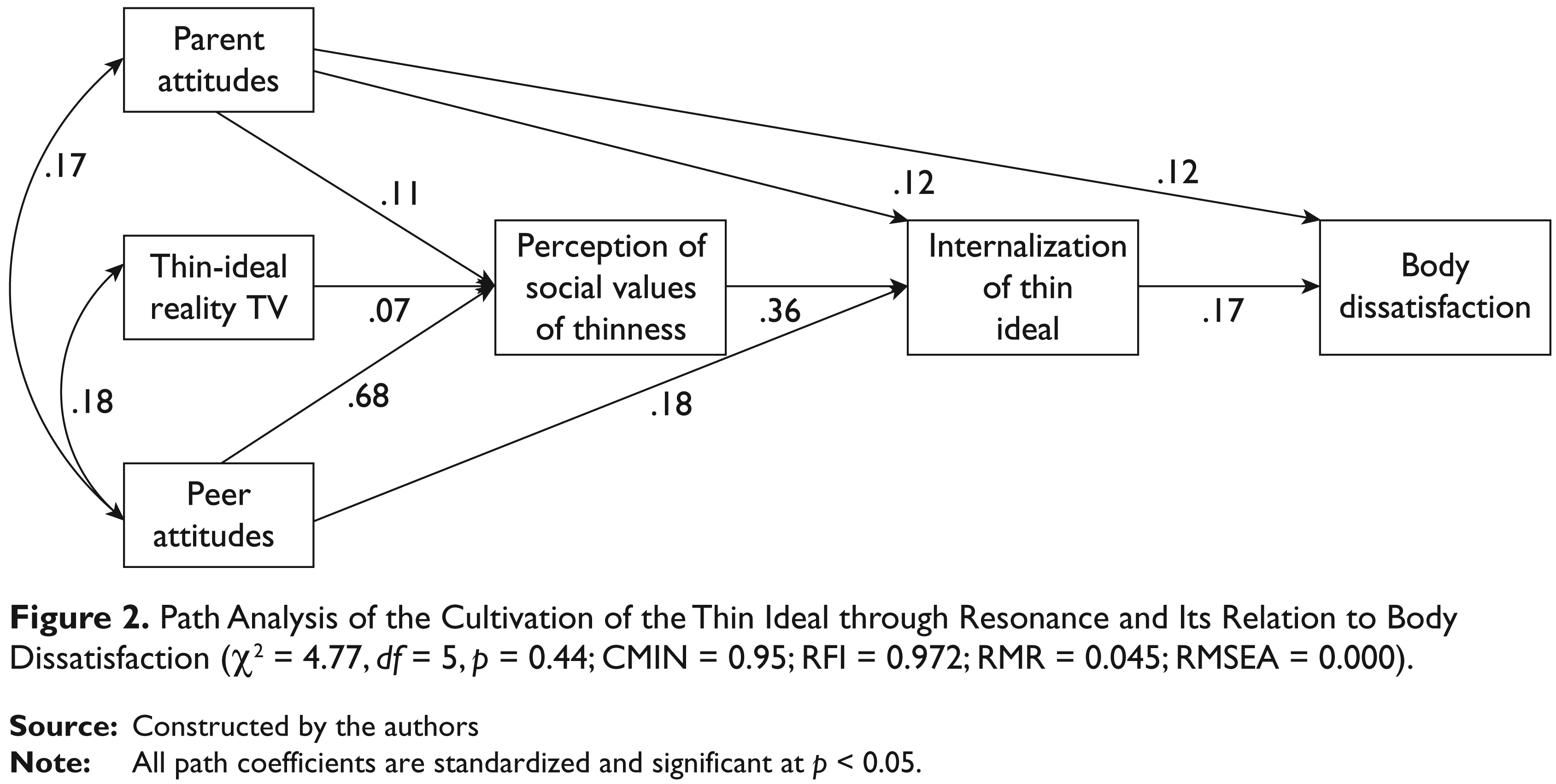
The final goal of the project was to model the relationships among cultivation variables and body dissatisfaction to reflect the role resonance plays in body dissatisfaction (see Figure 1). As such, TV exposure was expected to combine with parent attitudes towards weight and shape as well as with the perception of the importance peers place on thinness to directly relate to the individual’s perception of social reality (i.e., the value placed on thinness in society). The perception of social reality was expected to combine with the parent’s and peers’ attitudes to affect the internalization of the thin ideal. Finally, the internalization of the thin ideal was expected to affect body dissatisfaction. Given that the overall TV exposure measure was not related to the other variables in the model, the analysis focused solely on the genre TV exposure measure. The structural equation modelling programme, SPSS Amos (AMOS), was used to test the path model. The error term for each exogenous variable was set at 1.
The goodness of fit of the path model was assessed using several criteria: the chi-square with an insignificant p-value and a chi-square goodness of fit (CMIN) below 2 (Byrne 2001); a comparative fit index (CFI) or relative fit index (RFI) greater than 0.9 (Bentler 1990; Bollen 1986; Byrne 2001); and a root mean square error of approximation (RMSEA) below 0.05 (Browne & Cudeck 1993; Byrne 2001). Based on these criteria, the model (Figure 2) fit the data very well (|2 = 4.77, df = 5, p = 0.44; CMIN = 0.95; RFI = 0.972; Root Mean Square Residual (RMR) = 0.045; RMSEA = 0.000). All the associations are significant at the p < 0.05 level and adding or removing paths reduced the model fit.
Discussion
Body dissatisfaction in women is an important topic because it has implications for attitudes that drive behaviours, including consuming beauty products, electing to have cosmetic surgery and even harmful disordered-eating behaviours such as anorexia (Garner et al. 1983). Many research projects have examined the role the media play in the development of body dissatisfaction. Cultivation theory and social cognitive theory have been used to explain the association between media (particularly TV) consumption and body dissatisfaction. However, current research on body image lacks some clarity; specifically, how exposure to thin-ideal messages on TV is connected to viewers’ thin-ideal attitudes and body dissatisfaction. The value of this study is evident in several ways. First, the findings support further examination of genre-related viewing and effects involving perceptions of the value placed on thinness in society, personal attitudes regarding the importance of thinness and body dissatisfaction. Second, the study describes a role for first-order effects in body image research. Finally, the results support a model that provides greater clarity regarding the TV’s role in body dissatisfaction from the cultivation and social cognitive perspectives.
Today, TV offers increasingly specialized programming that is available through an abundance of channels. The results in this project lend additional support for the notion of genre-related viewing as being important to cultivation effects (e.g., Egbert & Belcher 2012; Hawkins & Pingree 1981; Potter 1990). The genre-specific exposure was linked to perceptions that society places great value on thinness and body shape. Although the reality TV programmes used in the study do not feature female characters that represent the body size associated with fashion models, they were selected because they were of interest to the participants and fit the definition of ‘thin-ideal television’ in that the connection between appearance and social desirability is prevalent within the programmes. The findings provide some support for prior research examining genre-specific TV exposure and body image (e.g., Schooler et al. 2004 and Tiggemann & Pickering 1996). However, the prior research identified a relationship between exposure and body dissatisfaction which was not evident in the current project. Instead, the current project identified a direct relationship between the genre-specific exposure and perceptions of the social value of thinness as well as an indirect relationship with the internalization of the thin ideal and body dissatisfaction. That is, the first- and second-order effects appear to mediate the personal evaluation involved in body dissatisfaction.
Cultivation and First- and Second-Order Effects
Cultivation theory and social cognitive theory are useful for explaining how media messages are connected to perceptions of society and personal attitudes. Body image research has focused on trying to link TV exposure to personal thin-ideal attitudes (second-order effects). That approach is sensible considering that the issue of body image is not as conducive to prevalence estimates as are topics like crime or affluence. However, in general, connecting TV exposure to second-order effects (personal beliefs or attitudes) has sometimes posed problems (e.g., Hawkins & Pingree 1982). Prevalence or set-size judgements are a common way of accounting for cultivation effects because they ask the participant to make a quantitative judgement that reflects their perception of an issue in society. Additionally, the relationship between TV exposure and first-order prevalence judgements has been somewhat unstable across samples and conditions (e.g., Shrum et al. 1998). Therefore, we chose to measure perceptions of the extent to which society values thinness and appearance. Such an approach may have helped bypass some of the instability concerns regarding set-size judgements and also increased the potential for modelling the cultivation effect in a manner that fits Gerbner and colleagues’ broad vision (i.e., exposure to TV messages influences perceptions of social reality and personal attitudes). To that end, we observed a small relationship between thin-ideal reality TV exposure and perceptions of the value society places on thinness. Although it was small, the magnitude of the relationship is in line with prior research (see Shrum et al. 2004). The perception of society (a quasi-first-order effect) was related to personal attitudes towards thinness (internalization of the thin ideal). Additionally, there was a very small relationship between thin-ideal reality TV exposure and the internalization of the thin ideal. However, neither TV exposure nor perceptions of the social value of thinness was associated with body dissatisfaction. The second-order cultivation effect, internalization of the thin ideal, was positively associated with body dissatisfaction. This finding supports prior research that reported a link between the two (e.g., Stice 2001; Stice et al. 1994; and Thompson & Stice 2001). This result appears to help clarify the relationship between TV viewing and body dissatisfaction. Current models of body image processes (e.g., Van den Berg et al. 2002) indicate social pressure from peers and parents and social comparisons play direct roles in body dissatisfaction. The connection we observed between parent attitudes and body dissatisfaction supports that notion in part. However, the absence of a direct connection between media exposure and body dissatisfaction may suggest an effect of cumulative exposure to TV (i.e., mediated by personal attitudes such as the internalization of the thin ideal).
From the perspective of social cognitive theory, the results indicate that TV viewing plays a role in perceptions of a social norm. Those perceptions contribute to the formation of personal attitudes and are used when making self-evaluations (e.g., body dissatisfaction). In other words, the viewers perceive social standards for body image, in part, via the media. Those perceptions are a factor in the viewers’ motivation to meet the social standards (self-regulation). Additionally, the perceptions and attitudes contribute to the viewers’ judgements regarding whether they meet the standards.
Modelling Body Dissatisfaction
The notion of resonance provides some depth of understanding and helps address questions of inconsistency in the body image literature. Although some models of body image have been proposed and tested, the measures of media influence in those models bypass participant reports of exposure (e.g., Keery et al. 2004; Van den Berg et al. 2002). The model tested in this study indicates that while the internalization of the thin ideal had a direct association with body dissatisfaction, TV exposure was indirectly related. Furthermore, TV exists in a social system. So, when we examined TV’s role among the peer’s and parent’s attitudes, we observed that they all contribute to perceptions of social reality and personal attitudes towards the body image. This is where the concept of resonance is important. Resonance can extend the reach of stereotypes that are depicted on TV, including stereotypes associated with the body shape and size of female protagonists and its connection to their success and happiness (Shrum & Bischak 2001). It also corroborates existing attitudes, resulting in heavy viewers sharing the idea that image and body shape are necessary attributes for achieving success and social desirability. Busselle (2003) found that parent’s viewing of crime on TV can be linked to their children’s perceptions of crime. Although the model in this study includes perceptions of parent attitudes, it supports a perspective that finds parent’s attitudes towards thinness are linked to their children’s perceptions of the social value of thinness, internalization of the thin ideal and even body dissatisfaction.
Besides examining perceptions of the parent’s attitudes, perceptions of the peer’s attitudes were also observed to be a contributor. In the resonance model, there appears to be a link between the participant’s thin-ideal viewing and peer’s attitudes. The peers may share the same interests in TV programming, receive the same messages and maintain similar body image attitudes, especially if their overall media consumption reinforces their attitudes towards body shape. If the messages in a viewer’s real-life experiences are similar to those in the media they consume, the media messages can reinforce existing attitudes. Our results indicated peer and parent attitudes were significantly correlated with perceptions of society and personal attitudes towards thinness. The parent attitude scale was a reflection of participants’ perceptions of their parents’ attention and interest in their (parents) weight and shape, whereas the peer measure focused on broader values associated with thinness.
The resonance model shows that social sources of information about body image are important to perceptions of social desirability and success, and could, conceivably, set the stage for understanding what is valued in society and affect individual attitudes or beliefs. Those personal beliefs are then linked to personal evaluations (body dissatisfaction). Cumulative TV exposure can contribute directly and indirectly to people’s worldview and attitudes. However, the media likely play a different role in affecting body dissatisfaction through social comparison with media characters, modelling behaviour, etc. As a result, cultivation can be viewed as explaining one measurably small, but important, part of the overall body image issue.
Limitations
As is the case with most research projects, this one has limitations. First, the convenience sample limits generalizability. Second, the causal representations of the path model reflect the theoretical construct of cultivation rather than an experiment because the single-survey method excludes the consideration of a feedback loop connecting attitudes to media exposure. Third, genre TV exposure could have been measured in other ways, such as participant-generated lists of their favourite programmes to potentially yield a more diverse array of programmes that are of interest to the participant pool. Finally, the model tested does not include other variables such as participant body mass index which have been connected to body dissatisfaction.
Conclusion
Cultivation and socials cognitive theories appear to be very useful for explaining part of the TV’s role in body dissatisfaction. It connects the cumulative or ritualized exposure to TV (especially genres) to views of society and personal attitudes towards the social value of thinness and body shape. And when those TV messages resonate with the messages from other social sources, their impact increases. However, body dissatisfaction is an evaluative concept that appears to be indirectly related to media exposure. Therefore, the application of cultivation, social cognition and other theories can improve our understanding of the impact of ritual and instrumental use of TV.