







Abstract
Smartphone has become an essential part of human lives. People tend to treat it as another part of their body. Besides communication purposes, it is used for searching information, monetary transactions, shopping, social networking, entertainment, etc. This study aims at analysing the factors influencing smartphone usage and behavioural changes among college students under four constructs: utilisation, benefits, nomophobic behaviour and perceived risks (UBNR). An instrument was created with factors concerning the research and administered in a top-ranked private university of Bangalore, India. The research was carried out with a total of 122 responses. The results show that there is no significant difference in the attitude of males and females in most of the factors except social anxiety. Females experience more social anxiety and use smartphone more for maintaining their social relationships. There is no significant difference between the age group of students in all the four constructs. Utilisation is positively related with psychological, social, functional and financial benefits and shows that the greater the usage of smartphone, the greater are the benefits. On the other hand, the study reveals that increased usage of smartphone leads to addiction, causes nomophobia and poses threat of perceived risks. A mediation strategy like educating the students for proper use of technology is necessary to overcome the risk of addiction and developing nomophobia.
Introduction
Smartphone industry is on the rise, with around 36% of all mobile users in India owning a smartphone, whereas the global figure for this information is 50%. India had overall population of 18.21% who were using smartphones in 2015; it rose to 25% (299.4 million) in 2017. In 2019, India became the second largest smartphone market globally, surpassing the USA, 2nd only to China (Jain et al., 2020). By 2022, the number of smartphone users in India is expected to touch 442.5 million (O’Dea, 2019).
A smartphone is a mobile phone with highly advanced features (
Along with rapid penetration, smartphones have become relevant today in almost every walk of human life. Wide applications of the smartphone, access and affordable price have placed this product in the heart and mind of consumers irrespective of age group, earnings, gender or location. With the ability to connect online anytime and anywhere, a smartphone provides a unique experience for every individual, and thus, has gained preference over laptops or personal computers (Alan & Eyuboglu, 2012). Millennials are exhibiting behavioural changes towards the consumption of this technology. Generally, consumers buy products or services for the fulfilment of their needs. Research on the acquisition, consumption, and disposal of the product, services, time, and ideas is central to study of consumer buyer behaviour (Jacoby, 2001; Kotler & Caslione, 2009).
The adoption of the smartphone has been faster than any other tech product irrespective of age. Smartphone has become the necessary evil of our life. It does many good to many damages alike. With the ever-increasing use of the smartphone, compulsive behaviour towards smartphones is a growing concern. Millennial behaviour for smartphones is a curious field of study among researchers the world over. Despite the growing concerns about possible ill effects, the study on the usage of smartphones during class appears to be generally accepted more than ever, and it is increasing steadily in use (Bowman et al., 2010; Levine et al., 2012). Stories are abounding about the involvement of smartphones before birth to deathbed; human beings are hooked to this tech product more than ever. It is disheartening to know that Indian smartphone users are vulnerable. The first thing Indian users do within 5 min after waking up is to check their devices for instant messaging (IM) apps and social networks on their smartphone (Deloitte Consulting, 2015). This concept of addiction to smartphones parallels with drug addiction, smoking resulting in gambling, overeating, sex, exercise, computer games, rebellion, etc. (Charlton & Bates, 2000; Griffiths, 1998). This is the rationale for the study of impact of smartphones on youth, which is the largest section of the Indian population and highly vulnerable.
The purpose of this study is to investigate the influences of smartphone addiction in the academic field and to explore how smartphones change college students’ behaviour either positively or negatively. The positive behaviour is reflected through the utilisation and benefits of the smartphone. And negative behaviour is measured through nomophobia, that is, no mobile phobia (a state of fear or anxiety caused by not having a working mobile phone around) and perceived risks. Although India is progressing well as a technology hub, the efforts to identifying smartphone behaviour among the youth of this country have been limited. According to Cho and Lee (2017), adults also could become addicted to smartphone device and that can lead to problems in their behaviour, that is, perceived risks of the device. Further, Cho and Lee (2017, p. 309) highlight ‘there exists a wide variety of differences, however, depending on many variables such as one’s personality or environment, which calls for more specific and detailed analysis in diverse aspects’; this is a perfect statement that calls out to fill the gaps in the existing literature. Most of the studies have focused on either benefits or risks of smartphones, but there is a complete lack of a cohesive study that combines both benefits and risks. The current study has been able to trace the utilisation of smartphones for benefits and risks as well. As a part of the study, an attempt has been made to explore the effect of gender and age group on smartphone usage. Exploratory factor analysis (EFA) is used to find different response clusters from the behaviour group of students. Structural equation modelling is applied for examining the structural relationship between measured variables and latent constructs. Smartphone utilisation, benefits, nomophobic behaviour and perceived risks are the latent constructs in the study.
Literature Review
The emergence of new technologies is considered a boon to humanity, especially the smartphone, the all-in-one device. With incredible features and mobile applications, smartphones have made our lives easy by getting work done faster and making it much simpler—this paves the way for the widespread use of smartphones. Any technology has its own pros and cons. Though the smartphone is much appealing, its use has also drastically changed the personal habits and behaviour among individuals. The perceived impact of mobile Internet technologies to configure the social surroundings in support of the interests of African Youth was studied by Rivera-Sanche and Walton in their paper ‘Youth, mobility and mobile phones in Africa: findings from a three country study’ (2013). Many youngsters have nomophobia, that is, the fear of being without a phone, or no access to a phone. Anshari et al. (2019) have observed the impact of nomophobia (no mobile phone phobia) among youth. There are intense adverse effects of mobile addiction ranging from physical to psychological, social to academic, and the symptoms caused are sleep deficit, anxiety, depression, stress, etc. (Gutiérrez et al., 2016). Mobile phone addiction and depressive symptoms are associated with increasing severity and also bidirectional i.e one causes another and vice versa also the impact becomes more every time (Jun, 2016). Mobile phones are associated with greater inclusion in the self-concept that results in more negative emotions and lesser positive emotions in response to loss/separation from the phone (Hoffner et al., 2016). The pathetic truth is that youth are not aware of developing this phobia, and also, there is a high chance of them becoming anti-social. Continuous interaction with digital media results in diminished face–to-face interaction, reduced empathy and tendency to live in a virtual world (Shukla & Sharma, 2018).
Smartphones are considered as an effective tool for learning. It has enabled creative and personalised way of learning with the multimedia content. Researchers highlight that despite the benefits offered by smartphone, the device has negative impact on the academic performance of the students. Ng et al. (2017) examined the extent to which smartphones support school-related learning among students in a Malaysian university and found that the higher the use of smartphone the lower was the Cumulative Grade Points Average (CGPA).
Nayak (2018) studied the effects of smartphone usage on performance, along with demographic profile and found an association between smartphone usage and gender. In the same study, it was found that the effect of smartphone usage on performance was higher in case of males compared to female students. This provided an interesting background to investigate whether gender plays any role in negative and positive benefits.
Nayak (2018) studied the impact of smartphone on academic performance of the students and found that it has a negative impact on both male and female students. This paper has also studied the behavioural changes in their day-to-day activities and found them to be unmindful most often. Winskel et al. (2019) examined the relationship between academic performance of students and their problematic smartphone usage during a study in Korean and Australian university students. They found use of smartphone and addiction is higher in Korean students compared to Australian students. Availability of reliable, high-speed Internet infrastructure at low cost in South Korea is also a reason for this addiction. The increase in usage time leads to problematic usage in both cases. Smartphone usage during study affects their academic performance.
Chou and Chou (2019) analysed the smartphone addiction tendency among teenagers in Taiwan and found they do not have enough knowledge on cyber security regarding smartphones. Contents to which they are addicted to are social networking sites, games, video watching, trading, etc. Parents’ mediation strategies are barely effective, and many parents are not aware of smartphone usage by their wards.
Overuse of smartphone adversely affects the health of the users. Kumcagiz (2019) observed that adolescents’ physical, psychological health and overall quality of life are adversely affected by the use of smartphones. Risk of addiction is high among school children. Lee et al. (2014) analysed smartphone usage pattern among college students and have inferred that late-night smartphone usage creates disturbed sleep patterns. The daily lives of a majority of the students are interfered by IM. They possess limited self-control on the urge to respond to notifications.
Residences facilitated with Wi-Fi also make the students more dependent on smartphone. Subramani Parasuraman et al. (2017) conducted a study among students staying in hostel and home and barely found differences in the behaviour of both the groups. Authors also analysed the degree of awareness among these students on hazards of electromagnetic radiation. In spite of being aware of the effects and risks of electromagnetic radiations, the students are dependent on smartphones.
Smartphones are used for searching and accessing information, shopping, availing local services, watching news, entertainment, education, banking and payment services, access and participation in social networking sites and many more. Vasantha (2013) explored the pattern of smartphone usage and the extent of addictive behaviour among higher secondary and first-year college students. Students are preoccupied by smartphone, and it interrupts their daily lives. A significant number of students are using smartphones for connecting with family and friends and social networking sites and developing a risk of addiction.
Conceptual Framework
Based on literature review in previous section, the study proposes a model which is shown in Figure 1. Most of the studies have primarily focused on behavior of users from performance or addiction perspective of smartphone in different age groups, as studied by Foen et al. (2017), Nayak (2018) and Winskel et al. (2019). Other research studies focused on addiction towards and nomophobia of smartphones such as those by Anshari et al. (2019), Chou and Chou (2019) and Lee et al. (2014). Another study by Kumcagiz (2019) discusses the ill effects and risks of smartphone usage. Yet other studies (Pew Research Center, 2018) discussed the usage and benefits of mobile phones. Pew Research Center surveyed 11 countries and found that people’s attitude was largely positive towards mobile phones, positively impacting education and the economy; 65% Indians in the survey agreed that smartphones save time. ‘People meet less because of their phones; use telephones to express themselves to avoid face-to-face discussion’ (Laura et al., 2019, para 1). However, there are more angles of smartphone that are yet to be explored. There is a gap identified in understanding the benefits of smartphones, such as psychological, social, functional or financial benefit for the user. Another gap is the lack of studies that could relate nomophobic behaviour and perceived risks.
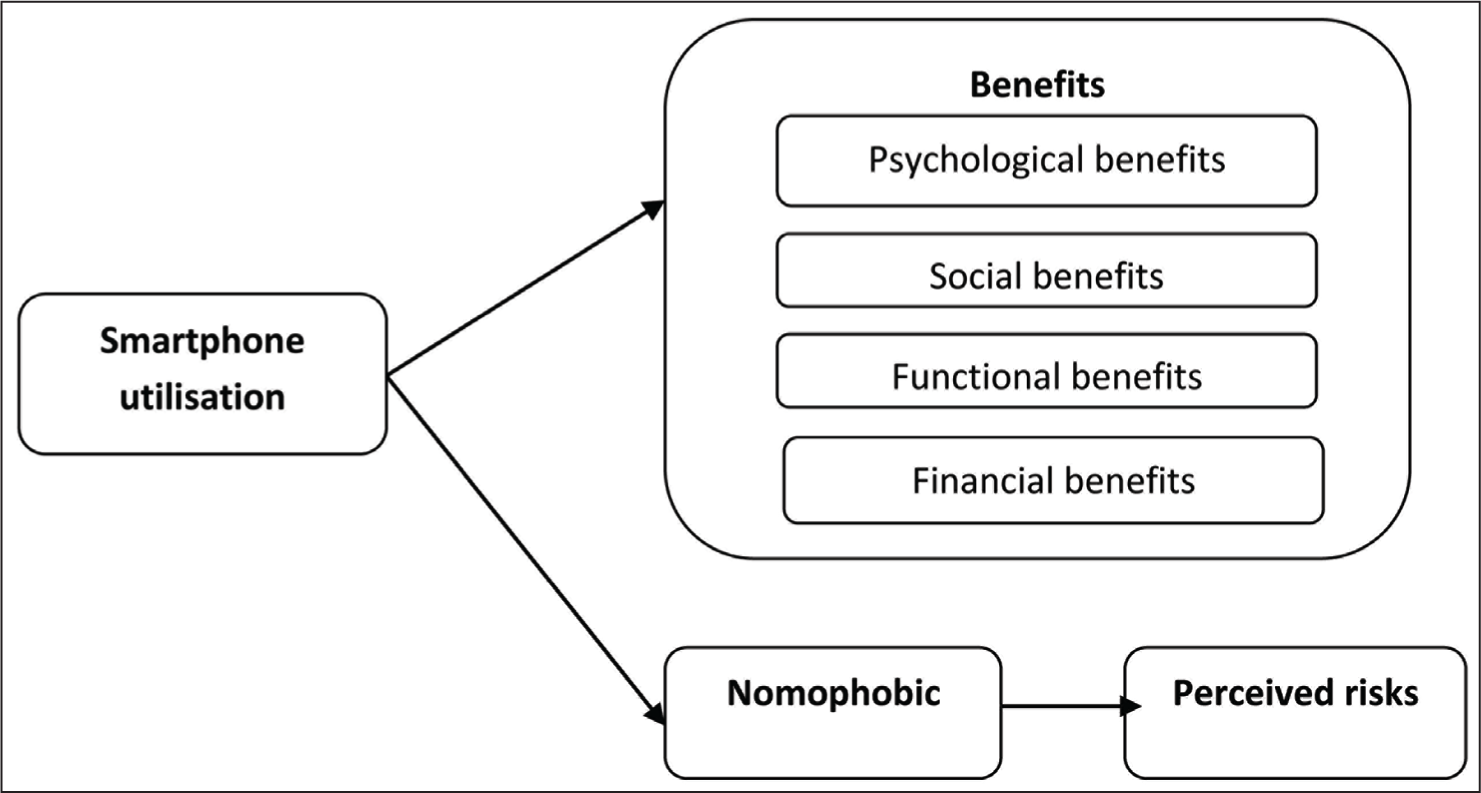
The proposed model integrates smartphone usage/utilisation, benefits (psychological, social, functional or financial benefits), nomophobic behaviour and perceived risks, as depicted in Figure 1.
Hypothesis Development
Based on the gap identified from the literature review, the following hypotheses are generated:
Hypotheses Based on Independent Sample t-Test
Gender and Smartphone Usage
The gender gap in smartphone usage is more in India, where 40% of men use smartphone as compared to women (Pew Research Center, 2019). The gender perspective on the usage of cell phones has been studied by researchers, and it has been found that the differences in the utilisation of smartphone features ultimately result in different addictive patterns across the sexes. Social stress has been increasingly associated with females compared to males. The development of addictive behaviour begins with a reward function as a smartphone is related with several gratifying experiences such as ‘likes’ on social media, number of followers and notifications that induce a behaviour to reoccur. ‘This pleasurable behaviour might result in losing control’ (Nayak, 2018, p. 165; Van Desursen et al., 2015).
In this study, smartphone utilisation is measured as a latent construct that is measured through academic activities such as storing notes and doing assignments faster, contacting friends, messaging apps, easy to use and economic. Thus, the following hypothesis tests the role of gender in smartphone benefits and risks:
Age and Smartphone Usage
The age group 18–29 is the highest in ownership of a smartphone. Several studies found that usage of smartphone is higher in younger generation compared to others (Kwon et al., 2013). ‘Early US study revealed that older adults are less likely to develop problematic mobile phone use’ (Chou & Chou, 2019, p. 336; Smetaniuk, 2014). The activities of younger generation involve increased usage of smartphone as it enables them to remain in contact all the time with their friends and peer group, rightly described as wired generation (Barnes, 2009; Jacobsen & Forste, 2011). The association between age and smartphone utilisation was established in Spain and Swiss samples but not in the US and German adolescent samples (Barnes et al., 2019; Randler et al., 2016). The current study investigates the association between two age groups (less than 20 and 21–30) among higher education students.
Hypotheses Based on Model
Smartphone Utilisation and Perceived Benefits
The potential impact of smartphone has been observed in people’s private, professional and educational life. The smartphone provides ease of access on Internet and enables search of desired information with quick connect to academic platforms such as websites, blogs, encyclopedia, etc. (Amez & Baert, 2020). The result is more efficient study and better collaboration among students and between students and faculty member (Chen et al., 2015; Lepp et al., 2015). The other side of smartphone is that for university students, it is a source of entertainment, rather than an instrument that will help in study (Lepp et al., 2013). Access to information and communication to mobile citizens using mobile functions such as search, translate, free notices, power point etc. are the direct benefits for the users (Lenhart et al., 2011). In addition smartphones enable us to play games, listen to music, to watch videos and provide entertainment (Hanson et al., 2011). Staying connected and emergency contact are the safety benefits for the users (Hingorani et al., 2012). For adopters of smartphone, smartphones are a worthwhile and symbolic device to signal their affiliation and timely technology adoption (Kim et al., 2014).
Smartphone Utilisation and Nomophobic Behaviour
The user becomes addicted by excessive use of smartphone that results in negative benefits (Bianchi & Philips, 2005). There negative benefits that are associated with excessive usage of smartphone are physical symptoms, fluctuating feelings and emotions, pathological addiction, fear, depression, loss, anxiety, low efficiency and educational achievements (Shan et al., 2013; Yildiz Durak, 2019). Time management issues (Lin et al., 2015) and sleeplessness (Yogesh et al., 2014) are other negative benefits for smartphone users. Other aspects such as difficulty in rational decision-making, unsound mental capacity including tendency to frequent depression are also associated with smartphone usage (Elhai et al., 2016; Elhai, et al., 2017; Thomée et al., 2011; Wolniewicz et al., 2018). Smartphone provides easy connectivity to social media for users; thus, lack of digital environment possibly causes anxiety (result of fear of missing out [FOMO]) (Piwek & Ellis, 2016). FOMO is regarded as a part of nomophobia concepts. The nomophobic behaviour is reflected in learning process, academic activities and maintaining relationships with friends and family as it may be because of mental tiredness (Dixit et al., 2010). The focal point of this study is to investigate how smartphone utilisation is associated with smartphone addiction and nomophobic behaviour. Though nomophobia and addiction may seem to be related to each other (Elhai et al., 2016), their relationship is under-observed (Durak, 2017). The studies by Kuss et al. (2014) and Yildiz-Durak (2018a) have examined the relationships between smartphone usage and demographic, psychopathologic profile, academic performance, technology usage and Internet addiction; however, the relationship between smartphone usage and nomophobia has been minimally explored, which is examined in this study.
Nomophobic Behaviour and Perceived Risks
Nomophobia and smartphone addiction are found to be significantly related (Yildiz Durak, 2017). Problematic mobile phone usage is a function of age, extraversion and low self-esteem (Bianchi & Phillips, 2005). Smartphone addiction causes risks such as neglecting work, feeling anxious and losing control of themselves. Risk of wasting precious time and money in talking and gossiping on meaningless topics are other perceived risks of addiction that smartphone causes (Javid et al., 2011). The relationship between addiction and perceived risk and addiction and nomophobia has been explored quite well in literature. However, the association between nomophobia and perceived risk requires further study. The following hypothesis tries to uncover this association by asking questions related to feeling upset, being distracted while driving and feeling outdated.
Research Methodology
Sampling and Data Collection
The sample included college students at post-graduation level who had been using a smartphone for more than 1 year. The population that is affected by the use of smartphone is every individual who uses a smartphone. Hence it is an infinite population. The focus of this study has been on students pursuing higher education in a specific academic institution that the researcher was associated with. The students of the university belong to middle and upper middle strata of income group who have easy access to smartphones and new technology, an essential element to fit into consideration. The sampling technique is judgmental sampling, a non-probability sampling technique. The methodology evolved in this research was divided into three phases. The first phase was about understanding the role of the smartphone in students’ life with the identification of dimensions that influence their behaviour on a day-to-day basis. That led to the development of an instrument based on literature review of studies carried out in past. The self-report instrument from this development was administered to the students that marked the second stage of the study, that is, data collection. The instrument was created with the help of Google form, and thus, online data were collected. The survey was administered to students in a top-ranked private university in Bangalore, India, which boasts of its excellent technological infrastructure. The university provides education in multiple streams such as business education, engineering, technology, liberal arts and commerce. The third and final phase consisted of editing, coding and analysis of the data. A total of 122 responses were used in analysis. The demographic profile of the survey respondents is presented in Table 1. Male respondents were 74.2% and female respondents were 25.8%. Age group wise distribution was divided in two categories less than 20 years (<20) and more than 20 years (>20). The less than 20 years category had 12.1% respondents; the other category was 87.9%. A two-step structural equation modelling approach is used for the development of structural model: the first step constituted development of a good measurement model (high goodness of fit) and the second step constituted analysis of the structural model. The approach has been recommended by many researchers (e.g., Broyles & Schumann, 2004; Barver & Mentzer, 1999; Chiu et al., 2005; Henning-Thurau et al., 2002). The analysis was carried out with statistical software SPSS 23.0 and AMOS 18.
Research Instrument
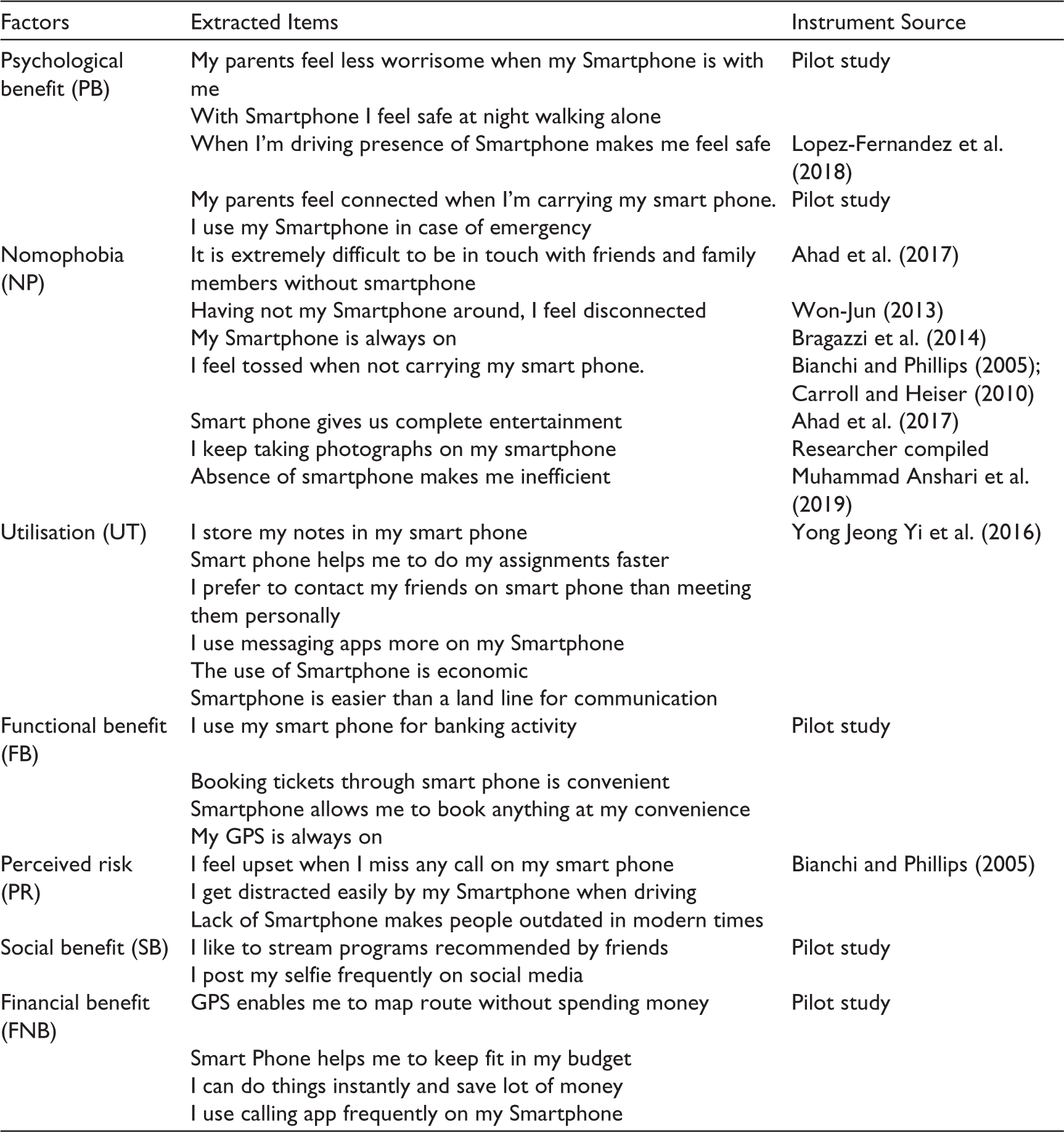
Group Statistics I
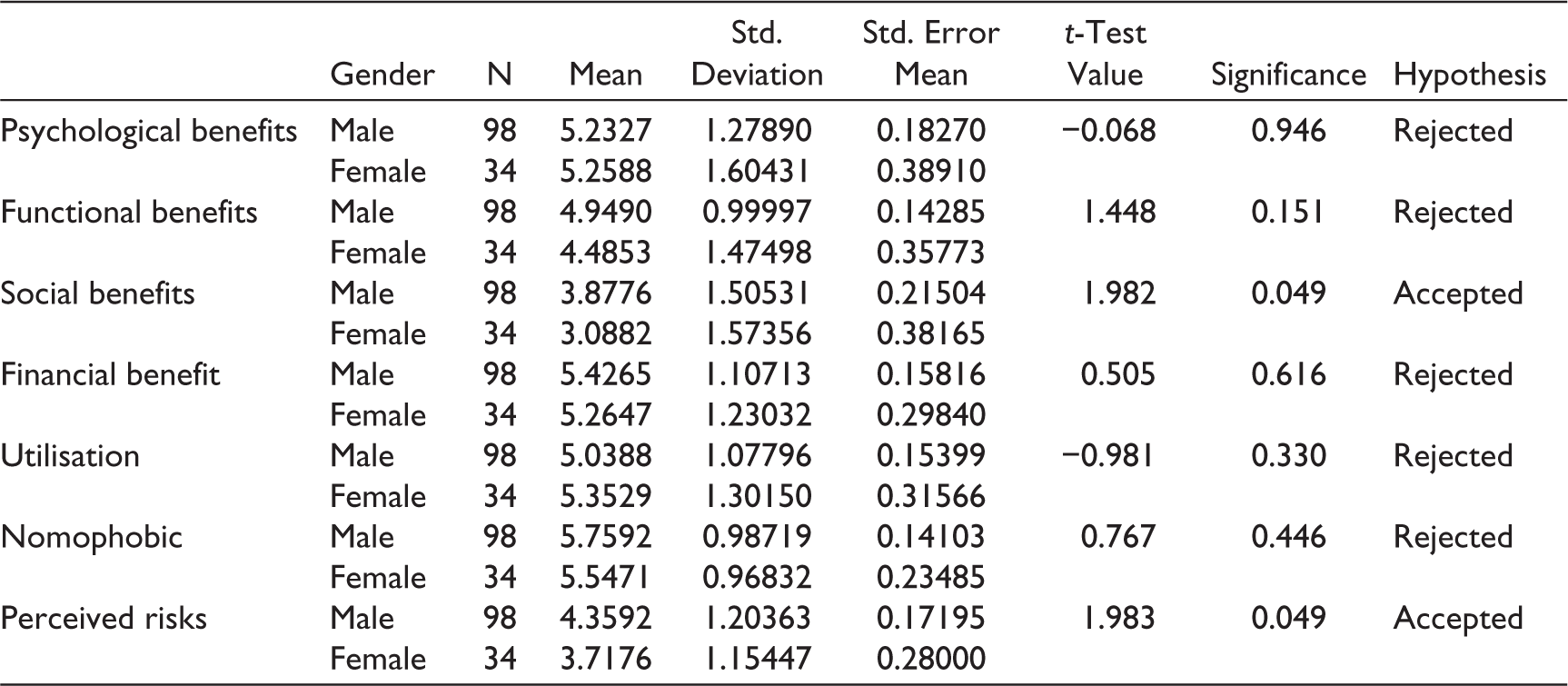
Group Statistics II
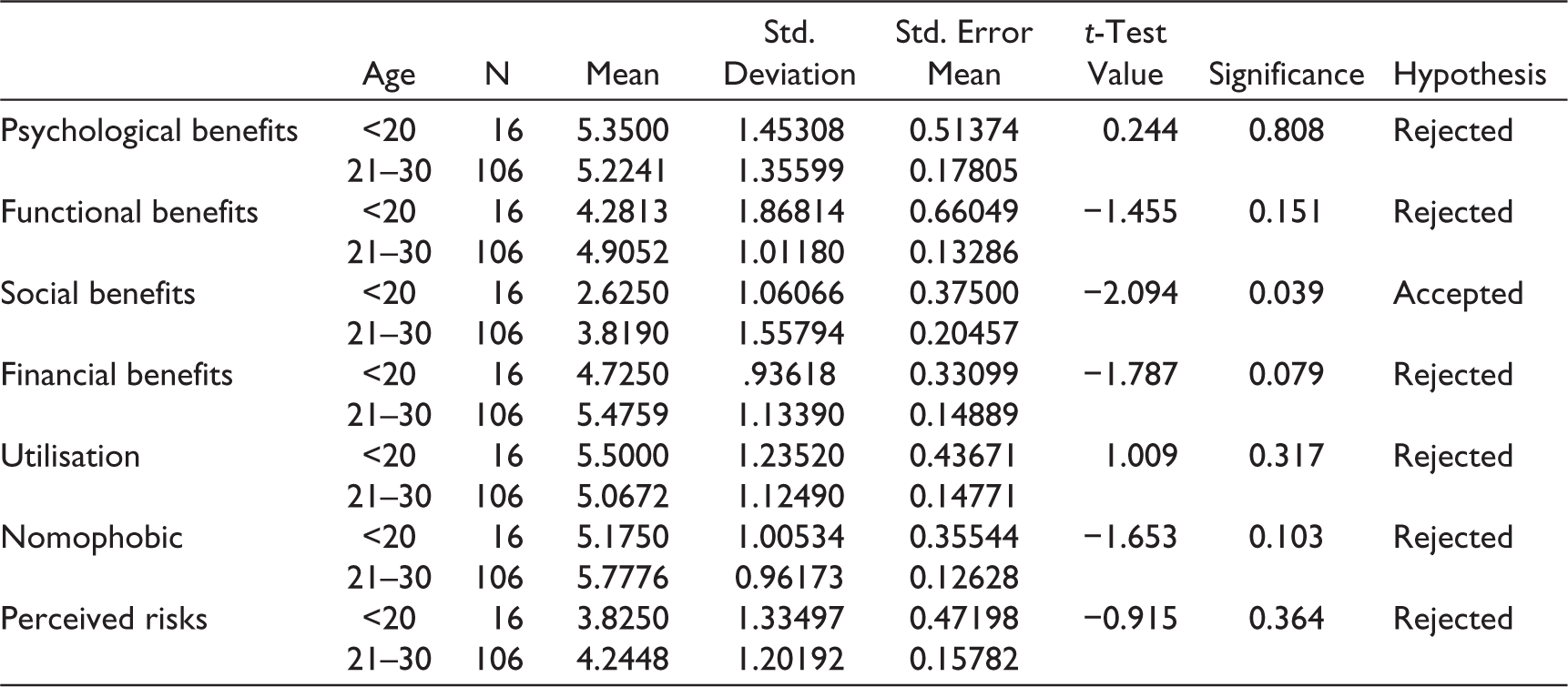
Instrument Development
The instrument used in the present study has been absorbed from many previous studies such as Mobile Phone Problem Use Scale (MPPUS) by Bianchi and Phillips (2005) and Mobile Phone Dependence Questionnaire (MPDQ) by Choudhury et al. (2019) and also includes findings from a pilot study carried out by the researcher on impacted group. The instrument consisted of two parts: demographic profile and smartphone usage and behaviour. The second part constituted 54 statements rated on a 5-point Likert scale from ‘Strongly Disagree’ to ‘Strongly Agree’. Since the scales were developed in foreign context, to understand the applicability of the same, a pilot study was conducted by the researcher. The results of pilot study, based on factor analysis, gave scope for modification and inclusion of some measurement items, as reflected in the research instrument. The statements cover various aspects of smartphone behaviour among students. The statements in instruments are presented in Table 1.
Findings
Independent Sample t-test
Gender and Smartphone Usage
For independent samples t-test, SPSS 23.0 was deployed to relate gender with smartphone variables. Differences among the mean scores of smartphone variables in the study (psychological benefits, functional benefits, social benefits, financial benefits, utilisation, nomophobic behaviour, and perceived risks) were assessed on the basis of gender of the respondents. Following are the hypotheses related to the gender of respondents:
This hypothesis is proved with sub-hypotheses that are given as follows:
Age and Smartphone Usage
This hypothesis is proved with sub-hypotheses that are given as follows:
Exploratory Factor Analysis
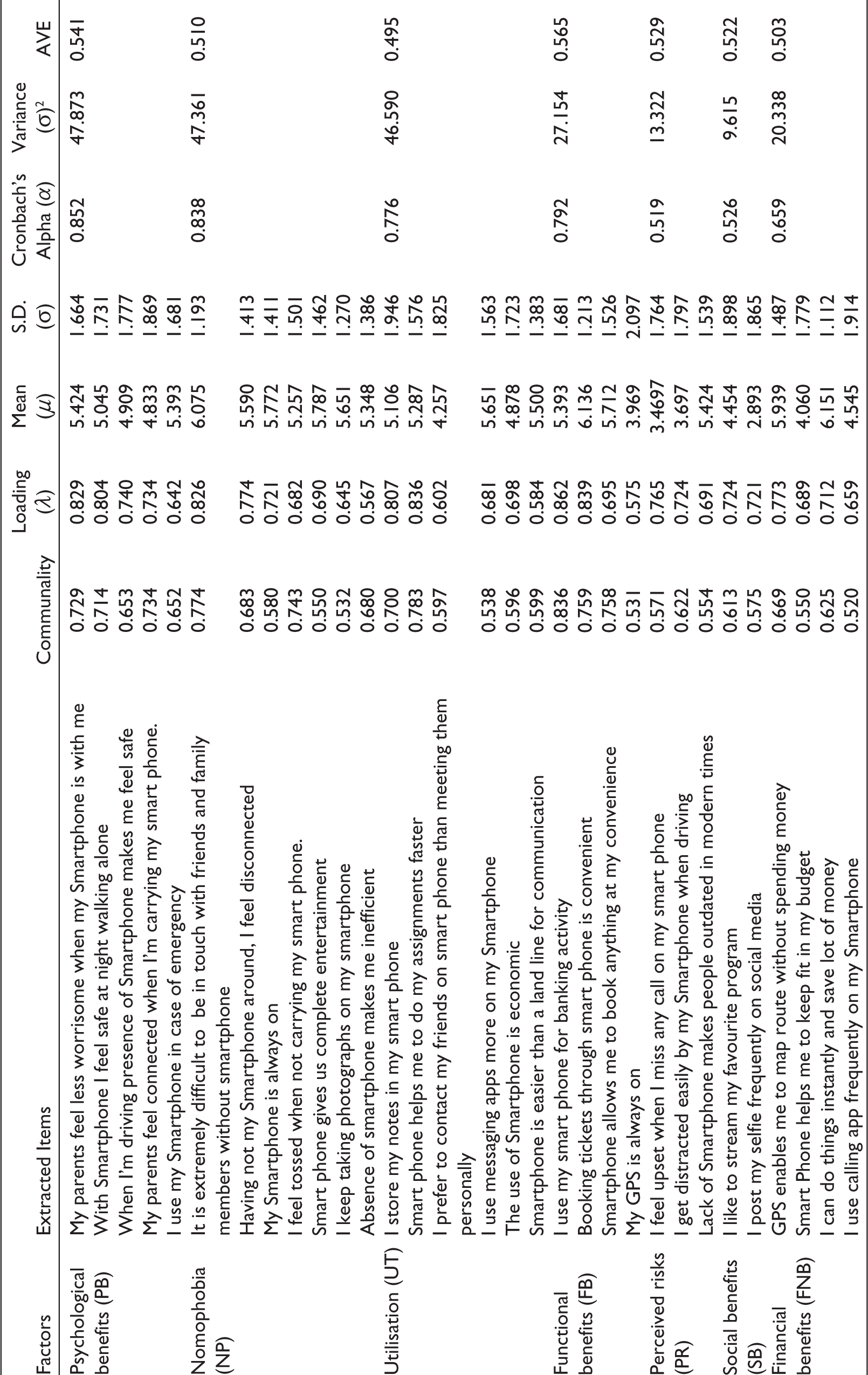
To develop a smartphone behaviour construct in academic context, exploratory factor analysis (EFA) was used to determine the number of factors evolving in the study. And then, structural equation model (SEM) was applied to test the overall model. The first step was to identify the measurement scale. EFA was carried out on SPSS 23.0 package with principal component analysis and varimax rotation was used for rotation of factor loading. Table 4 presents the results of EFA. The initial scale had 54 statements on benefits, nomophobia, utilisation and perceived risks. To improve the efficiency of EFA, statements with communality with less score (less than 0.5) were removed and only 31 statements were retained in the final set of construct. Before applying dimension reduction technique, the suitability of EFA was established through the Kaiser–Meyer–Olkin test (0.673) and Bartlett’s test of Sphericity (p < 0.000). Thus, EFA has been found suitable for these data. For factor extraction, eigen values greater than 1 were used as benchmark. As suggested by Stevens (1992), the researcher has maintained cut-off values of factor loading at 0.4 in the current study (Huang et al., 2019). The result yielded seven factors: (a) psychological benefits, (b) social benefits, (c) functional benefits, (d) financial benefits, (e) utilisation, (f) nomophobic behaviour and (g) perceived risks. These factors were able to explain 68.357% of the variance in the study (Table 4). For internal consistency among the factors, a reliability test was computed. The researcher used Cronbach’s alpha for the reliability test. The Cronbach’s alpha scores for all the factors except social benefits, perceived risks and financial benefits are greater than 0.7, as suggested by Nunnally (1978). For social benefits, perceived risks and financial benefit factors, the scores remain between 0.5 and 0.7 and are acceptable, as suggested by researchers in case of social science studies (Hair et al., 2006). According to Ramayah (2011), Cronbach’s alpha coefficient value was greater than 0.5 and are acceptable (cited by ZiaulHaqueMunim in ResearchHUB, 2018). The alpha values are PB (0.852), NP (0.838), UT (0.776), FB (0.792), PR (0.519), SB (0.526) and FNB (0.659). Internal consistency was established through the average variance extracted (AVE) score. AVE score greater than 0.4 is acceptable (see Fornell & Larcker, 1981).
Exploratory Factor Analysis
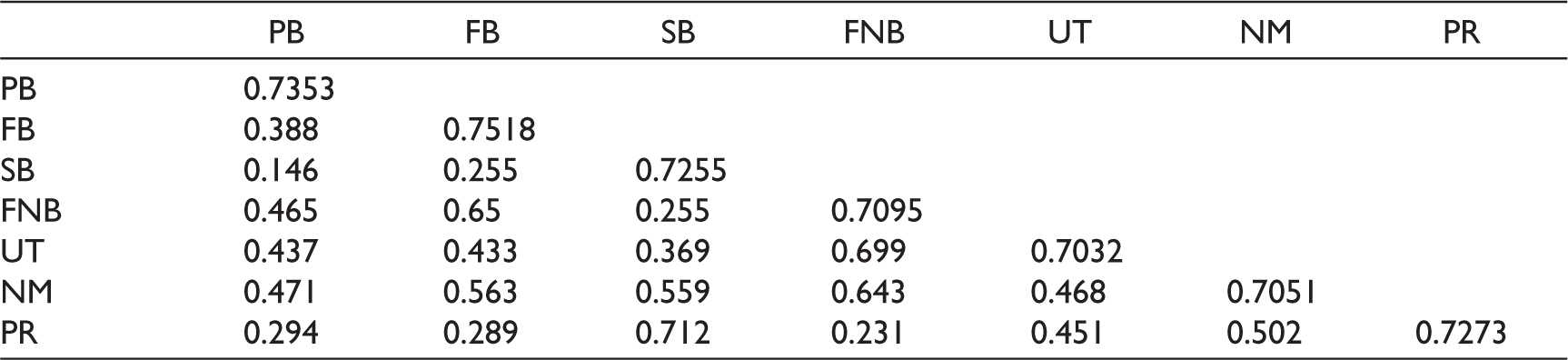
Finally, discriminant validity (DV) is tested as an important validity measure. DV is shown in Table 5. DV is established by taking the square root of AVE for a specific construct; this value should be greater than the inter-construct correlation, as suggested by Bhattacherjee and Premkumar (2004), Wixom and Todd (2005). All square roots of AVE were greater than corresponding inter-construct correlation, thus ensuring DV. Thus, the measurement model was confirmed to be reliable and valid.
Discriminant Validity
Regression Results
Structural Model Measurement
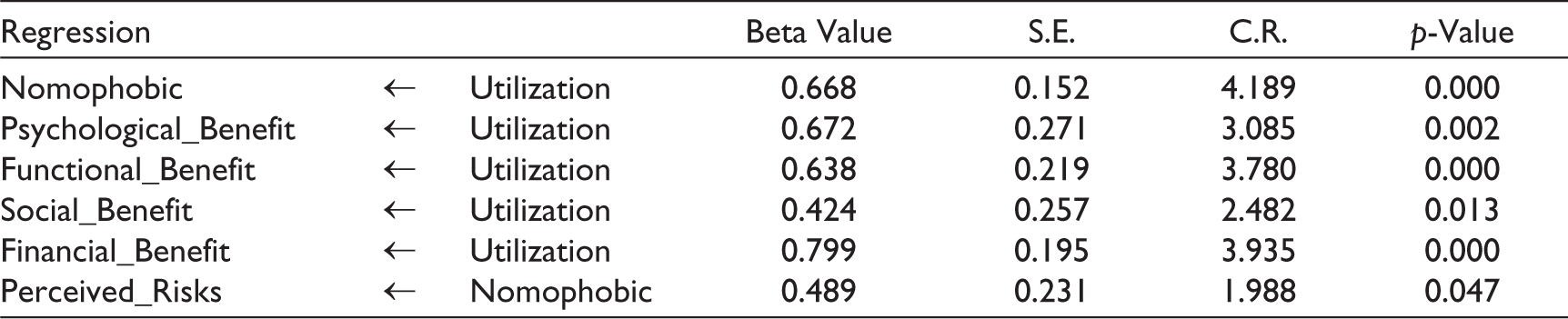
Structural model of measurement (SEM) was used for hypotheses testing in the model. The model fit is established trough AMOS. The good indices and bad indices defined by various researchers were in acceptable range; hence, model fit is strengthened. The value of RMSEA was 0.1, which is higher than the suggested range of RMSEA (0.05–0.08) for a strong model fit; however, 0.10 indicates a fair fit (MacCallum et al., 1996). RMSEA between 0.08 and 0.10 provides a mediocre fit (MacCallum et al., 1996). Hence, the model survives in this light. The regression model is then executed to test the hypotheses. The results are exhibited in Figure 2.
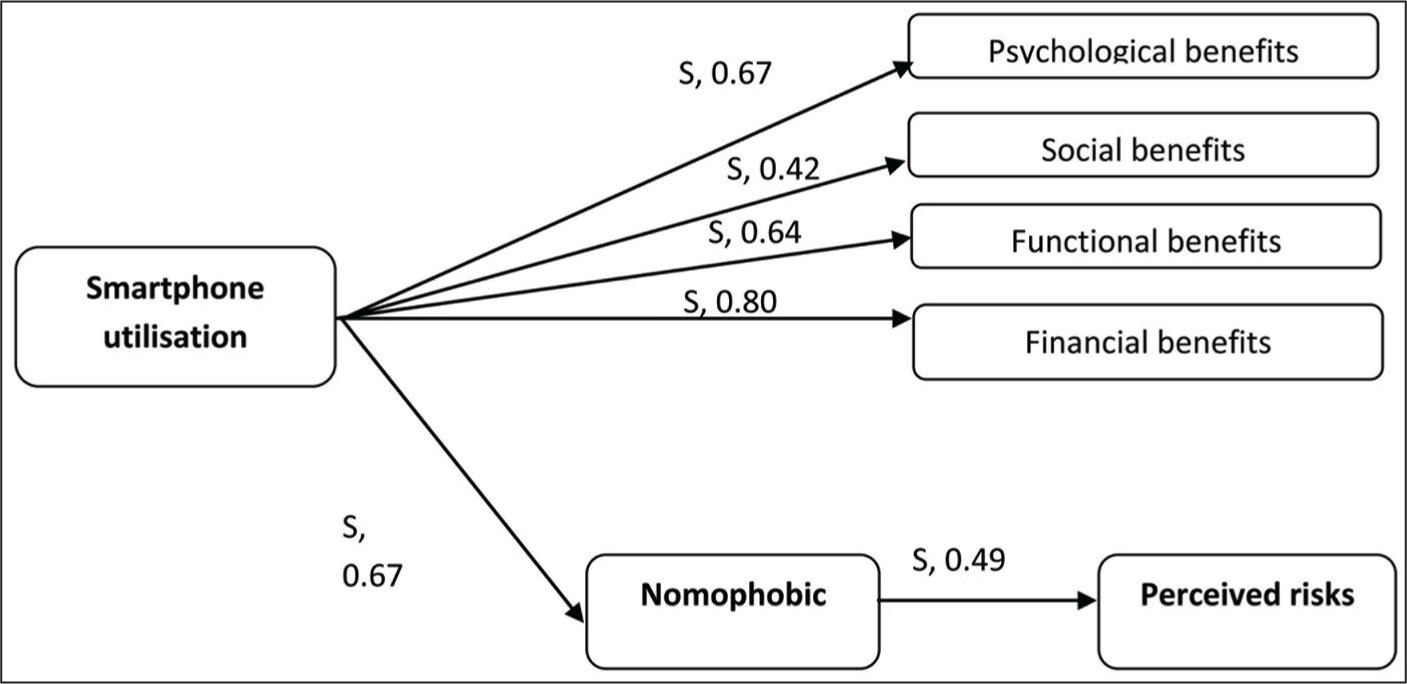
The influence of smartphone utilisation was tested on benefits. p-value and β showed that smartphone utilisation has a significant influence on psychological benefits (p = 0.000, β = 0.67). p-value and β showed that smartphone utilisation has a significant influence on social benefits (p = 0.013, β = 0.42). p-value and β showed that smartphone utilisation has a significant influence on functional benefits (p = 0.000, β = 0.64). p-value and β showed that smartphone utilisation has a significant influence on financial benefits (p = 0.000, β = 0.80). p-value and β showed that smartphone utilisation has a significant influence on nomophobic behaviour (p = 0.000, β = 0.67). Further, p-value and β showed that nomophobic behaviour has a significant influence on perceived risks (p = 0.04, β = 0.49).
Conclusions and Discussion
The present study was designed to investigate the factors influencing smartphone usage among college students, and thus, behaviour of students induced by the usage. As stated, the earlier research direction of smartphone has been confined to the technology acceptance model (TAM) Davis et al. (1989) or TAM in combination with other models. The present study identified UBNR constructs that are utilisation, benefits as psychological benefits, social benefits, functional benefits, financial benefits, nomophobic behaviour and perceived risks. The effects of these constructs were analysed in relation to each other, that is, inter-construct relationship. All the vital matrices were in place such as correlations between variables were positive; internal consistency was significant for the model.
Gender and Smartphone Usage
t-test was used to find the significant difference in the attitude of males and female towards smartphone benefits and other constructs, and the results state that a significant difference is observed in social benefits and perceived risks constructs. All the hypotheses trying to establish the relationship between gender and constructs are rejected except for social benefits and perceived risks. This corresponds to the earlier research studies conducted by Van Deursen et al. (2015) and Nayak (2018) which stated that females experience more social anxiety and use smartphones more for maintaining their social relationships.
Age and Smartphone Usage
Age and smartphone constructs in two age groups are not related. There is no significant difference found between age group of college students of higher studies and their smartphone utilisation, benefits, nomophobic behaviour and perceived risk. This result corresponds to earlier research studies.
Smartphone Utilisation and Benefits
Utilisation of smartphone is measured by statements that focus on doing assignments faster, connecting with friends, messaging, economic use and communication. The benefit construct has statements related to psychological, social, functional and financial benefits. Utilisation is positively related to all these benefits. College students see these benefits of psychological, social, functional and financial nature in smartphone usage, and it is reflected in their behaviour. Hence, the greater they use smartphone the greater are the benefits accrued. This result is consistent with some previous studies such as those by Chang and Cheung (2001), McGill and Klobas (2009) and Van Raaij and Schepers (2008).
Smartphone Utilisation and Nomophobic Behaviour
Nomophobic behaviour of students is a form of behavioural addiction for smartphone, and it creates anxiety when disconnected from smartphone because of some reason. In this study, nomophobia is measured through statements that focus on feeling disconnected, continuous addiction for smartphone, feeling tossed without mobile, believing smartphone is the complete entertainment and taking selfies and photographs frequently. Greater usage of smartphone leads to this addiction and causes nomophobia among students. This result is consistent with previous studies (Menezes & Pangam, 2017; King et al., 2014)
Nomophobic Behaviour and Perceived Risks
Use of smartphone more than desirable level induces nomophobia among students, and this addiction poses threats and risks for students. Perceived risks are measured from statements such as feeling upset on missing call, feeling distracted while driving, feel of becoming outdated without smartphone. The positive influence of nomophobia on perceived risks is consistent with some previous research studies. Chen at al. (2015) strongly indicate that smartphone addiction (nomophobia) poses a severe risk to users. The study by Anshari et al. (2019) also confirms the same effect.
Smartphone’s Utilisation, Benefits, Nomophobic Behaviour and Risks
Thus, the overall model is proved model fit indices such as discriminant validity, RMSEA, CR etc. The outcome of the study is that utilisation (use) of smartphone has influence on three important dimensions such as benefits of smartphone, nomophobic behaviour of user and subsequently perceived risks of smartphone. The technology is useful as it brings benefits in the form of psychological, social, functional and financial benefits, but simultaneously, there are risks of addiction and further. The model is consistent with many previous studies.
It is evident from the results that technology like smartphone, which is the hub of digital advancements, is central to the development of next generation. The immense use of smartphone in academic and non-academic activities is central to this adoption. However, mobile technology has two sides, that is, useful and detrimental. The useful side helps users to speed up the work and connects them with larger groups and resources, but the negative side (detrimental) creates psychological disorders on excessive use. There is a thin line between development of utilisation–benefit combination to utilisation–nomophobia that user tends to lose sight of the development. This study will help organisations to develop suitable strategies associated with the usage of smartphone technologies.
The Implication for Theory and Practice
The use of technology and smartphone is always increasing. Technology is touching every facet of human life and enabling businesses. A smartphone is a bundle of such superior technology. Hence, the utilisation of smartphones is very significant at every level, from college students to senior citizens. Various benefits and economic uses of smartphone make it the most demanding technology of our age. This consumption of smartphone technology has also influenced the general behaviour of students. The article identifies behaviour change in two forms, as being beneficial for the user and also creating risks from its addiction and over dependence. The article also identifies the role of gender towards social benefits and perceived risks. This article identifies that effective strategies will be required to limit the addictive capacity of smartphone by educating the young generation about the proper use of technology. The responsibility to create a healthy environment by bringing balance between technology and user exposure lies in all the stakeholders.
Scope of Future Research and Limitation
Smartphone technology is a happening subject, and it connects with every sphere of research. Smartphone studies can focus on any field such as social sciences, technology, consumer behaviour, marketing, digital technology, healthcare product, services and more. Because of its vast application in numerous fields, a single study will not be able to cover all the aspects; hence, there are limitations. The current study focuses on Gen Y of the Indian population (particularly college students); however, similar research studies are required in other consumer cohorts also. This study involves students of a large, popular university at Bangalore. Hence, the study outcome cannot be generalised to every market of India. The data collection is limited here; increased participation in this study will enhance the quality. This is a cross-sectional study; a longitudinal study will help understand the shift more appropriately. More demographic bases will be able to create a richer study.
Footnotes
The authors declared no potential conflicts of interest with respect to the research, authorship and/or publication of this article.
Funding
The authors received no financial support for the research, authorship and/or publication of this article.