







Abstract
Sharing news over social media (SM) has become an everyday practice among internet users all over the world. Despite the potential importance of news-sharing, little is known about this phenomenon in the Arab region. The news-sharing literature and Uses and Gratifications approach form the theoretical framework of the current research which examines the tendency of news-sharing on SM and its motivations among Emiratis and Arabs residents in the United Arab Emirates. It also explores the correlation between motivation and topics shared on SM. It investigates the difference in news-sharing and motivational factors among the demographic groups, mainly gender, age, nationality and level of education. A convenient sample of 324 respondents filled an online constructed questionnaire. Factor analysis revealed four motivational factors that stimulate respondents to share news through SM. A positive significant correlation between news-sharing and both ‘status-seeking’ and ‘social responsibility’ was found. The correlation was non-significant between news-sharing and both ‘socialising’ and ‘dissemination of information’. These factors significantly correlate positively with the type of topics that the Arab respondents share on SM. There is no significant difference between males and females in the news-sharing motivational factors except in the category of ‘socialising’, which is higher in the mean value among females than males. Emiratis have higher mean values in all news-sharing motivations as compared to Arab expats.
Keywords
Introduction
Social media (SM) platforms allow internet users to connect create, produce and distribute content (Kalsnes & Larsson, 2018). They have become a fundamental part of online news distribution and consumption (Mitchell & Page, 2014). In 2022, half of U.S. adults get a portion of their information from SM, mainly Facebook, playing a crucial role in news consumption (Pew Research Report, 2022).
Furthermore, SM facilitate news-sharing for organisations and individuals, as they are convenient and have easy tools for posting content (Kümpel et al., 2015). Anyone can easily post links, comment on stories and create content. Holcomb et al. (2013) indicated that SM posts from news organisations, family and friends are the main sources of news for most individuals nowadays. Mobile devices greatly extend news accessibility among consumers, allowing constant access to news on SM apps such as Facebook and Twitter (Wei et al., 2014).
In the new media environment, news sites structure their content to make it shareable on SM using prominent toolbars (Valenzuela et al., 2017). Shared news on SM has become a pervasive means to access news in Germany (Karnowski et al., 2018). The SM cues require a simple click, such as Facebook’s ‘like’ and ‘share’ buttons (Duffy & Ling, 2020). Liking, tweeting and sharing are the common SM platforms’ tools to engage users in the flow of news content (Karnowski et al., 2018). Gottfried and Shearer (2016) found the percentage of U.S. adults obtaining news from SM reached 62% in 2016 compared to 49% in 2012. In the Arab world, Dennis et al. (2019) reported that seven in ten people in the United Arab Emirates (UAE), Saudi Arabia, Jordan, Lebanon and Egypt get news from SM every day.
This study follows the research’s regular structure to assure the flow of its outline, including the theoretical framework and literature, research questions and hypotheses, methodology and data collection, results, conclusion and the discussion in the light of news-sharing and Uses and Gratifications literature.
Theoretical Framework and Literature Review
News-sharing behaviour through SM is a new media-related phenomenon that attracted the attention of media researchers. The news-sharing literature and uses and gratification approach outline the research questions, hypothesis, methodology and data collection as well as the interpretative discussion of the results.
News-sharing on Social Media
Share buttons on news sites as well as reposting or retweeting links to news found on a Facebook page or Twitter feed are the most popular methods to share news among users (Kümpel et al., 2015, p. 1). Some researchers have introduced commonality SM news-sharing definitions.
Online news-sharing means posting or linking to news items on a web page or through Twitter, or on a social networking service (SNS) such as Facebook and instant messaging (applications) such as WhatsApp. These news items can be from media organizations that may also have a presence in print or broadcast; and from emerging, non-traditional online sources. It does not include sharing personal news or gossip about one’s social circle. (Duffy & Ling, 2020, pp. 74–75)
Singer et al. (2011) explained that news-sharing is a human activity in which digital technology has sped up sharing processes, with news organisations seeking to facilitate audience dissemination of news by adding buttons such as the Facebook ‘share’ and Twitter ‘retweet’. Kümpel et al. (2015) defined news-sharing as ‘the practice of giving a defined set of people access to news content on SM platforms, as by posting or recommending it’ (p. 2). Newman et al. (2017) stated that sharing news differs among various European and Asian countries. In Latin American countries, more than half of online users share news weekly (i.e., 64% in Chile and Brazil), while sharing is the lowest in Germany (18%) and Japan (13%).
UAE and SM News-sharing
Both Emiratis and expats are active on social media to stay connected with families and friends inside and outside UAE. The Digital United Arab Emirates Report (DataReportal, 2021) indicated that the number of SM users in the UAE was equivalent to 99.0% of the total population of 9.94 million in January 2021. The UAE Telecommunications and Digital Government Regulatory Authority TDRA’s Digital Lifestyle Report in Emirates (2022) shows the UAE ranked second globally and first in the Arab region in internet use. The number of active social media users is growing at a rate of 8.2% in 2022, which is 106% of the total UAE population, making the UAE rank first globally in SM usage. Dennis et al. (2019) indicated that 75% of Emiratis use and trust SM for news but sharing news is less common than getting news on SM platforms. However, little is known about the news-sharing habits and motivations among Emiratis and Arab expats.
News Topics Shared on Social media
Rahmanian and Esfidani (2023) believe that to show more knowledge, Iranian users tend to share information with high social approval irrespective of their credibility, while Trilling et al. (2017) proposed that newsworthiness predicts ‘share-worthiness’.
Newman et al. (2016) indicated that social sharing of news might give precedence to soft news about entertainment, celebrity and lifestyle over hard news regarding politics, international affairs and business in Europe and Asia. Nevertheless, Duffy and Ling (2020) found that celebrity news was shared least frequently, followed by the arts, sports and weather among Singaporean respondents.
Kalsnes and Larsson (2018) found that highly shared news items among Norwegians are topics related to childhood, parenting and children’s well-being. García-Perdomo et al. (2017) found hard news stories regarding government, politics, crime and law enforcement were more often shared in a sample from the United States, Brazil and Argentina over soft news.
Uses and Gratifications and News-sharing
Although the Uses and Gratifications theory was primarily utilised in traditional media, recent research employed it to investigate social media interactivity and usage in various countries. This theory focuses on the needs, motives and gratifications of media users. It states that media consumers are passive; rather, they play an active role in media consumption. Katz et al. (1974) introduced five basic assumptions of the Uses and Gratifications: the audience is active and its media use is goal-oriented; the initiative in linking need gratification to a specific medium choice; the media competes with other resources for need satisfaction; people have enough self-awareness of their media use, interests and motives and value judgements of media content can only be assessed by the audience.
This exploratory study adopted the Uses and Gratifications principles to outline its theoretical framework, highlighting the relationship between media users’ expectations and practices (Katz et al., 1973, p. 510), and explicating users’ various goals when engaging with media, for a better understanding of differing behaviours, outcomes and perceptions (Smock et al., 2011, p. 2323).
Researchers such as Hanson and Haridakis (2008), Boyd et al. (2010) and Lee and Ma (2012) proposed that SM users aim to interact and socialise with other users by sharing news on SM. Other researchers (Choi, 2016; Lee & Ma, 2012; Ma et al., 2011) indicated that people share news to socialise and achieve a sense of belonging or to satisfy their need for information acquisition (Ma et al., 2011), information-seeking (Lee & Ma, 2012) or surveillance (Choi, 2016).
Socialisation and status-seeking (impression management) were highly correlated to news dissemination on SM platforms (Berger, 2014; Goh et al., 2009; Lee et al., 2011; Scholz et al., 2017). The desire to exert social influence, build social status and obtain information affected the news-sharing intention (Oeldorf-Hirsch & Sundar, 2015; Thompson et al., 2020).
Wong and Burkell (2017) concluded that people shared news to change others’ opinions and present themselves in a positive light, to inform or entertain, to stay connected and to be ‘part of the crowd’. Duffy and Ling (2020) found that motivations for sharing news in Singapore were whenever respondents thought their SM friends would find it crucial or exciting. Sui and Ke (2015) found that the pursuit of status, socialisation and information-seeking were significant factors that prompted the intention to share news online.
Motivations of News Topics Shared via SM and the Demographics
Bright (2016) stated that ‘it may be true that people want to pass on the news to enhance their social status, but it is hard to define which types of news will enhance this status’ (p. 5). This leads to a further dimension in studying SM news-sharing: what type of news topics people tend to share online with regard to their motivations to share.
Boczkowski and Mitchelstein (2013) revealed that exaggerated, bizarre and celebrity news was found to motivate news-sharing behaviour on SM in samples from seven countries in North and South America and Western Europe. Feasey (2008) found that people in the UK share celebrity news to gain social status. In Duffy and Ling’s (2020) study, adult Singaporeans’ desire to ‘keep in touch’ correlated with sharing news on education and transport. The motivation to ‘have something to discuss’ correlated with food and health, not with news about the government or weather (p. 80).
Socio-demographics were found to predict both news-sharing tendency and topics shared. Newman et al. (2021) found that ‘young people tend to focus on fun and entertainment news, but this does not necessarily mean that they are unwilling to talk about “serious” issues on SM platforms’ (p. 56). Glynn et al. (2012) concluded that gender and life satisfaction have a significant impact on how Facebook is used for news-related purposes. Lee and Ma (2012) considered age, education and gender as determinant variables in studying news-sharing. In Iran, Rahmanian and Esfidani (2023) found significant differences between male and female users in sharing fake news. Therefore, socio-demographics will be investigated in the current study as a predictor of news-sharing tendencies and its motivation among Arab SM users.
Based on the literature, this research underlines individuals’ news-sharing within their daily usage of various SM platforms. It examines how and why people are sharing news via SM as well as the topics shared for which motivation, all within the ideology of Uses and Gratifications theory.
Research Questions
Research Hypotheses
Methodology and Data Collection
Data Collection and Sampling
A constructed online questionnaire using Google Forms, including 22 questions, was designed to collect the data. Based on the pretest conducted on 10% of the sample, some modifications took place in the questions’ phrasing and sequence.
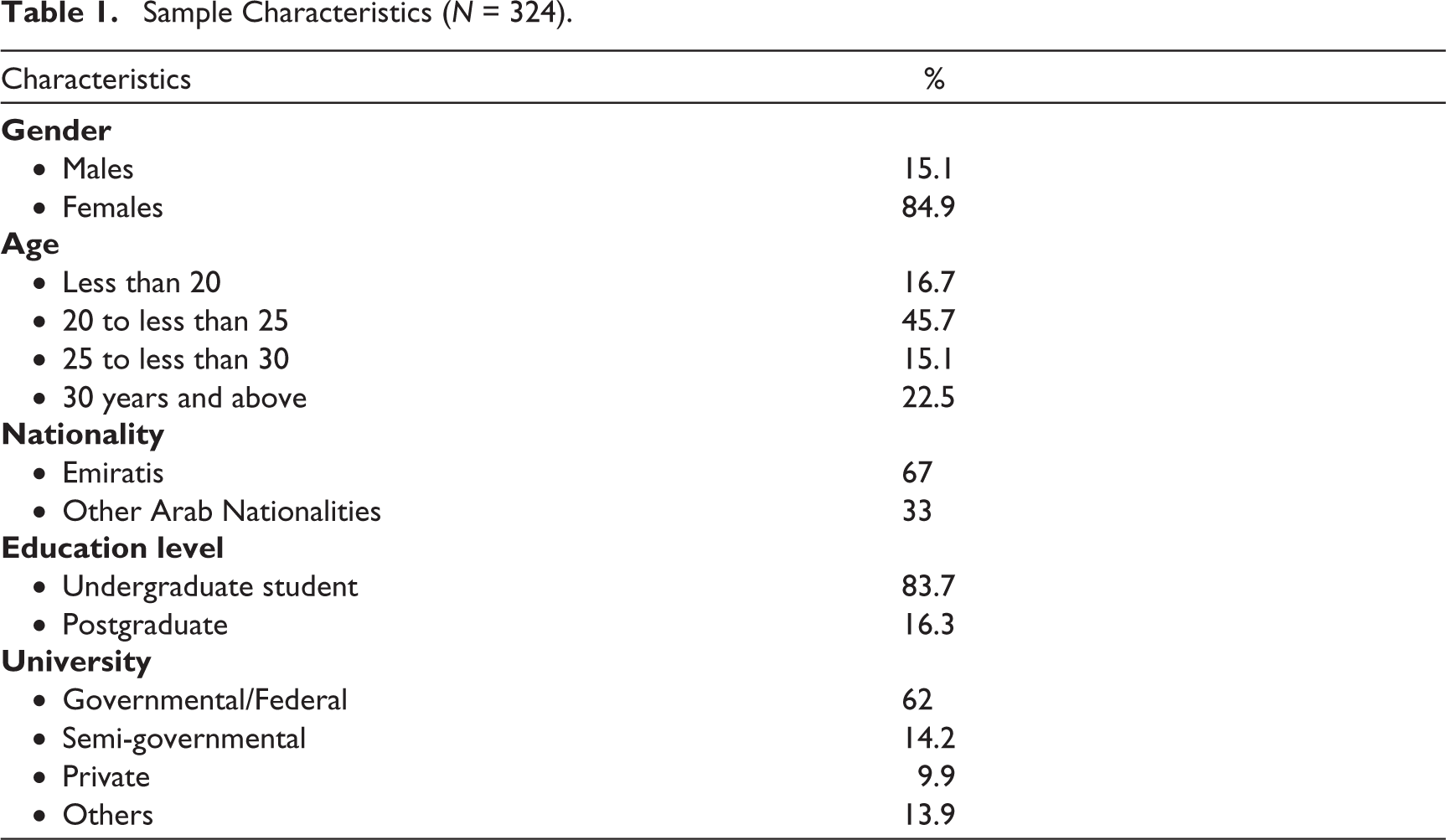
Data collection was from February until April 2021 by sending the survey link through a campus announcement at Zayed University campuses in Dubai and Abu Dhabi. It included the questionnaire link in both Arabic and English. The students were asked to fill out the questionnaire and circulate it among their networks of Arab and Emirati peers, comprising 324 respondents using the convenient sampling technique. The mean age was 25.6.
Table 1 displays the sample characteristics.
Sample Characteristics (N = 324).
Measurements
The questionnaire included general questions on respondents’ news sources and frequency of SM usage. Respondents were asked to identify how frequently (always, sometimes, often and never) they use news sources from a list (SM, social circles on SM, e.g., family, friends, colleagues, online news websites, newspapers, TV, radio, news websites, instant messaging such as WhatsApp and others).
Respondents were asked how frequently they shared news stories on SM over the last two weeks. It was measured using a six-point scale adopted from Andrew and Rich (2020) ranging from very frequently to never. To make the results more meaningful, the categories were merged to be three. Cronbach’s alpha is 0.876.
A list of SM (WhatsApp, Facebook, Snapchat, Instagram, Twitter and YouTube) was provided to respondents asking them to identify the frequency, on a six-point scale, adopted from Andrew and Rich (2020), ranging from very frequently to never, they share news on each platform. The six-scale items were merged to be three due to the low number of frequencies and to make the analysis more meaningful. Cronbach’s alpha is 0.785.
Respondents who stated that they do not share news on SM were provided reasons for not sharing news, adopted from Newman et al. (2017, p. 46). They were asked to identify to what extent those reasons apply to them using the five-point Likert scale ranging from strongly agree to strongly disagree.
It measures respondents’ motivations to share the news with SM friends. It is defined as the reason/s that pushes the individual to press the share button in SM when s/he is exposed to a news item. The questionnaire included 29 motives for online news-sharing adapted from Duffy and Ling (2020) and Lee and Ma (2012). The respondents were asked, using a five-point Likert scale ranging from strongly agree to strongly disagree, to specify to what extent these motivations of sharing news apply to them. Kaiser–Meyer–Olkin (KMO) was used to determine the sampling adequacy of data that are to be used for factor analysis. Its value was 0.934, P = 0.00, which indicates that the study data are suited to factor analysis which revealed the factors that group the news-sharing motivations.
A list of 19 different topics (hard and soft news) was provided and respondents were asked to specify how frequently they share news on these topics on SM. The pretest helped to add some topics relevant to current interests.
Socio-demographic variables were used to control potential influences on the relationship between the dependent and independent variables. These are nationality (Arab expats and Emiratis), age, gender, educational level (undergraduate and postgraduate) and type of education (governmental, semi-governmental and private).
Statistical Analysis
SPSS was used to analyse the data by applying the mean, Chi-square, Pearson correlation, factor analysis, ANOVA and t test.
Results
General Results
Motivation for Using SM Networking
Respondents were given reasons for using SM and asked how they apply to them. Table 2 presents the results.
Motivation for Using SM Networking.
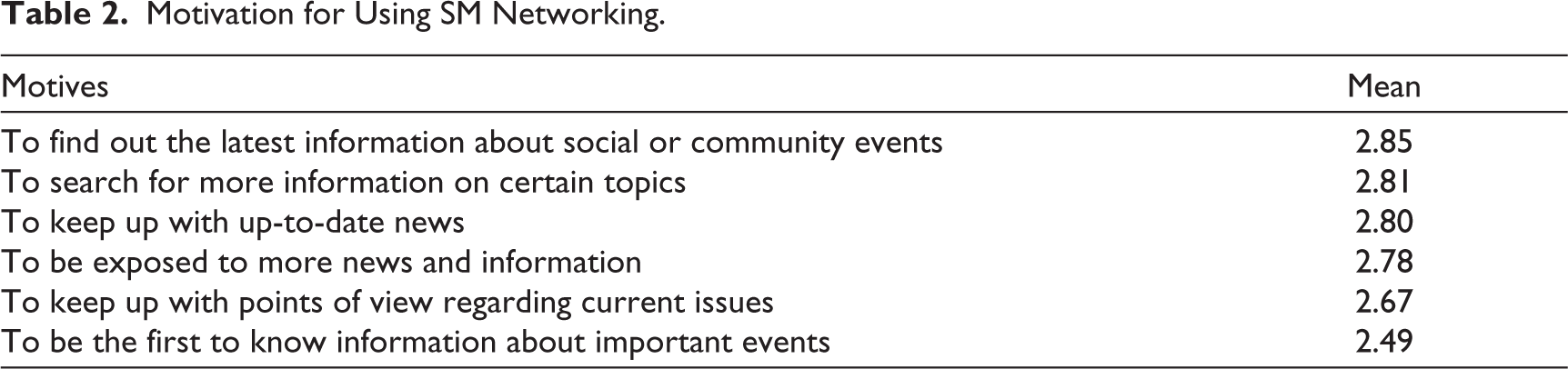
Table 2 shows that the highest mean value of using SM motivation (mean = 2.85) is ‘To find out the latest information about social or community events’, then ‘To search for more information on certain topics’ (mean = 2.81), and ‘To keep up with up-to-date news’ (mean = 2.80).
This suggests that the respondents are using SM to get up-to-date news on various topics related to their community. This might be due to SM accessibility, especially with the widespread usage of smartphones and internet access that is available everywhere in the UAE.
News Sources Among the Respondents
Respondents were asked to identify how frequently they use a list of news resources on a typical day. The results are shown in Table 3:
News Sources the Respondents Use % (N = 324).
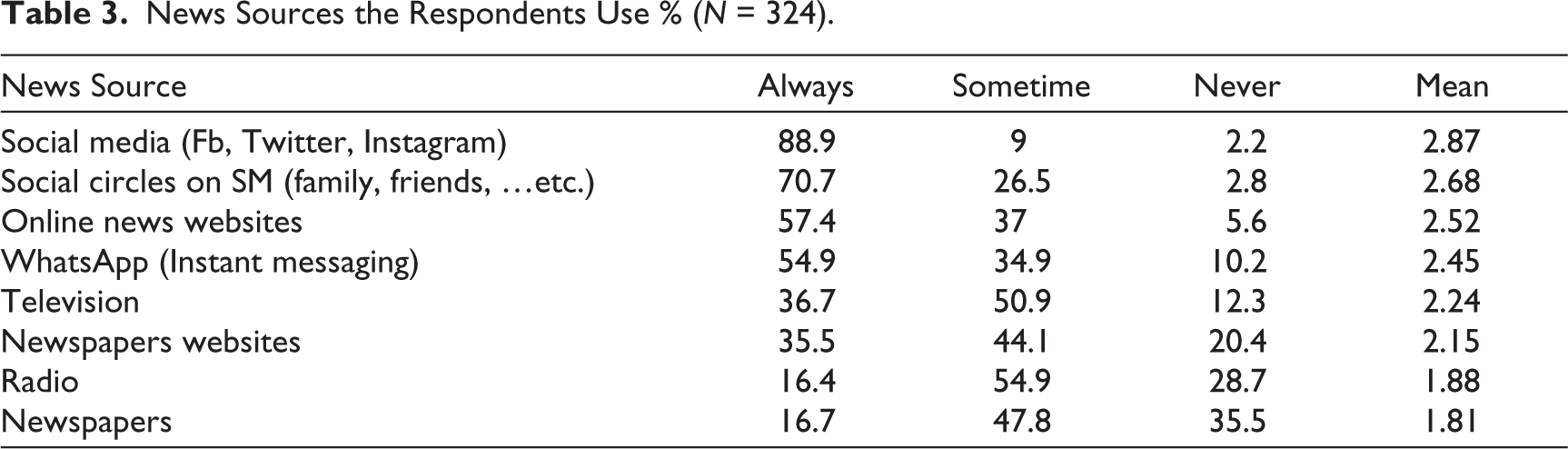
The results revealed that the highest mean value among the news source goes to social media (mean = 2.87) with 88.9% of the respondents saying they ‘always’ get their news from SM, then from their social circles at 70.7% (mean = 2.68). The traditional media gained the lowest mean values which implies that new media are the dominant news sources among Arabs.
Reasons for Not Sharing News on SM
The results disclosed that out of 324 respondents, 220 (67.9%) of the sample tend to share news on SM. It was important to know the reasons behind the 32.1% of the sample that do not share news. They were given a list of reasons for not sharing news asking to state how these reasons apply to them. Table 4 shows the results.
Reasons for Not Sharing News on SM (N = 104).
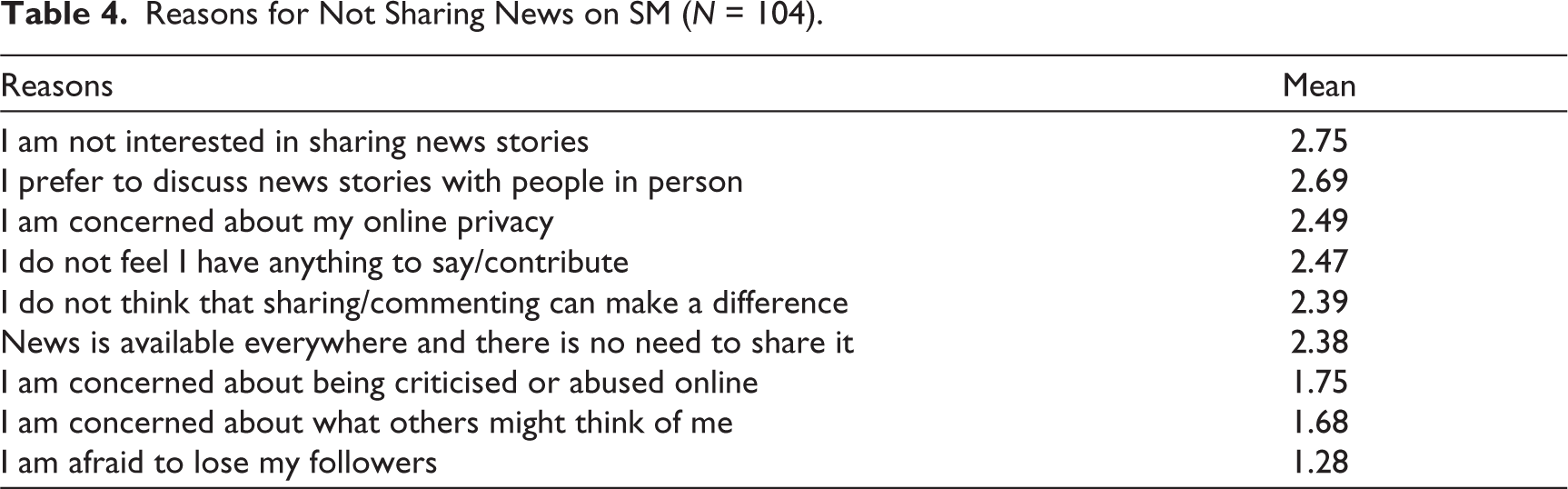
As shown in Table 4, the highest mean value of the reason was for being not interested in sharing news (2.75). The second reason was the preference to discuss the news with people in person (2.69). The privacy concern came at the third level (2.49), then ‘they have nothing to say or contribute’ (2.47). The highest mean values of the reasons mentioned explained that the respondents are looking at their personal usage of news and the way they prefer to communicate with others rather than the possible disadvantages that might result from online news-sharing.
Social Media Used in Sharing News
Respondents were asked to mention how frequently they share news on six different SM platforms. Respondents could select more than one SM. Table 5 displays the results.
SM Used in News-sharing % (N = 220).
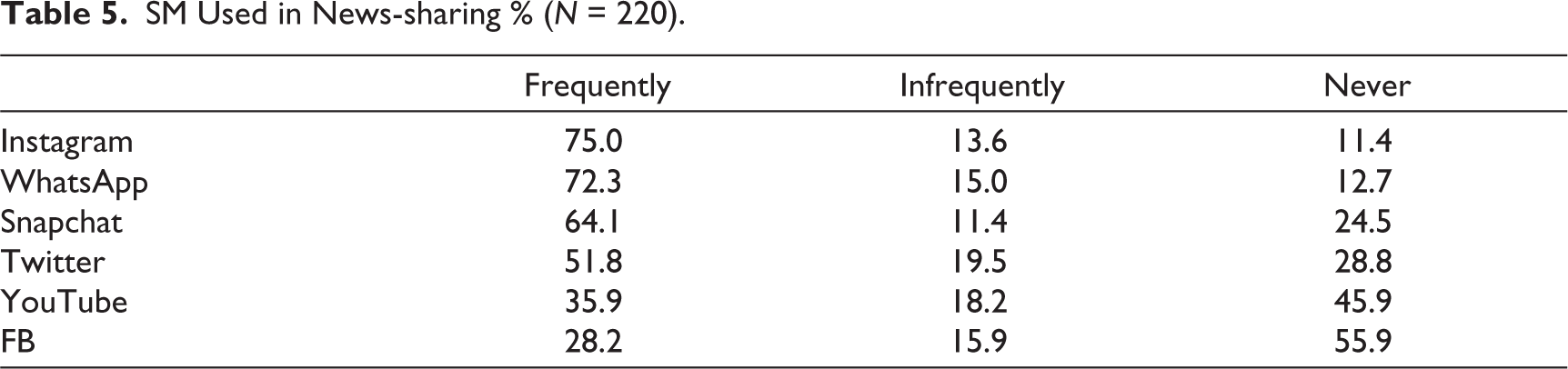
Table 5 shows that Instagram is the most frequently used SM in sharing news (75%). Then, WhatsApp (72.3%), Snapchat (64.1%) and Twitter is the fourth (51.8%). Dennis et al. (2019) found that WhatsApp is typically the most frequently (95%) used SM platform among their sample of Emiratis, then Instagram (69%), YouTube and Facebook (50%) tied for third, then Snapchat (46%) and Twitter (30%). But it seems that the heavy usage of specific SM platforms does not necessarily associate with sharing news via the same platform. This result might relate to the number and type of followers on the platform and its characteristics.
News Topics Shared on Social Media
To answer RQ #1, respondents were asked to identify how frequently they share news on 19 topics. Table 6 shows the results.
News Topics Shared on SM (N = 220).
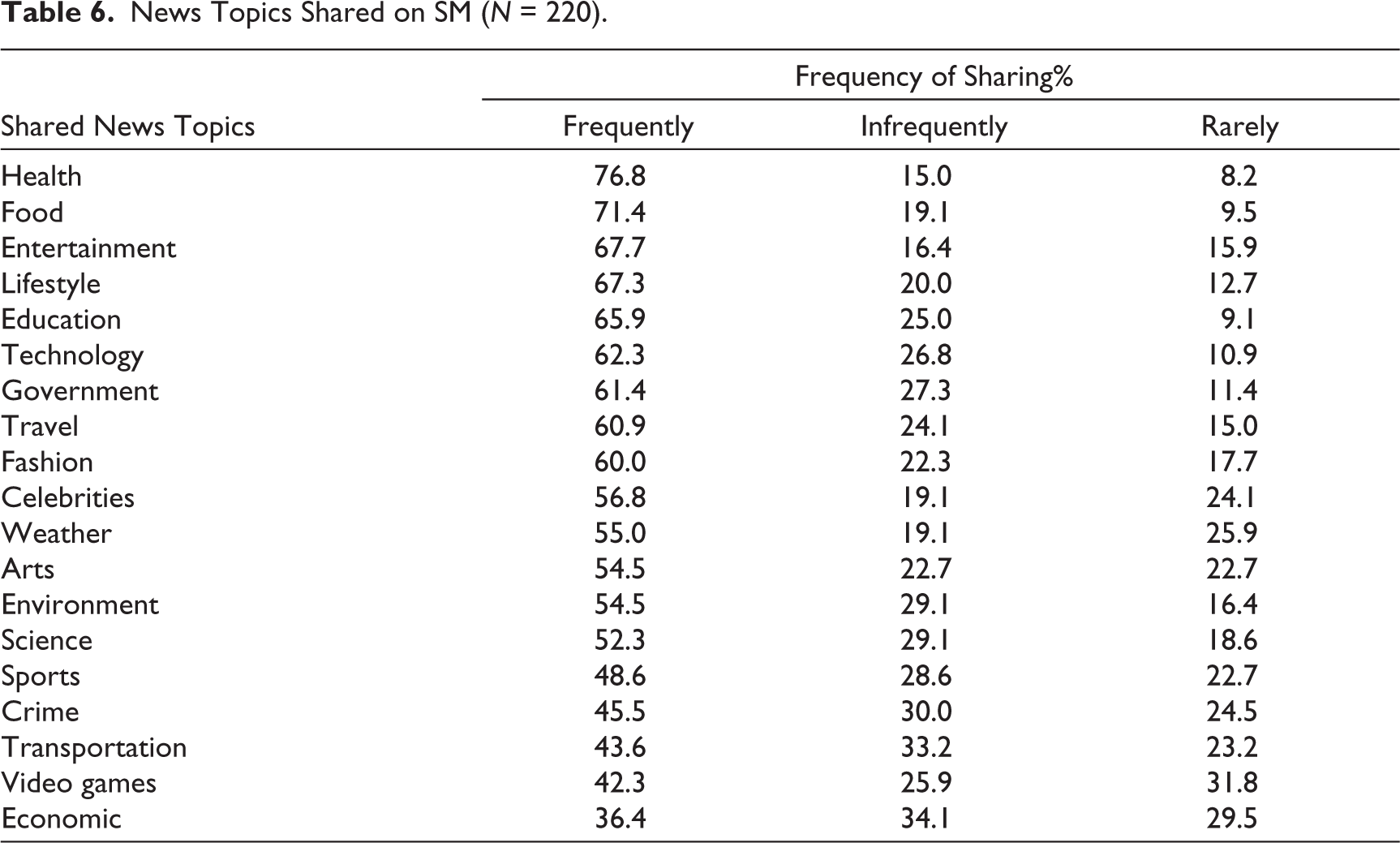
Table 6 indicates news on health and food are the most frequently shared, then entertainment and lifestyle. Having the topic of health at the top of news might be due to the data collection period, which was during the COVID-19 pandemic. People in various countries were eager to know more information about the coronavirus, its symptoms, treatment, vaccination, etc. They were interested to find news about the health situation and had the opportunity to share information about healthy food during this period.
News-sharing Motivations
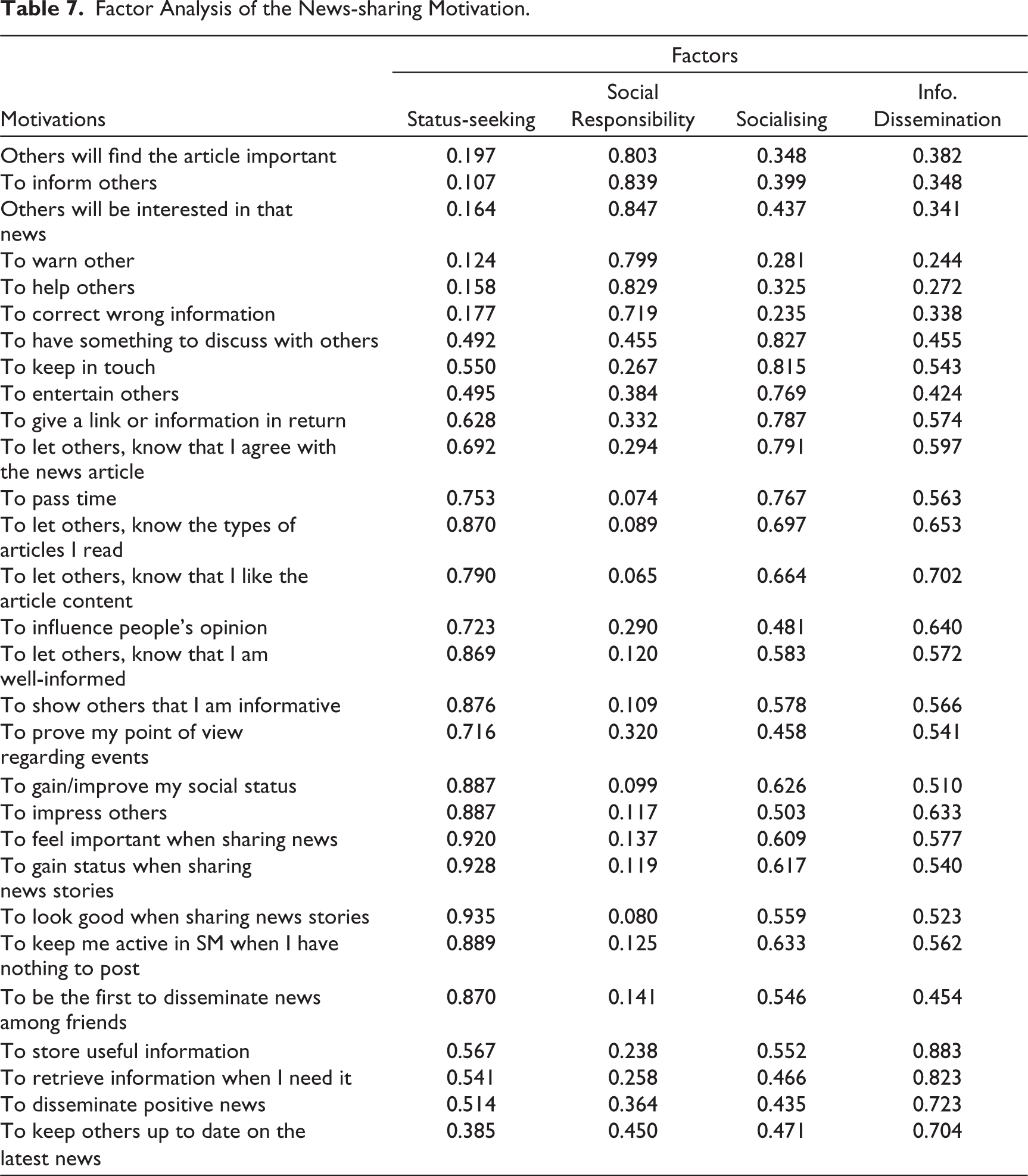
According to the Uses and Gratifications and news-sharing literature, people are sharing news for various motivations. To answer RQ #2, factor analysis was used to find out which factors motivate respondents to share news on SM.
Results in Table 7 show that the news-sharing motivations clustered behind four factors. These factors are status-seeking (α = 0.971, mean 43.38), social responsibility (α = 0.893, mean 26.20), socialising (α = 0.890, mean 22.82) and dissemination of information (α = 0.791, mean 20.17). The implication of this result and how it is aligned with the previous research are assessed in the discussion section.
Factor Analysis of the News-sharing Motivation.
Hypotheses Test
The correlation between motivation factors and the tendency of sharing news on SM was examined using ANOVA. The results revealed a positive significant (P = 0.00) correlation between news-sharing and both ‘status-seeking’ F = 3.969, and ‘social responsibility’ F = 3.953, but the correlation was not significant between news-sharing and both ‘socialising’ and ‘dissemination of information’. This means that status-seeking and social responsibility are the dominant factors predicting news-sharing behaviour among Arab respondents. Here are the results of the hypotheses tests.
Table 8 presents the results of the Pearson correlation used to examine this hypothesis.
Correlation Between Topics Shared on SM and the News-sharing Motivation.
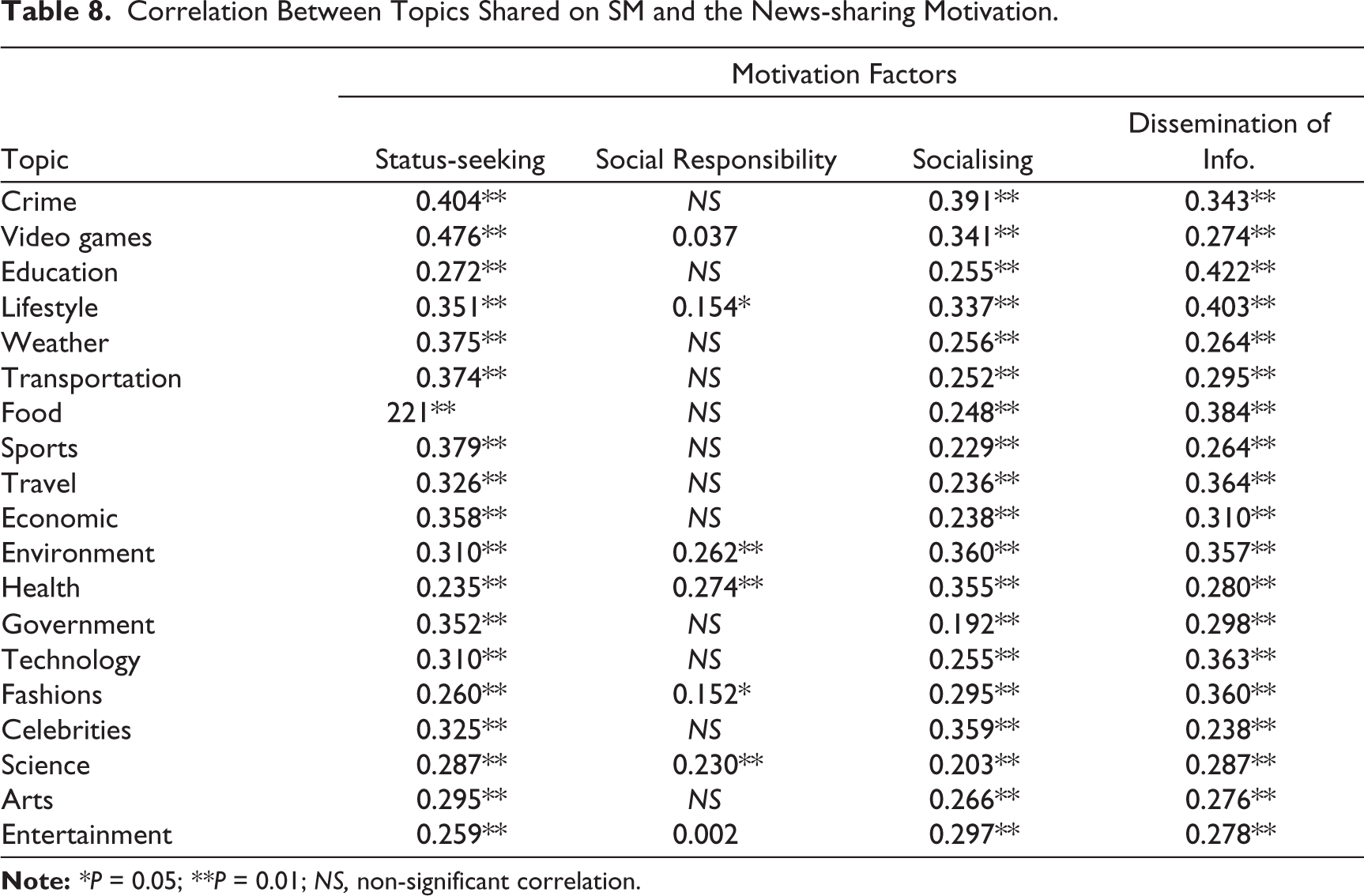
Table 8 shows a positive significant correlation between motivation factors and all shared topics. ‘Status-seeking’, ‘socialising’ and ‘dissemination of information’ significantly positively correlated with all news topics shared on SM. ‘Social responsibility’ correlated positively with sharing news on health, environment, science, lifestyle and sports topics.
A non-significant correlation was found between the ‘social responsibility’ factor and food, fashion, celebrities, travel, transportation, weather, government, crime, economics, technology, video games, entertainment and education. Therefore, the first hypothesis is partially accepted.
The result indicates that respondents share specific news topics for various motivations. The ‘social responsibility’ motivational factor is not significant in relation to some news topics while it is significant in relation to topics that might be of more interest to the respondents who find them worthy to be shared. This means that the type of news topic shared correlates with the motivational factor of sharing.
ANOVA was used to examine the difference in respondents’ motivations for news-sharing on SM according to their type of university. Table 9 presents the results. Differences in News-sharing Motivations Among Respondents According to Their Type of University (df = 216).
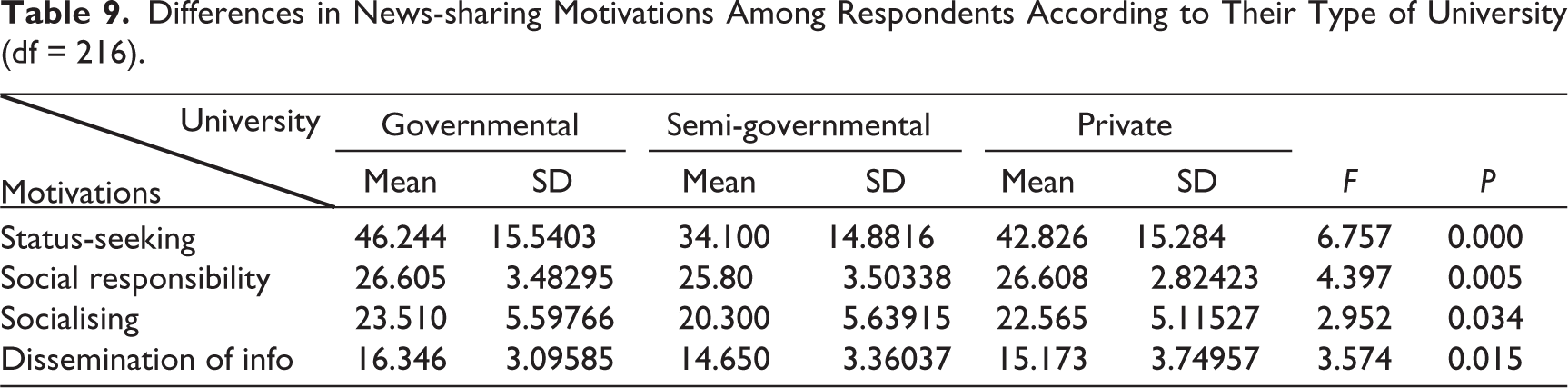
In Table 9, one-way ANOVA showed a significant difference among respondents from various university types in their news-sharing motivation factors. The mean values were highest in the four motivation factors among respondents from governmental universities compared to respondents from private and semi-governmental universities. ‘Status-seeking’ (mean 46.23, SD 15.5, F 6.76, P = 0.000). ‘Social responsibility’ (mean 26.6, SD 3.48, F 4.39, P = 0.005). ‘Socialising’ (mean 23.51, SD 5.59, F 2.95, P = 0.03). ‘Dissemination of information’ (mean 16.34, SD 3.09, F 3.57, P = 0.01). This result indicates that governmental university graduates are more motivated to share news online than private and semi-governmental universities, although various motivations to share all types of news topics are presented.
ANOVA showed a non-significant difference between undergraduate and postgraduate respondents in the SM they use for news-sharing. However, there is a significant difference between postgraduate and undergraduates in news-sharing tendency (F = 4.57, P = 0.015). The mean value is slightly higher among postgraduates (mean = 2.57) in news-sharing tendency compared to undergraduates (mean = 2.51).
The undergraduate group is higher in the mean values of the news-sharing motivation factors compared to the postgraduates as follows: status-seeking (mean = 44.20, SD 15.58), social responsibility (mean = 26.27 and SD 3.58); socialising (mean = 23.12, SD 5.47) and dissemination of information (mean = 15.97, SD 3.28). The difference between postgraduates and undergraduates is significant in social responsibility (F = 2.886, P = 0.05), Socialising (F = 3.703, P = 0.02) and dissemination of information (F = 4.164, P = 0.01), while the difference is non-signification in a social-status motivational factor.
The respondents had five study specialisations. Table 10 displays the correlation between specialisation and news-sharing tendency.
Crosstab News-sharing Among Different Respondents’ Study Specialisation (n = 324).
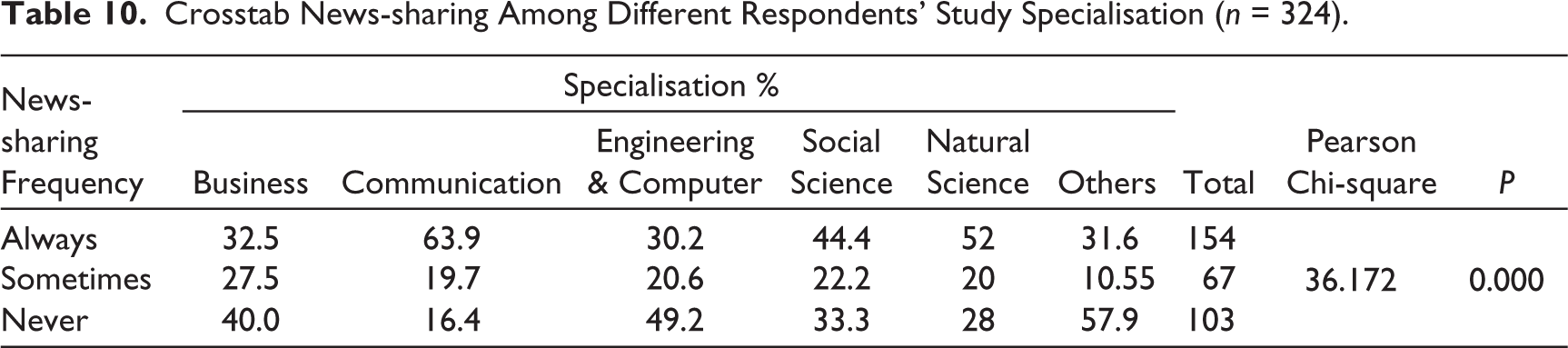
Table 10 explains that 47.5% (n = 154) of the sample is ‘always’ sharing news on SM. Respondents who specialised in communication are the highest (63.9%) in sharing news compared to other specialisations. If the ‘others’ column is excluded, the Engineering and Computer Sciences respondents have the highest level (49.2%) of ‘not sharing news’ on SM compared to other majors, while respondents specialising in Business are sharing news occasionally.
This result might be interpreted as individuals majoring in social science tend to be more engaged in SM usages compared to science-related majors due to their type of study. For example, mass communication students/graduates become used to studying, analysing and creating media messages during their undergraduate education. This qualifies them to be more active in utilising their studies in their everyday usage of SM.
Based on the above tests on the effect of education, one can surmise that Arab students and graduates of governmental educational institutions specialising in social sciences are more likely to share news through SM for the four motivational factors than those from semi-governmental and private institutions specialising in sciences and engineering.
The results showed that 52.5% of 217 Emiratis in the research sample are ‘always’ sharing news on SM, 20.7% are sharing news ‘sometimes’, and 26.7% ‘never’ share the news on SM. Out of 106 Arab expats, 36.4% are ‘always’ sharing news on SM, 20% ‘sometimes’, and 43.0% never share the news on SM. The t test revealed no significant differences between Emiratis and Arab expats in the tendency of news-sharing. This indicates that news-sharing behaviour is pervasive among Arab nationalities.
The t test was used to examine the difference between Emiratis and Arab expats in news-sharing motivation. Table 11 summarises the results.
News-sharing Motivation and Nationality (df = 218).
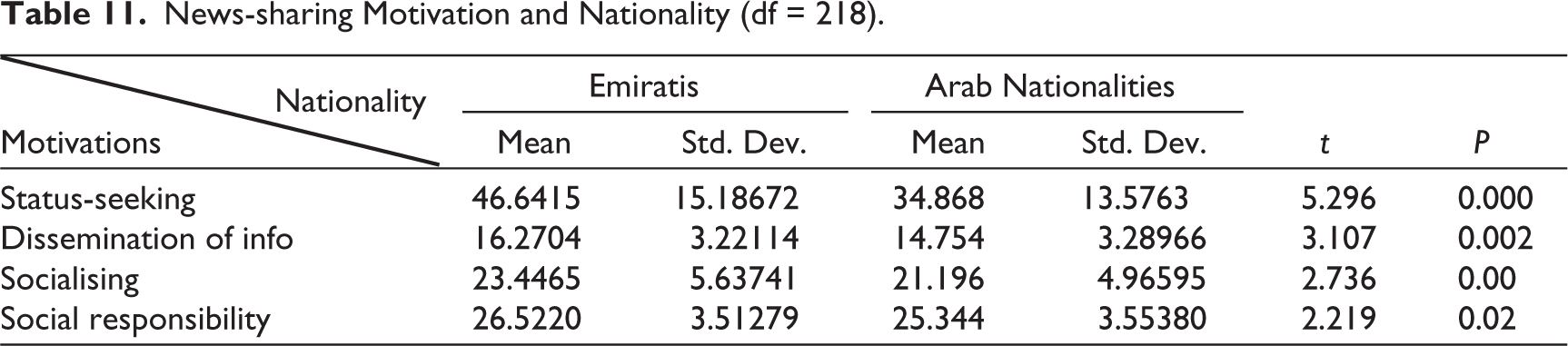
One-way ANOVA in Table 11 showed a significant difference between Emiratis and Arab expats in their news-sharing motivation factors. The mean values and post hoc test showed that Emiratis are higher in the four motivations compared to Arab expats. This result can be interpreted considering the intensifying SM power on Arabs, which makes them motivated to share news to satisfy various motivations.
The t test was used to examine the difference between males and females in news-sharing motivational factors. The results revealed no significant difference between males and females in news-sharing tendencies. A significant difference was found in their sharing motivations, as shown in Table 12.
Gender and news-sharing Motivation Factors (df = 218).
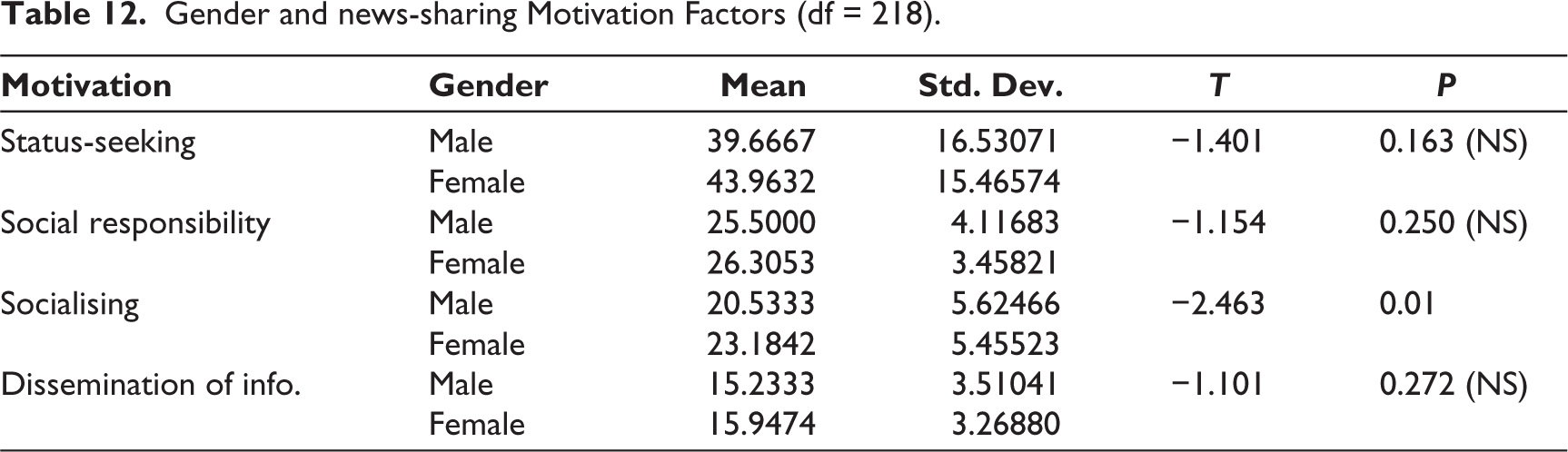
The results in Table 12 showed a significant difference between males and females in the ‘socialising’ motivation factor in sharing news. The mean values indicate that females are higher (mean = 23.18, SD 5.45) than males (mean = 20.5, SD 5.62) in ‘socialising’ motivation for news-sharing.
The t test showed no significant difference between males and females in the three other motivation factors in news-sharing: status-seeking, social responsibility and dissemination of information. This result might give an impression about the Arab females’ social life that are currently limited to online interactions rather than physical gatherings. Also, this may be due to the data collection period that was during the restricted COVID pandemic period.
One-way-ANOVA showed a non-significant difference among the age groups in sharing news tendency. But the difference was significant among age groups in two of the news-sharing motivations. The details are displayed in Table 13.
In Table 13, ANOVA showed a significant difference among age groups in status-seeking and social responsibilities motivation factors. The difference was non-significant in the ‘socialisation’ and ‘dissemination of information’ factors.
Age and Motivational Factors for News-sharing.
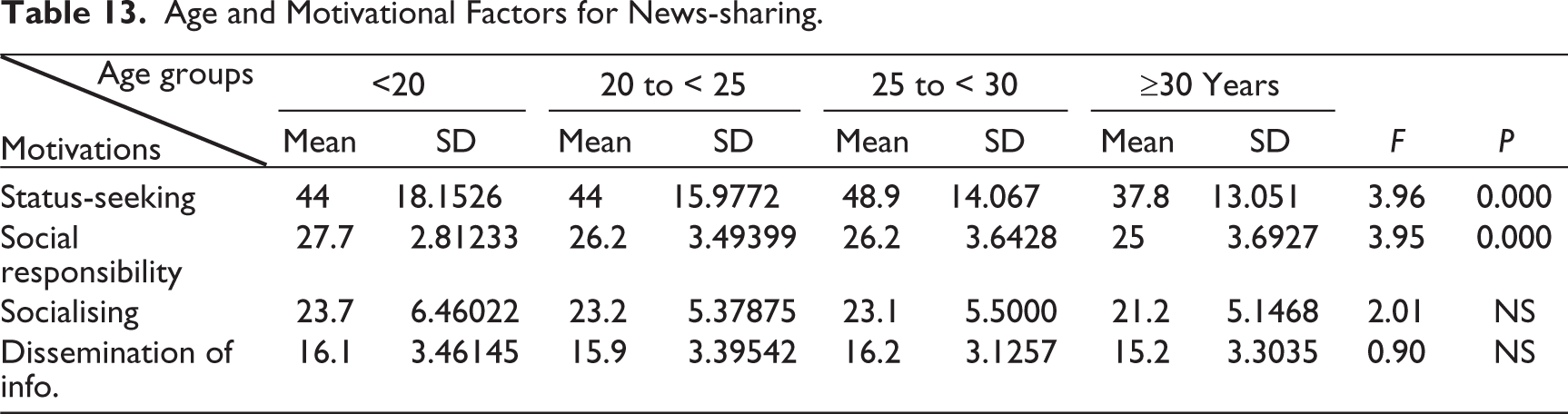
The results showed that the mean value of the ‘status-seeking’ motivation factor is highest among the 25 to < 30 age group (mean = 48.9, SD 14.0671, F 3.96, P = 0.000) compared to other age groups. The 20 to < 25 and < 20 age groups have the same mean value of 44.
The mean value of the ‘social responsibility’ was highest among the ‘less than 20 years’ age group (mean = 27.7, SD 2.81233, F 3.95, P = 0.000) compared to other age groups.
These results reveal that the younger age group is motivated by ‘social responsibility’ when sharing news via SM. They are sharing news to warn, inform, discuss news items and correct inaccurate news. On the other hand, the 25- to 30-year-olds, are more interested in empowering their status and giving a good impression about themselves among SM peers.
Therefore, the second hypothesis is partially accepted.
Discussion
Social media platforms are becoming the most preferable source of news for people among Arabs and Americans. This was shown in the current study and Walker and Matsa (2021, p. 3), who found that 48% of U.S. adults say they get news from SM ‘often’ or ‘sometimes’. One can call the Millennial (born between 1985 and 1996) and Z generation (born between 1997 and 2012) as social media natives. They became accustomed to having SM in their everyday lives. While it is common to rely on SM to get news, it might be vital to study how they can check the reliability and credibility of news before sharing it via SM.
There are still some segments of SM users who say that they do not share news via SM. Reasons for not sharing news among young Arab respondents, such as a lack of interest and a preference in-person discussion, in the current study are different from the reasons revealed in Western countries. Meijer and Kormelink (2015) stated that most people who do not share news stories on SM expressed concerns about their peers’ responses. Privacy concerns were cited as reasons for not sharing news by 15% of a sample of 70,000 European and Asian respondents in the digital news report by Newman et al. (2017). Fears of being criticised or abused online were other reasons mentioned by (7%) for not sharing news. These results indicate a high level of concern about the potentially undesired consequences of sharing news among Westerners who expressed unfavourable attitudes towards sharing news. In the Arab world, personal preferences regarding not sharing news are still pervasive regardless of privacy concerns or peer pressure.
It is noticeable that SM platforms used for sharing news differ from country to country over time. While Instagram was the most used SM among respondents in the current study, Dennis et al. (2019) stated that Facebook and WhatsApp are the most popular platforms used by Arabs in the Emirates, Saudi Arabia, Jordan, Lebanon and Egypt to get and share news compared to other platforms. Similarly, Kalsnes and Larsson (2018) found that Norwegians considered Facebook as the dominating platform for news-sharing. With new SM platforms that may emerge, and current ones updating specifications to facilitate sharing posts, comments and news, it is difficult to predict how people will get news or share it with others in the future.
Most Arabs tend to share soft news rather than hard news via SM, and this is one of the important results of the current study. This aligns with Newman et al. (2016), Duffy and Ling (2020) and Kalsnes and Larsson (2018), but contradicts García-Perdomo et al. (2017), who concluded people share hard news rather than soft news, as seen in a sample from the United States, Brazil and Argentina. The type of news topics shared might be a result of many factors, such as the media law in the country of study, the pressing news issues during the data collection period, and the socio-economic status of the sample, among other factors.
Females were found to have more socialising motivation to share news than males, which may be associated with the Emirati and Arab culture in general. The significant differences among age groups in their motivational factors to share news explain the variation in the news interest in each age group. The younger the age, the more motivation the person might have to share news via SM.
Study specialisation affects the tendency of sharing news among respondents, which raises concern about whether SM users are qualified to evaluate the news sources’ credibility before sharing. This is connected to the importance to include a media literacy course in the undergraduate curriculum.
The uses and gratification approach was demonstrated to be a suitable theoretical background for the current research. It helped in constructing the news-sharing motivation measurements in the questionnaire used in data collection and interpret the results. However, other theories can be deployed in studying news-sharing behaviour to expand our understanding of this phenomenon.
This is a preliminary study to explore the trends and motivations of news-sharing among Arabs. The results of this study cannot be generalised to the Emiratis and Arabs due to the sample limitations. News source credibility, comments on news, people’s fact-checking ability and SM groups among other variables are recommended to be examined as factors affecting news-sharing behaviour.
Conclusion
This research aimed to explore online news-sharing behaviour among young Arabs in the UAE. Drawing from the Uses and Gratifications approach, this study shed light on the motivations of news-sharing on various SM platforms among a sample of 324 Emiratis and Arab expats in the Emirates. The results revealed that 88.9% consider SM as the main source of news. Only 67.9% stated that they ‘always’ share news on SM. The reason for not sharing news varies. ‘Lack of interest in sharing news’ came on the top, followed by ‘the preference for the face-to-face discussion of news rather than sharing news online’.
Instagram was found to be the most frequently used SM in news-sharing among respondents at 75%, followed by several other most popular instant messaging platforms among Arabs: WhatsApp 72.3% and Snapchat 64.1%. Meanwhile, Facebook is the SM least used 28.2%.
Generally, soft news was shared rather than hard news. Health and food-related news were the most shared news (76.8% and 71.4%), successively.
Using factor analysis, four motivation factors correlate to the news-sharing tendency among young Arabs. These are status-seeking, social responsibility, socialising and dissemination of information. Socio-demographic variables were found to influence news-sharing behaviour and its motivations. There was evidence that Arabs shared various topics for multiple motivation factors. Pearson correlation revealed a significant correlation between status-seeking, dissemination of information, and socialising motivation factors and all topics. The social responsibility factor has a non-significant correlation with most of the topics shared.
The respondents’ study specialisation was found to correlate positively with the news-sharing tendency among SM users. Respondents specialising in communication were the most likely in sharing news compared to other specialisations. Meanwhile, 49% of respondents who studied Engineering and Computers stated that they ‘never’ shared news on SM.
The one-way ANOVA test showed a significant difference between the Emiratis and Arab expats in news-sharing motivations. The mean values indicated that the Emiratis were higher than Arab expats in all motivation factors. ANOVA also revealed that the respondents of the governmental universities are higher in the mean values of news-sharing motivations compared to private and semi-governmental universities.
There were no significant differences between males and females in news-sharing and motivation factors except for socialising. Females were higher than males in the mean value of socialising motivation.
There was a significant difference among the age groups in status-seeking and social responsibility motivations. The ‘25 to under 30’ group has the highest mean value of the ‘status-seeking’ motivation compared to other age groups, while the ‘less than 20 years old’ group had the highest mean value of ‘social responsibility’ motivation.
Footnotes
Declaration of Conflicting Interests
The author declared no potential conflicts of interest with respect to the research, authorship and/or publication of this article.
Funding
The author received no financial support for the research, authorship and/or publication of this article.