







Abstract
The media portrayal of the lesbian, gay, bisexual, transgender and queer (LGBTQ) community may impact public understanding and attitudes towards this community, which has not been extensively studied. This article explores the media representation of gay men in commercials by presenting a visual discourse analysis of three Thai Boy Love commercials. Combining the visual representation framework of social actors and genre and functionality analysis, it examines (a) how the male protagonists are visually represented in relation to the audience from three symbolic dimensions and (b) how the salient patterns of presenting boy love commercials are integrated with the story’s narrative stages and genre functions. The findings suggest that the boys are primarily portrayed positively as inclusive, close, agentive and ordinary social members who feature soft masculinity. Nevertheless, such a generic and idealised representation romanticises gay relationships, diminishes the individuality of gay people and obscures the diversity within the gay community. The portrayal also prioritises the female gaze to cater to the core audience of heterosexual young women consumers. This article provides insights into the reciprocal relationship between public receptivity towards the LGBTQ community and their favourable visual representations in commercials.
Introduction
Although the visibility and recognition of lesbian, gay, bisexual, transgender and queer (LGBTQ) 1 and other minority gender identities have been increasing worldwide, most of them still encounter discrimination, stigmatisation, risk of disclosure and demeaning stereotypes, caused by deeply rooted homophobic and transphobic attitudes (Council of Europe, 2011). In Southeast Asia, the progress of the rights of LGBTQ people is often accompanied by substantial setbacks associated with religious and political homophobia (Wilkinson et al., 2017). However, the sanction towards LGBTQ can be lessened by increasing their visibility and share of voice. For example, the expanding presence and engagement of LGBTQ celebrities in online space, especially with a ‘successful’ image, contribute to more tolerance and acceptance of LGBTQ (Jerome et al., 2021).
Among the ways to increase LGBTQ visibility, advertising is a field endowing LGBTQ figures, especially activists and influencers via their private social media accounts (e.g., Tudol et al., 2022), with the right to construct and contest ‘who they are’. Queervertising, a recently proposed theoretical concept, is argued to be an empowerment tool for the gay and lesbian community (Iglesias-Sánchez et al., 2023). Moreover, more positive visual representations of LGBTQ in commercials are likely to increase public receptivity towards them (e.g., Han & Tsai, 2016), which is already evidenced by other genres, such as films on sexual minorities (e.g., Dowerah & Nath, 2018; Ferrão, 2013). However, some researchers have argued that increased visibility can expose LGBTQ individuals to greater risks of marginalisation and violence (Massad, 2002). This is particularly concerning when (state-led) interventions are ad hoc reactions to events portrayed in the media, often proving to be counterproductive (Brown, 2023). Hence, effective strategies for audience engagement in commercials are important.
The current literature on LGBTQ presence is replete with case studies in the Western media, focusing on mediums such as news, television and films. Differently, this article investigates how visual advertising practices on social media depict gay men by examining how the male protagonists are visually represented and positioned to the audience in Thai Boy Love (BL) commercials. Thailand is the focus of this article, as it is the first country in Southeast Asia to have its lower house pass a bill that legally recognises same-sex marriage in 2023, even though it still requires the Senate’s approval and a royal endorsement before being enacted into law (Head & Ng, 2024). The findings demonstrated that gay men are depicted positively as inclusive, generic, agentive, close and equal to the audience visually. Despite such representations obliterating the diversity of Thai gayness through homogenised male protagonists and templated genre patterns, they underscore an essential need to cater to the core heterosexual female audience by prioritising the female gaze, as well as accommodating mainstream consumers by avoiding potentially disruptive offence and rejection. These idealised, moderate and strategically crafted representations may help broaden the cultural visibility and public acceptance of LGBTQ identities.
Literature Review
Media Representation of Gay Men in Thailand
In cultural studies, ‘representation’ means the production of meaning through visual images, language and discourse (Hall, 1997). The term ‘media representation’ then studies ‘the process of producing meanings through the creation of symbolic forms and content’ in media texts (Orgad, 2012, p. 15). In this regard, a crucial concept in media and cultural theories is ‘audience’—‘an abstract totality’ (Allor, 1988, p. 219). Aligning with Corner’s (1991) ‘active audience’ research, this study conceptualises the ‘intended audience’ not merely as passive recipients but as active members who (though often unconsciously) engage in interpreting media texts. Hence, instead of assuming that the meaning of the studied commercials is fixed and independent of audience reception, this study positions the audience as an implicit factor affecting the media representation of the commercials.
Mainstream media often presents itself as a ‘transparent mediators of reality’, shaping media consumers’ knowledge about the real world (Gross, 1994, p. 144). However, this ‘real world’ is affected by the various power hierarchies, and it is always the elites who define the public agenda. In American popular culture, for example, ‘these elites are mostly white, mostly middle-aged, mostly male, mostly middle- and upper-middle class, and (at least in public) entirely heterosexual’ (Gross, 1994, p. 144). In Thailand, the media representation of homosexuality suggests a non-homophobic attitude. Still, it adopts a ‘liberal-conservative’ position to value ‘proper’ gendered sex roles to frame homosexual men within the constraints of the traditional Thai sexual order (Jackson, 2016).
The media representation of gay men corresponds with the cultivation of the gay market since the late 1960s. Western countries, represented by American corporations, then began to move gay media to nationally distributed magazines and the Internet (Sender, 2003). Contrastingly, while there was a surge in Thai language publications on gendered identities, transgenderism and homoeroticism since the 1960s, the public representation of homosexuality or transgenderism was under intense surveillance and interventions in state-controlled media. However, the Thai-language press in the private sector disputed state norms and did not limit relevant publications. This division between public and private mirrors Thailand’s long-standing preoccupation with na (face) and phap-phot (positive images), influenced by Western colonists and neo-colonists (Jackson, 2002).
Since the 1970s, producers of films, television, print media, societies and individuals have challenged the so-called appropriate or reportable presentation of gender or erotic behaviours. The controversy about the media representation of gender minorities was heightened in the 1980s—marked by Thailand’s first gay movie Phleng Sut-thai (The Final Song) in 1985—and reached a peak in 1999 when then prime minister Chuan Leekpai attempted but failed to ban images of kathoey (male-to-female transgenders) in television. The changes happened along with Thailand’s political transition from a military-controlled authoritarian regime of the early 1970s to the multi-party civilian democracy of the 1990s and its economic boom between 1987 and 1997 (Jackson, 2002). After entering the 2000s, the media representation of homosexuality in Thailand ushered in a significant turn to a new genre of media, BL series or series wai (Y[aoi] series), which are themed by romantic love and partnership between two cute boys (wai-couples).
BL Genre and Gay Masculinities in Thailand
The phenomenon of the BL genre originates from Japan’s Yaoi (manga depicting homoerotic romances between men) in the early 1970s and has spread to the world by top producing countries Thailand and Taiwan since the 2000s (Jerome et al., 2022). From the late 2000s to the 2010s, digital platforms, where oversight from authorities was limited, attracted fans who expanded the BL or Yaoi culture from novels into mainstream media. Love Sick the Series (2014) is recognised as the first complete Thai Yaoi Television series (Baudinette, 2019). Adapted from a local Yaoi novel aimed at Thai Yaoi fans, this series marks a significant milestone, signifying the formal introduction of the BL genre into the realm of mass communication in Thailand. Meanwhile, the Yaoi industry in Thailand, represented by GMMTV Company Ltd, produced numerous Thai Yaoi stars who gained popularity across Asia.
Such a boom of BL series is argued because of (a) the incorporation of sao-wai/y (Y[aoi] girls) or Fujoshi (rotten girls) culture, under which the targeted audience is the young heterosexual women who love the fantasy of male–male romance. BL drama series were originally created and primarily consumed by cisgender women (Pham, 2021). Hence, behind the commodification of gay identity lies the liberalisation of the film industry, which actively co-opts the long-standing fandom of young women for gay eroticism (Kwon, 2016); (b) shifts in the genre within the 2007 Thai mediascape, which moves from the traditional portrayal of couples as seme (masculine) and uke (feminine) to both men being depicted with masculinity, as impacted by the phenomenal movies Bangkok Love Story and Love of Siam; (c) the industrialisation of BL and the business opportunities linked to popular couples (‘cute boys’). This outreach, targeting both local and international Yaoi fans, is achieved through various mediums and often facilitated by interactions between fans and the industry (Prasannam, 2019); and (d) the popularity of smartphones and social media (Sukthungthong & Bunyavejchewin, 2019).
Alongside the flourishing popularity of the BL series in Thailand, there has been an evolution in the portrayal of gay masculinities. Although gay men are often not conceptualised as ‘true men’ in traditional perceptions of masculinity, male–male love in Thailand still acknowledges the existence of masculinity within homoeroticism (Singhakowinta, 2016). On the one hand, the portrayal of Thai BL has been influenced by well-recognised tropes in Western romance narratives, including the idealisation of the partner, the belief in love at first sight, the soulmate narrative and the argument that love conquers all (Zhou et al., 2018). These tropes underscore the perpetuation of heteronormative gender conceptualisation in BL stories (Pham, 2021; Zsila et al., 2018). On the other hand, Thai homosexual men’s adoption of gays significantly contrasts with certain Western gay communities that align with hegemonic masculine ideologies, such as the Bear culture, which often prefers hairier, heavier and shorter gay men (Moskowitz et al., 2013). Although some research suggests that ‘modern’ homosexuality in non-Western contexts is a reproduction of Western gay identities due to globalisation and capitalism, many scholars emphasised that Thai expressions of gayness have distinct dynamics, which ‘cannot be reduced to Western understandings of “gayness” or “gay identity”’ (Jackson, 1999, p. 362).
In the case of the Thai BL series, the triumph of soft masculinity—characterised by respect, consideration and tenderness—over hard masculinity during the industry schism of 2016–2017 reflects the power of market preferences. This shift was significantly driven by the phenomenal success of series such as SOTUS: The Series (2016) and Love by Chance (2018), which established a new benchmark for the BL genre industry by no longer applying violence and muscularity to bolster the masculinity of the male protagonists. It underscores a broader societal acceptance and a shifting consumer taste within the genre, signalling a pivotal transformation in how homosexual gender and relationships are depicted in popular culture. Nevertheless, be it hardness or softness, the representation of masculinity aligns with Butler’s (2009) notion of gender performativity, which asserts that gender identity is fluid and socially constructed and ‘the reproduction of gender is thus always a negotiation with power’ (p. i).
Besides, the BL genre is argued to have multifaceted positive impacts, including elevating the status of and support for gay communities and their allies, enhancing understandings of gender and sexuality, producing tangible cultural–political effects and transforming the lives of fans and others (Welker, 2022). These multifaceted impacts lay the groundwork for a deeper exploration of the BL genre in commercials, setting the stage for further analysis of how BL representation actively engages with its intended audience and potentially influences public receptivity towards sexual minorities.
Methods
Data
Three Thai BL commercials are selected for close reading as samples for LGBTQ commercials in Thailand. The reason for choosing these three commercials lies in that they are the top three commercials with the highest ‘like’/‘view’ percentage among all the other Thai LGBTQ commercials available on YouTube at the point of data collection,
1
which indicates their popularity and thus a high public receptivity (see Table 1 for the overview). The search strategies employed keywords such as ‘boy love/BL’, ‘gay’ and ‘commercial/advertisement/ad’. The search was then narrowed to the research site (‘Thailand’). It is worth mentioning that, as of May 2024, the following three videos remain the top three Thai BL commercials on YouTube, maintaining their research value:
KA sunscreen ( KA lip care ( Cornetto (
Basic Descriptions of the Data (as Updated on 12 May 2024).
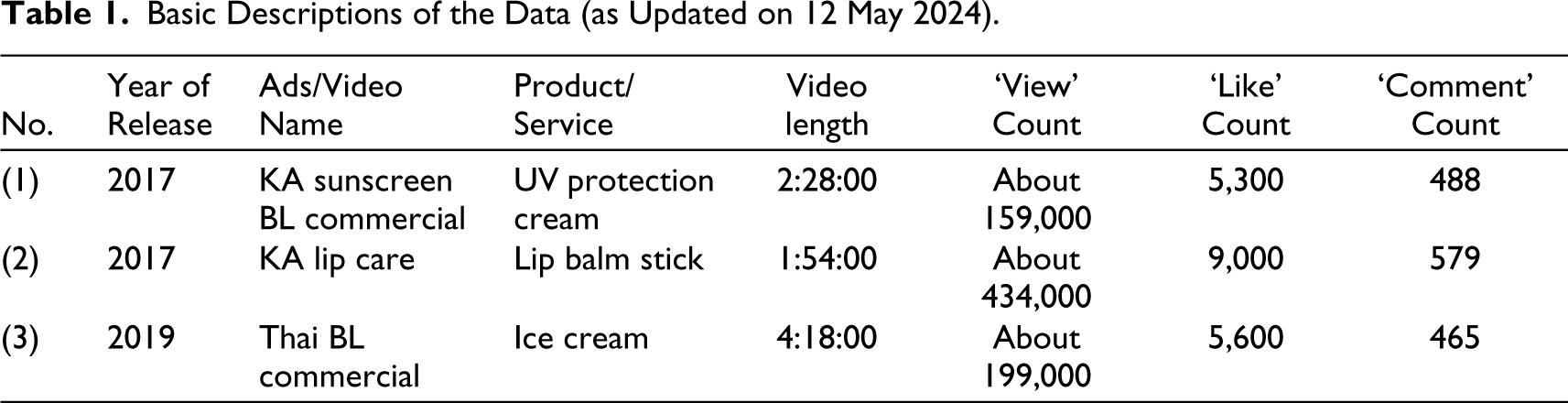
Commercials (1) and (2) both feature the same protagonists and tell a coherent story centred around two high school archetypes: the bad Senior and the arrogant Junior. The story’s first half begins with the Junior inviting the Senior to play basketball with him. Initially, he pretends to be unskilled, but after making a bet with the Senior—where if he wins, he can ask for anything—he reveals his excellent basketball abilities. Surprisingly, he requests the Senior to be his boyfriend, although he quickly turns it into teasing. The first half concludes with the Senior’s sister, who harbours a crush on the Junior, witnessing them playing basketball together. The latter half starts with the Senior confronting the Junior, asking why he made his sister cry. The Junior then confesses his preference for the Senior over his sister.
In commercial (3), Boy and Aon are close friends in the Jujitsu Club. One day, after seeing Aon talking to his friend Fah, a campus cheerleader and star, Boy asks Aon to help him invite Fah to the Freshmen Night Party as part of a bet. Agreeing to the idea, Aon assists Boy by delivering drinks and snacks to Fah almost daily. Additionally, they plan for Aon to convincingly defeat Boy in a Jujitsu Championship, all in an effort to gain Fah’s sympathy towards Boy. However, during this process, Aon finds himself feeling unhappy and hesitant. The story concludes with Boy confessing that everything he had done was to make Aon jealous.
Analytical Approach
In the field of multimodal discourse analysis, this article employs the analytical frameworks of visual presentation of social actors (van Leeuwen, 2008) and genre and functionality (van Leeuwen, 2005). Visual signifiers can denote functionality and legitimise social practices contextually, while genre analysis can be applied to multimodal texts that foreground visuality and allow multiple ways of interpretation.
Social Actor Analysis
Visually, positioning is realised by the ‘establishing shot’, transitions are achieved through the ‘motion + location’ process, descriptions are conveyed by pictures focusing on specific parts of settings and settings are distinguished by foregrounding and backgrounding (van Leeuwen, 2008, pp. 91–93). Linked to this, the representation of social actors mainly includes the following two categories: inclusion and exclusion, as illustrated in Figure 1. Exclusion refers to the omission, backgrounding or suppression of actor(s) within various contexts or groups (such as institutions, societies and nations). While some exclusions might naturally occur based on the assumption that audiences possess certain knowledge or that some topics are simply irrelevant to them, most exclusions are social constructions that mirror imbalances in power and ideologies.
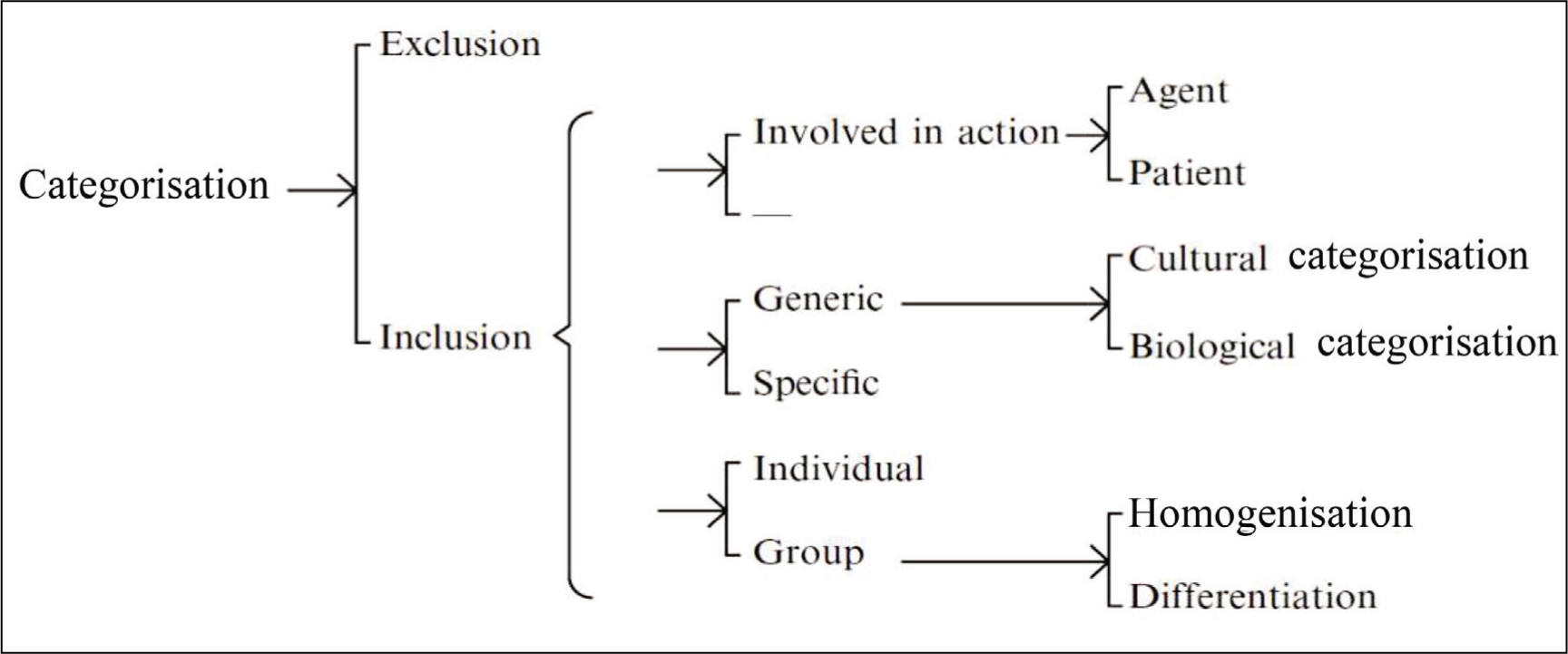
In contrast, inclusion portrays person(s) as actively involved, and they can further be analysed in terms of their role and agency, either as an agent/actor (indicating activation) or as a patient/undergoer (suggesting passivation). Beyond roles, individuals can be depicted either specifically, representing them as unique entities, or generically, showcasing their similarities with a group based on shared biological (e.g., physical features) or cultural (e.g., dressing styles or hairstyles) attributes. When represented as an undifferentiated group, they are presented as a homogenised collective, which overlooks and erases individual characteristics and differences.
Besides answering the question ‘how are people depicted’, van Leeuwen (2008) also addresses how the people are positioned in relation to the audience via three symbolic, imaginary dimensions (social distance, social relation and social interaction), all between the depicted person(s) and the viewer, as shown in Figure 2.
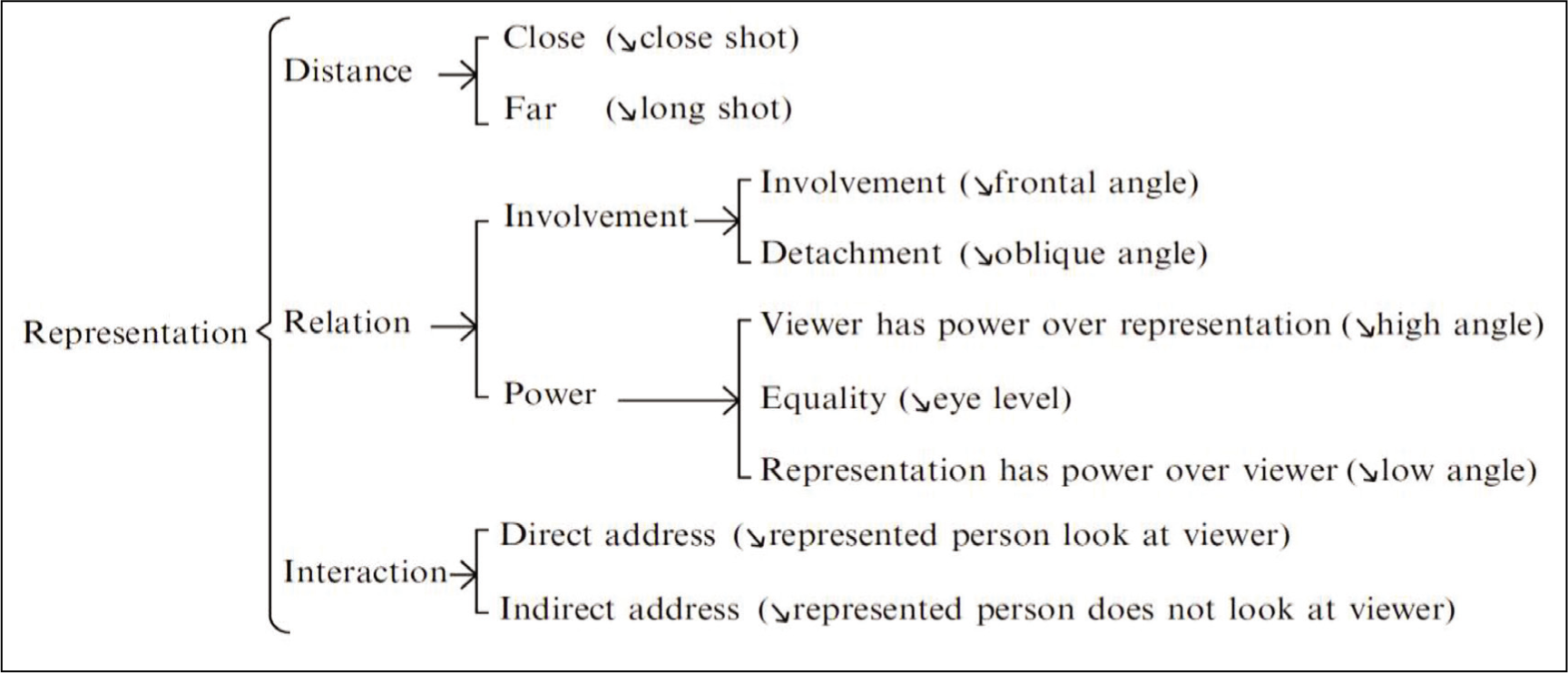
Social distance signifies the level of intimacy in an interpersonal relationship. Typically, a close-up shot, capturing only the heads or detailed views of body parts, conveys a personal and close relationship. In contrast, a long shot, displaying the entire character with or without the surrounding landscape, suggests formality and distance. Positioned between these two is the medium or waist shot, which often captures a character from the waist up, representing a moderate degree of social distance (Kress & van Leeuwen, 2021). In film study, a close-up draws attention to what is framed and tends to exhibit new reality or abstract the ‘reality’ by taking the audience out of space. In contrast, long shots provide information and context of the space by displaying the scale of distance or environment (Pendlebury, 2014).
The second variable, social relation, pertains to the horizontal and vertical angles from which the viewer observes the depicted person(s). These angles relate to levels of involvement and power dynamics. Horizontally, a frontal view of the subject suggests viewer involvement, while an oblique angle implies detachment. Vertically, viewing the subject from above or below denotes power structures, such as control versus being controlled, authority versus subordination and superiority versus inferiority. Meanwhile, an eye-level view conveys a sense of equality.
The last category, social interaction, examines whether the depicted individual is looking at the viewer. Direct eye contact addresses the viewer, while avoiding eye contact usually connotes a lack of need for interaction or attention.
Discussing viewer positioning is significant in this article since it explores how the audiences of the commercials are expected to interact with the characters portrayed in the scenes, as well as the positioning and power between the audience and the depicted gay men. A pivotal point here is that both the representation of social actors and the viewer network are discursive constructions. These constructions are not inherently purposeful—something that cannot be definitively proven—but are context-dependent, which explains ‘why social practices exist and why they take the forms they do’ (van Leeuwen, 2008, p. 113).
Genre and Functionality Analysis
Genre pertains to content and function types, forms or characteristics. Resembling templates, a genre amalgamates various semiotic resources for communicative action in diverse and variable ways. ‘One cornerstone of systemic-functional genre analysis is the idea that genres are linear concatenations of communicative moves (“stages”), each of which constitutes a particular communicative act’ (van Leeuwen, 2005, p. 75). Boundaries of stage or schematic structures are demarcated using semiotic resources. Each stage represents a distinct strategic move towards achieving the overarching goal of narration. In multimodal analysis, a stage can be manifested through modes other than just text.
Effective storytelling balances genre conventions (form) with functionality (communicative purposes) to influence how audiences perceive and react to the represented groups. In this aspect, gaze theory provides a robust theoretical framework for analysing how audience expectations shape and are shaped by media representations to fulfil certain functions. Early Lacanian film theorists suggest that audiences may identify with the ideologies presented in films, such as hegemonic social structures and power dynamics (Baudry & Williams, 1974). However, film theorists after Lacan reconfigured the concept of gaze, conceptualising it not as a universal approach adopted by all spectators but rather as a position that specific films offer (McGowan, 2012).
There are various kinds of gaze, such as the male gaze that constructs representations of women from a masculine viewpoint (Mulvey, 1975), the oppositional gaze that challenges pervasive stereotypes in media (Hooks, 2014) and the transgender gaze that incorporates diverse perspectives—male, female and transgender (Halberstam, 2001). Building on these conceptualisations, this study understands gaze as a fluid construct, linking it dynamically with audience expectations in the context of BL commercials. It adopts an intriguing approach to understanding media representation and audience engagement by intersecting visual representation with genre patterns. This approach may broaden understanding of the interplay between audience expectations and the generic conventions of gay representations in BL commercials.
Findings
The Visual Representation of Male Protagonists in Commercials
Inclusion of Gay Partners and Exclusion of Key Stakeholders
As observed, the first pattern emerging from these three commercials is the consistent portrayal of two boys as a potential gay couple. Although both appear masculine, the first boy represents the dominant or ‘top’ role, actively pursuing the other. In contrast, the second is portrayed as the submissive or ‘bottom’, receiving or accepting the love. Such positioning is largely framed within the stereotype of a masculine–feminine model in heterosexuality and dilutes the uniqueness and independence of gay men as individuals.
Besides the gay partners, there are other minor roles comprising one to several players, such as the male basketball team members and female classmates in commercials (1) and (2), who act as bystanders and enjoy observing the happening but do not necessarily comment on it. Those diegetic characters are indispensable as they act in supporting roles to advance the plot’s development (e.g., the progress of the basketball game). Moreover, as diegetic audiences, these characters add a layer of meta-narrative, increasing the narrative’s tellability (Ochs & Capps, 2001). They enhance realism and relevance by mirroring audience reactions and enrich the commercial’s theme and atmosphere by strengthening the scene’s tone. However, they perform their identities as friends but not key stakeholders such as parents and teachers who may play a role of interference. On the one hand, those diegetic spectators serve as vital, inclusive social actors, demonstrating a receptive attitude and, at times, appreciation towards the boys. This implies a level of understanding and acceptance towards the LGBTQ community within Thailand’s sociocultural context. Furthermore, their reactions to the BL subtly guide the audience towards a similar response. For instance, in commercials (1) and (2), the female classmates exhibit admiration through yearning looks, subtly guiding the anticipated audience reaction. This influence is evidenced by a top comment under the video: ‘They. Should. Make. This. Into. A. Series.’, which garnered 1.4 thousand ‘likes’ as of May 2024.
On the other hand, the exclusion of other key stakeholders, such as teachers in the classroom, who should be present in certain scenes, eliminates potential unfavourable factors for the two boys. Thus, the commercials idealise the BL relationship as presenting an idyllic, free and open environment that may not mirror real-life situations. This portrayal features unrealistic relationships and romantic fantasies between gay individuals while omitting the real-life challenges many have encountered. Although the sociocultural reality is a motive eliciting audiences’ desire to consume BL materials, the ideal or constructed world of BL may not necessarily reflect the sociocultural reality they face, especially in other countries where homosexuality is discriminated against (Chan, 2021; Collin et al., 2022).
Generic, Assertive and Intelligent Representations of the Boys
The second pattern is that all three commercials feature generic, assertive and intelligent representations of the boys. The tops are consistently portrayed as courageous and proactive in pursuing love, distinctly differing from the narratives of some classic BL drama series where characters often grapple with gender identity dysphoria. Notably, this courage is not communicated by bluntly asserting a gay male identity but manifested through indirect expressions of affection, characterised by intriguing twists and turns. For example, in commercials (1) and (3), the tops employed courtship skills of playfulness and seductiveness, tactfully conveying signals of affection through bets instead of boldly declaring love. On the one hand, the indirect and euphemistic expression of affection fundamentally aligns with Thailand’s conservative and restrained cultural norms, as openly discussing sexual issues is perceived as unacceptable among Thai adolescents (Ounjit, 2015). As a result of the 2016–2017 shift within Thailand’s BL genre industry, the plot moves away from ‘unfiltered passion and explicit sexuality’ (Pham, 2021, p. 119). On the other hand, the public display of affection through confession in commercial (2) and the bodily, everyday intimacy in commercial (3) challenge the traditional Thai dating culture of practising self-awareness and conservatism. This is influenced by the tendency to normalise BL in dramas in recent years, with increasingly bold and sensual expressions (Pham, 2021).
Regarding role and agency, the manifestations of agent–patient roles are malleable, with the agentive protagonist pushing the story to develop and reach the climax, which is further closely tied to the product information. In commercial (1), it was the Junior who challenged the Senior first, but in the sequel, it was the Senior who first took the agency to warn the Junior not to toy with his sister. Such malleability can be observed through a series of actions that dismantle the inherent mode of top–bottom agency in a gay relationship, which presents an engaging, attractive and vivid depiction of the protagonists’ personalities and roles. For instance, in commercial (2), the Junior irritated the Senior by posing an offensive question. The Senior then reclaimed his agency by forcibly pulling the Junior up. However, agency dynamics swiftly shifted again, with the Senior being forced to the back of the classroom without uttering a single word. Junior’s love confession then leads to the climax, where the product information (e.g., ingredients and smell) is conveyed via a female voiceover.
Similarly, in commercial (3), Boy, taking the agency first, asks a favour from Aon to help him get closer to Fah. Aon chose to cooperate with Boy until his emotions erupted at the Jujitsu Championship, highlighting Aon’s internal dilemmas. The story reached its climax in the dressing room when Boy disclosed that the colour of his world was black, namely Aon’s favourite colour. This subtle love confession was accompanied by a close-up shot of black ice cream, followed by a series of flashbacks that spotlight the ice cream as the central theme. Consequently, the products’ pitching in the commercials resonates with the best part of the storylines and the reversal of the protagonists’ agency.
Regarding categorisation, the identities of the boys are generic, as all the characters in these three commercials share the same identity as students and are depicted as in-group members. For instance, both the Senior and Junior wore the same school uniform and had a similar hairdo (i.e., fringe). This representation may be influenced by popular BL drama series, which often feature male students as the protagonists. Also, Aon and Boy wore the same judogi, a traditional uniform for practising and competing in judo. The colour variations imply their different roles as passive/defensive (white) or active/offensive (black) actors in the Jujitsu Championship plot in the commercial. Traditionally, there are two colours of judogi, white and blue. In this commercial, blue was replaced by black, not only to align with the story setting of Aon’s favourite colour but also to highlight the product packaging of the ice cream and the hashtag #UnexpectedLove at the end of the commercial.
Close, Involved and Equal Representation of the Protagonists
It is observed that many scenes in these three commercials predominantly use close shots (i.e., waist-up, close-up and extreme close-up shots) to showcase a near, intimate distance in relation to the audience while capturing the subtle and soulful expressions of the protagonists. Furthermore, these shots are typically taken from semi-frontal angles (between frontal and oblique) to engage the audience appropriately. Additionally, unless dictated by the plot, most shots are taken at the protagonists’ eye level, implying equality between the depicted and the viewer. Finally, very few direct addresses are found. To a certain extent, the prevalence of indirect address shapes the commercials to be more drama-like and entertaining, as opposed to traditional advertisements that prioritise product selling.
Due to limited space, this article only analyses how the protagonists in each commercial are visually depicted at the climax of the plot, namely the confession of love or the moment when the depicted two have the most sparkling eye contact. The timestamps for these focal shots are 00:01:31–00:01:45 for KA sunscreen, 00:00:52–00:00:58 for KA lip and 00:03:48–00:03:53 for Cornetto, respectively, as displayed in Table 2.
Viewer Positioning Analysis of the Key Scenes.
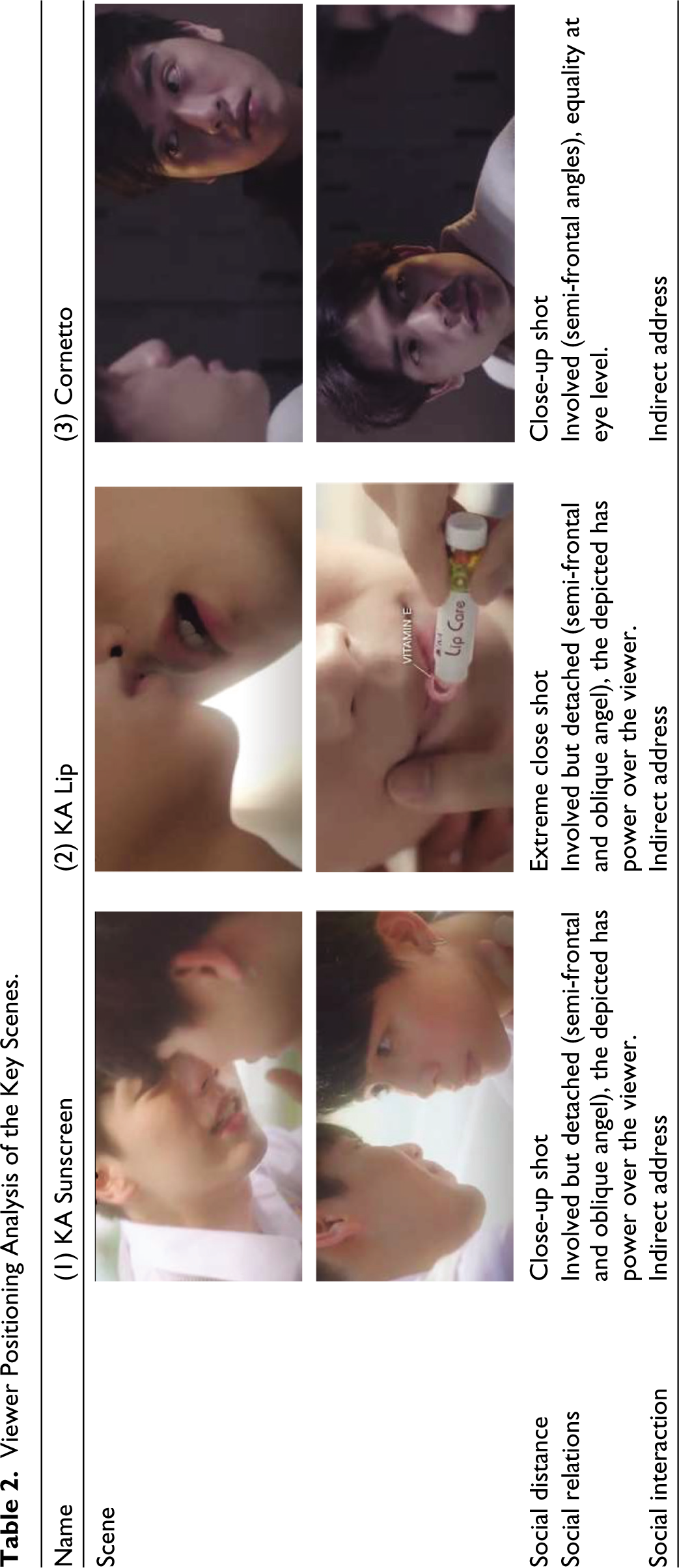
In commercial (1), the close-up shots create a sense of intimacy and enticement between the two, with the shift of the angles exhibiting the subtle and somewhat romantic interactions between the Junior and Senior. In commercial (2), the close-up shot is an extreme, very intimate one that only frames the lips of both protagonists. Despite being close to the protagonist, this shot adopts an oblique angle. Thus, the audience is placed in a relatively detached yet intriguing and ‘sideline’ position when witnessing the Junior’s confession to the Senior. The subsequent shot employs a frontal angle to attract the audience’s attention to the Senior’s lip and product information. Overall, close-up shots capture the emotions of the boys, establishing them, especially the Junior, as youthful and stylish. Simultaneously, the semi-frontal angles carve out an exclusive space within the ‘taleworld’ or ‘story world’ (Young, 1987) that is unique to the two boys, yet still involves the audience as curious spectators, similar to the female classmates at the end of these two commercials. In both scenes, the audience views the protagonists from a lower angle, cultivating a tense atmosphere at those moments.
In commercial (3), the close-up shots characterise the intimate eye contact between Boy and Aon, indicating the feelings of love. With such a close social distance, the audience could gain a better and more intuitive understanding of their emotions and feelings. The angles combine frontal and oblique ones to follow the protagonists’ gazing directions, and the relation is equal by eye level. The address does not require direct attention from the audience. Instead, the interactions between the two protagonists are foregrounded, gently pulling at the audience’s emotional responses and engaging their feelings.
In summary, close-ups are the most widely used shots in the story’s climax, which conveys the subtle and tender emotions of the protagonists to the audience while remarkably shortening the distance between the depicted and the viewers. This may contribute to more receptivity towards LGBTQ people by constructing them as ‘cute’, ‘funny’ and ‘attractive’. Frontal and oblique angles are used alternatively to immerse the audience in the ‘story world’ and share the emotional fluctuations with the protagonists. Vertically, most shots are taken at the protagonists’ eye level to empower them as equal to the audience.
The Genre Pattern of BL Commercials
Structural Stages in Combining Narratives with Brand Values
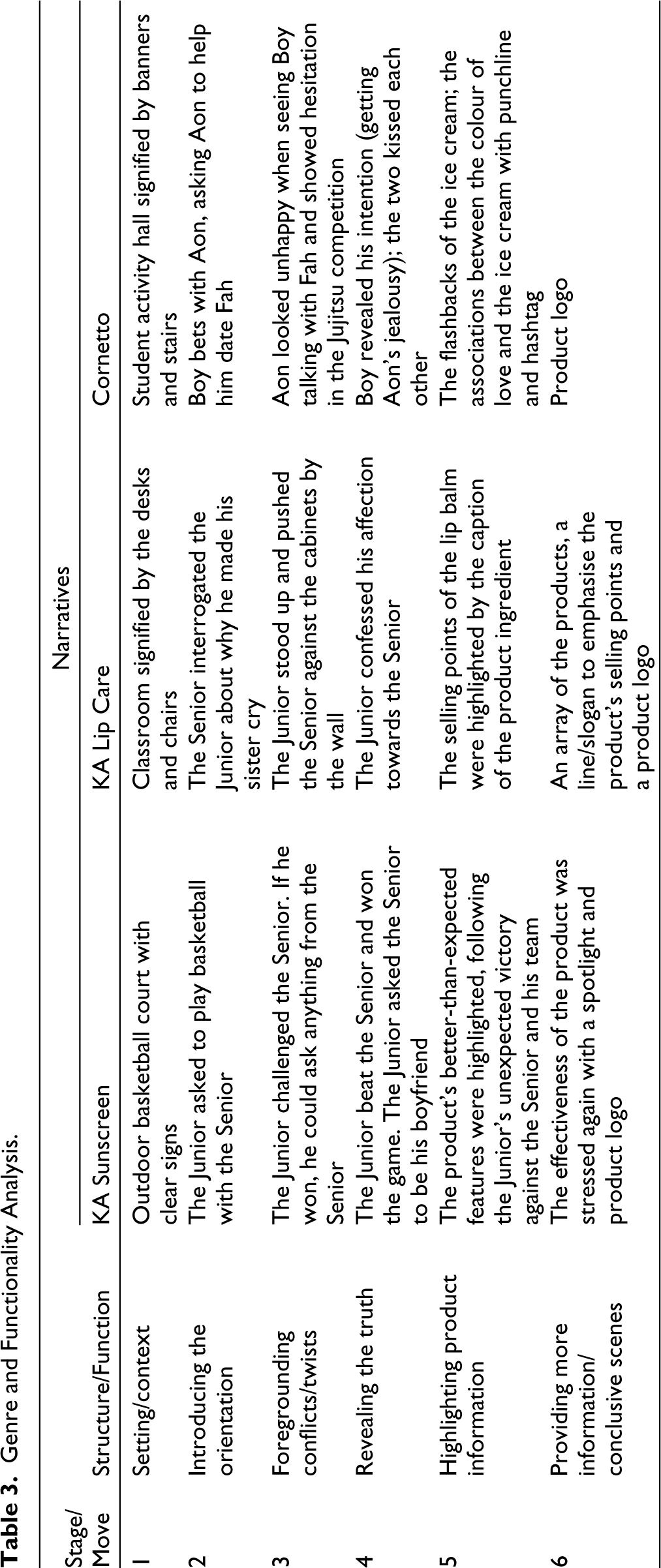
The above-given patterns of gay representation in commercials are situated within a genre framework, which contains structural stages in the BL narratives to well articulate brand values. Table 3 briefly compares some commonalities of the genres and functionalities. As found, all three commercials embed their products within the storyline and punchline, associating them closely with the unfolding of the ‘story world’. Each highlights the company’s logo at the conclusion of the advertisement.
Genre and Functionality Analysis.
BL Commercial as a Genre Catering to the Taste of Young Consumers
All three commercials set their story backgrounds in campus/university life to attract student customers, probably because numerous popular BL drama series in Thailand narrate their stories on campus. Heterosexual campus love, ubiquitous in many on-screen love stories for young audiences, is now also being explored in the BL genre but adopting the form of the top (masculine)–bottom (feminine) dynamics in gay relationships. Furthermore, the protagonists all feature young and admirable, aligning with the normative image or body model of ‘tallness’, ‘youth’, ‘thinness’ and ‘hairlessness’ in the Thailand mainstream gay men culture. This aesthetic-oriented representation of gay individuals diverges somewhat from the image of gay men in Western culture, which often advocates for an athletic, muscular physique and tends to prefer masculine-presenting individuals for high-status roles (Drummond, 2005; Gerrard et al., 2022).
The campus background setting is paired with fashionable product design/positioning to attract young people. Being fashion-conscious is one of the gendered stereotypes of LGBTQ people on screen (Tropiano, 2002). A deputy governor of Bangkok even addressed that being gay was deemed fashionable due to the rising popularity of gay men portrayed in the media (Beresford, 2017). The companies are very likely to capitalise on potentially lucrative commercial opportunities stemming from the fashionable positioning of LGBTQ people. For instance, the various flavours of KA lip balm exude a sense of youth and fashion, while the new black packaging of Cornetto appears cool and stylish, as black in branding symbolises elegance, fashion, professionalism and modernity, according to colour psychology (Birren, 1961; Chang & Lin, 2010).
Another noteworthy finding here is that the commercials incorporate elements of betting and violent plots, especially in the story’s orientation (Labov & Waletzky, 1967) and conflicts/twists, such as slight body collisions (e.g., bumping and pulling) or smacking fists. Besides enhancing the dramatic cadence, such plot design may stem from the influences of gay series, wherein the top’s masculinity is often highlighted to showcase virility, strength and competition. However, the construction of masculinity overall is more focused on the behavioural and psychological traits of masculine-presenting romantic partners.
Discussion
Media power has transformative potential to affect public recognition, culture and rights. Advertising, in particular, often interacts with and evolves alongside social changes and norms, both reflecting and influencing the broader cultural landscape (McDonald et al., 2020). The BL commercials first impose a biased, homogeneous and idealised ideology about Thai gayness on the viewers, manifested by its similarities with heterosexual romance. Instead of subverting heteronormative mainstream narratives, BL advertising prefers non-hegemonic masculinities and applies the heteronormative trope. Moreover, it reveals that BL stories on campus are acceptable and even popular, at least in Thailand, so that they can be scripted into commercials and be open to public display and further sharing. Nonetheless, this portrayal might misleadingly suggest that non-cisgender identities and non-heterosexual relations are normalised or even fashionable in Thailand. The protagonists in these commercials are depicted with aesthetic-oriented appearances, access to (higher) educational opportunities (e.g., the university setting) and implicit socioeconomic status (evidenced by the logo on their school uniforms and expensive hobbies like Jujitsu). These portrayals overlook the persistent discriminatory treatment faced by relatively underprivileged members of LGBTQ groups in Thailand. For instance, gay men born into rural poverty in Northeastern Isaan face significant social stigma and discrimination, confronting strong transphobic and homophobic prejudices (Statham & Scuzzarello, 2021). Additionally, Thai gay men and transgender women sex workers have experienced psychological distress due to poverty, inequality and isolation exacerbated by the COVID-19 pandemic (Yasami et al., 2023). Hence, these BL commercials, though offering a glimpse into the reality of Thai sexual minorities, largely apply a glamorising filter by commercial producers.
Second, the BL commercials have implied ‘whose voices, identities and interests are included in the media sphere’ (Hobbs, 2015, p. 46). While the portrayal of effeminate, young, admirable and sometimes rich gay men aligns with the flourishment of the Thai mainstream BL genre, the beautification of campus BL obscures the diversity of Thai gayness (Collin et al., 2022) and limits the visibility of other diverse voices within the gay community. More importantly, the representation of queer romances fundamentally reflects the interests and desires of young women or female fans. Besides endorsing products, these commercials utilise affective strategies of audience engagement to satisfy female consumers. Thai advertising is particularly renowned in the global advertising industry for its use of ‘emotional branding’, an advertising strategy emphasising the consumer’s emotions and experiences rather than the product itself (Chantamas & Chaisuwan, 2020; Gobe, 2010). Baudinette and Svetanant (2023) theorised fin (satisfying) as a queer affect, a slang term used by Thai sexual minorities to refer to the intense satisfaction experienced during sexual intercourse. The affect of fin then becomes an ‘emotional brand’ of BL advertising, in which queer affective media engagement is crucial for capturing and mobilising the attention of cisgender female consumers. This study further argues that the female gaze is an essential narrative convention in BL advertising. This acknowledgement is significant not only because other queer media forms usually prioritise the default male gaze (Baudinette, 2023) but also because it underscores the growing influence of young women as an economic force shaping Asian consumer culture (Kwon, 2015). Instead of being passive consumers, young female fans are ‘prosumers’ (Toffler, 1981), meaning they are both producers and consumers in the commodification process of gay-themed media within both the mainstream and subculture of the gay romantic genre (Kwon, 2016).
Unlike BL drama series that specifically cater to Yaoi fans, commercials are designed and produced to reach different, unseeable and potentially larger audiences, among whom many may still hold a hostile attitude towards LGBTQ people, especially in countries where homosexuality faces challenges from religious, sociocultural and legal sanctions. Between the limitations of BL advertising—such as the conventional tendency to idealise gay relationships, diminish the individuality of gay people and obscure the diversity within the gay community—and its potential to reach a broader audience, increase the cultural visibility of sexual minorities, stimulate consumption (especially among young women) and shape consumer culture, there lies a dilemma. It is about whether to present the diversity of gay people while simultaneously catering to the core audience that these commercials are subliminally targeting, namely the female consumers who prefer soft masculinity with a youthful appearance, as mentioned above. Effective advertising strategies should focus on avoiding customer churn and acknowledge the necessity of navigating the complexities of audience preferences, societal norms and market dynamics.
Conclusion
This research provides insights into how gay identities are portrayed in advertising. Empirically, this study found that Thai BL commercials depict the protagonists positively by featuring them as inclusive, generic, agentive, close and equal members who are young, fashionable and attractive. Such a portrayal structurally embeds heteronormative romance narratives within the commercials, catering to the young woman audience by adopting the female gaze. Although the representation is homogenised and idealised, the popularity of Thai BL commercials reveals that many viewers welcome and embrace the depictions in these commercials. In this sense, the representation of sexual minorities in commercials can be a significant signpost for examining public receptivity towards sexual minorities. Methodologically, rather than depending exclusively on textual analysis, this research employs multimodal discourse analysis to elucidate the visual representation of social actors in the commercials and their genre and functionality. This approach enables a thorough, systematic and persuasive examination of the selected commercials, which offers a valuable model for future research.
Footnotes
Acknowledgements
The author would like to express sincere gratitude to the Asia Research Institute (ARI), National University of Singapore (NUS), for selecting her as a 2022 Asian Graduate Student Fellow (AGSF). This article was enhanced during the ARI AGSF 2022 English Academic Writing Workshop, facilitated by Tay Minghua, Paul Nerney and Susan Lopez Nerney. Special thanks are extended to Shobha Avadhani from the Faculty of Arts and Social Sciences, NUS, for her constructive comments and suggestions regarding journal submission. Additionally, gratitude is owed to Emily Hertzman from ARI, NUS, for serving as the discussant for this article at the forum. The author is also grateful to her PhD supervisors, Charity Lee and Ang Pei Soo, who acted as referees for her fellowship application. This article is developed based on an abstract orally presented at the 17th Singapore Graduate Forum on Southeast Asian Studies (18–22 July 2022, Singapore). The prior publication of the abstract is available at
Declaration of Conflicting Interests
The author declared no potential conflicts of interest with respect to the research, authorship and/or publication of this article.
Funding
The author disclosed receipt of the following financial support for the research, authorship, and/or publication of this article: The Ryoichi Sasakawa Young Leaders Fellowship Fund [No. 2021–513], the Tokyo Foundation for Policy Research, Japan.