






Abstract
Given the rapid diffusion and adoption of AI-driven tools across numerous contexts, including tourism marketing, AI-based storytelling has quickly spread in tourism-related practices and communications. However, the theoretical understanding of its strategic communication and meaning construction remains underdeveloped. The current literature has been highly instrumental, prioritising viewpoints based on efficiency, scalability and personalisation, while leaving a critical theoretical challenge and gap regarding the roles of authenticity, narrative agency, engagement and advocacy behind. Consequently, this conceptual article fills this gap by theorising that AI-mediated storytelling is actively involved in the co-construction of destination engagement and evangelism. Different theoretical backgrounds and streams, including narrative theory, engagement theory and critical tourism marketing and communication research, form the foundation of this work. It outlines how narrative transportation moderates the relationship between AI-based storytelling and authenticity. It also points out the risks concerning narrative homogenisation and epistemic obscurity. Opening lines for future research, this article develops a conceptual framework in the context of narrative coherence and destination evangelism, contributing theoretically to the tourism and marketing literature as well as providing a systematic foundation for the analysis of AI storytelling as a strategy and ethically underlying communicative actions.
Keywords
Introduction
Artificial intelligence (AI) has moved beyond being a future-oriented concept and now influences multiple aspects of marketing communication, particularly in tourism and destination marketing, where AI is reshaping how destinations communicate with and engage potential tourists (Tussyadiah, 2020; Zhang et al., 2024). Destination marketing has gained increasing importance in recent years as destinations face growing pressures related to economic turbulence, global crises and heightened competition, encouraging more strategic and proactive promotional efforts (Reinhold et al., 2023). Destinations are increasingly promoted as countries, cities, towns or specific holiday resorts (Carvache-Franco et al., 2024), with a strong focus on influencing tourists before arrival by creating emotional desire and interest in a destination (Moin et al., 2020).
One of the main tools in destination marketing’s communications is storytelling, which plays a key role in creating emotional meaning and motivating tourists to travel and explore (Cater et al., 2021). With the integration of AI, storytelling practices are being reshaped in how stories are created, personalised and distributed (Tussyadiah, 2020). However, this shift also introduces a potential tension between automation and emotional connection, as well as between efficiency and perceived authenticity. Hence, AI-mediated storytelling represents a timely and critical issue in destination marketing research. Existing research highlights the importance of storytelling in shaping tourists’ perceptions, emotional responses and imagined experiences (Zins & Abbas Adamu, 2024). Storytelling allows destinations to communicate identity, culture and symbolic meanings, helping tourists build emotional connections beyond functional characteristics (Ben Youssef et al., 2019).
Narrative authenticity is a key element in tourism communications, as tourists value stories perceived as genuine and credible (Moscardo, 2020). Research indicates that narrative voice, including first-person versus third-person storytelling, can influence tourists’ engagement and emotional connection (Pachucki et al., 2022). Authentic narratives positively influence trust, emotional engagement and attitudes, which in turn affect tourists’ behavioural intentions (Ben Youssef et al., 2019; Moin et al., 2020). In addition, perceived authenticity plays an important role in shaping tourists’ advocacy behaviours (Soliman et al., 2025). In tourism, authenticity can enhance positive electronic word-of-mouth (eWoM), as tourists are more inclined to endorse experiences they regard as genuine and credible. In particular, authenticity has been found to influence positive advocacy behaviour among food tourists (Kim & Hwang, 2022).
On the other hand, destination evangelism has been examined as an outcome of strong emotional attachment and meaningful tourism experiences (Anubha, 2025). Unlike satisfaction or loyalty, destination evangelism reflects tourists’ willingness to actively promote, recommend and defend destinations through storytelling and positive WoM communication (Sharma, 2021), driven by emotional connection and authenticity (Chen et al., 2020). The extant literature shows that evangelistic behaviour is characterised by active promotion, referral and endorsement, often driven by strong emotional and psychological attachment. Accordingly, when destination narratives are perceived as authentic, they are more likely to foster trust, emotional connection and active destination advocacy among tourists (Cavadas & Moreira, 2025).
Recent studies have increasingly examined AI-generated content in tourism communication (Li, Cao, et al., 2025; Zhang & Prebensen, 2024). AI technologies enable destinations to generate large volumes of content, tailor messages to diverse tourist segments and facilitate creative storytelling in a timelier and resource-efficient manner (Zhang et al., 2024). However, concerns persist regarding tourists’ ability to emotionally connect with AI-generated narratives (Seo et al., 2025), as such content may lack emotional depth, lived experience and cultural meaning (Zhang et al., 2024). Thus, tourists may perceive AI-generated stories as less authentic, especially when they fail to reflect local values and emotions, thereby positioning AI-mediated storytelling as a complex issue in destination marketing.
Despite the growing interest in AI applications in tourism, several important questions remain unanswered. Previous studies have largely focused on functional and operational aspects of AI in tourism communication, such as efficiency, personalisation and interaction quality (Guttentag et al., 2025). However, there is a limited understanding of how AI-mediated storytelling shapes perceptions of narrative authenticity and whether such narratives can encourage destination evangelism, a key mechanism through which destination narratives influence tourists’ attitudes and behaviours (Seo et al., 2025). Moreover, while destination evangelism is increasingly recognised as a valuable outcome of effective destination communication (Sharma, 2021), it remains unclear whether AI-mediated storytelling enhances or undermines evangelist behaviours. This gap is particularly important, as destination evangelism is strongly linked to emotional attachment, trust and long-term advocacy (Anubha, 2025). Further, ethical and cultural considerations related to AI-generated narratives have received limited attention within the destination marketing research, despite their potential influence on trust and emotional engagement across different cultural settings (Kim et al., 2023).
Additionally, the existing literature offers substantial insights about storytelling in tourism (Pera, 2017). However, destination marketing research continues to underexplore the intersection between AI-mediated storytelling, narrative authenticity, engagement and destination evangelism. In particular, limited attention has been given to understanding how AI-generated narratives influence perceived authenticity and whether such narratives can encourage tourists to become active advocates for destinations. This gap is crucial because storytelling represents a central mechanism shaping tourists’ engagement and perceptions of authenticity, which may ultimately influence destination evangelism.
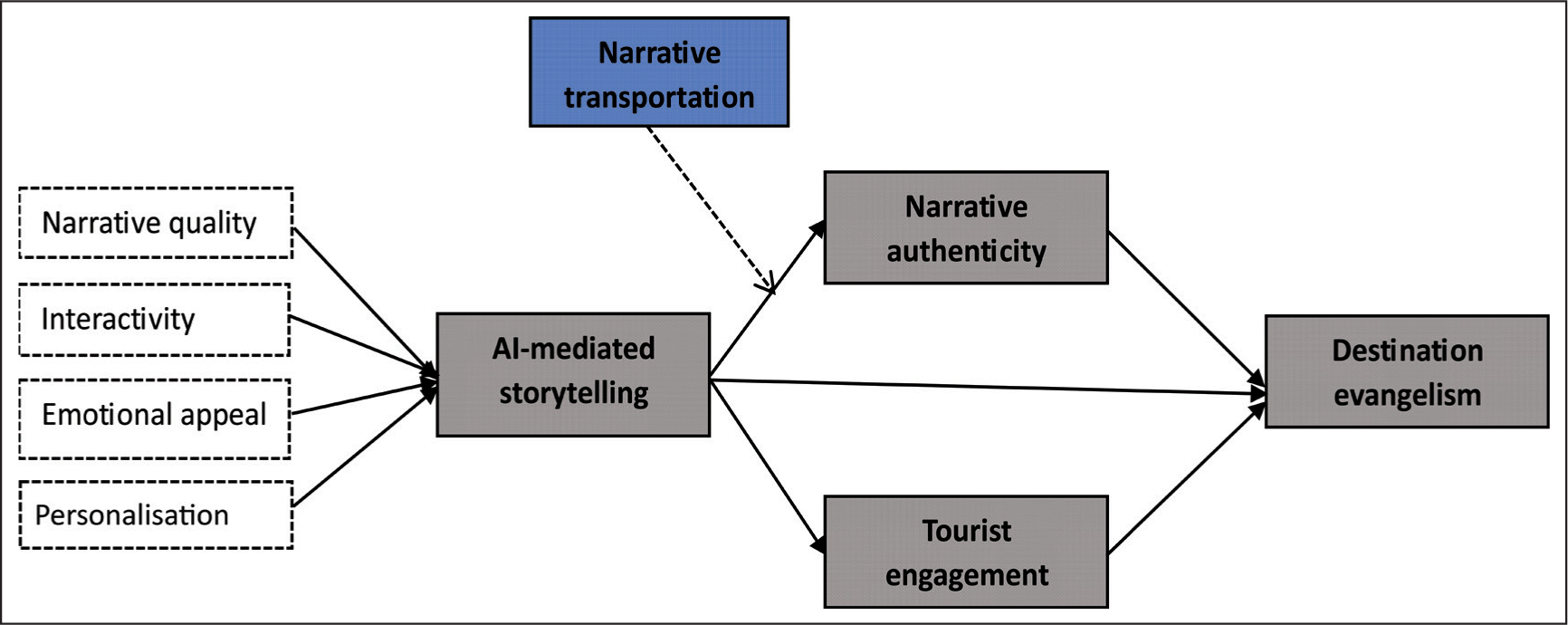
To address these gaps, this study seeks to answer the following questions: (a) How does AI-mediated storytelling affect narrative authenticity, tourist engagement and destination evangelism? (b) In what ways can narrative authenticity and engagement influence destination evangelism? and (c) What is the moderating effect of narrative transportation on the link between AI-mediated storytelling and narrative authenticity? Therefore, this study examines the effects of AI-mediated storytelling on narrative authenticity, tourist engagement and destination evangelism; explores how authenticity and engagement contribute to evangelism; and assesses the moderating role of narrative transportation while also considering the ethical, cultural and credibility implications of AI in destination storytelling.
Taken together, this article contributes to theory by moving beyond viewing AI-mediated storytelling as only a tool for efficiency, personalisation and content generation. Instead, it conceptualises AI-mediated storytelling as a central part in the process through which destination meanings, authenticity and tourists’ responses are formed and interpreted. By integrating narrative transportation as a boundary condition, this study further explains how tourists may respond differently to AI-mediated narratives depending on their level of immersion. Accordingly, the proposed framework extends current literature on storytelling, narrative authenticity, tourist engagement and destination evangelism by offering a more integrated explanation of how AI-mediated storytelling is interpreted and how it shapes tourists’ engagement and advocacy behaviours. Furthermore, it provides practical implications for destination marketers by illustrating how AI-generated storytelling content can be used to enhance engagement and advocacy through personalised and scalable communication strategies.
Literature Review
Destination Storytelling and Marketing
Storytelling has been identified as one of the most important components of destination marketing, particularly for creating meaning, destination identity and image (Duarte & Soeiro, 2025). Zhang and Ramayah (2024) indicated that early destination storytelling practices were largely dominated by official, marketer-controlled narratives distributed through traditional promotional channels such as brochures, websites and videos. These stories primarily focus on the destination’s history, culture, heritage and symbolic qualities to create a comprehensive and carefully crafted destination image. In line with this, early studies viewed storytelling as a linear, one-directional communication strategy designed to enhance destination attractiveness and influence tourists’ perceptions and travel intentions, while offering limited opportunities for audience participation (Li, Zeng, & Tay, 2025).
The dominant use of pre-designed, marketer-centred and official information in the context of storytelling constrained the ability of the traditional approaches to storytelling to meet the growing demand for emotionally engaging and experience-based tourism communication (Li, Zeng, & Tay, 2025; Zhang & Ramayah, 2024). In this regard, the rise of social media has changed how destinations tell their stories and communicate with audiences. The roles of textual content, visual materials and video media all contribute to the creation of destination brand identity, resulting in the development of dynamic destination storytelling (Phung et al., 2025).
According to Aboalganam et al. (2025), user-generated content has a positive influence on destination image, which mediates the relationship between digital content and intentions to visit. As Zokirova (2024) indicated, digital storytelling with the help of multimedia tools is found to be highly effective in destination branding; however, this depends on the alignment between narrative content, destination identity and audience expectations. Recent studies offer additional empirical support for the strategic importance of storytelling as an element of destination marketing strategies. Specifically, digital storytelling has been shown to significantly increase narrative transportation, thereby increasing the persuasiveness of promotional messages and supporting travel intentions, with message persuasiveness being a key mediator (Chang et al., 2025).
AI in Marketing and Storytelling
AI-driven storytelling is increasingly conceptualised as a multifaceted form of narrative production that extends beyond fully automated content generation. At its core, it refers to the use of intelligent systems to generate narrative texts and other content based on data-driven processes (Malecki et al., 2026). However, AI’s role also includes the curation, personalisation and adaptive delivery of narratives across multiple formats, including text, images and immersive media (Hasanein et al., 2026; Li, Zeng, & Tay, 2025). More broadly, AI technologies operate across multiple customer touchpoints, shaping how narratives are created, delivered and experienced (Ghesh et al., 2024).
AI-driven storytelling is therefore understood as a hybrid and collaborative process in which narratives emerge through interactions between human creators and intelligent systems (Nichols et al., 2020). AI can function as a creative partner that supports ideation, editing and multimodal content production, while human–AI co-creation enables interactive and adaptive storytelling experiences (Feng et al., 2026; Singh et al., 2026). This aligns with broader conceptualisations of AI as a multi-functional system encompassing automation, data-driven decision-making and human-like interaction (Huang & Rust, 2021).
Accordingly, AI-driven storytelling should be viewed as a spectrum of practices rather than a single homogeneous construct, including fully AI-generated, collaborative and interactive narrative forms (Sánchez-López et al., 2025). While some studies highlight concerns regarding reduced perceived authenticity, particularly when AI involvement is disclosed, AI-mediated content is often perceived as less authentic and trustworthy, and disclosure may further intensify these negative perceptions (Bui et al., 2024; Sahebi et al., 2026); others suggest that AI can enhance authenticity through personalisation and immersive narrative experiences (Egger & Yu, 2025).
Despite these advantages, important limitations remain. The perceived authenticity of AI-generated content is highly contingent on audience perceptions and contextual factors such as disclosure; however, this study adopts a broader view of AI-mediated storytelling beyond fully automated content (Bachwani, 2024; Bui et al., 2024). In addition, highly realistic AI-generated visuals may increase the risk of misinformation and unrealistic expectations, potentially undermining trust (Hou et al., 2025).
Taken together, AI-driven storytelling encompasses multiple forms of narrative production and delivery. For instance, AI-generated and algorithmically curated narratives have been shown to dynamically construct and adapt destination stories (Hasanein et al., 2026). AI-personalised storytelling further enables the tailoring of narratives and experiences to individual user preferences through data-driven systems (Sánchez-Martín et al., 2025; Sîrb & Bader, 2025). In addition, AI-enabled interactive storytelling, such as conversational agents and chatbots, facilitates real-time, responsive narrative engagement across the tourist journey (Aransyah et al., 2026; Sîrb & Bader, 2025). While these forms may differ in their effects on user perceptions, such as authenticity and engagement, depending on the degree of automation and human involvement, this study does not differentiate between them at the typological level. Instead, AI-mediated storytelling is conceptualised as a multidimensional construct reflecting key narrative features enabled by AI technologies, namely narrative quality, interactivity, emotional appeal and personalisation, which are expected to shape user responses regardless of the specific form of AI implementation. Future research may examine how different forms of AI involvement differentially influence these narrative features and user responses.
Narrative Authenticity in Tourism Storytelling
Narrative authenticity refers to the perceived genuineness and credibility of a story as evaluated by audiences, emphasising the extent to which narratives are interpreted as truthful and culturally meaningful representations (Wang, 1999). In tourism research, authenticity has been conceptualised as objective, constructive and existential, highlighting that authenticity is not limited to the genuineness of cultural objects but also involves tourists’ subjective perceptions and experiences (Wang, 1999).
Regarding storytelling, it has become an effective mechanism for communicating authentic narratives in tourism marketing. Through digital storytelling, destinations can present cultural heritage and local experiences in engaging ways that make complex information more accessible and enhance emotional engagement and perceptions of authenticity (Kasemsarn & Nickpour, 2025a). However, the expansion of digital platforms has introduced new challenges for maintaining authenticity in tourism narratives. Platform algorithms often prioritise highly engaging content rather than culturally accurate representations, creating what scholars describe as a ‘digital authenticity paradox’. As a result, tourism organisations must balance engaging storytelling with the preservation of genuine cultural representation (Manlee & Kasemsarn, 2025).
Further, narratives play a central role in shaping tourists’ perceptions of authenticity by transforming physical spaces into meaningful places through cultural context, historical interpretation and emotional resonance. Through storytelling, tourists interpret heritage elements and construct meaningful destination narratives, which strengthen perceptions of authenticity and experiential realism (Chronis, 2012; Pachucki et al., 2022).
Tourist Engagement in Digital Storytelling
Tourist engagement refers to the level of cognitive, emotional and behavioural involvement that tourists demonstrate when interacting with tourism-related content and experiences (Hollebeek et al., 2014). In digital tourism contexts, engagement reflects the extent to which audiences actively participate in and respond to destination narratives across digital platforms (Elzek et al., 2026). Digital storytelling has been widely recognised as an effective tool for enhancing visitor engagement by presenting cultural heritage and destination experiences through interactive and multimedia narratives. By making destination stories more descriptive, captivating and emotionally appealing, storytelling strengthens tourists’ emotional and relational involvement with the destinations (Chen et al., 2026; Kasemsarn & Nickpour, 2025a).
Recent studies suggest that digital storytelling can transform traditional one-way communication into participatory experiences in which tourists become active contributors to destination narratives. Through multimedia formats and social media integration, storytelling facilitates community participation, interactive communication and emotional connections with tourism destinations, thereby strengthening tourists’ engagement with destination narratives (Kasemsarn & Nickpour, 2025b; Phung et al., 2025).
Moreover, immersive storytelling technologies such as VR and interactive media can further enhance engagement by increasing emotional involvement and narrative immersion (Elzek et al., 2026). For example, interactive digital narratives in virtual museum environments allow visitors to actively engage with cultural artefacts and participate in storytelling processes, thereby enhancing emotional responses and engagement behaviours (Chen et al., 2026).
Narrative elements embedded in digital media formats (e.g., short videos) can also generate empathy and emotional resonance among audiences, thereby increasing their involvement with destination stories and influencing behavioural outcomes. Narrative transportation theory suggests that when audiences become immersed in a narrative, their emotional and cognitive engagement increases, strengthening their attitudes and responses towards the promoted destination (Huang et al., 2025). Overall, digital storytelling serves as a key mechanism for enhancing tourist engagement by enabling immersive, interactive and emotionally compelling destination narratives.
Destination Evangelism
Destination evangelism represents a more advanced and emotionally intense form of post-consumption behaviour compared to commonly examined outcomes such as destination loyalty and eWoM (Becerra & Badrinarayanan, 2013; Cavadas & Moreira, 2025; Sharma & Khandeparkar, 2025). While loyalty reflects repeat visitation and attitudinal commitment, and eWoM captures the willingness to share positive information, evangelism constitutes a higher-order construct characterised by voluntary, enthusiastic and proactive promotion, including recommending and defending a destination in social contexts (Rui et al., 2026). Unlike these related behaviours, evangelism reflects a deeper psychological and identity-driven attachment, where tourists integrate the destination into their self-concept and actively seek to influence others (Cavadas & Moreira, 2025).
In this regard, destination evangelism is a voluntary and proactive behaviour in which tourists promote and defend destinations they highly value (Elzek et al., 2026). It represents a higher level of behavioural commitment, positioning tourists as active advocates who not only share positive experiences but also challenge negative perceptions and influence others’ decisions. This form of behaviour is often driven by strong emotional attachment, value resonance and identity-based motivation, and may include more intense or oppositional actions such as defending the focal destination or criticising alternatives (Sharma & Khandeparkar, 2025). As such, evangelism goes beyond simple advocacy by reflecting a deeper emotional and symbolic connection between tourists and destinations (Wang et al., 2026).
Destination evangelism is typically a post-consumption outcome shaped by the meaning and inspiration derived from tourism experiences, reflecting sustained emotional commitment rather than immediate behavioural responses (Amani, 2025; Anubha, 2025). Its social dimension is also critical, as evangelistic behaviours are embedded within social interactions and digital environments. Social media platforms and travel communities facilitate the transformation of individual experiences into collective advocacy, enhancing destination visibility and encouraging active involvement in promotion (Mutamakkinah et al., 2025; Sharma et al., 2025).
Narrative processes further support this transformation by enabling tourists to construct and share meaning through emotionally and socially embedded storytelling. In digital contexts, storytelling strengthens emotional bonds, community engagement and advocacy behaviours, reinforcing tourists’ willingness to actively promote destinations (Anubha, 2025; Mutamakkinah et al., 2025; Sharma et al., 2025).
Critical Challenges
Despite the high level of creative and operational potential for AI in destination storytelling and marketing, there are several perceptual, ethical and operational issues related to AI in destination narratives that have been identified in the literature. One of the primary concerns is the issue of authenticity, especially in the content created by AI. Bui et al. (2024) proposed the concept of AI-thenticity and argued that the authenticity of the content created by AI does not depend on the author, but on the audience’s perception of realism, credibility, and congruence with their expectations. Their research results show that when AI content is perceived to be authentic, it can increase tourists’ trust and influence their behavioural intentions, such as intentions to visit or support. However, direct comparisons reveal that the content created by humans continues to produce higher levels of perceived authenticity on average (Bui et al., 2024). This problem is further compounded by the issue of revealing AI-generated content. Bachwani (2024) has shown that the disclosure of the content created using AI may impact the audience’s level of engagement or interest in visiting the place negatively. There have been long-standing concerns related to authorship, creativity and authenticity. Therefore, it is possible that even stories created by technically advanced AI models may face resistance based on a lack of authenticity (Bervar et al., 2026).
Ethical and social risks limit AI-mediated destination storytelling, particularly through misinformation, unrealistic expectations and issues related to algorithmic bias, cultural misrepresentation and data security (Hou et al., 2025). These concerns undermine trust and reduce the acceptability of AI-generated content. In addition to the perceptual and ethical factors, there are also operational factors that affect the adoption of AI in destination marketing. Li, Xi, et al. (2025) found that the tourism industry is still in the primary stage of the implementation of generative AI, facing barriers in the form of the lack of AI literacy, skill deficiencies, resistance to change and limited structural readiness in destination marketing organisations. The lack of expertise among tourism organisations in judging the quality and authenticity of AI-generated content may lead to either superficial adoption or overly cautious approaches. Another study has shown that although the study of AI in tourism is growing rapidly, the study of operational, managerial and organisational issues has yet to be fully explored (To & Yu, 2025).
Method
This study provides a summary of the trends and growth in storytelling, authenticity, engagement and evangelism in market research by conducting a focused conceptual review of the main indicators, theoretical foundation, methods used and key findings (Table 1). This approach provides valuable information to improve theoretical and practical comprehension of the development path, identify gaps and serve as a foundation for the development of the conceptual model.
A Focused Conceptual Review on the Nexus Among Storytelling, Authenticity, Engagement and Destination Evangelism.
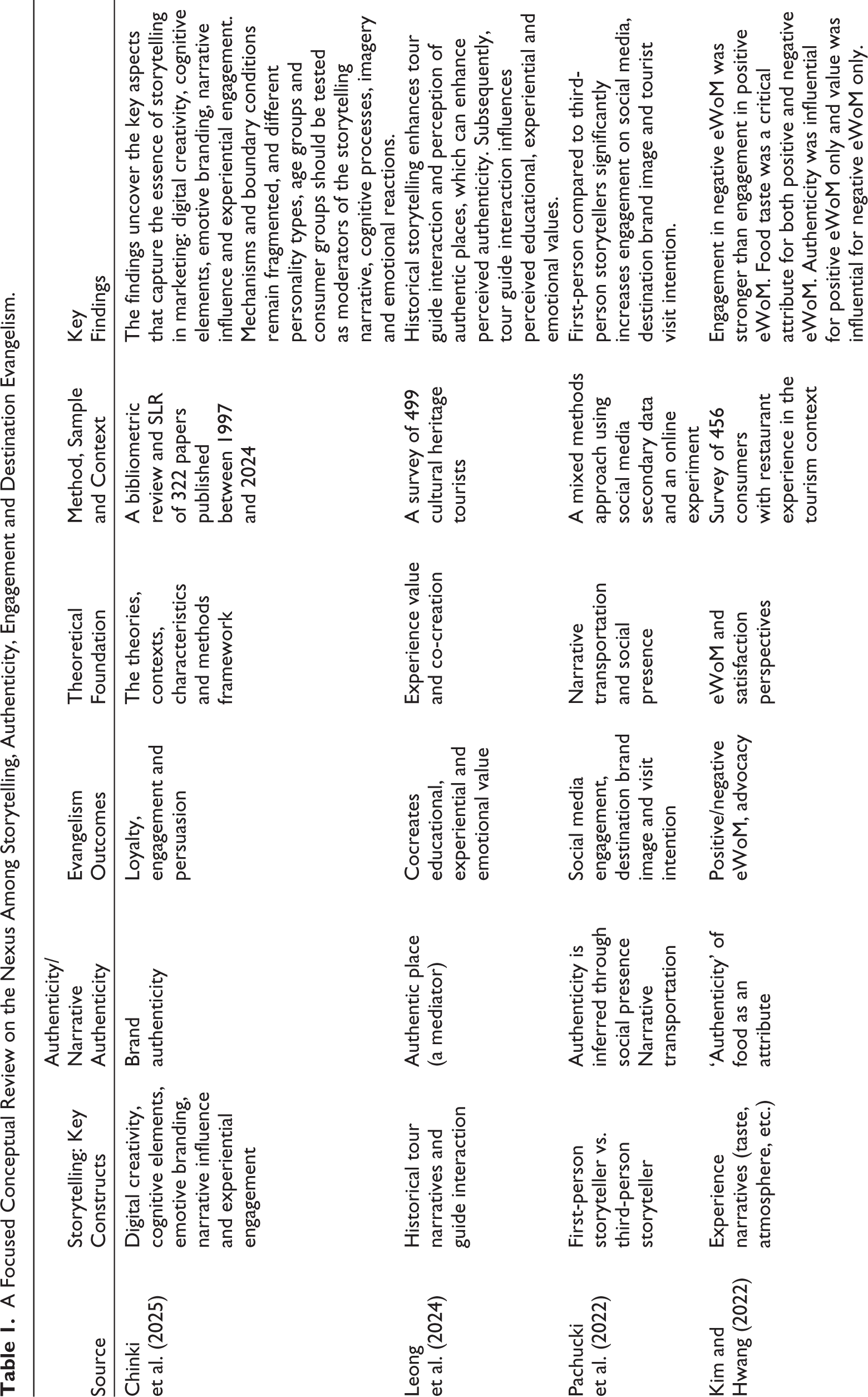
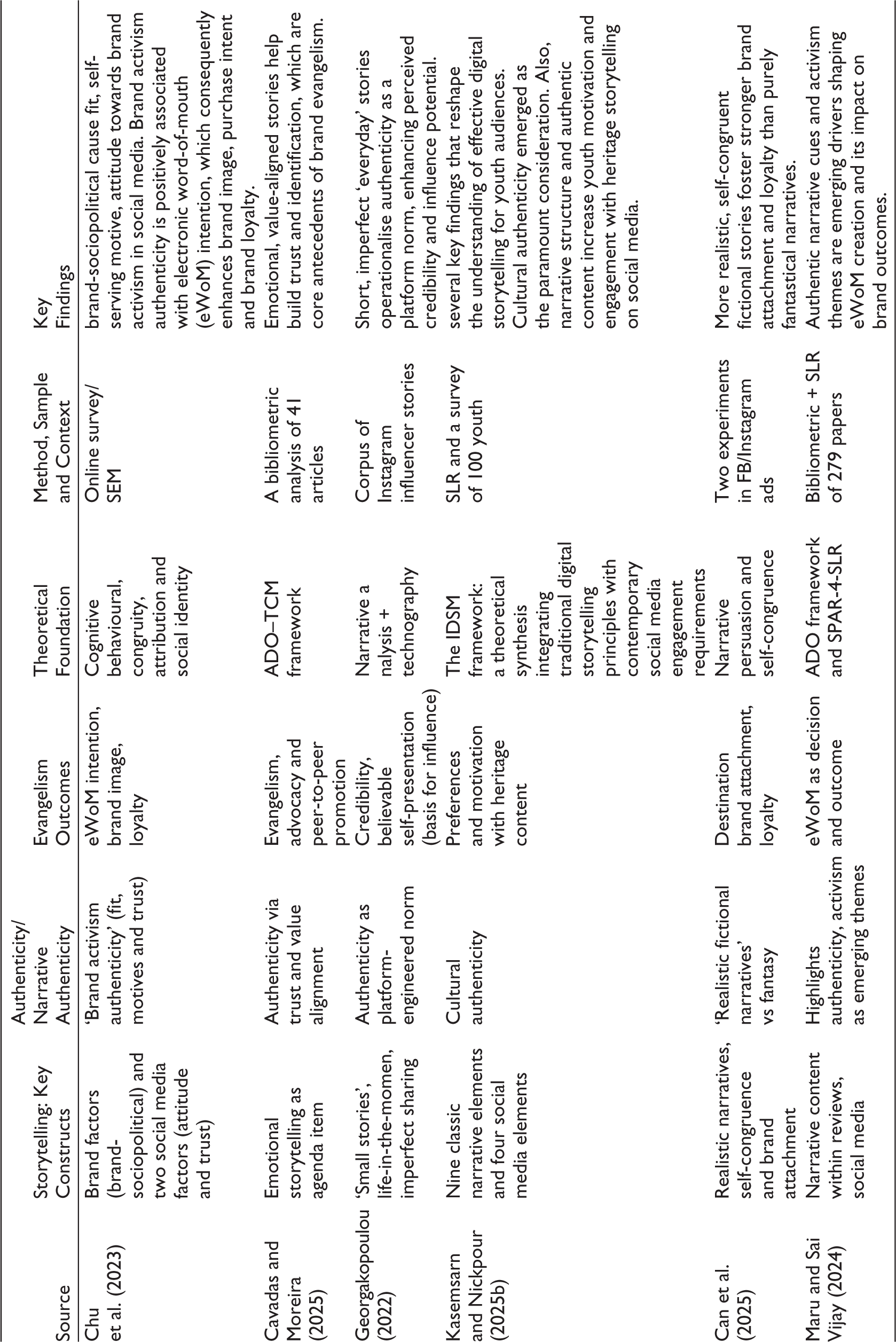
To support the conceptual development of this current study, a focused review of previous literature was conducted. The review was conducted using a combination of keywords on the study constructs. Specific criteria were considered during the screening process. First, studies were screened based on their relevance to this study’s conceptual relationship. In addition, priority was given to studies that consider empirical evidence related to the key constructs. As the purpose is to show the key insights, only a small number of highly related studies were reviewed, and eventually, ten studies were selected for inclusion in Table 1.
Based on the focused conceptual review, the present study identified the key constructs examined in prior research. Building on this synthesis, the study proposes a conceptual model (Figure 1) that integrates these constructs into a coherent framework. The proposed model aims to illustrate the relationships among such constructs and to support the development of propositions.
The Proposed Model.
Propositions Development
AI-mediated Storytelling and Destination Evangelism
AI has emerged as a transformative force in storytelling, content creation and copywriting (Kabashkin et al., 2025). ‘AI-mediated storytelling’ refers to AI systems designed to generate narratives with visual illustrations to immerse the audience, while requiring only minimal input from the user (Santiago et al., 2023). Destination evangelism, by contrast, refers to the act of passionately promoting and advocating for a particular travel destination, driven by strong brand loyalty and a desire to share positive experiences with others (Sharma, 2022). AI applications can be integrated with marketing channels to enhance destination evangelism efforts through customised customer engagement, interactive content creation and virtual tours (Soliman & Al Balushi, 2023).
Prior studies indicate that AI-mediated storytelling plays a critical role in shaping individuals’ attitudes and behaviour. Bassano et al. (2019) asserted that through digital platforms, storytelling can allow destinations to create immersive narratives that grab tourists’ attention and enhance their engagement, eventually encouraging them to share their destination experience with others. Moreover, Mohammad et al. (2026) claimed that AI-driven cultural storytelling not only enhances tourists’ perception of authenticity and destination image, but also plays an important role in influencing their future behaviour intention.
Nevertheless, AI should not replace human efforts. Rather, it can be used to improve personalisation, efficiency and effectiveness of destination evangelism, thus underscoring the importance of maintaining a balance between technology and human involvement (Soliman & Al Balushi, 2023). In the AI context, storytelling has become an effective tool for destinations to convey information and experiences in a narrative and immersive way, thereby improving tourists’ engagement. When tourists become more emotionally and cognitively engaged, they tend to have more enthusiasm towards a destination. As a result, this can lead to evangelistic behaviour, where tourists are more willing to share positive information and recommend the destination to others. Based on this reasoning, the study presents the following proposition:
P1: The influence of AI-mediated storytelling on destination evangelism is strong when the narratives are perceived as credible, authentic and aligned with the real culture of the destination.
AI-mediated Storytelling and Narrative Authenticity
AI-mediated storytelling allows destinations to construct and present immersive and persuasive narratives (Hasanein et al., 2026). Yet, its persuasive ability depends on the perceived authenticity of the narrative, which refers to the extent to which narratives are perceived as genuine and credible and reflect the true cultural and social reality of the destination (Wang, 1999). Engagement theory offers an explanation, suggesting that AI storytelling presents immersive narratives that motivate the audience to process and interpret the information actively. Such active engagement can enhance depth of interpretation and emotional resonance, allowing them to feel a sense of connection and presence within the narrative. As a result, tourists may develop a perception regarding the credibility and overall authenticity of the narrative. There is empirical evidence that supports how AI storytelling can influence individuals’ perceived narrative authenticity. For example, Guan (2025) demonstrated that AI-mediated narrative can reshape tourist consumption behaviour by enhancing perceived authenticity. Similarly, Hasanein et al. (2026) confirmed that AI-enabled cultural storytelling can significantly enhance tourists’ perceived authenticity.
Furthermore, AI-enabled storytelling often lacks emotional depth and creativity, which contribute to the perception of narrative authenticity (Kabashkin et al., 2025). In addition, AI-generated narratives can result in lower narrative transportation and higher counter-arguing among readers, suggesting that the source (AI vs human) influences how authentic the narratives feel to audiences (Chu & Liu, 2024). The existing literature indicates that there is a limited understanding of whether AI storytelling is experienced as credible or perceived as artificial and commodified. Thus, future research needs to adequately explain how AI-generated storytelling is cognitively processed by tourists and the underlying mechanisms through which it can enhance authenticity perceptions (Hasanein et al., 2026).
This study argues that AI storytelling is more likely to enhance perception of narrative authenticity when it reflects cultural and local contexts and credible presentation. Therefore, a conditional relationship is proposed:
P2: The relationship between AI-mediated storytelling and narrative authenticity is strong when the narrative is perceived as credible, genuine and reflective of a destination’s culture and experiences.
AI-mediated Storytelling and Tourists’ Engagement
Tourist engagement is defined as ‘the depth of a visitor’s active, emotional and cognitive involvement with the site’ (Brodie et al., 2011). High engagement occurs when tourists feel emotionally connected to the destination and are more inclined to participate and share their experiences with others (Fang & Ko, 2025). Cultural tourism increasingly demands personalisation and authenticity, and AI offers a novel medium to enhance narrative engagement (Rifqi & Bastiar, 2024). For example, AI in virtual tours and destination marketing creates a coherent and interactive narrative, which in turn enhances information delivery, thereby creating deeper engagement with the narrative (Li et al., 2024). Aligned with engagement theory, AI storytelling can enhance interactive communication and encourage tourists to explore and interpret destination information. Such an interactive experience can enhance stronger cognitive and emotional engagement with the narrative. Prior research provides empirical evidence that supports the influence of AI-enabled storytelling on tourist engagement within cultural tourism contexts (Rifqi & Bastiar, 2024). However, some argue that although AI-mediated narratives can make tourists mentally follow the content, they feel less emotionally involved, unlike human-generated narratives (Chu & Liu, 2024). Therefore, to enhance tourists’ engagement, it is encouraged to tailor the visual narrative to individual tourists, as this can increase narrative transportation, cognitive engagement and emotional connectivity with destination stories (Egger & Yu, 2025). These inconsistent findings indicate that the relationship between AI storytelling and tourist engagement is underexplored (Rifqi & Bastiar, 2024). Based on this reasoning, the following proposition is developed:
P3: AI-mediated storytelling is expected to have a positive influence on tourists’ engagement.
Narrative Authenticity and Destination Evangelism
Authenticity is widely recognised as a fundamental motivator for visiting tourism destinations, and its pursuit has become a defining trend in contemporary tourism (Yeoman et al., 2007). Authenticity plays a central role in shaping people’s judgement, which subsequently provokes their WoM (Yi et al., 2025). When tourists perceive authenticity in their experience, it can lead to a stronger intention to engage in sharing positive behaviour (Soliman et al., 2025), such as destination evangelism. According to Fu (2025), narrative authenticity serves as a key factor in enhancing destination evangelism, such that tourists who perceive destination narratives as genuine and trustworthy are more inclined to recommend and advocate for the destination. Moreover, Anubha (2025) suggested that providing tourists a stimulating and unique experience through authentic narratives helps to develop long-term relationships with tourists. Eventually, this may inspire tourists to engage in destination evangelism. According to engagement theory (Miliszewska & Horwood, 2006), when individuals communicate meaningfully and interactively with the content, they are more likely to have deeper cognitive and emotional involvement, which in turn influences their attitude and behavioural attention positively. In this context, authentic storytelling can stimulate more emotional and cognitive engagement among tourists. Consequently, they are more likely to recommend the destination to others. Based on this reasoning, the following proposition is presented:
P4: Narrative authenticity is expected to have a positive influence on destination evangelism.
Tourist Engagement and Destination Evangelism
Engagement goes beyond satisfaction and includes emotional, cognitive and behavioural involvement in the destination, such as participation in activities, communication with local communities and identification with the place or brands. A high level of engagement can create a memorable tourism experience, which in turn makes tourists more likely to advocate for the destination and generate positive WoM (Kumar & Kaushik, 2020). Alkhozaim et al. (2025) demonstrates the significant effect of cognitive processing coupled with emotional experiences in enhancing destination evangelism among virtual reality (VR) tourists. Engagement theory (Miliszewska & Horwood, 2006) posits that positive attitude and behavioural outcomes occur when individuals actively participate with content rather than passively receive it. Within this study’s context, engagement represents both emotional and cognitive involvement tourists experience when communicating with a narrative, which can affect their attitude and behaviour. Highly engaged tourists are more likely to interact actively with the destination’s narrative, leading them to share their experience and recommend the destination. Based on this, the following proposition is presented:
P5: Tourist engagement is expected to have a positive influence on destination evangelism.
The Moderating Effect of Narrative Transportation
Narrative transportation provides a useful lens for understanding how tourists respond to AI-mediated storytelling and whether they perceive such narratives as authentic. Narrative transportation can be described as a state of deep immersion in a story that shapes emotional reactions, beliefs and behavioural intention (Green & Brock, 2000). The existing literature indicates that highly transport-oriented individuals are less likely to critically evaluate or engage in counter-arguing narratives, as their attention is focused more on the narrative experience than on the content’s technical or mediated nature (Van Laer et al., 2014).
Within tourism, although AI-mediated storytelling provides tourists personalised, interactive and emotionally rich narrative experiences, tourists are aware that these narratives are generated through technological curation or an algorithmic process (Hasanein et al., 2026; Kabashkin et al., 2025). This indicates that the effect of AI storytelling on narrative authenticity depends on the extent to which people engage with and process the narrative. Thus, we propose that narrative transportation is a moderator influencing how audiences engage with and interpret narratives. While prior studies often conceptualise narrative transportation as an outcome of engaging stories (Green & Brock, 2000), this study treated it as a psychological condition shaping how narrative is processed. From an engagement theory perspective, when tourists experience a higher level of transportation, they are more likely to become absorbed in the story, which reduces critical evaluation. As they tend to focus more on the emotional and experiential aspects of the narrative experience, this can strengthen their perception of narrative authenticity. In contrast, when transportation is low, tourists are more likely to question the credibility of the story, analyse the narrative more critically and pay attention to its AI-mediated nature, thus weakening their perceived narrative authenticity. In this sense, narrative transportation is not an outcome of storytelling; rather, it functions as a boundary condition influencing the extent to which AI-mediated narratives are perceived as authentic by tourists.
P6: Narrative transportation moderates the relationship between AI-mediated storytelling and narrative authenticity.
Discussions and Implications
The current article represents a consciously critical intervention of tourism marketing and communication-related research by putting the currently popular narrative of AI-driven destination storytelling into question. As opposed to believing that AI-mediated storytelling is an innocent addition to tourism communication, the framework developed frames AI as an ambiguous narrative agent whose impact on destination evangelism is structurally ambivalent, socially mediated and psychologically conditional. That is being said, several contributions to academia are provided.
First, the research questions the current instrumentalist perspective of AI in tourism marketing that sees AI as a productivity-improving or personalisation instrument. This study, with the theorisation of AI-mediated storytelling as a narrative agent, becomes less efficiency-oriented and more focused on the meaning-making power. This action is theoretically essential, as storytelling is not a mere communication tool but a cultural activity that creates destination identity, values and emotional attachment. The study connects AI-mediated storytelling to destination evangelism (P1), which suggests that the concept of evangelism must no longer be confined to the context of consumption as the experience but should be placed in the politics of narrative production (Sharma, 2022; Soliman & Al Balushi, 2023), according to which the perceived credibility of the storyteller holds as much importance as the story itself.
Second, the article develops the idea of authenticity by revealing an underlying structural paradox of AI-generated narratives. Although AI is extremely useful in generating coherence, fluency and narrative rationale (Ivanov et al., 2024), the historical foundation of authenticity in tourism has always been human presence, experience and imperfect emotion (Soliman et al., 2025). Moreover, this study holds the thesis that AI-mediated storytelling runs a risk of creating something that could be called synthetic authenticity: the stories that can sound and look refined and believable but empty in terms of experience. P2 therefore restructures authenticity as no longer a two-pole (authentic vs inauthentic), but as a tenuous sense, which is negotiated between narrative form and perceived human intentionality. This is a challenge to existing tourism literature that views authenticity as something that can just be created by either design or technology.
Third, the suggested framework adds to the engagement theory (Pham & Avnet, 2009) since the more immersive or technologically advanced the narrative, the more engagement it is assumed to generate. Though AI-mediated storytelling can provoke cognitive processing and informational immersion, it can also inhibit emotional instability and empathetic resonance, which are the main elements of meaningful tourist experiences. P3, therefore, ushers in the concept of asymmetrical engagement, whereby tourists can be mentally engaged but not emotionally attached. This reconceptualisation takes engagement theory a step further by recognising that the quality of engagement (rather than just the intensity) is important for downstream consequences such as evangelism.
Fourth, the article presents a critical reconceptualisation of destination evangelism as it is. Instead of holding evangelism as a logical continuation of contentment or devotion (Soliman et al., 2026; Soliman & Al Balushi, 2023), this framework frames evangelism as an outcome of narrative trust. P4 and P5 lead to the same thought that visitors will also be evangelists not necessarily because they enjoyed a destination, but because they trust the story they are requested to retell. This understanding makes destination evangelism something beyond a post-visit behavioural metric, more of a discursive process based on narrative credibility and emotional identification. Through this, the study fills in the gap between the destination branding, WoM and narrative persuasion.
Lastly, the inclusion of the concept of narrative transportation as a moderator (P6) offers a theoretically provocative input, as it reveals the circumstances in which AI has a deficit of legitimacy that can be put at bay. This theorises narrative transportation as a psychological displacement process, which enables the audience to set aside issues of authorship and agency as well as artificiality (Thomas & Grigsby, 2024). This brings transportation theory to the human–AI interaction research area and speculates that immersive narratives can override ethical and epistemic scepticism of AI, generating important questions about persuasion, manipulation and narrative authority in the digital tourism setting.
The present conceptual work makes several theoretical contributions. To begin with, it moves beyond the common view of AI-mediated storytelling as simply a tool for efficiency and personalisation and instead explains it as a communicative and social process through which destination meanings, engagement and identities are actively shaped. In this sense, AI is treated as a narrative actor shaping how destinations are understood, experienced and given legitimacy. Furthermore, by combining narrative transportation theory, engagement theory and critical perspectives from marketing and tourism studies, the article develops a new explanation of how narrative transportation impacts the linkage between AI-generated storytelling and authenticity. More specifically, the study argues that, in AI-mediated settings, authenticity is not based only on human authorship or lived experience but is shaped by how audiences judge the story’s coherence, credibility, emotional appeal and perceived intention. This provides a stronger theoretical understanding of authenticity as something created through human–AI narrative interaction, rather than as a fixed quality of destinations or promotional content. At the same time, the study highlights an important tension in AI-generated narratives: although they may appear coherent, immersive and engaging, they can also raise concerns about sincerity, depth of meaning and cultural relevance.
Practically, the findings have strategic and ethical implications, which extend beyond the ordinary managerial recommendations. To begin with, destination marketers must avoid the temptation to become AI maximalists. Excessive use of AI-generated stories is likely to undermine the principles of destination evangelism through the diminishing of narrative credibility. The implementation of AI must be selective, and it must be used to complement human storytelling and not replace it. Replacing local voices, tour guides or community narratives with perfectly automated tales will result in content that is scalable but lacks emotional attachment.
Second, tourism organisations should be keen on controlling authenticity signalling. It is not enough to create appealing AI content, but marketers may indicate the point where human experience, cultural knowledge and lived reality come into the narrative process. Hybrid stories, in which AI edits or customises narratives based on real-life visits of tourists, will have a better chance of perpetuating evangelism compared to the generally synthetic narratives.
Third, the findings pointed out that the immersive technologies (e.g., VR, AR and interactive storytelling) can be seen as a two-edged sword. The greater narrative transportation may contribute to persuasion; it may also cause a loss of awareness of being AI. Practitioners are thus supposed to be able to strike a balance between immersion and ethical openness.
Fourth, the engagement tactics must go beyond the attention measures and emphasise emotional reciprocity. AI systems are to be crafted to narrate narratives and elicit thought and discussion, as well as co-creation. Prompting tourists to edit, react or challenge AI-generated texts can re-establish a feeling of human agency and enhance the quality of engagement.
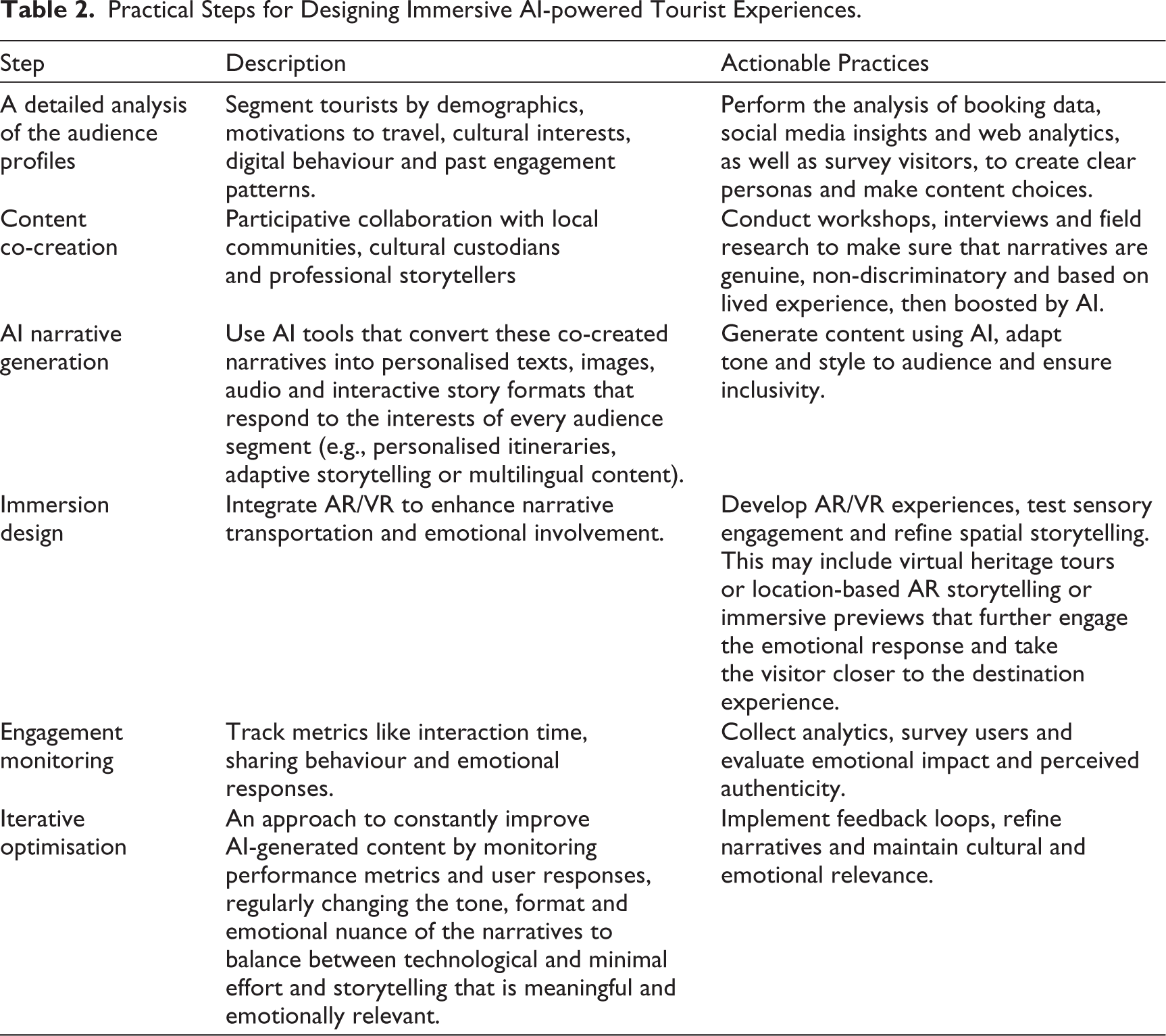
Lastly, this research suggests that the future of the competitive advantage of destinations will not be about who embraces AI most rapidly, but about who manages it most wisely. Destinations that can adopt AI as a cultural intermediary rather than merely as a tool will be better positioned to foster genuine engagement and evangelism in the context of more automated storytelling. Practically, destination management organisations (DMOs) can implement the model in six steps, as shown in Table 2.
Practical Steps for Designing Immersive AI-powered Tourist Experiences.
Future Research Directions
Considering the research objectives and findings, several future research directions are proposed. First, a key unresolved tension in AI-driven content is whether AI-generated narratives can emotionally engage tourists while still being perceived as authentic. Future research could empirically examine how emotional elements, such as nostalgia and place attachment, are perceived when stories are generated or supported by AI. Furthermore, scholars may examine whether AI-supported content that combines human and AI input, such as local voices or user-generated stories, helps preserve emotional authenticity and strengthen destination evangelism.
Second, tourist destinations vary in their characteristics, such as urban, rural, heritage-based or entertainment-oriented contexts, while AI storytelling tools also differ in their form and function. Future research could investigate which AI storytelling tools (e.g., chatbots, virtual tours, generative visual content or narrative-based systems) are most suitable for different destination types. Research should also examine how these tools influence different forms of destination evangelism, such as tourists’ willingness to share their experiences, promote, recommend or defend a destination, thereby helping destination marketers better align AI tools with their communication objectives.
Third, future research could adopt a cross-cultural perspective to examine how tourists from different cultural backgrounds perceive AI-mediated storytelling. Using different theories and methodological approaches, researchers may examine whether tourists from collectivist cultures respond more positively to stories that emphasise family and community values, whereas tourists from high uncertainty-avoidance cultures may prefer real-life stories supported by facts and clear itineraries. An important direction is to assess whether AI-mediated storytelling reduces or increases travel anxiety across different cultural contexts.
Moreover, future research should focus on how AI-mediated storytelling in tourism is evaluated. While existing studies often rely on basic engagement indicators such as likes and views, destination marketing is more concerned with long-term advocacy and evangelist behaviours. Future studies should develop multidimensional evaluation frameworks that capture emotional authenticity, narrative credibility, trust in the technology and tourists’ willingness to promote and recommend destinations. Such frameworks would help ensure that AI-mediated storytelling contributes to long-term advocacy and helps deepen understanding of its role in destination marketing.
Finally, from a methodological perspective, future studies could employ different research designs to empirically test the proposed relationships. Experimental methodologies may be employed to compare AI-generated, human-generated and AI-supported storytelling in order to assess their impacts on perceived authenticity, tourist engagement and destination evangelism. Another methodological approach could involve cross-cultural survey research to investigate how tourists from different cultural backgrounds respond to AI-mediated narratives. Further, mixed-method approaches could offer additional information about how tourists interpret authenticity and emotional engagement in AI-generated or AI-supported storytelling.
Footnotes
Declaration of Conflicting Interests
The authors declared no potential conflicts of interest with respect to the research, authorship and/or publication of this article.
Declaration of Generative AI and AI-assisted Technologies
During the preparation of this work, the authors used ChatGPT to improve the readability and language of the manuscript. After using this tool, the authors reviewed and edited the content as needed and take full responsibility for the content of the published article.
Funding
The authors received no financial support for the research, authorship and/or publication of this article.