






Abstract
This article reviews Education for Sustainability (EfS) in the secondary sector across a range of countries. Drawing on journal articles, book chapters and official reports, it identifies some of the more successful approaches to implementing EfS within the secondary sector. The authors first discuss the importance of educating for sustainability at the secondary level and then explore barriers to effective EfS in secondary schools. They go on to share their insights into contextual factors that influence EfS practices which are reported in the case studies. In particular, they discuss the influence of (a) politics and curriculum renewal, (b) alignment of curriculum, resources and teaching, (c) the perceived state of EfS and (d) teachers’ professional development as determinants of EfS implementation and success.
Keywords
Introduction
Education has been viewed as one of the most effective means that society possesses for confronting the challenges of the future (UNESCO, 1997). From a normative perspective, schools are key places for young individuals to develop the knowledge, values and skills to be informed and contributing members of society, which in turn may empower citizens and social institutions to lead a transition to sustainability (Chawla & Cushing, 2007; Fien, 2001). Such instrumental conceptions of education as a solution for the challenges to sustainability have been critiqued for ‘indoctrination’, and for ‘deficit’ assumptions, (Jickling, 1992; Jickling & Spork, 1998; Jickling & Wals, 2012) and for the limitations of attempts to ‘socialize’ individuals to be good citizens (Biesta, 2012; Van Poeck & Vandenabeele, 2012). More emancipatory perspectives have emerged that see education as playing an important role in the development of critically thinking, autonomous, self-determining and agentic students (Biesta, 2009; Jickling, 1992) and involving citizenship-as-practice (Van Poeck & Vandenabeele, 2012), albeit with the same ultimate desired end, a sustainable future. Since the landmark UNESCO report some 19 years ago, a range of education practices directed at protecting and enhancing our environmental, social, political and/or economic systems have been incorporated, although with mixed success (Beckford, 2008; Chatzifotiou, 2006; Tilbury, Coleman, & Garlick, 2005) into school curricula across the globe.
However, many of the reported case studies of formal school-based education that are directed towards goals of sustainability and protection of our natural systems are in the primary and early childhood education sectors where, in theory at least, it is easier to integrate EfS into the curriculum, as a single teacher often covers the majority of the curriculum (Kennelly, 2010). The work that has been done and the steps achieved in secondary school systems, appear to be much less visible and less frequently reported in literature. This article, therefore, focuses specifically on the secondary formal school sector, and seeks to review and examine some case studies of practices in this kind of education across a number of countries.
We begin this review by briefly examining conceptual and associated terminological shifts in this domain, and the importance of EfS at the secondary level, before exploring some barriers to effective practices in secondary schools. This is followed by a number of case studies of EfS practices from a range of countries across the globe.
Terminology
There is continuing contestation surrounding the conceptual emphases and associated terms that have been used to refer to the kind of school education that focuses on and for the sustainability of our natural, social and economic systems. The terminology used to express relevant conceptions varies across educational jurisdictions. The conceptual emphasis on protecting ecological systems signalled by the term environmental education (EE) has in many countries been expanded to include a future-oriented focus on social and economic aspects of sustainable development that is signalled by the now ubiquitous term Education for Sustainable Development (ESD) introduced by the United Nations in the landmark 1992 Agenda 21. In some countries, for example, Australia, and in much research literature, the alternative term Education for Sustainability (EfS) has emerged, arguably differentiated from the other approaches by a more socially critical and action-oriented edge. A fuller and more nuanced discussion and problematization of the conceptual relationships within and between the different conceptions of EE/ESD/EfS is beyond the scope of this article (for reviews and further discussion see Breiting, 2009; Fien, 2000, 2001; Jickling & Spork, 1998; Tilbury, 1995).
Because of the variation in conceptions and usage of terminology within different jurisdictions and by different authors, we are including literature across all three major conceptions: EE, ESD and EfS. When referring to specific studies, we will use the terminology of the authors, however, in more generic contexts, we will be using the term EfS.
We have adopted the term EfS because to us it best conveys a notion of education that addresses knowledge, skills, values and affective issues for a changing future without losing sight of the imperative for understanding and valuing conservation of the biophysical world. The conceptualization of EfS accords in the main with our perspectives, specifically when EfS is interpreted as education that is critical of current social practices and that advocates a style of education where students are taught the skills of critical social analysis, consensual planning and change for a more sustainable future (Kennelly, 2010).
The Importance of EFS in Secondary Education
EfS is important across the educational spectrum, but because secondary students are approaching voting age and becoming more independent and autonomous, it is vital that they are critically engaged in their learning experiences and linking these experiences to their informed and active participation in democratic processes such as voting, choices, civic and community engagement (Ferkany & Whyte, 2013). Wangari Maathai (as cited in Breiting & Wickenberg, 2010) argues that it is important that students at this level recognize that sustainable development, democracy and peace are indivisible.
It is important that future citizens are confident agents for change for the common good, including economic, social and ecological justice, and EfS at the secondary level can enhance students’ knowledge and skills that will hopefully lead to such action (Chawla & Cushing, 2007). Salient skills for our secondary students include critical thinking, collaborative decision-making and complex problem-solving (Bagoly-Simó, 2013; Di Chiro, 2014; Gough, 2006) including ‘collective action problems … in which citizens exercise the participatory virtues … persistence, courage and self-confidence, friendliness, empathy, sincerity, reasonableness/fairness, integrity, and deliberative humility and wit’ (Ferkany & Whyte, 2013, p. 17). These complex attributes need to be taught and practised within the school learning environment if our students are to become competent to make judicious environmental, political, social, economic and ecological decisions in an uncertain future (Breiting & Wickenberg, 2010; Hungerford, 2009), and in order to influence our future. EfS provides opportunities for students to explore and develop strategies that will enhance their knowledge and skills with democratic values and principles (Plesman-Emerton, 2013). This will allow young adults to take ownership of the issues that may confront them in the future and develop their confidence to confront these issues within a collective movement (Chawla & Cushing, 2007; Hill, 2013).
Secondary schools also provide sites where modelled behaviour can be consistent with EfS teaching at a very formative time in students’ lives (Higgs & McMillan, 2006). Modelling can solidify concepts such as community action for the common good. Students are given the opportunity to build their capacity to influence decisions within a safe and structured learning environment. The learning opportunity can be maximized by a modelled consistency between teaching and practice, creating an alternative cultural model to the one they may experience outside school. Because EfS is more difficult in a culture that does not actively endorse sustainability (Higgs & McMillan, 2006), the importance of EfS within the secondary school setting is reinforced when teachers communicate positive values and goals of EfS to parents (Chawla & Cushing, 2007).
Also important in secondary EfS are the personal engagement (Breiting & Wickenberg, 2010) and passion of teachers to ‘empower their students as agents of change’ (Hill, 2013, p. 28). To be successful, EfS needs support from leaders and the opportunity to be flexible, utilizing outdoor learning areas and practical programmes (Fazio & Karrow, 2013).
Many secondary students in developed countries have part-time jobs or pocket money and are beginning to experience purchasing power. Alerting young people to the consumer-materialistic lifestyle of their culture (Blatt, 2014) can empower them to make more environmentally sustainable choices. An EFS programme that connects students to specific (often local) environmental concerns and the decision-making process promotes empowerment by increasing self-esteem, critical thinking skills and motivation (Blatt, 2014). Furthermore, students who are given the opportunity to critically reflect on their learning experiences are more likely to attain transformational learning, which in turn can bring about positive changes in attitude and behaviour towards environmentally sustainable consumption (Taylor, 2007).
Barriers to EFS in the Secondary Sector
Studies exploring major constraints to implementing EfS into the secondary curriculum have established a range of categories of the perceived difficulties. Ham and Sewing (1988) classified barriers as ‘conceptual’ (such as lack of agreement and misconceptions about the nature of EfS), ‘educational’ (feelings of competence and/or commitment to teaching EfS), ‘logistical’ (lack of resources, funding, teachers’ lack of preparation time), and ‘attitudinal’ (teachers’ attitudes about the environment and EfS). Similarly, Evans, Whitehouse and Gooch (2012, p. 124) identified ‘grassroots barriers’ for the implementation of EfS within the formal secondary education system in Australia, which included teacher concerns based on their everyday practice, the overcrowded curriculum, lack of teacher knowledge and training in EfS and how to implement it (Dyment & Hill, 2015; Evans et al., 2012). In the words of Hungerford (2009, p. 2), ‘we are asking teachers to do things they are not trained to do, don’t have time to do or have never done’.
Following a world conference on Environmental Sustainable Development in Bonn, 2009 (ESD), Jucker (2011, p. 45) suggested that two aspects were required for EfS to be effective in secondary schools: ‘a holistic, systemic approach’ and its movement ‘from the margins to the centre’ of the school curriculum. The emphasis on multidisciplinarity and holism reflects the complex and intertwined ecological, social, political and economical dimensions of the challenges to the sustainability that our societies are trying to address.
However, the widespread quest for cross-curricular holism in EfS has also been described as naïve and itself part of the problem (Stables & Scott, 2002). While on the face of it, a central and holistic place for EfS is relatively tractable in primary schools where a single teacher teaches across all disciplinary areas, holism and multidisciplinarity in EfS can be challenging in secondary contexts because of a range of ‘educational’ characteristics of secondary schools, which leads to difficult educational and logistical problems.
Secondary curricula are commonly tightly framed into discrete disciplinary silos administered by different school departments (Nixon, Sankey, Furay, & Simmons, 1999), which are characterized and bounded by discrete ‘realms of knowledge’ (Siskin, 1992). Secondary school teachers bring with them the influences, forms of knowledge and discourses of their particular subject traditions from their higher education and teacher training backgrounds. For example, a study of 3,229 senior secondary teachers in Sweden showed differences in the way ESD was understood that were linked to their subject specialties (Borg, Gericke, Höglund, & Bergman, 2012). These characteristics of secondary school organization exert a powerful influence on teachers’ sense of professional identity and, crucially, on how schools are managed. The organizational challenges of complex and ambitious cross-disciplinary programmes in secondary school are considerable (Jones et al., 2012).
In an ideal world, secondary teachers would work together across their subject areas to proactively problem-solve some of the limiting issues discussed above (Jenkins, 1999/2000). However, the realities of the day-to-day demands of secondary-level teaching mean that this may prove difficult in the absence of very committed individuals. In part for these reasons, Stables and Scott (2002) argue instead for within-disciplinary ‘environmental literacies’ that value and leverage the diversity of potential disciplinary responses to the challenges to sustainability that we face.
Despite the potential advantages of the within-disciplinary approach advocated by Stables and Scott (2002), teachers who are required to integrate EfS perspectives with their specialized subject area/s often articulate the ‘overcrowded curriculum’ (Evans et al., 2012; Jucker, 2011) and lack the time in class necessary to develop EfS innovations. Hence, ‘curriculum prioritising’ (Walker, 1997, p. 254) comes into play, whereby teachers make decisions about their teaching in line with their hierarchical view of the curriculum. This often involves privileging their subject area, especially towards the senior years of secondary school where accountability to parents and school executives for student learning and assessment results is increasingly emphasized.
Attitudinal barriers to EfS were evidenced in a study of nearly 9,000 teachers’ attitudes across 24 countries (Clément & Caravita, 2014), two-thirds of whom were from the secondary sector. The study highlighted anthropocentric conceptions of the environment by some teachers, especially those in less developed countries, and some values and traditions in relation to human rights that appear to be inconsistent with many articulations of ESD.
Other educational challenges to students’ learning in secondary contexts are also evident. By the time students reach the secondary level of education, there is more likelihood that exposure to media coverage of problems may lead to a sense of disempowerment (Connell, Fien, Lee, Sykes, & Yencken, 1999; Fien, 2000; Fleer, 2002). Because EfS can involve controversial issues, and, therefore, be a source of debate itself (Borg et al., 2012; Ross, 1996), it can provoke strong emotional responses among students and parents, as individuals view and value the environment differently, and bring different values to complex and multifaceted sustainability issues. These differences are part of the plurality that can enhance EfS if handled appropriately, but they also have the potential to cause division in the class, school, wider community, state or nation, sometimes to the detriment of students’ learning (Rickinson & Lundholm, 2008), as well as cause apprehension for teachers (Ross, 1996).
It has been argued that secondary teachers tend to lag behind their primary teaching colleagues in relation to the quantity and innovation they exemplify in EfS (Skamp, 2015), a problem historically linked to inadequate EfS in pre-service teacher education (UNESCO, 1978; UNESCO-UNEP, 1990; Walker, 1997). Despite EfS being described as ‘the priority of priorities’ in teacher education programmes (UNESCO-UNEP, 1990), such programmes across many countries are ‘characterised by a range of competing priorities, in terms of time, course structures, accreditation, compliance and pedagogical approaches’ (Dyment & Hill, 2015, p. 21) and few pre-service teachers subsequently move beyond the environmental focus that they believe EfS comprises (p. 29).
Barriers at a more macro level have been articulated by authors such as Jucker (2011), Fien (2001) and Nixon et al. (1999). These include the rise of the school measurement culture with its increased focus on literacy and numeracy testing, associated league tables and the valorization primarily of what can be measured (Biesta, 2009). This wider educational culture is particularly evident within the senior secondary school whose credential is conferred by success in high stakes national school-leaving examinations. The transformative nature of some EfS can conflict with school practice, and Jucker (2011, p. 46) claims that EfS, particularly at the secondary level tends, therefore, to only tinker at the edges of education and society and that a new social movement is required: one that ‘does not serve the powerful political and economic elites, but rather the resilience of the biosphere and a just and equitable human society on Earth’.
Data Collection, Analysis and Presentation
The previous sections have provided some background to EfS at the secondary level and in particular the challenges faced in integrating it effectively across the curriculum. In this section, we review recent international literature on secondary EfS to explore the practice of EfS across a wide range of countries before drawing out some conclusions as to how secondary EfS might be characterized and facilitated. In total, 213 articles, chapters or publically available case studies or vignettes relating to secondary EfS from 2010 to the present and published in the English language were identified from edited books, databases including ProQuest and EbscoHOST using key word combinations such as ‘secondary’, ‘7–12’, ‘EfS’, ‘EE’, ‘ESD’, or EfS websites, downloaded and stored in an EndNote library. Articles were selected based upon an initial reading of their title and abstract. There was no attempt to search for specific countries. After a more detailed reading of each article in which summary notes were made, the sample was reduced to 73 articles, which were coded and summarized.
The following seven key themes relating to practice and policy were coded and tabulated for each article.
EfS was conducted through the formal secondary school curriculum (C)
EfS was action oriented (AO)
EfS was taught through interdisciplinary or cross-curricular approaches (XC)
The provider (P) was based in schools (teachers) (SB) and/or an outside provider such as a non-governmental organisation (NGO) or community group (OP)
The terminology (T) used, e.g., EE, EfS and ESD
Any explicitly mentioned impact of EfS
‘Enablers’ that supported EfS or ‘Barriers’ that impeded EfS.
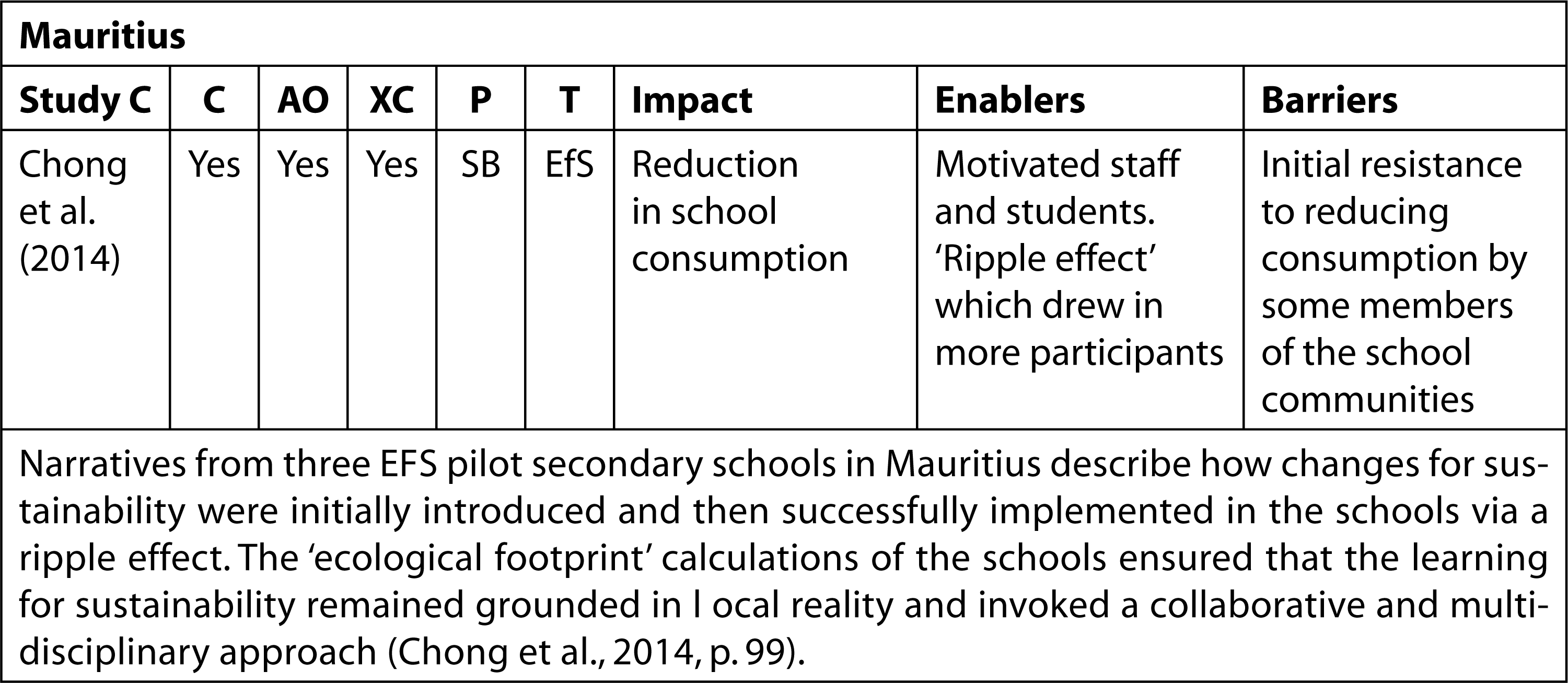
In addition, other noteworthy information not captured by these seven themes was summarized in an additional open field. Thus, as an example, the following summary table was produced for one article about secondary EfS in Mauritius.
The summary tables were then organized by the country to which they referred, and data across the seven themes were imported into ArcGIS Software (ESRI, 2008). The distribution of the 73 reports of secondary EfS across the world was depicted (Figure 1), and the prevalence of each of the coded themes was tabulated, mapped and described through frequency histograms according to country of origin of the relevant studies. What follows is a discussion of the general trends and findings based upon the information extracted from this analytical process.
Findings and Discussion
The map presented in Figure 1 provides a visual representation of the broad findings from literature. The studies that emerged from our search strategy spanned 28 countries, which are engaging in EfS in the secondary sector and publishing associated research in English. This number includes countries such as Zimbabwe, where despite significant political and economic challenges, there appears to be an increasing environmental content in the curriculum and more place-based experiential learning (Mukoni, 2013).
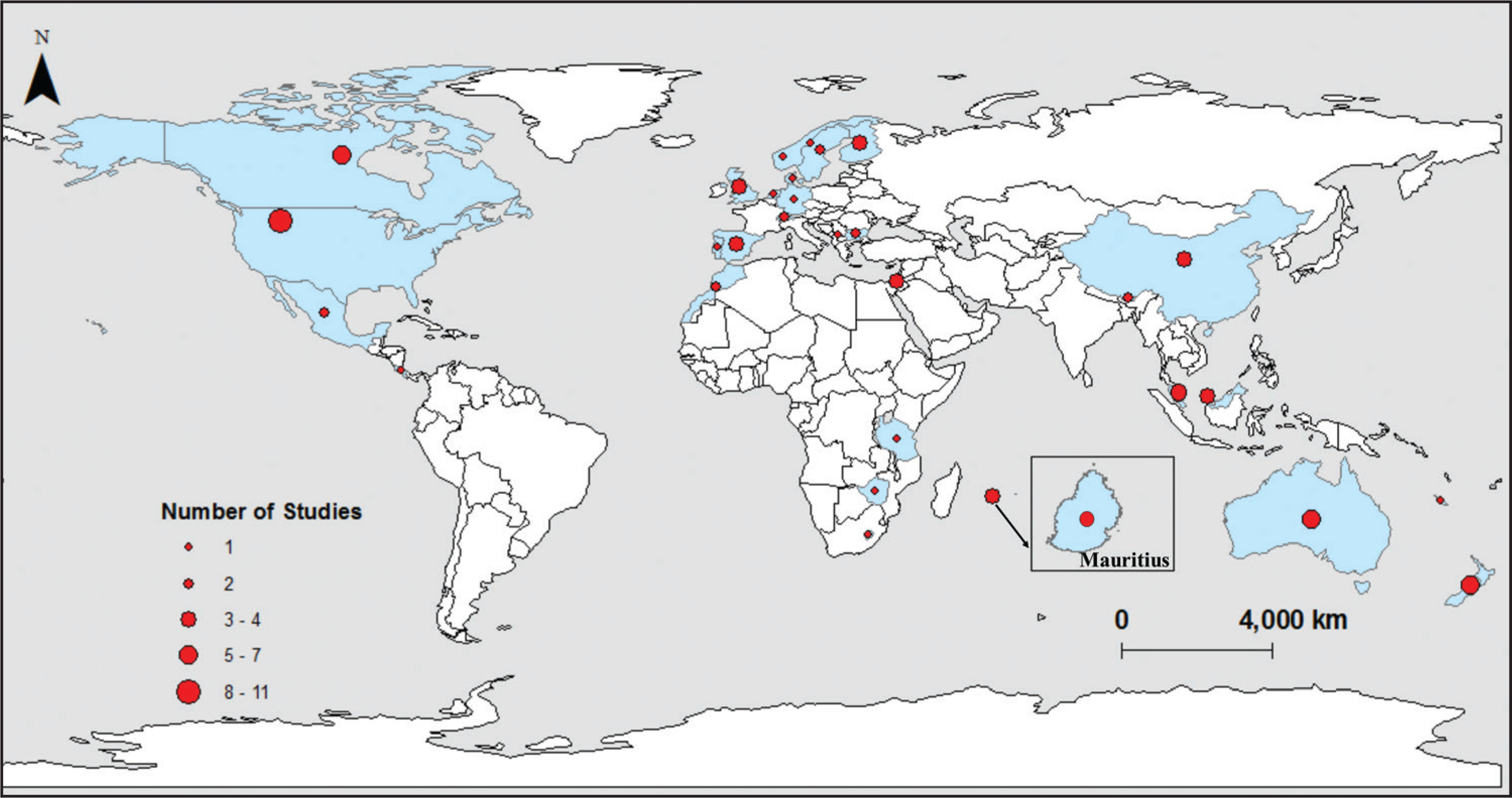
To an extent this number of countries exhibiting EfS in their secondary systems is good news, however, it still leaves a majority of countries where secondary EfS was less visible. In addition, as shown by the size and location of the red dots, the studies detected were most concentrated in developed countries. There may well be EfS being conducted in secondary schools in more developing countries that were not detected in our literature search, as their absence from our dataset is likely to be affected by a combination of the following factors:
Limitations and biases of our search strategy, such as the language (English) of journals indexed by the pertinent databases or websites. The problem in so much social science research that captures voices only from the educated, affluent and developed west: from where most published articles emanate (Connell, 2007). The issue that in some less developed countries there is a relatively limited post-primary schooling available to young people.
These results expose a gap in western literature about the state of secondary EfS in many developing or non-western countries, which also face serious and systemic threats to their environmental, social, economic and political sustainability.
Terminology varied significantly with authors using EE, EfS, SD, ES, ESD and even DESD in some cases, with Climate Change Education for Sustainable Development being used by UNESCO when reporting on Morocco (Selby & Kagawa, 2013). There appeared to be no particular geographical pattern to terminology usage, which was possibly determined more by authorship than context.
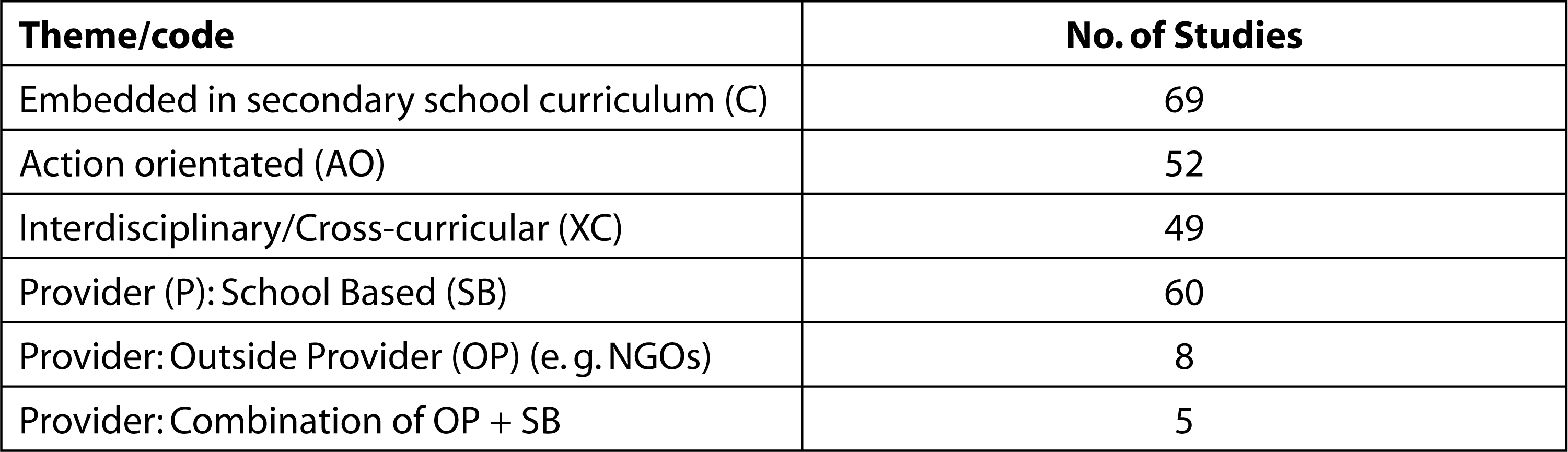
The extent of the representation of the coded themes in the studies reviewed is summarized in Tables 1 and 2.
As shown in Table 2, in 69 out of 73 countries reported on, secondary EfS had a formal school based component embedded in the curriculum, although in some cases, this was supplemented by non-formal education provided by NGOs.
One of the Summary Tables Produced for Mauritius Using the Themes and Coding System Described Above Based Upon a Study by Chong et al. (2014)
Number of Studies Out of 73 That Exhibited Each of the Coded Themes
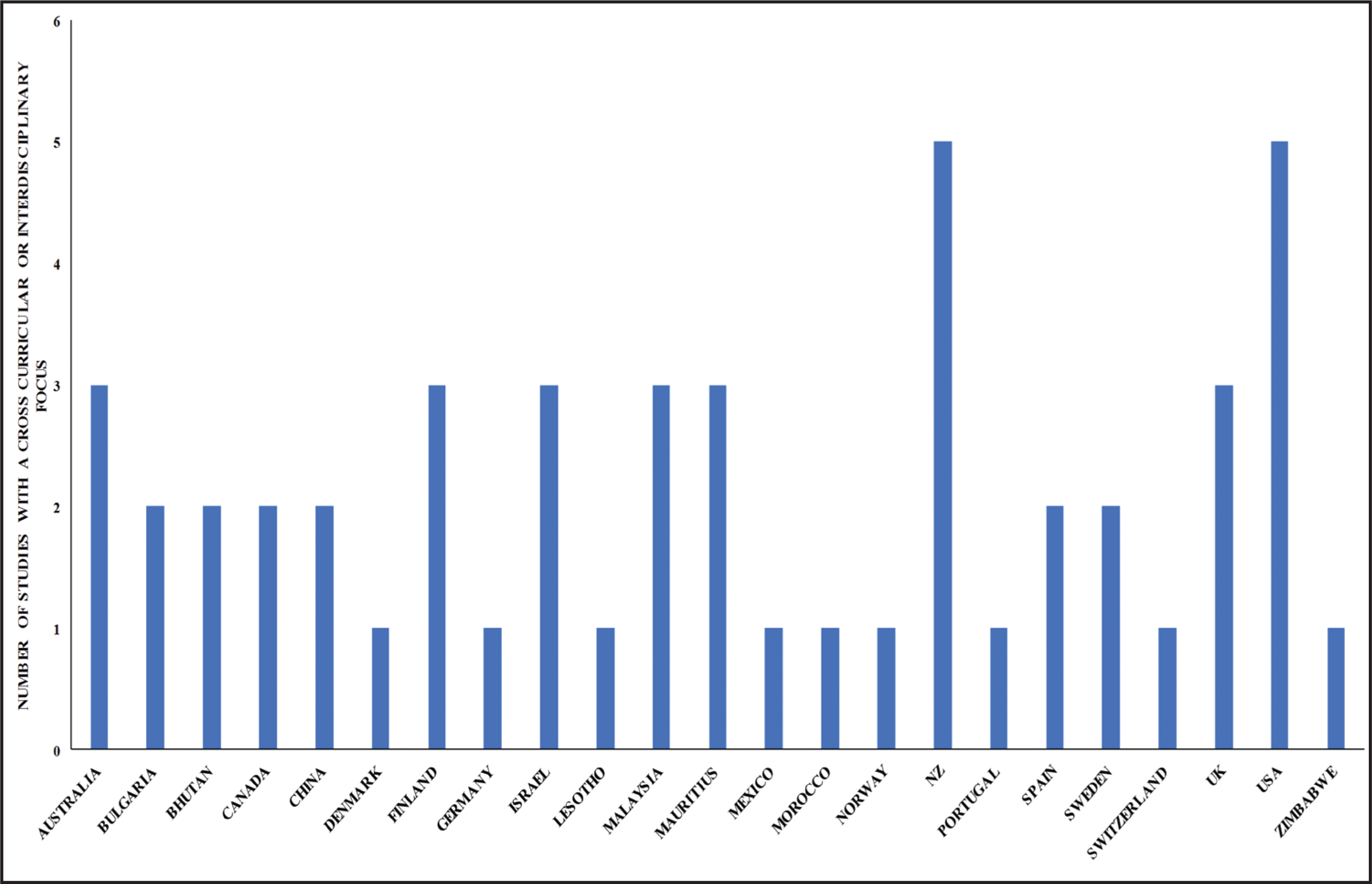
A cross-curricular or interdisciplinary approach was common and reported in 49 studies from 28 countries (Table 2, Figure 2). This widespread cross-curricular approach was somewhat unexpected, given the difficulties posed by the siloed nature of most secondary school systems reported in literature. The results indicate that secondary silos can be transcended in enacting cross-curricular EfS.
For most Western countries some component of action-orientation was evident, with 41 out of the 52 published studies describing this approach (Figures 3 and 4). This result suggests that literature advocating for an action-oriented approach (Jensen, 2002; Schusler & Krasny, 2010) is gaining widespread traction. This is an encouraging finding, as this approach can empower students and avoid the development of action paralysis, feelings of powerlessness and guilt which may arise when student learning focuses on environmental problems and causes (Jensen & Schnack, 2006). Taking action for the environment at a local level can turn children’s anxiety and despair about the environment into optimism (Alimahomed & Keeler, 1995; Jensen & Schnack, 2006). Only 11 studies from non-western contexts reported action-orientation (Figure 3), largely a reflection of the relatively low number of studies on secondary EfS in this study from developing countries.
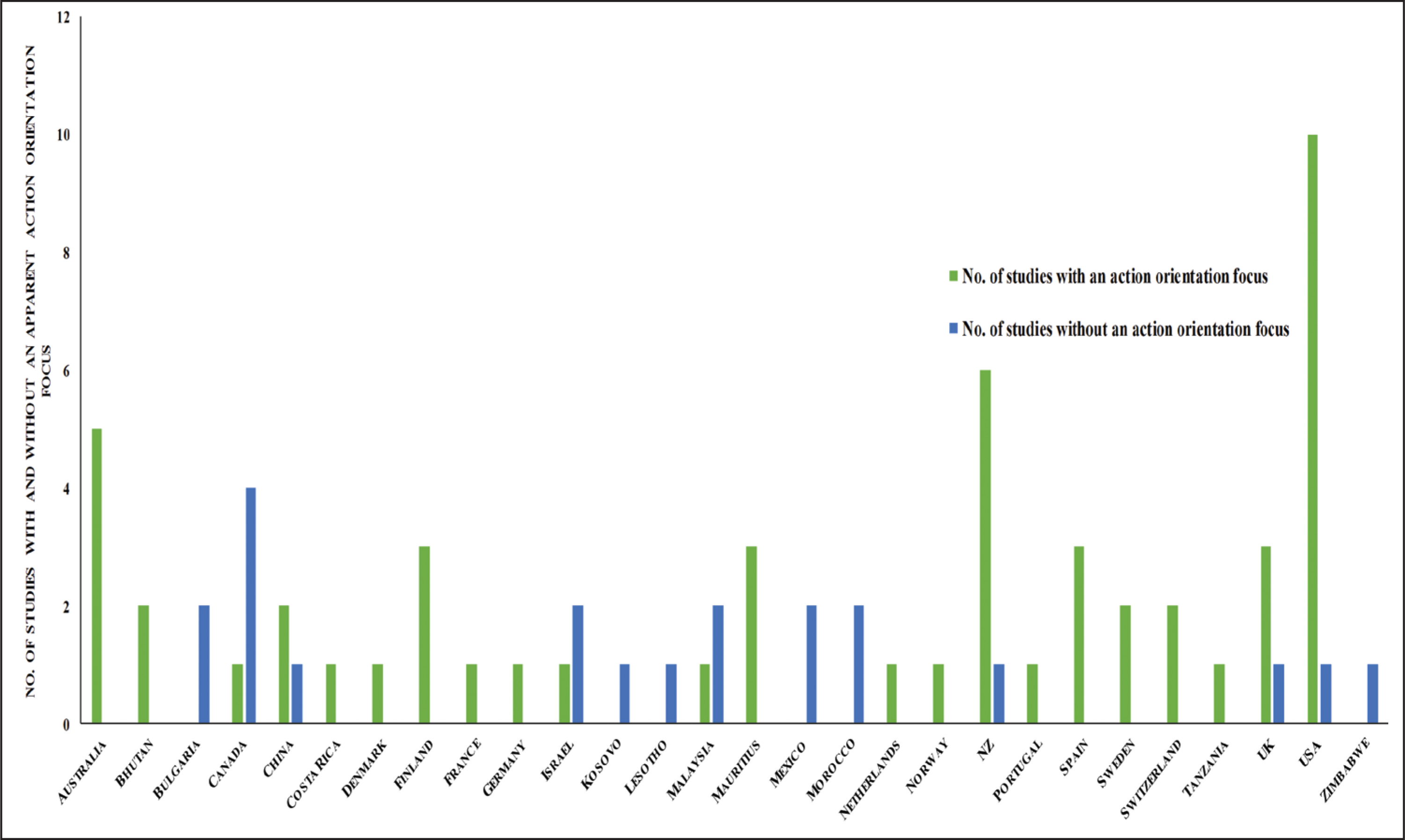
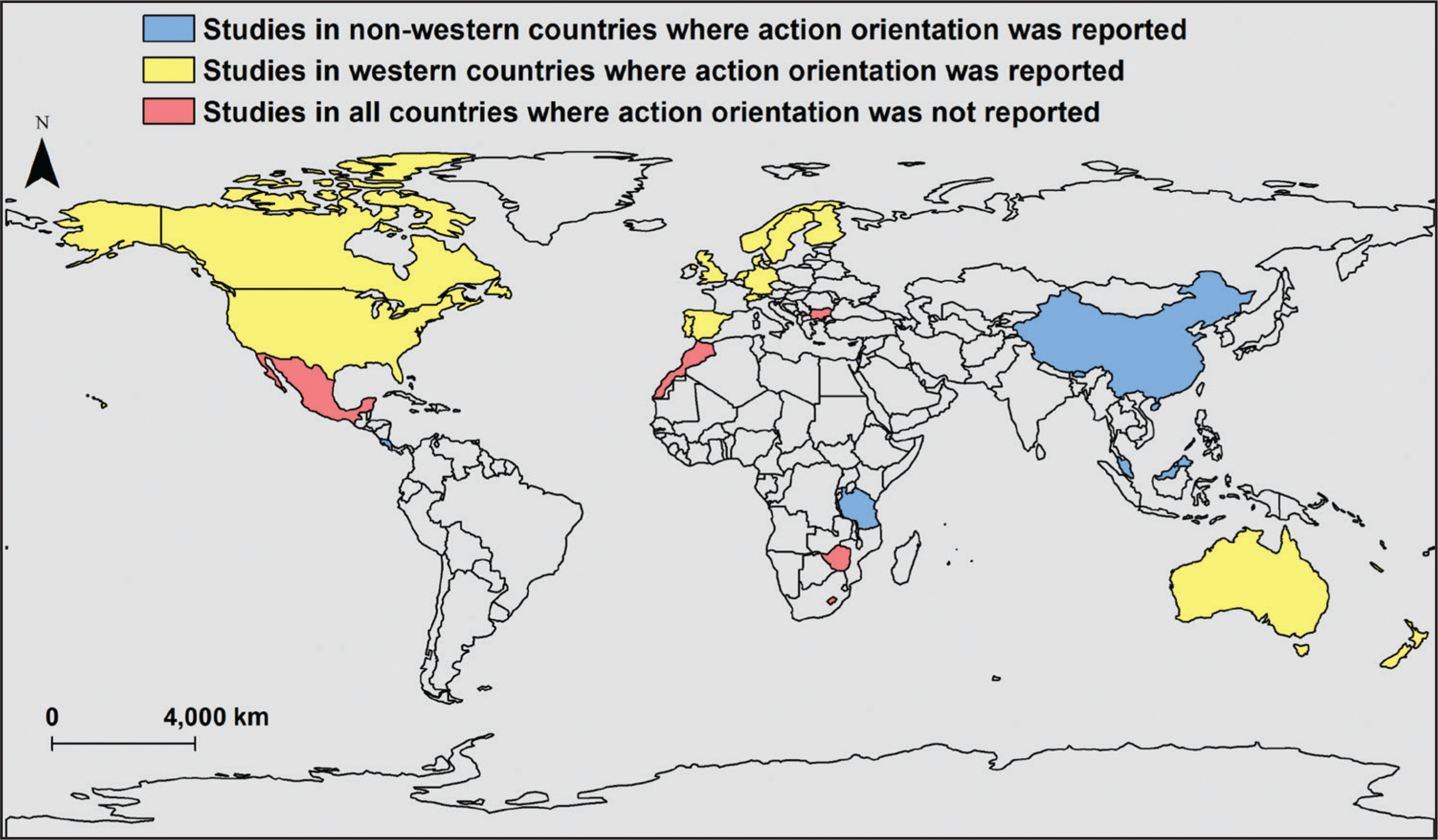
The remainder of the discussion will examine some of the contextual influences on EfS practices that emerged from the analysis of literature for various countries. In this discussion, we focus on some specific examples of EfS that were adopted with some measure of success or impact within their local context, as well as examples that were demonstrably less effective.
Contextual Influences on EFS Practices
Policies and Curriculum Renewal
Top-down approaches to developing and implementing EfS programmes can result in very mixed outcomes. But in small countries such as Mauritius, where an entire sector of the education system makes a serious commitment to EfS, it does appear to have an impact. According to Chung and Smitsman (2014), the Bureau of Catholic Education in Mauritius developed an EfS charter and pledge covering 18 secondary schools. The five EFS principles were based on the foundations for ecological literacy as described by Orr (1992).
All education is EfS.
Systems thinking and holistic approach to education.
Experiential learning in and from nature.
Education in dialogue with place.
Schools as learning communities.
As a consequence of this charter, Chung and Smitsman (2014, p. 11) claim that EfS at school level became more experiential with project action-based education. This also appears to have resulted in tangible impacts with schools measuring their overall ecological footprint and subsequently reducing their overall consumption of materials (Bangari, Deruisseau, Moossajee, & Smitsman, 2014). Chong et al. (2014, p. 99) reported that initially there was resistance to reducing consumption by some members of the school communities; however, they went on to state that ‘the ecological footprint calculations of the schools ensured that the learning for sustainability remained grounded in local reality and invoked a collaborative and multi-disciplinary approach’.
The Catholic Church in Australia has developed a similar approach through its ‘ecological vision’ document ‘Earthcare’ (Catholic Earthcare Australia, 2006). Among other things, the document encourages schools to adopt the ‘Four Rs’: refuse, reduce, reuse and recycle in managing their resources and encourages networking with local and global environmental organizations. The effect of this approach on student behaviour is not clear, but potentially considerable given the size and reach of the Catholic Education sector in Australia. Mobilizing faith-based education systems towards pro-environmental behaviour has potential for considerable traction, particularly in countries where faith-based systems are relatively powerful.
Finland, which has consistently performed very well against such educational measures as the Programme for International Student Assessment, has a long history of EfS projects in the secondary sector, but according to Åhlberg et al. (2014) many of them seem like fireworks, looking beautiful, but with no lasting impact as they did not add anything to each other, or build upon each other. However, in the past few years, the government in Finland has been undertaking a profound reform of the national core curriculum in which sustainable development has been emphasized. Competences for leading a sustainable lifestyle based on a wise use of ecosystem services are part of this. The new version of the curriculum was due for implementation in 2016, so it is too early to gauge its impact, but according to Anttila (2014), the working culture of all schools is to be developed so that each school becomes a learning community, which exemplifies responsibility for the environment and future orientation. This approach if properly implemented appears to be somewhat in keeping with Fien’s (2001) call for a reorientation of schools to put sustainability firmly at their centre.
In the USA, Feinstein (2009) claims that EfS has never gained a substantial foothold in the primary or secondary curriculum, and consequently educators who work outside of schools have dominated the American EfS community. Furthermore, many of the most active and widely cited EfS researchers focus on informal and non-formal learning environments. As part of this non-formal approach, Smith (2015) argues that there is a robust and growing interest in the creation of ‘green schools’, through the greening of school design and operations.
According to the UK National Commission for UNESCO (2010), a non-formal, holistic approach to EfS has proved to be effective in Scotland, where the curriculum formally embeds global citizenship and ESD. Schools are encouraged to adopt whole school approaches in which teachers from all school sectors now have the opportunity to gain accreditation for their work on sustainable development education. As a result, Scotland has an extensive eco-school network. Research on sustainable schools in Scotland has indicated a raising of standards along with enhanced well-being, greater levels of engagement and motivation. Improved community cohesion with valuable connections between the school and its parents and carers and the wider community has also been reported.
Alignment of Curriculum, Resources and Teaching
Some of the documented studies demonstrated the problems associated with non-aligned curricula, resources, assessment or teaching. Where these components of education are not coherently related with the intended learning outcomes of EfS, attempts to integrate EfS effectively are problematic.
One example of non-aligned curriculum, teaching and assessment was described from Mainland China, where the top-down government-led model of EE emphasizing environmental knowledge acquisition has proved ineffective (Tian & Wang, 2016). This is in part because EE is regarded as an ‘extra’ as it is not a core examination subject and teachers’ main focus is to prepare students for public examinations (Yang & Lam, 2009). According to Zhang (2010), the Government of China developed a ‘flagship’ education project ‘’Environment, Population and Development’, intended to integrate EE into subjects across the curriculum, and develop local textbooks on environmental protection and sustainable development. However, McBeath and McBeath (2014, pp. 95–97) claim that although the programme may have reached 10,000 pilot schools, it was a corrupt commercial enterprise, with lecture-dominated in-service training and coerced participation.
Similar alignment issues are evident in Bhutan, where a review of the curriculum was conducted (Tenzin, Lepcha, & Lhendrup, 2013) to determine the status of what is referred to as Environmental Science (ES) [conceptually equivalent to EE/EfS]. The review revealed that although ES was well integrated into the curriculum in both primary and secondary levels and was intended to encourage action among students, in reality, it was very teacher-centred and bookish.
Environmental Science topics are delivered predominantly through lecture and teacher centered approaches; and the natural settings are hardly used…. Teachers need professional development opportunities and pedagogical upgrading [p.1].
A new curriculum framework that includes the optional subject of ES for year 9, 10 and 11 (Tenzin et al., 2013) has laudable objectives, clearly written to encourage action-orientation, such as ‘to motivate them (students) to take action towards envi-ronmental conservation…’. However, the supporting texts are factually dense, with activities that are largely text based and provide little evidence of action, hence the rhetoric of action in the introduction of the new ES subject may not be realised in its implementation.
A similar recurring theme particularly among non-western countries was teaching styles that were incompatible with the aspirations expressed in curriculum documents. Writing about Bulgaria, Kostova, Vakleva, Vladimirova, and Kaleva (2012) and Kostova and Vladimirova (2010) argued that although aspects of EE are well represented across the secondary curriculum in Bulgaria, the teaching of EE is very didactic. In the case of China, Tian and Wang (2016, p. 40) reported that despite use of the term ESD, in practice there is a transmissive mode of education, an emphasis on environment rectification, and an unresolved economic growth conflict. ‘EE is taught as a combination of book-knowledge and out-of-classroom-activities, such as tree planting activities, cleaning up public spaces and collecting used batteries’.
Status Of EFS
The perceived status of EfS within the curriculum can also impact how it is taught. In New Zealand, the curriculum encompasses several EfS-compatible principles, and EfS is one of four themes that schools can choose to include in their curricula or use to integrate their various curriculum areas. Furthermore, among values to be encouraged, modelled and explored are ecological sustainability, and community participation for the common good (Eames, Roberts, Cooper, & Hipkins, 2010). Eames et al. (2010) reported that teachers often avoid integrating EfS into their curriculum, among other reasons, because of non-supportive senior management and assessment demands. Assessment is one of the clearest signposts of perceived value and status in the espoused and enacted curriculum. Brignall-Theyer, Allen, and Taylor (2009) also reported that despite a supportive curriculum, the majority of teachers did not explicitly incorporate a sustainability focus into any of their classes. Furthermore, these authors found that because EfS classes were not compulsory and not assessed, they were viewed as a non-academic option for dropouts from academic streams.
Teacher Preparedness and Professional Development
It was widely reported across literature that teachers often felt that they lacked the skills to integrate and teach EfS effectively at the secondary level. However, it was encouraging to note that in a number of countries, tangible measures were being taken to remediate this problem. For example, in order to address the identified problems facing the implementation of EfS in New Zealand, the government has appointed EfS advisors to assist, and where an EfS advisor works successfully at the whole-school level, teachers in multiple disciplines begin to see connections (Eames et al., 2010).
A similar situation was reported for Norway by Sandås (2005), who wrote that teachers had difficulty with both content and methods of EfS, as they lacked sufficient understanding of the complex scientific and social issues involved. Furthermore, teachers in general did not have sufficient capability to plan, lead and carry out interdisciplinary and intersectoral projects. As a consequence, schools had difficulty integrating EfS into existing teaching structures and practices. The government responded to this situation by establishing a network to provide support to schools in the implementation of EfS. This network provides 155 online exercises for students, most of which are undertaken in the field. Teachers at schools involved in the network are supported by researchers at research institutions through email, telephone and web pages, and several in-service courses are conducted each year for teachers.
Conclusions
As is clear from the initial literature review for this article, implementing EfS and integrating it into the curriculum at the secondary level is generally significantly more difficult than attempting this at the primary level. The barriers to effective secondary EfS have been clearly articulated by many of the authors cited in the initial section of this article. Our search of the literature on actual country examples for secondary EfS has tended to support these generalizations. Furthermore, there seem to be limited examples of research into secondary EfS in developing countries. However, rather than reiterate the problems in relation to secondary EfS, we would like to highlight some specific ‘positives’ that have emerged from the study and might be replicated across a number of countries.
Positive impacts and outcomes were evident from a range of approaches to EfS in secondary contexts, including:
An entire education sector working together and united by formal charter and pledge (e.g., Mauritius: Chung & Smitsman, 2014). Non-formal, holistic EfS and green or eco-school networks embedding ESD and rewarding teachers with accreditation for their work in EfS (e.g., Scotland: UNESCO, 2010). Supporting teachers integrating EfS into the curriculum, through national advisors (e.g., New Zealand: Eames et al., 2010). Electronically connected school networks, which are linked to the research community, share ideas and resources, and support schools or individuals struggling to integrate EfS into the secondary curriculum and ultimately their teaching (e.g., Norway: Sandås, 2005).
This latter approach would appear to be one that might transfer to developing countries because of its cost effectiveness. Even though schools in many developing countries often lack effective IT resources, particularly in rural areas, mobile phones, including smart phones, are generally ubiquitous. This technology might be used to assist teachers and schools network EfS ideas and resources without major budgetary implications.
A central theme to the success of some of these initiatives seems to be the ability to access collaborative communities of practitioners who can support each other in the face of considerable barriers such as overcrowded curricula and demanding systems of assessment at the secondary level. Furthermore, whole school initiatives at the secondary level appear to be integral to effective practice. The importance of constructive alignment (Biggs, 2003) between goals of EfS, curricula, resources, assessment and teaching is also foregrounded in the studies reviewed.
The range of approaches to EfS cited in this review illuminate the influence of underlying socio-cultural norms, orientations to achievement, and rules of participation on universal, centrally mandated educational policies or initiatives such as those relating to EfS (Fuller & Clarke, 1994). Cultural variation within and between the studies, for example, in individualist versus collectivist perspectives, will have influenced conceptions of the role of teachers, of students, and the purposes of secondary education in relation to EfS (Wursten & Jacobs, 2013). Some cultural mores of educational systems may be in tension with some of the imperatives of action orientation, and as has been long argued (Fuller & Clarke, 1994; Stevenson & Stirling, 2010) policies and initiatives designed to enhance learning effects must be culturally situated. Further research into specific cultural factors/influences and the impact these have on the successful delivery of EfS programmes, especially in relation to action-oriented education and the development of learner agency, may offer insights into the mechanisms of change embedded within cultures, which can mediate efforts to successfully implement EfS programmes in schools and assist the advancement of the universal EfS delivery to all secondary school students.
Footnotes
Declaration of Conflicting Interests
The authors declared no potential conflicts of interest with respect to the research, authorship, and/or publication of this article.
Funding
The authors disclosed receipt of the following financial support for the research, authorship, and/or publication of this article: This research was funded by an internal grant from the STEM Research Network of the School of Education, University of New England.