







Abstract
This article critically examines the assumptions behind the demographic dividend hypothesis and tries to assess to what extent India is in a position to tap the potential demographic dividend. It argues that the assumptions underlying the demographic dividend hypothesis are weak. The benefits flowing from an increasing proportion of working-age population are not an irrefutable law but depend upon the empirical situation that may differ from country to country. In the conditions prevailing in India, the high optimism about India’s ability to reap the demographic dividend found among the scholars and the official circles seems to be misplaced. The quality of Indian labour force leaves much to be desired in terms of its education, skill base and health status.
Keywords
Introduction
The attitude of demographers and economists about the role of population in economic development has undergone a dramatic change in recent years—from a pessimistic to an optimistic view. Earlier, many scholars believed that rapid growth of population puts a constraint on faster growth by diverting resources from investment to consumption. A more recent optimistic view holds that the process of demographic transition resulting from a fast decline in mortality rates and a slower decline in birth rates pushes up the growth rate of the economy at a later stage when the young join the workforce. This gain in growth rate is popularly called the demographic dividend. The demographic dividend hypothesis relies on the changes in the age structure of population leading to a rise in the population in the working age group, commonly taken as 15–64 years (15–59 in India), and a consequent decline in the ratio of the population in the non-working age group to the population in the working age group.
The idea of demographic dividend has been propagated in a series of papers by David Bloom and his associates (Bloom, Canning & Malaney, 2000; Bloom, Canning & Sevilla, 2003; Bloom & Williamson, 1998). Other scholars have also pointed out that the falling fertility and the resultant demographic dividend can create an atmosphere conducive to the economic growth (Birdsall, Kelley & Sinding, 2001; Chu & Lee, 2000; Kelley & Schmidt, 2001). It is estimated that the demographic dividend contributed around one-fourth to two-fifths of the GDP growth in the eastern economies (Bloom & Williamson, 1998; Bloom et al., 2000).
India is supposed to be placed in a favourable position to benefit from the demographic dividend because of its young and growing population. The share of the working-age population in the total population of India is expected to continue increasing until about 2035 to 2040, before slowly tapering off. The share of the working-age population in India is expected to remain above 65 per cent until 2050. Thus, it is argued that India is sitting on a huge opportunity in terms of a boom in the share of the working-age population. Kumar (2010) has found that states with higher growth in the share of the working-age population have grown faster than others. Aiyar and Mody (2011) through a rigorous statistical analysis show that there is a large and significant growth impact of both level and growth rate of the working-age ratio. In their view, the demographic dividend could add about 2 percentage points per annum to India’s per capita GDP growth over the next two decades. According to Bloom (2011), India’s changing demographics are creating a strong impulse for economic growth.
These views are shared in the official circles in the country also, as is reflected in the following quote from the Economic Survey 2012–13 which devoted a full chapter to Seizing the Demographic Dividend:
Growth optimists are confident in India’s demographic dividend—the fact that India’s dependency ratio, as measured by the share of the young and the elderly as a fraction of the population, will come down more sharply in the coming decades… More working age people will mean more workers, especially in the productive age groups, more incomes, more savings, more capital per worker, and more growth. Also, because demographic change is associated with fertility declines, the transition period may be accompanied by greater female participation in the labour force…. (Economic Survey 2012–13, p. 26)
There are some sceptical voices also. Chandrashekhar et al. (2006), after a critical analysis, conclude that the evolving employment, education and health situation do not warrant great confidence in India’s ability to exploit the demographic ‘window of opportunity’. Thakur (2012) finds that ceteris paribus, growth in the working age ratios has been negatively influencing the economic growth. She feels that the bad policy environment in the backward states which are now experiencing the rise in working-age population is holding these states from exploiting their favourable structure and instead making the situation worse by adding greater unemployment.
In this article, we have critically examined the assumptions behind the demographic dividend hypothesis and tried to assess to what extent India is in a position to tap the potential demographic dividend. The article is organized as follows. We first discuss the validity of the assumptions behind the demographic dividend hypothesis. We then present the main features of the changing demographic scenario in India with a focus on changes in the age structure, which is followed by a discussion of the issues related to the quality of the population in terms of education, skills and health. The final section summarizes the main findings of the article.
How Demographic Dividend Works
According to the advocates of demographic dividend hypothesis, the demographic dividend occurs due to a number of mechanisms related to labour supply, savings and human capital. Bloom (2011) summarizes these mechanisms in the following words:
Demographic dividends are a composite of five distinct forces: The first is the swelling of the labor force as the baby boomers reach working age. The second is the ability to divert social resources from investing in children to investing in physical capital, job training, and technological progress. The third is the rise in women’s workforce activity that naturally accompanies a decline in fertility. The fourth has to do with the fact that the working ages also happen to be the prime years for savings, which is key to the accumulation of physical and human capital and technological innovation. And the fifth is the further boost to savings that occurs as the incentive to save for longer periods of retirement increases with greater longevity.
We may now examine the validity of these mechanisms. The demographic transition in any country following a sharp decline in mortality rates, accompanied by a slower decline in birth rates, creates a bulge in the population in the younger age groups. With the passage of time, this results in a larger share of people in the working-age group taken at 15–65 years generally (15–59 years in India), when the ‘baby boomers’ join the working age group. This reduces the burden of dependency on the working population. The expected decline in the ratio of non-working to the working population, as a result of the demographic transition, is an irrefutable statistical fact. All countries undergoing the process of demographic transition experience these changes in the age structure of their population. However, the positive consequences supposed to follow from this are not inevitable. A higher proportion of people in the working age groups does not imply that all of them actually join the working force and contribute to the national output. As Chandrashekhar et al. (2006) argue, what is more pertinent to analysis is the ratio of workers to dependents rather than the ratio of persons in the working age group to those in the non-working age group.
The other source of increase in the labour supply is the expected increase in the female workforce following a decline in the fertility rate. However, increased participation of women due to a lower number of children is not a universal fact. Female participation in work depends on a number of social, cultural and economic factors, which differ from country to country. For example, Spain and Italy have very low female labour force participation rates and extremely low fertility, whereas Sweden has much higher fertility and higher rates of women’s employment. Moreover, if a country is on the downward sloping stage of a U-shaped female work participation rate, the participation of women would decline with an increase in household incomes. Thus, a sizeable part of the demographic dividend may not materialize if women do not join the workforce as some demographers think.
The second critical assumption of the demographic dividend hypothesis is that the changes in the age structure in favour of younger age groups and reduction in dependency ratio would increase savings in the economy. This assumption draws support from the life cycle hypothesis of Modigliani (1986). The life cycle hypothesis postulates that the young and the old consume more than they produce, whereas working-age people tend to save more. The increased household savings can provide the capital accumulation needed to finance growth. This hypothesis has found support in some empirical studies as well (Higgins, 1998; Higgins & Williamson, 1997; Kelley & Schmidt, 1996).
The assumption about a higher saving following from a decline in the dependency ratio may not hold true in every situation. If a large part of the working population in the country remains engaged in low-productivity agriculture and other informal activities, saving effect will not arise. The saving capacity of the middle classes may also be eroded by the high inflation rate and the increasing cost of education and health care due to the privatization of these services. Moreover, household savings are affected by a number of other factors like the availability of financial institutions to mobilize the savings. If a large part of the population remains financially excluded, the expected savings will not materialize.
The demographic dividend hypothesis further assumes that the increased savings may be automatically invested. This may not happen if household savings are frittered away on unproductive uses like purchase of gold and land, shares or on other speculative activities. Investment may also be constrained by other factors related to the government regulatory policies, availability of infrastructure and economic expectations.
It is argued by the proponents of the demographic dividend hypothesis that the demographic transition encourages investments in human capital. As Bloom et al (2003, p. 41) argue: “a longer life expectancy causes fundamental changes in the way that people live. Attitudes about education, family, retirement, the role of women, and work all tend to shift.” As a result of these changes, parents are likely to spend more on the education of their children. Thus, the workforce becomes not only younger but also more educated, healthier and more productive, promoting higher wages and a better standard of living. Whether such changes actually follow demographic transition is not a matter of theoretical assumption but empirical investigation.
Finally, it may be pointed out that the demographic dividend hypothesis considers only the supply-side factors and not the demand-side factors. As Acharya observes:
The demographic dividend is all about the supply of labour. Nothing is said about demand. Therein lies the catch. The additional labour supply offers the potential for employment and growth. In a well-functioning economy with competitive product and factor markets labour demand would match supply and lead to more jobs and output. But there is no guarantee of such a happy outcome. It all depends on how well the economy is run; in particular, how well labour markets work. (Acharya 2004, p. 4538)
In short, the assumptions underlying the demographic dividend hypothesis are highly optimistic and may not prove to be true in every circumstance. There is nothing inevitable about the positive effects of demographic transition. If the economy does not generate sufficient jobs for the new entrants in the labour force, the demographic dividend is likely to turn into the demographic disaster as the proponents of demographic dividend hypothesis themselves recognize. To quote Bloom, the leading proponent of demographic dividend hypothesis, on this point:
However, demography is not destiny; growth of the working-age share of the population does not automatically lead to an acceleration of economic growth. Demographic change may provide a boost to economic growth, but appropriate policies are needed to allow this to happen. Without such policies, a country may instead find itself with large numbers of unemployed or underemployed working-age individuals. This scenario would be a ‘demographic disaster’, instead of a demographic dividend, in some instances promoting state fragility and failure, potentially with adverse political, social, economic, and ecological spillovers to other countries. (Bloom, 2011, p. 6)
Changing Demographics of India
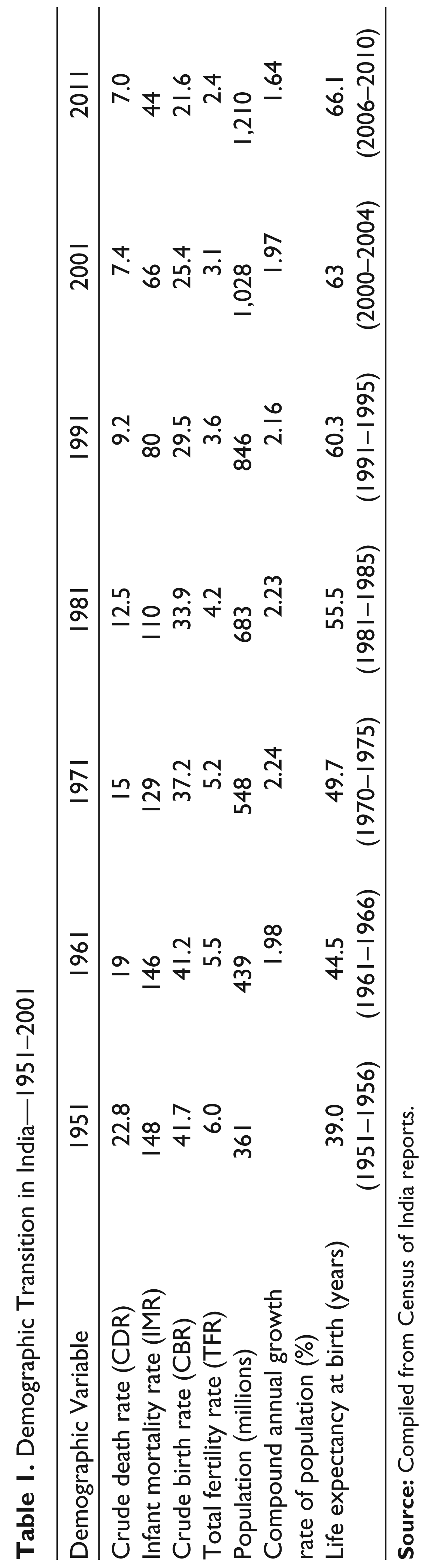
Since 1951, India has witnessed a sharp demographic transition reflected in the major vital statistics (Table 1). The crude death rate in India has come down from 22.8 in 1951 to 7 in 2011, while infant mortality rate has come down from 148 to 44. The decline in crude birth rates was, however, slower from 41.7 in 1951 to 21.6 in 2011. Thus, against a 70 per cent decline in death rate, the decline in the birth rate was only about 50 per cent, resulting in the acceleration of the population growth rate during the period 1951–1981. But, since 1981, population growth rate has declined from over 2 per cent per annum to 1.64 per cent per annum. The fertility rate has also witnessed a sharp downward trend. The life expectancy over the period has recorded marked improvement, going up from 39 years during 1951–1956 to 66.1 years during 2006–2010.
Demographic Transition in India—1951–2001
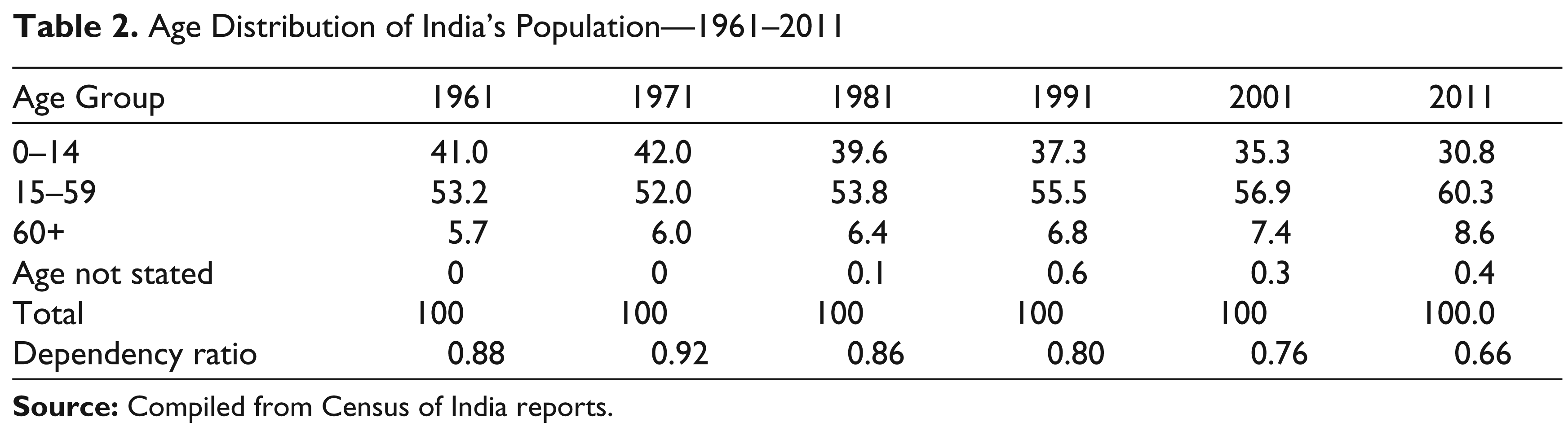
The demographic transition has resulted in the expected changes in the age distribution of India’s population (Table 2). The change in the age structure was very small till 1981 but became marked after that. Between 1981 and 2011, the share of children (0–14) declined by about 9 percentage points following the decline in the birth rate. The proportion of the old age group (60+) increased by 2.2 percentage points. The population of the working age group (15–59) jumped by 6.6 percentage points over the same period. The dependency ratio has sharply declined over the period from 0.9 in 1961 and 1971 to 0.66 in 2011. Earlier, one worker supported nearly one dependent, but now one worker is required to support only 0.66 dependent. It will also be noted from the table that the shifts in the age structure were sharpest during the decade 2001–2011. According to the projections of the National Commission on Population (2006), the proportion of the population in the working age group 15–59 years is expected to rise further to 64.3 per cent in 2026, further reducing the dependency ratio to 0.55.
Age Distribution of India’s Population—1961–2011
The UNDP population projections indicate that the proportion of working age group will continue to increase in India in the coming decades, reaching the peak of 64.8 per cent in 2030 (Table 3). This is happening at a time when several advanced economies, such as Japan and Western European countries are experiencing a decline in the share of the working age group in the total population. China, Russia and Eastern European countries are also expected to register a decline in the share of the working-age population in total population around 2015 (Bloom et al., 2003). According to UN estimates, India will add 300 million people in the working age group (15–64 years) between 2010 and 2040, while the working-age population of China will shrink by 45 million. India will be contributing 25 per cent of the world’s new workers in the next decade.
Projected Age Structure for India

Because of these favourable changes in India’s demographics, it is believed that India is sitting on a huge opportunity in terms of a boom in the share of the working-age population (Kumar, 2010). According to Bloom, Canning and Rosenberg (2010), if India adopts policies that allow the working-age population to be productively employed, India may receive a demographic dividend of roughly 1 percentage point growth in GDP per capita, compounded year by year. According to some other scholars, the demographic dividend could add about 2 percentage points per annum to India’s per capita GDP growth over the next two decades (Aiyar & Mody, 2011).
Regional Variations in Age Structure
The trends in the age structure of population for India, discussed in the previous section, conceal wide variation in the situation at the state level. Different states of the country are at different levels of socio-economic development and demographic transition. While several states, mostly belonging to south India, have witnessed a sharp decline in the birth rates during the last three–four decades, the decline has been much slower in the relatively backward states located in the northern and eastern India. As a result, we find marked differences in the age distribution of population at the state level (Table 4).
In 2001, the proportion of working-age population varied from 52.4 per cent in Bihar to 64.0 per cent in Tamil Nadu. By 2011, the states of Tamil Nadu, Andhra Pradesh, Karnataka, West Bengal and Jammu and Kashmir already had over 65 per cent of their population in the working-age group. On the contrary, the states of Jharkhand, Madhya Pradesh, Rajasthan and Uttar Pradesh had only around 60 per cent of their population in the working-age group, while Bihar was lagging way behind with a figure of only 55.2 per cent. Thus, the states of Tamil Nadu, Kerala, Andhra Pradesh, Karnataka, West Bengal and Jammu and Kashmir appear to have already reaped the benefits of population dividend. In fact, their working-age population is likely to register a decline by 2026 (Table 4).
State-wise Percentage Share of Working Age Group Population (15–59)
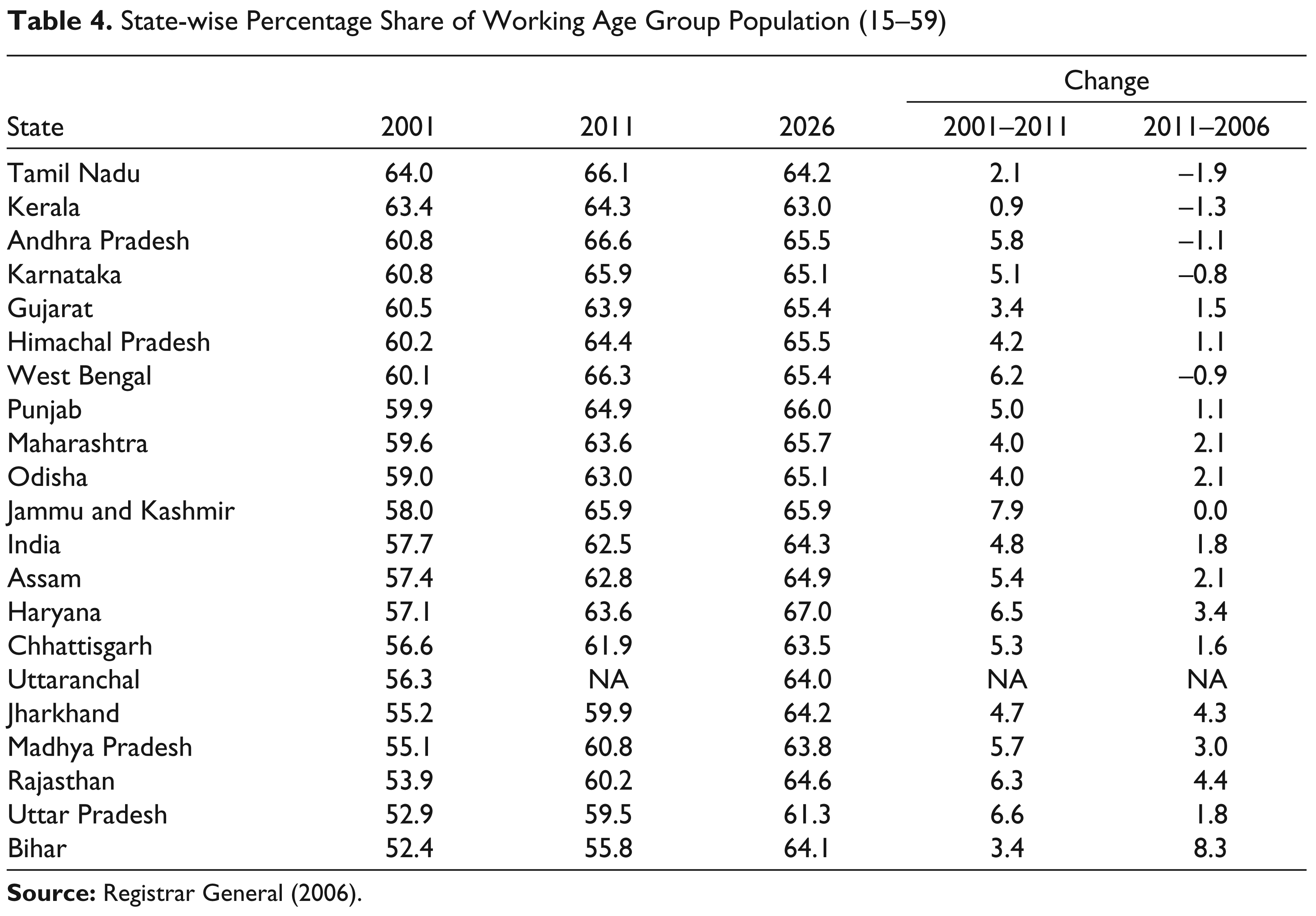
Major gains in terms of improvement in the working-age population in future are likely to accrue to the states of Bihar, Rajasthan, Jharkhand, Madhya Pradesh and Haryana. All of these states except Haryana belong to the poorest category of states in the country. Other states that are likely to register modest improvement in their age structure are Maharashtra, Assam and Uttar Pradesh, followed by Gujarat, Chhattisgarh, Himachal Pradesh and Punjab. The so-called BIMARU states (Bihar, Madhya Pradesh, Rajasthan and Uttar Pradesh) are expected to contribute as much as 58 per cent of the increase in India’s working-age population, with UP alone contributing about one-fourth of the additional labour force (Kumar, 2010). Nearly half of the persons in the working age group in 2026 will be living in the eight poorest states of India, namely, Assam, Bihar, Chhattisgarh, Jharkhand, Madhya Pradesh, Odisha, Rajasthan and Uttar Pradesh.
Will India be Able to Reap the Demographic Dividend?
We may now turn our attention to examine whether India will be able to reap the potential demographic dividend due to the improvement in the proportion of the working-age population. The discussion focuses on four aspects: trends in work participation rates, trends in employment, the behaviour of savings and investment rates and the quality of human resources.
Trends in Work Participation Rates
As scholars have pointed out, demographic dividend depends on the actual ratio of dependents and workers and not on the persons in the working age groups. In India, generally, the population in the age group 15–59 is taken as the working-age population. However, if one looks at the age-wise worker–population ratio, one finds that a good number of children and old persons are engaged in work. As per Census of India 2001, 5 per cent of children in 5–14 age group and 40.3 per cent of persons in 60+ age group were working, taken main and marginal workers together. Only 60 per cent of persons in the working age group of 15–59 were classified as workers. Moreover, 9 per cent of males and 52 per cent of females aged 15–59 were neither students nor workers. Actual dependency ratio to main plus marginal workers, in fact, rose from 1.63 in 1981 to 1.67 in 1991 but declined to 1.58 in 2001 (Basu, 2011, p. 57). These figures cast doubt on the expected demographic dividend based on dependency ratio calculated on the basis of proportion of the working-age population.
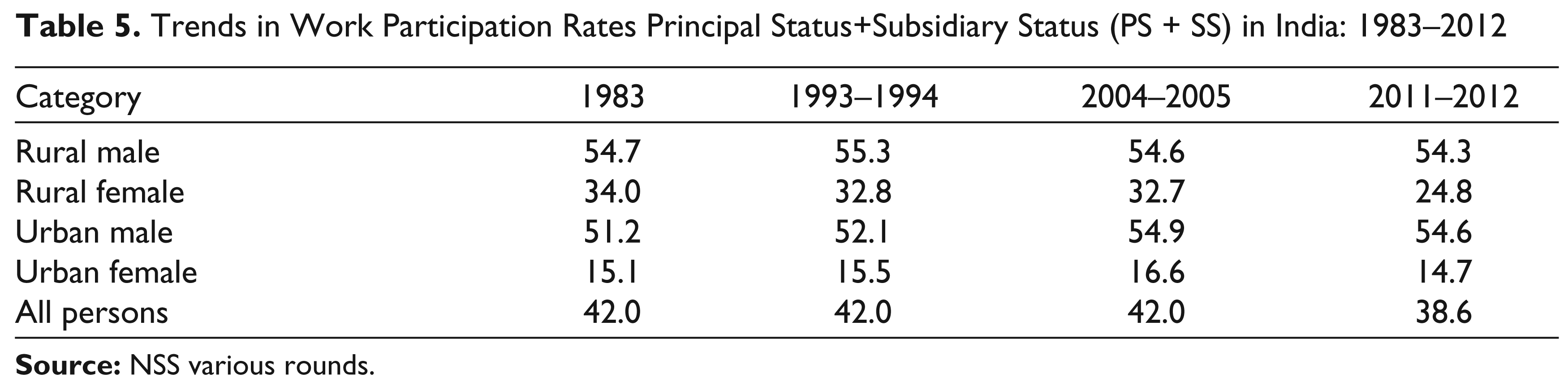
A look at the work participation rate (WPR) during the past three decades reveals little change (Table 5). Rural male WPR has marginally declined from 54.7 in 1983 to 54.3 in 2011–2012. Over this period, Female Work Participation Rate (FWPR) in rural areas declined from 34 in 1983 to 24.8. The decline was rather sharp (8 percentage points) between 2004–2005 and 2011–2012. Urban males show a moderate improvement in WPR over the period. FWPR in urban areas after showing a modest improvement till 2004–2005 shows a decline in 2011–2012. WPR for all persons remained static between 1983 and 2004–2005 at 42 but declined to 38.6 in 2011–2012 mainly on account of the decline in FWPR.
Trends in Work Participation Rates Principal Status+Subsidiary Status (PS + SS) in India: 1983–2012
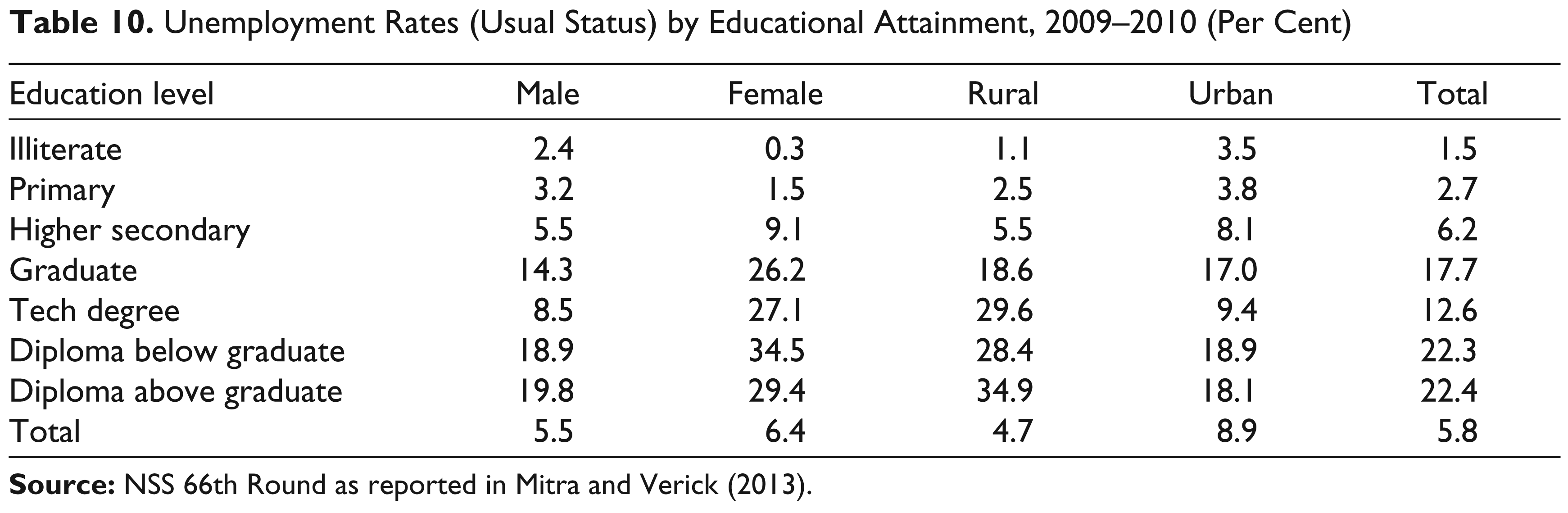
It is often argued that females are withdrawing from labour force because more girls are going to school, both in the rural and the urban areas. It is expected that they will join the labour force at a later stage. However, this may be counterbalanced by the income effect, as poor women may withdraw from the workforce as household incomes rise (Basu, 2011, p. 57). Scholars have also cast doubts on the expectation that the falling fertility is invariably accompanied by rises in women’s work levels as fewer children and rising aspirations should mean a greater ability as well as a greater desire to join the labour force (Basu, 2011, p. 57). According to Basu, ‘in many parts of India, the social status attached to not working (again, at relatively low levels of affluence, college-educated women probably rise in status with jobs) in many parts of the country could well trump the desire for more economic wealth’ (2011, p. 57). The wage differentials between male and female workers further discourage female work participation (Desai, 2010). The high rate of educated unemployment of females in the rural and the urban areas also acts as a deterrent. As per National Sample Survey (NSS) 66th Round, 27.9 per cent of rural female graduates and 25 per cent of urban female graduates were unemployed in 2009–2010. Thus, a sizeable part of the demographic dividend may disappear if women do not join or are unable to join the workforce as assumed by demographic dividend hypothesis.
Employment Trends
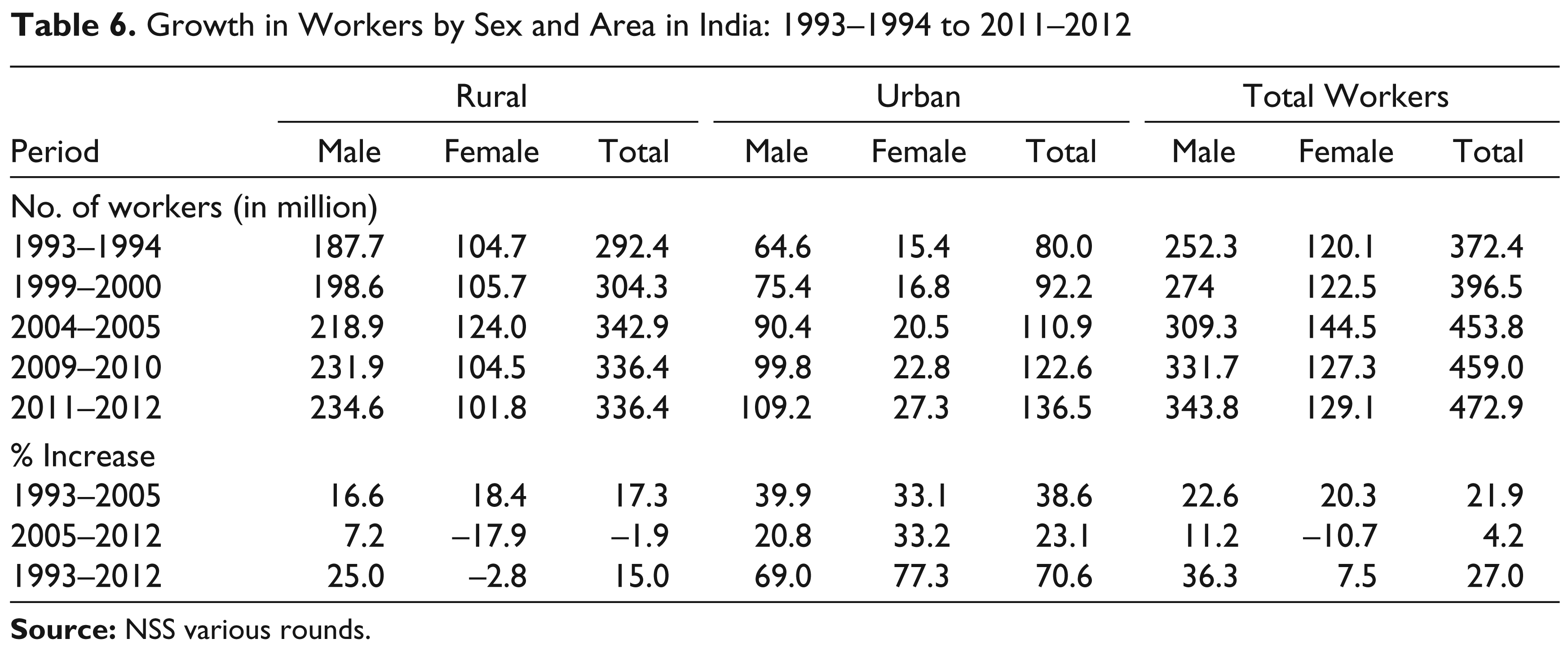
The acceleration in the growth rate of GDP, witnessed in the post-reform period, is not matched by growth in employment. During the periods 1993–1994 and 2004–2005, total workers increased by 81.4 million at an annual rate of 1.81 per cent, but during the periods 2004–2005 to 2011–2012, total employment increased by a mere 19.1 million at a Compound Annual Growth Rate (CAGR) of only 0.59 per cent (Table 6).
Growth in Workers by Sex and Area in India: 1993–1994 to 2011–2012
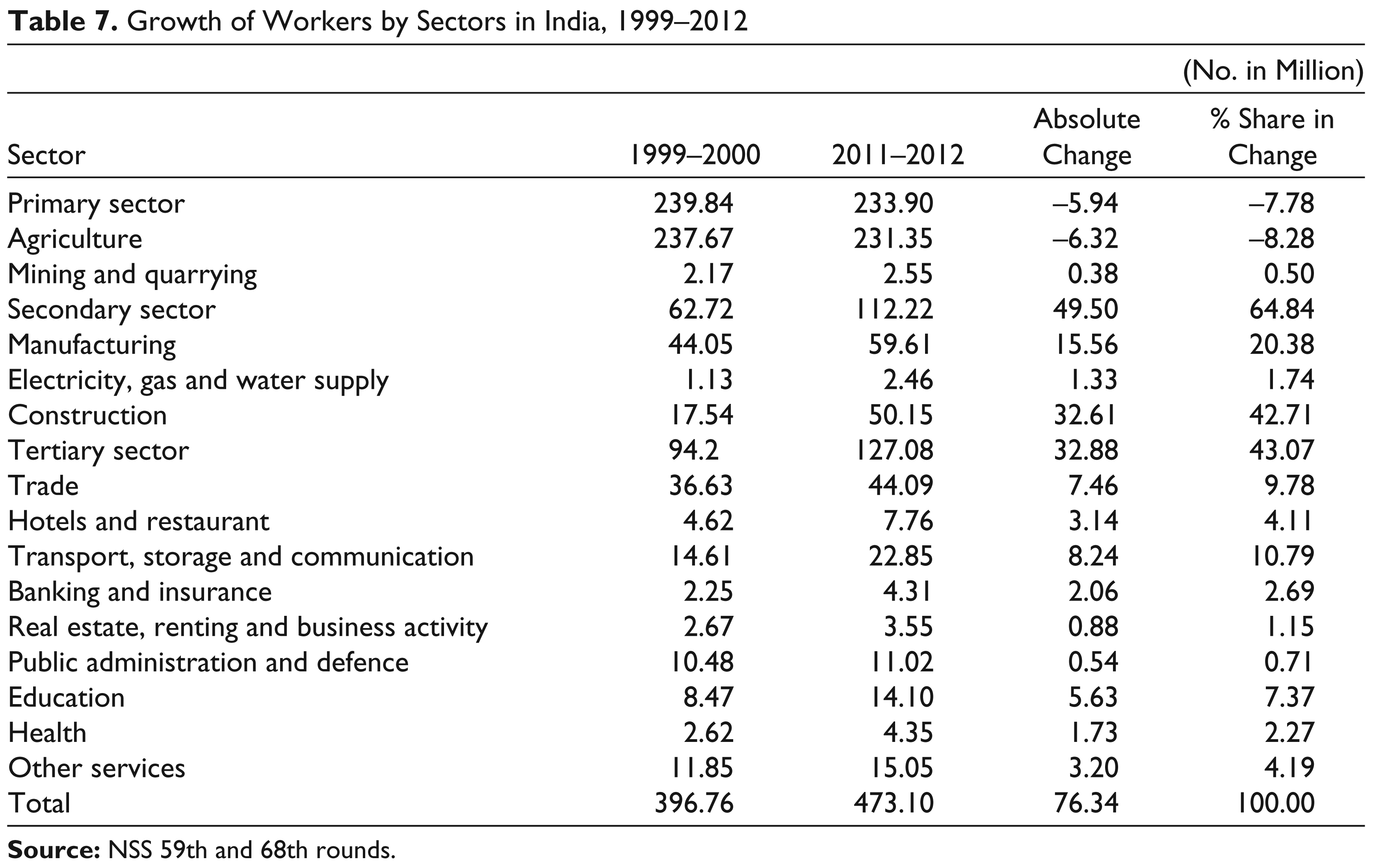
Agricultural workers show a decline of nearly 6 million during the period 1999–2000 to 2011–2012, indicating that agricultural employment has reached a saturation point (Table 7). The decline in the number of agricultural workers is expected to continue in the coming years. Construction alone contributed nearly 43 per cent of the net increase in the workers over this period, while manufacturing contributed about 20 per cent. The share of services in the new employment was nearly 43 per cent, with most of the increase coming from trade, transport and storage and education sector. Thus, the quality of employment has worsened during the period, as most of the jobs have been created in the low productivity activities in the unorganized sector.
Growth of Workers by Sectors in India, 1999–2012
Distribution of Workers by Organized and Unorganized Sector: 2011–2012
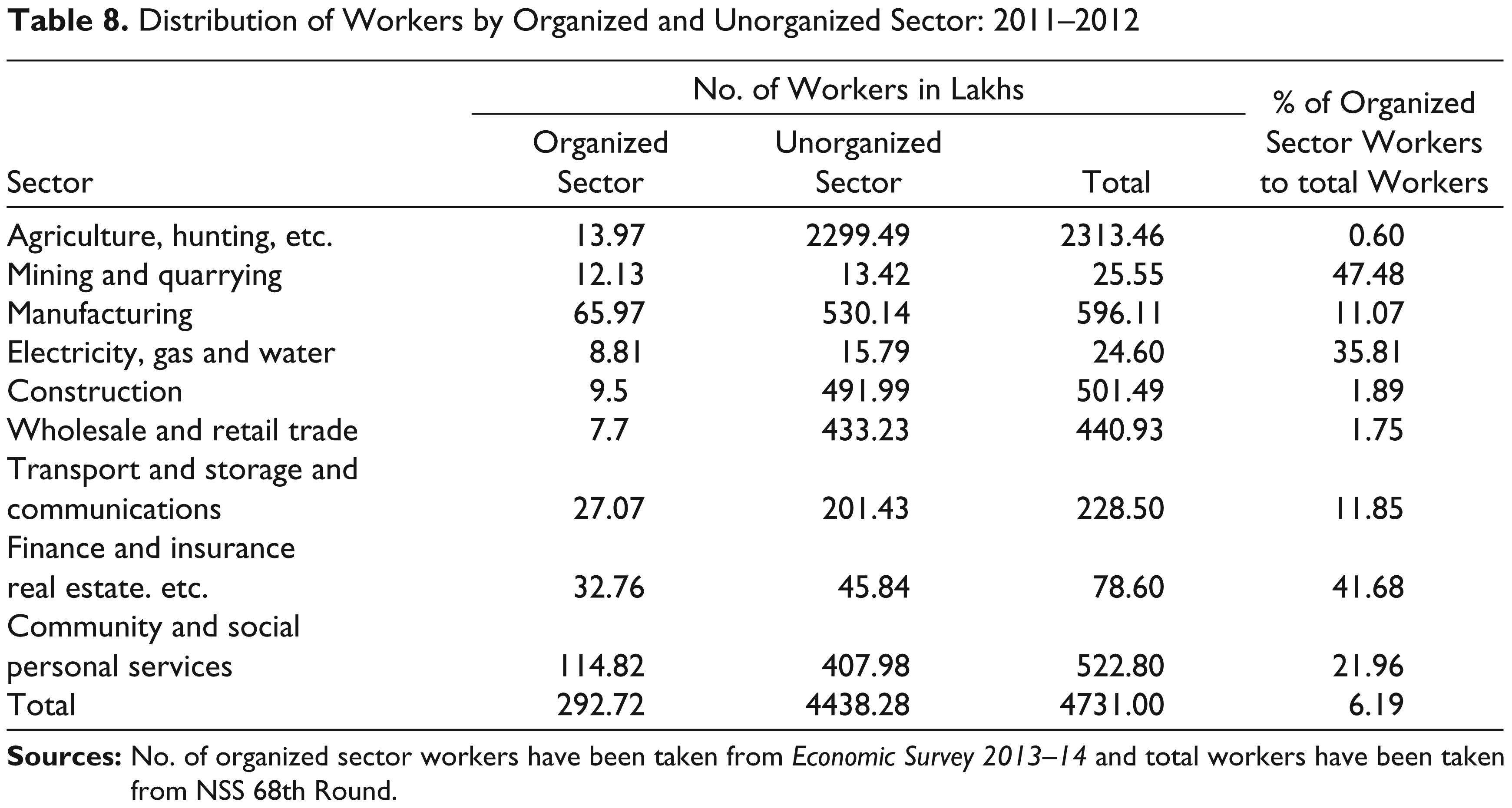
Table 8 shows the distribution of workers by organized and unorganized sectors by major industrial category. Only 6.2 per cent of total workers in India were in the organized sector in 2011–2012. The share of the organized sector workers was relatively higher in mining and quarrying, electricity, gas and water supply and finance and insurance, although even in these sectors, majority of workers belonged to the unorganized sector. However, these sectors account for a very small percentage of total workers (about 3 per cent). In the manufacturing sector, there were only 11 per cent of workers in the organized sector. One may add that even in the organized sectors, an increasing proportion of workers are informal workers with relatively lower wages and without social security benefits enjoyed by formal organized workers. Thus, recent employment trends do not generate optimism that even a high growth rate of GDP will ensure fast employment growth in the sectors with high labour productivity.
In 2011–2012, about 52 per cent of total workers were self-employed and about 30 per cent were casual workers. Only 18 per cent of total workers were classified as regular wage or salary earners, who have relatively higher income and enjoyed social security benefits.
Quality of Workforce
More than the numbers, it is the quality of workforce that is important. The productivity of labour depends on the quality, skill and health of the labour force. As is well known, India’s labour force is still largely uneducated and unskilled. The mean years of schooling of workers in India is 5.12 years, well below the other emerging market economies such as China (8.17 years) and Brazil (7.54 years) and significantly below the average for all developing countries (7.09 years) (Planning Commission, 2012).
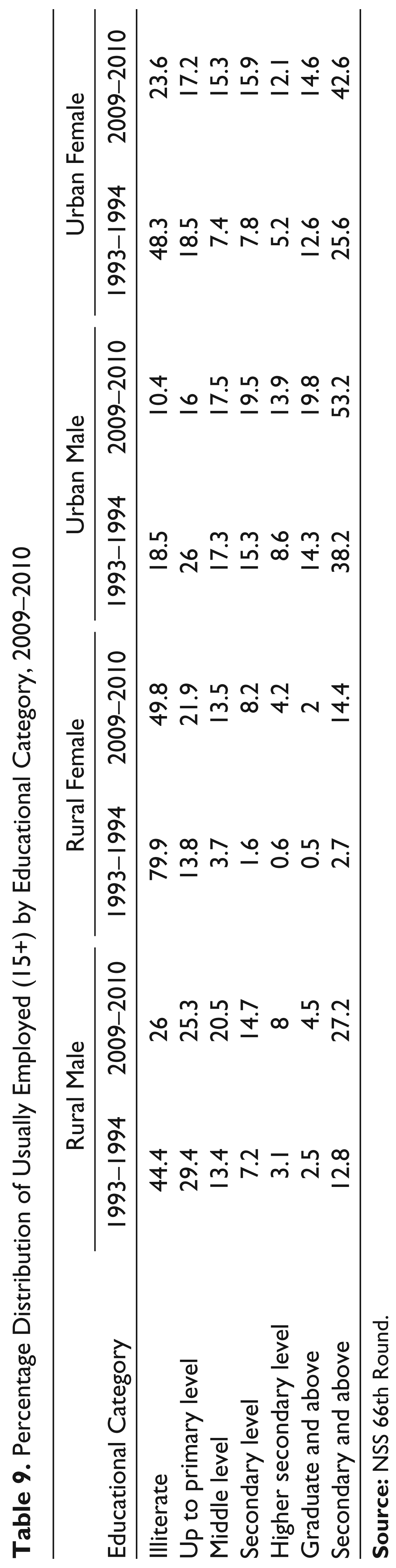
Table 9 shows the distribution of usually employed persons (15+) by educational category in 2009–2010. The table reveals that there has been a substantial improvement in the educational level of workers during the last two decades, but things are far from satisfactory even now. Thus, as per NSS 66th round, about half of the rural female workers and one-fourth of the rural male workers were illiterate in 2009–2010. In the urban areas, the proportion of illiterate workers was 23.6 per cent for females and 10.4 per cent for males. Less than one-sixth of the urban workers and less than 1 per cent of rural workers had a graduate degree.
Percentage Distribution of Usually Employed (15+) by Educational Category, 2009–2010
In 2004–2005, out of the total population of 289.5 million in the age group of 15–29, only 3.9 per cent were receiving formal training or were already trained, while 7.8 per cent were informally trained (Srivastava, 2008). Among workers in this age group, only 3.5 per cent were formally trained or receiving training, while 12.3 per cent had acquired informal training.
The incidence of unemployment is very high in case of educated workers (Mitra & Verick, 2013). The incidence of unemployment sharply increases with the level of education, as shown in Table 10. The unemployment rate was only 1.5 per cent in the case of illiterate persons, but it was 17.7 per cent in the case of graduates. In the case of diploma holders, this proportion was still higher. The position was worse in the case of females and rural workers. Thus, a large number of persons with higher education are unable to find employment, either because of the low quality of education or lack of employment opportunity.
According to the estimates of the Finance Ministry, 2.8 million jobs (0.5 per cent of the labour force) will be missing by 2020 if the labour force participation rate and the unemployment rate remain unchanged at 2010 levels (Economic Survey 2012–13, Chapter 2). However, if more women enter the labour force and labour force participation rate rises from 56 per cent in 2010 to 58 per cent by 2020, the number of missing jobs will go up to 16.7 million. Even if the official unemployment is projected to decrease by 2 percentage points over the next decade, the number of missing jobs in 2020 would still be 11.8 million. According to a CRISIL report, if the current trends in India’s labour participation and unemployment rate continue, about 42.3 million of India’s working-age population will be unemployed or unable to participate in the job market by 2030 (CRISIL, 2010).
Unemployment Rates (Usual Status) by Educational Attainment, 2009–2010 (Per Cent)
Another area of concern is the quality of students coming out of the educational institutions. According to the Annual Status of Education Report 2013 (Pratham, 2014), only 47 per cent of all children in standard V in rural India could read a standard II level text and only 25.6 per cent of all children in standard V could solve a three-digit by one-digit division problem.
There has been a decline, rather than improvement, in the performance of students over the time (Desai, 2014, p. 14). The proportion of schools that comply with Right to Education Act (RTE) pupil–teacher ratio norms (30:1) was only 45.3 per cent. A large number of public schools do not have adequate infrastructure and face shortage of teachers with required skills and training. Only 71.8 per cent of students in primary schools were attending schools. Dropout rates in secondary and higher education continue to be high, especially for socially excluded and economically marginalized groups of learners. Improvement in the quality of education poses a major challenge to the policy makers in India (Planning Commission, 2012).
Things are hardly different in the higher level educational institutions, which are producing a large number of educated but unemployable youth every year. According to a recent Confederation of Indian Industries (CII) study, out of about 100,000 candidates who appeared for Wheebox Employability Skill Test (WEST) across domains, only 33.95 per cent were found employable (CII, 2014). Out of the female test takers, about 42 per cent were employable, while this proportion was around 30 per cent for males. The percentage of B. Pharma test takers who scored 60 per cent in WEST was 54 per cent, and that of B. Tech test takers was 51.74 per cent. The ITI, MCA and MBA candidates were next in the sequence with a percentage of 46 per cent, 43 per cent and 41 per cent, respectively. These figures reflect poorly on the quality of education in higher level institutions in the country.
India is likely to face a serious mismatch between the skills demanded by new and growing industries and the supply of required skills unless some herculean and timely steps are taken. This will not only affect India’s economic growth prospects but also create social and political instability in the form of a large mass of unemployed youth with aspirations for a good life. Thus, the demographic dividend could turn into a demographic nightmare and lead to anarchy (Chandrashekhar et al., 2006, p. 5061).
Health Status of Population
Apart from education and training, the health status of the workers also affects their productivity. The situation in this respect is quite dismal as revealed by various surveys. The NFHS III (2005–06) revealed that 55.3 per cent of women in the age group 15–59 in India are anaemic, while 35.6 per cent have body mass index below normal. Similarly, 69.5 per cent of children were found to be anaemic, while 48 per cent were stunted and 42.5 per cent underweight. Infant mortality is still high at 44 per cent. These national averages conceal wide inter-state disparities in health indicators. Things are far worse in the backward states. Even in richer states like Punjab, malnutrition of children is widely prevalent. Malnutrition affects the mental and physical growth of children. Public health system in the country is crumbling and facing a severe shortage of medical personnel at different levels. The situation in the rural areas is especially pathetic. The improvement in malnutrition has been rather slow. If this situation continues, a large proportion of the working force will be suffering from poor health, affecting their productivity and increasing absenteeism. This presents an immense challenge to the Indian health system, both in terms of financing the burden and providing good quality care (James, 2011, p. 580).
The Impact of Regional Variations
As we have pointed out earlier, different states in India are at different stages of demographic transition. The richer states of western and southern India have already reaped their demographic dividend. The poorer states are undergoing this process with a time lag. The so-called BIMARU states (Bihar, Madhya Pradesh, Rajasthan and Uttar Pradesh) are expected to contribute as much as 58 per cent of the increase in India’s working-age population and nearly half of the persons in the working force age group in 2026 will be living in the eight poorest states of India, namely, Assam Bihar, Chhattisgarh, Jharkhand, Madhya Pradesh, Odisha, Rajasthan and Uttar Pradesh. Whether India will be able to reap the demographic dividend in the next two decades will largely depend upon the status of the employment and productivity of workers in these states.
The lagging states score low on human development index, they have a large proportion of their population living below poverty line and low female work participation rates (Thakur, 2012). Moreover, these states are constrained by poor infrastructure, poor education systems and poor governance (Acharya, 2004, p. 4538). There are serious doubts whether these lagging states will be able to create conditions for improving the quality of their burgeoning young labour force and create enough decent jobs for them (Acharya, 2004; Kumar, 2010; Thakur, 2012). If these states fail to take right steps for improving the policy environment and quality of human resources, it will seriously impede India’s ability to benefit from the window of opportunity provided by their potential demographic dividend. As of now, the prospects in this respect appear to be bleak. There are all the possibilities that the situation may lead to a social unrest and anarchy rather than rapid economic growth.
Saving Trends
Let us now turn our attention to another major assumption of the demographic dividend hypothesis which postulates that the decline in dependency ratio will contribute to higher saving and investment. It needs to be mentioned in this context that the saving capacity of the majority of Indian households is severely limited. An overwhelming majority of 75.6 per cent households in India have income levels below $ 2 per day. Most of these households are actually in debt and do not contribute to savings. Only the rich and upper middle class households in the country, who form a small part of the population, have the capacity to save. With privatization of education and health services leading to higher cost of these services, the scope of saving of these households has also been reduced. Sustained high inflation in the last decade has further eroded the capacity of these households for saving.
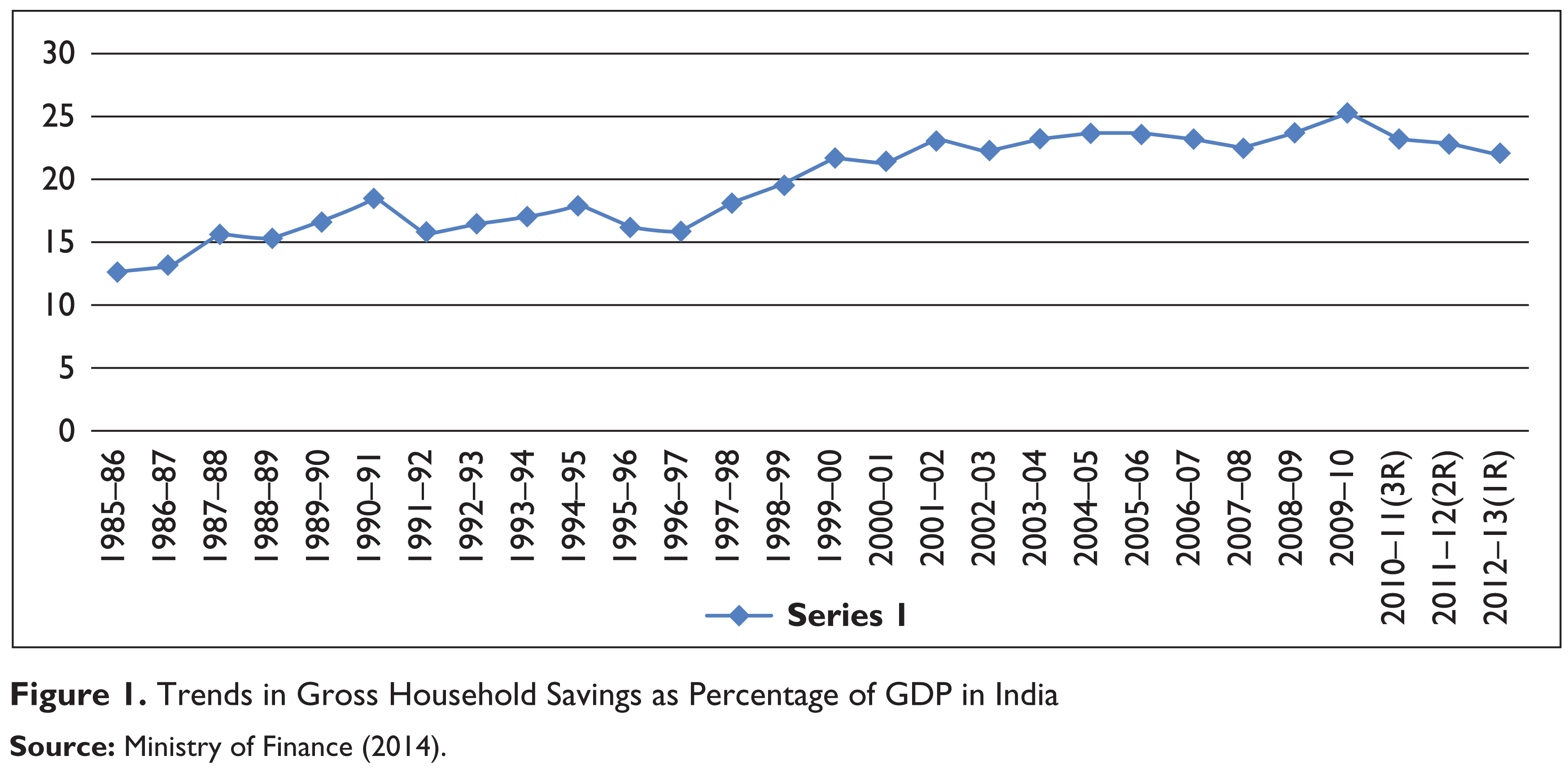
Looking at the trends in household savings, as percentage of GDP, shown in Figure 1, we observe that the savings ratio has been fluctuating from year to year and there is no clear trend after 1990–1991. The household saving ratio shows a clear increase during the 1980s, rising from 12.6 per cent of GDP in 1985–1986 to 18.5 per cent in 1990–1991. It records a dip after that till 1997–1998. The saving ratio again rises to 23.6 per cent in 2004–2005, but it has remained below that level in all the years since then, except in 2009–2010. Saving rates have further dipped after 2009–2010, coming down from 25.3 per cent to 21.9 per cent in 2012–2013. Thus, the acceleration of growth rate in the period 2002–2003 to 2012–2013 does not seem to be related to the household savings, which have stagnated during the period. These fluctuations in saving rates suggest that decline in the dependency ratio does not have a strong effect on savings, which are influenced by factors like income distribution, investment climate, availability of financial services, etc., as argued earlier (Chandrashekhar et al., 2006, p. 5058). Under these circumstances, statistically, it is extremely difficult to isolate the impact of the decline in dependency rate on savings.
Concluding Remarks
The above analysis shows that the assumptions underlying the demographic dividend hypothesis are weak. The benefits of an increasing proportion of the working-age population are not an irrefutable law but depend upon the empirical situation that may differ from country to country. The quality of Indian workers leaves much to be desired in terms of education and skill base and health status. The Indian economy has not been generating employment on the scale desired by the growth of the labour force in spite of the acceleration in the growth rate of the economy. Most of the increase in the employment is in the low-paid, low skill jobs in the informal sector. There is a large mismatch between the supply of skilled labour and its demand. The educational system is producing a large number of students with poor qualifications having low employability. On the contrary, the industrial sector is complaining about the shortage of labour with required skills. Health status of the population presents a dismal picture. In the conditions prevailing in India, the high optimism about India’s ability to reap the demographic dividend found among the scholars and the policy makers seems to be misplaced.
Before we end, we would like to emphasize that the purpose of this article is not to create an atmosphere of gloom, but to indicate the challenge that the nation faces to be in a position to reap the benefits of demographic dividend in terms of its growing stock of young population. Huge investments are required in the education and health of our youth and in equipping them with the required skills and training which are demanded by a growing and knowledge-based economy. In our assessment, we are falling short of efforts in these areas. If suitable and timely action is not taken, the so-called demographic dividend may turn into demographic disaster and lead to turmoil and chaos.