







Abstract
This study builds on and extends the literature on corporate governance and environmental sustainability by investigating the moderating roles of green innovation and corporate social responsibility (CSR) engagement in the relationship between board gender diversity and environmental performance (EP). Using a panel data set of 439 manufacturing firms across the Latin American and Caribbean region from 2010 to 2023, we employ the generalised method of moments and the instrumental variable two-stage least square to address endogeneity concerns and ensure robust estimation. The findings reveal that greater gender diversity on corporate boards significantly enhances firms’ EP. Moreover, green innovation not only directly improves EP but also amplifies the positive influence of gender-diverse boards. Higher CSR participation strengthens the association between board gender diversity and EP, demonstrating that proactive CSR activities enable diverse boards to affect environmental outcomes. The data also show regional and industry variability, suggesting contextual variables shape these processes. These results show the synergy between governance structures and strategic sustainability efforts, adding to the conversation on board composition, sustainable innovation and CSR. Policymakers, practitioners and stakeholders seeking inclusive governance and ecologically responsible business behaviour may learn from the research.
Keywords
Introduction
Can inclusive and diverse corporate governance serve as a catalyst for addressing the world’s accelerating environmental challenges—especially in emerging economies? This question is increasingly urgent in the face of worsening global environmental degradation. The planet is in the midst of a multidimensional ecological crisis, characterised by climate instability, biodiversity loss, deforestation and pollution. According to the United Nations Environment Programme (Canton, 2021), over 60% of global ecosystems are degraded, and global greenhouse gas emissions hit a record 59.1 GtCO₂e in 2022. Despite global efforts to curb environmental damage, progress remains uneven, and the private sector, one of the largest contributors to environmental externalities, is now under unprecedented scrutiny to lead sustainability transformations.
In response, corporate governance has emerged as a strategic mechanism through which firms can internalise and act upon sustainability imperatives. Among governance attributes, board gender diversity, defined as the representation of women on corporate boards, has received considerable attention for its potential to enhance ethical oversight, improve stakeholder engagement and foster long-term orientation in corporate strategy (Hughes et al., 2022; van Lieshout et al., 2021). The premise is rooted in Upper Echelons Theory (UET) (Hambrick & Mason, 1984), which argues that the demographic and cognitive characteristics of top executives significantly influence firm-level outcomes, including environmental performance (EP).
While the push for gender-balanced boards is global, progress remains uneven. In 2023, women held only 20.2% of board seats globally, with stark disparities across regions (EmadEldeen et al., 2025). In Latin America and the Caribbean (LAC), female board representation averages just 13%–15%, and many corporate boards remain male-dominated (Group, 2022). This governance imbalance is particularly consequential in LAC, a region that, despite hosting 40% of the world’s biodiversity, faces mounting ecological risks, including the fastest rates of deforestation, urban pollution and climate-induced natural disasters (Ayadi et al., 2025; Lu et al., 2025).
The convergence of weak environmental institutions and fragile governance systems positions the corporate sector in LAC as a critical yet under-examined actor in sustainability efforts. However, a key concern is that board gender diversity, while important, may not independently drive environmental improvements. Rather, its effect is likely contingent upon internal organisational capabilities that shape how board decisions are implemented. Two such capabilities are corporate social responsibility engagement (CSRE) and green innovation (GI).
CSRE refers to the extent to which a firm adopts socially and environmentally responsible practices beyond legal compliance (Saeed, Ning, et al., 2024), serving as a behavioural conduit through which boards can influence sustainability. GI, defined as the development or adoption of environmentally beneficial technologies and processes (Montero et al., 2024), operationalises the firm’s environmental intent and enables measurable ecological outcomes. These capabilities may function as moderators, strengthening or weakening the influence of board gender diversity on EP.
Understanding the interaction of these governance and organisational elements requires a multidimensional lens. In addition to UET, this study draws on Innovation Diffusion Theory (IDT) (Bakkabulindi, 2014), which explains how innovations spread and take root in organisational contexts, and the Dynamic Capabilities View (DCV) (Teece et al., 1997), which emphasises firms’ ability to integrate and reconfigure internal competencies in response to environmental and market shifts. These perspectives together allow for a more dynamic understanding of how board diversity interacts with internal sustainability mechanisms to influence outcomes—especially in complex and uncertain institutional environments like those found in LAC. While these theoretical linkages are conceptually compelling, there remains a paucity of empirical research examining them in the LAC context. Most extant literature focuses on developed economies, where institutional support for sustainability and board diversity is stronger. In LAC, where governance gaps and ecological vulnerabilities coexist, a deeper investigation is both timely and necessary.
Despite growing awareness of environmental responsibility in corporate governance, many firms in the LAC continue to demonstrate inconsistent or weak EP. This inconsistency raises a fundamental question: Why do some firms in similar institutional environments perform better environmentally than others—and what internal governance and organisational factors explain these variations? Research has increasingly explored the link between board gender diversity and environmental outcomes, underpinned by arguments that female directors bring distinct ethical values, risk-averse attitudes, and stakeholder awareness (Ayadi et al., 2025; Bayong et al., 2024; Saeed, Kamil, et al., 2024). However, the evidence remains inconclusive. While studies in high-income countries often report positive associations, findings from emerging economies are limited and mixed, reflecting the influence of contextual factors such as institutional voids, regulatory laxity and cultural norms (Gangi et al., 2023; Hesniati et al., 2025). Moreover, existing studies frequently analyse board diversity in isolation, overlooking the influence of organisational conditions that may shape or constrain its effectiveness. Some scholars have examined CSR as a mediator or outcome variable (Grau-Grau et al., 2025), while others have highlighted the importance of GI for EP (Boakye et al., 2025). However, very few studies have examined how CSRE and GI jointly moderate the effect of board gender diversity on environmental outcomes, particularly in emerging market contexts where these interactions may function differently. Thus, a clear theoretical and empirical gap remains in understanding how governance structures and internal capabilities interact to shape EP in the LAC region. This study addresses that gap by investigating the extent to which board gender diversity affects EP, and the conditions, specifically CSRE and GI, under which this effect is amplified or diminished. Accordingly, this research seeks to answer the following: To what extent does board gender diversity influence EP in LAC firms? How do CSRE and GI moderate this relationship? The study’s objective is to develop and empirically test a moderated framework that explains the contingent impact of board diversity on sustainability outcomes, while accounting for the institutional and organisational complexities unique to emerging markets.
This study offers both theoretical and practical significance. Theoretically, it extends corporate governance and sustainability literature by integrating individual-level (board composition), organisational-level (CSR and innovation) and contextual (emerging economy) perspectives into a cohesive model. Drawing on UET, IDT and the DCV, it provides a richer theoretical foundation for understanding how EP emerges from the interplay between governance and organisational routines. Practically, the study equips managers, policymakers and development organisations in LAC with actionable insights on how to structure governance and capability systems that promote environmental sustainability, especially in institutionally weak environments.
This study contributes to the field in several important and novel ways, each of which addresses key gaps in the literature and establishes a clear departure from existing research.
First, empirically, this study introduces rare evidence from LAC, an underexplored region in the corporate sustainability and governance literature. Most existing studies are concentrated in developed markets, limiting the generalisability of their findings to emerging economies. By focusing on LAC, this study adds much-needed empirical depth to the understanding of board diversity and EP under institutional constraints.
Second, theoretically, this study advances the field by integrating UET, IDT and the DCV. This multi-theoretical approach is novel and enables a more dynamic analysis of how leadership traits interact with organisational processes to influence sustainability. Few studies in the literature apply such an integrative framework, especially in the context of EP.
Third, conceptually, this research moves beyond simplistic ‘more diversity equals better performance’ assumptions by conceptualising the board gender diversity EP link as conditional and context-dependent. The inclusion of CSRE and GI as moderators introduces a more realistic and nuanced view of how governance structures yield environmental outcomes.
Fourth, methodologically, the study adopts a moderation-based empirical design using firm-level data across multiple LAC countries. This approach allows the study to capture interaction effects, providing a richer and more sophisticated understanding than the dominant direct-effect models in governance research.
Fifth, practically, the study offers clear strategic implications. It demonstrates that enhancing EP is not solely a matter of increasing board diversity; it also requires aligning leadership structures with internal sustainability capabilities. This finding is particularly valuable for corporate leaders and policymakers seeking to design integrated strategies for inclusive and environmentally responsive governance.
The remainder of the article is structured as follows: The second section discusses theoretical frameworks, empirical and hypothesis development, while the third section outlines the study’s methodology. Data analysis and the discussion of results are presented in the fourth section. Finally, the conclusion, recommendations and policy implications are provided in the last section.
Literature Review
Theoretical Basis and Hypothesis Development
Upper Echelons Theory
The theory described by Hambrick and Mason (1984), known as UET, states that organisational development depends on the characteristics of top executives’ demographics alongside their psychological nature and cognitive capabilities. Top executive approval power facilitates both sustainability dedication and every strategic decision. UET demonstrates particular interest in gender-rich boards because they enable organisations to reach different opinions, which results in innovative choices and raises social and environmental standards (Kiani et al., 2024).
Many investigations show that organisations which incorporate diverse gender composition in their boards achieve better corporate governance and sustainable performance operations. Female directors embrace team-based decision structures to ensure both groups maintain surveillance while holding themselves responsible (Yazıcı & Çiçeklioğlu, 2025; Zahir et al., 2025). Yellow Sprouts non-profit organisation demonstrated in their research the positive relationships that exist between gender diversity and CSR and EP (Wasan et al., 2025). Female directors who adopt the UET model create fresh perspectives for decisions to uproot conventional managerial approaches.
Added theoretical processes must connect with UET because it shows practical limitations. The leadership expertise analyses traits of the senior executive but fails to include crucial external attributes and organisational variables needed to predict sustainability performance from diversity boards. The study restricts itself to exclude environmental theories of organisational governance and environmental issues minimising its potential to fully explain these phenomena.
The current study expands upon UET by uniting multiple complementary theoretical mechanisms from the DCV and IDT to establish an innovative framework. The proposed framework utilises additional theories to demonstrate how organisational adaptability and GI implementation connect diverse board membership dynamics to sustainability performance. A separate evaluation of CSRE investigates external pressures’ effect on board-led sustainable strategy implementation.
The study connects disconnected scholarly work to propose new conceptual insights. It shows that UET and its associated theories methodically understand the three-way relationship between board gender diversity and governance and environmental business results. By merging these theories, the study gains a superior theoretical structure that helps connect to general sustainability pursuits.
Innovation Diffusion Theory
According to Orr (2003), the IDT provides a system to analyse innovation adoption at social levels and in organisational contexts. IDT demonstrates that innovation adoption depends on innovation characteristics (relative advantage, compatibility, complexity and observability) as well as the social system environment and communication channels that spread information and decision structures for adoption facilitation. Organisations need effective leaders to form how employees perceive innovation along with managing organisational support towards new initiatives and budget allocations.
GI plays the primary role of accelerating EP through sustainable technology development, along with environmentally sustainable system creation and process advancement (Khan et al., 2025). Organisations achieve better innovation adoption through boards composed of diverse genders because such composition generates inclusive management and sustainable business practices. The study by Ayadi et al. (2025) confirms that female board members support organisational creativity through effective problem-solving methods that enhance sustainability goals. The principles of IDT prove that diverse leadership quality strengthens the possibilities of innovation adoption.
Researchers agree that IDT brings limited capabilities for investigating institutional effects and governance structures on innovation adoption, as it remains a commonly applied theory for technology and innovation research (Al-Rahmi et al., 2019). The theory lacks enough specificity to explain the effects of CSRE on developing sustainable innovation adoption conditions. Organisational financial benefits from CSR activities push businesses to implement green practices that accelerate the spread of innovation. The evaluation criteria in the IDT do not assign proper weight to external environmental regulations as determined in Bakkabulindi (2014).
The research investigates GI adoption processes by combining IDT with UET to analyse how leaders’ attributes, together with CSR practices, affect such processes. The research achieves a complete understanding of governance–innovation–sustainability relationships through a combined theoretical examination. IDT benefits from this integration as it enables researchers to discover new relationships connecting organisational governance mechanisms with leadership diversity and CSR programmes to corporate EP.
Dynamic Capability View Theory
The DCV, introduced by Teece et al. (1997), examines the organisational capabilities that allow adaptation and innovation to thrive in fast-evolving market conditions. Firms develop these processes by uniting existing business resources with external ones to redesign their operational systems for adequate adaptation against environmental changes. Organisations can gain clarity about EP improvement through DCV analysis within the growing sustainability framework and increasing environmental threats.
Organisations implement GI as their basic dynamic capability to handle environment-specific challenges of sustainability (Khan et al., 2022). Organisations must develop sustainable innovation by developing eco-friendly technologies and implementing sustainable practices along with following regulations (Agyemang et al., 2025; Alodat et al., 2025). Organisations which put women on the board experience substantial improvements in their adaptation capabilities. The analytical evaluation and decision-making processes performed by female-majority boards result in enhanced organisational decisions which support better business readjustment according to Boutmaghzoute et al. (2025) and Hughes et al. (2022). Organisations demonstrate a higher capability to successfully innovate with sustainability through board-level examination of environmental strategies.
The criticism of DCV stems from its artificial design approach, together with vague capability definitions, that make operational studies more challenging. The critics of DCV theory state that the approach disregards key external variables which strongly impact dynamic capability performance according to Grau-Grau et al. (2025) and other academics. Environmental regulation serves as dual-purpose restrictions and incentives for managing sustainable resource deployment decisions of companies (van Lieshout et al., 2021).
The study examines past research deficiencies by implementing environmental regulations together with CSR into the framework based on DCV. Organisations achieve stakeholder contentment through strategic sustainability focus by using CSR initiatives to merge corporate objectives. The research adopts UET and IDT to establish an expanded model, showing that leadership diversity, combined with governance structure and environmental forces, creates GI and EP. This approach investigates organisations internally and externally as it reveals strategies for sustainable strategic planning.
Empirical Review and Hypothesis Development
Board Gender Diversity and Environmental Performance
Organisations encounter difficulties because gender diversity plays an important role in board-level decisions regarding EP measurement. Top executive gender demographics play an immediate role in shaping organisational strategy, according to the UET, while affecting final results (Bayong et al., 2024; Zhang & Fang, 2025). Gender-equitable boards work as instruments which cultivate ethical standards and advanced decision-making capabilities and support sustainability initiatives. Internal and external market changes drive environmental practice innovation in organisations based on IDT by helping diverse leadership teams find new practices (Tariq et al., 2024). Organisations with diverse boards use their adaptability to environmental changes to adopt green technologies as well as establish sustainable business practices according to DCV (Zhou et al., 2024).
Research must analyse how board gender diversity affects EP among manufacturing firms, particularly in LAC, since their governance systems differ extensively.
The empirical data show inconsistent results regarding how board gender diversity impacts EP in organisations. The research has presented conflicting results in this area because diverse boards help monitor companies better and drive sustainable innovation and environmental regulations (Khan et al., 2025; Montero et al., 2024). Gender-balanced leadership provides different business orientations, which enhance both risk identification abilities and regulatory adherence, thus delivering superior EP results. The outcome of gender diversity depends on how external governance systems, together with internal governance systems, function within organisations. Gender-diverse boards often experience a reduced ability to implement sustainability programmes because institutional weaknesses exist in emerging economies (Kiani et al., 2024).
Studies present conflicting information about the negative effects that gender-diverse boards might create. According to Boutmaghzoute et al. (2025), decisions made by gender-diverse boards experience inefficiencies because having diverse priorities and regulatory restrictions may cause inefficiencies. Hesniati et al. (2025) present evidence of environmental strategy consensus issues among diverse board groups, which can delay policy implementation steps. The research by Montero et al. (2024) reveals that gender diversity improves transparency but fails to guarantee better environmental results in companies with poor governance systems.
People remain sceptical about the extent to which female board members enhance EP in Latin America’s manufacturing industry because of governance problems. Research by Mousa et al. (2024) demonstrates that both cultural elements and regulatory requirements affect the distribution of female board members, yet insufficient key organisational backing weakens environmental-related benefits this practice could achieve. Research findings about the relationship between female directors and environmental results indicate inconclusive effects that prevent direct causational analysis.
H1: Board gender diversity significantly promotes EP in emerging economies.
The Moderating Role of GI
The adoption of GIs serves as a fundamental performance-improving factor for EP because organisations can use it to implement eco-friendly technologies and sustainable methods. The admission of new practices by organisations as part of innovation comes from external influences, regulatory requirements and market competitiveness pressures (Orr, 2003). The increased presence of women directors in organisations allows organisations to benefit from sustainability-driven innovation because female leadership promotes both ethical choices and extended environmental planning strategies (Zhou et al., 2024). Organisations with more advanced innovation capabilities, according to DCV ,succeed better at environmental adaptation and generate sustainable governance outcomes, according to Zhang et al. (2025). Studies reveal that GI serves as the connection between supporting diversity in management and EP excellence in manufacturing industries.
Numerous facts indicate that GI leads to positive effects on EP for organisations. Sustainable technologies that organisations adopt result in decreased carbon emissions through improved efficiency of resource use and better regulatory compliance (Macchioni et al., 2025). Companies managed by female-led boards work towards lasting sustainability goals that centre around GI because Montero et al. (2024) explain that it serves as the key component of environmentally responsible business operations. Businesses led by leaders who include strong female representation fund sustainable programmes to develop technology while addressing environmental matters, according to EmadEldeen et al. (2025).
GI functions as a performance-changing variable within institutional regulatory settings. Research findings regarding GI produce conflicting results because studies show both positive links between strong governance systems and EP and regulatory weaknesses which hinder organisations from using innovation to reach sustainability goals (Lestari & Soewarno, 2024). According to Khan et al. (2025), the influence of GI changes depending on regional conditions because industrial structures, together with governmental policies, decide how much firms can adopt sustainable technologies. Given the importance of GI in shaping sustainability outcomes, this study examines its moderating effect on the relationship between board gender diversity and EP. Based on the above literature, we assume that:
H2a: GI positively influences EP in emerging economies.
H2b: GI positively moderates the relationship between board gender diversity and EP in emerging economies.
The Moderating Role of CSRE
The involvement of CSR contributes to maximising the effectiveness of governance frameworks that lead to EP improvements. Firms with a proactive approach to CSR develop adaptive capabilities to handle sustainability challenges according to the DCV (Saeed, Ning, et al., 2024). Gender-diverse corporate boards, according to the UET, tend to favour sustainability initiatives because the ethical viewpoints of executive leaders influence strategic choices (Zhang et al., 2025). The involvement of CSRE enhances the relationship between board gender diversity and environmental outcomes for manufacturing firms operating in LAC.
Multiple research studies prove that CSRE produces favourable impacts on sustainability measurement. Companies integrate CSR adoption into their main strategies, which supports superior environmental results along with strengthened stakeholder interaction and enhanced corporate image (Hesniati et al., 2025; Hughes et al., 2022). The work of Thanh Thuy Ngoc (2025) confirms that businesses engaging in CSR activities receive improved financial performance, which extends into their sustainability dimensions. Organisations that concentrate on social responsibility demonstrate better sustainability, better regulatory compliance and enhanced resource management, according to Shaheen and Luo (2023).
The environmental achievements of organisations improve through the enhanced power of board gender diversity, which emerges when organisations join CSR programmes. Organisations attain enhanced sustainability outcomes in their programmes because their leadership teams show diversity, according to Tariq et al. (2024). Weak institutional environments allow CSR programmes to become a substitute for regulatory systems that organisations need to address gaps in regulations and develop sustainable corporate practices (Skare et al., 2025). The intervening effectiveness of CSRE depends on environmental factors that combine economic stability measures with present governance systems and business sector-specific specifications. CSRE operates as an essential moderating tool for corporate environmental responsibility enhancement due to the socio-economic inconsistencies and governance inefficiencies in LAC. The article investigates CSRE as a moderator in the link between board gender diversity and EP because of its crucial role in sustainability governance alignment.
H3a: CSRE positively influences EP in emerging economies.
H3b: CSRE positively moderates the relationship between board gender diversity and EP in emerging economies.
Methodology
Sample and Data Sources
This study focuses on manufacturing firms operating across LAC, a region characterised by increasing commitments to environmental sustainability, GI and improved governance practices. These firms provide an appropriate context for investigating the interlinkages between board gender diversity, GI, CSRE and EP, particularly as countries in the region intensify efforts to meet sustainability targets (Nepal et al., 2025; Saeed, Kamil, et al., 2024). A panel of 439 manufacturing firms active in the region from 2010 to 2023 was selected. This time frame allows for a longitudinal analysis of how corporate governance structures and sustainability practices evolve and influence environmental outcomes over time. Observing firms across a 14-year period provides the empirical basis to evaluate how shifts in board composition, CSR initiatives and technological innovation align with regional environmental policies and global sustainability goals. The focus on manufacturing is particularly relevant, given the sector’s high environmental footprint and strategic role in regional development. Firms were selected based on both data availability and their alignment with the study’s conceptual framework, ensuring a representative sample of the regional manufacturing sector. These firms meet the criteria necessary to construct a robust industry profile and support generalisable inferences regarding EP within the context of emerging economies. Data were primarily sourced from the Refinitiv ESG database, which offers standardised and reliable environmental, social and governance metrics across firms and countries. To enhance data robustness, firm-level variables were compiled using both corporate reports and database entries. These include firm size, age, profitability, research and development (R&D) intensity, leverage, industry classification and ownership concentration. In addition, national-level variables were obtained from the World Bank’s World Development Indicators (WDI) and the Worldwide Governance Indicators (WGI). These sources provide essential contextual data on economic development, governance quality and the strength of environmental regulations, which are used to control for institutional variation across countries in the region.
Econometric Model Specification
Though our variables also have mixed integration orders, some are stationary at the level I(0), some at first difference I(1), the generalised method of moments (GMM) and instrumental variables (IV) estimation methods are used in this study instead of the panel autoregressive distributed lag (ARDL). This decision is also explained by the econometric and structural nature of our data. First, the panel is described by a very big cross-sectional dimension (N) and a not very long time period (T), in which GMM is especially effective and reliable (Arellano & Bond, 1991; Roodman, 2009). Second, we add lagged dependent variables to our specification to incorporate dynamic persistence in EP, which is better with GMM than ARDL, which is ineffective in dynamic short panels. Third, the relationship between governance and sustainability is inherently endogenous and simultaneous since attributes of corporate governance may cause, and be caused by, sustainability outcomes. GMM and IV methods make use of valid instruments to reduce these biases, but ARDL fails to sufficiently perform such endogeneity tasks (Blundell & Bond, 1998; Bond, 2002). In addition, GMM is resistant to heteroscedasticity and autocorrelation, which is typical of firm-level data. Given these reasons, GMM and IV give more credible estimates in our dynamic governance environment performance framework and give better validity compared to panel ARDL in this scenario.
This study utilises the econometric models established by Nugroho (2023) and Shao and Xu (2025). The models are defined in Equations (1)–(3). We transformed the equations into their natural logarithmic form to address heteroscedasticity and outliers. This transformation improves the robustness of model estimates and ensures result reliability. The models’ equations are presented as follows:

The CSR performance is used as a substitute sustainability indicator in a robustness assessment to confirm the accuracy and consistency of the study’s conclusions.

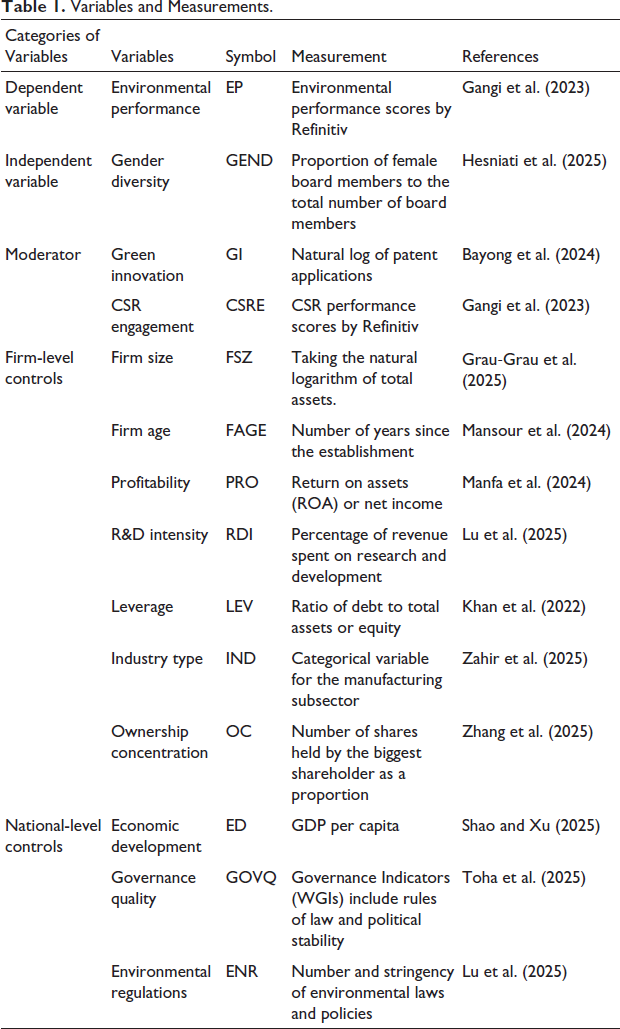
Table 1 explains the variables.
GI is used to moderate the influence of gender diversity on EP and is represented by Equation (4).

CSRE is used to moderate the influence of gender diversity on EP and is represented by Equation (5).

where EP represents environmental performance, GEND denotes gender diversity, GI denotes green innovation, CSRE donates corporate social responsibility engagement, FSZ, FAGE, PRO, RDI, LEV, IND, OC, ED, GOVQ and ENR donates firm size, firm age, profitability, R&D intensity, leverage, industry type, ownership concentration, economic development, governance quality and environmental regulations, respectively.
Variable Definitions and Measurement
Environmental Performance
A firm’s managerial approach to sustainability initiatives, resource efficiency and pollution control defines its EP (Montero et al., 2024; Toha et al., 2025). The study uses EP scores from Refinitiv ESG, which serves as a commonly accepted database for evaluating firms through their environmental disclosures combined with carbon emission tracking and waste management operations, as well as ecological policy compliance assessment (Mousa et al., 2024; Thanh Thuy Ngoc, 2025). Companies demonstrate increased environmental sustainability through higher EP score levels, and such scores show their dedication to green practices. ESG ratings create standardised assessments that enable sector-to-sector as well as company-to-company comparisons and help eliminate measurement subjectivity (Nepal et al., 2025).
Gender Diversity
Entrepreneurial decision-making quality and sustainability initiatives reveal GEND in corporate governance as one of their essential determinants. Research evidence demonstrates that boards featuring gender diversity enhance both CSR performance and environmental innovation through their diverse ethical perspectives and different opinions (Nugroho, 2023; Oyewo et al., 2025). This assessment defines gender diversity through the ratio between total female board members and overall board members, with reference to Shaheen and Luo (2023). The relationship between organisational sustainability efforts and proactive environmental policies under women’s leadership emerges from properly measuring board gender diversity (Shakil, 2021). The analysis investigates how gender diversity within boards affects corporate environmental responsibility while supporting sustainable growth.
Moderator Green Innovation
GI is the main factor in measuring how businesses pursue eco-friendly technological advancements. GI represents efforts to create and implement novel products, operations and managerial strategies that protect the environment while delivering enhanced resource utilisation (Shakil, 2021). Experts present GI as an essential sustainability and EP driver that helps firms respect regulations and decrease operational costs while making their products more competitive (Shao & Xu, 2025; Skare et al., 2025). The study evaluates GI performance through measurements based on the natural logarithms from green technology patent applications. The study approach uses patent counts as an established measure of environmental sustainability innovation effectiveness in line with Zhang and Fang (2025). Through GI mediation, researchers gain the ability to explore the effects of gender-diverse boards on corporate EP through innovative approach pathways. Research indicates that leadership groups with diverse members produce superior creativity and strategic vision, which leads to sustainable innovation (Zhang et al., 2025). The research of GI mediation strengthens researchers’ understanding of governance systems’ impact on business environmental responsibility.
Moderator: CSR Engagement
CSRE serves as a mechanism that determines both the strength of gender diversity and EP. By implementing CSRE, firms prove their commitment to creating sustainable moral business practices with social and environmental accountability standards (Zahir et al., 2025). Organisations that practise CSR activism implement sustainability criteria into their strategic choices as this behaviour enhances their environmental concentration (Yazıcı & Çiçeklioğlu, 2025). Refinitiv provides CSR performance scores that function as a measurement indicator for CSRE assessment within the study. Refinitiv provides standardised measurement tools to organisations that allow them to track their CSRE based on assessments of ESG sustainability activities (Wasan et al., 2025). Stronger CSR initiatives in firms strengthen the relationship between boardroom gender diversity and environmental results because socially responsible organisations allocate more resources to sustainability efforts (Wang et al., 2025). The research analyses how extensive CSR initiatives increase the impact of female directors on environmental sustainability outcomes using CSRE moderator effects.
Control Variables
This study integrates various firm-level and national-level control elements that may affect EP to confirm the stability of the analysis. Firm size (FSZ) as an independent variable represents substantial asset bases and intensive public monitoring of large organisations (Tariq et al., 2024). The measurement method uses the natural logarithm of total assets as specified by Thanh Thuy Ngoc (2025). The age of a firm (FAGE) presents an important factor influencing the results since older companies possess established environmental practices, yet may resist the implementation of new changes. Toha et al. (2025) used the company’s year of origin to measure firm age. Customers choose profitable organisations (PRO) over others because stable enterprises often distribute funding to green initiatives. The return on assets (ROA) and net income measures provide the basis for analysis in this study (Uyar et al., 2023). The model controls for study and development intensity because firms with more capital allocated to development are more likely to create environmentally friendly innovations. Organisations express study and development investment levels through their revenue allotments (Wang et al., 2025). A firm’s financial commitments through leverage are evaluated using the total debt to total assets ratio. High debt levels may force the organisation to focus on debt payment rather than environmental issues (Wasan et al., 2025). Industry type is a categorical measure that groups organisations into manufacturing industries because environmental standards differ by sector (Bayong et al., 2024). The analysis incorporates ownership concentration (OC) because companies with concentrated ownership tend to employ robust governance systems, which impact their sustainability activities. The largest shareholder’s ownership share represents the measurement method of ownership concentration (Agyemang et al., 2025). Economic development (ED) at the national level matters because nations with higher per capita GDP adopt stronger environmental regulations, which affects how companies perform regarding the environment (Agyemang et al., 2025). Governance quality is a critical requirement that develops institutions capable of advancing corporate responsibility and sustainability. Ashraf et al. (2025) developed World Governance Indicators to measure this construct. This study incorporates environmental regulations (ENR) to evaluate the extent and strictness of environmental laws and policies because firms within rigorous regulatory frameworks tend to adopt sustainable practices (EmadEldeen et al., 2025). The study includes additional specifications through control variables to separately analyse how gender diversity and GI affect EP.
Summary of the Study Variables
Variables and Measurements.
Summary of Methodological Techniques
Panel Cross-sectional Dependency (CSD) Test
The influence of cross-sectional dependence on precise evaluation is contingent upon several factors, notably the characteristics and robustness of the cross-sectional associations (Lestari & Soewarno, 2024; Nepal et al., 2025). Ignoring CD may result in significant estimation mistakes. We used the Breusch–Pagan Lagrange multiplier test, as outlined by Bayong et al. (2024), to assess CD. Agyemang et al. (2025) formulated the following equation:


The final test statistic is calculated as follows:

In this context,
Stationarity Test
Data sets are deemed stable if they succeed in the stationarity test, indicating that their statistical qualities remain consistent across time. Examining the normality of panel data and the sequence of integration is essential to mitigate erroneous regression. This prompted us to use the CIPS unit root test, first established by Hesniati et al. (2025), to confirm the consistency of our data. The equation for the unit root test is as follows:


Results and Discussion
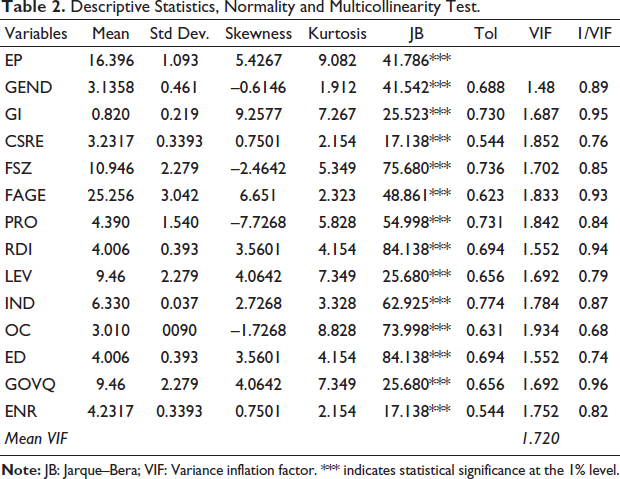
Descriptive Statistics, Normality and Multicollinearity Test
Descriptive Statistics, Normality and Multicollinearity Test.
CSD Analysis
Cross-sectional Dependence (CSD) Test.
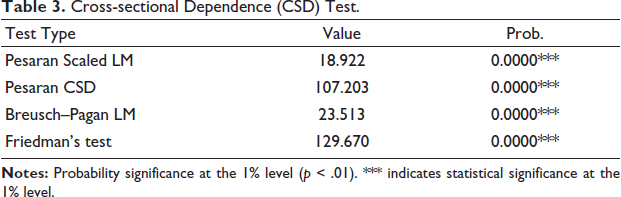
The Pesaran cross-sectional dependence test presented in Table 3 indicates substantial evidence of significant dependence among the panel data for several key variables pertinent to the analysis. All variables demonstrate highly significant CD test statistics with p values of .000, indicating substantial cross-sectional dependence. To obtain unbiased estimates and ensure valid statistical inference, it is essential to utilise estimators that account for cross-sectional dependence, such as GMM.
Stationarity Test
Stationarity Test.
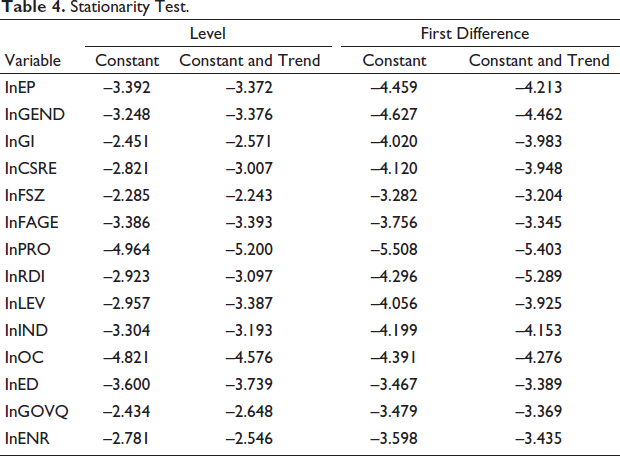
All variables in Table 4, except GI, FSZ, GOVQ and ENR, surpass the critical thresholds of −2.8 for constant and −2.87 for constant and trend, signifying that they are stationary at their initial levels. For GI, FSZ, GOVQ and ENR, which failed to meet the thresholds, the data necessitated transformation to the first difference level to attain stationarity. As a result, all variables were integrated at the first difference level to ensure the validity of the econometric analysis.
Slope Homogeneity
Slope Homogeneity Test.
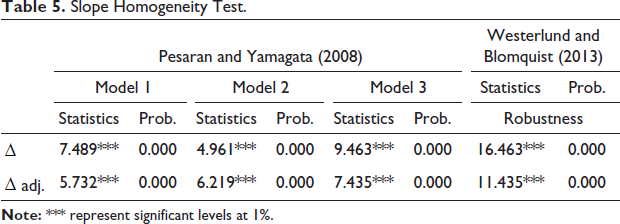
Model Estimation
Baseline Regression Results.
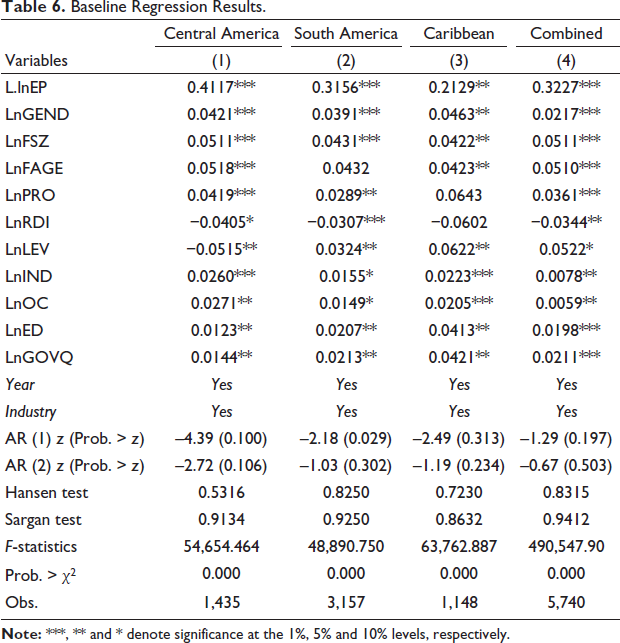
Table 6 results demonstrate no autocorrelation in analysed parameters because the probabilities from the AR (2) test surpass the 0.05 threshold. The study results demonstrate that the model lacks second-order serial correlation, which strengthens its reliability. All Hansen test outcomes display statistical insignificance in every model, which validates the instruments and assumptions relevant to dynamic system GMM estimation. Model robustness in explaining observed relations receives further validation through the high values of Fisher statistics.
The analysed data demonstrate that board-level gender diversity (GEND) positively influences EP. The coefficient results from Central America, South America and the Caribbean demonstrate positive correlations between significant variables at 1%, 1% and 5%. The combined tables have convincing data, showing that, at the 1% level, higher female board representation leads to enhanced EP across the region. The study findings oppose H1 because LAC manufacturing firms achieve better ecological results with more women on their boards. EP improves when organisations have diverse boards since these corporate teams ensure better oversight and stronger governance processes that enhance managerial decisions. The study results display potentially undisclosed variables and local factors that could shape the link between board diversity and EP. Studies should evolve by studying institutional and market conditions to enhance knowledge about what drives EP.
Moderating Role of GI
Moderating Role.
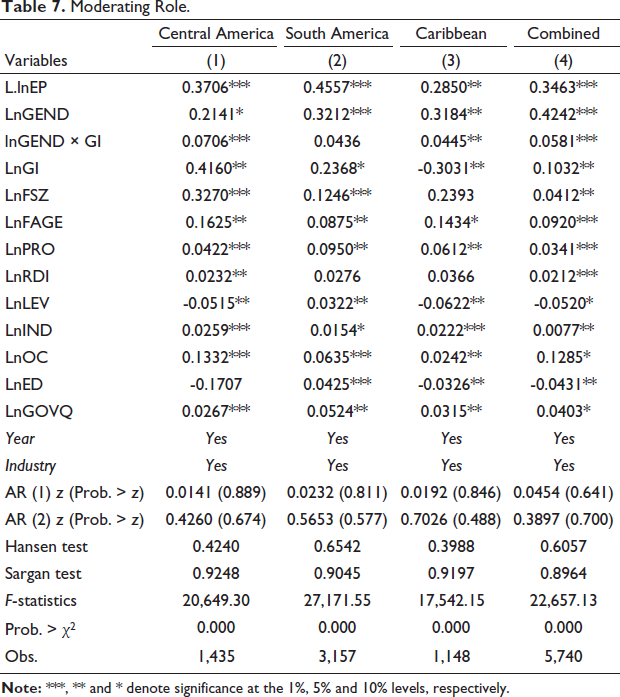
Table 7 establishes how EP in LAC manufacturing companies evolves substantially when GI meets diverse gender representation (GEND) on their boards. The study shows that GI enhances the positive correlation linking feminine board members with EP thus demonstrating its vital function in achieving sustainability results. The study provides evidence that firms that base their operations on innovation establish better environmental improvements through governance mechanisms, thus confirming H2. The relationship between EP and board gender diversity exhibits greater strength when organisations make extensive investments towards GI, based on findings from all studied models. The selection and implementation of environmental technologies and resource management alongside regulatory fulfilment happen better within organisations focused on serious sustainability innovation activities. GI increases the relationship between governance and sustainability through sustainable long-term environmental planning, which is evident in Table 6. Worldwide innovation policies help companies reach their EP objectives through different leadership systems because the models demonstrate the increased relationship between these variables. The governance systems of businesses operating across LAC must integrate GI as a means to improve their environmental sustainability programmes. Businesses experience environmental resistance and global business benefits by making technological development together with environmental sustainability, manufacturing their primary focus. UN Sustainable Development Goals (SDGs) receive stronger contributions from organisations through corporate strategies which connect to GI. The impact of board gender diversity on EP gets strengthened by implementing GI strategies. The integration of GI techniques builds ecological values through continuous advancement, technical adjustment and active sustainability-based practices, which turn governance processes into actual environmental benefits. Moreover, it enhances transparency, regulatory compliance and stakeholder confidence, making it an indispensable component of effective corporate governance.
Moderating Role of CSR
Moderating Analysis.
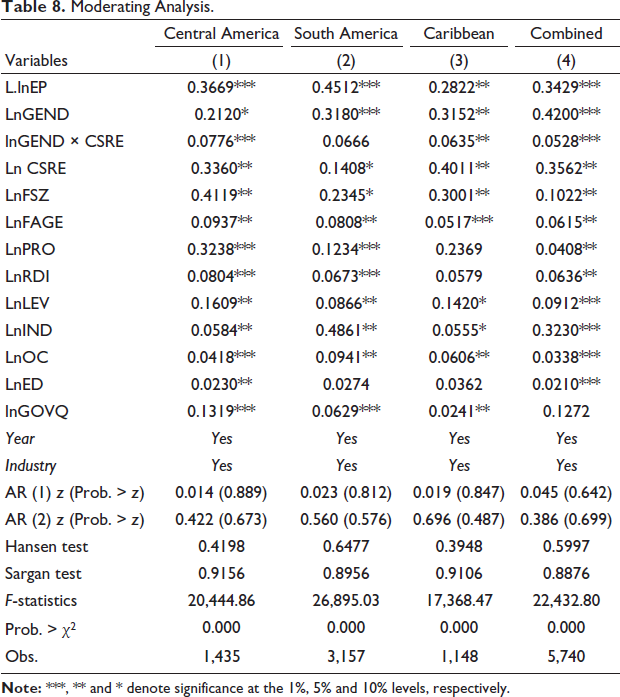
Table 8 shows that EP within manufacturing firms in LAC undergoes a significant change through the interaction between CSRE and board gender diversity (GEND). The analysis shows that greater CSR efforts increase the positive link between GEND and EP, thus proving the essential value of responsible business practice in improving sustainability results in H3. Research data show that CSR initiatives must become part of corporate governance frameworks to develop environmental responsibility because positive relationships consistently appear across all models.
Increased corporate CSR commitment, expressed by higher CSRE scores, strengthens the relationship between gender-diverse boards and EP. CSRE delivers organisations a strategic approach to convert many leadership structures into environmentally significant actions. The results displayed in Table 6 demonstrate that this finding receives additional verification from Table 8, which presents moderating effects. The subsequent analysis demonstrates that companies having advanced CSR programmes generate stronger effects connecting GEND to EP. All manufacturing organisations across LAC should incorporate CSR principles in their governance framework to boost their sustainability results. Organisations that use this practice achieve environmental protection and assist global sustainability targets by meeting the United Nations SDGs. The EP effects of board diversity are reinforced by CSRE through enhanced stakeholder involvement and ethical measure implementation as well as increased accountability. The guideline of CSRE develops corporate governance effectiveness through its ability to enhance transparency alongside environmental sustainability commitments from businesses.
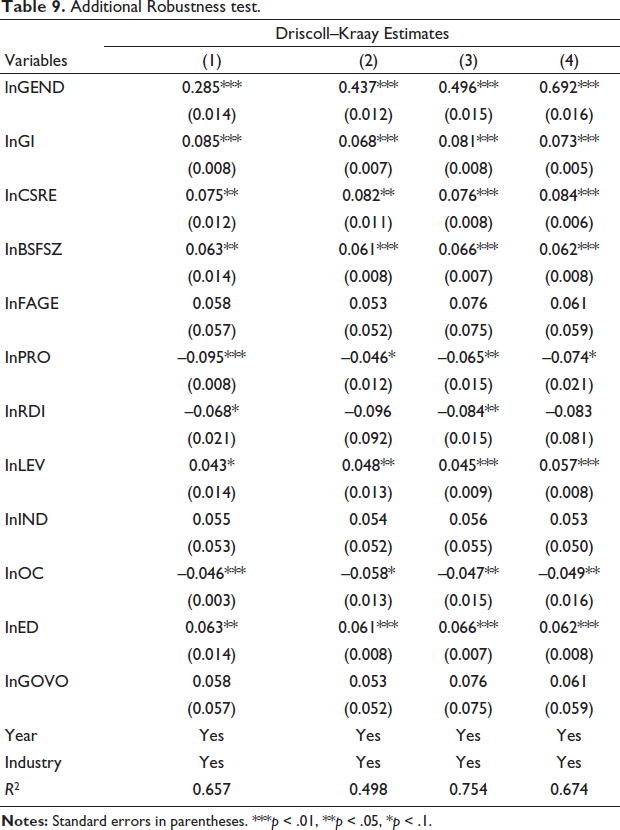
Additional Robustness Test
Additional Robustness test.
Diagnostic Tests
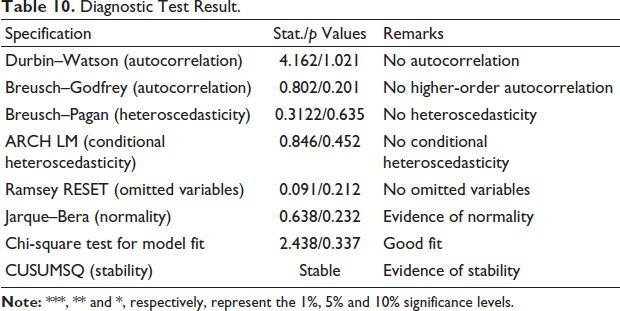
To ensure the robustness and reliability of the regression models, a series of diagnostic tests were conducted. These tests assess key econometric assumptions, including serial correlation, heteroscedasticity, conditional heteroscedasticity, omitted variable bias, normality of residuals, model specification and overall model fit. By validating these assumptions, the study ensures that the estimated relationships are not driven by model misspecifications or statistical irregularities, thus enhancing the credibility of the findings (Chernozhukov et al., 2024).
Diagnostic Test Result.
Addressing Endogeneity
Endogeneity Check.
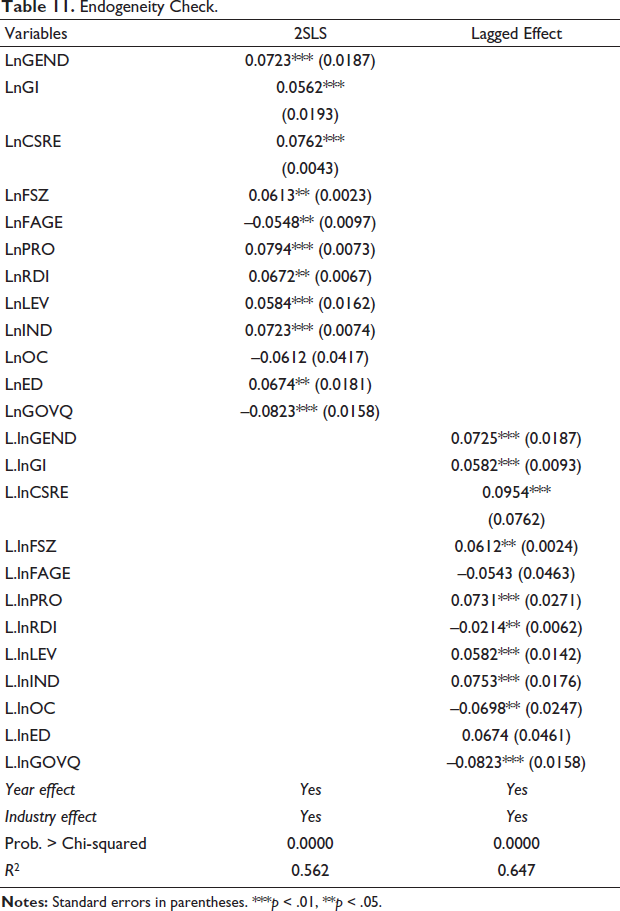
The endogeneity results presented in Table 11 align with the primary estimation outcomes in Table 6, affirming the lack of biases, including reverse causality, omitted variables and measurement errors. This alignment enhances the reliability and validity of our results, which is crucial for informed policy decisions.
Discussion of Findings
The empirical results show that GEND has a positive impact on EP, but the impact is not similar in all models. Companies that have a larger number of women on the board have a more sustainable profile, and this has justified the argument that diverse leadership will lead to environmentally responsible strategies. In situations, however, where regulatory supervision is weak and state systems are frail, the effect is neutralised, resulting in ambiguous outcomes. This implies that institutional and governance systems are the determinants of the success of board diversity. The implications of the findings are several. Gender-diverse boards also have an economic benefit, as they improve the credibility of firms to socially responsible investors and to regulators, thus enabling them to access green financing and competitive benefits in sustainability-driven markets. In academic terms, the findings indicate that diversity is not enough; structural governance mechanisms are required to turn demographic diversity to achieve meaningful environmental results. The policy implications are that diversity requirements in the MENA must be accompanied by reforms of increasing accountability, board independence, and the power to make decisions. The findings confirm H1, which predicted that there would be a positive relationship between gender diversity and EP. These findings are consistent with UET (Lestari & Soewarno, 2024; Nepal et al., 2025), which posits that the demographic characteristics of leaders determine the outcomes of an organisation and IDT (Boutmaghzoute et al., 2025), which emphasises the role of diversity in leadership in promoting the adoption of sustainability-based practices. Consistent with Mousa et al. (2024), who believe that women directors promote sustainability initiatives, our findings are also in line with Lestari and Soewarno (2024), who warn that weak governance erodes this relationship. Our study is novel compared to Agyemang et al. (2025) and Bayong et al. (2024), who focus on the beneficial effects of diversity because the GENDEP relationship at the emerging markets level depends on the quality of its institutions and the strength of its governance frameworks.
Based on the empirical findings, GI contributes substantially to the positive association between GEND and EP. In particular, companies investing in green technologies and environmentally friendly processes show better EP and greater efficiency in converting the strategic purpose of the various boards into quantifiable ecological benefits. It helps to prove that GI has not just a direct impact on EP, but it is also one of the core moderators that strengthen the influence of inclusive governance structures. These results suggest that technological capacity is a key factor towards sustained environmental development. The GIs help businesses to avoid wastage and use the legal provisions in the most appropriate way economically, and are likely to be more competitive in the international markets. Academically, the findings offer support that organisational innovation capabilities conditionally explain whether governance structures, including gender-diverse boards, can produce significant environmental results. This is a reminder to policymakers that they should incentivise green R&D and create favourable regulatory conditions that will allow companies to effectively eco-innovate. The findings are in line with DCV, which states that companies should be able to restructure and re-align all internal resources to meet the challenges posed by the environment (Boutmaghzoute et al., 2025). Gender diversity boards can play a key role in guiding the dynamic capabilities of firms towards long-term sustainability efforts (Shao & Xu, 2025). The results also correspond to the IDT (Saeed, Ning, et al., 2024), according to which the extent of innovation adoption is determined by social systems and decision-making frameworks. Inclusive decision-making through gender-diverse leadership contributes to embracing green technologies and sharing them, thus enhancing EP. Our results are consistent with those by Mansour et al. (2024) and Skare et al. (2025) since both reports indicate that female directors facilitate sustainable innovation, and GI reduces emissions and improves performance. Nevertheless, our analysis adds some new value by demonstrating that GI enhances the relationship between governance and sustainability, which is frequently neglected in the context of emerging markets. At the same time, the results reveal limitations: in low-innovation-intensity industries or weak regulatory environments, the moderating role of GI diminishes, echoing Shaheen and Luo (2023) and Tariq et al. (2024), who emphasise that institutional support is critical for innovation-led sustainability. Overall, the evidence confirms H2a and H2b, showing that GI both directly enhances EP and positively moderates the GEND–EP relationship. By integrating DCV and IDT, this study demonstrates that EP improvements in emerging markets are not simply a product of governance composition but also of firms’ ability to innovate within supportive institutional frameworks.
The empirical results show that the relationship between governance structures, specifically gender-diverse boards and EP, is significantly mediated by CSRE. Companies that have high CSREs incorporate sustainability in their business strategies, resulting in improved EP, whereas companies that have lower CSREs exhibit lower or low-value-added governance-EP associations. That means CSR is not only a direct catalyst of environmental development but also increases the efficiency of governance regimes in supporting sustainability. The results of this study suggest that CSR programmes can convert compliance-based governance into proactive sustainability. CSR-oriented companies have been found to be more appealing to socially responsible investors, gain more reputational power and in many cases gain a competitive edge in markets where environmental responsibility is seen as important. In academic terms, this finding adds to the body of literature on governance by demonstrating that CSR is a contextual facilitator that reinforces the channels through which board structures affect EP. The implications to policymakers include the need to use regulatory measures, such as tax breaks, sustainability reporting guidelines and achievable awards, to ensure that firms do not comply only with what is required. The findings support H3a and H3b, which state that CSR increases EP and mediates the relationship between governance and sustainability. This finding is supported by UET (Alodat et al., 2025), which states that strategic choices rely on the values and orientations of the executives; boards that are gender-diverse and those with high CSR agendas are more sustainable. They also fit with DCV (Ashraf et al., 2025) because CSRE provides the adaptive capacity of the firms to re-design internal processes and relationships between firms and their stakeholders, and to transform the governance mechanism into a high-quality EP. Our results are similar to those of the research studies by Alodat et al. (2025) and Boakye et al. (2025), which demonstrate that CSR implementation can improve the quality of governance and sustainability. They also build on the ideas of Hughes et al. (2022), who highlight the importance of CSR in promoting long-term environmental strategies, by demonstrating that CSR changes the intensity of governance EP linkages in new markets. The novelty is in contextualising this relationship in contexts where institutional and regulatory structures are weak, and how CSR becomes an alternative governance system which is more environmentally accountable. Overall, the findings suggest that CSRE is not a peripheral or voluntary programme but a strategic competency that can add value to the efficacy of the governance to achieve environmental sustainability.
Conclusion and Implications
Conclusion
In the era of intensifying environmental concerns and global emphasis on sustainability, the role of corporate governance in driving environmental outcomes has gained renewed scholarly and policy attention. Within this context, the question of whether inclusive leadership, particularly through gender-diverse boards, can shape EP has become increasingly relevant, especially in emerging economies characterised by institutional complexity and ecological vulnerability. This study set out to investigate three central questions. First, does board gender diversity improve firms’ EP? Second, does GI strengthen this relationship? And third, how does CSRE influence the extent to which board diversity affects environmental outcomes?
To address these questions, the study utilised a panel data set of 439 manufacturing firms in LAC, covering the period from 2010 to 2023. The GMM was employed to ensure robust estimation while mitigating endogeneity concerns. The results provide clear evidence that gender-diverse boards are positively associated with stronger EP. However, this relationship is significantly enhanced when firms demonstrate high levels of GI and CSRE. GI not only contributes directly to EP but also enables diverse boards to translate strategic intent into sustainable action. Similarly, CSRE fosters the organisational environment needed for board diversity to influence sustainability outcomes effectively.
Furthermore, the study identifies variations across industries and regions, reinforcing the notion that contextual factors play a critical role in shaping governance–sustainability dynamics. By revealing how internal capabilities amplify the impact of board diversity, the study offers a more integrated and context-sensitive understanding of EP in emerging markets.
Practical and Policy Implications
The findings of this study offer compelling implications for managers, practitioners and policymakers aiming to embed sustainability more deeply into corporate practice—particularly in emerging markets. The empirical evidence demonstrates that gender-diverse boards significantly enhance EP, but only when firms possess the internal capabilities to act on strategic intent. Specifically, GI and CSRE emerge as critical enablers that convert board-level diversity into meaningful environmental outcomes.
For corporate leaders, this underscores the importance of viewing gender diversity not in isolation, but as part of a broader sustainability strategy. While appointing women to boards can bring ethical awareness, stakeholder sensitivity and long-term thinking into the boardroom, these qualities must be supported by organisational structures that empower action. Firms should, therefore, aim to couple inclusive leadership with sustained investment in GI and the institutionalisation of CSR practices. This could involve embedding environmental priorities into R&D agendas, adopting eco-efficient technologies and aligning product development with sustainability goals. At the same time, CSRE should move beyond compliance and become part of the firm’s strategic identity, operationalised through transparent sustainability reporting, ethical supply chains and stakeholder dialogue.
For policymakers, especially in LAC, where institutional support for sustainability may be inconsistent, the study signals the need for more comprehensive and synergistic governance reforms. While regulatory measures to increase board diversity are important, their effectiveness depends on whether firms are also incentivised and equipped to implement sustainable practices. Policymakers should therefore consider integrated approaches that combine board diversity mandates with mechanisms to support innovation and CSR. These could include tax incentives for green R&D, access to sustainable financing, mandatory ESG disclosure requirements, and partnerships that foster knowledge transfer and innovation ecosystems.
By recognising that inclusive governance is most effective when embedded within a supportive organisational and regulatory environment, both firms and governments can play a more active role in accelerating the transition to environmentally responsible business models in the region.
Theoretical Implications
This study advances theoretical understanding in several key ways.
First, it extends the scope of UET by demonstrating that demographic diversity, specifically gender diversity on corporate boards, is a significant determinant of non-financial outcomes such as EP. This expands the theory’s applicability beyond traditional financial metrics. Second, through the lens of IDT, the study highlights GI as more than a firm outcome. It functions as a critical moderator that conditions the extent to which board diversity translates into improved environmental outcomes. This positions innovation as a vital bridge between governance inputs and sustainability results.
Third, the integration of the DCV enriches the analysis by emphasising the importance of internal organisational capacity. The findings show that firms with the ability to reconfigure and align their strategic resources—such as CSRE and innovation—are more likely to translate board diversity into tangible environmental benefits. This contributes to a more dynamic and systems-oriented view of how corporate governance interacts with internal processes in shaping sustainability.
Limitations and Future Research Directions
While the study makes important contributions, it also presents limitations that future research can address. The scope of the analysis is limited to manufacturing firms within LAC. While this enhances contextual relevance, it may limit generalisability. Future research could expand the sectoral focus to include service-based or resource-intensive industries and test the model in other emerging regions, such as Sub-Saharan Africa or Southeast Asia. Another limitation lies in the reliance on secondary, quantitative data. Although this allows for robust, large-scale analysis, it may not fully capture the internal dynamics of board interactions, informal CSR behaviours or innovation culture. Future studies could adopt mixed methods approaches to explore these qualitative dimensions in more depth. In addition, this study focused exclusively on gender diversity. Other forms of board diversity, such as educational background, functional expertise or generational diversity, may also play important roles in shaping sustainability outcomes and warrant further exploration. Finally, future research should consider the influence of external contextual variables, such as environmental regulation, institutional quality or cultural norms. These macro-level factors may interact with internal governance mechanisms in important ways and contribute to a more holistic understanding of corporate sustainability in diverse institutional settings.
Authors’ Contributions
Conceptualisation: DB and JN, Data curation: DB, Methodology: DB and UFS, Formal analysis and discussion: DB and JN, Writing of original draft: DB and UFS, Reviewing and editing: JN and UFS.
Data Availability Statement
The data that support the findings of this study are available from the corresponding author upon reasonable request.
Footnotes
Declaration of Conflicting Interests
The authors declared no potential conflicts of interest with respect to the research, authorship and/or publication of this article.
Funding
The authors received no financial support for the research, authorship and/or publication of this article.
