







Abstract
Due to the escalating popularity of video games, the industry’s annual income rose to $197 billion in 2022. To promote video games, it is imperative to possess adequate insights into the attitudes and emotions of adolescent gamers. This study aims to investigate the factors influencing video game engagement in Iran by utilising quantitative data obtained from 205 students participating in video gaming activities in Mashhad. The results proved that playing online and offline games at home, hand in hand with the participants’ interest in play, has a positive impact on the gamers’ attitudes towards playing games. Moreover, no relationship was found between prior game experience, playing games (team/individual—online/offline) patterns and attitudes towards playing games.
Keywords
Introduction
The popularity of online games among the youth is steadily increasing, as they offer many captivating features that entice young individuals to prioritise playing over educational pursuits. This inclination towards gaming has become a prevalent habit among the younger generation (Mulawarman et al., 2023). According to Steam, the number of online gamers in January 2024 stood at 30,166,216 (Steam, 2024). The ‘Games’ segment of the media market is anticipated to witness a continuous surge in global revenue from 2023 to 2028, with an overall increase of $220.6 billion (+54.31%). Following six consecutive years of growth, the indicator is projected to reach a new pinnacle of $626.78 billion in 2028 (Statista, 2023b).
Despite economic sanctions, the online gaming industry in Iran has flourished and has created many localised games. The anticipated projection for revenue in the Iranian online gaming market is set to climb to $57.83m by 2024, promising a brighter future for the industry. This revenue is expected to continue to surge at a growth rate of 7.72% (CAGR 2024–2027). By the year 2027, the market volume in Iran is estimated to reach $72.28 million (Statista, 2023a). Moreover, online gamers in Iran are expected to increase to 11 million users by 2027 and continue to rise annually. In the end, the projected amount of Average Revenue Per User (ARPU) in the online games market in Iran is expected to reach $5.59 by 2024 (Statista, 2023a).
Game networks in Iran are encountering various challenges due to the sanctions imposed by the United States. Millions of Iranian gamers derive immense pleasure from engaging in online gaming experiences; however, if they want to advance their gaming skills, they need to confront numerous obstacles daily due to the restrictions enforced by US sanctions. Although the imposed sanctions in 2018 were not directly aimed at the gaming industry, the potential repercussions of these punitive measures deter companies from providing their services to Iranian gamers. For instance, Sony PlayStation 5 and Microsoft Xbox Series X consoles do not work officially in Iran due to the strict sanctions imposed by the United States. Consequently, these companies’ products are imported or illicitly imported into Iran from neighbouring countries. Moreover, gamers lack access to internationally recognised credit cards as a result of Iran’s blacklisted banking system (The New Arab Staff & Agencies, 2021).
Iranians use ‘game share features’ which is a cost-effective and viable method to have access to global games; they also employ virtual private networks (VPNs) or other comparable techniques to conceal their actual geographical locations to register or buy online access to games (The New Arab Staff & Agencies, 2021).
The most favoured gaming genres among the gaming community in Iran include sports, puzzles, battle royale, strategy, driving and simulation. To develop games, developers often employ high-quality game development software such as GDevelop, Autodesk, Stencyl and Construct 2. Additionally, the programming languages of C++ and Java are widely utilised in the game development sector (Sharififard et al., 2023). Moreover, video games have been demonstrated to have diverse effects on individuals, particularly those engaged in educational pursuits. Numerous studies have explored the favourable outcomes of video games among young users, primarily in gaining knowledge, understanding content and achieving emotional and motivational achievements (Connolly et al., 2012). Additionally, the beneficial influence of commercial video games in higher education has been acknowledged (Barr, 2017), along with their utilisation and motivations within the university community (Núñez-Pacheco et al., 2021). Therefore, in light of previous research, the present study attempts to determine the following:
The connection between ‘playing at game nets, alone, in groups, offline or online’ and attitudes towards playing games. Relationship between ‘playing games at home, alone, in groups, offline or online’ and attitudes towards playing games. Any connection between ‘having game experience, patterns of playing, interest’ and attitudes towards playing games. If there are mean differences between gender and genre of the game.
Hypothesis
H1: Gender has a positive and significant moderating effect on attitudes towards playing games.
Literature Review
Patterns of Using Video Games
In contemporary society, online and offline gaming have emerged as prevalent pastimes, particularly among the younger demographic. Through digital platforms, individuals are engaged in various activities ranging from acquiring information to facilitating communication and seeking entertainment, including playing online games (Durak et al., 2022).
Rafiemanesh et al. (2022) reported that more than 5% of gamers played 42 hours or more per week; younger gamers mostly used a personal computer to play. Most respondents (59.3%) of their study stated that they play online games less than seven hours a week, and 18.2% reported playing between 7 and 14 hours per week. Smartphones and tablets were among the most common online game devices (87.3%), followed by personal computers and notebooks (70.6%). Video game consoles like Xbox and PlayStation were less frequently used (30.3%). Rafiemanesh et al. (2022) also reported insignificant differences in the pervasiveness of the top five games, ranging from 32.7% for multiplayer online role-playing games to 48% for multiplayer first-person shooters.
There are various digital leisure activities which are proper for different age groups among men and women, some of which are more gender-oriented in societies (Gallistl & Nimrod, 2020). Lopez-Fernandez et al. (2019) confirmed that women, compared to men, were less likely to play sports digital games.
Von der Heiden et al. (2019) found that individuals choose their favourite games primarily based on their psychological traits and preferred genres of games (such as action, role play, strategy, etc.) have a positive correlation with the amount of playing time (Lemmens & Hendriks, 2016; Rehbein et al., 2016).
Moreover, Baloch et al. (2023) reported a gender-based disparity in the duration spent engaging in online gaming activities among university students, showing that male participants were more dedicated to playing online games than their female counterparts. Furthermore, Núñez-Pacheco et al. (2023) identified a correlation between the duration of gaming experience and the motivation to engage in such activities, indicating that the longer individuals have been involved in gaming, the stronger their motivation becomes. Notably, students who have played for over four years exhibited a higher level of motivation towards video games, followed by those who have engaged in gaming for a period of two to three years, as opposed to individuals who have played for less than a year or have never engaged in video game activities. Additionally, students who play video games on weekends are more motivated to play.
Regarding the number of video games played, it was observed that fantasy-related factors drive students who played more than 20 games (19.7%). Conversely, individuals who play up to 10 games (27.3%) do so as a means of escapism, entertainment, competition, challenge and socio-emotional activation. Engaging in a higher number of video games is associated with the exploration of imaginative realms. In contrast, a lower frequency of video game involvement suggests that such games are used as a means of problem avoidance, player skill testing or facilitating interactions with others (Núñez-Pacheco et al., 2023).
Conditions of Playing Video Games (Offline, Online, Individual, Group, at Home or Game Nets)
Labrador et al. (2023) have uncovered that a substantial portion of individuals, precisely 44.1%, preferred playing games in solitude. In contrast, only 17.0% preferred companionship with one person (14.4%) or within a group setting (2.6%). Conversely, 39.0% of participants liked playing with online gamers individually (15.4%) or within a group setting (23.6%). It is worth highlighting that those who preferred playing in groups favoured online interactions (23.6%) rather than physical presence (2.6%). These statistics indicate that playing video games is inherently an individualistic pursuit, and when individuals choose to play with others, they tend to favour the absence of physical proximity. Gender-based comparisons also revealed that males leaned towards playing video games alone (36.7%) or within an online group (33.0%). In contrast, females tended to gravitate towards solitary play (59.5%) or engaging with someone physically present (22.0%).
Labrador et al. (2023) studied the preferred location for playing among young adolescents. They discovered that males preferred game consoles, while females leaned towards mobile phones. Furthermore, it was observed that 87.6% of gamers (with no significant differences between men and women) often played alone within the comfort of their own homes, which can be attributed to the cost advantages and faster Wi-Fi speeds, as opposed to the restrictive nature and expenses of mobile data. The limited portability of video game consoles may also contribute to this preference. Despite offering larger and better screens, the participants preferred mobile phones over other devices like computers, tablets or TVs. This suggests that mobility and privacy are more valued than the quality of the display. Similar studies conducted in Turkey have also reported that approximately 70% of Internet users play online games at home (Ilgaz & İnci, 2020; Işıkoğlu et al., 2023).
Labrador et al. (2023) also concluded that the inclination towards online gaming, whether in an individual or group setting, was significantly higher among males, accounting for 57.0% of the participants, in contrast to females, who constituted a mere 14.4%. They suggested that males predominantly preferred to play online games accompanied by others, while females preferred to play alone. The data further revealed that 87.2% of participants partake in online gaming, while 55.6% indulge in offline gaming. Playing online video games is poised to gain increasing prominence due to the convenience and affordability of Internet connectivity, coupled with the availability of popular games accessible through the Internet.
Vahidi et al. (2021) examined students’ engagement in playing games. They concluded that 27.8% of the participants engaged in online gaming, 58.6% opted for offline gaming and 13.6% indulged in both forms. The study also revealed that 60.9% of the students preferred playing individual games and 23.7% opted for group games.
Attitudes Towards Playing Video Games
Sediqi and Sediqi (2018) evaluated students’ attitudes towards computer games and found a significant relationship between their attitudes and the actual amount of time spent playing them. Kosari et al. (2017) measured Iranian attitudes (7–40 years old) about computer games and found that 54.4% of participants play computer and video games. Sports, action and war games have been the most popular ones. In total, 13.4% of the participants had a positive attitude towards games, 68.8% had a neutral attitude, and 17.8% had a negative attitude towards computer games.
Delos Santos et al. (2020) reported boredom as the main reason students play mobile games; moreover, the subjects’ attitudes towards online games were neutral in their study. Arockiyasamy et al. (2016) and Jooyaeian and Khoshsaligheh (2022) found that online games are more favourable among males than females.
In Iran, most gamers are males (Khoshsaligheh & Ameri, 2020). According to Dehnadi (2023), it seems crucial to create appropriate conditions that encourage female participation in the game nets in Iran, as only 30% of girls engage in this activity. Currently, the game nets are predominantly dominated by males, prompting the government to contemplate establishing a game net exclusively for girls.
Garneli et al. (2017) observed that playing games positively influences gamers’ attitudes while giving them sufficient information about video game design features. Moreover, code modification of the game in the Scratch constructionist environment creates the proper groundwork for creativity, influencing gamers’ attitudes. Therefore, computer programming can potentially develop other disciplines closely associated with individuals’ attitudes in the game context.
Al-Sadat Tabaian and Shafiei (2021) tried to identify the elements affecting service gamers’ internal and external motivation. They also explained their relationship with their attitude towards these games and the tendency to buy them online. They found that localisation, personalisation, timeliness, visual appeal, social image, perceived ease and value of the game affected the internal and external motivation of the user. Except for the perceived value, they all positively affect the attitude towards social network service games and the tendency to buy them online. In another study, Bovermann et al. (2018) detected a positive correlation between attitudes towards gaming and study satisfaction; students with low online capabilities were less motivated to learn.
Yoon et al. (2013) found that the following factors directly affect users’ attitudes about online games: usefulness, having fun and price. In addition, gender and type of game yielded different outcomes and gaming popularity negatively affected attitudes towards playing online games. Scharkow et al. (2015) reported that more skilful gamers mostly play multi-function games because such games demand more time to get familiar with and enjoy. In contrast, ordinary gamers are interested in more user-friendly genres (Kuittinen et al., 2007). Scharkow et al. (2015) highlighted the crucial role of age and gender in identifying gamers’ attitudes and genre preferences. They found that the influence of age and gender is mediated by the sense of gratification that gamers demand while choosing a game.
Motivations of Playing Different Genres of Games
Gender disparities exist in the motivations behind individuals engaging in online gaming activities (Wohn et al., 2020). Following the framework put forth by Oceja and González-Fernández (2020), students select their preferred game genres based on their intended usage. Strategy games, for instance, are characterised by the player assuming an all-knowing position, enabling them to undertake actions that impact various characters and elements. Shooters, conversely, encompass shooting games that often feature realistic war scenarios. Núñez-Pacheco et al. (2023) observed that female participants predominantly engage in adventure games involving character management within a narrative structure. Baloch et al. (2023) discovered that male students were more motivated to play online games than female students.
Males tended to play action-oriented games, while their female counterparts demonstrated a preference for skill-oriented games (Rehbein et al., 2016; Scharkow et al., 2015). According to Núñez-Pacheco et al. (2023), male students primarily engage in strategy games (39.1%) and shooters (21.0%), with the remaining genres accounting for less than 10% of their overall gaming repertoire. Women mostly participated in games belonging to the strategy genre (22%), followed by shooters (18.3%) and adventure genres (14.7%). Furthermore, Salman et al. (2022) identified escapism, virtual relationships, leisure and entertainment as significant motivations for online gaming among the youth.
Escapism is one of the primary reasons behind playing online games, which denotes the act of utilising video games as a means of dissociating oneself from reality and disengaging from real-life problems (Deleuze et al., 2019; Fraser et al., 2023; Melodia et al., 2020). The cognitive aspect is another driving force behind playing video games. Cunningham and Green (2023) observed a correlation between playing games and cognitive performance, particularly noting that puzzle games can enhance cognitive abilities such as problem-solving. Yannakakis and Melhart (2023) conducted an inquiry about affective computing principles, methods and tools regarding games and found a correlation between playing games and the augmentation of affective experiences among gamers.
Razum and Huić (2023) conducted a study that examined the integration of games into individuals’ lives and the motivations behind adolescent gamers’ engagement in gaming. The researchers discovered that adolescent gamers actively incorporated gaming into their daily routines and balanced gaming activities with other responsibilities to facilitate social interactions, foster competition, promote language acquisition and enhance technological proficiency.
Kahraman and Kazançoğlu (2023) investigated to explore the reasons why young individuals initiate, continue, reduce and express intentions to discontinue their engagement in online multiplayer games. Their analysis revealed four overarching themes and 11 corresponding categories: initiation (social factors, personal involvement), continuation (achievement, social factors, immersion, enjoyment, monetary aspects), reduction (conflict, negative emotions) and intention to quit (lack of involvement, self-regulation). Notably, each theme’s most frequently reported categories were involvement, achievement, conflict and lack of involvement. The act of socialising was identified as the most commonly reported subcategory within the initiation theme, while advancement, refreshment and socialising were prominent subcategories within the continuation theme. Conversely, the deterioration of performance and health emerged as significant subcategories within the reduction theme, and lack of interest and lack of time were notable subcategories within the intention to quit theme.
Knowledge pursuit and learning motivate individuals to engage in gaming activities (Kapp et al., 2020). Similarly, Gray et al. (2019) reported that using BrainQuest, a mobile gaming experience combining physical activities, game design and cognitive challenges, improved executive functioning skills. Furthermore, Lamb et al. (2018) and Barz et al. (2023) identified a positive correlation between gaming and cognitive and affective outcomes related to the learning process.
Entertainment and Uses and Gratification Theory
Theories of media entertainment mainly revolve around the reasons for choosing certain types of media entertainment, media processing and assessment (e.g., the content and the level of enjoyment) and the effect of using media entertainment on the consumers. The central presuppositions of such theories are about the inner stimulating socio-psychological aspects of media entertainment. The close relationship between the content of media entertainment and the concept of enjoyment is also noteworthy (Grizzard & Francemone, 2022).
Media entertainment theories commonly seek to elucidate the underlying motivations for engaging in media entertainment, the process of selecting the content to consume, how the content is processed, the evaluation of the content and the subsequent cognitive, attitudinal and behavioural repercussions stemming from using media entertainment facilities. In a broader context, these objectives can address the fundamental inquiries of ‘why and how do we make choices regarding our media entertainment?’ ‘how do we comprehend and assess it?’ and ‘what is its impact on us?’ (Grizzard & Francemone, 2020, p. 1).
The two most comprehensive explanations for media entertainment can be traced back to the works of Zillmann and Bryant (1994) and Vorderer (2001). According to Zillmann and Bryant (1994), media entertainment can be defined as any endeavour to provide pleasure and, to a lesser extent, enlightenment through the portrayal of the successes or failures of others. This definition encompasses various activities, including theatrical performances, sports competitions, dance and musical displays and games.
The user-oriented theory of uses and gratification explores the effects of the media on individuals’ lives to examine how people use such extra knowledge to satisfy their various needs. According to Katz et al. (1973), people’s significant needs are classified into the following five main areas: cognitive, affective, personal and social integrative and escapist.
Scharkow et al. (2015) mentioned three groups of gratification: ego-centred, social and content-related. Ego-centred gratification seekers welcome new challenges; socially motivated individuals select communicative/competitive games; and content-related gratification seekers enjoy the interactive features of games. They concluded that competition and teamplay were positively interrelated; establishing new friendships also fell out of playing multiplayer games. Scharkow et al. (2015) concluded that playing in a team is more enjoyable for specific sports and racing games as they are suitably designed for teamwork and satisfy social gratifications. Specific genres of games are more associated with a sense of gratification mainly because of their closeness to reality. Moreover, individual differences, as well as socio-demographic factors, contributed to game gratification.
The beneficial impacts of engaging in video games can be observed from four different viewpoints: cognitive, motivational, emotional and social. When considering the mental aspect, video games enhance spatial abilities and problem-solving skills and promote creativity. Similarly, specific gaming environments can foster a persistent and optimistic motivational approach. Regarding emotions, video games can cultivate positive feelings but elicit negative emotions such as frustration, anger, anxiety and unhappiness. Lastly, in terms of social interaction, video games help develop social skills through the ability to organise groups and share similar ideas concerning social issues (Granic et al., 2014). Anubha and Islam (2022) have uncovered that multiple sources of gratifications (including perceived enjoyment, social interaction and achievement) can, directly and indirectly, affect consumers’ motivations to play online games. Concerning the individual games, a study conducted by Rafiemanesh et al. (2022) revealed that participants who used a gaming console exhibited notably elevated motivation scores in the domains of ‘skill development’, ‘competition’, ‘coping’, ‘fantasy’ and ‘social’ compared to individuals who utilised alternative platforms.
In a study examining the utilisation of platforms for streaming video games, three distinct categories of motivations were identified: informative, entertainment and social (Cabeza-Ramírez et al., 2020). Correspondingly, a framework of motivations for engaging in video game playing has been put forth, predicated upon four dimensions: fantasy, escapism and amusement, competition and challenge and socio-emotional activation (González-Vázquez & Igartua, 2018).
Nouvanty et al. (2023) discovered that both gratification and accomplishment significantly impacted the intention to continue playing Tears of Themis. However, when considering various age subgroups, it was observed that both enjoyment and self-presentation influenced the subgroup of individuals aged 16–19 in their intention to continue playing Tears of Themis. Conversely, the subset comprising individuals aged 20–24 was primarily influenced by enjoyment in their intention to continue playing Tears of Themis.
According to Akin (2023), video games provide a platform for gamers to cultivate crucial social and emotional skills with online gamers. These skills include predicting behaviours, offering assistance and establishing connections. Gaming functions as a means of communication, which increases social interaction. Supporting one another during the game strengthens bonds of friendship; multiplayer online gamers ensure that ties with old acquaintances remain intact. Multiplayer games have the potential to facilitate enduring social associations and memories by fostering a positive and enjoyable gaming experience. Online gaming allows individuals who have never met to form robust friendships. Players may choose their teammates carefully, ensuring they possess the necessary skills, friendly disposition, trustworthiness and ability to develop the gaming experience. Using video games to diverge from reality, where individuals engage in activities such as puzzle solving, presents a formidable challenge. Furthermore, some gamers are driven by a sense of competitiveness, yearning to validate their abilities compared to their rivals. Video games also offer an avenue for gamers to find comfort at the end of the day.
Anubha and Islam (2022) studied how the attitudes of Generation Z players were affected by various gratifications through the mediated moderation model. They concluded that multiple gratifications directly and indirectly affect online gamers’ intentions. Fuad (2017) reported a high percentage of social attitudes among gamers, particularly the younger ones with more positive attitudes. He also highlighted parents’ role in preparing the proper environment for them.
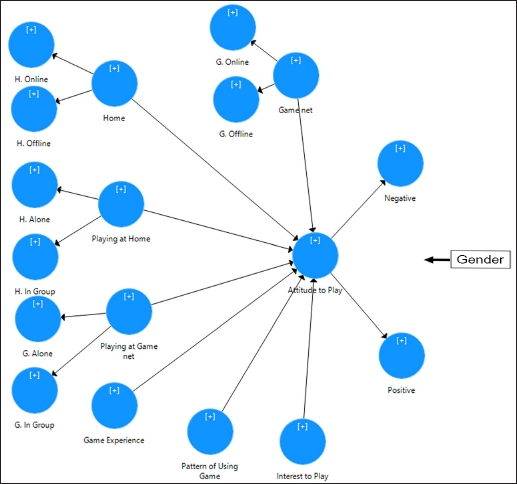
The purpose of the present study is to identify the relationships between the independent variables (playing at home: alone or in a group, playing at game net: in a group or alone, playing at home: offline or online, playing at game net: offline or online, game experience, place of game, type of game, interest to play) and the dependent variable of attitudes towards playing games: negative attitudes and positive attitudes. Also, moderator effects of gender were measured. The research framework of the study is shown in Figure 1.
Relationship Between Independent Variables and Attitudes Towards Playing Game.
Methodology
Location and Sampling
This study used questionnaires for data collection; they were distributed among male and female students using a cross-sectional design and stratified sampling method. Stratified random sampling is a type of probability sampling using Israel’s (1992) formula:
The participants of the study were selected from the engineering and science faculties. A total number of 205 students participated in the present study, and the sample size for each faculty was determined by dividing the student population of each faculty by the total population and multiplying that number by 205. For instance, for the faculty of engineering,
However, because the virus infected COVID-19, the rate of some students’ responses to the questionnaire decreased. Moreover, we had to continue with 205 students from nine different engineering majors (mechanical, electrical, computer, chemical, materials and metallurgy, civil, industrial, architecture and urban planning and natural resources and environment) at Ferdowsi University.
Questionnaires were sent to the students via an online website. Before starting the questionnaire, respondents were adequately informed of the study’s objectives. The respondents were asked to fill in the questionnaire in case they play games; they were also asked some demographic questions to get more insight into the respondents’ background. The instruments were designed based on the content of each factor. Specifically, the instrument was a closed-ended questionnaire based on a five-item Likert scale in which respondents needed to provide a specific answer for each item. Developing the research instrument was based on adapting the items related to each variable from various previous studies.
Regarding the ethical concerns, all questionnaires were anonymous, and the identity of the respondents was not published anywhere. In addition, all participants were free to participate. In addition, survey instruments were reviewed by two experts in the field of communication at Ferdowsi University to determine their validity and clarity within the context of this study. The survey instruments were modified slightly based on their feedback. For the pilot study, 30 questionnaires were distributed among students. The results showed that the internal consistency reliability (in terms of Cronbach’s alpha coefficient) achieved the reliability threshold of 0.7 (Hair et al., 2016), with values of 0.709–0839.
Participants
A group of bachelor’s, master’s and PhD university students participated in this study. More than half of the respondents consisted of individuals who held a bachelor’s degree, accounting for 64.4% of the total. This was followed by those with a master’s degree, comprising 29.3% of the respondents. The remaining group, which constituted 6.3% of the respondents, included individuals with a PhD. Questionnaires were distributed among Ferdowsi University students of Mashhad in Iran. Ferdowsi University is renowned as the third most prominent institution of higher education in Iran, and its engineering faculty boasts the largest student population, with a staggering enrolment of 5,480 students (Ferdowsi University Website, 2023).
Furthermore, there is a pertinent need to investigate the prevalence of gaming among engineering students, as it has been observed that engagement in video game activities can positively impact student learning outcomes and attitudes (Bodnar et al., 2016). Udeozor et al. (2023) also conducted a similar investigation among engineering students, emphasising the significance of studying the relationship between gaming and academic performance. However, it is worth noting that there is a shortage of research examining the perceptions of students, mainly engineering students, in Iran towards gaming. The present study’s findings can contribute to the existing literature on gaming. Simple random sampling was applied, and we asked the participants to fill out the short form of an online questionnaire distributed among 205 students (124 males and 81 females). Descriptive statistics were employed to summarise participants’ data.
Measurement
The present study included a set of questionnaires for measuring the following dependent and independent variables: independent variables: playing at home: alone or in a group, offline or online and playing at game nets: in a group or alone, offline or online, having game experience, patterns of playing game: frequency of time and hours, interest to play. Demographics of respondents (age, gender, parents’ education, parents and students’ job and income, device to play, student’s level of education, type of game they play and field of study); dependent variable: attitudes towards playing games.
The attitudes towards online games were measured by 17 items on a five-point Likert scale. It is divided into negative attitudes (nine items) and positive attitudes towards the games (eight items). Respondents were asked about playing games ranging from 1 = Strongly Disagree to 5 = Strongly Agree for each statement. The range of scores for this dimension was from 17 to 85. Kosari et al. (2017) measured attitudes towards playing games.
Playing games at game nets in groups and alone, offline and online, was measured by four items ranging from 1 = Very Much to 5 = Very Little. The range of scores for this dimension was from 1 to 5. Playing games at home in groups and alone, offline and online, was measured by four items ranging from 1 = Very Much to 5 = Very Little. The range of scores for this dimension was from 1 to 5.
In addition, the name and type of games and the interest to play were measured by three items. Respondents can choose Action, Adventure, Strategic, Sports and Simulation for the kind of game. They needed to determine Free or Charged for the type of game. The interest in playing was measured by responding to the statement ‘I like computer games’ through Very Much or Very Little. The range of scores for this dimension was from 5 to 25.
Parents’ education was measured by five items, namely primary education, diploma, associate degree, bachelor’s, master’s and PhD. The level of education among students was measured by one item, such as bachelor’s, master’s and PhD degrees. Parents’ jobs included government, self-employed and retired; students’ jobs included student, self-employed and government.
Access to the computers at home was measured by ‘Yes’ and ‘No’ answers. Gaming experience was measured by one item ranging from Very Little to Not at All. The range of scores for this dimension was from 5 to 25. Desktop computers, mobile phones, tablets, game consoles and laptops measured the gaming device. Open-ended questions measured students’ and parents’ income and frequency of playing (years, hours per week).
Data Analysis
The collected data were analysed using the partial least square structural equation modelling (PLS-SEM) technique as a non-parametric second-generation multivariate analysis. This was mainly to assess the measurement instrument’s psychometric properties and to statistically test the proposed hypotheses in the research model (Hair et al., 2016). The Smart-PLS statistical software package version 3.0 (Ringle et al., 2015) was used to run the analysis to validate the structural model after confirming the appropriateness of the measurement model. Therefore, this study used partial least square (PLS) as the most important motivations are exploration and prediction, which is recommended in an early stage of theoretical development to test and validate exploratory models. It is also suitable for prediction-oriented research. Thereby, this methodology assists in the explanation of endogenous constructs.
In addition, descriptive analysis was employed to determine whether playing at home alone or in a group, offline or online and playing at game nets: in a group or alone, offline or online, game experience, place of game, type of game and interest to play. The dependent variable of the present study is attitudes towards playing games: negative or positive. Furthermore, respondents’ personal information (age, gender, parents’ education, parents and students’ job and income, device to play and level of education type of game) was analysed via frequency, percentage, mean and standard deviation. PLS analysis was employed for the regression analysis for moderation effects of gender in relationship with attitudes towards playing games.
Results
Descriptive Statistics
The respondents were between 18 and 49 years old, and the majority of them (n = 108) were in the age range of 18–25 years old (52.7%), followed by 26–33 years old (n = 64, 31.2%). The age range of 34–41 included 25 students (12.2%); the last and least age group was 42–49, with only eight people (3.9%). Most of the respondents were bachelor’s students (n = 132, 64.4%), followed by 60 master’s students (29.3%) and 13 PhD candidates (6.3%).
Among the respondents’ fathers, 80 people (44.4%) were government employees, and 114 fathers (56.6%) were businessmen. In addition, 91 fathers (44.4%) have above-diploma educational degrees, and 114 fathers (56.6%) have below-diploma degrees. Most of the participants’ mothers (125 mothers, i.e., 61%) were below diploma and 80 mothers (39.1%) were above diploma. The majority of the respondents’ fathers (n = 125) are employed (61%), and 39% are retired (n = 80). The majority of the respondents’ mothers (n = 140) were householders and retired (68.3%), while 41 mothers were working in the public or private section (21%). 60% of the students were not working (n = 123), and 40% worked part-time (n = 82).
Most participants (n = 125, 91.2%) played free games and just 18 subjects (8.8%) paid to play games. Almost half of the respondents (48.3%) played with mobile phones, followed by personal computers (27.8%), 10.7% with laptops, 9.3% with consoles and at least 3.9% with tablets. 25% of the players prefer action games, and 22% of the students play strategic and adventure games. Last but not least, the game genre belonged to sports games with 19%.
The majority of the students (n = 46) participated in the field of mechanical engineering (22.4%), followed by computer engineering (n = 40, 19.5%) and electrical engineering (n = 34, 16.6%). Civil engineering students included 31 subjects (15.1%), 22 students studied architecture engineering (10.7%), and the minor participants belonged to petrochemical and IT engineering with eight students (3.9%) and industry and metallurgy with seven (3.4%) and five students (2.4%), respectively. The last and most minor participants belonged to space engineering, with four students (2%).
From among the subjects of the study, 193 people (94.1%) had an income of up to five million Tomans per month, seven people (3.4%) earned 5.5–10.5 million Tomans, and five people (2.45%) earned more than 20.5 million Tomans. Students’ fathers were divided into the following four groups based on their income: up to 5 million Tomans (81.5%, n = 167), 5.5–10.5 million Tomans (14.1%, n = 29), 25 million and above (3.9%, n = 8), 11–16.5 million Tomans (0.5%, n = 1). The income of students’ mothers was reported as follows: Almost all mothers earned up to 5 million Tomans (99%, n = 203) and only 1% (n = 2) earned 5.5–10.5 million Tomans. The total amount of the respondents’ family income was divided as follows: 91 families earned up to 5 million Tomans (44.4%), 89 families earned between 5.5–10.5 million Tomans (43.4%), 11 families made between 11 and 16.5 million Tomans (5.4%), and the income of 14 families (6.8%) were more than 25 million Tomans.
Half of the respondents, 49.5% (n = 101), played games 2 hours per day, followed by 35.1% (n = 72) and the last and most minor group belonged to more than 2 hours with 5.9% (n = 32). The frequency of years of playing games was divided into three categories: less than seven years (39.5%, n = 81), followed by 8–15 years (47.3%, n = 96), and the last group belonged to more than 15 years with 13.3% (n = 27). Regarding patterns of playing games, hours of playing in a day have M = 157.06, SD = 155.26, frequency of playing years has M = 9.77, SD = 6.09, and frequency of time per day has M = 4.11, SD = 3.45. Most respondents have access to computers at home (80.5%, 165), and just 19.5% (n = 40) do not have access to computers at home.
Attitudes Towards Playing Game
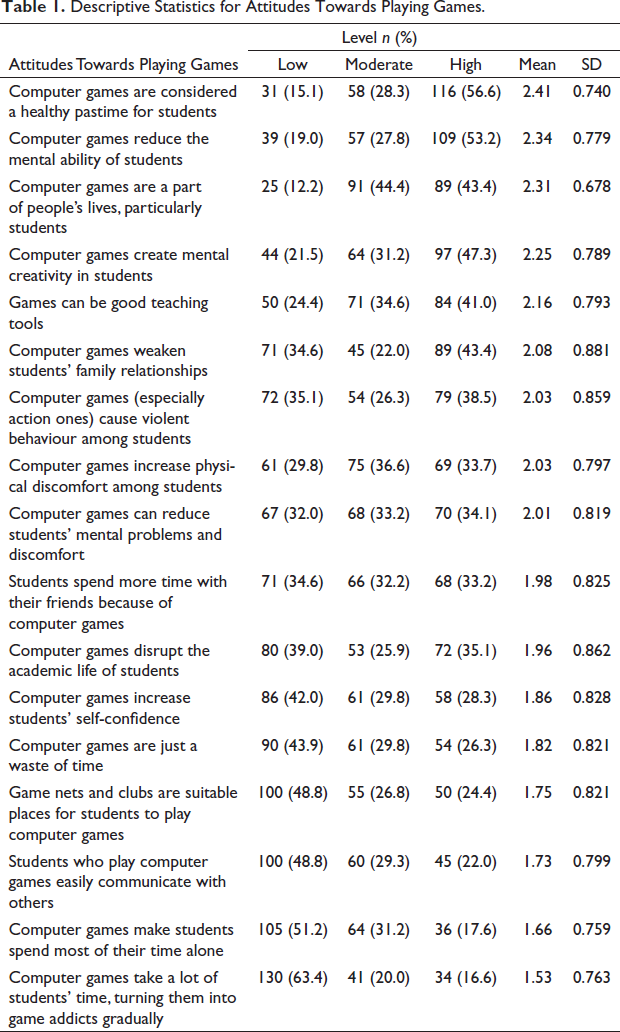
Most students have positive attitudes towards playing games; the highest mean score belonged to the positive attitudes group. In the attitudes towards playing games, the item ‘computer games are considered a healthy pastime for students’, ‘computer games reduce the mental ability of students’, and ‘computer games are a part of people’s lives’, particularly students’ have the highest mean with M = 2.41, SD = 0.740), M = 2.34, SD = 0.779 and M = 2.31, SD = 0.678, respectively. All these items have the highest positive attitudes towards playing games, with 56.6%, 53.2% and 43.4%, respectively.
The last and lowest mean in attitudes towards playing games belonged to the computer games take a lot of students’ time, turning them into game addicts gradually, and computer games make students spend most of their time alone (M = 1.53, SD = 0.763 and M = 1.66, SD = 0.759, respectively). In addition, these two items had low degrees of 63.4% and 51.2% in the attitudes towards playing game perception (Table 1). In addition, the negative attitudes were re-coded and included in the analysis.
Descriptive Statistics for Attitudes Towards Playing Games.
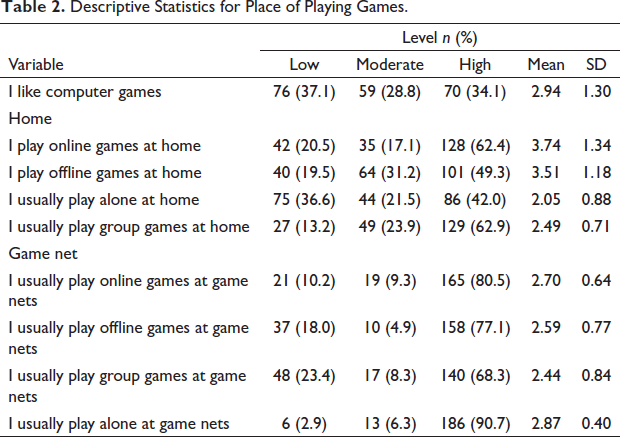
Most students played online games at home with the highest mean (M = 3.74, SD = 0.1.34), followed by offline games at home (M = 3.51, SD = 0.18). 63% of the students were interested in playing at high and moderate rates. Play alone at home had the lowest mean (M = 2.05, SD = 0.88).
Eighty per cent of students play online games at game nets at a high rate, and 77% play offline games; also, 68% of gamers play in groups and 90% play alone. 62% play online at home, and 49% play in offline mood. 42% of players usually play alone at home, and 62% play in groups (Table 2).
Descriptive Statistics for Place of Playing Games.
Measurement Model
Based on the recommendations of Hair et al. (2016), a measurement model assessment is an essential step in the PLS approach. As several observed indicator variables may be unreliable, the researcher cannot analyse the structural model. Analysis of the reflective measurement models involves checking the composite reliability (CR) and Cronbach’s alpha to evaluate internal consistency, individual indicator reliability and commonality and average variance extracted (AVE) to evaluate convergent validity. Furthermore, the Fornell–Larcker criterion tests were used to examine discriminant validity.
Convergent Validity
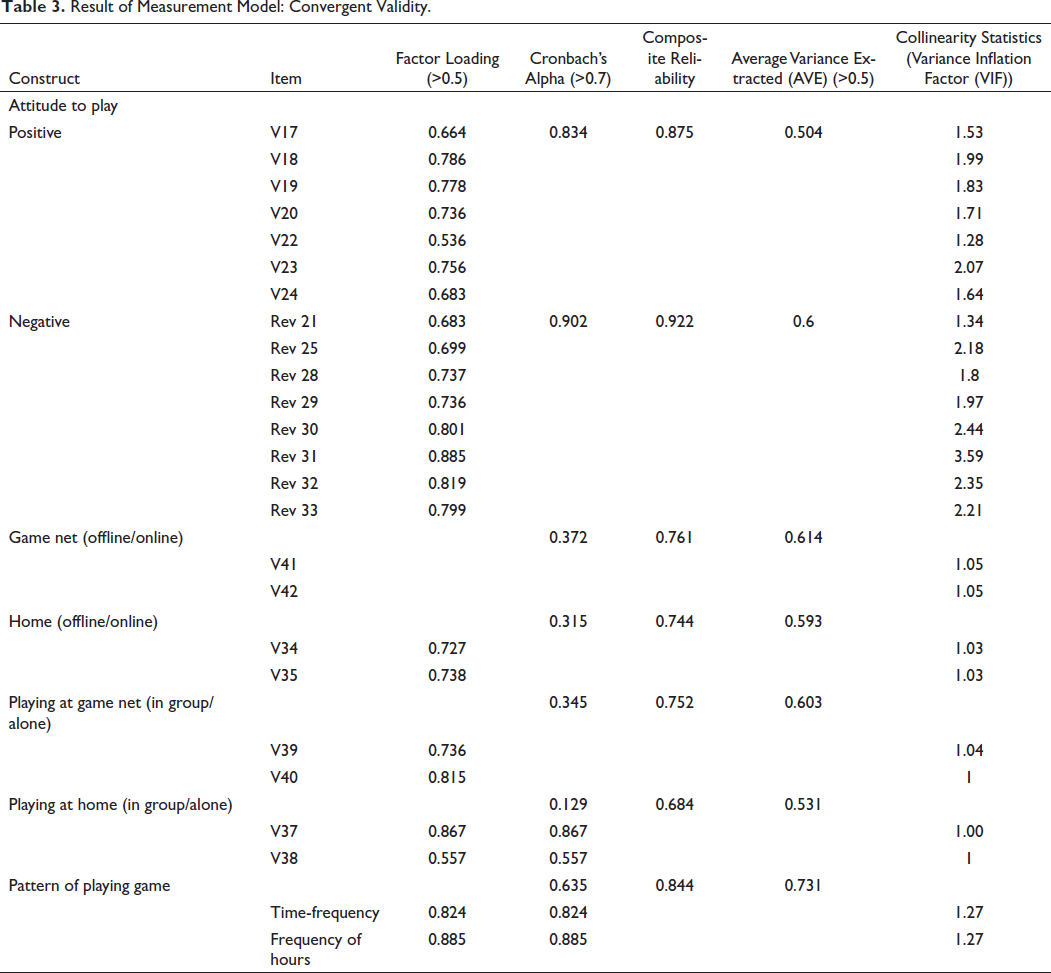
Indicators with very low outer loadings (below 0.40) should always be removed from the scale (Hair et al., 2011). Indicators with external loadings between 0.53 and 0.88 should be considered for removal from the scale only when omitting the indicator substantially increases the CR and AVE (Henseler et al., 2009).
Table 3 shows the outer loadings of all items for all variables in the initial and modified measurement model. According to these results, all are external loadings except the following items: positive attitudes towards playing games V26 and frequency of playing by the year were omitted from the model. Regarding this study’s findings, the CR ranged between 0.68.4 and 0.922, and AVE ranged between 0.504 and 0.731. In addition, the variance inflation factor (VIF) is used to measure collinearity at the indicator level. Results indicated that all values are below 5, indicating no collinearity issue.
Result of Measurement Model: Convergent Validity.
Discriminant Validity
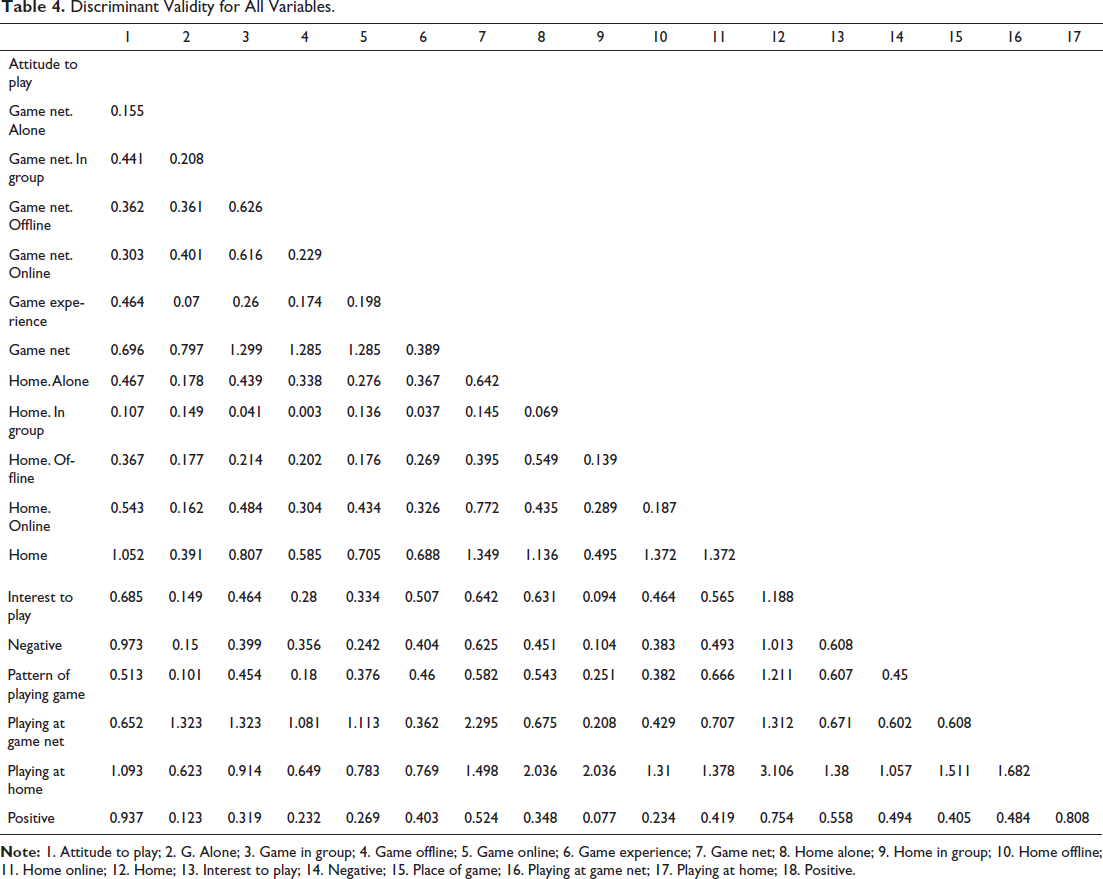
Discriminant validity demonstrates the extent to which a construct is empirically distinct from another construct. The Heterotrait–Monotrait (HTMT) correlation ratio is a new criterion for measuring discriminant validity in PLS-SEM models (Henseler et al., 2014). For Hair et al. (2010), the HTMT value has to be less than 0.85, meaning that two constructs were distinct except for game net, home, negative, playing game at home and game net and positive. In this study, all the variables demonstrated that the measurement model used meets and exceeds the requirements for establishing discriminant validities (Table 4).
Discriminant Validity for All Variables.
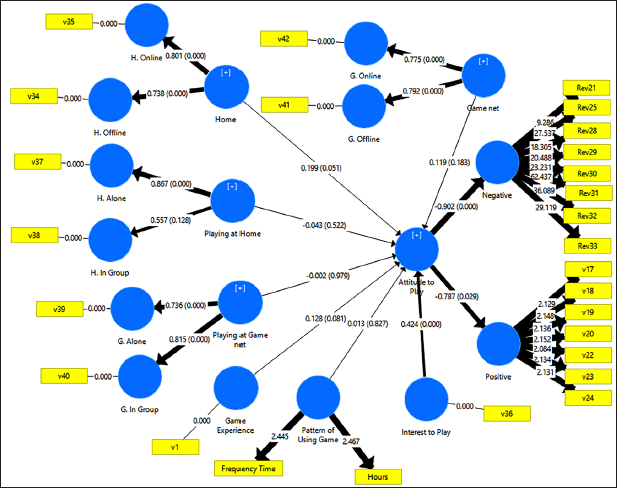
Results of Second-order Model for Attitudes Towards Playing Game Construct.

Second Order Model of Attitudes Towards Playing Games
Since the perceived value was second-order latent variables, the bootstrap approach was investigated to evaluate the significant contribution of all first-order latent variables. The first stage produces parameter estimations for the components and computes their factor scores. The negative and positive factor scores were then used to compute the higher-order attitudes towards playing games. Hair et al. (2006) suggest that a higher-order construct should be assessed similarly to the lower-order construct structure. Therefore, reliability, discriminant and convergent validity were rechecked against acceptable threshold values. Outputs from this stage showed that negative and positive attitudes significantly influenced attitudes towards playing games (p < .001). The results for attitudes towards playing games with two subscales were negative attitudes (β = –0.902, p < .001) and positive attitudes (β = –0.787, p < .05) (Table 5).
RQ1. Is there any connection between playing at game nets, alone or in groups, offline or online and attitudes towards playing games?
RQ2. Is there any relationship between playing games at home, alone/in groups, offline/online and attitudes towards playing games?
RQ3. Is there any relationship between game experience, game-playing patterns, interest in playing games and attitudes towards playing games?
Path Model Using Bootstrap
The path coefficients obtained from this model are consistent. The respective confidence intervals can be obtained by bootstrapping (Streukens & Leroi-Werelds, 2016). This step also provides estimates for total effects. Some inputs have a positive impact on attitudes towards playing games, such as playing offline and online games at home and interest in playing games (β = 0.199, p < .05 and β = 0.42, p < .05, respectively).
In addition, there is no relationship between having game experience, playing online/offline, patterns of playing games, playing games at game nets/home (alone/in group) and attitudes towards playing games (p > .05) (Figure 2).
Effect Path of All Variables on Attitudes Towards Playing Games.
Effect Size f2
The change in the R2 value while a particular independent construct is eliminated from the model can be used to evaluate whether the omitted construct primarily influences the dependent construct. This measures indicator f2 or effect size. Recommended guidelines for assessing effect size are f2 ≥ 0.02, f2 ≥ 0.15 and f2 ≥ 0.35, respectively, representing small, medium and large effect sizes of an exogenous construct (Cohen, 1988). According to the result of f2, the effect size of exogenous construct for attitudes towards playing games indicated effect size for game experience as (f2 = 0.02), playing in game net (offline/online) (f2 = 0.008), playing at home (online/offline) (f2 = 0.029), playing at game net and patterns of playing games (f2 = 0.00), playing at home (in-group/alone) (f2 = 0.002) are small; however, for interest to play (f2 = 0.154), it is considerable.
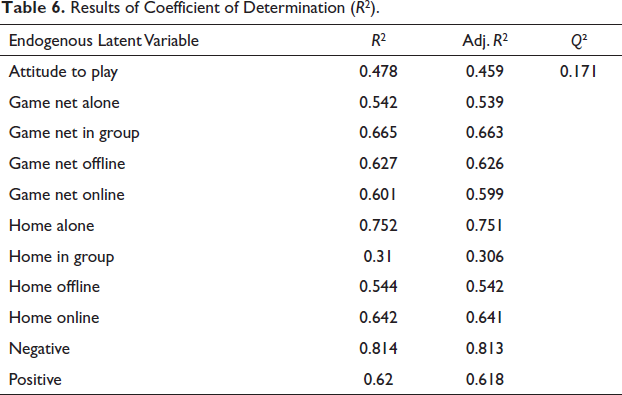
Coefficient of Determination (R2 and Q2)
In addition, playing at game nets (alone, in a group, offline, online) and playing at home (online, offline, in a group, alone) can explain 47% of attitudes towards playing games and 81% of negative attitudes and 62% of positive attitudes towards playing games. An essential aspect of a structural model is its capability to determine the predictive relevance of the model. In addition, a blindfolding procedure was employed to establish cross-validated redundancy measurements for each construct. The results revealed that the Q2 value of attitudes towards playing games (0.171) is more significant than zero, recommending that the independent construct had predictive for the dependent construct under the condition of this study (Hair et al., 2011) (Table 6).
Results of Coefficient of Determination (R2).
H1: Gender has a positive moderating effect on attitudes towards playing games.
Moderator Effects of Gender
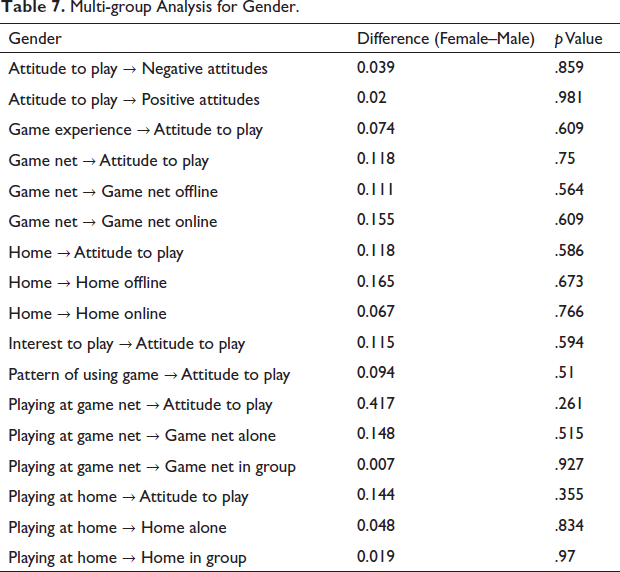
According to PLS analysis, there are no significant differences between the path coefficients of males and females for the entire path coefficient (Table 7). Therefore, H1 was rejected.
Multi-group Analysis for Gender.
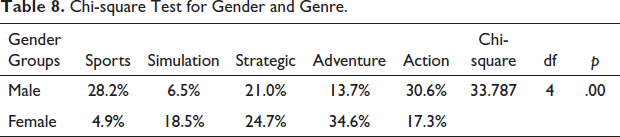
The comparison of gender and genre was carried out to find out how gender could play different parts in various genres. The chi-square test results revealed a significant relationship in the gender groups in other genres (x2 = 33.787, p < .00). Females preferred adventure, followed by strategic genres, but males preferred action, sport and strategic genres, respectively (Table 8).
Chi-square Test for Gender and Genre.
Discussions
The present study was conducted to determine attitudes towards online and offline games with the mediation effects of gender in Iran. The five main findings of the present study were as follows: (a) the positive impact of playing offline and online games at home on attitudes towards playing games, (b) the positive impact of interest in playing games on attitudes towards playing games, (c) no relationship was reported between game experience, game net (online, offline), pattern of playing game, playing game at game net and playing at home (alone and in group) with attitudes towards playing games, (d) no mediating effects of gender and attitudes towards playing, and (e) preferred game genre is different between men and women.
Most students played free games, and almost half of the respondents played with mobile phones and computers. This result is in the line with Rafiemanesh et al. (2022) and Labrador et al. (2023)
Half of the respondents played games 2 hours per day. This result is consistent with Rafiemanesh et al. (2022), who proved that 18% of the respondents played games for less than 7 hours. The majority of the respondents had access to the computer at home (Ilgaz & İnci, 2020; Işıkoğlu et al., 2023; Labrador et al., 2023) and played online games and in groups. At game nets, most gamers preferred to play alone in both online and offline modes.
The results showed that playing offline and online games at home positively impacted playing games and attitudes towards playing. This result is in line with Kosari et al. (2017), Delos Santos et al. (2020), Garneli et al. (2017) and Bovermann et al. (2018), who found that respondents had positive attitudes towards playing games.
The results also revealed that interest in playing games positively impacted attitudes towards playing games. This result is consistent with the findings of Al-Sadat Tabaian and Shafiei (2021), Fuad (2017) and Garneli et al. (2017). Moreover, the relationship between attitudes towards playing games is different for men and women gender. This result is in line with Gallistl and Nimrod (2020), Lopez-Fernandez et al. (2019), Arockiyasamy et al. (2016), Jooyaeian and Khoshsaligheh (2022) and Ferguson et al. (2020).
In addition, the relationship between gender and genre is significant; females preferred adventure and strategic genres, while males preferred action and sports genres followed by strategic. This result is in line with the study outcomes of Rehbein et al. (2016), Von der Heiden et al. (2019), Baloch et al. (2023), Núñez-Pacheco et al. (2023) and Scharkow et al. (2015) who found that males preferred action and strategy games. Also, Yoon et al. (2013) found gender and game type change the results.
Based on the uses and gratification theory, users experience a sense of satisfaction after playing games; therefore, they play more and fulfil their cognitive, affective, personal integrative, socially integrative and escapist needs. They are active and choose their favourite game based on their desires and needs. In addition, they were entertained and enjoyed the content; they fulfilled their autotelic and intrinsically motivating elements. Entertainment had a strong association between media content and pleasure.
Additionally, all five dimensions of U&G theory influence attitudes towards video games (Chang & Lee, 2022; Xu et al., 2023). For example, users can escape from their daily life issues by engaging in games (Fraser et al., 2023; Marques et al., 2023; Nguyen, 2015; Oing & Prescott, 2018; Salman et al., 2022; Stellhorn, 2022; Vugts et al., 2018). The characteristics of certain types of games allow players to escape from life pressures, deal with negative situations, and feel power and autonomy (Şalvarlı & Griffiths, 2021). In addition, gamers experience positive emotions and happiness while playing (Mahfuzra et al., 2019; Nguyen, 2015; Nouvanty et al., 2023; Puspitasari et al., 2018). This confirmed that having fun positively affects the intention to continue playing online games (Nouvanty et al., 2023).
Social interaction with friends and other players is very significant for gamers. Over the past few decades, the market has seen the rise of many online multiplayer games, which have provided a virtual platform for players to interact with other gamers around the world (Akin, 2023; Anubha & Islam, 2022; Calandri et al., 2023; Center, 2019; Razum & Huić, 2023; Villani et al., 2018). Researchers have shown that building social connections in virtual groups through online video games promotes the development of interpersonal skills in the real world (Molyneux et al., 2015). Online communities have positively impacted attitudes towards video games and related media due to the high level of interaction among gamers (Chang & Lee, 2022). There is also a link between playing video games and cognitive skills. For example, puzzle games can increase cognitive skills such as problem-solving and fluid cognition (Akin, 2023; Barz et al., 2023; Cunningham & Green, 2023; Gray et al., 2019; Lamb et al., 2018; Rafiemanesh et al., 2022).
Conclusions
The rising popularity of video games has garnered the attention of scholars who aim to comprehend the motivations and mechanisms behind user involvement. This investigation was carried out to explore and examine the elements that influence attitudes towards playing video games. Based on the obtained results, it is evident that offline and online gaming at home and the interest in playing games significantly impact attitudes towards playing. However, no correlation was found between game experience, playing patterns and attitudes towards video game playing. Moreover, gender greatly influences genre preferences and attitudes towards playing.
The inclusion of video games in academia is warranted due to their widespread use and the preference of young individuals today, mainly because video games foster cross-sectional competence, such as the utilisation of Information and Communication Technologies (ICT), vital in twenty-first-century education. Similarly, the emergence of severe video games presents the opportunity to incorporate them into classrooms, enriching learning through gaming as an educational strategy for future engineers. Certain studies have indicated a correlation between gaming enjoyment, comprehension and the inclination to pursue engineering studies (de Carvalho et al., 2018). Consequently, the engineering education community should explore this potential (Bodnar et al., 2016).
Various factors in video game engagement, such as enjoyment, social interaction and personal interaction, contribute to the gratification users derive from playing video games. The uses and gratification theory highlights gamers’ motivations for prolonged usage. Furthermore, the present study sheds light on the underlying reasons for engagement with pleasure-oriented information systems, constructing a comprehensive conceptual model where usage is viewed as fulfilling specific gratification needs.
However, we are faced with some problems in Iran. The Iranian government does not support gamers and not only does not provide them with proper facilities but also does not give them the slightest incentive, even sending the players to Asian or world tournaments. If a gamer is successful in his field, he has to pay for his competition. The girls have no place to play except at home. The government has recently allowed the opening of a game net for girls. Players pay for the game themselves and choose the content and genre of the game.
Limitations
The present research was conducted during the corona era, which limits the study. In the first place, 205 online questionnaires were used, the feedback of which was shallow compared to face-to-face ones. Second, students and university educational online groups showed little interest in cooperating for several reasons, such as coronavirus, sharing income information or being hacked.
It is suggested that future research be conducted among those who play at game nets. To measure women’s attitudes about computer games, the government, the gaming community and the organisation of computer games need to create a place for girls to play (women’s game nets). With the number of female players increasing daily, no organisation supports them. It is suggested that the sponsors support the country’s gaming community and think of generating income to conduct better research in the gaming industry.
In addition, we strongly advocate for engineering involvement in e-City, a city-simulation video game intended to inspire interest in pursuing a career in engineering by presenting authentic, real-world problems and challenges. It is worth noting that a correlation exists between the level of enjoyment experienced while playing the game and its influence on the decision to pursue a career in engineering. Numerous positive aspects have been brought to attention, including the opportunity to engage with and solve problems which are representative of real-life situations, the challenging nature that the game embodies, and the problem-solving methodology it encourages (de Carvalho et al., 2018).
To encourage computer players, game companies can design training workshops for the players where they can learn the knowledge of computer games. Also, because Iran is a Muslim country and the government does not allow broadcasting games that contain nudity or forms of Satanism (such as One Eye), game companies are encouraged to produce games in line with Islamic values if they want to sell more. Another problem is the high cost of playing games; players usually earn money from the game by selling items during the game. Moreover, if the game companies make intellectually and mentally attractive games, they will receive a unique welcome from the players.
The global dispersal of games containing unethical issues, violence or horror, as well as advertising modern culture in the gaming industry, has exposed gamers to some unpleasant content. To avoid such contradictions and prevent potential harm to the youth, it is suggested to replace foreign games using domestic capabilities for game production, which have proper educational and cultural contents.
Researchers and manufacturers must pay more attention to qualitative research approaches to develop the digital entertainment industry and improve supply and production to agree with Iranian society and culture. With recent developments in digital entertainment and education and the presence of digital games in modern educational contexts, the existing academic views can be modified to be more attractive. In addition, digital leisure researchers are advised to examine domestic articles published in international databases.
As another suggestion, policy planners and educational experts are advised to invest in educating parents as well; once parents are well-informed, they can be better guides for their children and reduce the modern parent–children gap. As Khoshsaligheh and Ameri (2020) stated, Iranian gamers are more interested in localised products that preserve their original taste; therefore, localising games based on cultural values could be profitable for gamers and producers.
In the end, it is suggested that future researchers study the relationship between learning strategies and playing video games through experimental investigations to measure the potential of video games for a better understanding of engineering courses or other fields of study.
Footnotes
Declaration of Conflicting Interests
The authors declared no potential conflicts of interest with respect to the research, authorship and/or publication of this article.
Funding
The authors received no financial support for the research, authorship and/or publication of this article.
