







Abstract
Over-the-top (OTT) platforms have become increasingly popular, driven by technological advancements and shifting viewing preferences. However, their use by Bangladeshi university students has remained an unresearched area. Therefore, the study aimed to identify the factors that influence university students’ use of the OTT platform in Bangladesh, applying the Uses and Gratifications Theory (UGT) to understand the motivations behind OTT platform usage. This study employed a qualitative approach, utilising an in-depth interview (IDI) method to collect data from the participants. A total of 18 IDIs were managed with NVivo 14 and analysed thematically. Factors identified from the study were categorised into four major themes. The findings revealed that university students primarily choose content based on personal preferences and recommendations from friends, peers and family members. Additionally, the flexibility of OTT platforms enables students to access content at any time on their mobile devices or laptops. Key factors, such as buffer-free streaming, ad-free experiences, offline access, and a user-friendly interface, enhance student satisfaction. This study suggests that OTT policymakers should concentrate on engaging content, user-friendly features, and affordable student packages to enhance platform engagement and accessibility.
Introduction
The United Nations Sustainable Development Goal 4 calls for ensuring learning for young generations through the use of technology (United Nations, 2015). Consistent with this goal, the rapid advancement of digital technology has not only transformed education but also reshaped media consumption patterns worldwide. The increasing number of smartphones, the widespread availability of affordable internet, improvements in networks, and technological advancements have led to the emergence of over-the-top (OTT) media platforms. These platforms provide high-quality services directly to viewers through the internet (Nagaraj et al., 2021). OTT, standing for over-the-top, refers to streaming services that deliver content to customers over the internet. Various devices, including laptops, smartphones, tablets, smart televisions (TVs) and computers, are used to access OTT services for different websites and apps.
In the past, media users could only subscribe to cable services, and their cable TV provider was responsible for providing and making programmes available to them. Currently, media users can register for various services and utilise their features (Ghalawat et al., 2021). As a result, the OTT is contributing to the growth of the global economy. For example, the global OTT platform industry contributed approximately $178 billion in 2021 and is projected to reach $275 billion by 2027 (Javed, 2022). Furthermore, Menon (2022) showed that the worldwide OTT market is projected to reach $86.80 billion by 2026, with a compound annual growth rate (CAGR) of 14.3%. Additionally, the rise of streaming services has significantly altered how individuals engage with media content, eliminating traditional constraints of time and space (Periaiya & Nandukrishna, 2023; Shin et al., 2016).
Netflix, launched in the US in 1997, is widely regarded as the first dedicated OTT platform. Initially, it operated as a digital versatile disc (DVD) rental-by-mail service, but it gradually shifted its focus to online streaming in 2007. This marked the beginning of the modern era of OTT platforms (Weiss & Clark, 2024). In Bangladesh, Netflix and Amazon Prime Video became available in 2016, with Netflix currently serving approximately 200,000 subscribers and generating an estimated $21.6 million in revenue. Besides Netflix, the India-based Hoichoi, which was introduced in Bangladesh in 2019, has become a popular alternative among international streaming platforms (Ahmed et al., 2023). The growth of the OTT industry in Bangladesh began in 2013 with the launch of Bongo, the country’s first streaming platform. Over the years, several platforms have emerged, including Bioscope, Banglaflix and Teleflix in 2016, followed by Cinespot in 2018 and Binge in 2020. A significant shift occurred in 2021 with the launch of Chorki, leading to rapid expansion. This was followed by the introduction of Deepto Play by Deepto TV in 2022 and iScreen by Channel I in 2023.
Additionally, OTT platforms have significantly reshaped content consumption in Bangladesh, particularly among the youth. For instance, BongoBD indicates that one-third of their subscribers fall within the 18–24 age range. Cinematic, a new platform, offers flexible subscription plans starting at BDT (Bangladeshi Taka) 2 per day, which is convenient for young viewers, especially students (Paul, 2023).
Despite the rising usage, limited research has been conducted on the specific factors driving subscription and continued engagement within this demographic in Bangladesh. This research aims to fill that gap, offering insights into students’ motivations, preferences and challenges with OTT platforms. This research contributes to both the academic literature and industry knowledge, offering valuable insights into a rapidly evolving sector of Bangladeshi media consumption. The findings have potential implications for platform providers, advertisers and policymakers alike, as they navigate and shape the future of digital entertainment in Bangladesh.
Literature Review
Several digital platforms and formats are available to provide internet users with video content, such as OTT services. Bury and Li (2013) provided a comprehensive overview of the success of online streaming services, tracing the origins of digital video viewing back to the 1970s when Sony Corporation made significant efforts to promote their short-lived product. With the American OTT market approaching maturity, numerous worldwide companies are now shifting their attention to other overseas markets, such as India, to drive their next phase of subscriber expansion. According to Udoakpan and Tengeh (2020), OTT TV services serve as an addition to pay-TV services rather than a replacement in South Africa. People with low incomes are utilising mobile applications, both free and paid, to access TV programming. For individuals without access to OTT TV or pay-TV services, free-to-air services are the preferred platform for watching TV.
In the context of COVID-19, a notable increase in the general public’s reliance on the internet has impacted consumers’ media consumption habits. Consequently, there has been a significant surge in the number of subscribers to OTT platforms, as people have the opportunity to choose from a diverse range of content (Nayak & Biswal, 2021). According to Chakraborty et al. (2023), OTT video streaming networks effectively meet the increasing demand by continuously adding diverse material. The development of OTT platforms can be attributed to the lack of outdoor entertainment during lockdown and subsequent movement limitations, as well as the online release of highly anticipated films featuring popular stars and uncensored content, among other factors. During the pandemic, there has been a significant surge in the number of Indian individuals enrolling in diverse international OTT services, such as Netflix and Amazon Prime Video, as well as Indian video-on-demand platforms like ZEE5 and ALTBalaji. The particular conditions of the COVID-19 lockdown provided significant chances for OTT video service providers to attract and retain customers, diverting the attention of traditional TV and movie consumers toward OTT media (Gupta & Singharia, 2021).
Five key criteria influence user subscription behaviour: content, convenience, features, quality and price. The research found that global customised content, convenience, interactive features, quality and membership fees were strong indicators of customer subscription behaviour (Nagaraj et al., 2021). Wang and Jung (2022) explored the factors that influence the inclination for foreign content on domestic OTT platforms in South Korea. Their findings indicate that prioritising the use of distinct international content is crucial for competing with other local services. However, content that has already established its marketability domestically is not meeting audience demands. Mulla (2022) identified several factors influencing OTT adoption, including content availability, price, flexibility, convenience and perceived enjoyment. The analysis also indicates that the availability of affordable internet connectivity is a significant technological factor driving the expansion of OTT services. Yoon and Kim (2024) highlighted the benefits of people transitioning to OTT platforms. It found that factors such as dissatisfaction with previous services, concerns about potential risks, the attractiveness of alternative options, and the abundance of content significantly influence this shift.
Additionally, binge-watching, a defining characteristic of OTT consumption, has been extensively studied for its psychological and physiological effects. Research indicates that prolonged viewing sessions contribute to sleep disturbances, including insomnia, as users experience pre-sleep arousal due to continuous exposure to content (Exelmans & Van den Bulck, 2017). Late-night streaming, facilitated by autoplay features and algorithmic recommendations, has been linked to disrupted sleep cycles and increased fatigue (Lee et al., 2023). Additionally, binge-watching behaviours are associated with higher levels of anxiety, depression and emotional distress among young adults (Ahmed, 2017; Tolba & Zoghaib, 2022). Moreover, algorithms enhance user experience by delivering personalised content; however, they also raise concerns about addictive viewing tendencies and their subsequent health implications (Bonny-Noach et al., 2024).
In light of the widespread availability and rapid advancement of internet services and smartphones, Bangladesh is now emerging as a prominent player in the global OTT market. Around 67% of OTT customers agree that it serves as their primary source of entertainment. Moreover, a significant 69% of OTT customers in Bangladesh believe that the future of OTT video streaming is promising. Smartphones are the most popular devices for watching OTT video streaming material. Hence, 66% of OTT users express a desire to continue their subscriptions (Hossain, 2022).
While the global OTT market is experiencing rapid growth, research related to OTT is still in its early stages, particularly in Bangladesh. Since there has been work on users’ willingness to subscribe and continuation motivation to OTT platforms globally, research specifically focusing on Bangladesh is still emerging. Previous studies, such as those by Hossain (2022) and Mursalin et al. (2024), have examined OTT usage, particularly among young people in Bangladesh. However, much of the existing research focuses on the advancement of OTT technology, rather than content-related concerns. Therefore, the study aims to investigate the factors affecting the use of OTT services, including the adoption and continuation of OTT platforms, as well as the selection of content, among university students in Bangladesh.
Theoretical Framework: Uses and Gratifications Theory (UGT)
There are several theories or models, such as the UGT (Griffin et al., 2023; Kim & Lee, 2023), Technology Acceptance Model (TAM) (Davis, 1989; Sharma & Kakkar, 2022; Venkatasubramany Iyer & Siddhartha, 2021), Diffusion of Innovation Theory (DIT) (Jeong et al., 2022; Li, 2020), the Theory of Consumption Values (TCV) (Chakraborty et al., 2023) and others, that are used in understanding the OTT platform research. Katz’s (1940) UGT (as cited in Griffin et al., 2023) is a widely adopted theory for explaining why people consume media. TAM, introduced by Davis (1989), predicts users’ behaviour toward the acceptance, adoption and usage of technology, while DIT is used to identify the functionalities and social benefits of using technology (Khanna et al., 2024). In this study, UGT is used over other theories because it focuses on understanding how individuals actively seek out media and other content to fulfil various needs or desires, aligning with the study’s objectives.
According to the UGT, individuals have various motives for consuming media content, which may include seeking information, engaging in social interaction, seeking entertainment, developing personal identity, and stimulating cognitive processes. The UGT centres on the audience’s viewpoint, proposing that individuals consciously select a specific medium to fulfil their distinct needs (Katz et al., 1973; Ruggiero, 2000). Additionally, usage and gratification of OTT platforms positively influence users’ behaviour and continuation intentions (Gupta & Singharia, 2021). For example, the majority of prior research on video streaming platforms has relied heavily on earlier studies on TV (Tefertiller & Sheehan, 2019) or has concentrated on customer engagement or service quality (Gupta & Singharia, 2021; Nagaraj et al., 2021). Finally, UGT is also helpful in understanding the subscription motivation of consumers, which pertains to the likelihood of consumers purchasing a particular product or service for a specified period (Dodds et al., 1991). This is because the inclination to subscribe is often shaped by the satisfaction the consumer experiences before making the purchase (Chen et al., 2010). In this study, the researchers investigated the subscription intentions of online streaming platforms. UGT is used in this study to develop an interview topic guide and shed light on analysing interview data.
Methodology
Research Design
An exploratory qualitative approach was employed to investigate the factors influencing university students’ decisions to subscribe to and maintain subscriptions to OTT platforms, using in-depth interviews (IDIs) with the students. A qualitative exploratory approach was selected, as it enables the researcher to gain a deep and detailed understanding of human experiences and perspectives within complex social phenomena (Creswell & Poth, 2018). IDIs were conducted using a semi-structured questionnaire to gather data from participants. This method was chosen for its ability to balance flexibility with structure, enabling participants to express their thoughts openly while ensuring that key research objectives are consistently addressed (Kallio et al., 2016).
Study Setting
The study was undertaken at Khulna University, a public university, in Bangladesh. The university is located in the southwestern part of Bangladesh, which consists of around 7,000 students (Khulna University, n.d.). This institution was chosen because its members are affiliated with the university, enabling them to collect data from a familiar environment. Additionally, like other universities in Bangladesh, students from this university were found to use OTT platforms.
Sampling
A multistage non-probability sampling procedure was followed to select the samples. First, Khulna University, being the affiliated institution of the research team, was chosen purposively. Second, snowball/convenience sampling was used to recruit the student participants who were OTT users. The procedure of the snowball/convenience sampling included the first sampled OTT consumer, who was known and selected by the research team, being asked to provide information on the subsequent OTT consumers to be recruited. In this way, all samples were recruited for this study. This sampling approach was chosen due to its suitability for exploratory research involving hard-to-reach populations (Biernacki & Waldorf, 1981). Student participants were selected based on three criteria: they had to be from Khulna University, subscribe to an OTT platform, and have renewed their subscription at least once in the past year.
By following this procedure, a total of 18 participants were selected for the study, with data saturation achieved through iterative interviews and analysis, ensuring no new themes or insights emerged.
We utilised George Gerbner’s Cultivation Theory (Gerbner et al., 1994), where Gerbner categorised TV viewers into three distinct groups based on their TV-watching hours: light, moderate and heavy viewers. Light viewers were defined as those who watched less than 2 h of TV per day, moderate viewers as those who watched 2–4 h, and heavy viewers as those who watched more than 4 h per day. This categorisation allows us to understand the degree of engagement and influence of media on participants.
Data Collection
A semi-structured interview topic guide (see Supplementary File 1) underpinned by the UGT theory (source) was developed in the local language, Bengali, to collect IDI data from the participants.
The research team collected data from all 18 participants in person between April and June 2024. The informed consent form was shared with the participants, and the completed form was collected from them in person at least 1 week before the IDIs. Several techniques were used to ensure accuracy and completeness of data collection during in-person IDIs: (a) using reliable recording devices with permission to record the interview, (b) using verbal and non-verbal cues to establish rapport, (c) avoiding leading or suggestive questions, (d) using active listening and probing skills, and (e) taking notes and writing memos. Data saturation was achieved when sufficient data collection was completed, and no further data collection would yield additional valuable information. This was reached after 16 IDIs, and an additional two IDIs were conducted to ensure that no new themes/ideas emerged from the IDIs. IDIs lasted between 30 and 35 min.
Data Analysis
Once the IDI data were collected, the back-translation process suggested by Brislin (1970) was followed to translate data, which included specific processes: (a) the lead author translated verbatim the Bengali transcripts into English; (b) a translator, who graduated in English, back-translated transcripts into Bengali; and (c) findings were then shared with the co-authors to check whether any inconsistency exists. To maintain data confidentiality, the anonymity of participants was maintained by assigning pseudonyms, which were known only to the research team. Additionally, documents related to IDIs, such as audio recordings, memos and transcription files, were stored in the lead researcher’s password-protected office computer.
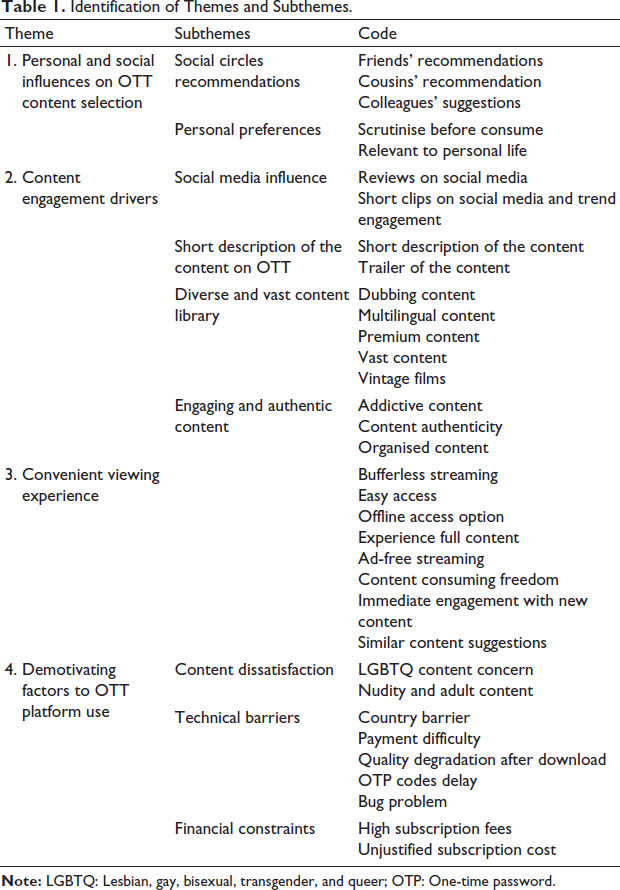
IDI data collected from the participants were analysed thematically based on the UGT theory. In refining and finalising the themes, we employed an iterative process that involved several stages of data analysis. Data from each transcript were inductively coded and assigned initial code names after reading the entire data set. The coding process was undertaken independently by two researchers, and the results were then cross-checked for consistency. Initially, we performed open coding, identifying initial patterns and categories from the data. As the analysis progressed, we conducted axial coding to establish connections between these initial codes and developed broader categories. Once codes and categories were identified, themes were developed (Table 1). If any discrepancy was raised, themes were adjusted and refined several times through discussion and agreement with the research team. Data were imported into one computer-assisted qualitative data analysis software (CAQDAS), NVivo 14.
Identification of Themes and Subthemes.
Findings
Characteristics of the Participants
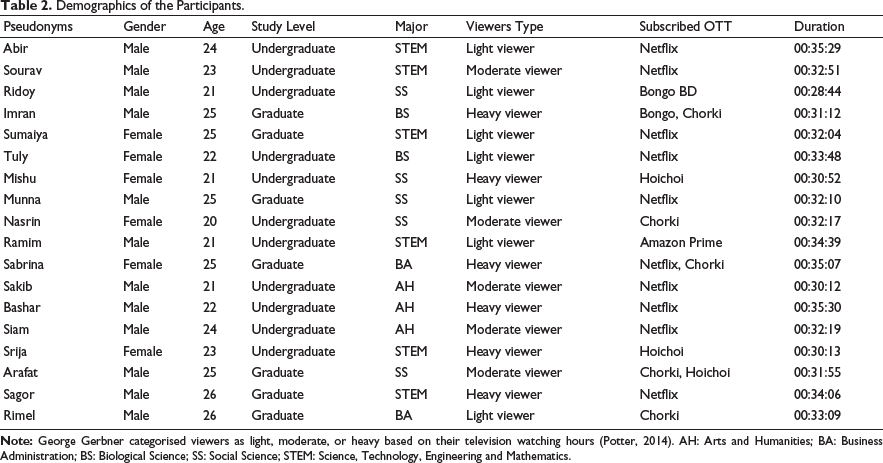
Table 2 shows that 18 IDIs were conducted in this study, of which nine participants subscribed to Netflix, one participant subscribed to Amazon Prime, five participants to Chorki and Bongo BD—Bangladeshi OTT platforms—and three participants to Hoichoi. Among the 18 students interviewed, three reported subscribing to multiple OTT platforms. The majority of subscriptions were to Netflix, with seven of these subscribers being male and the remaining two being female. Additionally, seven participants were classified as light OTT users, five as moderate, and six as heavy users, consuming four or more hours of OTT content daily. Notably, most of the participants who engage with OTT video content are under the age of 25.
Demographics of the Participants.
Theme 1: Personal and Social Influences on OTT Content Selection
Participants identified interpersonal influence as a significant factor in selecting content on OTT platforms. However, three participants emphasised the importance of their personal preferences when consuming content, and five participants reported seeking advice from others, which they typically verified independently before making their final consumption choices. This theme is further divided into two distinct subthemes: personal preferences and social circle recommendations.
Personal Preferences
All but four respondents expressed a sense of empowerment in their content consumption, actively engaging in the decision-making process. While they acknowledged considering the opinions or advice of others, they emphasised the importance of thoroughly scrutinising such recommendations. A notable insight emerged from four participants who asserted that others did not directly influence their content selection. As one informant asserted:
I tend to pick content that resonates with me rather than following popular trends. Usually, I will read up a bit before getting into anything, just to be sure I’ll enjoy it or learn something meaningful. If it aligns with my interests, I go for it—so whatever I end up watching, reading, or listening to feels like a personal choice, not just a response to what’s trending. (Munna, aged 25)
Social Circle Recommendations
Participants highlighted the role of social circle connections, particularly with friends, colleagues and relatives, in shaping their content preferences. Four participants emphasised the direct influence of friends on their content selection. One participant, during one interview, said that:
When a new movie or series becomes a trend, my friends don’t just suggest it—they keep talking about it until I feel I have to watch it too. Their excitement makes me want to watch, and it’s difficult to say no to their recommendations. (Sakib, aged 21)
Additionally, differentials in OTT usage were identified based on student gender. Female students tend to rely more on social recommendations when selecting content, reflecting a broader social influence on their viewing habits. In contrast, male participants tend to exhibit greater independence in content choice, often engaging in personal research before making decisions. When choosing what to watch, I usually ask my friends or check what’s trending on social media. If a show is popular among my peers, I’m more likely to watch it.—Female Participant. (Tuly, aged 22) I prefer to explore content on my own. I read reviews, watch trailers, and look at ratings before deciding what to watch. (Ramim, aged 21)
Theme 2: Content Engagement Drivers
Participants expressed the belief that engaging content has a substantial impact on their decision-making process when selecting what to watch on an OTT video streaming platform. This theme encompasses four primary subthemes: social media influence, concise descriptions of content on OTT, a diverse and extensive content library, and engaging and authentic content.
Social Media Influence
Three participants mentioned that exposure to different trailers or short clips of movies and series on Facebook or Instagram reels influenced their viewing choices. One participant shared their experience:
Facebook or Instagram reels feature short clips from movies or series that I watch. As I scroll through these platforms, I find a clip appealing…hmm… I subsequently searched for the complete film or series on the OTT platform to watch it. (Siam, aged 24)
Additionally, six participants indicated that their content selection was influenced, to some extent, by critiques and recommendations from various social media groups.
Short Descriptions of the Content on OTT
Six other interviewees stated that brief descriptions of content on OTT platforms had a significant influence on their content selection. For instance, ‘Netflix’ provides a brief description of the content under each video. At the same time, ‘Chorki’ typically releases a free trailer of a movie or series, accompanied by a short description below the content. When I’m scrolling through OTT platforms like Netflix or Chorki, the summaries and trailers under each content drive my decision on what to watch. A well-written description or quick teaser grabs my attention and gives me a glimpse of the story and vibe. These descriptions often serve as the deciding factor for what I decide to watch. (Nasrin, aged 20)
Diverse and Vast Content Library
Seven participants expressed satisfaction with the abundant content available on OTT platforms, noting that they easily found their favourite shows and movies. They also appreciated the availability of multilingual content and classic movie series. One participant said:
The OTT platform I use consistently releases new, high-quality content, and its original movies and series have quickly become my favourites. This popularity influenced my decision to subscribe and stay engaged. I find myself constantly seeking fresh and compelling stories, and the platform’s commitment to diverse genres and innovative storytelling keeps me coming back for more. (Sabrina, aged 25)
Engaging and Authentic Content
The long-term OTT platform users cited passionate engagement as the reason for renewing their subscriptions, acknowledging it as a form of addiction in a positive sense. As one participant remarked:
Once you begin watching a web series, it becomes impossible to divert your attention until you delve into each episode and explore all the intricate details. The characters become a part of your daily life, drawing you into another world. You find yourself laughing, crying, and holding your breath through each plot twist. (Ramim, aged 21)
Furthermore, three participants cited well-organised content as a key reason for their preference for OTT services. However, five participants mentioned the safety of using OTT platforms, especially regarding protection from virus attacks.
Theme 3: Convenient Viewing Experience
The convenience of the viewing experience emerged as a crucial factor in subscribing to and remaining engaged with OTT video streaming platforms, as the flexibility of content access and seamless streaming influence university students to stream on these platforms.
Seven participants emphasised having the freedom to consume OTT content compared to other digital platforms. The participants highlighted the challenge of accessing TV content, noting that the key advantage of OTT platforms lies in their flexibility, allowing users to access content at any preferred time, thereby eliminating the need to adhere to fixed schedules. One interviewee appreciated the convenience of watching preferred content on their laptop or phone during free time. Unlike traditional TV, which offers specific content at scheduled times, the participants valued the flexibility of OTT platforms, enabling them to watch content at their convenience. One participant shared that:
The primary reason for subscribing to OTT platforms is that I cannot select the content on television channels based on my preferences. As a student, I have access to a phone or laptop, but it is not easy to bring my personal television or cable connection to the university hall. So, the primary benefit of OTT platforms is that I can use them whenever I want. (Abir, aged 24)
Three participants also identified ad-free streaming as a crucial factor influencing their satisfaction. A smaller number of respondents acknowledged that immediate engagement with new content and similar content suggestions contributed to their decision to subscribe to and continue using OTT video streaming platforms.
Six participants emphasised the importance of buffer-free streaming. They expressed satisfaction, stating that they did not encounter any buffering problems or network issues. One participant shared her experience:
Although we live in a developing country with limited connectivity, I was still able to experience buffer-free content on OTT, which enhanced my future engagement with this platform. (Tuly, aged 22)
However, two participants highlighted the importance of offline access options, ease of accessibility, and the privilege of experiencing full content as key factors influencing their decision to subscribe to and continue using OTT video streaming platforms.
Social differentials in OTT usage emerge based on viewer types, particularly in terms of content access flexibility and seamless streaming. Among viewer types, both light and moderate viewers also appreciated ad-free streaming as a key factor in their satisfaction. In contrast, heavy viewers highlighted seamless streaming with no buffering or network issues as essential for a smooth viewing experience. A light viewer shared,
I do not mind watching ads if it means I can stream for free, but I prefer uninterrupted viewing so that I can enjoy the show. (Abir, aged 24)
On the other hand, a heavy user explained,
For me, the most important thing is that the streaming is smooth. If there are buffering or network issues, it ruins the experience. I need it to be seamless. (Imran, aged 25)
Theme 4: Demotivating Factors to OTT Platform Use
Participants identified several obstacles to the potential of OTT platforms, including geographical restrictions, the unavailability of preferred content, technical issues, delayed OTP codes, and reduced content quality after downloading. This study categorised users’ perceived dissatisfaction and constraints into three distinct areas: content dissatisfaction, technical barriers and financial barriers.
Content Dissatisfaction
Respondents expressed dissatisfaction with the content available on OTT platforms. Two participants pointed to the prominence of ‘lesbian, gay, bisexual, transgender, and queer (LGBTQ)’ narratives, which they felt did not align with local cultural values. It was cited as a factor influencing their decisions regarding subscription renewals and continued engagement with the platform. As one participant noted:
I used to enjoy streaming on this global OTT platform, but when I started seeing so much content focused on LGBTQ themes, I felt it was out of touch with our culture. It made me reconsider my subscription. I prefer local narratives and stories that resonate with my values, but the content seems to be heading in a different direction. (Rimel, aged 26)
Technical Barriers
Seven participants reported a frustrating experience due to the relatively limited content available in their current locations, compounded by delayed one-time password (OTP) codes and technical issues. Users often encountered difficulties related to the payment process, including issues with payment methods, subscription plans and overall accessibility. Participants also reported facing payment difficulties when subscribing to a global OTT video streaming platform, forcing them to seek help from intermediaries, which are often not legal methods. One participant reported:
Subscribing to Netflix in Bangladesh is not feasible through any locally available payment method. You must have a dual currency card or seek assistance from an intermediary to subscribe to it. While it is possible to subscribe to a screen at a lower cost through a mediator, engaging in such a practice is not regulated by law. (Mishu, aged 21)
Additionally, one participant emphasised the disadvantage of quality degradation after downloading as a notable concern among the challenges faced.
Financial Barriers
Seven participants identified financial constraints as a significant barrier, which was preventing them from switching to alternative platforms, even when they could not access their preferred content. One participant explained:
As a student, I cannot afford to subscribe to 2-3 OTT platforms simultaneously with the limited pocket money I receive from home. So, if a particular movie or series is unavailable on my subscribed OTT platform, I feel compelled to visit torrent sites. (Suamiya, aged 25)
Moreover, five participants reported dissatisfaction with several Bangladeshi OTT platforms, particularly ‘Bioscope’, ‘Chorki’, and ‘Bongo BD’, because the content’s value does not meet subscriber expectations relative to the cost. They criticised the limited and often low-quality content available on these platforms, believing that Bangladeshi platforms, including ‘Bioscope’, ‘Chorki’, and ‘Bongo BD’, need to release more and higher-quality content to justify the subscription. One participant shared his experiences:
I find myself somewhat dissatisfied with the quantity and quality of content on Chorki. Not only Chorki but also none of the Bangladeshi OTT platforms offer a sufficient range of content. Additionally, the release of high-quality content is infrequent, perhaps only one or two times a year, which is very little compared to global OTT video streaming platforms. (Bashar, aged 22)
Discussion
This study aims to explore the factors influencing the use of OTT platforms by university students and the challenges they encounter, using the UGT.
Sahu et al. (2021) conducted an empirical study to analyse users’ indulgence towards OTT using the UGT theory. The study identified seven key motivations for using OTT services in India: information, relaxation, convenience, entertainment, ease of use, social interaction and financial benefits. Likewise, this study revealed that personal preference, seamless streaming, offline access options, ease of accessibility and well-organised content are key factors behind OTT adoption. Camilleri and Falzon (2021) applied the UGT to explore why individuals use online streaming, revealing that users seek emotional gratification for relaxation, mood enhancement, information and entertainment. Similarly, this study found that emotional gratification contributed to a positive form of addiction among users. Steiner and Xu (2020) suggested that binge-viewing motives can expand the UGT. Their study found that people binge-watch for the purposes of catching up, relaxation, completion and improved viewing experiences. While this study did not focus on binge-watching, it found that university students use OTT for convenient viewing, including the freedom to consume content at their leisure.
Findings from the interviews revealed that personal and social circle recommendations, along with content engagement, serve as key motivating factors. At the same time, certain demotivating aspects also impact their usage of OTT platforms. This study found that OTT viewers often select content based on their personal preferences and recommendations from friends, peers and colleagues. Similarly, Chang and Chiu (2023) revealed that family and friends played a more significant role in influencing decisions to switch to OTT services than the incentives offered by service providers. Kharat et al. (2024) found that recommendations often come from friends, product comparisons and user feedback, suggesting that viewers make content decisions based on their preferences or are influenced by external recommendations, such as those from peers and colleagues.
Additionally, Gutzeit et al. (2021) revealed that both machine-generated recommendations and personal recommendations from acquaintances, friends and relatives influence users of video-on-demand services. Therefore, it is suggested that advertisements be circulated to the target audiences and their social circles. OTT providers can invest in advanced recommendation algorithms that not only analyse user preferences but also consider collaborative filtering based on peer behaviour to suggest relevant content. They can also create forums, chat rooms or features like ‘What Your Friends Are Watching’ to facilitate peer influence on content choices.
This study also found that engaging content, such as reviews and short clips on social media, as well as brief descriptions of content on OTT platforms, impacted OTT usage. While focused on video games, Adıgüzel (2021) reveals that YouTube reviews significantly influence consumer engagement. It is also seen that interactions and reviews on social media platforms influence the audience’s choice to watch content (Ahmed Munshi, 2019; Kim et al., 2023). Thus, it is suggested that OTT platforms create engaging content, such as reviews, for social media. They can collaborate with influencers and YouTubers to produce reviews, reaction videos and promotional content that aligns with the audience’s preferences, thereby boosting user engagement.
This study revealed that OTT platforms allow users to access content at their preferred time. Users can conveniently enjoy OTT services on their mobile phones or laptops. Participants in the interviews also highlighted that buffer-free streaming, ad-free viewing and offline access are key factors in their preference for using OTT platforms. Menon (2022) found that convenience, navigability, entertainment, ease of access, relaxation, voyeurism, freedom to watch content, and user satisfaction all influence users’ OTT subscription decisions. To further explore the various satisfactions users derive from using OTT platforms, a study conducted by Periaiya and Nandukrishna (2023) identified amusement, modality, navigability and customisation as key factors influencing users’ gratification. Thus, it is recommended that OTT platforms prioritise offering user-friendly features such as content scheduling, multiple user profiles, and parental controls to cater to diverse needs. They should improve the user interface for intuitive navigation and easy content access. Additionally, regularly updating the content library with diverse genres, languages and formats will enhance user satisfaction and engagement.
The current study found that several factors positively impact the use of OTT platforms, including the availability of dubbed content, multilingual options and premium-quality offerings. Users also prefer the vast library of content, which includes vintage films and highly engaging or addictive content. Additionally, the authenticity of the content, along with its well-organised presentation, further enhances the user experience and satisfaction with OTT services. Long-term OTT platform users cited passionate engagement as a key reason for renewing their subscriptions, acknowledging it as a form of addiction in a positive sense. Periaiya and Nandukrishna (2023) found that personalised and premium-quality content with diverse genres fosters engagement and stickiness among users. Thus, it is suggested that OTT providers offer highly engaging content, such as episodic series with cliffhangers and exclusive shows, to retain users and encourage repeat viewing. Additionally, they should promote premium features, such as 4K streaming, high dynamic range (HDR) and Dolby sound, as key value propositions to drive subscription upgrades.
The study identified key obstacles to the potential of OTT platforms, categorised as content dissatisfaction, technical barriers and financial constraints. Users expressed dissatisfaction with global platforms promoting culturally mismatched content, particularly LGBTQ themes, which discouraged subscription renewals and highlighted the demand for locally relevant narratives. Technical issues such as geographic restrictions, delayed OTP codes, limited payment methods, and quality degradation of downloaded content further frustrated users. Financial barriers, especially among students, limit access to multiple subscriptions, prompting some to turn to torrent sites. Similarly, Nagaraj et al. (2021) also identified cable connections, poor internet connections, and high subscription costs as problems in their study. Patnaik et al. (2024) revealed several shortcomings of OTT platforms, including socio-economic and technological issues. They found that free, ad-supported platforms often frustrate users due to frequent interruptions, with excessive advertisements negatively impacting user satisfaction. Therefore, OTT platforms should invest in locally produced content that reflects cultural values and appeals to regional audiences. They should also expand payment options to include local systems and digital wallets for greater accessibility. Additionally, offering affordable subscription plans, such as discounted tiers for students, can attract cost-conscious users and broaden the subscriber base.
Conclusion
Over the past few years, the growth of OTT platforms has been tremendous, and it shows no signs of slowing down. This study identifies several crucial factors influencing users’ subscriptions and continued use of OTT video streaming platforms. These factors include a convenient viewing experience, user satisfaction, trend engagement, and access to diverse and multilingual content. The study also emphasised the significance of interpersonal influence, engagement-driven content, and personalised content selection in users’ decision-making regarding content. The research pinpointed content unavailability, user dissatisfaction, failure to deliver content aligned with subscription fees, and payment difficulties as common issues faced by users. However, the study was conducted among Khulna University students, who may not be representative of the larger population of OTT platform users in Bangladesh. Future research endeavours could broaden the scope of studying for students from all public universities in the country, as teenagers are often early adopters of new technologies and actively engage in media consumption. Furthermore, exploring potential solutions to the problems identified in this research by gathering feedback from students would be a valuable avenue for further investigation.
Study Limitations
The results of this qualitative study, conducted at Khulna University, cannot be applied to the entire Bangladeshi setting because viewpoints from other regions of the country must also be considered. The qualitative nature of the research, including its sampling procedure and data collection techniques, restricts its generalisability to different contexts. Furthermore, data were only collected from the students’ perspective, which limits the validity of the findings. The study also overlooks the techno-social dynamics and the role of broader institutions that govern the use of OTT services. It relies on representations of reality, primarily based on students’ perceptions and viewpoints. This subjective approach limits the ability to capture the objective reality of OTT usage. To address this, future research could incorporate participant observation and detailed ethnographic studies of OTT platforms, alongside IDIs, to provide a more comprehensive and nuanced understanding.
Footnotes
Acknowledgements
The authors would like to express their gratitude to the students of diverse disciplines at Khulna University who participated in this study voluntarily and shared their valuable experiences. The authors also extend appreciation to the Mass Communication and Journalism Discipline at Khulna University for providing the necessary support and resources to conduct this research.
Data Availability Statement
The data that support the findings of this study are available from the corresponding author upon reasonable request.
Declaration of Conflicting Interest
The authors declared no potential conflicts of interest regarding the research, authorship and/or publication of this article.
Ethical Approval
Ethical approval for the study was obtained from the Khulna University Research and Innovation Centre, the pertinent authority overseeing research ethics. The approval reference number: KUECC-2024-09-66.
Funding
The authors received no financial support for the research, authorship and/or publication of this article.
Informed Consent
Written informed consent was obtained from all participants prior to their involvement in the study.
Supplementary Material

About the Authors
References
Supplementary Material
Please find the following supplemental material available below.
For Open Access articles published under a Creative Commons License, all supplemental material carries the same license as the article it is associated with.
For non-Open Access articles published, all supplemental material carries a non-exclusive license, and permission requests for re-use of supplemental material or any part of supplemental material shall be sent directly to the copyright owner as specified in the copyright notice associated with the article.
