






Abstract
Dialogic theory highlights the importance of two-way communication for building public trust in complex technologies such as artificial intelligence (AI). This study analyses OpenAI’s social media practices on X, examining how its approach aligns with dialogic principles. Findings indicate that OpenAI relies on one-way, information-driven messaging, with limited transparency and no meaningful engagement, despite high user interaction. The results indicate a lack of responsiveness from the selected social media outlet. If this pattern holds across the organisation’s broader communication strategies, it could lead to a lack of trust, representing a missed opportunity to reduce uncertainty and enhance explainability. The study recommends that technology firms adopt dialogic strategies, such as clear guidelines, active engagement and transparent communication, to foster trust and accountability, moving beyond unidirectional dissemination towards genuine dialogue.
Keywords
Introduction
Artificial intelligence (AI) continues to advance rapidly, driven by breakthroughs in machine learning and transformer models. Today, large language models (LLMs) routinely generate human-like text, images and conversations. OpenAI, founded in 2015, operates as a leading force in this ecosystem. Its flagship product, ChatGPT, reached 200 million weekly users by August 2024. The organisation’s stated mission, to ensure artificial general intelligence (AGI) benefits humanity, directly intersects with global debates calling for responsible AI, transparency, fairness and safety. However, establishing public trust in AI remains both critical and deeply challenging. Hasib and Eko (2025) demonstrate that popular media genres portray AI in highly diverse ways, ranging from utopian visions of progress to dystopian fears. Historically, organisations relied on ‘deficit model’ approaches that focused solely on providing scientific facts; scholars now heavily criticise these unidirectional models for ignoring audience values and identities. Contemporary research instead emphasises that organisations must engage in two-way dialogue to bridge the gap between scientific knowledge and public action. Dialogic communication theory directly addresses these needs by advocating responsiveness, transparency and participation as the fundamental pillars for building public trust and credibility.
Despite social media’s interactive potential, organisations often use it as a one-way broadcast tool. This is concerning for high-stakes domains like AI, where trust depends on explainability, accountability and fairness. Companies increasingly communicate directly with audiences online rather than through traditional media, making platforms such as X critical for addressing public concerns about job loss, misinformation and ethics. For OpenAI, social media could serve as an external explainable AI (XAI) if used dialogically. This study examines whether OpenAI leverages its X platform for genuine two-way engagement. Specifically, we analyse its posts and responses to public comments to assess dialogic practices and explore how these strategies can inform better communication models. By bridging theory and practice, this research aims to provide actionable insights to enhance public trust and AI literacy through effective online engagement and to offer recommendations for leading technology organisations.
Literature Review
Artificial Intelligence and OpenAI
Scholars define AI as computer systems capable of performing tasks typically associated with human cognition, including learning, problem-solving and decision-making (Helm et al., 2020). While the conceptualisation of ‘thinking machines’ traces back to early automatons, the modern academic study of AI originated in the 1950s with pioneers such as Alan Turing and John McCarthy (Haenlein & Kaplan, 2019). Following decades of fluctuating development, recent, rapid advancements in machine learning and transformer models have catalysed the contemporary AI boom. Currently, much of AI development is centred on LLMs, which can generate text, images and videos, answer questions and hold conversations in ways that feel natural. OpenAI, a multinational company founded in 2015, has been a major player in this area. The release of ChatGPT in November 2022 brought AI into the everyday lives of millions of people. Its mission is to ‘ensure that Artificial General Intelligence (AGI) benefits all of humanity’ (OpenAI, n.d.). OpenAI has launched products such as GPT-4o (real-time multimodal reasoning) and ChatGPT-5. The number of ChatGPT users has grown considerably year over year. For example, in November 2023, there were 100 million users per week, while by August 2024, that figure had reached 200 million. These statistics demonstrate the significant impact of AI and OpenAI’s relationship with global audiences. Alongside these advances, there has been growing concern about the responsible use of AI. Hasib and Islam (2025) explored how university students used ChatGPT for assignments, identifying innovative applications in both academic and non-academic contexts and raising ethical considerations. Responsible AI is about ensuring that systems are transparent, fair and safe, while reducing the risks of bias or harm (Lawson, 2023). Ideas about ethical AI go back to Asimov’s ‘Three Laws of Robotics’ and the Turing Test. However, today they are part of serious international debates about rules and regulations (Future of Life Institute, 2023). However, critical analyses of global AI policy reveal a fundamental tension within these debates: While regulatory frameworks often invoke strong, human-centred ethical commitments, their practical implementation frequently relies on top-down, techno-governmental logics that prioritise structural control over genuine moral autonomy (Hasib & Eko, 2026). Therefore, as AI continues to grow, balancing innovation with responsibility will remain a central challenge, requiring a move beyond mere regulatory compliance towards more inclusive governance mechanisms.
Dialogic Space
Communicating with audiences is becoming increasingly challenging. Gaining trust is one of the most difficult tasks. Over the last few decades, scholars from various fields have made great efforts to study best practices for communicating with audiences. Some theories suggest that offering audiences a more participatory space is one way to achieve this goal. Nevertheless, there is no conclusive evidence that there is only one way to accomplish this goal. Despite this, many recent studies suggest that organisations and institutions should move away from one-way communication (the deficit model). Roberson (2020) points out that we must go beyond the unidirectional communication model and adopt a different approach. Hall (1980) also challenged the one-way model of communication. He argued that the receivers of messages are also senders and must actively participate in the communication process.
Moser and Dilling (2011) highlight the importance of implementing a more inclusive, bidirectional communication model. Additionally, they argue that actively involving audiences in an open and equitable dialogue is crucial to reducing the large gap between scientific knowledge and public action that benefits citizens. McComas (2006) states that the relevance of relational communication resides in the interaction between the parties. It is fundamental to listen to each other and respond. Kent and Taylor (2002) proposed that effective communication in digital environments should be two-way and dialogic. With this, institutions and organisations will encourage interaction with their audiences. It has been tested that this type of communication strategy has a greater impact in promoting values such as transparency, trust and credibility. Recent research reveals that dialogic communication also offers broader approaches to understanding communication on digital platforms.
However, not all organisations make the most of social media’s dialogic potential (Aced-Toledano & Lalueza, 2018). In fact, these authors suggest that many companies exhibit lower levels of dialogic communication, especially in the three areas that Kent and Taylor (1998) highlight as essential: Presence, Content and Interactivity. Other scholars have gone further in proposing a broader and updated set of dimensions for organisational dialogic communication via social media channels. For instance, Capriotti and Zeler (2023) proposed: active presence, interactive attitude, interactive resources, responsiveness and conversation. The debate over avoiding one-way communication varies, and the challenge seems more creative for institutions and organisations. This is relevant because audiences engage with social media as a space where their voices can be heard. Their questions and doubts have been answered, which presents a challenge for companies like OpenAI, a leader in AI, to strengthen their efforts to combat AI-related misinformation.
From the Deficit Model to Dialogic Engagement
Early approaches to science and technology communication often assumed that public disagreement with scientific findings stemmed from a lack of knowledge. If people were provided with the facts, they would align with the scientific consensus (Bauer et al., 2007). This perspective, known as the ‘deficit model’, has been widely criticised for ignoring the influence of values, identity and motivated reasoning (Reincke et al., 2020; Wynne, 2006). Studies in psychology and communication show that information alone can sometimes produce backfire or ‘boomerang’ effects when messages clash with individuals’ identities or political views (Hart & Nisbet, 2012). Consequently, contemporary research emphasises the need for engagement, participation and two-way dialogue as vital complements to mere information sharing (Longnecker, 2016; Weingart et al., 2021).
Dialogic communication theory in public relations directly tackles the shortcomings of one-way messaging. Kent (2013) defines dialogic communication as a negotiated process that fosters shared understanding through responsiveness, transparency and opportunities for public participation. Building on this, later studies translate dialogic principles into practical norms such as identifiable communicators, clear community guidelines, active solicitation of feedback and prompt responses, elements that help organisations shift from simple broadcasting to relationship-building (Kent, 2013; Kent & Taylor, 2002). However, empirical research shows that many organisations fall short of these ideals: public agencies and corporations frequently revert to one-way messaging on social media. Analyses of nonprofit, corporate and government accounts consistently reveal that dialogic practices are uneven and often underused, even when two-way engagement would advance organisational objectives (Chen et al., 2020; Lane & Bartlett, 2016; Lee et al., 2017; Wang & Yang, 2020).
Dialogic Communication on Social Media and Organisational Constraints
Social media offers tools that enable dialogic communication, such as threaded comments, direct messaging and live Q&A, but how organisations use these features depends on resources, perceived risks and institutional incentives (Chen et al., 2020). Public agencies may limit interaction intentionally due to staffing constraints, fears of misinformation or legal and ethical concerns about public deliberation; private firms may worry about reputational damage or regulatory oversight (Lane & Bartlett, 2016; Lee et al., 2017). Still, researchers show that dialogic engagement can boost credibility, broaden networks and improve organisational evaluations–benefits that are especially critical for those addressing complex and contested science and technology issues (Bortree & Seltzer, 2009; Yang et al., 2010). Lee et al. (2017) show how the case of the National Oceanic and Atmospheric Administration (NOAA) illustrates this challenge. NOAA’s mission stresses ‘sharing knowledge’ and ‘engagement’; nevertheless, the author found NOAA rarely initiated dialogue, promoted behavioural change or answered public questions on Facebook. Climate-related posts drew numerous distrustful comments that went unanswered. This pattern highlights how neglecting dialogic opportunities can leave room for distrust and misinformation to thrive.
Trust and Public Perceptions of New Technologies: Lessons for Artificial Intelligence
Studies on public attitudes towards emerging technologies reveal that trust is not solely determined by knowledge. Confidence in scientific institutions and technology developers hinges on perceived competence, shared values, transparency and fairness in decision-making processes (Brewer & Ley, 2013; Wynne, 2006). For AI specifically, evidence shows trust is multifaceted and context-dependent. It varies by application (e.g., healthcare vs recommendation systems), perceived controllability and the actors involved in deployment (developers, regulators, platforms) (Afroogh et al., 2024; Dang & Liu, 2025). Surveys consistently indicate strong public support for stricter AI governance, alongside concerns about job displacement, bias and misuse (Bullock et al., 2025). Because AI is both technically complex and socially consequential, trust in AI systems and in the institutions behind them is highly sensitive to how organisations communicate about capabilities, limitations and risks. Transparency, acknowledgement of uncertainty and responsive engagement are theorised to reduce ambivalence and correct misconceptions that simple information campaigns fail to address (Reincke et al., 2020; Weingart et al., 2021). Dialogic communication is particularly vital for AI developers because it tackles value-driven concerns such as fairness, control and employment impacts, thereby shaping trust and acceptance.
Research on AI trust highlights explainability, accountability and procedural fairness as foundational factors for building public trust (Afroogh et al., 2024; Cheong, 2024; Shin, 2021). Studies on XAI indicate that offering clear, understandable reasons for AI decisions enhances perceptions of competence and predictability. Similarly, procedural fairness research suggests that transparent decision-making and opportunities for user engagement increase perceived legitimacy. For prominent organisations like OpenAI, social media can serve as a channel to clarify capabilities and limitations, essentially functioning as external XAI, provided that interactions are dialogic and explanations are credible and responsive. When dialogue is absent, a critical trust-building mechanism is lost. Furthermore, relying on unilateral declarations of safety or fairness without meaningful public participation exposes organisations to accusations of ‘ethics washing’. In such cases, ethical guidelines may serve more as rhetorical tools to legitimise corporate power and deflect regulation than as substantive frameworks for democratic oversight (Hasib & Eko, 2026).
Applying Dialogic Theory to Technology Firms: Why Focus on OpenAI?
OpenAI occupies a leading role in the current AI ecosystem and publicly frames its mission as delivering widely shared benefits (OpenAI, n.d.). Because of its visibility and influence on policy and society, OpenAI faces significant expectations to inform, listen and respond. However, both opportunities and constraints shape this dynamic. On the one hand, OpenAI’s broad reach and active presence on social media create the potential for dialogic engagement that could combat misinformation and reinforce its legitimacy. On the other hand, organisational risk aversion, regulatory and legal challenges and the sheer scale of public attention (and misinformation) may restrict meaningful interaction. Examining OpenAI’s X practices empirically can reveal whether dialogic principles are being applied in this high-profile case and whether patterns observed in public agencies also apply to major tech firms.
Research Questions and Hypothesis
Drawing on dialogic communication theory and critiques of the one-way deficit model, this study tests specific theoretical expectations regarding OpenAI’s engagement strategies. Since Kent and Taylor’s (1998) foundational work, scholars have refined the operationalisation of online dialogic practice across various organisational contexts. Despite the platform’s affordances, empirical content analyses consistently document limited two-way engagement and low organisational responsiveness across the government, nonprofit and corporate sectors (Capriotti & Zeler, 2023; Thompson, 2019). Consequently, we hypothesise that OpenAI, despite its high profile and stated mission, likely mirrors this established trend by underutilising dialogic functions on X. Therefore, we pose the following research question (RQ):
RQ1. To what extent does OpenAI’s X page establish a dialogic space?
Organisational practice versus dialogic ideals. Prior analyses show that many organisations primarily use social media as a one-way broadcast tool rather than a dialogic space (Lee et al., 2017; Wang & Yang, 2020). Accordingly, OpenAI, despite its stated mission, may exhibit similar tendencies on X, motivating the following hypotheses H1–H3: Low dialogue initiation, minimal encouragement of behavioural change and limited responsiveness to public queries.
H1: OpenAI will not initiate dialogue in its X posts.
H2: OpenAI will not encourage behaviour change in its X posts.
H3: OpenAI will not be responsive to most attempts by X audiences to initiate dialogue.
AI is a contested, value-laden domain. Because AI raises identity-relevant concerns (jobs, ethics, power), comments on AI-related posts are expected to express more distrust than those on neutral content (Afroogh et al., 2024). Hart and Nisbet (2012) showed that when issues are politically or value-laden, people engage in motivated reasoning: new facts are filtered through identity and group cues, producing boomerang or backfire effects. AI debates share features with climate debates; they implicate jobs, values and power, meaning AI-related posts are likely to generate identity-driven scepticism and distrustful comments. As a result, we ask the following research questions:
RQ2. To what extent do user comments on OpenAI’s X posts express distrust in OpenAI’s posts?
Trust is relational and contingent. Dialogic engagement, through identifiable communicators, clear community norms, and active responsiveness, is theorised to foster trust by signalling accountability and respect for public concerns (Kent, 2013; Yang et al., 2010). If OpenAI fails to implement these features, it risks missing opportunities to reduce distrust and correct misconceptions. Together, dialogic public relations theory, critiques of the deficit model and emerging evidence on trust in AI provide a strong theoretical and empirical foundation for the proposed content analysis of OpenAI’s X activity and the research questions and hypotheses outlined in this study.
Method
To answer the proposed research questions and hypothesis, a quantitative content analysis was conducted. The analysis examines the posts from OpenAI’s X profile and the responses from followers and audience members in the comments.
Level of Analysis
Three levels of analysis were included in this study. The broadest of these levels was the one related to OpenAI’s profile, which included the organisation’s general characteristics on its X profile. At a more detailed level, the publication level includes all publications or posts originating from OpenAI on its official X profile. The third level is the analysis of comments from followers and audiences.
Variables
Dialogic Communication
At this level of analysis, Kent’s (2013) recommendations for using social media dialogically were evaluated. Among these, the author suggests that the organisation’s representatives, in this case, the communications manager or social media manager, should be identifiable as a contact person, that there should be public and available user policy rules for use and community behaviour, and that the organisation should encourage participation and external points of view. These were operationalised through a set of nominal-level variables coded at the profile-, post- and comment-levels, along with one count-based engagement variable at the comment-level. The X account profile was manually evaluated to see whether it listed a contact person, the name of the communications manager or community manager or any other person identified, for example, in the ‘affiliates’ section of OpenAI’s X profile, as posting on behalf of OpenAI. It was also determined whether OpenAI had a user policy for its profile and community, for example, a publication in its ‘Highlights’ section. Unlike Facebook, X does not allow users to comment or ask questions directly on a profile, so this criterion does not apply to OpenAI’s X profile.
At the post level, the coders assessed whether the company was initiating dialogue by explicitly asking a question or requesting feedback, excluding rhetorical questions. This study followed previous studies that have operationalised initiating dialogue in this way, such as Lee et al. (2017) and Rybalko and Seltzer (2010).
At the comment level, coders determined whether OpenAI responded to users who attempted to initiate dialogue (e.g., by asking questions or requesting more information). Every comment or reply from OpenAI was coded as initiating dialogue or not. User-initiated dialogue was coded when users explicitly asked a question or requested feedback, excluding rhetorical questions (at the post level) that elicit a response from the organisation. To code responses from OpenAI or its affiliated profiles to user comments, a nominal-level measure was used to indicate whether the dialogue was present (1) or absent (0). The affiliates are those listed as such in OpenAI’s profile, such as OpenAI Developers, OpenAI Newsroom, Sora, and ChatGPT. Lee et al. (2017) and Rybalko and Seltzer (2010) have also measured organisational and affiliate responses in the presence of dialogue.
Post Characteristics
At this level of analysis, each post was coded for the source of information. A nominal-level measure was used to indicate whether the dialogue was original (= 1) or from an affiliate (= 0). The coders also measured encouraging behaviour change: If OpenAI explicitly encouraged users to use information in a particular way, such as not trusting ChatGPT’s outputs, and motivated learning experiences through their website, among other similar behaviours. Coders measured the total number of ‘likes’ (endorsements), ‘reposts’ (information dissemination), ‘user replies’ and the ‘company’s responses to user comments’.
Comment Characteristics
At this level of analysis, each user’s comments were coded for the presence (1) or absence (0) of distrust towards the publication or topic addressed on OpenAI’s X profile. The presence of distrust was based on comments that stated or implied that the company, founder, media or politicians were lying, exaggerating or wrong about AI’s power, potential or benefit. In addition, a count-based engagement measure was coded to analyse the number of responses to comments expressing distrust and to those without distrust.
Sample
The population for this content analysis consisted of all OpenAI posts on the X social media platform (formerly Twitter). The study’s sample consisted entirely of 1-year of posts from January to December 2024. This period was chosen as a sample because it covers the months before and after the launch of ChatGPT-4.0 in May 2024, and it is recent enough to analyse what OpenAI is doing on its social media channels, but not so recent that the posts are still generating comments and other reactions. Therefore, the content is considered stable and suitable for evaluation through content analysis (McMillan, 2000). Sprinklr Social (n.d.), a social media management platform, was used to scrape X data. In total, 148 posts and 610 comments were analysed. The total number of posts published from 8 January 2024 to 27 December 2024 was analysed at the post level. For the comment level, we specifically examined comments published from 1 April 2024 to 24 September 2024. This 6-month timeframe was purposively selected to capture the critical periods immediately preceding and following the highly publicised launch of ChatGPT-4.0 in May 2024. Analysing this specific window provides a highly concentrated sample of public discourse during a peak period of technological disruption, user adoption and media scrutiny.
Furthermore, concluding the sample in September ensures the data is mature and stable. By this time, the posts had ceased generating new, volatile comment threads, making them perfectly suited for rigorous, replicable content analysis (McMillan, 2000). At the comment analysis level, only the first 10 comments that appeared randomly on each post were taken into consideration, excluding all those flagged as spam, bots and those containing only emoticons. Screenshots were taken of all posts, including all comments, as a backup of the data in PDF format. Each coder divided the number of posts and comments.
The coding process was conducted by two coders, the first author and a second researcher. To train and apply the coding book, a pilot test was conducted with the coders using 10 publications and 100 comments from 2021. This pilot test allowed adjustments to the codebook and its operationalisation. This also allows for harmonising conceptual differences, for example, regarding distrust and the number of comments to include for each publication. Subsequently, a reliability test was conducted on a commonly coded portion of the study content, selected using a time-based systematic sampling strategy (n = 11), and on a common subset of comments representing 110 units. The selection criterion was the first tweet or post by OpenAI each month of 2021. Only 11 posts were selected because OpenAI did not publish any posts during April 2021.
Following recommendations for reliability assessment (Hayes & Krippendorff, 2007), the intercoder reliability was assessed using Krippendorff’s alpha (α) across all coded variables. Across 16 variables, Krippendorff’s alpha values ranged from 0.82 to 1.00, indicating good to perfect reliability. Specifically, seven variables (post source, OpenAI-related topic, post-level reposts, post-level favourite, post-level comment, OpenAI’s replies to post comments and multimedia content use on post-level) achieved perfect agreement (α = 1.00). For the remaining variables, alpha values were consistently high: Post-level bookmarks (α = 1.00), comment-level replies (α = 0.96), OpenAI-affiliated profile replies on comment-level (α = 0.95), in (α = 0.90), comment relevance (α = 0.90), initiating dialogue on comment-level (α = 0.90), encouraging behaviour change on post-level (α = 0.82) and distrust in AI in comment-level (α = 0.86). All variables exceeded the acceptable threshold of α ≥ 0.80, with the majority exceeding α ≥ 0.90, demonstrating excellent intercoder reliability suitable for further analysis.
Results
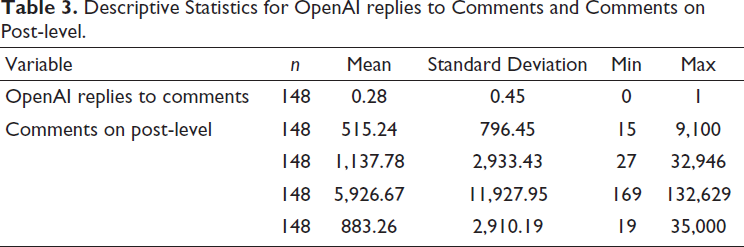
Recall that RQ1 focused on the extent to which OpenAI’s X content fosters dialogic communication. OpenAI’s X profile was examined, and all the elements suggested by Kent (2013) for creating a dialogic space were evaluated. First, it was verified on OpenAI’s X profile that the names of the person in charge of communications or the social media administrator are not public, nor does it provide contact information for these individuals. Furthermore, OpenAI does not provide rules or guidelines for public conduct on its page. Unlike Facebook, X does not allow users to comment or ask questions directly on profiles, so this criterion does not apply to OpenAI’s X profile. To further assess RQ1, the extent to which OpenAI’s X page establishes a dialogic communication environment, descriptive statistics were computed for post-level indicators of dialogic messaging and organisational responsiveness. Results showed that only 8.8% of posts initiated user dialogue, while 12.2% encouraged behaviour change, indicating that dialogic and action-oriented posts were relatively uncommon. OpenAI also demonstrated low responsiveness to user interactions, with an average of only 0.28 organisational replies per post, suggesting that most posts received no direct engagement from the organisation. In contrast, user engagement was substantial, with posts receiving an average of 515.24 comments, along with high levels of reposts, favourites and bookmarks, underscoring significant audience interest. Taken together, the findings suggest that although OpenAI’s posts attract considerable user attention, the organisation itself engages minimally in dialogic practices, resulting in a communication environment characterised by high user activity but low organisational reciprocity.
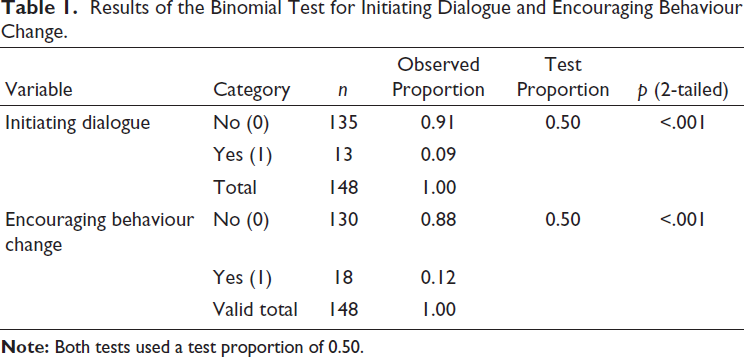
To test the H1 that OpenAI does not initiate dialogue in its X posts, a one-sample binomial test was conducted on the dichotomous variable representing whether a post initiated user dialogue. Results indicated that only 9% of posts initiated dialogue, which was significantly lower than the theoretical benchmark of 0.50 (p < .001; shown in Table 1). This deviation demonstrates that dialogue-initiating posts occur far less frequently than would be expected under conditions of moderate dialogic engagement. Therefore, H1 was supported, suggesting that OpenAI rarely uses its posts to stimulate dialogue with audiences on the platform.
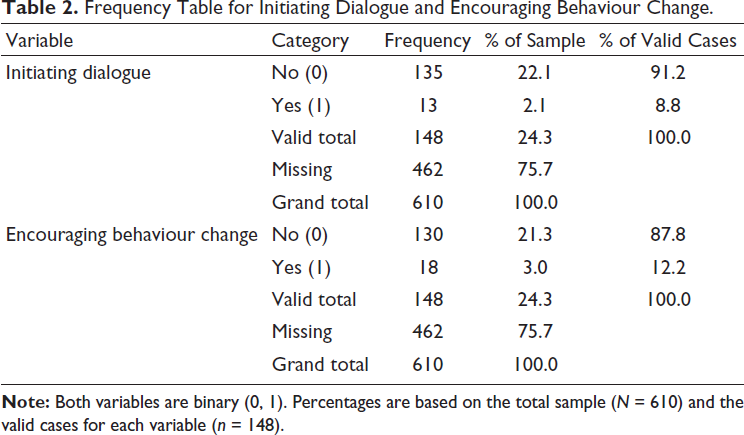
To assess the H2 that OpenAI does not encourage behaviour change in its X posts, a one-sample binomial test was conducted using the variable indicating whether a post encouraged user behaviour change. The test revealed that only 12% of posts encouraged behaviour change, which was significantly lower than the hypothesised proportion of 0.50 (p < .001; shown in Tables 1 and 2). The results indicate that behaviour-change messaging is comparatively uncommon in OpenAI’s posts. Thus, H2 was supported, indicating that OpenAI’s X communication strategy typically does not emphasise changes in user behaviour.
Results of the Binomial Test for Initiating Dialogue and Encouraging Behaviour Change.
Frequency Table for Initiating Dialogue and Encouraging Behaviour Change.
The third hypothesis asked whether OpenAI would be responsive to most attempts by audiences on X to initiate dialogue. To test this hypothesis, two elements were evaluated from comment level (a) the percentages of users’ attempts to establish communication with OpenAI, for example, by making direct inquiries related to the topic OpenAI had posted about, questions about that topic, that is, that were relevant and related to the topic (excluding mockery, memes, trolling or other irrelevant comments), and (b) the percentage of OpenAI’s responses to those questions initiated by its audience through comments. The analysis shows that followers initiated the dialogue in 28.4% (n = 173) of their comments. A chi-square test of goodness-of-fit determined that OpenAI’s responses were none (Table 3), ignoring the 100% (n = 173) of those attempts at communication from the public χ²(1, n = 173) = 173, p < .001. Therefore, the third hypothesis was supported, suggesting that users were interested in initiating dialogue with OpenAI. However, despite this, there was no response to any of the public’s dialogic attempts.
Descriptive Statistics for OpenAI replies to Comments and Comments on Post-level.
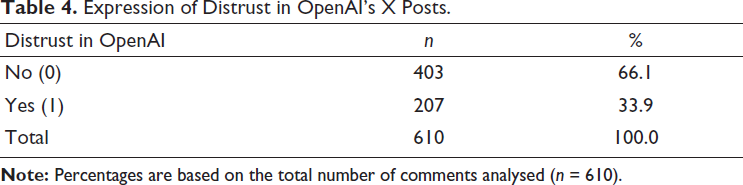
Recall that RQ2 focused on the extent to which the user comments on OpenAI’s X posts express distrust in OpenAI posts. To answer this research question, a two-level descriptive analysis was performed. The first level included all comments (n = 610), whether relevant (relevant = 1) or not (relevant = 0) to the topic or publication made by OpenAI. This analysis showed that at least 33.9% (n = 207) expressed distrust, while 66.1% (n = 403) did not (shown in Table 4). The second level included only comments relevant (relevant = 1) to the original publication (n = 588), of which 35.0% (n = 206) expressed distrust in OpenAI’s publications and topics, while the remaining 65.0% (n = 382) did not. In both tests, nearly a third of the comments expressed scepticism and distrust of OpenAI’s topics and publications.
Expression of Distrust in OpenAI’s X Posts.
Discussion
The purpose of this study was to examine whether OpenAI uses the dialogic space on its social media channels, particularly X. This research also aimed to analyse whether audiences express distrust of OpenAI’s X posts and whether this scepticism prompts responses or interactions from OpenAI’s X account. The results offer relevant insights into understanding how distrust operates in the context of communications by technology companies such as OpenAI. Overall, OpenAI is not leveraging the potential of two-way communication, which enables dialogue and interaction with the public, as Kent (2013) suggests. The results reveal that OpenAI does not use its social network X for conversation.
Regarding RQ1, the findings show that OpenAI does not provide the name of the communications manager, which would have encouraged more personal communication, as other organisations do, even providing social media manager signposts with contact information. It is recognised that, unlike Facebook, X does not allow users to comment or ask questions directly on profiles, so this criterion does not apply to OpenAI’s X profile. Kent (2013) suggests that organisations provide rules of use and conduct on social media channels for audiences, so everyone should be able to initiate dialogue, is another missing characteristic on OpenAI’s X profile, which is also a disadvantage for promoting dialogic space, trust and transparency especially due to the lack of clear rules regarding hate speech, for example, or bots and trolls that can generate noise in the conversation about new technologies. This aligns with Brewer and Ley (2013) and Wynne (2006), who sustained that confidence in scientific institutions and technology developers depends on perceived competence, shared values and transparency.
The hypotheses concerning messaging content were strongly validated. H1, which posits that OpenAI does not initiate dialogue in its X posts, was confirmed. Only 9% of posts attempted to start user conversations, well below the anticipated benchmark. This suggests that OpenAI seldom uses its posts to foster interaction or discussion among its audience on the platform. Similarly, H2, which asserts that OpenAI does not promote behaviour change in its X posts, was supported. Analysis showed that only 12% of posts encouraged behavioural shifts, suggesting that content designed to prompt specific actions is relatively rare in OpenAI’s communication approach.
Additionally, data on organisational responsiveness, a key element of dialogic communication, underscored the lack of reciprocity. Despite high user engagement, with posts receiving an average of 515.24 comments, OpenAI did not respond to any audience attempts to initiate dialogue. Followers sought interaction in 28.4% (n = 173) of comments by posing questions or making relevant inquiries, yet OpenAI ignored all such efforts. Collectively, the findings for RQ1, H1, and H2 demonstrate that OpenAI fails to create a robust dialogic space, instead favouring a communication style centred on information dissemination rather than on responsiveness, transparency or the solicitation of active feedback.
These findings have important implications, particularly because OpenAI is a leading force in the LLM ecosystem and positions its mission around ensuring AGI benefits humanity. For a technology company developing systems that are both technically complex and socially impactful, avoiding two-way communication may hinder efforts to build public trust. Confidence in AI systems and in the organisations behind them depends heavily on how they communicate about capabilities, limitations and risks. Previous research emphasises that trust is shaped by perceived competence, transparency and responsiveness.
Dialogic communication theory argues that active listening and engagement are essential for fostering mutual understanding and bridging the gap between scientific knowledge and public action. By disregarding all conversational attempts (100% ignored), OpenAI risks missing opportunities to reduce public uncertainty and correct misconceptions that simple information sharing cannot resolve. The observed lack of organisational reciprocity suggests that a key trust-building mechanism is being neglected. If used dialogically, social media could serve as a platform to clarify AI’s capabilities and limitations, functioning as a form of XAI. However, current practices imply that organisational priorities, such as risk aversion or concerns about managing large-scale public attention, take precedence over meaningful interaction. It must be noted that, as a privately owned company, OpenAI has no strict legal or institutional obligation to maintain bidirectional relationships on X. Nevertheless, moving beyond the deficit model offers quantifiable strategic benefits; prior public relations research demonstrates that active dialogic engagement significantly enhances perceived organisational credibility, expands supportive networks and improves public evaluations (Bortree & Seltzer, 2009; Yang et al., 2010). Therefore, while not obligatory, embracing dialogue is a highly beneficial strategy for mitigating the quantifiable risks of public distrust.
These findings strongly reinforce earlier empirical research indicating that many organisations, despite the interactive potential of platforms like X, fail to meet dialogic communication standards. The evidence of limited two-way engagement and low responsiveness aligns with prior analyses showing that social media is often used as a one-way broadcasting tool rather than a space for dialogue (Lee et al., 2017; Wang & Yang, 2020). This study adds to the literature by demonstrating that this trend extends to prominent, influential technology firms such as OpenAI. Moreover, the results support scholarly claims that a significant number of organisations exhibit weak dialogic practices, particularly in areas of content and interactivity (Aced-Toledano & Lalueza, 2018). The observed pattern, where dialogic opportunities are overlooked despite strong user interest, reflects challenges documented in other complex science and technology communication contexts. For instance, Lee et al. (2017) found that NOAA rarely initiated dialogue, encouraged behavioural change or responded to public questions on Facebook. Such tendencies illustrate how neglecting dialogic engagement can create space for distrust and misinformation to flourish. Ultimately, this study underscores the persistent difficulty institutions face in shifting away from unidirectional communication (Roberson, 2020) towards more inclusive, bidirectional models (Moser & Dilling, 2011), as relational communication fundamentally depends on listening and responding (McComas, 2006).
While the lack of two-way engagement is evident, it is crucial to recognise the inherent limitations of social media platforms like X. Mediated communication on X is not as naturally dialogic as face-to-face interaction, and platform constraints can hinder deep, meaningful exchanges. Furthermore, the observed absence of engagement may not necessarily stem from a corporate desire for opacity, but rather from severe strategic, legal and scale-related constraints. For instance, managing genuine dialogue with an audience reflecting 200 million weekly users presents massive logistical challenges. As Macnamara (2016) notes, the architecture of organisational listening at scale often outstrips available corporate resources. Additionally, strict corporate communication policies and legal considerations often restrict social media managers from commenting in real time on high-stakes, controversial AI topics to avoid potential liability (Neill & Moody, 2014). Moreover, digital platforms are frequently rife with hostile interactions, trolls and bots, making direct dialogue sometimes counterproductive to rational discourse and strategic goals (Sommerfeldt & Yang, 2018). Finally, it is highly plausible that OpenAI engages in passive ‘social listening’, monitoring user comments on X to gauge public sentiment, which the company then addresses holistically through other, more controlled channels, such as official product updates, press releases, public presentations and keynotes, rather than through individual threaded replies on social media. This preference for controlled, top-down communication over direct public engagement reflects a broader trend of ‘techno-governmentality’ within the AI sector. As Hasib and Eko (2026) note regarding global AI governance, institutions often suffer from a ‘participation gap’ in which elite decision-making and technical compliance take precedence over democratically legitimised, inclusive public deliberation. To improve dialogic outcomes despite these constraints, and to bridge the gap between administrative efficiency and public autonomy, organisations like OpenAI could implement scalable strategies, such as hosting scheduled ‘live Q&A’ spaces or publishing synthesised responses to the most frequently voiced user concerns.
The findings related to RQ2 reveal that nearly a third of relevant audience comments on OpenAI publications expressed scepticism and distrust about the topics OpenAI shared on its X profile. This expression of distrust and scepticism by the public on social media, far from being negative, presents an opportunity for OpenAI, especially since 66% of the comments did not express distrust, to open a space for dialogue that fosters trust and transparency, especially on technological issues. However, as described by Lee et al. (2017) and Wang and Yang (2020), many organisations fall short of these ideals, and corporations frequently revert to one-way messaging (deficit model) delivery on social media. The fact that OpenAI has not responded to any of the intentions of its followers who initiated the dialogue in 28.4% (n = 173) is evidence of the lack of two-way communication principles. This is also consistent with Aced-Toledano and Lalueza (2018), who note that many companies exhibit lower levels of dialogic communication, especially in the three areas Kent and Taylor (1998) identify as essential: Presence, Content and Interactivity. These findings also match the assessments of Kent and Taylor (2021) and Thompson (2019), who affirm that many organisations still fall short of dialogic ideals.
Several comments on OpenAI posts expressed distrust. Nevertheless, the analysis showed that comments expressing distrust did not necessarily receive more comments; that is, they did not necessarily encourage more public dialogue. In fact, the analysis reveals that comments without distrust received higher response ranks, which could be explained by the public’s need to debate and discuss OpenAI’s technology issues and products. However, the lack of response from OpenAI is a missed opportunity to realise the benefits of dialogic engagement. Bortree and Seltzer (2009) and Yang et al. (2010) emphasise that these benefits include enhancing perceived credibility, expanding networks and improving organisational evaluations, which are especially relevant for entities communicating complex and contested science and technology topics, such as OpenAI.
Many of the public’s distrustful comments focused on delays in delivering models or new features; others on the exclusion of many groups from the new services; and others on alliances and new members joining the OpenAI board, but none of them were addressed. For example, when OpenAI announced the addition of a new member to its board, someone commented: ‘The damage control over the security and privacy narrative is relentless at OpenAI’, another user added: ‘World-class spying on Americans. Terrible. OpenAI is openly evil’. When the new feature of ChatGPT 4.0 was launched, a person posted: ‘It is always a small group of ChatGPT Plus users. What about the rest of us? Camels? I am so gonna unsubscribe because I keep getting discriminated against’.
These expressions of mistrust did not prompt dialogue from OpenAI, a missed opportunity to move away from the deficit model, which relies solely on disseminating updates. This prevents OpenAI from clarifying public perceptions, engaging with the public, responding to queries, combating disinformation and building transparency and trust through genuine two-way communication.
Limitations and Future Research
This study has limitations that may require refinement through future research. For instance, it is limited to a single organisation and a single social media platform. Nor was there any in-depth analysis of the issues that generated mistrust among users, for example, measuring differences in OpenAI’s decisions, products and governance structure. Despite these limitations, the study offers relevant and meaningful findings with implications for technology communications research and practice. Since communication scholars moved away from the one-way communication (deficit model), this study opened the field to exploring other technology companies that develop and use AI tools, and how they communicate with audiences on social media channels and platforms. This is relevant, given that in the current era, technology companies are shaping communication itself. Therefore, it is imperative to pay special attention to how these large technology companies relate to and communicate with their audience, that is, whether they engage in dialogue, which helps encourage and increase tech literacy, trust and transparency.
Additionally, the analysis focused solely on OpenAI’s activity on the X platform during a defined timeframe. The X platform was purposively selected for this study due to its prominence as a central hub for real-time public discourse, tech announcements and media scrutiny. However, it is entirely possible that X is not the most appropriate platform for evaluating the full scope of OpenAI’s dialogic interactions. Consequently, the findings regarding the absence of dialogic features cannot be generalised to OpenAI’s communication practices across all digital channels. OpenAI may engage with its clients and audiences in a much more interactive manner through other platforms, such as LinkedIn, dedicated developer forums or direct customer support channels.
Furthermore, as previously noted, the organisation may be engaging in ‘silent listening’ on X, monitoring the platform to absorb public feedback and gauge sentiment, which is then utilised to inform broader corporate strategies without resulting in direct, on-platform replies. Future research should investigate these alternative platforms and interactions. Moreover, while the study identified a lack of organisational responsiveness, it did not explore internal factors, such as staffing limitations, legal or ethical considerations and risk aversion, that may influence decisions to restrict interaction. Future research should focus on these areas, especially in-depth investigation of the specific post topics that have distrustful comments from users. Finally, the quantitative analysis in this study relies primarily on descriptive statistics and non-parametric goodness-of-fit testing (binomial and chi-square tests). While these tests are highly robust and appropriate for the nominal categorical data operationalised in this research, future studies should employ more advanced inferential statistical modelling, such as cross-tabulating specific AI topics with engagement metrics and distrust levels, to further quantify the predictive relationships between dialogic strategies and public sentiment.
Conclusion
This study evaluates OpenAI’s use of the X platform as a dialogic space and analyses the extent of public distrust expressed in response to its content. The findings consistently show that OpenAI does not leverage the potential of two-way communication, instead favouring a one-way, broadcast-oriented approach. In addressing dialogic space, results revealed a clear absence of organisational reciprocity. OpenAI’s profile lacked basic transparency features, such as contact details for a communications manager or published community guidelines. OpenAI rarely initiates dialogue or encourages behavioural change. Most notably, the results indicate a lack of responsiveness among the selected cohort of posts on the X platform, where OpenAI appeared to ignore users’ attempts to initiate conversation. This aligns with prior research indicating that many organisations fall short of dialogic ideals by reverting to unidirectional messaging. Audience analysis showed that nearly one-third of comments expressed scepticism or distrust, often related to delays, exclusion or governance issues. These concerns represent missed opportunities for OpenAI to engage, clarify misconceptions and build trust. If this lack of responsiveness reflects the company’s overarching communication strategy, it could erode trust. Prior literature clearly links transparent, two-way engagement with the fostering of public confidence (Brewer & Ley, 2013; Wynne, 2006). By disregarding these dialogic opportunities on X, the organisation risks forfeiting benefits such as enhanced credibility, stronger networks and improved evaluations, which are critical for entities that communicate complex science and technology topics.
This study highlights the ongoing challenge of shifting from one-way communication to inclusive, bidirectional models, which relational communication fundamentally requires. While limited to one organisation, one platform and a specific timeframe, and without examining internal constraints such as staffing or legal considerations, the research offers valuable insights for technological communication practices. Moving beyond the ‘deficit model’, it underscores the need to examine how AI companies engage with the public. Given their influence in shaping communication itself, it is essential to assess whether these firms adopt dialogic strategies that foster trust, transparency and tech literacy.
Footnotes
Data Availability Statement
The data that support the findings of this study are openly available in the figshare data repository titled OpenAI Communication on X using this URL
Declaration of Conflicting Interests
The authors declared no potential conflicts of interest regarding the research, authorship and/or publication of this article.
Ethical Approval and Informed Consent
This research does not require ethical approval as it does not involve human participants or animals.
Funding
The authors received no financial support for the research, authorship and/or publication of this article.
