







Abstract
This article explores the contributions of—and constraints faced by—small and medium enterprises (SMEs) owned by mainland Chinese immigrant entrepreneurs in Malaysia using qualitative research and primary data gathered from five cases. It was found that Chinese immigrant SMEs make significant contributions to the host economy in terms of employment, diverse products and services, exports, innovation, micro foreign direct investment (FDI) and global linkages. Of these, employment creation and exports appear to be their most important contributions. They face various constraints, some of which are largely the same as those faced by local entrepreneurs. However, they additionally face some specific constraints which local entrepreneurs do not, such as language barrier, lack of financial support in the growth stage, lack of government assistance, and onerous bureaucratic problems, such as tax and visa requirements. The findings suggest that the government should create a special department to formulate tailor-made policies and incentives to support immigrant-owned SMEs, so that their contribution to the future economic development of Malaysia can be further strengthened and monitored.
Keywords
Background
The contributions of small and medium enterprises (SMEs) 1 owned by migrant entrepreneurs worldwide have been widely recognized by scholars and policymakers. Migrant entrepreneurship has been a structural phenomenon in the globalizing economy, especially in developed countries such as the USA, Canada and European countries. 2 In Malaysia, migrants, especially Chinese migrants, 3 (historically) have been playing an important role in its economic development by contributing significantly towards relieving labour shortages, bringing in skills, accumulating knowledge and capital and creating new businesses. Since the 1990s, the immigrant entrepreneurs in Malaysia have been composed of diverse nationalities. Nel and Abdullah (2015, 2017) found that most immigrant entrepreneurs in the Kuala Lumpur area are from Bangladesh, Pakistan and Indonesia. They concluded that overall, immigrant entrepreneurs can contribute significantly to employment generation and economic growth activities in Malaysia.
In the last decade, mainland Chinese have migrated to Malaysia for different reasons such as for studies (Diana and Wen, 2013), employment in Chinese companies, global value chain, Belt and Road projects (Grassi, 2020; Kathy, 2019), China–US trade disputes (Kathy, 2019) and the general attraction of the business environment in Malaysia (Tan, 2019). 4 Many of them started their own businesses. According to Keith Li, the president of the China Entrepreneurs Association in Malaysia, the country ‘remains attractive to many mainland Chinese businessmen due to a comprehensive and sound legal framework, a skilled workforce and lower costs of investment for high-value manufacturing activities compared with neighbouring Singapore’ and also because the mainland Chinese businessmen ‘feel comfortable in a culture where there is a significant ethnic Chinese population that can speak Mandarin’. There are over 1000 mainland Chinese-owned businesses in Malaysia (Tan, 2019). These are represented by the China Entrepreneurs Association in Malaysia. 5 The mainland Chinese-owned enterprises play a significant role in the manufacturing sector; for example, in 2018, ‘China was one of the largest contributors to the manufacturing sector in Malaysia alongside Indonesia, the Netherlands, Japan and the US’ and ‘foreign direct investment planned by manufacturers from China rose from 3.9 billion Malaysian Ringgit ($948 million) in 2017 to 19.7 billion ringgit ($4.8 billion) in 2018, an increase of over 400 percent’ (Tan, 2019).
The establishment of immigrant enterprises (SMEs) in Malaysia could be regarded as an inward investment by immigrants (foreigners). Malaysia encourages, welcomes and attracts foreign investment—its government provides a wide range of incentives and formulated initiatives to attract foreign investors (generally large companies) without restriction on repatriation of capital and profits. The Malaysian Investment Development Authority (MIDA) is the most important investment promotion agency. In addition, SME Corporation Malaysia (SME Corp. Malaysia) was established in 1996 to develop overall policies and strategies for SMEs and coordinate the implementation of SME development programmes. It launched the SME Masterplan (2012–2020) to spur the growth of SMEs through innovation-driven and productivity-led strategies.
The role of SMEs in promoting economic growth is unanimously recognized across the world. They contribute to national economies immensely in terms of job creation, poverty alleviation, innovations and exports. Ayyagari et al. (2011) highlighted that SMEs contribute the largest share of employment—especially in low income countries, and they also create most of the new jobs. Razak and Othman (2012) and Okpara (2011) found that SMEs are critical for poverty alleviation by creating employment and generating income; therefore, it is necessary for the government to support them with policies and incentives. Above all, they are the main source of innovation and technological advancement (Hanadi & Aruna, 2013). Wignaraja (2014) argued that a vibrant SME sector can reduce income inequality, create jobs and promote economic growth in the developing countries. In addition, SMEs promote trade and enable production linkages among companies through the supply chains.
Malaysia is a small nation with a population of 32.37 million (World Population Review, 2020). It has a relatively small domestic market because of its small population. As with other countries, SMEs play a vital role in the Malaysian national economy. According to SME Corp. Malaysia (2018–2019), ‘In terms of economic contribution, SMEs contributed 38.3% to overall GDP, 17.3% to total exports and 66.2% to total employment during the year’. Notwithstanding the importance and contribution of SMEs, they are confronted with significant challenges which impede their development. In many developing countries, these challenges appear to be more severe, especially for SMEs owned by immigrant entrepreneurs. They appear to receive little attention from the governments of host countries and scholars alike; for example, many scholars have studied SMEs in Malaysia from different perspectives, such as Bumiputera (native or ‘son of the soil’) entrepreneurs, Malaysian Chinese entrepreneurs, female entrepreneurs and student entrepreneurs (e.g., Hanafiah et al., 2016; Isa et al., 2018; Jamak et al., 2011; Minai et al., 2012; Pihie et al., 2011). However, there are hardly any studies on SMEs owned by immigrant entrepreneurs in Malaysia in general, particularly the mainland Chinese immigrant entrepreneurs.
In this context, our study makes an original contribution to the literature and policy arena by exploring the SMEs owned by the mainland Chinese immigrant entrepreneurs in Malaysia. Hence, one of the research questions investigated by this study is: What are the contributions of the Chinese immigrant entrepreneurs to the national economy in Malaysia?
According to Desiderio and Mestres-Domènech (2011), immigrants tend to start businesses at a higher rate than their local counterparts, and their businesses have lower survival rates than enterprises owned by the locals in OECD countries. The main reason is that they face more complex challenges and hindrances in the start-up stage and subsequent growth stages. Therefore, the next research question raised is: What are the problems and constraints faced by the Chinese immigrant entrepreneurs in Malaysia?
In this study, the term ‘Chinese immigrant entrepreneurs’ primarily refers to those entrepreneurs who are from mainland China. 6 The main motivation behind this study is the knowledge gap in the area of mainland Chinese immigrant entrepreneurs in Malaysia. There has been a considerable interest on Chinese investments by large companies such as those under Belt and Road Initiative (BRI) projects (e.g., Grassi, 2020; Guanie, 2014, 2015; Kathy, 2019; Todd & Slattery, 2018), where their role and contribution to the host economy are clear. However, there has been little, or no research done on investment made by mainland Chinese-owned SMEs in Malaysia. Therefore, there is lack of clear understanding about their role and contribution to the local economy. This study was undertaken to address this knowledge deficit. 7
The rest of the article is organized as following: Section II presents review of literature; Section III discusses research methodology; Section IV provides short profiles of case studies; Section V discusses economic contributions by immigrant-owned SMEs; Sections VI and VII present general and specific constraints faced by them, respectively; Section VIII provides overall discussion of the findings; and finally, Section IX draws conclusions and makes some policy recommendations.
Literature Review
Immigrant entrepreneurs are often regarded as foreign-born business owners seeking to generate value by creating and expanding economic activity through identification of new products, processes or markets (Ahmad & Seymour, 2008), or those immigrants who establish a business venture or engage in self-employment (Khosa & Kalitanyi, 2014). Immigrant entrepreneurship has been noted as a structural phenomenon in the globalizing economy, especially in Europe, Canada and the USA, and its implications for the host and home economies has been significant, as it connects the two as a potential bridge (Nkongolo-Bakenda & Chrysostome, 2013; Vissak & Zhang, 2014). The immigrant entrepreneurs make important contributions to the host economy; for example, in the USA, they export more goods and services compared to non-immigrant-owned businesses (Fairlie et al., 2012). The effects of immigrant entrepreneurship have been, to a large extent, positive and beneficial to the host economy. It is well known that immigrants tend to be highly entrepreneurial, more so than the native-born in many advanced countries such as the USA (Fairlie, 2008), Australia and the UK (Fairlie et al., 2010; Schuetze & Antecol, 2006). They contribute significantly to the economic growth of the host economy through their propensity to start a business and expand beyond ethnic markets into innovative ventures (Desiderio, 2014).
Lofstrom (2017) highlighted that in the USA, immigrants have been responsible for more than 90% of the increase in entrepreneurship since 2000. It was found that high-skilled immigrants make significant contributions to innovation through spillover effects measured by a number of patents, licenses and publications (Lofstrom, 2014). Furthermore, immigrant businesses also help to improve immigrant labour market integration (Cummings, 1980; Lofstrom, 2017) and economic and social integration (Dana, 2007; Fatoki & Patswawairi, 2012; Kloosterman et al., 1999).
Despite specific strengths such as flexibility and adaptability, SMEs owned by immigrant entrepreneurs are confronted with a wide range of constraints that impair their performance and survival rate. Existing literature focuses on various barriers facing SMEs in a globalized context, including low productivity, lack of managerial capabilities, difficulties in access to credit, problems of accessing technology and heavy regulatory burdens (Olusegun, 2012; Radam et al., 2008).
The main constraints and obstacles encountered by immigrant entrepreneurs in advanced countries such as Canada, Sweden and the USA have been well researched. Teixeira et al. (2007) identified problems faced by immigrant SMEs in Canada, such as access to financing, language and cultural barriers, market penetration, inexperience, lack of connections or social networks, customer building and retention, personnel management and high operating costs. Khan (2015) observed that in Sweden, immigrant entrepreneurs often feel marginalized and they face difficulties in getting support from the established business organizations and networks. Kerr and Kerr (2016) also found that in the USA, some specific constraints, such as language barriers, difficulty in starting a company due to legal complexities and lack of funding for pilot projects, limit immigrant entrepreneurs from opening or growing their businesses.
Unlike developed countries, the research on immigrant entrepreneurship in developing countries is limited; for example, the role of immigrant entrepreneurs in Malaysia and the major constraints faced by them have not been well studied. Most studies focus on the role of SMEs in the Malaysian economy in general, or else focus on Bumiputera entrepreneurs; for example, Hoq et al. (2009) highlighted lack of management expertise, less access to finance and human resource constraints as major impediments to SME development in Malaysia. Halim et al. (2014) observed that the Malaysia SME business environment is characterized by many barriers, including lack of energy to meet competition, low skill and inferior entrepreneurial personality, lack of financial management and high external locus of control. Rahman et al. (2016) identified the main constraints facing SMEs, such as lack of access to credit, poor management skills and low marketing skills. Deficiency in marketing, shortage of skilled workers and problems with marketing products in supermarkets are major barriers affecting the development of Bumiputera SMEs in Malaysia (Omar & Azmi, 2015).
The literature review clearly reveals that most of the studies focus in general on Bumiputera entrepreneurship, and there is very little research on immigrant entrepreneurship in Malaysia. Specifically, there is no existing literature on mainland Chinese immigrant entrepreneurship. The literature review also identifies several factors that can constrain the development and success of SMEs in general, such as low human capital, low management, lack of financial support, lack of social networks (Guanxi) 8 , low technology and innovation, lack of government assistance and low efficiency in marketing. However, it is not clear whether both immigrant entrepreneurs and local entrepreneurs (Bumiputera, Malaysian Chinese, Malaysian Indian or indigenous) face similar problems and constraints in starting and operating SMEs Malaysia. This study explores this interesting research subject.
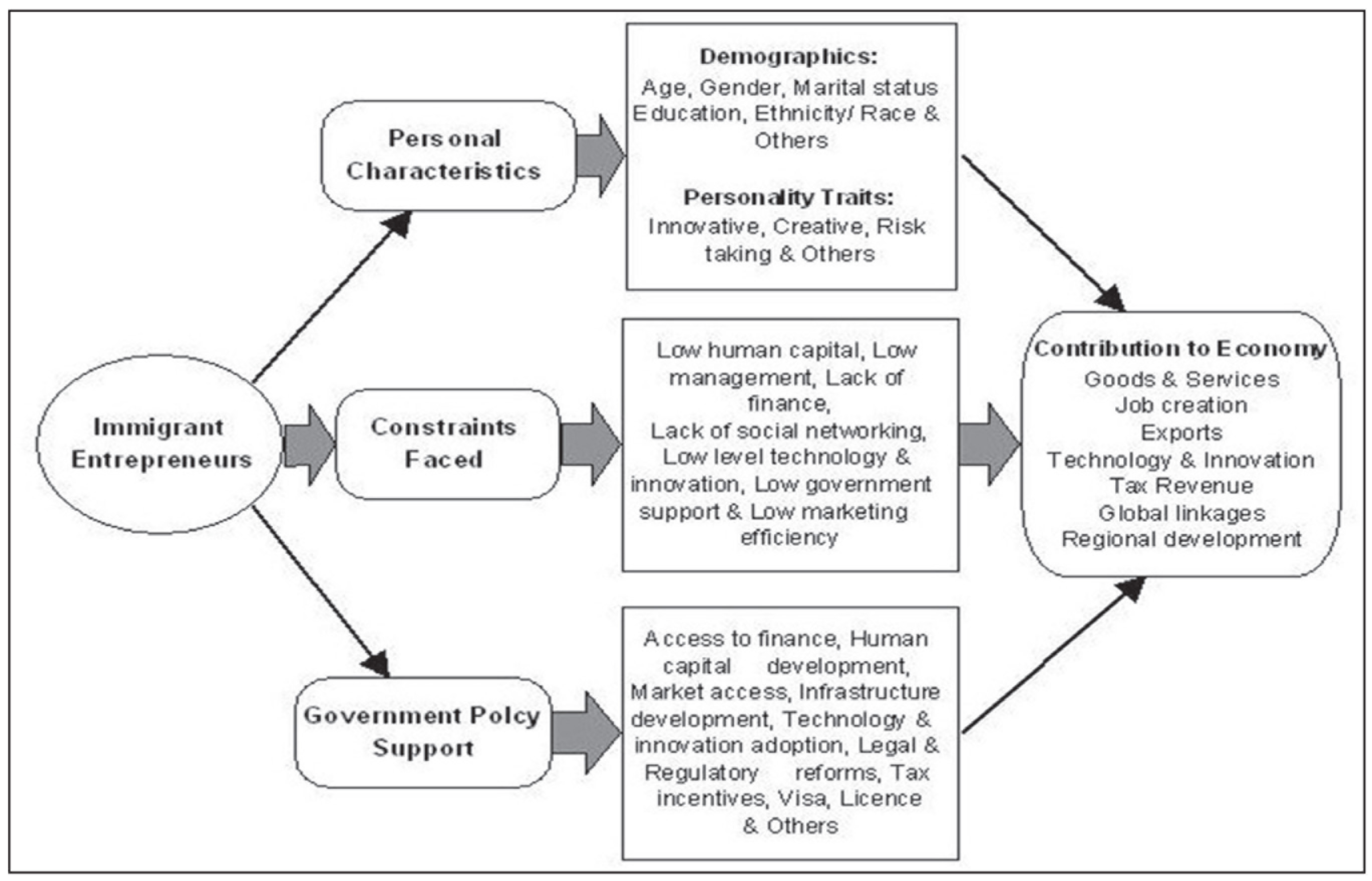
Drawing from the literature review, Figure 1 presents a conceptual framework for analysing immigrant entrepreneurship in Malaysia.
The overall purpose of this study is to identify the contributions of mainland Chinese immigrant entrepreneurs in Malaysia and the constraints faced by them. According to Khan (2014) and Yin (2013), the research question, purpose and requirements of the study should be given careful consideration in order to identify the most appropriate research methodology and design. On this basis, our study employs the phenomenological research approach (interpretative) and multiple case study method. It uses primary data gathered from five mainland Chinese immigrant-owned SMEs through semi-structured interviews. Case studies are often used in business management to explore different aspects related to business operations (Klonoski, 2013). A researcher can explore a topic by developing comprehensive descriptions of different representative cases (Hays & Wood, 2011). A case study is appropriate when the goal of research is to understand or explore an in-depth issue within real-life social phenomena (Klonoski, 2013). A multiple case exploratory study research method is more appropriate to analyse the role of Chinese immigrant entrepreneurs in Malaysia, as it helps to ensure the robustness and validity of the conclusions drawn. Therefore, we analyse five cases which are selected using purposeful sampling, as this method is appropriate for studies with a small availability of subjects who satisfy the standards of the study theme (Lahman et al., 2011). We selected the cases representing different industry sectors and products/services. We have selected only five cases, as there is no need to increase the number of cases—studying more cases would not add significantly to the findings, as it will reach saturation (Eisenhardt, 1989).
We used an in-depth, semi-structured interview method to gather primary data from five participants. Data collection took place between October 2017 and February 2018 via face-to-face interviews. The interviews lasted about two and a half hours each. The interviews were conducted in Mandarin and then translated into English. To guarantee credibility and validity, member checking as a useful strategy is adopted in this study as it provides the opportunity for participants to confirm the accuracy of the data obtained from them (Harvey, 2015). To protect confidentiality and privacy, the names of businesses and business owners are not disclosed.
Profiles of Case Studies
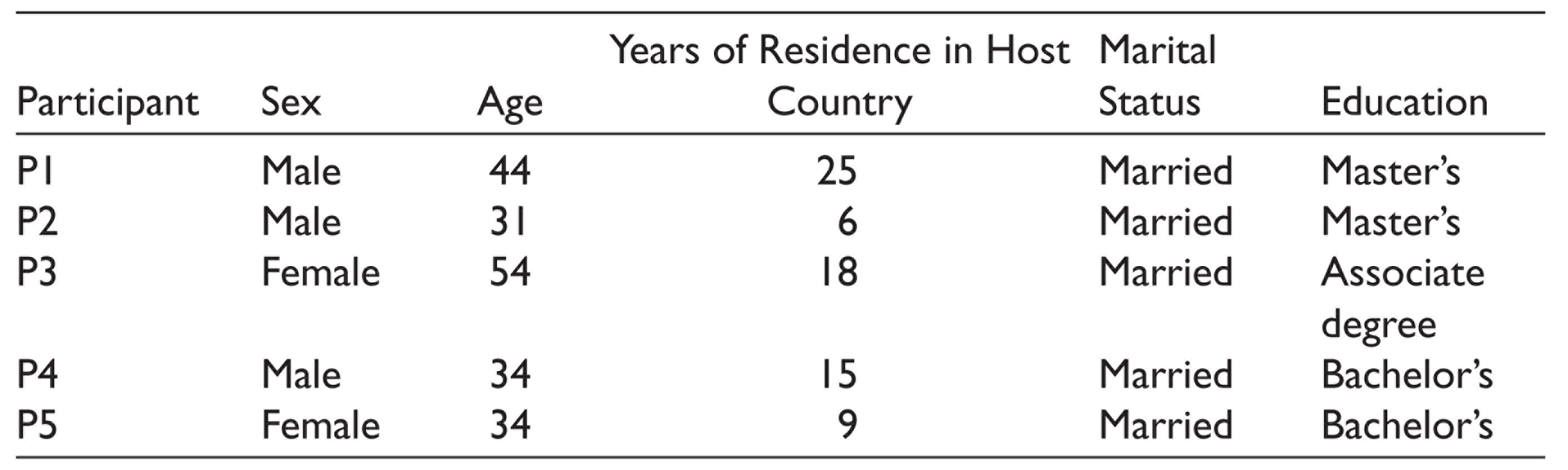
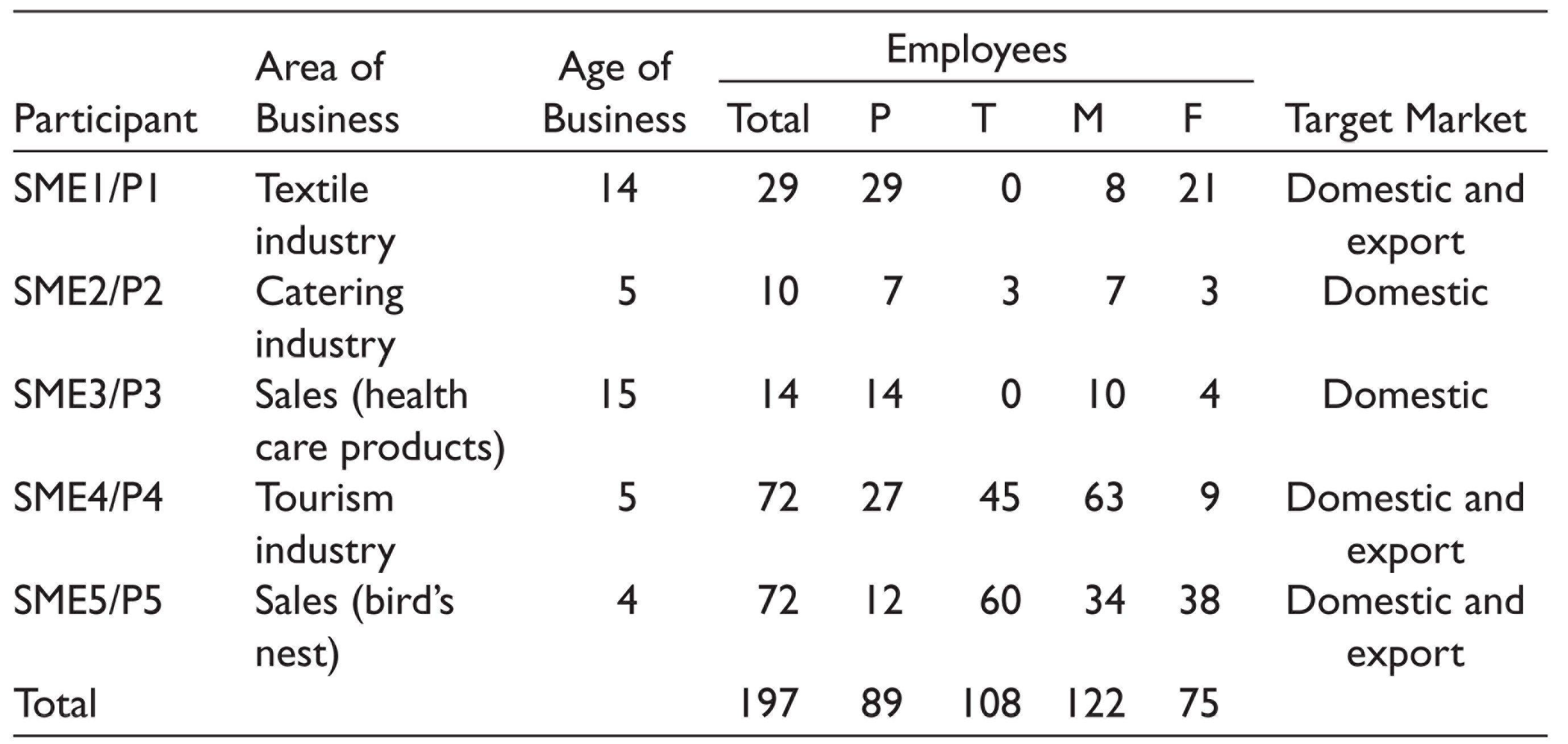
Tables 1 and 2 present the demographic and business profile information of the five sample cases of SMEs owned by Chinese immigrant entrepreneurs.
Demographics of Chinese Immigrant Entrepreneurs
Demographics of Chinese Immigrant Entrepreneurs
Business Profiles of Sample Chinese Immigrant Entrepreneurs
Out of the five respondents, three are male and two are female; three are in the 30–40 age group, and the other two are in the 40–55 age group. In terms of years of residence in Malaysia, two are below 10 years, two are in the group of 10–20 years, and one has been living in Malaysia for over 25 years. All are married. Two of them hold master’s degrees, two hold bachelor’s degrees and one holds an associate degree.
It is clear from the business profile that the sample businesses provide a variety of products and services representing different sectors: textiles, catering (restaurant), health care products (sales), tourism and bird’s nest (sales). Three businesses target both domestic and export markets, and two operate only in the local market. In total, they employ 197 employees (89 permanent and 108 temporary staff; 122 male and 75 female).
The brief backgrounds of case studies and perceptions of the personal traits of immigrant Chinese entrepreneurs are as follows.
Case Study 1 (Small and Medium Enterprise 1)
The owner of case 1 (SME1) is a male, 42 years old and a postgraduate. He has lived in Kuala Lumpur for 15 years. His textile firm was established in 2003. In terms of personal characteristics, he believes that traits such as innovative ability, risk-taking, decisiveness, clear vision and sociability have far-reaching impacts on entrepreneurs. He observed:
We have been doing international trade in textiles and created our own scarf brand, keeping abreast of the market and constantly launching new products through a continuous innovative process. Risk-taking quality plays a central role for an entrepreneur. We often need to decide on whether it is necessary to launch new products which involves hundreds of thousands of Ringgits, so decisiveness is important. Clear vision can give a direction for a firm’s development and help to achieve goals, in case business goes astray. Expanding a market needs sociability. Doing sales is to deal with people, this involves good social skills – particularly at the start-up period. In addition, building relationships with suppliers from China entails social skills.
In addition, he views persistence and hard work as extremely important for entrepreneurship. He acquired these skills from previous job experiences and from other sources, such as his parents. Although his background is not in the textile business, his previous job experience helps him to manage his current business.
Case Study 2 (Small and Medium Enterprise 2)
The owner of case 2 (SME2) is a male, 31 years old and a postgraduate. He started his restaurant business (catering industry) in Kuala Lumpur in 2012. SME2 has 10 workers (7 permanent and 3 temporary). It is his opinion that innovativeness, networking and perseverance are important personal characteristics for an entrepreneur. Language skills (English and Malay) are also crucial for a migrant Chinese entrepreneur; he acquired Malay language skills over the years. He did not have prior experiences relevant to the catering industry, but work experiences in other sectors enabled him to run his business successfully. He believes that continuous innovation of cuisine is important to attract clients and promote business. Without innovation, there will be no difference between his restaurant and others, and his business will fail in the environment of fierce competition. He feels that social networking is vital to overcome many problems in the process of entrepreneurial activities, through gaining guidance and resources.
Case Study 3 (Small and Medium Enterprise 3)
The owner of case 3 (SME3) is a female, 54 years old and holds an associate degree. Its business is selling health care products. It has been operating in Kuala Lumpur since 2002. SME3 has 14 permanent workers (10 male and 4 female). The entrepreneur started her career as a civil servant in China and later joined as an employee in a non-governmental organization. Although she had no experience in health care products, her experiences in other sectors helped her to set up this business. Her opinion is that innovativeness, creativity, decisiveness and networking are important personal characteristics for an entrepreneur. She believes that innovation helps her firm to engage with clients; creative ideas can provide fresh perspectives on solving problems; and networking is vital for expanding knowledge and gaining market information from external sources, particularly in the early start-up stage.
Case Study 4 (Small and Medium Enterprise 4)
SME4 is a tourism agency business, established in 2012. The owner is a male, 34 years old and holding an undergraduate degree. He has resided in Kuala Lumpur for over 15 years. Although his educational background is in linguistics, he started the tourism business because of his previous work experience. His first job was as a part-time tour guide and interpreter, and he continued to work in this sector. He had more than 10 years of experience when he started his own business. He believes that personal characteristics such as innovativeness, decisiveness and sociability are quite important for an entrepreneur. As the competition is intense in the tourism sector, he considers the differentiation of products and services through continuous innovation as vital for business survival. He opines that ‘an excellent entrepreneur entails high level of managerial skills and the ability to make a quick decision when business opportunity arises’. He also highlighted that ‘sociability is fairly important, particularly in the early stage of starting business. Good social skills may bring in more prospective new customers and determine the speed of growth of a business’.
SME4 was not affected by lack of financial support. At the start-up stage, the owner raised capital on his own, and in the growth stage, he has managed to raise funding from new shareholders. He has not faced the problem of lack of social networks. He employed social media such as Facebook and WeChat to network. WeChat is very popular among Chinese and it is more convenient, lower cost and faster than mainstream media such as television. These social media facilitate communication with his customers and publicize his firm’s tour products.
Case Study 5 (Small and Medium Enterprise 5)
The owner of case 5 (SME5) is a female, 34 years old and holds a bachelor’s degree. She has lived in Kuala Lumpur for 9 years. The firm is a bird’s nest manufacturer and retailer. It was established in 2013. The owner considers creativity and sociability as extremely important for the development of her business. She argued that adaptability and communication skills are incredibly valuable for entrepreneurship. She acquired these skills from previous jobs and other people. Although her background is not related to her business, her previous job experience (selling houses) has helped her to run this business. She considers creativity and sociability as crucial traits for entrepreneurs. She observed that ‘A business with creativity appears distinctive and stands out in markets, which helps to attract customers. Besides, sociability plays a critical part in enhancing sales figures and expanding markets, as it can help build a network of contacts. For people in sales, social networking is quite important’.
The direct economic contributions of mainland Chinese-owned SMEs can be identified as generating employment, exports, technology and innovation, diverse products and services, micro foreign direct investment (FDI) and tax revenue. The indirect economic contributions include helping to build cross-cultural learnings, creating global value chain and business linkages, bringing in export market intelligence, efficient management culture and advanced E-commerce and networking resources.
SME1 (case 1) employs 8 male and 21 female employees, who all are Malay and permanent. It created its own brand of scarf and exports to Thailand, Indonesia and Brunei. During the last 14 years, it has seen significant growth based on exports, thereby contributing to the export economy. SME2’s (case 2) economic contributions include creating employment, continuous innovation (a combination of Chinese and Malaysian cuisines) and micro FDI. It has 10 workers (7 permanent and 3 temporary). It forges global linkages by servicing the tourism sector (serving tourists from China). SME3’s (case 3) contributions to the local economy include providing employment (14 workers, all permanent), serving local market demands for health care products, micro FDI and creating global linkages.
SME4 (case 4) has been contributing towards exports, micro FDI and tax revenue. It employs 72 people (27 permanent and 45 part time). It provides tourism services to markets in China and forges linkages between tourism sectors in Malaysia and China. SME4 has also developed its business in Malaysia using advanced e-commerce and network marketing resources in China.
SME5’s (case 5) owner came to Malaysia with capital and know-how (micro FDI). With the help of her husband, she leased a plot of land to build the bird’s nest factory and rented business premises. SME5 has 12 permanent and 60 temporary employees. Most of those working in the factory are immigrant workers from Bangladesh, the Philippines, Myanmar and Indonesia. The company has created its own brand of bird’s nest. Approximately 90% of the products manufactured by the company are exported to China. During the previous 4 years, it has seen significant export-led growth.
Table 3 shows mapping of major contributions made by the selected cases of mainland Chinese immigrant entrepreneurs to the host economy.
Main Contributions to Host Economy

Main Contributions to Host Economy
Together, the five SME cases have created 197 jobs (29, 10, 14, 72 and 72 jobs, respectively), consisting of 89 permanent and 108 temporary employees (122 male and 75 female). They employed people from different ethnic groups in Malaysia (Malay, Indian and Chinese) as well as foreign workers (from Bangladesh, Myanmar, Pakistan, the Philippines and Indonesia). Furthermore, the contribution of immigrant entrepreneurs in job creation is also noticeable in the upstream enterprises (their suppliers), such as the textiles sector. The products and services provided by the five SME cases encompass textiles (e.g., own brand of clothing and scarves), Chinese and Malaysian fusion cuisine, health care products, tour packages and bird’s nest.
Garg and Phayane (2014) view the investment made by immigrant entrepreneurs as micro FDI. Hence, investment by the immigrant-owned SMEs in Malaysia could be considered as contributions to inward FDI. In terms of innovation, they made significant contributions such as product diversity (e.g., clothing and variety of styles, fusion of cuisine, health care products, creative tour packages, bird’s nest) and innovation in marketing strategy (e.g., application of e-commerce). SME1, SME4 and SME5 contribute to the export sector. Besides, it is evident that they created diverse products and services and forged global business linkages and networks.
To sum up, the mainland Chinese-owned SMEs made several direct economic contributions such as employment, exports, technology and innovation and also valuable indirect contributions such as cross-cultural learnings, creating global business linkages, and bringing in efficient management culture and advanced E-commerce and networking resources.
This study found that the Chinese immigrant SMEs experience many constraints, some of which are not experienced by local entrepreneurs. In other words, they face both ‘General’ constraints which are also experienced by local entrepreneurs and ‘Specific’ constraints which are not experienced by local entrepreneurs. The ‘General’ constraints that Malaysian SMEs faced include difficulties in access to credit and marketing issues (Rahman et al., 2016). Zain et al. (2012) and Mohd Thas Thaker and Mohamed (2015) highlighted that the SMEs owned by Bumiputera (indigenous peoples of Malaysia) are facing financial constraints and human capital constraints. Besides, in general, Malaysian SMEs experience shortage of Information and Communication Technologies (ICT) and technology utilization (Hasnan et al., 2014; Zain et al., 2012).
The general constraints faced by the mainland Chinese immigrant entrepreneurs are discussed below:
Human Capital
SME1 faced several constraints related to human capital (including unskilled labour, low education level and insufficient management capability), lack of understanding of e-commerce, low technology and low productivity and quality output. According to the owner:
There have been challenges of unskilled labour and low education level. These issues were particularly severe in the early stage. Low skills especially in marketing posed some problems. The employee turnover rate has been high in our firm, we always need to recruit new workers who are mostly low skilled labour. They had to be trained to gain knowledge of our products and improve marketing skills.
Similarly, SME3 faces the problem of low human capital (e.g., unskilled labour, low education, language barrier and difficulties in recruiting skilled workers) and low management capability. The owner observed:
Both low education level and unskilled labour have been hindrances in the start-up and growth stage. In the early stage, the problem originated from bad proficiency in language, lack of experience and the differences in customs and culture. The inadequate labour skills in my firm mainly comes from lack of systematic training on management of the employees. In the growth stage, the constraint stemmed from difficulties in recruiting talent related to the business. Also, lack of management capability – especially the inadequacy in management of inventory (operating management) – has been a major factor in selling health care products, and we have been learning by doing.
The same problem is highlighted by SME4’s owner:
The unskilled labour has been our main problem. It is difficult to recruit high-skilled talent with rich experience and knowledge in marketing. Lack of managerial skills was not evident in the early stage since the number of our customers was small, but it is obvious now that the number of our customers has reached 30,000 per year. The staff management is a problem.
This is also experienced by SME5:
We have faced the barrier of low human capital in all stages. We are a manufacturer of bird’s nest; we have lots of foreign workers in our factory. They are less educated, they could not speak the Malay language or the English language, they just speak their mother tongues that we could not understand. We export 200 kg category bird’s nest to markets in China and we are hoping to sell 600 kg category soon, but so far, we have not achieved that goal as we could not find employees with the required skills. Lack of skilled workers is leading to low production.
Marketing
Except SME4, the other cases faced some problems because of lack of marketing skills; for example, SME3 observed:
There is destructive competition locally that would generate loads of adverse effects like declining profits. In counteracting these adverse effects, we have been facing the challenge of lack of market information to compete since starting the business. We need to keep abreast of customers’ needs.
Technology and Innovation
Another major challenge was related to production technology in the supply chain; for example, SME1 faced difficulties in upgrading production technology at the early stage. Although the situation has improved subsequently, the firm is now facing new challenges as it enters the growth stage; for example, as E-commerce has become increasingly popular with customers, the firm is facing the challenge of how to adopt and manage network marketing and how to expand into E-commerce.
SME4 is also facing challenges in sustaining continuous innovation to improve its quality of products/services.
For example, we are constantly facing challenges with product development – such as new travel routes and new places of interest. When we identify a new place of interest, we have to calculate the cost. After that, we’ll think about the preferences and tastes of Chinese tourists, then find a way to control costs. The other issue is quality output, that mainly refers to quality services. We have the problem of low-quality output. For example, our partners – more than 200 drivers – provide services for our customers. The quality of their services could not be consistently supervised. Therefore, the quality of outcome might not have been at a satisfactory level for the customers.
Lack of Access to Finance
Regarding the constraint of access to financial support, SME1’s owner pointed out that:
We got initial funds by self-funding in the early stage, and profits and returns from running the business supported the operation afterwards. Cash flow, increased cost and low profitability are also problems we have been facing – whether in the start-up stage or in the growth stage. With the growth of business, we’d like to open a branch and employ more workers, which may bring a decline in cash flow and increase in cost. What’s more, the profitability has been gradually decreasing.
A similar problem is faced by SME2. The owner stated:
We have been facing the challenge of lack of financial support in the whole process of entrepreneurial activity. The investment budget was not enough in the early period. We shareholders had to find a way to overcome it, such as by increasing funds by adding a new shareholder. We are going to expand our scale at present, which needs funding – but there is a dilemma of whether we should expand our firm. On the one hand, expanding the business and adjusting may cause a loss of some old customers; on the other hand, the firm’s market share is not ideal if we do not expand.
SME3 experienced lack of financial support in all stages:
Our source of funding was self-financing. Lack of funds has been a main problem at the start-up period and growth period. The problem became more prominent when we wanted to expand our business scale in the development period. We haven’t gotten any financial support, either from the government or from another external source. Plus, we are facing problems of low profitability and increasing costs.
SME5 also faced lack of access to finance in the start-up and growth stages. This was further compounded by low profitability and increasing costs which affected its cash flow. However, it managed to overcome this problem by maintaining good relations with long-term clienteles. SME5’s owner observed, ‘I cannot solve the problem now, but my firm has long-term clienteles, and we count on high volume of sales based on low profitability – which helps our firm to retain the old clienteles and make profits’.
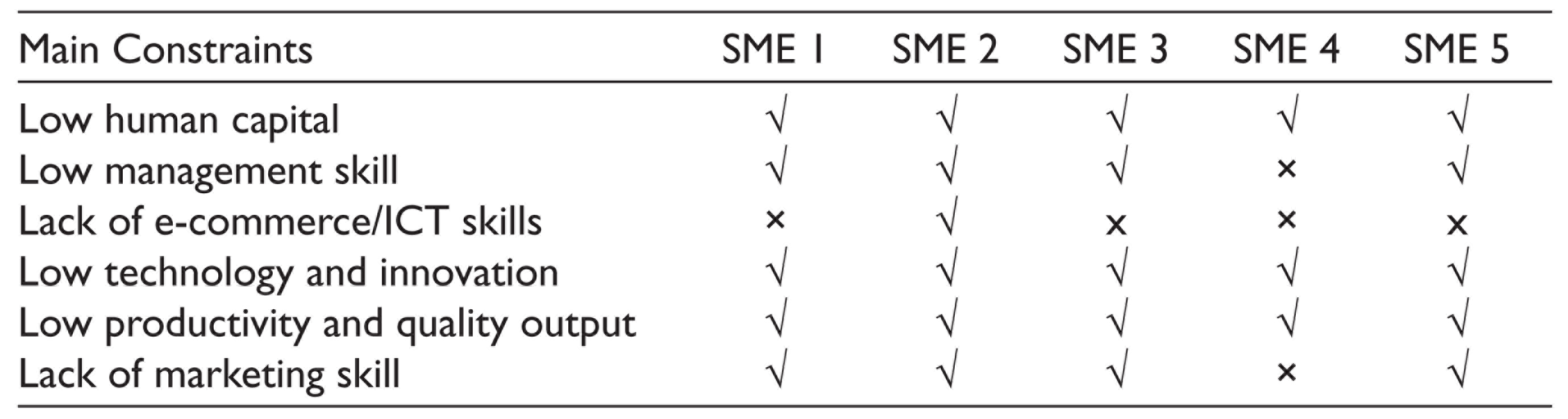
Table 4 shows mapping of different constraints faced by the SME cases. All the cases faced some common constraints such as low human capital, problems related to technology and innovation (product and market innovation), low productivity and quality output and lack of marketing skills (except case 4). However, the primary challenge is low human capital such as unskilled labour, low education of employees and difficulty in retaining the employees. What is noteworthy is that all the cases (except SME2) have developed good capabilities in e-commerce and ICT skills to run their business operations.
Main Constraints Faced by Chinese Immigrant Entrepreneurs
Main Constraints Faced by Chinese Immigrant Entrepreneurs
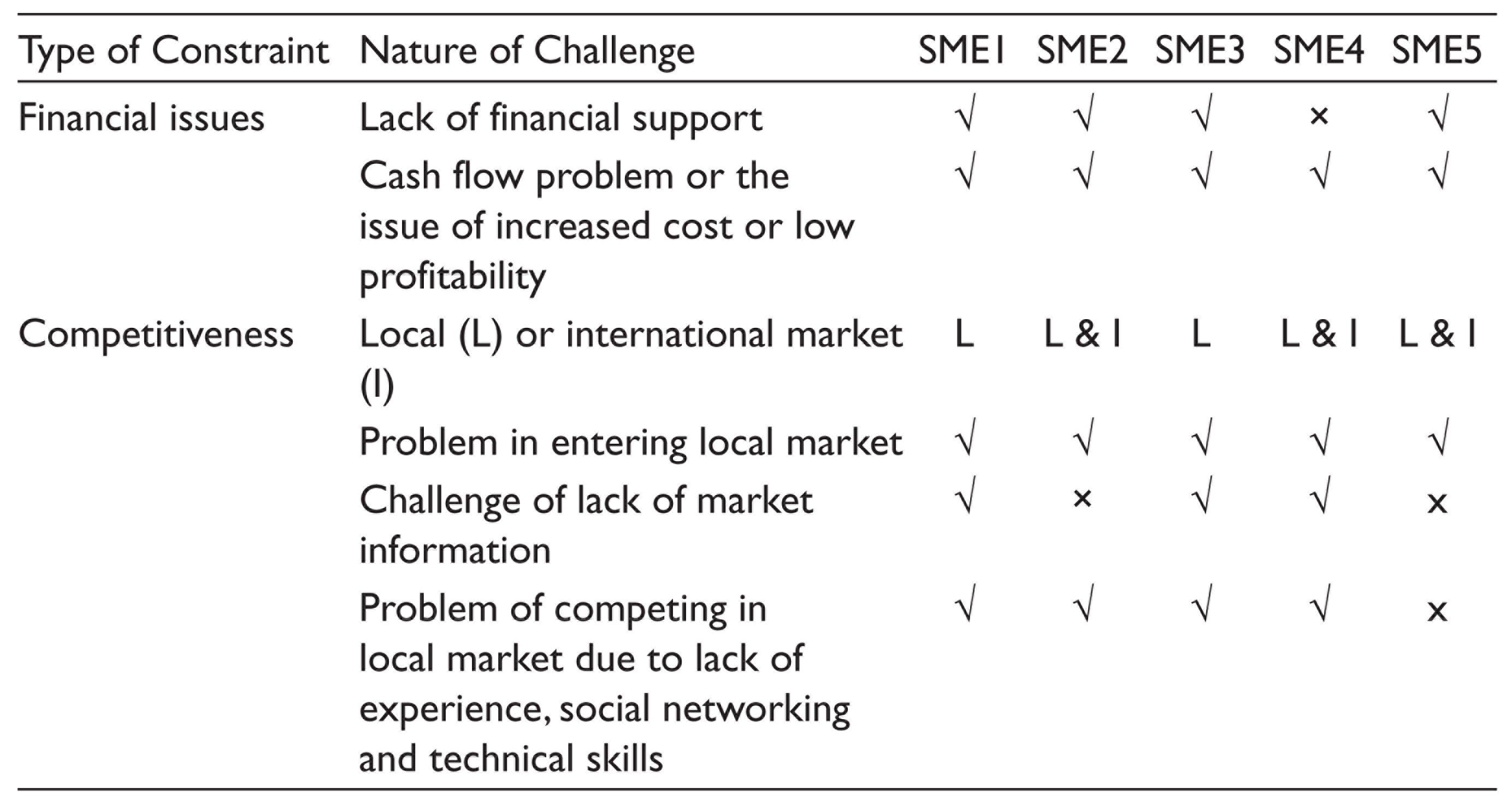
Table 5 highlights some issues related to finance and competitiveness of Chinese immigrant entrepreneurs. All the cases (except SME4) face or faced some problems in terms of financial support (at the start-up stage or/and growth stage). They also faced short-term financial problems related to competitiveness such as cash flow problem, increased costs and low profitability. They adopted different methods to overcome financial constraints such as reducing expenses, controlling costs, reducing inventory and exiting markets with high debt ratios (by SME2); increasing the price of products (by SME1); managing low profitability (by SME4); and maintaining good relations with long-term clienteles (by SME5). All of them faced barriers in entering the local market due to lack of local knowledge and experience, and lack of social networking and technical skills (except SME5). They managed to overcome these barriers to compete in the local market by learning continuously from failures, and from peers or external professionals in the industry.
It is to be noted that the general constraints, as shown in Tables 4 and 5, are also largely faced by local entrepreneurs, which are highlighted by many previous studies (e.g., Halim et al., 2014; Hoq et al., 2009; Omar & Azmi, 2015; Rahman et al., 2016). However, local Malaysian-owned SMEs are supported via a range of policy measures by the government to help them overcome these constraints (see Table 7), which are not available to the immigrant SMEs.
Financial Issues and Competitiveness of Chinese Immigrant Entrepreneurs
Other than the general constraints discussed in the previous section, all immigrant SME cases faced some specific constraints which are not generally faced by local Malaysian-owned SMEs. These include lack of social networking, access to government support programmes, language barrier and visa and regulatory burdens. All the cases faced lack of government assistance and suffered from bureaucratic or regulatory burdens, such as tax and visa problems. None of them received any assistance from the government in terms of support, such as business incubators, training for entrepreneurs or employees to enhance knowledge and skills, funding, technology and innovation, legal and regulatory advice, market access, infrastructure and tax incentives. The only exception is training received by SME4’s employees from the Ministry of Tourism of Malaysia, which helped them to obtain licensing. Table 6 shows mapping of lack of social networks and access to government support programmes for the SME cases.
Lack of Social Networks and Government Support Programmes
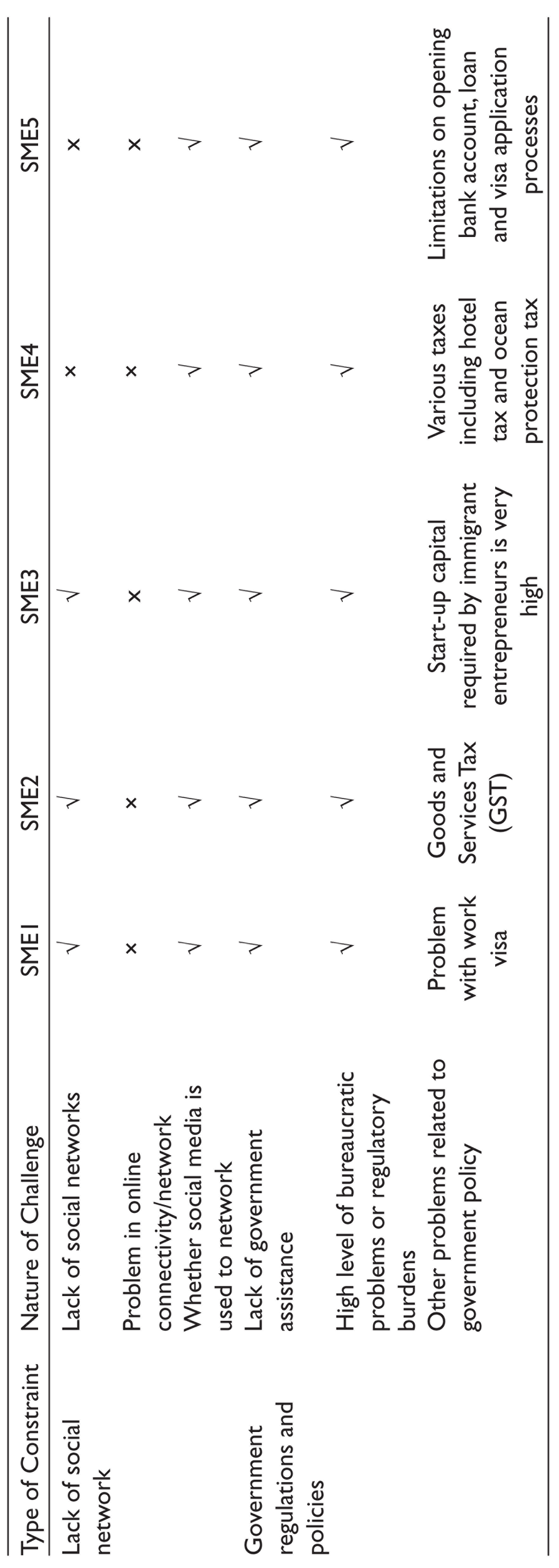
Lack of Social Networks and Government Support Programmes
Social Networking
SMEs 1, 2 and 3 faced difficulties due to lack of social networks. SME1 claimed that it faced the challenge of limited social networks in the start-up period, particularly lack of sales networks, which had to be built up gradually in the growth period.
Similarly, the owner of SME2 observed:
If you have networking and know friends in the community of advertisement and marketing, it may help you avoid much trouble in the process of entrepreneurial activities. In addition, these friends in social networks would give you a lot of guidance and offer many resources. Lack of social networks is the challenge at the early stage. For example, we didn’t know lot of information about equipment purchasing when we started the business. If you have social networks in procurement, you will benefit a lot from them.
Lack of social networking was a serious problem, particularly in the early stage for SME3:
I was not aware of the importance of networking because of lack of knowledge. Now I know that social media is extremely important, but I could not use social media in the past. I thought it was designed for recreational purposes. But now we know that social media helps promote our business and build business image.
Language Barrier
Language barrier is also one of the specific problems affecting immigrant entrepreneurs. As the official language is Malay, all official documents, communications and events organized by the government are in Malay. In the business world, English is also widely used. As a section of Malaysian Chinese speaks Mandarin (which is spoken in mainland China), it helps immigrant entrepreneurs when they interact with them in running the business. However, they face considerable difficulties without proficiency in both Malay language and English. SME2 owner highlighted this:
We are in the catering industry and the requirement for skills of employees is not very high – some of the employees in my firm have no experience in the catering industry at all, and they are continuously learning by doing. Language is also a problem – my English language and Malay language are not good, their (employees’) language skills are also not good, there were some problems when communicating with each other in the early stage.
Visa and Regulatory Constraints
Unlike the case of native-owned SMEs, the immigrant-owned SMEs face some specific problems due to bureaucratic procedures and regulatory burdens, such as complex tax and visa problems. Although Malaysia boasts of liberal regime for foreign investment and doing business, the respondent immigrant entrepreneurs have identified several constraints; for example, application for a work visa is an arduous process. It appears that immigrant entrepreneurs are given only short-term visas; most respondents feel that it would be better if the government grants long-term visas. Also, most of them feel the visa process is cumbersome and unnecessarily long. Besides this, the requirements for an immigrant entrepreneur to start a business are very high compared to the requirements for local entrepreneurs; for example, immigrant entrepreneurs need to show more registered capital when starting a business. In addition, there is a different shareholding (ownership) system for immigrant entrepreneurs compared to local entrepreneurs; for example, a foreigner can only start an enterprise with a local shareholder. All immigrant Chinese-owned SMEs faced some problems related to visa and regulatory issues. SME1’s owner felt that the government could provide help to overcome the specific constraints only faced by immigrant-owned businesses (such as visa problems) by creating an efficient visa approval system and also provide some taxation exemptions and create favourable conditions for immigrant-owned SMEs. Furthermore, all participants felt that there is a lack of transparent business environment surrounding immigrant entrepreneurship, with several prohibitions and opaque regulations.
SME4’s owner observed:
In terms of funding, we did not need government support. But in terms of visa, we do need the support of the government. My firm has a project that is aimed at Chinese tourists, we have submitted the application of the project to the Malaysian government and are waiting for the approval. Specifically, during winter in China it is the spring festival, so we do hope that the government can implement a policy of three-month visas for Chinese during spring festivals in China. Lots of Chinese would like to visit Malaysia during this period because of the nice weather here.
As for the regulatory burdens, SME4’s owner said that the government should relax inspection requirements for tour buses and the checking of passports of each tourist to help avoid unnecessary delays and burdens on the tour businesses.
Access to Government Programmes
Most respondents could not obtain any assistance from the Malaysian government agencies promoting SMEs. However, they were able to access external support, mainly from consulting agencies; for example, SME3 received some training and acquired some assistance from a marketing company. SME2 obtained assistance either from his friends or from professional consultants. SME5 has acquired external professional assistance in technical training and product development.
SME1’s owner felt that the government should provide support in the areas of marketing information, legal training, technical training, product development and growth-stage financing. which are available to local entrepreneurs.
SME3’s owner highlighted the main differences between Chinese immigrant entrepreneurs and local entrepreneurs in terms of government policy:
As far as I know, the government gives lots of financial support such as loans to SMEs owned by Malaysian women entrepreneurs, while the required capital for starting a business is probably hundreds of thousands for foreign entrepreneurs in Malaysia. I hope that there are not only government policies targeted at promoting local entrepreneurs, but also policies for promoting foreign entrepreneurs.
SME5’s owner highlighted some problems that immigrant entrepreneurs face in Malaysia, unlike the local entrepreneurs:
Local entrepreneurs have government support in different areas. Immigrant entrepreneurs don’t have these supports such as incubator program, training, funding, technology and innovation, legal and regulatory, marketing, infrastructure and tax incentives. Besides, there are lots of limitations on opening bank accounts, loans and visa application processes for immigrant entrepreneurs. Also, the government has restricted foreigners from purchasing houses and real estate.
With respect to constraints faced by the Chinese immigrant entrepreneurs in accessing government support measures, our findings are in line with previous studies. These studies found a worldwide prevalence where support measures for immigrant entrepreneurs are lacking in the host country, whether from government agencies or other formal institutions like banks and other financial institutions (Piperopoulos, 2010). The scarcity of government aid has been remarkably palpable and commonplace for immigrant entrepreneurs worldwide. It is widely recognized that policymakers and administrators seem to experience the ‘invisibility of migrant entrepreneurs’ (Jesrina Ann, 2017; Ram & Smallbone, 2003; Rath & Kloosterman, 2000). Kremel (2016) expounded that immigrant entrepreneurs’ need for strategic and operational advice are not fully satisfied by business advisory services in host countries. This is also evident from the experience of our case studies.
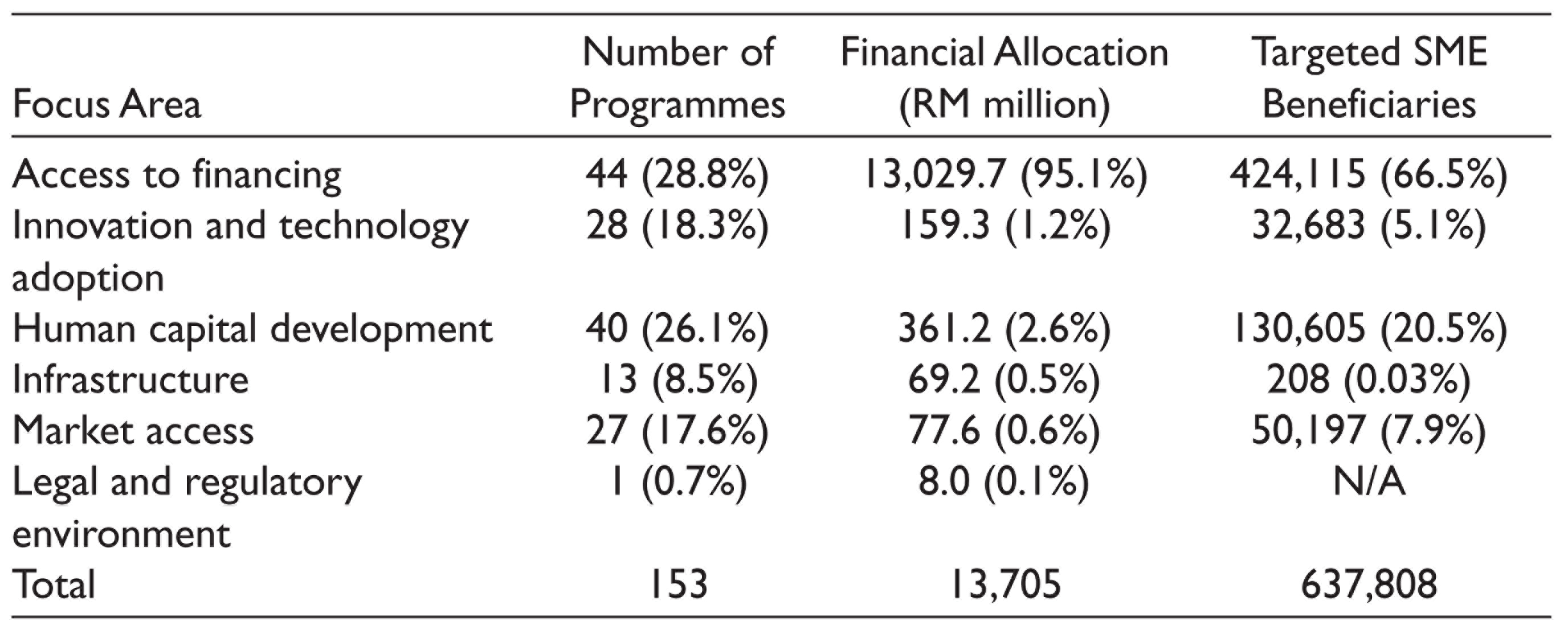
In Malaysia, there are numerous government initiatives and programmes targeting local entrepreneurs, such as promoting products overseas; providing training; running seminars and workshops; and providing subsidies and loans; and technical assistance for product design. These are coordinated by SME Corp. Malaysia, a central coordinating agency under the National SME Development Council (NSDC). Table 7 details SME development programmes for 2018 as per each focus area.
It is clear from Table 7 that the number of programmes for access to financing was the largest among the six focus areas, reaching 28.8%. Financial commitment and the SME beneficiaries under the programme were also the biggest, representing 95.1% and 66.5%, respectively. Human capital came second in terms of number of programmes (26.1%), financial allocation (2.6%) and SME beneficiaries (20.5%). In terms of legal and regulatory environments, the number of programmes and financial allocations were the least among the six focus areas. Although the SME development programmes are accessible to all SMEs in the country, in general, these are not available for immigrant entrepreneurs.
SME Development Programmes for 2018 (government-funded) by Focus Area
The case studies show that the mainland Chinese immigrant entrepreneurs in Malaysia make significant contributions to the host economy. These include employment, products and services, exports, innovation, micro FDI and global linkages. Employment generation and exports are the most important contributions. The finding is consistent with Nel and Abdullah (2015), which highlighted that immigrant entrepreneurs and their entrepreneurial activities facilitate entrepreneurial development, employment creation and economic growth in Malaysia by surveying 316 immigrant entrepreneurs in small retail business sector. The major constraints faced by the Chinese immigrant entrepreneurs are largely similar to those faced by local entrepreneurs (as identified in the literature review of previous studies), which include low human capital (low skill, low education, retaining employees, lack of prior experience 9 ), lack of marketing and managerial skills, lack of innovation and technology, lack of financial support, lack of social networks and lack of government assistance. 10 They also faced problems related to external support, such as technical training, management training, product development support, financial support, legal support and marketing support. Above all, they face some specific constraints which are not faced by local entrepreneurs, such as language barrier, lack of financial support in the growth stage, lack of government assistances, onerous tax and visa problems due to complex bureaucratic and regulatory processes and lack of transparent business environment.
The most critical challenges faced by the Chinese immigrant-owned SMEs are low human capital, access to finance at the growth stage 11 , lack of knowledge about local markets, lack of government assistance and bureaucratic or regulatory burdens such as tax and visa problems. It is notable that the Chinese immigrant entrepreneurs have not received any government support to grow their businesses (e.g., incubator programme support, training support for entrepreneurs or employees to promote necessary knowledge and skills, funding support, technology and innovation, legal and regulatory reform, market access, infrastructure and tax incentives).
The study shows that Chinese immigrant entrepreneurs face some specific constraints which are not faced by local entrepreneurs such as visa and tax issues, access to loans at growth stages, inadequate dissemination of government policies and complex bureaucratic and regulatory burdens. The findings of this study conform with previous research on constraints or barriers faced by the immigrant entrepreneurs. Desiderio (2014) pointed out that immigrants encounter greater challenges than natives because of lack of human and social capital, language barriers, lack of familiarity with the local market, inability to understand market know-how and greater difficulty in access to finance. Khosa and Kalitanyi (2014) concluded that some factors such as lack of local language skills, limited competition ability and difficulty in obtaining start-up and growth funding have prevented immigrant entrepreneurs from realizing their full potential. All participants identified the language barrier as a major issue. Previous studies showed that limited language skill is the most common hindrance experienced by immigration entrepreneurs. Poor language capabilities led to ineffective communication, which is likely to negatively influence the operation and development of immigrant enterprises, as well as their ability to deal with government agencies effectively.
Almost all participants faced lack of financial support and identified self-financing as the main source of funding in the start-up stage. The is in line with Fatoki (2014) and Piperopoulos (2010) who showed that ethnic minority businesses have never received or had access to business and financial support from banks and other financial institutions, and thus had to rely on personal savings and ethnic social resources. This is understandable; since they lack credit history at the early stage, mainstream financing sources such as bank loans are inaccessible. However, what is worrying is the lack of access to finance at the growth stage where these businesses have established a considerable business record. They cannot rely on only friends and family to meet the level of financing required at this stage, as it is quite high and can be met only by external sources.
Conclusions and Recommendations
This study set out to investigate the contributions of mainland Chinese immigrant entrepreneurs to the national economy in Malaysia—along with the problems and constraints faced by them—using primary data gathered from the five SME cases. It was found that Chinese immigrant entrepreneurs made significant direct contributions to the economy, including products and services, employment, technology and innovation, exports, micro FDI and tax revenue. Particularly, they have created a significant number of jobs and generated innovations in areas such marketing strategy (e-commerce), product diversification and new brand creation. They also exported their products and services to international markets. In addition, they made some valuable indirect contributions such cross-cultural learnings, creating global business linkages and bringing in efficient management culture and advanced E-commerce and networking resources.
The Chinese immigrant entrepreneurs in Malaysia face some general constraints which are also faced by local entrepreneurs, such as management and human resource problems (particularly difficulty in recruiting skilled workers), marketing, lack of access to financing in the growth stage and lack of technology and innovation. They also face specific constraints which do not affect local entrepreneurs. These include language barrier, visa and regulatory constraints, lack of access to government support programmes and lack of social networks (particularly when dealing with government agencies).
SME Corp. Malaysia has been developing and implementing policies and programmes to foster SMEs in Malaysia. However, they do not appear to support immigrant-owned businesses, although the government actively promotes inward foreign investment. Despite this disconnect, it is evident from this study and previous studies (e.g., Nel & Abdullah, 2015, 2017) that the immigrant-owned businesses are making significant contributions to the national economy.
Hence, the study makes following recommendations to support immigrant-owned businesses: SME Corp. Malaysia should create a special department to formulate tailor-made policies and programmes to support immigrant-owned SMEs as well as monitor their economic contributions; for example, it can provide technical assistance regarding tax regulations, visas, labour law and legal advice (including licensing and intellectual property rights). As the immigrant SMEs are facing lack of financing at the growth stage, the government agencies should come up with financial support programmes to address this finance gap and create a business-friendly environment for them by removing complex bureaucratic and regulatory procedures; for example, the government can come up with fast tracking of visa applications and special treatment in visa fees. Furthermore, the government should extend the existing SME support programmes, which are designed to foster human capital, management skills and marketing skills among local entrepreneurs, to cover immigrant entrepreneurs as well. The International Migration and Development Report recommends that every country should recognize immigration as an important contributor to equitable, inclusive and sustainable social and economic development (Omelaniuk, 2013). As the majority of migration to Malaysia is due to economic opportunities—and among the migrants are a significant number of entrepreneurs from diverse countries (e.g., Bangladesh, Indonesia, Pakistan and China) running SMEs—the government should frame comprehensive support and monitoring policies, particularly to gain optimum benefits from these businesses.
This study has certain limitations. Firstly, the methodological approach adopted by the study limits examining the degree/severity of each constraint faced by the SMEs. Insights into this aspect could help prioritize—from a policy point of view—what measures are needed in the short term, and what actions could be taken in the medium and long term. Secondly, as this study is based on five cases, it is difficult to draw generalizations. Despite these limitations, it makes a significant contribution to fill the gap in the existing literature on immigrant entrepreneurship in Malaysia. The study shows that immigrant-owned SMEs can play an important role in the development of the host economy in terms of employment, exports, innovation and micro FDI.
Footnotes
Acknowledgements
This article largely draws from: Mengdie Ruan (2019). A Study of Constraints and Challenges of Small and Medium Enterprises Owned by Chinese Immigrants in Malaysia. Masters Dissertation submitted to the Department of Development Studies, Faculty of Economics and Administration, University of Malaya, Kuala Lumpur, Malaysia.
Declaration of Conflicting Interest
The authors declared no potential conflicts of interest with respect to the research, authorship and/or publication of this article.
Funding
The authors disclosed receipt of the following financial support for the research, authorship and/or publication of this article: This work was supported by The Centre for Poverty and Development Studies (CPDS)/ Ungku Aziz Centre for Development Studies, University of Malaya [Research Grant no: PD002-2018].