







Abstract
This study aims to investigate the relationship among the various institutional pressures, corporate social responsibility, legitimacy, and reputation in the context of Indian corporates. It also provides an in-depth industry-wise analysis for the said relationship. BSE 500 listed companies form the population for this pan-India primary research. PLS-SEM is the statistical technique adopted to examine the relationship between research constructs. The overall industry analysis established a positive association between all six institutional pressures and CSR activities, but the comprehensive multigroup industrial analysis revealed that kind of institutional pressures that are important to corporates vary across industries. Multi-group analysis points out that—local communities, peers, and media are statistically significant for high as well as low impact industries. But government and NGOs are not statistically significant pressure groups for low impact industries. However, industry associations are not important as a pressure group for both high impact as well as low impact industries. Furthermore, legitimacy is seen to fully mediate the relationship between CSR and reputation for the national level survey.
Introduction
Several countries including Sweden, Norway, the Netherlands, Denmark, France and Australia had introduced mandatory corporate social responsibility (CSR) reporting requirements in the first decade of 21st century. The governments, particularly, in Asia Pacific countries such as India, Indonesia and Mauritius, have gone a step further and introduced regulations relating to mandatory spending (Bansal et al., 2019).
The laws made by the governments across the world—whether relating to reporting requirements or mandated spending—are not customized according to the type of industry. The Companies Act, 2013, through Section 135, mandates that specified firms having threshold revenue must spend a minimum of 2% of reported income on CSR initiatives (MCA, 2013). The regulation has changed the status of CSR in India from voluntary engagement to mandatory requirement for many corporates (Dixit et al., 2021). In the financial year 2019–2020, 22,155 companies spent ₹24,063 crores on 34,291 CSR projects as compared to ₹10,066 crores spent by 16,545 companies on 9,365 projects during 2014–2015 (MCA, 2021). Though the introduction of CSR regulation has led to increase in CSR spend, the mandated CSR in India, too, does not factor into account industry specific requirements, and thus, provides the perfect background against which we have carried our study. In Indian context researchers such as Aswani, Chidambaran, and Hasan, 2021 have found out that one-size-fits all approach towards CSR legislation is sub optimal and has negatively impacted the value of companies incurring high capital expenditure but FMCG sector has been able to derive the benefit of mandated CSR. Further, many firms spending more than 2% of profits on CSR before 2013 have curtailed their CSR spend to statutory limit and this may be because reputational advantage associated with CSR spending stands diluted in Indian context as almost all large firms are mandatorily doing this now (Mukherjee & Bird, 2016).
The governments of various countries have ignored isomorphic pressures due to which CSR practices converge in same industry, and has not, therefore, adopted the sector specific approach to CSR legislation (Beschorner et al., 2013). Scholars and practitioners have found differences in CSR practices at an industry level (Jackson & Apostolakou, 2010; Jain et al., 2017). However, research on industry specific CSR practices is still in its infancy stage (Dabic et al., 2016). The Journal of Business Ethics brought out a special issue on ‘Industry Specific Corporate Social Responsibility’ in 2017 to highlight the importance of the subject. In order to bridge the gap between the government’s approach to the CSR legislation and the outlook of the corporates, our study emphasizes through empirical survey that regulations by the governments should factor into institutional differences across industries in CSR legislation. The corporates can also understand how to strategize their mandatory CSR spend better and also how to increase its impact on the stakeholders.
For the purpose of present research, the institutional theory is the explanatory theory. This theory suggests that organizations differ among themselves due to the institutional context in which they are operating and conform to institutional expectations to obtain legitimacy (Morgan & Kristensen, 2006). Most of the researchers apply institutional theory to the study of organizational legitimacy (Doh et al., 2010; Suddaby, 2013) Organizations engage in legitimacy seeking behaviour to understand what, according to institutional actors that exert institutional pressures, is acceptable corporate behaviour (Hamann & Acutt, 2003). Di Maggio and Powell (1983) contend that within a particular field all organizations become similar because of isomorphic forces that is a result of three types of institutional pressures—coercive, mimetic and normative (Jamali & Neville, 2011). Coercive pressures emanate from forces outside the organizations and compel an organization to adopt certain practices or make structural changes (Di Maggio & Powell, 1983). Mimetic pressures refer to the process of organizations modelling or imitating the practices of those in the same organizational field that are perceived to be more successful (Roy & Séguin, 2000). According to Han and Yang (2016, p. 366), ‘the normative pillar of institutional theory refers to legitimacy pressures from informal values, rules, and habits or social expectations on organizations’. Scott (1995) refers to them parallelly as—regulative pressures, cognitive pressures and normative pressures (Chua & Rahman, 2011).
The application of institutional theory to CSR is a recent phenomenon. Many scholars (Brammer et al., 2012; Campbell, 2007) have explored the institutional embeddedness of CSR. Furthermore, the manner in which CSR is being approached by the corporates all across the world is changing rapidly due to the institutional pressures emerging from two important contexts—country and industry (Jain et al., 2017). Very few researchers have studied relationship between specific measurement dimensions of different type of institutional pressures and CSR (Han & Yang, 2016). This research is an attempt to fill this gap in industry context in India. Further, these companies use CSR activities to seek legitimacy from institutional actors resulting in enhanced reputation. Corporate reputation is an important outcome of the CSR activities and influence of industry effects on their relationship has been well established in the literature (Tetrault Sirsly & Lvina, 2019; Melo & Garrido-Morgado, 2012). More polluting companies such as oil and gas and chemicals are known to enhance their corporate legitimacy through enhanced reporting of CSR performance resulting in better corporate reputation (Kolk, 2010). Compliance to king code of governance by South African companies helped companies to enhance their legitimacy and thus, reputation (Ackers & Eccles, 2015). It is clear that legitimacy links CSR and reputation and industry type has an impact on their relationship (Aqueveque et al., 2018). The relationship between CSR, legitimacy and reputation has not been explored empirically much (Abdullah & Aziz, 2013).
Accordingly, our research objectives are as follows:
How various institutional pressures influence the CSR activities in industry context?
How does legitimacy link CSR and reputation in industry context in India?
To achieve our research objectives, we propose a model that integrates different dimensions of institutional pressures, CSR and organizational legitimacy and reputation within the framework provided by institutional theory and helps to understand how industry effects affect relationship among these variables. There is no study that has done an in-depth industrial analysis for the concerned CSR phenomena in India.
We have summarized our literature review and have proposed hypotheses based on the same. After validating the model, we present the multi group analysis in an industry context.
Literature Review and Hypothesis Formulation
Industry Context, CSR and Institutional Theory
Cottrill (1990) was one of the first researchers to emphasize that industry level realities should be incorporated in the study of CSR and asserted that the government and other pressure groups are important influences on CSR profile of companies. Many researchers such as Moore (2001); and Simpson and Kohers (2002) concluded that CSR-initiatives across industries differ in their nature and form. Godfrey et al. (2010) have emphasized the need for large-scale studies or industry specific case studies to understand the relationship between unique characteristics of industry and CSR. Though researchers are using framework provided by institutional theory to study relationship between a specific type of industry and CSR and some of these works are tabulated in Table 1, large scale studies have not been reported so far. Our study attempts to fill this gap.
In order to understand industry context, Jackson and Apostolakou (2010) in their study of relationship between country and industry context, and CSR in Western European firms classified industry into two categories based on the sectoral impact on stakeholders—high impact and low impact industries. They assumed that environmental footprint is similar to economic and social impact. According to them, ‘ecological footprint is an imperfect but reasonable proxy for sectoral-level pressures for institutionalization’ (Jackson & Apostolakou, 2010, p. 377). The high impact industries (industries with the highest ecological foot print) include automobiles, basic resources, chemicals, construction and materials, and so on, that are likely to put more focus on CSR activities in order to gain legitimacy and mitigate their negative social and environmental footprint. The low impact industries that include consumer goods industries and service sector industries like financials, media, technology and insurance besides others have less ecological foot print as compared to high impact industries.
Some Studies in Industry Context
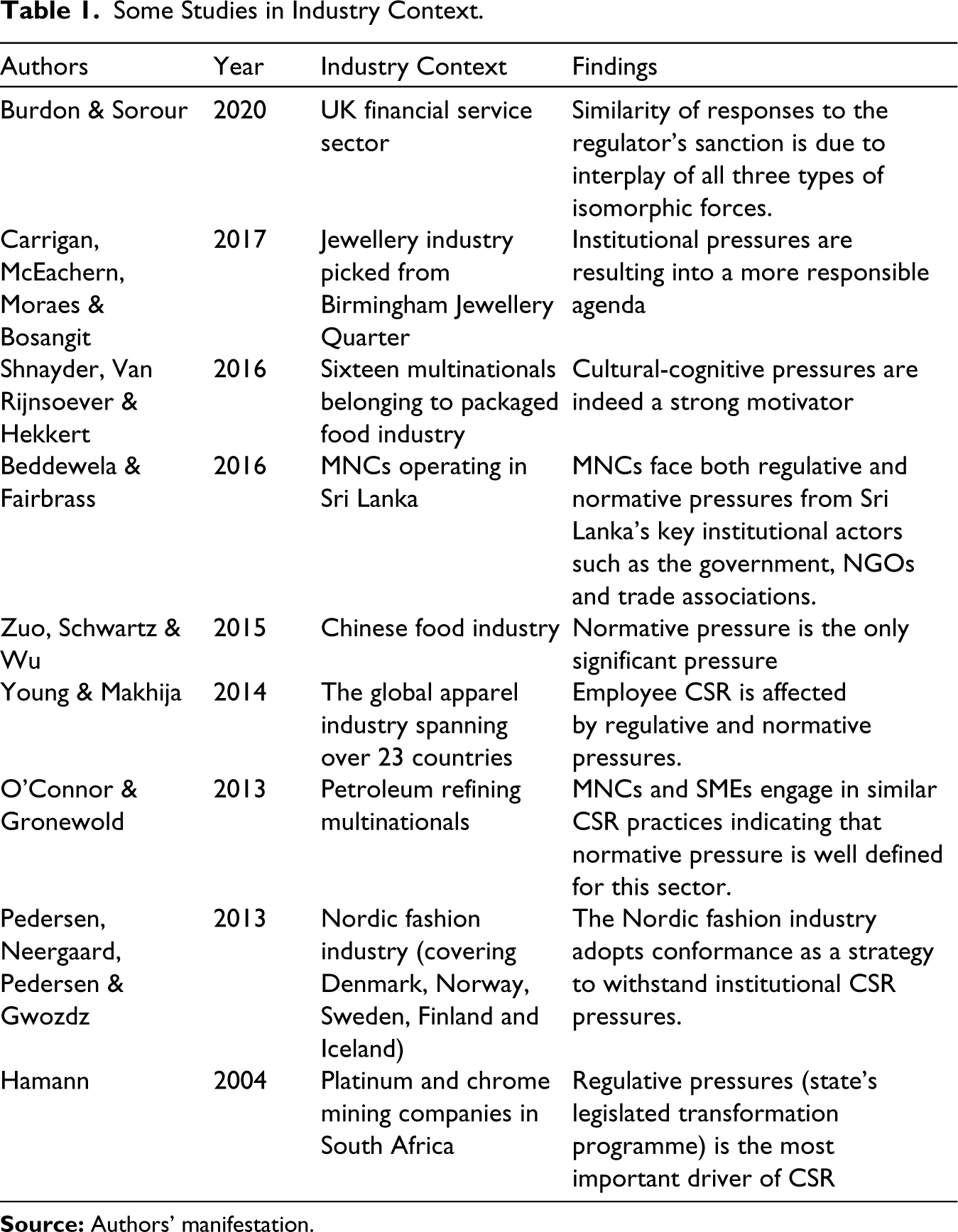
Some Studies in Industry Context
Institutional Pressures and CSR
As already stated, there are three kinds of institutional pressures that exert pressure on the organizations to take up CSR—regulative, cognitive and normative (Scott, 1995). In the following sub-section relationship between each of these with CSR is examined.
Regulative Pressure and CSR
Coercive processes operating at the level of industry create regulatory pressures and constrain and guide behaviour. Two important institutions that exert formal and informal pressures on the business are—government and industry associations (Han & Yang, 2016). Governments all across the world are introducing CSR regulations in some form or the other and CSR decisions are not being left to the discretion of managers (Knudsen & Brown, 2015; Steurer, 2010). Self-regulation in the form of soft laws is an important priority area of industry associations (Wooten & Hoffman, 2016). Some associations such as UN Global Compact and the Confederation of Indian Industry (CII) are pan industries while some make soft laws for specific industries such as Food and Drug Administration (FDA), USA and The National Association of Software and Service Companies (NASSCOM), India. High impact industries have a greater need to obtain legitimacy and hence are expected to be more socially responsible (Hoffman, 2001) as compared to low impact industries that face less institutional pressures to act responsibly (Gardberg & Fombrun, 2006). The industry regulation pushes high impact industries to adopt CSR practices (Kollman & Prakash, 2002) to evade bad publicity, penalities and governmental regulation (Kagan et al., 2003).
On the basis of the literature, thus, we can formulate the hypotheses as follows:
Cognitive Pressures and CSR
Cognitive pressures are a result of mimetic isomorphism that occurs because firms in the same industry mimic/copy the practices and patterns of those that they perceive to be successful (Di Maggio & Powell, 1983). This is done to be ‘no better or worse than any organisation’ in the industry and this results in positive perception of the organization amongst the shareholders (Kondra & Hinings, 1998, p. 745). Local communities and peers are important cognitive institutional pressures influencing the corporates in India (Jha & Aggrawal, 2019). High impact industries such as oil and gas engage more with local communities (Frynas, 2005). In a study of CSR initiatives in fifty Indian manufacturing sector companies across automobile, cement, chemical, pharmaceutical and textile industries, Shanmugam et al. (2015) found that local community has more influence on CSR policies than any other stakeholder. Institutional scholars have argued that many companies engage in CSR activities under peer effect to avail reputational benefits, to address the concerns of stakeholders if other firms in the industry are doing it and to adhere to new norms with uncertain benefits among other reasons (Durand & Jacqueminet, 2015; Malik et al., 2019). Peer pressure differs among industries and exerts a positive pressure on firms in the industry to take up CSR activities, the extent of which depends upon the nature of activity of the industry (Dupire & M’Zali, 2016).
On the basis of the literature, thus, we can formulate the hypotheses as follows:
Normative Pressures and CSR
Normative systems regulate by means of social sanctions and obligations (Sá de Abreu et al., 2015). Normative pressures created by these systems ‘introduce a prescriptive, evaluative, and obligatory dimension into social life’ (Scott, 1995, p. 37). Two important institutional actors that take note of outcomes of an organization’s activity and evaluate them against certain norms are non-government organizations (NGOs) and media (Jamali, 2010; Vashchenko, 2017). NGOs can be defined as ‘social, cultural, legal, and environmental advocacy and/or operational groups that have goals that are primarily non-commercial’ (Kourula & Laasonen, 2010, p. 36) 1 NGOs enjoy the status of important institutional actors influencing policies of the organizations including CSR initiatives (Mathews, 1997) and are source of social pressure at the level of industry (Levendis et al., 2006). In their cross industry study in Indian context, Jain et al. (2017) found that high impact industries such as metal and mining and cement feel the pressure from NGOs more than other type of industries.
Media
2
acts as an institutional pressure for organizations ‘by subjecting them to the constant threat of public exposure’ (Campbell, 2007, p. 957). Media exerts pressure on most of the aspects of organizational behaviour (Margolis & Walsh, 2003; Pollock & Rindova, 2003) including CSR initiatives (Dickson & Eckman, 2008). Firms that require a social license to operate, face diverse demands and therefore, engage in higher levels of CSR to get legitimacy (Zyglidopoulos et al., 2012). Based on literature, we can formulate hypothesis as:
CSR, Organizational Legitimacy and Reputation
Organizational legitimacy can be defined as ‘a generalized perception or assumption that the actions of an entity are desirable, proper, or appropriate within some socially constructed system of norms, values, beliefs, and definitions’ (Suchman, 1995, p. 574).
Different authors have identified a number of sub types of organizational legitimacy (Aldrich & Fiol, 1994; Zimmerman & Zeitz, 2002) but Suchman’s three way classification remains the most popular because ‘legitimacy as an individual perception is best conceptualized and measured as a three-dimensional construct’ (Alexiou & Wiggins, 2019, p. 3). Suchman (1995) classified organizational legitimacy into pragmatic, moral and cognitive. Pragmatic legitimacy is rooted in the self-interest of audience (institutions here) that expect a return from the organization for granting legitimacy. Moral or normative legitimacy deals with organization’s compliance with social norms, ethics, and values. Cognitive legitimacy represents the extent to which an organization’s activities can be ‘classified, understood, and integrated’ by the institutional actor (Humphreys & Latour, 2013, p. 774).
Reputation can be defined as a collective perception of various stakeholders (Fombrun, 1996) or perception of a single stakeholder (Wartick, 1992) about the organizational action and results. For the purpose of our research, we are studying only managerial perception. Thus, reputation is, ‘the aggregation of a single stakeholder’s perception of how well organizational responses are meeting the demand and expectations of many organizational stakeholders’ (Wartick, 1992, p. 34). Institutional pressure emanates from these stakeholders. Reputation is a positive outcome of CSR (Brammer & Pavelin, 2006). Further, ‘institutional theory can be used to provide a deeper understanding of the relationship between CSR and reputation’ (Aksak et al., 2016, p. 81) as this theory explains how through norm-governed behaviour organizations acquire legitimacy leading to good reputation (Abdullah & Aziz, 2013). Thus, reputation is a potential consequence of legitimacy (King & Whetten, 2008; Lucchini & Moisello, 2017). As reputation is an outcome of both CSR and legitimacy, legitimacy mediates between CSR and reputation (Abdullah & Aziz, 2013). On the basis of literature, we can build the following hypothesis:
Research Design
An explanatory research design is adapted for the current study due to the presence of causal relationships among the research constructs (Cooper & Schindler, 2014). A cross-sectional approach is adopted for taking a snapshot of the CSR practices and its relationship with legitimacy and reputation.
Research Variables and Their Operationalization
The identified research variables are logically woven in the proposed research framework and their standardized scales were identified from literature for empirical testing. The questionnaire so developed was given for vetting to five academic experts and also to equal number of CSR professionals. To measure institutional pressures, scale developed by Jha and Aggarwal (2019) was used, Turker’s (2009) scale was used to operationalize CSR, scale developed by Alexiou and Wiggins (2018) was utilized to measure legitimacy and Taghian et al.’s (2012) scale helped to measure reputation. Out of seventeen items of Turker’s scale, seven items relating to employees were dropped on the basis of the suggestion of experts (money spent on employee welfare is no longer counted towards CSR spend by the companies in India) and two items that contained terms like ethical behaviour and moral, were dropped from legitimacy scale given by Alexiou and Wiggins as these, in the opinion of experts, do not go well with measuring our independent variable—CSR. All items—but for the personal information questions—were measured on a seven-point Likert-type scale anchored by strongly disagree and strongly agree.
Research Population
The population for the study includes the BSE 500 listed companies as they are obliged to follow the mandatory CSR rules laid down by the government. The BSE 500 list contains industries belonging to various industries, thus, making this study a pan India cross-industry study.
Sampling Technique
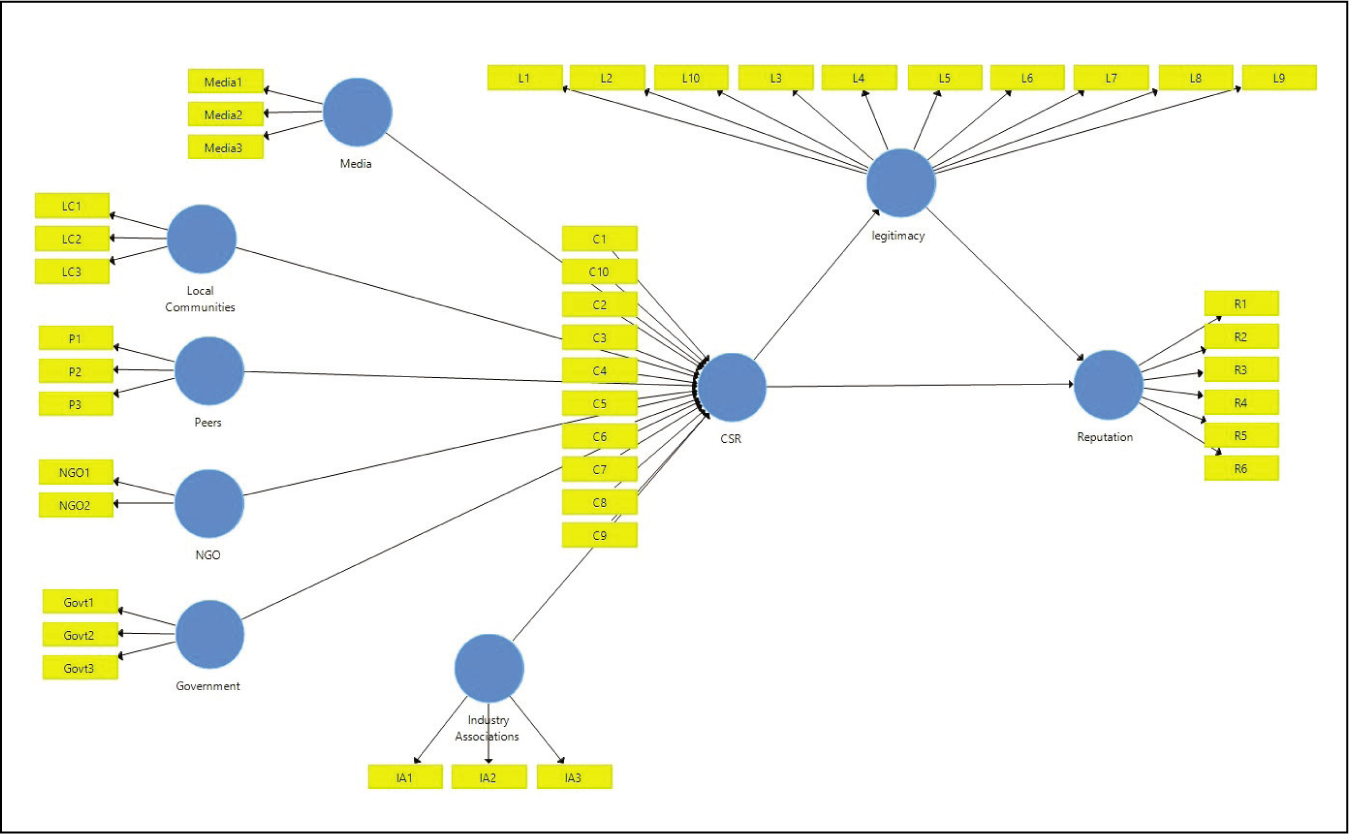
Non-probabilistic purposive sampling technique is deployed in the current research because of the objective data collection from corporate executives. Mostly the upper echelon of the companies is approached for the concerned information regarding CSR activities, legitimacy and company reputation linkages. As the study is spread across large geographical area, both online and offline mode of data collection are used resulting in a total of 191 respondents—98 from high impact industries and 93 from low impact industries. This culminates to a response rate of 57.35% (a total of 333 managers—176 from high impact industries and 157 from low impact industries—were provided with the final questionnaire). In order to assess sufficiency of sample size, we applied the ten times rule, which states that when applying PLS SEM for data analysis, sample size should be at least equal to ten times the largest number of arrows going into any one construct (Barclay et al., 1995). In our case, CSR is the construct into which maximum number of arrows (ten) are going into (refer Figure 1). The minimum sample size is, thus, 100 (10×10) as per the above stated rule. Our sample size of 191 is way above and, thus, sufficient.
Data Analysis Technique
As the population of the study is limited to only 500 companies, PLS-SEM was expected to result in more robust research outcomes as compared to CB-SEM (Hair et al., 2019). Moreover the presence of a formative construct (i.e., CSR) in the research model demanded the PLS-SEM approach of data analysis for meaningful conclusions (Hair et al., 2017). PLS-SEM is run in the software SMART-PLS-3 for the assessment of measurement and structural research models and hypotheses testing. Further, multi-group analysis (MGA) is run to obtain some deep insights in this cross-industrial study.
Preliminary Data Analysis
The preliminary data analysis was done before running the path model analysis. Common method bias is assessed through Harman’s single factor test and it accounted for much less variance than the benchmarked limit of 50% (Podsakoff et al., 2003). Normality of data is evaluated through the skewness and kurtosis values obtained in SMART-PLS-3 which came out to be within the lenient range of ±2 (Cooper & Schindler, 2014). This concludes the methodological approach and preliminary analysis leading to the path analysis.
The path model analysis through PLS-SEM comprises of measurement model assessment and structural model evaluation followed by hypotheses testing. As the present research model incorporates both reflective and formative constructs, the assessment of measurement model is of two folds as explained below.
Reflective Measurement Model
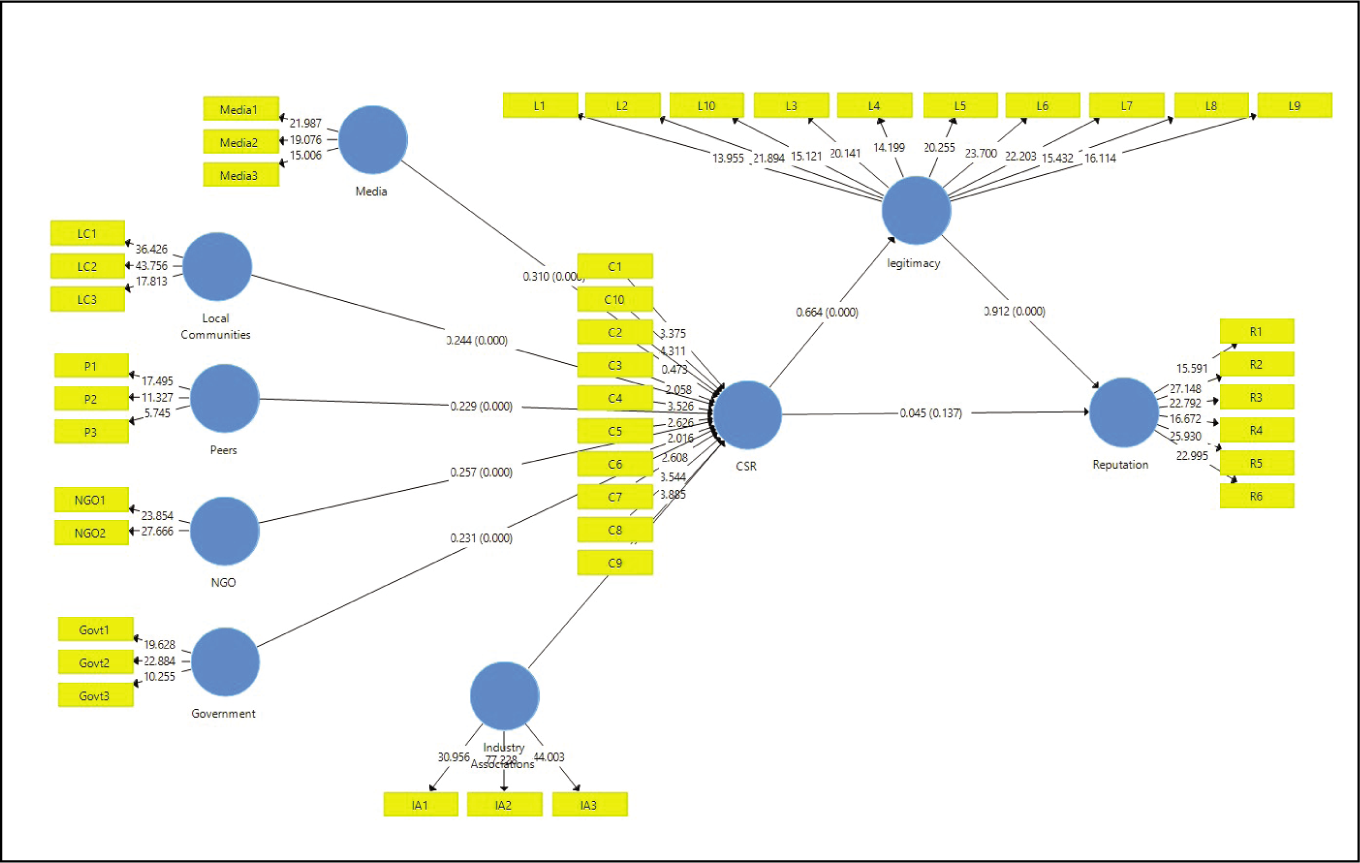
The reflective constructs are analysed for their reliability and validity. Internal consistency reliability is measured through the Cronbach’s Alpha values or the composite reliability values as shown in Figure 2. Values of both the reliability measures are greater than the prescribed value of 0.7 for all the constructs (Hair et al., 2020), thus establishing the internal consistency reliability.
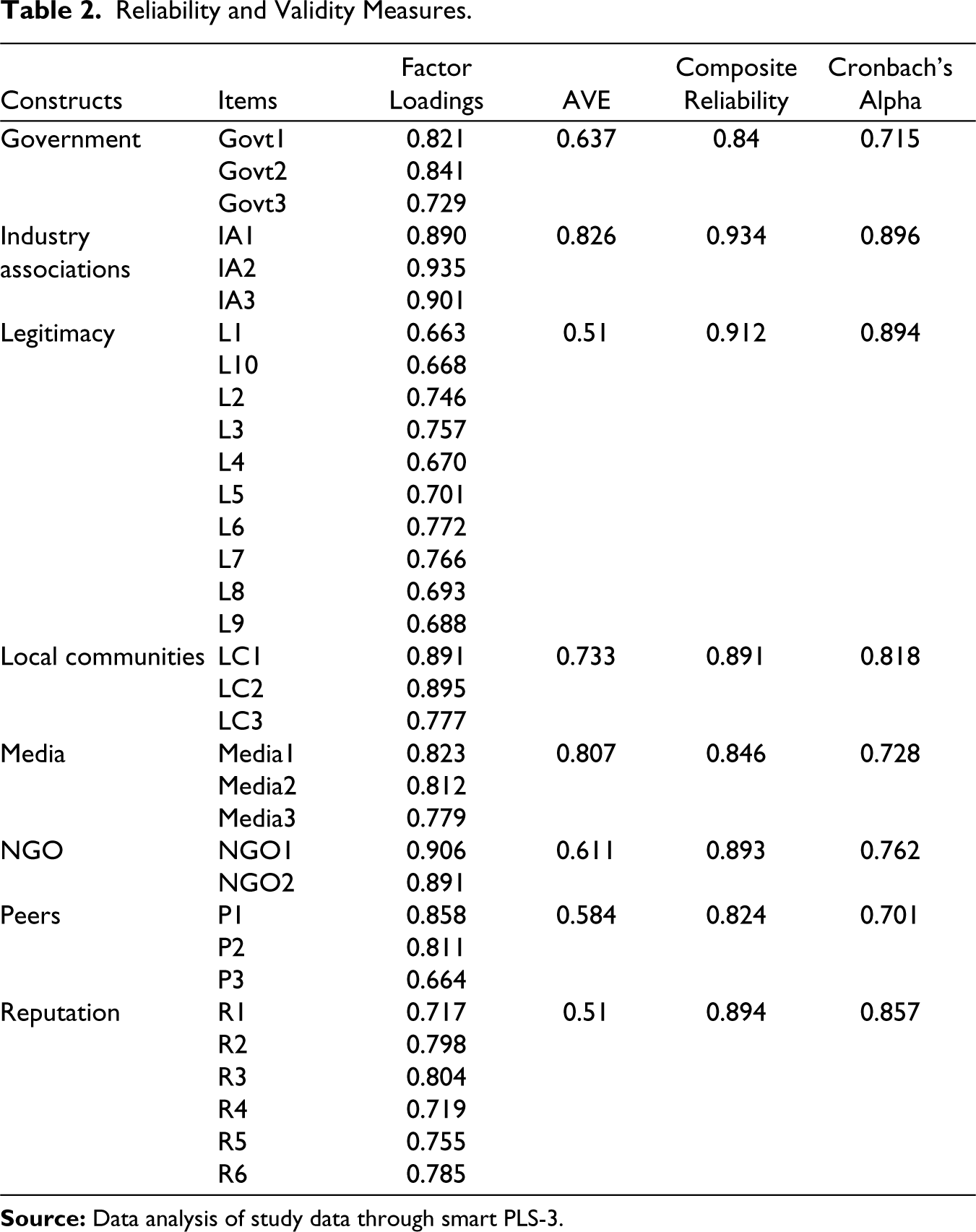
Validity of the constructs are assessed in two parts: convergent validity and discriminant validity. Factor loadings and average variance explained values (AVE) are the measures of convergent validity (Hair et al., 2013). Factor loadings of all the items of the constructs are greater than 0.7 and AVE values are greater than 0.5 (Table 2), acceptable as per the PLS-SEM guidelines (Hair et al., 2019).
Reliability and Validity Measures
Discriminant validity is another crucial parameter of reflective measurement model assessment. Table 3 shows the values of discriminant validity as per the suggested HTMT criterion (Hair et al., 2019). As shown in Table 4, all the HTMT values are less than the threshold value of 0.85 (Hair et al., 2013). Thus, establishing the discriminant validity for the reflective measurement model. This concludes the assessment of reflective measurement model with validity and reliability measures.
Formative Measurement Model
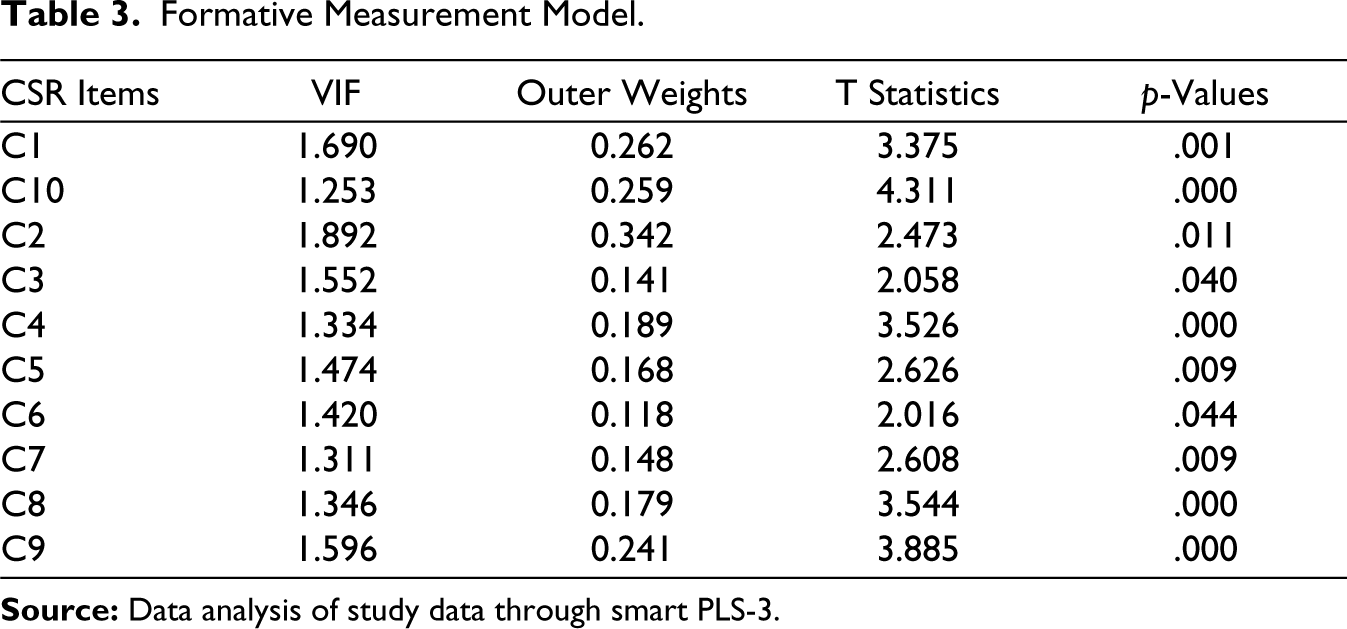
HTMT Values
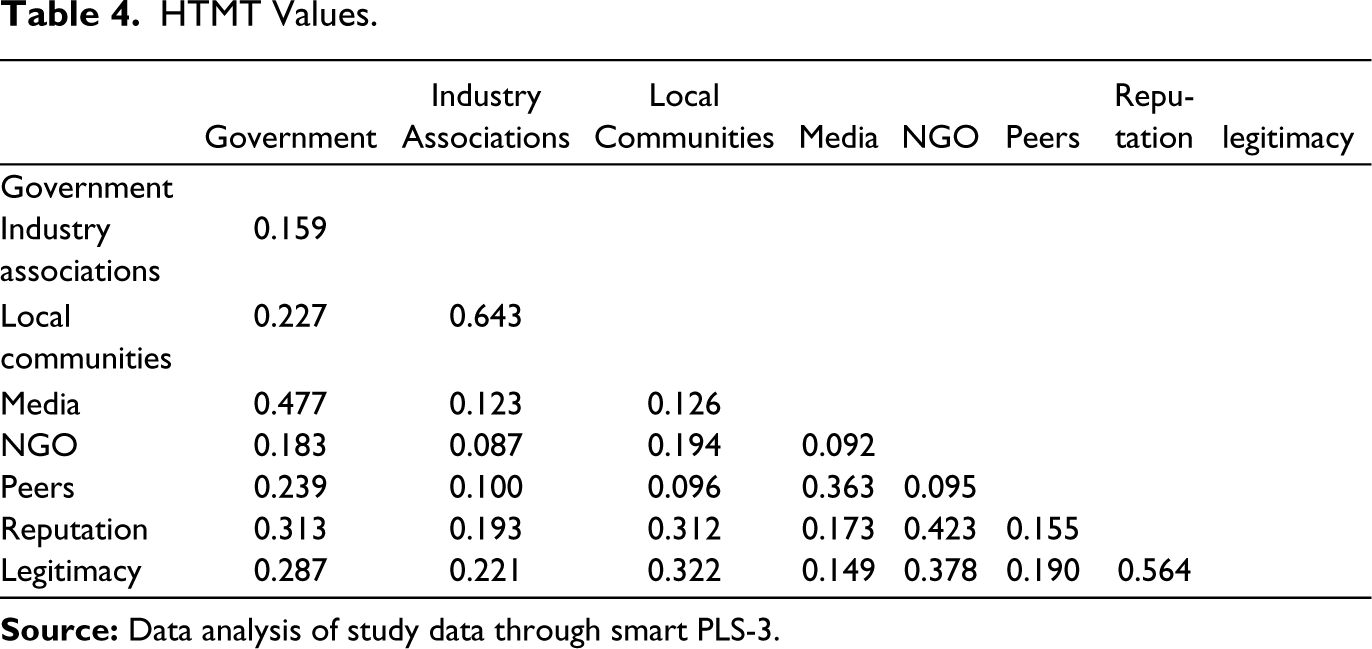
Formative Measurement Model
As the path model incorporates CSR construct as a formative scale, the evaluation of VIF (variance inflation factor) values and significance of all its items becomes necessary before moving on to the structural model assessment. The first column of Table 3 shows the VIF values for all the formative indicators of CSR for identifying the collinearity issues in the path model (Becker et al., 2012). All the VIF values for the formative indicators are less than the threshold value of 5, thus indicating no issue related to collinearity (Hair et al., 2012).
Another important parameter of formative construct is significance of its outer weights. The outer weights of all the items of CSR construct are presented in the second column of Table 3 with t-statistics and the related p-values. All the outer weights have come out to be significant for the CSR construct with p-value less than 0.05 (at 5% level of significance), establishing its validity as a formative construct.
Structural Model Assessment
As per the PLS-SEM guidelines, the assessment of measurement model is to be followed by structural model evaluation. Figure 2 demonstrates the structural model. This analysis includes evaluation of coefficient of determination (R²), Model fit index (SRMR value), effect size (f²), predictive relevance (Q²), and hypotheses testing for the proposed relationships (Hair et al., 2011).
The major values of structural model are displayed in Table 5. The R² value for the dependent variable of the path model, that is, reputation is 0.889, portraying high coefficient of determination for the research framework. 88.9% of variance in corporate reputation can be explained with the help of endogenous factors incorporated in the study. The global model fit index, SRMR value is 0.052, much below the suggested threshold limit of 0.08 (Sarstedt et al., 2019).
Structural Model Assessment
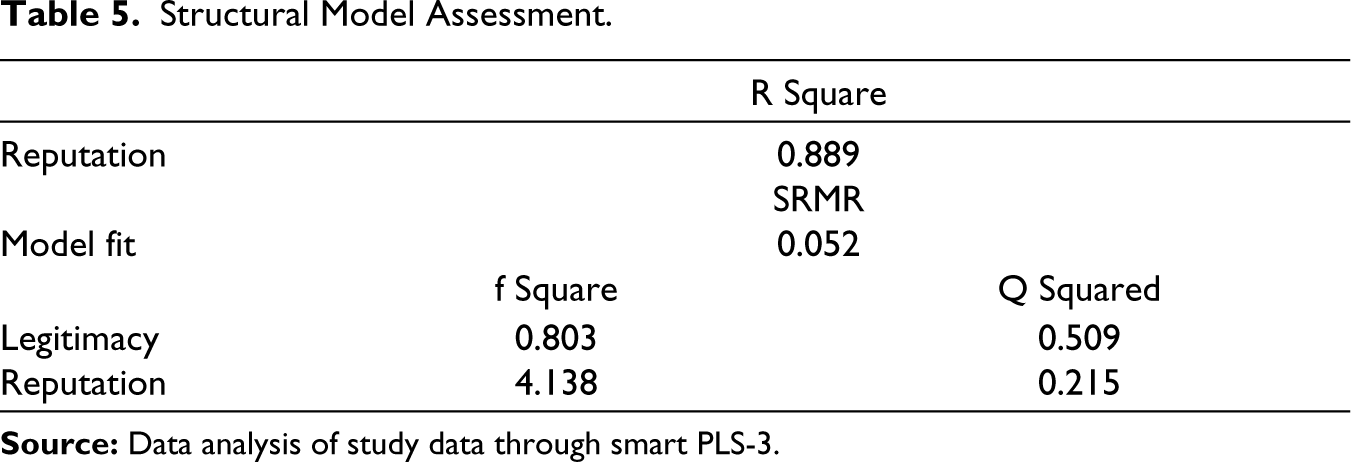
In contrast to the coefficient of determination for the whole research model the effect size helps in identifying the individual impact on the dependent variables. It can be seen from Table 5 that both legitimacy (f² = 0.803) and reputation (f² = 4.138) are having large effect sizes when compared to the suggested threshold values (f² > 0.35 implies large effect size) (Hair et al., 2013).
To study the out-of-sample predictive relevance of the proposed research model, the predictive relevance is evaluated through the blindfolding process of SMART-PLS at the omission distance of 7 (Hair et al., 2013). The Q² values obtained through the blindfolding process is shown in Table 5. Legitimacy has a Q² value of 0.509 indicating a high predictive relevance and reputation has a Q² value of 0.215 indicating a moderate predictive relevance according to the thumb-rule values, that is, small predictive relevance till the value of 0.02, moderate predictive relevance till 0.35 and high predictive relevance for Q² values greater than 0.35 (Aggarwal & Kapoor, 2020; Stone, 1974).
Hypotheses Testing
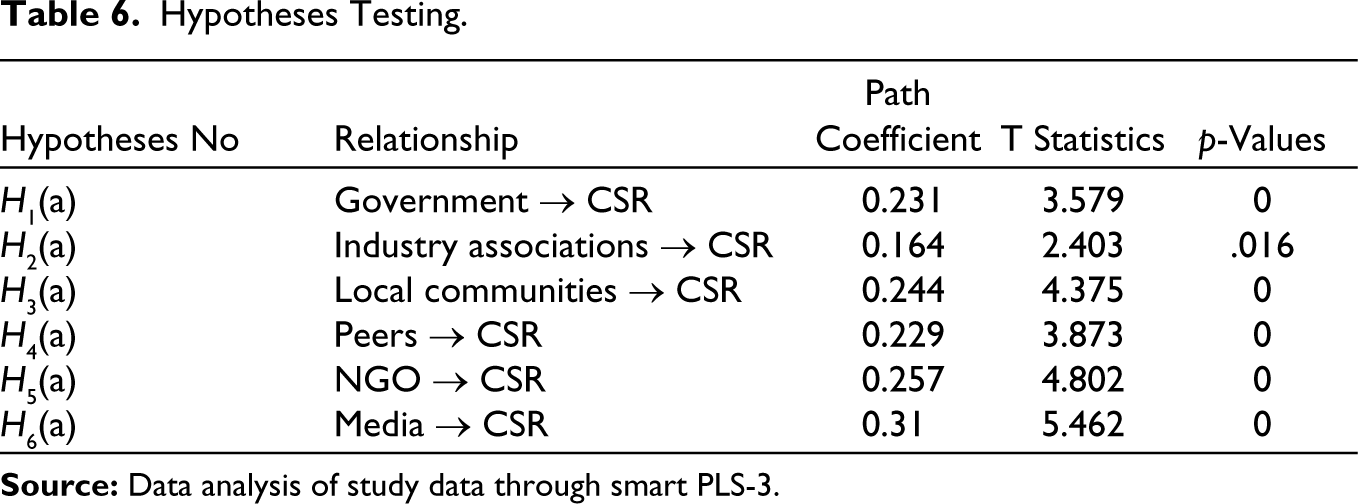
The structural model assessment concludes with the hypotheses testing for the proposed relationships in the path model with the help of bootstrapping process of PLS-SEM at 5% significance level with 5,000 sub-samples. Table 6 represents the significant values for each predicted hypotheses.
Hypotheses Testing
Mediation Analysis
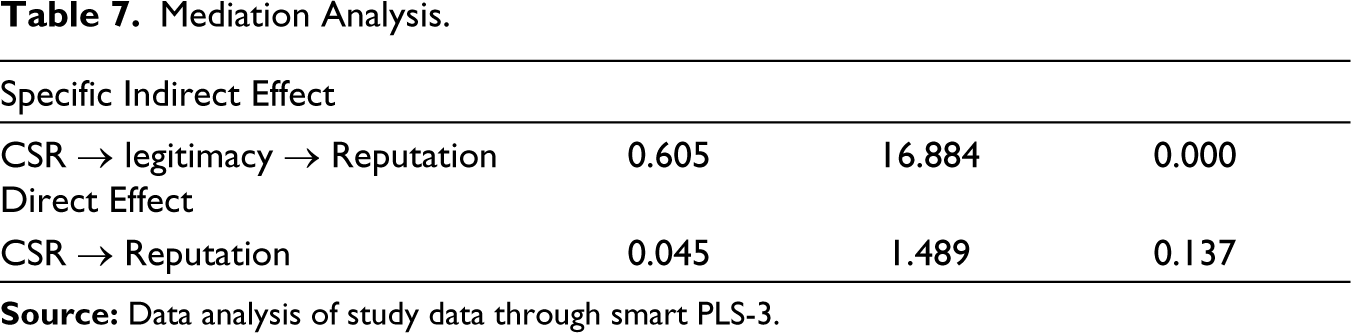
H7 has proposed a crucial mediation relationship between CSR, legitimacy and reputation to be investigated through the primary data. The mediation analysis involves a two-step process, that is, investigating the specific indirect effect from the independent variable to the dependent variable through the mediator (if significant) which is to be followed by the direct effect assessment between the dependent and independent variable (Shariq et al., 2019).
Table 7 shows the specific indirect effect of CSR to reputation through legitimacy, which came out to be significant with t-value = 16.884 (p-value = 0). It is to be followed by the direct effect evaluation as shown in the same table. The direct effect between CSR and reputation is nullified in the presence of the mediator, that is, legitimacy with t-value = 1.489 (p-value = .137), at 5% significance level. Thus, the research model is experiencing a case of full mediation, that is, the relationship between CSR and reputation is fully mediated through the legitimacy.
Mediation Analysis
Multi-group Analysis
To get a deeper insight in this cross-industry study, multi-group analysis is performed on the collected data according to the intensity of industries. The responses are clubbed together on the basis of their industry-type and they were then subjected to the multi-group analysis in SMART-PLS-3 software to get industry-wise insights. For our study, we used macro approach and the classification adopted by Jackson and Apostolakou (2010).
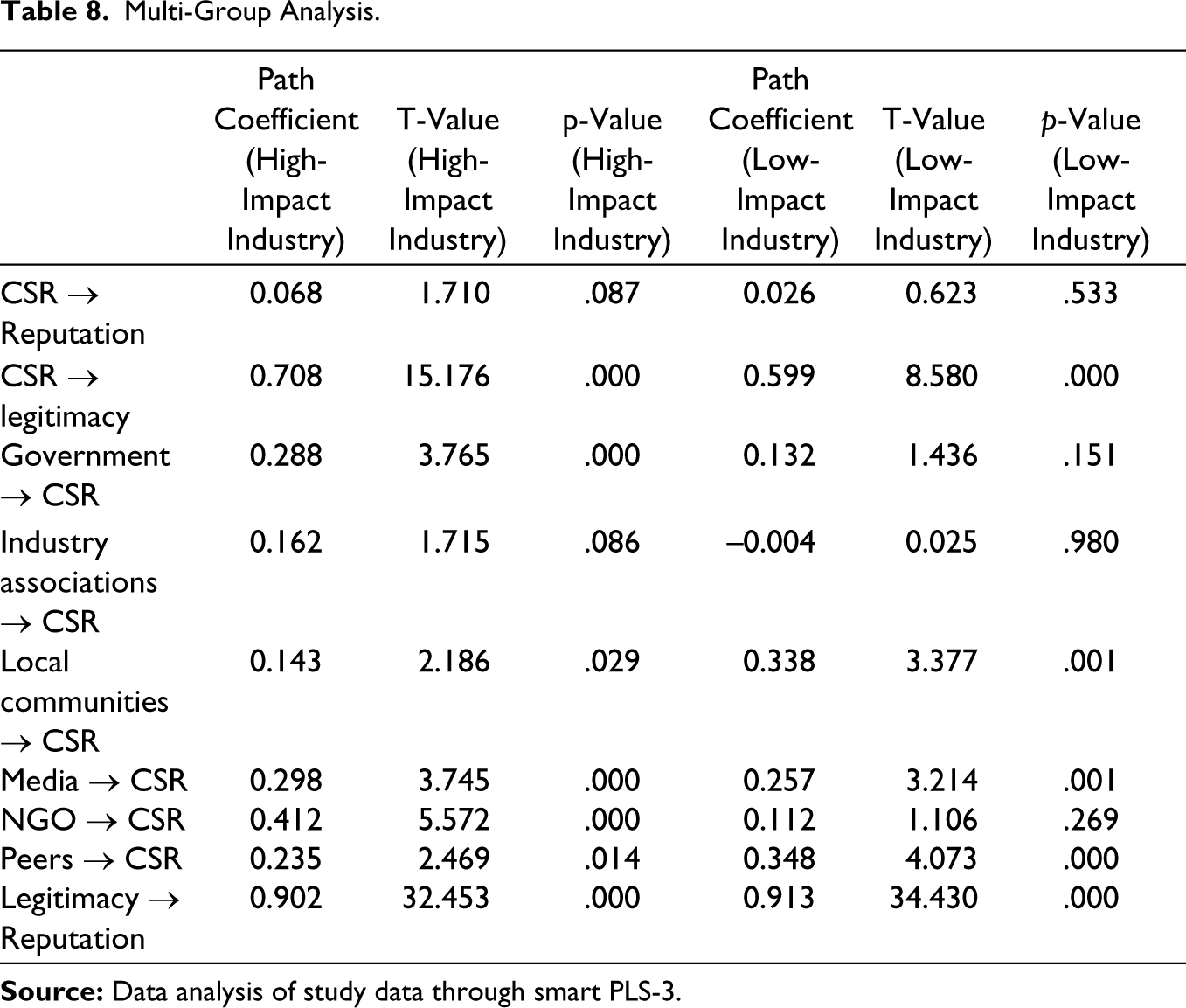
Table 8 represents the bootstrapping results obtained for the multi-group analysis with 5,000 sub-samples at 5% level of significance. The relationship between local communities and CSR, media and CSR, peers and CSR, and legitimacy and CSR are significant for both the high and low impact industries at 5% level. The relationship between CSR and reputation is not significant for both low and high impact industries.
Multi-Group Analysis
In this section, discussion on major results is presented.
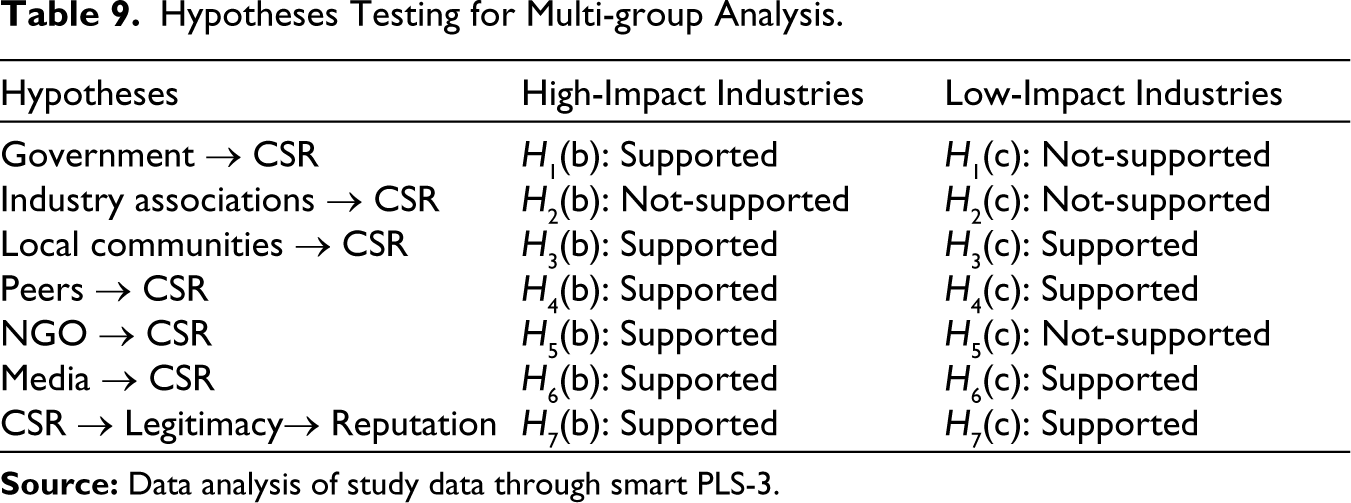
All the hypotheses from H1 to H6 are supported through the data analysis of Indian corporates with t-values greater than 1.96 at 5% level of significance (refer Table 6) indicating that all six institutional pressures exert influence on CSR policies of the corporates. The study revealed that all institutional pressures are statistically significant. Multi-group analysis points out that—local communities, peers, and media are statistically significant at 0.05 % level for high as well as low impact industries. But government and NGOs are not statistically significant pressure groups for low impact industries (refer Table 9). However, industry associations are not important as a pressure group for both high impact as well as low impact industries.
Hypotheses Testing for Multi-group Analysis
Hypotheses Testing for Multi-group Analysis
Firms in different industries adopt different CSR approaches towards handling local community pressure depending upon community embeddedness of the business (Boutin-Dufresne & Savaria, 2004). But in context of India every corporate to whom CSR Rules apply, has to take up mandated CSR spend in local community (Act, 2013). This probably is the reason that local community is an important institutional pressure for Indian corporates (Jha & Aggrawal, 2019).
Peer pressure is one of the important pressures driving CSR in India in both eras—pre mandated spending as well as mandated spending (Bansal et al., 2019; Sood & Arora, 2006). Mimetic isomorphism pushes firms in the industry to take up CSR activities of similar nature. For example, Royal Dutch/ Shell and BP, two leading oil and gas companies of the World, have taken major CSR initiatives to develop renewable energy and have committed themselves to combat carbon dioxide emissions in order to mitigate their negative impact to climate change (Frynas, 2009). Many oil and gas companies across the World including India have followed suit. In order to give push to renewable energy business, the oil-to-retail Indian conglomerate—Reliance Industries—recently announced a wave of partnerships with REC, NexWafe, Sterling and Wilson, Stiesal and Ambri for total costs of $1.2 billion. 3
Media provides visibility to the corporates and hence, influences its reputation (Wartick, 1992). Visibility attracts attention and this is, especially, true for listed companies and multinational companies (Garcia-Sanchez et al., 2014). Our sample consists of managers from top listed companies in India. Therefore, as results indicate, media pressure is statistically significant in our study. Even the amount of disclosure on CSR related disclosure in Annual Report of corporates in India has increased significantly in India after passing of the Companies Act, 2013. Enhanced disclosure on CSR can also be attributed to increased media pressure (Deegan et al., 2000; Reverte, 2009).
The government as an institutional pressure has come out to be statistically significant for high impact industries in our study. According to some researchers such as Govindan et al. (2014), and Jha and Aggrawal (2018) the government is the main driver of CSR initiatives in high impact industries such as manufacturing, mining and oil and gas companies. High impact industries depend heavily on mandate of government. Yin (2017), in a mixed method study of Chinese corporates, concluded that a firm that is politically embedded faces more pressure from regulators to take up CSR activities than low impact industries.
Results have indicated that NGO is also an important pressure group. But interestingly, multi-group analysis has revealed that its influence on low impact industries is not statistically significant. In Indian context, high impact industries such as capital goods, cement, power, oil and gas, and metal and mining have attracted adequate social activism and hence, face greater pressure from NGOs (Ananthanarayanan, 2015). Some high impact companies such as oil and gas face more pressure from NGOs as they are perceived to be ‘highly risky in terms of environmental issues as well as employees’ (Jackson & Apostolakou, 2010, p. 374) and this may explain the fact that pressure from NGOs to carry out CSR is not significant on low impact industries.
Industry associations impose regulative pressures besides the government on corporates. But in Indian context, the situation is different. Our results also show that industry associations do not exert pressure upon high as well as low impact industries to take up CSR. India’s two most important industry associations—Confederation of Indian Industry (CII) and Federation of Indian Chambers of Commerce and Industry (FICCI)—pursue developmental activities with the government at both centre and state level (Sinha, 2005). She has pointed out that ‘over time, other state actors have continued to use business associations to initiate and publicize difficult policy change’ (Sinha, 2005, p. 11). Thus, their basic philosophy revolves around partnering with the government rather than influencing the activities of the members in a big way.
As revealed by Table 7, the relationship between CSR and reputation is being fully mediated by legitimacy in our model. There can be relationship between CSR and reputation in the absence of legitimacy but as soon as legitimacy is introduced in the research model (in Indian context only) the relationship between CSR and reputation vanishes. It implies that legitimacy is a very strong factor in the relationship of CSR and reputation and the whole impact of CSR on reputation can be explained through legitimacy. The full mediation also supports the assumption of institutional theory that corporates design CSR activities to get legitimacy for their actions.
The study has used institutional theory framework in a developing country context. It provides a holistic view of influence of institutional pressures on CSR and how it, in turn, influences reputation through legitimacy. The study has achieved the research objectives framed. The first research objective was to determine how various institutional pressures influence the CSR activities in industry context.
The overall industry analysis established a positive association between all six institutional pressures and CSR activities, but the comprehensive multigroup industrial analysis revealed that kind of institutional pressures that are important to corporates vary across industries. The study highlights the regulatory role played by the government in a developing country context especially for high impact industries. The Indian Government should take cognisance of this fact and customize mandatory CSR laws accordingly. The government can look for more public private partnerships with high impact industries and give them an opportunity to create ‘shared value’ and make strategic use of CSR (Lindorff et al., 2012). It can give discretion to low impact industries to choose their CSR activities rather than forcing them to choose from mandated under the law. In order to make Industry Associations more relevant, it is important that they should encourage collaborations among members to ensure there is no duplication of CSR activities in the area in which they are operating and providing holistic solutions. For example, a construction company can build toilets, a FMCG can provide toilet cleaners and soap for hand wash and NGOs working in the area of sanitation can be roped in to run and maintain the toilets on pay per user basis. This will improve CSR impact and sustainability of CSR activities. To remain relevant, NGOs should grow in size, possibly through mergers or affiliations with bigger NGOs. Internationally, NGOs such as Global Reporting Initiative and Green Peace have put pressure on corporates to improve disclosure of Sustainability issues and to adopt best manufacturing practices.
The second research objective was to assess how does legitimacy links CSR and reputation in industry context in India. The study contributes to the literature on relationship between CSR and reputation by empirically testing legitimacy as a mediating variable in Indian context. Establishing such a relationship reinforces the fact that any effort by a corporate to build reputation without taking cognizance of specific institutional context to get legitimacy may not yield desired result. The researchers can test our model in context of developing as well as developed world.
The study emphasis the fact that the managers need to integrate their CSR activities with the management system of the organization in a harmonious and mature way to ensure pressure groups are managed and value created for all the stakeholders. Our research can help them to understand which stakeholders they should target while designing CSR activities as per industry practises. Managers should design CSR activities keeping legitimacy in the background because if they want to make strategic use of CSR to gain reputation, obtaining legitimacy for their actions is the route in Indian context.
The research on CSR within institutional theory framework is in nascent stage in India (Jha & Aggarwal, 2019). As more research is undertaken in this area, the understanding of theoretical dimension and practicalities of CSR in India will become better. The initial analysis substantiated that positive associations between all six institutional pressures and CSR activities, but the comprehensive industrial analysis revealed numerous enigmas. This study has unravelled the policy flaws, that is, a uniform CSR mandate may not provide the desired sustainable results and these policies and laws must be redesigned by taking into account intricacies of particular industries in consideration. Further, the mediation analysis between CSR, legitimacy, and reputation corroborates the idea that no matter what social responsibilities a firm fulfils to improve its reputation, it tries to obtain legitimacy for sustainable results. Thus, more such research work should be taken up in the Indian context to validate these findings.
This study is one of the few empirical studies undertaken within the framework provided by institutional theory in the Indian context. There are certain limitations with regard to inclusion of types of institutional pressures. More pressure groups such as employees, international buyers and vendors may be added. This study has taken only reputation has outcome variable. Other variables such as operational performance or financial performance may be considered. Scholars can expand the theoretical framework to include resource dependence theory, social exchange theory, and social identity theory to name a few as these also have a profound impact on CSR. Contextual factors have a bearing on form and kind of CSR initiatives chosen by the corporate (Arya & Zhang, 2009). In India, CSR is mandatory for specified companies. Institutional pressures, therefore, may differ in other developing countries due to this. This limits the generalisability of the findings to some extent.
Footnotes
Declaration of Conflicting Interests
The authors declared no potential conflicts of interest with respect to the research, authorship and/or publication of this article.
Funding
The authors received no financial support for the research, authorship and/or publication of this article.