Abstract
Abstract
This article investigates the effect of physical and human capital formation on the productivity growth of China. We focus on the market reform factors including ownership shifts, population policy, openness and fiscal expenditures on education, and the convergence of productivity growth within the traditional four economic regions of China. We find that Chinese economic miracle is mainly pushed by the (physical) capital service rather than human capital. The physical capital inputs contribute even more to the economic growth of China since the returns to education decrease with the education expansion and increasing tuition fees after 1994. The four economic regions of China show different growth patterns. The capital inputs mostly help the labour productivity (LP) growth of the West region and the wage growth of the interior region, but human capital formation contributes to the total factor productivity (TFP) of all four regions. Moreover, provinces within each region present strong evidence of convergence of productivity growth. The convergence is most prominent for the provinces within the Northeast and Coastal regions for LP and TFP growth, suggesting fast technology spillovers within these regions.
I. Introduction
This article focuses on the regional disparities and convergence of productivity growth in China. On the one hand, China is a country with the worst regional economic disparities in the world (Fleisher, Li, & Zhao, 2010; Kanbur & Zhang, 2005; Yang, 2002). On the other hand, China can be viewed as a middle-income convergence success story (Barro, 2016). In the definition of region, we categorise the 28 administrative divisions (excluding Tibet) of China into four regions: the Northeast region (including Heilongjiang, Jilin and Liaoning), the Coastal (including Beijing, Tianjin, Hebei, Shanghai, Jiangsu, Zhejiang, Fujian, Shandong and Guangdong-Hainan), the Interior (Shanxi, Anhui, Jiangxi, Henan, Hubei and Hunan) and West (Guangxi, Sichuan-Chongqing, Guizhou, Yunnan, Inner Mongolia, Shaanxi, Gansu, Qinghai, Ningxia and Xinjiang). 1
The division of the four regions is based on research regarding the major economic and geographical clusters in economic growth and development in China. See geographic graph of regions shown in Appendix (Figure A1).
Changes of Labour Productivity, TFP and Wages, 1978–2009
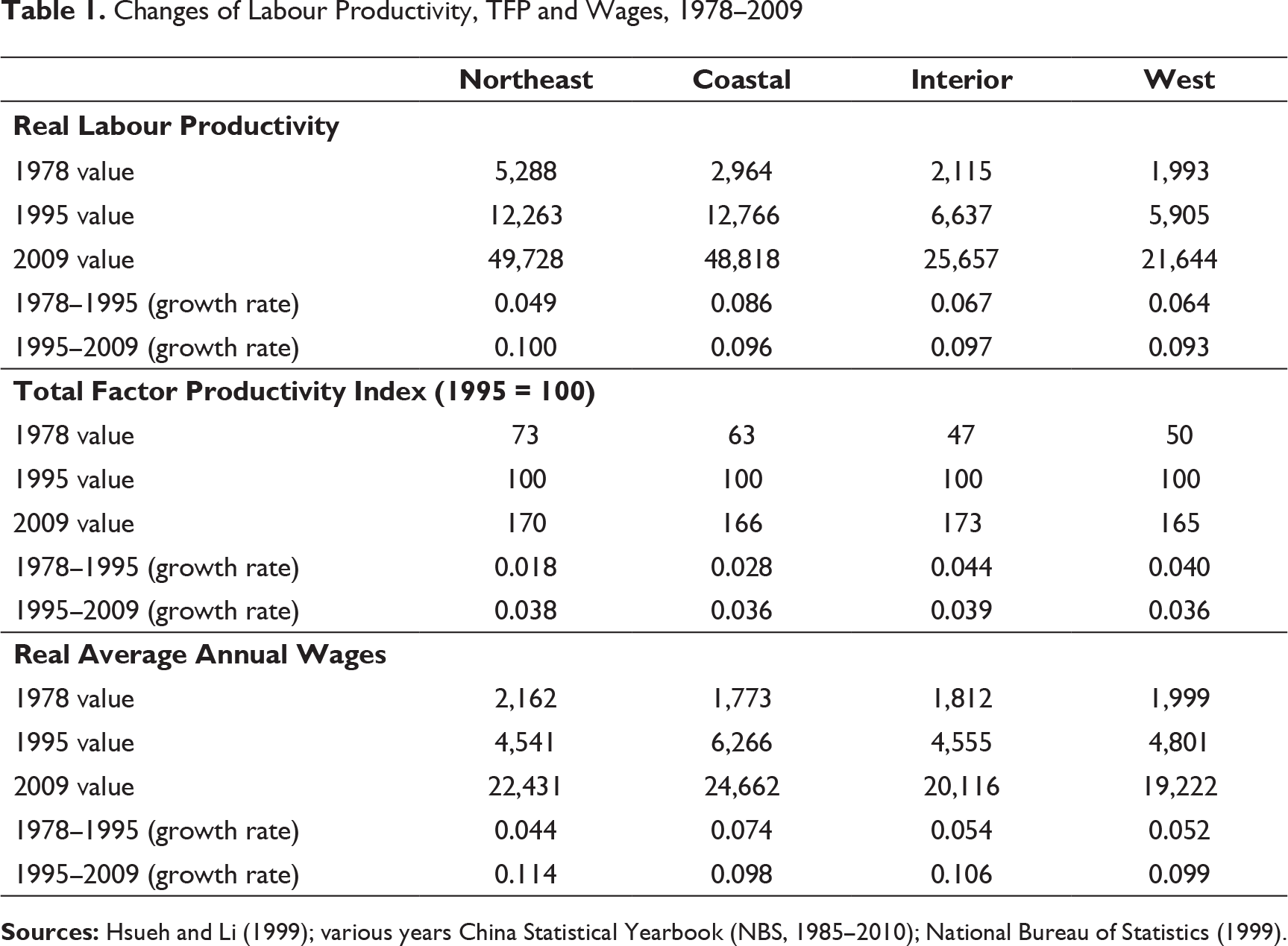
TFP is a significant factor used to measure the development potential and competitiveness of a certain production unit (Chen, Liu, Shen, & Wang, 2018). A body of research has shown that TFP growth has played an important role in post-reform growth in China (Borensztein & Ostry, 1996; Chow, 1993; Fleisher et al., 2010; Islam, Dai, & Sakamoto, 2006; Wang & Yao, 2003; Young, 2003). Figures in Table 1 also show that the Northeast had the higher level of TFP index (73) in 1978, nearly 16 per cent higher than the Coastal, and 54 per cent higher than the Interior and West. The annual growth rate of the TFP index was the highest in the Interior at annual rate of 4.4 per cent from 1978 to 1995 and 3.9 per cent from 1995 to 2009. Hence, the TFP index of the Interior (173) exceeded the industrial Northeast region in 2009.
In terms of wages, we find the same ‘gradualism, stagnation and sharp jumps’ process of China’s economy as described in Fleisher et al. (2010). The gradualism of reform brings the slow pace of China’s transformation which distinguishes it from most other transition economies, especially those in Central and Eastern Europe and the former Soviet Union (Fleisher, Sabirianova, & Wang, 2005). In the 1980s, the regional wages were similar to each other due to a rigid labour market, until Deng Xiaoping’s ‘South Trip’ in 1992, which sped the pace of transition to a market-based economy and changed the wage structure in China. 2
In the spring of 1992, Deng Xiaoping visited the east region of China (Guangdong and Shanghai). His main idea was ‘to get rich is glorious’. Hence, we follow the same line of Fleisher et al. (2010) to account for the structural break of Chinese market reforms around 1994 in the specification of our empirical models.
Figure 1 also presents a preliminary statistical examination of regional disparities and convergence of LP, TFP and wages. Here, regional disparities are measured as the coefficients of variation (CV) of LP (left axis), TFP and wages (right axis) among the four regions. The CV measure is defined as the standard deviation of an indicator divided by its mean; it is most commonly used to measure differences in regional development and unbalanced development (Wang, Chen, Liu, Shen, & Sun, 2013). The CV is calculated as follows:
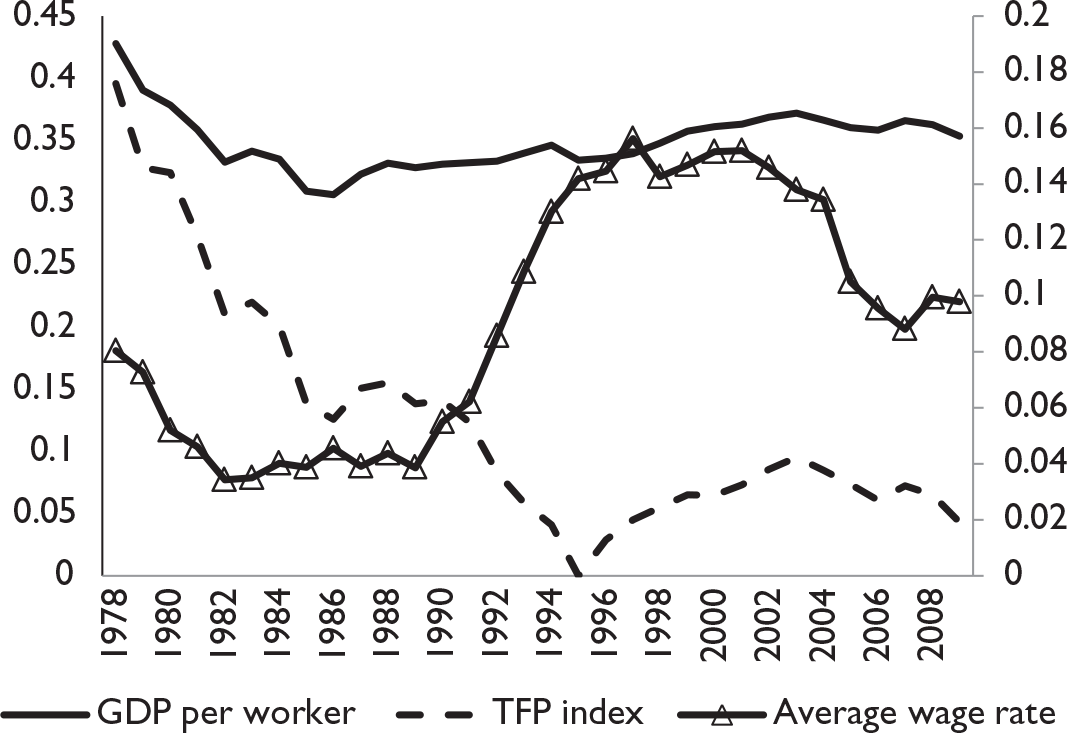
Coefficients of Variation, 1978–2009
Regional disparities have been decreasing for all three productivity proxies before 1986, which showed a common trend of convergence for all regions. After that, the CV for LP become quite stable, while the wages are dramatically diverging in the 1990s and then converging in the 2000s. In contrast to the diverging wages in the 1990s, TFP index keeps on converging among regions and becomes quite stable in the 2000s. Thus, these three productivity proxies show different convergence patterns in the more dynamic economy after 1986.
The different patterns of regional disparities of LP, TFP and wages demand more comprehensive economic growth models, which can take account of determining factors of economic growth such as demographic, social-economic and institutional changes. China needs to learn lessons from the economic growth path of the developed economies. In a cross-country setting, numerous theoretical and empirical studies find that economic growth is determined by factors such as physical and human capital, privatisation, international openness and public policy (Barro & Lee, 1993; 2001; Chen & Feng, 1996; Van Ark, O’Mahony, & Timmer, 2008). However, the effects of these determinants on Chinese economic growth, especially their impacts on different productivity proxies have not been thoroughly analysed. Thus, this article aims to investigate determining factors in production processes, LP, TFP and wages in China.
In this article, we focus on the role of human capital in economic growth and address the associations between human capital formation and ownership reform, one-child policy, openness and fiscal expenditures. We also study the beta-convergence processes in China to check whether the lagging regions would grow faster than the rich regions and eventually catch up with them. The rest of this article is organised as follows. The next section discusses about the literature review; in Section III, we lay out our baseline empirical specifications for drivers of regional disparity and beta-convergence; in Section IV, we discusses data description; Section V reports empirical results; and Section VI concludes the article.
II. Literature Review
Regional Convergence
The hypothesis of economic convergence is a primary and particularly active area of research in empirical growth economics. The growth-convergence equation originates from the neoclassical growth model (Solow, 1956) and has been developed by a long series of growth empirics such as Barro and Sala-i-Martin (1992). In more recent literature, Byrne and Vecchi (2010) examine convergence in a panel of industries between the USA, the UK and France, providing evidence of conditional convergence. When the partial correlation between economic growth and its initial level is negative, there is beta-convergence (Islam, 2003). Beta convergence refers to the fact that regions with a lower per capita output level at the beginning of a period tend to have faster economic growth (Hao & Peng, 2017).
Researchers generally deal with convergence in terms of GDP per capita across Chinese provinces. Jian, Sachs and Warner’s (1996) work is a pioneering study proceeding from the neoclassical convergence and use the beta-convergence to analyse GDP per capita of 28 Chinese provinces for the period 1978–1992. They use agriculture share and coastal location as conditional variables and report that convergence before 1985 and divergence afterwards, which is consistent with what we find in Figure 1. They argue that convergence is a result of provinces in the Coastal (rural area) growing faster as a result of policy advantage.
Raiser (1998) relies on light industry and investment rates as controlling variables and finds ‘weakening’ convergence since 1985, which could be the result of either shifts in the steady state of some provinces in the Coastal or reduction in capital mobility. Chen and Fleisher (1996) find conditional convergence of production across provinces on physical investment share, employment growth, human capital investment, foreign direct investment (FDI) and coastal location from 1978 to 1993. Villaverde, Mazaa and Ramasamy (2010) find a strong convergence process for the periods 1978–1990 and 2004–2007, but divergence for the period 1990–2004. They argue that provincial inequality in China mainly lies within rather between regions, particularly for provinces in the Coastal.
LP convergence, however, can be the joint outcome of the twin processes of capital deepening and technological catch-up, known as the issue of TFP convergence. Jorgenson and Nishimizu (1978) initiate the international comparison of relative TFP levels in the USA and Japan during the period 1952–1974. Dollar and Wolff (1994) examine TFP level convergence using time-series growth accounting method, while Dowrick and Nguyen (1989) use a cross-section regression to interpret the coefficients of the initial income variables of the equation as indicative of TFP convergence.
Unfortunately, there is little literature about Chinese regional TFP convergence. As one of rare cases, Wu (2000) find that China’s regional TFP converges to the same level from 1982 to 1995 using coefficient of variation, but he does not relate his study to convergence theory. In this article, we use the following conditional variables to analyse the drivers of regional disparities and beta-convergence of LP, TFP and wages in China.
Human Capital
It is widely hypothesised that human capital has an important role in production through the direct generation of worker skills and also facilitate technology spillovers (Fleisher et al., 2010; O’Mahony & Vecchi, 2009). Human capital plays a critical role in the endogenous growth models, which hold that knowledge-driven growth can lead to a constant or even increasing rate of return. Romer (1986; 1990) argues that human capital is the major input to research and development that innovates technologies. Levine and Renelt (1992) and Young (1992) also find that countries with larger initial human capital stock are more likely to have new products and grow faster than other countries. Empirical evidence has revealed a positive relationship between human capital and growth. Fleisher et al. (2010) find that human capital positively affects LP, TFP growth and wage growth in China.
This article focuses on the effect of human capital on LP, TFP and wages in China. Dearden, Reed and Van Reenen (2006), O’Mahony and Peng (2008) and Carmichael et al. (2009) compare the effect of education and training on productivity and wages for European countries in an attempt to pick up external benefits of human capital. However, China does not have the labour force survey data set for the whole country, so we apply the labour composition index (LCI) into an economic growth model and address the associations between human capital formation and ownership reform, one-child policy, openness and fiscal expenditures.
Physical Capital
Mankiw, Romer and Wei (1992) show that an augmented Solow model including physical capital as well as human capital accumulation can describe the cross-country data. Bai, Hsieh and Qian (2006) estimate average rates of returns on physical capital for Chinese industrial enterprises as 6.1 per cent in 1998 and 12.2 per cent in 2003. Ding and Knight (2011) verifies that China’s exceptional growth performance is most fundamentally a reflection of the high investment rates of physical and human capital that characterised the economy.
Ownership Reform
Knight and Song (2001) point out that there are two obvious explanations for the rise in regional disparity in China: economic growth and policies of economic reforms. The Chinese economy has experienced dramatic institutional reforms in last 30 years (Chen & Feng, 2000). Although urban economic reforms began in the period of 1983–1985, the Chinese economy was still largely a command- and market-coordinated economy with rigid wage system over the entire period of our study. 3
Using data for advanced European countries such as Germany and Italy, Peng and Siebert (2007, 2008) find that the wage rigidity harms the economy of lagging regions by delaying their recovery from disadvantageous shocks. Kang and Peng (2012, 2017) analyse the CHNS data and also find similar wage rigidity for lagging private sector in China.
After 1992, Chinese reforms aimed to transform the rigid central-planned economy into a flexible market-oriented economy. Reforms in SOE sought to reduce the burden of bureaucracy and achieve greater flexibility in management (Cruz & Feng, 2016; Naughton, 2006). In 1996, the central government promoted the policy of ‘catching the big ones, freeing the small ones’, aimed at maintaining control of the major companies that dominated the country’s strategic resources such as energy, electricity, water, telecommunications, etc., liberating the rest from the government’s control and opening them up to competition on the free market (Cruz & Feng, 2016; Wang, 2009). Reforms in township and village enterprises (TVEs) consisted of granting autonomy to local authorities in terms of management, which was encouraged by the opening-up of the labour market as a consequence of agricultural reforms (Cruz & Feng, 2016). Chen and Feng (2000) suggest that a larger share of production by non-SOEs (including collective and private units) results in higher economic growth in the Coastal region of China. 4
‘Private units’ include cooperative enterprises, joint enterprises, limited liability enterprises, share-holding enterprises, private enterprises, self-employed individual, funds from Hong Kong, Macau and Taiwan, foreign-funded enterprises.
Fleisher et al. (2010) measure the degree of market reform in the local economy using the proportion of urban labour employed in private firms. We categorise staff and workers into three kinds of enterprises: SOEs, collective-owned enterprises and private enterprises, and assess the effect of privatisation on LP, TFP and wages. Under the rigid wage system until the early 1990s, the superior labour compensation in joint ventures and foreign firms attracted many talented workers to transfer from SOEs into the private sector, which was well known as ‘jumping into the sea’. It brought about a much more efficient allocation of human capital in the production processes.
However, the wages in the public sector began to increase sharply in the late 1990s and reached 16,227 Yuan in 2003 which finally surpassed the private sector wages and attracted Chinese professionals back to the public sector known as ‘coming back to shore’ (Yang, Chen, & Monarch, 2010). These new changes could be from the capital deepening processes through the global value chain, which make the economic scale more important than before and also improve human capital formation. Therefore, the ownership structure is a very important institutional factor in our study.
Openness
Levine and Renelt (1992) systematically study numerous economic factors that may account for long-run aggregate economic growth. They argue that government policies reducing protectionism and liberalising trade are major inputs for growth. Chen and Feng (2000) also argue that international trade is encouraged by geographical and political factors such as proximity to major ports, decisions to create special economic zones (SEZs) and free trade areas, local institutional characteristics such as laws and regulations, contract enforcement, local expenditures on infrastructure and by labour market conditions. Trade also has facilitated the transformation of the state-owned and collective sectors, and potentially bring in new production and managerial technologies with their attendant spillovers (Liu, 2008; O’Mahony, Robinson, & Vecchi, 2008). In 2001, China joined the World Trade Organization (WTO) and continued to reduce its commercial barriers in almost all sectors and has improved the ease of access to its national market of goods and services, improved the protection of intellectual property rights, the transparency of its commercial practices and eliminated non-tariff barriers (Cruz & Feng, 2016; Mattoo & Subramanian, 2012). In its process of openness, China has improved its revealed comparative advantage in such a way that low quality, labour-intensive exports produced by unqualified workers have begun to give way to products which make intensive use of high quality human capital and technology, which are increasing the country’s international competitive capacity and its insertion into global value chains (Cruz & Feng, 2016; Kowalski & Bottini, 2011). Thus, we also account for the regional disparity with trade by measuring an openness variable as the share of international trade (export and import) to GDP and assess its effect on regional productivity and wages.
One-child Policy
Birth rate is regarded as an important variable representing human capital formation in the productivity model, but there is no conclusion that birth rate has positive or negative effect on productivity in the theoretical or empirical literatures. On the one hand, there is ‘population pessimism’ which claims population growth will bring negative effect on economic growth. Malthus (1986[1798]) claimed that large population will decrease the productivity because of diminishing marginal productivity. For a natural resource- (land, water, etc.) augmented economy, such as rural economy, as population grows, the per capita share of natural resource decreases. Hence, the marginal product of labour goes down.
On the other hand, there is ‘population optimism’ which claims population growth will bring positive effect on economic growth. The neo-Boserupian school of thought (Boserup, 1981) mentions that population may have a scale effect that is beneficial to economic growth. Becker, Glaeser and Murphy (1999) argue that in modern urban economies with small agricultural and natural resource sectors, the increased density that comes with higher population and greater urbanisation promotes specialisation and investment in human capital and more rapid accumulation of new knowledge, which would raise per capita incomes.
Thus, Becker et al. (1999) combine both negative effect (diminishing marginal productivity) and the positive effect (human capital accumulation, spillover effect, etc.) and conclude that ‘the net relation between greater population and labour productivity depends on whether the inducements to human capital and expansion of knowledge are stronger than diminishing returns to natural resources’. China started the ‘one-child policy’ in 1979, which will only be applied to the Han Chinese 5
Han Chinese is an ethnic group native to China and constitutes about 92 per cent of the population of the People’s Republic of China.
Regional Growth Policies
At the beginning of Chinese reform, the central government decided to develop the Coastal region firstly, taking advantage of the geographical advantages to boost foreign investments and international trade. In 1980, the SEZs in the provinces of Guangdong and Fujian were established. Later, in 1987, the government implemented the ‘Coastal Development Strategy’, based on fiscal and labour policies, which were favourable to foreign investors, along with the construction of infrastructures (Cruz & Feng, 2016). The cross-country growth literature also addresses the political roles that the central government can play in improving the lagging regions’ economic growth. Since the widening productivity and wage gap between the Coastal and the other regions can lead to political unrest and polarisation, the Chinese central government has emphasised the importance of the inner areas’ growth and development.
Ma (1995), Ma and Norregaard (1998) and Chen and Feng (2000) argue that the central government policies should not be biased in favour of the Coastal. The central government led by Premier Zhu Rongji launched the ‘Western Development Strategy’ in 1999 to boost the lagging Interior and West regions. The main components of the strategies include the development of infrastructure, enticement of foreign investment, increased efforts on ecological protection (such as reforestation), as well as human capital formation such as promotion of education and retention of talent flowing to richer provinces. As of 2006, a total of 1 trillion Yuan has been spent on building infrastructure in western China (Goodman, 2004).
Moreover, the Northeast was one of the earlier regions to industrialise in China, focusing mainly on equipment manufacturing including the steel, automobile, shipbuilding, aircraft manufacturing and petroleum refining industries. Recent years, however, have seen the stagnation of the Northeast’s heavy-industry-based economy, as economy continues to liberalise and privatise. Hence, the central government led by Premier Wen Jiabao has initialised the ‘Revitalize the Northeast’ campaign in 2003. These policy factors should be considered in an economic growth model for China by the sensitivity test of different development patterns of the four regions.
Fiscal Expenditures on Human Capital
Not only individuals but also government benefit from increasing wages. Before 1985, there was no private activity related to education. In 1985, through decentralisation financial responsibilities regarding education were delegated from central government to local governments. Thus, public spending on education by central government was reduced, while private institutions started to participate in education and this led to a reduction in total public spending on education (Cruz & Feng, 2016; Zhao, 2009). Heckman (2005) notes that China’s government investment in human capital beyond the junior high-school level (the compulsory nine-year education) has been very small and dispersed, in contrast to nations at similar levels of socio-economic development. Chinese government has increased education expenditures sharply aiming for 4 per cent of GDP before 2010. In 2007, however, the government expenditures on education are still only 2.43 per cent of GDP and have been below 3 per cent in most years since 1992, which are much lower than the average of 5.1 per cent in developed countries (Fleisher et al., 2010). Hence, we investigate the effect of provincial ‘fiscal expenditures on human capital (culture, education, scientific and health)’ on LP, TFP and wages.
Structural Breaks in 1994
The year 1994 marks the fiscal decentralisation processes, beginning from the withdrawal of government subsidies for loss-incurring SOEs, and the hardening of SOEs’ budget constraints become much more earnest in 1997 (Appleton, Knight, Song, & Xia, 2002). 6
The decentralisation of fiscal revenue raising and spending decisions can improve the efficiency of the public sector, cut the budget deficit and promote economic growth because local governments are better positioned than the central government to locate and monitor the fiscal expenditure more efficiently, which reinforced imposition of hard budget constraints on SOEs (Ma & Norregaard, 1998; Oates, 1972; Qian & Weingast, 1997). It is also confirmed by numerous studies on intergovernmental fiscal relations in China (Agarwala, 1992).
III. Empirical Specifications
Baseline Empirical Specifications
First, we estimate a regional aggregate production function, in which inputs include physical and human capital. We measure human capital as the composition-adjusted labour inputs ( = number of employed persons * LCI). 7
The labour composition index for 1989–2009 used in this article is calculated from Kang, O’Mahony and Peng (2012).
where Ypt is the real GDP for province p ( = 1, …, 28) in year t ( = 1978, …, 2009); Kpt is real capital inputs; Lpt is the number of employed persons; LCIpt is the LCI calculated with the micro CHNS data set; Rr and Tt are region ( = 1, … ,4) and time dummies, respectively; and εit is a random error term. We apply two sensitivity tests for the 1994 structural break and the disparity in different development patterns in the four regions: (a) adding variables interacted with the structural break year dummy Spt (0 = before 1994, 1 = 1994 and thereafter); (b) adding variables interacted with the regional dummies rd to capture the different growth paths of regions. The rd1–rd3 dummies are for the Northeast, Coastal and Interior regions, leaving the West as the baseline region. Hence, the coefficients of interactions are the incremental effect of specific period/region on the baseline period/region.
Second, the FE models are applied to examine the impact of LCI and institutional variables on LP, TFP and wages. We present the basic FE specification as follows:
where LPpt is the GDP per worker for province p in year t; KLpt is real capital stock per worker; TFPpt is the TFP index; AWpt is the real annual earnings per worker; O1pt and O3pt represent the ratios of staff and workers worked in the public sector and private enterprises, respectively; BRpt is the birth rate of population to measure the human capital formation from one-child policy on productivity; OPpt is the share of trade (export and import) of GDP to capture the effect of openness and potential skilled-biased technology spillovers; Fispt is the share of fiscal expenditures on human capital; Rr and Tt are region and time dummies, respectively; and εpt is a random error term.
Following the same vein of the sensitivity tests in the production function in Equation (2.1), we also apply sensitivity tests for structural break (year 1994) in LP as follows (the regressions in TFP and wage functions are similar):
And the sensitivity tests for regional disparities in LP are just replacing the structural break dummy with the regional dummies rd1–rd3 for the Northeast, Coastal and Interior regions.
Empirical Specifications for Beta Convergence
Following Sala-i-Martin (1996), we postulate that beta-convergence holds for provinces p in a region. Log form LP in the province p can be approximated by
where 0 < β < 1 and
Thus, β > 0 implies a negative correlation between growth and initial level of LP.
λ is the measure of speed at which a region proceeds towards its own steady state level. Hence, λ from cross-section data is often interpreted as the speed at which poorer regions are closing their productivity gap with richer countries.
The beta-convergence regression of provincial LP for region r ( = 1, …, 4) are as follows:
where LP
p,t–-1
is the lagged LP for province p. The beta-convergence regression of provincial TFP and wages for region r are similarly as follows:
IV. Data Description
Table 2 describes the variables used in this article. In 1978, the real GDP in the Northeast (51.2 billion RMB) is higher than that of the Coastal (48 billion RMB) and Interior (39.1 billion RMB), and above twice that of the West (22.5 billion RMB). Hence, the industrial Northeast was the growth engine and the richest region. From 1978 to 1994, the GDP in the Coastal increases about sixfold compared with about fourfold in the other three regions so that the Coastal took the number one position of the Northeast gradually. From 1994 to 2009, all regions increase fivefold, suggesting a convergence trend among regions. Hence, over the last 32 years, the Coastal has the highest annual growth rate of GDP at 11.9 per cent, while the Northeast grows slower than the Coastal at 8.7 per cent per year.
Data Description of Economic Growth in China
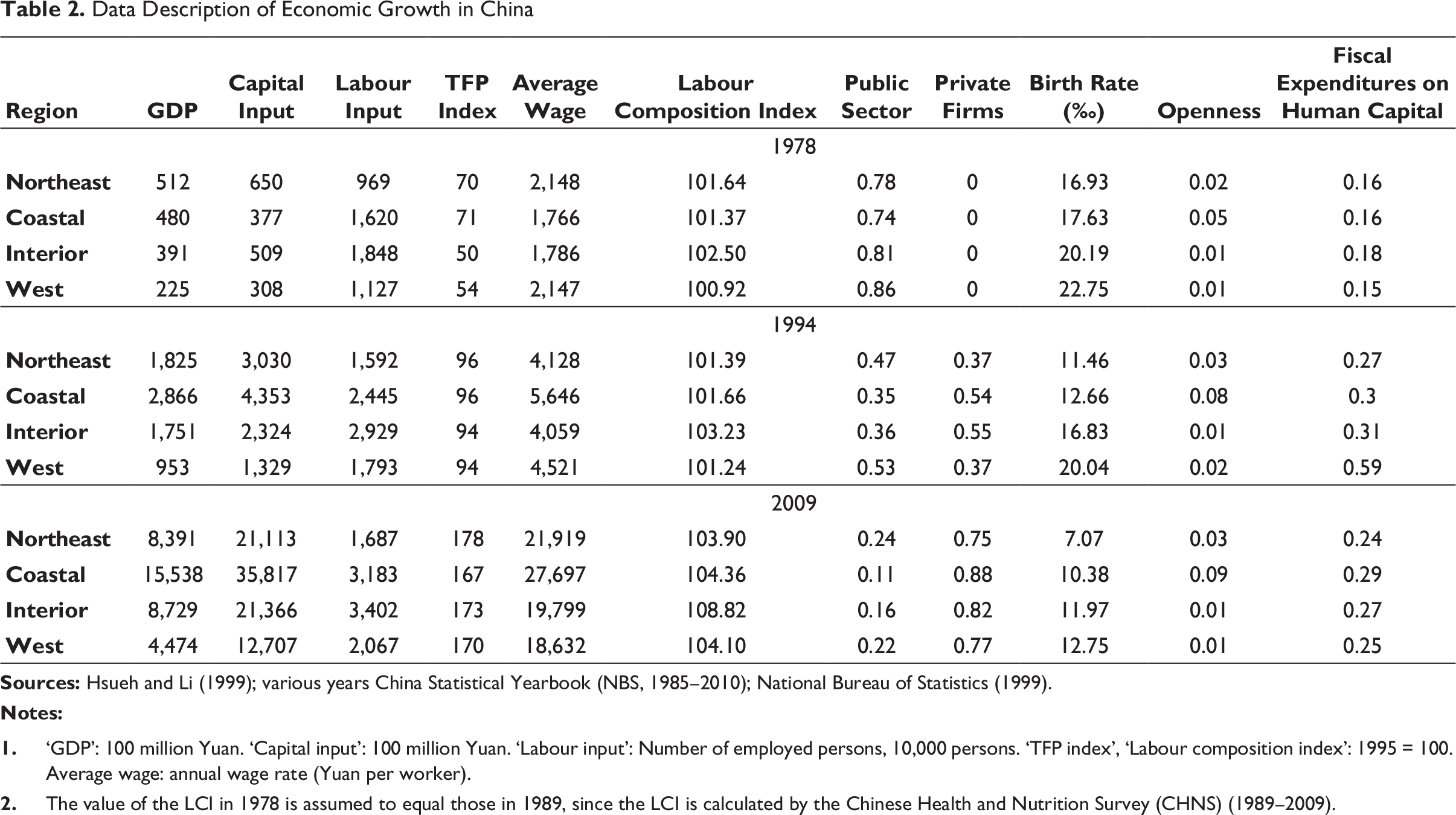
We also compare several relevant factors that may affect growth, such as ownership (the share of persons employed in SOEs or private enterprises), birth rate, openness and fiscal expenditures on human capital. First of all, the share of private enterprise has been increasing over time, and now is higher than SOEs in the Coastal (88%). In 1978, all four regions had a share of SOEs more than 70 per cent (86% in the West). Thereafter, the SOEs share of staff employed persons has declined to the range of 16–24 per cent in the three inner regions and even lower in the Coastal (only 11%) in 2009.
The birth rate keeps on decreasing for all regions resulting from the one-child policy, and in 2009, the Northeast had the lowest birth rate (7.07%), while the West had the highest rate (12.75%). The provinces in the Coastal tend to be more engaged in international trade because of their geographic, historical and institutional advantages, while inner provinces tend to be less open to international trade. The openness ratio (5%) in the Coastal was much higher than the second most open region–the Northeast (2%) in 1978. From 1994, the openness ratios were quite stable in the four regions: the Coastal (9%), the Northeast (3%) and the other two lagging regions (1%). As noted earlier, the openness of these provinces in the Coastal is likely to be an important factor conducive to higher growth.
Finally, the proportion of fiscal expenditures on human capital in the Interior was the highest among the four regions in 1978 (18%), as the other regions are nearly the same (16%). Human capital expenditures have been increasing very fast in both absolute and relative sense over the period 1978–1994. The West region even achieved a peak proportion as 59 per cent in 1994 because the central government transfer huge investment on human capital to the Xinjiang province of the West region. After 1994, this expenditures share slowly has been decreasing in all regions, possibly due to the dramatic process of fiscal decentralisation in 1994, possibly due to the substitution effect of infrastructural investment of local government (Fleisher et al., 2010; Zhang & Zou, 1998).
V. Empirical Results
Results of Baseline Regressions
Production Function and Sensitivity Tests, Fixed Effect Model Using Equation (1)
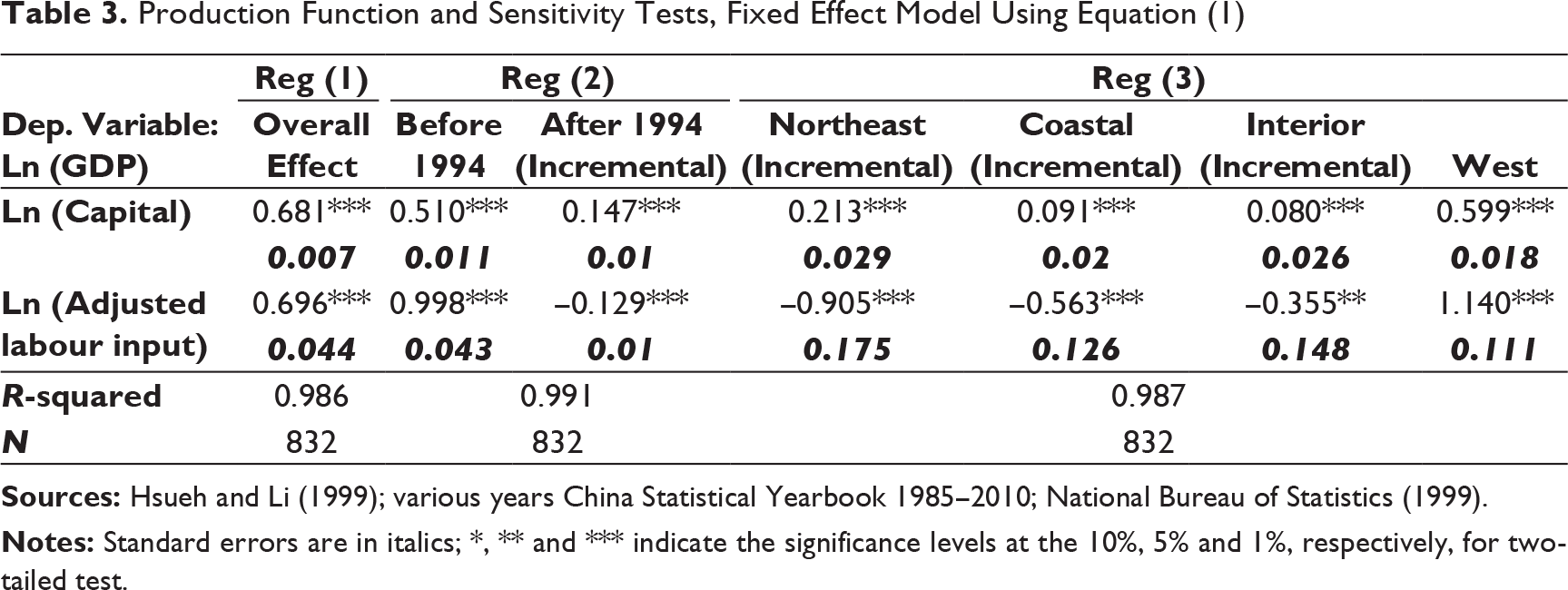
For the sensitivity test on structural break in 1994, Regression (2) shows that significantly positive incremental effect in physical capital (14.7%) and significantly negative incremental effect in adjusted labour inputs (–12.9%), confirming the structural break in China’s economy in 1994. Regression (3) shows the sensitivity tests on regional heterogeneity that the adjusted labour inputs mainly benefits output in the West (1.14), while the capital inputs are more important in the Northeast (0.213) than others.
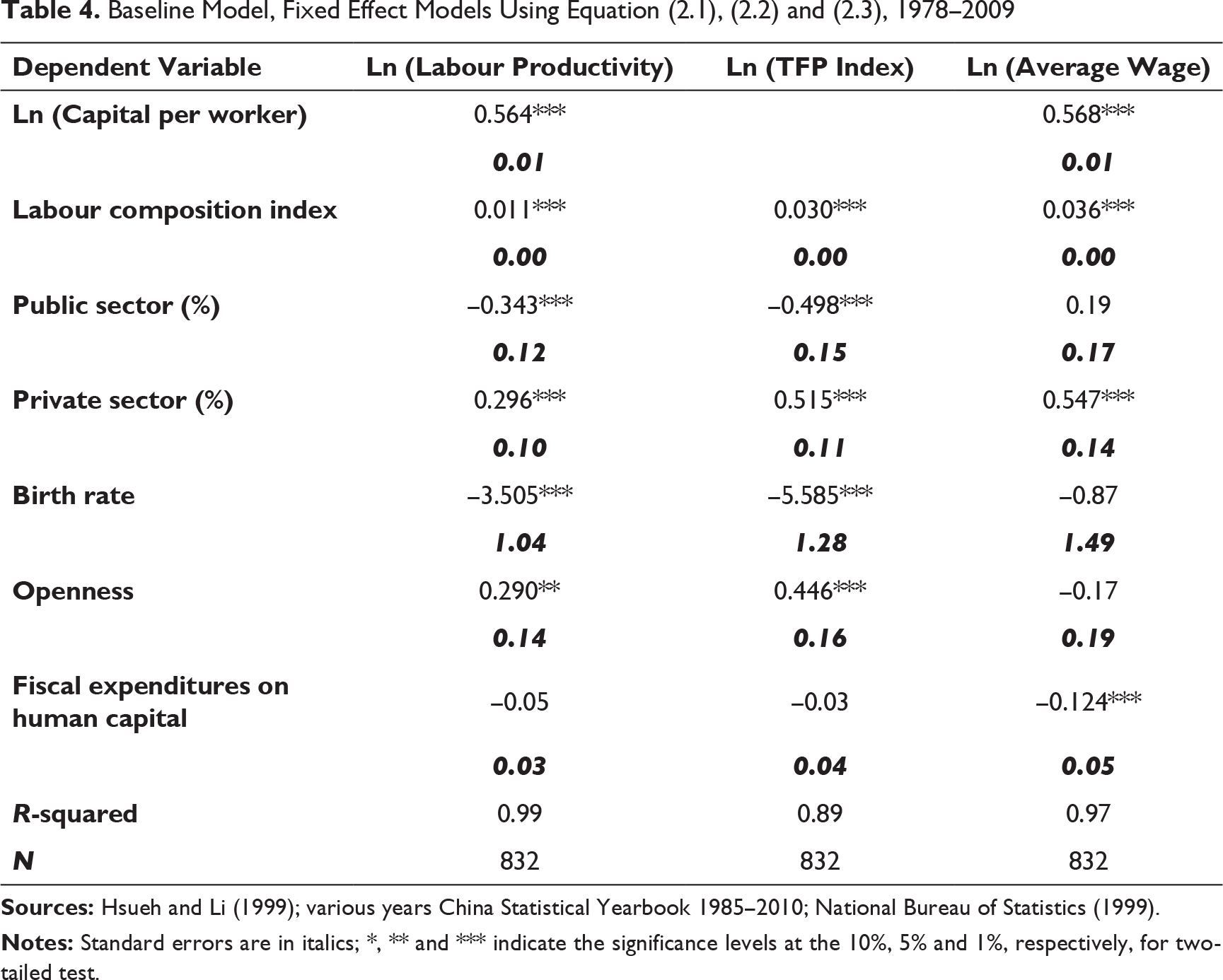
Other variables include the market reform factors such as ownership, birth rate, openness and fiscal expenditures on human capital. Compared to collective-owned enterprises, the private firms have much higher productivity and wages, while the public sector has lower productivity but similar wages. The birth rate is negatively associated with the three productivity proxies, which is consistent with Li and Zhang (2007). Openness can increase for the TFP (45%) and LP (29%), but not for wages. Fiscal expenditures on human capital have no significant effect on the LP and TFP, but decrease wage (–12.4%).
We conclude that capital deepening as well as human capital formation, privatisation and openness significantly improve economic growth, while higher birth rate and the relatively inefficient public sectors harm productivity growth. Fiscal expenditures on human capital have no significant positive effect on economic growth and are even harmful for wages, verifying Zhang and Zou (1998)’s argument that central government spending (such as in highways, railways, power stations, telecommunications and energy) benefits economic growth, while a high degree of provincial government spending is associated with lower provincial economic growth.
Sensitivity Tests for Structural Break (Y1994), Fixed Effect Models Using Equation (3), 1978–2009
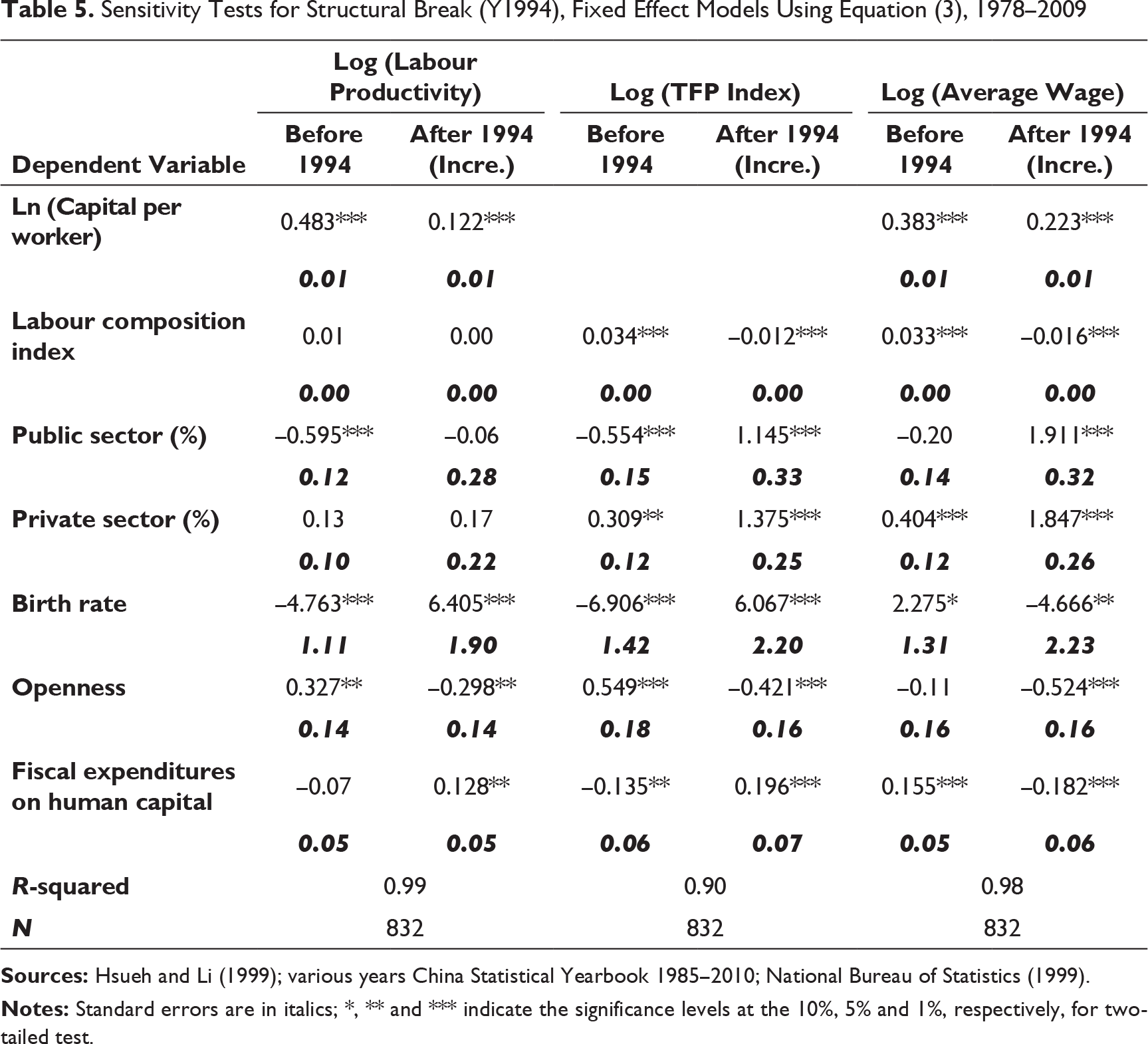
Openness has significantly positive effect on LP and TFP. The LCI accelerate both TFP and wage growth from 1978 to 2009. Among other variables, the privatisation is the most important institutional change for the three productivity proxies after 1994.
Since the one-child policy was implemented after the late 1970s, people who born under this policy have not join the labour market before 1994, supporting the negative effect of birth rate on LP due to the dominant diminishing marginal productivity. However, after 1994, the birth rate has positive effect on LP due to the human capital accumulation in the one-child family, the development of urban area and the gradual process of urbanisation. For the whole time period 1978–2009, the birth rate has negative effect on TFP mainly due to the still low technology level across the population. The effects of birth rate on LP and average wages are inconsistent, maybe because Chinese labour market is still rigid in the transition process. Overall, this table shows that the post-1994 period is different from the pre-1994 period, supporting that the year 1994 is a structural break year for Chinese productivity analysis.
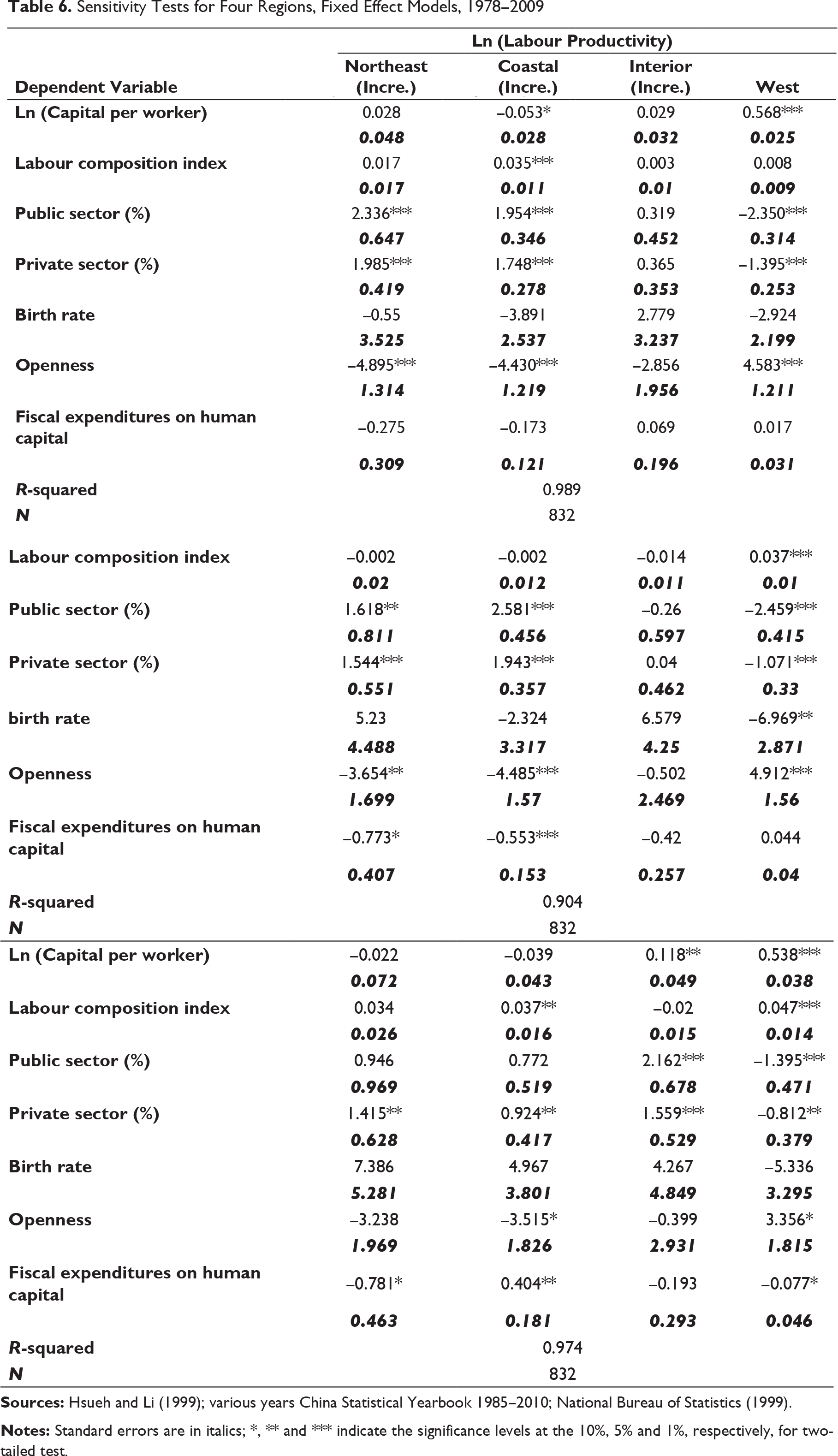
Sensitivity Tests for Four Regions, Fixed Effect Models, 1978–2009
Results of Beta-convergence Regressions
Table 7 presents estimation results for conditional beta-divergence. The dependent variables are growth rates of LP, TFP or average wages. We control relevant condition variables such as capital deepening, LCI, ownership, birth rate, openness, fiscal expenditures on human capital and structural break in year 1994 as earlier. The conditional beta-convergence is present if the coefficient on lagged-dependent variable is significantly less than 0.
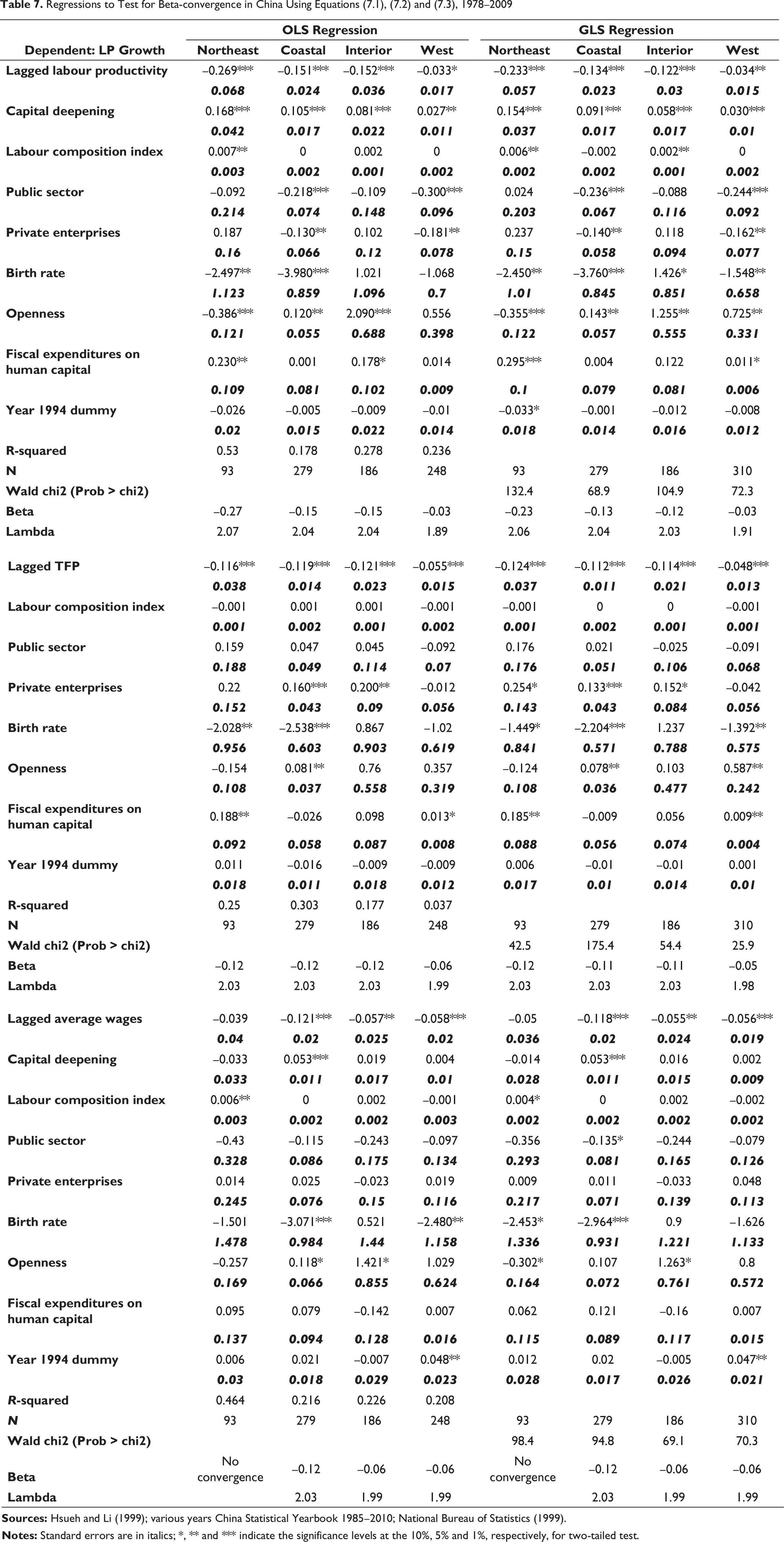
The main difference between the ordinary least square (OLS) and generalised least square (GLS) specifications appears on the coefficients of the controlled variables. For example, regarding to the LP regressions, GLS method finds upwards bias of OLS estimators on capital deepening and ownership variables, and GLS method verify the significant positive effect of LCI on LP in the Interior region which is consistent with our discuss about LCI indices.
The convergence speeds are similar in the two specifications, and both methods confirm that only provincial within the Northeast region do not show evidence of convergence for average wages. The provinces within the richest Northeast and Costal regions have the highest speed (above 2) converging to their steady states of LP and TFP growth, while the provinces within the poorest West region have the lowest convergence speed (1.89). For the convergence trends of average wages, the provinces within the Coastal regions still have the highest speed (2.03), while the provinces within the West region has the lowest speed (1.99). From the convergence analysis, we can see that the poorest West region not only suffer from the severe regional inequality but also suffer from the relative slower convergence speed across provinces within this region.
VI. Conclusions
China’s spectacular economic growth is from unequal economic performance of provinces and regions. This article examines effects of the formation of physical and human capital on LP, TFP and wages, incorporating the market reform factors such as ownership shift, population policy, openness and fiscal expenditures on education. We find that, in a simple production function, the human capital (measured as composition-adjusted labour inputs) is more important than physical capital for GDP. And the returns to adjusted labour inputs in the West, which has the poorest education resources, are the highest among the four regions, while the returns to capital inputs are the highest in the traditional industrial Northeast region.
In more accurate specifications for LP, TFP and wages, Chinese economic miracle mainly pushed by the (physical) capital service per capita rather than LCI, possibly due to that the effect of human capital, has been reflected into market reform variables such as privatisation, one-child policy, openness and fiscal expenditures on human capital. The share of persons employed in the private sector and openness (competing with the foreign companies to the globalisation processes) are very important for LP and TFP growth, which allow a more efficient allocation of human capital based on market demand rather than central planning. The higher birth rate is harmful for human capital formation within the families and negative for productivity. The average wage rate is harmed by the fiscal expenditures on human capital, possibly due to the substitution effect of infrastructural investment of local government (Zhang & Zou, 1998).
The structural break between the pre-1994 and post-1994 periods illustrates a significant difference on economic growth patterns, indicating that the more radical market reforms after 1994 improve productivity and wages. The capital inputs contribute more after 1994, while the returns to LCI decrease with the education expansion and increasing tuition fees since the late 1990s (Wang, Fleisher, Li, & Li, 2010).
The four regions also show different patterns in economic growth paths. The capital inputs mostly help the LP growth in the West as well as the wages growth in the Interior. LCI contributes to the TFP in all four regions. The privatisation processes improve LP and TFP in the Northeast and Coastal, as well as wage growth in all four regions except the West. The collective ownership seems a better choice than the pure private or public organisation for the West because its economy is still based on agriculture. Openness is good for three productivity proxies in all four regions, except LP in the Northeast and wages in the Coastal. It is consistent with two phenomenal economic issues in China: the declining production power of the Northeast under the international and internal competition and the great migration of unskilled workers from the rural areas around the country to the Coastal region after 1994.
Moreover, provinces within each region present strong evidence of beta-convergence for all three productivity proxies. The highest convergence speed is found in the provinces in the Northeast and Coastal regions for LP and TFP growth, suggesting fast technology spillovers within these regions. The provinces in the Coastal, as the most advanced region in China, have the highest convergence speed for average wages, while the provinces in the Northeast region do not show convergence in both OLS and GLS regressions.
Acknowledgements
For useful comments, we thank Mary O’Mahony, Stan Siebert, Michela Vecchi, Fiona Carmichael and other participants of the workshop at the University of Birmingham (2012). We would also like to thank an anonymous referee of this journal for his/her helpful comments on an earlier version of the article. Financial aids from the China National Social Science Fund (no.14BJL028), the Shanghai Young Eastern Scholar (QD2015049) and the Shanghai Dawn Scholar (15SG53) are acknowledged. The China Health and Nutrition Survey (CHNS) data are used with the permission of the Carolina Population Center based at the University of North Carolina at Chapel Hill. Neither the original collectors of the data nor distributors bear any responsibility for the analyses or interpretations presented here. All remaining errors are our own.
Declaration of Conflicting Interests
The author(s) declared no potential conflicts of interest with respect to the research, authorship and/or publication of this article.
Funding
Financial aids are from the China National Social Science Fund (14BJL028), the Shanghai Young Eastern Scholar (QD2015049) and the Shanghai Dawn Scholar (15SG53).
Appendix
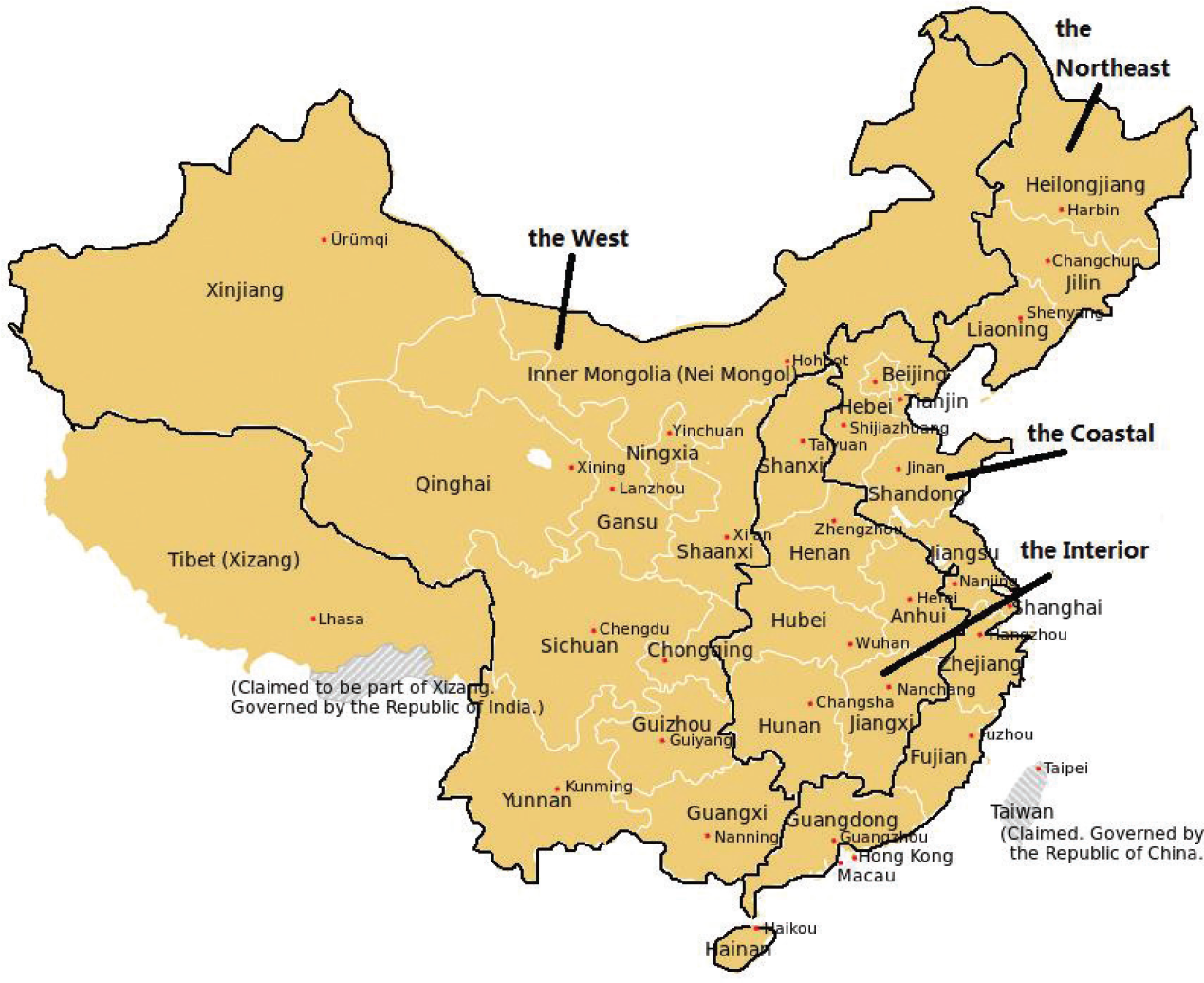
Geographic Graph of Four Regions in This Thesis
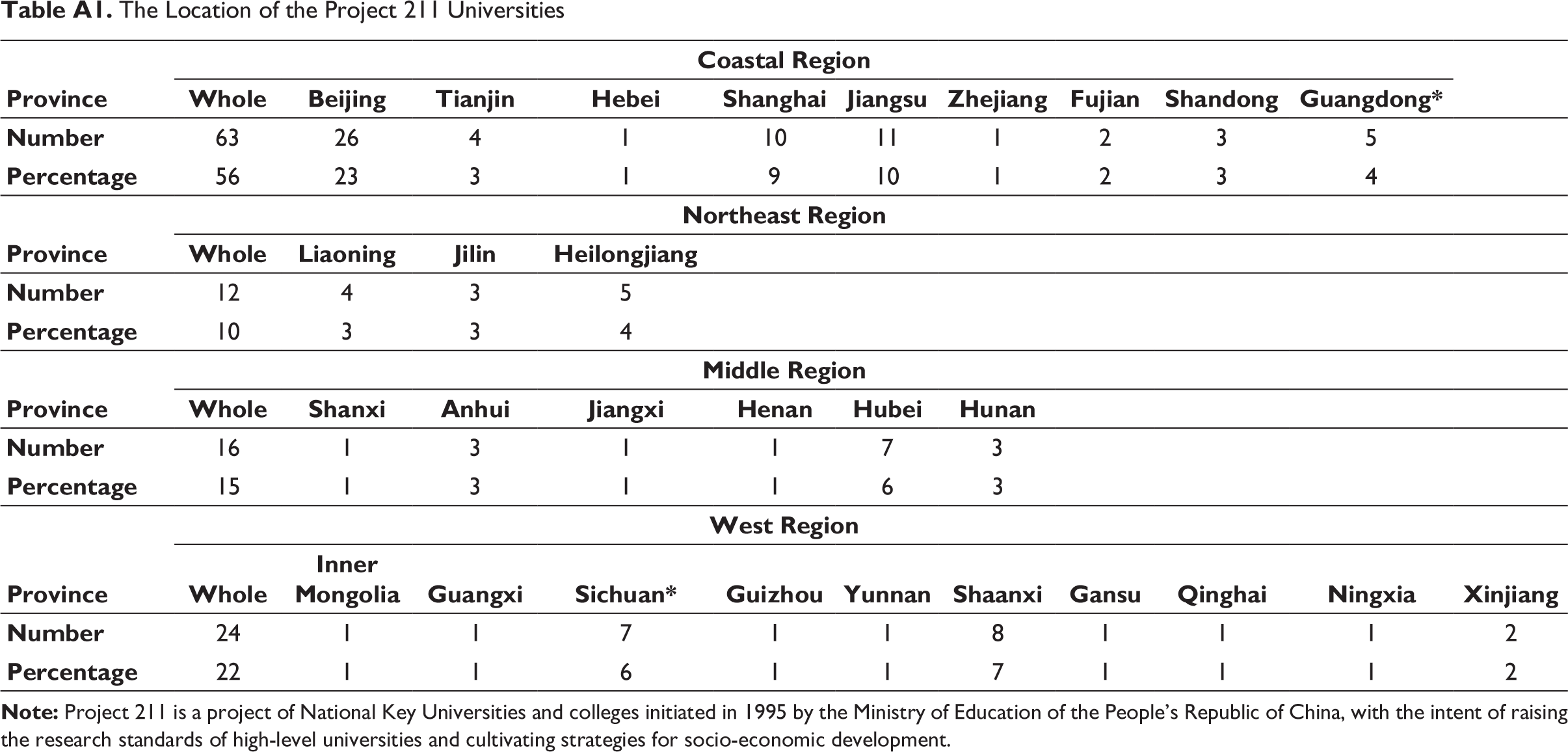
The Location of the Project 211 Universities