







Abstract
This study examines the structure of agriculture productivity and crop diversification across different zones in Punjab, India during 1966–1967 to 2017–2018. The composite entropy index shows that almost all zones are specialised in few crops but some of them are relatively less or some are more. Hence, we found zones are experiencing a lateral movement toward crop specialisation and crop diversification is not happening. Further, results reveals that accessibility of market and roadhave a positive influenced the level of crop diversification are accessibility of market, roads have found a positive influenced on crop diversification. Whereas more use of fertiliser, intensity of irrigation and rainfall have leads to concentration rather than crop diversification. Similarly, study also analysed the factors that are responsible of variation in productivity by regional factors such as better road, fertiliser, urbanisation, literacy and cropping intensity. As the analysis indicates that there is need to emphasise on agro-climatic regional preparation by clearly identifying the existing resource endowments and constraints of the agro-climatically homogeneous regions.
Introduction
Indian rural economy depends largely on the agriculture sector and is considered as a crop economy. A cropping pattern in a rural area reflects the level of economic development achieved by the particular rural sector. Currently, the major problem faced by rural farmers is in choosing combination of the appropriate crops that are most profitable and environment friendly. Sustainable growth is a prerequisite for developing economies, such as India. The overall growth of the Indian economy grew to an average of 7% in 2017–2018. In contrast, the agricultural growth rate is confined to 2.1% in 2017–2018 (Economic Survey, 2017–2018). Undoubtedly, the growth rate of the agriculture sector in country has increased sharply during the first phase of the green revolution, but after two decades, its growth rate began to drop. It has declined around 3.7% to the national GDP in recent years.
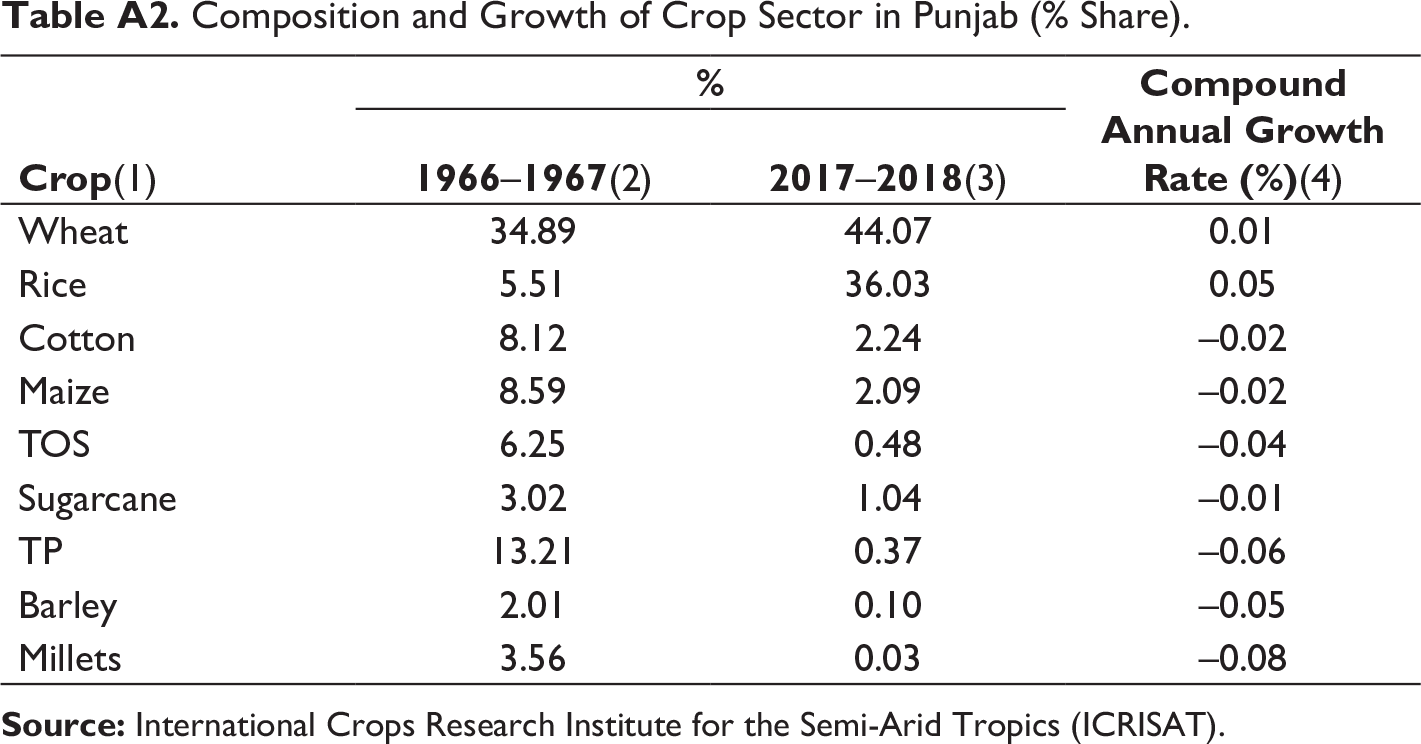
Among the Indian northern states, Punjab is an agriculturally rich state. Despite the state’s small geographical area (1.5% of the total area of the country), the GSDP of the agriculture sector increased by 5.7% per annum in 1971–1972 to 1985–1986, which is more than double of 2.31% of all-India growth in the same period (Gulati et al., 2017). The emergence of the green revolution has shown significant effect within the state, as a result the state attained self-sufficiency in food production. With the advent of the green revolution, wheat and rice have become major crops of the state and covered 44.07% and 36.03% of the cropped area in 2017–2018 against 30.26% and 4% in 1960–1961, respectively as shown in Appendix Table A2. It was the evolution of HYVs having better response to fertilisers, irrigation, pesticides and insecticides, and so on. The improved mechanisation such as plant protection, threshing, market, road, storage and processing further enhanced the production.
Sectoral Composition of NSDP in Punjab (in %).
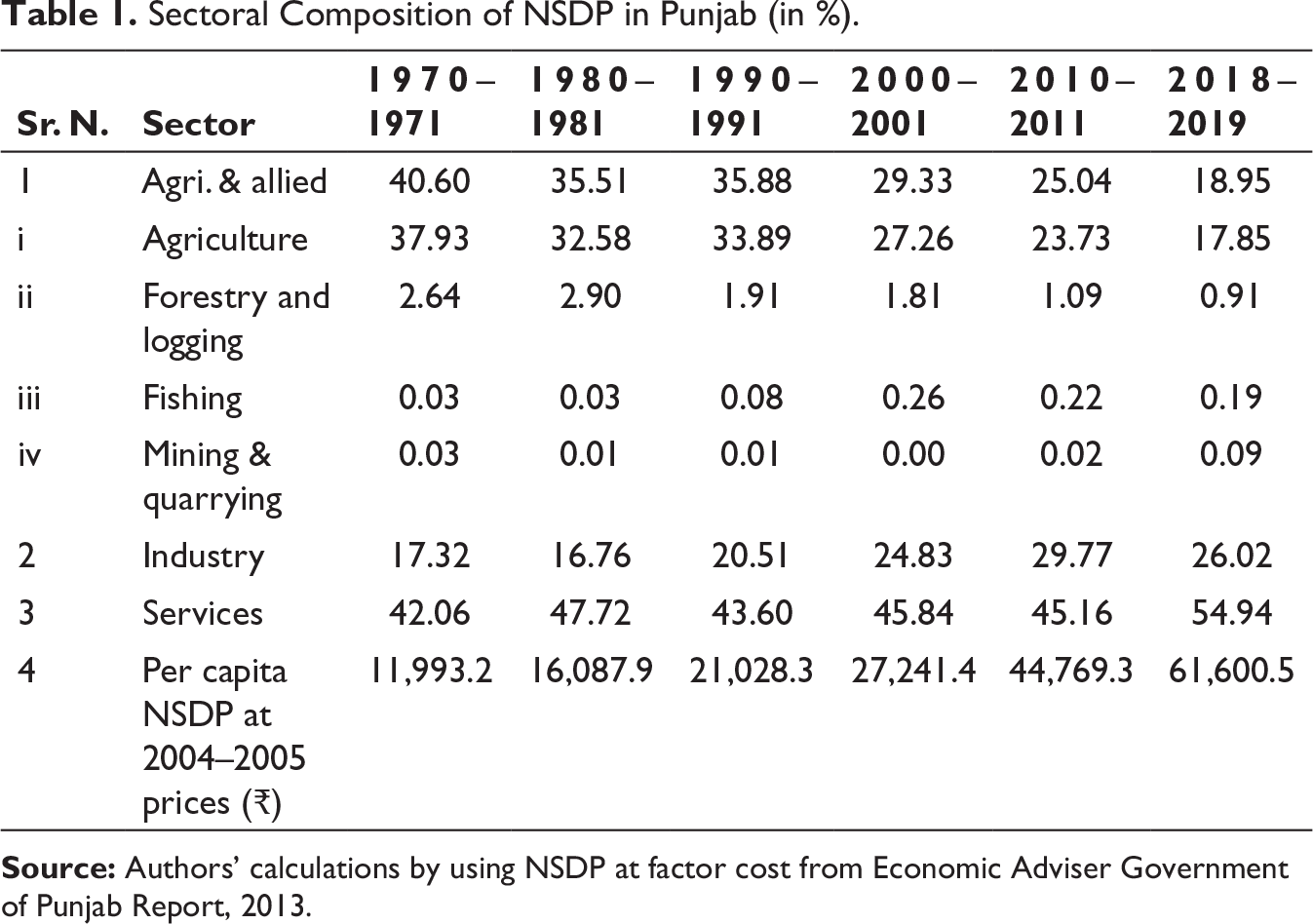
Source: Authors’ calculations by using NSDP at factor cost from Economic Adviser Government of Punjab Report, 2013.
Similarly, several other significant shifts have taken place over time, disparities in cropping pattern and inter-district variation in crop productivity also exist in the state. These differences can be attributed to the non-pro rata improvements in technologies of different crops and inter-regional variations in agro-infrastructure (Singh & Grover, 1991).
In particularly Punjab, several studies have investigated the pattern of agricultural productivity and diversification level within the state (Johl, 1996; Singh & Grover, 1991; Singh & Sidhu, 2004). However, only a few studies (Ray et al., 2005; Sajjad & Prasad, 2014) have addressed this issue at districts level of diversification and regional disparities, but no concrete attempts of addressing this matter of inter-regional disparities in crop diversification and agricultural productivity has been observed in the state. Being a small and one of the agriculturally rich states, it is important to see the disparities in cropping pattern and agricultural productivity at the regional level. This will lead to identify the micro-level problems of farm sector followed by appropriate policy formation. Against this background, the present article addresses the following issues: (a) What is the extent and nature of crop diversification and agricultural productivity in different regions within state? (b) What are the main drivers that spurred the process of crop diversification in different regions?
Our study contributes to the literature on crop diversification aspect; we find the performance of crop diversification and agricultural productivity in different regions, which may provide some ways to understand the causes of regional variation in crop pattern, and factors that affects the diversification and productivity level. This regional level measures provide valuable insights on the decision-making process faced by a farmer in adopting a cropping pattern. We extend the limited but growing literature on different types of crop diversification across regions within state.
The rest of the article is structured as follows: Section II presents a brief review of the literature. Section III presents the conceptual and theoretical framework. Section IV, results and discussion, and Section V present conclusions and policy implications.
Review of Literature
A detailed review of previous studies has been explained in this section to explore the historical trends and patterns of crop diversification in developing countries, including India. The review of relevant literature are given under two sections. The first section show reviews related to trend and pattern of crop diversification. The second section presents the literature on determinants of crop diversification and productivity.
Review Related to Trend and Pattern of Crop Diversification
Crop diversification is extensively used in current research works for agricultural development and rural development matters; however, its meaning can very often seem to be vague due to different definitions being encountered in various sources (Khatun & Thapa, 2015). Crop diversification refers to growing more than one or multiple crops in the same land in a particular season. It has discussed that different crops grow better in different agro-climatic conditions such as weather, soils texture. Joshi et al. (2004) made an attempt on pattern and determinants of agriculture diversification in South Asia and observed that the extent of diversification has been slow in most of the South Asian economies. It is because food security issues are still critical in the sub-continent; therefore, government policies are seemingly obsessed to encourage allocation of a large share of area to cereal crops for the purpose of self-sufficiency achieved in cereal. Moreover, Mahajan (2004) explained crop diversification in Kangra and found developed agriculture areas were comparatively more diversified as compared to less developed agriculture areas. The factors responsible for diversification in developed agriculture category include social factor (distance from education, age, education of head and family size), economic factor (income from farm, non-farm area, tenancy, tractor and farm size). In contrast, in underdeveloped agriculture category, the factors are tenancy, on farm and off farm income, and holding. Joshi et al. (2006) discussed the sources of agricultural growth in India and the role of diversification of high-value crops. They found that the growth of wheat and rice production have fallen, and more emphasis has been given to high-value crops. The study authorised grain-dominated northern and eastern region and found that price was the key source of growth. On the other side, in southern and western regions technology was main source of growth in crop income. However, diversification towards higher-value crops, that is, vegetables and fruit, accounted for about 27% of crop income growth in the 1980s and 31% in the 1990s. Further, as Birthal et al. (2007) explained, the measures of household participation in cultivation of fruits and vegetables are by farm size at the macro level. The study results showed that diversification of high-value crops increased the incomes of the farms, particularly in underdeveloped countries. The results described smallholders showed more involvement in high-value fruits and vegetable production compared to larger farms. Bhattacharyya (2008) has studied the pattern of crop diversification in South Asia and found that countries such as Bangladesh and Bhutan were moving toward specialisation in food grains. In contrast, countries like Nepal, Pakistan and India are slowly moving toward crop diversification. Among South Asian countries, the Maldives has attained a high level of diversification until the 1980s, but crop diversification has not been increased over time. The SID for West Bengal shows that the state is lagging behind the national average as the value of SID for India is 0.69, which is more than West Bengal, that is, 0.59 in 2004–2005. It does not mean that West Bengal is not diversifying in the crop because the SID has been increased from 0.52 in 1997–1998 to 0.59 in 2004–2005. Further, it was found that an increase in road length along with the adoption of technology in agriculture has been an important determinant of diversification. Dasgupta and Bhaumik (2014) explained the impact of crop diversification on the agriculture growth in West Bengal. The study has completely used secondary data and computed shares of the ‘expansion effect’ and ‘substitution effect’ in the total change of area under different crops from 1980–1981 to 2009–2010. The results revealed that given the study period, a major change in area under the crops like boro rice, oilseeds and potatoes occurred due to the substitution effect. Whereas, for aus, aman and pulses, the substitution effect has shown significantly negative and stronger than the expansion effect. However, fruits and vegetable have a strong and positive substitution effect as well as a positive expansion effect. Kumar and Gupta (2015) presents the trend and pattern of crop diversification in India during a period from 1990–1991 to 2011–2012. Simpson diversification index has shown the Indian agriculture is transforming from traditional survival agriculture to high-value agriculture, but it is not equally distributed across states as well as across different crop sub-sectors. The study also made efforts to know the determinants of crops diversification by using the fixed-effect model and found cropping intensity, average annual rainfall and gross irrigated area to be the major determinants of crop diversification. In particular, Punjab (Ray et al., 2005) has studied crop diversification based on soil and weather requirements of different crops in Punjab using GIS (Geographical information system). The analysis showed there is a need for diversifying wheat–rice cropping pattern, and need to increase the area under such crops that required fewer inputs and enrich soil health. Further, they analysed that south-western Punjab is suitable for low water requiring crops such as desi cotton, pearl millet, gram, and so on, whereas north-eastern Punjab with high rainfall and excess drainage should practice maize-based cropping system. Rice can be replaced by maize and other crops in central Punjab to control the exploitation of water.
Review Related to Determinants of Crop Diversification and Productivity
The extent of crop diversification is largely based on the geographic, climatic characteristics, socio-economic and technological accessibility of a region (Priyadarshini & Abhilash, 2019). A number of factors namely, resources related (that is, irrigation, climate change, soil health, etc.); technological factors (that is, seed quality, fertiliser, post-harvest processing, etc.); price factors (that is, inputs price, output price, profitability, procurement system, import and export, etc.); institutional factors (that is, size of land, government schemes, density of road, accessibility of market, irrigation, etc.); and household-specific factors (that is, knowledge, experience, capacity, resources base, food and feed requirement, etc.); are playing an important role to influence the area allocation pattern in a region (Alur & Maheswar, 2018). The major factors comprise need to augment income level among small holders (Birtha et al., 2013); price variations or crop failures (Alur & Maheswar, 2018); conservation of natural resources (Meynard et al., 2013); accessibility of production technologies (Vyas, 1996); higher profitability (Hazra, 2001); and, more important, mitigating the adverse impacts of climate change (McCord & Evans, 2015). The review of earlier studies identify the key factors namely, land size, family size, credit, access to extension services, type of tenancy, irrigation, education level of household that effects the nature and extent of crop diversification at the household level. Whereas, at aggregate level factors such as infrastructure development, profitability of crops, per capita income of consumers, input subsidy, and procurement system are impact the crop diversification (Anosike & Coughenour, 1990; Gupta & Tewari, 1985; Joshi et al., 2004; Pope & Presscott, 1980). However, Joshi et al. (2006) suggested that farm diversification is mainly directed by two forces, one is demand side factors, other is supply side factors. Therefore, specific factors observed are credit, irrigation, market infrastructure, road and transport facilities, procurement prices, and government policies on input subsidies. Ashfaq et al. (2008) examined the factors affecting farm diversification in Pakistan Punjab. The sample size for the study was 200 respondents from four villages, two of them close to the market and two of them away from the market. The main factors that are affecting diversification level are size of landholding, age, education, farming experience, off farm income, distance of farm from main road, market distance and farm machinery. A study has been conducted on determinants of crop diversification in Thailand by using primary as well as secondary sources. The study has taken 245 samples of both diversified farmers as well as non-diversified farmers and found that large farmers prefer mono-cropping pattern while small farmers tried to diversify cropping pattern. Labour shortage, market unavailability, soil suitability, lack of knowledge on growing other crop are some of the factors that restrict large farmers from diversifying (Kasem & Thapa, 2011). A study was forwarded by Rahman (2009) to elaborate the economic determinants of crop diversity in Bangladesh and identified that key drivers such as land size, owner operator, education of farmer, farmer’s membership in NGO’s, and developed infrastructure region positively affect the level of diversification, while it is negatively affected by less developed irrigation facility, fertiliser price and animal power service. Benin et al. (2003) analysed the determinants of cereal crop diversifying farms in the highlands of northern Ethiopia. Survey data are used to compare the determinants of inter and infra-specific diversity on household farms. Physical features of the farm and household characteristics such as livestock assets and the proportion of adults that are men have large and statistically significant effects on both the diversity of cereals. On the other side, demographic aspects such as age of household head and adult education levels affect only infra-specific diversity of cereals. Acharya et al. (2011) tried to identify the nature and extent of crop diversification in Karnataka for a period from 1982–1983 to 2007–2008. Composite entropy index (C.E.I.) has been used to know the extent of different crop groups. The results found that there is a rapid increase in diversification of commercial crops after WTO. Several infrastructural and technological factors negatively impact on crop diversification level. The adoption of basic infrastructural facilities like a sustained supply of irrigation water, fertiliser availability, markets, proper roads and transportation conditions are raising the process of agricultural development and crop diversification. The study also found that per capita income, the proportion of area under HYVs of cereals, proportion of urban population, proportion of gross irrigated area to gross cropped area, rainfall, average size of holding, market density and fertiliser consumption are the major factors accountable for the changes in crop diversification. Kumar et al. (2012) explained the determinants of crop diversification in four eastern states (Bihar, Jharkhand, Odisha and West Bengal) of India. Tobit regression model outcomes show that education, modern implements and road connectivity are major factors of crop diversification. Similarly, Basavaraj et al. (2016) explained nature and factors that influenced crop diversification at the micro-level under two distinct agro-climatic conditions in Gadag district. The primary data were collected from 30 samples in 1997, and the secondary data pertaining to the area under important crop groups were obtained for the period from 1998–1999 to 2011–2012. The results shows the growth rate is higher for area under horticultural crops and pulses as compared to area under cereals, oilseeds, fibre and other crop groups. The estimation has shown that share of cereal crop groups has decreased significantly from 32.53% to 28.81% and that of fruits and vegetables has increased considerably from 0.10% to 0.25% for fruits and from 4.66% to 7.80% for vegetables. Further, size of landholding, gross irrigated area and net return realised per farm are the major factors that influenced crop diversification. In context of Odisha as Nayak and Kumar (2019) assessed the structure and nature of cropping pattern, crop diversification, productivity level and inter-district disparity by using the Herfindahl index, location quotient and Gini coefficient study and found that majority of the districts in state are experiencing a lateral movement towards crop specialisation.
In brief, it was observed that the cropping pattern has been changed over time due to changing demand for different food items. Overall depiction at international level, national and state-specific, based on the review of available literature shows that till the 1980s, the trends moved towards cereals, particularly to wheat and rice. It was mainly because of the advent of green revolution technologies and to meet the domestic demand for staple foods. However, from 1990s onwards, relative share in acreage under coarse cereals and pulses have declined and that of fruits and vegetables have increased substantially as a response to integrating the local markets with global markets during post WTO era. It is noticed that the cropping pattern change has not occurred simultaneously in all regions within state or country. In particular, variations in change patterns have been observed in specific region, some of the regions have experienced lateral movements towards cropping pattern. It is governed mainly by the agro-ecological and technological factors in a particular area. Therefore, crop diversification depends on various factors such as natural, man-made and socio-economic environments. Understanding the behaviour of farmers towards cropping pattern and how they influence their crop diversification decisions would help policymakers in making precise measures for promoting crop diversification.
Data and Methodology
Data
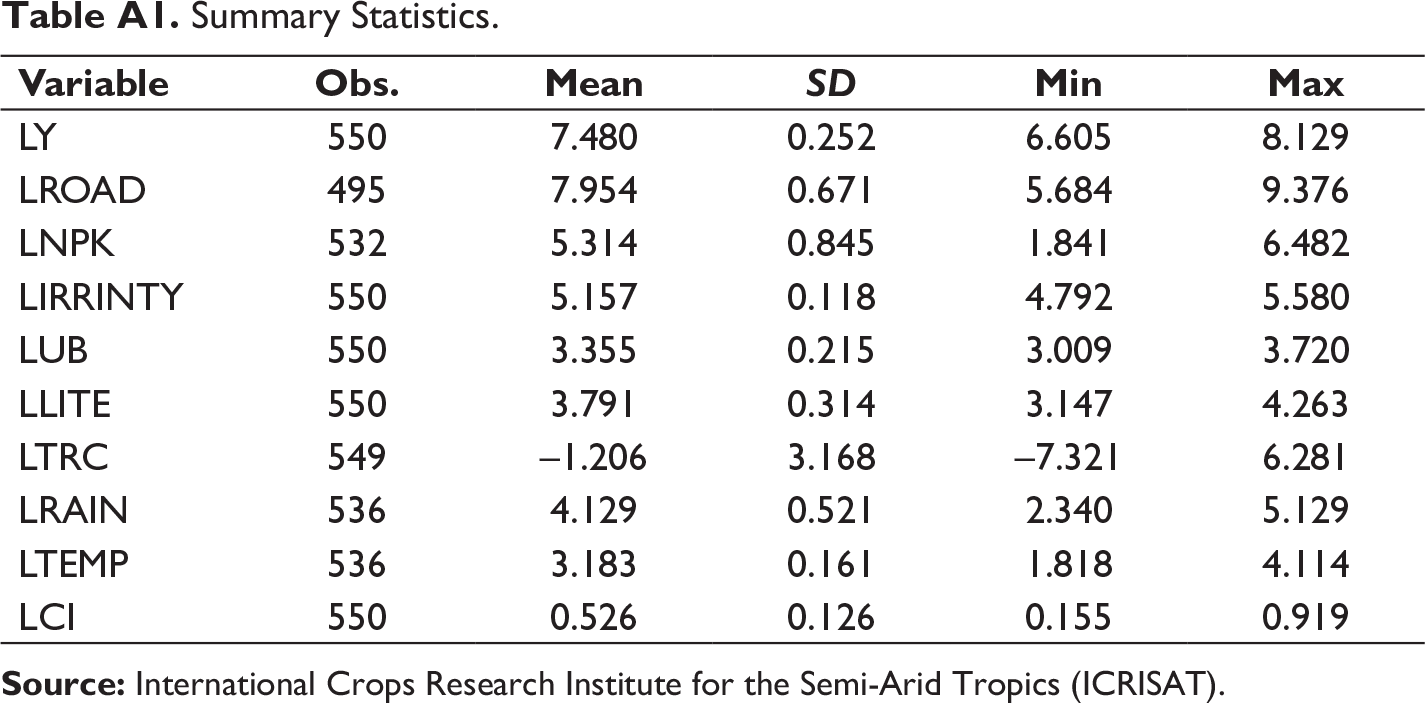
The present study is primarily based on secondary data collected from VDSA (Village dynamics in south Asia) dataset generated by International Crops Research Institute for the Semi-Arid Tropics (ICRISAT). Data for the major nine crops, namely wheat, maize, cotton, paddy, total oilseeds, sugarcane, total pulses, barley and millets (Bajra) were collected separately for various districts covering the period 1966–1967 to 2017–2018, which together accounted for 80% of gross cropped area. The summary statistics of the variables were presented in Table A1. Recently, Punjab state was divided into 22 districts as 11 new districts were merged with the parent districts. The districts in this database relate to the 1966 base, that is, data of districts formed after 1966 are given back to their parent districts. Based on agro-climatic conditions, infrastructure and technology development in the farm sector, the districts were divided into four zones, namely, Zone-I traditional rice belt, Zone-II cotton belt, Zone-III central districts and Zone-IV semi hilly area.
Methodology
To accomplish the compound growth rate of area under each crop over time we fit the semi-log function: In the semi-log function the slope coefficient measures the constant proportional or relative change in dependent variable (Y) for a given absolute change in the value of the explanatory variable (t).

lnY = dependent variable (area under different crops), a = intercept, b = coefficient of time
Measures of Crop Diversification
Crop diversification can be measured by various statistical indices, namely index of maximum proportions, Gibbs and martin index, Herfindahl index, Ogive index, Simpson index, entropy index, Shannon diversity index many more, few of the methods explain either concentration or diversification of crops over time and space. Each method has some limitation or superiority over the other (Shiyani & Pandya, 1998). For assessing the extent of crop diversification, composite entropy index (C.E.I) was used in the present analysis, formerly used by (Acharya et al., 2011; Shiyani & Pandya, 1998). C.E.I. was preferred over other competing indices, because it processes all desirable properties of modified entropy index and it is used to compare diversification across situation having different and large number of activities since it gives due importance to the number of activities. Since index uses –logNP as weights, it assigns more to lower quantity and less weight to higher quantity. The formula of calculating C.E.I. is given by:

The C.E.I. has two components, namely, distribution and number of crops, or diversity. The value of C.E.I. increases with the decrease in concentration and rises with the number of crops. Both the components of the index are bounded by zero and one, and thus the value of C.E.I. range between 0 and 1.
Agricultural Productivity
To compute agricultural productivity, we used a methodology that is earlier applied by Nayak and Kumar (2019) and Sapre and Deshpande (1964). This method is generally used because, along with crop yield level’s rank, that includes the proportion of area under crop, the weighted average of ranks is used instead of simple average ranks. The lower value of the index implies a higher level of productivity. It means that if a district’s yield level of rice is highest in the state, it will get weightage 1 whereas if a district’s yield level of rice is ranked 10th in the state, it will get weightage 10. The formula for calculating this index can be expressed as:

where, r1… … . . + r n represent the rank of crops as per their yield level in the district ‘i’ in comparison to other district and p1 ... … . + pn represent the proportion of area devoted to these crops in the district ‘i’.
Empirical Specification
To estimates the factors that affect the level of productivity as the following specification:

where, Yit is dependent variables (log of productivity for different crops & diversification index) in district i in year t. αi represents the district fixed effect. Further, (ai × T) is a district-specific exponential time trend to switch for the district-specific heterogeneity in productivity growth due to others technological change. ρi is coefficient of time trend across districts. The β’s are coefficients of different xit explanatory variables in districts i in year t.
Result and Discussion
Growth and Extent of Cropping Pattern in Different Agro-climatic Zones
Zone-wise Growth Rates of Area Under Different Crops.
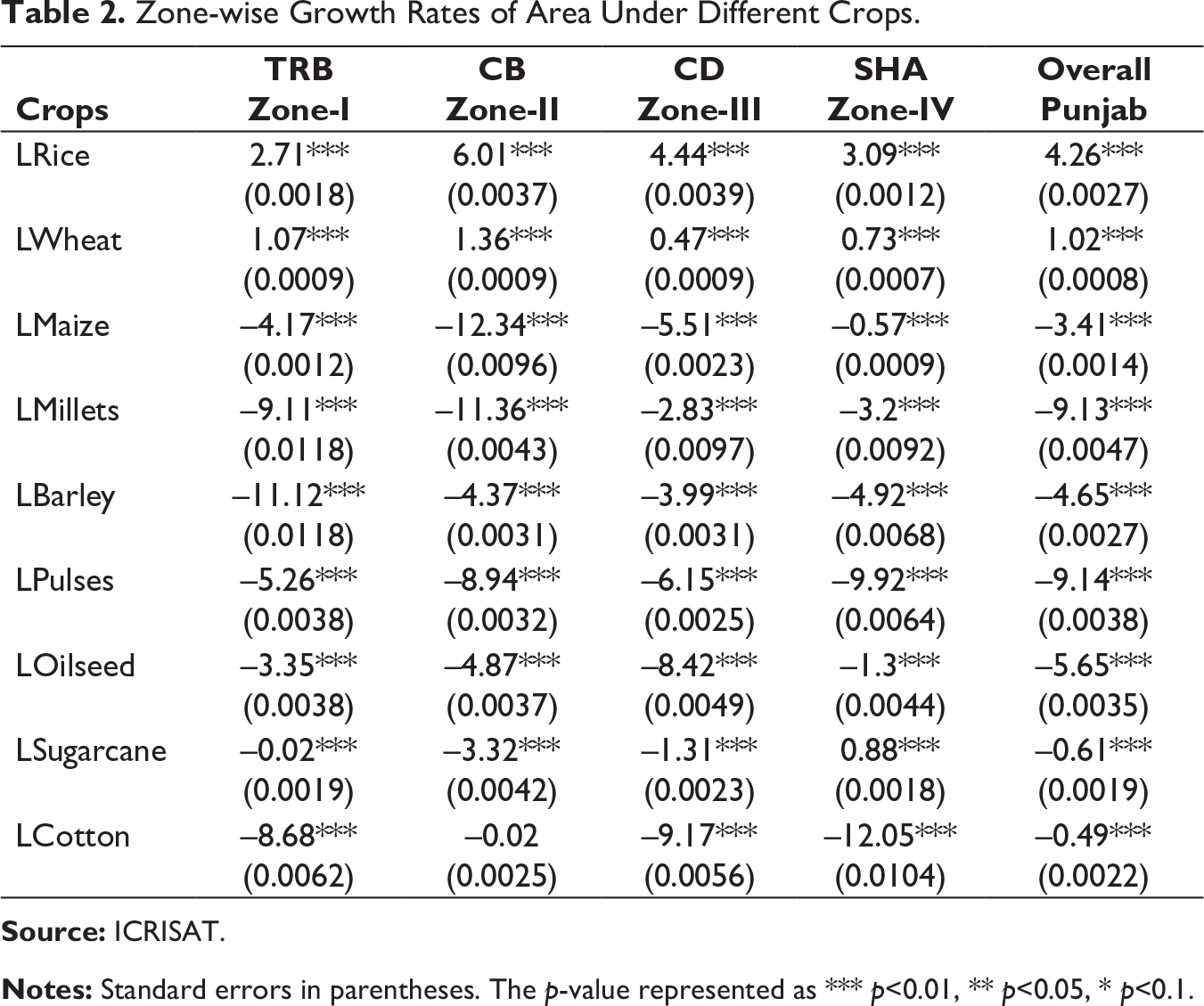
Source: ICRISAT.
Notes: Standard errors in parentheses. The p-value represented as *** p<0.01, ** p<0.05, * p<0.1.
Diversification Level in Different Zone.
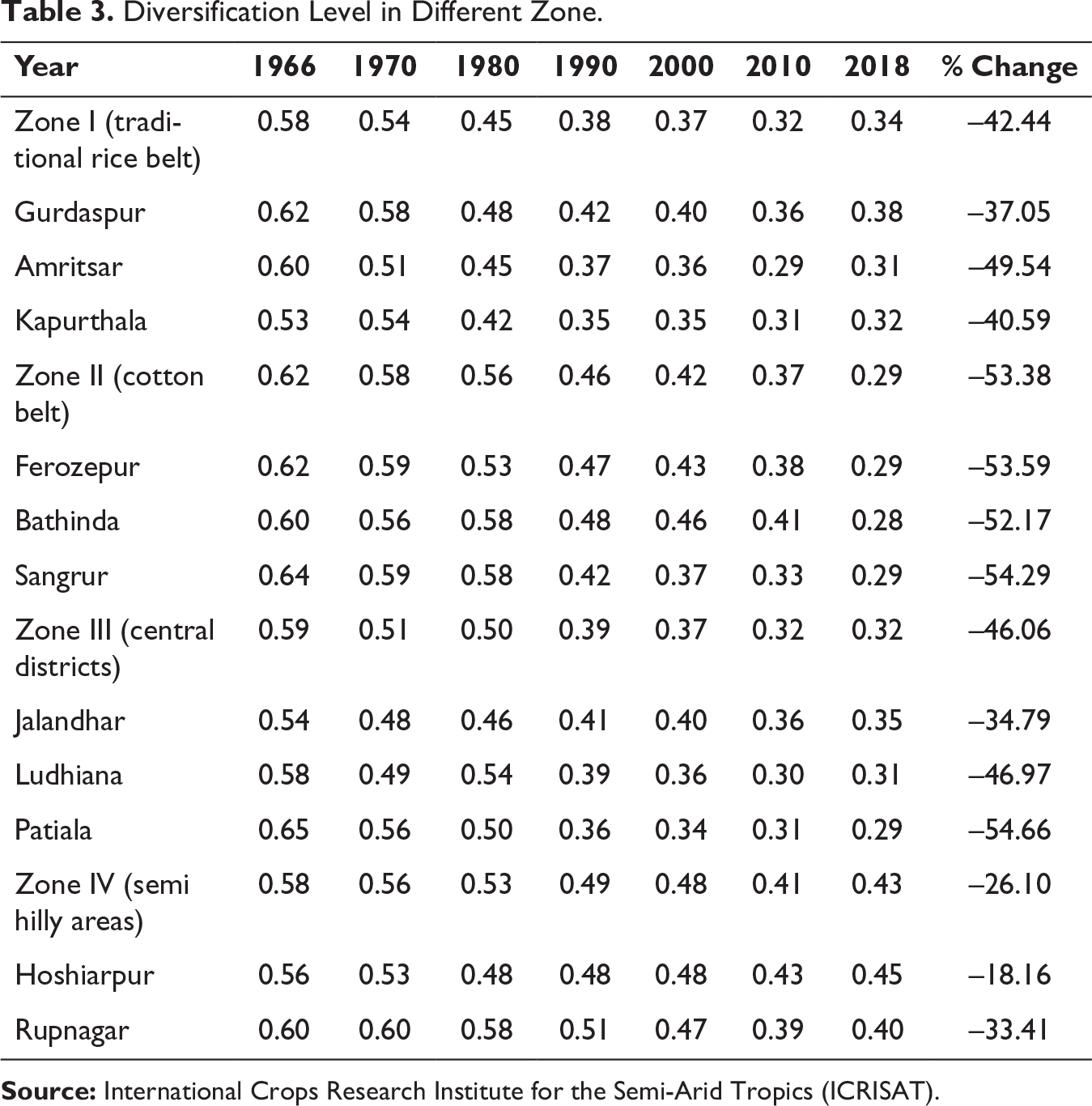
Source: International Crops Research Institute for the Semi-Arid Tropics (ICRISAT).
Productivity Level and Inter-district Disparities
Rank of Districts as per Productivity Index, 1966–2018.
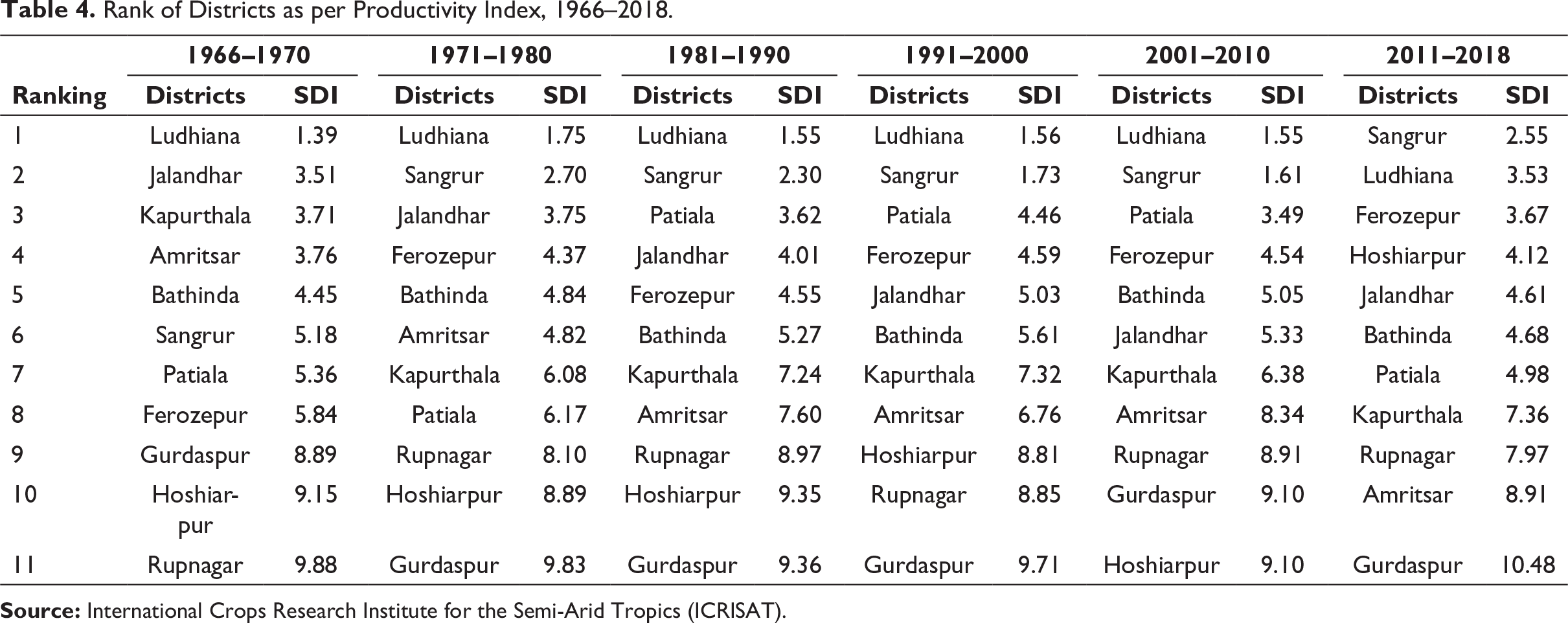
Source: International Crops Research Institute for the Semi-Arid Tropics (ICRISAT).
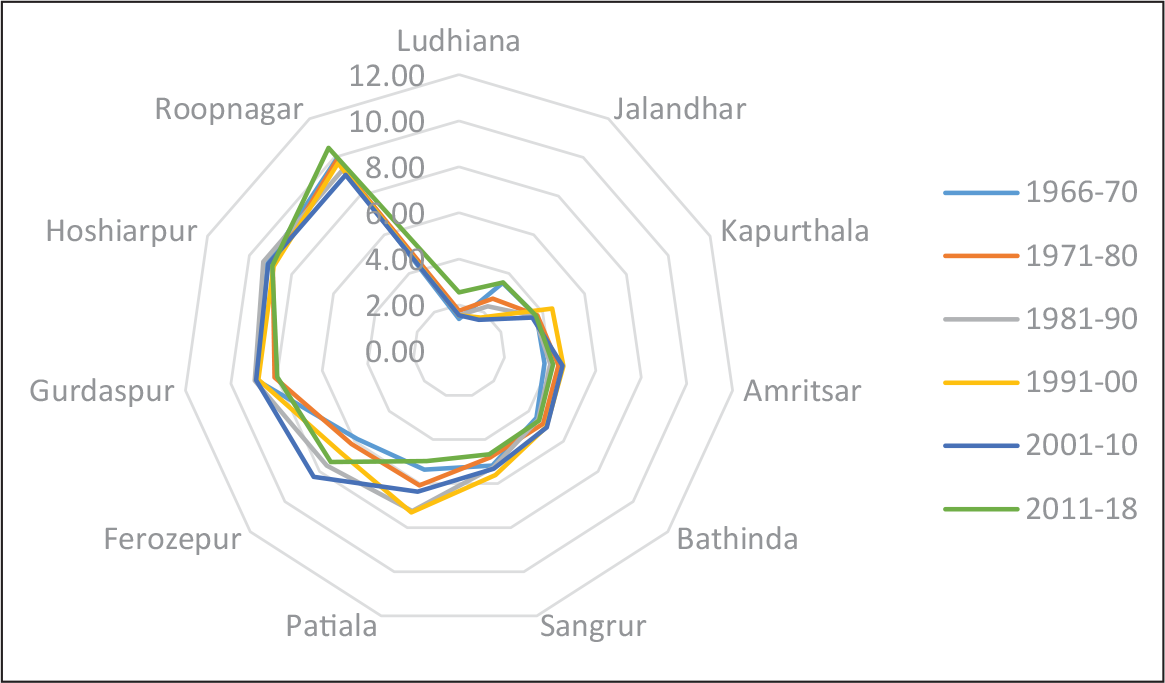
Source: Based on Table 4.
Model Specification Tests
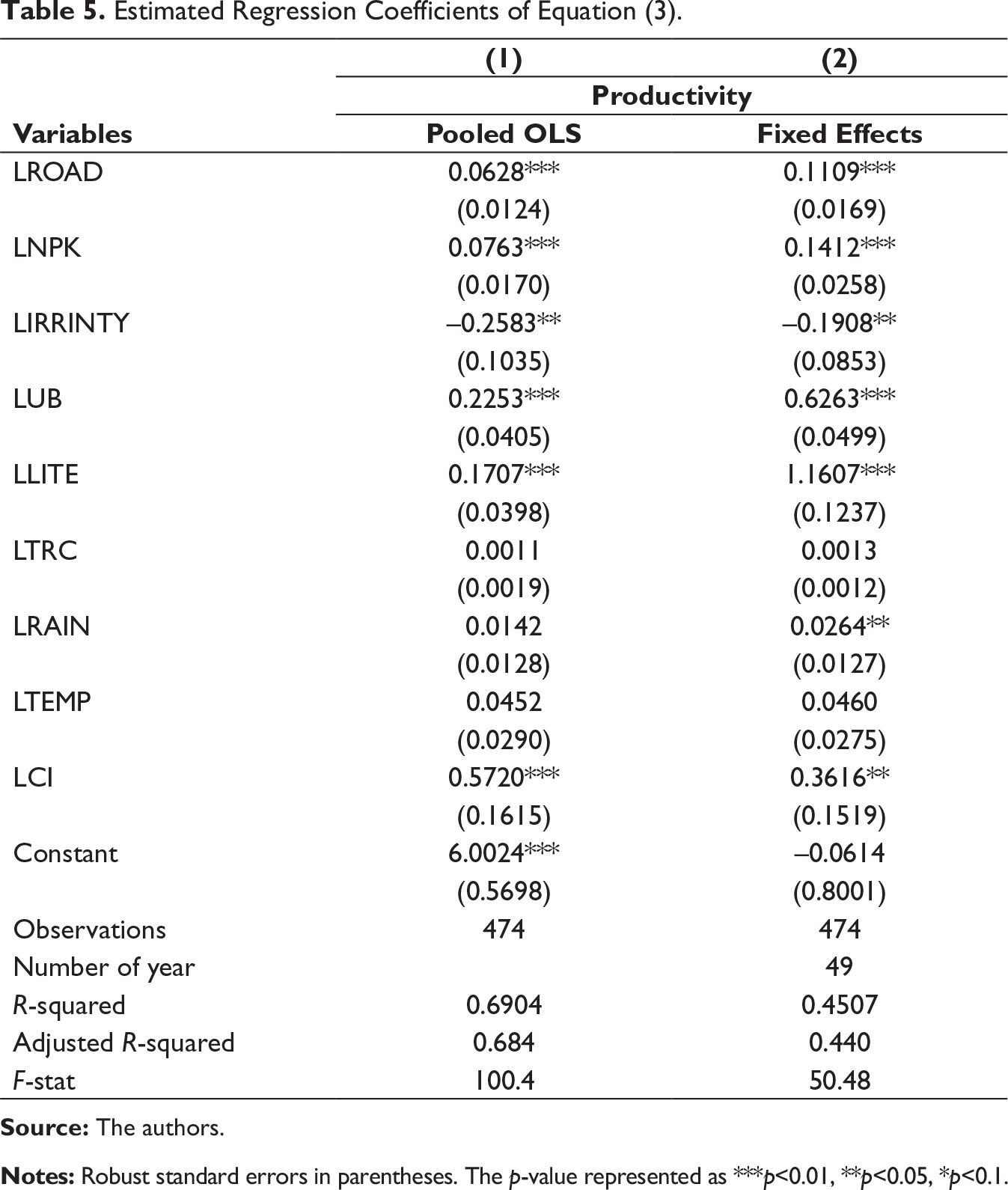
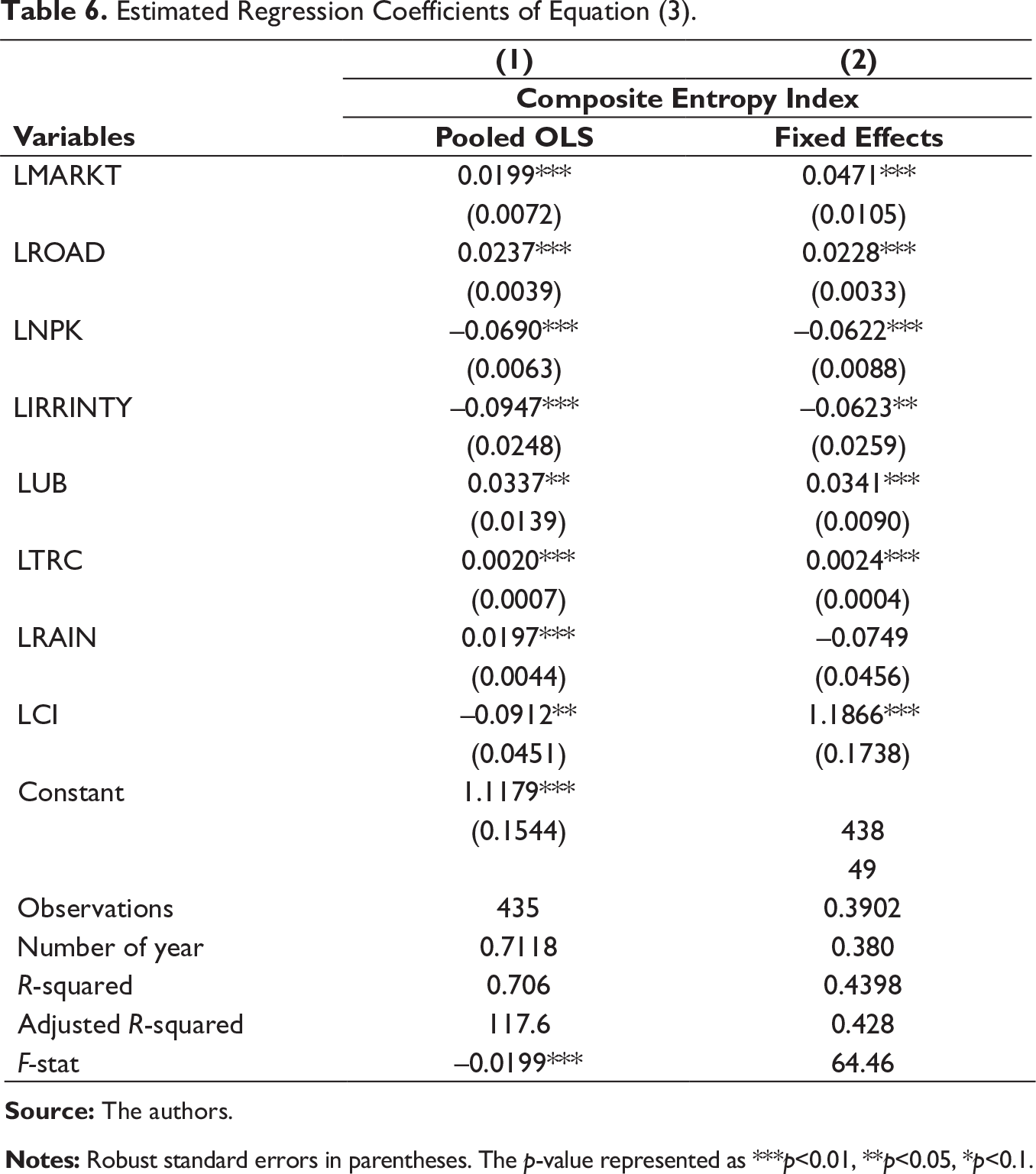
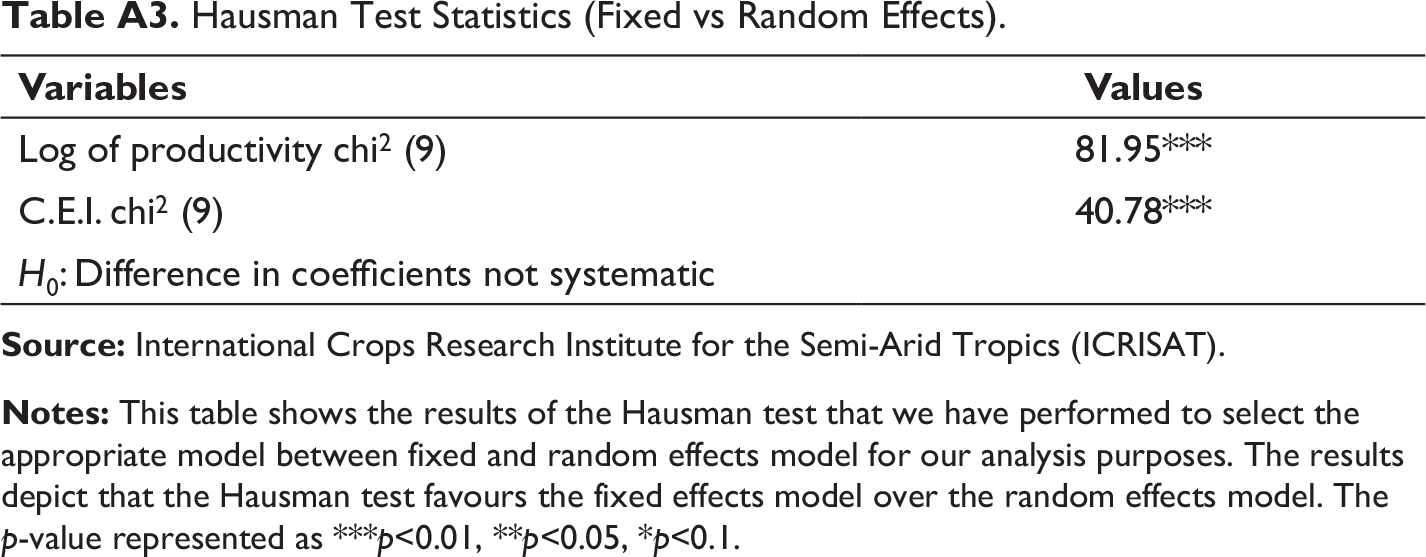
To identify the suitable model on panel data analysis for estimating the impact of different explanatory variables on productivity as well as on diversification level, we pursue the Hausman test that favour the fixed effects model as specification shown in ****Table A3. The test rejected the null hypothesis that contains random effect model as appropriate, therefore our results favour the fixed effect regression model with district-specific trend.
Robustness Check
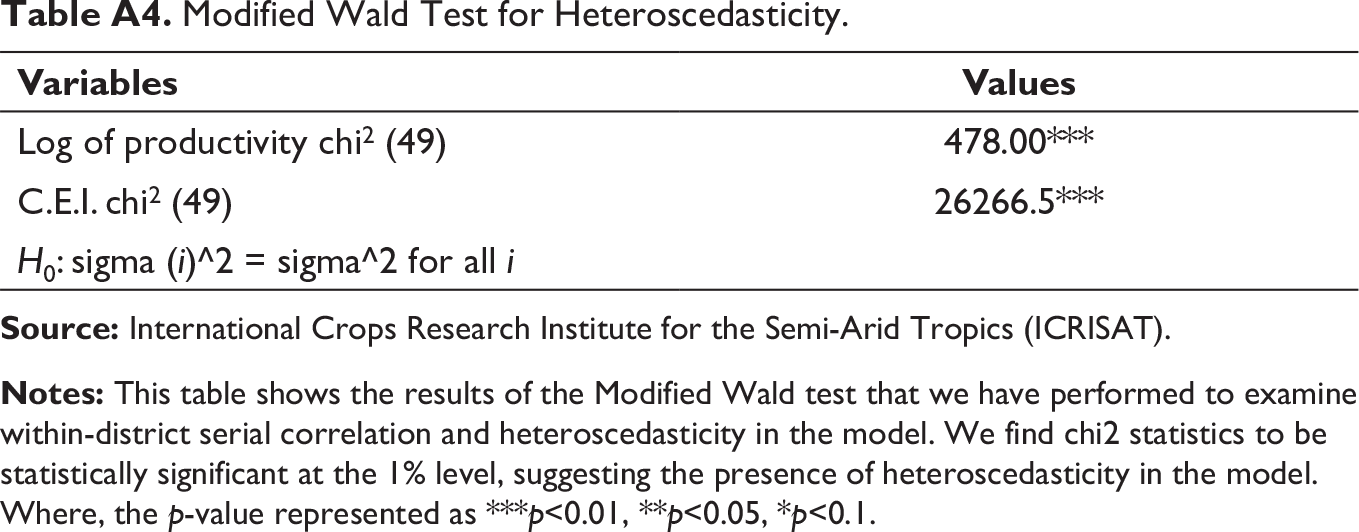
Further, we used Modified Wald test for heteroscedasticity as shown in ****Table A4. In estimation, we found that the chi2 statistics is significant at 1% level, postulating the presence of heteroscedasticity. Therefore, to detect within-district heteroscedasticity and serial correlation, the standard errors have been clustered at the district level.
Determinants of Productivity
Estimated Regression Coefficients of Equation (3).
Source: The authors.
Notes: Robust standard errors in parentheses. The p-value represented as ***p<0.01, **p<0.05, *p<0.1.
Determinants of Crop Diversification
Estimated Regression Coefficients of Equation (3).
Source: The authors.
Notes: Robust standard errors in parentheses. The p-value represented as ***p<0.01, **p<0.05, *p<0.1.
Conclusion
In Punjab, the process has been changed in agriculture, and it moves towards few (wheat and rice) crops only in all zones. It showed that almost in all zones only two crops, such as rice and wheat, have shown positive and statistically significant growth throughout the study period. The findings imply that these two crops have been sown on maximum areas in the state. It was a substitution shift from other crops, that is, pulses, barley and oilseed. From the estimation, it was found that the four zones are specialised in few crops, but some of them are relatively less or some are more. Hence, we found that some of them had experienced a lateral movement toward crop specialisation and crop diversification is not happening. Further, it was found that the districts Jalandhar, Kapurthala and Amritsar who have higher rank in agricultural productivity in 1966–1970 had reduced to a lower rank value in 2011–2018. Conversely, the districts namely Sangrur and Ferozepur which have ranked moderate in 1966–1970, turn out to be higher agricultural productivity districts in 2011–2018. The district Hoshiarpur with lower rank in 1966–1970 had achieved moderate position in 2011–2018. In case of Ludhiana is, however, unique. It can be seen that in respect to SDI value, the district rank almost first throughout the study period in the whole state. The districts Gurdaspur and Rupnagar have less agricultural productivity throughout the study period. Further, regression results had identified the main drivers that enhance the level of productivity are better infrastructure such as road, fertiliser, urbanisation, literacy and cropping intensity. Similarly, the study also investigate the factors that influenced crop diversification level. The key factors such as accessibility of market and roads have a positive influence on crop diversification. Whereas, more use of fertiliser, intensity of irrigation, and rainfall have led to concentration rather than crop diversification. As the analysis indicates that there is need to emphasise on agro-climatic regional preparation by clearly identifying the existing resource endowments and constraints of the agro-climatically homogeneous regions. The farmers will switch over to alternative crops only when they will be sure of getting higher profit from the new crops.
Footnotes
Appendix
|
|
|
|
|
|
|
| LY | 550 | 7.480 | 0.252 | 6.605 | 8.129 |
| LROAD | 495 | 7.954 | 0.671 | 5.684 | 9.376 |
| LNPK | 532 | 5.314 | 0.845 | 1.841 | 6.482 |
| LIRRINTY | 550 | 5.157 | 0.118 | 4.792 | 5.580 |
| LUB | 550 | 3.355 | 0.215 | 3.009 | 3.720 |
| LLITE | 550 | 3.791 | 0.314 | 3.147 | 4.263 |
| LTRC | 549 | –1.206 | 3.168 | –7.321 | 6.281 |
| LRAIN | 536 | 4.129 | 0.521 | 2.340 | 5.129 |
| LTEMP | 536 | 3.183 | 0.161 | 1.818 | 4.114 |
| LCI | 550 | 0.526 | 0.126 | 0.155 | 0.919 |
Source: International Crops Research Institute for the Semi-Arid Tropics (ICRISAT).
|
|
|||
| Wheat | 34.89 | 44.07 | 0.01 |
| Rice | 5.51 | 36.03 | 0.05 |
| Cotton | 8.12 | 2.24 | –0.02 |
| Maize | 8.59 | 2.09 | –0.02 |
| TOS | 6.25 | 0.48 | –0.04 |
| Sugarcane | 3.02 | 1.04 | –0.01 |
| TP | 13.21 | 0.37 | –0.06 |
| Barley | 2.01 | 0.10 | –0.05 |
| Millets | 3.56 | 0.03 | –0.08 |
Source: International Crops Research Institute for the Semi-Arid Tropics (ICRISAT).
|
|
|
| Log of productivity chi2 (9) | 81.95*** |
| C.E.I. chi2 (9) | 40.78*** |
| H0: Difference in coefficients not systematic | |
Source: International Crops Research Institute for the Semi-Arid Tropics (ICRISAT).
Notes: This table shows the results of the Hausman test that we have performed to select the appropriate model between fixed and random effects model for our analysis purposes. The results depict that the Hausman test favours the fixed effects model over the random effects model. The p-value represented as ***p<0.01, **p<0.05, *p<0.1.
|
|
|
| Log of productivity chi2 (49) | 478.00*** |
| C.E.I. chi2 (49) | 26266.5*** |
| H0: sigma (i)^2 = sigma^2 for all i | |
Source: International Crops Research Institute for the Semi-Arid Tropics (ICRISAT).
Notes: This table shows the results of the Modified Wald test that we have performed to examine within-district serial correlation and heteroscedasticity in the model. We find chi2 statistics to be statistically significant at the 1% level, suggesting the presence of heteroscedasticity in the model. Where, the p-value represented as ***p<0.01, **p<0.05, *p<0.1.
Acknowledgement
The authors are thankful to the anonymous referee for his comments on the earlier version of this article.
Declaration of Conflicting Interests
Funding
The authors received no financial support for the research, authorship and/or publication of this article.
