







Abstract
Feeding practices show many benefits for child and cognitive development. The objective was to investigate the association between infant feeding practices and the first meaningful words of Thai children. The participants enrolled in this longitudinal study were 4245 children born between July 2000 and June 2002. They resided in 3 rural and 2 urban areas of Thailand and were followed from birth to childhood. The outcome was time from birth to expression of first meaningful words. Outcome and feeding information were gathered using a diary method, with parents and caregivers recording daily development. Nonstatistically significant corresponding reduction in time to expression of first meaningful words was found among children who were breastfed, and this increased with duration of breastfeeding. Breastfeeding may reduce the time taken for expression of first meaningful words by about 2% (hazard ratio = 0.98; 95% confidence interval = 0.94 to 1.01). No association between infant feeding practices and the expression of first meaningful words was found.
Introduction
Language development among children is a complex process and is very important for communication. 1 Language impairments are important common and well-recognized neurodevelopmental childhood disorders, 2 defined as specific language impairment (SLI). Children with sensory, neuromotor and cognitive deficits present with impairment in language development. The prevalence of SLI among preschool children has been estimated to be about 2% to 8%.3-5 Children with language development problems have been found to be at a higher risk for later academic difficulties and learning disabilities 6 as well as for psychiatric, neurological, and/or behavioral problems.7-10
Nutritional factors have been shown to be important in children’s health and development.11,12 Breast feeding has many benefits for children, including reduced incidences of infectious disease and infant mortality.13,14 Children with a duration of exclusive breastfeeding for 6 months or more experience lower levels of infant morbidity and no deficits in growth.15,16 In addition, it has benefits for neurodevelopmental outcome 17 and contributes to proper oral motor development.12,18
Several studies have demonstrated a positive effect between breastfeeding and cognitive development in children.19-34 Language development is a component of cognitive function for which the children were indirectly assessed in those studies. A recent meta-analysis 35 concluded that children who were breastfed had significantly higher scores for cognitive development. In addition, a few previous studies directly investigated the relationship between breastfeeding and language development in childhood.12,36 One was a longitudinal study, 12 and the other was a case-control study. 36 Both studies found an association between breastfeeding and language development in children. However, loss to follow-up was a problem in the longitudinal study, 12 and information bias was a problem in the case control study because a telephone survey method was used. 36
There are many studies about the association between breastfeeding and cognitive development and related language skills, but use of polysyllable babbling is difficult to assess in early language development. There is no evidence base to confirm the association between infant feeding practices and first meaningful words. The first meaningful words are more well recognized and easier to measure than polysyllable babbling, which was used in previous studies. Also, it is the most concrete outcome to assess as an indicator of early language development. This study is designed to detect abnormalities in early language development in preschool children and to assess methods of prevention of developmental abnormalities in later life by helping formulate evidence-based recommendations for improvements in infant feeding practices.
Methods
Study Design
The Prospective Cohort Study of Thai Children (PCTC) is the first ongoing longitudinal study in Southeast Asia. It is a comprehensive multidisciplinary study on biological, psychosocial, and moral aspects of development in Thai children from the perinatal period to childhood. The principal purpose of the PCTC is to trace the development of Thai children within the Thai sociocultural context.
Population and Sample
Initially, 4885 pregnant women in 3 communities based in rural areas and 2 hospitals based in an urban area were invited to participate in this study. The eligibility criteria were gestational age from the 28th to the 38th week, a willingness to participate, and a commitment to remain in the geographic region of the study site for at least 5 years after enrollment. During the study period, 670 (13.7%) pregnant women were excluded, and the remaining 4215 pregnant women participated in the study (Figure 1).
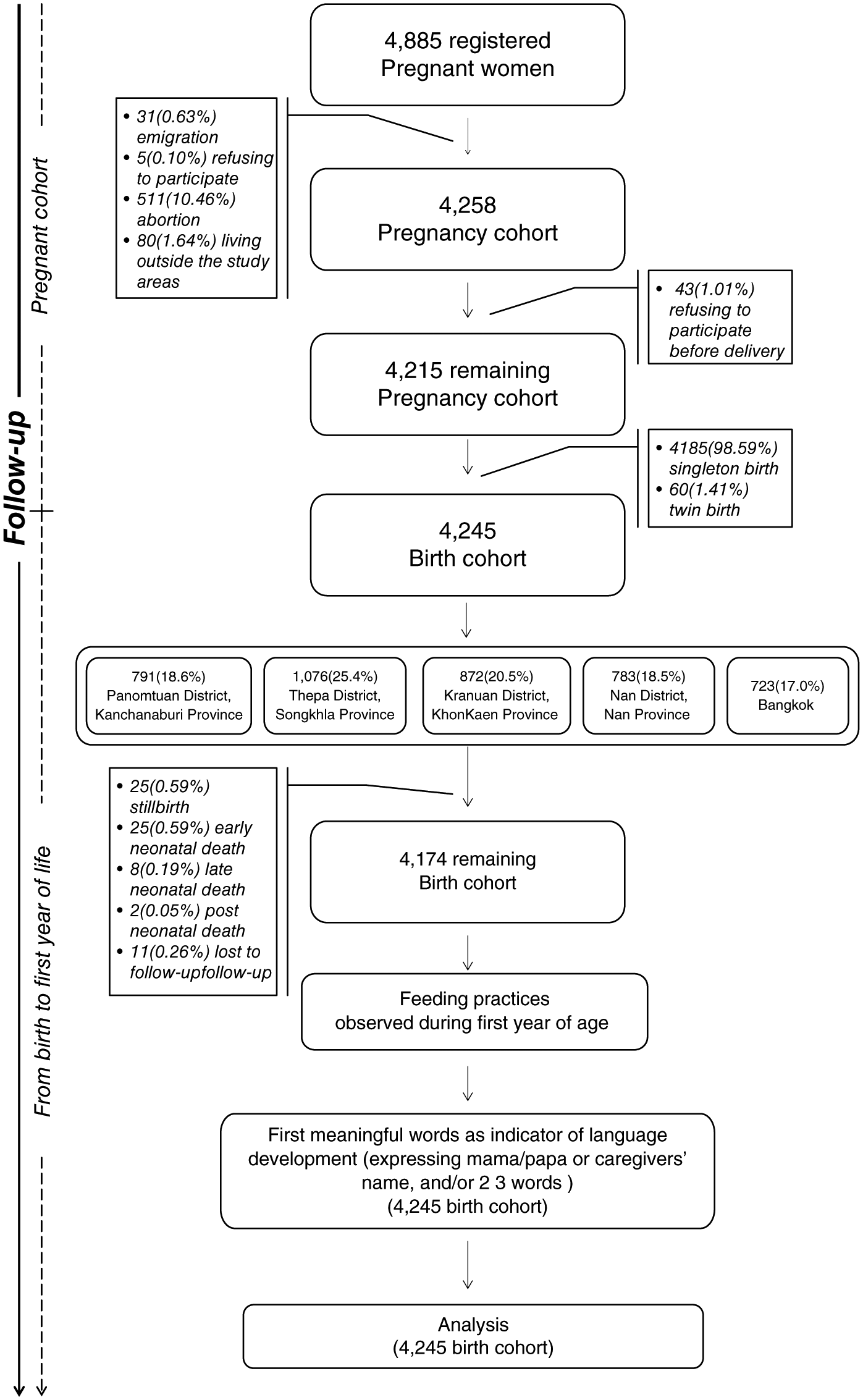
Design overview.
In the birth cohort study, children born to mothers between July 1, 2000, and June 30, 2002, participated in the study. A total of 4245 children were observed and followed up. This included 4185 (98.6%) singleton births and 60 (1.4%) twin births. During the follow-up period, there were 60 (1%) neonatal deaths, and 11 cases were lost to follow-up (Figure 1).
Setting
The birth cohort was observed both in a community-based study designed for 4 different rural areas and in a hospital-based in an urban area. The eligibility criteria were consent of hospital directors, willingness to participate, and distribution over all parts of Thailand. In addition, a hospital-based study was established in Ramathibodi University Hospital, Bangkok, the capital city of Thailand (Figure 1).
Outcome Variables
The primary outcome was time from birth to expression of first meaningful words during the first year of life. The first meaningful words were defined as the children expressing the father’s, mother’s, or caregiver’s name and/or other typical early developing words. In addition, there were censored data, defined as incomplete observations that might not have been observed or experienced during the study period. In terms of follow-up, refusing to participate, termination of the study, or death during the study period were classified as censored data in this study.
The outcome was observed by parents and caregivers. Parents and caregivers were trained to assess the first meaningful words during the first year of life and activities related to the child’s development, which they recorded using a diary developmental record. The information about the child’s development was then extracted into a case report form before data entry.
Feeding Practices
Information concerning infant feeding practices was recorded in the diary developmental record from birth to 12 months of age. In fact, available data of PCTC did not allow for specific estimation of exclusive breastfeeding, and therefore, this was not taken into account as a factor. However, other factors considered to be important, such as breast, formula, and complementary feeding, were recorded. Feeding practices were recorded by parents and caregivers. Duration of feeding was defined as the total time of breast feeding, the time from birth to first introducing formula feeding, and complementary feeding. These were continuous variables.
Assessment of feeding practices included the use of any human or nonhuman milk. Breastfeeding referred to the child taking breast milk directly from the maternal breast or by other means—bottle, cup, and spoon. Formula feeding referred to the child having received any nonmaternal liquid or semisolid food from a bottle with a nipple/teat. Complementary feeding referred to the child having both breast milk and solid or semisolid foods.
Instruments and Data Collection Procedure
The diary developmental record was developed by the principle investigator of PCTC and was a simple rigorous standard of recording for parents and caregivers. In addition, parents or caregivers were interviewed about their infant feeding practices to recheck consistency of outcome from both sources.
According to the instrument and collection procedure, the interrater reliability was checked among the different research assistants. The research assistants who collected the data were from different linguistic and religious groups and were, therefore, well qualified to test the diverse participants in the study. Hence, research assistants were selected and well trained to use the instruments. Monitoring and quality controls were established at the beginning of the study to ensure that there was reliability and validity. Reinterviews were conducted on a random subsample to recheck for consistency and to eliminate interviewer bias.
Statistical Methods
Initially, the baseline characteristics were presented as a descriptive analysis. The primary outcome of time from birth to expression of first meaningful words was estimated using the Kaplan-Meier method. This method also allowed the investigation to account for the different patterns of feeding practices. The statistical significance of the difference between the survival curves was assessed using Cox’s proportional hazards model.
The Cox’s proportional hazards model of feeding practices was constructed using baseline variables as prognostic factors for the time from birth to expression of first meaningful words. The variables were constructed using univariate analysis to demonstrate the factors affecting the expression of the first meaningful words. A 3-stage modeling strategy was used. First, a model was constructed for each of the baseline factors, and all important factors from previous studies were considered. The polytomous variables were constructed into dummy variables before entering into the model. The continuous variables were categorized if they had a nonlinear relationship. Second, those factors with a coefficient value for which the P value was less than or equal to .25 by the Wald test in univariate models were considered and entered into the initial model. Using a backward elimination method, the factors with a P value of Wald test greater than .05 were eliminated. The P value of the partial likelihood-ratio test was tested by model fitting. However, factors were not excluded from the initial model because those factors were confounding factors, such that the coefficient changed more than 20%. Hence, the final model included all factors. The log-likelihood statistic was used to calculate the best-fitting model, and the adjusted coefficient values were used to calculate the effect of feeding practices on first meaningful words.
To control for potentially confounding factors, infant feedings were closely analyzed in terms of socioeconomic status and maternal education. Other confounders included birth weight, gestational age, birth order, and gender. Selection factors associated with feeding practices—a range of measures of family, social, and other factors—were selected from the database of the study. These measures were chosen because they are known to be associated with the mother’s feeding history and with language outcomes. In addition, sensitivity analysis was used to restrict and examine the effects of definition terms on outcomes, which included first meaningful words, that is, children expressing father’s, mother’s, or caregiver’s name and the expression of 2 to 3 words. A model of logistic regression ignoring time was also considered.
The results are presented as hazard ratios (HRs), which are similar to relative risk, with 95% confidence intervals (CIs). The interpretation is presented as no association if the HR was 1, positive association if the HR was greater than 1, and negative association if the HR was less than 1. All analyses were performed using Stata version 8 (StataCorp, College Station, TX) software package.
Power of the Study
A Cox regression of the log HR on a covariate with a standard deviation of 1.2 based on a sample of 4245 observations achieves 100% power at a .05 significance level to detect a regression coefficient equal to 0.53 (HR = 1.70). The sample size was adjusted because a multiple regression of the variable of interest on the other covariates in the Cox regression is expected to have an R2 of 0.75. The sample size was adjusted for an anticipated event rate of 0.55.
Results
During the years of the recruitment period, the available data on all 4245 children in the ongoing longitudinal study were analyzed. A total of 47 468 person-months of follow-up was available. Of these, 2404 children (56.6%) had said their first meaningful words (Figure 2). The incidence rate was 5 times per 100 person-months (95% CI = 4.86 to 5.27). The median time of children expressing their first meaningful words was 12 months (range 6 to 12).
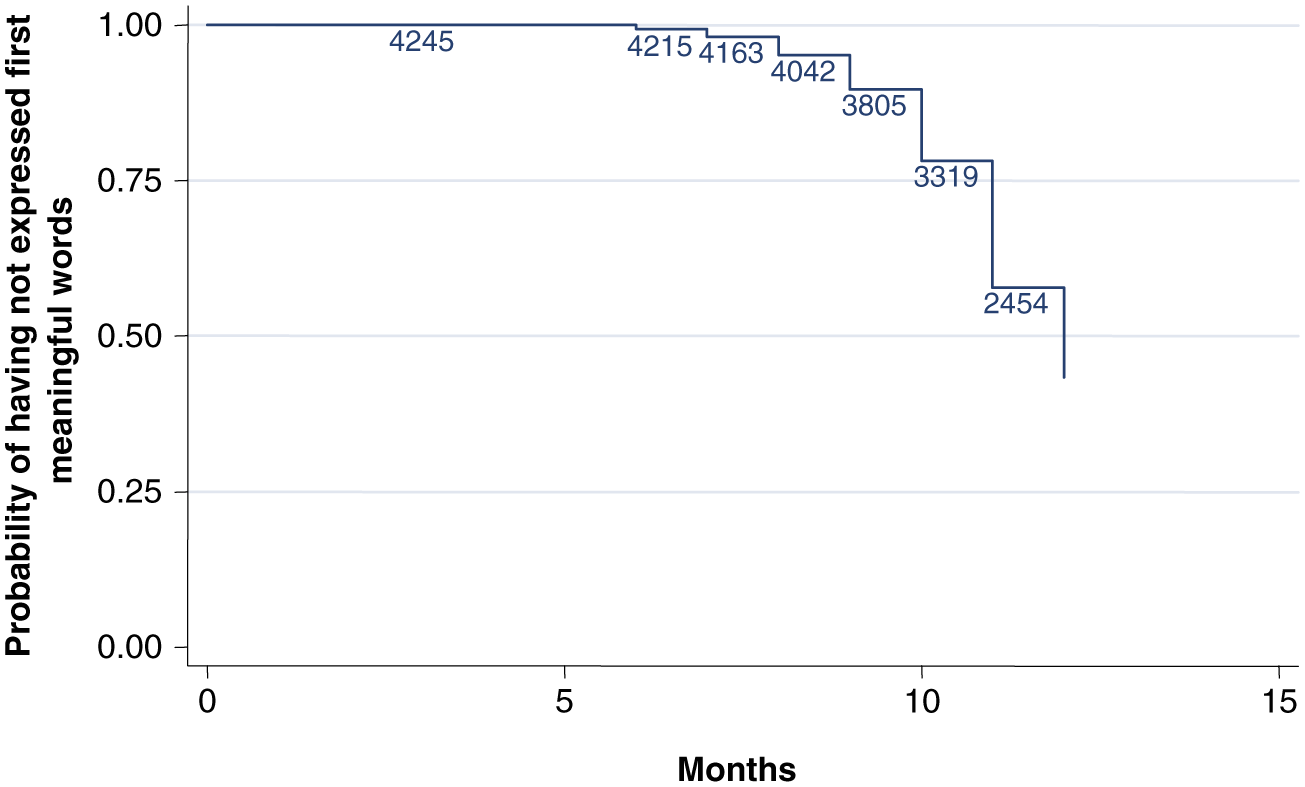
Kaplan-Meier survival estimate of time from birth to time of expression of first meaningful words in the birth cohort study.
The survival times were calculated, and missing data were analyzed. Data on 1841 children (43.4%) were censored at the time of the last available follow-up visit. Owing primarily to being censored, 1506 children (35.5%) had not expressed their first meaningful words, and 335 cases (7.9%) were not suitable for data collection at the end of follow-up. Survival time was estimated by the Kaplan-Meier method, where half of the children had expressed the first meaningful words. In addition, time from birth to expression of first meaningful words categorized by duration of breastfeeding is shown in Figure 3.
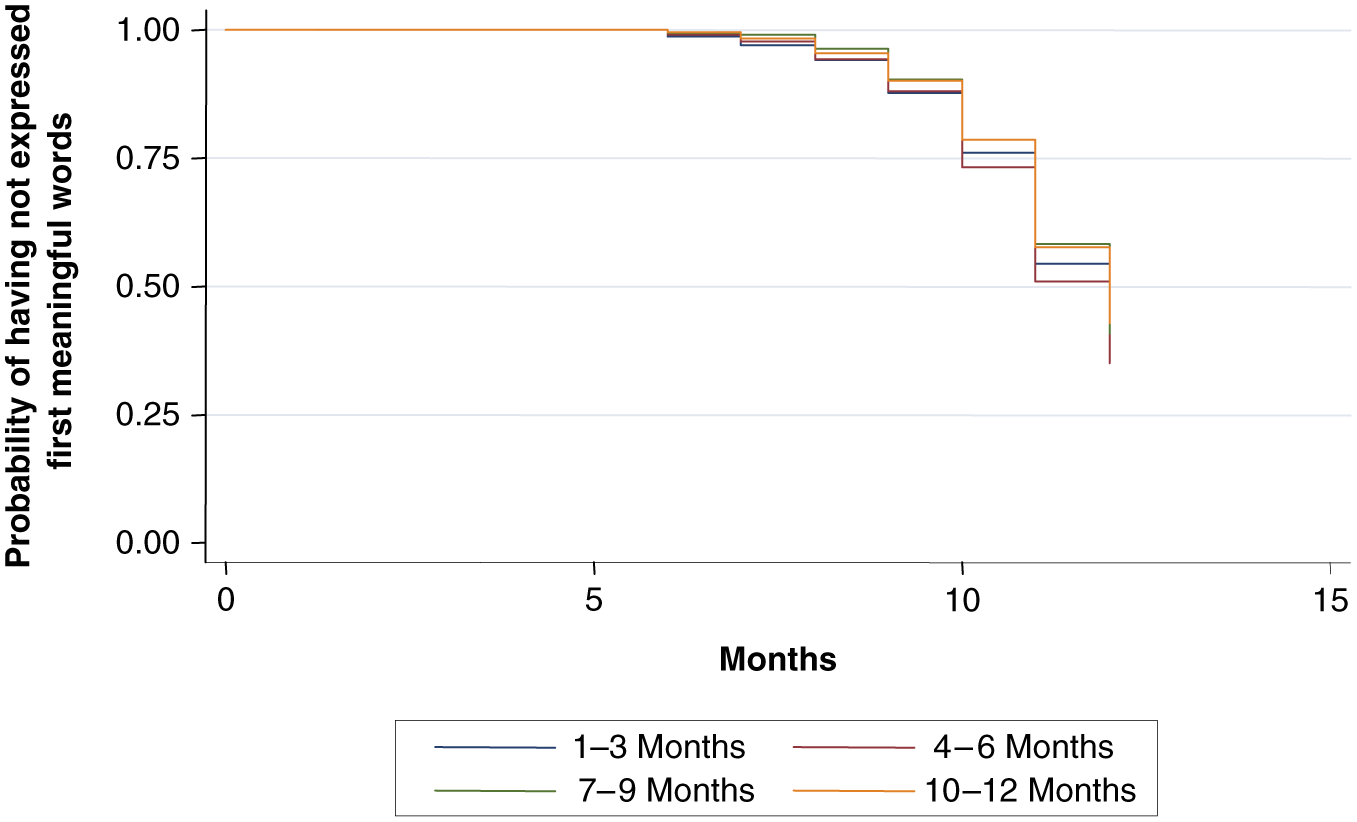
Kaplan-Meier survival estimate of time from birth to time of expression of first meaningful words by duration of breastfeeding categories.
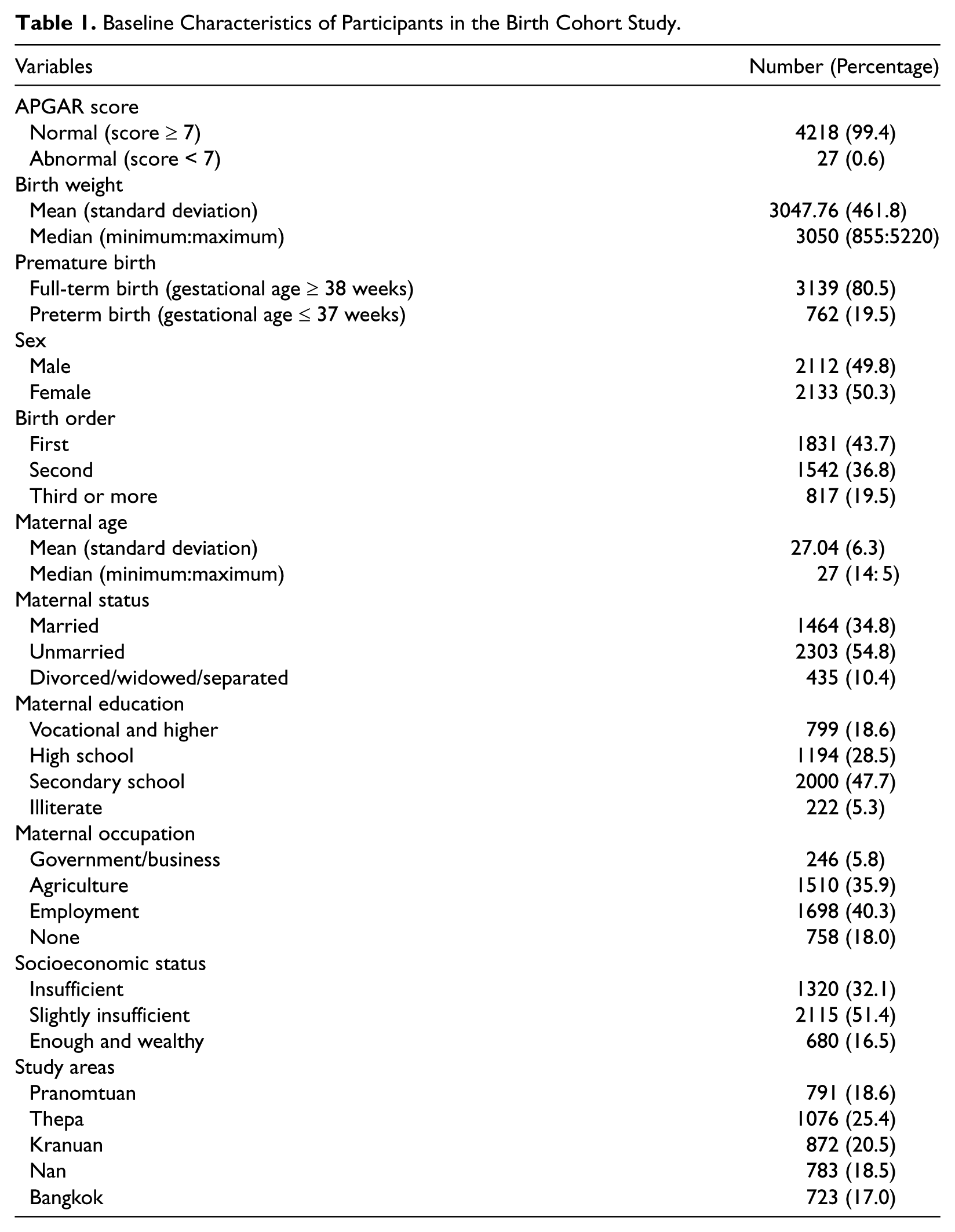
The demographic characteristics of children included child birth factors, maternal factors, and environmental factors as shown in Table 1. Of these, the proportion by gender was equal in this study. There were 3522 (82.9%) population-based children and 723 (17.0%) hospital-based children. The characteristics of infant feeding practices included breast feeding, formula feeding, and complementary feeding. Regarding the infant feeding practices, it was found that 1144 (28.1%) children had been breast fed for 1 to 3 months, 388 (9.5%) for 4 to 6 months, 213 (5.2%) for 7 to 9 months, and 2330 (57.2%) for more than 9 months, respectively. As regards formula feeding, it was found that 1475 (36.2%) children were not fed formula, 1480 (36.3%) had 1 to 2 months of formula, and 1121 (27.5%) had more than 3 months of formula. Furthermore, complementary feeding data also revealed that the children were mostly introduced to a complementary diet before 6 months. However, the feeding information is not given in the present study.
Baseline Characteristics of Participants in the Birth Cohort Study.
To identify factors affecting the ability of children to express the first meaningful words, all possible potential factors related to the outcome were considered in the crude analysis. Those factors were analyzed for both categorical data and continuous data, but are not presented in this study. Regarding this study, the settings were not random variables, so they were accounted for in the crude analysis. In addition, those factors were also analyzed in both accounted- and unaccounted-for settings. The magnitudes of effects are presented as HRs.
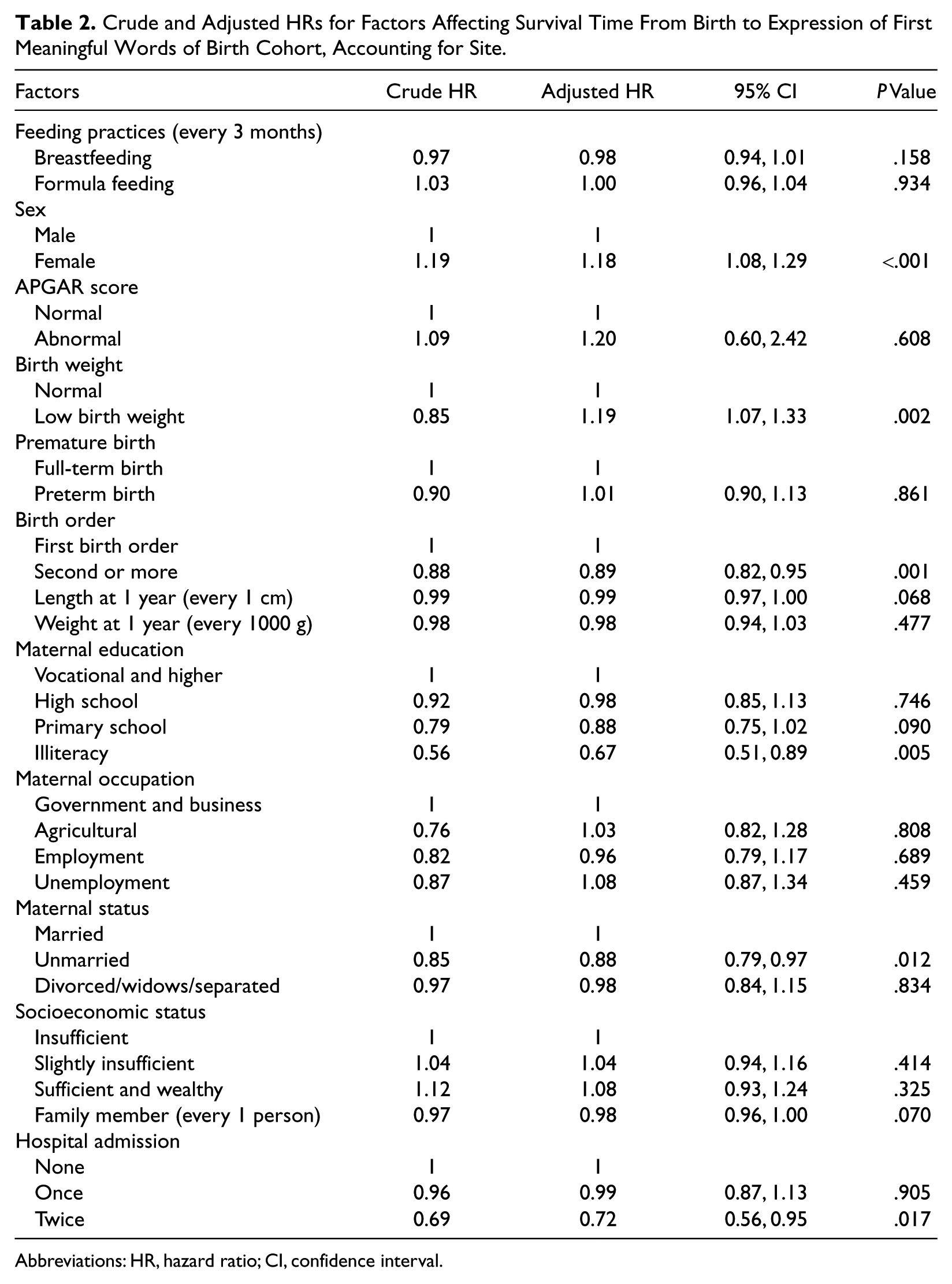
The final model was constructed by backward Cox’s proportional hazards model and accounted for settings to control for the design effect. Table 2 shows the unadjusted and adjusted HRs of the infant feeding practices, including breast feeding, formula feeding, and complementary feeding. We adjusted for confounding factors, including sex, APGAR scores, birth weight, premature birth, birth order, anthropometry at 1 year of age, maternal age, maternal education, maternal occupation, maternal status, socioeconomic status, family members, maternal interaction, and hospital admission. In this model, interaction terms were a prior knowledge of specific factors that influenced or related to language development. There was no interaction effect entered into the model.
Crude and Adjusted HRs for Factors Affecting Survival Time From Birth to Expression of First Meaningful Words of Birth Cohort, Accounting for Site.
Abbreviations: HR, hazard ratio; CI, confidence interval.
We also conducted alternative calculations and sensitivity analyses to evaluate the stability of these results. Multiple logistic regressions were constructed to quantify the effect of infant feeding practices on children expressing the first meaningful words. This yielded results that were similar to those already shown by Cox’s proportional hazards model. In addition, using other typical definitions of outcome, that is, mama or papa, yielded a similar association of infant feeding practices with children expressing first meaningful words.
From the final Cox model, a reduction association was found among children who were breastfed. Children demonstrated 2% less likelihood to say their first meaningful words for every 3 months of breastfeeding. This was not significant (HR = 0.98; 95% CI = 0.94 to 1.01). No association between formula feeding and first meaningful words was found. Children who were formula fed were about 4% more likely to say their first meaningful words for every 3 months of formula feeding, but this was not statistically significant (HR = 1.00; 95% CI = 0.96 to 1.04).
In addition, the complementary feeding variable was excluded from the model because of decreasing sample size of more than 30%, which would lead to information bias. However, the comparison between Cox’s model with and without complementary feeding factors yielded a similar association between breast feeding and formula feeding on children expressing first meaningful words. Time from birth to expressing first meaningful words by duration of breastfeeding after adjusting for confounding factors is shown in Figure 4.
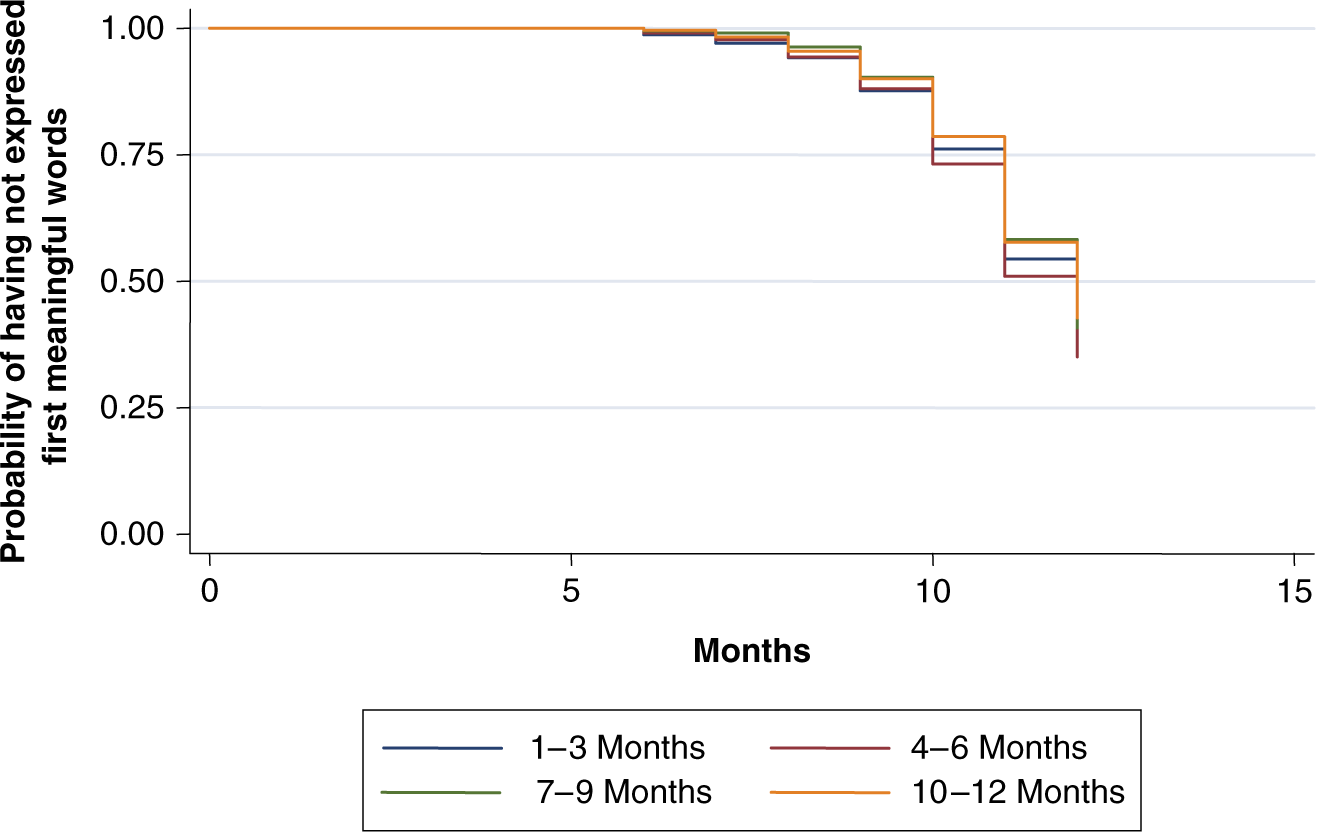
Kaplan-Meier survival estimate of time from birth to time of expression of first meaningful words by duration of breastfeeding categories adjusted for site.
Discussion
This comprehensive multidisciplinary study yielded information on infant feeding practices and children’s language development. A multivariate Cox’s proportional hazards model demonstrated that infant feeding practices did not contribute to the time taken for children to express their first meaningful words. A very small but not statistically significant reduction association was found in children who were breast fed.
The strengths of this study were the following: information about the children was prospectively gathered, and their development and patterns of feeding during the study period were observed. Furthermore, the study was carried out in all parts of the country with its varied traditional and cultural contexts and thus is representative of the whole population of children in Thailand. The daily developmental record is a useful instrument and simple to apply in rural areas. This strategy was appropriate for gathering prospective information regarding infant feeding practices and early language development.
Regarding the sample size, a large number of children have been observed and followed up through various stages of development over the duration of the study. The findings show a very high precision—that is, it presented very narrow 95% CIs. Also, an appropriate statistical method was used in the present study to censor data regarding loss to follow-up presented in most longitudinal studies. Hence, Cox’s proportional hazard model was constructed to account for adjustment of the time covariate.
In situations where potential confounding factors could influence the child’s language development, as shown elsewhere, 37 all possible confounding factors were adjusted and controlled for. However, the timing of the first antenatal care was unaccounted for owing to the fact that 34% of data were missing for this item. Factors of complementary diets were also excluded because they were responsible for more than 25% of missing data. In addition, the number of siblings and family history of language problems were unaccounted-for confounding factors because this present study was designed after the data had been collected. However, the birth order factor was accounted for by assuming that it was similar to sibling factors. This factor showed that the greater number of siblings the more likely that language development would be delayed, but this presents a small risk. 38 Regarding the family history of language problems, children born to families with a history of SLI are more at risk of language impairment than those without a history of SLI.1,39-41
The limitation of the study was the fact that the children were purposively selected by the study areas allocated, especially in rural areas. The process of selecting samples from different areas could influence information about the child’s language development. Thus, the results of this study must be carefully interpreted owing to lack of random selection. In addition, a possible cause of information bias could be that the parents and caregivers excessively observed and assessed the outcome using the diary developmental record. Then, the children may sequentially express first meaningful words faster than normal children.
Two previous studies have used the same methods of analysis to quantify the effects of infant feeding practices on child language development.12,36 However, this present study reports time from birth to expression of first meaningful words in children. In addition, censored data at the time of the last available follow-up visit were analyzed—that is, all children were analyzed in this study. This present ongoing longitudinal study has been more detailed, and a more careful adjustment was done for confounding factors. In fact, the available data do not allow for specific estimation of exclusive breastfeeding, and thus, this was not a factor. However, other factors considered to be important, such as duration of breastfeeding, formula feeding, and timing and quality of other foods introduced were included in this study.
A longer duration of breastfeeding is supposed to be beneficial for neurodevelopmental 17 and development outcomes. 42 In addition, it contributes to proper oral motor development and to a decreasing risk of speech and language disorders.12,18 The evidence for these neurodevelopmental benefits is related to the long-chain polyunsaturated fatty acid called docosahexaenoic acid, which is present in human milk and is used in the development of cell membranes in the cortex and retina of the growing infant.43-45 In addition, there is an association between mother–infant attachment during feeding and the child’s development 46 and increased security of attachment in the child–parent relationship. 47
This finding is not relevant to the 2 previous studies. On the contrary, the previous longitudinal study of a smaller cohort found an association between polysyllable babbling and duration of breast feeding. That is, the longer the duration of breast feeding, the more the polysyllable babbling. 12 In addition, benefits were found for an increased duration of exclusive breast feeding. Children who were exclusively breast fed had a reduced risk of SLI. 36
From the crude analysis conducted in the present study, a relationship was found between potential factors and time from birth to expression of first meaningful words. That is, girls are more likely to express first meaningful words than boys of the same age. This finding is similar to the previous study.39,48 In addition, children who had a very low birth weight and who were premature were less likely to say their first meaningful words early. This demonstrates that low birth weight and premature birth are risk factors for delayed language development.49-51
Furthermore, birth order is associated with a child’s language development. First-born children are more likely to have better language development skills than later-born children.38,50 Regarding maternal education, it is relevant that in 3 previous studies,36,50,52 it was found that children born to parents with low education levels had a greater tendency to have a language impairment than those who were born to parents with higher educational levels. This present study is the first attempt to demonstrate the relationship between language development and factors such as multiple hospital admissions and family members. It was found that children with multiple hospital admissions had less likelihood of having early first meaningful words. Also, children with more than 4 family members were less likely to express first meaningful words early.
In summary, this study is the first attempt to investigate the association between infant feeding practices and early child language development in a population in Thailand. The study showed no significant association between infant feeding practices and first meaningful words in the first year of life.
Even though this study found no association between infant feeding practices and first meaningful words, infant feeding practices are important to children’s development in many ways. In addition, there is still a pressing need for prospective studies in this field. However, the duration of follow-up of children’s language development should be extended because the children’s early language development could change after 1 year of age.
Footnotes
Authors’ Note
This article was accepted for poster presentation at the International Conference on Child Cohort studies at St. Catherine’s College, Oxford, United Kingdom, during September 12 to 14, 2006.
Declaration of Conflicting Interests
The author(s) declared no potential conflicts of interest with respect to the authorship and/or publication of this article.
Funding
The author(s) received no financial support for the research and/or authorship of this article.