






Abstract
The present study investigates the prevalence of reproductive health morbidities, treatment-seeking behavior, and its association with sociodemographic correlates among unmarried and married adolescent girls of Sikkim. The study sample includes 1250 adolescent girls randomly selected from both urban and rural blocks of the State. Information on socioeconomic and demographic characteristics, prevalence of reproductive health morbidities, and treatment-seeking behavior was collected using standard pretested questionnaires. Results of the study indicate that the prevalence of reproductive health morbidities among both married and unmarried girls is quite high. Age, media exposure, and economic status emerged as significant correlates of treatment-seeking practices among both married and unmarried girls. High prevalence of reproductive health morbidity in this vulnerable group, particularly in rural settings, requires urgent intervention of health planners. This study reinforces an indirect and mediatory role of socioeconomic and demographic factors in the prevalence of reproductive health morbidities and associated treatment-seeking behaviors.
Introduction
Prevalence of reproductive health morbidities in India is enormously high among adolescent as well as among adult women. Existing health care programs in south Asian countries hardly address the health needs of adolescents. Young people are less likely to seek professional care for health problems in general and reproductive health problems in particular because of fear of being chastised, stigmatized, or punished for sexual involvement.1,2 They also remain poorly informed about the symptoms and consequences of reproductive ill health.3,4 With time, most of these symptoms may subsequently develop into serious reproductive health ailments, particularly during pregnancy and delivery, and may also result in miscarriage, ectopic pregnancy, pelvic inflammatory disease, and so on. 5
Out of 1.2 billion adolescents worldwide, about 85% live in developing countries like India. 6 Young girls up to 20 years of age comprise one quarter of India’s female population. These girls remain in an especially disadvantageous situation within the Indian social structure where gender bias prevails in terms of food intake, education, and health preferences.7-9 Girls generally are more vulnerable to both physical and social abuse than boys of the same age group. Furthermore, following the seclusion norms of male-dominated society, girls get little exposure or access to the world outside. With relatively poor health and nutrition, they are “caught in a web of ignorance, poor reproductive health status, economic dependency, physical seclusion, early marriage and frequent child bearing.” 2 Adolescent girls in general remain susceptible to several problems related to anemia, which is one of the primary contributors to maternal mortality (20%-25%) and is associated with compromised pubertal growth spurt and cognitive development. 10 Young girls are also reported to be more susceptible to sexually transmitted infections than adult women. 11
In India, studies to assess reproductive health morbidities at the community level were started in the late 1980s among groups of women in Maharashtra and Karnataka.12,13 Most of the previous studies are conducted to assess the prevalence of reproductive health problems among adult females.14-16 Studies dealing with the nature and magnitude of reproductive health morbidities such as menstrual disorders and sexually transmitted infections among young girls are very few. 4 However, several studies on anemia in young girls have been reported.17-19 Menstrual problems such as dysmenorrhea, irregular bleeding, and so on, which also affect their daily routine, are known problems among pubertal and young girls. 20 Although most of these problems diminish with advancing age, a few may be indicative of serious underlying pathology.21,22
Disease development, its resilience, and care seeking behavior within and between populations are largely governed by the existing socioeconomic and demographic differentials.13,23 Moreover, treatment-seeking behavior of an individual depends largely on his/her own perception of the problem, awareness about symptoms, and also to some extent on the prevailing social and cultural norms. 23
Studies among young girls across the globe reveal that the nature and magnitude of reproductive health problems are diverse because adolescents are usually a heterogeneous group having socioeconomic differentials within as well as between societies. 10 Challenges and needs largely vary even between married and unmarried girls. Existing literature conveys the fact that most of the studies among Indian girls tried to explore sexual behavior and its correlates. The difficult geographic setting of Sikkim coupled with rapid urbanization and promotion of tourism brought change to the demographic composition, with speedy cultural transformation in this small Indian state. All these together have caused serious threats to its population in terms of both communicable and noncommunicable diseases.24-27
Under this backdrop, the present study investigates the association between the prevalence of reproductive morbidities and socioeconomic factors among a group of adolescent girls in Sikkim. It attempts to identify how treatment-seeking behavior is being controlled by socioeconomic correlates of reproductive health morbidities.
Material and Methods
Study Area
The present study was conducted in Sikkim, a mountainous State of India. Sikkim has 4 districts—North, East, West, and South. The capital town Gangtok is situated in the east district. In Sikkim, the public health facilities are largely controlled by the state government. Two central referral hospitals are situated in Gangtok along with other health care units. Government health centers such as district hospitals and primary health centers and subcenters are the major health care institutions in the districts. Existence of private health clinics is very limited, except for a few in Gangtok. In the remote rural areas, poor accessibility because of inadequate road networks and sparse distribution of households on hilly slopes creates major constraints in availing of health care facilities.
Ethical Clearance
The objectives and methods of the study were clearly explained to the participants. Written consent from participants as well as their guardians was obtained before collection of data. Protocols and measures used in the study were reviewed and approved by the institutional review board of the Indian Statistical Institute.
Sampling Design
The state of Sikkim consists of 453 rural revenue blocks (administrative divisions consisting of villages), of which 15% (65 blocks) were selected randomly for the present study. A 2-stage sampling design was used in selecting the study participants. In the first stage, all married and unmarried adolescent girls, aged 14 to 21 years, were enlisted from these selected rural blocks by visiting each household of the block. In the second stage, girls were randomly selected from the list, in proportion to their number in a particular block. In the case of an urban sample, girls were selected from all urban first-stage sampling blocks (80 blocks) marked by the National Sample Survey Organization in Gangtok. In this way, we selected 1288 (1058 unmarried and 230 married) girls from across the state for the present study. Finally, a total of 1250 (1031 unmarried and 219 married) girls agreed to participate in the study. The rest of the girls were either unwilling to participate (15) or not available (13) during the study period. The participation rate for unmarried and married girls remained 97.45% and 95.22%, respectively.
Study Population
Selection of participants was made from both rural and urban areas. The study population included girls from all 3 population subgroups of the state, that is, Nepalese, Bhutias, and Lepchas, with Nepalese being the numerically dominant group. 24 The total population of Sikkim is 540 493 (288 217 male and 252 276 female), of which adolescent girls constitute about 20% of the total female population of the State. 28 The present study group includes adolescent girls of different social and economic strata belonging to different religious communities such as Hindu, Buddhist, and Christian. The participants were mostly literate (97.6%) with variations in the level of education.
Questionnaires
Data were collected using interviewer-administered questionnaires by visiting the household of each participant between December 2006 and February 2007. Interviews were conducted in private rooms to avoid possible hesitation and reluctance in answering the questions. Local female interviewers, who had prior experience in conducting surveys, were employed. Interviewers were familiar with the local culture and were well accepted in the locality. Before the survey, these interviewers were trained to improve their ability to optimally administer the questionnaires.
Questionnaires generally included close-ended questions with single or multiple response choices. After constitution, these questionnaires were extensively reviewed and pretested on 100 urban and 100 rural girls to gauge the level of comprehension of the items and to assess the cultural appropriateness of contents.
Socioeconomic and Demographic Characteristics
Age, marital status, age at menarche, status of school enrolment, level of education of both participant and household head, place of residence, and economic status of the family were considered to be socioeconomic and demographic characteristics, which are believed to have a direct or indirect relationship with the reproductive health profiles of these girls. Girls were categorized into 3 age groups—that is, younger adolescents (14-16 years), older adolescents (17-19 years), and young adults (20-21 years). In India, despite the increase in school enrolment, girls especially often discontinue studies for various reasons. Marriage at an early age is the most common of these. The percentage of school dropouts is included as an important socioeconomic characteristic. Participants were divided into 4 groups per the level of education: primary and below primary (up to grade 5), secondary (grade 6 to 9), higher secondary (grade 10 to 12), and above higher secondary (above grade 12). For the level of education of the household head, there were 3 categories: illiterate, up to primary level (grade 1 to 5), and secondary and above (above grade 6). Girls were grouped into 3 economic status grades—I, II, and III—per the increasing order of wealth measured in terms of (1) possession of certain household assets/items from a list of 20 consumer durables and (2) monthly income of the family. They were also classified into 2 groups for place of residence: rural and urban. Married girls with no issue were grouped as nullipara, having 1 child were grouped as primipara, and those having more than 1 child were grouped as multipara. They were asked about their current use of contraceptives such as oral contraceptives and intrauterine devices (IUDs). For married study participants, age categories were reduced to 2—only adolescent and young adult—for multivariate analyses to ensure adequate frequency in cells, thereby, minimizing errors of estimation.
Reported Reproductive Health Morbidities and Treatment-Seeking Behavior
A questionnaire was developed following the symptomatic approach of reproductive morbidity, 13 which was canvassed among the study participants to report the symptoms they suffered from during the last 3 months prior to the survey. The questionnaire includes a list of symptoms usually reported by adolescent girls. The symptoms are generally related to the following:
menstruation, such as heavy, light, irregular, and painful bleeding;
infection, such as burning sensation during urination, discharge with fever, white discharge with bad odor, and painless red sores around genital area and anus; and
anemia such as feeling excessively weak and tired, and feeling of breathlessness during normal activities.
For each reported symptom, participants were grouped into 2 categories: those who sought treatment and those who did not do so.
Media Exposure
Media habit was assessed through seeking information on the type of media sources the participants were exposed to. This included regular exposure to at least 1 of the following media devices: television, radio, newspapers, and magazines. The role of media in generating awareness about reproductive health issues was ensured by asking about hearing, viewing, and reading advertisements about various reproductive health issues in the last 1 month. Contribution of the Internet was very limited; hence, it was not included in the list of media devices.
Statistical Analysis
Descriptive statistics were used to describe the sociodemographic characteristics of the study population. Overall, a correlation approach was followed in the present study. The data used in the present analyses generally follow a χ2 distribution (results are not presented). A χ2 test of trends was performed to test decreasing or increasing trends for prevalence and treatment-seeking behavior for reproductive health morbidities with increasing or decreasing categories of ordinal socioeconomic variables. 29 Furthermore, based on the results of the χ2 test for trend, logistic regression analyses were carried out to investigate the strength of association between reported reproductive health morbidities and sociodemographic characteristics. Occurrence versus nonoccurrence of reported reproductive health morbidities, that is, problems related to menstruation, infections, and anemia, as well as seeking versus not seeking treatment for these morbidities were considered as dependent variables. The participant’s age, her age at menarche, marital status, parity, school enrolment status, household head’s level of education, economic status of the household, place of residence, and media exposure were all considered as independent variables. For married participants, a few additional independent variables (use of oral contraceptives and IUDs) were also considered in the models apart from the variables used in previous models. To accommodate these additional variables in logistic regression models, reported morbidities and treatment-seeking behavior with their sociodemographic covariates were tested separately for married girls. 30 All statistical analyses were carried out using the SPSS 11.0.1 package (SPSS Inc, Chicago, IL).
Results
Socioeconomic and demographic characteristics of the participants are shown in Table 1. Married participants largely belong to the older-adolescent and young-adult categories but about 4% of them belong to the younger adolescent group as well. The percentage of school dropouts is very high among them (97.26%), which supports the view that early marriage deprives these girls of educational opportunities and thereby hinders future entry into gainful employment. About 19% of married girls have more than 1 child, indicating frequent childbearing as a consequence of early marriage.
Sociodemographic Characteristics of the Participants
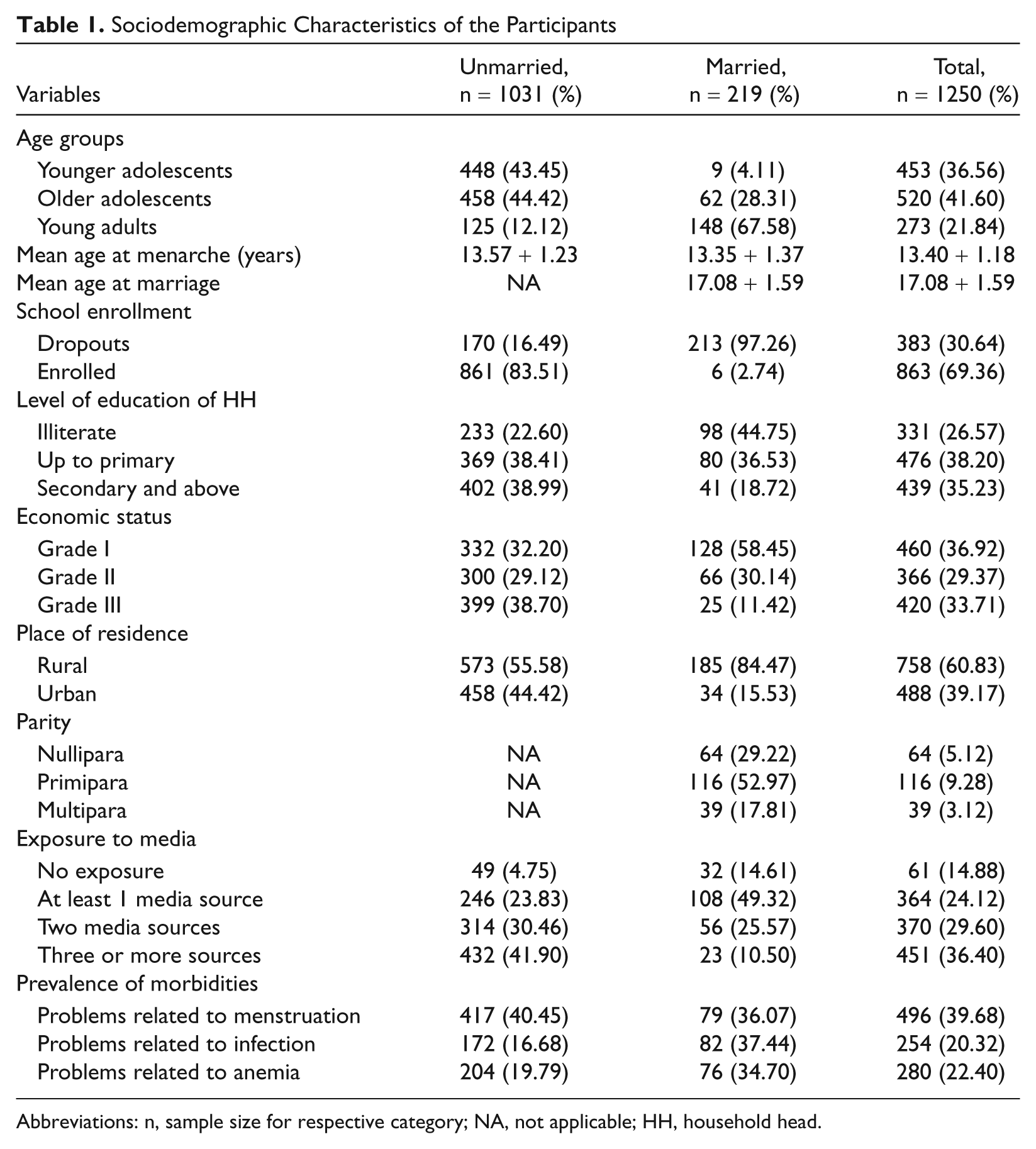
Abbreviations: n, sample size for respective category; NA, not applicable; HH, household head.
Significant decreasing trends for prevalence of reproductive health morbidities have been found with higher economic status and higher level of education of the household head (Figure 1). Independent variables, other than participant’s age and level of education, were not found to have significant increasing or decreasing trends for seeking treatment for menstrual problems.
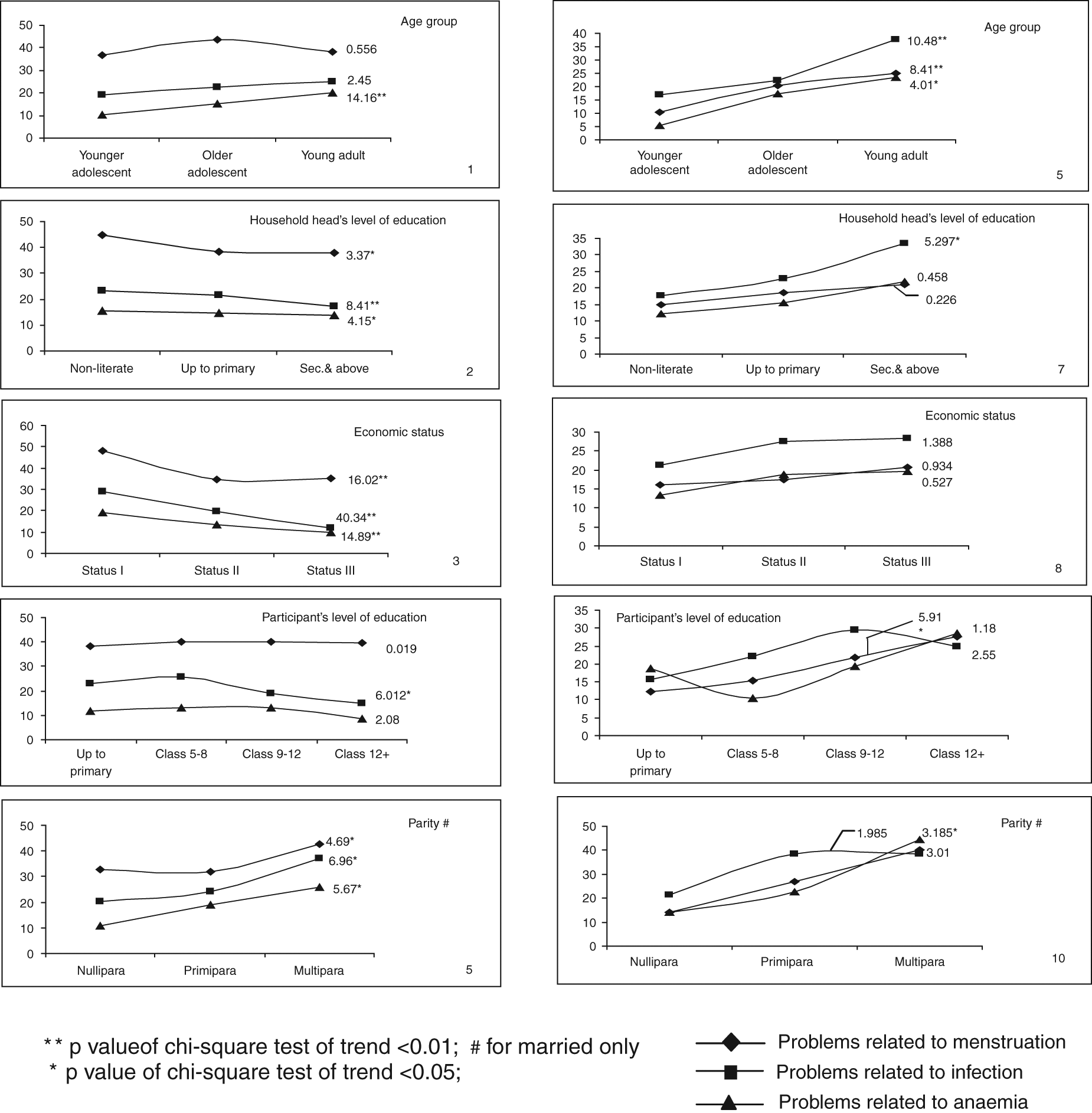
Based on results of test of trend for certain sociodemographic measures with prevalence of reproductive morbidities (1-4) and treatment seeking for respective morbidities (4-8)a
Results of logistic regression models testing for prevalence of all 3 types of reproductive health morbidities with their sociodemographic covariates are shown in Table 2. Participants’ age, marital status, economic status, and residential status are found to be significantly associated with the prevalence of menstrual problems. The odds ratio (OR) in favor of reporting menstrual problems is 2.35 for unmarried adolescents. Those residing in urban blocks are significantly less likely to report menstrual problems as compared with their rural counterparts (OR = 0.55).
Logistic Regression Analyses Showing Association of Prevalence of Reported Reproductive Problems With Socioeconomic and Demographic Variables Among Participants
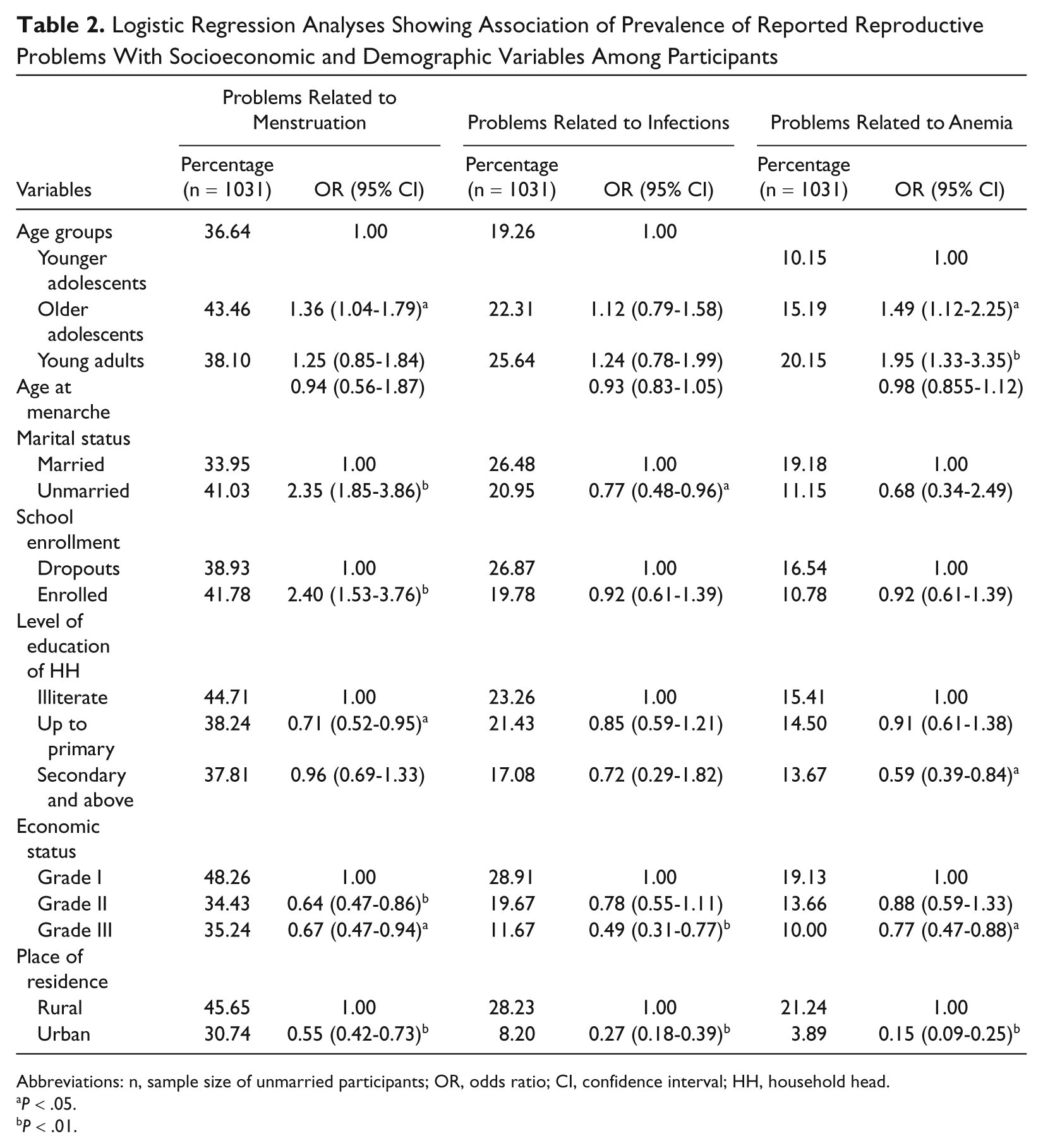
Abbreviations: n, sample size of unmarried participants; OR, odds ratio; CI, confidence interval; HH, household head.
P < .05.
P < .01.
Significant association has been observed between reporting of symptoms related to reproductive tract infections and participants’ marital status, economic status, and place of residence. The OR in favor of reporting problems related to infections are 0.27 for girls staying in urban as compared with rural areas. The OR in favor of reporting such problems is 0.49 for girls belonging to economic status grade III as compared with those in grade I.
Participants’ age and place of residence are significantly associated with likelihood of reporting symptoms that could be related to anemia. Young adults are about 2 times more likely to report such problems as compared with younger adolescents (OR = 1.95). The OR in favor of reporting problems related to anemia is 0.15 for urban girls.
Table 3 depicts the treatment-seeking behavior of participants for prevailing morbidities and its sociodemographic correlates. Participant age is found to be significantly associated with treatment-seeking behavior for all types of morbidities. In general, girls in the older age groups are significantly more likely to seek treatment for the morbidities they suffer as compared with their younger age group counterparts. Household head’s level of education is significantly associated with treatment-seeking behavior for girls. For instance, the OR for the household head’s secondary level of education is 2.63, when compared with that of illiterate household heads, to seek treatment for infection related problems. Similarly, higher ORs were found for place of residence. Urban girls are 2 times more likely to seek treatment for problems related to infections (OR = 2.02), and 4 times more likely to seek treatment for problems related to anemia (OR = 4.07). Association between media exposure and treatment-seeking behavior is also estimated to be significant. Participants who are exposed to the media are almost 3 times more likely to seek treatment for reproductive health morbidities.
Logistic Regression Analyses Showing Association of Treatment Seeking for Reported Reproductive Problems With Socioeconomic and Demographic Variables Among Participants
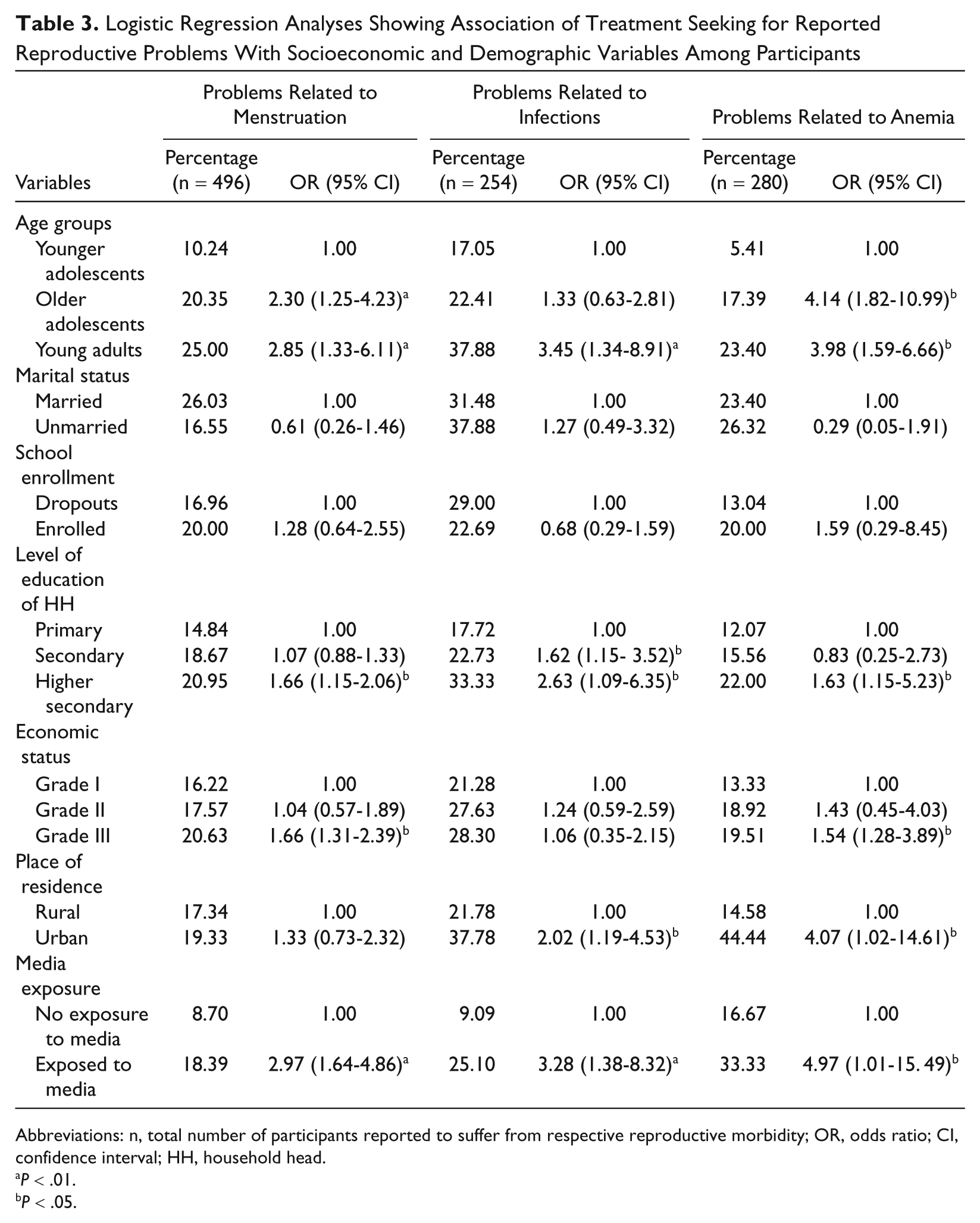
Abbreviations: n, total number of participants reported to suffer from respective reproductive morbidity; OR, odds ratio; CI, confidence interval; HH, household head.
P < .01.
P < .05.
Results of logistic regression models tested for married adolescents are shown in Tables 4 and 5. Statistically significant association is observed between participants’ present age and prevalence of menstrual and anemia-related problems, and between parity and problems related to infections and anemia. Use of pills showed significant association with all 3 categories of morbidities.
Logistic Regression Analyses Showing Association of Prevalence of Reported Reproductive Problems With Socioeconomic and Demographic Variables Among Married Girls
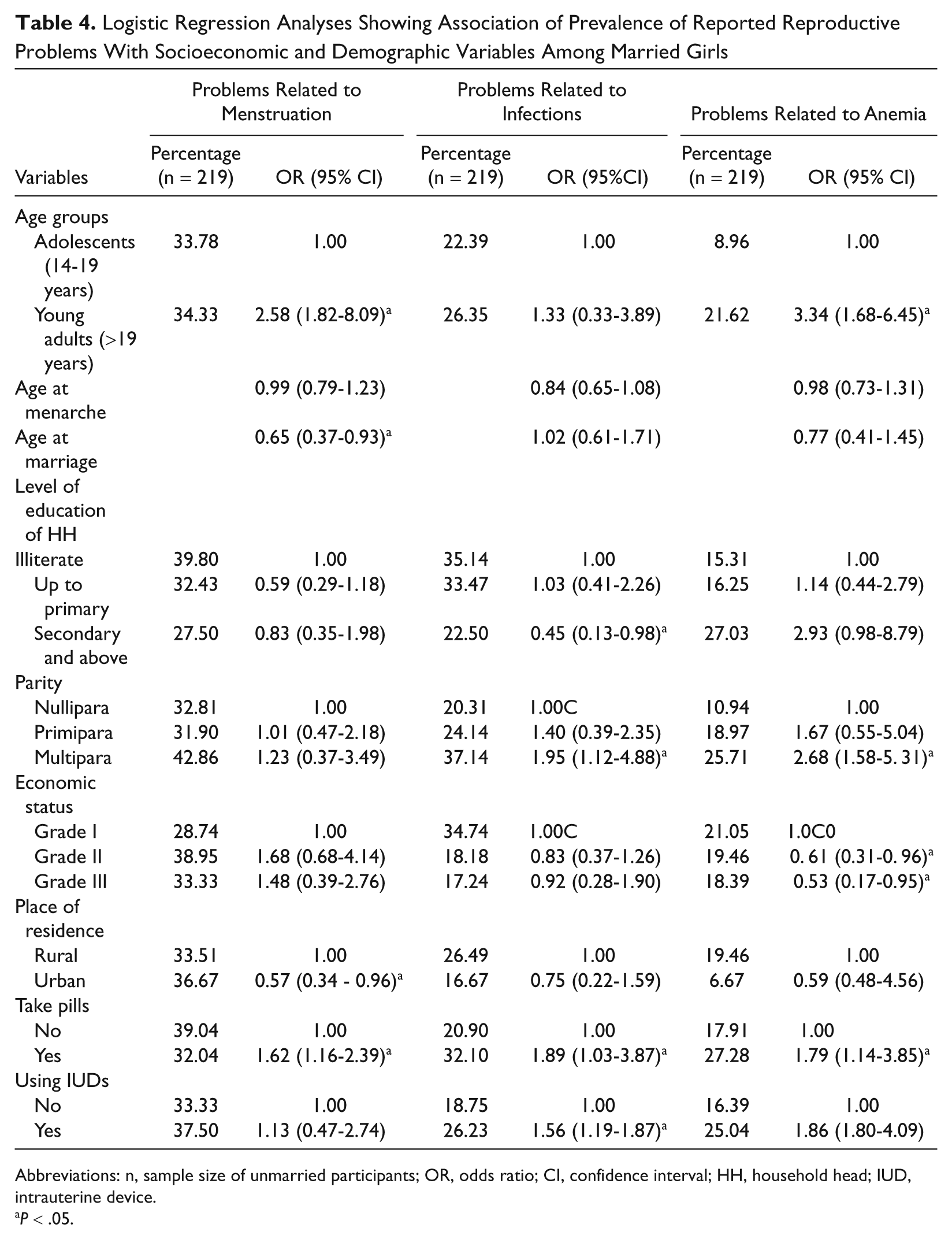
Abbreviations: n, sample size of unmarried participants; OR, odds ratio; CI, confidence interval; HH, household head; IUD, intrauterine device.
P < .05.
Logistic Regression Analyses Showing Association of Treatment Seeking for Reported Reproductive Problems With Socioeconomic and Demographic Variables Among Married Girls
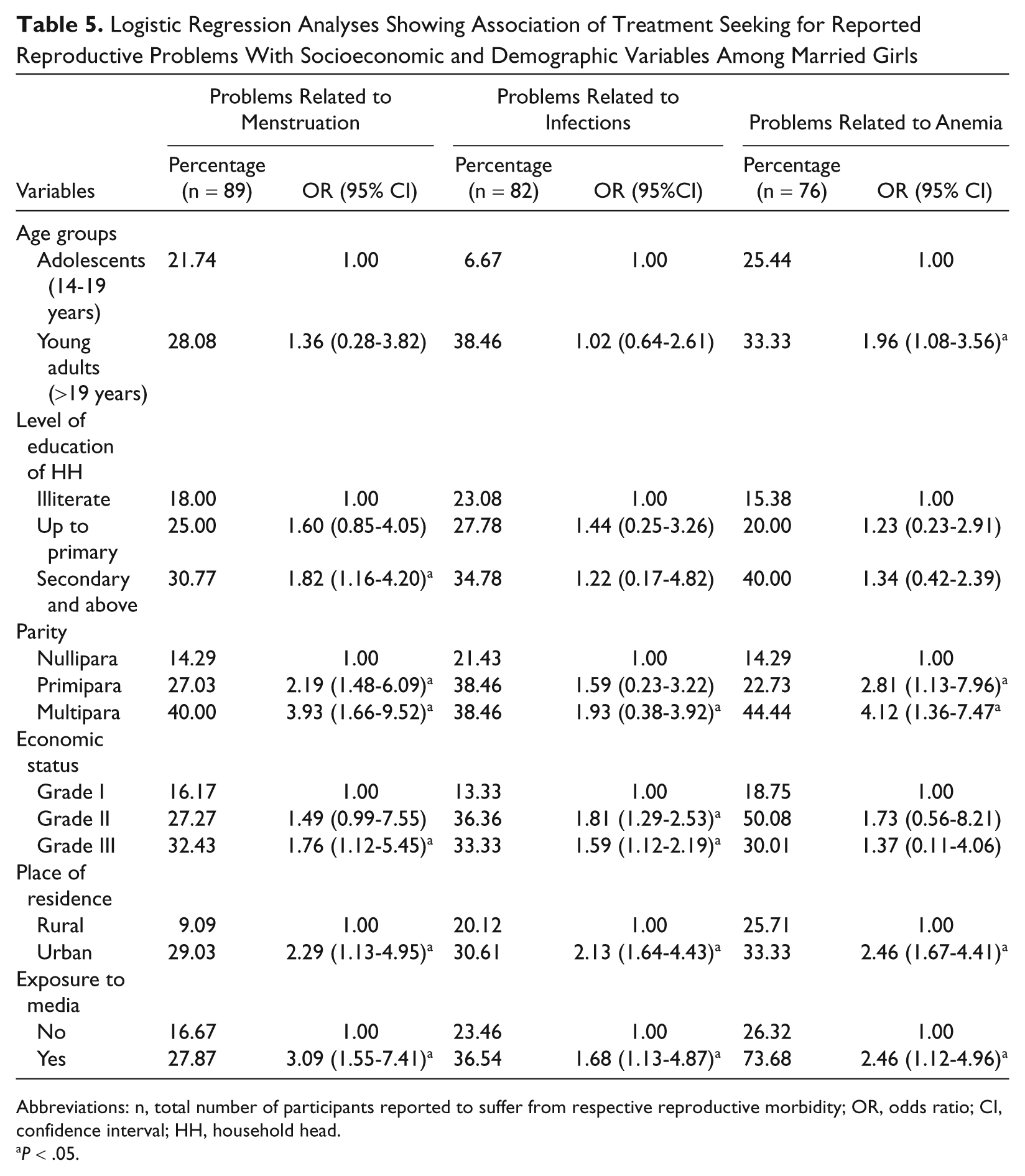
Abbreviations: n, total number of participants reported to suffer from respective reproductive morbidity; OR, odds ratio; CI, confidence interval; HH, household head.
P < .05.
Parity, place of residence, and media exposure are found to be significant predictors of treatment seeking for all 3 categories of morbidities among married girls. Multipara study participants are about 4 times more likely to seek treatment for problems related to anemia (OR = 4.12) and about 2 times more likely to seek treatment for problems related to infections (OR = 1.93) as compared with their nullipara counterparts. In general, it is observed that urban participants are about 2 times more likely to seek treatment for all 3 categories of morbidities as compared with rural participants. After controlling for other socioeconomic variables, girls having exposure to the media are 3 times more likely to seek treatment for problems related to menstruation (OR = 3.09) and about 2 times more likely to seek treatment for problems related to anemia (OR = 2.46).
Discussion
The present study addresses an important aspect of young people’s reproductive health, an issue which has hardly been the focus of health researchers in India. The findings of the study show relationships between prevalence of reproductive health morbidities and treatment-seeking behaviors of a group of adolescent girls with socioeconomic and demographic covariates. Relationship of prevalence of reproductive health morbidities is more pronounced with age, marital status, and the place of residence of girls along with use of oral pills and IUDs as contraceptive methods by married girls.
Results of the present study indicate a linear relationship between prevalence of reproductive ailments and age of participants (Figure 1). Both young adults and older adolescents were significantly more likely to report reproductive health morbidities as compared to younger adolescents. However, the magnitude of problems is higher among young adults. The results of regression analysis showed that unmarried girls are more likely to report menstrual problems, whereas married girls are more likely to report symptoms indicating their anemic status.
The trend of morbidity prevalence with age can be explained logically when treatment-seeking behaviors are also taken into consideration. It is observed that older adolescents and young adults are more prompt to seek treatment compared with younger adolescents. Such promptness in treatment seeking could be a result of their marital status. A large proportion of young adults (54.2%) and older adolescents (28.3%) are married and have easy access to the existing health care facilities meant to cater to their reproductive health needs in general. The design of health care infrastructure in most developing countries hardly acknowledges unmarried adolescents as a group with distinct needs, 11 and India is no exception to that. Despite having better treatment-seeking behavior, married girls are more likely to report problems related to anemia. Their lower economic status (58.45% belong to economic status grade I) as well as early and frequent childbearing (18% belong to multipara) could be 2 possible reasons behind this.
For unmarried girls, in spite of their sufferings, treatment-seeking behavior for menstrual discomforts or any other related problems remains poor when compared with their older counterparts. The possible reasons could be many: (1) poor cognition and inadequate awareness about the symptoms and consequences of the problems; (2) inappropriately designed health infrastructure, which fails to serve these young girls’ needs; and (3) last but not the least, the culture of silence, which forces them to silently bear the burden of the diseases because of social stigma. 31
Participants residing in urban areas are less likely to complain about reproductive health morbidities but are very prompt to seek treatments for it when reported compared with their rural counterparts (Figure 1). This can be attributed to better accessibility to reproductive health care facilities and higher level of awareness about reproductive health issues among urban girls. Results of the present study demonstrate that place of residence and exposure to media are significantly associated with the treatment-seeking behavior of the girls. Hence, strategic use of the media in generating awareness about reproductive health matters among young people should be promoted, even though media exposure has been shown to have a negative impact on the general behavior of adolescents in a few studies.32,33 Again, few studies acknowledge media as “super peer” for adolescents. 34 The significant association of economic status with reporting of morbidity symptoms and treatment-seeking behavior indicates its major role in health care utilization. This role can be modified largely with education and awareness through the media, which is seen to be a significant predictor of treatment-seeking behavior.
Multipara girls were about 2 times more likely to complain about all sorts of reproductive health morbidities as compared with nullipara ones, which indicates that repeated pregnancy had marked ill effects on the reproductive health of married adolescents. Higher prevalence of infection-related problems among oral pill and IUD users could be manifestations of contraceptive morbidities, which can largely be controlled by adopting suitable methods of contraception under the guidance of gynecologists, as shown in other studies. 35 Here, it is evident that early age at marriage enhances the risk of reproductive health morbidities for many reasons, including physical immaturity, early pregnancy, and frequent child bearing. 2 The reported higher prevalence of morbidities related to anemia among married adolescents, particularly among those of poor economic status, also needs to be looked into because the problem though avoidable is a major health risk among women in the developing world.19,36 The role of economic status is noted to be significant in reproductive health care utilization among adolescent girls in various countries, including India.37,38 In the present study, educational attainment and media exposure of participants are found to be significant predictors of treatment-seeking behavior, even after controlling for other socioeconomic variables. It indicates that ensuring education and disseminating relevant media messages among girls would lessen the ill effects of poor economic status in seeking treatment for reproductive health ailments, as observed in other studies as well.39,40
Strengths and Limitations of the Study
The present study adds to the existing literature by identifying the nature and magnitude of reproductive health morbidities and associated treatment-seeking behavior among adolescent girls in a less-studied population group. The additional strength of the study is that it was conducted on a population-based sample across the state of Sikkim, which provides baseline information about the reproductive health aspects of adolescent girls and young adults. The study has certain limitations too. It has not been possible to clinically verify the reported symptoms, and also, at times, some of the morbidities may have remained asymptomatic and therefore could not be assessed like in many other studies. 13
Conclusion
The present study illustrates that young adults are more likely to experience morbidities than other age groups. Increasing the load of morbidities with age, in spite of better treatment-seeking practices among higher age groups, implies a gap between morbidity rate and health care use. It shows that this phase of transition from adolescence to adulthood needs special care, both from social institutions, such as family and school, and health care institutions to increase awareness about reproductive health aspects and promote a youth-friendly health care system. In distant places, multipurpose health workers and teachers can be of great help to enhance awareness and motivate both married and unmarried girls to seek treatment for various discomforts related to reproductive health matters. Married girls are found to be more susceptible to anemia. Therefore, they should be included under the canvass of maternal and child health programs to avoid complications during pregnancy and delivery. It would be worthwhile to establish a special youth clinic at the district hospital level to provide both counseling and care for reproductive health problems faced by youth.
Footnotes
Acknowledgements
This research was supported by a grant from the Indian Statistical Institute. The authors are most grateful to the study participants and their parents for their unwavering support to complete the study. We are also grateful to the chief medical officers of all the 4 districts of the State who provided advice in developing questionnaires and also provided other infrastructural support during field work in Sikkim.
Both the authors have contributed in data collection and preparation of the manuscript.
The author(s) declared no potential conflicts of interest with respect to the authorship and/or publication of this article.
The author(s) received no financial support for the research and/or authorship of this article.