







Abstract
Objective. To describe the current situation of intentional injury among Vietnamese youth as well as risk and protective factors. Method. The Sample of Survey Assessment of Vietnamese Youth 2009 (SAVY2) involving 10 044 youth aged 14 to 25 in 2009 was used and compared with SAVY1 in this study. The data were analyzed using bivariate and multivariate statistical techniques. Results. Of the sample in 2009, 3% of the young people reported that they had been injured by a family member. The proportion who were intentionally injured by others outside their home was 7.6%. Youth who were most likely to hurt others included urban males, those who had ever been drunk, those who had been intentionally injured by others, and those who had weak family connectedness. Having suicidal thoughts (both sexes) is related to alcohol consumption. Conclusions. The rate of violent behaviors was low, but several risk and protective factors were found and confirmed.
Introduction
The pattern of emerging health problems in adolescents, such as unintentional injury and violence, are now drawing increasing attention from governments as well as the public. 1 Violent acts involving young people are among the most serious forms of violence in any society. Violence in schools or by young people on the streets or in their families has been documented in many studies worldwide. 2 Homicides and nonfatal assaults involving young people contribute substantially to the global burden of injury-related death and disability. 3 Adolescents and young people are both the main victims and perpetrators of such violence.2,3
Krug et al 4 categorized violence as follows: (1) self-directed violence, or violence in which the perpetrator is the victim (eg, suicide); (2) interpersonal violence, or violence inflicted by another individual or a small group of individuals; and (3) collective violence, or violence committed by larger groups, such as states, organized political groups, militia groups, and terrorist organizations. The first 2 categories are the main theme of this article.
Many studies in the Western world have shown the burden of interpersonal injury. A study in Israel of youth aged <18 years reported an annual incidence of violent injuries requiring emergency room treatment of about 0.2%. The same study reported youth homicide rates of 0.0013% in male and 0.0004% in female individuals. 5 Injuries were found to be among the leading causes of death in Jamaica where homicide rates have been sharply increasing since 1991; in 1997, the homicide rate in Jamaica was more than 5 times the US rate (45/100 000 vs 7.9/100 000). 6 A cross-sectional study published by Lee et al 7 that examined violence among 4500 adolescent students in secondary schools in Malaysia found that 27.9% of students had been involved in a physical fight, 6.6% had been injured in a fight, 5.9% had carried a weapon, and 7.2% had felt unsafe in the last 12 months in 2001. Adolescents who carried weapons to school, smoked, used drugs, felt sad or hopeless, or who were truant were more likely to be involved in physical fights after adjusting for age, sex, and ethnicity.
Most studies suggested the following categories of risk factors related to interpersonal violence: (1) individual characteristics (hyperactivity, impulsiveness, poor behavioral control, and attention problems), (2) negative parental behavior and family environment, (3) peer influences during adolescence (generally considered positive and important in shaping interpersonal relationships but can also have negative effects), (4) community factors (gangs, riots, carrying guns/weapons, instability), and (5) social domain, that is, poor social integration within a community, limited community members’ participation in youth social life, income inequality, and negative social changes. 4
Suicidal thoughts and attempts are the most common subjects of research regarding self-inflicted injury. A study of adolescents aged 12 to 17 years in Hong Kong found suicidal behavior in 3.4% of boys and 14.1% of girls. 8 In the study by Liu et al 9 of self-harm among 1362 students in 5 high schools in Shandong, China, 19% of the sample reported suicidal ideation, and 7% reported having made a suicide attempt during the previous 6 months. In another Asian country context, Chen’s study in Malaysia showed that from 4.7% to 16% of the female versus 2.4% to 11.4% of the male population of different races attempted suicide. 10 Among 4 groups (Malay, Indian, Chinese, and others), the proportion of attempted suicide was lowest among Malays of both sexes, then Chinese and Indian, and highest in other minority groups. Risk factors found in this study included female sex, depression, feeling hopeless or unsafe, and consuming alcohol.
In Vietnam, the Vietnam Multi-center Injury Survey (VMIS), the first nationally representative community-based study conducted in 2001, identified that among people younger than 20 years of age, injury accounted for 70% of the burden of disease, using the years of potential life lost measurement, compared with 17% from chronic diseases and only 13% from communicable disease. 11 For the age group younger than 20 years, VMIS showed that 95% of nonfatal injuries were unintentional and about 4% were intentional; undetermined intent accounted for about 1%. About 28% of fatal injuries in this age group was intentional and the rest (71%) was unintentional. 11 However, because of the small number of cases, the VMIS findings cannot provide details about the breakdown of these percentages in adolescent and young adult age groups nor show us more details about intentional injuries and violence.
Recognizing the emerging burden of injury, the Vietnamese government in 2001 established the first national policy on injury prevention. 12 The strategy set the goal to reduce unintentional injury in school, at work, at home, and in the community by the year 2010. However, it is important to highlight the fact that this policy only addresses unintentional injury and accident prevention. The Survey Assessment of Vietnamese Youth (SAVY1) in 2004 was the first national survey of its kind to provide a comprehensive description of the current situation of private and social life as well as health problems faced by adolescents and youth (henceforth referred to as youth) in Vietnam.
SAVY1 data revealed a relatively low rate of violence within the family. Only 2.2% of the youth reported that they were injured by a family member. This rate, however, is higher for male than female participants. It was also found that urban youth were again 0.5 times more likely to be injured by family members compared with their rural counterparts. For married youth, the rate of being injured by the spouse is 5.2% and highest for women aged 22 to 25 years (8.2%). This domestic violence problem is more common among Kinh people than ethnic minorities (6.1% vs 2.7%). 12 Based on SAVY1 data, the proportion of individuals being deliberately injured by others was 8% among Vietnamese youth and significantly higher among male than female participants. However, only 1.4% of the respondents reported that they had hurt other people seriously enough to require medical attention. Even though the proportion of individuals carrying weapons, taking part in a group riots, or taking part in motor racing was not high (2.3%, 2.5%, and 1.2%, respectively), many of these behaviors were associated with interpersonal violence. SAVY1 found several factors associated with perpetrating violence: male, ever been drunk, ever been intentionally injured by others, and ever participated in group riots or carried a weapon. It is interesting to note that youth who had been members of mass organizations or community clubs were 2 times less likely to hurt other people. To follow up results from SAVY1, SAVY2 was conducted 5 years later in 2009. This article compares the experience of intentional injury among youth in Vietnam between 2004 and 2009 and determines the risk and protective factors associated with intentional injury among Vietnamese youth.
Methods
In 2004, the Ministry of Health of Vietnam collaborated with international organizations to undertake the largest and most comprehensive survey of youth in Vietnam’s history. The study involved a cluster sample of 7584 youth, 14 to 25 years old, from 42 provinces (out of 61 provinces) across the country and was then widely known as the Survey Assessment of Vietnamese Youth. To follow-up with this assessment after 5 years, Survey Assessment of Vietnamese Youth 2 (SAVY2) was conducted in 2009. A household sample was used based on the Vietnam Living Standard Survey 2008 sampling frame. Compared with SAVY1, SAVY2 was a multistage cluster sample that covered all 63 provinces throughout Vietnam. Data collection was from mid-May to the end of June 2009. Similar to SAVY1, young people were invited to come to a central location to complete both an interview and a self-administered survey. Of those invited to participate in SAVY2, 86% agreed, resulting in a final total number of young people of 10 044. The survey questions involved in SAVY2 were designed to ensure comparability between the SAVY2 and SAVY1 and covered a wide range of topics: demographics; education; work; puberty; dating and relationships; reproductive health; HIV/AIDS; injury, illness, and physical health; knowledge/attitudes/beliefs regarding a range of issues; violence; mental health; mass media; and aspirations. The questionnaire was an anonymous and combined interview with self-administered questions for the sensitive issues (eg, violence and drug use behavior). SPSS package version 16.0 (SPSS Inc, Chicago, IL) was used for data management and analysis. As described above, the SAVY2 sample was drawn from the Vietnam Living Standard Survey 2008 sampling frame run by the General Statistical Office of Vietnam. At each stage, the sampling probability would be calculated. Finally, the overall probability of selection was computed, and individual respondent data were weighted to adjust for complex sampling design, making the results nationally generalizable. Data were then analyzed using bivariate and multivariate statistical techniques.
Results
Family Violence and Related Factors
Youth in the SAVY2 sample lived primarily with their biological parents (about three fourths of respondents). Among 10 044 respondents, male participants accounted for 51% (vs 49% female), and the age groups 14 to 17, 18 to 21, and 22 to 25 years accounted for 48%, 29%, and 23% of the sample, respectively. The majority of the sample was unmarried (83%), and reflecting the rural dominance of the population in Vietnam, it was found that 75% of the sample came from rural settings.
Although there were no specific questions in SAVY for violence severity, the survey included questions about youth injury as a result of being beaten by a family member(s). In SAVY2, the overall proportion for intentional injury/violence caused by family members was 3.0% (an increase over the SAVY1 result of 2.2%). Among those who reported having ever been beaten, nearly one third said that they were injured in the 12 months prior to the SAVY2 survey. The proportion tended to be higher when the adolescent was younger; for male participants, the prevalence of having been beaten by a family member by age group was 4.4%, 3.2%, and 1.7% for 14- to 17-, 18- to 21-, and 22- to 25-year-olds, respectively. For female participants, the proportions in these 3 age groups were 3.7%, 2.2%, and 0.8%, respectively. These proportions were higher than that in SAVY1 (for male participants aged 14-17, 18-21, and 22-25 years, the proportions were 3.7%, 3%, and 1.2%, and for female participants, they were 1.6%, 1%, and 2%, respectively). Generally, the rate of being hit among male participants tends to decrease with age.
Overall, male youth are more vulnerable to violence. Figure 1 shows the proportion of injury caused by violence by age/gender and marital status. This percentage was significantly lower in the married compared with the unmarried group, suggesting the potential of violence being caused by parents and other family members to unmarried youth, whereas married people (with a certain proportion of them having a more independent life) were at less risk of being injured by family members other than their spouse.
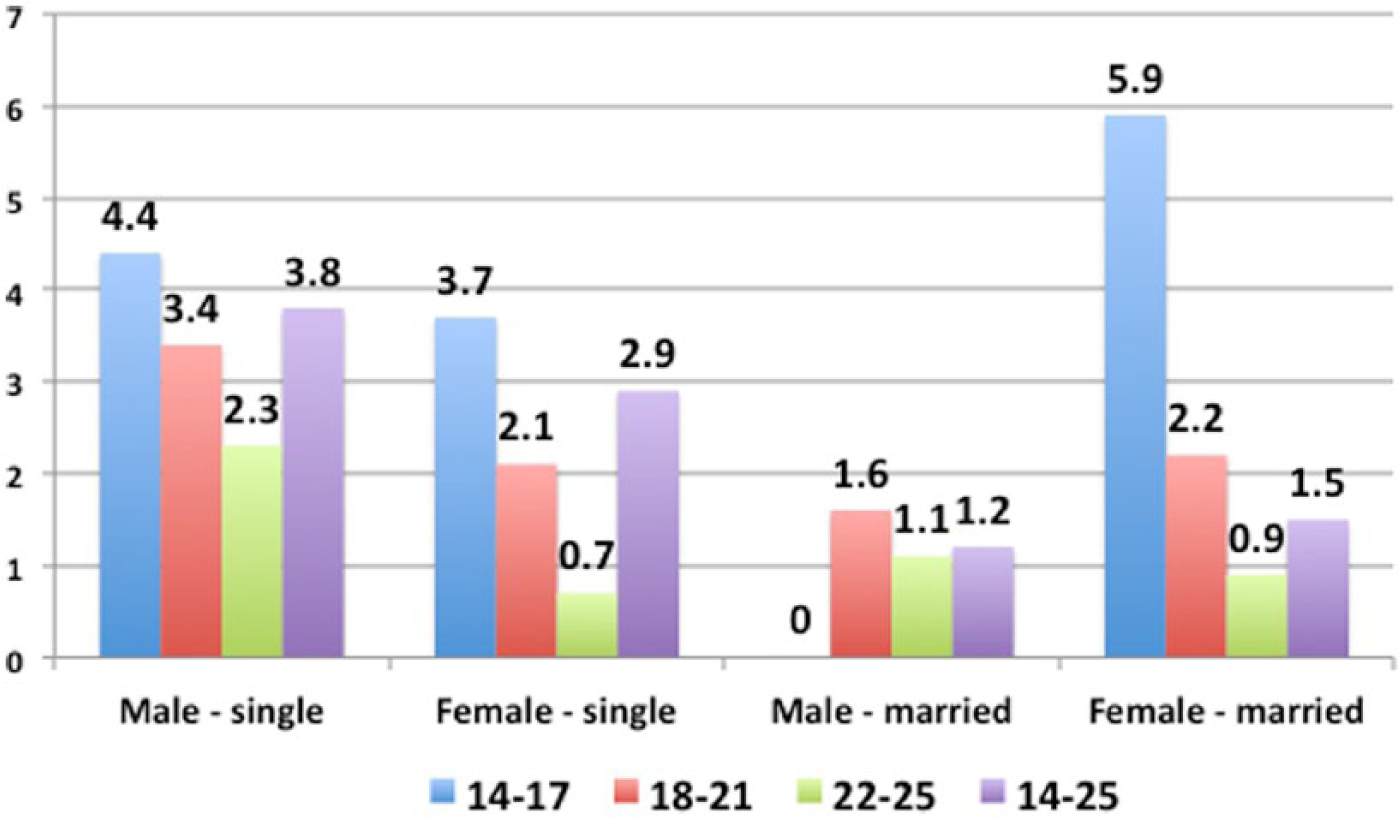
Percentage ever been injured by family members disaggregated by marital status, age group, and gender: SAVY 2009.
Bivariate analysis shows that urban youth are 0.5 times more likely to be injured by family members compared with their rural counterparts: 3% and 2%, respectively. This problem, however, did not significantly differ between ethnic groups or between economic status levels.
With regard to married youth, SAVY2 also explored the percentage who were ever hit by their spouse (Figure 2). The proportion of 4.1% was higher than the proportion of those who had ever been injured by other family members but lower than that in SAVY1 (5.2%). Women were nearly 6 times more likely than their male counterparts to report violence within marriage (1.0% vs 5.8%, P < .001). For women, this overall proportion in SAVY2 was slightly lower than that in SAVY1 (Figure 2). However, in younger age groups (14-17 and 18-21 years), the proportion in SAVY2 was higher compared with SAVY1. These data suggest that although the overall rate of exposure to violence within marriage was low, women disproportionately bear the brunt of it.
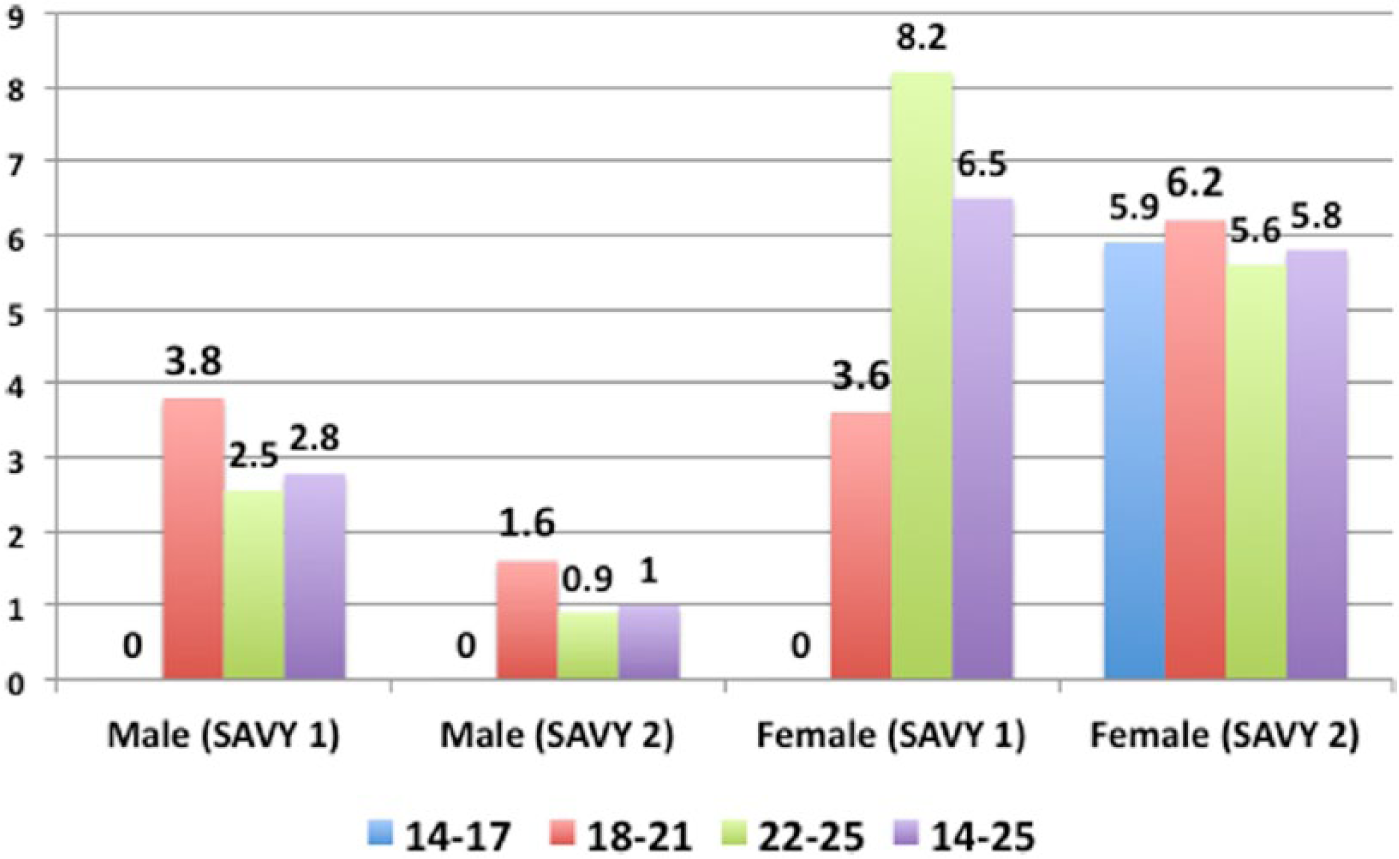
Percentage of married youth ever hit by spouse: SAVY 2009.
Regarding urban/rural differences, in terms of spousal violence, there was a trend for urban females to report more violence than their rural counterparts (8.4% vs 5.3%), but this difference was not statistically significant. With regard to the question about having been hit, married men were less likely to report it than their single peers. Similarly, the proportion of married men who reported perpetrating spousal violence was lower than the proportion of married women who reported victimization. Of the married sample, among married women, 1.4% reported that the wife beat the husband, and 0.9% reported that the wife was beaten by the husband.
Violence and Its Correlates Outside the Home
SAVY gathered information on youth victimization as well as risk behaviors and the proportion who were intentionally injured by someone outside their family. Findings indicated that 7.6% of the sample had ever been injured as a result of nonfamily violence—no real change from SAVY1. This proportion (both sexes) ranged from 7.1% to 8.9% across age groups but was highest among 18- to 21-year-olds, and as with SAVY1, it was significantly higher among male than female participants: 12.8% versus 2.3% (proportions found in SAVY1 were 13.6% in male vs 2.4% in female participants).
In addition to such questions on victimization, SAVY2 also collected the information on other violent behaviors, including gang membership, participation in group riots, motorcycle racing, carrying weapons, and whether the young person ever hurt anyone badly enough to require medical attention. Overall, incidence of these behaviors, although more commonly reported than in SAVY1, remain quite low. Of the sample, only 2.6% had participated in motorbike racing, and 4.7% participated in group riots (the proportions in SAVY1 were 1.2% and 2.5%, respectively). The proportion of youth who ever carried a weapon was 2.8% (vs 2.3% in SAVY1). With regard to group riots, this was much more likely to be a male and urban than rural (10.7% vs 6.8%, P < .05) and female (2.6% vs 1.2%, P < .05) phenomenon. Also, as income rises, so too does the reporting of participating in group riots: 9.4% in male participants from the wealthiest households versus 8.4% in midlevel and only 4.9% in households with the lowest income level; a similar pattern was seen among female participants: 2.2% versus 1.5% and 0.9%, respectively.
Bivariate analysis showed an association between violent behaviors and other risk behaviors among youth. Youth who had ever been drunk were 8 times more likely to hurt someone seriously enough for them to require treatment, compared with peers who had never been drunk (3.5% vs 0.4%, P < .01). Also, young people who had ever been injured by family members were more likely to cause injury to others outside the home. Multivariate analyses identified the strongest predictors of violence toward others. The following factors were explored using binary logistic regression:
socioeconomic and demographic variables: age group, gender, urban/rural residence, ethnicity, educational attainment, and economic status of the household;
family domain: living with the parents or living away from parents, experienced death of one or both parents, parental death during childhood, experienced divorce of parents, anyone in the family drinking alcohol, feel valuable to the family, and having been injured as a result of violence from a family member;
peer and friend/community domain: social isolation (having no friends), having ever been injured as a result of violence outside the home, and member of mass organization or club in the community; and
emotional life and personal habits/behaviors: had been drunk, had ever felt hopeless about the future, ever taken part in group riot, ever participated in motorbike racing, ever carried weapons, and ever used opium.
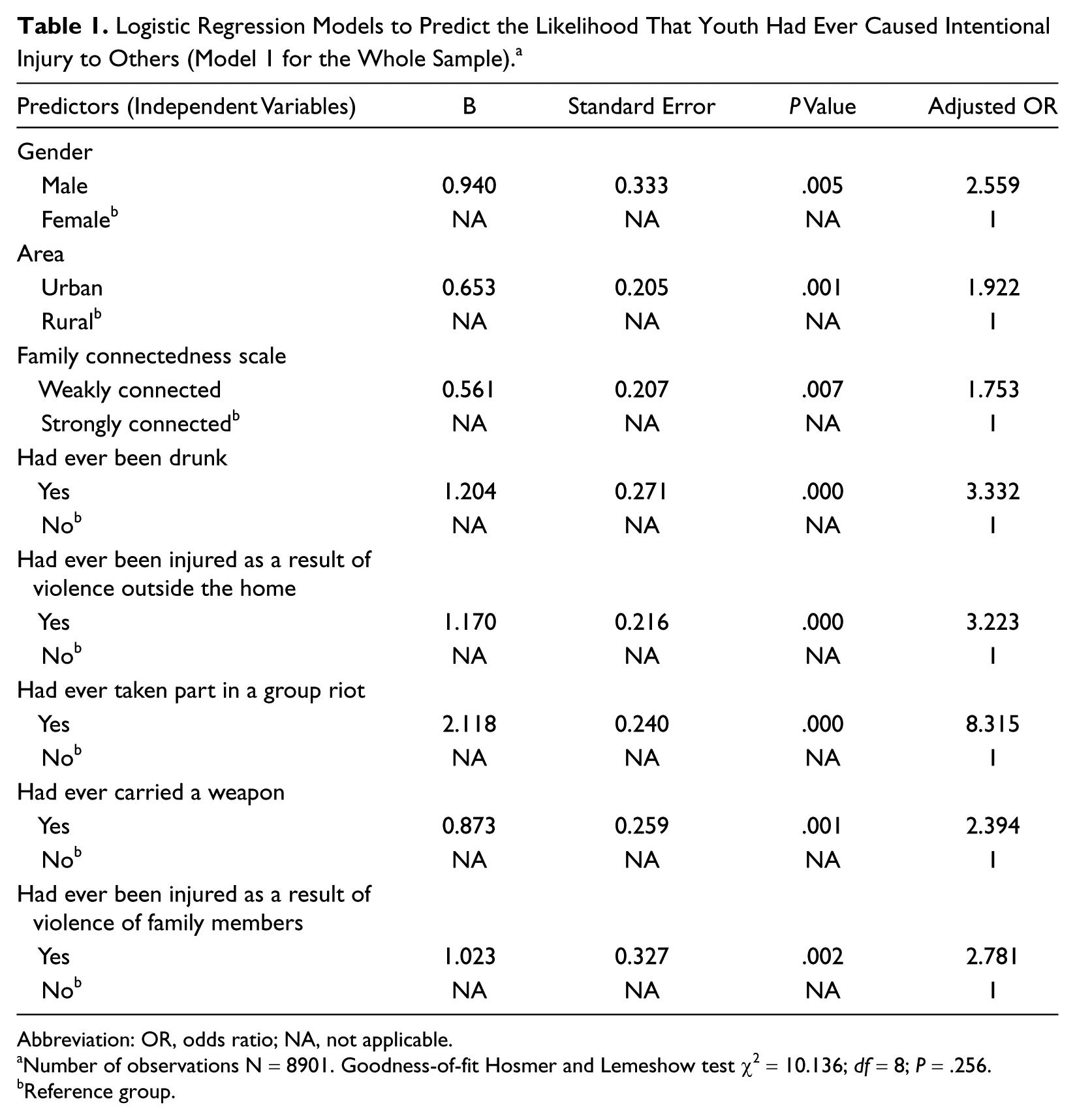
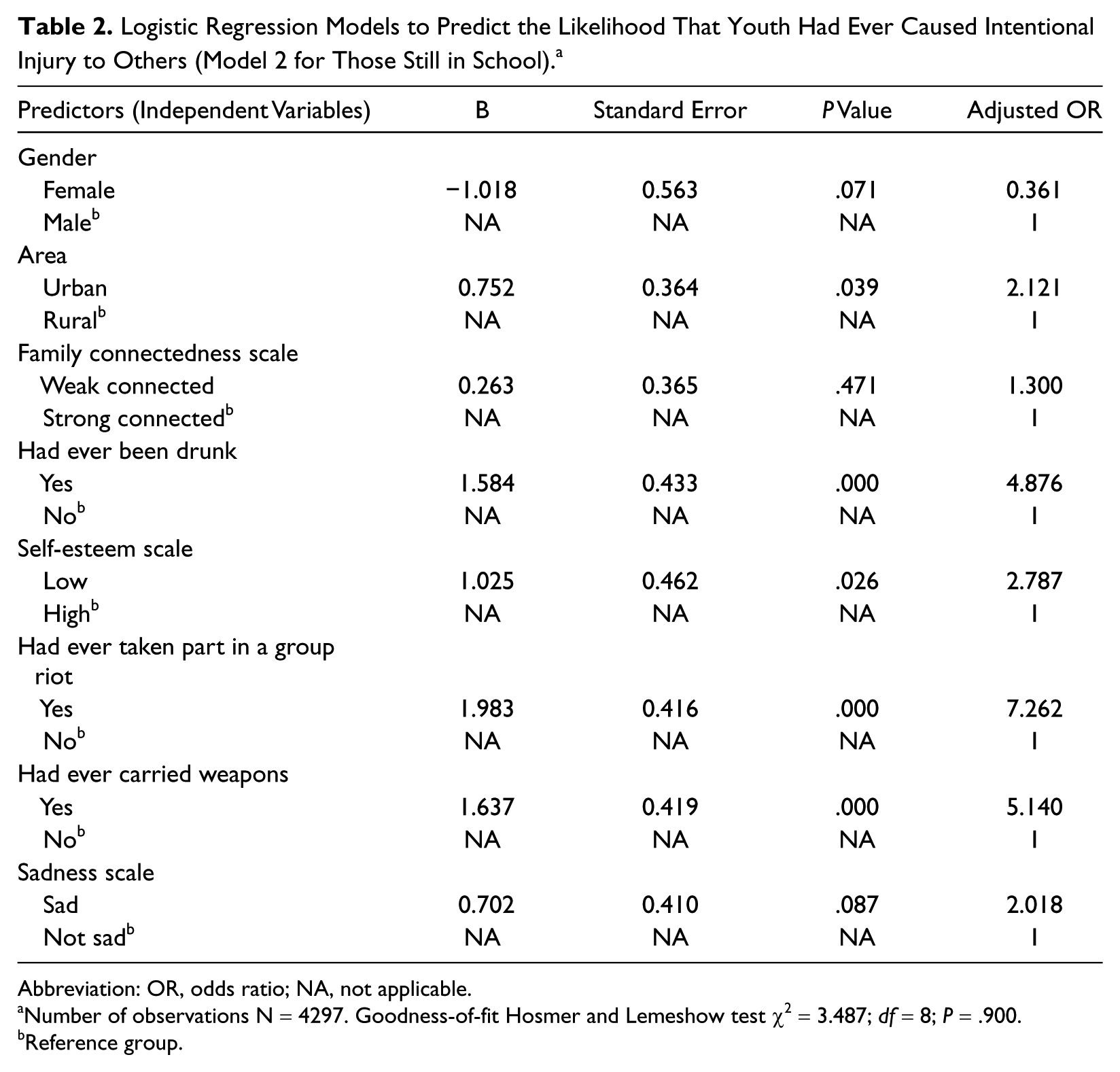
Taking into account the fact that the young people who were no longer in school might be exposed to different factors compared with those who were still in school, 2 regression models were developed. Model 1 (Table 1) was for the whole sample, and model 2 (Table 2) was for only those who still had a connection to school (this restriction of being in school certainly resulted in a smaller sample size compared with model 1).
Logistic Regression Models to Predict the Likelihood That Youth Had Ever Caused Intentional Injury to Others (Model 1 for the Whole Sample). a
Abbreviation: OR, odds ratio; NA, not applicable.
Number of observations N = 8901. Goodness-of-fit Hosmer and Lemeshow test χ2 = 10.136; df = 8; P = .256.
Reference group.
Logistic Regression Models to Predict the Likelihood That Youth Had Ever Caused Intentional Injury to Others (Model 2 for Those Still in School). a
Abbreviation: OR, odds ratio; NA, not applicable.
Number of observations N = 4297. Goodness-of-fit Hosmer and Lemeshow test χ2 = 3.487; df = 8; P = .900.
Reference group.
As presented in Table 1, the final regression model for the whole sample affirmed several associated factors previously found in SAVY1 as risks of violent behavior:
Males (odds ratio [OR] = 2.6)
Ever been drunk (OR = 3.3)
Ever been injured by others (OR = 3.2)
Participation in a group riot (OR = 8.3)
Weapon carrying (OR = 2.4)
In addition, SAVY2 data found 3 other important correlates: (1) urban respondents were at a higher risk (OR = 1.9); (2) those who had been injured by family members were 2.8 times more likely to behave violently; and (3) those who had strong family connectedness had nearly an 80% lower risk. Clearly, family connectedness was strongly protective. Age, ethnicity, geographic regions, socioeconomic status, sadness status, and self-esteem did not prove to be significant factors.
It is interesting to note in Table 2, with the regression model for youth who were still in school, that connectedness to school was protective; however, for school-going youth parental connection was no longer protective. This may reflect the very high prevalence of respondents reporting parent connectedness. Urban residence, participation in group riots, carrying weapons, and ever having been drunk are consistent risk factors for violence among school youth. Differently from the first model for the whole sample, for those still in school, self-esteem played a more important role. These data again confirm the importance of reducing alcohol abuse, participation in group riots, and weapon carrying, and at the same time, the data indicate that family connection and self-esteem are protective factors against violence toward others among those still going to school.
Self-inflicted Injury and Suicide Attempt
Similar to interpersonal violence, self-directed violence, including suicide thoughts and attempts are also addressed by SAVY2. The 3 main questions were about intentional self-injury, suicidal thoughts, and suicide attempts.
The findings show that 7.5% of youth in the SAVY2 sample reported having ever tried to injure themselves (vs only 2.8% in SAVY1), and 4.1% reported having ever thought of suicide (vs 3.4% in SAVY1). Of this SAVY2 sample, 102 (1%) young respondents ever attempted suicide (vs 0.55% in SAVY1). Although the rate of self-inflicted injury was relatively low, the lethality of attempts and the increasing trend since SAVY1 suggests that this is an issue that warrants close attention. There were also significant differences between male and female participants as well as youth in rural and urban settings. The highest proportion was found in the male, 14- to 17-year-old age group in rural areas (10.9%), followed by urban boys aged 14 to 17 years old (10.6%) and rural male participants aged 18 to 21 years old (9.1%). In both rural and urban settings, male participants were usually more likely than female participants to intentionally inflict self-injury; however, in contrast to SAVY1, for the whole sample aged 14 to 25years old, rural youth were overrepresented when compared with urban peers. Prevalence of suicidal thoughts was lower in male compared with female participants in both SAVY surveys (Figure 3). In both sexes, suicidal thought was related to alcohol consumption. Those who had ever been drunk were 2 to 3 times more likely to have suicidal thoughts (3.2% vs 1.4% in male and 12.6% vs 4.8% in female participants).
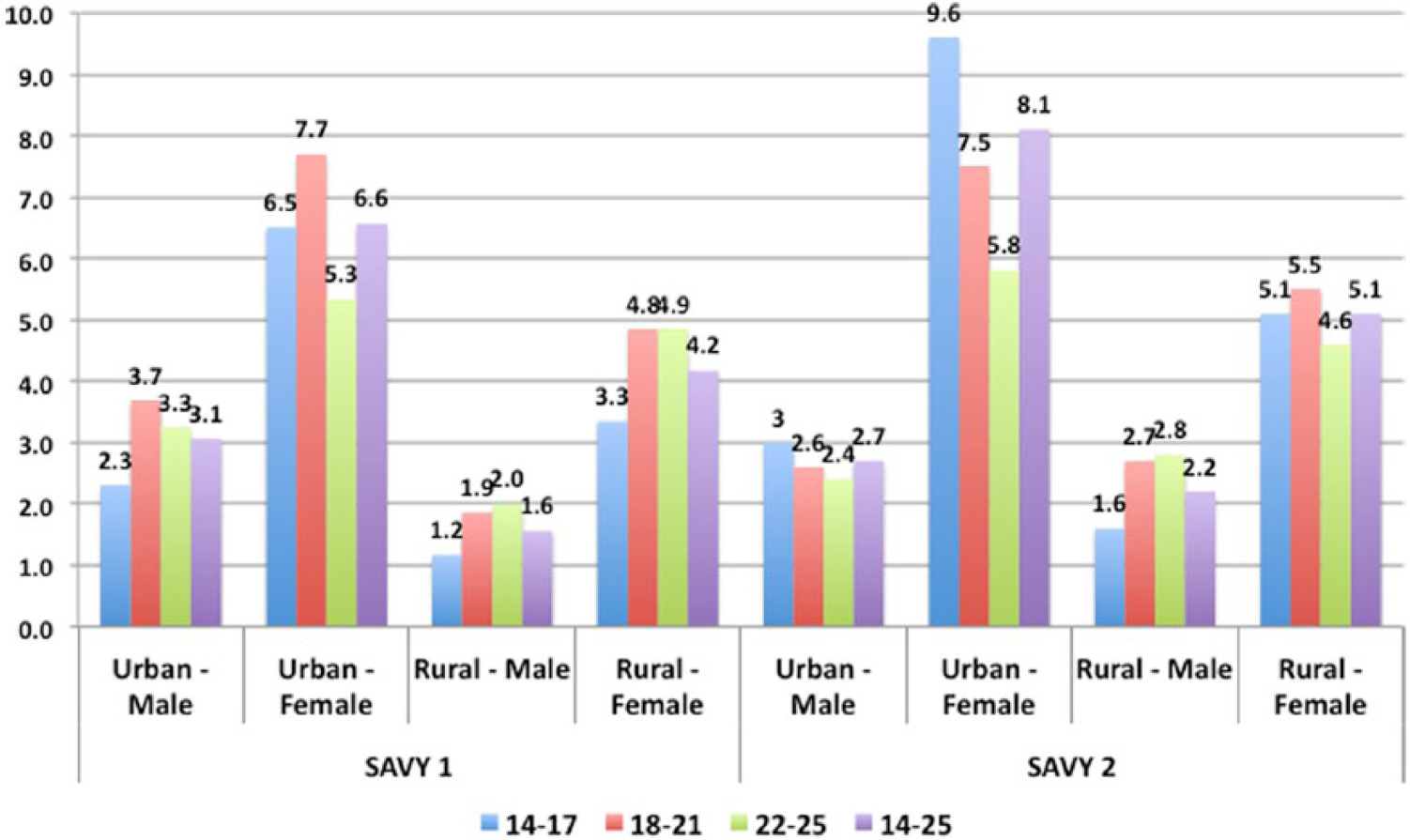
Percentage ever thought of suicide by gender, age group, and location.
Discussion
Intentional Injury Caused by Others
Even though the pattern of intentional injury found in the SAVY2 survey is not different from SAVY1 data and although the frequency of violent behaviors is still not very common, the magnitude of this problem seems to be more serious than previously reported. Regarding family, 3% of youth report having been injured by a family member. The rates by age group and sex are all higher than the rates found in SAVY1, and overall, male youth are more involved in violence. Also, urban youth are 50% more likely to be injured by family members compared with their rural counterparts. SAVY data revealed a rather low prevalence of violent behavior in the family compared with neighboring countries and some Latin American countries.6,13 Only 3% of youth reported that they were injured by a family member, although the prevalence was higher in male than in female participants.
Regarding married youth, the general lifetime prevalence of ever having been hit by a spouse was 4.1% across both sexes—lower than in SAVY1 (5.2%). Family conflicts may result in spousal conflicts and fights, including yelling, swearing, prohibiting each other from doing certain things, or hitting each other. Women are nearly 3 times more likely than men to be beaten (3.9% vs 1.4%). Although married women are hit more frequently, married men experience more of the other abusive behaviors (35% of men vs almost 29% of women, P < .05). This pattern was very similar to findings from SAVY1 where women were nearly 6 times more likely than their male counterparts to report violence within marriage, underscoring the fact that although not common in Vietnamese families, women are now exposed to domestic violence. This finding is comparable to other studies of domestic violence in Vietnam. Krantz and Vung 14 found that 9.2% of 883 rural married women studied had been exposed to physical or sexual violence during the preceding 12 months. How this compares with SAVY2 is difficult to say because SAVY collected only lifetime prevalence data, not data relating to abuse or violence over the preceding 12 months.
At 7.6%,violence among Vietnamese youth is lower than in neighboring countries in Asia. 15 The pattern of interpersonal violence outside the family setting in SAVY2 was quite similar to the pattern found in SAVY1 data. As reported in other countries, the proportion of being intentionally injured by others, however, was significantly higher among male than female participants. 2 Only 1.4% of the respondents reported that they had hurt other people seriously enough to require medical attention. Even though the proportion carrying weapons, taking part in a group riot, or taking part in motor racing was not high (2.8%, 4.7%, and 2.5%, respectively), these rates reflected an increase over the 5 years since SAVY1. Gang membership, participation in a group riot, motorcycle racing, and carrying a weapon have already been reported worldwide as risk factors for interpersonal violence by youth. 7 In the Vietnamese context, such behaviors have been seen as serious social problems. Overall, only a small proportion of youth had participated in motorbike racing or group riots; the proportion of youth reporting ever carrying a weapon was 2.8%, lower than in most other studies worldwide.6,7 It is important to note that with the accumulated data from these 2 rounds of national youth surveys, the following characteristics are associated with juvenile violence: males in the urban setting, those who had ever been drunk, those who had been intentionally injured by others, those who took part in group riots and carried a weapon, and those who had low self-esteem. Interestingly, youth who reported a strong connection with their family were 80% less likely to cause intentional injury to others. This specific protective factor has not been reported elsewhere in the Vietnamese literature, though it has been studied elsewhere.3,13
Some limitations of this study should be noted. The cross-sectional nature of both SAVY1 and SAVY2 does not allow us to deduce causality among those variables. Thus, it is not possible to clearly understand the complexity of the associations. For instance, a young girl in a highly violent family may be hit and beaten resulting in a hopeless feeling. Conceivably, she may then try to use alcohol, get drunk, and subsequently attempt suicide. This series of events cannot be documented in SAVY; however, such a pathway is described in the international literature on suicide.16-18 The long recall period is also a potential source of bias. The sampling design of these 2 rounds of SAVY did not allow us to interview the same individuals or panel of youth over time. Therefore, there is no way to measure the change in behavior of the same cohort of people over 5 years.
Self-inflicted Injury
The findings showed that Vietnam has one of the lowest rates of youth suicide attempts in the world. 3 Higher rates have been found in Malaysia, China, and Hong Kong.9,10,19 In contrast to the finding for violence against others, female respondents were found to be more likely to have suicidal thoughts and attempt suicide more than their male counterparts. The prevalence of attempted suicide was higher in married than unmarried youth, particularly among female respondents. This may reflect the fact that the difficulties and problems of married life have a more negative influence on the young wife’s emotional and psychological life than that of her husband. However, this finding also could be a result of the fact that married respondents were usually older.
Self-harm was more common in urban than in rural areas. Alcohol use was found to be a strong predictor of both violence against others and self-inflicted injury. Domestic violence and unhappy emotional life put youth, particularly young girls, at a higher risk of attempted suicide. These risk factors have been observed in similar studies in other countries. 8 Although the prevalence remains quite low in Vietnam compared with neighboring countries, there is a disturbing upward trend. This is an issue that deserves more attention because it may be an indication of social stress and future social problems. A better understanding of the factors that contribute to suicidal thoughts and suicide attempts among young people of Vietnam will be important if we are to avoid the same patterns here as are seen in much of Southeast Asia.
Conclusion and Implications For Prevention
SAVY2 data revealed a rather low prevalence of violent behaviors within the family as well as intentional injuries caused by others outside the home, but these rates have increased significantly over a 5-year period. Several risk and protective factors were consistently found in both rounds of SAVY. As the data indicated, family connectedness in youths might help decrease their risk of getting involved in violent behavior toward others. For those young people who are still in school, life skills education and other interventions that provide skills and strengths may improve self-esteem and help reduce interpersonal violence. Alcohol consumption was related to both interpersonal and self-inflicted violence. Therefore, alcohol abuse should be more comprehensively addressed and controlled because this is strongly associated with both intentional and unintentional injury prevention. Last but not the least, enforcement of age restrictions for alcohol consumption would be an appropriate consideration at this time in Vietnam.
Footnotes
Acknowledgements
The authors would like to thank the Ministry of Health for their permission to use the SAVY data.
Authors’ Note
This study was made available with the support from the Ministry of Vietnam by granting permission for data use.
Declaration of Conflicting Interests
The author(s) declared no potential conflicts of interest with respect to the research, authorship, and/or publication of this article.
Funding
The author(s) received no financial support for the research, authorship, and/or publication of this article.