






Abstract
The general practitioner (GP) system has been widely applied around the world and experimented with in Shanghai, China. To analyze some of the influencing factors on patient-GP contracts, we developed a questionnaire and conducted site investigations in 2011 and 2012 to 1200 patients by random sampling from 6 pilot community health service (CHS) centers in Pudong, Shanghai. The t test, χ2 test, factor analysis, and logistic regression analysis were used to analyze the data. The factors influencing patients’ contract behavior were age (OR = 1.03; 95%CI = 1.02-1.04), education level (OR = 0.83; 95% CI = 0.75-0.93), social interaction of social capital (OR = 1.34; 95% CI = 1.15-1.56), acceptance of first contact in community (OR = 3.25; 95% CI = 2.07-5.12), the year of investigation (OR = 2.58; 95% CI = 1.92-3.47), and the exposure to publicity (OR = 1.60; 95% CI = 1.39-1.85). Elderly patients formed a focus group to sign contracts with GPs. To increase trust in GPs by patients, it is recommended to improve the level of CHSs, strengthen publicity, and cultivate social capital among patients.
Introduction
The establishment of a new health service system based on community health services (CHSs) is one of the emphases in the Opinions of the Communist Party of China Central Committee and the State Council on Deepening the Health Care System Reform in 2009. 1 Furthermore, the Guidance on Establishing a general practitioner (GP) system 2 issued by the State Council of the People’s Republic of China in 2011 has strengthened the importance of CHS provided by GPs in the national health strategy. With the understanding that GPs can meet at least 80% of patients’ needs as well as acting as gatekeepers, they can contribute to cost control by reducing unnecessary hospital admissions. 3 More than 50 countries in the world have health care systems based on the GP model. China is now calling for a primary care system based on GPs to ensure good quality care and cost effective care. 4 Being a major city in China, Shanghai has CHS-based GPs, particularly in Pudong New Area, which has one of the most advanced health care systems in the country. 5
In a primary care model based on GPs, the system of first contact in community (FCC) should be used. To attract and guide the patients to have first contact in CHS centers, GP teams and administrative departments are working on the promotion of contract relationships with community patients all over China. The purpose is to supply the public with basic health care services by separating the government public finance expenditure and fundamentally improve and reshape the doctor-patient relationship. 6 The ultimate goal of the GP system is that each family can have its own GP, and the patient-GP contract is the first critical step. 7 In these contracts, the rights and obligations between the 2 sides are clearly defined. GPs would have an obligation to provide primary health care services, including traditional Chinese medicine, disease prevention, home care services, periodic health assessment, and health management. The patients have an obligation to provide their personal health information and to receive timely treatment through appointments and referrals to regional medical institutions.
Thus, the contract rate based on GP care will directly affect the successful implementation of health care reform in China. Previous Chinese studies mainly dealt with investigating the importance and actual effects of the contract, the implementation experience of the contract, and contractual difficulties.8-10 Some studies noted that the concept of social capital should be explored within the GP system. 11 The main purpose of this study is to analyze the main influencing factors of contract behavior, including the concept of social capital, and put forward some suggestions for further development of the GP system of health care.
Methods
Study Design and Sample
As the largest district in Shanghai, Pudong New Area has 45 CHS centers. By 2012, there were 6 pilot CHS centers involved in the implementation of the GP system. This study was conducted in the first 2 weeks of October 2011 and 2012 in all 6 CHS centers in Pudong New Area. In each CHS center, 100 patients were randomly selected from those who were seeing a GP. Participants were permanent community inhabitants in Shanghai older than 18 years and agreed to sign the informed consent. Those who either refused to sign the informed consent or were patients with major psychiatric disorders were excluded from our sample.
Our preinvestigation showed that most outpatients in CHS centers were older people. This is mainly because older people always have more accessible and convenient health care services needs than young people. It also meets with CHS centers’ present function. As the aging population increases all around China, older people will undoubtedly be the main group utilizing CHS resources. 12 Furthermore, considering the current shortage of GPs in China, focusing on older people is one appropriate entry point to improve the GP system, which will be more consistent with the actual situation in Pudong New Area and even in China.
Questionnaire
A questionnaire was designed based on the literature review13,14 and subject to an expert consultation. The questionnaire consists of 4 parts: the sociodemographic characteristics of patients, such as gender, age, education level, occupation, and type of insurance; first contact tendency and attitude toward FCC; social capital; and satisfaction with the publicity campaign.
In our study, FCC means that patients should first go to see their contracted GPs in the CHS center for initial diagnosis and treatment. The GPs will refer patients to secondary medical institutions in a timely fashion if needed, which forms the basis of establishing a primary care GP referral to consultants system.
A previous study had noted that the GP system is lacking in social interaction and social identity, which creates a bottleneck, and, therefore, the concept of social capital should be introduced. 15 The new definition of social capital by Canadian Policy Research Initiative is a social network based on trust, mutual benefit, and mutual assistance. 16 Its factors can be defined from social interaction, trust, and sense of security; mutual benefit and social support; network of personal relationships; neighborhood cohesion; informal social control; community identification; and a sense of belonging. 15 Based on existing research about social capital and expert consultations, 7 questions were designed.
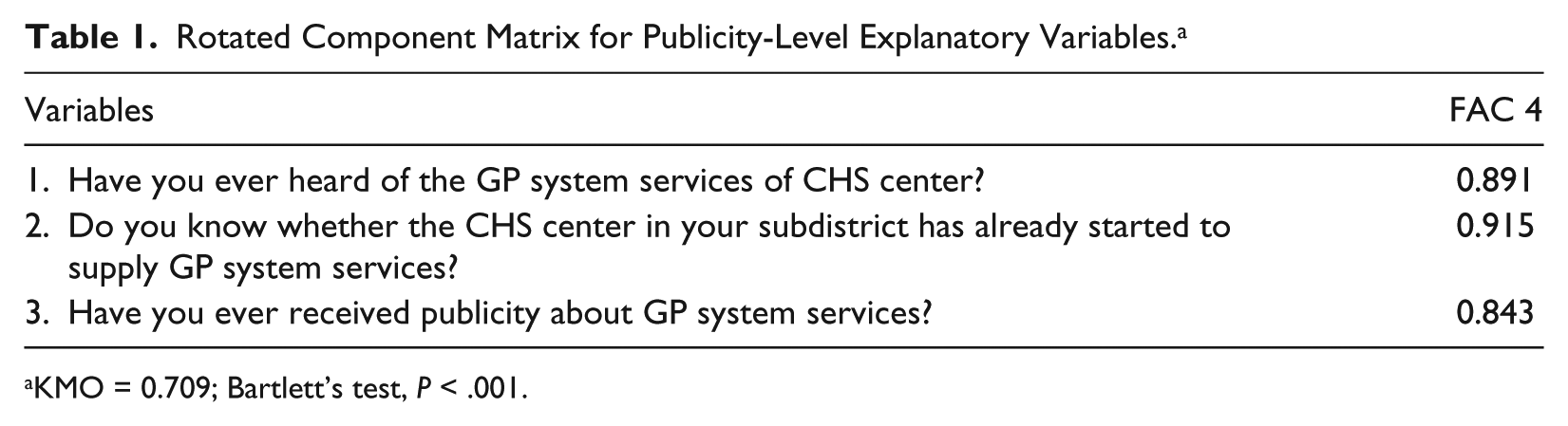
In the implementation of the GP system, public awareness through publicity campaigns is important. Since 2011, system designers and administrative management departments had a publicity campaign to get people to understand the GP system and ultimately accept it. Three questions were designed to explore the effectiveness of the publicity campaigns; they are listed in Table 1.
Rotated Component Matrix for Publicity-Level Explanatory Variables. a
KMO = 0.709; Bartlett’s test, P < .001.
Data Collection
All participants in the study were voluntary, and they signed informed consent prior to their inclusion. Ten investigators underwent group training in advance. Questionnaires were checked by quality controllers at the end of each day in case of any problems. Any problems identified were rectified by contacting the corresponding participant. The participants who came to CHS centers for consultation were asked to complete the questionnaires before they left. Finally, 1200 valid questionnaires were collected. The definition of a valid questionnaire was that it should have <5% missing data.
Data Processing and Statistical Analysis
All data were input twice by Epidata3.1 software to reduce error in the process of data entry. Data analysis was performed with SPSS for Windows, version 16.0. The threshold of statistical significance was set at P < .05 (2-tailed). On the basis of descriptive statistics on contract behavior, first contact tendency, and attitude toward FCC, comparisons were made between groups who had and had not signed a contract by using the t test (for continuous measurement data) and χ2 test (for categorical variables). Before the t test was used for analyzing the variables of social capital and publicity, factor analysis was carried out to reduce the number of dimensions. A binary logistic regression analysis was performed to explore the factors that had an effect on the patient’s decision to sign a contract with GPs.
Results
Sociodemographic Characteristics of the Study Group
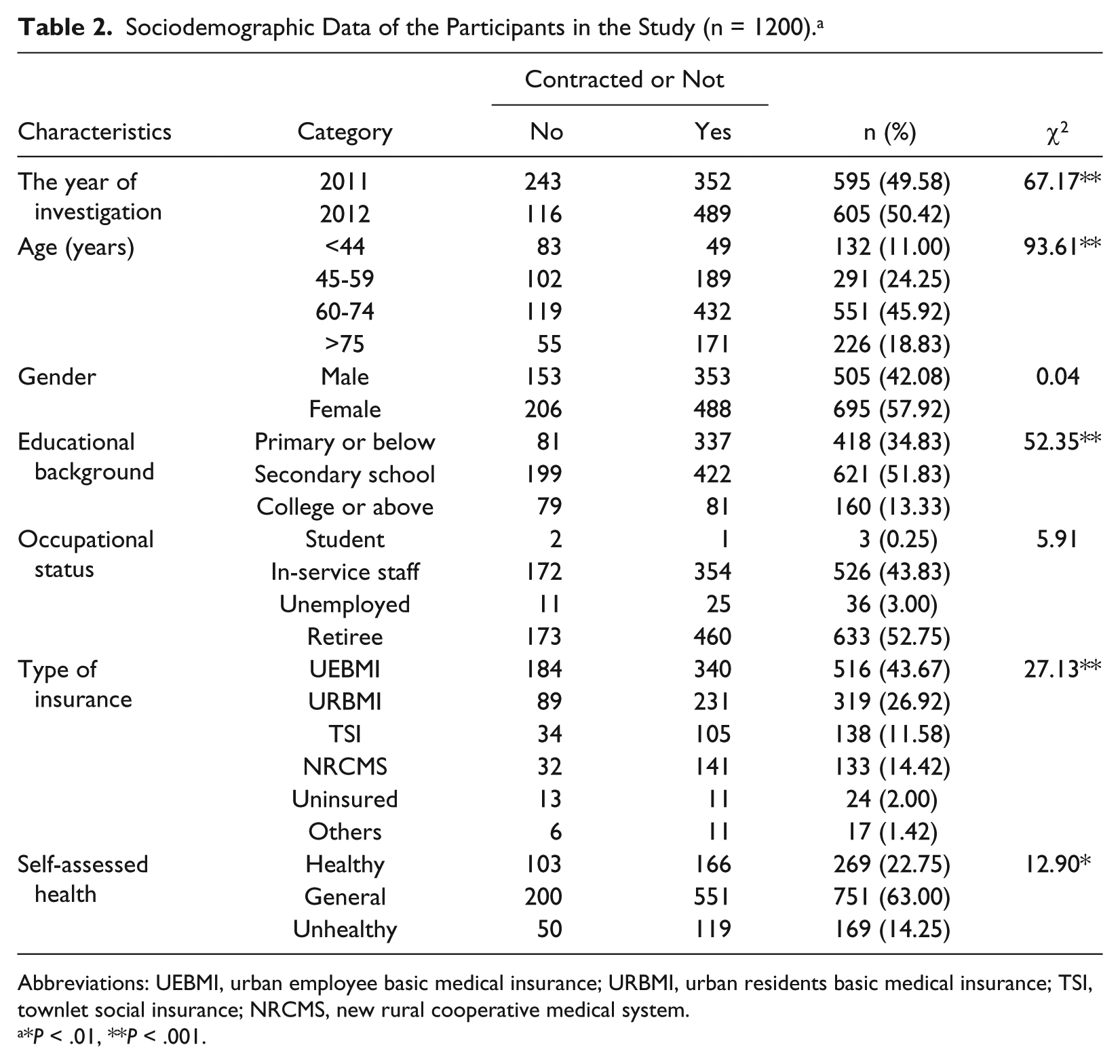
A total of 841 (70.08%) patients had signed contracts with GPs, and 359 (29.92%) had not. The mean age of the investigated patients was 62.36 (±13.82) years, ranging from 20 to 92 years. The majority of patients had completed secondary school education (621, 51.83%), with 160 (13.33%) patients having college-level or higher education and 418 (34.83%) having only primary school–level or lower education. Among them, 751 (63.00%) patients thought that their health status was average, and 269 (22.75%) thought they were healthy, whereas 169 (14.25%) thought that they had health problems. There were statistical differences in contract rates depending on investigated year, age, education background, type of insurance, and self-assessed health status (P < .05 for all). The sociodemographic characteristics of the study group are presented in Table 2.
Sociodemographic Data of the Participants in the Study (n = 1200). a
Abbreviations: UEBMI, urban employee basic medical insurance; URBMI, urban residents basic medical insurance; TSI, townlet social insurance; NRCMS, new rural cooperative medical system.
*P < .01, **P < .001.
Patients’ Perspectives of FCC
In this study, 965 (80.42%) patients chose to go to CHS centers (or stations) when they needed to see a doctor; 209 (17.42%) tended to choose secondary or tertiary hospitals as their first option; 24 (2.00%) went to other medical institutions such as private hospitals; and 3 (0.25%) patients chose not to see a doctor. In their attitude toward FCC, 806 (67.05%) patients acknowledged their acceptance of the concept, and 128 (10.65%) said that they could not accept it; 266 (22.17%) were indifferent. There were statistical differences in contract rates between different first contact tendency (P < .05) and different attitudes toward FCC (P < .05).
For those patients who accepted FCC, the first 3 reasons were convenience (1063, 88.58%), good service attitude (632, 52.67%), and cost-effectiveness (568, 47.33%). For those who did not accept, the first 3 factors that patients worried about were blocking the discretional choice of medical services (468, 39.00%), treatment delay (294, 24.50%), and misdiagnosis (261, 21.75%).
Social Capital
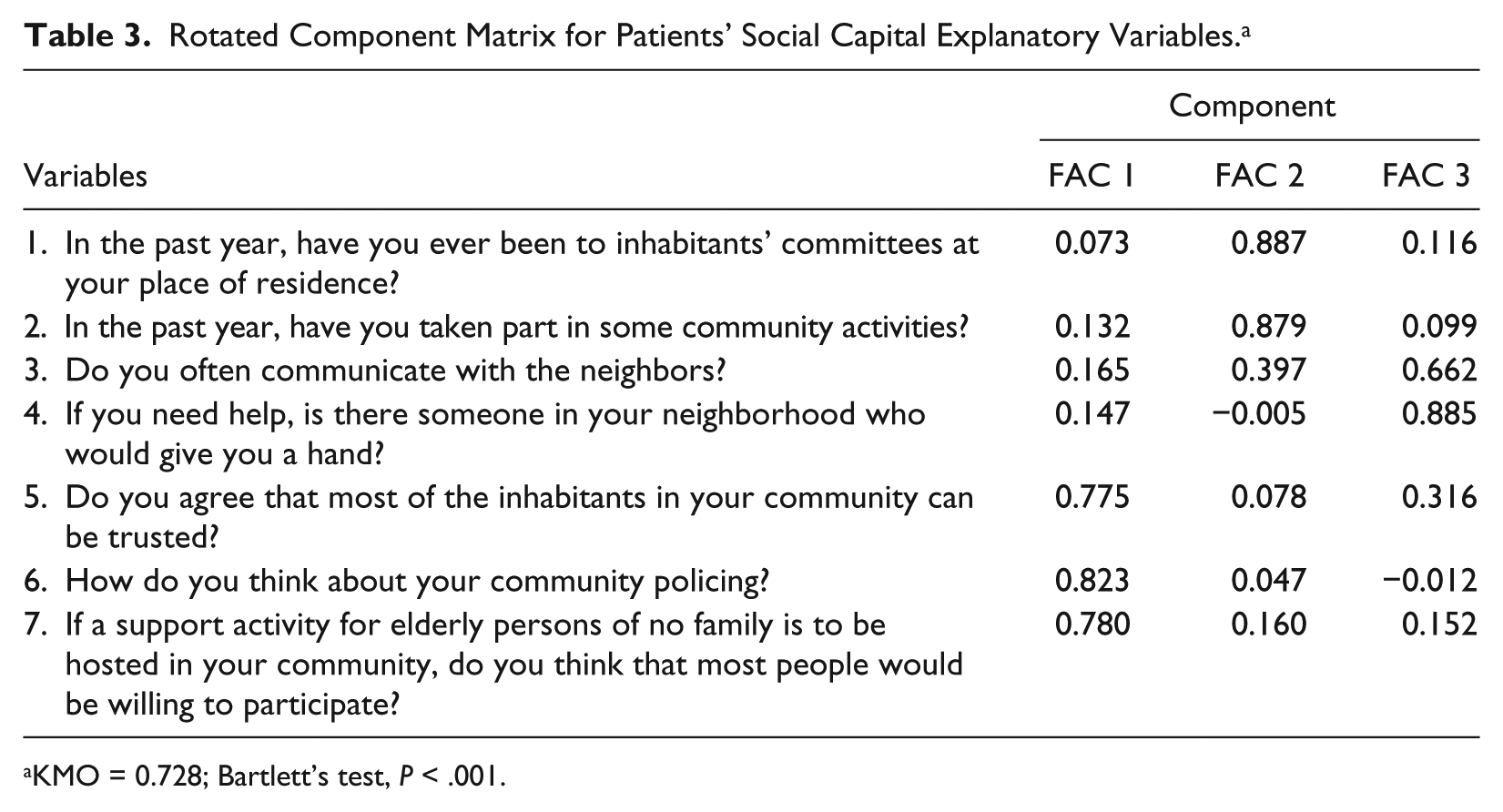
In all, 7 questions were asked as explanatory variables of patients’ social capital in the questionnaire and are listed in Table 3. Factor analysis showed that FAC 1 mainly explained variables 5 to 7; FAC 2 mainly explained variables 1 to 2; FAC 3 mainly explained variables 3 to 4 (Kaiser-Meyer-Olkin [KMO] = 0.728; Bartlett’s test, P < .001). FAC 1 to FAC 3, respectively, represent social trust, social interaction, and social support. It was found by a t test that some social capital factor scores were different between patients who had signed up with GPs and those who had not (FAC 1: t = −3.130, P = .002; FAC 2: t = −8.114, P < .001; FAC 3: t = −0.737, P = .462).
Rotated Component Matrix for Patients’ Social Capital Explanatory Variables. a
KMO = 0.728; Bartlett’s test, P < .001.
Publicity
Three questions about publicity campaigns were asked in the questionnaire. These are listed in Table 1. Factor analysis was adopted to eliminate the collinear problem among all publicity variables (KMO = 0.709; Bartlett’s test, P < .001). The calculated score of FAC 4 represented the level of publicity well (explained 78.014% of the variance). The t test showed that publicity scores were different between patients who had signed up with GPs and those who had not (t = −10.733; P < .001).
Binary Logistic Regression Analysis
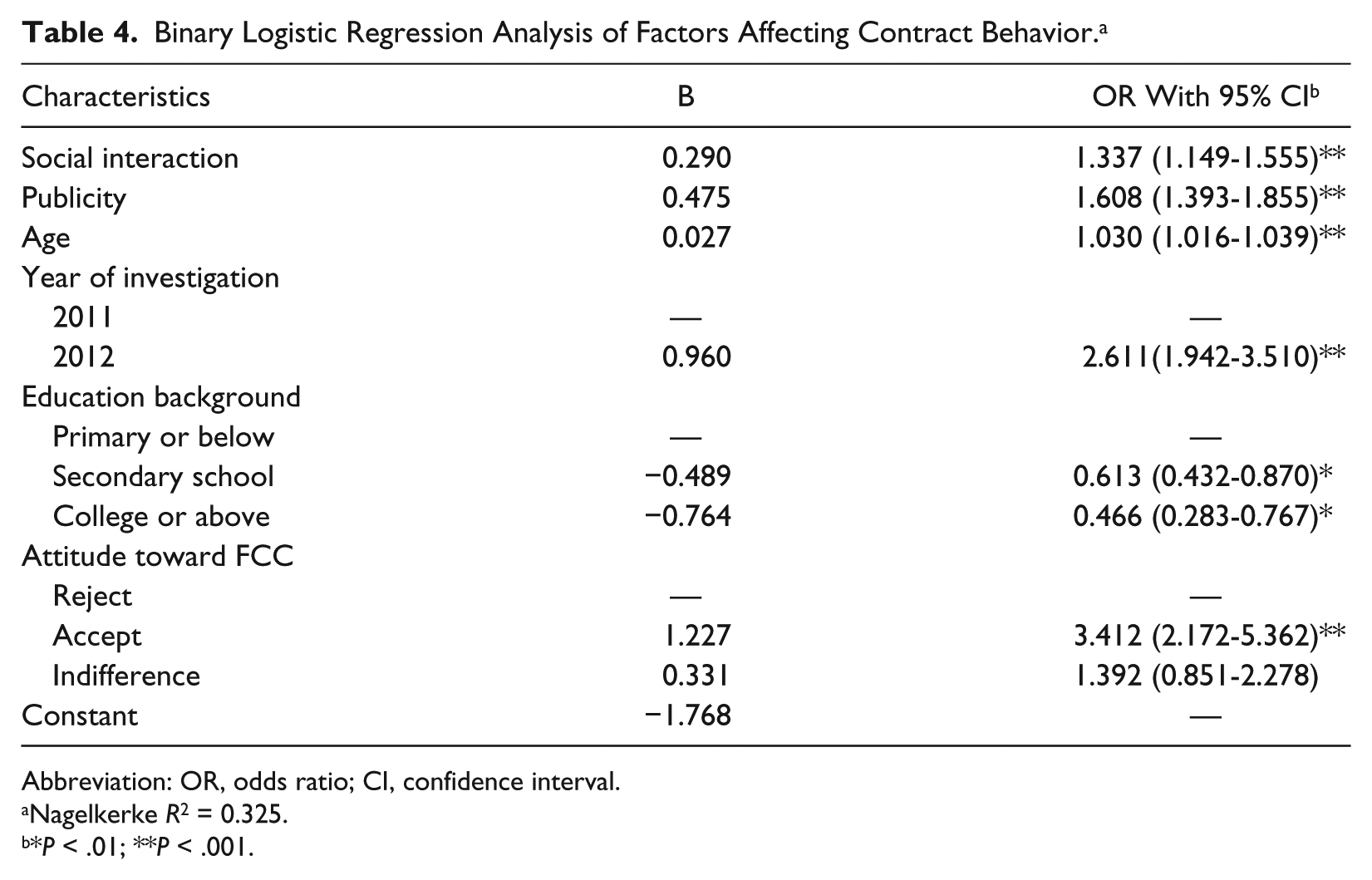
The binary logistic regression model was used to identify the main determinants of contract behavior. Initially, all covariates in this study were included, and then those variables without statistical significance were removed from the model by backward elimination. The results are shown in Table 4. It can be inferred that patients with the following characteristics were more inclined to sign contracts with GPs: older, lower education level, accepting FCC, higher scores in social interaction of social capital, and exposure to publicity campaigns.
Binary Logistic Regression Analysis of Factors Affecting Contract Behavior. a
Abbreviation: OR, odds ratio; CI, confidence interval.
Nagelkerke R2 = 0.325.
*P < .01; **P < .001.
Discussion
Contract Rate
In this study, patients’ contract rate in Pudong New Area was 59.16% in 2011, and the rate rose to 80.83% in 2012 (P < .001). This suggests that the GP system was making progress year by year. 80.42% of patients often chose to go to CHS centers (or stations) when they needed to see a doctor in general, which was higher than the 65.4% (P < .001) reported in 2012 by Bao et al. 17 In that study, they investigated 12 CHS centers in 3 districts (Xuhui, Minhang, and Jinshan) in Shanghai. That study also showed that the main reasons for patients to first attend GPs in CHS centers were cost-effectiveness, convenience, and good service attitude. This is consistent with our study results. This means to a certain degree that the effort of Pudong New Area in advancing patients contract and the GP system was effective, and CHS centers were playing a proper role in providing primary health care services.
Patients’ Perspectives of FCC
The results showed that currently only 67.05% of patients showed their acceptance of FCC, and the first 3 factors influencing patients’ acceptance of the FCC were: blocking the discretional choice of medical services, treatment delay, and misdiagnosis. It indicated that a lack of highly qualified GPs is still a limiting factor in gaining patients’ trust. 18 So the key issue is that most patients do not trust GPs and are not willing to contract with them even though GPs can treat a majority of common diseases. Because there are GPs with higher expertise levels, a fundamental and necessary solution would be to introduce and cultivate higher-quality GPs to gain the trust of patients. One way to gain the trust of patients would be to focus on the fact that GPs can provide home service and health management, resulting in more comprehensive, continuous, and personalized health care. We feel that FCC is feasible and quite necessary within the current health system in China, but most patients did not recognize it. Because, currently, patients have biases and misunderstandings where the GP system and FCC are concerned, more effort should be made to improve the GP system, such as the introduction of supporting policies and expanding publicity campaigns to help patients develop a deeper understanding of the significance of FCC and a deeper trust in GPs.
Social Capital
This study discussed the correlation between some factors of social capital and patients’ contract behavior with GPs, which showed that social interaction was one of the most important factors affecting patients signing contracts with GPs. Those patients who had more often used community resources and been more willing to participate in community activities were more accepting of contracts with GPs. From a medical point of view, the GP system provides primary health care to communities and families, resulting in a community-based service for the patients. Previous studies also showed that social capital is the key element in establishing and developing the GP system: there is a relationship of mutual promotion between social capital and the GP system. 19 The study by Hu 13 showed that the GP system should be capable of promoting community function, expanding community support networks, and accumulating social capital while serving the function of managing patients’ needs. Xie et al 15 pointed out that at the micro level, the activation and cultivation of social capital could promote interpersonal trust, mutual benefit, and cooperation in a variety of ways. From the macroscopic point of view, cultivating social capital needs transformation of attitude, behavior, and interaction through regulations, policy, and public opinion guidance, publicity, and education.
Publicity
This study identified a positive impact of publicity campaigns on the patients’ contact rate with GPs. Those participants who had signed contracts with GPs received more publicity campaigns about GP system services and knew more details about the GPs than those who had not signed contracts. With the gradual establishment of the GP system, as a result of the growing influence of the publicity campaigns, the creation of a good social atmosphere, providing a powerful ideological guarantee and spiritual motive force, and public support is aided. Expansion of the publicity campaigns about GP and FCC should make use of the many mass media tools, such as television, radio broadcasts, newspaper advertisements, blackboards, and lectures. Diverse methods of health education can be used to disseminate health knowledge, advocate the concept of FCC, change patients’ dependence on the traditional medical model, and remove prejudice and misunderstanding about GPs and FCC. 20
Limitations of the Study
The main limitation of this study is that just one district was studied in Shanghai. Therefore, this can only be regarded as a preliminary study. To fully investigate patient contract characteristics in Shanghai, more studies need to be conducted on a larger scale.
Conclusion
The work of prompting patients to contract with GPs, as part of the new health system reforms in Shanghai, has made progress from year to year. Acceptance of FCC, social interaction of social capital, and exposure to publicity campaigns are some of the major influencing factors that affect patients’ desire to sign contracts with GPs. To further increase the patient contract rate, the CHS can take advantage of the cost-effectiveness and convenient services offered. Because the elderly population is one of the higher utilizers of health services, focus on increasing their sign-up rates can also be helpful in promoting primary care provided by GPs in the community setting, which would be the entry point into the health care system in China. Local government and society in general can make joint efforts to effectively improve the medical services of CHS to meet patients’ primary health care needs. In particular, more efforts can be made to expand publicity campaigns and cultivate social capital to give patients a much deeper understanding of the functions and meaning of FCC and allow GPs to gain deeper trust and support by patients.
Footnotes
Acknowledgements
We would like to thank all involved in the study.
Authors’ Note
Ethics approval by the ethics committee of Pudong New Area Gongli Hospital (No. 2011091008) was acquired prior to commencing the study. It was performed in compliance with the Helsinki Declaration.
Declaration of Conflicting Interests
The author(s) declared no potential conflicts of interest with respect to the research, authorship, and/or publication of this article.
Funding
The author(s) disclosed receipt of the following financial support for the research, authorship, and/or publication of this article: This study was funded by the Young Medical Talents Training Program of Pudong New Area Health and Family Planning Commission (Grant Number PWRq2013-21) and the Scientific Research Project of Pudong New Area Health and Family Planning Commission (Grant Number PW2013A-50).