







Abstract
This study evaluated the influence of smoking cessation policies and COVID-19 on the prevalence of smoking among Korean adolescents from 2011 to 2020. Based on the Korea Youth Risk Behavior Web-based Survey, trends in adolescent smoking behaviors were examined, including the impact of cigarette price increases, Pictorial Warning Labels (PWLs), and the onset of COVID-19. We used joinpoint regression analysis to discern annual changes in the prevalence of adolescent smokers. Results indicate that the implementation of increased cigarette prices and pictorial warnings was associated with a significant decrease in smoking prevalence among adolescents. We found a yearly reduction in smoking prevalence by 10.5% for cigarette-only smokers, 10.3% for e-cigarette-only smokers, and 9.2% for those who used both. The onset of COVID-19 further accelerated the decline in adolescent smoking. The findings suggest that the Korean government’s smoking cessation strategies and pandemic-related changes have effectively reduced smoking rates among adolescents.
Keywords
What We Already Know
Research has consistently shown that adolescents starting to smoke are more susceptible to serious long-term health problems, including but not limited to cardiovascular diseases and various forms of cancer.
There’s a notable correlation between smoking in adolescence and an uptick in mental health issues, particularly depression and anxiety.
The World Health Organization ranks smoking as a top dangerous behavior, especially for adolescents, many of whom might continue smoking into adulthood. To combat this, global policy efforts, such as price increases and the implementation of graphic warnings, have been somewhat effective in increasing awareness and deterring the start of smoking among adolescents.
What This Article Adds
This study examined the combined effects of smoking cessation policies and the COVID-19 pandemic on smoking rates among Korean adolescents from 2011 to 2020, offering a broader perspective on the factors influencing these rates.
Utilizing joinpoint regression analysis, the research quantifies the annual decrease in smoking rates, and emphasizes the significant role the pandemic has played in accelerating this decline.
Our findings provide empirical evidence that supports the effectiveness of increased cigarette prices, pictorial warnings, and pandemic-related changes in substantially reducing the prevalence of smoking among Korean adolescents.
Introduction
Adolescent smokers face higher risks of physical and mental health issues, including cardiovascular and lung cancer mortality, than those who begin smoking as adults. 1 Smokers are also reported to have a 1.5-fold higher risk of suffering from depression and anxiety compared with nonsmokers. 2 The World Health Organization (WHO) has classified smoking as one of the most dangerous behaviors threatening human health 3 and reported that those who start smoking in adolescence continue smoking for about 16 to 20 years, with nearly 50 percent progressing to heavy smokers. 4 Adolescent smoking is influenced by a complex interplay of demographic, socioeconomic, psychological, institutional, and environmental factors. 5 Countries around the world have proposed various policy measures to reduce prevalence of adolescent smokers and promote smoking cessation. 6 In South Korea (hereafter, Korea), institutional strategies for smoking cessation have been proposed and studied. Notably, increasing the price of cigarettes and introducing Pictorial Warning Labels (PWLs) have been reported to effectively raise awareness of the dangers of smoking and increase the intention to not smoke. 7 Since the onset of the COVID-19 pandemic in 2019, there has been a reduction in physical activity as well as in cigarette and alcohol consumption among Brazilian adolescents. 8 However, during the COVID-19 pandemic, Nigerian adolescents increased their smoking, particularly at night, with e-cigarettes and cigarettes. 9 Most adult smokers begin smoking during adolescence, and the younger the age of first smoking experience, the higher the likelihood of becoming a smoker in adulthood. 10 In addition, smokers who start smoking during adolescence have a low probability of smoking cessation. 11 Thus, analyzing the trends in the prevalence of adolescent smokers and the impact of policies like increasing the price of cigarettes and implementing PWLs can provide critical evidence for evaluating the effectiveness of smoking cessation policies, contributing to reducing smoking among adolescents.
Several previous studies on Korean smoking cessation policies are mostly cross-sectional, focusing on short-term policy effects and adolescent smoking rates.12 -14 Han 12 reported that increasing cigarette prices through government policy initially reduced Korean adolescent smoking rates; however, the impact was expected to wane gradually as some smokers might fail to cease smoking. Kim and Kwon 13 found that the policy of PWLs affected smoking cessation, but there was no change in the amount smoked, which they explained was due to the addictive nature of tobacco. Furthermore, they also suggested that the policy on PWLs was implemented in December 2016, and the survey data were from June 2017, so the short duration might not have been sufficient to fully observe the policy’s effects. Meanwhile, Lee and Kwon 14 compared the prevalence of Korean adolescent smokers in 2019 and 2020 based on the COVID-19 outbreak and reported that there was a significant difference between them. Therefore, this study examined changes in the prevalence of Korean adolescent smokers, focusing on major smoking cessation policy and social events that could be expected to influenced changes in the prevalence of Korean adolescent smokers since 2010.
Methods
Data Collection and Subjects
This study used raw data from the Korea Youth Risk Behavior Web-based Survey (KYRBS) from 2011 to 2020. 15 The raw data used in this study was collected annually by the Ministry of Education, Ministry of Health and Welfare, and Korea Disease Control and Prevention Agency through an anonymous self-administration online survey targeting middle and high school students nationwide to determine the health behavior of adolescents. This study sampled data using a stratified cluster sampling method targeting all middle and high school students. Exclusion criteria included subjects who were long-term absentees, students with disabilities, and students with dyslexia. This study was conducted with the approval of the Institutional Review Board. (IRB number 1041849-202308-SB-142-02).
Definition of Smokers
From 2011 to 2020, adolescents in this study were identified as smokers based on their use of cigarettes or e-cigarettes, with “smokers” defined as those who reported smoking on one or more days within the past 30 days. The classification criteria evolved over the years, with specific queries about regular cigarette use and different types of e-cigarettes, including liquid nicotine products. The study calculated the prevalence rates of exclusive cigarette use, exclusive e-cigarette use, and combined use, ensuring that dual users were accounted for only once, to offer a clearer picture of smoking trends among the adolescent population.
Control Variables
This study considered the factors affecting adolescents smoking and set the subjects’ gender, grade, region, self-rated domestic economic situation, drinking, and stress as control variables. 16 The KYRBS was conducted from September 1 to 30 in 2011, and from June 1 to July 12 from 2012 to 2019. In addition, the survey was conducted between August 3 and November 13, 2020. The impact of the smoking cessation policy introduced during this period, such as increasing the price of cigarettes and PWLs,17,18 and the change in prevalence of adolescent smokers due to the outbreak of the COVID-19 pandemic were confirmed 19 (Table 1).
Implementation Period of the Smoking Cessation Policy, Time of COVID-19 Outbreak, and Period During Which Raw Data Were Used for Analysis.
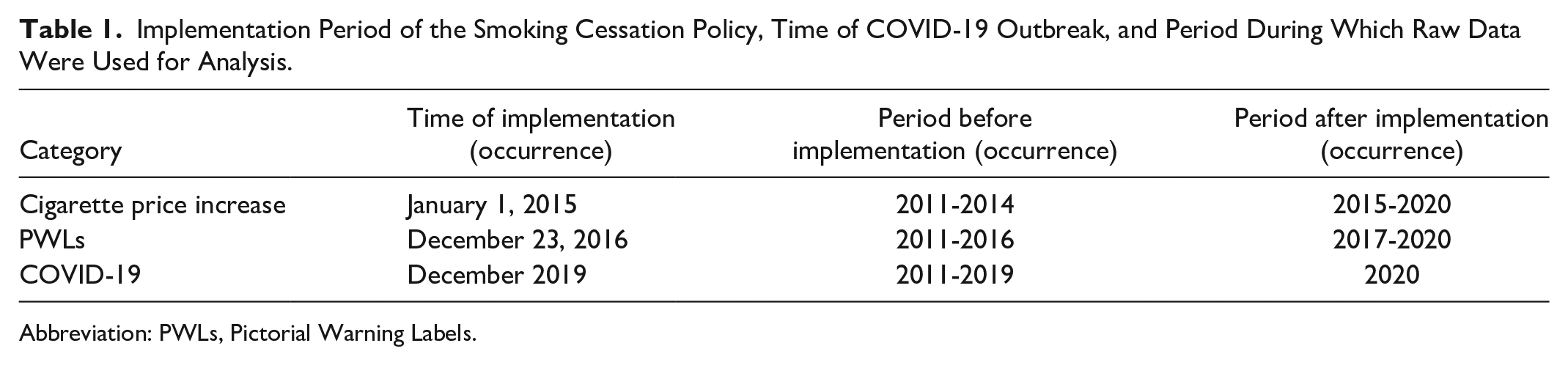
Abbreviation: PWLs, Pictorial Warning Labels.
Statistical Analysis
This study performed the PROC SURVEYFREQ using SAS software (version 9.4, SAS Inc, Cary, NC, USA). In this study, considering the complex sample design, stratified variables were entered as “strata,” clustered variables were entered as “clusters” and “year,” and weighted variables were entered as “W.” This study analyzed the relationship between the prevalence of adolescent smokers and policies to increase the price of cigarettes and PWLs, including the COVID-19 pandemic, through PROC SURVEYLOGISTIC. Furthermore, the results were expressed as an odds ratio and a 95% confidence interval. The significance level was set at P < .05.
This study conducted joinpoint regression using Joinpoint Regression Program (version 4.8.0.1, Joinpoint Regression Inc). to determine the annual trends. The results were presented as the Annual Percent Change (hereafter, APC) with a 95% confidence interval, and the significance level was P < .05. Also, R software (version 4.2.3, R Inc) was used for graph visualization.
Results
Trends in the Prevalence of Korean Adolescent Smokers With Cigarette-Only, e-Cigarette-Only, and Combined Use Applying the PROC SURVEYFREQ (2011-2020)
From 2011 to 2020, the prevalence of the cigarette-only group gradually decreased, starting at 8.6% in 2011. Also, at the time of implementation of the cigarette price increase, the prevalence of adolescent smokers was 4.5%. In 2016, at the time of implementation of the policy on PWLs, the prevalence was 4.4%, showing a slight change. Here, PWLs utilize graphic images and text on packaging to emphasize health risks, primarily for tobacco and alcohol, raising awareness, discouraging use, and supporting cessation or prevention efforts. In 2020, the year after 2019, when COVID-19 first spread, the prevalence again showed a steep decline to 2.9%. The prevalence in the e-cigarette-only group started at 1.1% in 2011 and reached 0.8% in 2015 when the cigarette price increase was implemented. In addition, it decreased to 0.6% in 2016, when the policy on PWLs was implemented and showed a steady decrease to 0.4% in the year following the outbreak of COVID-19. The prevalence in the combined use group started at 13.2% in 2011 and showed a steady decline of 8.5% until 2015 when the cigarette price increase was implemented. Also, it once again decreased to 6.9% in 2016 when the policy on PWLs was implemented. However, the prevalence showed an increase to 7.2% in 2019 but recorded a sharp decline to 4.8% in 2020, immediately after the outbreak of COVID-19 (Figure 1).
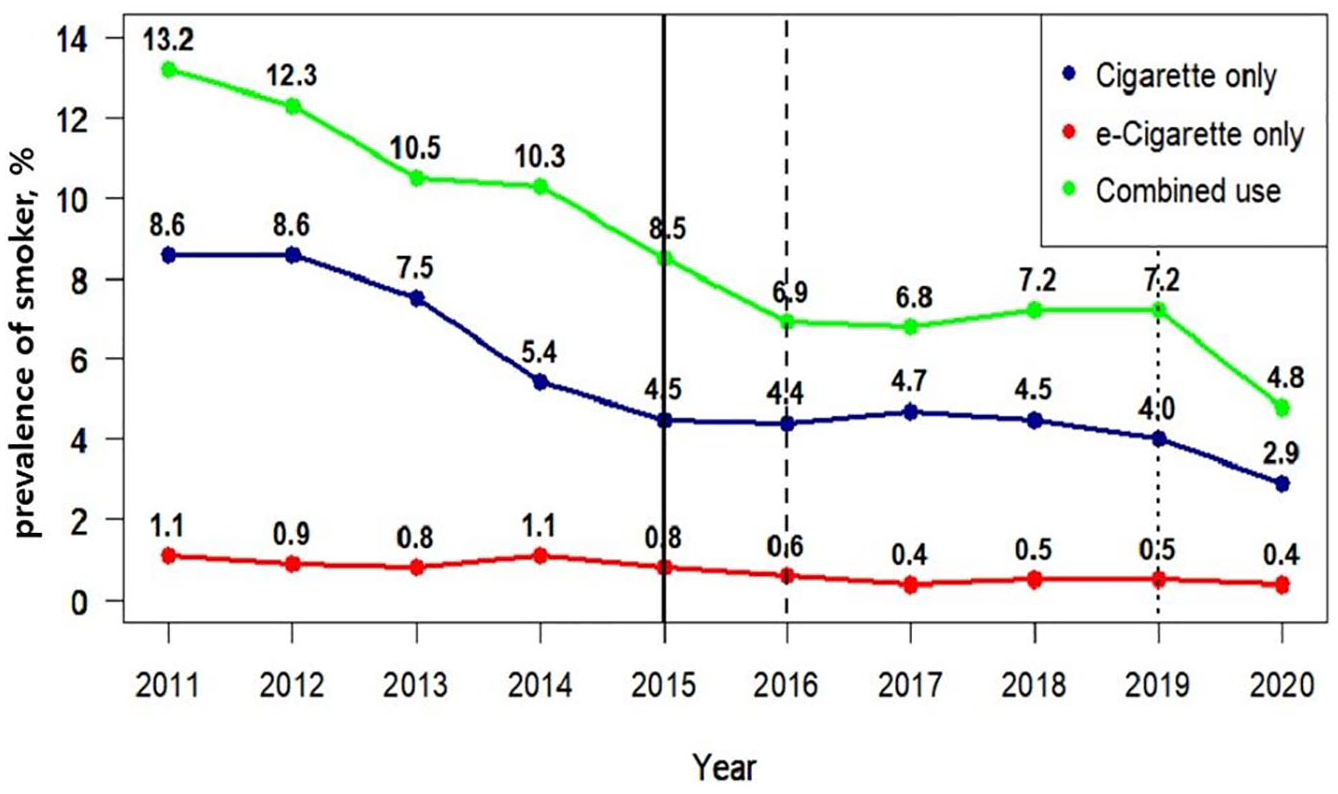
Trends in prevalence of adolescent smokers with cigarette-only, e-cigarette-only, and combined use (2011-2020).
Trends in the Prevalence of Korean Adolescent Smokers With Cigarette-Only, e-Cigarette-Only, and Combined Use With Joinpoint Regression (2011-2020)
This study examined the APC in the prevalence of Korean adolescent smokers from 2011 to 2020. Cigarette-only group was −10.5% per year. In addition, the e-cigarette-only group was −10.3% per year. Lastly, the combined use group was −9.2% per year (P < .05) (Figure 2).
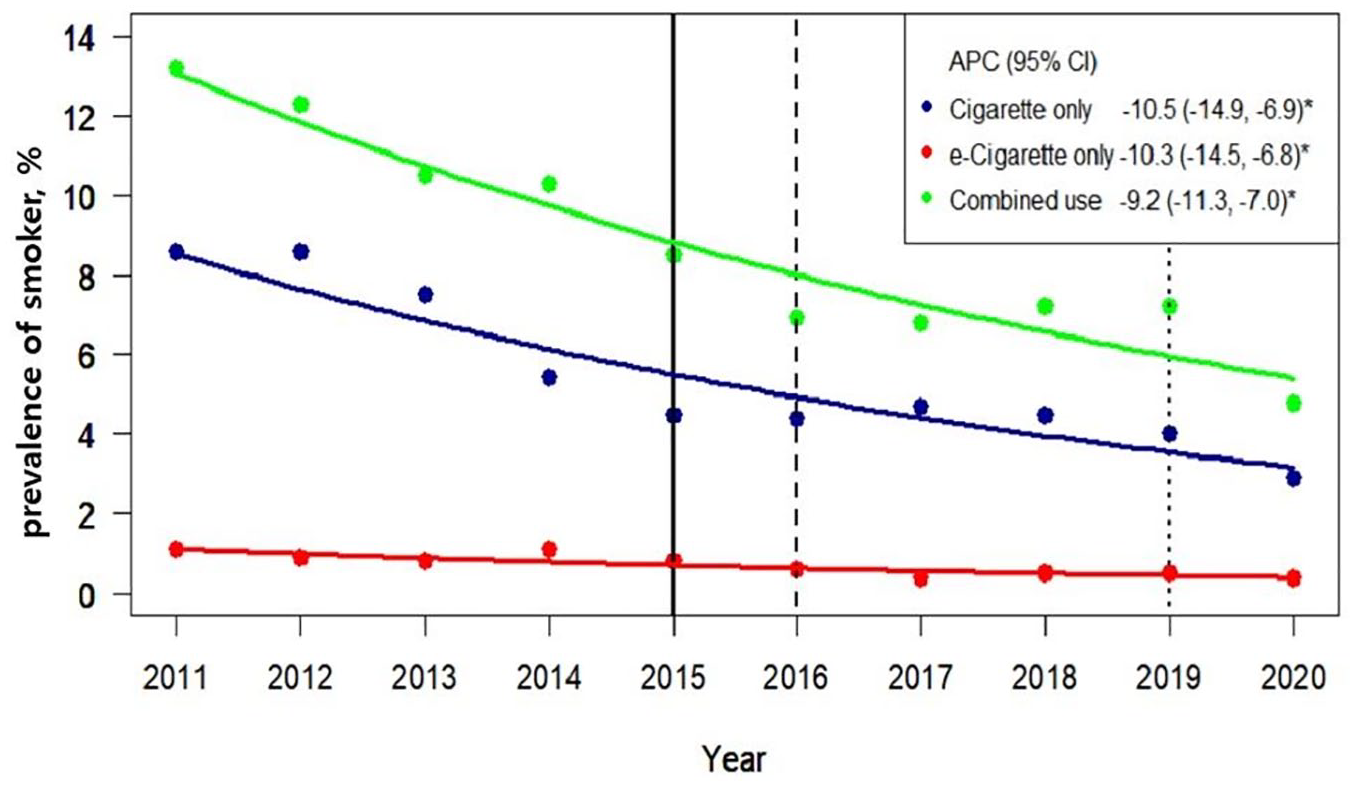
Trends in prevalence of adolescent smokers with cigarette-only, e-cigarette-only, and combined use (2011-2020), joinpoint regression. Solid line: cigarette price increase, dashed line: PWLs, dotted line: COVID-19.
Relationship Between the Cigarette Price Increase Policy and the Prevalence of Korean Adolescent Smokers (2011-2020)
According to the results of analyzing the relationship between the cigarette price increase policy and the prevalence of Korean adolescent smokers, after controlling for control variables, the prevalence of the cigarette-only group decreased to 0.60 (aOR = 0.60). In addition, the prevalence of the e-cigarette-only group also decreased to 0.60 (aOR = 0.60). Furthermore, the prevalence of the combined use group decreased to 0.62 (aOR = 0.62) after the cigarette price increase policy (Table 2).
Relationship Between Cigarette Price Increase Policies and the Prevalence of Korean Adolescent Smokers (2011-2020).
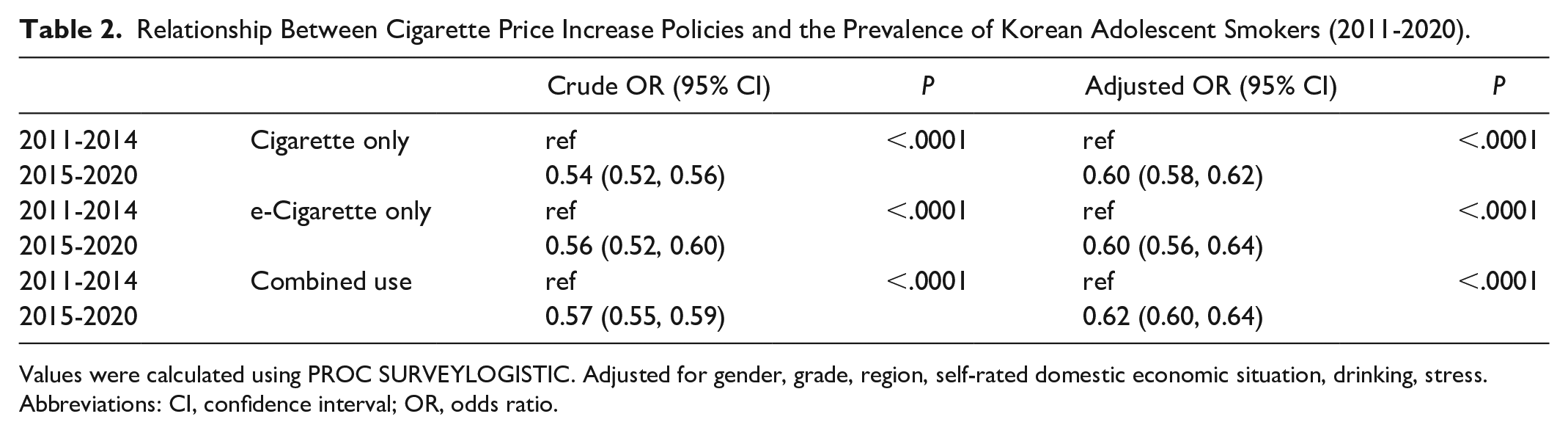
Values were calculated using PROC SURVEYLOGISTIC. Adjusted for gender, grade, region, self-rated domestic economic situation, drinking, stress.
Abbreviations: CI, confidence interval; OR, odds ratio.
Relationship Between Policies on PWLs and the Prevalence of Adolescent Smokers (2011-2020)
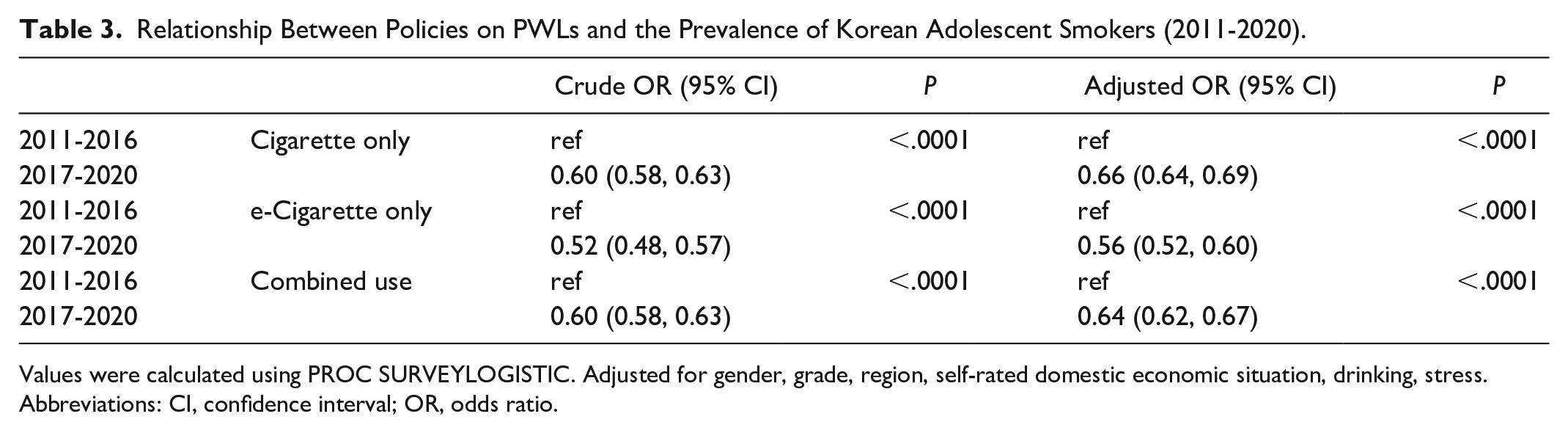
The relationship between the policy on PWLs and the prevalence of adolescent smokers shows the prevalence of the cigarette-only group decreased to 0.66 (aOR = 0.66), after controlling for control variables. In addition, under the same conditions, the prevalence of the e-cigarette-only group also decreased to 0.56 (aOR = 0.56). The prevalence of the combined use group decreased to 0.64 (aOR = 0.64), after the implementation of the policy on PWLs (Table 3).
Relationship Between Policies on PWLs and the Prevalence of Korean Adolescent Smokers (2011-2020).
Values were calculated using PROC SURVEYLOGISTIC. Adjusted for gender, grade, region, self-rated domestic economic situation, drinking, stress.
Abbreviations: CI, confidence interval; OR, odds ratio.
Relationship Between the COVID-19 Pandemic and Prevalence of Korean Adolescent Smokers (2011-2020)
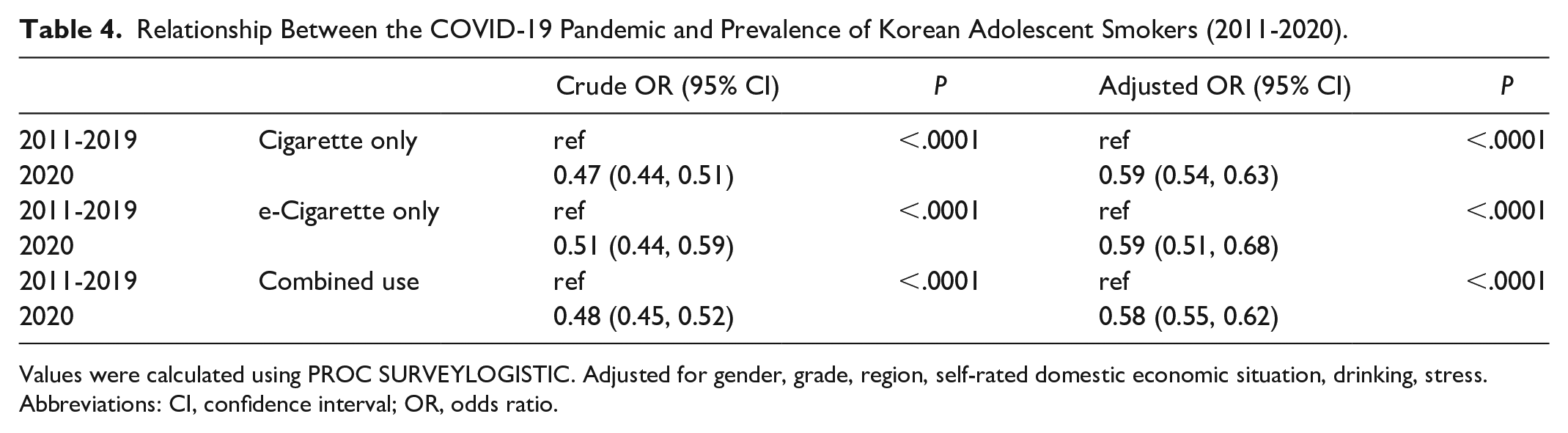
The relationship between the COVID-19 pandemic and prevalence of adolescent smokers shows the prevalence of the cigarette-only group decreased to 0.59 (aOR = 0.59) and the prevalence of the e-cigarette-only group also decreased to 0.59 (aOR = 0.59), after controlling for control variables. The prevalence of smokers for the combined use group decreased to 0.58 (aOR=0.58), after the COVID-19 pandemic (Table 4).
Relationship Between the COVID-19 Pandemic and Prevalence of Korean Adolescent Smokers (2011-2020).
Values were calculated using PROC SURVEYLOGISTIC. Adjusted for gender, grade, region, self-rated domestic economic situation, drinking, stress.
Abbreviations: CI, confidence interval; OR, odds ratio.
Discussion
The WHO put the Framework Convention on Tobacco Control (FCTC) into force in 2005. 3 The Korean government ratified the FCTC in 2005 and has implemented various smoking cessation policies. 20 According to our findings, the prevalence of Korean adolescent smokers all decreased after the implementation of the cigarette price increase policy in 2015, after the implementation of the policy on PWLs in 2016, and in 2020, the year after the outbreak of COVID-19 (Figure 1). However, the KYRBS only shows a fragmentary prevalence of Korean adolescent smokers and does not provide information on long-term trends. Namely, the results of this study indicate that the fluctuating prevalence of smokers among the e-cigarette-only group, which were 0.9% in 2012, 0.8% in 2013, 1.1% in 2014, and 0.8% in 2015, could potentially be misrepresented as either an increase or a decrease. Also, there were limitations in verifying changes in the prevalence of smokers or statistical significance.
From 2011 to 2020, APC in the prevalence of Korean adolescent smokers decreased by −10.5% per year in the cigarette-only group, −10.3% per year in the e-cigarette-only group, and −9.2% per year in the Combined use group (P < .05) (Figure 2). In relation to the prevalence of adolescent smokers in the US, the APC of cigarettes showed an annual change per year of −17.0% from 2011 to 2014. This study also revealed an APC of −5.7% from 2014 to 2018, which was not statistically significant. 21 On the contrary, the APC of e-cigarettes was found to show a significant change of +42.4% per year from 2014 to 2018. 22 In Korea, regulatory policies related to adolescent smoking, including e-cigarettes, are effective, while in the United States, where e-cigarette regulations are less stringent, it may have resulted in an increase in the prevalence of American adolescent smokers of e-cigarettes. 23 According to the results of this study, after the implementation of the cigarette price increase policy in Korea, the prevalence of Korean adolescent smokers in the cigarette-only group decreased to 0.60 (aOR = 0.60), in the e-cigarette-only group to 0.60 (aOR = 0.60), and in the combined use group to 0.62 (aOR = 0.62) (Table 2). The Korean government raised the price of cigarettes from 2000 won to 2500 won in 2005 and raised the price significantly again from 2500 won to 4500 won in 2015. 24 The US government gradually increased the price of cigarettes from $6.24 in 2015 to $7.16 in 2020. Accordingly, during that period, the prevalence of smokers among 12- to 17-year-old students decreased from 10.8% in 2015 to 4.6% in 2020. 25 In addition, when the average price of cigarettes in Australia increased from $AUD 0.18 in 1990 to $AUD 0.4 in 2005, the prevalence of adolescent smokers decreased to 0.98 (aOR = 0.98), 26 which shows that the policy of cigarette price increases over the past 15 years has had a positive effect on reducing the prevalence of adolescent smokers.
In this study, following the implementation of policies on cigarette price increases, as well as on PWLs, the prevalence of adolescent smokers in the cigarette-only group decreased to 0.66 (aOR = 0.66), in the e-cigarette-only group to 0.56 (aOR = 0.56) and in the combined use group to 0.64 (aOR = 0.64) (Table 3). In addition, a meta-analysis targeting adolescents and young adults in countries such as the United States, Canada, and Germany revealed that PWLs are associated with a reduction in tobacco use or an increase in smoking cessation intention. 27 Also, Health Canada reported that warnings on each cigarette stick has a negative effect on adolescents who are about to start smoking. 28 The Korean government replaces PWLs for cigarettes and e-cigarettes every two years and has a policy on plain packaging that standardizes the design of cigarette packs and cigarette stick. Its introduction was announced in 2019. 29 The prevalence of Korean adolescent smokers after the COVID-19 pandemic decreased to 0.59 (aOR = 0.59) in the cigarette-only group, 0.59 (aOR = 0.59) in the e-cigarette-only group, and 0.58 (aOR = 0.58) in the combined use group (Table 4). In the United States, after the COVID-19 pandemic, the prevalence of adolescent smokers in the e-cigarette group decreased to 0.72 (aOR = 0.72), 30 which was similar to the findings of this study. The changes can be attributed to the complex effects of social distancing, with adolescents spending more time at home, schools adopting noncontact education, minimizing student interactions, and reduced social activities due to COVID-19 infection fears. 9
Conclusion
This study evaluated the long-term trends in adolescent smoking in Korea, focusing on the impact of crucial smoking cessation policies and the COVID-19 pandemic. This study identified that policies such as cigarette price increases and the introduction of PWLs were associated with a significant reduction in smoking rates among adolescents. Our results revealed an annual decline in smoking prevalence of 10.5% for cigarette-only users, 10.3% for e-cigarette-only users, and 9.2% for combined users between 2011 and 2020. Furthermore, the COVID-19 pandemic had expedited these declining trends, as seen by the dramatic drops in 2020 across all groups. However, this study has several limitations. The exclusion of specific adolescent populations could limit the generalizability of our findings. Moreover, while this study explored the relationship between smoking behaviors and policy measures, it did not account for all factors that could influence adolescent smoking, such as parental smoking habits. Crucially, the observational nature of this study could imply that our findings reflect associations rather than direct causation.
Notwithstanding these limitations, this study could provide valuable insights by using nationally representative data to assess policy effectiveness over a decade. The findings underscore the importance of sustained policy interventions, such as increasing cigarette prices and implementing PWLs, in reducing adolescent smoking rates. Moreover, the accelerated decline in smoking prevalence during the COVID-19 pandemic highlights the impact of external social disruptions on smoking behaviors. This study suggests that future policy efforts could benefit from incorporating adaptive strategies that address both economic and social factors influencing adolescent smoking. As a consequence, this study provides empirical evidence in favor of Korea’s smoking cessation efforts’ ability to lower the prevalence of adolescent smoking in Korea. Our findings can serve as a reference for policymakers in developing targeted interventions to reduce adolescent smoking. Also, policymakers in other Asian countries could consider similar strategies to address adolescent smoking, particularly as new challenges such as e-cigarette use continue to emerge.
Footnotes
Declaration of Conflicting Interests
The author(s) declared no potential conflicts of interest with respect to the research, authorship, and/or publication of this article.
Funding
The author(s) received no financial support for the research, authorship, and/or publication of this article.
Ethical Approval
Received review exemption approval Institutional Review Board Name: Yonsei University Mirae Campus IRB reference Number: 1041849-202308-SB-142-02
