







Abstract
Public health crises may disrupt health behaviors and socioeconomic conditions that influence suicide risk. This study examined associations between COVID-19–related daily life disruptions and suicidal ideation and suicide attempts among Korean adults. We analyzed nationally representative data from 149 950 adults aged 19 to 64 years from the 2021 Korea Community Health Survey. Weighted multivariable logistic regression models assessed associations between changes in health behaviors (physical activity, smoking, alcohol use, instant food consumption) and socioeconomic conditions (household income, employment, work environment) and suicidal behaviors during the past 12 months. Both behavioral and socioeconomic disruptions were associated with higher odds of suicidal ideation. Increased smoking and alcohol consumption showed the strongest associations with both suicidal ideation and suicide attempts. Decreased household income, job loss, and worsened work environments were significantly associated with suicide attempts. Behavioral instability in either direction was also linked to elevated suicidal ideation. Behavioral and socioeconomic instability may serve as early population-level indicators of suicide vulnerability during public health crises.
What We Already Know
Public health crises may increase suicide risk through behavioral, social, and economic disruptions.
Changes in health behaviors and employment conditions can affect mental health during large-scale societal crises.
Most previous studies have examined individual risk domains rather than concurrent disruptions across multiple areas of daily life.
What This Article Adds
Increased smoking and alcohol consumption were strongly associated with both suicidal ideation and suicide attempts.
Economic and occupational disruptions were associated with suicide attempts among working-age adults.
Multi-domain instability in daily life may serve as an early population-level indicator of suicide vulnerability during public health crises.
Introduction
The COVID-19 pandemic has led to changes in suicide risk worldwide through multifaceted stressors, including economic instability, social isolation, and mental health challenges.1,2 In South Korea, suicide rates initially declined during the early phase of the pandemic; however, levels of anxiety and depression subsequently increased, and suicide rates rebounded as the pandemic persisted. 3 Similar patterns have been reported in other countries, where prolonged economic hardship, unemployment, and sustained social restrictions have contributed to worsening mental health conditions.4,5
Key contributors to elevated suicide risk during the pandemic include social isolation resulting from restrictions on interpersonal contact, financial insecurity related to employment disruption, mental health distress such as anxiety and depression, and limited access to mental health services.6,7 Suicidal ideation and suicide attempts are central indicators of suicide risk. Suicidal ideation represents an important early signal of risk, whereas suicide attempts constitute a more specific and powerful predictor of subsequent suicide mortality.8,9 Accordingly, a comprehensive assessment of suicide risk during the pandemic requires consideration of both suicidal ideation and suicide attempts.
The impact of the COVID-19 pandemic has been particularly pronounced among young and middle-aged adults, who play a critical role in economic stability and social functioning.1,10 Young adults are especially vulnerable to employment instability and rapid lifestyle changes during the early stages of their careers, whereas middle-aged adults often experience increased stress related to job insecurity, family responsibilities, and changes in work environments.2,11,12 However, most previous studies have focused on single risk domains, such as economic hardship or mental health distress, rather than examining concurrent disruptions across multiple aspects of daily life.
Using nationally representative data, this study examined associations between COVID-19–related changes in physical activity, diet-related behaviors, substance use, household income, and work environment and suicidal ideation and attempts among adults aged 19 to 64 years in South Korea. Identifying multi-domain instability as a population-level risk indicator may inform crisis-responsive suicide prevention strategies in the Asia-Pacific region.
Methods
Sample and Data Collection
This study employed secondary data from the 2021 Korea Community Health Survey (KCHS), a nationwide cross-sectional survey conducted by the Korea Disease Control and Prevention Agency (KDCA). 13 A stratified multistage probability cluster sampling method was used to obtain representative samples of the Korean adult population. Data were collected from August 16 to October 31, 2021, through face-to-face interviews with 229 242 participants. Participants aged 19 to 64 years with complete data on study variables were included in the analysis (Figure 1).
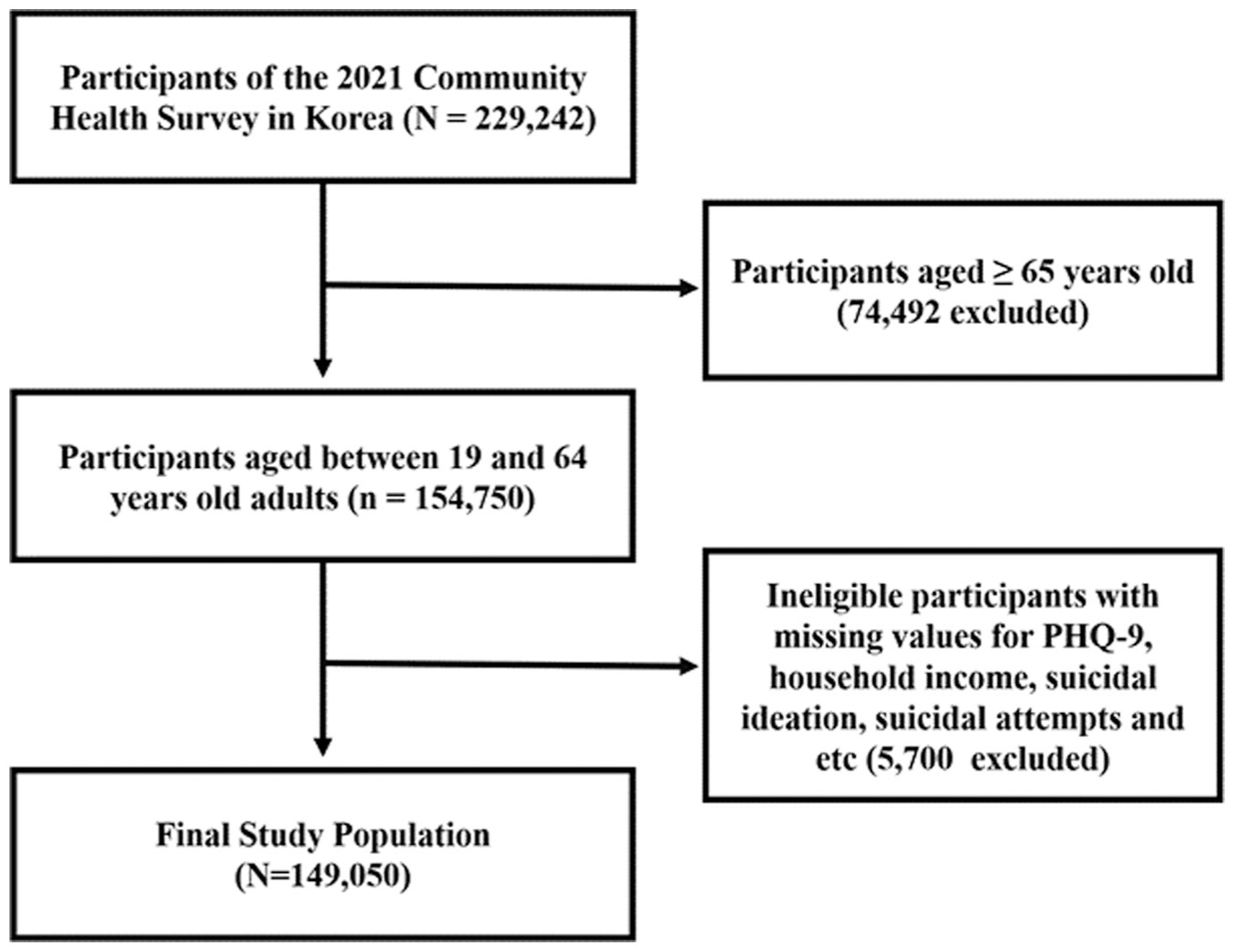
Flow chart of the study population selection process (the number of participants is unweighted).
Ethical Considerations
The KCHS was reviewed and approved by the institutional review board (IRB) of the KDCA, and written informed consent was obtained from all survey participants. The raw KCHS data are publicly accessible and fully anonymized, with written informed consent from all participants. Raw KCHS data provide anonymous secondary data that are publicly available for scientific purposes. A more detailed description of KCHS can be found on the KDCA website (https://chs.kdca.go.kr/). As this study involved publicly available secondary data, it was exempted from IRB review by the IRBs of the affiliated institutions of the researchers (Institutional Review Board of Dankook University DKU 2024-12-008).
Measures
Sociodemographic Variables
The sociodemographic variables examined in this study included age, sex, educational level, marital status, household income, employment status, and living arrangement. Educational level was categorized as elementary school graduate or lower, high school graduate, or college graduate or higher. Household income was divided into quartiles. Employment status was defined as working at least 1 hour for income or as an unpaid family worker who had worked more than 18 hours during the past week. Living arrangements were classified as either living with others or living alone.
Health-Related Variables
The health-related variables assessed included self-rated health status, smoking, alcohol consumption, obesity, physical activity, hypertension, diabetes mellitus, and depressive symptoms.
Self-rated health status was categorized as good, fair, or poor. Obesity was classified based on the body mass index (BMI) as follows: underweight (BMI <18.5), normal weight (BMI = 18.5-24.9), and obese (BMI ≥25.0).
Physical activity was assessed using items from the KCHS Physical Activity Questionnaire, which measures 3 domains: vigorous activity, moderate activity, and walking. Participants reported the frequency (days per week) and duration (minutes per day) of each activity.
Total physical activity was calculated as metabolic equivalent task minutes per week (MET-min/week) using the scoring protocol of the short form of the International Physical Activity Questionnaire (IPAQ). 14 In accordance with commonly applied criteria and World Health Organization guidelines, participants were classified as inactive (<600 MET-min/week), minimally active (600-2999 MET-min/week), or active (≥3000 MET-min/week). 15
Hypertension was defined as a diagnosis of hypertension made by a physician, along with the use of antihypertensive agents. Diabetes mellitus was defined as a diagnosis of diabetes by a physician that is accompanied by the administration of oral hypoglycemic agents or insulin.
Depressive symptoms were assessed using the Korean version of the Patient Health Questionnaire-9 (PHQ-9), a 9-item self-administered scale designed to evaluate the frequency of depression-related symptoms over the past 2 weeks. These symptoms include depressed mood, lack of interest, changes in sleep patterns (reduced or increased), changes in appetite (reduced or increased), psychomotor retardation or agitation, fatigue, feelings of guilt, difficulty in concentrating, and suicidal ideation. The total score ranges from 0 to 27, with higher scores indicating greater severity of depressive symptoms. A cutoff score of 10 was used in this study, based on a previous study, to distinguish between individuals without depressive symptoms and those with significant depressive symptoms. 16
Suicidal Behaviors
Participants’ suicidal behaviors were assessed through self-reported measures of suicidal ideation and suicide attempts. Suicidal ideation was measured using a single question asking whether the participant had thought about suicide within the past 12 months. Suicide attempts were assessed using a single question asking whether the participant had attempted suicide in the past 12 months. Responses were coded as dichotomous variables (“yes” or “no”).
Daily Life Changes Due to the COVID-19 Pandemic
Changes in daily life included physical activity, instant food consumption, alcohol consumption, smoking, household income, and work environment. We classified whether the frequency of these activities increased, remained unchanged, or decreased compared with the pre-COVID-19 period. Additionally, if participants responded that the change was not applicable, we considered that there was no change in daily life compared to the prepandemic period.
Statistical Analysis
Data were analyzed using SPSS 23.0, based on a complex sample design with weights, strata, and clusters, as recommended by the KDCA guidelines. 17 Statistical significance was set at P < .05. Frequencies and percentages were calculated for the characteristics of the young and middle-aged adult groups. To identify the effect of daily life changes due to the COVID-19 pandemic on suicidal ideation and suicide attempts, multiple logistic regression analysis was performed, and odds ratios (ORs) and 95% confidence intervals (CIs) were obtained.
Results
Sociodemographic and Health Characteristics of Participants
Table 1 summarizes the sociodemographic and health characteristics of the participants. The mean age was 45.44 years (±12.87), and 51.0% (n = 70 685) were male. Most participants (62.4%, n = 80 129) held college degrees, and 60.3% (n = 94 293) were married. Employment status revealed that 72.8% (n = 110 137) were employed, and 87.8% (n = 129 902) lived with others.
The Sociodemographic and Health Characteristics of Participants (N = 149 050).
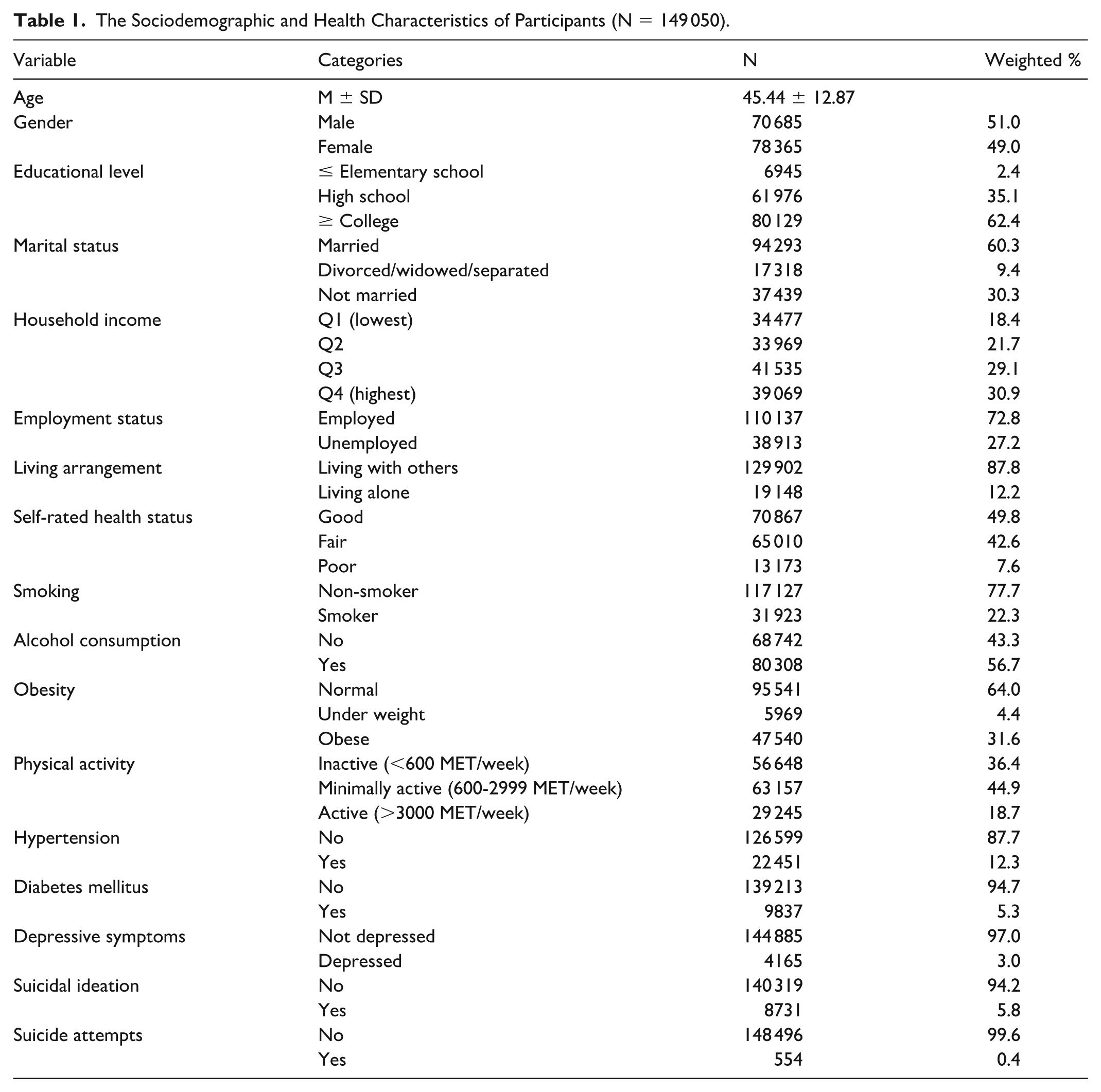
Regarding self-rated health, the most frequently reported category was “Good,” accounting for 49.8% (n = 70 867) of responses. Moreover, 77.7% (n = 117 127) of the participants identified as nonsmokers, while 56.7% (n = 80 308) reported consuming alcohol. In terms of BMI, 31.6% (n = 47 540) of participants were classified as obese (BMI >25). Physical activity levels indicated that the largest proportion of participants (44.9%, n = 63 157) were minimally active. Additionally, 12.3% (n = 22 451) and 5.3% (n = 9837) of participants were diagnosed with hypertension and diabetes, respectively. Clinically significant depressive symptoms were reported by 3.0% (n = 4165) of participants.
Over the past year, 5.8% (n = 8731) of the participants reported experiencing suicidal ideation, and 0.4% (n = 554) reported having attempted suicide.
COVID-19–Related Daily Life Changes Among Participants
This study examined pandemic-related changes across 6 domains of daily life among adults: physical activity, instant food consumption, alcohol consumption, smoking, household income, and work environment (Table 2).
Daily Life Changes Due to COVID-19 Pandemic Among Korean Adults (N = 149 050).
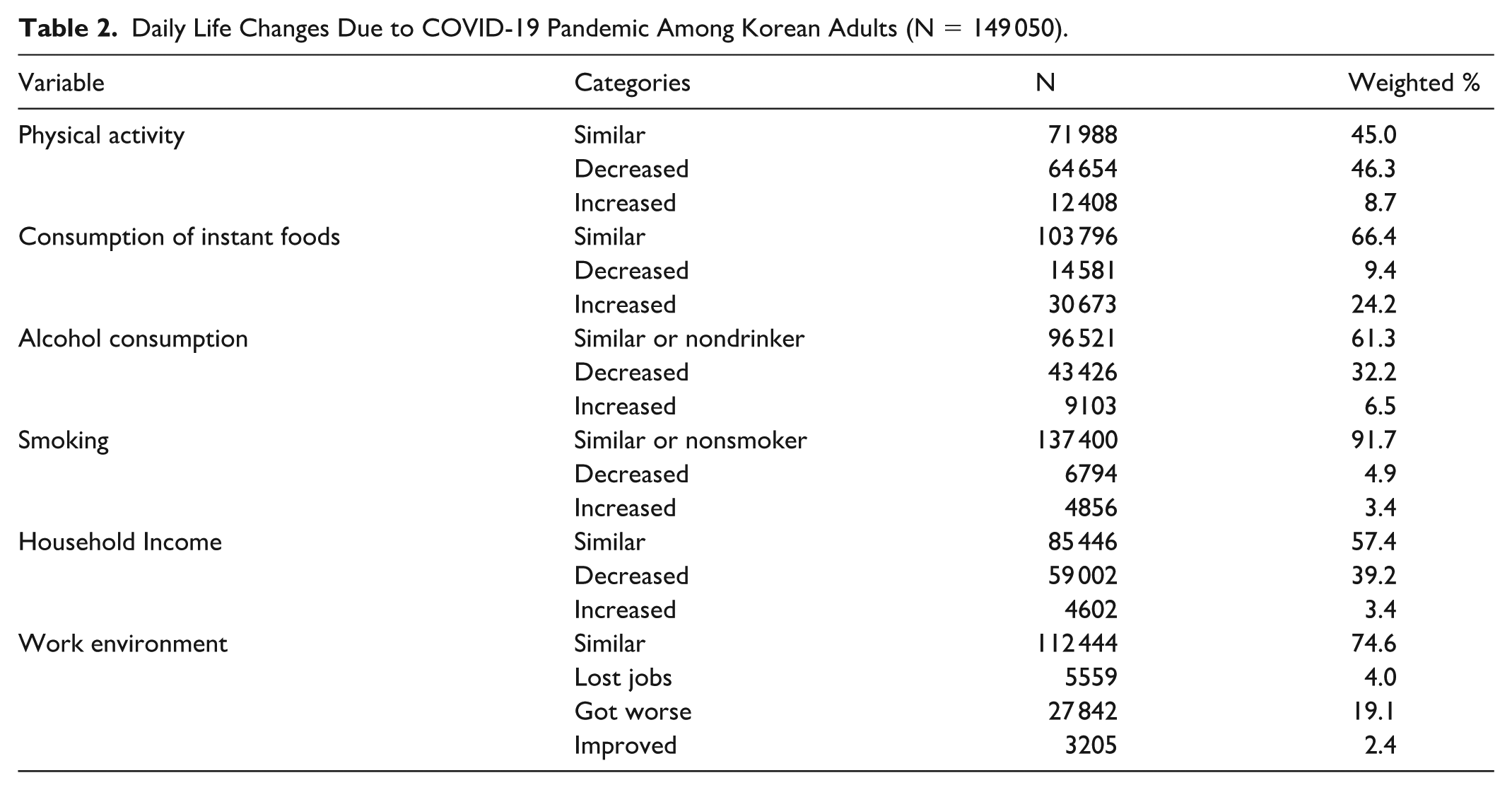
Regarding physical activity, nearly half of adults (46.3%, n = 64 654) reported a decrease compared with the prepandemic period, while 45.0% reported no change and 8.7% reported an increase. For instant food consumption, the majority reported no change (66.4%, n = 103 769); however, approximately one quarter (24.2%) reported increased consumption, whereas 9.4% reported a decrease.
With respect to alcohol consumption, 61.3% (n = 96 521) of participants reported similar levels or identified as nondrinkers, while 32.2% reported decreased consumption and 6.5% reported increased consumption. Smoking behavior showed relatively little overall change, with 91.7% (n = 137 400) reporting similar levels or being nonsmokers; smaller proportions reported decreased (4.9%) or increased smoking (3.4%).
Regarding household income, more than half of participants reported no change (57.4%), while a substantial proportion experienced a decrease (39.2%). Only a small percentage reported an increase in household income (3.4%). Finally, in terms of the work environment, most participants reported no change (74.6%), whereas 19.1% reported worsening working conditions and 4.0% reported job loss. Only a small proportion reported improvements in their work environment (2.4%).
Associations Between COVID-19–Related Daily Life Changes and Suicidal Behaviors
Table 3 presents the associations between COVID-19–related changes in daily life and suicidal ideation and suicide attempts among adults. Multivariate analyses were adjusted for age, sex, marital status, educational level, self-rated health status, employment status, monthly household income, living arrangements, depressive symptoms, obesity, and diagnoses of hypertension and diabetes.
Associations Between COVID-19–Related Daily Life Changes and Suicidal Ideation and Suicide Attempts (N = 149 050).
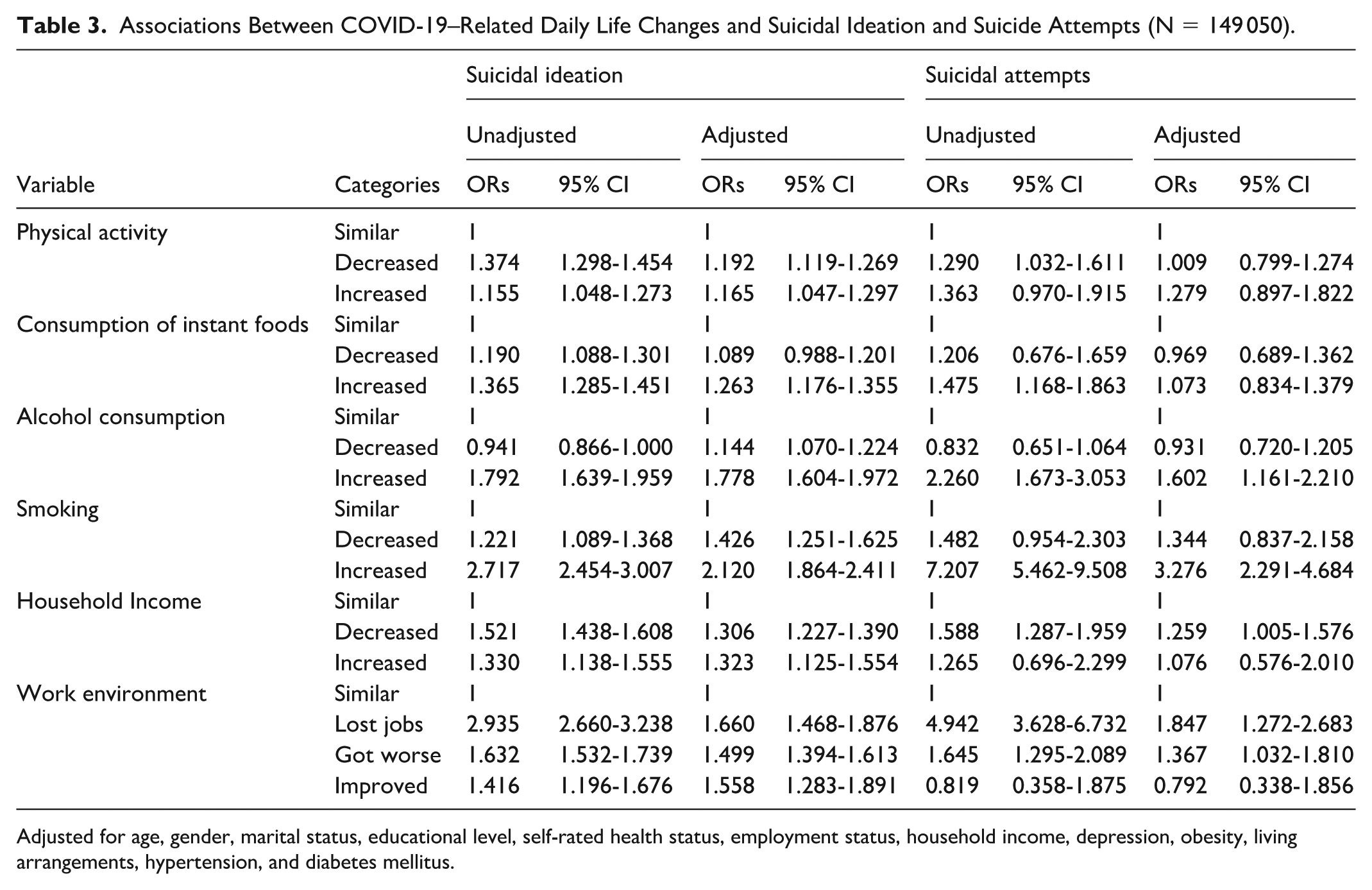
Adjusted for age, gender, marital status, educational level, self-rated health status, employment status, household income, depression, obesity, living arrangements, hypertension, and diabetes mellitus.
Changes in physical activity were significantly associated with suicidal ideation. Compared with individuals who reported similar levels of physical activity, those who experienced decreased physical activity had a higher risk of suicidal ideation (adjusted odds ratio [AOR] = 1.192, 95% CI = 1.119-1.269), as did those who experienced increased physical activity (AOR = 1.165, 95% CI = 1.047-1.297). However, changes in physical activity were not significantly associated with suicide attempts.
Instant food consumption was also associated with suicidal ideation. Participants who reported increased instant food consumption showed a significantly higher risk of suicidal ideation compared with those reporting similar consumption levels (AOR = 1.263, 95% CI = 1.176-1.355), whereas decreased consumption was not significantly associated with suicidal ideation. No significant associations were observed between changes in instant food consumption and suicide attempts.
Alcohol consumption showed significant associations with both suicidal ideation and suicide attempts. Increased alcohol consumption was associated with a higher risk of suicidal ideation (AOR = 1.778, 95% CI = 1.604-1.972) and suicide attempts (AOR = 1.602, 95% CI = 1.161-2.210). Decreased alcohol consumption was associated with an increased risk of suicidal ideation (AOR = 1.144, 95% CI = 1.070-1.224), but not with suicide attempts.
Changes in smoking behavior were strongly associated with suicidal behaviors. Compared with individuals who reported similar smoking levels, those who reported increased smoking had substantially higher risks of suicidal ideation (AOR = 2.120, 95% CI = 1.864-2.411) and suicide attempts (AOR = 3.276, 95% CI = 2.291-4.684). Decreased smoking was associated with an increased risk of suicidal ideation (AOR = 1.426, 95% CI = 1.251-1.625), but not with suicide attempts.
Household income changes were significantly associated with suicidal ideation. Both decreased (AOR = 1.306, 95% CI = 1.227-1.390) and increased household income (AOR = 1.323, 95% CI = 1.125-1.554) were associated with higher risks of suicidal ideation compared with stable income. With respect to suicide attempts, only decreased household income was significantly associated with increased risk (AOR = 1.259, 95% CI = 1.005-1.576).
Work environment changes were associated with both suicidal ideation and suicide attempts. Individuals who lost their jobs exhibited significantly higher risks of suicidal ideation (AOR = 1.660, 95% CI = 1.468-1.876) and suicide attempts (AOR = 1.847, 95% CI = 1.272-2.683). Similarly, a worsened work environment was associated with increased risks of suicidal ideation (AOR = 1.499, 95% CI = 1.394-1.613) and suicide attempts (AOR = 1.367, 95% CI = 1.032-1.810). In contrast, an improved work environment was associated with suicidal ideation but not with suicide attempts.
Discussion
This study found that COVID-19–related disruptions across multiple domains of daily life were associated with increased risks of suicidal ideation and, in some cases, suicide attempts among Korean adults. The pattern suggests that suicide risk during public health crises may reflect cumulative instability across behavioral and socioeconomic domains rather than a single risk factor. These findings support the value of population-level monitoring of rapid changes in routine behaviors and economic conditions during infectious disease emergencies.
Regarding physical activity, changes in physical activity were significantly associated with suicidal ideation. This finding suggests that changes in physical activity may contribute to psychological vulnerability at the level of suicidal thoughts without necessarily progressing to extreme behaviors such as suicide attempts. Unlike previous studies reporting that regular physical activity has beneficial effects on stress reduction and depression, the present study found that excessive increases in physical activity may also elevate the risk of suicidal ideation among adults. In the context of infectious disease outbreaks accompanied by social isolation measures such as physical distancing, abrupt or excessive increases in physical activity may lead to physical and psychological overload or disrupt daily rhythms rather than alleviate stress.18,19 Sudden increases in physical activity or disruptions in daily routines may therefore serve as early indicators of psychological distress during public health emergencies. 20
With respect to dietary habits, an increased frequency of instant food consumption was associated with a higher risk of suicidal ideation among adults, whereas no significant association was observed with suicide attempts. This finding partially contrasts with previous studies reporting significant associations between instant food consumption and both suicidal ideation and suicide attempts.21,22 A plausible explanation for this discrepancy lies in methodological differences, as prior research primarily examined the overall frequency or quantity of instant food intake as a static dietary pattern, whereas the present study focused on recent changes in consumption. While previous research emphasized the cumulative effects of poor dietary quality, the current findings highlight the psychological vulnerability associated with dietary instability or disruption. 23 Mental health outcomes may be influenced not only by what people eat but also by how rapidly their eating habits change.
Regarding smoking and alcohol consumption, suicidal ideation was significantly associated with both increases and decreases in smoking behavior and alcohol consumption relative to the period before the COVID-19 pandemic, whereas suicide attempts were significantly associated only with increased smoking and alcohol consumption. These results suggest that, during periods of heightened stress and social disruption such as the COVID-19 pandemic, changes in health-related behaviors may be associated with increased psychological distress regardless of direction. Even seemingly positive behavior changes, such as attempts to quit smoking or reduce alcohol consumption, may be accompanied by withdrawal symptoms and elevated stress in contexts characterized by uncertainty and disruption. 24
With regard to economic instability, changes in household income and work environment were both significantly associated with increased suicidal ideation, whereas suicide attempts were associated only with more adverse changes, including decreased household income, a worsened work environment, and job loss. These findings are consistent with prior research identifying economic stress as a major risk factor for deteriorating mental health and suicidal behaviors. 1 The economic downturn caused by the COVID-19 pandemic may have intensified psychological stress by exacerbating job insecurity and social isolation.2,11,25
From a public health perspective, these findings underscore the importance of integrating behavioral and socioeconomic instability indicators into community-based surveillance systems. Rather than focusing solely on clinical symptoms, public health preparedness frameworks may benefit from monitoring rapid changes in physical activity, dietary habits, substance use, income stability, and employment conditions as early warning signals of suicide vulnerability. Incorporating such indicators into routine health surveys and emergency response planning may strengthen population-level suicide prevention strategies during future infectious disease outbreaks.
This study has several limitations. First, its cross-sectional design precludes causal inference, limiting the ability to establish direct causal relationships between lifestyle changes and suicidal ideations or attempts. Future longitudinal studies using panel data are required to better understand the temporal dynamics between these variables. Second, the use of self-reported data introduces the potential for recall bias and social desirability bias, which may have affected the accuracy of participant responses. Third, although statistical adjustments were made for confounding variables, unmeasured factors, such as preexisting mental health status, social support networks, and coping strategies, cannot be ruled out. Finally, as this study was conducted in South Korea, the generalizability of the results to other cultural and socioeconomic environments may be limited. Future longitudinal and multi-country studies are needed to evaluate temporal dynamics and contextual differences.
Conclusion
COVID-19–related disruptions in health behaviors and socioeconomic conditions were associated with increased risks of suicidal ideation and, in the case of adverse economic changes and increased substance use, suicide attempts among Korean adults. These findings suggest that instability across multiple domains of daily life may serve as an early population-level signal of suicide vulnerability during public health crises. Monitoring behavioral and socioeconomic disruptions through community health surveillance systems may therefore provide valuable early warning indicators for suicide prevention planning. Such population-level monitoring may be particularly relevant in the Asia-Pacific region, where the COVID-19 pandemic has produced substantial social and economic disruptions affecting working-age populations.
Footnotes

Ethical Considerations
This study used data from the Korea Community Health Survey (KCHS), which was reviewed and approved by the Institutional Review Board of the Korea Disease Control and Prevention Agency (KDCA). Because this study used publicly available secondary data, it was exempted from review by the Institutional Review Board of Dankook University (IRB No. DKU 2024-12-008).
Consent to Participate
Written informed consent was obtained from all participants of the Korea Community Health Survey (KCHS). The KCHS dataset is publicly available and fully anonymized for research purposes.
Funding
The authors received no financial support for the research, authorship, and/or publication of this article.
Declaration of Conflicting Interests
The authors declared no potential conflicts of interest with respect to the research, authorship, and/or publication of this article.
Data Availability Statement
Artificial Intelligence Statement
Artificial intelligence (AI) was used exclusively for language editing and proofreading to improve the clarity of the manuscript. Artificial intelligence was not used in the study design, data collection, data analysis, or interpretation of the results.