







Abstract
Abstract
Proper postharvest processing and handling are important parts of modern agricultural production. The adoption of improved postharvest practices can reduce a substantial amount of food losses, improve overall food quality and safety, enhance consumers’ acceptance, and thus add to the value of the marketable products. A baseline survey was conducted on vegetable production, sorting, washing and packaging at four vegetable growing districts such as Narsingdi District, Bogra, Jashore District and Pabna to generate some baseline indicators which will help developing a mechanical device for vegetable washing. Two upazilas from each district were purposively selected based on the existence of primary and secondary vegetable markets. Primary data were collected from randomly selected 71 farmers, 30 Beparis/Paikers and 20 retailers. The study revealed that vegetable washing is generally practiced by farmers and Paikers and it varied from location to location. Sorting and grading of vegetables were done by either farmers or Beparis/Paikers. In all locations, red amaranth and root crops (carrot and radish) were washed by farmers to get a better price. Farmers and traders used bamboo basket, plastic crate, plastic bag and jute sack for packaging of selected vegetables. Washing and grading of vegetables was a profitable activity for the farmers.
Introduction
Proper postharvest processing and handling are important parts of modern agricultural production. Postharvest processes include the integrated functions of harvesting, cleaning, grading, cooling, packaging, storing, transporting and marketing. The adoption of improved postharvest practices can reduce a substantial amount of food losses, improve overall food quality and safety, enhance consumers’ acceptance, and thus add to the value of the marketable products. Various chemicals are widely used to reduce the incidence of postharvest pest and diseases. Although it is effective, this method is discouraged or even discarded in recent years due to economic, environment and health concerns. The longer shelf life and less postharvest infestation of vegetables are needed to export and store for marketing in the supermarket at different distant places.
A remarkable loss of horticultural crops occurs after harvest due to improper handling. Even in a developed country, like the USA, postharvest losses are significant and go up to 20 per cent (Yahia & Ait-Oubahou, 2001, p. 1). These losses not only comprise the nutrition losses but also the loss of land, energy (fuel and machinery), fertilisers, chemical, irrigation water and labour. The increase in yield and productivity is lagging significantly behind the increase in world population and the nutritional food need for the world. Therefore, reduction in postharvest losses should be considered as a strategic requirement all over the world, especially in developing countries. The increase in yield without reducing postharvest losses, will not be sufficient in securing the availability of food in the world. Reduction of postharvest loss makes food availability, enhances trade and distribution, lowers the price for the consumers and increases the farmers’ income.
Postharvest losses of fruits and vegetables in Bangladesh were 25–50 per cent and 25–40 per cent (Amiruzzaman, 1990, p. 2; Miaruddin & Shahjahan, 2008, p. 3), respectively. About 10–50 per cent of these fruits are lost during handling and transportation especially due to lack of proper packaging (Bala, 2000, p. 4). Postharvest losses of important fruits and vegetables at different levels (growers, traders, wholesalers and retailers) were ranged from 23.6 per cent to 43.5 per cent (Hassan, Chowdhury, & Akhter, 2010, p. 5).
Vegetables are perishable crops. In Bangladesh, after harvesting, vegetables are generally transported in the market without sorting, grading and washing. There are many microorganisms and dust on the surface of the vegetables. The products are infected by microorganisms easily. Unhygienic products are sold in the markets. Some traders wash products with impure water of local ponds/canals. These washed products are harmful to human health that causes different diseases. Besides, a huge quantity and quality of products are lost. Sanitation is a great concern to produce handlers, not only to protect the produce against postharvest diseases but also to protect the consumers’ food-borne illnesses. Escherichia coli O157:H7, salmonella, cryptosporidium, hepatitis and Cyclospora are among the disease-causing organisms that have been transferred via fresh fruits and vegetables (Burditt, 1982, p. 6; Mitcham, Zhou, & Kader, 1997, p. 7). Washing is a standard postharvest handling operation for many fruits and vegetables to remove adherences, dirt, latex and external pathogenic structures. Unfortunately, in Bangladesh, fruits and vegetables are hardly washed before entering into the marketing channel, and this contributes to poor quality and considerable losses of the produce. A little works on sorting, washing and packaging of fresh vegetables are done in Bangladesh. To develop a mechanical vegetable washing machine, such information is lacking. For this purpose, the study was conducted to explore the current status of sorting, washing and packaging of vegetables to reduce postharvest losses and marketing hygienic products using the mechanical washing machine in a commercial scale.
Objectives of the Study
To describe a brief profile of vegetable farmers and Beparis/Paikers.
To identify the status of sorting, washing and packaging of selected vegetables.
To estimate the profitability of washing and grading of vegetables.
Materials and Methods
This study was conducted in the selected vegetable growing areas of Bangladesh during the year of 2015.
Site Selection
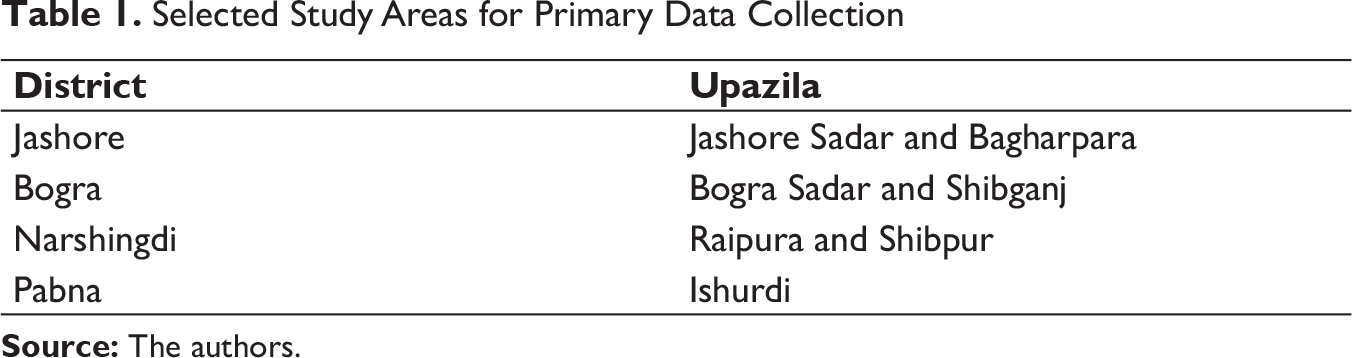
Four vegetable growing districts such as Narsingdi District, Bogra, Jashore District and one major carrot growing area as Pabna were purposively selected to collect baseline data and information on vegetable production and washing. Two upazilas from each district were selected with the consultation of vegetable scientists of Bangladesh Agricultural Research Institute (BARI). The selected areas are listed in Table 1.
Selected Study Areas for Primary Data Collection
Data Collection
Survey questionnaire was developed by incorporating indicators for fulfilling the study objectives. The draft questionnaire was modified with the help of Agricultural Economics Division, BARI, through pre-testing in the project area at Palpara bazar and Bramandi village in Shibpur upazila under Narsingdi district on 25 December 2014. Trained enumerators and scientists of the project collected primary data from selected farmers and traders using structured questionnaire through personal interview. Secondary data were also collected from journal papers, reports and internet.
Results and Discussion
A Brief Profile of the Respondents
Farmer
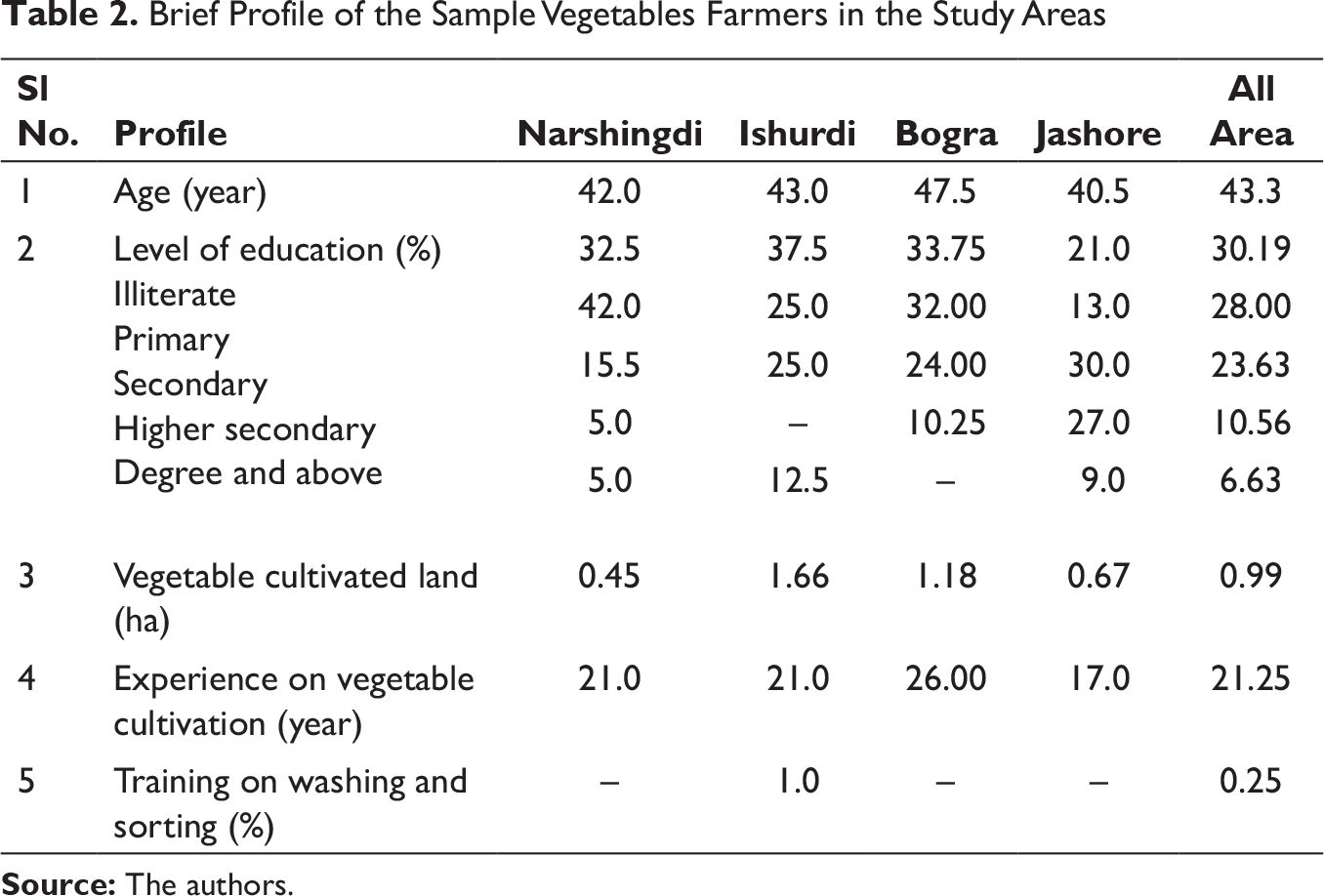
Brief Profile of the Sample Vegetables Farmers in the Study Areas
Vegetable Traders
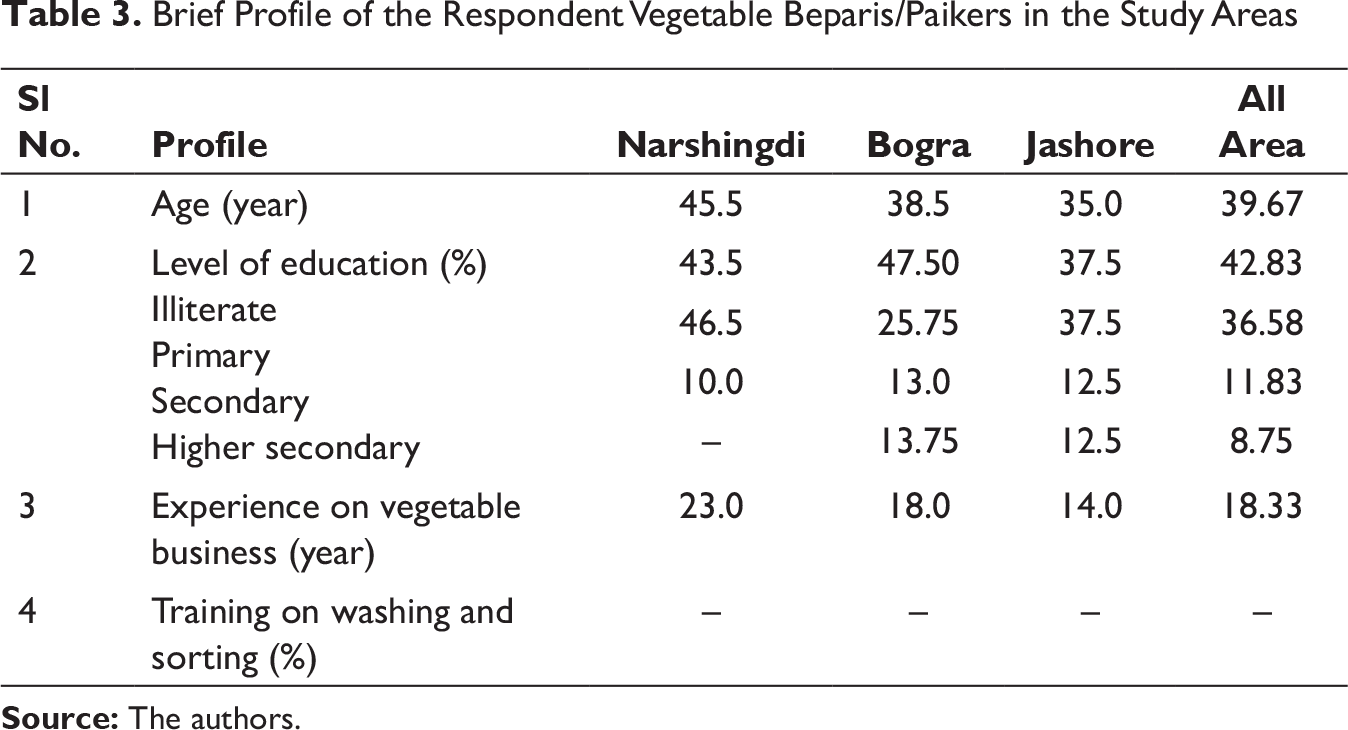
The average age of the vegetable Beparis/Paikers of the study areas was at about 40 years. Majority of the traders were illiterate (42.83%) followed by primary level education (36.58%). Average experience of vegetable traders was 18.33 years which was ranged from 14 to 23 years. It observed that none of them got training on postharvest technology of vegetable washing and sorting (Table 3).
Brief Profile of the Respondent Vegetable Beparis/Paikers in the Study Areas
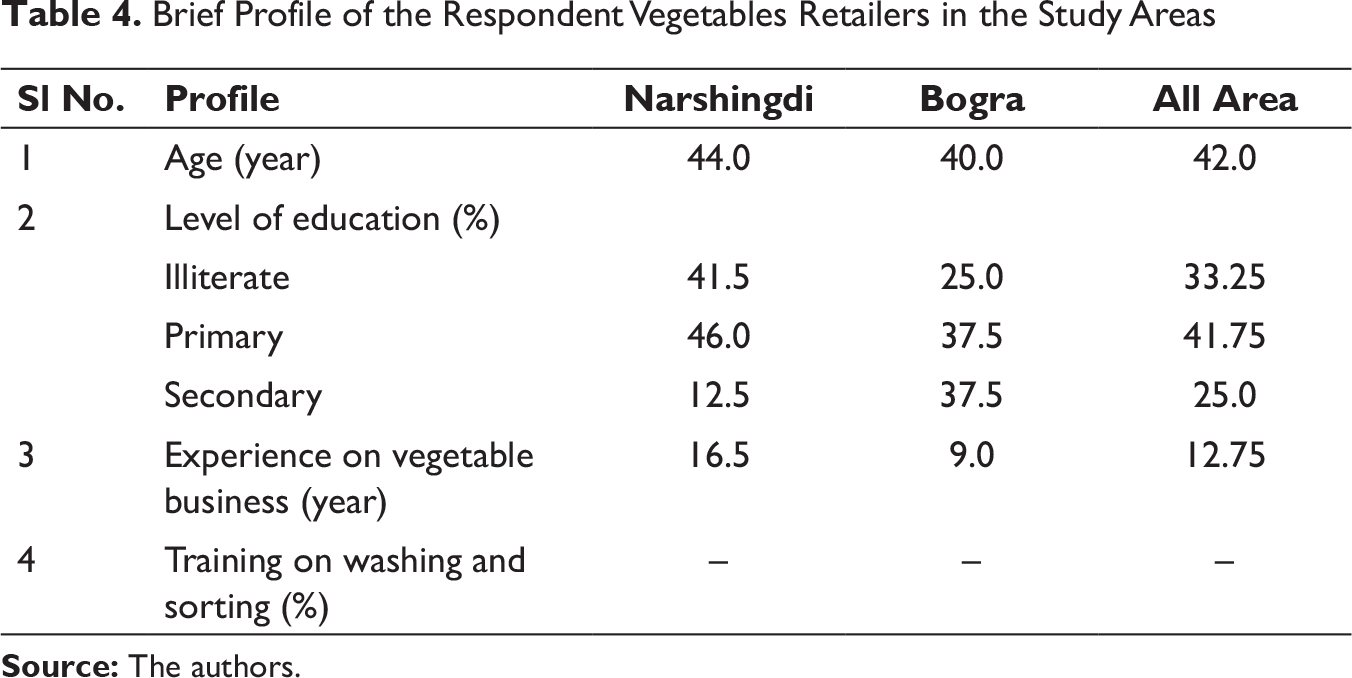
Brief Profile of the Respondent Vegetables Retailers in the Study Areas
Status of Vegetables Washing in the Study Areas
A questionnaire survey was conducted in different locations to explore the current status of sorting, washing and packaging done for different vegetables at farmers and traders level in order to generate some baseline indicators and the economics behind it. The baseline indicators were later used to fabricate mechanical device for washing vegetables. However, the status of vegetable washing at farmers’ and traders’ level in different locations is briefly discussed below.
Narsingdi District
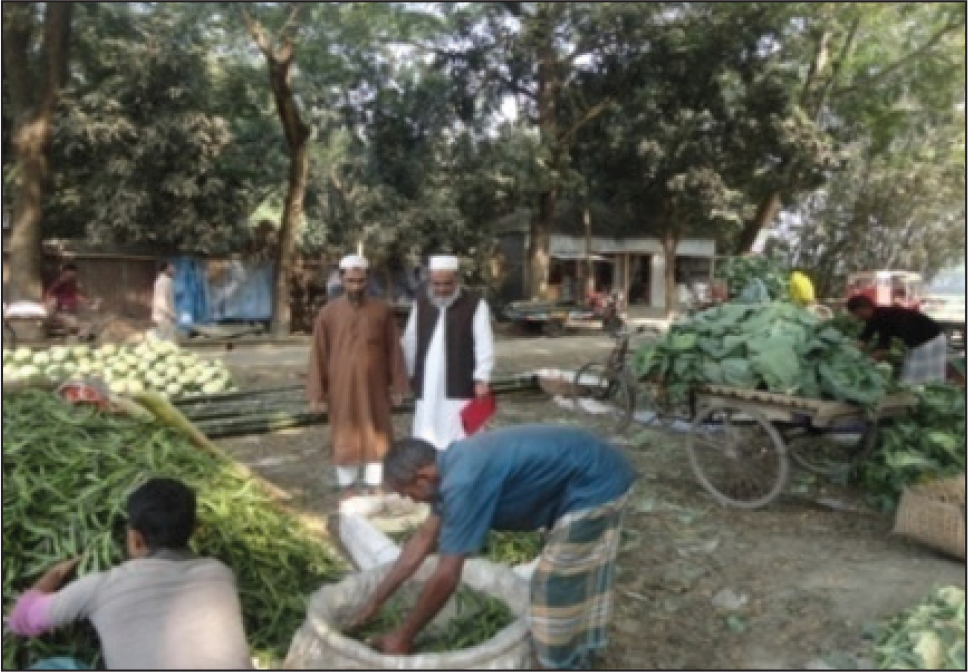
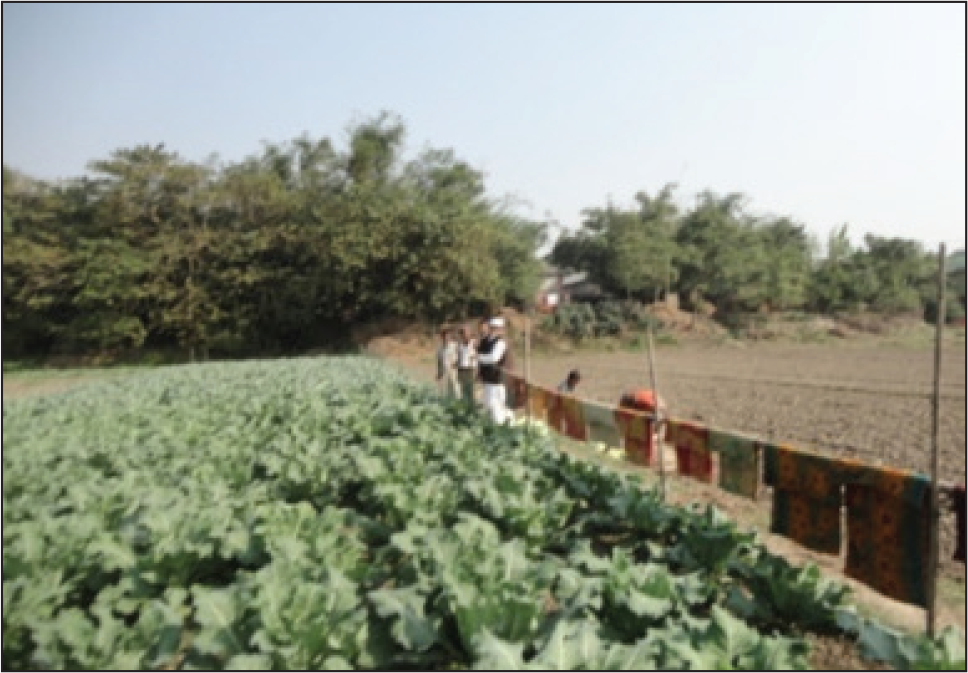
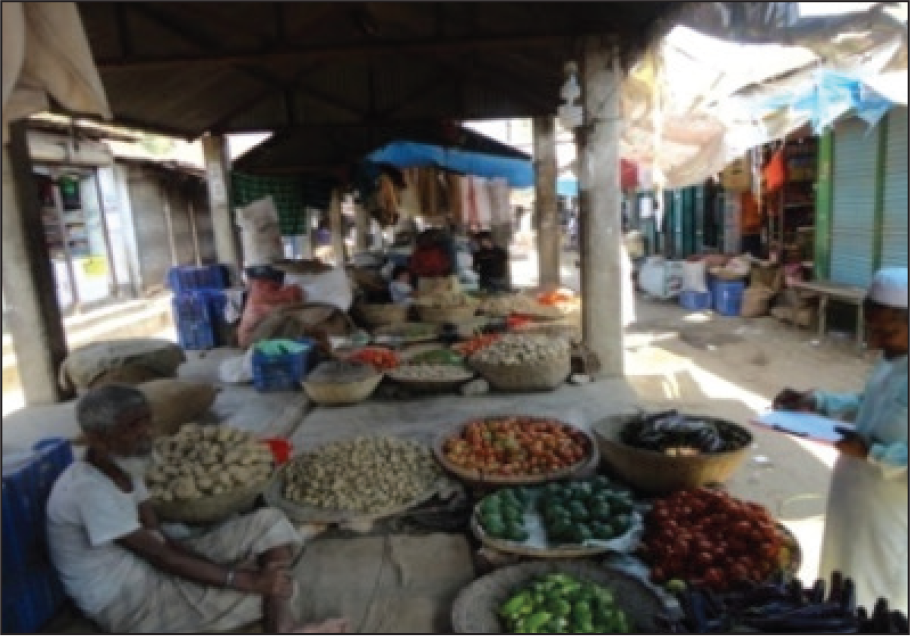
The respondent farmers of Shibpur upazila mentioned that they did not wash country bean with freshwater after harvesting, but wholesalers washed country beans after buying from farmers for maintaining freshness and to minimise weight loss during transportation (Figure 1). They washed radish, carrot, red amaranth and Indian spinach with pond water or supply water for cleaning dust and soil. Without washing, consumer and traders do not want to purchase the vegetables. Cauliflower farmers said that they did not wash cauliflower with water (Figure 2). Again, some wholesalers who export the beans do not wash the beans. Retailers used to spray freshwater over the vegetables for maintaining freshness and minimising weight loss (Figure 3).
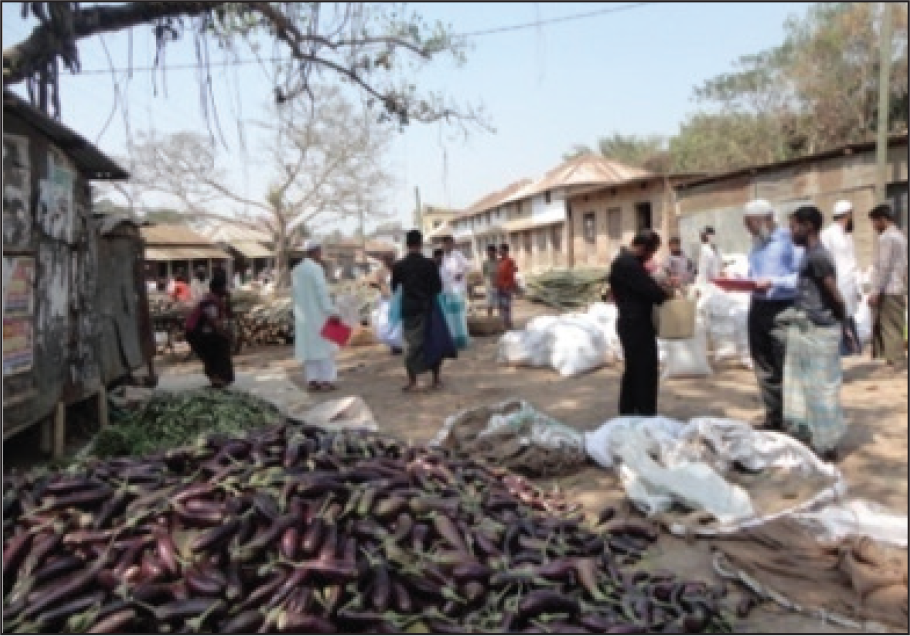
The respondent traders of Raipura upazila mentioned that they did not wash brinjal with water. They also explained that brinjals were damaged when washed with freshwater (Figures 4 and 5). Farmers used to wash red amaranth, Indian spinach and stem amaranth with pond water or supply water for removing soil and dust. Farmers cannot sell them if they are not washed.
Bogra District
The farmers of Shibganj upazila sorted cucumber without washing with water and packing in a plastic crate for transportation (Figure 6). Some wholesalers were sorting and washing cucumber (khira) with freshwater and packed in jute bags for transportation (Figure 7). Wholesalers were sorting, grading and drying radish without washing with water and packed into the plastic bags (Figure 8).
Data were collected from vegetable farmers, wholesalers and retailer in Raja Bazar at Bogura Sadar. Farmers used to wash radish, stem amaranth, carrot and brinjal for cleaning mud from the surface of the vegetables. Retailers’ used to spray water over the brinjal, red, stem amaranth and carrot for maintaining freshness.
Pabna District
Farmers said that they washed carrot with freshwater after harvesting for selling local market (Figure 9). A famous carrot grower stated that they generally packed harvested fresh carrots in jute bag and stored in commercial cold storage for 6-8 months without washing. On the other hand, carrots were washed with freshwater manually for selling in the local market (Figure 10). Farmers harvested radish by means of hand tool in the rainy season and manually washed with freshwater (Figure 11).
Jashore District
Wholesalers generally sort and wash brinjals with supply water before packing them in jute bags for transportation. They said that during unloading brinjal, no weight loss occurred and freshness was maintained (Figure 12). In Figure 13, an enumerator was taking information on vegetable washing status from the farmers.
Bagarpar
Bagarpar upazila of Jashore District is one of the vegetable growing areas. Information on vegetable processing was collected from farmers and retailers. Farmers washed stem amaranth, red amaranth and Indian spinach with supply water (Figures 14–16).
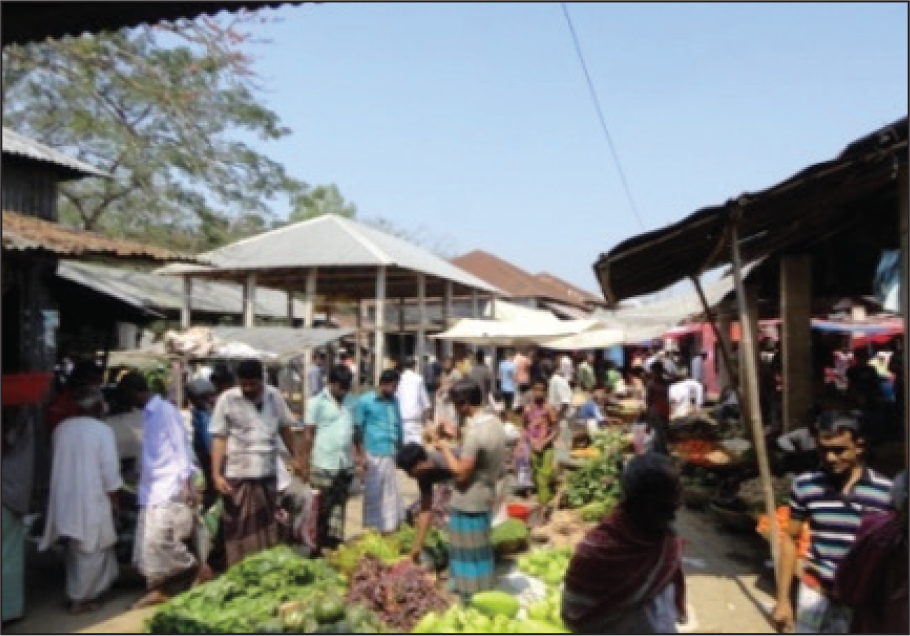
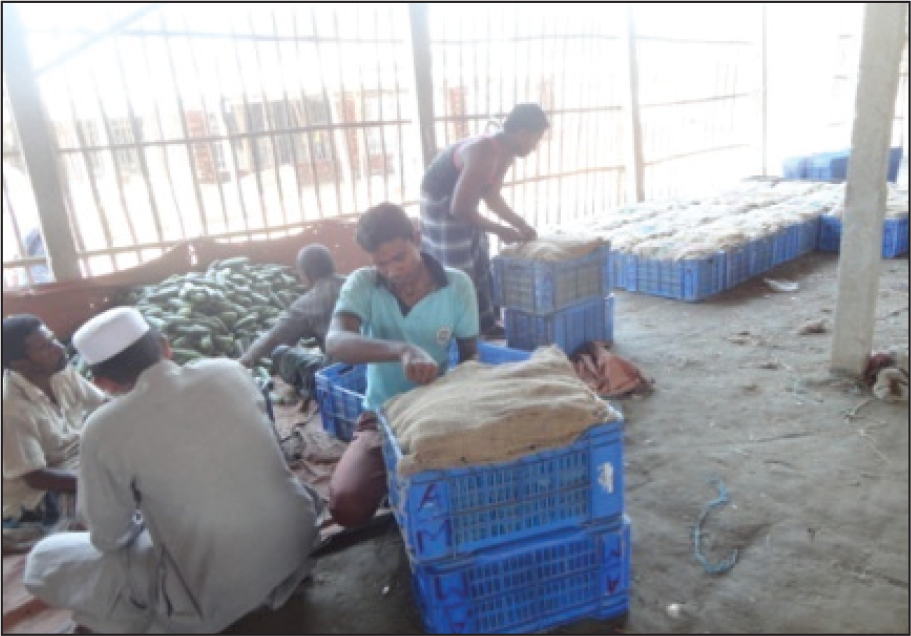
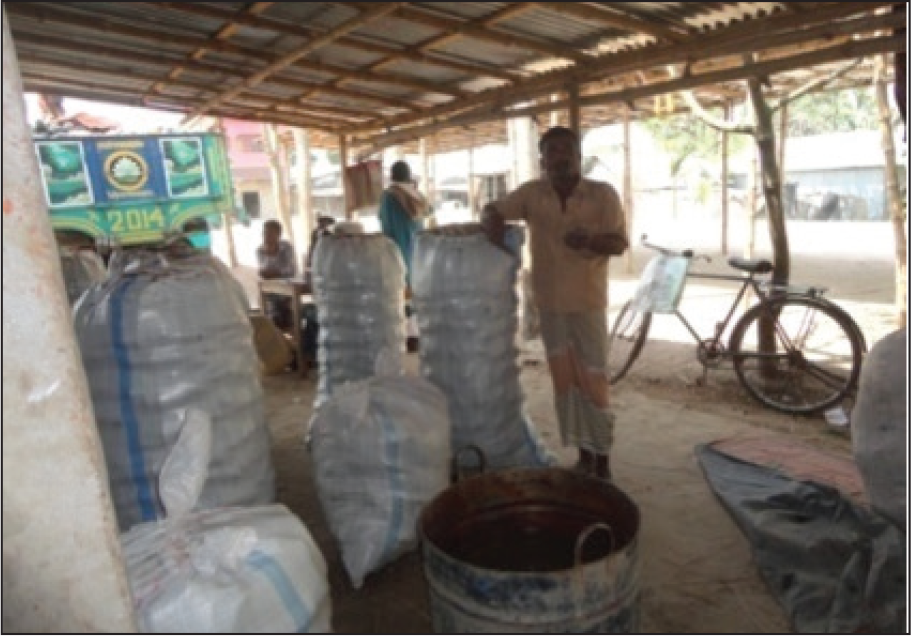
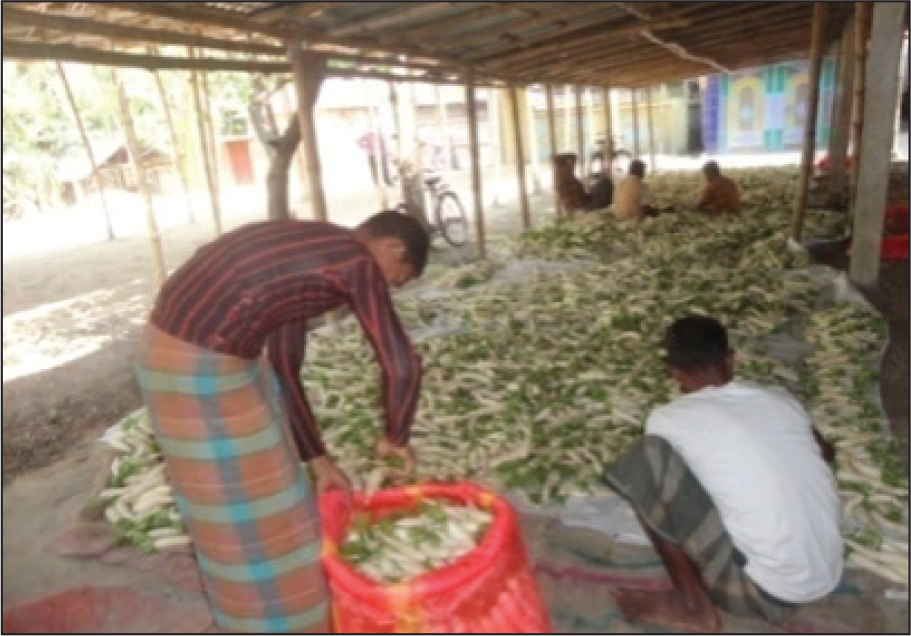
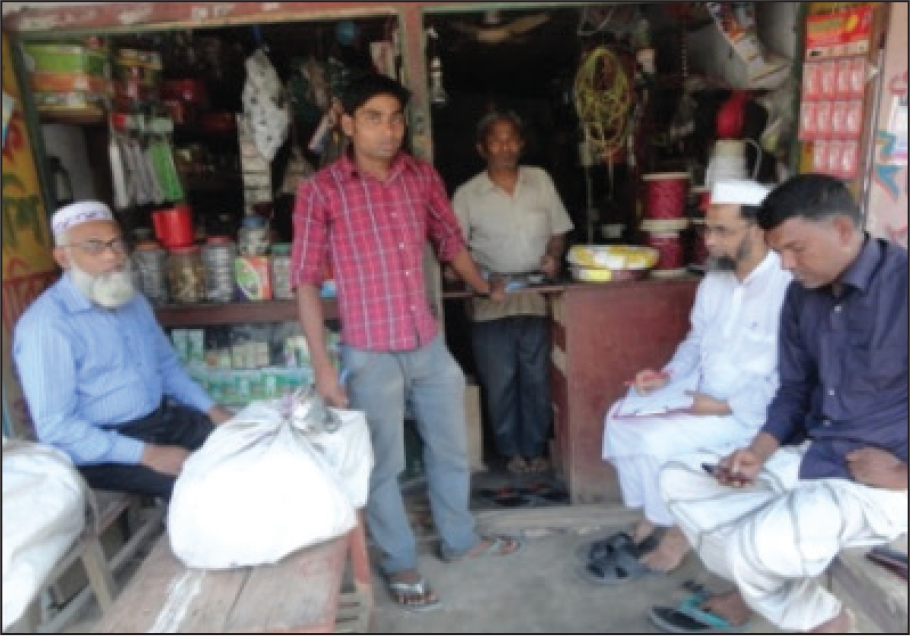
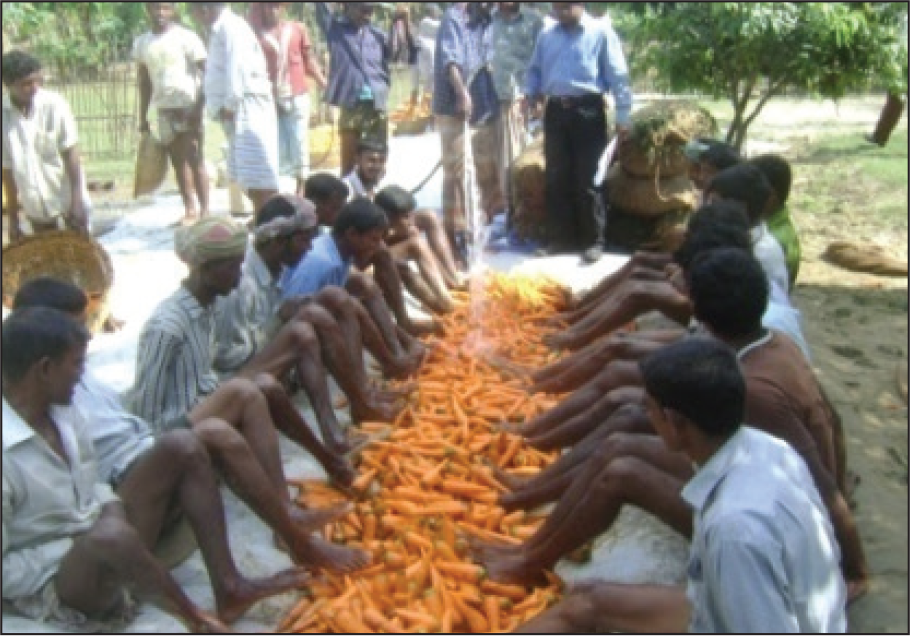
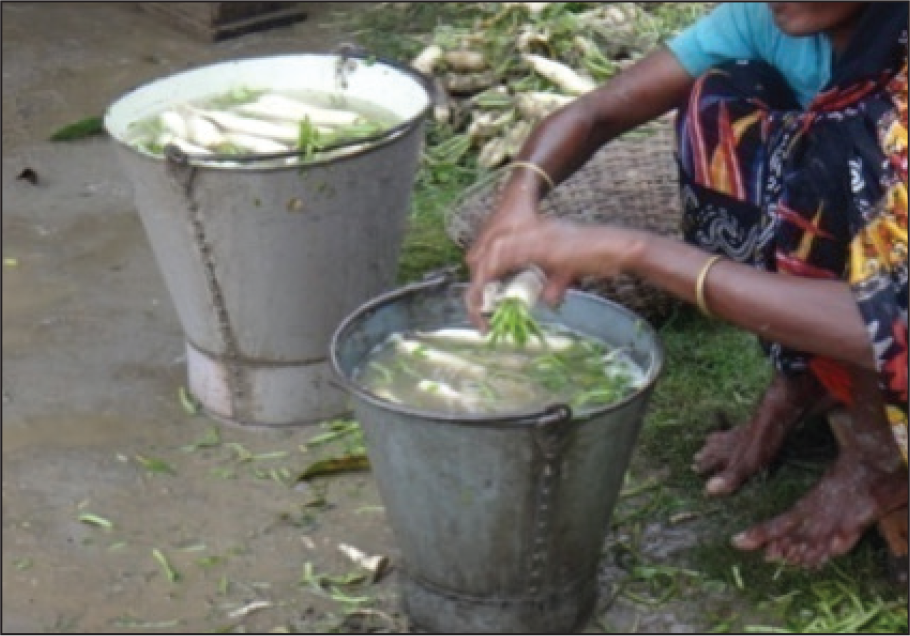
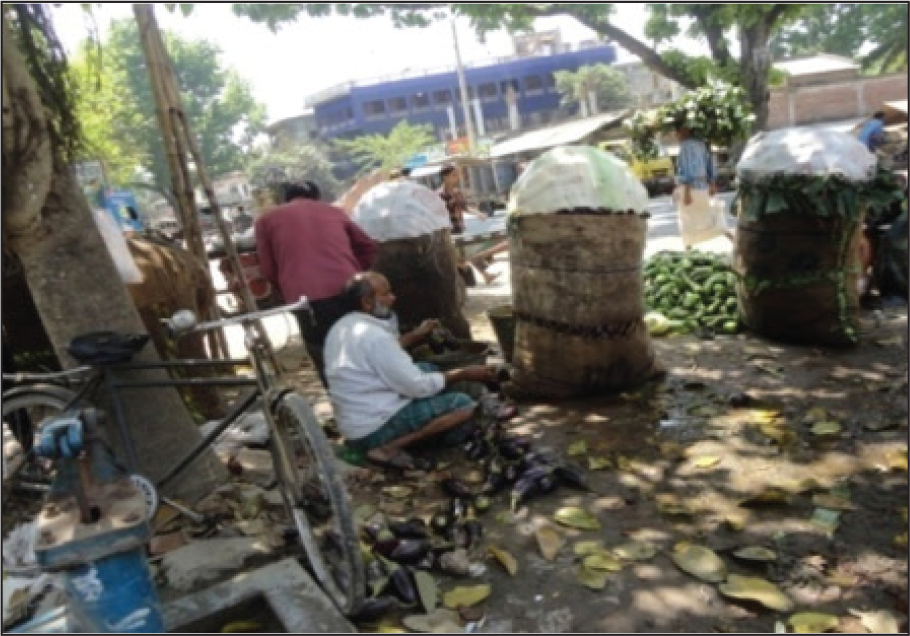
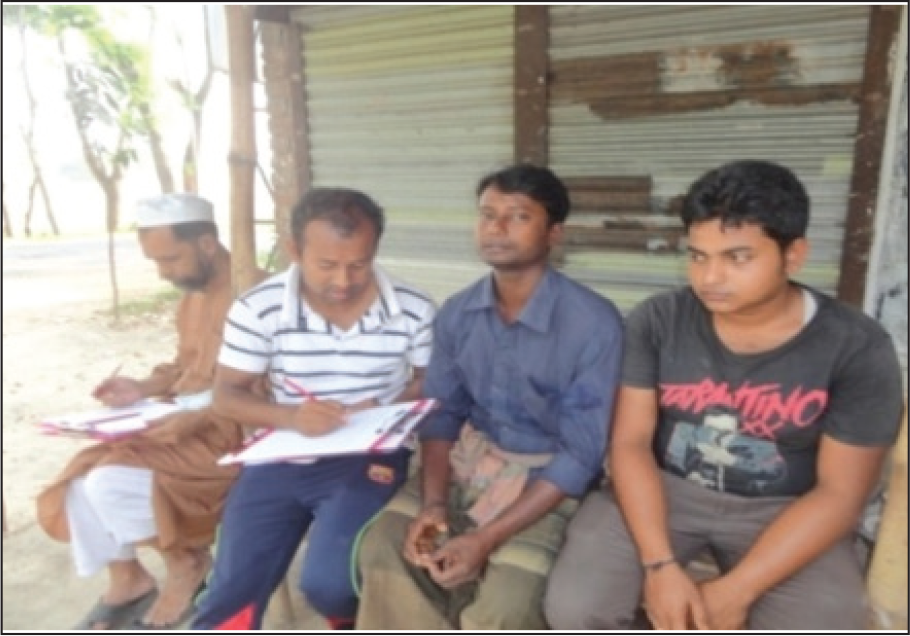
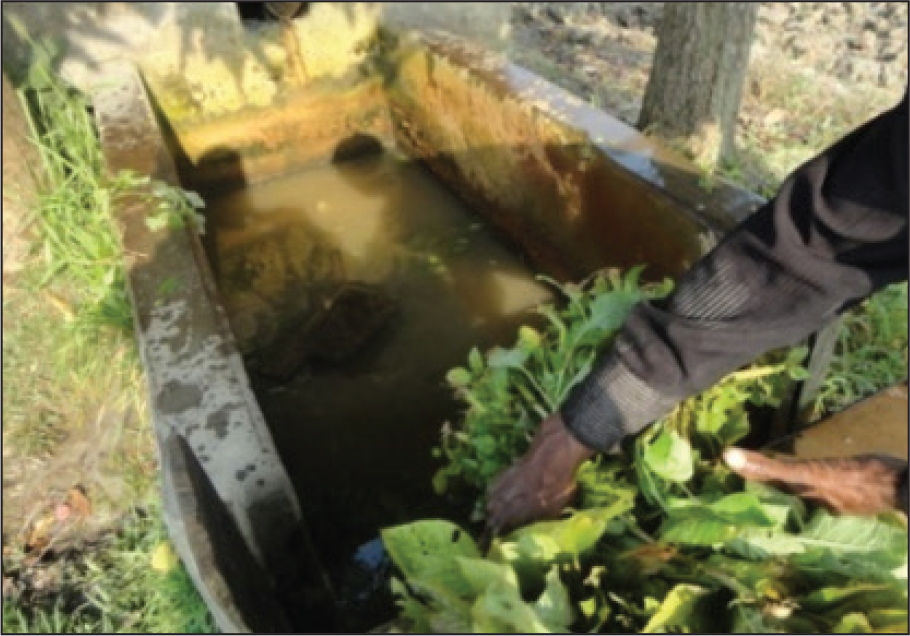
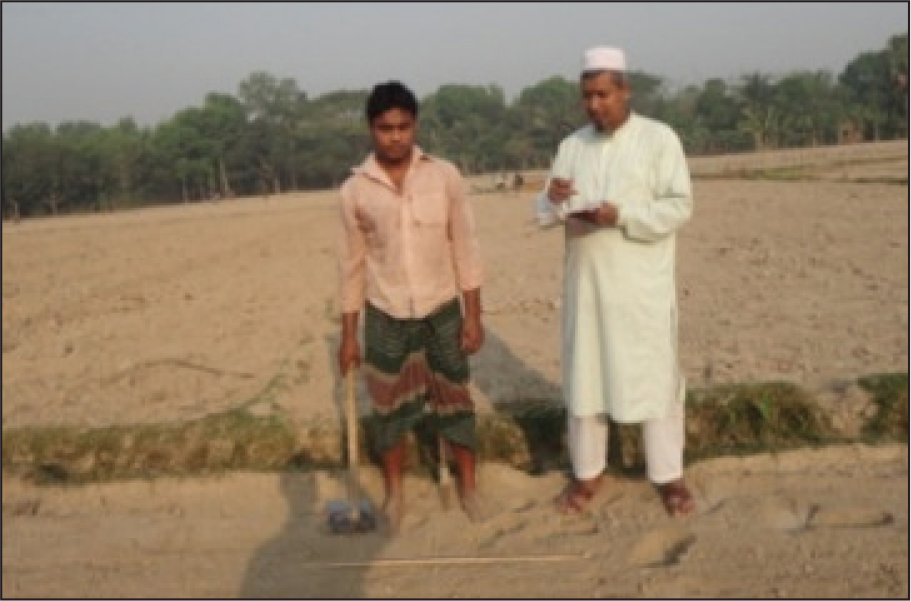
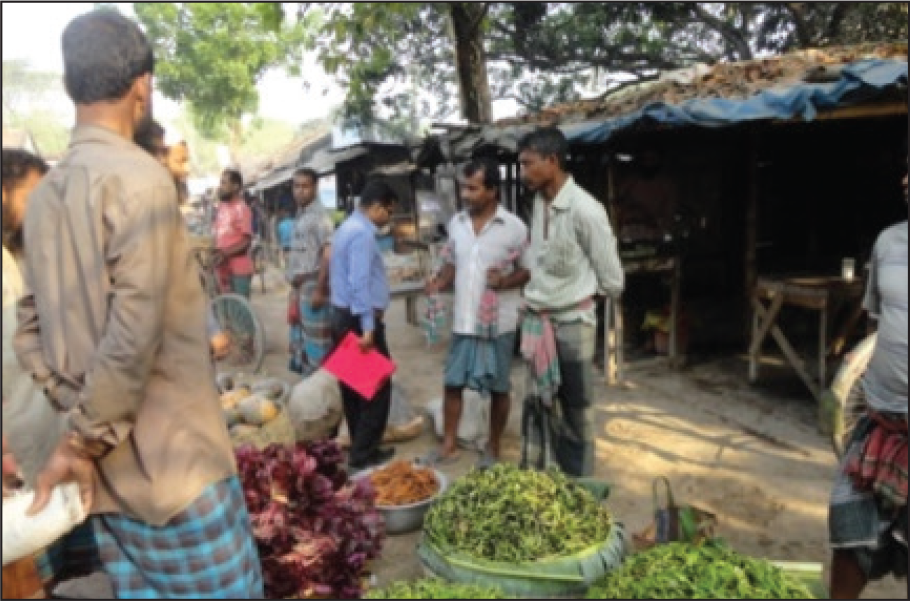
Sorting, Washing and Packaging of Vegetable by Farmers
Jashore District
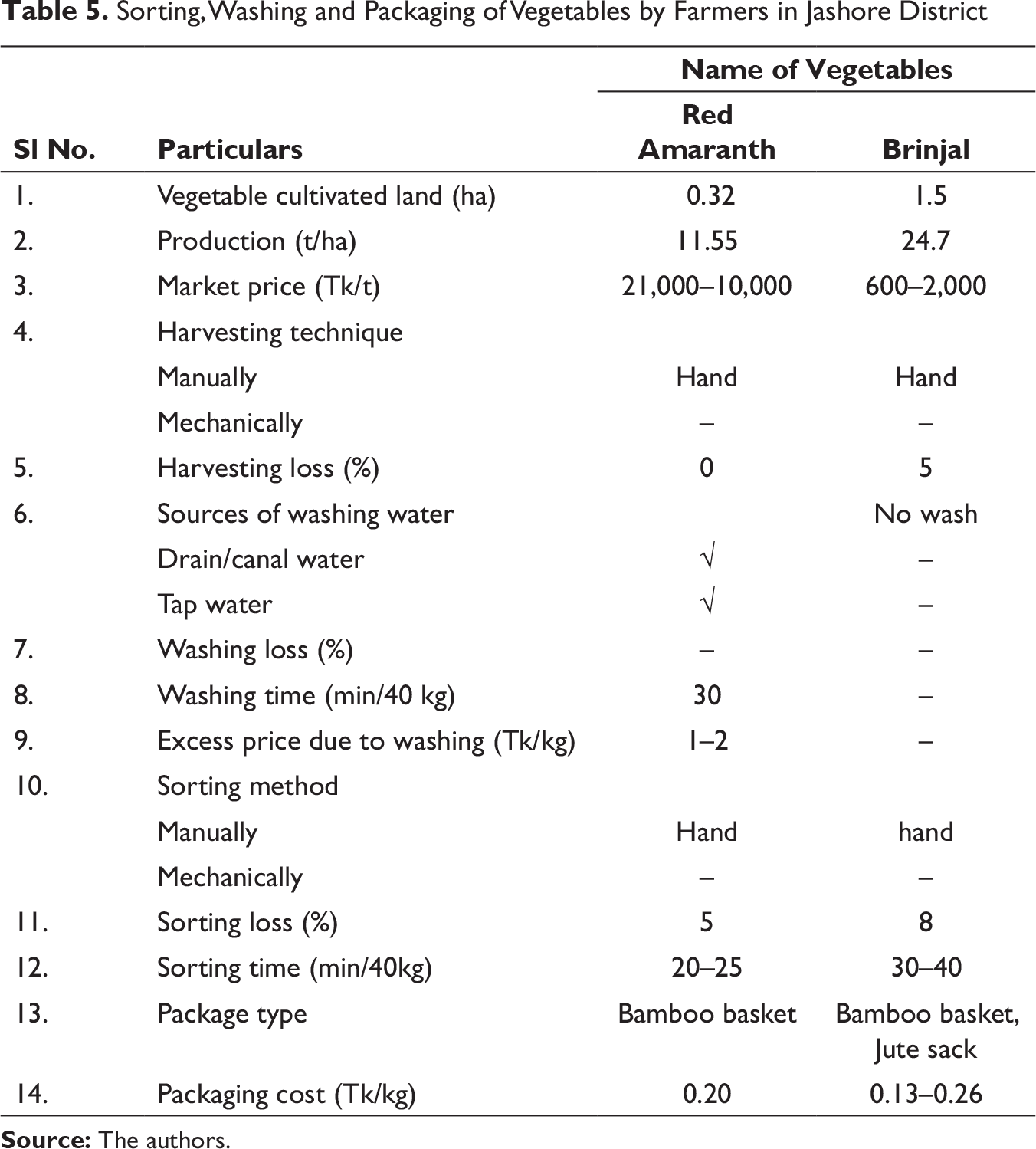
The sampled farmers of Jashore District did not cultivate carrots but cultivated other vegetables such as red amaranth, brinjal, bitter gourd and stem amaranth. They harvested red amaranth and brinjal by hand. It is observed that harvesting losses of red amaranth and brinjal were 0 per cent and 5 per cent, respectively. Farmers washed red amaranth with canal and tap water but did not wash brinjal. The washing loss of red amaranth was nil and washing vegetable fetched higher price ranged from Tk 1.0 to Tk 2.0 per kg. They sorted red amaranth and brinjal by hand and packed in bamboo basket and jute bag. Sorting losses ranged from Tk.5.0 to Tk. 8.0 and packing costs ranged from Tk 0.20 to Tk 0.26 per kg of studied vegetables.
Bogra District
Sorting, Washing and Packaging of Vegetables by Farmers in Jashore District
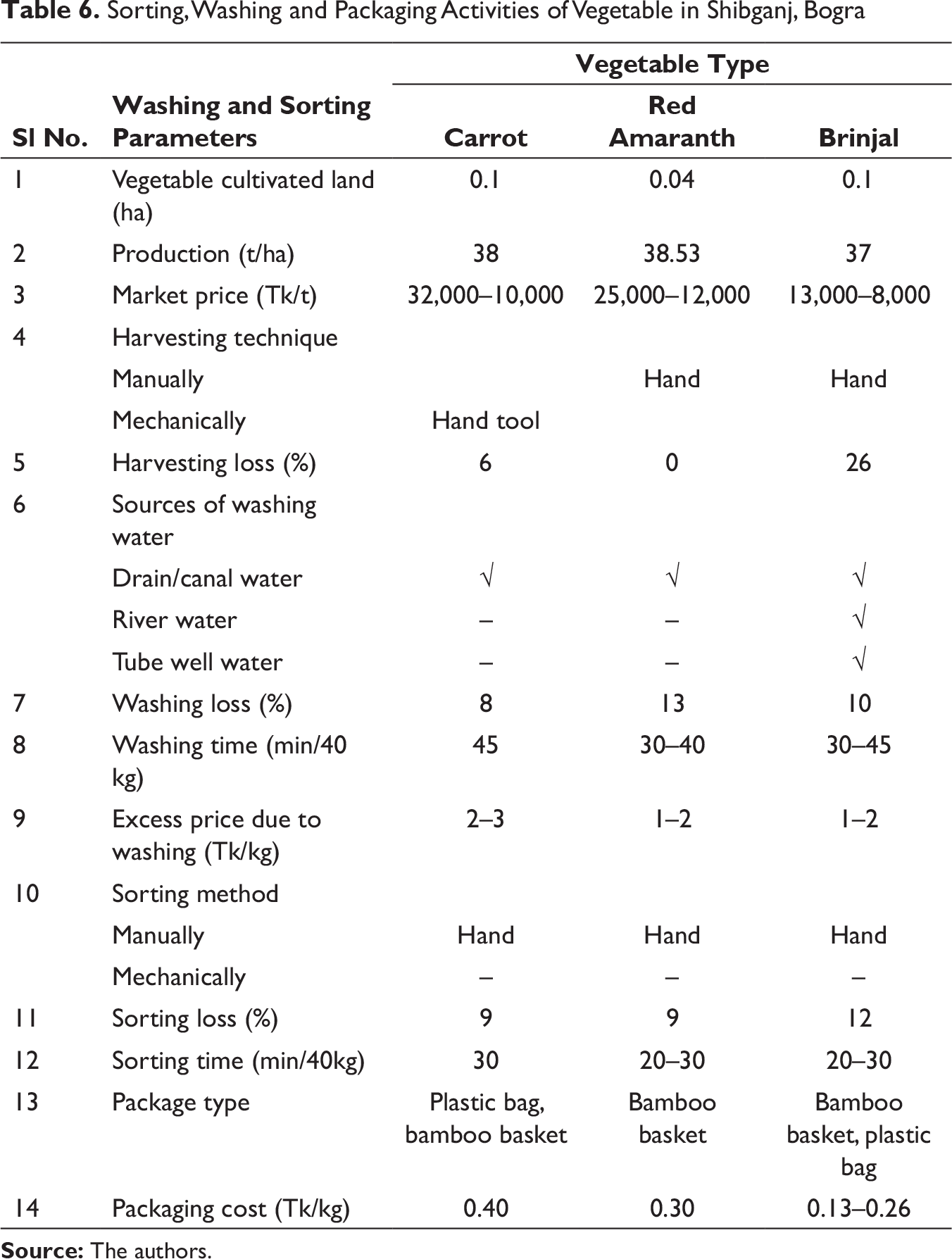
Sorting, Washing and Packaging Activities of Vegetable in Shibganj, Bogra
Pabna District
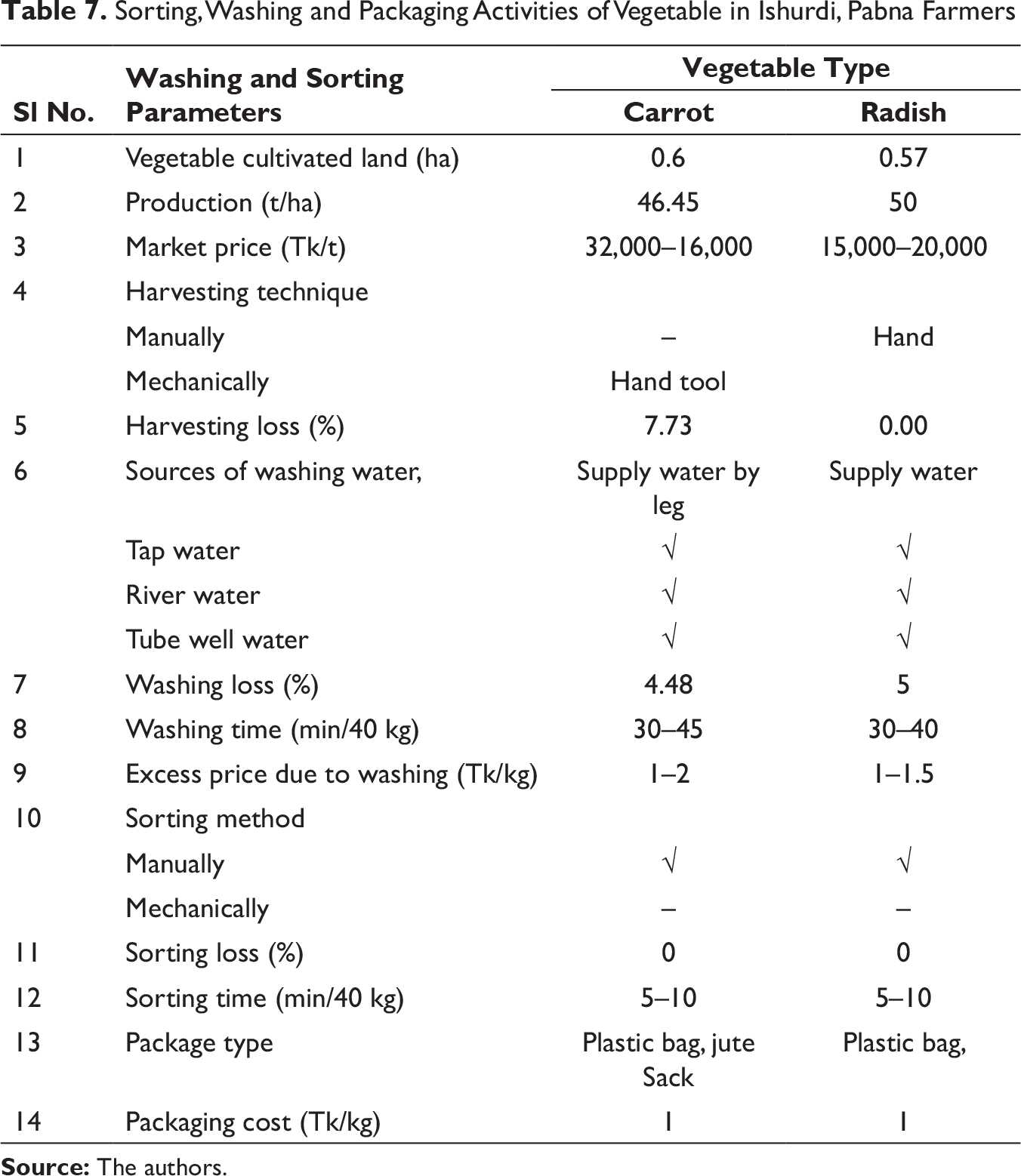
Sorting, Washing and Packaging Activities of Vegetable in Ishurdi, Pabna Farmers
Sorting, Washing and Packaging of Vegetable by Traders
Jashore District
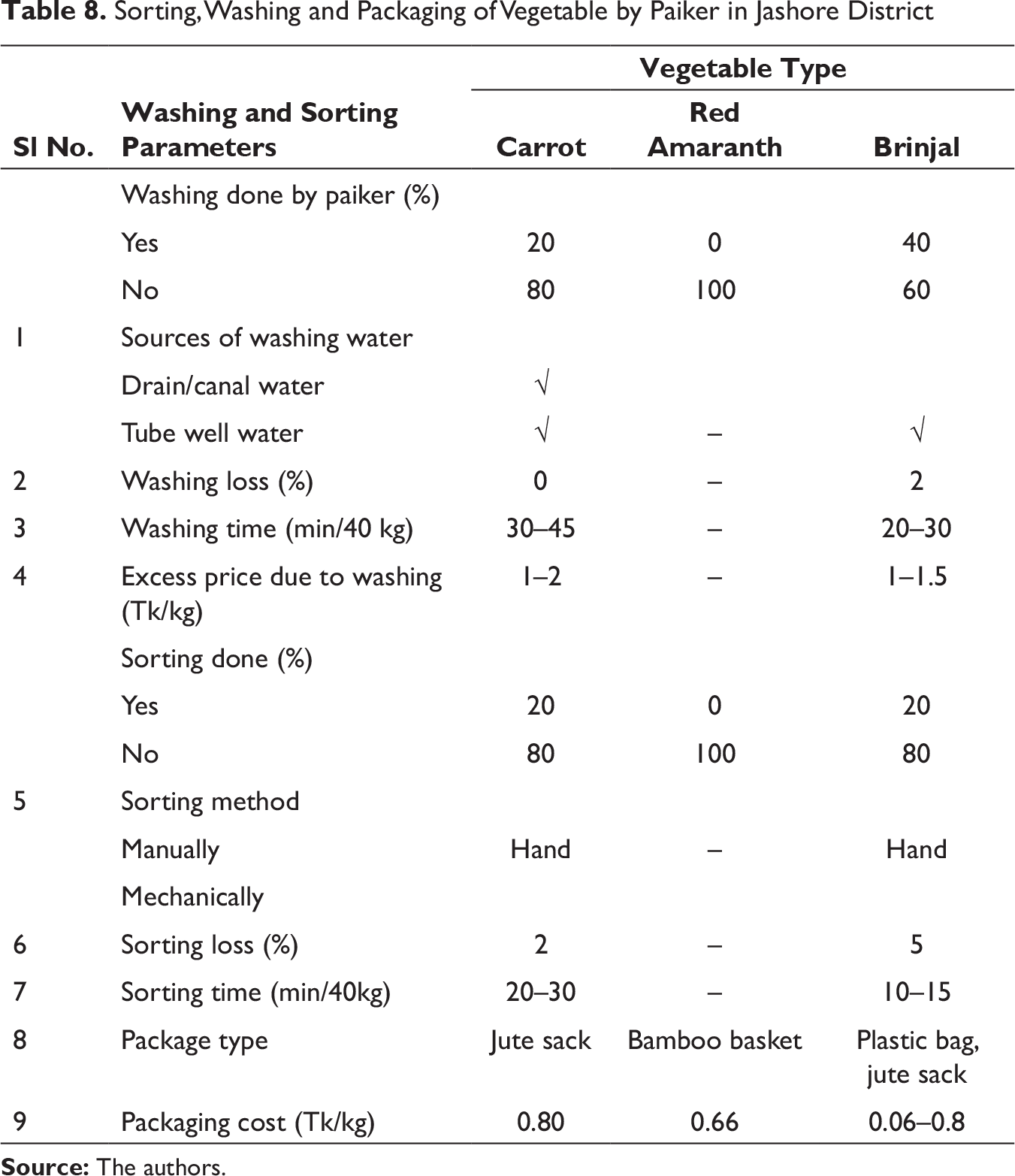
Sorting, Washing and Packaging of Vegetable by Paiker in Jashore District
Bogra District
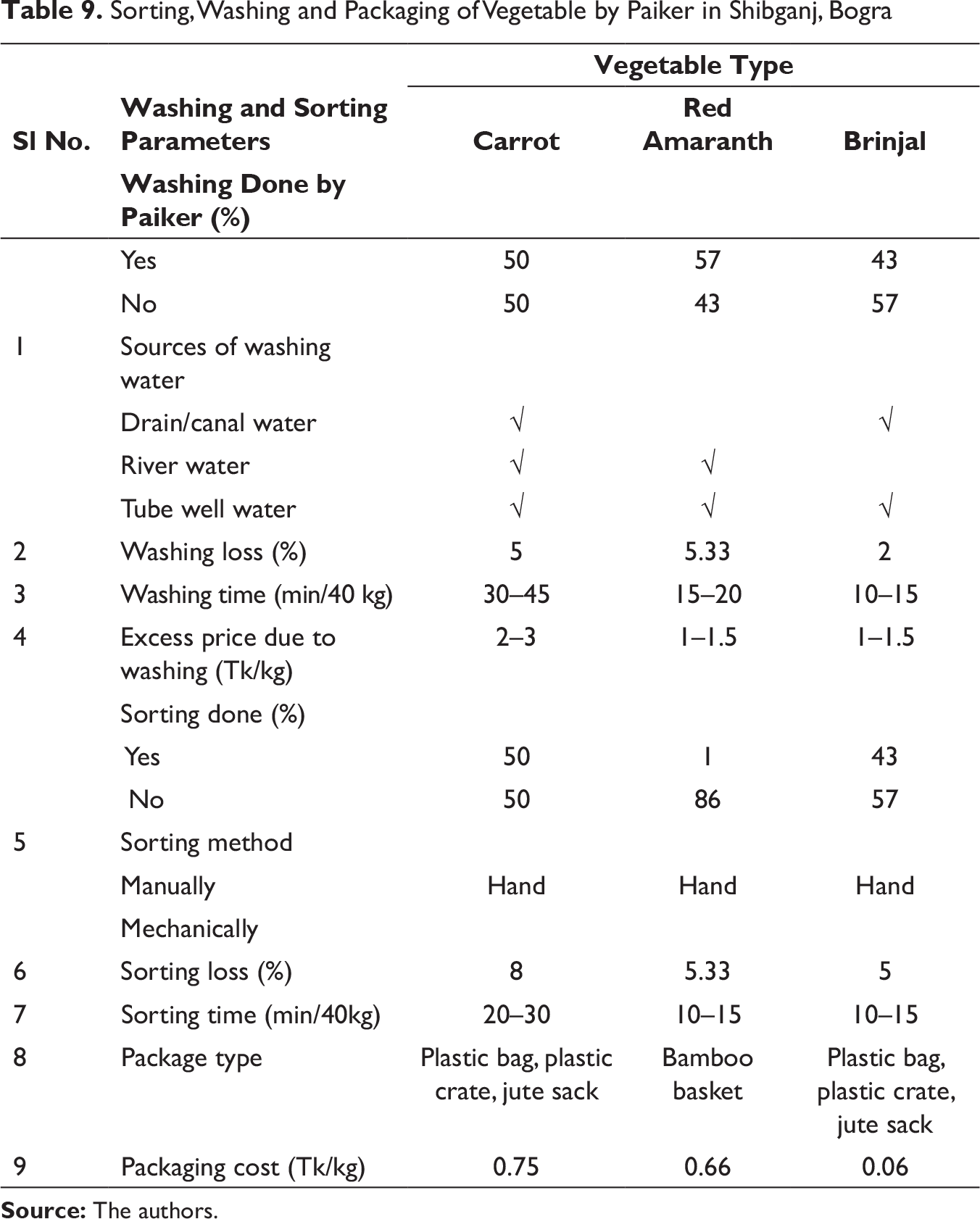
Sorting, Washing and Packaging of Vegetable by Paiker in Shibganj, Bogra
Narsingdi District
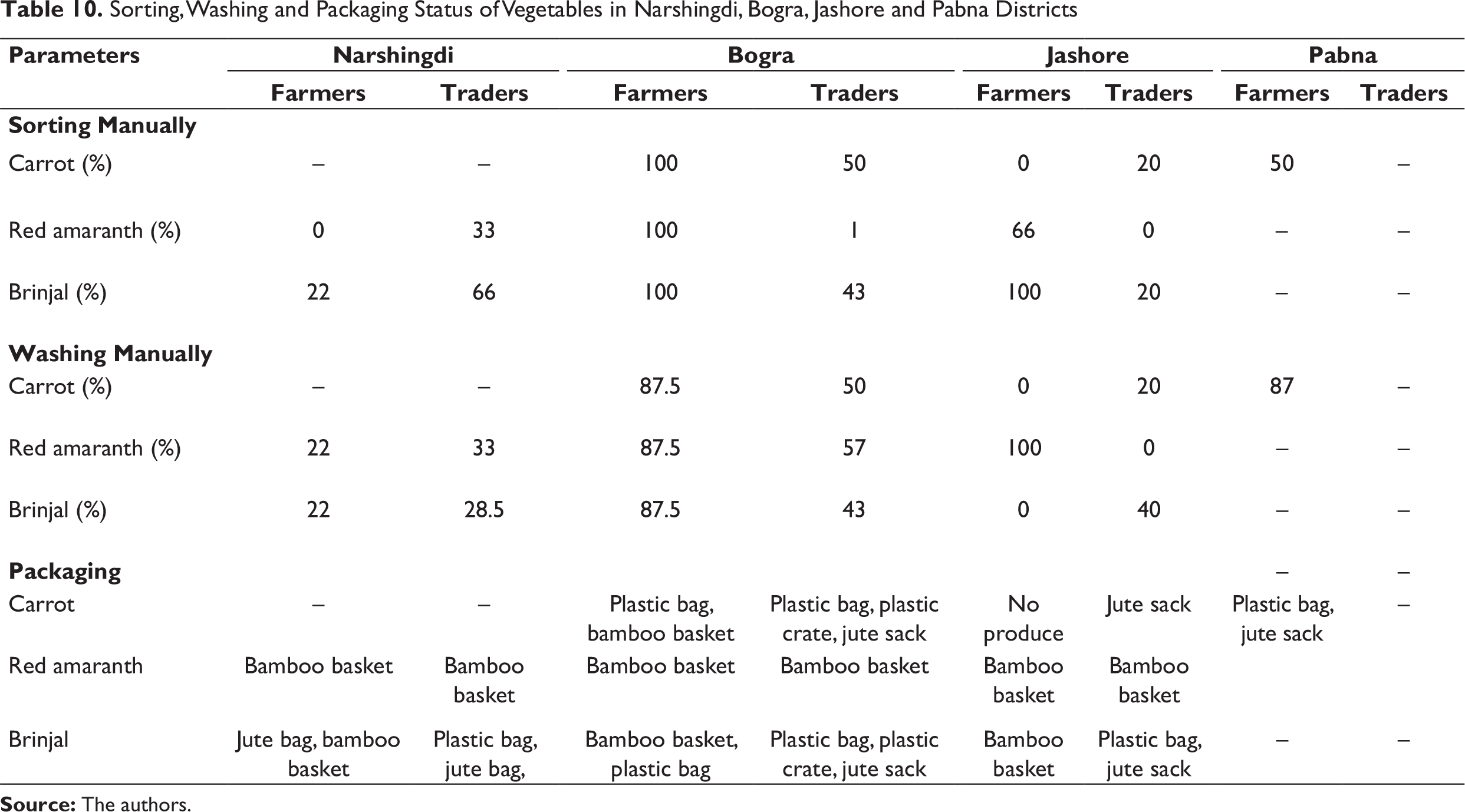
Sorting, Washing and Packaging Status of Vegetables in Narshingdi, Bogra, Jashore and Pabna Districts
Bogra District
A total of 100 per cent farmers sorted carrots, red amaranth and brinjal by hand and 87.5 per cent farmers washed them and packed into bamboo basket and plastic bag. A total of 50 per cent traders sorted and washed carrots by hand and packed them into plastic bag and plastic crate. A total of 1 per cent traders sorted red amaranth and 57 per cent traders washed it by hand and packed into Bamboo basket. A total of 43 per cent traders sorted and washed brinjal by hand and packed into jute bag (Table 10).
Jashore District
The farmers did not sort and washed carrots. A total of 66 per cent farmers sorted red amaranth and 100 per cent farmers washed it and packed into bamboo basket. A total of 100 per cent farmers sorted brinjal and none washed it. A total of 20 per cent traders sorted and washed carrot by hand and packed into plastic bag. Any traders did not sort and washed red amaranth. A total of 20 per cent traders sorted and 40 per cent washed brinjal and packed into jute bag and plastic bag (Table 10).
Pabna District
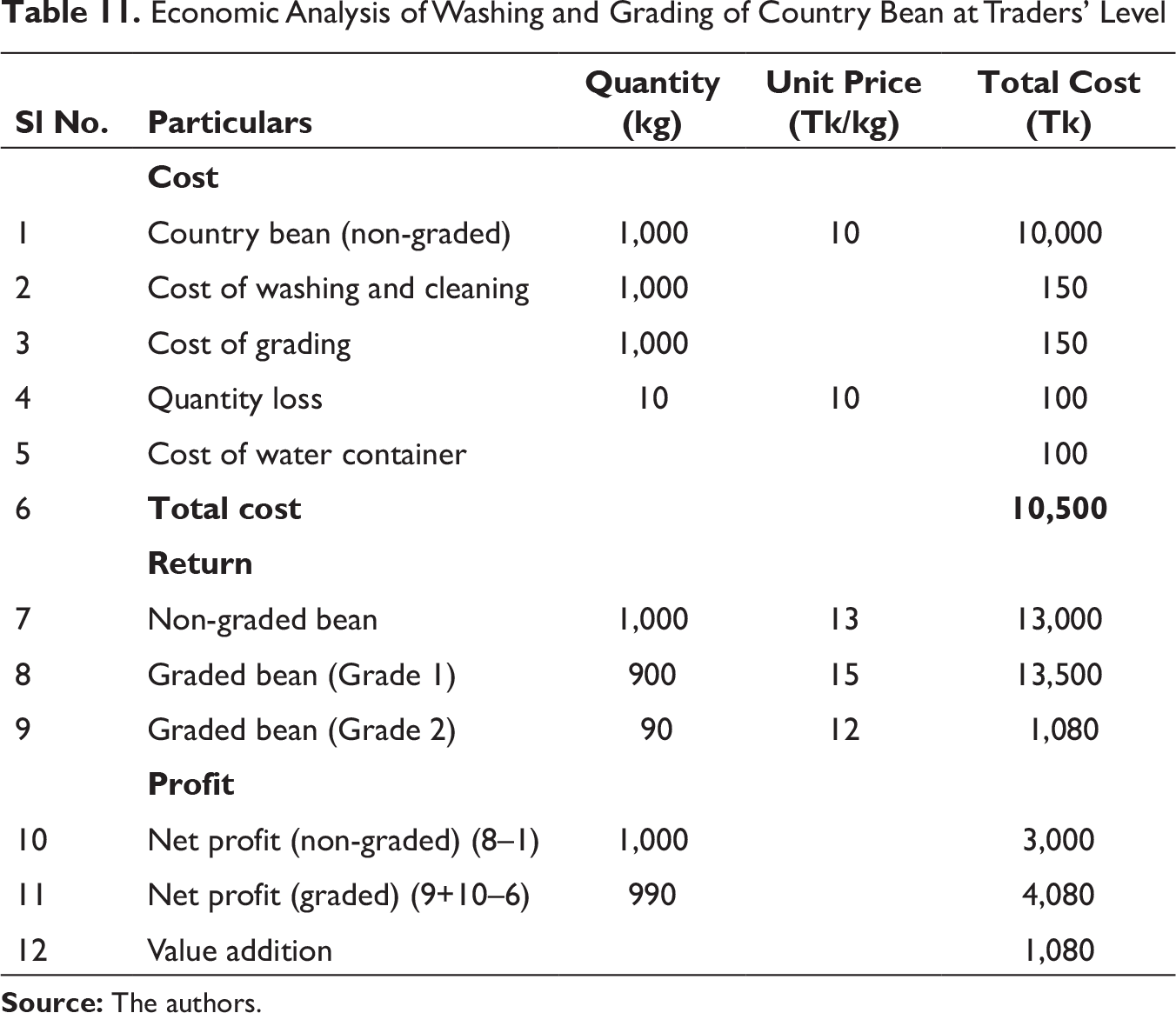
Economic Analysis of Washing and Grading of Country Bean at Traders’ Level
Financial Benefit of Washing and Grading of Vegetables
An attempt was made to estimate the financial benefit of washing and grading/sorting of country bean at different types of traders. The study revealed that the total cost of washing and grading of country bean was Tk 500 per tonne which included the cost of washing, grading, loss of vegetables and water container. The net profit of grading and washing country bean was found to be Tk 4,080 per ton and for non-graded country bean, it was estimated at Tk 3,000 per ton. Finally, the total value addition per ton was Tk 1,080 (Table 11).
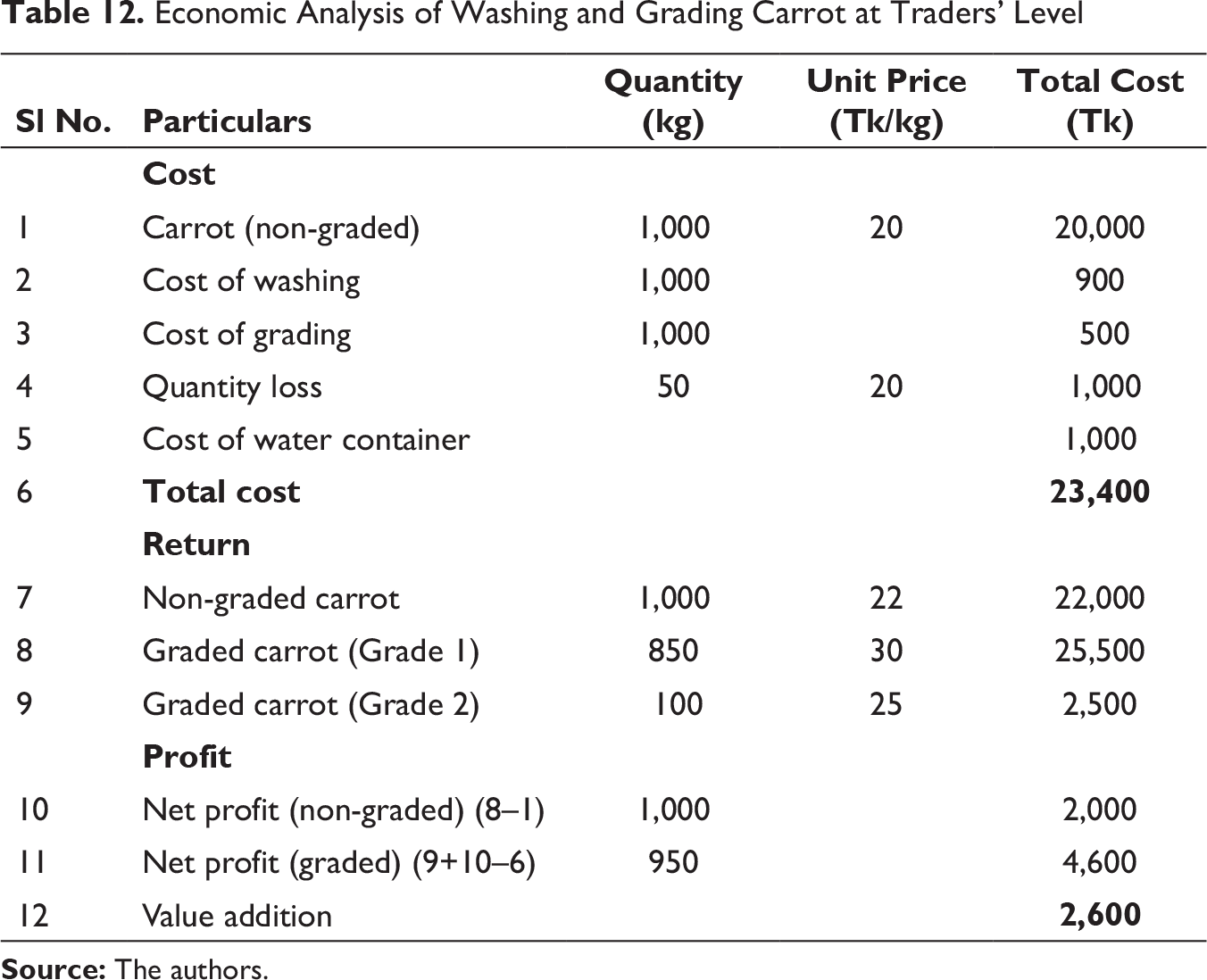
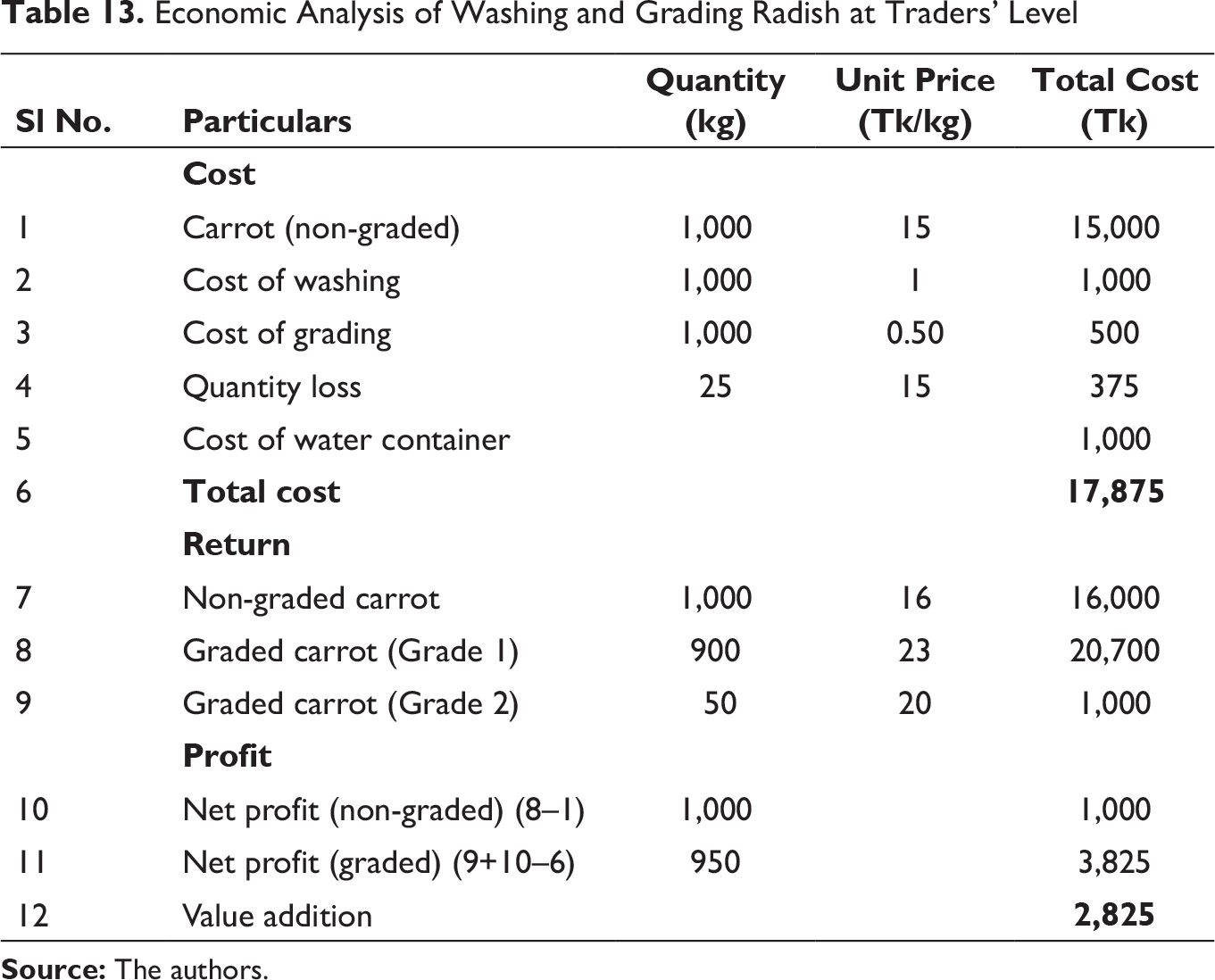
Another attempt was made to estimate the financial benefit of washing and grading/sorting of carrot at different types of traders. The analysis revealed that the total cost of washing and grading of carrot was Tk 3,400 per ton which included the cost of washing, grading, loss of carrot and water container. The estimated net profit of grading and washing of carrot was Tk 4,600 per ton and it was Tk 2,000 per ton for non-graded carrot. The estimated total value addition was Tk 2,600 per ton (Table 12).
Economic Analysis of Washing and Grading Carrot at Traders’ Level
Economic Analysis of Washing and Grading Radish at Traders’ Level
Conclusion
A baseline study was conducted to explore the current status of sorting, washing and packaging done for different vegetables at the farmers’ and traders’ level in order to generate some indicators and the economics behind it. These indicators are later used to design a mechanical device for washing vegetables. The study reveals that in all locations, red amaranth and root crops (carrots and radish) are manually washed with freshwater by farmers and traders to get a better price. Farmers and traders used bamboo basket, plastic crate, plastic bag and jute sack for packaging of vegetables. In financial point of view, washing and grading are a profitable activity to the traders.
Footnotes
Acknowledgement
The authors are grateful to BARI for providing physical and logistic supports to carry out the study successful.
Declaration of Conflicting Interests
The authors declared no potential conflicts of interest with respect to the research, authorship and/or publication of this article.
Funding
The authors disclosed receipt of the following financial support for the research, authorship and/or publication of this article: The authors are very thankful to and acknowledge BARC, Farmgate, Dhaka, for financial supports under ‘Research Grant Project’ to conduct the study and develop the machine.