







Abstract
In recent years there has been a renewed interest in the development of compact neutron sources, as an alternative to large facilities based on reactor or accelerator installations. In fact, compact accelerator-driven neutron sources (CANS) have been in operation for a long time, but different circumstances have recently prompted the design and development of new high-intensity CANS projects around the world. The compact character of such installations must be also reflected in their target–moderator–reflector (TMR) systems, where the significant radiation fields they are immersed in and the requirement of optimized configuration to achieve the expected high neutron fluxes, pose new challenges for the design of the appropriate TMR in each case. In this work, some conceptual ideas are presented that can be considered as initial guesses for the necessary simulation work, with particular emphasis on moderator configurations able to supply thermal, cold, and very cold neutron beams based on high-intensity CANS or medium-intensity CANS. To pursue this endeavor a special effort was made to collect analytical tools and experimental information in support of the proposed concepts.
Introduction
Despite the relative inaccessibility of neutron sources and the fact that even the most intense sources today provide only relatively weak neutron beams, neutron as a research tool currently contributes to the understanding and development of almost all aspects of basic and applied sciences.
The need to replace the aging fleet of high- and medium-flux research reactors has faced strong opposition from the public to build new facilities of the same class, except in a few cases. As a natural alternative, neutron sources based on large-scale accelerators have been realized through the advent of spallation sources projected and built in different regions in recent years, although their high cost for construction and maintenance poses a significant limitation for new projects of this kind.
In recent years, there has been renewed interest in the development of compact neutron sources as alternatives to large facilities based on reactor or accelerator installations. 1 Although compact accelerator-driven neutron sources (CANS) have been in operation for a long time, different circumstances have recently prompted the design and development of new CANS projects around the world,1,2 geared toward the need to reduce the neutron drought caused by the closing of several medium-flux research reactors.
Neutron scattering techniques have shown impressive advances in recent years, mainly motivated by technological developments in neutron production, instrumentation, and data measurement and processing. Nevertheless, every effort aimed at increasing the capability of a facility to produce more intense slow neutron beams at specific energies is of the greatest importance, including the consideration of target–moderator–reflector (TMR) configurations as well as the exploration and study of new materials to serve as more efficient neutron moderators and reflectors.
In the specific case of CANS facilities, the relatively small size of the target, where fast neutrons are liberated by nuclear reactions, is a common characteristic that should format the configuration of the entire TMR system. Two fundamental concepts must be considered from the beginning for these systems: (a) the best possible coupling between the target and moderators/reflectors to achieve the highest fluxes at the desired spectral regions and (b) the appropriate materials able to withstand the strong radiation fields they are immersed in.
Throughout this work, it is assumed that the CANS operates in pulsed mode, which implies that the time evolution of the neutron field inside and outside the spatial extent of the moderator must be considered. Bearing in mind the different combinations of incident particles and nuclear reactions involved in the CANS methods to generate fast neutrons in the target, this work mainly concentrates on the configuration of the moderator assembly aimed at producing thermal neutron (TN), cold neutron (CN), and very CN (VCN) beams.
In the next section, a quick review of some relevant parameters related to the moderation and diffusion theory of neutron physics is presented to provide a basic scenario for the conceptual design of moderator systems and a sensible set of input data for simulations. Subsequently, some materials that can be used to thermalize the neutron field over different energy ranges are considered, and a few possible geometries that could act as starting points for the necessary simulations in the optimization process are discussed. In addition, it is assumed that these slow neutron beams will be devoted to neutron scattering applications in condensed matter; thus, neither ultra-cold nor epithermal neutron moderators are considered here.
Energy and time-dependent neutron spectra
2.1. Moderation region
The neutrons produced in nuclear reactions have energies in the MeV range or beyond. For use in materials research, neutron energies must be reduced by several orders of magnitude. The process by which the energy of a neutron is slowed down is called moderation, and its range corresponds to energies much larger than those associated with the chemical binding and thermal motion of the scattering atoms. 3
Such moderation processes involve consecutive collisions of neutrons with the nuclei in the moderator material. This is not a priori an efficient process in the sense that a severe loss of flux is usually caused by neutron absorption and leakage along unwanted directions. For these reasons, significant efforts have been devoted to moderator and reflector optimization, both in terms of materials and geometries, according to a procedure that normally also involves the main characteristics of the delivery system and the scattering instruments where the actual measurements are performed.
In important cases in which pulsed sources are employed, it is necessary to consider the time-dependent slowing-down processes that govern the evolution of the neutron field within a given medium. The space–time–energy distribution of neutrons in such cases represents the complete information that it is necessary to know. This, in turn, allows the description of the behavior of neutron fields in terms of slowing down, diffusion, and time-dependent characteristic parameters for the moderating media.
In the case of hydrogen in an infinite medium, ignoring absorption, the time-dependent flux after the injection of a fast neutron pulse is
3

For a medium with a general mass number A, the Greuling–Goertzel approximation 3 gives the slowing-down time distribution for an infinite medium with no absorption and distance from the source energy.
Introducing the quantities:
(a) Average logarithmic energy decrement per collision ξ:

(b) the mean-squared logarithmic energy change per collision 2ξγ, with

(c) slowing-down power ξΣ
s
(for H: ξ = 1, γ = 1), the slowing-down distribution for the general mass case is
3
:



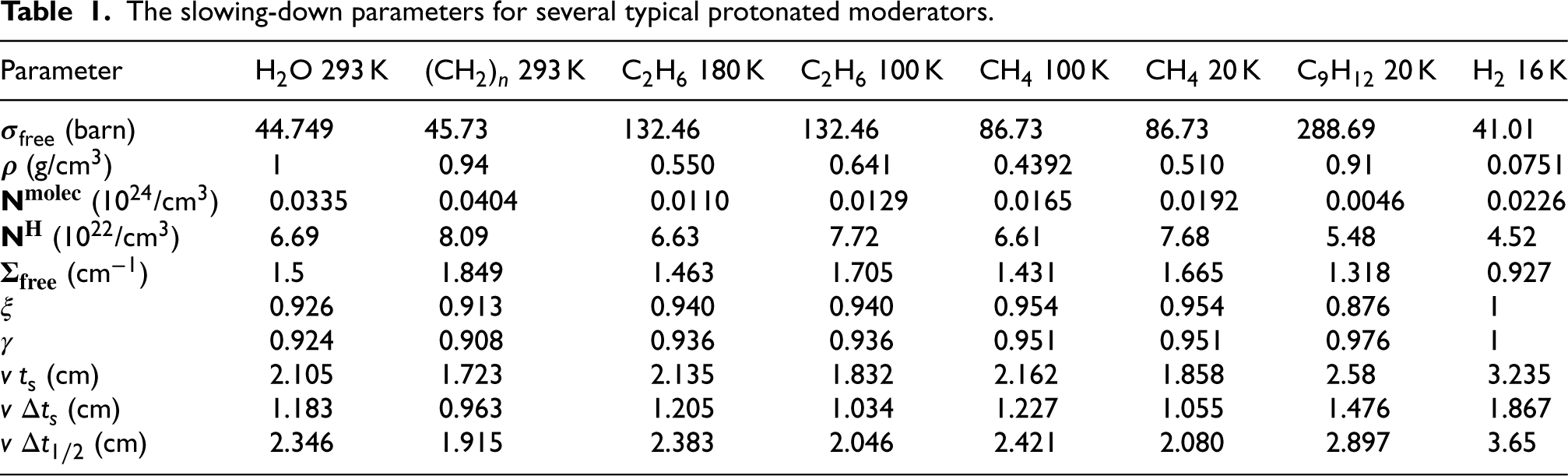
Figure 1 shows the normalized slowing-down distribution for 1 eV neutrons in light water at room temperature after the injection of a fast neutron pulse at t = 0. The time metrics over this energy range are in the microsecond scale. The slowing-down parameters for some of the hydrogenous moderators are listed in Table 1. 4
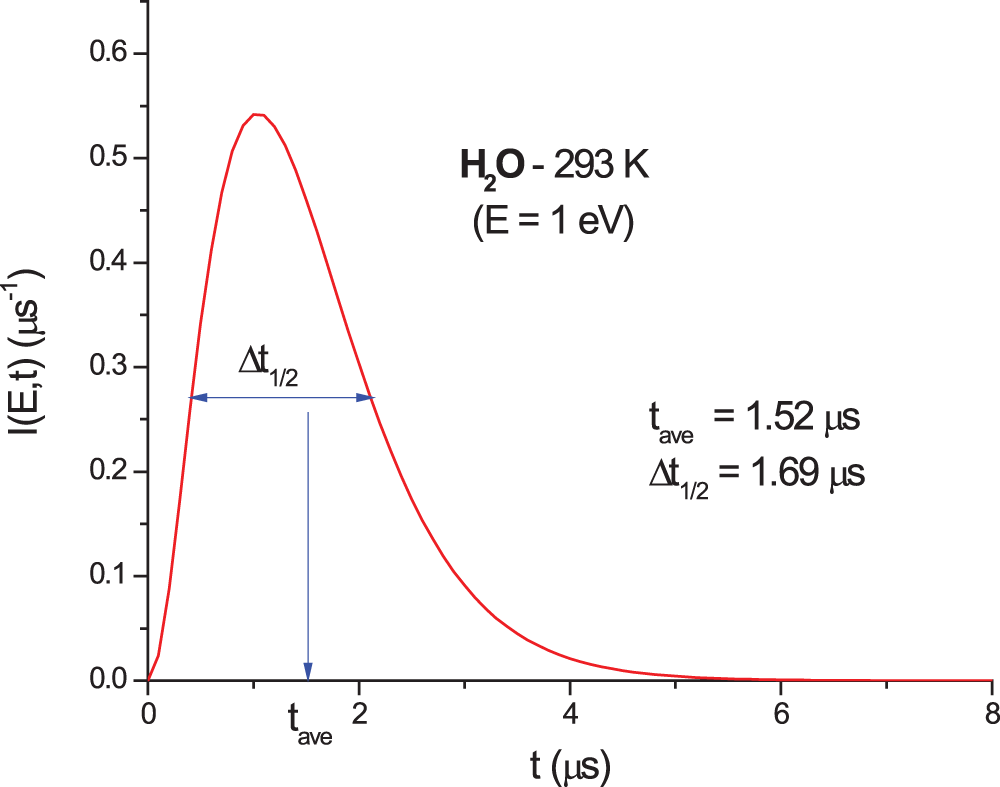
The time distribution of neutrons slowing down past 1 eV in water, integrated to 1.
The slowing-down parameters for several typical protonated moderators.
2.2. Thermalization region
When fast neutrons are introduced into an infinite, non-absorbing medium, they remain there for a long time as they undergo the moderation process, eventually reaching equilibrium with the thermal motion of the scattering atoms. Then, the neutron energies have a Maxwellian distribution with a characteristic temperature Teff related to that of the medium:

In the case of pulsed sources, in addition to the energy spectrum emerging from the moderator, the wavelength variation of the pulse width is essential for the characterization of the neutron source, as it determines the resolution of the time-of-flight instruments. After the initial pulse, neutrons will emerge with time distributions that depend on their energies as well as on the material and geometrical characteristics of the moderator. At thermal energies, the pulse time distributions contain a fast-rising edge and exponential fall-off at long times.
The physics involved in the description of the TN field and pulse-width behavior is well established in excellent textbooks,3,5 and it will not be repeated here, except the final expressions corresponding to the relevant quantities related to the space and time responses of moderators.
For the sake of completeness, it is convenient to recall the neutron balance equation in the framework of the elementary diffusion theory, which is applicable to thermalized fields and must be satisfied by the isotropic, energy-, space-, and time-dependent flux 

In these equations, D(E) is the energy-dependent diffusion coefficient:

In a thermal field, the solution to equation (6) can be separated into 





According to equation (11) and the boundary condition that must be satisfied at the extrapolation length λtr, an effective edge d* is related to its actual linear dimension d by d* = 2(d/2 + 0.71λtr). The extrapolation length is λtr = 1/tr.
It should be noted that the formulas above correspond to monoenergetic neutrons (one-group theory). In a completely thermalized neutron field, the energy dependence is given by equation (5), and the thermalization parameters are obtained as an average over the Maxwellian distribution MT(E) with characteristic temperature T, that is,
6




C is the diffusion cooling constant, and a compact expression for its evaluation is given in equation (49) of Granada et al.
6
The quadratic behavior of the decay constant
It is clear that the larger the decay constant α for a given moderator system, the “faster” it will be in terms of the neutron pulse produced (equation (12)), depending on the material properties and if its size is not very small (large buckling) as to be unable to sustain a fundamental mode. Considering the fast-rising edge of the pulse, its full width at half-maximum (FWHM) is controlled by a long exponential tail with a characteristic decay time α−1.
The thermalization parameters for several hydrogenous moderators are listed in Table 2, whereas the FWHM values for the two different moderators are shown in Figure 2. 9
Thermalization parameters for some hydrogenous moderators.

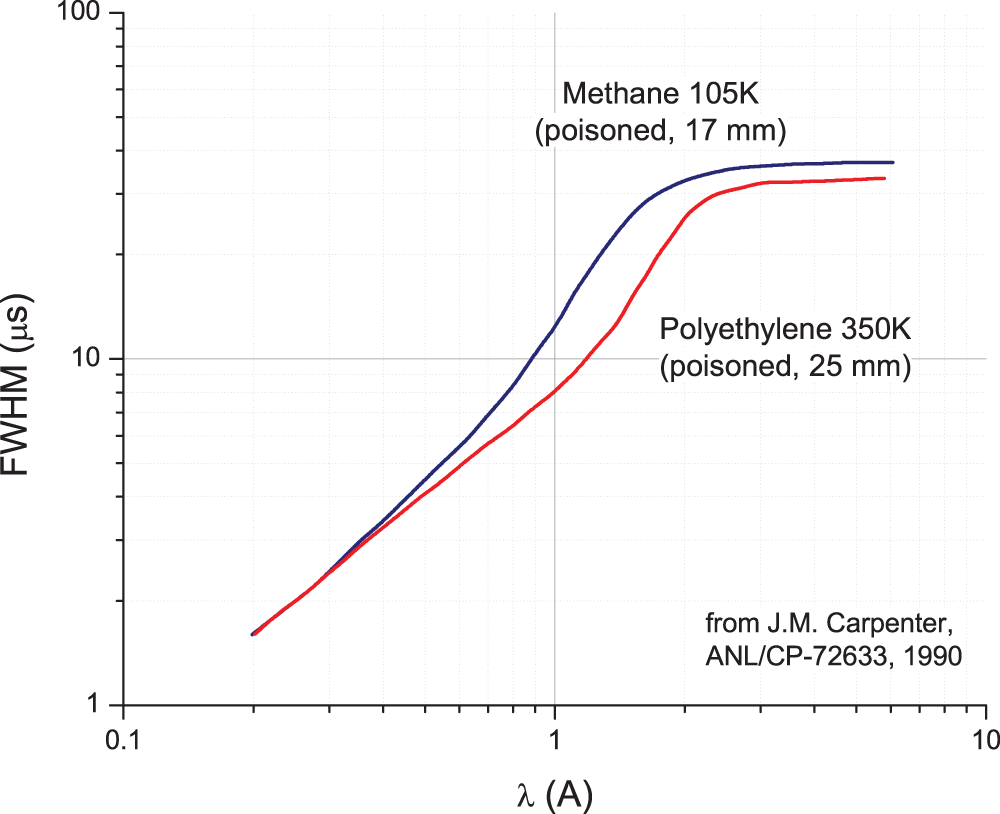
The full width at half-maximum (FWHM) of the neutron pulse as a function of wavelength. It became constant over the thermal region with a value dictated by equation (18).
A unique feature of slow neutrons is their ability to simultaneously explore the structure and dynamics of condensed matter, with an associated wavelength comparable to the characteristic distances and kinetic energy in the range of their typical excitations. In addition to these capacities, other properties, such as zero net charge, spin, and nuclear force interaction, make scattering techniques important for studies in condensed matter, material science, magnetism, biological systems, industrial applications, and fundamental nuclear properties.
To fully exploit these features, neutrons with different energies are required; consequently, the moderators needed to obtain those spectra by slowing down from the fast energies of production must possess special conditions.
From the perspective of neutron energy ranges, it is customary to broadly designate them as thermal (<0.5 eV), cold (<5 meV), very cold (<0.8 meV), and ultra-cold (<300 neV). The moderator materials for a compact TMR should usually be protonated molecular systems because the large scattering cross-section of H ensures that the mean-free path is short, and neutrons can be effectively moderated within a small geometrical size.
A moderator material expected to perform well in producing neutrons within a given energy range must possess some specific features. As the primary interest here involves hydrogenous molecular systems, their structural properties will not play an important role as coherent scattering contributions can in principle be neglected (for this purpose) as compared to the incoherent ones. The central factor that characterizes a hydrogenous moderator material is then its dynamics.
3.1. Basics of neutron interaction with matter
The interaction of slow neutrons with condensed matter is described by the scattering function S(
The scattering function can be expressed as the Fourier transform of the intermediate scattering function 


The scattering lengths
Under the assumption of no coupling between the translational (t), rotational (r), and vibrational (v) modes, the intermediate scattering function for an isotropic system is




In neutron physics, it is customary to write the observable double-differential cross-section for an isotropic system as


3.2. Thermal moderators
The most traditional thermal moderator material is light water, H2O, at room temperature. Comprehensive information, both experimental and theoretical, exists and shows very good agreement over large regions of neutron energies and temperatures.15–17 The total cross-section of light water at T = 293 K is shown in Figure 3.
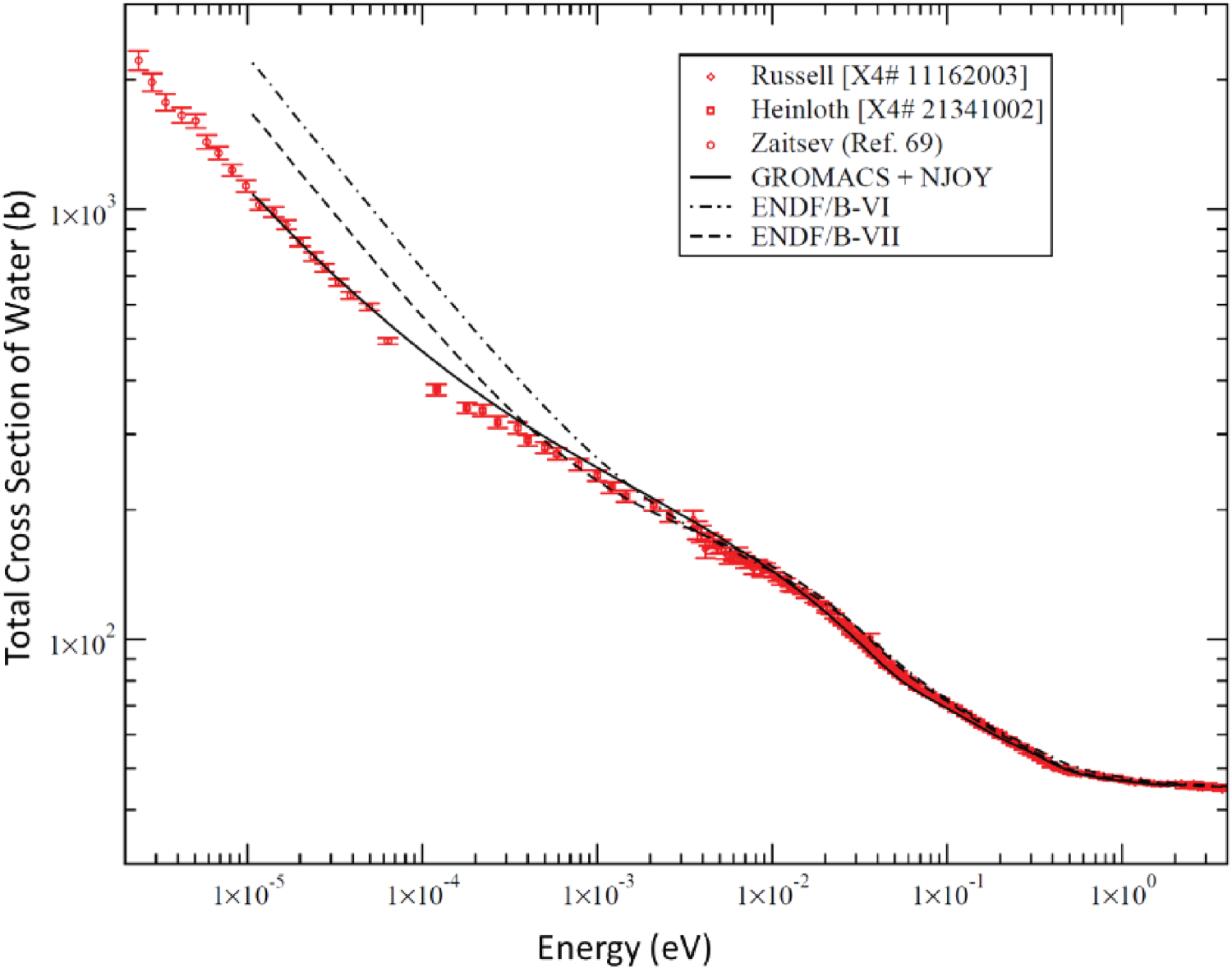
Total cross-section of H2O at room temperature.
Other cross-sections and thermalization parameters of water are well known. 7 The same information exists for polyethylene,8,15 which is also a classic moderator for thermal neutrons usually employed at low-intensity sources. Its thermalization parameters depend on the density of the actual material being considered; the values quoted in Table 3 of Ref. 8 were calculated for low-density polyethylene (0.92 g/cm3).
Pulsed neutrons with thermal energies are usually employed for structural studies of complex systems, and this demands high-resolution time-of-flight capabilities. Consequently, the thermal moderator must produce sharp, fast-decaying pulses while avoiding a strong intensity penalty.
In Figure 4, the decay time as a function of buckling is shown, calculated from equation (18) for water and polyethylene at room temperature. For a typical slab configuration of 10 × 10 × 2.5 cm3 a buckling of B2 = 1.777 cm−2 corresponds to the physical size (equation (14)), as indicated by the open circles in the figure, whereas the actual smaller values of B2 for each material (closed circles) were obtained after the inclusion of the corresponding extrapolation lengths (Table 2) in the effective edge d*.
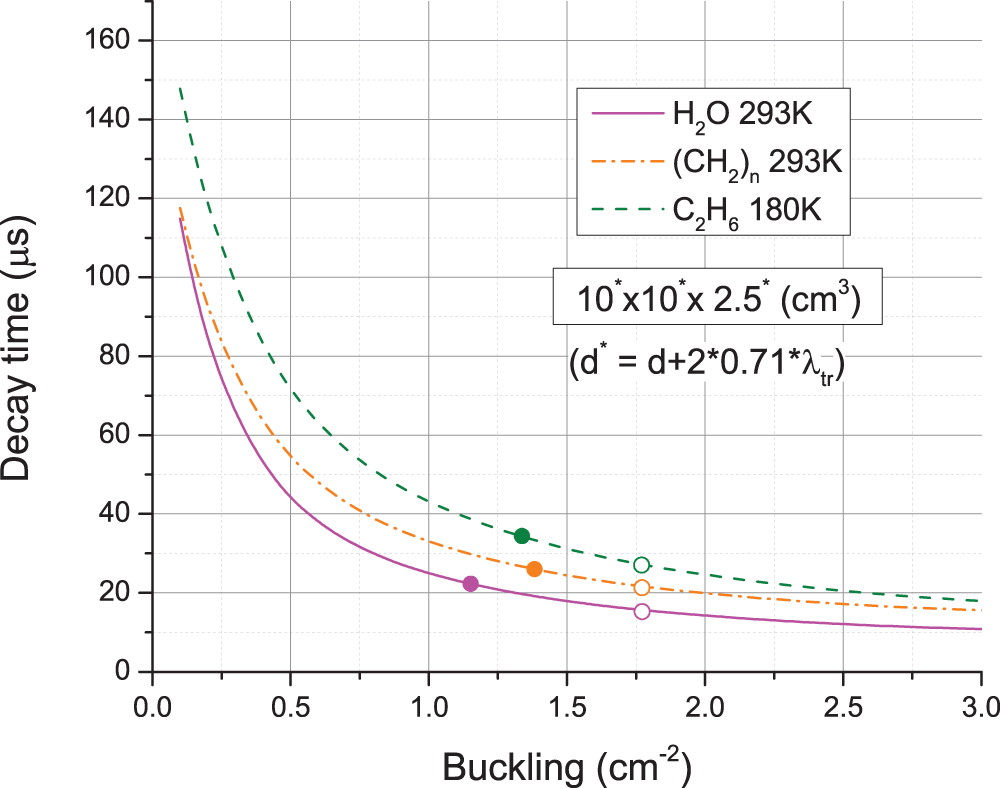
The decay time for common thermal moderators with a typical slab configuration. Open circles correspond to the buckling of the given physical geometry; closed circles indicate the correct buckling calculated with the extrapolation lengths.
The importance of accounting for such a correction is revealed by the true decay time value, which could be rather different from the one obtained from the “naked” slab geometry, for example, approximately 30% in the case of water. It can be seen in Figure 4 that water is faster, giving a decay time of 22 µs, compared with 26 µs for polyethylene in the configuration considered. The result for another liquid, ethane, at 180 K is also included in Figure 4, as will be discussed further in the next section.
Heavy water is also a traditional TN moderator, especially in the case of reactor sources, where a much larger space is usually available compared to pulsed sources. This situation is exploited to produce an extended volume with a strong thermal flux that can feed several beam tubes and other irradiation devices away from the intense gamma and fast neutron fields from the reactor core. The inverse of the macroscopic total cross-section is the mean-free path of neutrons within a given medium, and this quantity is shown in Figure 5 for heavy water together with the other protonated materials discussed above. At thermal energy, the mean-free path of heavy water is approximately five times larger than that of light water. It is clear that any value between these two water curves can be obtained by an appropriate mixture of them, a possibility that could be used with advantage when designing a complex moderator system.
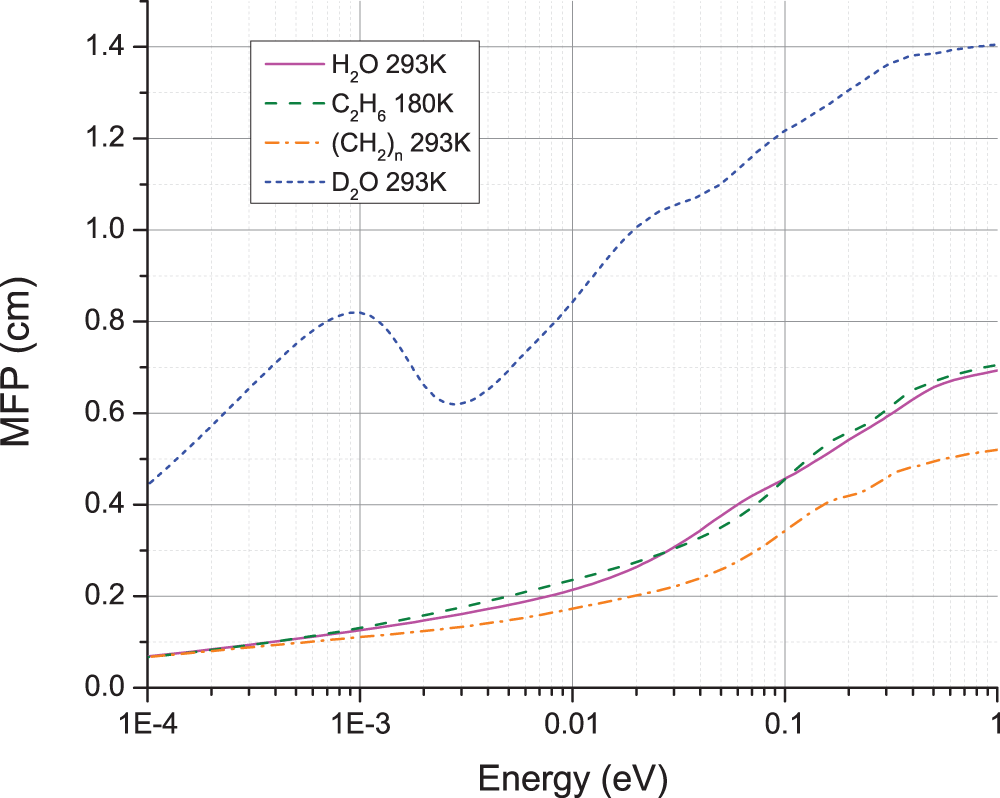
Mean-free path (MFP) of a few thermal moderator materials.
3.3. Subthermal moderators
The need to use longer wavelength neutrons was recognized in the early days of neutron scattering research and was mostly implemented first in research reactors. 18 In the case of pulsed neutron sources, cooled moderators were installed from the beginning of the installation operations, considering the advantages associated with the compact fast neutron source and the possibility of strong coupling to the moderator system. 19
A very simple yet efficient cooled moderator was in operation at the Bariloche LINAC in the early 1970s, consisting of a paraffin cylinder with a reentrant hole bathed with liquid nitrogen, which allowed the measurement of total cross-sections down to 0.5 meV. 20 The convenience of reaching neutron energies of a few meV prompted the installation of liquid methane (100 K) moderators at several spallation sources. 19
Although it has been considered a possible cryogenic material for a long time, liquid ethane has not been used in general, even though it appears to be a potential replacement for liquid methane. Liquid ethane (C2H6) exists over a large temperature range (melting point: 90.4 K; boiling point: 184.6 K) and has a high protonic density, 21 as indicated in Table 1. A scattering kernel was developed and used to generate thermal cross-section libraries for this material. 10 In Figure 6, the calculated neutron scattering cross-sections per H (Figure 6(a)) and spectra produced by liquid ethane at 100, 140, and 180 K are compared with those from liquid methane at 100 K and light water at 293 K (Figure 6(b)). It is interesting to note in the latter figure that liquid ethane alone can produce intense neutron fluxes over the range where the other two moderators are used.
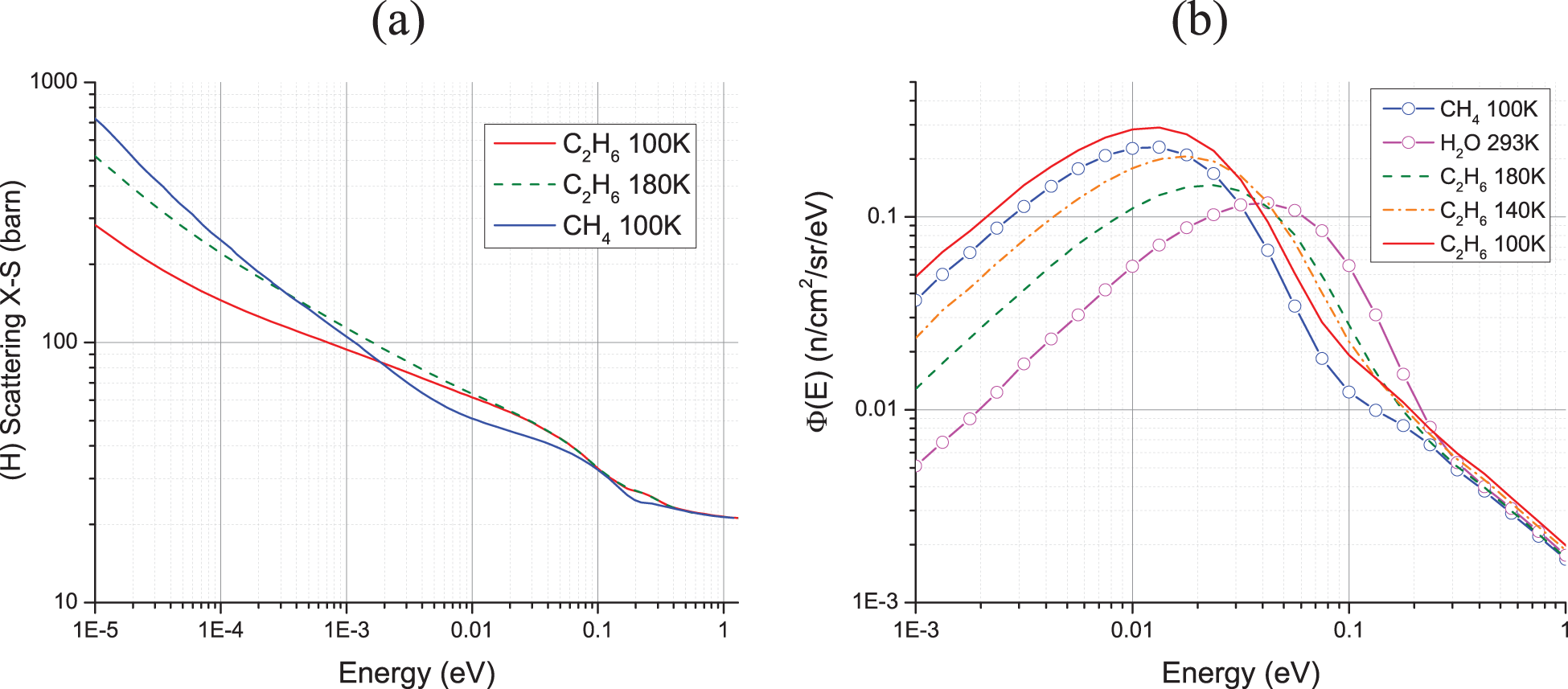
Scattering cross-sections per H (a), and spectra emitted from some subthermal moderators (b).
In fact, for both alkane liquids at 100 K, ethane produces a neutron flux at all energies that is more intense (≥20%) than that produced by methane, although the latter is faster. These features are shown in Figure 7, as the ratio of the neutron fluxes (ethane/methane) in Figure 7(a), and their decay time curves in Figure 7(b), calculated for a typical cell configuration. It is sensible to propose liquid methane as the thermal/subthermal moderator material for a CANS, which is easily tunable to optimize the flux intensity at the energies of interest by changing its temperature, as illustrated in Figure 6(b).
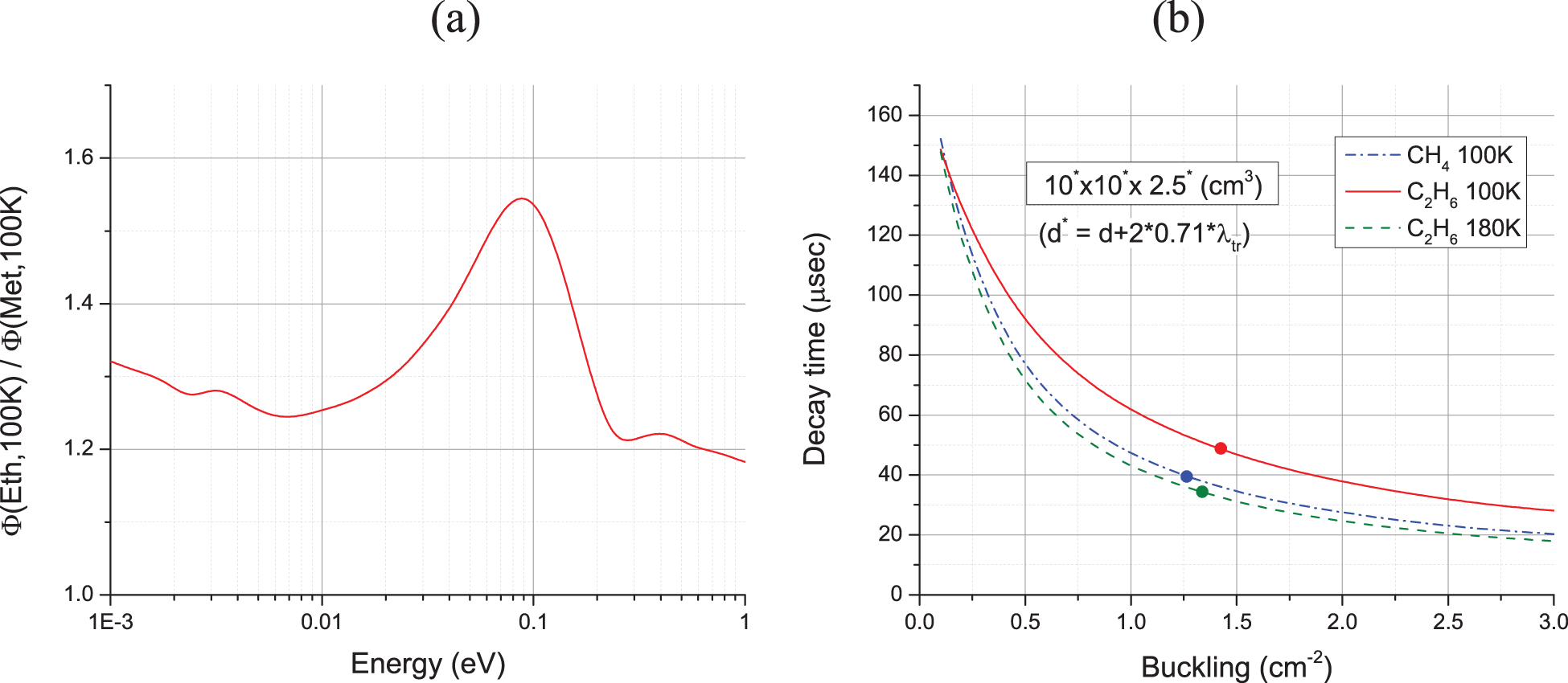
The ratio of neutron fluxes produced by ethane and methane at 100 K (a), and the decay time for those two liquids as a function of buckling (b).
3.4. Cold moderators
Historically, the cold moderators first operating in neutron sources were liquid hydrogen and solid methane at temperatures near 20 K. 19 A large body of work has been done on these materials, particularly within an international collaboration on Advanced Cold Moderators (ACoM) that has lasted for about 10 years since 1997. The extensive amount of information on cold materials and configurations for pulsed neutron sources produced throughout the ACoM existence allowed significant advances in the field 22 ; also, remarkable has been the large collection of precise experimental data on emission spectra, premoderators, and pulse widths measured by the Hokkaido group led by Y. Kiyanagi.23–25
In Figure 8, the total scattering cross-sections of 4H in methane at 22 K (Figure 8(a)) and 1H in liquid para-hydrogen at 20 K (Figure 8(b)) are shown, where the calculations based on recent thermal scattering libraries15,26,27 are compared with experimental data.28,29 The scattering cross-sections of these materials are quite different, reflecting the specific characteristics of their neutron interactions.
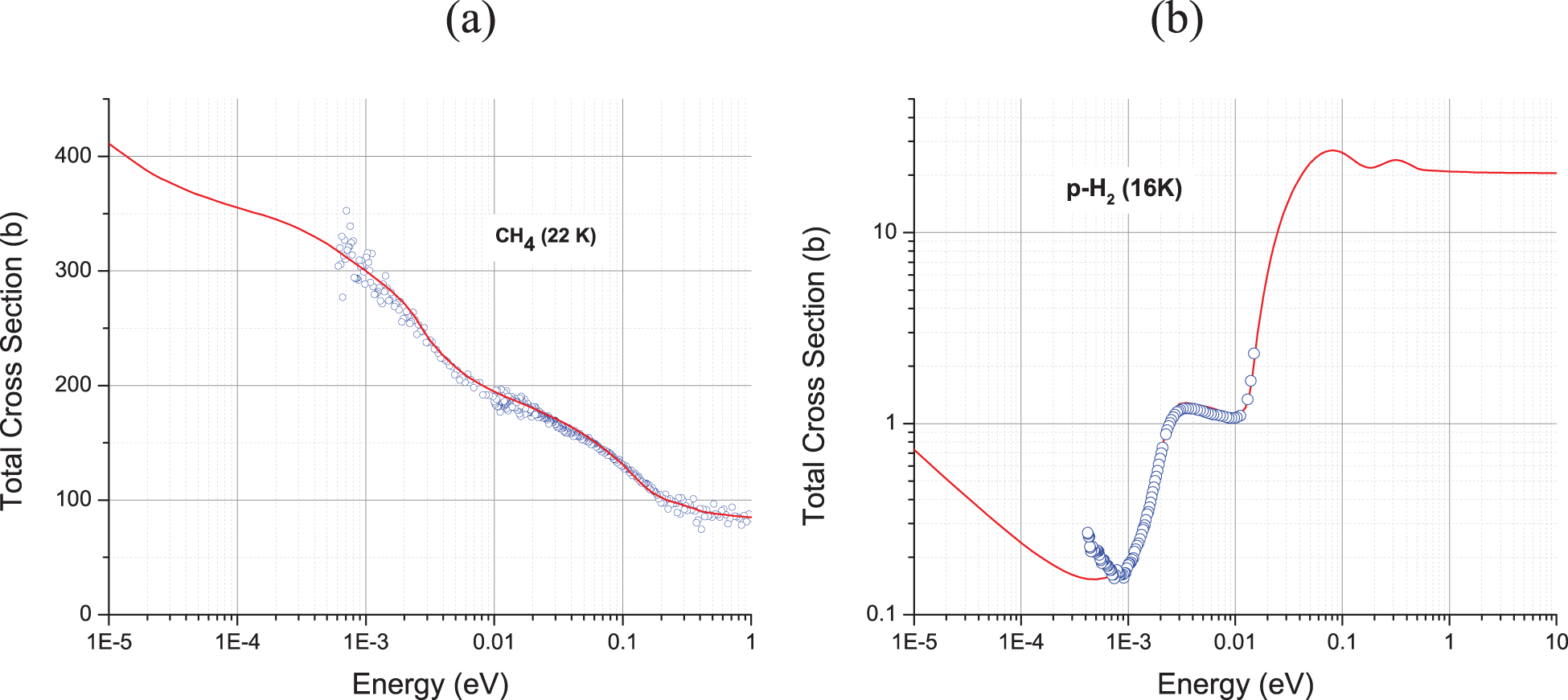
At temperatures above 22.4 K methane is in phase I, where all molecules in the solid rotate freely in a classical regime; the rotational motion therefore dominates the molecular low-energy dynamics, which determines the important inelastic contribution to the total neutron cross-section of CH4. The macroscopic cross-section is the product of the molecular density (given in Table 1) multiplied by the total cross-section (Figure 8(a)), and its inverse is the mean-free path for neutrons to diffuse into the medium. This quantity is similar to that of water at room temperature, as shown in Figure 5. The availability of low-energy rotational levels has established solid phases of methane as the preferred material for CN sources. However, its low resistance to radiolysis has prevented the use of this material as a CN moderator in intense radiation environments, whereas it remains the first option in other cases.
In a homonuclear diatomic molecule, such as H2, the transformation properties of the total wave function cause the total nuclear spin
The calculated neutron fluxes emitted by CH4 at 22 K and para-H2 at 20 K from a moderator cell 12 × 12 × 5 cm3 in size are shown in Figure 9(a). What matters in that comparison is the spectral behavior rather than the intensity, as the single geometry used in the calculations is obviously not optimized for either material, especially for para-H2. This is supported by the mean-free path of neutrons in liquid hydrogen at 20 K, as shown in Figure 9(b), where it is seen that for pure para-hydrogen, values of approximately 12 cm correspond to neutrons between 1 and 10 meV. 30 This fact, together with a mean-free path of approximately 1.5 cm for thermal neutrons, is the basis for the low-dimensional concept of increasing the CN brightness of para-H2 moderators. 31 In general, we may realize that the size of cold moderators using this liquid material will be larger than those based on solid methane, typically by a factor of five along the emission direction. It is also evident in Figure 9(b) that the mean-free path, and correspondingly the length of the liquid hydrogen moderator, decreases as a (small) percentage of ortho-H2 is incorporated.
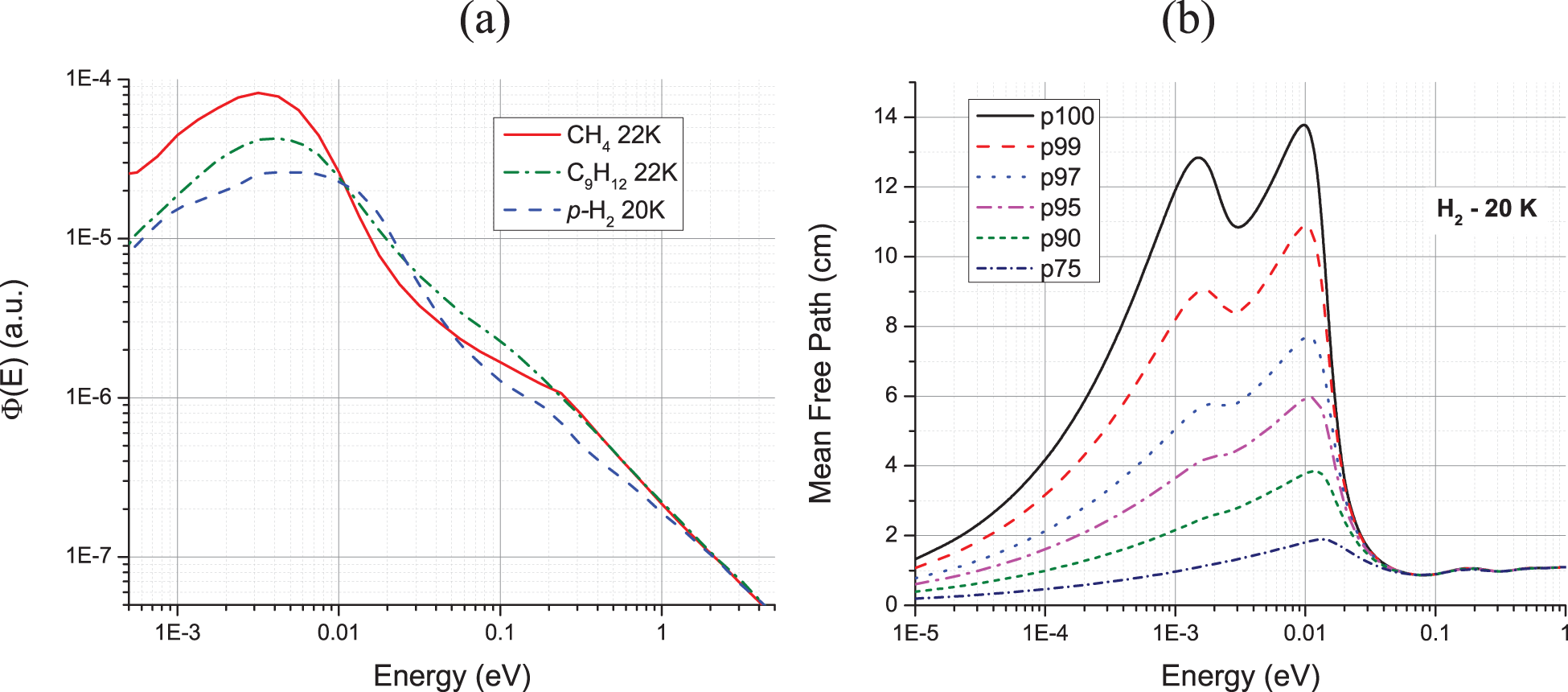
Cold neutron flux calculated for methane, para-hydrogen, and mesitylene (∼20 K) (a); neutron mean-free path in liquid hydrogen at different ortho–para concentrations (b).
In addition to the question of spectrum shape, referred to in the preceding paragraphs, the other important parameter characterizing the quality of a cold moderator at a pulsed neutron source is its time response. As shown in Figure 4, the decay times for common thermal moderators with a standard slab geometry are on the scale of tens of microseconds. On the other hand, cold moderators with a similar geometry produce neutron pulses with widths of approximately 100 µs or longer. As an example, solid methane at 20 K in a moderator cell 12 × 12 × 5 cm3 in size produces, using the thermalization constants of Table 2, pulses at low energies with a calculated decay time of 118.4 µs, in excellent agreement with the experimental results in Ref. 24 The decay times for liquid para-hydrogen under the same conditions are similar, although slightly smaller.24,32 However, a low-dimensional p-H2 moderator, with a length of 12 cm, will produce larger pulse widths, owing to its proper decay time convolved with the time uncertainty related to the emission point of the CNs, up to a value of 270 µs for a 1 meV neutron flying from the opposite side to the emission surface of the moderator cell.
Other moderator materials have also been explored and used in CN sources. 25 Solid mesitylene has received much attention because of its high resistance to strong radiation fields 33 while producing an intense flux of CNs, as shown in Figure 9(a). Scattering kernels and thermal cross-section libraries have been generated for mesitylene at different temperatures and phases.15,34 The new moderator complex in the reactor IBR-2M in Dubna uses solid mesitylene in its CN source. 35
3.5. Very cold moderators
The quest for VCNs has been ongoing for a long time 36 ; however, it has intensified recently as several new neutron sources are being projected and designed.37,38 Whether the VCN is produced through single or multiple scattering processes, there must exist moderating material excitation levels with sufficiently low energies for the incoming neutrons to slow down by transferring energy to them. In addition, the moderating material should be at a sufficiently low temperature to prevent the thermal population of levels (corresponding to either single or collective modes) that may cause the up-scattering of slow neutrons by quanta absorption.
Methane II exists at temperatures below T = 20.4 K, as a solid with a cubic structure but conformed by eight sub-lattices, two of which have site symmetry Oh containing orientationally disordered molecules, and the other six with symmetry D2d in which the molecules are fully ordered. The energy levels for these two types of sites are quite different, reflecting the properties of the crystalline field associated with the rotational degrees of freedom. Since a long time ago, it has been confirmed by experiments 39 and later by calculations 40 that methane II is effectively able to yield a neutron emission spectrum colder than that produced by methane I, as displayed in Figure 10. 40
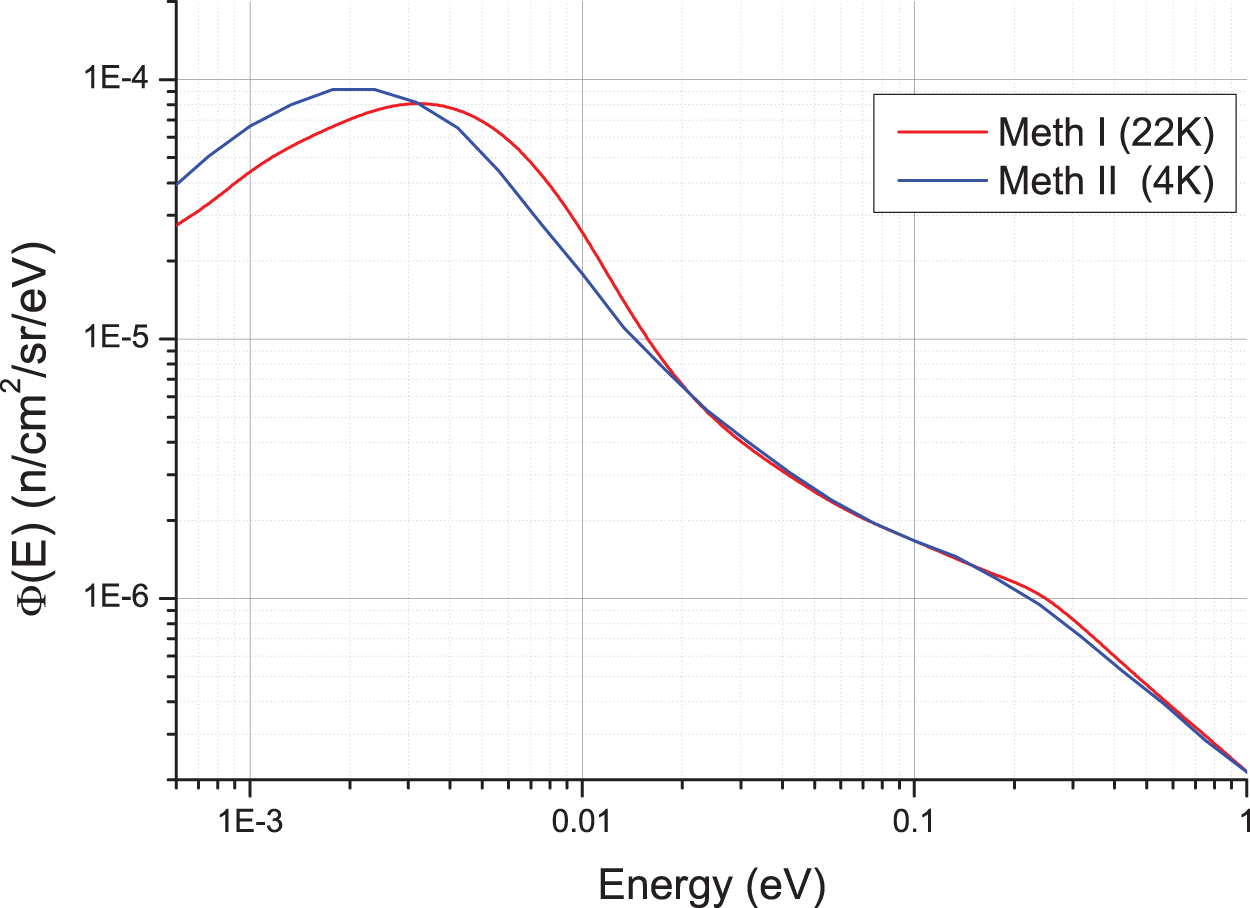
Neutron spectra emitted from methane I at 22 K and methane II at 4 K, calculated for a slab of 10 × 10 × 3 cm3 in size, and a homogeneously distributed fast neutron source.
Inelastic neutron scattering experiments were recently performed using the TOSCA spectrometer at the ISIS pulsed neutron source on CH4 and C2H6 over a range of temperatures down to 10 K. 41 From the measured inelastic neutron scattering spectra, new density of states for methane I and II were derived over the range of energy transfers where the translational and rotational degrees of freedom control the molecular dynamics. The isolated peaks at low energies in methane II correspond to the rotational transition levels of the free rotor, whereas the broad peaks at higher energies correspond to transitions in the ordered molecules, as shown in Figure 11(left).
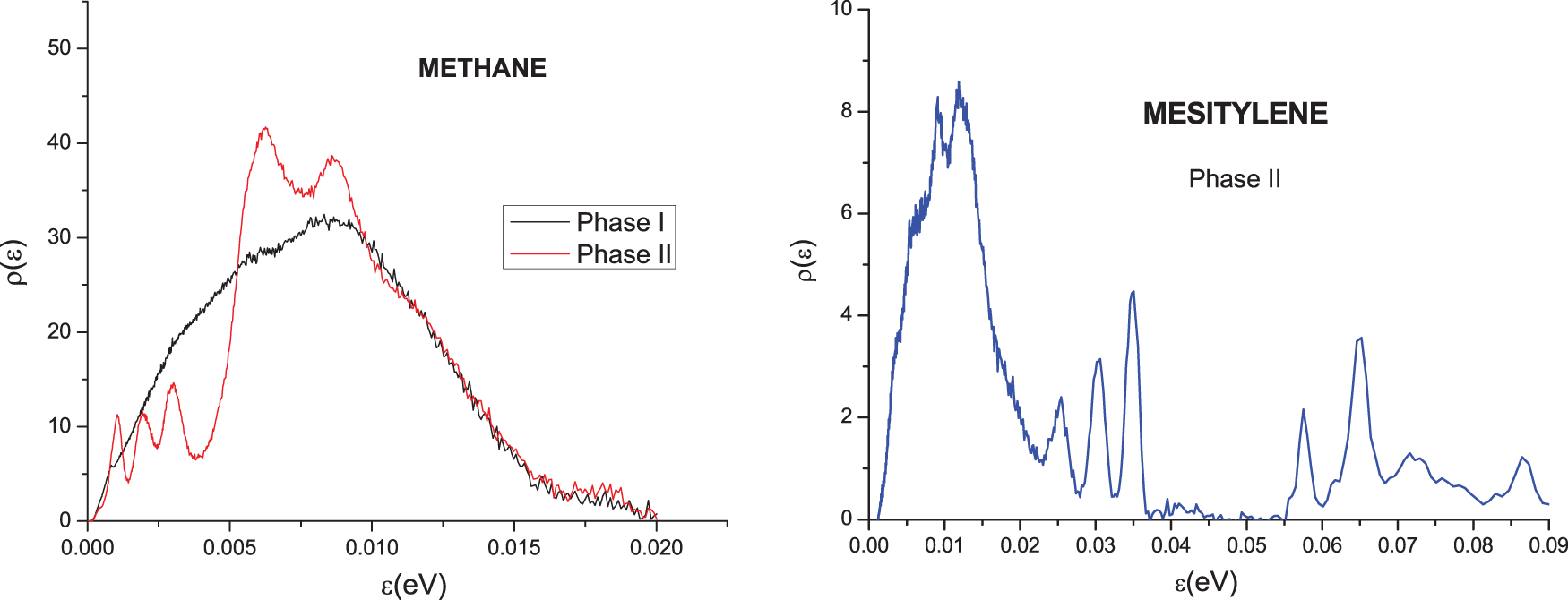
Density of states (DOSs) of methane I and II (left); DOSs of mesitylene II (right). All DOSs normalized over the corresponding energy range.
With this new information on the density of states and the inclusion of temperature-dependent spin correlations that modify the scattering lengths, a new scattering kernel for solid methane II has been produced, and thermal scattering libraries have been generated that give very good agreement with available cross-section data. 41
As mentioned in the case of CN moderator materials, solid mesitylene (C9H12) is also a good performer capable of producing intense fluxes of CNs, although not as cold or as intense as methane at the same temperature (∼22 K), as shown in Figure 9(a). The density of states of mesitylene in phase II 42 is displayed in Figure 11(right), where the low-energy part reflects the molecular librations of the methyl groups and lattice phonon excitations. 43 At very low temperatures (∼5 K), it is expected 34 that for a mesitylene moderator, its neutron emission spectrum will shift toward lower energies in a similar way as methane II does (Figure 10), thus becoming another VCN material to be considered, especially in the case of high-power neutron sources, bearing in mind its high resistance to radiolysis.
Very recently, a few systems that seem promising as moderator materials for producing VCNs have been explored. 44 Besides the “traditional” moderator materials to produce VCN, solid CH4 (II), and D2 at very low temperatures,45,46 it was found that other options could provide similar or better performances.
Clathrate hydrates are a class of inclusion compounds composed of a host framework with an ice-like structure with small guest molecules in their cavities. Methane hydrate (CH4 5.75 H2O) system has been considered an interesting choice for VCN moderators,47,48 and good experimental information is already available. The low-energy excitation levels of freely rotating molecules in both solid methane (II) and the methane clathrate at low temperatures are very similar, and only a small shift toward higher values is apparent in the latter. This means that one can expect that neutrons scattered by free methane molecules (one-fourth of the total) in the (phase II) solid or in the clathrate at ∼5 K will emerge with similar energy spectra. For typical densities ρ ≈ 0.53 g/cm3 for solid CH4 19 and ρ ≈ 0.9 g/cm3 for the clathrate, the free methane molecules’ number density is still higher in the solid, whereas the mean-free path is much larger for a clathrate with a fully deuterated host, as shown in Figure 12. Indeed, as illustrated in this figure, the mean-free path in solid o-D2 is even larger over the entire energy range, thus preventing its use in a compact pulsed neutron source in most cases.
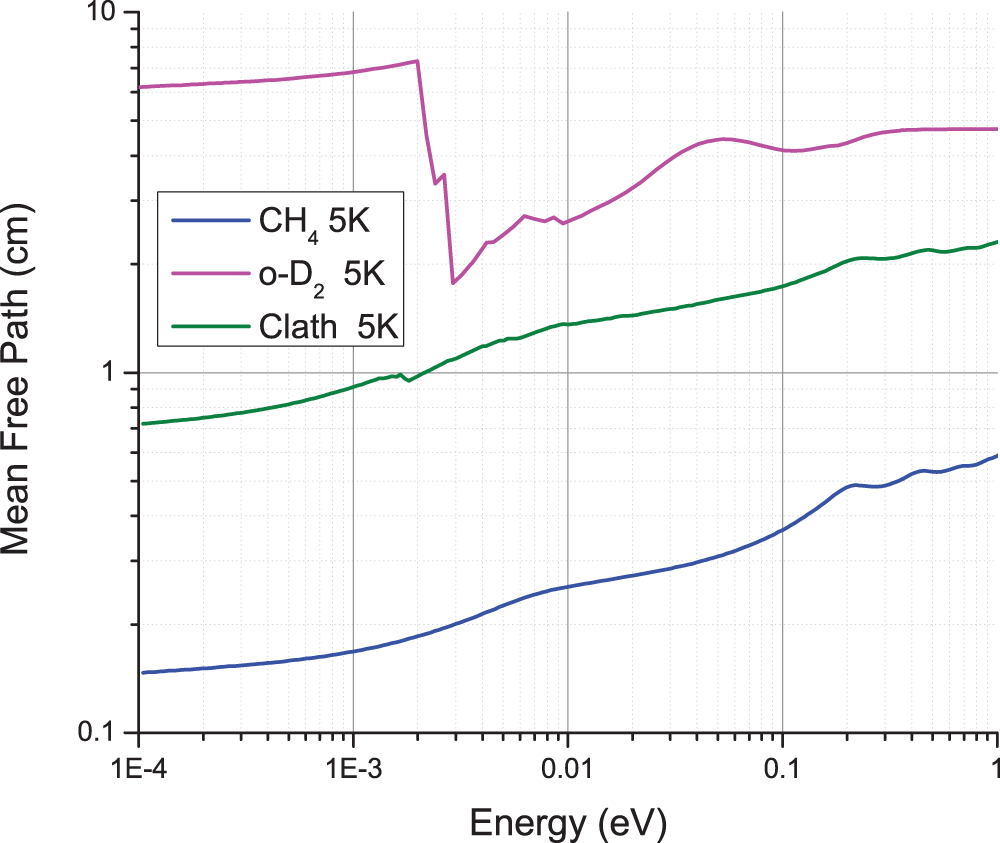
Neutron mean-free paths in methane (II), o-deuterium, and CH4·5.75D2O at 5 K.
Other materials can also be considered potential moderators for VCN sources. 44 Among the methyl halide clathrates, the one containing methyl fluoride (CH3F) molecules as the guest is especially interesting because of the small absorption cross-section of fluorine. Although the proton density is even lower than in the methane clathrate case discussed above, its main advantage is its rotational dynamics characterized by the existence of very low excitation energies. These are the tunneling splitting of the librational levels of the hindered quantum rotor induced by the methyl interaction with the host molecular environment.
Another interesting material for producing VCNs is the supramolecular complex p-tert-Butylcalix[4]arene(2:1) p-xylene at low temperatures. This is because of the very rich low-energy excitation spectrum associated with the dynamics of the methyl groups in the p-xylene molecule. 49 An additional, highly important property associated with this system is its expected strong radiation resistance due to the capacity of the aromatic rings to redistribute the energy of incident photons or fast neutrons, thus avoiding radiolytic hydrogen production within a moderator immersed in strong radiation fields. 50
In any case, both the methyl fluoride clathrate and the xylene/calixarene complex are up to now just potential candidates as VCN moderators, and additional experimental and calculational studies are still required for their validation.
The neutron fluxes shown in Figure 9(a) have been calculated for a typical slab geometry with a fast (1 MeV) neutron source homogeneously distributed across the CN cell. The relative intensities are representative of a realistic situation of a bare cell near a fast neutron source or decoupled from the reflector media surrounding the system. The decoupler is a thin layer of a strong absorber of thermal neutrons, such as Cd, Gd, or special alloys, placed around the moderator cell to prevent the reentrance of the thermal flux coming back from the reflector,51,52 thus preserving its pulse width unenlarged by the reflector’s thermalization time. On the other hand, it was demonstrated a long time ago that the use of premoderators produces significant enhancements in the neutron flux emerging from CN moderators25,30; therefore, the concept moderator designs proposed here are based on the inclusion of that component.
It must be emphasized that the motivation of this work is primarily to discuss some basic configurations for the moderator complex of high-intensity compact accelerator-based neutron sources (HiCANS), assuming that they may include TN, CN, and VCN sources, which could then be used as a guide for actual simulation processes aimed at a final optimized system. Moreover, the configurations presented here are not necessarily the best starting points from an engineering point of view; rather, they pretend to show a road toward the design of customized moderator systems. Bearing in mind that there are different instrumental requirements concerning the beam characteristics, which are related to high brightness or high intensity, as well as spectral properties, two basic types of moderator complexes are considered based on thin or thick platforms. In all cases, the premise that guides these configurations is the attainment of the highest coupling between the fast neutron source and moderators.
It is assumed that fast neutrons emanate from a square-shaped target with the incident beam coming from the accelerator hitting the target from below. To use typical dimensions for the system, a lateral size of 10 cm is assigned to the square target, and a disc-shaped light water premoderator with a diameter of 16 cm and a thickness of 2 cm is placed on top of it. Light water is adopted as the premoderator material because of its neutronic properties and ease of use; the premoderator dimensions should be optimized together with the rest of the system to maximize the TN cloud at the positions of the different moderator cells.
4.1. Thin platform (high brilliance)
The basic configuration using a thin platform approximately 3 cm thick and 14 cm in diameter is shown in Figure 13. This circular slab contains H2O, and it is the scenario for building an intense TN field where the moderators are immersed. Such functionality means that the platform is technically part of the premoderator system. In addition to the lower one referred to above, an upper premoderator of about 1 cm thick has the double purpose of prethermalizing the fast neutrons coming back from the reflector and extending the boundaries of the TN cloud beyond the platform’s upper surface where otherwise, its intensity will fall rapidly.
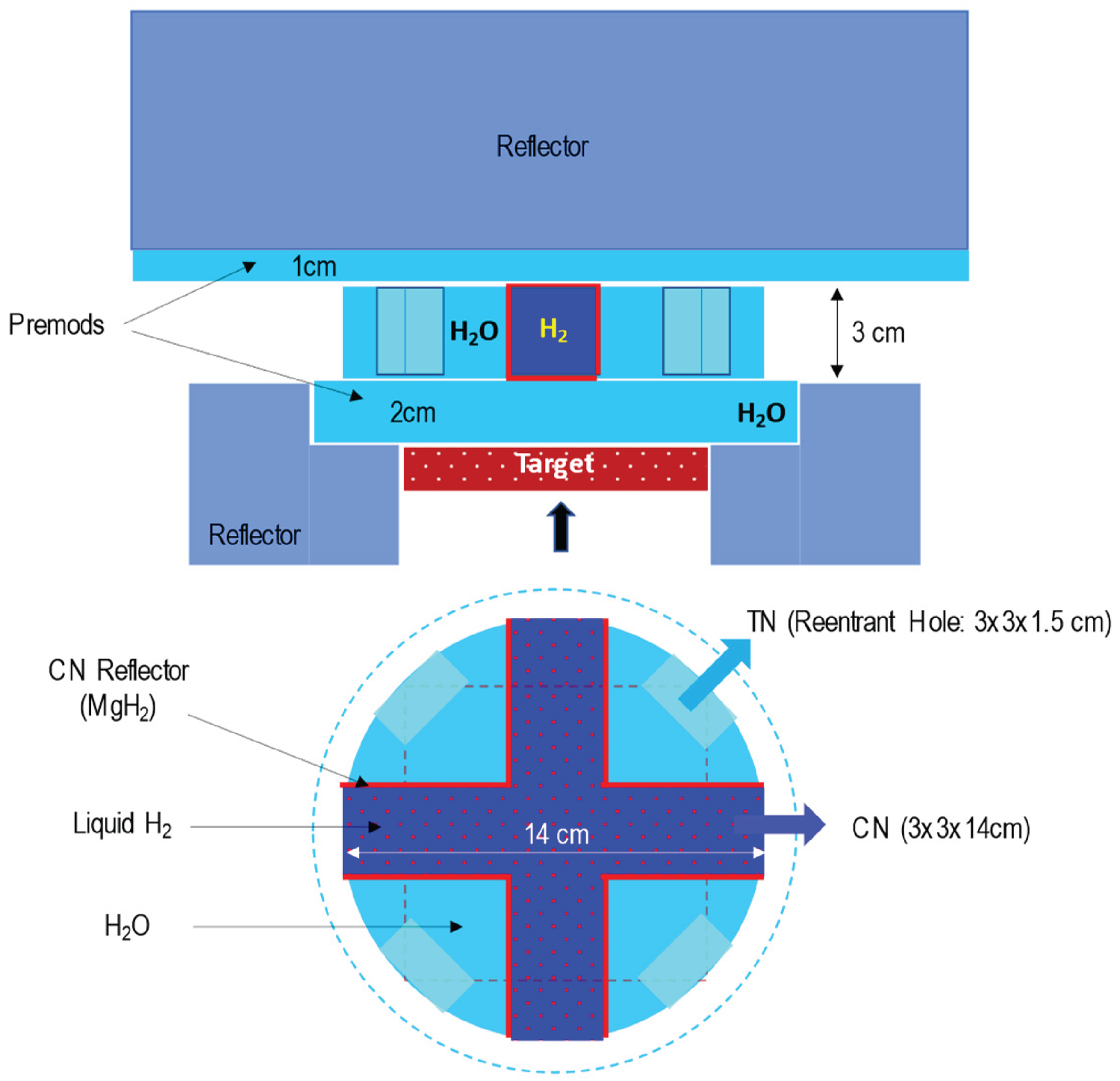
A basic TMR configuration with a thin platform that provides four TN and four high-brilliance CN beams. A lateral view is presented in the upper diagram, whereas the lower one displays a view of the platform from above.
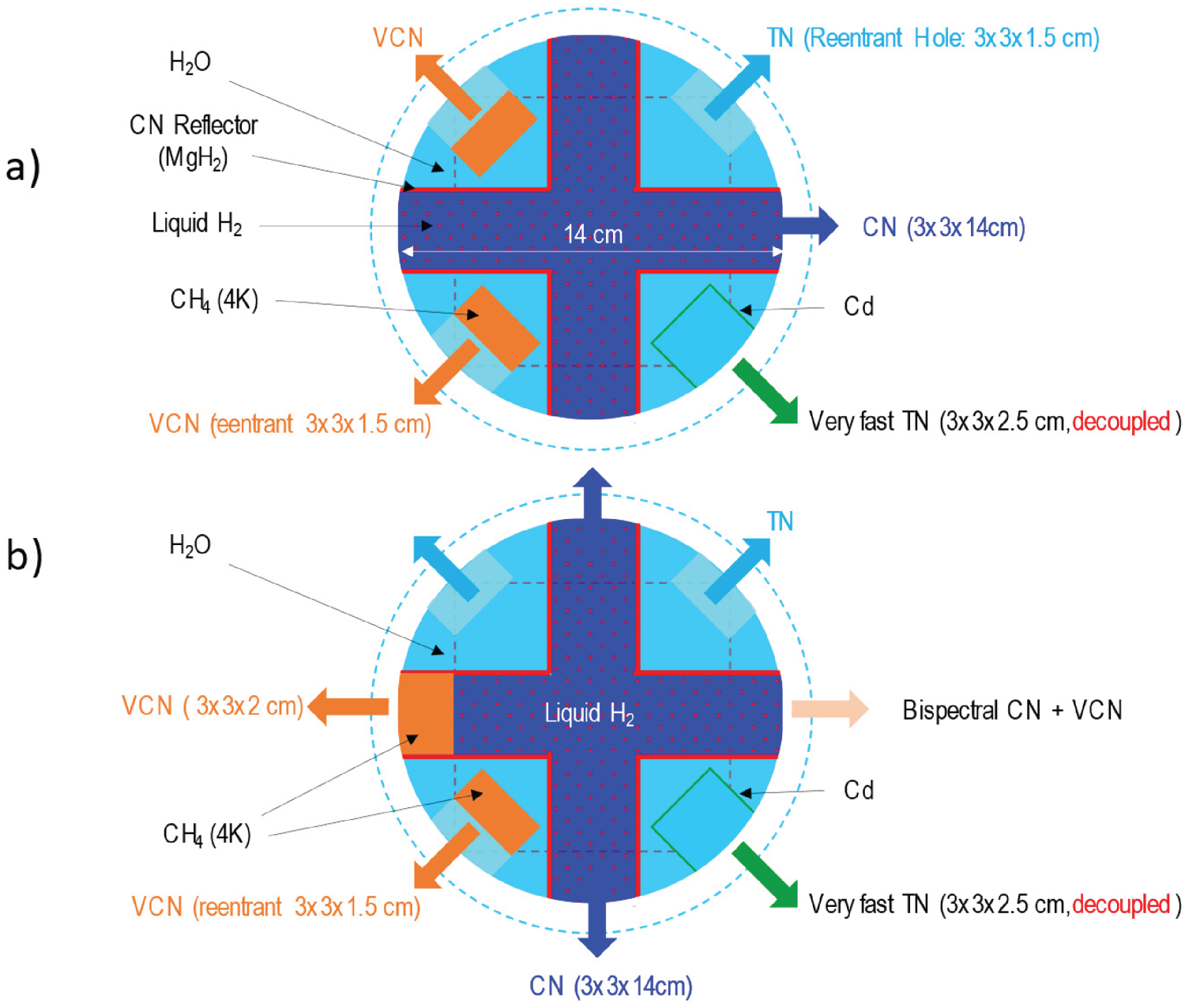
Other moderator configurations for the thin platform concept. (a) Four high-brilliance cold beams, two thermal beams, one of them of short pulse width, two very cold beams; (b) three thermal beams, one of them of short pulse width, two cold beams, one “bispectral” (CN + VCN) beam, two very cold beams. See text for details.
The thin platform is devised to accommodate high-brilliance moderators, in particular low-dimensional liquid para-hydrogen moderators, to produce CNs. This requirement dictates that the thickness of the platform (3 cm) should be consistent with the TN mean-free path of approximately 1.5 cm in p-H2 as indicated in Figure 9(b). In addition, the platform thickness should not be unnecessarily larger than the transverse dimension of the moderator cell, to avoid a reduction in the density of the thermal flux where it is immersed. It is also shown in Figure 9(b) that the CN mean-free path is 12 cm or larger, and therefore the proposed platform diameter (14 cm) is consistent with such length of the CN source and with the length of the diagonal of the square target where the neutron cloud is created. With those dimensions, the TN decay time in the unperturbed thin platform is about 30 µs, from equations (14) and (18), and the thermalization parameters are listed in Table 2.
The basic thin-platform configuration shown in Figure 13 provides four cold and four TN beams, which can be square (as represented) or circular sections. The tubular cells containing liquid hydrogen are covered with a CN reflector 53 to minimize the leakage of CNs toward the water, thus increasing the probability of their emission through the extraction windows. TN beams are extracted from the thermal cloud in the platform through reentrant holes, with a depth deemed appropriate to reach a region of intense thermal field that is not as deep as to strongly perturb the field where it must feed the cold sources.
Other moderator configurations for the thin platform concept are presented in Figure 14. An arrangement that appears to cover a wide range of requirements is shown in Figure 14(a). It provides two TN beams, one of which is decoupled from the platform’s thermal field to produce very short pulse widths (∼12 µs according to the formulas in Section 2.2 and values in Table 2), four CN beams, and two VCN beams. An even wider range of options is contained in the configuration concept shown in Figure 14(b). It supports three TN beams, one of which is decoupled, two bright CN beams, two VCN beams, and one “bispectral” beam formed by the CNs produced in one of the liquid hydrogen cells and the VCNs coming from the methane II (4 K) cell placed on the opposite side of the emission window. This is possible because the VCNs from the methane II cell (see Figure 10) can easily travel across 12 cm to reach the other end of the liquid hydrogen cell (see Figure 9(b)).
Concerning the time widths of the neutron pulses produced in the coupled cells, the thermal sources would have the platform’s decay time (∼30 µs), whereas VCN moderators would have their own value (of 30 µs for the 1.5 cm thick and approximately 40 µs for the 2 cm thick VCN cell) convolved with the platform decay time. With respect to CN cells filled with para-hydrogen, according to the arguments given in Section. 3.3, it is expected that their decay time will be above 300 µs for 1 meV neutrons.
4.2. Thick platform (high intensity)
The thick platform has the same diameter (14 cm) as the thin platform, but with a thickness of 6 cm to bear moderator cells capable of supplying intense neutron beams. Assuming for simplicity that a plane (x,y) source of thermal neutrons feeds a large block of water (z > 0), the elementary diffusion theory indicates that the neutron field inside the material will behave as exp(−z/L), where L is its diffusion length. 5 Although light water has been shown to efficiently sustain a fairly homogeneous TN cloud across a thickness consistent with its thermal diffusion length of 2.73 cm, 7 this will not be the case for a thickness of 6 cm, and a material with a diffusion length twice that of light water must be used to maintain that capability. Bearing in mind that for heavy water L = 151.4 cm, 7 neutronically diluted water, 0.5 H2O + 0.5 D2O could fulfill this condition. In addition, if the thick platform is filled with pure light water, it will have an (undisturbed) geometric buckling of B = 0.33 cm−2 and a decay time of 61.3 µs (see Figure 4), thus adding a significant width to the neutron pulse that feeds the actual moderators; for a water mixture as indicated above, the decay time of this undisturbed platform is approximately 36 µs.
The discussion above does not pretend to fix the concentrations for the mixture of waters through the extreme simplifications used; rather, it indicates that the diffusion length of the thick platform media should also be part of the optimization procedure.
In Figure 15, a simple TMR configuration with a thick platform is displayed, containing moderator cells supplying four CN beams with a larger area than in the thin platform but still preserving a significant brightness, with a surface/volume ratio equal to 1 compared with 1.333 for the square section of the liquid hydrogen cell in the thin platform (see Figure 13). Therefore, the CN beams shown in Figure 15 are 25% less brilliant than those of the thin platform but twice as intense. Also included in this configuration are a large TN source (H2O, Φ = 6 cm) and one VCN source with a reentrant hole to extract an intense beam with a diameter of 4 cm from the 1.5 cm thick methane II at the bottom. Concerning the employment of cells with reentrant holes, as proposed in this section, it is a well-known means to extract neutrons from the most intense (central) flux region; however, this neutronic advantage might be not necessarily convenient from an engineering point of view.
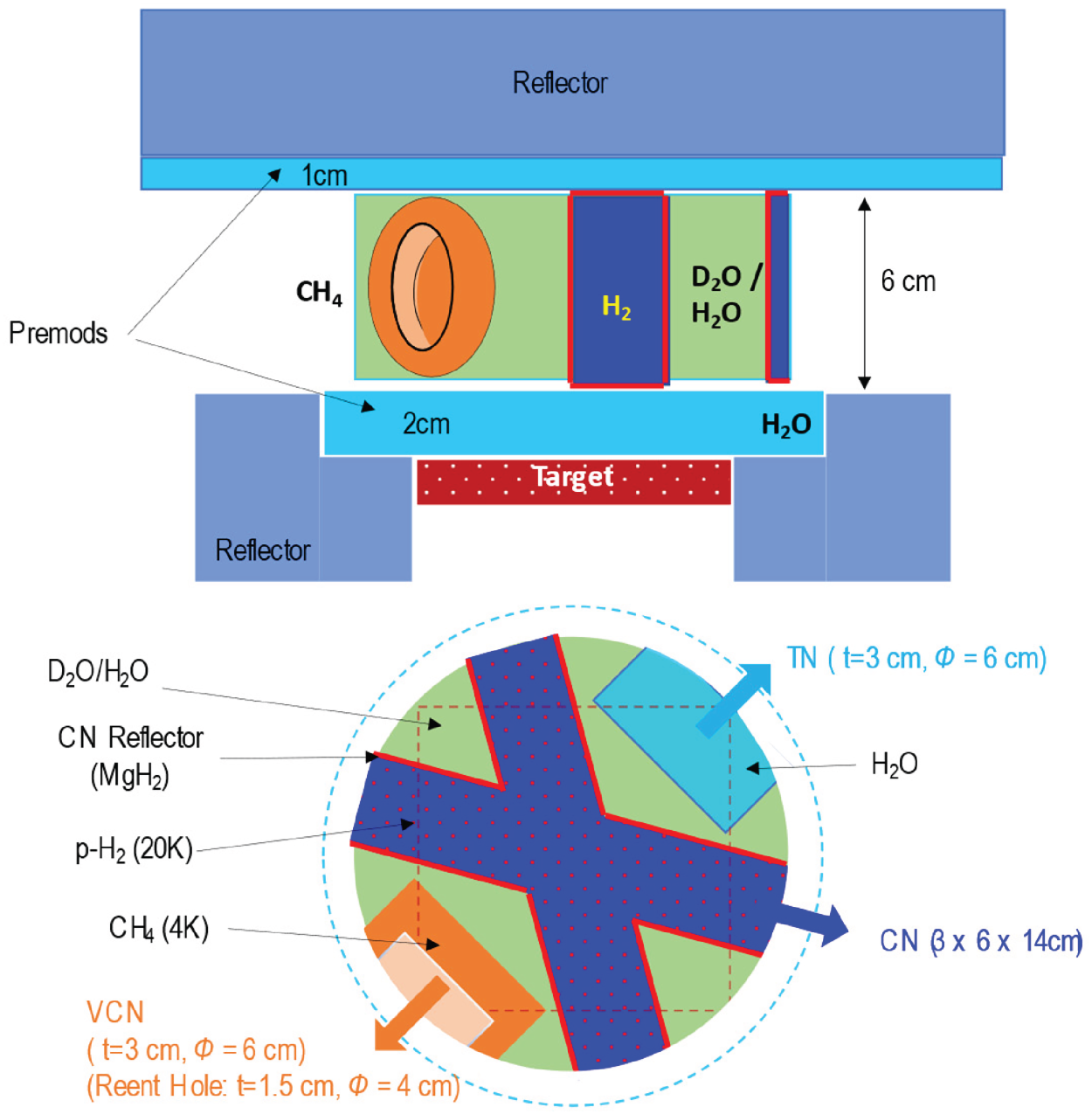
A basic TMR configuration with a thick platform that provides four CN beams, and intense beams of TN and VCN. A lateral view is presented in the upper diagram, whereas the lower one displays a view of the platform from above.
A variant of the previous configuration, which is also based on a thick platform, is shown in Figure 16. Half of one of the long moderator cells (3 × 6 × 14 cm3) was split into two 3 × 3 × 14 cm3, one of them filled with liquid hydrogen and the other with light water, thus providing two bispectral (TN + CN) beams. If the emission window of the water channel is masked, then the remaining window can supply a bright CN beam. As in the previous case, the configuration also provides two semi-bright, rather intense cold beams (3 × 6 × 14 cm3), in addition to one TN and one VCN beam.
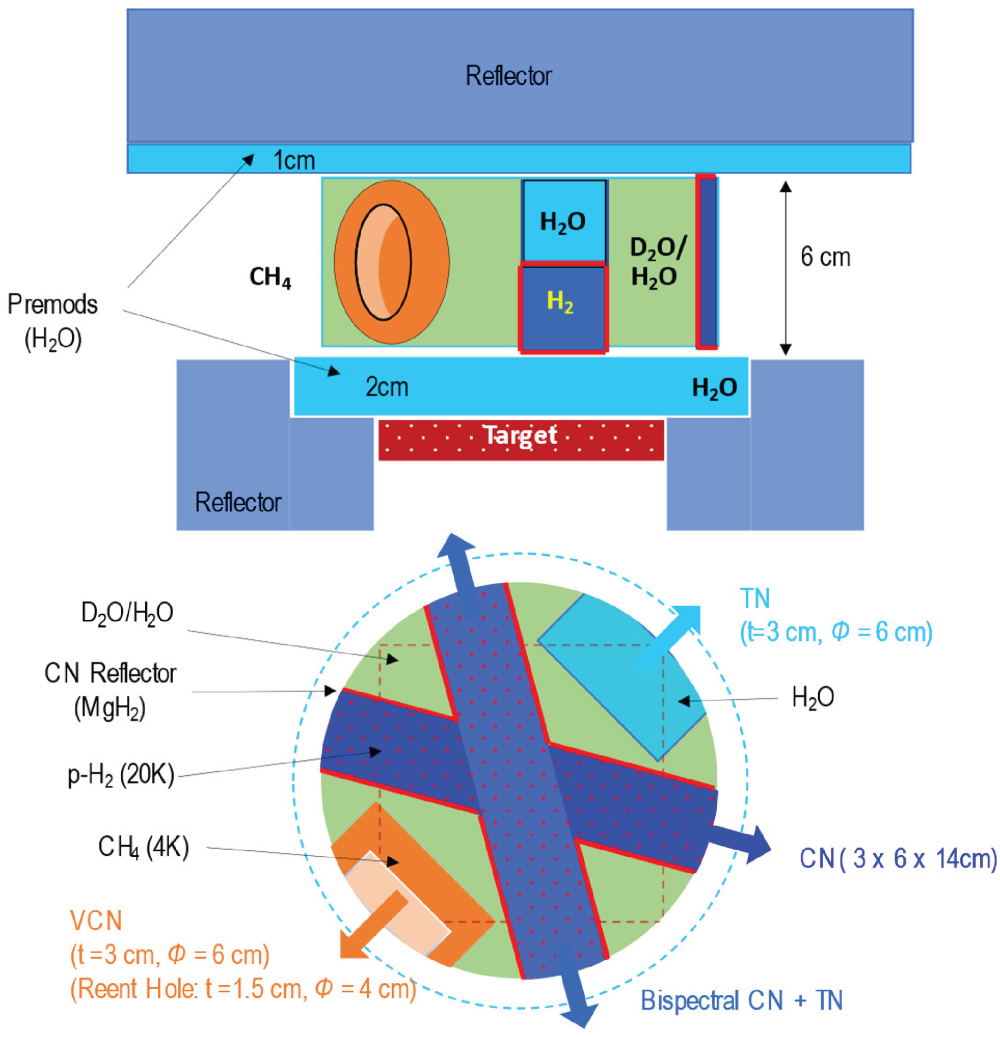
A basic TMR configuration with a thick platform that provides two CN beams, two bispectral (TN + CN) beams, and intense beams of TN and VCN.
In Figure 17, another thick-platform configuration aimed at providing intense neutron beams is presented. As in previous cases, it contains two moderator cells (H2O, t = 3 cm × Φ = 6 cm; CH4 II, t = 3 cm × Φ = 6 cm, reentrant hole 1.5 cm × Φ = 4 cm) devoted to producing TN and VCN beams, respectively.
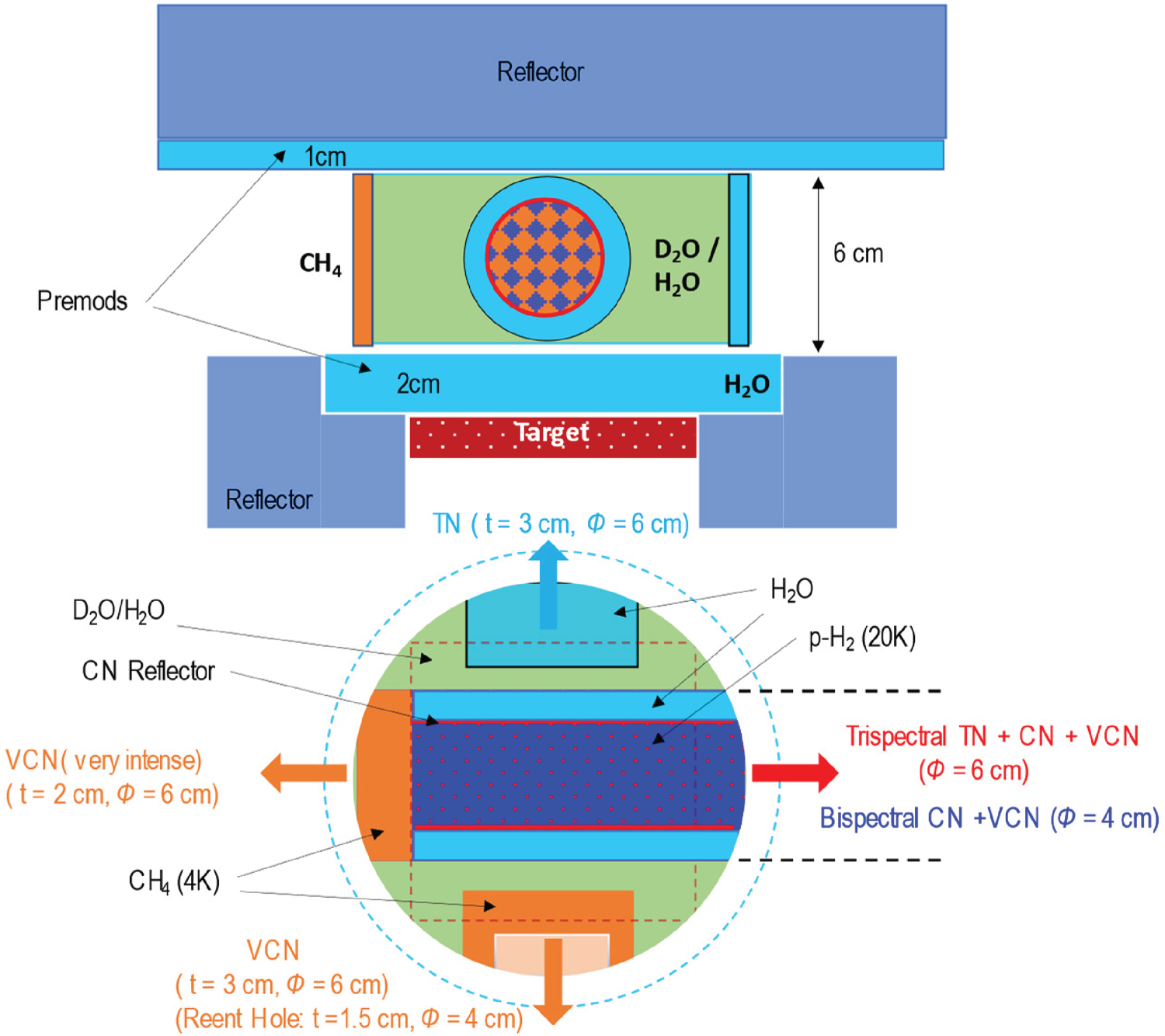
A TMR configuration with a thick platform designed to provide intense neutron beams (see text for details).
The distinctive feature of this configuration is a large cylindrical cell 14 cm in length and 6 cm in diameter, which in one of its ends contains a methane II slab 2 cm thick, capable of supplying a very intense beam of VCNs. The rest of the tube contains an annular cylinder of light water 1 cm thick, and an inner cylinder 4 cm in diameter filled with liquid para-hydrogen. This geometry is illustrated in the upper part of Figure 17, which represents the lateral-right view of the platform shown below. The VCNs produced in the methane II cell (on the left of the bottom drawing) can travel all the way across the liquid hydrogen cell, as discussed previously. Consequently, a large 6 cm diameter beam exits the right window of the tube carrying TN, CN, and VCN conforming to a trispectral beam. If the annular part of the exit window looking at the light water is masked (see upper drawing), a bispectral beam (CN + VCN) of 4 cm diameter will be extracted, which will be 40% more intense than the bispectral beam produced by a thin configuration, as shown in Figure 14(b). In the case where the availability of a trispectral beam is considered unnecessary, the water annular layer can be eliminated and a very intense bispectral (CN + VCN) beam of 6 cm in diameter can be obtained (Figure 18), which is approximately three times more intense than that shown in Figure 14(b).
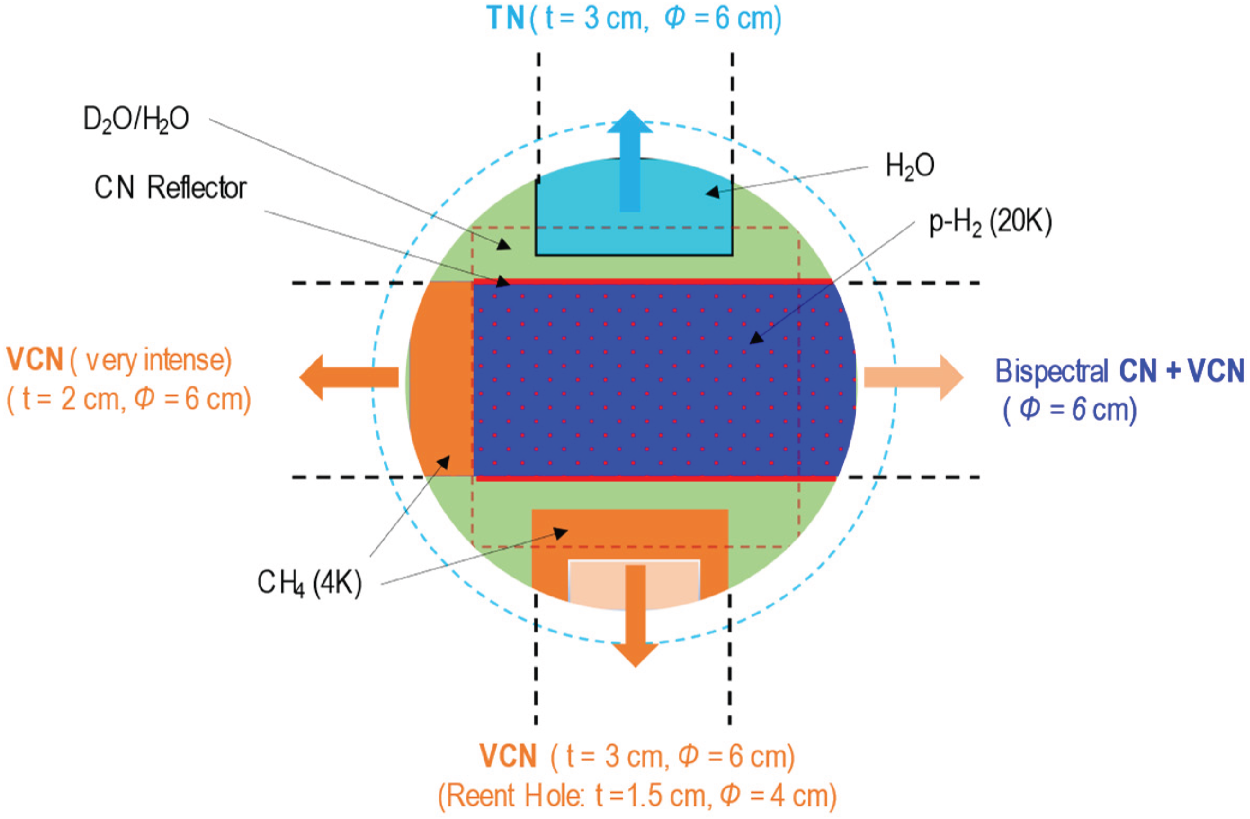
A TMR configuration with a thick platform designed to provide intense neutron beams (see text for details).
4.3. Moderators’ concept for medium-intensity CANS (MiCANS)
There are several MiCANS based on electron LINACS with powers in the range of several kilowatts rather than tens of kilowatts as the projected HiCANS, still capable of producing ∼1013 n/s in short pulses of a few microseconds in width and repetition rates up to hundreds of Hertz. The range of applications of MiCANS is large and expanding, 54 and for these reasons, it is appropriate to equip those sources with moderator systems that are flexible enough to perform the requested tasks. In most cases, their neutron flux allows structural measurements to be performed with satisfactory results, although some simple inelastic experiments can also be performed. Other important applications are related to the development of neutron devices and techniques, such as new moderator materials, mirrors, focusing lenses, and detectors, as well as education and training in neutron scattering techniques and applications.
The proposed moderator system for MiCANS is based on a thick platform with the same dimensions and composition as in the previous examples. However, the target may have a smaller footprint than those designed for HiCANS, typically of a cylindrical shape with Φ ∼ 5 cm and 8 cm in length made of Ta plates 55 cooled by H2O or an optimized mixture of H2O and D2O for the target–platform system. The design of the target and its relative position with respect to the moderator platform should also be optimized considering the lobular form of the γ-flash responsible for photoneutron production.
Considering the need for the best coupling between the relatively weak fast neutron production target and moderators, only densely protonated, strong scattering materials will be considered. For this reason, the conceptual TMR complex does not include any premoderator component; only moderators immersed in a thick but neutronically thin platform and reflectors, as illustrated in Figure 19.
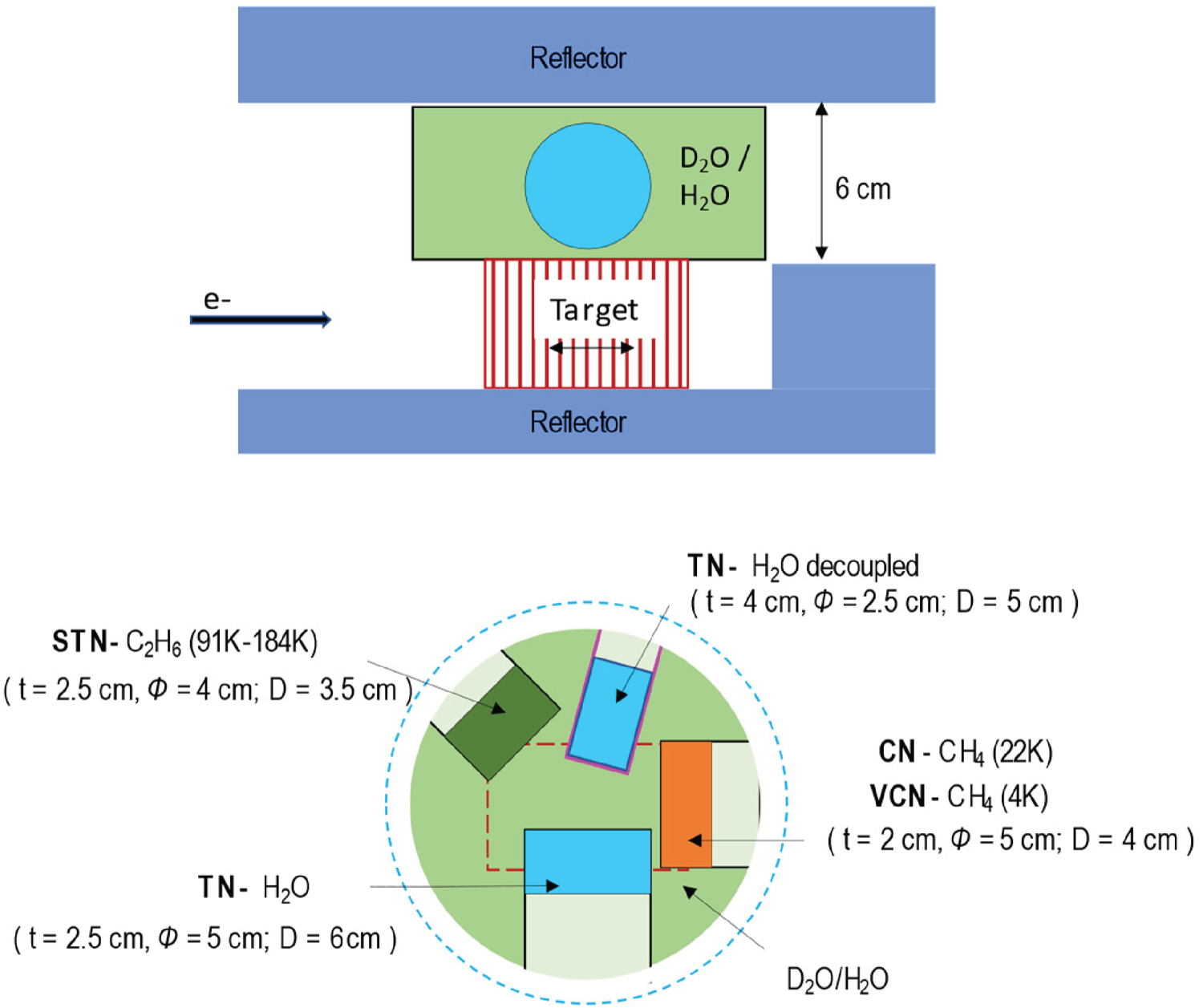
A conceptual TMR configuration with a thick platform proposed for a medium-intensity CANS. It provides TN, STN, CN, or VCN beams. A lateral view is presented in the upper diagram, whereas the lower one displays a view of the platform from above. “D” denotes the total depth of each cell, whereas “t” is the actual moderator thickness.
As previously mentioned, the strength of the fast neutron source in a MiCANS facility is not as high as that in a HiCANS facility, and consequently, the moderators should be aimed at providing neutron beams as intense as possible for such a source. This means that, in principle, the emission surfaces must be relatively large, and thus, the platform to support such moderators must be of the thick type. Because the electron pulse and the resulting fast photoneutron pulse emanating from the target are short (∼1 µs), preserving that characteristic could be desirable for moderators feeding instruments geared to perform high-resolution measurements.
The conceptual moderator system comprises several moderator cells. It contains a decoupled H2O cylindrical thermal moderator, with Φ = 2.5 cm and 4 cm height at the bottom of a hole 5 cm deep in the thick platform. This water cylinder has a buckling of 2.76 cm−2 and according to Figure 4, it will produce sharp pulses of approximately 12 µs width. This result is consistent with experiments performed on grilled moderators of paraffin 56 and emphasizes the convenience of making the transverse dimension of the moderator similar to the diffusion length to reduce the neutron emission time. A decoupled moderator with a small emission surface and short pulse widths will be very useful for high-resolution structural studies because its contribution to the geometric and time uncertainties in the overall neutron pulse width will be small. 57 A high-intensity H2O coupled thermal source is also included, with Φ = 5 cm and 2.5 cm height at the bottom of a hole 6 cm deep, producing a beam with characteristics well suited for structural studies on liquid and amorphous materials, or situations that do not require a high timing resolution; this is because the pulse width of the emerging beam will be dominated by that of the neutron cloud created by the reflectors and the thick platform media. If the moderator cell is instead decoupled, its geometric buckling will be ∼2 cm−2 and the decay time of the neutron pulse will be reduced to approximately 15 µs at the expense of the intensity.
A cell containing liquid ethane is proposed to be included in the present MiCANS moderator system, with a cylindrical shape of Φ = 4 cm and a 2.5 cm height at the bottom of a hole 3.5 cm deep. The neutronic properties of this material are discussed in Section 3.2, especially the wide temperature range (91–184 K) on which the liquid exists. For comparison purposes, it is shown in Figure 20 that the neutron spectra emerging from liquid ethane at both ends of its liquid range, together with those from traditional thermal and cold moderators (room temperature H2O and CH4 at 22 K, respectively). The subthermal neutron beams emerging from this cell will allow the performance of very useful low-energy and low-Q measurements with a flux intensity that can be optimized at the energies of interest by changing the liquid moderator temperature. If good timing resolution is required, the moderator must be decoupled from the TN cloud by wrapping it with a Cd sheet except of course in the emission surface; in this case, its geometric buckling is B2 = 2.48 cm−2 and the pulse decay time α−1 = 32 µs for liquid ethane at 100 K, and B2 = 2.34 cm−2 and α−1 = 22 µs at 180 K (see Figure 7(b)).
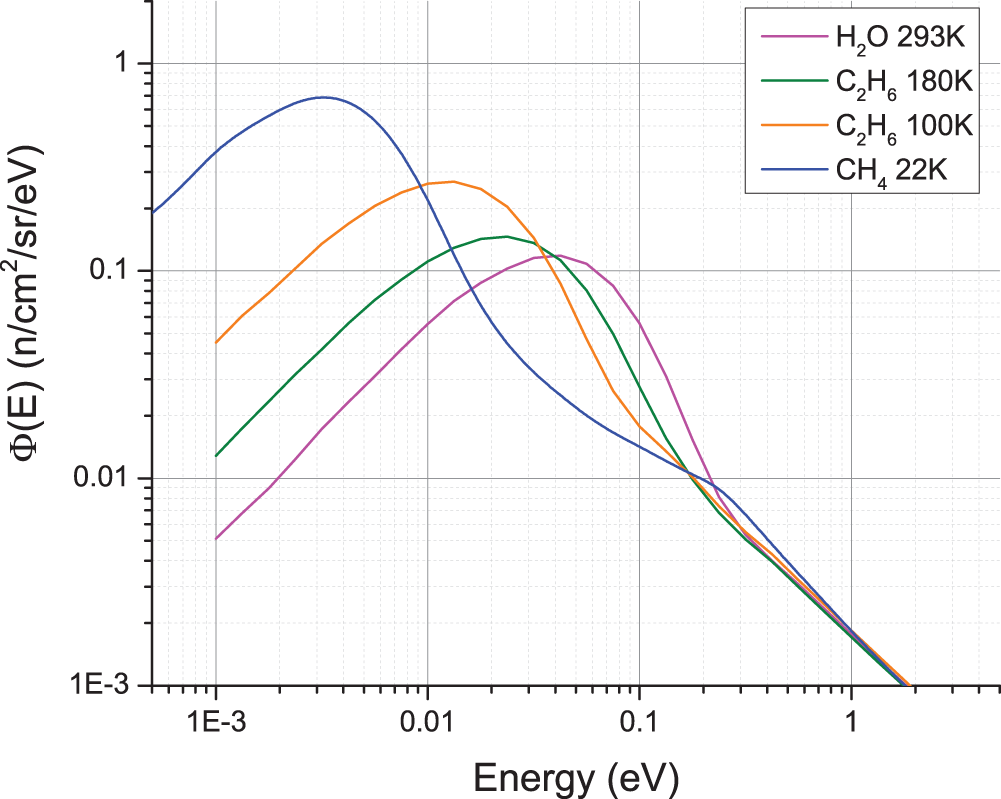
Neutron spectra emerging from the moderator configuration proposed for medium-intensity compact accelerator-driven neutron sources (CANS). The curves are indicative of the energy distribution, but not of optimized intensity as they were calculated for the same geometry.
Finally, a large cylindrical cell of Φ = 5 cm and 2 cm height at the bottom of a hole 3.5 cm deep containing solid methane is included in this proposed moderator system. It can operate at 22 K (phase I) or 5 K (phase II) to provide intense CN or VCN beams, respectively, to explore structures in the nanoscale range under stable conditions, not threatened by radiolysis effects caused by strong radiation fields. Once again, for measurements with improved time resolution, this moderator could be decoupled, so its pulse decay time would be approximately 50 µs for methane at 22 K. This decoupled cell can also be used to study the neutronic properties of new moderator materials by replacing the solid methane normally placed there. It is very convenient to have that kind of capability to experimentally study and validate components of advanced moderators, not usually available in large facilities.
In the paragraphs above, a multipurpose moderator system was proposed to address a wide range of problems; however, a simple design could be optimized for a specific application.
Compact moderators, particularly low-dimensional moderators, are well suited for CANS. In this work, conceptual geometries were presented to motivate simulations aimed at optimizing different spectral beam characteristics. The proposed dimensions are compatible with a typical high-intensity CANS target.
These concepts are oriented toward the production of TN, CN, and VCN beams, either of high-brilliance or high-intensity types. The conceptual designs presented here are indicative of the different combinations of sources that can be arranged for the target stations. In this sense, they represent a road to devise moderator systems rather than engineering designs.
The moderator materials considered were well tested through their use in a very large number of installations, except for methane II at very low temperatures. It is well known the low resilience of that material to withstand strong radiation fields, and thus its practical use in any given installation must be carefully evaluated. A good alternative, yet to be validated, could be mesitylene II at very low temperatures, either pure or in a mixture with other aromatics such as toluene or m-xylene. The moderator complex in the IBR-2M reactor in Dubna, Russia, contains CN moderators based on mesitylene that, in the form of pellets or beads, are flushed through the cell by a cryogenic fluid, 35 and the same solution could be applied to employ methane II as a VCN moderator even in high-power neutron sources.
Finally, a simple conceptual design is proposed for medium-intensity CANS with the capacity to study the structural properties of materials on different dimensional scales, employing TN, subthermal neutron, CN, and VCN. It is emphasized that this type of facility should be very useful as a flexible workbench for the exploration and validation of new moderators and devices, which is not possible in larger installations, as well as for education in neutron techniques and applications. 58
Footnotes
Acknowledgements
It is a pleasure to acknowledge motivating discussions with Thomas Gutberlet on the topics considered here.
Funding
The author received no financial support for the research, authorship, and/or publication of this article.
Declaration of conflicting interests
The author declared no potential conflicts of interest with respect to the research, authorship, and/or publication of this article.