







Abstract
Dye-sensitized solar Cells have attracted great attention recently due to their excellent advantages. This study introduces the cobalt and zinc metal complexes as a new class of sensitizers for evaluation. We report the synthesis and characterization of zinc and cobalt complexes of organic dyes and applications of Dye-Sensitive TiO2 Solar Cells. In this study, the reason we prefer cobalt and zinc complexes is that they provide a wide absorption spectrum and high molar absorption. The fact that these complexes have good energy level adaptations helps in efficient electron transfer. In the designed complexes, 4,5-diazafluoren metal complexes bonded with thiophene and carbonyl as electron donors and as electron-with drawing groups were synthesized. Structural characterization was achieved with FTIR, UV-Vis, and Maldi-MS. The metal complex binder dye has demonstrated promising DSSC properties such as short-circuit current, open-circuit voltage, and fill factor, indicating efficient charge generation and injection. The bathochromic shift seen in the UV-Vis spectra of the dyes was promising for good efficiency. Notably, the highest efficiency was obtained from ZnS2 with 0.61%, while the lowest was from CoS1 with 0.17%. The power conversion efficiencies (η) produced by CoS1, CoS2, ZnS1, and ZnS2 dyes exhibit device performance ZnS2 > ZnS1 > CoS2 > CoS1 respectively. With these results, the development of DSSCs is promising.
This is a visual representation of the abstract.
Keywords
Introduction
Solar energy is one of the most affordable and clean energy sources. Dye-sensitized solar cells (DSSCs) have offered a promising concept in the past decades due to their low cost and high efficiency compared to traditional devices. DSSCs are relatively more efficient than other solar cell technologies at high temperatures and under scattered light conditions.1,2 Optoelectronic properties are essential in the performance of DSSCs. Studies have produced devices using both organic and inorganic pigments in DSSCs due to the delocalized π-electrons, which contribute to good conductivity. 3 DSSCs have emerged as a promising alternative to traditional solar cells, offering high efficiency at a lower cost, especially under conditions of high temperature and scattered light. The performance of DSSCs is heavily influenced by the optoelectronic properties of the sensitizers, with Ruthenium-based dyes demonstrating some of the best efficiencies reported. However, the search for more cost-effective and environmentally benign alternatives, such as Co (II) and Zn (II) complexes, continues to be a critical area of research. Recent studies have demonstrated that Co (II) and Zn (II) complexes can achieve impressive efficiencies in DSSCs, with some reports indicating efficiencies exceeding 12% under optimized conditions. 4 These findings underscore the potential of these metal complexes as viable alternatives to traditional Ruthenium-based dyes, paving the way for more sustainable and efficient solar energy solutions.
Ruthenium-based dyes have long been regarded as the most widely used and effective sensitizers in dye-sensitized solar cells (DSSCs) due to their remarkable efficiency and stability under various operating conditions. These dyes have consistently demonstrated superior photovoltaic performance, making them a popular choice in the development of high-efficiency DSSCs. 5 However, the high cost of Ruthenium, coupled with concerns about its environmental impact and limited availability, has driven the search for alternative metal complexes that can deliver similar or improved efficiencies at a lower cost and with a more favorable environmental footprint. 6 Among the potential alternatives, transition metal complexes involving Co(II) and Zn(II) have emerged as promising candidates. These metals are more abundant, less expensive, and less toxic compared to Ruthenium, making them attractive options for sustainable solar energy applications. 7 Despite these advantages, the use of Co(II) and Zn(II) complexes as sensitizers in DSSCs remains relatively underexplored, particularly in relation to the influence of different ligand structures on their performance. 8
The interaction between the metal center and the ligands plays a critical role in determining the optoelectronic properties of the complexes, which, in turn, affects the efficiency of DSSC devices. While some studies have suggested that Co(II) and Zn(II) complexes could offer comparable or even superior electron transfer capabilities under certain conditions, there is still much to learn about how to optimize these systems to maximize their performance in DSSCs.6,9 Therefore, further research is needed to fully understand the potential of Co(II) and Zn(II) complexes as cost-effective and environmentally friendly alternatives to Ruthenium-based dyes in DSSCs.
Transition metal complexes play a crucial role in the performance of dye-sensitized solar cells (DSSCs) due to their unique ability to absorb a broad spectrum of light wavelengths, ranging from ultraviolet to near-infrared. This broad absorption spectrum is particularly advantageous for harvesting solar energy more efficiently, as it allows the complexes to capture a wider range of the solar spectrum, thereby enhancing the overall light-harvesting efficiency of DSSCs. 10 Moreover, the electronic properties of transition metal complexes can be finely tuned by varying the metal center and the ligand environment, enabling the optimization of electron transfer processes that are vital for high photovoltaic performance. 5 For instance, metals such as Co(II) and Zn(II) are of particular interest in DSSC applications due to their favorable redox properties, which facilitate efficient electron injection into the semiconductor, typically TiO2. 8 The ability of these metal complexes to participate in charge transfer processes, either through metal-to-ligand charge transfer (MLCT) or ligand-to-metal charge transfer (LMCT), provides a versatile platform for designing sensitizers that can be tailored to achieve specific optoelectronic properties. 6 This versatility not only allows for the optimization of the dye's absorption characteristics but also contributes to reducing charge recombination losses, a critical factor in improving the overall power conversion efficiency of DSSC devices. 7
Moreover, the stability of transition metal complexes under the operating conditions of DSSCs is a significant advantage, contributing to the long-term durability of these solar cells. Transition metal complexes, particularly those involving Co(II) and Zn(II), have demonstrated excellent chemical stability and resistance to photodegradation, making them promising candidates for sustainable solar energy applications. 4 The combination of these factors underscores the importance of transition metal complexes in the ongoing development and optimization of DSSCs, as they offer a promising pathway towards more efficient and durable solar energy solutions.In this study, we investigated the potential of Co(II) and Zn(II) complexes as effective sensitizers in dye-sensitized solar cells (DSSCs). To achieve this, we focused on the previously synthesized ligands, S1 and S2, which had been employed in Ruthenium complexes and demonstrated promising photovoltaic performance in earlier DSSC studies. By incorporating these ligands into new Co(II) and Zn(II) complexes, we aimed to assess whether these metals could further enhance the efficiency and stability of DSSCs.Our research involved a detailed comparison of the DSSC properties of these newly synthesized complex dyes with those of the well-established N719 dye. We evaluated the photovoltaic performance of the DSSC devices using standard metrics, including short-circuit current density (Jsc), open-circuit voltage (Voc), fill factor (FF), and overall energy conversion efficiency (PCE or η). Additionally, we employed advanced characterization techniques such as UV-Vis spectroscopy, FTIR spectroscopy, and MALDI-MS to elucidate the structural and electronic properties of the Co(II) and Zn(II) complexes. This study stands out by not only exploring the DSSC performance of Co(II) and Zn(II) complexes but also by modifying the ligand structures to optimize electron transfer processes, thereby enhancing the efficiency with which electrons are transferred from the metal complexes to the semiconductor.
Experimental
Meterial
We obtained all chemicals and reagents from Merck and Sigma Aldrich and used them without further purification. We purchased Fluorine Doped Tin Oxide (FTO) from Sigma-Aldrich. All solvents used in this study were of analytical purity. UV-Vis measurements were taken on a Shimadzu 2001 UV spectrometer between 0.0–0.5 absorbance and at 185–800 wavelengths. FTIR spectrometry was taken between 450–4500 cm−1 on the Bruker device. Maldi-MS measurements were made on the Bruker Micsoflex LT-Maldi-TOF device. All samples were dissolved in methanol, and measurements were taken. Keithley 2400 Digital Source Meter device was used in the solar simulator.
Synthesis
The starting compounds 4,5-diazafluoren-9-one (dafo), 4,5-diazafluorenone-9-hydrazone (dzdfh), and S1, S2 ligands were synthesized and purified according to the previously reported method.10,11
Synthesis of CoS1
CoS1 complexes were prepared using the general procedure described below. S2 (0.2 g., 0.68 mmol) was dissolved in 10 mL of anhydrous methanol, and CoCl2.6H2O (0.27 g., 2.06 mmol) dissolved in 10 mL was added and stirred under reflux for one night. The resulting solid product was separated by filtration. It was washed thoroughly with MeOH, and hexane and dried under a vacuum oven, yield: 80.0%. FTIR (cm−1): 3062 cm−1 (Ar-H), 1623 cm−1 (C = N), 1552 cm−1 (C = C), 1388 cm−1 (C-H), 1332 cm−1 (C-N), 1016 cm−1 (C-H), 809 cm−1 (C = C), 742 cm−1 (C-H). Maldi-Tof-MS: 805.341 [M + 3H]++MeOH.
Synthesis of CoS2
CoS2 complexes were prepared using the general procedure described below. S2 (0.2 g., 0.57 mmol) was dissolved in 10 mL of anhydrous methanol, and CoCl2.6H2O (0.22 g., 1.73 mmol) dissolved in 10 mL was added and stirred under reflux for one night. The resulting solid product was separated by filtration. It was washed thoroughly with MeOH and hexane. It was dried under a vacuum oven-yield: 82.2%. FTIR (cm−1): 2920 cm−1 (Ar-H), 2850 cm−1 (C-H), 1548, 1411 cm−1 (C-H), 1023 cm-1 (C = C), 764 cm−1 (C-H), 673 cm−1 (C-H), 614 cm−1 (C-C-H). Maldi-Tof-MS: 846.370 [M + Na + H]+.
Synthesis of ZnS1
ZnS1 complexes were prepared following the general procedure described below. S1 (0.2 g., 0.68 mmol) was dissolved in 10 mL of anhydrous methanol. ZnCl2.6H2O (0.5050 g., 2.067 mmol) dissolved in 10 mL was added and stirred under reflux for one night. The resulting solid product was separated by filtration. It was washed thoroughly with EtOH and dried under a vacuum oven-yield: 81.63%. FTIR (cm−1): 2829 cm−1 (Ar-H), 1593 cm−1 (C = C), 1362 cm−1 (C-N), 1029 cm−1 (C-H), 980 cm−1 (C = C), 770 cm−1 (C-H). Maldi-Tof-MS: 742.662 [M + Na + 3H]+
Synthesis of ZnS2
ZnS2 complexes were prepared following the general procedure described below. S1 (0.2 g., 0.57 mmol) was dissolved in 10 mL of anhydrous methanol. ZnCl2.6H2O (0.43 g., 1.73 mmol) dissolved in 10mL was added and stirred under reflux for one night. The resulting solid product was separated by filtration. It was washed thoroughly with EtOH and dried in a vacuum oven-yield: 80.85%. FTIR (cm−1): 3000 cm−1 (Ar-H), 1600 cm−1 (C = C), 1420 cm−1 (C-H), 809 cm−1 (C-H). Maldi-Tof-MS: 849.065 [M + H2O]+.
Preparation of DSSCs
In this study, TiO2 paste (Merck brand was used. Glass and porcelain materials were used in every step.) FTO (Merck) glass was used. Doctor Blade technique was used during coatings. The doctor blade technique is categorized as a printing and coating technique. This printing technique is adapted from Glan's technology. It is possible to coat DSSCs and PSCs with the Doctor Blade technique. In this method, the knife is on the FTO glass at a certain speed, with constant contact, at a fixed angle and height. With the continuous displacement of the blade, a homogeneous coating is achieved. The coated glass is first heated at 200°C. It is then baked in a muffle furnace of 450°C. FTO glass is finally ready for use.
TiO2-based DSSC devices were prepared via conductive FTO, metal complex sensitizers that enable electron movement through conjugation and transfer electrons to the semiconductor through the structure with multiple anchors. The prepared metal complex cells’ current density versus voltage (J-V) characteristic was measured using a Keithley 2400 Digital Source Meter in the dark and at room temperature under simulated Solar100Solar 1.5G solar illumination.
Four critical parameters can be measured and changed to evaluate the efficiency of DSSCs. We can list them as follows. They can be expressed as short circuit current density (Jsc), open circuit voltage (Voc), filling factor (FF), and energy conversion efficiency (PCE or η), as follows;


Results and discussion
Characterization
In the literature, there are values regarding the synthesis and structural characterization of S1 and S2 ligands. 11 In this study, Zn(II) and Co(II) complexes of the ligands were obtained in good yields of approximately 80% and 82%.
FTIR measurements were performed for the structural characterization of the newly synthesized Zn(II) and Co(II) complexes. In these measurements, peaks were observed that were different from the ligands and as expected. For CoS1 and CoS2 complexes, peaks at 1590 cm−1 (SI.1) and 1625 cm−1 (SI.3) were observed characteristically with shifts for the complexes. These bands are assigned to the C = N stretching frequencies of the complexes. There are characteristic shifts at 1592 cm−1 and 1600 cm−1 for ZnS1(SI.5) and ZnS2 (SI.7) complexes. 14
All compounds and complexes have excellent solubility in organic solvents such as ethanol, methanol, and chloroform. It is seen in the literature that the UV-Vis spectra of the ligands come in the range of 210–260 nm and that there are π-π* and n-π* transitions. 11 Here, π-π* and n-π* transitions are observed in the synthesized Zn(II) and Co(II) complexes, shifting to the 260–290 nm range for Zn(II) complexes (Figure 1). Co(II) complexes (Figure 2) change to the 300–490 nm range, and n-π* and π-π* transitions are observed. Seeing a bathochromic shift on an excellent filling factor indicates that good results can be obtained at higher wavelengths than the ligands. All synthesized compounds and complexes exhibit excellent solubility in organic solvents such as ethanol, methanol, and chloroform. The UV-Vis spectra of the ligands are typically observed in the 210–260 nm range, where π-π* and n-π* transitions occur, as reported in the literature. 11 Upon complexation, the Zn(II) and Co(II) complexes demonstrate a bathochromic shift in these transitions, which is particularly noteworthy for their potential application in dye-sensitized solar cells (DSSCs).
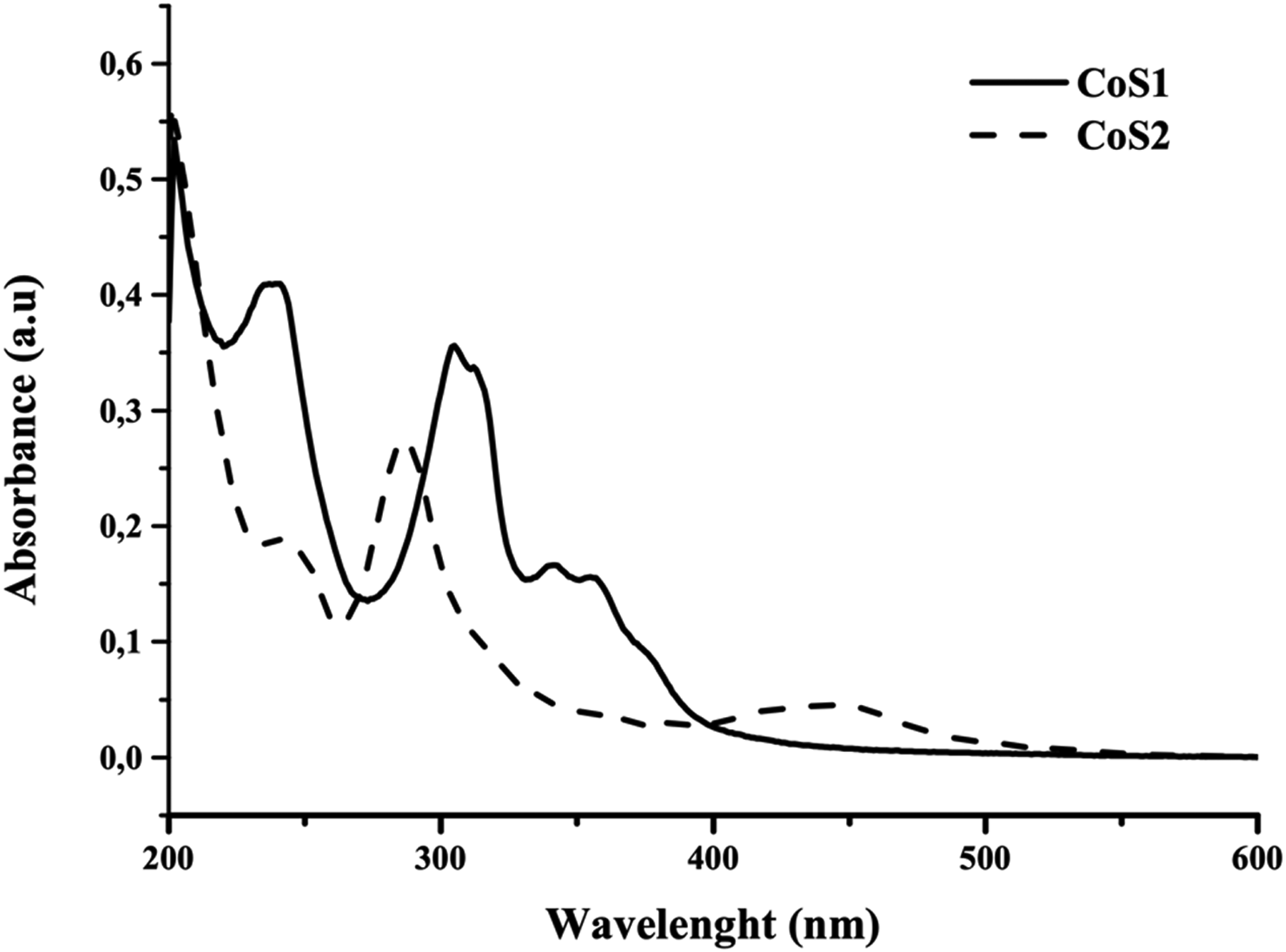
UV-Vis Spectrum of the CoS1 and CoS2 complex.
For the Zn(II) complexes, the π-π* and n-π* transitions shift to the 260–290 nm range (Figure 1), while for the Co(II) complexes, these transitions extend further to the 300–490 nm range (Figure 2). The observed bathochromic shift, characterized by a red shift in the absorption spectrum, suggests that these complexes could absorb light more effectively at higher wavelengths compared to their corresponding ligands.
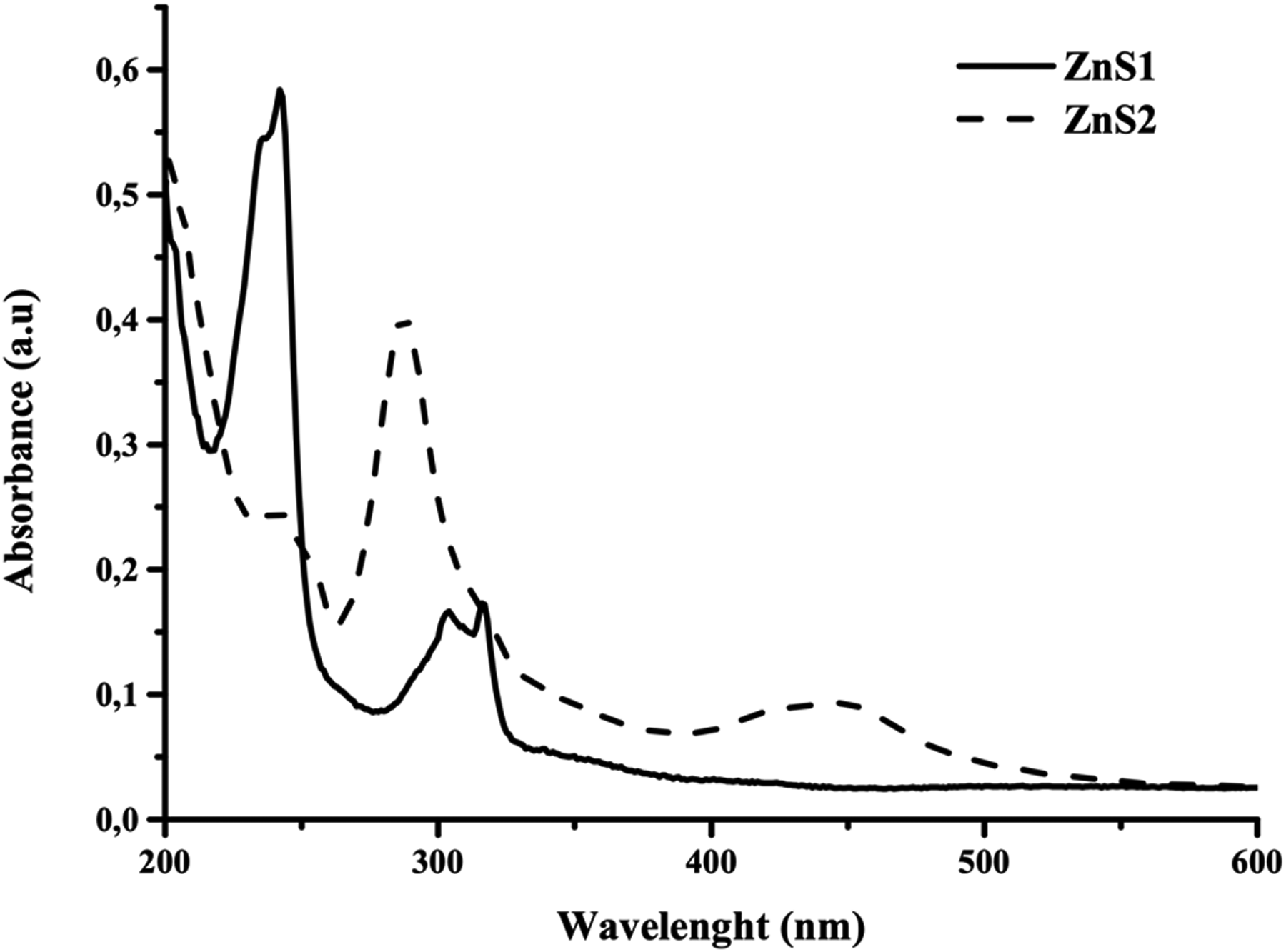
UV-Vis Spectrum of the ZnS1 and ZnS2 complex.
This red shift is particularly significant for DSSCs, as it enables the absorption of a broader range of light wavelengths, thereby enhancing the overall efficiency of the solar cells. The study by Ilgün et al. 15 corroborates this effect, where Zn and Co-centered phthalocyanine dyes exhibited similar bathochromic shifts, contributing to improved light absorption across a wider wavelength range. Referencing this study underscores the importance of the bathochromic shift in optimizing DSSC performance.
In the mass spectra, the molecular ion peaks of the ZnS1 and ZnS2 ligands appeared at m/z: 742.662 and m/z: 849.065 in the Maldi-Tof-MS spectra. The molecular ion peaks of the CoS1 and CoS2 appeared at m/z: 805.341 and m/z: 846.370 in the MALDI-TOF MS spectra, respectively. Mass spectral data confirmed the proposed structure of Zn(II) and Co(II) complexes.
Photovoltaic device performance of DSSCs
TiO2-based DSSC devices on conductive FTO were prepared using sensitizers that provide electron movement by conjugation and transfer electrons to the semiconductor through a stable structure with multiple anchors. The DSSC parameters: Jsc, Voc, and FF were extracted from the J-V curve to find the cell efficiency as illustrated in the Figures 3 and 4. Moreover, in our DSSC device, the effective area of the devices was 1.00 cm2, which is larger than those of the reported. N719 dye was used as a standard sensitizer for the comparison with synthesized dyes and PCE of it was measured 1.032% (SI.9).
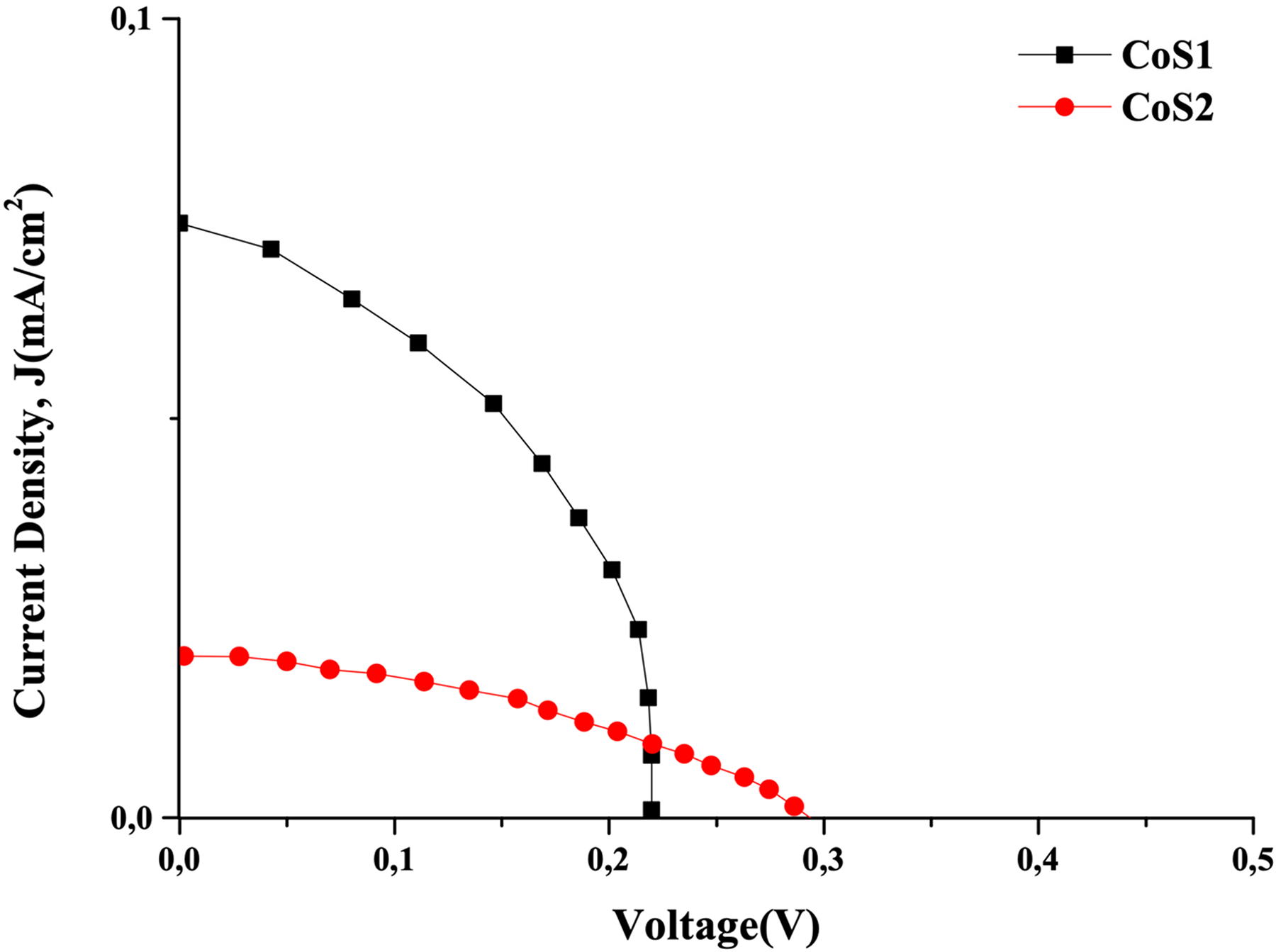
Current density-voltage curves of illuminated DSSCs using dyes CoS1 and CoS2.
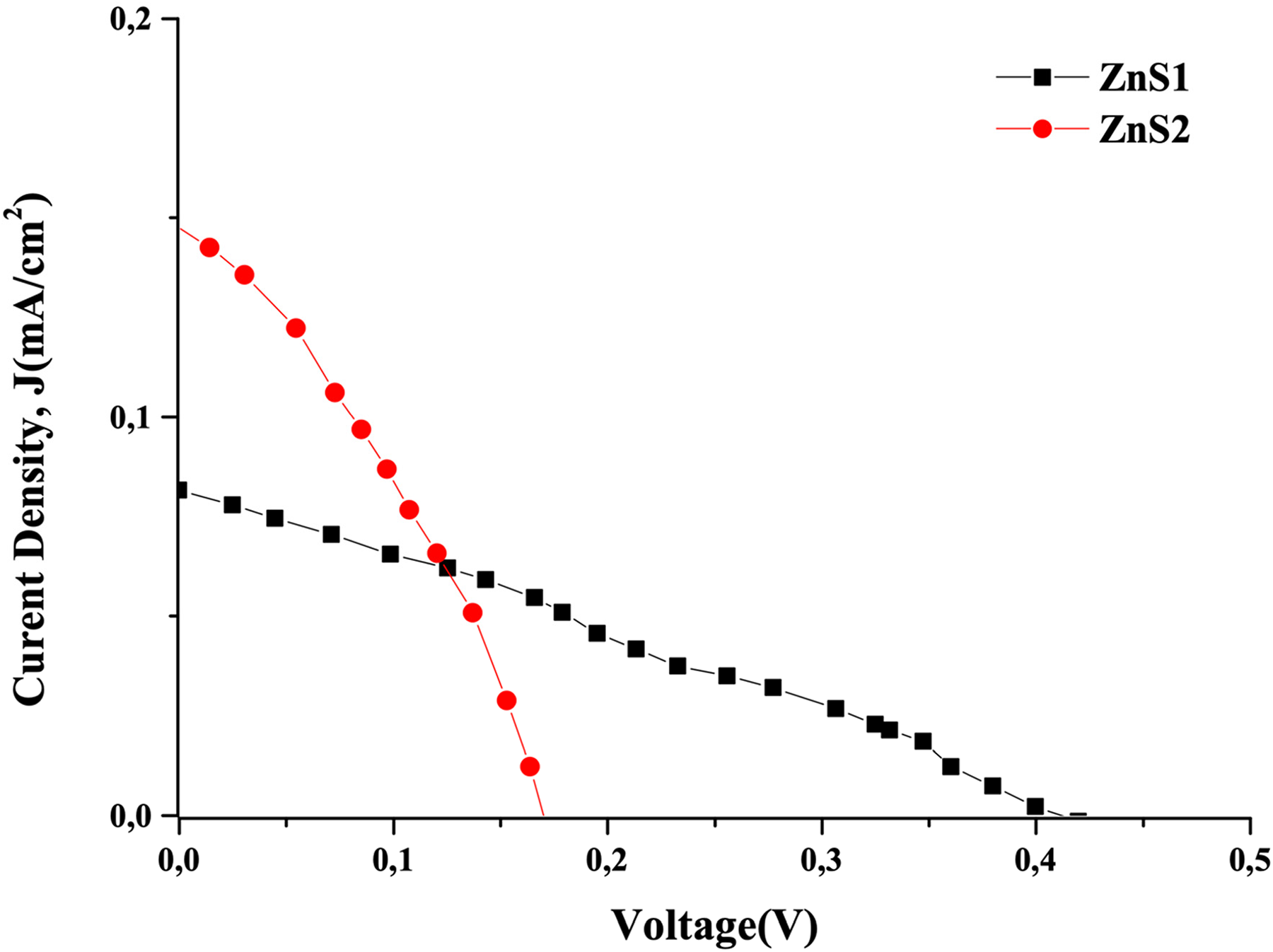
Current density-voltage curves of illuminated DSSCs using dyes ZnS1and ZnS2.
The ligands used in this study were previously identified by Cansu and her colleagues. In this research, metal complexes of these ligands with Zn(II) and Co(II) were synthesized, showing superior performance compared to the ligands alone and Ruthenium complexes referenced in related literatüre. 11 Notably, a higher Jsc value was achieved with the ZnS2 sensitizer, likely due to its broader absorption in the visible region and a higher molar extinction coefficient. The DSSC devices using Zn(II) and Co(II) complexes, along with the experimental results for N719, are summarized in Table 1. For comparison, the standard sensitizer N719 was measured at 1.032%.
Photovoltaic parameters for DSSCs sensitized with CoS1, CoS2, ZnS1, ZnS2 and N719.
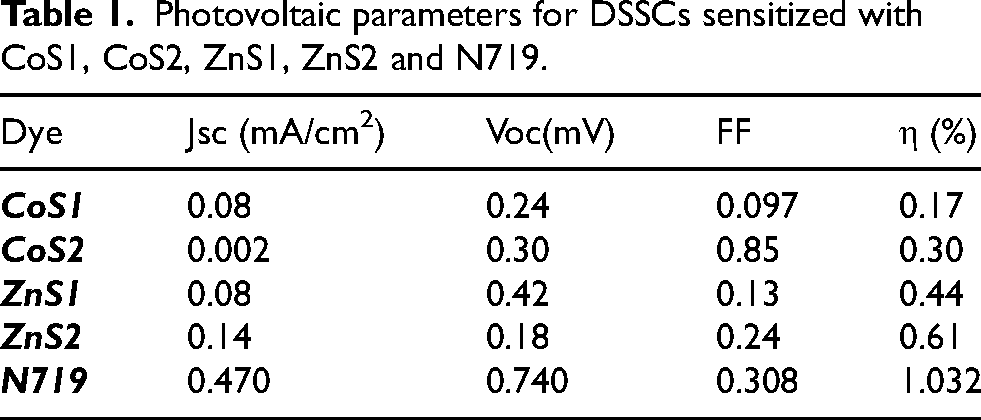
It has been observed by Cansu et al. that metal complexes containing thiophene and aldehyde groups achieved higher PCE values compared to the ligands. In these complexes, metal-to-ligand charge transfer (MLCT) is prominent, particularly when the metal is in a low oxidation state, facilitated by ligands with low-lying empty orbitals. The dyes used as sensitizers contain π bonds and aromatic rings, which facilitate complexation with metal ions. These metal complexes exhibit high solubility and stability in their low excited states. The long-lived charge transfer from the metal to the ligand has significantly enhanced the device efficiency, resulting in higher PCE values than those reported for the ligands alone.11,16
The curves recorded in light and dark clearly show that there is a correlation between the newly prepared metal complex sensitizers and the power conversion efficiency of the device. The highest efficiency in the study was obtained from the ZnS2 complex. The results of all these devices are summarized in Table 1.
The literature indicates that ruthenium complexes containing thiophene and aldehyde anchor groups, as well as mixed-ligand Ru(II) complexes with these dyes and bipyridine, have shown photovoltaic efficiencies ranging from 0.15% to 0.27% when used as sensitizers for TiO2-based photovoltaic cells. 11 In comparison, the efficiencies obtained from CoS2 and ZnS2 complexes are 0.30% and 0.61%, respectively, demonstrating higher efficiency than the Ru(II) complexes reported. Our study revealed that the distinct optoelectronic properties of Co(II) and Zn(II) complexes were closely related to the nature of the S1 and S2 ligands. These findings suggest that by carefully selecting and modifying ligand structures, it is possible to fine-tune electron transfer processes and improve the overall performance of DSSC devices. Moreover, the comparative analysis with the N719 dye further highlights the potential of these new complexes to serve as viable alternatives in DSSC applications.
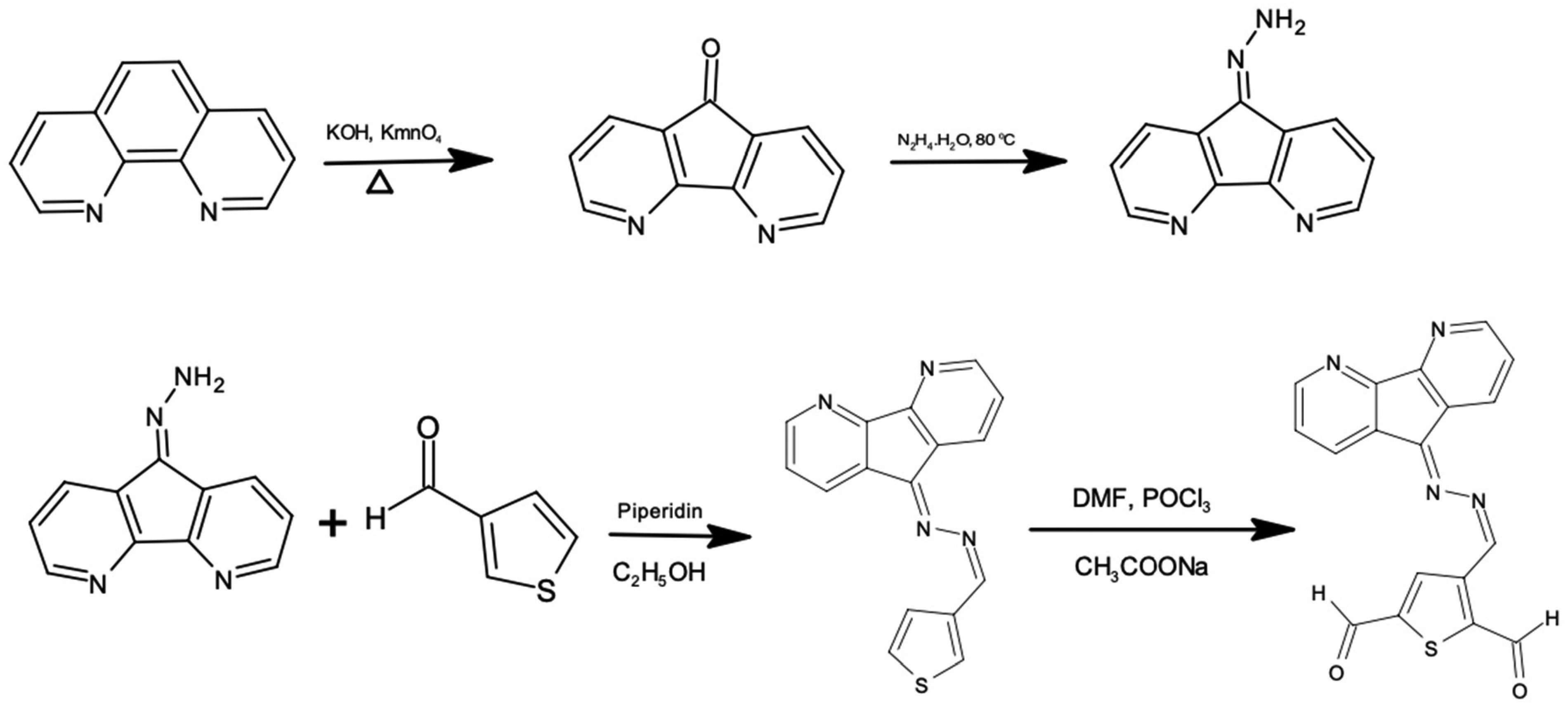
Synthesis routes of S1 and S2 ligands.
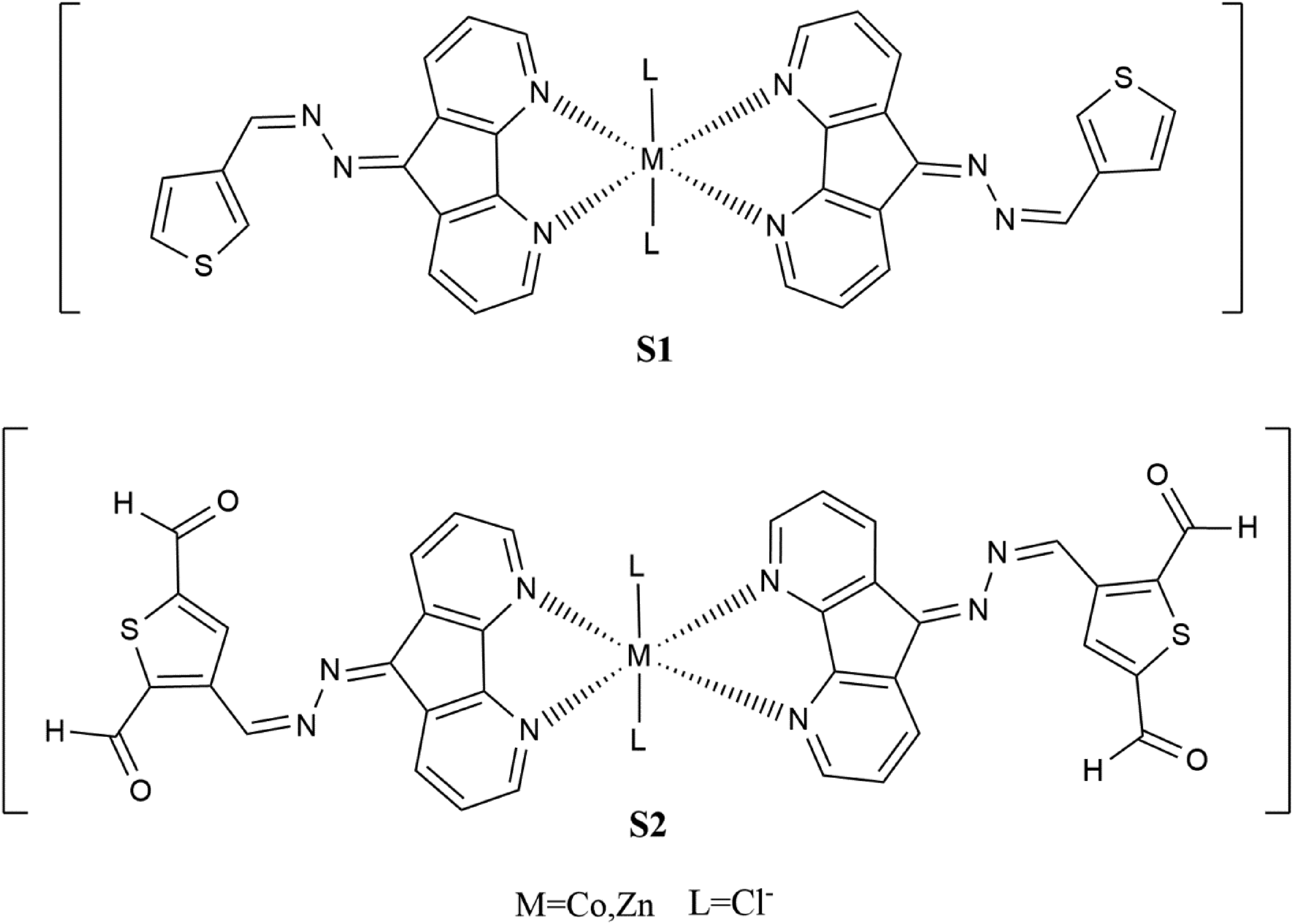
Structure of Zn(II) and Co(II) complexes of S1 and S2 ligands.
Conclusions
In this study, new Cobalt (II) and Zinc (II) metal complexes were synthesized in addition to the synthesized ligands. All these newly synthesized metal complexes were used as sensitizers in DSSC devices. Our best result in this study was obtained with the S2-based double anchor group DSSC, derived from the ZnS2 complex, which achieved a photovoltaic efficiency of up to 0.61%. Different absorbance and anchor groups of sensitizers affected the conversion efficiency of the devices. These results indicate that increasing the anchor groups in the sensitizer and using different metal ions creates a stable structure, enhances electron transfer to the semiconductor, and improves charge transfer from the metal to the ligand better than the ruthenium complexes existing in the literature. Although metal-to-ligand charge transfer (MLCT) is more expected in Ru(II) complexes, our study found that the use of strong π-acceptor ligands, high UV-Vis transitions, and Co(II) and Zn (II) metal complexes in high oxidation states can make MLCT transitions more pronounced. 11 These findings suggest that increasing the number of anchor groups in the sensitizer structure and using different metal ions contribute to better electron transfer and charge transfer efficiency, leading to enhanced performance of DSSC devices compared to the ruthenium complexes in the literature. We believe that the insights gained from this study contribute valuable knowledge to the field of DSSCs, and the Co(II) and Zn(II) complexes explored here may offer exciting opportunities for the development of next-generation solar cell materials.
Supplemental Material
sj-docx-1-mgc-10.1177_10241221241290906 - Supplemental material for Based on thiophene-containing Zn(II) and Co(II) complexes: Synthesis, characterization, and application to dye-sensitized solar cells
Supplemental material, sj-docx-1-mgc-10.1177_10241221241290906 for Based on thiophene-containing Zn(II) and Co(II) complexes: Synthesis, characterization, and application to dye-sensitized solar cells by Cansu Sezgin and İbrahim Erden in Main Group Chemistry
Footnotes

Funding
The author(s) received no financial support for the research, authorship, and/or publication of this article.
Declaration of conflicting interests
The authors declared no potential conflicts of interest with respect to the research, authorship, and/or publication of this article.
Supplemental material
Supporting information includes UV-vis, Maldi-MS, FTIR, and solar measurements of complexes. In the study, the power conversion efficiencies of Zn and Co complexes, also seen in the literature, were calculated under certain conditions. While preparing these conditions, power conversion efficiencies were calculated by the literature and based on the articles in the literature.
The online version contains supplementary material available at
References
Supplementary Material
Please find the following supplemental material available below.
For Open Access articles published under a Creative Commons License, all supplemental material carries the same license as the article it is associated with.
For non-Open Access articles published, all supplemental material carries a non-exclusive license, and permission requests for re-use of supplemental material or any part of supplemental material shall be sent directly to the copyright owner as specified in the copyright notice associated with the article.
