







Abstract
The synthesis and characterisation of novel thiophene-based C-S coupled aldehydes derived from both aromatic thiols and aliphatic thiols has been carried out, along with a comparative analysis of anti-microbial activity of aromatic and aliphatic derivatives. The carbon-sulphur (C-S) bond was constructed using transition metal-catalysed cross-coupling reaction, specifically copper-catalysed reaction. The authenticity of synthesized compounds was established using 1H NMR, 13C NMR and HRMS. Their antimicrobial activities were tested against E. coli, P. aeruginosa as well as S. aureus. Density functional theory (DFT) studies were conducted to explore the quantum chemical data, which was further utilized to analyse activity trend and their correlation with experimental results. The findings revealed that aromatic thiols exhibit significant antimicrobial activity, whereas aliphatic thiols lack such activity due to the presence of an alkyl group in the aldehyde unit. Calculations of chemical potential, chemical hardness, and electrophilicity suggested that aromatic thiols are stable, while aliphatic thiols are rigid and less stable. Hence, this study contributes to the growing field of organo-sulphur chemistry and provides insights into the development of novel synthetic pathways for potential drug candidates.
Introduction
As the global population continues to grow, the prevalence of the health challenges is also on the rise, highlighting the urgent need for new and effective antidotes. The design of drug molecule presents one of the most promising strategies to address these challenges now and in the future.1,2 Heterocyclic compounds, which are naturally available and important for life, are at the forefront of this effort. Many of these compounds possess effective pharmacological activity, with many already used in clinical settings. Therefore, research focusing on the Structure-Activity Relationship (SAR) of these molecules is of utmost importance, as it guides the discovery and optimization of new therapeutic candidates.3,4
The thiophene nucleus has emerged as a key entity in the rapidly expanding field of heterocyclic compounds. 5 Characterized by a sulphur atom enclosed in a five membered ring, thiophene and its derivatives are recognized as bioactive molecules due to their broad spectrum of biological activities such as good antimicrobial, analgesics and anti-inflammatory properties. These sulphur bearing moieties are also good antioxidant, possess antitumor activity, and central nervous system related activity.6–10 These compounds are also marked as an integral part of the therapeutic agents and is widely employed in development of numerous drugs such as Ticarcillin, Cefoxitin, Cephalothin (antibiotics) and Tioconazole, Sertaconazole (antifungal agents).11,12 Additionally, due to its isosteric resemblance to benzene, thiophene is often favoured as a replacement in pharmacologically active agents, offering efficiency and drug safety. 13
Thiophene compounds when gelled up with other organic moieties, support the formation of unique compounds with better and improved biological activities. Aryl sulfides which feature an aryl group attached to a sulphur atom, serves as key compounds in the pharmaceutical industry. They are generally used in several drugs in disease management field, such as diabetes, Alzheimer's and Parkinson's diseases and are also used as an anti-inflammatory.14–16 Functionalisation of thiophene rings, particularly through carbon-sulphur (C-S) coupling reactions has emerged as a powerful tool for the synthesis of novel compounds with enhanced biological activity.17–20 The cross-coupling processes that are catalytically supported by transition metals offer an influential plan for the development of C-S bonds. This type of reaction is generally perceived as a chemical interaction of organic halides with thiols.21–23 Transition metals such as nickel, cobalt and iron have been explored extensively for catalysing (C-S) coupling reactions.24–26 These catalytic systems have some limitations, like metal toxicity, fewer turnover numbers, and sometimes limited functional group tolerance, which can restrict their practical application in large scale synthesis. In contrast, copper-based catalytic systems have attracted considerable attention due to their high abundance and the development of a stable chelating complex by involving various stable ligands. Literature is filled plethora of interesting copper-catalysed reactions.27,28 Verma et al. have reported the C-S coupling process by involving benztriazole as a ligand. In his experiment, it was reported that the reaction of aryl halides (iodides and bromides) with required ratios of thiols, when performed in the presence of CuI (catalyst) and benzotriazole in DMSO at 100°C, afforded sulfides in good yield (>90%). However, lesser temperature i.e., 80°C was enough to attain good yield in the case of aryl bromides.
29
So, it was decided to follow the procedure as reported by Verma et al. Further, DFT studies were conducted to calculate the band gap, chemical potential (µ
Materials and methods
Chemicals and instrumentals
High-grade chemicals (p-thiocresol, pyridyl thiol, 1-octadecanethiol, ethane-1,2-dithiol, 5-bromo-2-thiophene carboxaldehyde, CuI, benztriazole, cesium carbonate) from TCI were purchased as per requirement and were used as such without doing any further purification. Analytically pure and dry solvents were purchased and were used without any treatment. Reaction progress was monitored by using TLC (Merck Millipore). To record the 1H-NMR and 13C-NMR data, Bruker Advance II-400 MHz instrument was used. To record the mass data, high-resolution ESI mass (Xevo G2-XS) was used.
Preparation and characterization
Synthesis of thiophene based C-S coupled aldehydes
To perform the reaction, CuI (0.5 mol%) was mixed with 1.0 mol% of benzotriazole in a nitrogen-purged round bottomed flask in 2 mL dried DMSO, and the mixture was blended for 5 min. The given mixture, after the addition of 1 mmol of aldehyde, was again stirred for five minutes. After that, in the resulted mixture, 1 mmol thiol was added followed by the addition of 1.4 eq. Cesium carbonate and the resulted mixture was further stirred continuously for next 10–12 h at 90–100° C. The reaction completion was monitored using TLC in ethyl acetate and hexane solution. The resulting product was washed with ethyl acetate and water for at least three times and dried on Na2SO4. The final purification of the compound was carried out through column chromatography.
The primary authenticity of the compound was established through 1H NMR and 13C NMR studies and further stability of the molecular entity has been investigated by the mass data analysis.
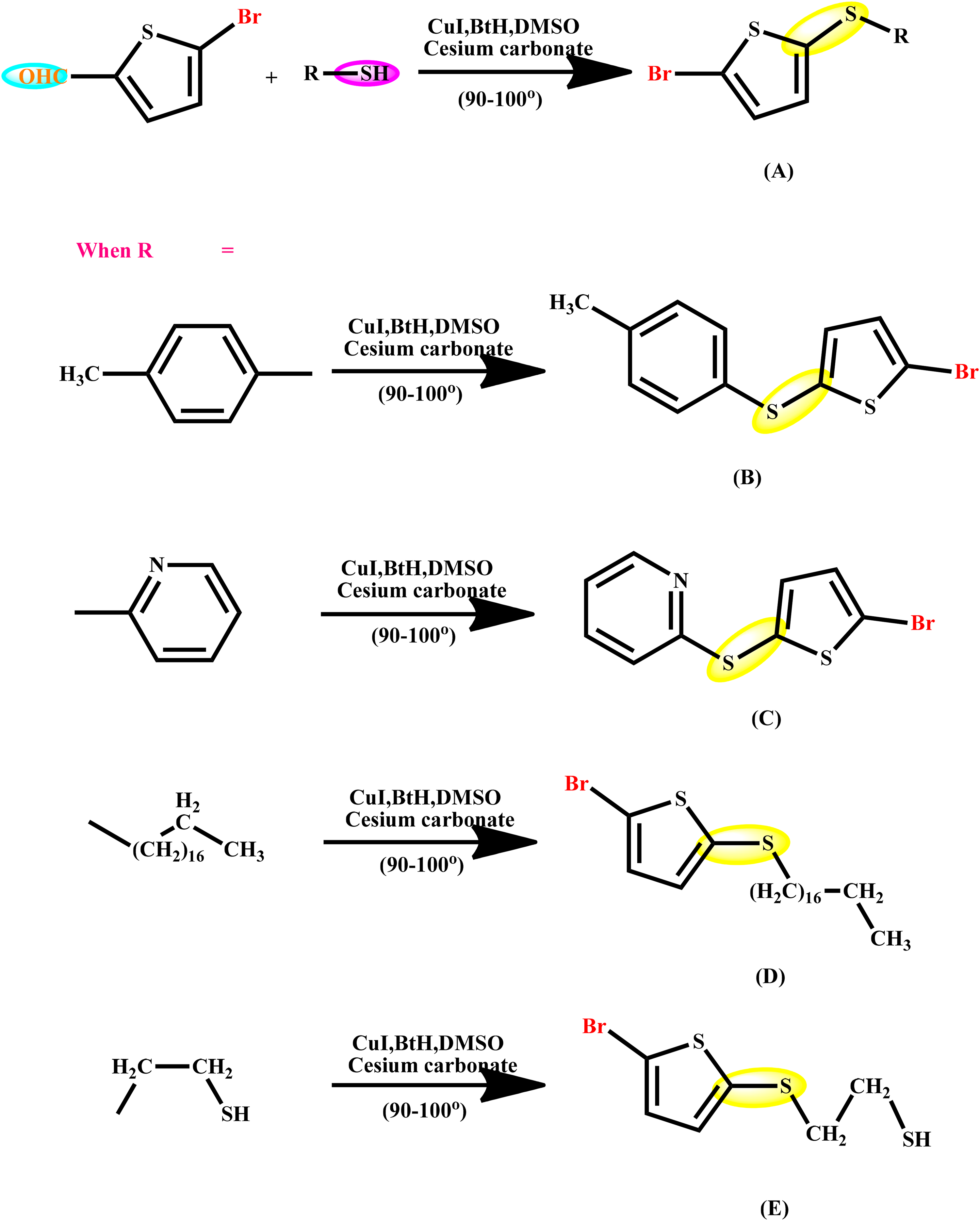
Synthesis of thiophene based C-S coupled aldehydes.
Antimicrobial studies
Bacterial culture
For the study, three microbial cultures have been selected, which are as follows: E. coli, P. aeruginosa and S. aureus. These stains have been procured from MTCC and IMTECH, Chandigarh, India. To maintain the culture, nutrient agar plates have been used, and the culture was maintained and stored at 4°C for the duration of this investigation. To study the MIC assay, from each culture some colonies have been selected and mixed with 10 mL of MH broth and further stationed at 37˚C for 12 h. During the incubation period its shaking was fixed at 200 rpm. To monitor the bacterial growth, an optical density tool was used and analysed at 600 nm.
Agar well diffusion assay
The antimicrobial activity of compound
Quantum chemical calculation
All the calculations were conducted by using Gaussian 09 program software, with all the compounds geometries fully optimised via density functional theory (DFT) using the B3LYP method and basis set 6-311G(d,p).
Result and discussions
We successfully synthesized various C-S coupled thiophene-based aldehydes and characterized them. Figure 1(a) shows 1H NMR spectra of compound B. The peak at δ 2.275 corresponds to the methyl group (-CH3) of p-thiocresol. The protons attached to the benzene ring of p-thiocresol show two peaks. The two protons of C-atom next to the C with the methyl group showed doublet at δ 7.105–7.089. However, two protons of thiophene moiety come out with two different doublets as they are not in similar environments. One doublet is at 7.489–7.481 which corresponds for proton attached to C- atom next to the C with –CHO group. However, the other proton of thiophene shows doublet at 6.936–6.928.
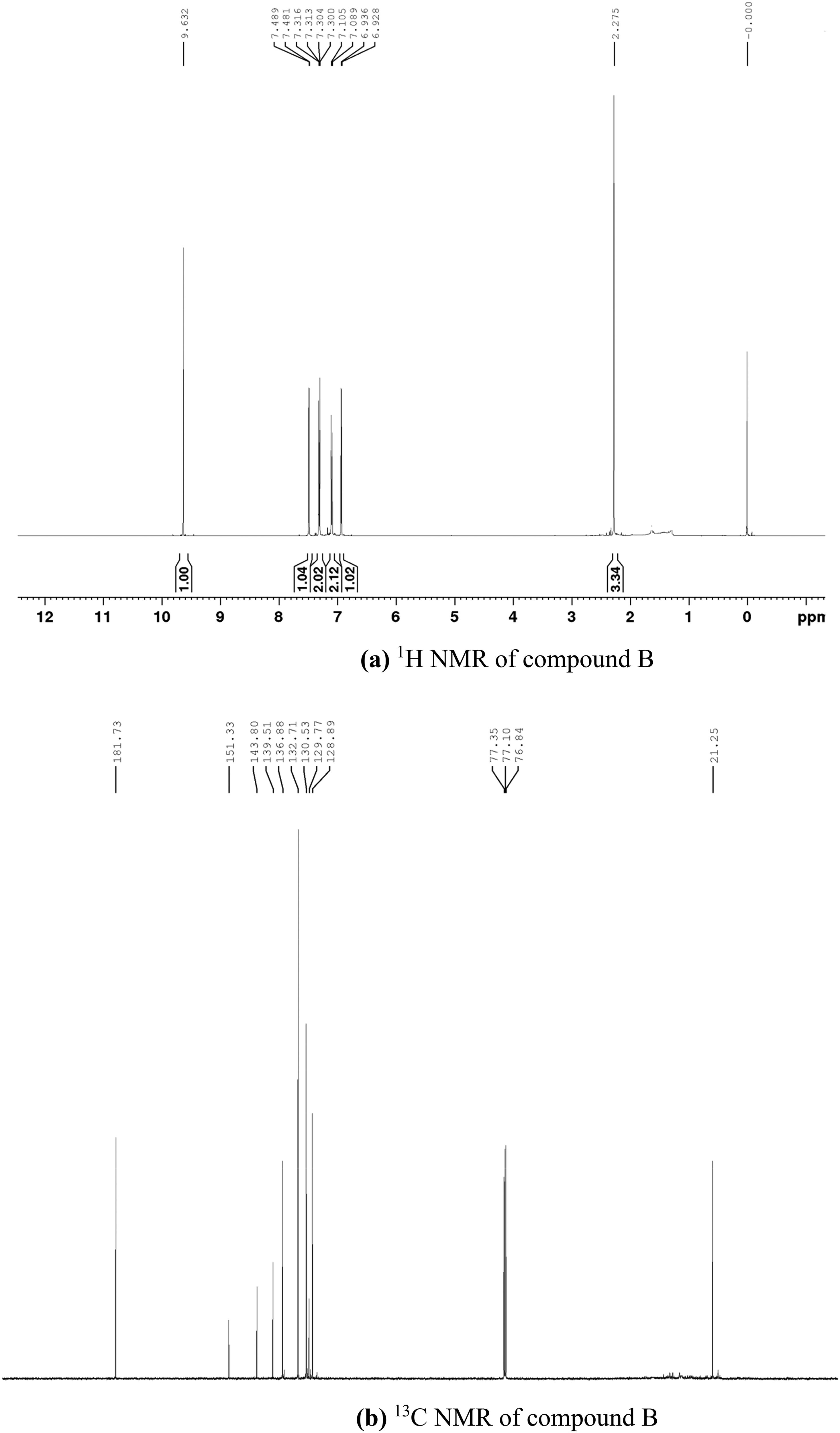
(a) 1H NMR of compound B.
Figure 1(b) shows the 13C NMR spectrum of compound B. The aldehyde group of compound B appears at 181.73 ppm, whereas C next to –CHO appears at 151.33. The other three C- atoms of the thiophene group comes at 143.80, 139.51 and 136.88 ppm. C next to –CH3 of p-thiocresol of benzene comes at 132.71 ppm. However, the C atom of benzene, next to S appears at 130.53 ppm. However, there are two pairs of similar Carbon atoms of benzene, which occur at 129.77 and 128.89 ppm. However, the peak at 21.25 ppm is because of methyl C. Similarly, the peak at 235.02 in HRMS (S3(iii)) corresponds to [M + H2O + H] +, which matches with the theoretical value up to two decimal places.
Antimicrobial activity
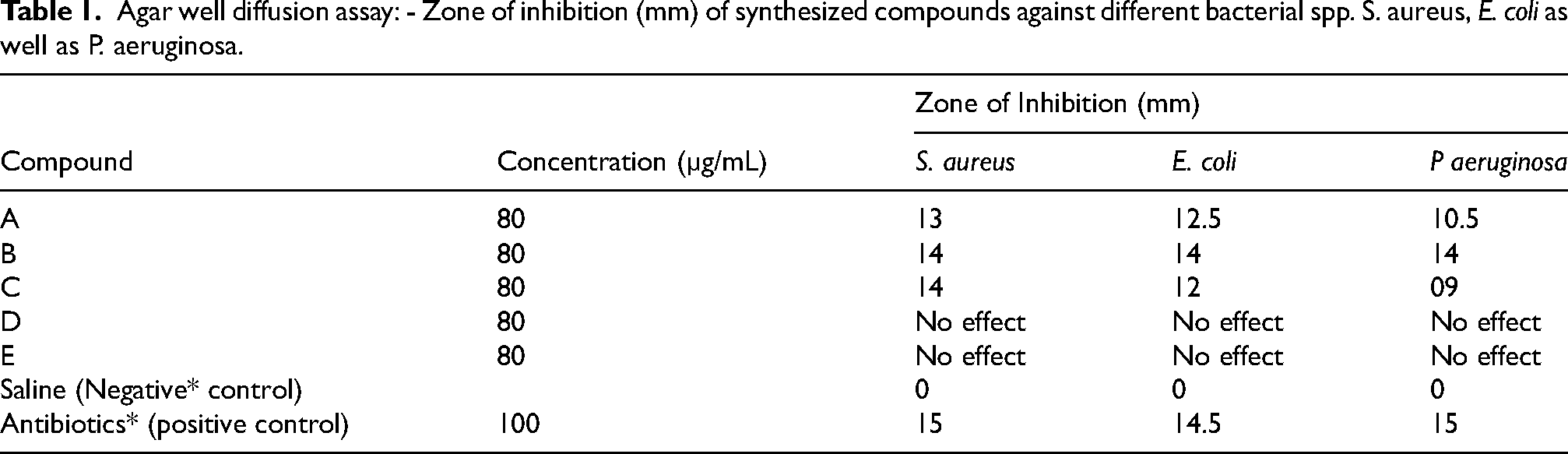
In microbes, E. coli as well as P. aeruginosa are known as gram-negative while S. aureus is known as gram-positive bacteria. The antimicrobial activity of the synthesized compounds A-E was tested against both types of bacteria, i.e., gram-negative as well as gram-positive that are generally originated from hospital-acquired infections. The MIC of the tested compounds against the E. coli, P. aeruginosa and S. aureus species was calculated using the agar well diffusion assay technique as suggested by the Clinical and Laboratory Standards Institute. Analysis of antimicrobial activity data disclosed that the tested pathogens were sensitive to the tested compounds A, B and C because these compounds feature aromatic thiol groups linked to the thiophene-2-carboxaldehyde framework. The aromatic rings increase their lipophilicity, enabling more efficient incorporation into microbial cell membranes. This interaction can compromise membrane integrity and stimulate the production of reactive oxygen species (ROS), resulting in oxidative stress and potent antimicrobial effects. Research on thiophene derivatives has shown that aromatic substitutions significantly enhance antibacterial activity, likely because they disrupt bacterial membrane functions and trigger oxidative stress and no curbing was observed in the compounds D and E towards the tested pathogens as these compounds contain aliphatic thiol groups attached to the thiophene-2-carboxaldehyde structure. The lack of aromaticity decreases their lipophilicity, making them less effective at interacting with and penetrating microbial membranes. As a result, their ability to generate reactive oxygen species (ROS) and induce oxidative stress is significantly reduced, leading to lower antimicrobial effectiveness. Studies on thiophene derivatives with aliphatic substitutions have demonstrated diminished antimicrobial activity, highlighting the critical role of aromatic groups in enhancing their potency.31,32 Aromatic thiols are characterized by a planar, conjugated ring structure, which allows them to engage more effectively with microbial enzymes and cellular components. This structural feature enhances their ability to form stable and strong interactions, thereby increasing their antimicrobial efficacy. On the other hand, aliphatic thiols, which lack such conjugation and planar aromaticity, are less capable of establishing these interactions. As a result, their effectiveness against microbial targets is comparatively diminished. 31
Agar well diffusion assay results are summarized in Table 1 Figure 2, the compounds A, B and C reveals significant antibacterial activity. On the other hand, compounds D and E, along with phosphate buffer saline (

Antimicrobial activity of compounds A-E against S. aureus, E. coli as well as P. aeruginosa microorganisms.
Agar well diffusion assay: - Zone of inhibition (mm) of synthesized compounds against different bacterial spp. S. aureus, E. coli as well as P. aeruginosa.
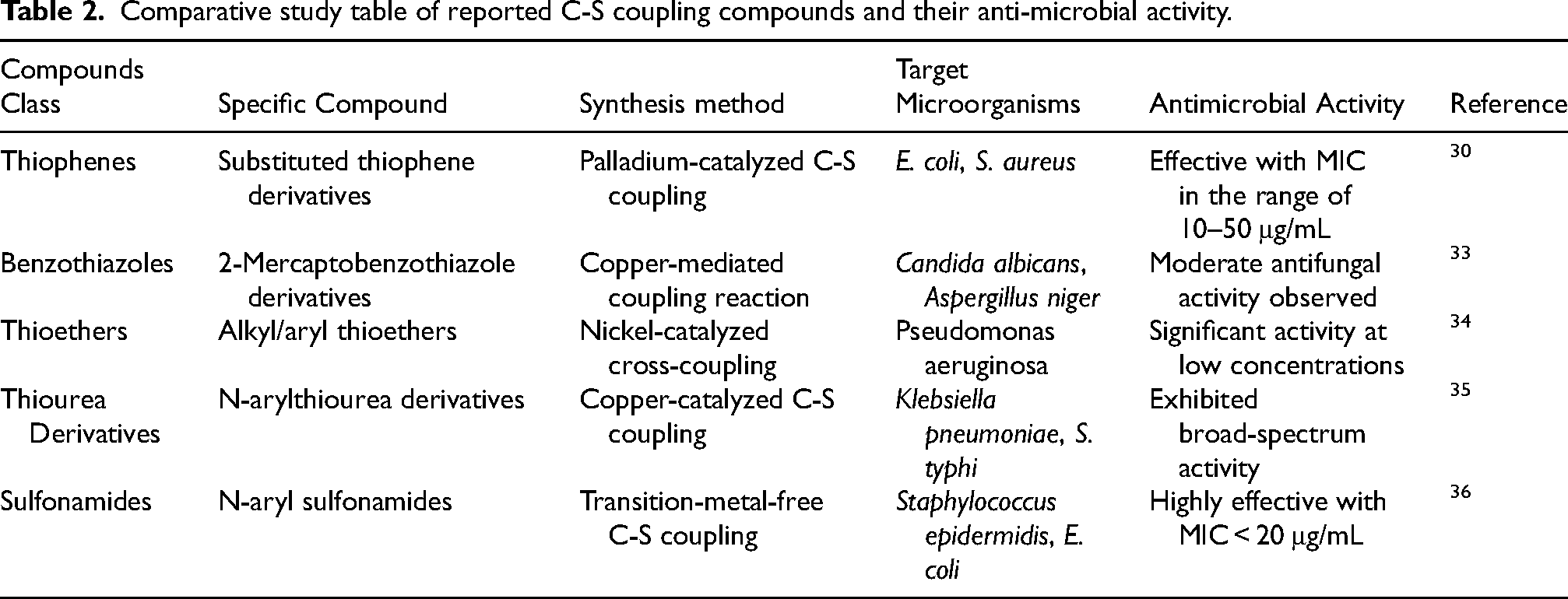
Also, a comparative table displaying various C-S coupling compounds documented in the literature and their corresponding antimicrobial studies has been presented in Table 2.
Comparative study table of reported C-S coupling compounds and their anti-microbial activity.
Quantum chemical calculation
All the calculations were conducted by using Gaussian 09 program software, with all the compounds geometries fully optimised via density functional theory (DFT) using the B3LYP method and basis set 6-311G (d, p) (Figure 3). From the literature, it is noted that molecules having the lowest ELUMO−HOMO (eV) values show superior antimicrobial activity. An analysis of the given data indicates that among all the molecules, B and C have the lowest ELUMO−HOMO (eV) and therefore act as more effective antimicrobial agents Table 3. Whereas D and E do not show any antimicrobial activity. Literature analysis shows that the compounds having aromatic ring groups in aldehyde were able to show antimicrobial activity. However, the groups having an alkyl group as part of the aldehyde unit were not able to show antimicrobial activity. So, it can be concluded aromatic character of the moiety attached to the aldehyde group plays an important role in the antimicrobial behaviour.
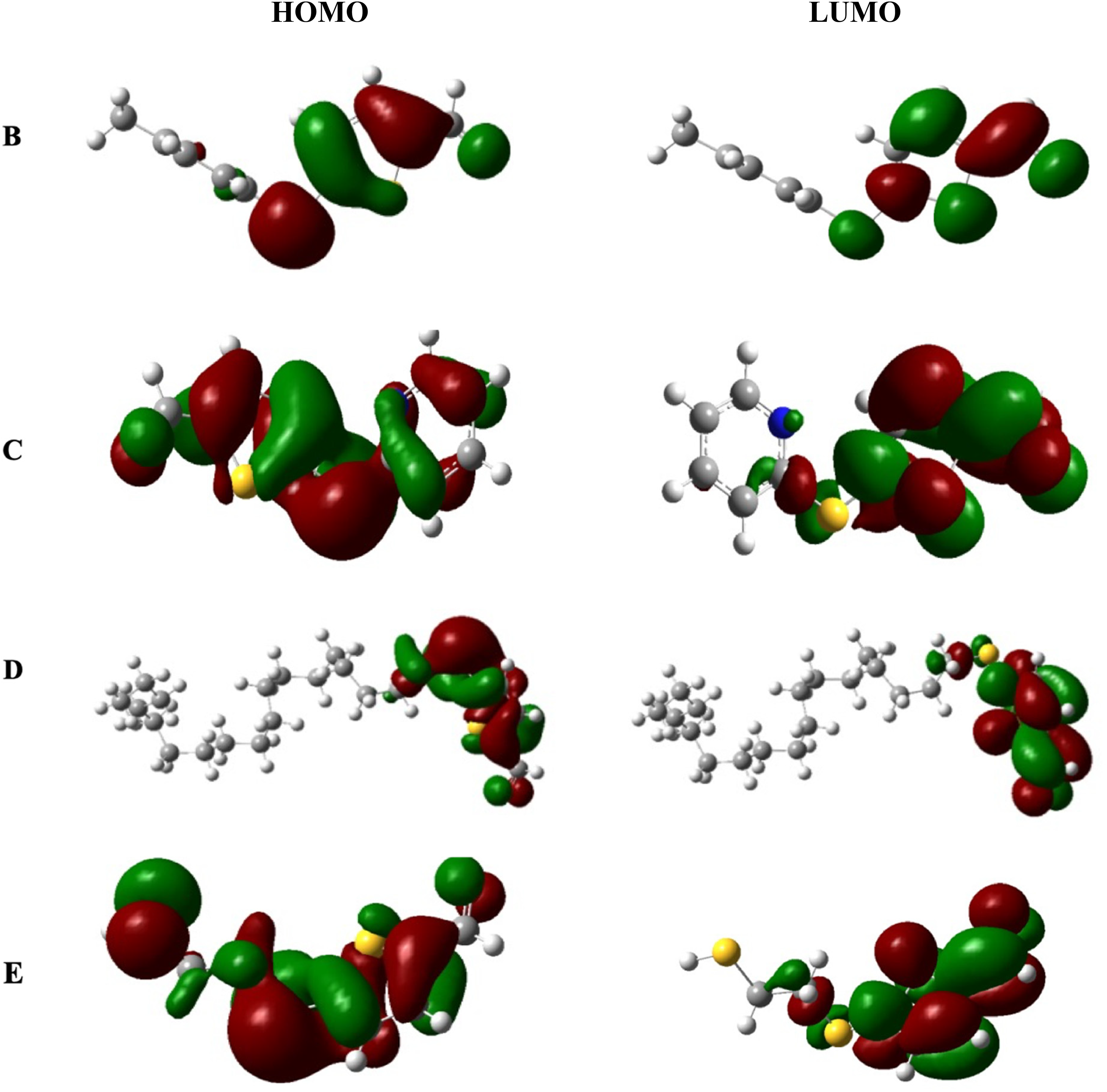
HOMO and LUMO distribution in compound
Calculated FMOs, energy gaps, chemical potential, chemical hardness and electrophilicity index in ev.

The chemical potential (µ
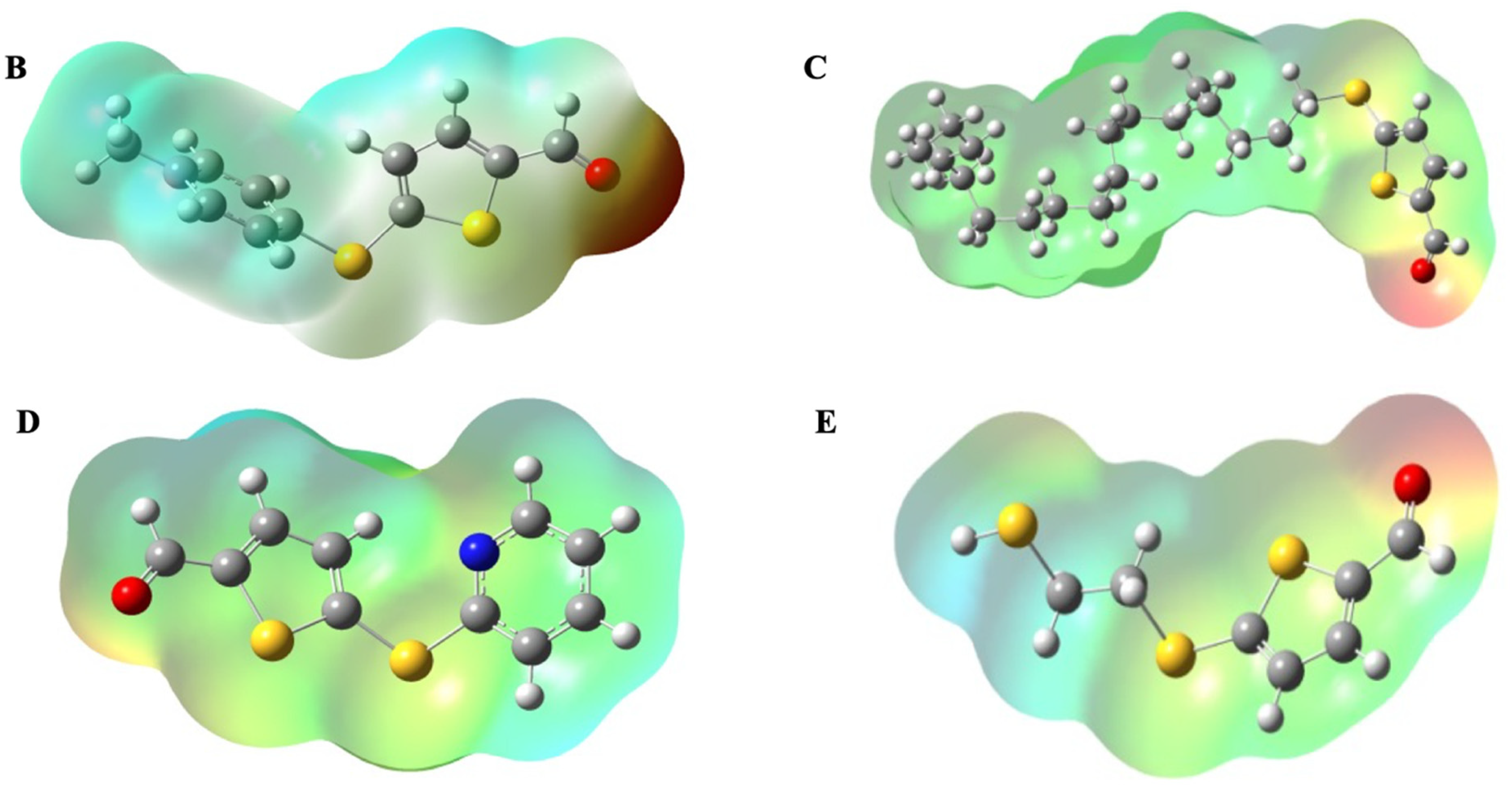
Electrostatic potential map of compounds
Molecular electrostatic potential
The charge distribution in a molecule influences several factors, such as vibrational spectroscopy, electrostatic potential, and acid-base characteristics. The molecular electrostatic potential (MEP) serves as a valuable tool for pinpointing and ranking hydrogen bond donor and acceptor sites in organic molecules. Additionally, MEP is also useful in correlating crystal packing with the relative strengths of hydrogen bond donors and acceptors, which aids in understanding intermolecular interactions and other properties of crystalline materials. The image of molecular electrostatic potential (MEP) of C-S coupled aldehydes derived from aromatic thiols (
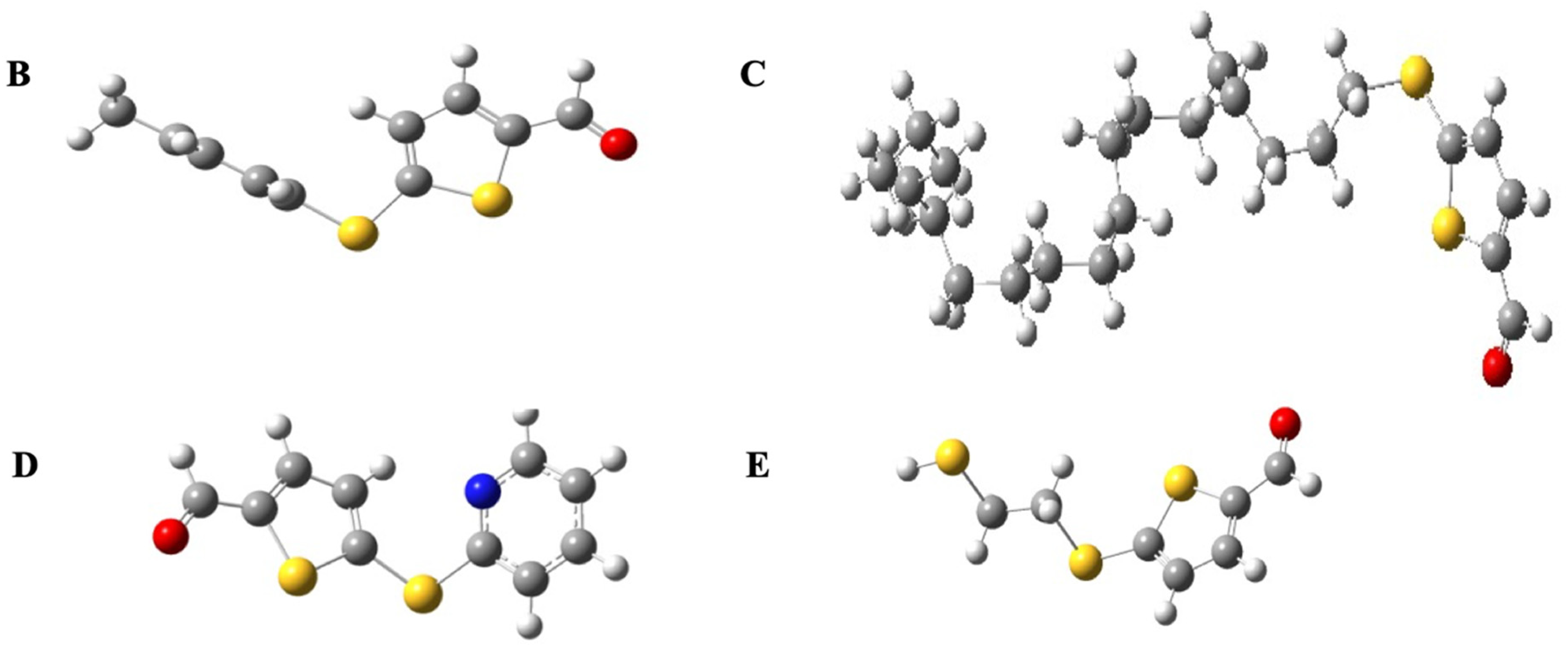
Optimized geometry of compounds
Conclusion
In the quest for developing drugs with reduced toxicity and enhanced efficacy, thiophene moieties have consistently garnered significant attention. The therapeutic potential of the thiophene nucleus has been well-established in clinical applications, demonstrating its potency to reduce various infections. Over the past two decades, thiophene, as an integral member of the heterocyclic family, has attracted widespread interest from medicinal chemists and biochemists alike, owing to its versatility and effectiveness in chemotherapy for diverse infections. The modification of thiophene structures through incorporation with different analogues has been shown to influence their antimicrobial activity significantly. In this research, a series of 2-thiophenecarboxaldehyde based C-S coupled compounds (A-E) were synthesized, tested and compared for their antimicrobial properties. These compounds exhibited varying degrees of inhibition against pathogenic bacteria strains, including E. coli, P. aeruginosa as well as S. aureus. The results indicated a distinct trend in antimicrobial efficacy, with derivatives of aromatic thiols demonstrating superior inhibitory activity. In contrast, derivatives containing aliphatic derivatives may be attributed to the lack of aromatic stabilization and the presence of alkyl groups in the aldehyde unit, which could limit their interaction with microbial targets. To further understand the observed activity trends, density functional theory (DFT) studies were conducted to analyse the electronic structures and band gaps of the synthesized compounds. The DFT calculations provided insight into the quantum chemical properties, such as chemical potential, hardness, and electrophilicity, revealing that aromatic thiol derivatives are more chemically malleable and stable compared to their aliphatic counterparts. These findings highlight the drug development, with aromatic derivatives offering a more effective pathway for therapeutic applications.
Supplemental Material
sj-docx-1-mgc-10.1177_10241221251326181 - Supplemental material for Synthesis and characterization of thiophene based C-S coupled aldehydes and comparison of anti-microbial activity of aliphatic and aromatic derivatives
Supplemental material, sj-docx-1-mgc-10.1177_10241221251326181 for Synthesis and characterization of thiophene based C-S coupled aldehydes and comparison of anti-microbial activity of aliphatic and aromatic derivatives by Navjot Sandhu, Milan Sharma and Atul Pratap Singh in Main Group Chemistry
Footnotes

Funding
The authors received no financial support for the research, authorship, and/or publication of this article.
Declaration of conflicting interests
The authors declared no potential conflicts of interest with respect to the research, authorship, and/or publication of this article.
Supplemental material
Supplemental material for this article is available online.
References
Supplementary Material
Please find the following supplemental material available below.
For Open Access articles published under a Creative Commons License, all supplemental material carries the same license as the article it is associated with.
For non-Open Access articles published, all supplemental material carries a non-exclusive license, and permission requests for re-use of supplemental material or any part of supplemental material shall be sent directly to the copyright owner as specified in the copyright notice associated with the article.
