







Abstract
Herein, six novel heterocyclic compounds containing thiosemicarbazone were obtained by the condensation reaction of thiazole with thiosemicarbazide and benzaldehyde derivatives. The structures of newly obtained thiosemicarbazone-based heterocyclic compounds were investigated by spectroscopic methods (element analysis, infrared spectra (IR), proton nuclear magnetic resonance (1H-NMR), high resolution mass spectrometry (HRMS), scanning electron microscopy and energy dispersive X-ray (SEM-EDX). The antimicrobial efficiency of the obtained thiosemicarbazone-based heterocyclic compounds was screened in vitro against some pathogenic bacteria and yeast as potential medicinal agents. New heterocyclic compounds containing thiosemicarbazone were determined to be effective in varying degrees at inhibiting the activity of the tested disease-causing pathogenic strains. The heterocyclic compounds were found to show high or moderate antimicrobial activity. It was found that the synthesized heterocyclic compounds showed high or moderate antimicrobial activity.
This is a visual representation of the abstract.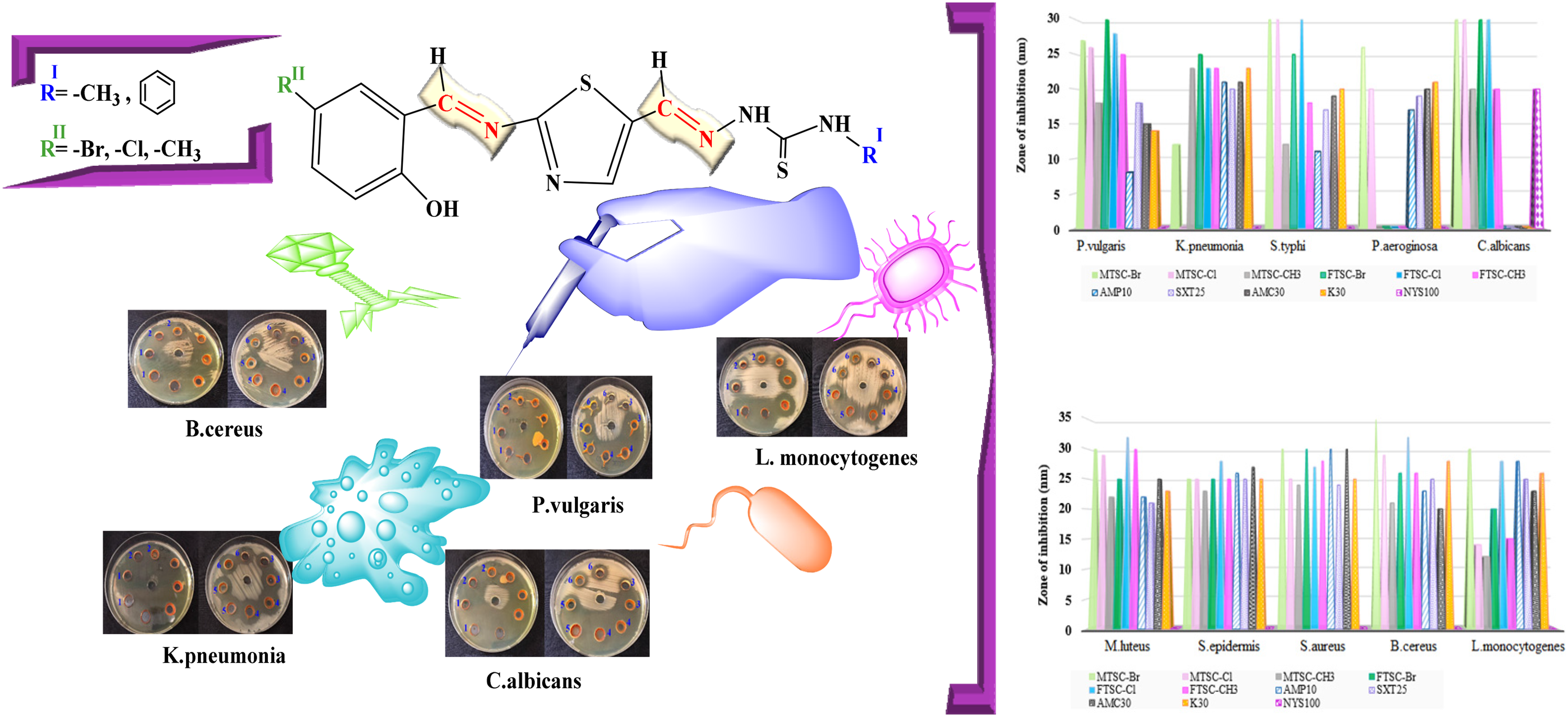
Introduction
Schiff bases are obtained by condensation reaction from primary amines with aldehydes or ketones derivatives and also are called imine or azomethine. Schiff bases and metal complexes are extensively researched owing to their multidirectional applications in coordination chemistry, pharmaceutical chemistry, biochemistry, analytical chemistry, supramolecular chemistry, organic chemistry, bioinorganic chemistry, medicine, catalysis, metallurgy, dye industry, material science, photography, agriculture.1–5
Thiosemicarbazones (RNH-CS-NH-N = CR′R″) are an important and interesting class of Schiff bases. 6 Thiosemicarbazone compounds posses a range of potential applications such as luminescence property, catalytic activity, magnetic property, disperse dyes property.7,8 Thiosemicarbazones also have anticorrosion, antifouling, and plant growth-promoting activities.6,9 Additionally, thiosemicarbazones act in the inhibition of RNR (ribonucleotide reductase) enzyme, which is significant in cell replication. 10 Especially, thiosemicarbazones containing sulphur and small hydrophobic moieties are highly effective in inhibiting the RNR enzyme. 11 Thiosemicarbazones are widely investigated owing to their biological, chemical, pharmacological and medical features. Such heterocycles have a wide range of activities such as antimicrobial, anticancer, antimalarial, antioxidant, antibacterial, antiplatelet, antitumor, anti-inflammatory, antiparasitic, hypoglycemic, antitubercular, anticonvulsant, analgesic, anti-HIV, antiviral, herbicidal, antiproliferative, haemolytic, antiamoebic activity and cytotoxic activities.12–21 Heterocyclic compounds can be used as catalysts and dyes.22–23 Thiazoles are cyclic organic compounds and possess a broad of applications such as sensors, agrochemicals, liquid crystals, and pharmacological activities. 24 Especially thiosemicarbazones containing thiazole are of great importance compounds because of their therapeutic, biological and pharmacological activities. These compounds containing azomethine nitrogen and thiocarbonyl sulphur donor atoms form metal complexes and show various biological activities.25–27 Heterocyclic thiosemicarbazone complexes have various antifungal and antibacterial, biological, and cytotoxic activities.28–30
In the present study, new heterocyclic compounds containing thiosemicarbazone were prepared by condensations between benzaldehyde derivations and thiosemicarbazone-based heterocyclic compounds to evaluate them as potential antibacterial and antifungal agents. The structural significance and difference of the newly synthesized heterocyclic thiosemicarbazone compounds is that they have the potential to exhibit superior biological activity due to the presence of two azomethine groups.
Experimental
Chemicals and devices
All materials were supplied from Sigma-Aldrich or Merck. Elemental analyses were taken with a Thermo Scientific Flash 2000 model elemental analyzer. IR was recorded using a Shimadzu IR Prestige-21 model spectrophotometer at 400 to 4000 cm−1. 1H-NMR spectra were performed on a Bruker Biospin brand Avance III 400 MHz model device. HRMS analyzes were obtained using a Waters brand SYNAPT G1 MS model device. SEM-EDX images were performed with a Quanta FEG 250 device.
Common method for the synthesis of heterocyclic compounds containing thiosemicarbazone
All heterocyclic compounds containing thiosemicarbazone (MTSC-Br, MTSC-Cl, MTSC-CH3, FTSC-Br, FTSC-Cl, and FTSC-CH3) were obtained by condensations by the same common method as shown in Figure 1. Novel thiosemicarbazone-based heterocyclic compounds were obtained by adding of 4-methyl-3-thiosemicarbazide or 4-phenylthiosemicarbazide (4 mmol) to a stirred mixture of 2-aminothiazole-5-carboxaldehyde (4 mmol) in ethyl alcohol (50 mL) and heated at 90 °C for 4 h. The pH of the solution was adjusted to 5–5.5 by adding 1 mL of acetic acid. 5-chlorosalicylaldehyde or 5-methylsalicylaldehyde or 5-bromosalicylaldehyde (4 mmol) was added to the mixture, and then was stirred under reflux for another 2 h at 90°C. The solution was cooled to room temperature, and purified with ethyl alcohol, filtered, and the colored product was obtained.
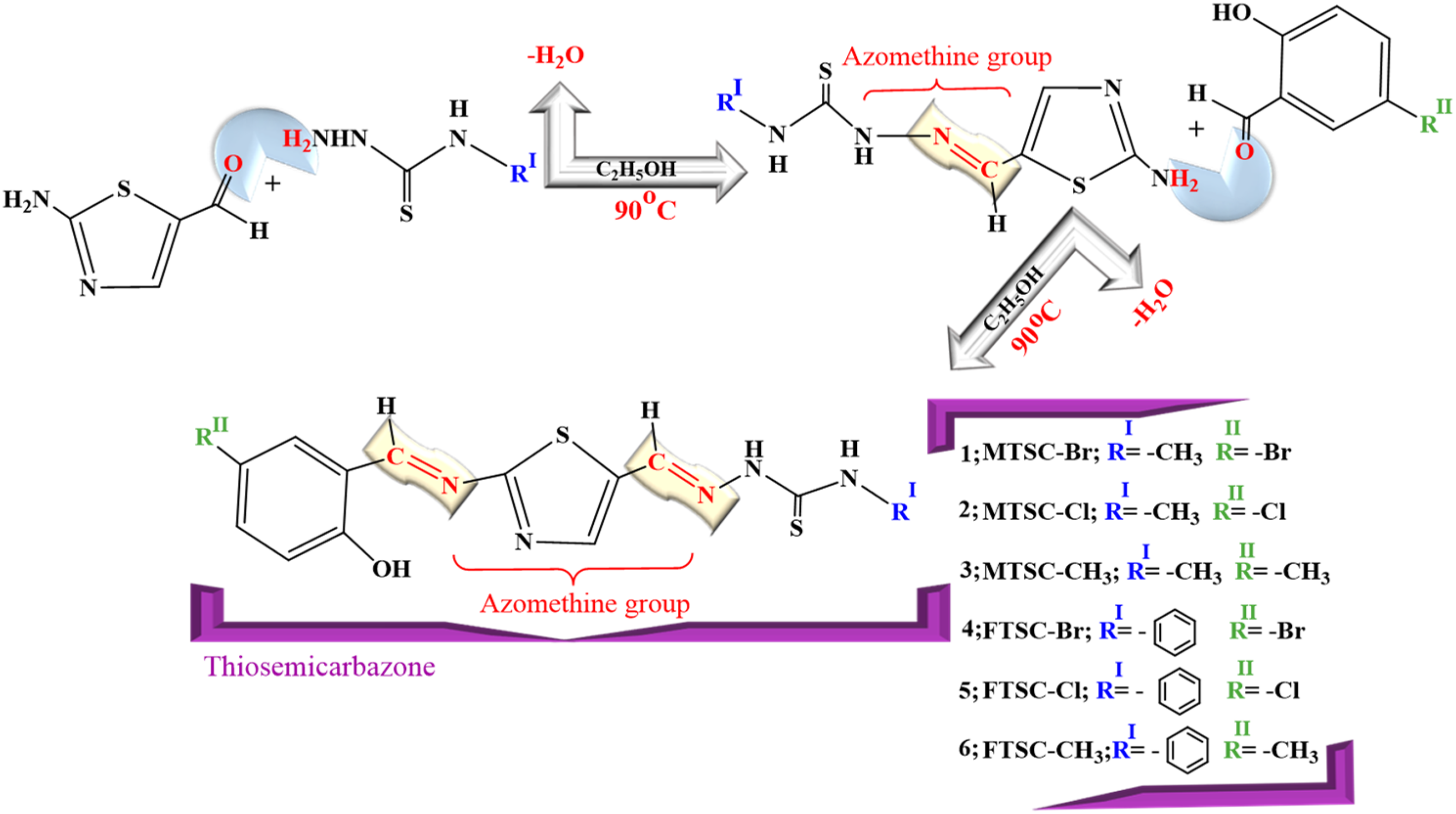
Synthesis reaction of heterocyclic compounds (
The composition of all heterocyclic compounds containing thiosemicarbazone was determined by SEM-EDX analysis, HRMS spectrum, elemental analysis, FT-IR, and 1H-NMR spectra.
MTSC-Br
Yield, 57%; Dark red solid; m.p. 218–220°C; IR (KBr, ν, cm−1): 3347 (OH), 3030 (CH)aro., 1622 (CH = N), 1516 (CH = N)tyz., 1454 (C = C), 1207, 828 (C = S), 760 (C-S-C), 1026 (N-N), 3280 (N-H); 1H-NMR (400 MHz, DMSO-d6, ppm): 11.68 (1H, s, N-NH), 11.24 (1H, s, Me-NH), 10.21 (1H, s, Ar-OH), 9.61, 9.27 (1H, s, CH = N), 6.81–8.59 (5H, m, Ar-H), 1.91 (3H, s, HN-CH3); HRMS ES+ (m/z): 399.97 [M + 2H]+; Elemental analysis (calcd. (found), C13H12N5S2OBr): C: 39.20 (42.02), H: 3.02 (4.13), N: 17.59 (15.54), S: 16.08 (17.76). (+)ESI-HRMS m/z: calculated for [C13H12N5S2OBr + 2H]+ 400.00, observed 399.97.
MTSC-Cl
Yield, 62%; Dark brown solid; m.p. 209–211°C; IR (KBr, ν, cm−1): 3348 (OH), 2994 (CH)aro., 1598 (CH = N), 1547 (CH = N)tyz., 1481 (C = C), 1202, 829 (C = S), 763 (C-S-C), 1034 (N-N), 3138 (N-H); 1H-NMR (400 MHz, DMSO-d6, ppm): 11.50 (1H, s, N-NH), 11.23 (1H, s, Me-NH), 10.23 (1H, s, Ar-OH), 9.61, 9.28 (1H, s, CH = N), 6.86–8.60 (5H, m, Ar-H), 1.91 (3H, s, HN-CH3); HRMS ES+ (m/z): 352.01 ([M-2H]+; Elemental analysis (calcd. (found), C13H12N5S2OCl): C: 44.07 (42,01), H: 3.39 (4,97), N: 19.77 (18.54), S: 18.08 (21.27). (+)ESI-HRMS m/z: calculated for [C13H12N5S2OCl-2H]+ 352.00, observed 352.01.
MTSC-CH3
Yield, 50%; Dark brown solid; m.p.207–209°C; IR (KBr, ν, cm−1): 3354 (OH), 2999 (CH)aro., 1595 (CH = N), 1548 (CH = N)tyz., 1522 (C = C), 1203, 840 (C = S), 799 (C-S-C), 1030 (N-N), 3142 (N-H); 1H-NMR (400 MHz, DMSO-d6, ppm): 11.40 (1H, s, N-NH), 11.23 (1H, s, Me-NH), 10.21 (1H, s, Ar-OH), 9.68, 9.27 (1H, s, CH = N), 6.79–8.33 (5H, m, Ar-H), 1.91 (3H, s, HN-CH3), 1.06 (3H, s, Ar-CH3) ; HRMS ES+ (m/z): 332.07 ([M-H]+; Elemental analysis (calcd. (found), C14H15N5S2O): C: 50.45 (47.18), H:4.50 (3.02), N: 21.02 (19.18), S: 19.22 (22.17). (+)ESI-HRMS m/z: calculated for [C14H15N5S2O-H]+ 332.00, observed 332.07.
FTSC-Br
Yield, 71%; Metallic bronze solid; m.p.225–227°C; IR (KBr, ν, cm−1): 3300 (OH), 2980 (CH)aro., 1593 (CH = N), 1550 (CH = N)tyz., 1495 (C = C), 1251, 872 (C = S), 794 (C-S-C), 1082 (N-N), 3150 (N-H); 1H-NMR (400 MHz, DMSO-d6, ppm): 11.63 (1H, s, N-NH), 11.03 (1H, s, Ph-NH), 10.21 (1H, s, Ar-OH), 9.59, 8.18 (1H, s, CH = N), 6.98–7.72 (5H, m, Ar-H); HRMS ES+ (m/z): 457.97 [M]+; Elemental analysis (calcd. (found), C18H14N5S2OBr): C: 46.96 (43.91), H: 3.04 (4.57), N: 15.22 (13.29), S: 13.92 (16.04). (+)ESI-HRMS m/z: calculated for [C18H14N5S2OBr-3H]+ 457.00, observed 457.97.
FTSC-Cl
Yield, 66%; Mustard colour solid; m.p.212–214°C; IR (KBr, ν, cm−1): 3333 (OH), 2970 (CH)aro., 1593 (CH = N), 1548 (CH = N)tyz., 1508 (C = C), 1271, 853 (C = S), 748 (C-S-C), 1088 (N-N), 3127 (N-H); 1H-NMR (400 MHz, DMSO-d6, ppm): 11.63 (1H, s, N-NH), 11.01 (1H, s, Ph-NH), 10.23 (1H, s, Ar-OH), 9.58, 8.18 (1H, s, CH = N), 7.02–7.66 (5H, m, Ar-H); HRMS ES+ (m/z): 414.03 ([M]+; Elemental analysis (calcd. (found), C18H14N5S2OCl): C: 51.92 (49.42), H: 3.37 (4.87), N: 16.83 (14.61), S: 15.38 (17.98). (+)ESI-HRMS m/z: calculated for [C18H14N5S2OCl-2H]+ 414.00, observed 414.03.
FTSC-CH3
Yield, 83%; Dark mustard solid; m.p.202–204°C; IR (KBr, ν, cm−1): 3396 (OH), 2932 (CH)aro., 1593 (CH = N), 1550 (CH = N)tyz., 1497 (C = C), 1265, 824 (C = S), 748 (C-S-C), 1074 (N-N), 3130 (N-H); 1H-NMR (400 MHz, DMSO-d6, ppm): 11.63 (1H, s, N-NH), 11.51 (1H, s, Ph-NH), 10.22 (1H, s, Ar-OH), 9.59, 8.19 (1H, s, CH = N), 6.89–7.66 (5H, m, Ar-H), 1.91 (3H, s, HN-CH3), 1.06 (3H, s, Ar-CH3), 2.24 (3H, s, Ar-CH3); HRMS ES+ (m/z): 394.09 ([M-H]+; Elemental analysis (calcd. (found), C19H17N5S2O): C: 57.72 (59.04), H:4.30 (3.17), N: 17.72 (19.84), S: 16.20 (18.66). (+)ESI-HRMS m/z: calculated for [C19H17N5S2O-H]+ 394.00, observed 394.09.
Antimicrobial assay
The antimicrobial efficiencies of the heterocyclic compounds containing thiosemicarbazone were assessed against some pathogenic Gram-positive bacteria (Micrococcus luteus ATCC9341, Listeria monocytogenes ATCC19115, Bacillus cereus RSKK863, Staphylococcus epidermidis ATCC12228, Staphylococcus aureus ATCC25923), and some pathogenic Gram-negative bacteria (Klebsiella pneumonia ATCC27853, Salmonella typhi H NCTC9018394, Pseudomonas aeroginosa ATCC2785, Proteus vulgaris RSKK96026, Listeria monocytogenes ATCC19115) and yeast (Candida albicans Y-1200-NIH) by the well-diffusion technique. 31 Dimethylformamide (DMF) was used as solvent control in this technique and was found to have no antibacterial and antifungal efficiency against any of the organisms tested. All thiosemicarbazone-based heterocyclic compounds were solved (3.5 µg/mL) in DMF. Pathogens were incubated in Nutrient Broth agar (106 CFU/mL) for 24 h at 37 oC. After that, these cultures were homogenized by adding them to Mueller-Hinton Agar (MHA), cooled to 45 oC, and cooled by pouring them into sterile petri dishes. Then, 6 mm diameter wells were opened in these agars, and the thiosemicarbazone-based heterocyclic compounds were added. The plates were incubated in an oven at 37°C for 24 h, and the inhibition zone of each compound was then measured, and the average of two replicate activity values was taken.
Additionally, standard antibiotics were used: kanamycin (K30), sulphamethoxazole (SXT25), amoxicillin (AMC30), ampicillin (AMP10) and nystatin (NYS100). Pathogenic bacteria were compared to K30, SXT25, AMC30, AMP10 antibiotics, and yeast were compared to NYS100.
Results and discussion
Characterization of heterocyclic compounds containing thiosemicarbazone
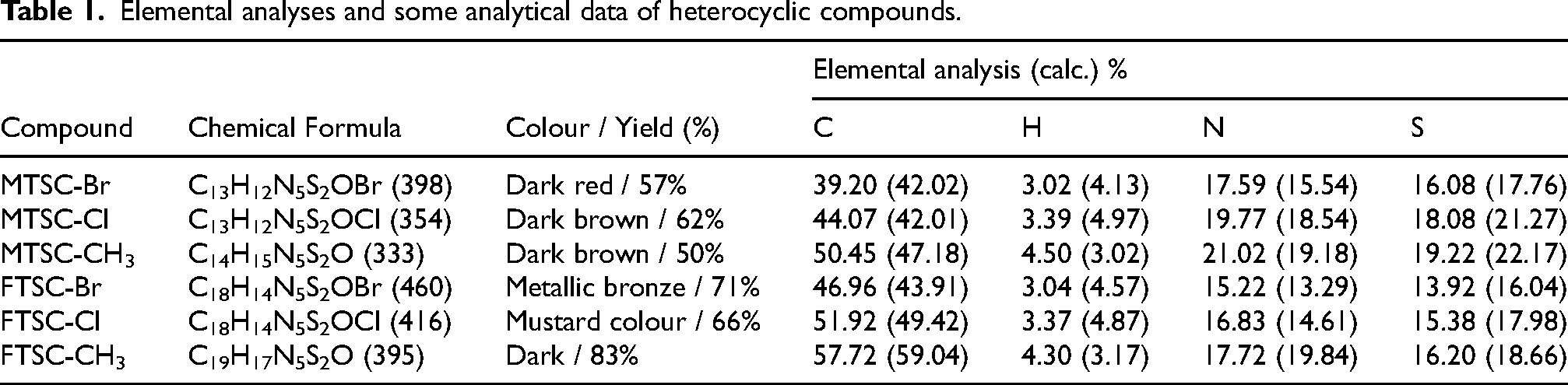
Some analytical data of all heterocyclic compounds are given in Table 1. It was found that the chemical formulas of the compounds were compatible with the of elemental analysis results.
Elemental analyses and some analytical data of heterocyclic compounds.
IR spectra data for heterocyclic compounds containing thiosemicarbazone are given in Table 2 and are demonstrated in Figure S-1. ν(CH = N) stretching vibrations of azomethine groups obtained by the reaction of amines with aldehydes, were determined in the 1593-1622 cm−1 and 1516-1550 cm−1 regions, respectively. The stretching vibrations of ν(C-S-C) belonging to the thiazole groups appeared in the ranges 748–799 cm−1. The stretching vibrations of ν(OH), ν(CH), ν(C = C) aromatic ring, ν(N-H) and ν(N-N) were determined in the 3300–3396 cm−1, 2932- 3030 cm−1,1454–1522 cm−1, 1026–1088 cm−1 and 3127–3280 cm−1, ranges, respectively. In addition, ν(C = S) absorption bands were observed in the 828–872 cm−1 and 1202–1271 cm−1 regions, respectively. In addition, ν(C = S) vibrations were determined in the 828–872 cm−1 and 1202–1271 cm−1 regions, respectively.32,33
IR vibration frequencies (cm−1) of heterocyclic compounds.

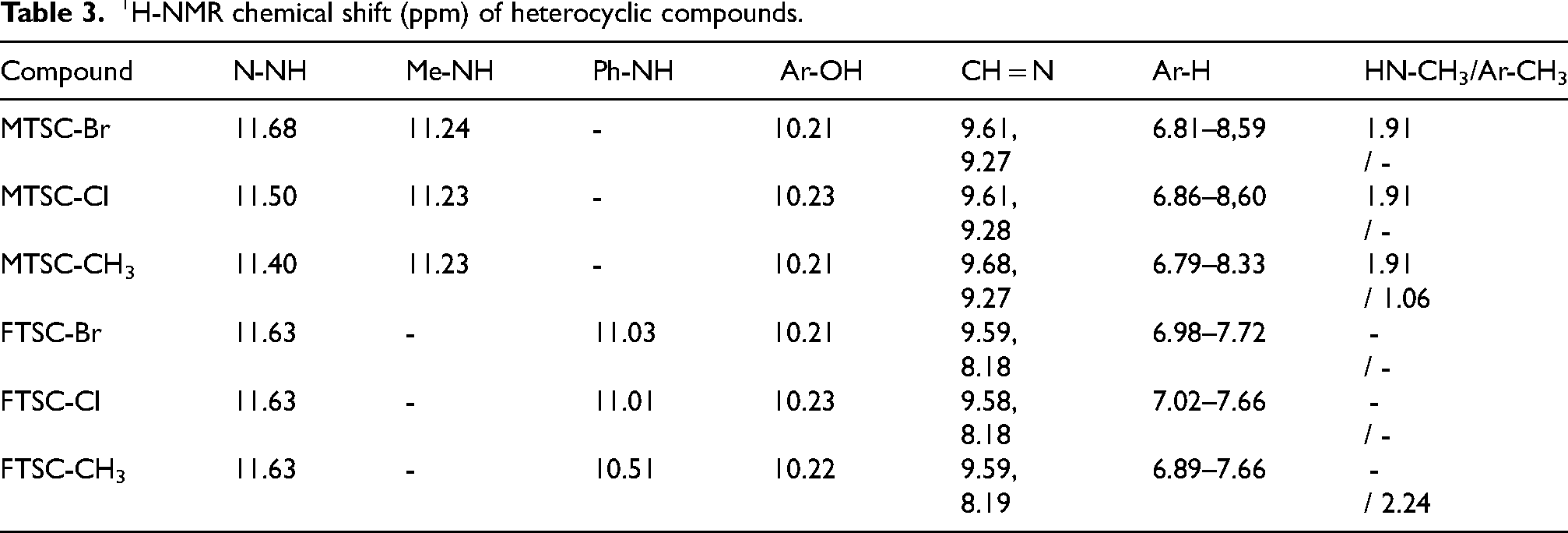
Characteristic 1H-NMR spectrum data for heterocyclic compounds containing thiosemicarbazone are given in Table 3 and are demonstrated in Figure S-2. The peaks of unsymmetrical azomethines (CH = N) achieved by the condensation reaction of amines and aldehydes, were observed in the 8.18-9.28 ppm and 9.58-9.68 ppm ranges, respectively. Because of the dissimilar chemical environment of NH protons (N-NH and Me-NH), in the 1H-NMR spectra of MTSC-Br, MTSC-Cl, and MTSC-CH3 were observed two signals in the 11.40-11.68 ppm and 11.23-11.24 ppm ranges, respectively. For FTSC-Br, FTSC-Cl, and FTSC-CH3, (N-NH) and (Ph-NH) signals were determined in the 11.63-11.63 ppm and 10.51-11.03 ppm regions, respectively. The aromatic (Ar-H) and phenolic (Ar-OH) protons were revealed in the ranges 10.21–10.23 ppm and 6.79–8.60 ppm, respectively. In addition, the peaks attributable to methyl protons (HN-CH3) in MTSC-Br, MTSC-Cl, and MTSC-CH3 were observed at 1.91 ppm. The methyl proton (Ar-CH3) in MTSC-CH3 and FTSC-CH3 were also observed at 1.06 ppm and 2.20 ppm, respectively.34–35
1H-NMR chemical shift (ppm) of heterocyclic compounds.
SEM-EDX analyzes of heterocyclic compounds containing thiosemicarbazone are given in Figure S-3. According to the SEM images, which provide information about the morphology, it was seen that the thiosemicarbazone-based heterocyclic compounds had a crystal structure (layer or cloud or rock salt-shaped) in small particles. Also, EDX analyzes confirmed the chemical composition of the thiosemicarbazone-based heterocyclic compounds, including C, O, S, N, Cl, Br, etc. atoms.
The photographs of inhibition regions and the graphical representation of pathogenic bacteria for antimicrobial efficiency of heterocyclic compounds containing thiosemicarbazone are demonstrated in Figures 2, 3, and in Figures 4, 5, respectively. The obtained thiosemicarbazone compounds were investigated in vitro for antibacterial and antifungal efficiencies against selected disease-causing pathogenic bacteria and yeast. According to the results of the antimicrobial investigation, the thiosemicarbazone-based heterocyclic compounds were determined to inhibit the tested pathogens to different degrees. S. epidermidis, M. luteus, B. cereus, L. monocytogenes, and S. aureus were used as Gram-positive bacteria. MTSC-Br showed the highest antibacterial efficiency against B. cereus (35 mm). MTSC-Br also showed higher activity against M. luteus (30 mm), L. monocytogenes (30 mm), and S.aureus (30 mm). B. cereus is an opportunist and contaminating pathogen that causes food poisoning. 36 MTSC-Cl exhibited the most inhibitory effect against B. cereus (29 mm) and M. luteus (29 mm). M. luteus is a pathogen that causes various infections, such as septic shock, endocarditis, meningitis, and septic arthritis. 37 MTSC-CH3 and FTSC-Br demonstrated the highest efficiency against S. aureus (24 mm / 30 mm). S. aureus pathogen causes various diseases such as skin soft tissue. 38 FTSC-Cl showed the highest antibacterial effect against M. luteus (32 mm) and B. cereus (32 mm). FTSC-CH3 exhibited the most inhibitory effect against M. luteus (30 mm) in Gram-positive bacteria. K. pneumonia, S. typhi H, P. vulgaris, and P. aeroginosa were used as Gram-negative bacteria. MTSC-Br, MTSC-Cl, and FTSC-Cl demonstrated the highest antibacterial efficiency against S. typhi H (34 mm). S. typhi H is a bacteria responsible for typhoid and paratyphoid diseases. 39 MTSC-CH3 showed the highest activity against K. pneumonia (23 mm). It is an opportunistic pathogen that infects via medical devices such as catheters and causes urinary infections, osteomyelitis, and bacteremia. 40 FTSC-Br and FTSC-CH3 exhibited the most inhibitory effect against P. vulgaris (30 mm / 25 mm). P. vulgaris is a bacteria that causes wound infections, nosocomial infections, and urinary tract infections such as cystitis, and prostatitis. 41 MSTSC-CH3, FTSC-Br, FTSC-Cl, and FTSC-CH3 did not show inhibition efficiency against K. pneumonia among Gram-negative bacteria, while MTSC-Cl did not show activity against P. aeruginosa. The effects of thiosemicarbazone-based heterocyclic compounds against the yeast C. albicans were examined in comparison with the standard antibiotic nystatin. MTSC-Br (38 mm), MTSC-Cl (35 mm), FTSC-Br (31 mm), FTSC-Cl (35 mm) were more effective than nystatin. MTSC-CH3 (20 mm) and FTSC-CH3 (20 mm) were effective as nystatin. It was observed that the antifungal efficiencies of thiosemicarbazone-based heterocyclic compounds, including the electron-withdrawing group (Br / Cl) were more effective than the thiosemicarbazone-based heterocyclic compounds, including the electron donating group (CH3). MTSC-Br showed quite higher (about twice) antifungal activity than C. albicans. It is a fungus that causes infections such as the oral cavity, vagina, gastrointestinal tract, and blood stream. 42
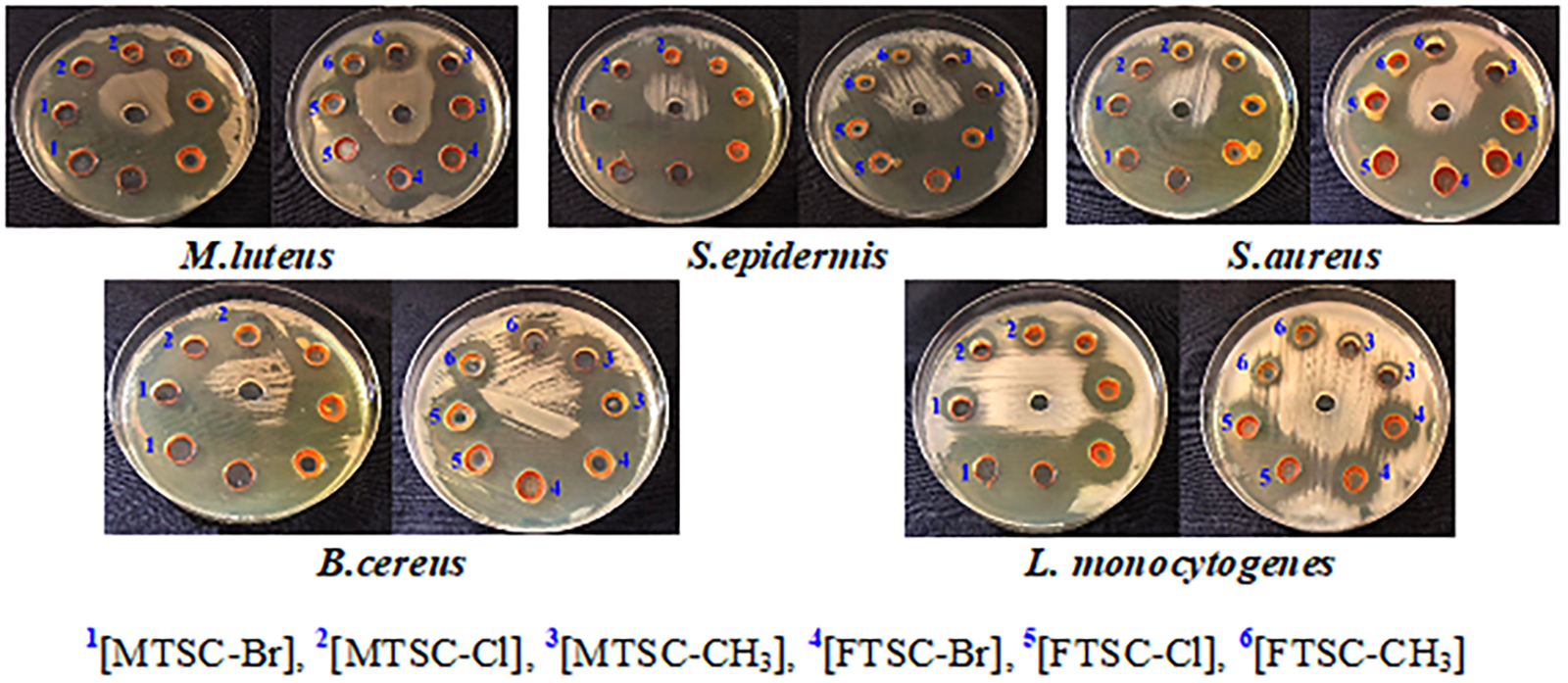
Photographs of inhibition zones (mm) of some Gram (+) bacteria.
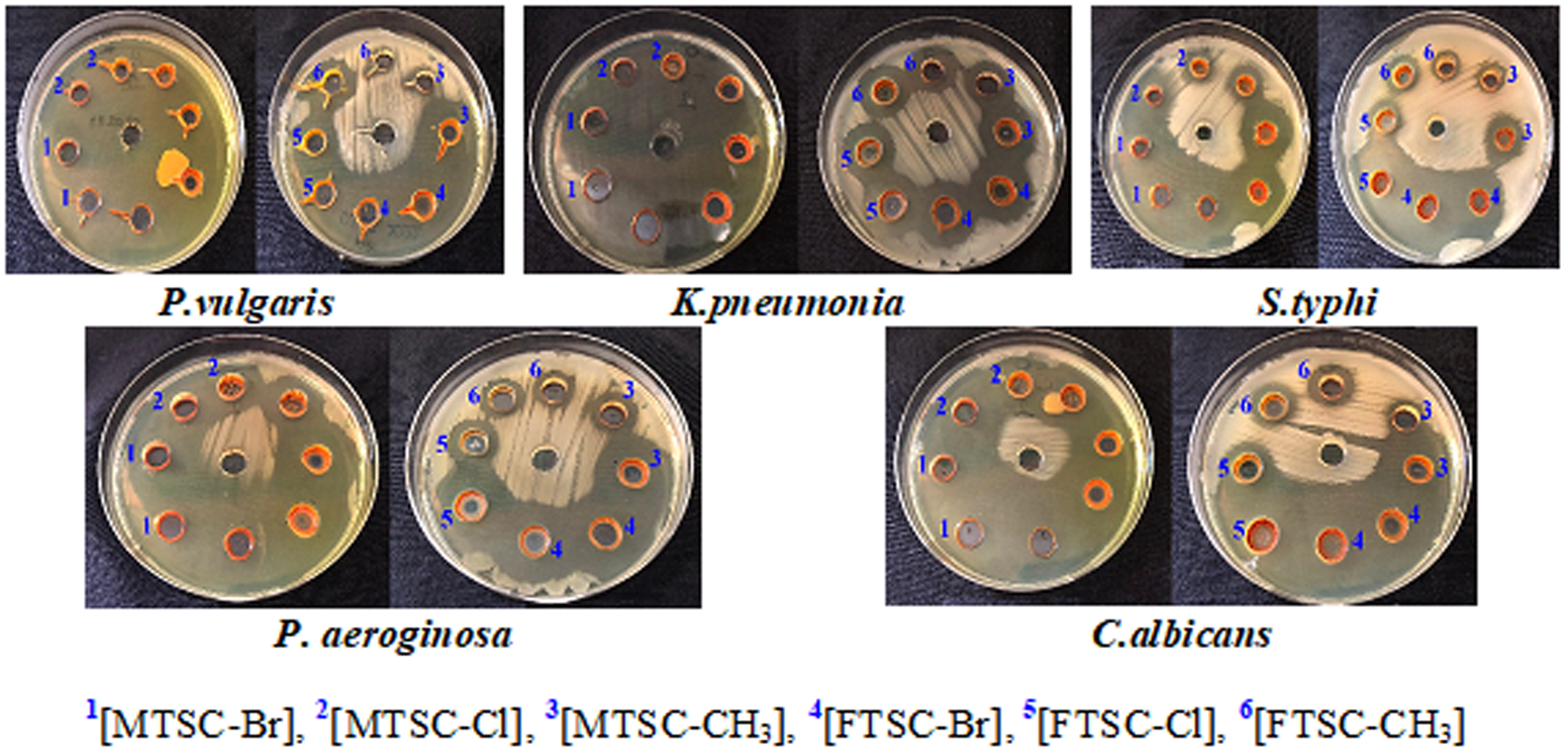
Photographs of inhibition zones (mm) of some Gram (−) bacteria and yeast.
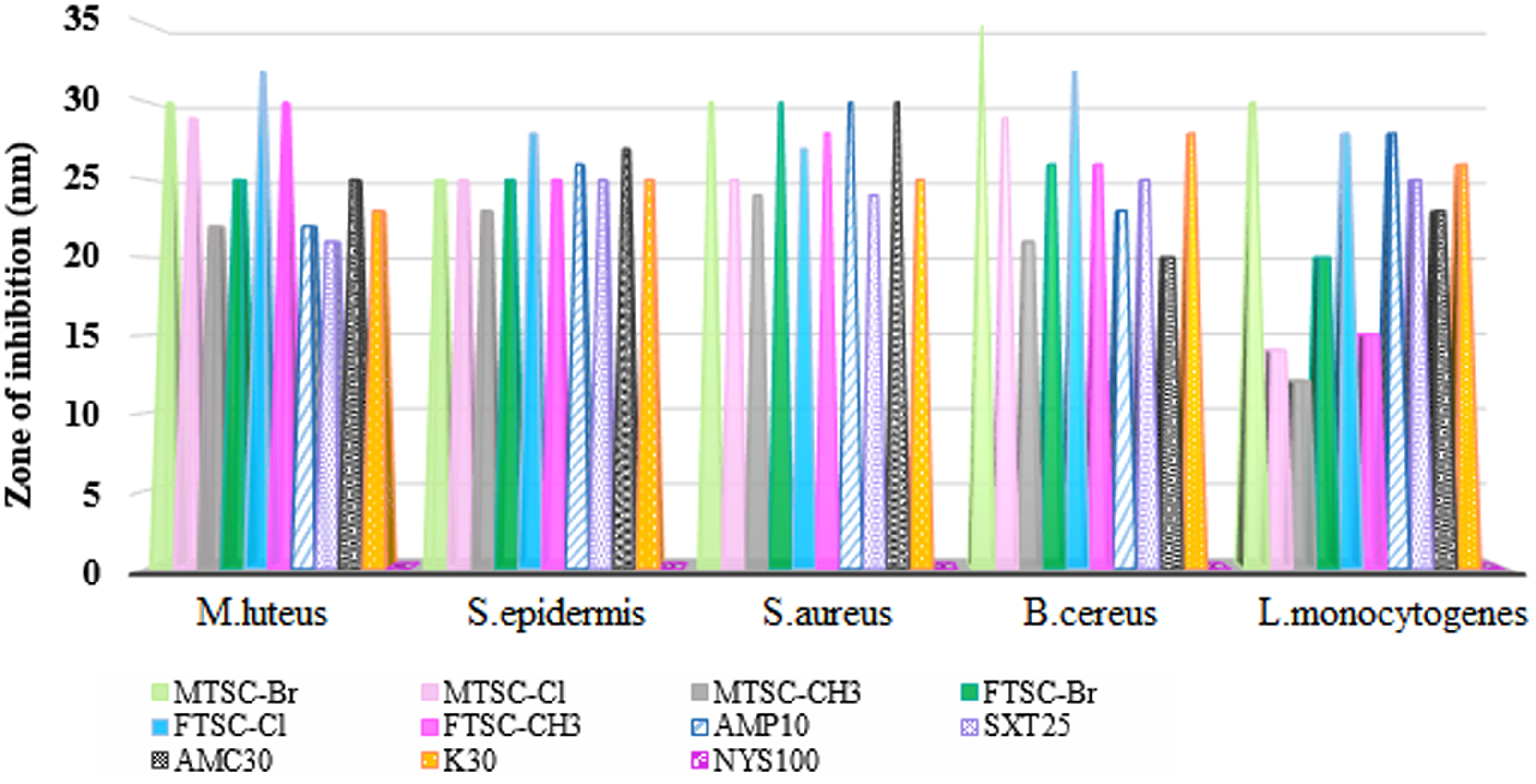
Graphical illustration of Gram (+) pathogenic bacteria and standard antibiotics.
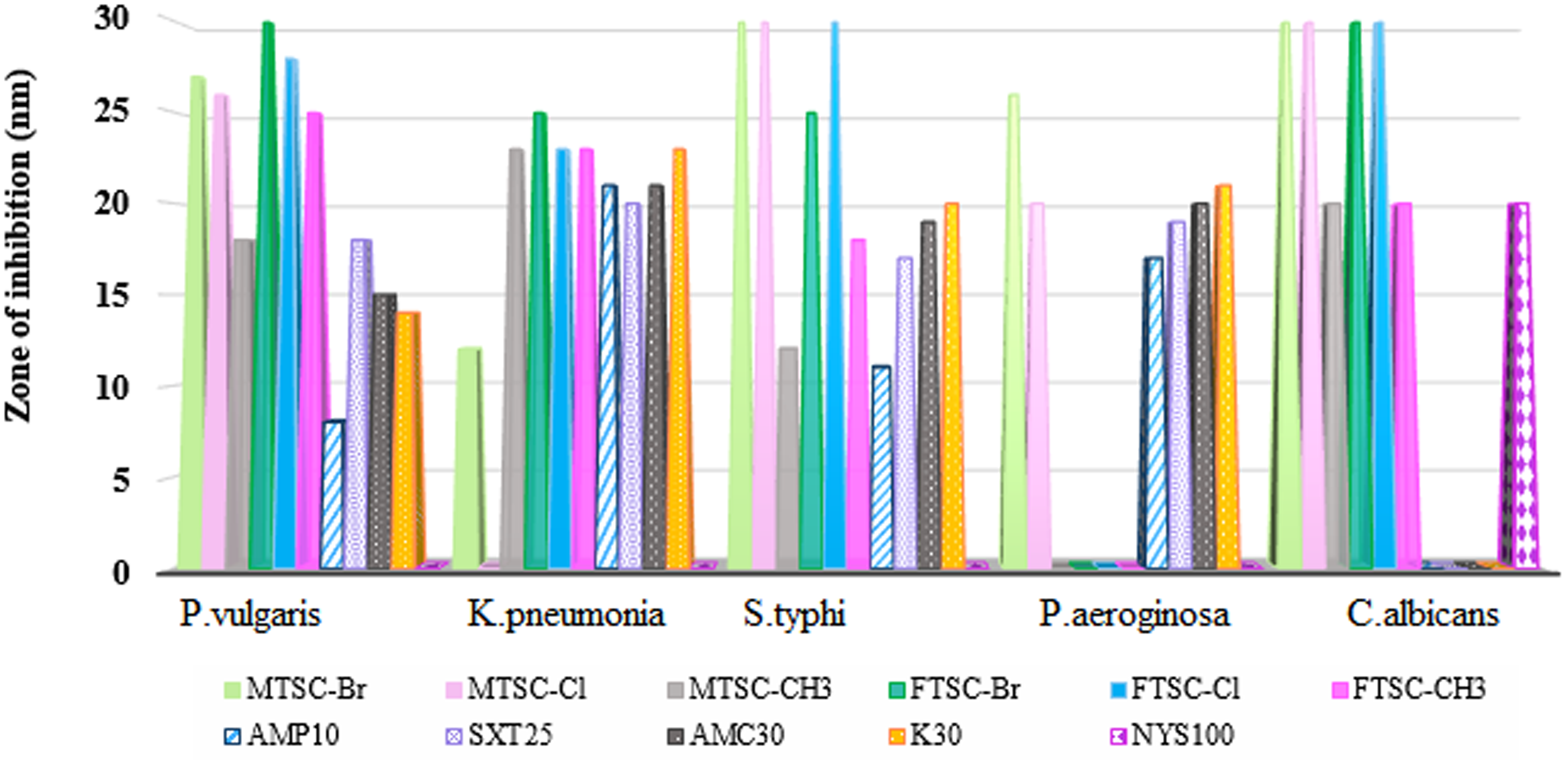
Graphical illustration of Gram (−) pathogenic bacteria and standard antibiotics.
According to the results, heterocyclic compounds containing thiosemicarbazone exhibited high or moderate antimicrobial efficiency in comparison to standard antibiotics. It was observed that different functional groups increased or decreased the antimicrobial activity of thiazole-based thiosemicarbazones. All thiosemicarbazone-based heterocycles were determined to be more effective against gram-positive than gram-negative bacteria. It was determined that MTSC-Br showed the highest activity against Gram (+) bacteria (B. cereus), Gram (-) bacteria (S. typhi H), and yeast (C. albicans). As a result, it can be said that all thiosemicarbazone-based heterocyclic compounds are biologically active compounds and it can be predicted that they can be used as potential antibacterial and antifungal agents.
Conclusion
Heterocyclic thiosemicarbazones, which are an important class of Schiff bases and contain groups such as azomethine and sulphur, have very diverse biological efficiencies. Therefore, it is important to synthesize new heterocyclic thiosemicarbazones as potential antimicrobial agents. Herein, novel heterocyclic compounds containing thiosemicarbazone were synthesized by condensation reaction and characterized by some spectral techniques. Antibacterial and antifungal effects of novel thiosemicarbazone-based heterocycles were evaluated in vitro against selected pathogens causing disease. It was observed that electron-withdrawing/-donating groups in heterocyclic compounds affected the antimicrobial activity against the tested pathogens. Antimicrobial activity results demonstrated that the synthesized thiosemicarbazone-based heterocyclic compounds were highly/moderately effective against selected pathogenic bacteria and yeast. In conclusion, novel heterocyclic compounds containing thiosemicarbazone can be recommended as potent antibacterial and antifungal agents for use in some applications such as biology, medicine, and pharmacy.
Highlights
Novel heterocyclic compounds containing thiosemicarbazone (MTSC-Br, MTSC-Cl, MTSC-CH3, FTSC-Br, FTSC-Cl and FTSC-CH3) were synthesized by the condensation reaction.
The heterocyclic compounds were characterized by means of spectral measurements. (element analysis, infrared spectra, proton nuclear magnetic resonance, high resolution mass spectrometry, scanning electron microscopy and energy dispersive X-ray).
The antibacterial and antifungal activities of the heterocyclic compounds were evaluated against some disease-causing pathogenic bacteria and yeast as potential medicinal agents.
Supplemental Material
sj-docx-1-mgc-10.1177_10241221251380069 - Supplemental material for Synthesis and antimicrobial evaluation of novel heterocyclic compounds containing thiosemicarbazone
Supplemental material, sj-docx-1-mgc-10.1177_10241221251380069 for Synthesis and antimicrobial evaluation of novel heterocyclic compounds containing thiosemicarbazone by Ahsen Zeynep Macit, Dilek Nartop and Hatice Öğütcü in Main Group Chemistry
Footnotes

Funding
The authors disclosed receipt of the following financial support for the research, authorship, and/or publication of this article: The study was supported by Düzce University Scientific Research Project (grant number: 2021.05.03.1215).
Declaration of conflicting interests
The authors declared no potential conflicts of interest with respect to the research, authorship, and/or publication of this article.
Supplemental material
Supplemental material for this article is available online.
References
Supplementary Material
Please find the following supplemental material available below.
For Open Access articles published under a Creative Commons License, all supplemental material carries the same license as the article it is associated with.
For non-Open Access articles published, all supplemental material carries a non-exclusive license, and permission requests for re-use of supplemental material or any part of supplemental material shall be sent directly to the copyright owner as specified in the copyright notice associated with the article.
