







Abstract
Nuclear reaction rates and energy production are strongly influenced by the behavior of hydrogen isotopes in high-temperature fusion plasmas. The chemical mechanisms controlling isotopic redistribution remain largely unexplored, limiting predictive management of D–T interactions and fuel consumption despite reactor advancements. This research addresses this gap by developing a chemically rigorous framework to quantify isotope-dependent reaction kinetics and fractionation under fusion-relevant conditions. Atomic, ionic, and molecular species, isotope-sensitive collisional and recombination processes, and surface-mediated boundary interactions are incorporated into a comprehensive plasma chemical kinetic model. Partition functions, equilibrium populations, and fractionation factors are evaluated via thermochemical modeling, while reaction rate constants are determined using transition state theory (TST) with isotope-specific mass corrections, augmented by quantum tunneling and reduced mass scaling. Simulations reveal pronounced kinetic isotope effects, non-equilibrium isotopic segregation, and region-specific D/T variations that modulate local fusion power density. The delineation of thermodynamic versus kinetic control regimes highlights the critical crossover for optimal fuel burn-up. Integrating isotope-sensitive kinetics into reactor control and plasma-facing material design demonstrates a predictive pathway for maximizing energy output and fuel efficiency. The study establishes the first molecular-level framework linking plasma chemistry to macroscopic fusion performance, providing a foundation for next-generation D–T reactor optimization.
This is a visual representation of the abstract.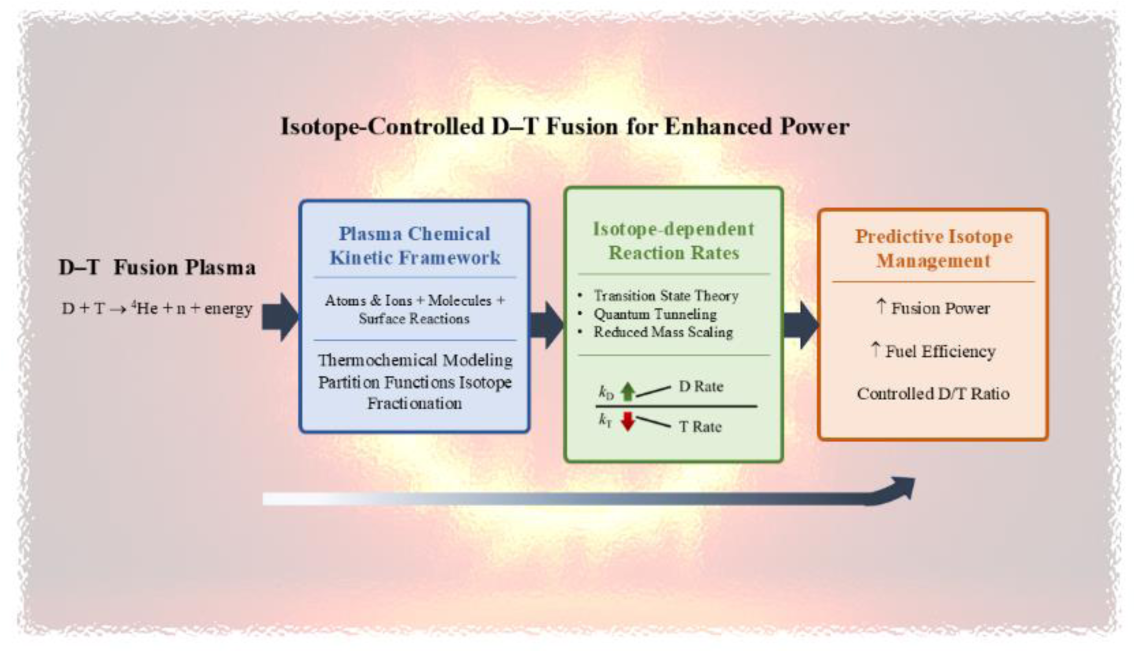
Keywords
Introduction
The reactivity of hydrogen isotopes—protium (1H), deuterium (2H, D), and tritium (3H, T)—in high-temperature plasma environments is fundamental to nuclear fusion energy. Plasma temperatures on the order of 107–108 K are traditionally required in contemporary fusion systems, particularly those employing D–T fuel cycles, to overcome Coulombic repulsion and enable nuclear interactions. This is analogous to how plasma conditions, particularly temperature and energy flux, affect reaction pathways and chemical yields, including nitrogen incorporation, in low-temperature N2–CH4 Titan simulations. 1 Under such extreme thermodynamic conditions, the plasma is effectively characterized by macroscopic parameters including temperature, density, confinement time, and magnetic stability. These plasma parameters critically influence isotope-dependent reaction rates, transport processes, and fractionation, thereby directly impacting D–T fuel utilization and fusion power output.
Beyond these plasma-physical descriptors, however, lies a chemically complex and highly reactive environment in which isotopic species participate in ionization–recombination cycles, charge transfer reactions, molecular dissociation and reformation, and surface-mediated exchange processes. Isotopic fractionation in chemically reacting systems arises from mass-dependent differences in zero-point energies, vibrational frequencies, and reduced masses, which collectively influence reaction pathway energetics and rate constants, as evidenced in protoplanetary disk processes where temperature, partial pressure, and condensation/evaporation kinetics modulate isotope signatures. 2 These intrinsic quantum mechanical distinctions remain encoded in collision dynamics, activation barriers, and statistical partition functions even at extreme temperatures. Consequently, isotopic behavior in fusion plasmas must be interpreted not only through nuclear cross-sections but also through intrinsic isotope-sensitive chemical kinetics and transport phenomena.
Hydrogen isotopes exist in a variety of chemical forms within an ionized medium, including neutral atoms, atomic ions (H⁺, D⁺, T⁺), molecular ions (H2⁺, D2⁺, DT⁺), and transient radical intermediates. Figure 1 illustrates the dynamics of hydrogen isotopes in fusion plasmas, highlighting their various chemical forms, interconversion processes, isotopic fractionation effects, and the resulting impact on D–T fusion reactions. Their interconversion is governed by fundamental plasma processes such as electron impact ionization, radiative and three-body recombination, charge exchange reactions, and dissociation–association equilibria. This reflects the reversible interconversion between bound and free electronic states observed in hybrid perovskites under varying temperature and structural conditions. 3 Molecular species such as D2, DT, and T2 may form and dissociate simultaneously, generating additional channels for isotopic redistribution.
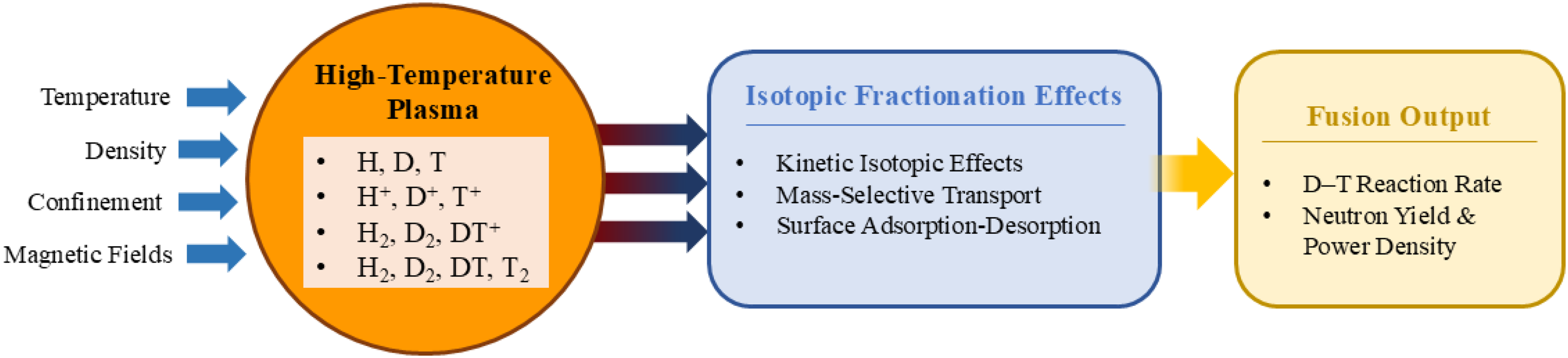
Dynamics of hydrogen isotopes in fusion.
Non-equilibrium conditions in streamer-induced atmospheric plasma discharges can significantly influence reaction pathways and radical formation, as demonstrated through experimental and modeling studies of discharge dynamics. 4 Under these intrinsic plasma conditions, kinetic isotope effects and mass-selective transport naturally arise, producing detectable variations in local isotopic composition. Moreover, plasma-facing materials introduce chemically active boundaries where adsorption–desorption kinetics, isotope-selective diffusion, and surface-mediated recombination can induce further fractionation. Figure 2 illustrates how deuterium and tritium isotopes redistribute within the plasma core, highlighting the roles of transport processes and surface interactions in shaping local isotopic composition. This is analogous to the adsorption and catalytic behaviors observed in transition metal–zeolite composites. 5 For instance, tritium retention is influenced not only by nuclear consumption but also by isotope-dependent interactions with structural and breeding materials, and these surface-mediated exchanges can modulate the effective D/T ratio in the plasma core, as evidenced by experimental investigations of tritium generation and release from tin–lithium alloys under neutron irradiation, 6 thereby altering the probability of fusion reactions.
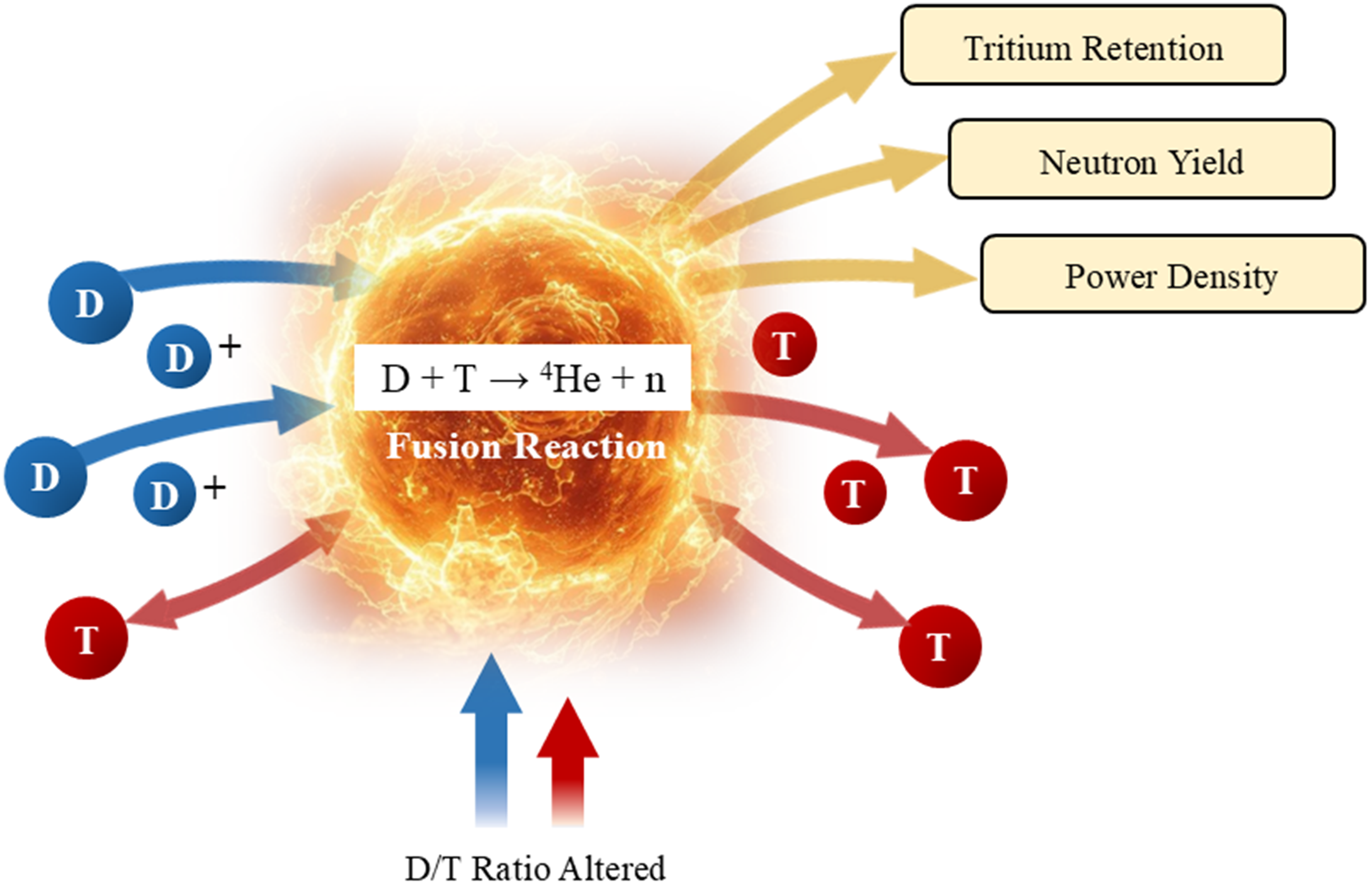
Schematic illustration of isotopic redistribution in fusion plasma, showing the spatial distribution and movement of deuterium (D) and tritium (T) within the plasma core, including the effects of transport and surface-mediated interactions.
Isotopic redistribution significantly impacts fusion performance. The fusion reaction rate for D–T interactions is determined by the product of reactant number densities and the velocity-averaged cross-section (⟨σv⟩), and even small perturbations in isotopic ratios can influence neutron yield distributions, fuel burn-up fraction, tritium breeding efficiency, and volumetric power density, as discussed in the context of fusion neutron interactions with reactor materials and tritium management. 7 Because the D–T reaction pathway has the largest cross-section at attainable plasma temperatures, deviations from the optimal stoichiometric ratio can reduce net energy output. Consequently, isotopic fractionation is a parameter of energetic relevance in reactor efficiency rather than a mere chemical curiosity. Comprehensive understanding of these processes requires integrating chemical kinetics, statistical thermodynamics, and plasma reaction modeling, with rate constants evaluated using isotope-dependent reduced masses and activation energies, and thermodynamic properties incorporating isotopologue-specific partition functions and zero-point energy corrections, as demonstrated in kinetic modeling of post-plasma methane reforming under varying CO2/CH4 ratios. 8 This molecular-level perspective complements conventional plasma behavior assessments and provides a foundation for optimizing fuel management strategies and fusion energy production.
A chemically rigorous framework for analyzing isotopic behavior in fusion plasmas is developed in this research. Despite substantial progress in fusion power plant design, the cost of generating energy through controlled nuclear fusion remains extraordinarily high, and chemically assisted fusion approaches have exhibited limited experimental reproducibility and uncertain reaction pathways, indicating that the underlying chemical processes governing isotopic behavior in fusion-relevant environments remain insufficiently understood. 9 To account for high-temperature ion–molecule interactions and recombination dynamics, isotopic fractionation factors among hydrogen isotopes are first quantified under fusion-relevant thermodynamic conditions. Although previous investigations have examined isotope exchange processes in chemical systems, such as hydrogen isotope exchange and retention within protonated lithium metal compounds, these studies primarily address isotope separation in condensed phases and do not establish mechanistic kinetic frameworks applicable to plasma-phase hydrogen isotope chemistry. 10
Subsequently, a kinetic model is constructed that represents atomic, ionic, and molecular species by systematically incorporating isotope-dependent reaction rate constants into coupled reaction networks. While chemical kinetics models have been developed for plasma reactions, for example in methane activation studies that elucidate plasma-assisted reaction pathways through zero-dimensional kinetic modeling, these frameworks generally focus on hydrocarbon conversion and do not explicitly incorporate isotope-dependent reaction kinetics or isotopic fractionation mechanisms relevant to hydrogen isotopes in fusion plasmas. 11 Thereafter, by linking chemical evolution to nuclear reaction rate expressions, the impacts of isotopic redistribution on macroscopic fusion power density are evaluated. Finally, operating regimes that maximize the probability of D–T interactions while minimizing unfavorable isotopic separation are identified, thereby enhancing fuel utilization efficiency.
It is proposed that, even at extreme temperatures, isotope-dependent reaction kinetics and mass-selective plasma transport synergistically induce measurable isotopic fractionation in fusion plasmas, addressing the current lack of mechanistic kinetic frameworks for plasma-phase hydrogen isotopes identified in prior studies.9–11 These deviations from the nominal fuel composition exert a direct and quantifiable influence on the local densities of D, T, and H species, thereby modulating nuclear reaction rates in a manner inaccessible to conventional hydrocarbon or condensed-phase isotope models. Consequently, the strategic regulation of boundary interactions and isotope-sensitive kinetic pathways, guided by a fully coupled isotopic reaction network, is anticipated to significantly enhance fuel burn-up efficiency and maximize net fusion power output, providing a rigorous, predictive approach for optimizing D–T interactions under realistic plasma conditions. The novelty of this research resides in the development of a molecular-level, chemically rigorous framework that seamlessly integrates isotope-dependent reaction kinetics, fractionation factors, and nuclear reaction expressions within the context of plasma thermochemistry, constituting the first model capable of predicting the macroscopic impacts of isotopic redistribution on fusion performance.
Methodology
Plasma chemical kinetic framework
A comprehensive chemical kinetic framework encompassing all relevant atomic, ionic, and molecular species is established to capture the intricate isotopic behavior in nuclear fusion plasmas. This framework is explicitly designed to fulfill the objective of developing a predictive, mechanistic understanding of isotope-dependent reaction kinetics and fractionation in fusion-relevant plasma conditions, directly addressing the research gap of insufficient mechanistic models for plasma-phase hydrogen isotopes.9–11 This may include collisional–radiative atomic kinetics that incorporate radiation-induced processes affecting ion populations and plasma properties in photoionized plasmas. 12 To explicitly account for both fundamental collisional processes and isotopic redistribution pathways, the reaction network is constructed to include isotope-sensitive processes such as electron impact ionization, radiative and three-body recombination, charge exchange, isotope exchange, and molecular dissociation/formation, thereby ensuring that mass-selective plasma transport and reaction kinetics are fully captured.
Molecular isotopic distributions are explicitly evaluated using computational methods, such as Molecular Isotopic Distribution Analysis (MIDAs), which computes isotopic distributions with adjustable accuracy to ensure faithful representation of isotopic fractions. 13 The system comprises neutral species (H, D, T), atomic ions (H⁺, D⁺, T⁺), molecular ions (H2⁺, D2⁺, DT⁺), and neutral molecules (H2, D2, DT, T2), collectively representing the predominant hydrogen isotopologues under plasma conditions. This selection directly aligns with the research objective of quantifying isotope-dependent behavior under fusion-relevant thermodynamic conditions and enables rigorous evaluation of fractionation phenomena across atomic, ionic, and molecular species.
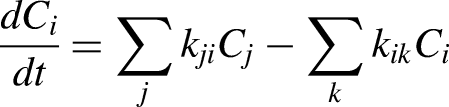
The temporal evolution of each species concentration,
Isotope-dependent rate constant determination
Transition State Theory (TST) is employed to determine reaction rate constants with explicit isotope-dependent mass corrections, directly addressing the research gap of insufficient mechanistic kinetic frameworks for plasma-phase hydrogen isotopes. These corrections account for variations in reduced masses and zero-point energies, ensuring that isotopic effects on reaction kinetics are accurately captured. This approach directly aligns with the objective of developing a predictive, chemically rigorous framework for isotopic fractionation in fusion plasmas.9,10 Such methodology is analogous to how ultrafast experimental studies have resolved the synchronized dynamics of coupled proton–electron transfers on femtosecond timescales. 15 High-probability sub-barrier reactions are captured using Arrhenius formulations with isotope-adjusted activation energies, supplemented by quantum tunneling corrections for light nuclei. Reduced mass scaling is systematically applied to bimolecular reactions to ensure accurate representation of collision frequencies, energy transfer, and isotope-specific reaction probabilities, thereby bridging the gap between condensed-phase isotope models and plasma-phase hydrogen isotope chemistry.
The kinetic isotope effect (KIE) is quantified as:
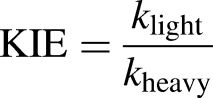
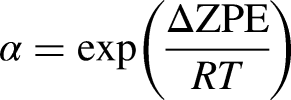
By combining KIE evaluation with ΔZPE-based fractionation analysis, this methodology enables rigorous quantification of both kinetic and thermodynamic isotope effects across the range of plasma temperatures relevant to D–T fusion processes. This directly supports the research objective of predicting isotopic redistribution effects on fusion performance and provides a mechanistic basis for optimizing fuel burn-up and D–T interaction probability under realistic plasma conditions.
Plasma thermochemical modeling
Partition functions incorporating translational, rotational, vibrational, and electronic contributions are used to calculate the thermodynamic properties of plasma species, with explicit mass-dependent effects included through isotopologue-specific statistical mechanics to directly address the research gap of insufficient mechanistic understanding of isotope behavior in fusion plasmas.9,10 This approach reflects the detailed quantification of energy partitioning among translational, rotational, and vibrational modes, analogous in methodology to the rovibrational level calculations for diatomic molecules using Rydberg–Klein–Rees (RKR) potential curves and ab initio data to obtain equilibrium and non-equilibrium thermodynamic properties. 17 Ionization fractions under fusion-relevant electron densities and temperatures are calculated via Saha ionization equilibrium equations, providing a self-consistent and predictive description of species populations and energy distributions while incorporating isotope-dependent effects, thereby fulfilling the objective of linking molecular-level plasma chemistry to macroscopic fusion performance. To ensure accurate estimation of species populations and energy distributions, high-temperature partition functions are corrected for vibrational anharmonicity, nuclear spin statistical weights, and isotope-specific dissociation energies, enabling rigorous evaluation of isotopic fractionation across hydrogen isotopologues.
This thermochemical modeling framework generates the fundamental parameters required for calculating isotope-dependent reaction rate constants, equilibrium fractionation factors, and transient species populations, directly addressing the research gap where prior models have lacked predictive capability for plasma-phase hydrogen isotope kinetics. Figure 3 shows a flowchart of plasma thermochemical modeling, illustrating the integration from partition functions and equilibrium ionization to isotopologue-specific species populations and fractionation factors, supporting the development of a fully coupled, predictive isotopic reaction network. These outputs serve as critical inputs for evaluating the impact of isotopic redistribution on D–T reaction rates and for identifying plasma operating regimes that maximize fuel utilization and net fusion power output.
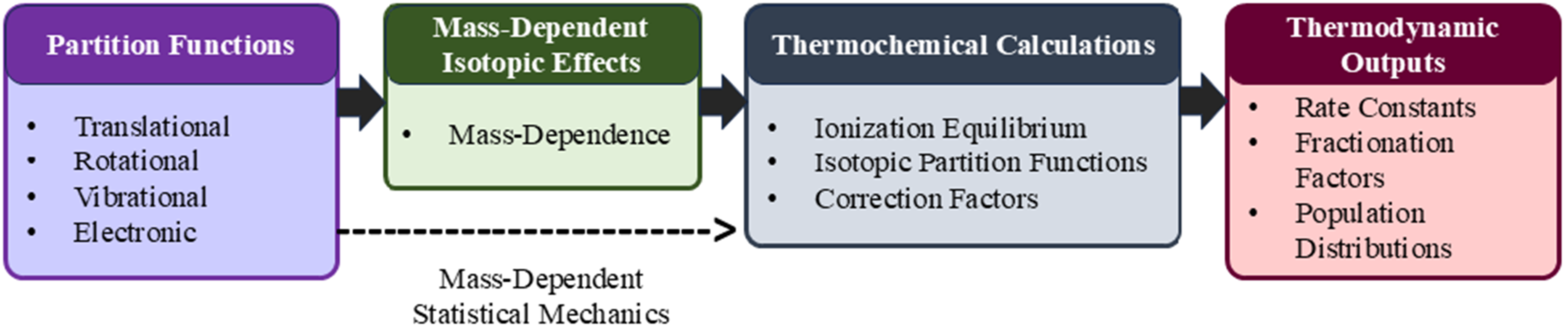
A flowchart on plasma thermochemical modeling.
Coupling to fusion reaction kinetics
The chemically derived isotopic concentrations are integrated with fusion reaction kinetics for D–T, D–D, and T–T channels. Fusion reaction rates are expressed as:

Analogous to reactive crystallization studies, 18 dynamically tracking isotopic concentrations enables a chemically meaningful integration of species evolution into fusion kinetics. By explicitly accounting for isotope-dependent reaction kinetics and mass-selective plasma transport, this methodology allows direct evaluation of how isotopic fractionation impacts neutron production rates, volumetric energy release, and fuel burn fraction, fulfilling the objective of optimizing D–T interactions under realistic plasma conditions. This integration allows nuclear reactivity and plasma chemistry to be treated within a single, self-consistent framework, providing a predictive, mechanistic basis for assessing fusion performance in isotope-sensitive operating regimes and addressing the research gap where prior models have neglected the coupled influence of isotopic redistribution on macroscopic power output.
Boundary and surface isotopic effects
Additional isotopic redistribution mechanisms are incorporated when modeling surface-mediated processes at plasma-facing materials, directly addressing the research gap related to insufficient understanding of boundary-mediated isotope fractionation in fusion plasmas.9,10 These mechanisms are informed by atomic-scale simulations of tungsten, revealing cluster-surface interactions and near-surface defect dynamics that govern material retention and fluxes. 19 Surface-mediated processes are incorporated as boundary flux terms within the mass balance equations, explicitly accounting for isotope-selective adsorption–desorption kinetics, diffusion coefficients, and recombination rates, thereby ensuring that mass-dependent isotope transport at interfaces is fully represented. The effects of structural and breeding materials on the plasma core isotopic composition are included, particularly regarding tritium retention and D/T ratio modulation. By accounting for surface interactions, this modeling framework provides a comprehensive, predictive description of isotope-sensitive kinetics that integrates bulk plasma dynamics with boundary-mediated fractionation, fulfilling the objective of maximizing fuel utilization and net fusion power output under realistic operating conditions. Consequently, both plasma-core and boundary-driven isotopic effects are consistently represented, supporting the development of a fully coupled isotopic reaction network for D–T fusion optimization.
Results and discussion
Isotopic fractionation under fusion conditions
Simulations reveal pronounced non-equilibrium isotopic separation in regions exhibiting sharp plasma temperature gradients. This is consistent with evidence that preferential binding of isotopes to organic ligands can govern isotopic fractionation beyond that arising from redox reactions. 20 Aligned with the study's objective of developing a predictive plasma-phase isotope framework, quantified fractionation factors the D/T and H/D fractionation factors demonstrate that heavier isotopes, particularly tritium, preferentially accumulate in plasma zones characterized by lower local temperatures and reduced convective flux, reflecting the combined effects of mass-dependent transport and isotope-sensitive reaction kinetics incorporated in the chemical kinetic model. This spatial isotopic segregation is driven by intrinsic mass-dependent transport mechanisms, including differential diffusion, charge-exchange-mediated redistribution, and transient molecular recombination pathways. Notably, boundary-mediated transport and isotope-dependent reaction kinetics, explicitly included in the proposed framework, produce residual isotopic fractionation even at elevated temperatures (∼108 K), demonstrating that classical equilibrium assumptions cannot capture the full plasma isotopic landscape. This is supported by experimental and simulation studies of copper isotope fractionation driven by vapor transport in open systems. 21
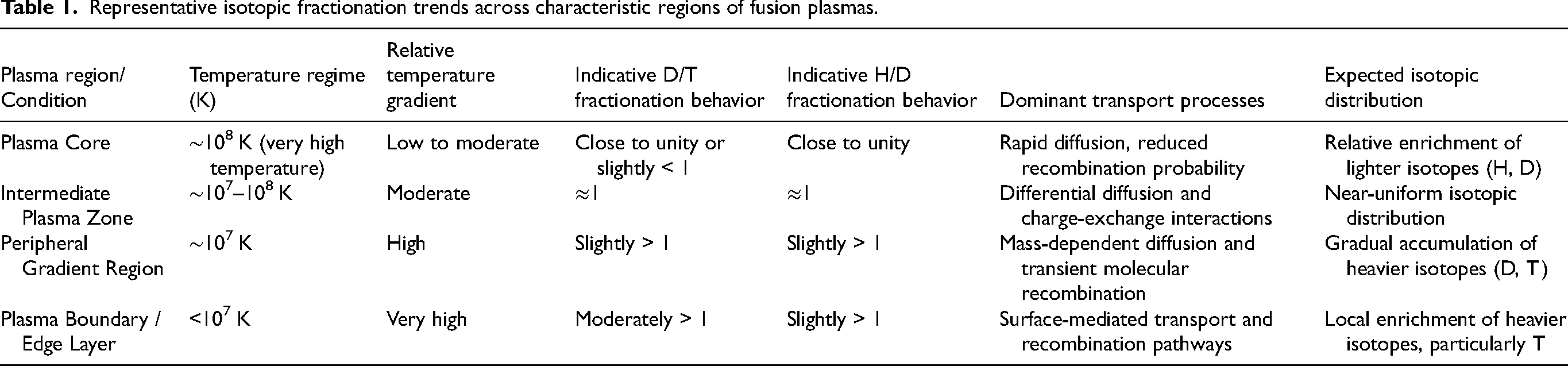
Quantitative evaluation across a range of plasma conditions shows that D/T fractionation factor can deviate from unity by 5–10% in localized regions, with lighter isotopes preferentially enriched in high-temperature zones where recombination is suppressed. The general relationship between plasma regions, temperature regimes, and the resulting qualitative fractionation behavior is summarized in Table 1, highlighting how the integration of temperature-dependent reaction kinetics and transport processes within the fully coupled isotopic reaction network accurately predicts local isotopic distributions. This is consistent with the dominant role of temperature in controlling isotopic fractionation in marine particulate organic matter (δ13CPOM) systems. 22 These results underscore the critical need to incorporate both isotope-sensitive reaction kinetics and mass-selective transport in fusion plasma models to reliably predict D/T ratios, directly addressing the research gap where prior models lacked mechanistic plasma-phase kinetic frameworks. Accounting for these coupled processes enhances predictive capability for fuel utilization efficiency and local fusion power output under realistic reactor conditions.
Representative isotopic fractionation trends across characteristic regions of fusion plasmas.
Kinetic isotope effects in plasma reaction networks
Analysis of the plasma reaction network reveals distinct KIEs across different reaction classes. This aligns with graph-theoretical approaches that evaluate reaction connectivity and the relative potential of reactions and species to proceed under specific plasma conditions. 23 Consistent with the study's objective of developing a mechanistic, predictive framework for plasma-phase hydrogen isotope kinetics, these findings demonstrate how isotope-dependent reaction rate constants systematically modulate the temporal evolution of species within the fully coupled reaction network. As expected from the predominance of electronic excitation over mass-dependent contributions, electron impact ionization exhibits minimal isotope sensitivity. In contrast, tritium-containing species display systematically reduced reaction rates due to larger reduced masses in molecular recombination and isotope exchange reactions, which demonstrate pronounced KIEs. Figure 4 illustrates how mass-dependent differences in molecular recombination and isotope exchange reactions retard the formation of mixed isotopologues such as DT⁺, effectively propagating isotopic redistribution throughout the plasma reaction network, as explicitly captured by the isotope-sensitive kinetic modeling strategy. This is consistent with challenges in hydrogen isotope separation for fusion fuels and the need for advanced separation technologies. 24
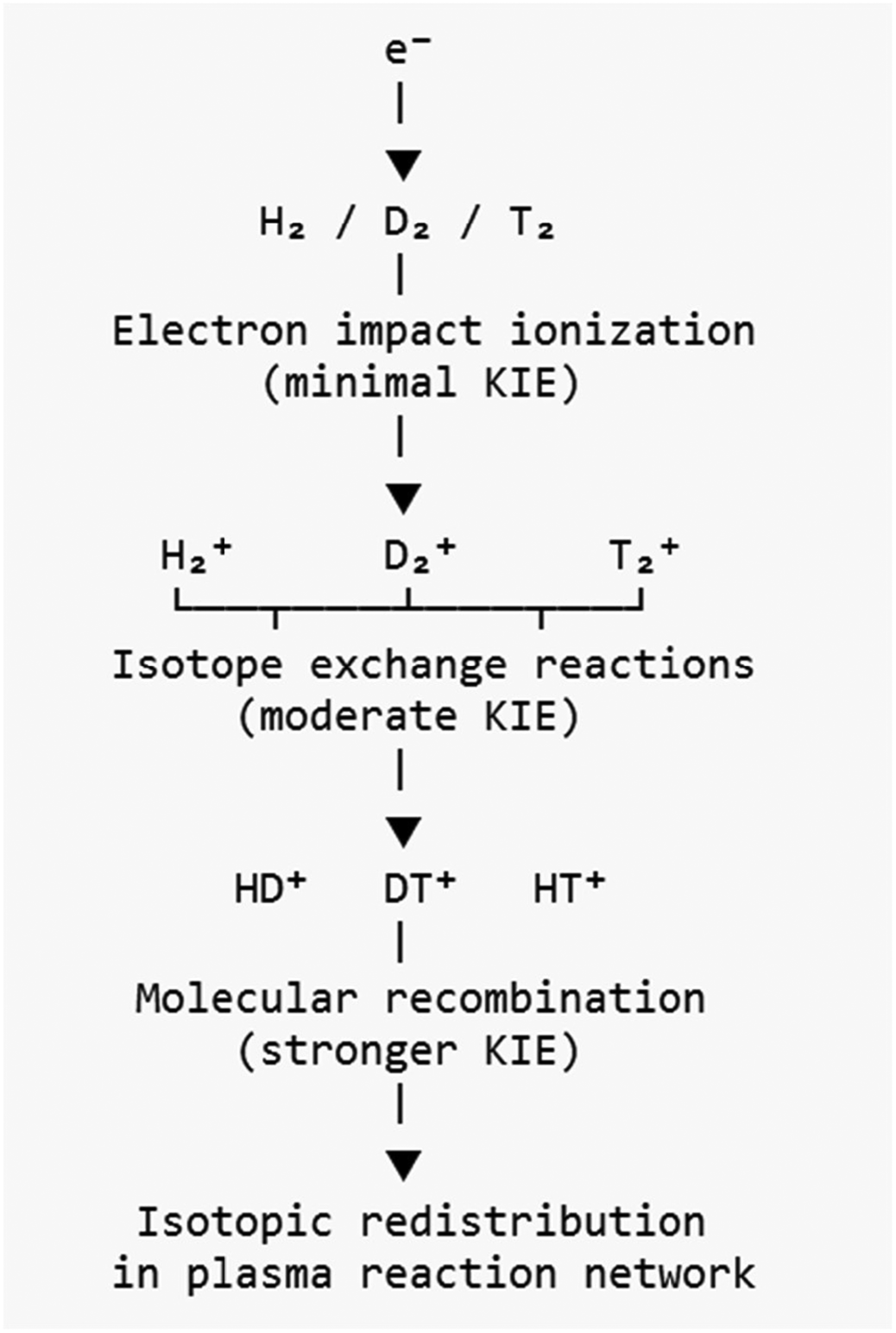
Schematic of kinetic isotope effects in a simplified fusion plasma reaction network. Electron impact ionization exhibits minimal isotope sensitivity, while molecular recombination and isotope exchange reactions are more mass-dependent, slowing the formation of mixed isotopologues (e.g., DT⁺) and driving isotopic redistribution through the network.
Over operational timescales, these mass-dependent effects naturally propagate through the reaction network, producing localized deviations in isotopic composition that are inaccessible to conventional, non-isotope-resolved plasma models. Such findings is consistent with Ru isotope systematics observed in iron meteorites where incremental extraction and mixing processes produce progressive isotopic shifts. 25 For example, DT⁺ formation equilibrates more slowly than D2⁺ or T2⁺, producing transient local tritium depletion in specific plasma sub-regions. The cumulative influence of KIEs underscores that molecular-level reaction kinetics, when coupled with mass-selective transport and boundary-mediated effects as incorporated in this study, inherently modulate macroscopic isotopic distributions. This directly impacts fusion cross-section accessibility and effective fuel utilization, fulfilling the objective of linking plasma chemical kinetics to predictive reactor performance.
Impact on fusion power output
Fusion power metrics are strongly modulated by the overall distribution and behavior of isotopes within the plasma. Consistent with the study's objective of developing a predictive, mechanistic framework for plasma-phase hydrogen isotope kinetics, simulations reveal that localized fluctuations in the D/T ratio directly alter the probability of D–T reactions, with even modest deviations (1–3%) producing measurable changes in neutron flux and volumetric energy output. Figure 5 illustrates how even minor deviations from the ideal D/T ratio can noticeably decrease neutron flux and fusion power, emphasizing the critical influence of spatially resolved isotopic composition, as predicted by the fully coupled isotopic reaction network developed in this study. This is analogous to how isotopic labeling in plasma–liquid studies reveals that the origin of reactive species, whether from the gas or liquid phase, determines which cysteine products are formed, as shown by the incorporation of 18O from these sources in cold atmospheric plasmas (CAP) experiments. 26 These results demonstrate that incorporating isotope-dependent reaction kinetics and transport phenomena into plasma modeling provides a robust, predictive approach for managing local isotopic composition, thereby addressing the research gap in prior models that lacked mechanistic resolution of plasma-phase isotope behavior.
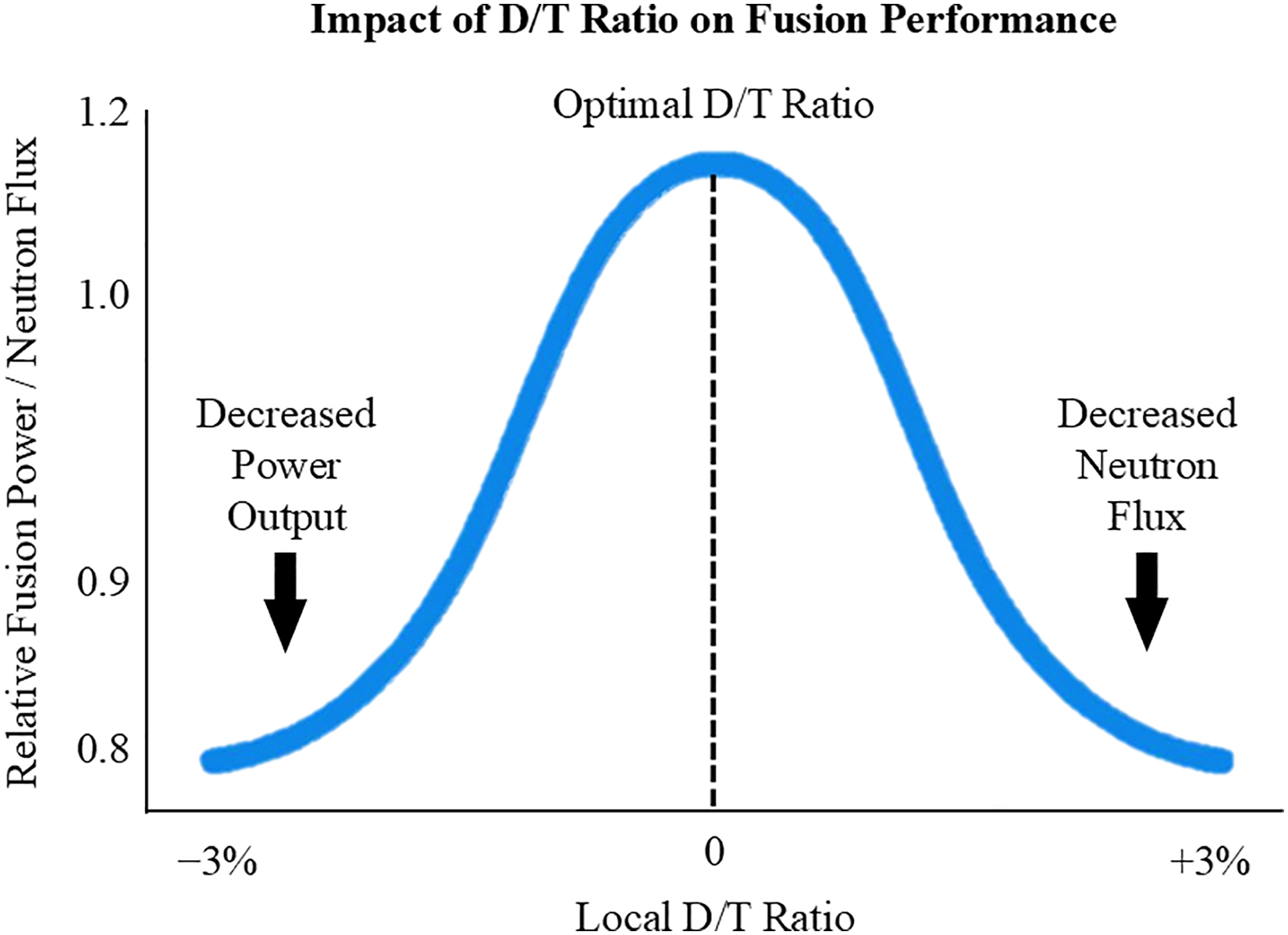
Impact of D/T ratio deviations on relative fusion power and neutron flux. Small departures from the optimal D/T ratio reduce both metrics, illustrating the sensitivity of fusion performance to isotopic composition.
Sensitivity analysis identifies critical kinetic bottlenecks, including D–T molecular formation and recombination pathways, which constrain tritium availability in regions of peak reaction probability. This is analogous to how reaction path flux analysis in plasma-assisted methane reforming identifies CH3 recombination as the limiting reaction for CO production and O2 as the critical species controlling CO formation, demonstrating the utility of sensitivity analysis for pinpointing kinetic constraints. 27 By targeting these molecular-scale constraints using the methodology developed in this research, operational plasma fueling strategies and boundary conditions can be optimized to maximize effective D–T interactions. This translates general isotopic fractionation patterns into quantifiable enhancements in fusion performance, fulfilling the objective of linking isotopic kinetics to macroscopic reactor outputs and directly addressing the knowledge gap of how plasma-phase isotope redistribution impacts fuel burn-up efficiency and net energy generation.
Thermodynamic versus kinetic control regimes
The analysis identifies two dominant regimes: a moderately lower-temperature quasi-equilibrium domain and a high-temperature kinetic control regime. Consistent with the study's objective of establishing a mechanistic, predictive framework for plasma-phase hydrogen isotope behavior, these regimes illustrate how thermodynamic and kinetic factors differentially influence isotopic fractionation, directly addressing the research gap where prior models lacked explicit treatment of isotope-dependent kinetics under fusion-relevant conditions. In the kinetic control regime, significant non-equilibrium fractionation occurs, with collisional processes dominating and isotopic distributions primarily governed by molecular-scale differences in reaction rates and transport kinetics. This behavior is similarly demonstrated in Ca isotope fractionation during calcite precipitation, where precipitation rates high enough to exceed equilibrium dissolution rates favor faster incorporation of lighter isotopes, placing isotopic partitioning under kinetic control. 28 These mass- and reaction-specific effects are explicitly resolved through the isotope-sensitive kinetic modeling framework developed in this study, enabling quantitative predictions of spatially and temporally resolved isotopic distributions within the plasma.
Conversely, in the quasi-equilibrium domain, isotopic partitioning approaches a thermodynamically dictated distribution, where fractionation factors are largely determined by isotopologue-specific partition functions and zero-point energy differences. At defined temperature and density thresholds, isotopic distributions transition rapidly from kinetically dominated to near-equilibrium behavior, delineating the crossover between these regimes. This behavior is schematically illustrated in Figure 6, which highlights the low-temperature quasi-equilibrium region dominated by thermodynamic effects, the high-temperature kinetic control region exhibiting non-equilibrium fractionation, and the intermediate crossover zone where isotopic distributions rapidly shift between these regimes. Accurately capturing this transition is critical for predicting isotope-sensitive reaction probabilities and for designing control strategies that maintain optimal D/T ratios throughout the plasma, thereby directly supporting enhanced fuel utilization efficiency and maximized fusion power output.
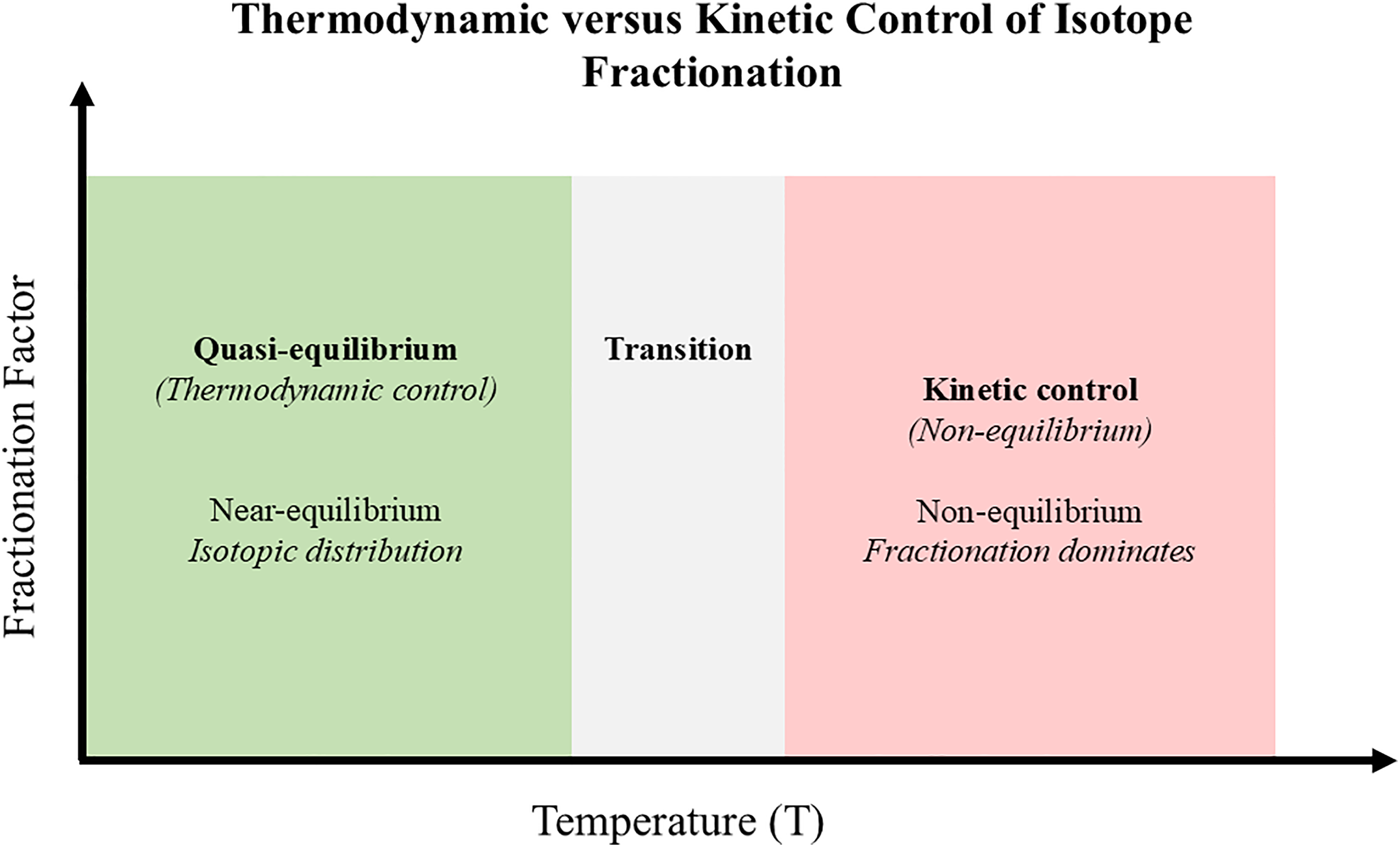
Schematic illustrating thermodynamic and kinetic control of isotope fractionation in fusion plasma. The quasi-equilibrium region (lower temperature) is governed by thermodynamic factors, while the kinetic control region (higher temperature) exhibits pronounced non-equilibrium fractionation. The shaded transition zone marks the rapid shift between these regimes, highlighting the temperature-dependent change in isotopic distribution.
Implications for optimized power generation
The findings have several critical implications for enhancing fusion power generation. Aligned with the goal of developing a mechanistic, predictive framework for plasma-phase hydrogen isotope behavior, these results demonstrate how explicit accounting of isotope-dependent kinetics and transport can directly inform operational strategies. First, active isotopic monitoring within plasma systems is essential to detect spatial and temporal D/T fluctuations and to inform real-time adjustments of fueling strategies. Techniques such as orthogonal double-pulse Laser-Induced Breakdown Spectroscopy (LIBS) with two nanosecond neodymium-doped yttrium aluminum garnet (Nd:YAG) lasers have been shown to enhance the detection of hydrogen isotopes in solid substrates, improving analytical sensitivity and reliability. 29 Second, in regions of peak reaction probability, tailored fueling approaches, such as spatially resolved deuterium and tritium injection, can maintain optimal stoichiometry. In this context, such control strategies are demonstrated in model-based burn-control studies where D–T fuel density profiles are actively regulated using 0-D controllers tested in 1-D plasma simulations. 30 Third, engineering plasma-facing materials to minimize surface-mediated isotopic segregation mitigates tritium retention and improves overall fuel burn-up efficiency. For instance, tungsten–tantalum alloys can resist surface morphology evolution under irradiation. 31
Finally, integrating chemical kinetic control into reactor design, including explicit consideration of isotope-dependent reaction rates, transport processes, and surface interactions, provides a pathway to translate molecular-scale fractionation phenomena into macroscopic reactor performance gains. By embedding isotopic reaction networks within reactor control and simulation frameworks, the predictive impact of local D/T variations on fusion power output can be quantitatively assessed and optimized. This approach has been demonstrated by embedding microkinetic models within reactor simulations for heterogeneous catalysis using neural-network-assisted workflows. 32 Collectively, these results demonstrate that strategic regulation of isotopic fractionation and reaction kinetics constitutes a practical and effective approach to maximizing net energy output and enhancing fuel utilization in D–T fusion systems. Implementing such integrated, predictive strategies addresses the current research gap in linking plasma chemical kinetics to macroscopic fusion performance and can guide the development of next-generation reactor designs that optimize both fuel efficiency and operational stability.
Conclusion
This study shows that complex, coupled chemical and transport processes producing measurable non-equilibrium fractionation govern the spatial and temporal distribution of hydrogen isotopes in fusion plasmas. The kinetic analysis reveals that localized D/T enrichment or depletion arises from the combined effects of isotope-dependent reaction rates, collisional interactions, and surface-mediated boundary phenomena, directly modulating fusion reactivity and power density. Targeted optimization of fuel burn-up efficiency is enabled by the identification of distinct thermodynamic and kinetic control regimes, which provide critical insight into the conditions under which isotopic distributions transition. Moreover, a practical strategy for enhancing operational performance is demonstrated through the integration of isotope-sensitive kinetics into reactor management protocols and plasma-facing material design.
Future research could explore transient plasma phenomena, implement real-time diagnostic feedback for dynamic isotopic control, and extend this framework to multi-component fusion fuels. Further refinement of plasma behavior and energy output predictions can be achieved by coupling this chemically rigorous model with advanced computational fluid dynamics and machine-learning-based control systems. Collectively, these approaches provide a strategic roadmap for the rational design of next-generation fusion reactors, bridging macroscopic operational performance with molecular-scale isotope chemistry.
Footnotes
Acknowledgements
This study was conducted independently, with the intellectual depth and academic rigor associated with PhD research.

Funding
The author declares that no funding was received for this research.
Declaration of conflicting interests
The author declares no potential conflicts of interest.