







Abstract
Global value chains (GVCs) are vital to global trade, transforming natural capital into products through complex transborder production systems coordinated by lead firms. While GVCs facilitate economic integration and development opportunities, they are often associated with social and environmental harms particularly in ecologically sensitive regions. Efforts to mitigate these harms usually involve fragmented governance mechanisms that treat the environment as an externality, rather than as a dynamic system shaping and shaped by value chain activities. The GVC approach is effective at analyzing governance structures, lead firm strategies, and power asymmetries in global production, but tends to overlook ecological feedback. In contrast, the Socio-Ecological Systems (SES) framework conceptualizes the environment as endogenous, emphasizing feedback loops between ecosystems and governance. However, the SES framework is typically applied at local scales, and its application to globalized production remains limited. This article bridges these literatures by developing a GVC-SES analytical framework, systematically linking governance, power, and ecological feedback across scales. We apply this framework to the Brazilian Amazon’s beef cattle value chain using primary and secondary data. Findings reveal how global demand, land governance, and infrastructure drive deforestation through land valuation, credit regimes, and development incentives, while misaligned governance and power asymmetries hinder sustainability. The GVC-SES framework offers a novel tool to holistically assess sustainability outcomes across GVCs and the SESs in which they are embedded. The GVC-SES framework contributes to both literatures by embedding GVC governance in its socio-ecological context and extending SES analysis to globalized production systems.
Keywords
Introduction
Global value chains (GVCs) account for nearly half of global trade and play a central role in organizing production and resource extraction across borders (Fernandez-Stark and Gereffi, 2019; World Bank, 2019). While they may enable economic development and integration, GVCs can also externalize social and environmental costs, particularly in ecologically sensitive regions. These impacts often escape the regulatory reach of national and international governance mechanisms. While GVCs often span continents, they are embedded in specific territories and complex social-ecological systems (SESs). This implies that the material transformations that take place through GVCs also involve complex, integrated, and dynamic interactions between ecological resources and social actors. This includes governance structures that influence the conditions for sustainable resource use and collective action (Ostrom, 2009).
The GVC and the global production network (GPN) literatures have effectively revealed how institutional contexts and power asymmetries enable lead firms to control production networks, thus influencing the sustainability of these chains (Dallas et al., 2019; Henderson et al., 2002; Ponte et al., 2023). Emerging in the late 1990s and early 2000s, the GVC literature provided foundational insights into firm-level governance, value creation, and upgrading processes in global industries (Gereffi, 1994; Gereffi et al., 2005; Humphrey and Schmitz, 2002). The GPN framework developed alongside GVC analysis, emphasized relational and spatial dynamics, and incorporated a broader range of actors and institutions (Coe et al., 2008; Henderson et al., 2002). These frameworks underline firm-centric coordination and upgrading processes, helping explain the distribution of value and control within global industries. However, they tend to treat the environment as an exogenous constraint, something to be governed or mitigated, rather than an active system that not only is shaped by, but also shapes, value chains and production networks governance. This limits their ability to fully explain environmental dynamics and feedback that are difficult to govern through existing mechanisms and the persistence of environmental degradation within GVCs (Bush et al., 2015; Gargallo and Kalvelage, 2021).
In contrast, the SES framework offers a complementary but distinct entry point that conceptualizes the environment as endogenous to production systems and emphasizes feedback loops, thresholds, and adaptive dynamics (Folke et al., 2010; McGinnis and Ostrom, 2014). This perspective is particularly valuable for analyzing GVCs embedded in ecologically sensitive and socially complex regions like the Amazon, where environmental conditions directly influence production, livelihoods, and political dynamics (Puppim De Oliveira et al., 2022). However, SES research has been predominantly applied at local or regional scales and largely failed to engage with global dynamics, transnational governance structures, and the power relations that define them (Biggs et al., 2021). As a result, SES approaches fall short in accounting for how international market logics and GVC lead firm strategies condition local environmental outcomes.
Integrating SES insights into GVC/GPN research could deepen understanding of locally embedded environmental sustainability by adding a more systematic accounting of interdependencies between economic, social, and ecological systems. Similarly, the GVC/GPN frameworks bring a critical focus on power, governance, sectoral analysis, and international factors that influence SES analysis of local environmental sustainability (Coe and Yeung, 2015; Dallas et al., 2019; Gereffi et al., 2005; Ponte, 2019; Ponte and Sturgeon, 2014). Together, these approaches offer a more holistic analysis of sustainability across scales, from local ecosystems to global markets.
Understanding the environmental impacts of GVCs requires recognizing that GVCs are not just economically and socially embedded in spatial contexts, they are also ecologically embedded. GVCs are not only influencing environmental consequences but are themselves conditioned by environmental realities. This is most pronounced in agro-ecological sectors where social, ecological, and economic dynamics are interacting and shaping both GVC and ecological outcomes. Beef production in the Brazilian Amazon is a key example, where land-use decisions and ecological feedback co-evolve with market access, credit regimes, and infrastructure development. Current debates around sustainability in GVCs tend to emphasize environmental and social upgrading, typically led by firms under reputational or regulatory pressure (Barrientos et al., 2011; Bush et al., 2015; Krishnan et al., 2023). While this shift has broadened the agenda of GVC research, it remains focused on firm behavior and chain processes, sidelining the ecological and territorial consequences that sustain harmful practices. There is a need for analytical tools that move beyond this narrow focus. We seek to address this critical gap.
Our aim is twofold. First, to develop an integrated analytical framework that synthesizes Global Value Chain (GVC) and Social-Ecological Systems (SES) approaches in order to better capture how environmental outcomes emerge from the co-evolution of governance, power, and ecological feedback across scales. Second, to use this framework to identify concrete leverage points that can improve the coherence and effectiveness of sustainability governance. This enables a more systematic diagnosis of how global markets and local ecologies interact, and sometimes misalign, offering a practical tool to guide intervention in complex socio-environmental systems.
The framework is applied to the Brazilian Amazon beef value chain, a critical case study particularly for its impacts on deforestation, greenhouse gas emissions and land degradation. Our research illustrates how integrating GVC insights on power asymmetries and governance with SES principles of ecological feedback and adaptive capacity can enhance understanding of the complex interactions and externalities associated within such resource-intensive industries. Following this introduction, we outline the conceptual foundations of the GVC and SES frameworks. Section 3 details our methodology. Section 4 applies our integrated approach to the Brazilian beef GVC in the Amazon. We conclude with insights on the broader applications for sustainability analysis across GVCs and GPNs.
Conceptualizing sustainability in global production
The global value chains approach
The GVC, and GPN, framework 1 provide essential tools for understanding the organization and governance of global production systems. GVC analysis emphasizes linear relationships, focusing on how lead firms shape production processes and standards across supply chains (Gereffi et al., 2005). GPN, on the other hand, adopts a network perspective, exploring interconnected actors and processes that influence value creation both within, and beyond the chain, while explicitly emphasizing the territorial embeddedness of production networks in specific institutional, social, and spatial contexts (Coe et al., 2008; Coe and Yeung, 2015; Hess, 2004). Both frameworks underscore the critical role of governance in directing resource allocation and sustainability outcomes. Despite these insights, both frameworks tend to treat the environment as an external setting in which governance occurs, rather than as an active, interacting component of the system.
Governance within GVCs plays a crucial role in sustainable development, as it encompasses the norms, rules, and practices that define the interactions between different actors. Governance frameworks have evolved from analyzing buyer-versus producer-driven chains (Gereffi, 1994), to linkages between chain actors (Gereffi et al., 2005), to intra- and inter-firm relations (Sturgeon, 2008). Ponte and Sturgeon’s (2014) approach highlights governance dynamics at three distinct levels: micro (bilateral exchanges), meso (standard diffusion along chains), and macro (polarity and lead firm control). These levels reveal how decisions by individual actors influence sustainability along the chain, but they could also possibly form the basis for understanding how such decisions impact broader social-ecological systems. Still, these frameworks do not account for the ecological consequences of these governance decisions, that is, how environmental degradation can, in turn, reshape actor behavior, reputational risks, or regulatory responses.
Power dynamics in GVCs significantly influence sustainability and resource allocation, manifesting as bargaining, institutional, demonstrative, and constitutive power (Dallas et al., 2019). These forms of power shape how lead firms govern supply chains: bargaining power refers to the ability to negotiate favorable terms; institutional power involves shaping rules and standards; demonstrative power influences others through example and best practices; and constitutive power defines what is considered legitimate or normal in the value chain over time. Lead firms use bargaining and institutional power to secure favorable terms and set standards, while demonstrative power drives emulation of their practices. Lead firms exert constitutive power by shaping norms around what practices are considered legitimate, often embedding systemic biases that favor their own interests over local socio-ecological priorities. While lead firms often dominate GVC governance, other actors also shape sustainability outcomes. In some cases, coalitions of producers, civil society organizations, and local governments have mobilized to contest lead firm dominance, such as multi-stakeholder initiatives like the Brazilian Sustainable Livestock Roundtable (MBPS), which aims to democratize governance and improve sustainability outcomes. These collective efforts point to the growing role of diverse actors in contesting and reconfiguring GVC governance (Chisoro and Roberts, 2024). These power asymmetries perpetuate inequalities, benefiting dominant firms while burdening smaller suppliers, often prioritizing corporate goals over local socio-ecological needs (Mondliwa et al., 2021). While these typologies of power are central to GVC analysis, they are often underdeveloped in SES approaches, which focus more on collective action and institutional design than on structural inequalities or firm strategies.
Environmental upgrading, often presented as a firm-centered sustainability-driven governance mechanism within GVCs, illustrates how power asymmetries shape both environmental outcomes and the distribution of costs and benefits. It has been conceived as adopting practices that reduce the ecological footprint of a company or the chain (De Marchi et al., 2019). While lead firms benefit reputationally, suppliers often bear the financial burden of such environmental upgrading strategies, limiting their competitiveness and adaptability (Ponte, 2022). In some GVCs, such as apparel, for example, fragmented supplier networks may dilute the enforcement of sustainability standards, undermining private governance’s ability to meet broader development goals (Alexander, 2018). Such examples also illustrate how environmental upgrading strategies remain centered on lead firm priorities, with limited consideration for the territorial contexts or ecological feedback that shape implementation and impact.
Alongside private and firm-led mechanisms, GVCs are increasingly shaped by broader public and hybrid governance frameworks, including trade regulations and jurisdictional approaches. These forms of governance interact with GVC structures by establishing environmental compliance standards or coordinating land-use interventions across supplying regions. Jurisdictional approaches, while emerging from regional governance efforts, increasingly intersect with GVCs by aligning environmental and social performance at the landscape level with buyer expectations, certification schemes, and zero-deforestation commitments. For example, the EU Deforestation Regulation (EUDR) is a trade regulation that, by the end of 2026, will enforce traceability and due diligence requirements for deforestation-linked commodities like beef and soy, compelling lead firms to adopt stricter environmental practices (Raleira et al., 2022). However, these measures will place compliance burdens on upstream actors, often in regions with complex ecological dynamics, like the Amazon. In parallel, jurisdictional approaches, which refer to multi-stakeholder governance initiatives organized around specific political or ecological territories rather than individual firms or farms, seek to align public policies, private standards, and local actors within a defined jurisdiction to improve sustainability outcomes. These advances in trade regulation and jurisdictional coordination signal the growing recognition that sustainability in GVCs requires accounting for territorial socio-ecological dynamics. However, such initiatives remain institutionally siloed, failing to fully integrate feedback mechanisms or reconcile power asymmetries. As a result, despite advances, an “implementation deficit” remains, with such multi-actor and multi-scalar governance structures failing to consistently achieve sustainability objectives across GVCs (De Marchi and Gereffi, 2023).
In this paper, we contribute to the GVC environmental governance literature by foregrounding how governance is not only exercised through formal institutions or managerial practices, but emerges from dynamic interactions among firms, state actors, and socio-ecological systems across multiple scales. While polycentric governance frameworks (Morrison et al., 2019) and typologies of environmental governance (Lemos and Agrawal, 2006) have emphasized the distributed and multi-actor nature of rule-making, they often under-theorize the role of global economic networks, market power, and scalar mismatches. Similarly, debates on governance fragmentation (Biermann et al., 2009) and transnational climate governance (Bulkeley et al., 2014) have drawn attention to institutional complexity and the growing role of private and hybrid actors.
The social-ecological systems (SES) framework
The SES framework offers a structured approach to understanding the resilience, sustainability, and collective management of resources in human-nature interactions (McGinnis and Ostrom, 2014; Ostrom, 2009). It provides a means of analyzing the dynamic relationships between actors, resource systems and units, and governance institutions that shape patterns of resource use. This includes understanding how to overcome collective action challenges, such as the “tragedy of the commons,” where fragmented governance and misaligned incentives lead to resource overuse (Hardin, 1968). The SES framework addresses these challenges by analyzing governance structures and feedback mechanisms that influence actor behavior and support sustainable outcomes.
The SES framework captures social-ecological dynamics through four core components: resource systems, resource units, governance systems, and actors. Resource systems include ecosystems like forests or watersheds, assessed based on attributes such as size, productivity, and spatial boundaries, which determine their regenerative capacity and resilience (Biggs et al., 2021). Resource units refer to specific elements within these systems, such as grazing land or timber, characterized by mobility, renewability, and economic value. Governance systems encompass the institutional rules and norms regulating resource access and management, with variables such as rulemaking, enforcement, and monitoring determining their adaptability. Actors, ranging from local communities to companies, NGOs, and governments, interact within governance systems to shape resource outcomes. These components interact in “action situations,” where institutional arrangements create reinforcing or balancing feedback loops with social and ecological consequences (McGinnis and Ostrom, 2014). In SES analysis, reinforcing (positive) feedback loops amplify existing system dynamics, while balancing (negative) feedback loops counteract change and stabilize system behavior. Identifying these feedbacks helps reveal leverage points where governance interventions can either reinforce unsustainable trajectories or strengthen stabilizing mechanisms that improve sustainability outcomes. The SES framework has been critiqued for insufficiently addressing power asymmetries and institutional dynamics, central to GVC and GPN analysis (Gargallo and Kalvelage, 2021). While SES frameworks often assume polycentric and participatory governance arrangements, they typically lack tools to account for how dominant actors, and more specifically lead firms, shape governance outcomes and distribute environmental risks. Integrating GVC and GPN perspectives into SES analysis would enable a more realistic and politically attuned understanding of how global economic systems interact with local social-ecological realities.
Studies focusing on SES frameworks have traditionally focused on geographical regions but are increasingly adapted to analyze sectoral dynamics, particularly in agriculture, fisheries, and energy (see Gargallo and Kalvelage, 2021; Pradhan et al., 2022). These applications examine how specific economic activities interact with social-ecological systems, such as the interplay between agricultural practices and ecosystem services or the sustainability challenges in livestock and fisheries sectors (Figueroa et al., 2022; Müller-Hansen et al., 2019; Pradhan et al., 2022). A key contribution of these studies lies in their emphasis on the variability of value creation and distribution, which is influenced by the degree of local community engagement, whether as active participants or passive recipients, and their role in sustaining SES (Gargallo and Kalvelage, 2021). In parallel, another body of literature expands the understanding of resources embedded within value chains. Moving beyond the narrow neoclassical economic framework, where lead firms may disregard the interests of other stakeholders, this perspective underscores the need to account for human and environmental dimensions, and importantly, how SES interdependencies shape sustainability in GVCs (Pradhan et al., 2022).
Integrating GVC and SES approaches has proven challenging due to disciplinary barriers. Gargallo and Kalvelage (2021) demonstrate this integration by examining community-based natural resource management in international tourism GPNs, revealing governance and power imbalances that undermine sustainability. Similarly, Pradhan et al. (2022) analyze the dried fish value chain, proposing a broader conception of value that incorporates biophysical processes into GVC frameworks. These studies use qualitative methods such as interviews and documentary analysis to capture complex social interactions and localized impacts. However, these studies often prioritize social sustainability over ecological processes.
The GVC-SES framework: Integrating GVC/GPN and SES approaches
While the SES framework has contributed significantly to understanding local ecological dynamics and institutional arrangements, it lacks explicit analysis of the globalized economic structures that impact and shape local environmental pressures. Similarly, while GVCs and GPNs are deeply embedded in local environments, their interactions with ecological systems are rarely analyzed through a framework capable of incorporating environmental feedback loops and resilience, since the environment continues to be treated as exogenous. Thus, there is a critical conceptual and policy imperative to view the environment as an endogenous factor in the governance of GVCs.
We address this gap by presenting an integrated analytical framework that brings together the Global Value Chain (GVC) and Social-Ecological Systems (SES) approaches to systematically evaluate how power dynamics, governance mechanisms, and ecological feedback shape sustainability outcomes across scales. The integration of these perspectives provides more than the sum of their parts: it enables a multi-scalar, governance-sensitive, and ecologically grounded analysis of sustainability in global production systems.
The proposed GVC–SES framework maps the interrelations among governance structures, ecological processes, and value chain actors. As shown in Figure 1, the framework is organized into three key components: the focal GVC and actors (blue), SES elements (green), and the multi-scalar governance contexts (gray) that influence and are influenced by value chain dynamics. This structure highlights the interconnectedness of economic activities, resource systems, and governance mechanisms across scales, illustrating how decisions within GVCs cascade through ecological and social systems. At the center of the framework is the focal GVC, which captures the linear production chain from upstream suppliers (e.g., direct 1st-tier to indirect lower-tier suppliers) to lead firms and downstream end markets. Governance mechanisms, denoted by “Gov” arrows, represent inter-firm coordination, regulatory influence across the chain, and knowledge flows as well as power dynamics (Dallas et al., 2019; Ponte and Sturgeon, 2014). The “action situation,” adapted from the SES literature (McGinnis and Ostrom, 2014), refers to the arena where actors interact, make decisions, and negotiate rules, incentives, and resource use. In our framework, it represents the interactions among GVC actors (e.g., lead firms and suppliers) as they shape, respond to, or contest governance arrangements and environmental feedback. The Resource System refers to the territorial social-ecological system in which the GVC is embedded. This includes the biophysical environment such forests, watersheds, and pastures, as well as local institutional arrangements that mediate land use, access, and resource management (Ostrom, 2009). These institutions are often territorially embedded, for example, municipal land-use offices, community associations, or local producer cooperatives and are directly involved with the governance of resource units. Within this system are Resource Units, specific resources like timber, water, or agricultural products that are utilized and managed in the GVC. The gray-shaded contexts distinguish between international and local/national contexts. The international context comprises cross-border actors and dynamics, such as multilateral institutions, foreign governments, INGOs, international markets, and broader phenomena like climate change, trade standards, and sustainability regimes, that shape GVC governance largely from outside the territorial system. By contrast, local and national contexts include governments, civil society organizations, industry associations, and financial institutions that are often directly embedded in the region and play a more immediate role in shaping GVC governance through laws, policies, norms, and investment patterns. Actors here (e.g., federal agencies, international NGOs) may operate within the local resource system, but their mandate, influence, and logic extend beyond it. While both the resource system and governance contexts shape GVC dynamics, we distinguish the former as a place-based, dynamic system of local ecological and social feedback, and the latter as external governance environments that condition GVC rules, norms, and incentives. The GVC–SES framework illustrates interactions between global value chains, governance structures, and socio-ecological systems. The focal GVC (blue) maps actors from upstream suppliers to lead firms and end markets. The resource system (green) represents the biophysical environment where resource extraction and land-use take place, including resource units like pasture or cattle. The context layers (grey) reflect international and national/local economic, social, political, and environmental dynamics that influence both GVC and SES components. White arrows indicate governance relationships; black arrows show impacts and feedback. Authors Construct.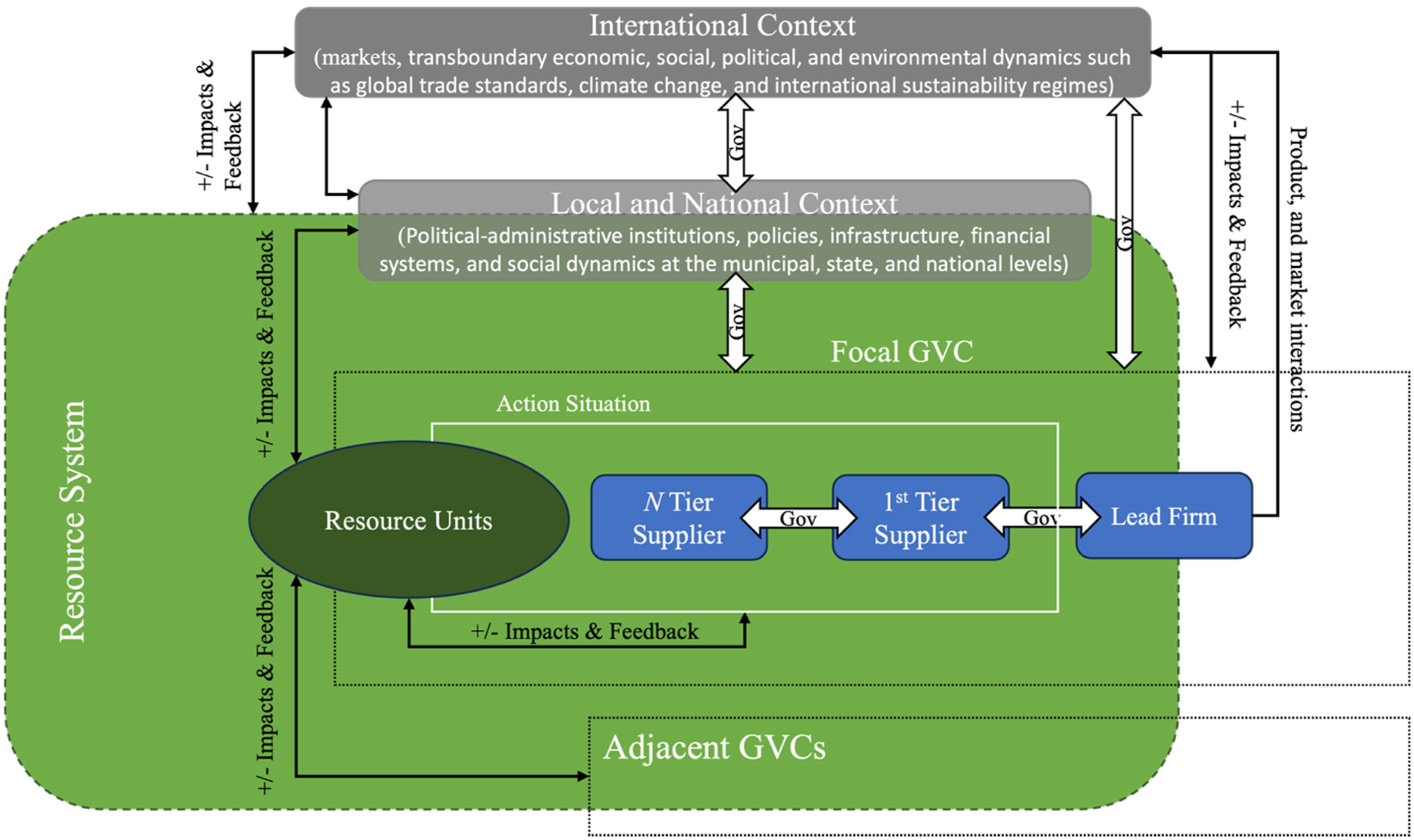
Arrows in the framework represent different types of interactions. The white arrows labeled “Gov” denote governance relationships that encompasses both inter-firm coordination mechanisms (GVC-specific) and broader institutional influences, capturing how power is exercised across the GVC through bargaining, institutional, and normative mechanisms (Dallas et al., 2019) as they shape or respond to ecological feedback at the multiple levels. The black arrows represent broader impacts and feedback that shape or result from interactions between the resource system, GVC actors, and contextual layers. These include ecological feedback (e.g., deforestation, fire, rainfall shifts), social and cultural dynamics (e.g., dietary changes, land conflicts), and economic signals (e.g., global demand trends, commodity prices).
Following Ponte (2019), these contextual forces, such as global sustainability standards, trade regulations, or national policies, become internalized within GVCs through lead firm governance, procurement practices, and compliance mechanisms. Thus, the GVC is both shaped by and a conduit for broader institutional and socio-political dynamics. Together, these layers illustrate the multi-scalar nature of GVC-SES interactions, where macro-level forces intersect with localized resource management.
Finally, the framework acknowledges that focal GVCs are not insulated from adjacent GVCs. Other chains, such as soy, leather, or timber, often compete for or share the same resource system and/or units. These adjacent GVCs can introduce additional impacts (sometimes cumulative) and feedback loops, either compounding or mitigating the pressures on resource units and the broader resource system. This element underscores the complex interdependencies between multiple value chains and ecosystems, where decisions made in one chain can affect sustainability outcomes in others, reflecting the need for a holistic, systems-based approach.
Methodology
Case selection
We apply the GVC–SES framework to the Brazilian Amazon’s beef cattle value chain, a critical case at the intersection of global trade and ecological risk. The Amazon biome is a globally significant social-ecological system, and the Brazilian beef sector is both the world’s leader in beef exports and a major driver of deforestation and greenhouse gas (GHG) emissions in the Amazon. The region thus provides a compelling context to explore how value chain governance interacts with environmental feedback and multiscalar institutions.
The chain is structured around a dispersed base of ranchers, including small, medium, and large-scale producers, who serve as suppliers to powerful Brazilian slaughterhouses and meat processors (lead firms) who dominate the Brazilian beef value chain. These slaughterhouses exert considerable influence over value chain governance through purchasing decisions, sustainability standards, and traceability requirements. Their position at the intersection of downstream domestic and international markets gives them disproportionate power to shape upstream sustainability practices and downstream environmental outcomes. By focusing on this case, we interrogate how lead firm strategies and multilevel governance arrangements condition socio-ecological change in the Amazon.
Data collection and sources
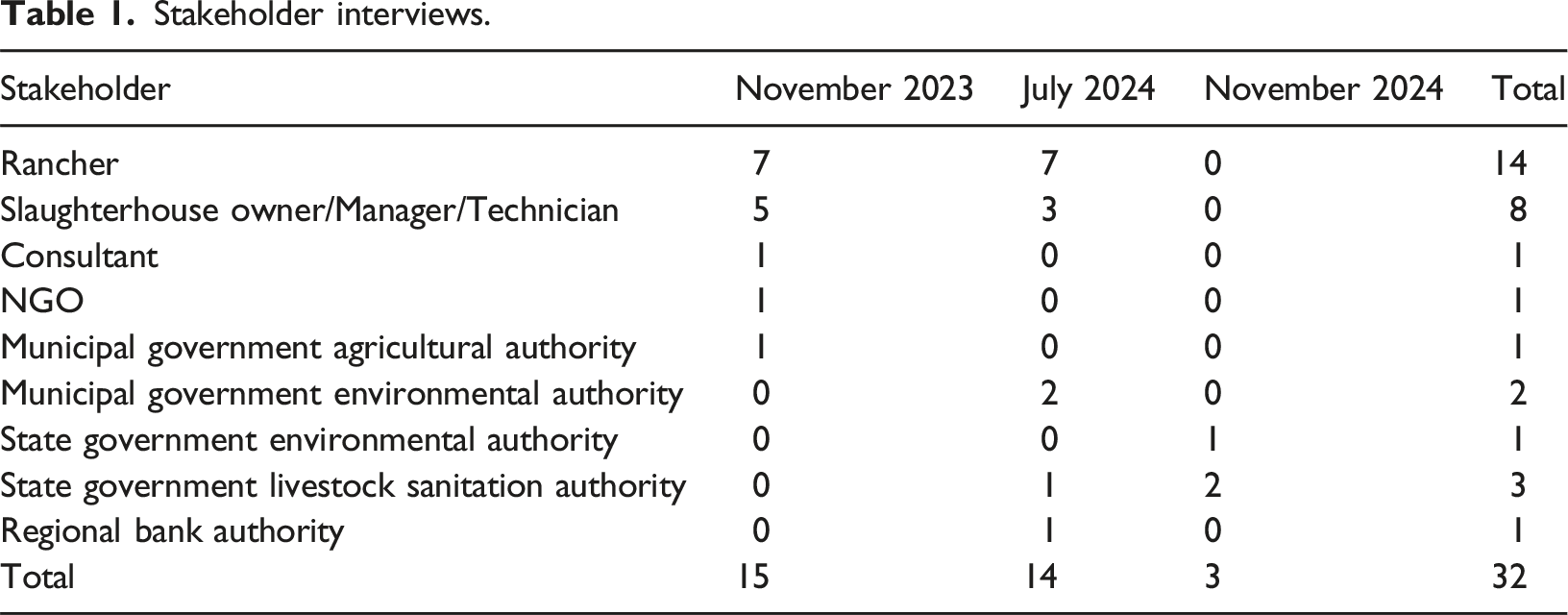
Stakeholder interviews.
Data analysis and application to framework
We qualitatively coded interview and secondary data to analyze governance structures, power asymmetries, and socio-ecological feedback across scales and value chain nodes. Codes were organized by actor type (e.g., ranchers, traders, lead firms) and spatial scale to trace governance configurations and land-use dynamics. This approach operationalized the GVC–SES framework, revealing cross-scalar interactions and identifying leverage points for more inclusive and ecologically grounded value chain governance.
Analyzing the Brazilian beef GVC in the Amazon using the GVC-SES framework
The Brazilian beef GVC in the Amazon serves as a critical case study for understanding the intersection of economic activities and ecological sustainability. The Amazon biome is globally significant for biodiversity, carbon storage, and agricultural production, yet it faces intense pressures from land-use change and deforestation (Artaxo et al., 2021; Berenguer et al., 2021). Following a brief description of the evolution of the beef GVC in the Brazilian Amazon, this section applies the GVC-SES framework to understand the intersections between GVC and socio-ecological dynamics. In this section, we examine economic activities, resource systems, and governance mechanisms, analyzing how their interactions generate feedback loops that shape environmental outcomes and governance responses across scales.
Evolution of the Brazilian Beef GVC in the Amazon
Brazil is the world’s leading beef exporter and second largest producer (ABIEC, 2024) (see Figure 2(a) and (b)). Historically, cattle production was concentrated in southern and southeastern Brazil, but the industry shifted to Brazil’s mid-west in the 1970s and the Amazon biome by the late 1990s. This expansion was driven by improved sanitary standards, government subsidies, and increasing global demand for beef, enabling producers to capitalize on the region’s cheap land and labor, but it also intensified deforestation and land conversion (Gibbs et al., 2015; Vale et al., 2022). As deforestation associated with pasture expansion intensified, the sector increasingly came under domestic and international scrutiny, creating mounting pressure for environmental regulation and supply-chain–based responses. (a) Top beef producers 2014–2023 (elaborated by authors based on data from USDA, 2024). (b) Top beef exporters 2014–2023 (elaborated by authors based on data from USDA, 2024).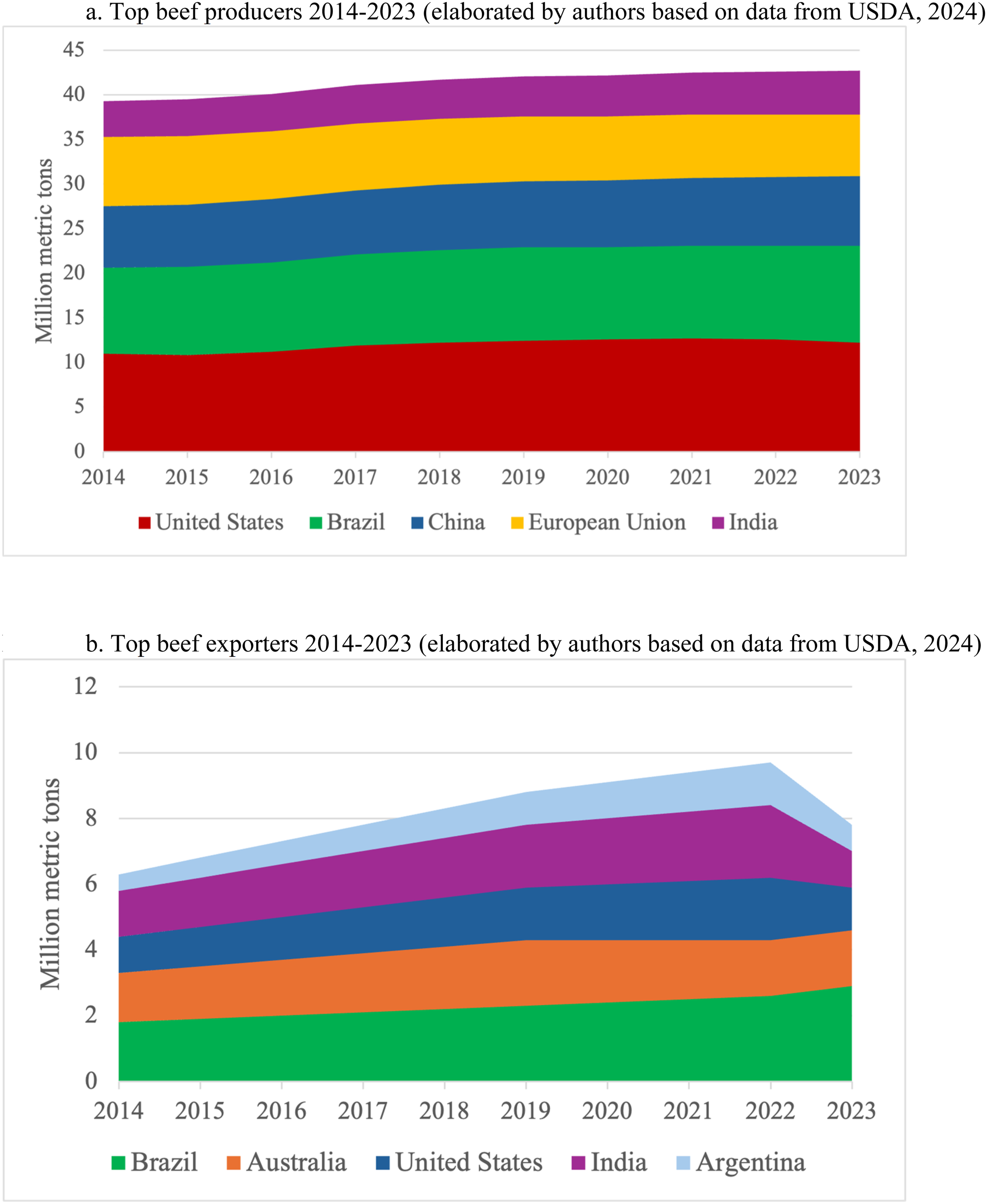
Brazilian beef production is structured around an extensive pasture system encompassing breeding, rearing, and fattening cattle, often managed by different ranchers. Indirect ranchers are responsible for the first two phases (breeding and rearing) often sell to ranchers responsible for the third phase (fattening), who then sell directly to slaughterhouses. Major slaughterhouses, such as JBS, Marfrig, and Minerva, dominate processing and exporting to key markets such as China, the United States, the European Union, and the Middle East (ABIEC, 2024; Zu Ermgassen et al., 2020). Unlike in many other agro-industrial chains where retailers or brands dominate governance, in the Brazilian beef value chain, slaughterhouses occupy the pivotal position. They mediate both upstream producer compliance and downstream market access, enabling them to orchestrate governance by setting and enforcing sustainability requirements, particularly for export markets. The bulk (75%) of Brazilian beef production is, however, consumed within Brazil (ABIEC, 2024). Domestically, following slaughtering, beef flows through cold chain logistics, regional distributors, and retail networks, including supermarkets, butcher shops, and foodservice outlets. Internationally, beef exports pass through major ports in southeastern Brazil, such as Santos and Paranaguá, where products undergo inspections to meet international standards pertaining to export markets. This central position at the intersection of upstream production and downstream markets made slaughterhouses the primary transmission point through which environmental expectations and compliance requirements began to travel along the chain.
Widespread land grabbing, irregular titling, and restricted credit access exacerbate exclusionary dynamics, limiting the ability of small and medium-sized producers to invest in more sustainable production practices. These constraints persist despite formal environmental compliance mechanisms, which are examined in detail in Section 4.2.3. Together, these dynamics set the stage for the emergence of multi-scalar governance arrangements that seek, often imperfectly, to reconcile global market integration with the socio-ecological constraints of Amazonian cattle production.
Applying the integrated GVC–SES framework to the Brazilian Beef value chain
Resource systems and environmental pressures
In the 21st century, the Brazilian beef GVC is embedded within the Amazon biome, an ecologically sensitive and geopolitically important region, where global demand, territorial governance, and socio-environmental dynamics interact in complex ways. The Amazon’s tropical rainforest ecosystems play a critical role in climate regulation, water cycles, biodiversity conservation, and sustaining the livelihoods of approximately 30 million people (Abramovay et al., 2021). The Amazon biome serves as a significant carbon sink, sequestering approximately 150–200 Pg of carbon in its biomass and soils (Gatti et al., 2021). It harbors an estimated 10% of all known species, including numerous endemic and keystone species 2 , underlining its global ecological importance (Pacheco et al., 2021). For the Brazilian beef GVC, the Amazon offers fertile conditions for pasture expansion and extensive grazing operations, particularly of capim grass 3 , yet it faces accelerating ecological degradation due to deforestation, forest fragmentation, and climatic stressors. These trends have pushed the region closer to an ecological tipping point of “savannafication,” where degraded rainforests transition irreversibly into dry tropical savannahs (Lovejoy and Nobre, 2018).
At the resource system level, the Brazilian beef GVC is a major driver of land-use change in the Amazon, where 60%–80% of deforested land is converted into cattle pasture (Dick et al., 2021; Skidmore et al., 2021). This conversion triggers cascading ecological effects, including habitat loss, biodiversity decline, and significant GHG emissions. As shown in Figure 3, forest-to-pasture transitions underscores the central role of cattle ranching in deforestation dynamics. MapBiomas data reveal that these land-use changes extend beyond primary forest clearing, encompassing secondary forests and degraded lands, highlighting persistent land-use pressures that are not fully capture by PRODES (which reports deforestation of primary forests only) (MapBiomas, 2024). Trends in land-use change and forest-to-pasture conversion in the Brazilian legal amazon (1986–2023) (MapBiomas, 2024).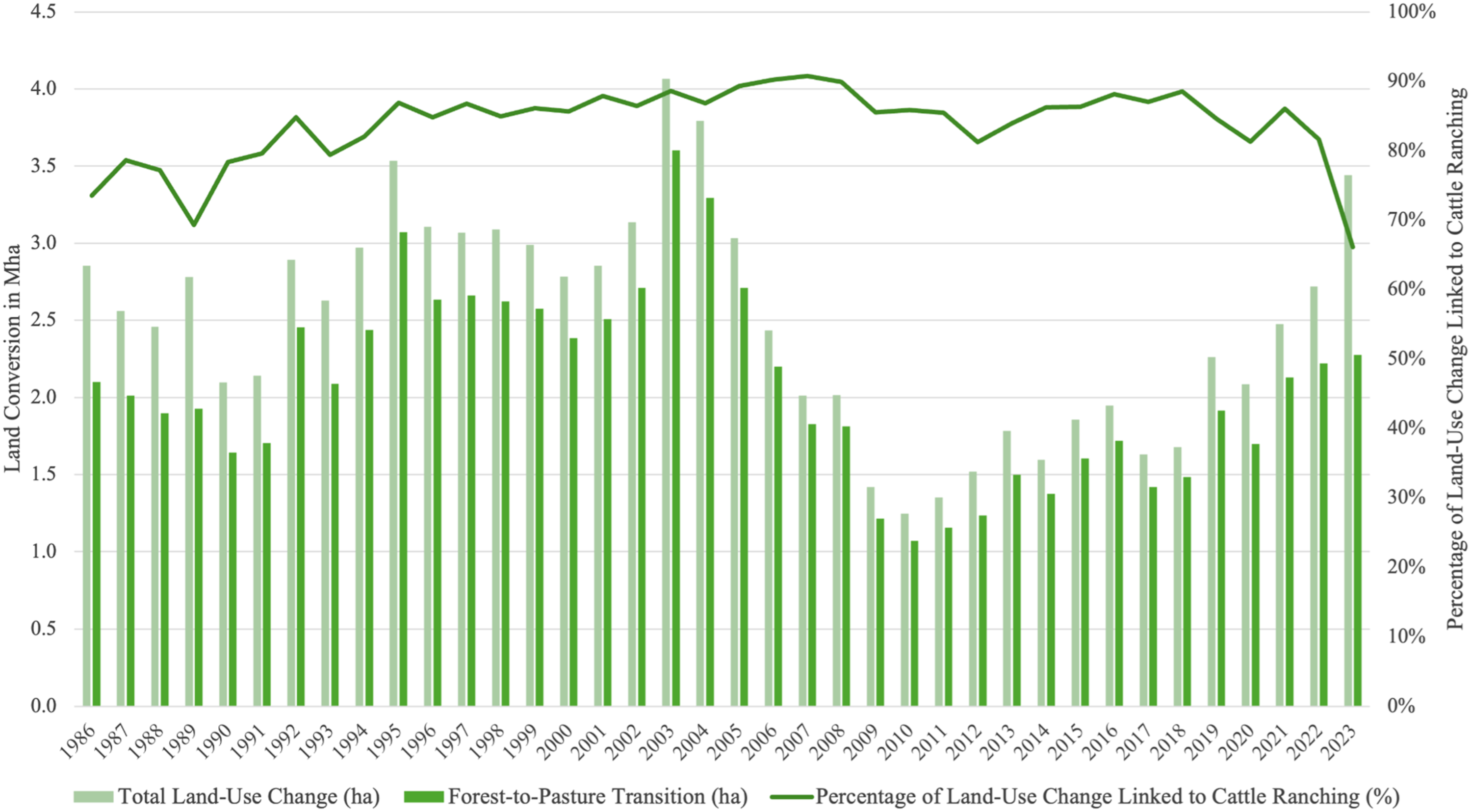
This land-use conversion undermines the Amazon’s function as a global carbon sink. Deforestation, forest degradation, and increased climate variability reduce the biome’s carbon sequestration capacity, increase tree mortality, and exacerbate drought frequency and severity (Hirota et al., 2021). These changes create a drier climate, heightening forest vulnerability to fires and further accelerating deforestation (Artaxo et al., 2021). Additional environmental impacts include the widespread use of fire for pasture management, which contributes to air pollution and respiratory health issues, as well as soil compaction, erosion, and biodiversity loss resulting from pasture expansion and habitat fragmentation (Dick et al., 2021).
The Brazilian beef GVC generates substantial GHG emissions through land-use change, enteric fermentation, and manure management. Figure 4 shows that cattle ranching is the dominant source of emissions in the region, underscoring its role as both a direct and indirect contributor to climate change. These emission sources are concentrated in the early stages of the value chain, particularly in land management decisions made by producers. As such, any meaningful mitigation strategy must target this upstream segment of the chain. GHG emissions by sector in the Brazilian Amazon region (1990–2023) (SEEG, 2024). 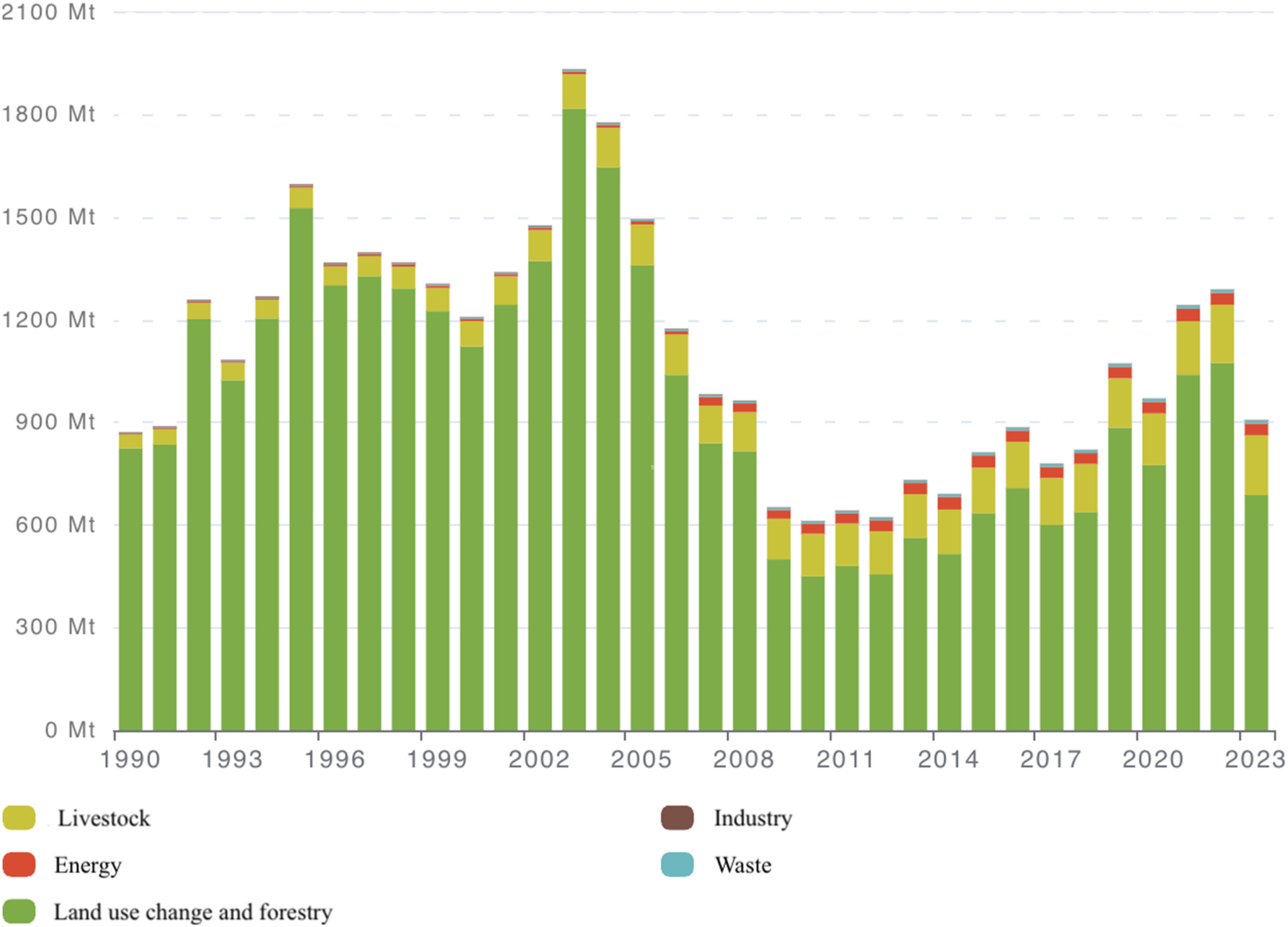
Economic drivers of land conversion in the Amazonian beef GVC
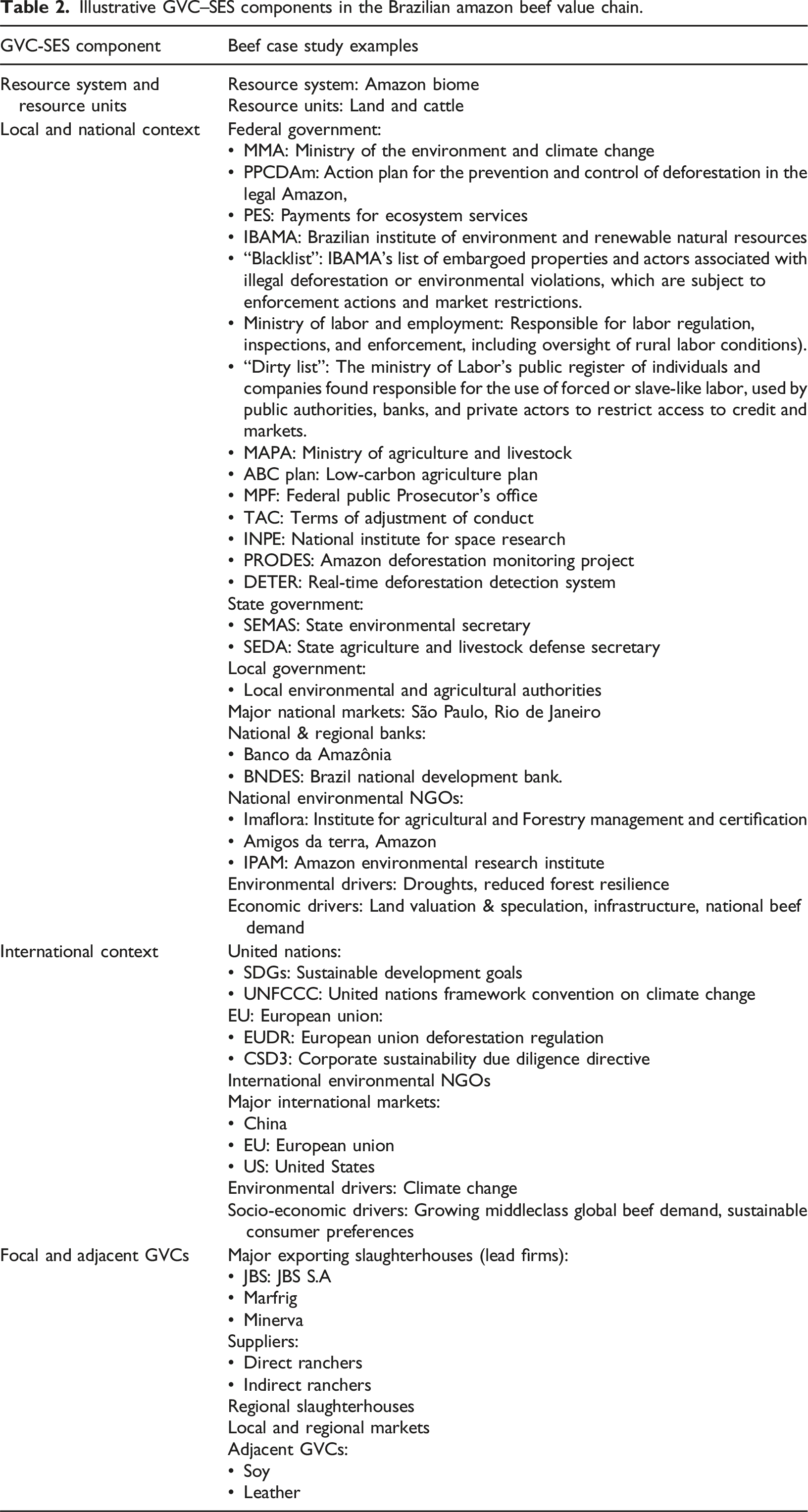
The Brazilian beef GVC-SES framework (Figure 5 and table 2) helps to conceptualize these dynamics by positioning the Amazon biome as the resource system in which the beef value chain is embedded. Figure 5 provides a schematic representation of the interactions among value chain actors, governance mechanisms, and socio-ecological feedback, while Table 2 complements the figure by listing the concrete institutions, actors, and drivers in the Brazilian Amazon beef case that correspond to each analytical component of the framework. Within this system, ranchers operate as central actors within the action-situation, making decisions about how to use resource units such as land and cattle (e.g., pasture expansion or intensification). These decisions are influenced by, and contribute to, feedback loops shaped by economic incentives, ecological conditions, and governance interventions. For instance, land value dynamics in the Brazilian Amazon are a key economic driver of pasture expansion: cleared land typically holds 58% higher market valuations than forested land, incentivizing deforestation as a pathway to capital accumulation (Moffette et al., 2024). This creates a reinforcing feedback loop where forest clearing raises land values, which in turn drives further conversion of forest into pasture. Brazilian beef GVC-SES framework within the amazon biome. Illustrative GVC–SES components in the Brazilian amazon beef value chain.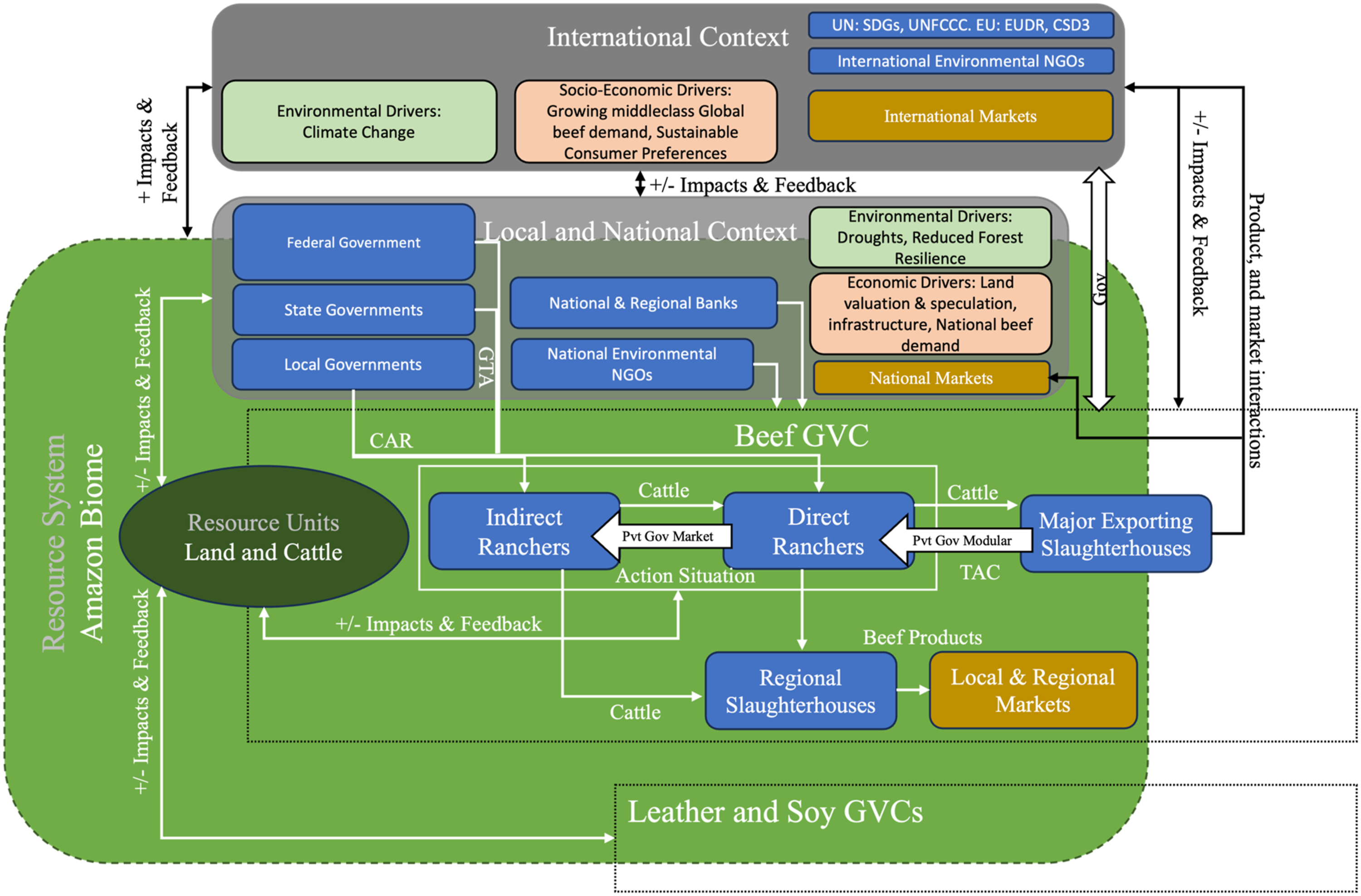
This cycle is exacerbated by speculative land grabbing, weak enforcement of environmental regulations, and financial systems that undervalue standing forests while rewarding cleared land, making pasture expansion economically rational (Fearnside, 2021; Gibbs et al., 2015). Limited access to the credit and technical resources further constrains small and medium-sized ranchers’ ability to adopt sustainable intensification practices, reinforcing deforestation as a rational, if unsustainable, land-use strategy (Lima Filho et al., 2021).
Multi-scalar governance system interactions
Environmental governance in the Brazilian beef GVC can be understood through the broader lens of polycentric and multi-scalar configuration, encompassing public institutions, private actors, hybrid arrangements, and socio-ecological feedbacks that interact across territorial and scalar dimensions (Biermann et al., 2009; Bulkeley et al., 2014; Lemos and Agrawal, 2006; Morrison et al., 2019). These governance systems encompass a mix of public policies, private standards, and hybrid governance arrangements, which interact to shape land-use decisions by influencing how actors respond to environmental pressures, economic incentives, and regulatory signals (see Figure 5). The efficacy of these systems depends not only on policy design, but also on coordination across levels of government, enforcement capacity, and the inclusiveness of implementation. Where alignment is weak or enforcement fragmented, governance interventions may fail to interrupt reinforcing ecological feedback loops or address persistent power asymmetries between actors that drive unsustainable outcomes.
At the territorial level, public governance mechanisms such as the Action Plan for the Prevention and Control of Deforestation in the Legal Amazon (PPCDAm) 4 , Forest Code (Law 12.651/2012) 5 , and the Rural Environmental Registry (CAR) 6 are foundational and operate primarily at the macro level by defining legality thresholds, monitoring obligations, and enforcement mandates. These mechanisms establish formal rules governing land use, such as mandatory forest conservation and property registration, that condition participation in cattle markets. However, their effectiveness is uneven, reflecting limited enforcement capacity, fragmented coordination across federal, state, and municipal agencies, and persistent gaps between legal design and implementation. Programs like the Payment for Environmental Services (PES) aim to address this imbalance by financially compensating landowners for conserving environmental functions, but their implementation in the Amazon has been underfunded and inconsistent (Montero-de-Oliveira et al., 2023).
Hybrid governance mechanisms translate public authority into value chain discipline by embedding legal requirements within private procurement systems. The Terms of Adjustment of Conduct (TACs), initiated by federal prosecutors in 2009, exemplify this dynamic. While grounded in public law, TACs rely on slaughterhouses to implement compliance through supplier screening, contracting, and traceability systems. In GVC terms, TACs operate at the meso-level (Ponte and Sturgeon, 2014), allowing state-defined legality to travel along the chain via firm-level coordination. Through this mechanism, slaughterhouses exercise institutional power by enforcing public rules privately, reshaping supplier behavior without direct state presence at the farm level (Dallas et al., 2019).
Private governance mechanisms aim to further extend sustainability requirements beyond formal state regulation. The G4 Agreement, also known as the Public Livestock Commitment (CPP), represents a voluntary, NGO-driven initiative through which major slaughterhouses commit to excluding cattle linked to deforestation. Unlike TACs, the CPP is not legally binding, but it exerts influence through market access and reputational risk. Operating primarily at the micro- and meso-levels (Ponte and Sturgeon, 2014), the CPP enables slaughterhouses to exercise bargaining and demonstrative power by conditioning purchases on compliance and diffusing norms of acceptable production across supplier networks (Dallas et al., 2019).
Across public, hybrid, and private governance mechanisms, CAR functions as a critical infrastructural node through which governance is intended to travel along the beef value chain, linking property boundaries to satellite-based deforestation monitoring. In practice, CAR is commonly combined with the Animal Transit Guide (GTA), which records cattle movements between properties and slaughterhouses at the lot level. While this combination enables transaction-based traceability, it does not provide individual animal traceability, limiting the ability to reconstruct full life-cycle movements across multiple properties. Brazil’s individual traceability system, the Brazilian System for Identification and Certification of Bovine and Bubaline Origin (SISBOV), remains confined to a small subset of export-oriented producers and is not widely implemented across the sector. As a result, although satellite monitoring can detect deforestation at the property level, indirect suppliers (i.e., ranchers who sell cattle to other ranchers who then go on to sell it to the slaughterhouse) frequently evade governance because intermediated transactions obscure the linkage between cattle movements, originating properties, and land-use change. In GVC terms, this reflects a breakdown in meso-level coordination, where governance mechanisms fail to fully translate macro-level rules into micro-level compliance (Ponte and Sturgeon, 2014). These traceability gaps weaken institutional and infrastructural power, allowing non-compliant ranchers to continue supplying the chain and reinforcing deforestation-driven feedback loops. State enforcement agencies, particularly IBAMA, alongside NGOs, partially mitigate these failures through inspections, embargoes, and monitoring and disclosure initiatives; however, enforcement capacity and civil-society oversight remain uneven and insufficient to close traceability gaps at scale. At the same time, as CAR registration increasingly conditions access to credit and formal markets, these governance arrangements can discipline deforestation while simultaneously reproducing exclusionary dynamics, disproportionately constraining smaller and informal ranchers’ capacity to invest in sustainable intensification (Dallas et al., 2019).
Environmental governance is also shaped by national political cycles and macroeconomic trends. Brazil’s oscillating enforcement of forest protection laws has had direct impacts on deforestation rates. The first Lula administration (2003–2010), in partnership with civil society, achieved significant reductions in deforestation through the rollout of PPCDAm and improved enforcement by the Brazilian Institute of Environment and Renewable Natural Resources (IBAMA) 7 and the Chico Mendes Institute for Biodiversity Conservation (ICMBio) 8 . However, subsequent administrations weakened environmental protections amid growing pressure from the ruralist caucus by dismantling key institutions and curtailing monitoring efforts, triggering a rise in illegal deforestation, land grabbing, and pasture expansion (Menezes and Barbosa, 2021). While deforestation levels increased during President Bolsonaro’s term, they did not reach the historical highs of the late 1990s and early 2000s suggesting that international public and private environmental governance mechanisms may have played a constraining role by exerting external pressure on supply chains. In contrast, the current Lula administration (2023–present) has pursued a strategy of institutional reconstruction, combining the restoration of enforcement capacity (including increased budgets and personnel for IBAMA and ICMBio) with renewed international engagement. This includes recommitment to the Paris Agreement, a renewed pledge to achieve zero deforestation by 2030, participation in the Global Methane Pledge, and leadership on forest finance initiatives such as the Tropical Forests Forever Facility (TFFF), alongside the reactivation of PPCDAm and Brazil’s hosting of UNFCCC Conference of the Parties (COP30). These measures seek to re-embed domestic forest governance within a denser multi-scalar landscape shaped by international climate regimes, emerging trade regulations, and private sustainability initiatives, potentially enhancing policy resilience and effectiveness.
Adjacent GVCs, such as soy and leather, amplify pressures on the Amazon. Soy, as a primary cattle feed, contributes directly to deforestation for cultivation and indirectly supports pasture expansion. Similarly, the leather GVC relies on bovine hides, incentivizing cattle production and intensifying land-use pressures (Zu Ermgassen et al., 2020). National subsidies for agricultural expansion and the undervaluation of preserved forests further reinforce deforestation-driven feedback loops by incentivizing land clearing for economic gain (Rajão et al., 2020).
At the international level, trade policies and global consumer trends shape the sustainability landscape. The European Union’s Deforestation Regulation (EUDR) and Corporate Sustainability Due Diligence Directive aim to exclude deforestation-linked products from markets, strengthening institutional power over lead firms. However, persistent traceability gaps, especially for upstream actors like ranchers, limit their effectiveness (Levy et al., 2023). Meanwhile, rising beef demand from middle-class consumers in Asia, particularly China, continues to drive production, while China’s sustainability requirements remain less stringent than those of the EU (Raleira et al., 2022). These global dynamics create indirect but powerful signals that shape governance adaptations within the beef GVC.
These dynamics reinforce that environmental governance is not a discrete regulatory layer, but a distributed system embedded within GVC relations and socio-ecological feedback. Existing scholarship on environmental governance highlights its polycentric and multi-actor nature (Lemos and Agrawal, 2006; Morrison et al., 2019), its institutional and scalar fragmentation (Biermann et al., 2009), and the growing influence of transnational private regulation (Bulkeley et al., 2014). Our GVC–SES framework extends this body of work by showing how governance is co-produced through interactions among lead firms, public authorities, and ecological processes across scales.
Feedback loops and leverage points
The Brazilian beef GVC in the Amazon is embedded in a network of interconnected feedback loops that reinforce unsustainable land-use practices but also reveal underutilized leverage points for sustainability. Figure 6 maps these dynamics by illustrating how environmental, economic, and institutional factors interact to shape rancher behavior and land-use outcomes. Feedback loops and leverage points in the Brazil beef GVC-SES in the Amazon biome.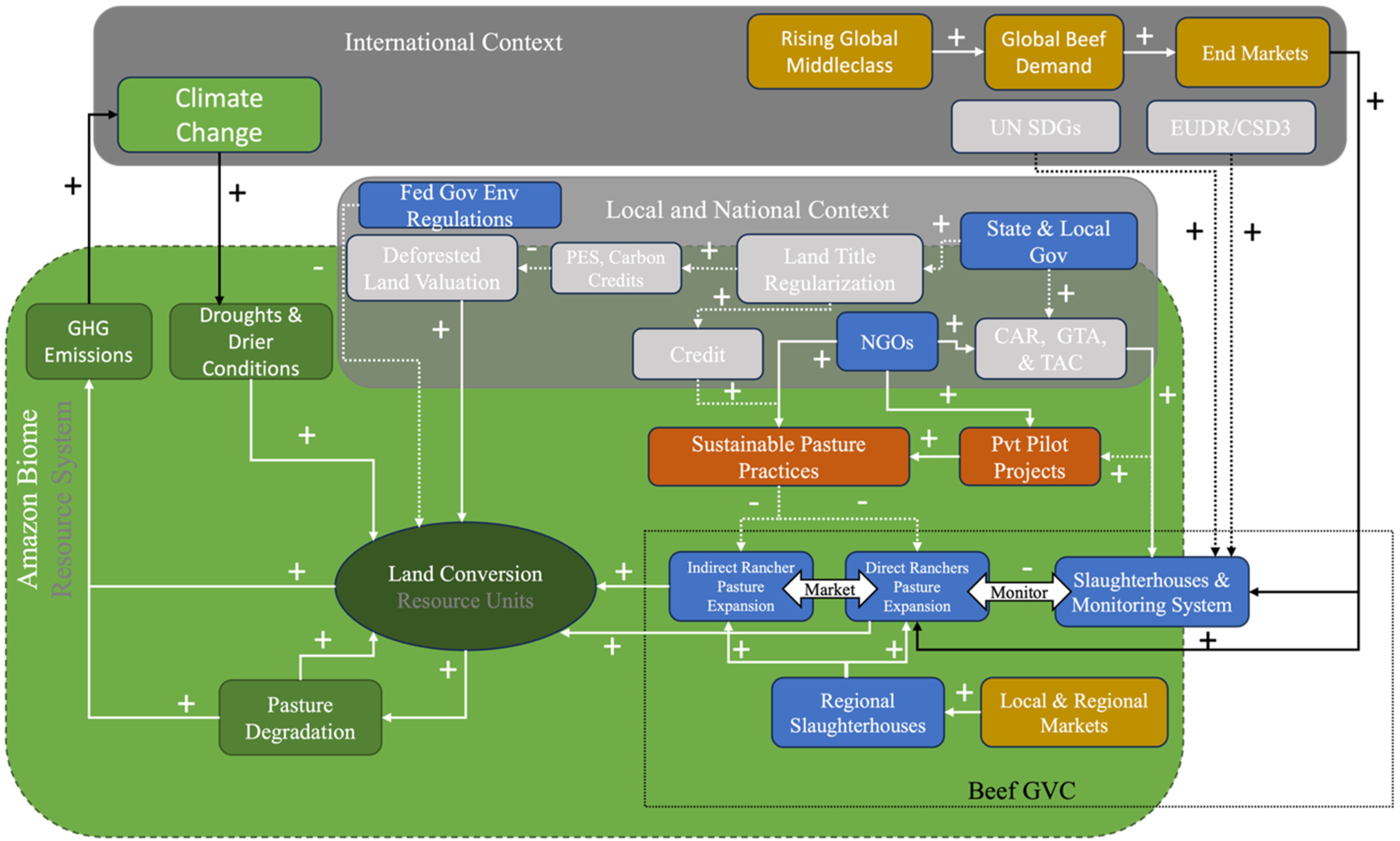
Reinforcing (positive) feedback loops dominate the system. Rising global beef demand, driven by a growing middle class, translates into pressures on land use in the Amazon. Land clearing for pasture increases land values (Moffette et al., 2024), incentivizing further deforestation.
Ecological degradation also contributes to the feedback cycle. Once forests are cleared, soil fertility rapidly declines due to nutrient loss, leading to pasture degradation. With degraded pastures yielding diminishing returns, ranchers (especially small and indirect ones vis-à-vis the slaughterhouse) often clear new forest to sustain production (Dick et al., 2021). This cycle is exacerbated by climate-induced droughts and broader speculative dynamics in Amazonian land markets.
At the same time, public governance mechanisms through environmental regulations, such as the Forest Code, are designed to act as balancing (negative) feedback, increasing the costs and constraints associated with deforestation and by stabilizing land-use decisions over time. In principle, effective enforcement of the forest code’s Legal Reserve (requiring land owners to preserve 80% of their property in the Amazon) and Permanent Preservation Area (APP) requirements (that protect riparian zones, hilltops, springs, and steep slopes) would limit the conversion of forest to pasture, reduce speculative land clearing, and dampen the land-value feedback that incentivizes deforestation. For example, where Forest Code compliance is credibly enforced, through embargoes, fines, or restrictions on market access, clearing additional forest ceases to generate economic returns, interrupting the reinforcing loop linking deforestation, land valuation, and pasture expansion. Broader enforcement architectures, such as PPCDAm and associated measures like priority-municipality monitoring and embargo “blacklists,” are intended to operationalize these constraints at scale by coordinating monitoring, enforcement, and land-use planning across levels of government. However, as reflected in Figure 6 by dotted arrows, these balancing feedbacks remain weak or fragmented in practice due to enforcement gaps and persistent traceability failures for indirect suppliers. As a result, balancing feedbacks currently fail to counteract reinforcing dynamics at the scale and intensity required to shift land-use trajectories, allowing deforestation-driven loops to persist despite the formal presence of environmental regulation.
Land title regularization is central to unlocking several dormant balancing loops. Without legal titles, small ranchers cannot access credit, which limits their ability to adopt sustainable pasture practices like integrated crop-livestock system (ILPF) or silvopastoral systems (SPS) (Stabile et al., 2020). Although public programs such as Brazil’s ABC Plan offer low-interest loans, they remain inaccessible to many poorly capitalized producers. PES schemes and carbon credits could help revalue standing forests, but their limited scale and funding reduce impact.
In response, private sector actors have launched pilot initiatives, such as JBS’s Juntos pela Amazônia, Marfrig’s Verde+, and Minerva’s Renove, often in collaboration with NGOs like Imaflora, TNC, and WRI. These aim to support technical assistance and reintegrate non-compliant producers. These initiatives share a common theory of change: by combining technical assistance, conditional market access, and gradual reintegration of non-compliant producers, they seek to reduce reliance on extensification and weaken the feedback loop linking pasture degradation to new deforestation. Represented in red-orange in Figure 6, these efforts contribute to emerging balancing loops by lowering barriers to intensification and increasing the opportunity cost of deforestation. However, their effects remain localized and contingent, as pilots typically operate outside binding regulatory frameworks and depend on voluntary participation and firm-level incentives.
For these initiatives to generate meaningful landscape-level impact, they must be integrated into broader public and hybrid governance architectures. Hybrid mechanisms such as TACs provide a critical linkage by translating public legality requirements into private procurement practices, while jurisdictional approaches, such as Pará’s jurisdictional REDD + system and the Green Municipalities Program (PMV), offer platforms for coordinating enforcement, incentives, and technical support across territories (Stickler et al., 2018). When aligned, these public, private, and hybrid mechanisms can reinforce one another: public enforcement constrains deforestation, private initiatives support compliance and intensification, and jurisdictional programs reduce leakage and fragmentation across municipalities.
Reinforcing feedback loops continue to drive deforestation and pasture expansion in the Amazonian beef GVC, while balancing feedback loops remain weak or unevenly activated. Rather than acting as silver bullets, governance interventions shape system outcomes through their interaction and alignment across scales. Unlocking sustainability hinges on activating key leverage points, most notably land tenure regularization, credible enforcement of environmental regulation, inclusive access to credit, and targeted technical assistance. Strengthening these interlinked balancing feedbacks can shift the system toward a more resilient equilibrium in which economic returns are increasingly decoupled from forest conversion, even if full sustainability remains an aspirational rather than immediate outcome.
Conclusion
This article makes two key contributions. First, conceptually, it proposes an integrated GVC–SES framework that links global value chain governance with socio-ecological dynamics, offering a novel analytical lens to trace how power relations, governance mechanisms, and ecological feedbacks jointly shape land-use outcomes. Second, empirically, it applies this framework to the Brazilian beef value chain in the Amazon biome, demonstrating how governance structures, asymmetries of power among actors, and feedback loops interact to reinforce unsustainable practices, or, alternatively, create leverage points for transformation. By grounding this analytical framework empirically, the paper advances theoretical integration while producing practical insights into how GVC governance can be better aligned with the sustainability of the ecosystems on which it depends.
This paper contributes to rethinking environmental governance by offering an operationalizable analytical framework that bridges the institutional and power-oriented insights of GVC analysis with the ecological interdependencies of SES thinking. Drawing on GVC scholarship, particularly work on power and governance (e.g., Dallas et al., 2019; Ponte and Sturgeon, 2014), the analysis shows how different forms of power shape how environmental rules travel (or fail to travel) along the chain, with uneven consequences for different actors. It enriches GVC analysis by embedding environmental feedback loops into governance and power structures, addressing a gap in understanding how ecological dynamics condition economic coordination. Similarly, it strengthens SES studies by incorporating GVC governance complexities, enabling better understanding of how international dimensions influence local socio-ecological systems. In combining these perspectives, the GVC-SES framework foregrounds power not only as a relational attribute of firms, but as a structural feature of multi-scalar governance that shapes who bears the costs of sustainability transitions and who captures their benefits.
Beyond the Brazilian beef GVC, this framework is adaptable to other sectors, such as palm oil, soy, coffee, fisheries, or mining, where governance and ecological interactions are critical. Policymakers and practitioners can leverage the insights to prioritize interventions that reshape feedback dynamics (whether reinforcing or balancing) toward more sustainable outcomes. This could systematically change GVCs and their dynamics by integrating them within SESs to bring about sustainable transitions. Finally, future research should explore the scalability of such interventions and examine the dynamics between adjacent GVCs to address cross-sectoral sustainability challenges comprehensively.
Footnotes
Acknowledgements
The authors also thank the support of the University of Manchester and FGV EAESP, as well as the partners in the Amazônia+10 Initiative and interviewees. José A. Puppim de Oliveira is Visiting Chair Professor at the Institute for Global Public Policy, Fudan University, China.

Funding
The authors disclosed receipt of the following financial support for the research, authorship, and/or publication of this article: This work was supported by the Fundação de Amparo à Pesquisa do Estado de São Paulo (#2022/12287-1, #2023/05865-1, #2024/00258-2, #2022/14558-2, #2023/00685-5) and the CNPq (#303117/2022-2).
Declaration of conflicting interests
The authors declared no potential conflicts of interest with respect to the research, authorship, and/or publication of this article.