







Abstract
Mobility of mainland Chinese students across national borders has become common worldwide; however, the underlying reasons that motivate these students to pursue postgraduation abroad and why these factors are influential are not sufficiently studied. By analyzing the results of a case study performed at three British universities, we examine the motivations of mainland Chinese students for choosing courses and study locations in the United Kingdom. Based on data we collected via questionnaires and interviews, we compare demographic differences to explore the diversity among this cohort. Our findings show that motivations for overseas education are related to conditions in China and abroad. In addition, older students and those in MA programs are more strongly influenced by a need to experience different cultures; younger students and those in MSc programs are more strongly driven by academics-related factors. Our findings have important implications for universities to develop more effective selection policies particularly for target mainland Chinese students.
Keywords
In the context of neoliberal marketization and economic globalization, higher education has been deemed an international service. The volume of self-funded overseas students has greatly increased; the demand for international higher education continues to grow. This is especially true for China; by 2020, the number of Chinese students in the United Kingdom is predicted to be approximately 72,000 (Böhm et al., 2004). In 2009, 10% of mainland Chinese students traveled overseas to the United Kingdom for higher studies, making the United Kingdom the fourth most popular destination (United Nations Educational, Scientific and Cultural Organization [UNESCO], 2010). Research on Chinese students has drawn much attention across western societies. However findings of various international surveys, such as the International Student Barometer (ISB), as well as studies by Lowe (2007) and Maringe and Carter (2007), indicate that additional studies are required to sufficiently meet the expectations of international students, particularly their subgroups. Although international students share commonalities, their subgroups display significant differences (Sánchez, Fornerino, & Zhang, 2006). For instance, a handful of studies (Cross & Hitchcock, 2007; Wong & Wen, 2001) find that students from mainland China, Hong Kong, and Taiwan behave differently in Western institutions. Therefore, for countries that are seeking to attract more mainland Chinese students, there is a need to differentiate mainland Chinese students from the other subgroups of Chinese students.
The expression Chinese students throughout refers to mainland Chinese students. We confined our exploration to this population in an attempt to avoid oversimplifying the heterogeneous nature of the students from various Chinese societies.
Patterns of Mainland Chinese Students’ Overseas Mobility
The reasons for Chinese students opting overseas education are constantly evolving, resulting from their interpretation of their experiences in their country. The primary motivations reported for overseas education before the 1990s were academically oriented and were directly linked to political, geostrategic, and cultural issues and considerations. Students and academicians were mainly financed by the government. The motives for overseas study at the earlier stage of the inception of mainland China were to learn theories of Marxism and Leninism to help build a new socialist society and address the demands of the Communist system (Yao, 2004). Socialist countries such as the former Soviet Russia and the Eastern Bloc countries were the most popular among Chinese students at that time. The political situation in China changed in the 1980s and 1990s, shifting from a planned economy to a socialist market-based economy; hence, the desired destination countries for Chinese students broadened. Students were selected based on their political background and professional qualifications.
Since the late 1990s, the reasons reported by individuals for studying overseas have become more complex; patterns have changed significantly in recent years. The proportion of self-funded students has greatly increased, and the role of government has changed from direct sponsorship to regulation and facilitation (M. Li & Bray, 2007). Individuals have more choices concerning destinations and fields of study. In 2009, 73% of Chinese students studying abroad chose the United States, Japan, Australia, Britain, or South Korea (UNESCO, 2010).Chinese students have traditionally studied mostly science-related fields, such as physics and mathematics; however, now, they are well represented in many other fields, including management, business economics, and engineering (H. Li, 2010).
In summary, the motivations for overseas study among Chinese students over the previous decades suggest that social and historical forces affect these choices and decision-making processes. Changes in these forces are rarely noted although they can offer guidance and direction to students. It is therefore necessary to seek alternative ways of exploring demand for overseas education in relation to contextual changes (Findlay, 2011).
Human-Capital Theory
Using an integrative approach to consider human capital related to other forms of capital, existing studies identify three dimensions of human capital to explain the reasons for overseas education: scholastic, social, and cultural (Lowe, 2007; Useem & Karabel, 1986). Scholastic capital refers to knowledge attainment resulting from coursework undertaken in the degree program. Social capital is defined as resources contained within social networks and ties. Cultural capital is defined as that manifested by “the value society placed on symbols of prestige” (Baruch, Bell, & Gray, 2005, p. 3). Furthermore, in education, cultural capital refers to academic credentials (Bourdieu & Nice, 2001). The human-capital perspective provides a valuable framework to explain the behaviors and decision processes of students for pursing overseas programs; this framework reflects context-mediated motivations but overlooks the impact of internal dimensions, including individual socioeconomic backgrounds, personal characteristics, academic ability, and aspiration when accumulating various forms of human capital.
By considering external influences and individual aspirations, the literature on overseas education identifies various motivating factors: high quality of overseas courses, desire to improve international competence, desire for better understanding of foreign societies, attempted migration after graduation, environment conditions, and future job prospects (Gareth, 2005; Gu, Schweisfurth, & Day, 2010; Lowe, 2007). Furthermore, family expectations have significant effects on the choices and decision-making processes of individuals (Bodycott & Lai, 2012; Mazzarol & Soutar, 2002). Each of these studies offers valuable perspectives on reasons determining choice of overseas education. However, little detailed analysis has evaluated the weight of each factor believed to influence students’ decisions; even lesser comparative studies on the influence of different factors among different segments of students have been conducted. To explore these issues, our study was designed to address the questions of what motivated Chinese students:
to study abroad
to study in Britain
to study at the host university
to study the chosen subject
Method
Participants
The survey was first pilot tested with 20 Chinese students to ensure that the questions were clear and capable of effectively capturing information. Once these conditions were satisfied, 169 participants (60 men and 109 women) provided valid data. Our cohort ranged from 22 to 34 years (Table 1). All participants were originally from mainland China and had enrolled in master’s programs in the academic year 2009 through 2010 at three British universities (coded as U1, U2, and U3).
Demographics of Survey Participants.
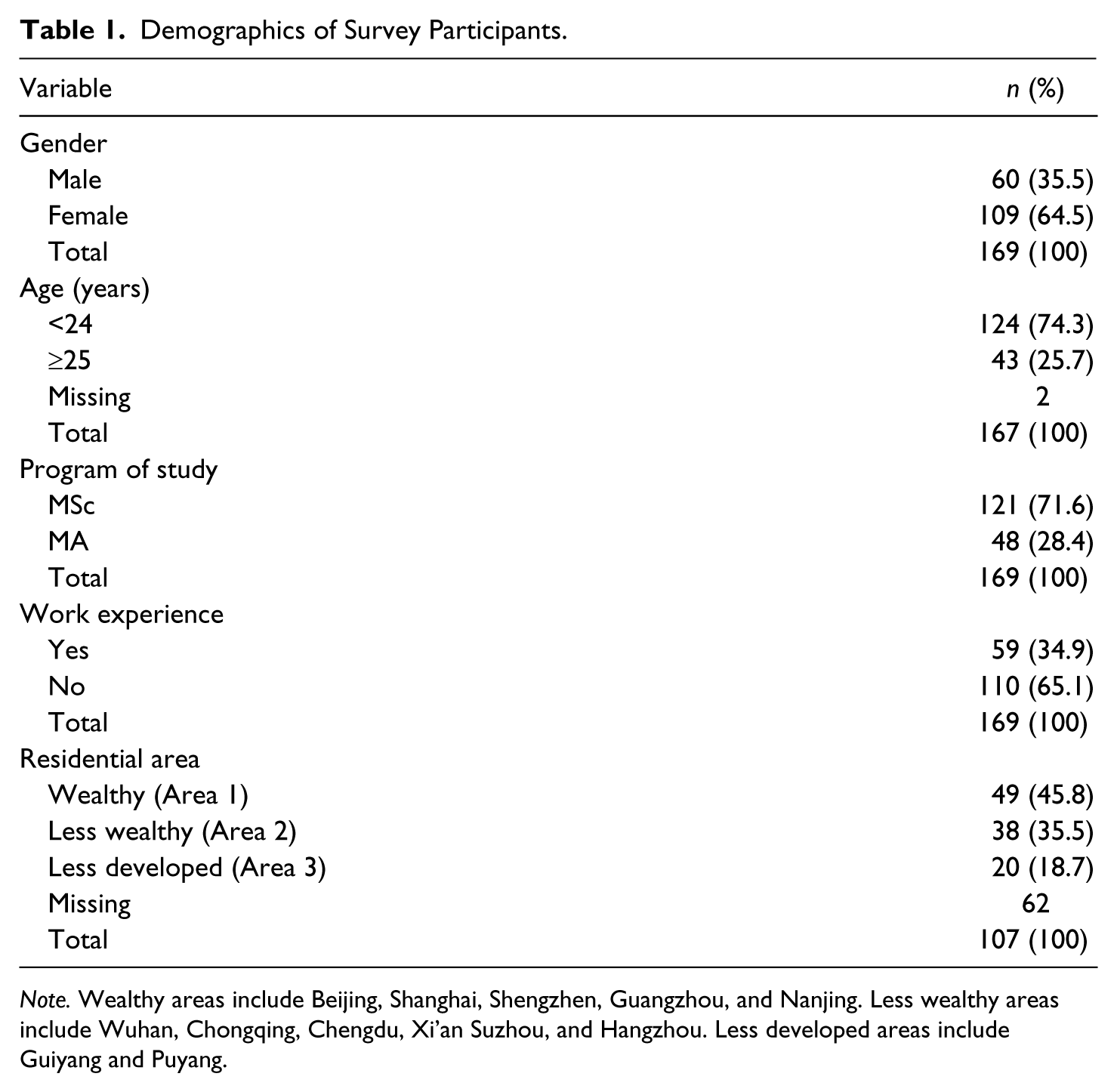
Note. Wealthy areas include Beijing, Shanghai, Shengzhen, Guangzhou, and Nanjing. Less wealthy areas include Wuhan, Chongqing, Chengdu, Xi’an Suzhou, and Hangzhou. Less developed areas include Guiyang and Puyang.
Interviewees were selected based on gender, study program, age, and residence in mainland China to ensure less biased and more representative views. Of the 30 participants we interviewed, 13 were women and 17 were men. Two focus-group discussions were conducted, consisting of 7 and 5 students, respectively.
Materials and Procedures
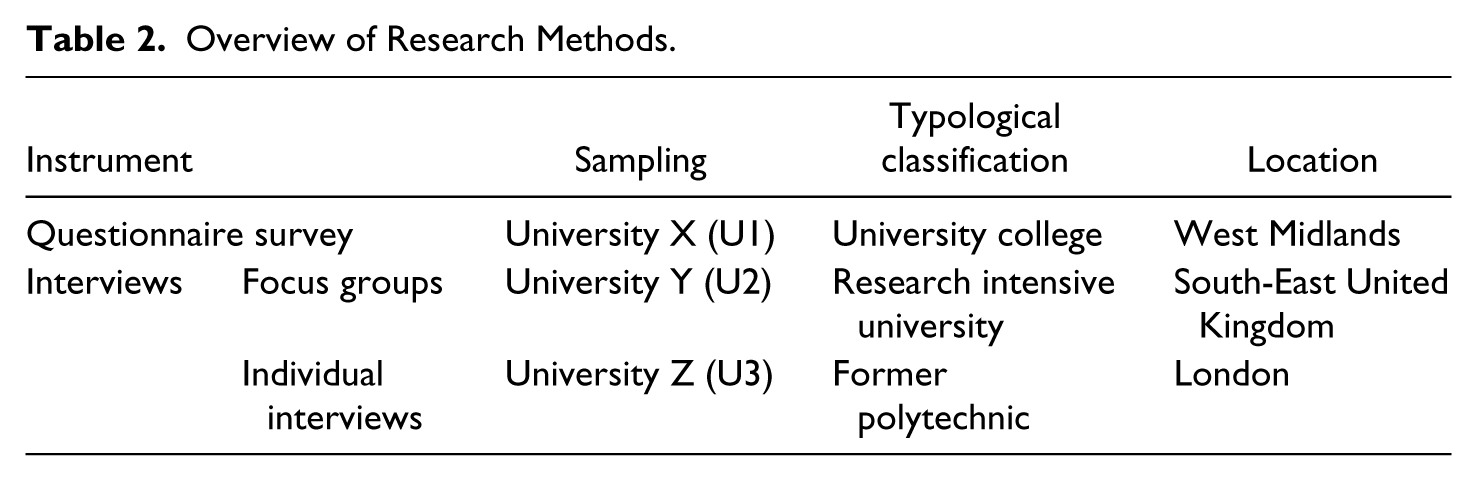
An overview of the research methods is presented in Table 2. For the case study, we began by administering questionnaires, to establish macro-level descriptions of student factors such as the decision to study abroad, the choice of studying in Britain, the selection of a host university, and the field of study. The questions were initially in English and then translated into Chinese. The accuracy of the translations was checked by a native speaker. A 5-point Likert-type scale (5 = strongly agree to 1 = strongly disagree) was used to measure the extent to which various factors influenced the decision process. Fifty-seven factors were developed based on issues that emerged from the literature review (Binsardi & Ekwulugo, 2003; Chan, 1999; Maringe & Carter, 2007; Mazzarol, 1998; Mazzarol & Soutar, 2002; Yao, 2004), the researcher’s personal experience as an overseas student from mainland China, and discussion with experts in international students education (see the appendix). These categories and issues were identified after triangulation of results from interviews and focus-group discussions. Furthermore, results of the questionnaire survey revealed a general trend, with regard to how majority of the students felt about these factors. Interviews provided opportunities for students to provide more detailed explanations. Each group of Chinese students at three universities constituted a unit of analysis.
Overview of Research Methods.
Results
We analyzed the survey data using the SPSS (version 18.0, Chicago, IL). We computed descriptive statistics (i.e., means and standard deviation) to identify the differing influences of various motivating factors. For descriptive comparison, we selected five independent variables to compare: age, gender, study program, residence in mainland China based on economic research China report in 2011, and work experience. We compared two variables using the independent sample t test; for two or more unrelated variables, we used one-way ANOVA to identify how the influence of different factors varies between different segments of students. We analyzed the interview data using the qualitative computerized data analysis tool Nvivo8 (QSR International Pty Ltd, Doncaster, Australia).
Motivating Factors for Pursuing Postgraduate Programs Abroad
The extant literature in recent decades suggests that the main motivations for overseas education involve professional and academic development (Altbach, 1991; Mazzarol, 1998; Yao, 2004). However, our study also identified key factors such as “to broaden horizons and experience different cultures and lifestyles” (M = 4.37, SD = 0.81), followed by “to experience a native-English-speaking environment” (M = 4.34, SD = 0.84) and “to advance future career development” (M = 4.28, SD = 0.83). Notably, mean scores for the academics-related motives “to obtain advanced subject and professional knowledge” (M = 3.93, SD = 0.88) were lower than a desire “to experience different modes of teaching” (M = 3.96, SD = 1.07). Based on our further exploration of motivations for overseas study, five themes emerged from interview discussions as follows.
Cultural enrichment
The most frequent, universal, response among participants was that their desire for intercultural immersion had triggered their decision to pursue overseas studies. This to some extent is echoed by results from questionnaire surveys mentioned above. Students typically described it as an opportunity to experience something new, as summarized in the following statement: The first reason is to see a different society, to network with all kinds of people. Of course, it is also a life-changing experience. Plus, the need to embrace different things whilst staying abroad, it can make me more adaptable. (Student 1, U1)
In addition, pervasive use of the Internet inspired the desire to go abroad. One interviewee articulated, “I use the Internet quite often. Sometimes, I feel that the outside world is different from that in China. I want to go out and have a look” (Student 2, U2).
Many other interviewees also expressed an interest to improve their mastery of the English language during their master’s studies: “Living and studying in the UK is a good chance to learn how local people use their language through listening, observing, and imitating” (Student 3, U1).
Career betterment
Due partly to the fact that returning to China obtained better treatment in the workplace than their domestically educated counterparts (Gareth, 2005), the career success of the returnees seems to affect students’ perceptions of overseas degrees. Interviewees indicated, “My internship took place at company X; my boss and most senior staff have overseas qualifications or experiences. I wouldn’t have any advantages without such a qualification. I do not want to lose at the starting line” (Student 4, U2).
Students also sensed a need to develop a range of learning skills because “the onus for employment has been transferred to the individual” in the modern knowledge-based society (Rassool, 2004, p. 20). One hoped “to improve self-directed learning skills” (Student 15, focus group, U1). Another added, “to learn different learning skills to deal with problems in different situations” (Student 5, U2).
Personal growth and development
Compared with the earlier generations in the 1990s who had aimed to assist in the development of Chinese socialist society (Yao, 2004), contemporary students clearly seek personal goals and self-development: “I want to see what is going on by living alone outside [China] If I can survive in an unfamiliar environment, I will become more confident” (Student 6, U2).
With regard to motivation to “gain eye-opening experiences” statistically significant differences were found between students aged <25 and ≥25 years, t(161) = 2.136, p < .05. Younger students (<25 years old) often described how they wished to build up extensive campus social networks through direct contact with people from different cultures. Moreover, older participants exhibited higher mean scores on the motivation “to change my current situation” than the younger participants, t(161) = 2.136, p < .05. These results are shown in Table 3.
Results by Age.
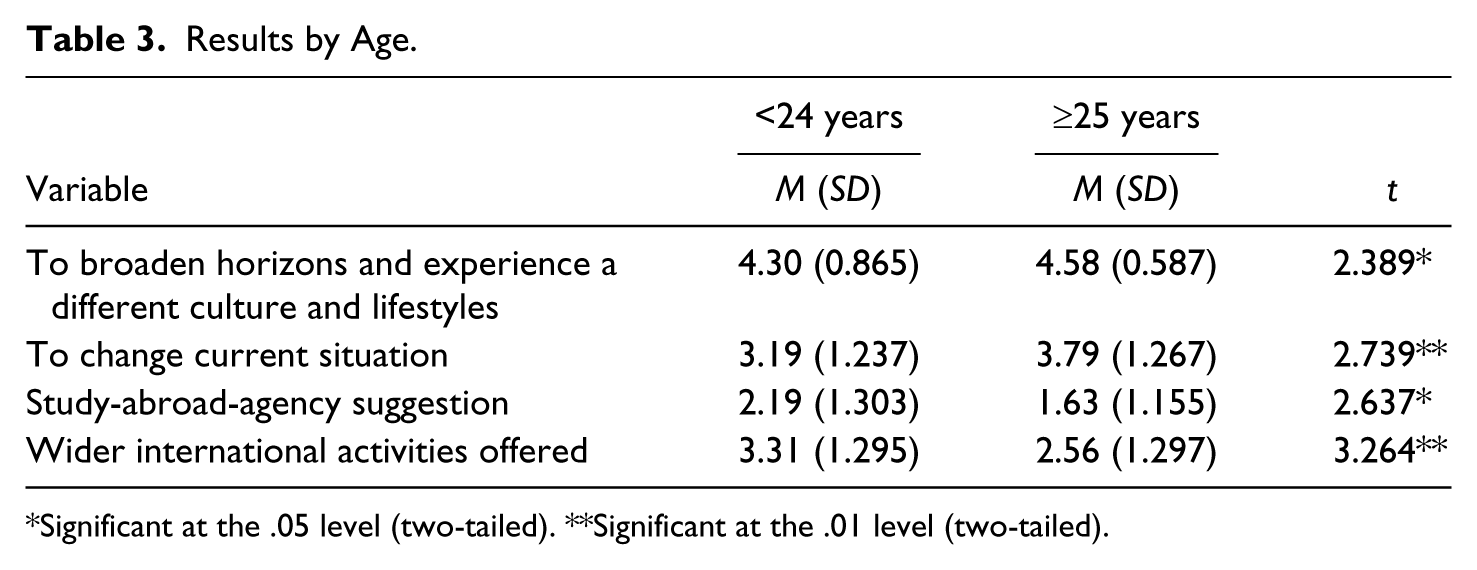
Significant at the .05 level (two-tailed). **Significant at the .01 level (two-tailed).
Motivations for Choosing to Study in Britain
When participants were asked to rate the reasons for choosing Britain as their destination, the highest score was given to “a good opportunity to improve my English language” (M = 4.36, SD = 0.77), followed by the “natural English language environment” (M = 4.31, SD = 0.82), the “world-class higher education system” (M = 3.87, SD = 1.00), and the “worldwide-recognized qualification” (M = 3.81, SD = 0.96). The findings reinforce students’ desire for English proficiency by studying in the United Kingdom, echoing the findings of Binsardi and Ekwulugo (2003), Chan (1999), and Sánchez et al. (2006). Interestingly, the fact that master’s degrees in British universities only take 1 year to attain was a fairly influential factor among participants (M = 3.62, SD = 1.30). Furthermore, participants appreciated the experience of being exposed to “high-quality, flexible teaching” (M = 3.50, SD = 1.08) as well as “independent modes of learning” (M = 3.27, SD = 1.28). These have rarely been mentioned in previous studies as influential factors. This result is inconsistent with the states generated from the follow-up interviews.
High-quality programs
Many students interviewed continued to aim first for the United Kingdom, drawing by its world-class educational system. Students felt that British universities often had superior teaching systems, whereas the teaching and learning methods in most Chinese universities were old-fashioned and stifled their passion for learning. They wanted to experience better learning opportunities. One stated, “When I was at home, I didn’t like studying. I hoped the different environment would inspire my enthusiasm for learning” (Student 7, U2).
Interviewees go on to state that institutional recognition and reputation were not only associated with the quality of academic staff but also entailed more promising employment prospects after graduation. For example, “Based on my experience, students with British qualifications are more competitive than those from other countries” (Student 8, U2).
Length of and access to postgraduate programs
When asked why they preferred Britain over other popular destinations, several students responded that they did consider alternative countries such as Canada, the United States, and Australia. However, a large number of students decided not to pursue their studies in these countries mainly because of the specific nature of a masters’ program in Britain and its added value. One student maintained, For taking master’s program, I just wanted to study in Britain. The duration of master’s degree is short, so the total cost of 1-year master program is less than elsewhere, where it takes at least 2 years. Plus the exchange rate is lower than before . . . International study is more like an investment. Before I make an investment, I must consider various factors. (Student12, U2)
A postgraduate degree in China normally takes 3 years to attain, which raises issues of age when a large number of master’s degree holders pour into the labor market each year: “My friends in Britain can complete their studies in 1 year. They are obviously younger than me and more competitive in the job seeking” (Student 5, U2).
Another key factor for studying in Britain is the intense competition to gain admission at the postgraduate level in Chinese universities: “It takes time to prepare for the postgraduate entrance examination [in China]. If I do not pass it, I have to wait for a year to take another examination” (Student 5, U2).
Impact of Decision Influencers
Moreover, it is empirically well known that social agents, most notably family members, teachers, and friends, positively influence students’ choices (Bodycott & Lai, 2012; Mazzarol & Soutar, 2002). However, there is little evidence for a prolonged effect on postgraduate students, who appeared to take more responsibility for their decisions: low ratings were assigned to recommendations from parents, friends, and significant others (M = 2.77, SD = 1.36). Students we interviewed explained the diverse roles their parents played in their decision process: “My parents listed the pros and cons for me for reference. I made the final decision” (Student 5, U2).
Although similar comments centered on the five motivating factors, this does not mean that no differences were observed among students. MSc students had higher mean scores on “independent learning modes” and “high-quality, flexible teaching” than MA students, t(165) = 1.988 and t(165) = 2.049, respectively, p < .05 for each (Table 4). This means that MSc students more strongly valued the quality of teaching than MA students when choosing study programs.
Results by Program of Study.
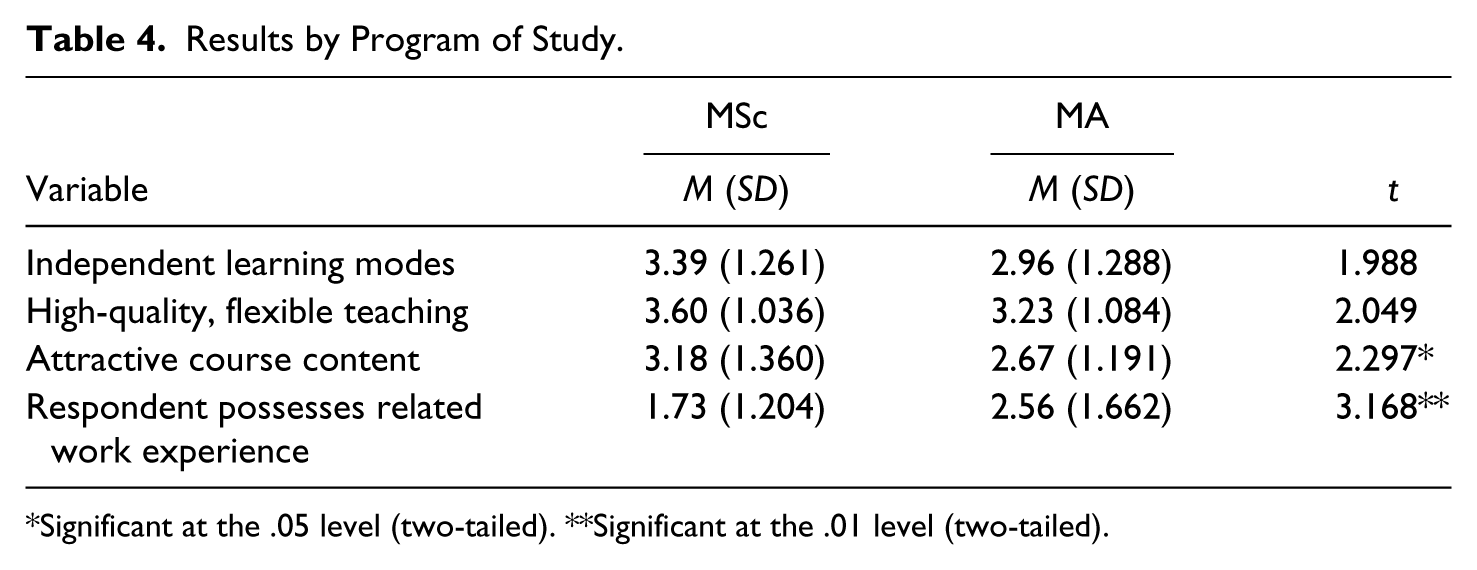
Significant at the .05 level (two-tailed). **Significant at the .01 level (two-tailed).
Motivations for Choosing a Particular University
Survey results showed that “the course has a good ranking” (M = 3.85, SD = 1.12) was the dominant factor regarding the choice of university, followed by the “teaching quality” (M = 3.18, SD = 1.21). In contrast with the findings of many studies (Mazzarol, 1998), the influence of “good university rankings” (M = 2.82, SD = 1.24) was downplayed; whereas “international cooperative activities” (M = 3.12, SD = 1.33) showed higher level influence in terms of university choice. These conflicting results are further explained through interviews and group discussions.
Good reputation and recognition in China
Chinese students are heavily swayed by rankings. However, university rankings were secondary to course rankings. The following statement illustrates this point: “The university [at which] I currently study may not be in the top 100 in Britain. But the subject course I study is among the top one or two [in Britain]” (Student 9, U3).
The university heritage was also a point of advantage. Most universities in China have a shorter history; their postgraduate sector is less mature than that in Britain. For example, “British education has a long history, which makes me believe in its educational quality” (Student 1, U1).
Because most students indicated that they had planned to return home after graduation, these students were more strongly influenced by whether the university was recognized in China. One stated, I viewed university X’s ranking and knew it ranked at the top in Britain in the subject matter. But it was so-so among Chinese people. Nobody knows what type of university it is. [So] instead I chose [my] current university. (Student 10, U3)
Students observed that some British university brands were higher valued than others by Chinese employers. They would make trade-offs among the factors, including course design, reputation, and recognition to enhance their competitiveness within an ever-insecure labor market.
Comfortable environment
Cost and location also mattered; universities in metropolitan cities and/or around London with less expensive tuition and/or where the cost of living was lower gained more attention, especially for those students who were less concerned about university rankings. For example, I applied for two other universities; one is in Glasgow. Considering it was too far [from London], I did not want to study there. (Student 11, U1) I also applied to a university in London. However, because of the costs, and tuition fees, I chose to study at my current university instead. (Student 12, U2)
Students appeared to be particularly sensitive to local weather conditions. For example, “The short-listed universities were in either Essex or Stirling. I did not choose either place because they seemed too cold” (Student 13, U2).
Good reputation in “virtual” community
Social networking tools increasingly have prominent effects on the decision-making process. The growing use of blogs and chat forums might nurture a trusting relationship that could help students overcome geographic distance and language barrier, as one student stated, I set up an online chat forum to exchange information between Chinese students studying at British university X and those have planned to study at the same university. The members of this chat group grew quickly from none to more than 100 in 3 or 4 months. (Student 14, U2)
Compared with online chatting, for those students, who had specific fields and goals in mind and felt confident about their English, the university website seemed more trustworthy as an information source: “I looked closely at the components of the course [on the university website] to make sure [the course] is aligned with my expectations. You cannot take it for granted” (Student 13, U2).
Study-Abroad Agencies
Nearly half of the participants (47%) seek the service of study-abroad agencies; however, participants largely denied that these agencies had affected their university choice (M = 2.05, SD = 1.30); only 18% admitted this. This contradiction revealed the complex role that the educational recruitment agency plays in the choice of host universities. Interview results showed that the study-abroad agency was an important and comfortable channel through which to obtain information on university application and academic offers, as one stated, “The education agency can help me to prepare the documents required in a more professional way” (Student 14, U3).
We observed significant differences in the choice of host university among participants from different age groups (Table 3): Younger participants showed higher mean scores on the effects of “study-abroad-agency suggestion” and the “wider array of international activities” offered by host universities. The results mean that younger students were more likely to seek services from study-abroad agencies, t(165) = 2.637, p < .05, and also more likely to be affected by the opportunities for collaboration offered by universities than older students, t(165) = 3.264, p < .01.
We conducted one-way ANOVA to explore the difference between students from three different residential areas in China on motivations for choosing a particular university. We observed evidence of differences in the influence of the host university location, F(2, 104) = 4.137, p < .05. As seen in Table 5, the campus location showed the highest level of influence on students from Area 2 in the choice of university. Another significant factor was the influence of the international activities of universities, F(2, 104) = 3.508, p < .05. Our results from further testing revealed that students from Area 3 showed the highest level of motivation to study at a university that offers “a wider array of international activities.” In other words, students from Area 3 were more likely to attend an overseas university that has an affiliation with a Chinese university or offers other sorts of internationally oriented activities.
Results by Residential Area of Mainland China.
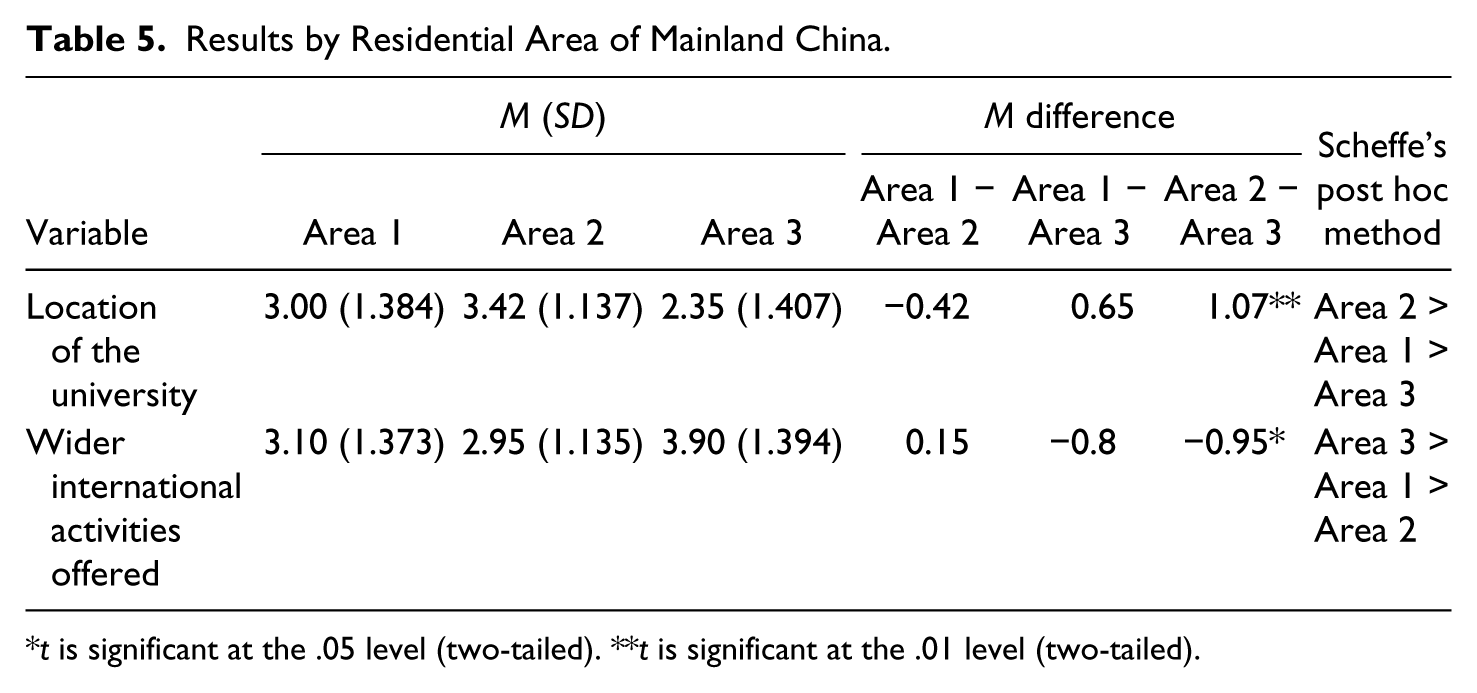
t is significant at the .05 level (two-tailed). **t is significant at the .01 level (two-tailed).
Motivations for Choosing Study Subject
Participants appeared prudent in their subject selection. “I like it” (M = 3.72, SD = 1.23) had the highest score, followed by “better career prospects” (M = 3.60, SD = 1.08) and “the attraction of subject-related jobs” (M = 3.56, SD = 1.40). Students particularly chose subjects that were a good fit with their personalities and talents: “suits me” (M = 3.3, SD = 1.27); also, they placed great emphasis on the “content of the course” (M = 3.04, SD = 1.33). Clearly, their choice of subject was based not only on personal interests but also on the subject’s links to improved career prospects. Furthermore, this study found that the opinions of parents had no significant effects on the choice of subject of study (M = 2.54, SD = 1.39). In the next section, subject choices are described in detail.
Combination of interest in course content and future career prospects
Similarly, in the portions of the interviews dealing with investigating the choice of courses, a theme with general resonance among our participants was how to select the “right” master’s course, for which one’s degree and practical skills learned would be successfully converted into economic capital: “I don’t mind studying at an ordinary university. The courses it offers must meet my needs. I want to learn something I can use immediately afterwards” (Student 6, U2).
This result contrasted starkly with the results of extant research on undergraduate students stating that students had limited knowledge regarding the selection of course of study, the characteristic style of teaching at a particular university, and career prospects on graduation (James, Baldwin, & McInnis, 1999). Conversely, master’s students seemed more obsessed with whether the skills they would gain would match the needs of potential employers and took extra efforts to examine course information closely.
Furthermore, undertaking a master’s course was an opportunity to shift to a different subject area. Strongly influenced by parents and mentors in choosing an undergraduate major, one interviewee explained, “For the choice of a postgraduate major, I now want to study the subject that I like” (Student 9, U3).
Manageable levels of difficulty to pass
For many students, studying at a British university was an expensive activity: Few participants indicated that “tuition fees were reasonable” (M = 1.96, SD = 1.08). However, they did not particularly choose an “easy-pass subject” (M = 2.27, SD = 1.24) to mitigate their risk of failing. Alternately, students carefully evaluated their own skill level regarding the content of the course of study and the skills required to complete the modules: “I like my subject. It is better to choose the subject that you are able to pass. Otherwise, it wastes not only money but also time” (Student 11, U1).
The results of t tests also revealed that participants in MSc and MA programs differed significantly in terms of the influence of the “content of the course,” t(167) = 2.297, p < .05 and “related work experience,” t(167) = 3.168, p < .01. MSc students indicated higher mean scores on the attraction of the “content of the course,” whereas MA students showed higher mean scores on the influencing factor “related work experience” when considering the subject choice (Table 6).
Results by Program of Study.
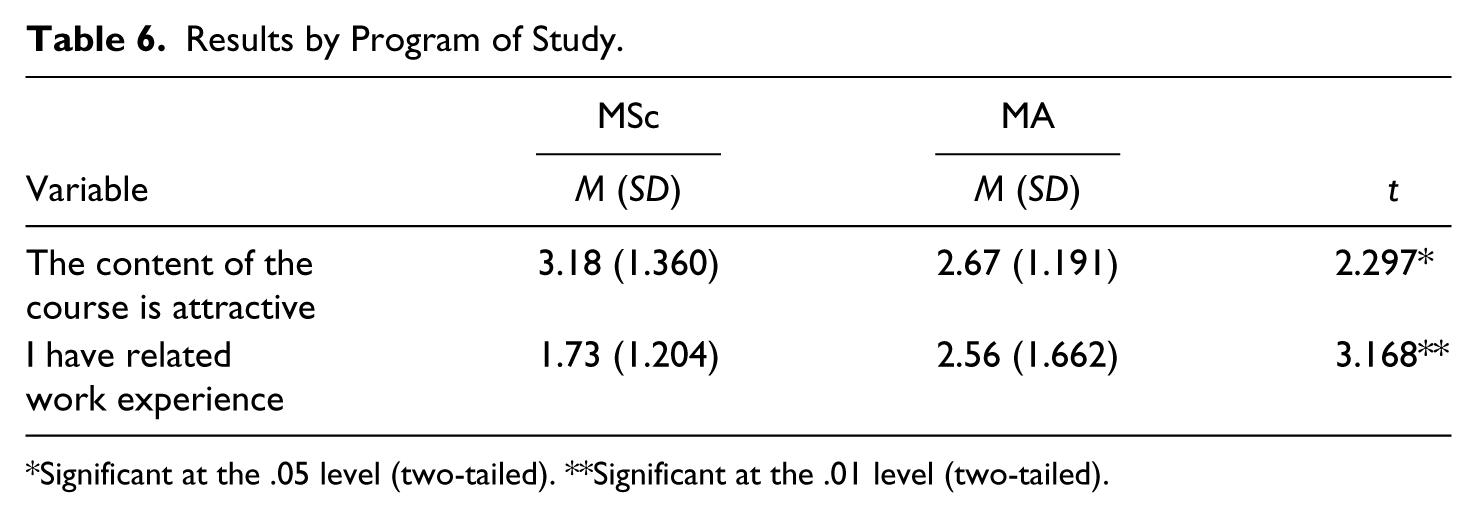
Significant at the .05 level (two-tailed). **Significant at the .01 level (two-tailed).
Discussion
One of the main findings of the study is that factors that are related to human-capital accumulation and conversion stimulate student mobility. Student decision on studying abroad was mainly driven by three core factors, namely, the desire to experience different cultures, the native English environment, and future career aspirations. Compared with the previous studies on Chinese students (Altbach, 1991; Mazzarol, 1998), scholastic capital is no longer the only key dominant form of capital that drives mainland students to study abroad. English fluency juxtaposed with the ability to interact with students from different cultures represents an important cultural and social capital for individual career and social development in modern China (Edwards & Li, 2011). Britain was preferred compared with other countries as the destination typically because of the quality of academic program, English language experience, and the short duration of a master’s program. In particular, qualifications obtained in Britain are well recognized by employers in mainland China and this entails a significant advantage for career growth when students return to their homeland. Moreover, universities in Britain provide students with campus networking opportunities outside their limited original milieu, opportunities to practice English, self-directed learning skills, and work-related competencies. These forms of capital are perceived to be vital to meet the massive demand for highly skilled workforce in mainland China that is unobtainable in the homeland.
Although undertaking postgraduate education abroad is seen as an important channel for possessing various forms of human capital, aspirations for personal development, namely, developing the full range of social skills, problem-solving abilities and independence over the course of their education abroad, has emerged as a significant deciding factor that sustains students’ motivations for pursuing higher education abroad. The structural changes in motivational factors for undertaking education abroad among this cohort indicate that in addition to the demand for widening human capital, students also view the experience of overseas studies as a preparation for the challenges of complex social and practical issues in the real world after graduation. As the motivations for study choices are not static, universities should recognize the dynamic nature of markets.
Motivations of mainland students suggest the need for career advice services, language support, and social life support, which have been pointed out by the report from the ISB surveys in the United Kingdom (Archer, Baynton, & Cheng, 2011). To address these needs, it is essential that universities advertise the links between the courses offered and the career opportunities generated by those courses to ensure that they dovetail the needs of international students and employers. Universities should also create opportunities for students to develop wider cultural capital through establishing contacts with other students from different backgrounds. Furthermore, the current generation of students is the fastest-growing demographic on the social network. Direct contacts with “online friends” and alumni recommendations are likely to be more important channels for students at postgraduate level to acquire deeper knowledge about chosen institutions and subjects. Universities should monitor how best to create bridging opportunities where social media together with the university website can function as an effective tool to provide much-needed information for prospective mainland Chinese students. Our findings also demonstrate that different factors influence the choices among students of different age groups, those enrolled in different course programs, and those from different regions in mainland China. Different marketing strategies might be necessary to meet these diverse needs.
This study has provided a snapshot of a particular scenario within a dynamic process at a particular period. Consequently, future studies can validate these findings for a larger sample size by recruiting more representative students from a wider range of universities and institutions. Future work can compare overseas students from different regions and cultures in terms of their motivations for overseas study, to identify not only differences but also commonalities among them.
Footnotes
Appendix
Declaration of Conflicting Interests
The author(s) declared no potential conflicts of interest with respect to the research, authorship, and/or publication of this article.
Funding
The author(s) received no financial support for the research, authorship, and/or publication of this article.