






Abstract
The Belt and Road Initiative (BRI), spearheaded by China, aims to enhance human mobility and foster the exchange of goods across participant nations. Utilizing data from 2008 to 2018, this study employs a multi-period difference-in-difference (DID) approach to examine the BRI's impact on international student mobility to China. Our findings highlight a considerable positive effect of the BRI on the scale of international student inflow to China. The BRI's influence on international student mobility to China (ISMC) is facilitated through bilateral trade, mutual recognition of degrees and diplomas, and scholarship provided by the host country. These findings imply that for emerging high education systems such as China, it is imperative to strengthen trade ties with pertinent countries and establish a supportive institutional framework to attract international students and enhance their global influence.
Keywords
Introduction
Along with the development of the internationalization of higher education, the significance of international students’ cross-border flow has been increasingly prominent in international economic, political activities, soft power, and national competitiveness (Altbach & Knight, 2007; Gauttam et al., 2024; Lewis, 2011; Lomer, 2017). Most countries in the world are very concerned about this matter and have been making great efforts to strive for the influx of international students. For instance, the United States, the United Kingdom, Australia, Japan, and Malaysia have issued policies attracting international students (European Parliament, 2015; García & Villarreal, 2014; Ilieva & Peak, 2016). In recent years, the number of international students has increased from 2.03 million in 1999 to 5.57 million in 2018 (UNESCO, 2018). As the number of international students has grown, the countries that receive more international students have also changed. In 2009, the top three countries receiving the most significant number of international students were America, the UK, and Australia, while in 2019, China took the place of Australia, being the emerging country that received the third-largest number of international students after America and the UK (Institute of International Education, 2019). In fact, it benefited from not only the growth of China's economic and educational strength but also the guidance of national policies.
In September 2013, Xi Jinping, the president of the People's Republic of China, proposed the Belt and Road Initiative (BRI), which is short for “Silk Road Economic Belt” and “twenty-first Century Maritime Silk Road” (National Development and Reform Commission of China, 2015). The basic principle of BRI is cooperation and exchange (Ministry of Education of China, 2016), which is reflected in the following five aspects: policy coordination, facilities connectivity, unimpeded trade, financial integration, and people-to-people bonds. In terms of people-to-people bonds, BRI clearly pointed out that the scale of international students should be expanded, and talent exchange and cooperation should be extensively strengthened (Zhou & Kan, 2015). Since BRI was proposed, the number of relevant research has been increasing, but most of the relevant studies on the policy effect of BRI are in the fields of economy and trade (Kohl, 2019; Yu et al., 2020), while less in people-to-people bonds (Gong et al., 2020).
In the backdrop of China's rapid economic development and advancements in education, science and technology, China has become an emerging destination for studying abroad (Hou & Du, 2022). Data show that from 2013 to 2018, the number of international students mobility to China (ISMC) increased from 356,500 to 492,200, with an average annual growth rate of 6.67% (Li, 2021). During this period, the proportion of international students from BRI countries 1 increased year by year, and in 2018, it accounted for 52.91% of the total (Ministry of Education of China, 2018). Nowadays, BRI is developing into a new stage of high-quality promotion. It is necessary to objectively assess whether BRI has played a role in promoting ISMC and explore its internal mechanism. It not only helps to evaluate the implementation effect and existing problems of BRI but also provides valuable experience and inspiration for other countries in attracting international students.
Although most of the relevant literature focuses on BRI, they focus more on the economic and trade impacts of BRI (Kohl, 2019; Lv et al., 2019; Wang & Tian, 2022). Less emphasis is placed on people-to-people bonds, especially the exchange of international students. Secondly, most of the existing research is the theoretical analysis and descriptive introduction (Chen & Wen, 2018; Zheng & Ma, 2016), and there is a lack of quantitative analysis of the BRI policy effects. Finally, there are many articles on the influencing factors of ISMC (Beine et al., 2014; González et al., 2011; Wei, 2013), but less research has been carried out from the perspective of policy. Therefore, based on the panel data from 2008 to 2018, we will use the multi-period DID method to investigate the impact of BRI on the scale of ISMC. In addition, the internal mechanism of the impact of BRI on ISMC is further explored.
The rest of the study is arranged as follows. The second part is about the literature review, and the third part is about the mechanism hypothesis. The fourth part introduces methodology. The fifth part presents the results. The sixth part discusses BRI policy implications. In the seventh part, we give the conclusion.
Literature Review
Belt and Road Initiative
In September 2013, China launched the BRI, which aims to foster greater economic and cultural exchanges across countries by promoting connectivity in key areas. The BRI consists of two main components: the Silk Road Economic Belt, which connects Asia with Europe, and the twenty-first Century Maritime Silk Road, which links China to Southeast Asia, Africa, and beyond (Dunford & Liu, 2019). As a result, the countries involved in the BRI cooperation are primarily located in Asia, Europe, and Africa. At its core, the BRI focuses on five major areas, often referred to as the “Five Connectivities”: policy coordination, facilities connectivity, unimpeded trade, financial integration, and people-to-people bonds. The goal of policy coordination is to align the development strategies of participating countries, creating a stable and cooperative environment for infrastructure projects and trade. Facilities connectivity emphasizes the development of infrastructure such as roads, railways, ports, and airports to enhance physical connections between countries. Unimpeded trade seeks to eliminate trade barriers and foster the free flow of goods, services, and capital. Financial integration promotes the creation of financial systems and institutions to support investments and trade. While people-to-people bonds aim to strengthen cultural exchanges, educational cooperation, and mutual understanding, which directly ties to the expansion of international student mobility (ISM; National Development and Reform Commission of China, 2015).
Push-Pull Theory
The Push-Pull Theory is a classical framework for explaining the motivations of international students. Central to this theory is the notion that push factors originate from the students’ home countries, such as economic hardship, lack of educational opportunities, and political instability (Altbach, 2004); while pull factors stem from the host countries, particularly factors like academic reputation, quality of education, and job opportunities (Mazzarol & Soutar, 2002). These push and pull dynamics collectively influence students’ mobility behaviors. Although the Push-Pull theory highlights macro-level factors, it has been criticized for its lack of attention to micro-level elements. In response, a refined version of the Push-Pull theory has emerged, taking into account micro individual factors including personal advancement, career development, the development of cross-cultural awareness, and family influences (Jiani, 2017; Li & Bray, 2007).
In recent years, scholars have further refined the Push-Pull Theory, suggesting that push and pull factors should be viewed as interacting processes across macro, meso, and micro levels (Li et al., 2021). Macro factors include a country's economic development, political stability, international relations, and cultural allure (Beine et al., 2014; Qu et al., 2016; Wei, 2013), while meso factors involve the organizational structures of educational institutions, academic quality, and scholarship availability (Altbach, 1991; González et al., 2011; Jha & Kumar, 2017). Micro factors, on the other hand, pertain to students’ individual motivations and backgrounds, including their educational needs, cultural interests, and career prospects (Baharun et al., 2011; Bamber, 2014; Li & Bray, 2007). González et al. (2011) explored the determinants of student mobility within Erasmus countries from the perspective of macro-level economic factors, meso-level sociocultural factors, and micro-level linguistic factors, finding that these elements significantly affect international student flows.
Despite the Push-Pull Theory providing a framework for understanding the mobility of international students, it has fallen short in adequately considering the mobility differences among students from middle-income and less-developed countries. Traditional Push-Pull theory often assumes that student mobility is unidirectional, predominantly from middle-income and less-developed countries to developed nations such as the USA, UK, Canada, and Australia (Jon et al., 2014). However, this assumption of unidirectional flow is not entirely accurate, as it overlooks the variances in mobility from middle-income and less-developed countries (Cantwell et al., 2009). Studies have shown that students from different countries have significant variations in their motivations for choosing a study destination. For instance, students from more economically developed countries may be more inclined to seek cultural experiences, while those from less economically developed countries may focus more on economic and academic opportunities (Cantwell et al., 2009). This oversight might lead to misunderstandings about the diversity of student mobility.
Belt and Road Initiative and International Student Mobility
Recent research on the BRI has predominantly focused on its economic impacts. For instance, studies have demonstrated that the BRI significantly boosts bilateral trade volumes between China and partner countries (Wang & Tian, 2022), enhances the openness of provincial economies in China (Chen et al., 2021), and stimulates Chinese foreign direct investment (Kang et al., 2018; Lv et al., 2019). However, there is a relative dearth of research exploring the BRI's influence at the level of people-to-people bonds, particularly regarding its impact on ISM. Current literature often regards the BRI merely as a policy backdrop rather than a direct policy instrument, focusing mainly on the challenges and future directions it poses for international education (Chen & Wen, 2018; Shi, 2019; Zheng & Ma, 2016). These studies typically employ qualitative methods and lack quantitative assessments of the BRI's specific effects on student mobility.
The influence of the BRI extends beyond economic dimensions to encompass cultural and educational exchanges. Under the BRI framework, China has intensified educational cooperation with participating countries, attracting more international students through enhanced cultural connectivity and soft power initiatives (Wei et al., 2018). For example, research indicates that the BRI boosts China's international educational influence, provides scholarships, and strengthens cultural ties, making it a significant pull factor for international students (Chen & Ha, 2020; Wei, 2013).
This study aims to extend the Push-Pull Model by focusing on how the BRI, as a key policy driver, creates pull factors at the macro level through policy directives that attract students to study in China, a developing country. It also examines how educational strength and cultural exchanges influence student choices at the meso and micro levels. Given that the Push-Pull Theory emphasizes the close relationship between the factors influencing student mobility and the conditions in both host and home countries, this study integrates variables from China and the students’ home countries to model and demonstrate how these factors collectively impact student mobility. Additionally, this research employs the multi-period Difference-in-Differences (DID) methodology to quantitatively analyze the BRI's effects on ISM. This approach allows for a more accurate estimation of the actual impacts on student numbers before and after policy changes, providing a quantified perspective to assess the effectiveness of the BRI policy and offering insights for researchers and policymakers to optimize related strategies.
Mechanism Hypothesis
Since the introduction of the BRI, there has been a rapid increase in the number of ISMC, which may have been influenced by the policy dividends arising from the initiative. As illustrated in Figure 1, this section primarily considers the pull factors in China, as the BRI emphasizes enhancing policy communication and international cooperation, thereby increasing China's attractiveness as a study destination. Wei (2013) examined the economic and educational determinants that attract international students to developed and developing countries, while González et al. (2011) analyzed the determinants of student mobility within the Erasmus countries from economic, socio-cultural, and educational perspectives, finding that these factors significantly influence international student flows. Building on the analytical frameworks of González et al. (2011) and Wei (2013), this study explores the mechanisms by which the BRI impacts ISMC across economic, educational, and socio-cultural dimensions. Specifically, we analyze the economic impact through trade volumes, the educational impact through mutual recognition of academic degrees, and the socio-cultural impact through scholarship policies to delineate the specific effects of the BRI on ISM.
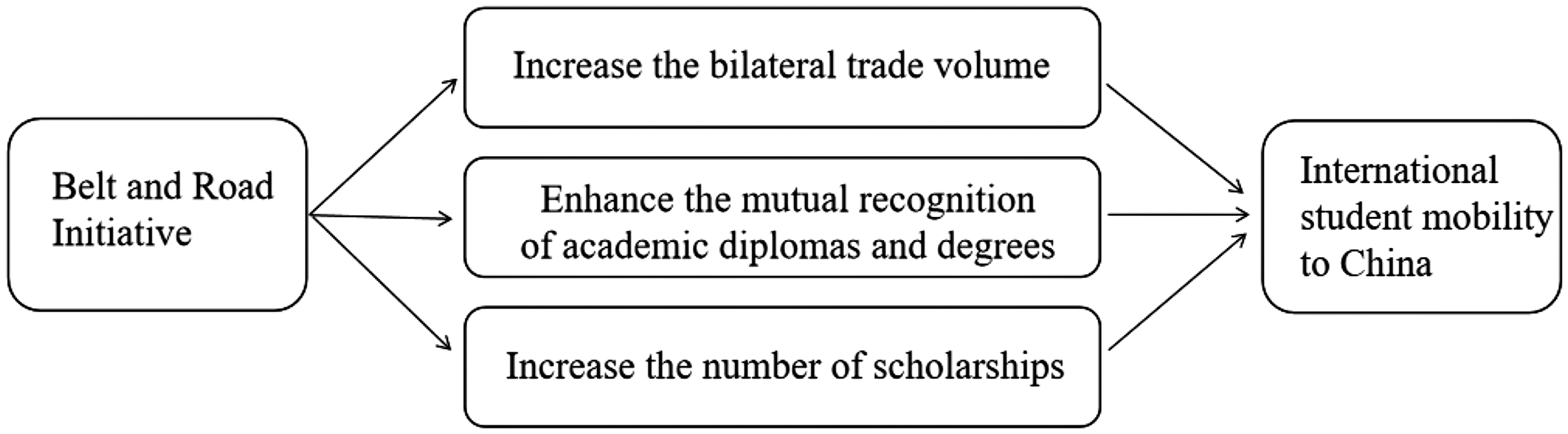
The Mechanism of BRI on ISMC.
A key component of the BRI is the facilitation of “unimpeded trade”, which has significantly increased import and export volumes, thereby strengthening the connections between China and participating countries (Gong et al., 2020). Previous research indicates that closer economic and trade relationships between countries can increase the number of ISMC, as this directly boosts the demand for talents who understand bilateral trade, culture, language, and socioeconomic factors (Li et al., 2017; Wei, 2013). Therefore, this study proposes the following hypothesis: H1: BRI can increase the population of ISMC by increasing the bilateral trade between China and the origin country.
It is inevitable that information asymmetry will occur in international students’ learning in Chinese universities, and they would even turn to some “unaccredited institutions of higher education” in China. Hence, in order to avoid the risk of studying abroad caused by false information, the transmission of information about mutually recognized degrees and diplomas between different countries is essential (Dalichow, 1992). It was illustrated by research that the signing of the agreement on mutual recognition facilitated the increase in the number of ISMC (West & Barham, 2009), as the agreement on mutual recognition of degrees and diplomas is the effective guarantee of the Chinese degrees recognized by the origin country. At the same time, it strengthens the communication about the educational policies between the two countries (Lokhoff, 2021). The communication of mutually recognized information in degrees and diplomas greatly facilitates ISMC and offers legal protection to international students’ further study and employment in a broader range (Wang & Chen, 2018). Thus, this research proposes the following hypothesis: H2: BRI increases the population of ISMC by increasing the mutual recognition of diplomas and degrees between China and the origin country.
International students can have more time to better devote themselves to study and research when their basic living expenses are covered. Research showed that offering abundant scholarships to international students can attract more international students to study in China (Fang & Wu, 2016; Perna et al., 2014). The Ministry of Education proposed the policy of offering ten thousand seats of government scholarship to BRI countries in the policy document issued in 2015. More than that, to support BRI, provinces issued supporting scholarship-related policies, such as the Jasmine Scholarship in Jiangsu Province and the Special Scholarship for the Silk Road in Gansu Province (Liu, 2020). These scholarships do not require high academic performance for students. They can cover the basic living costs of international students, which is an essential factor that attracts international students to China for further study. Therefore, the study proposes the following hypothesis: H3: BRI increases the population of ISMC by increasing the number of scholarships.
Methodology
Data
The dependent variable of this study is the number of degree-seeking ISMC, which represents the annual total of degree students from each source country studying in China during the years 2008 to 2018. Degree education more accurately reflects the attractiveness and competitiveness of the host country's higher education system. For example, in 2018, the number of international students in the United States totaled 1.10 million, of which 0.81 million were degree-seeking international students, accounting for 73.94% (IIE, 2019). Therefore, in this study, the dependent variable is defined as the number of degree-seeking international students. Data for the dependent variable are sourced from the “Brief Statistics of International Students in China” compiled by the Ministry of Education of China from 2008 to 2018.
The independent variable in this study is a dummy variable that represents the interaction between whether the BRI is implemented and whether the home country is a BRI country. The model section below provides further details.
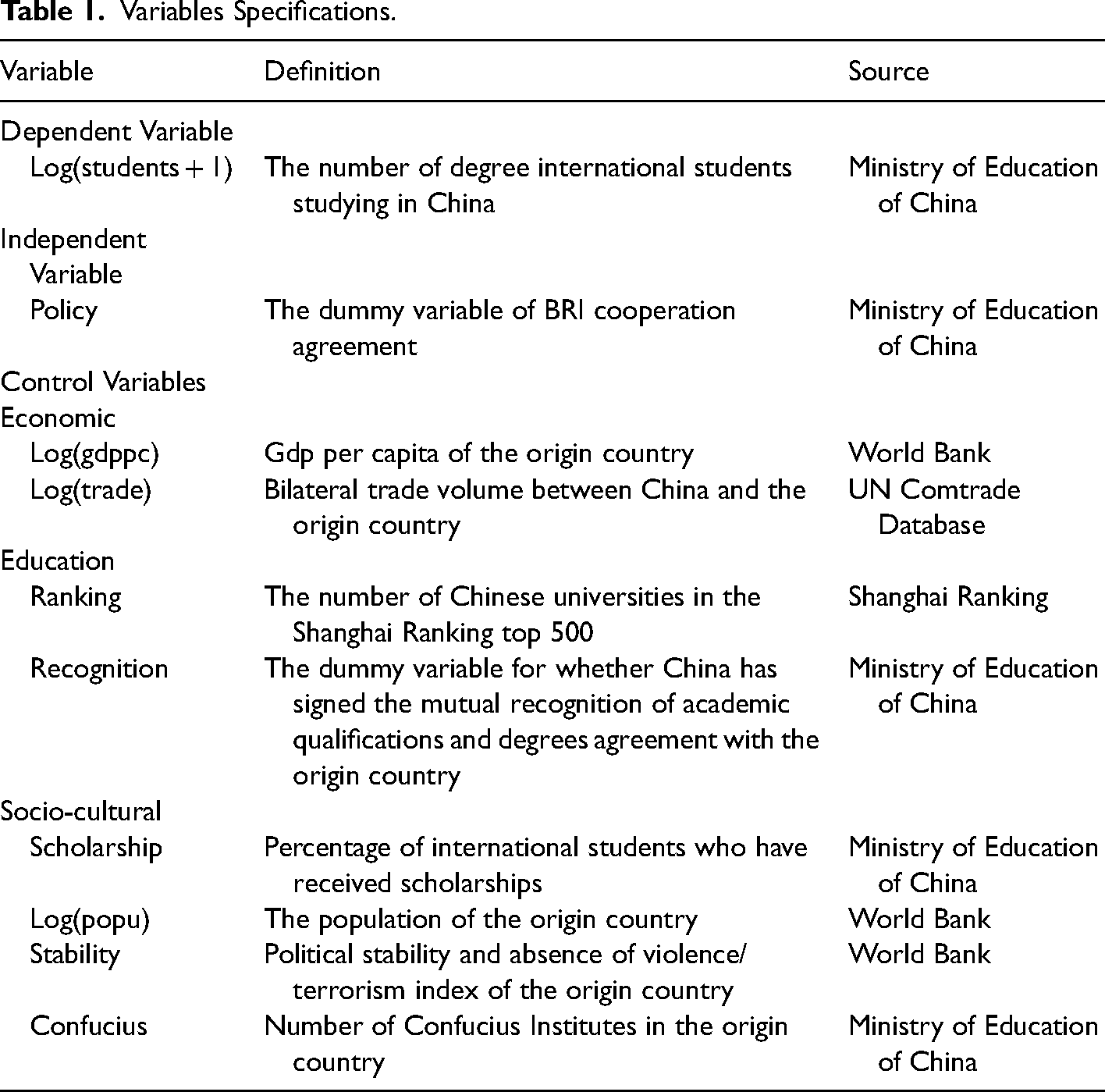
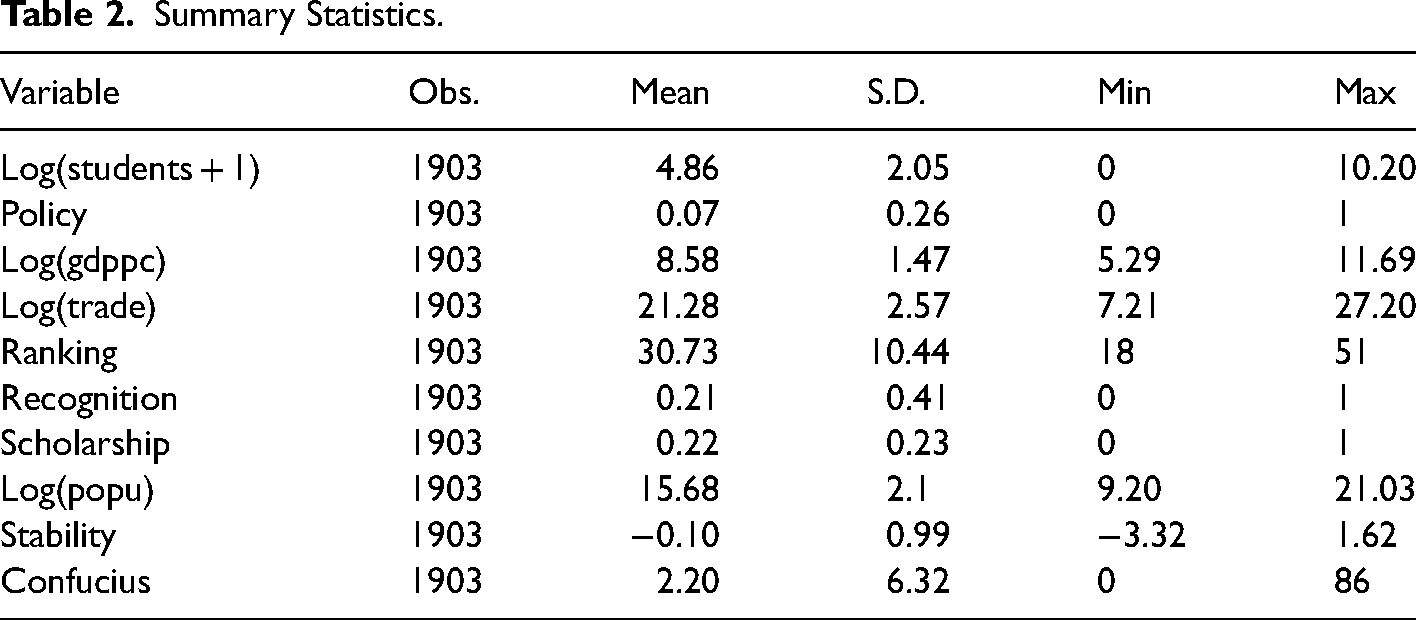
The selection of control variables is primarily based on the findings of existing studies and data availability. This study draws on the frameworks proposed by González et al. (2011) and Wei (2013) to explore control variables across economic, educational, and socio-cultural dimensions. Key variables include per capita GDP (gdppc), bilateral trade volume (trade), Chinese universities ranking (ranking), mutual recognition of academic degrees between countries (recognition), the proportion of scholarships (scholarship), population size (popu), social stability (stability), and the number of Confucius Institutes (confucius) (eg. Beine et al., 2014; Chen & Ha, 2020; Qu et al., 2016; Van et al., 2024; Wei, 2013). These variables, selected based on established theoretical and empirical literature, are considered to impact the mobility of international students. The data for these variables, spanning 2008 to 2018, are primarily sourced from public databases, including the Ministry of Education of China, the World Bank, the United Nations Comtrade Database, and Shanghai Ranking. Table 1 introduces the variables, and Table 2 provides their descriptive statistics.
Variables Specifications.
Summary Statistics.
Model
A DID model was applied in our study to identify the effect of BRI on the scale of ISMC. The DID method is a quasi-experimental approach often used to evaluate the effect of public policies (Abadie, 2005). Since China signed BRI cooperation agreements with different countries in different years, we used a multi-period DID model to examine the impact of BRI on ISMC. Seeing the signing of the BRI cooperation agreement as a quasi-experiment, we divided the sample into two groups: BRI countries as the treatment group and non-BRI countries as the control group. This study includes data from 173 origin countries, of which 65 are officially defined as BRI countries,
2
ten countries in Southeast Asia, one in East Asia, seven in South Asia, five in Central Asia, twenty-one in West Asia and North Africa, and twenty-one in Central and Eastern Europe. The detailed list is shown in Table A1 and A2, and the specific model is listed as follows:
In the model, Yit represents the scale of ISMC. In this context, we choose the number of degree-seeking ISMC as a proxy variable, as degree education can better reflect the attractiveness and competitiveness of the host country's higher education system (Takase et al., 2014). We applied a logarithmic transformation to the dependent variable and certain control variables, which helps to standardize the dataset and mitigate biases in raw counts. Additionally, the logarithmic transformation simplifies the interpretation of results by converting multiplicative relationships into additive ones, thereby facilitating a clearer understanding of how predictors influence percentage changes in student numbers. Considering the possibility of zero values for students, we utilized log(students + 1) for our calculations. β0 is the constant term. Policyit represents the dummy variable of BRI cooperation agreement assuming a value of 1 for all years after which the BRI cooperation agreement was signed by country i with China, and 0 otherwise. If it is non-BRI countries, the dummy assumes 0 for all the years under the study. Concerning the lag in the effects after the signing of the BRI cooperation agreement, a one-year lag of the dummy for BRI cooperation agreement (Policy_L1) is assumed in this study. Hence, its coefficient,
This study will explore the underlying mechanisms of the BRI impact on ISMC through a mediation effect model. According to Baron and Kenny (1986), we added equations (2) on the basis of equation (1) to test the internal mechanism of BRI's impact on the ISMC:
In Equation (2), Mit represents the mediator variables, which include the bilateral trade volume Log(trade), recognition of academic degrees recognition, and the scholarships proportion scholarship. The term ∑Controlit represents a collection of control variables, while μi, γt, and εit respectively refer to country fixed-effect, year fixed-effect, and the error term.
To control for unobserved heterogeneity and prevent biases it might cause, we employed a two-way fixed effects model. This model introduces dummy variables for each country and year, controlling for time-invariant characteristics of each cross-sectional unit. This approach allows us to account for potential confounding factors that may vary across countries and over time, thereby enabling a more precise analysis of the BRI's specific impact on international student numbers. In this way, we address biases due to omitted variables to some extent (Wooldridge, 2015).
Results
BRI and International Students
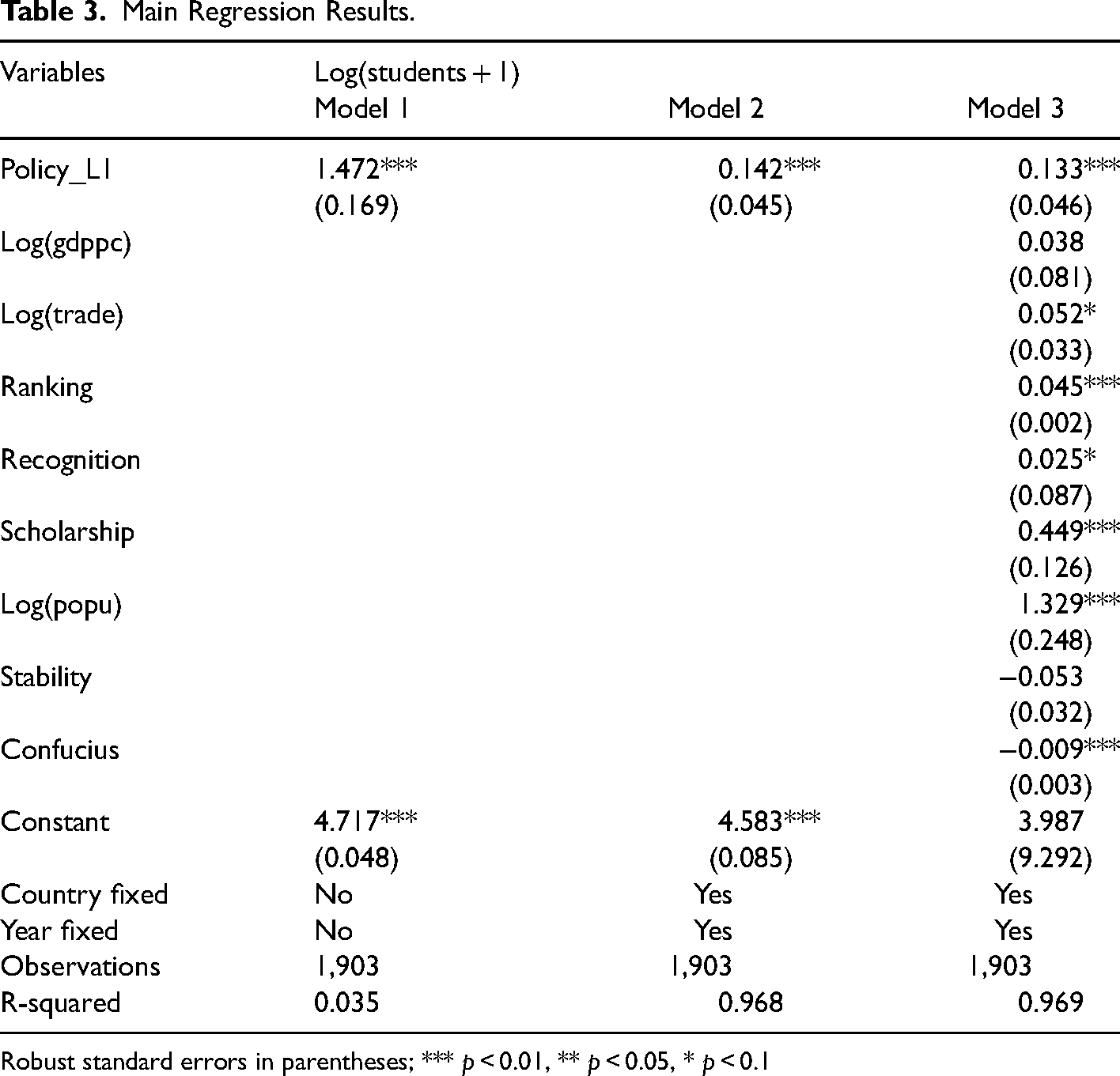
This part explores the effect imposed by BRI on the scale of ISMC. In Table 3, Model 1 represents the estimation results without considering control variables and fixed effects. Model 2 takes into account country and year-fixed effects in the estimation results, while Model 3 includes both control variables, and country and year-fixed effects in the estimation results. The results indicate that the regression coefficient of Policy_L1 is significantly positive under all circumstances, suggesting that the BRI policy has significantly enhanced the scale of ISMC. This finding corroborates previous studies, reinforcing the idea that targeted support from BRI effectively leads to an upsurge in the number of ISMC (refer to Lv & Wang, 2022, for example). However, it distinguishes itself by being grounded on a more robust and credible evidence base compared to those employed by antecedent studies.
Main Regression Results.
Robust standard errors in parentheses; *** p < 0.01, ** p < 0.05, * p < 0.1
Validity Checks
Firstly, before applying the multi-period DID model, it is necessary to conduct a parallel trend test to verify whether there are the same trends between the treatment group and the control group before the policy implementation (Abadie, 2005). We set the five years prior to the signing of the BRI agreement as the reference group and construct dummy variables for four years before the signing, at the time of signing, and five years after the signing. Figure 2 shows the results of the parallel trend test. The results indicate that prior to signing the BRI cooperation agreements with China, although there was a gradually increasing trend in the coefficients for both the treatment and control groups before the BRI agreements, the changes in this trend did not reach statistical significance, satisfying the parallel trends assumption.
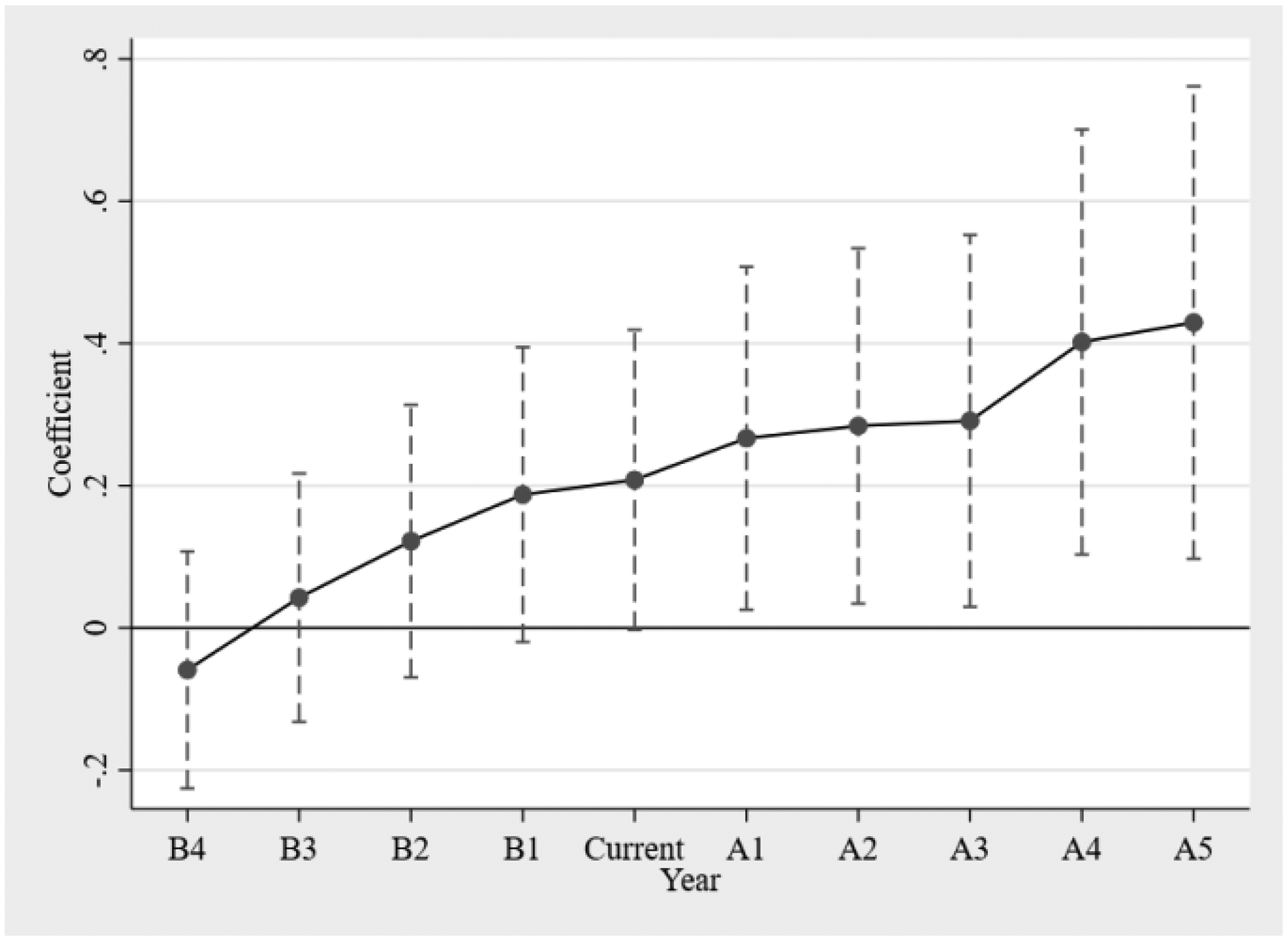
Parallel trend test.
Robustness Checks
We employed three methods to conduct robustness checks: estimating using the Propensity Score Matching-Difference in Differences (PSM-DID) approach; analyzing the data of remaining countries after excluding those with fewer than 100 international students; and altering the dependent variable to include all international students in China (both degree and non-degree students). The coefficients for Policy_L1 were consistently positive and significant across all three models, confirming that our regression results are robust. (see Table A3 in Appendix)
The Mechanism of BRI on International Students
Based on the literature review and mechanism analysis, we believe that the BRI mainly promotes the number of ISMC by increasing the volume of bilateral trade, the scale of mutual recognition of diplomas and degrees, and the proportion of scholarships. Table 4 reports the results of the mechanism analysis.
Analysis of the BRI Mechanism.
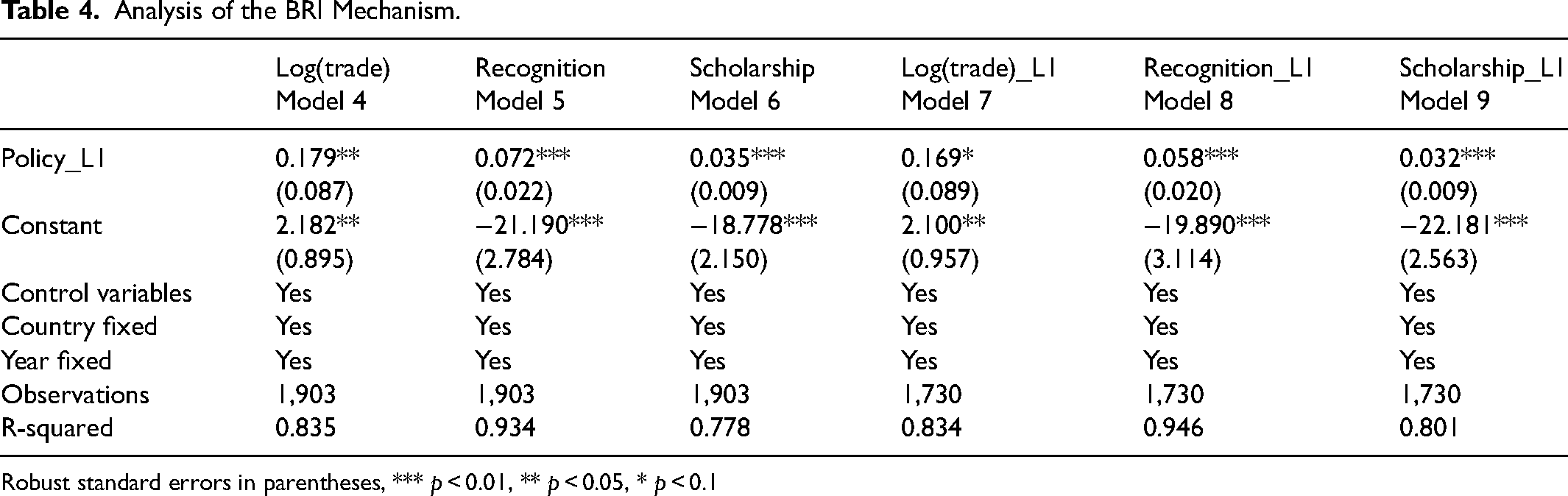
Robust standard errors in parentheses, *** p < 0.01, ** p < 0.05, * p < 0.1
In Model 3, the three mediating variables, Log(trade), Recognition, and Scholarship, significantly increased the number of international students coming to China. Meanwhile, the results of Model 4 show that after the BRI was proposed, the trade volume between China and BRI countries increased significantly by 17.9%, which verifies hypothesis 1. In Model 5, the number of mutual recognition of diplomas and degrees in BRI countries has increased significantly, compared with non-BRI countries, after the initiative was proposed. As a result, it verifies hypothesis 2. In Model 6, after the implementation of the initiative, China has significantly increased the proportion of scholarships awarded to BRI countries. Thus, it verifies hypothesis 3. At the same time, we also lagged the variables of trade volume, mutual recognition of diplomas and degrees, and scholarships by one year for the regression. The changes in these three variables may not immediately increase the number of international students in the current year, but they can affect the choice of international students in the next year. The results of Model 7, 8, 9 show that the results are still robust.
Discussion
Firstly, the model results indicate that the BRI has significantly positively influenced international students’ decision to study in China. This finding extends the push-pull thoery at the macro-policy level, emphasizing the significance and effectiveness of state-led international educational strategies within a globalized context. Education is an indispensable part of the BRI's people-to-people bonds, with the education of international students from BRI countries being a focal point for future development (Shi, 2019). The policy insights from the BRI's impact on student mobility in China can provide inspiration for the development of global international student education. Consequently, for other nations, especially those developing countries seeking to enhance their appeal to international students, adopting a holistic and strategic policy framework similar to the BRI could be key to expanding their influence in international education. Additionally, to enhance the comprehensive benefits of these policies, it is advisable to continuously optimize the support services and management systems for international students (Fares & Kachkar, 2013), thereby creating a supportive policy environment for student mobility.
Secondly, bilateral trade has been proven to be an effective means of strengthening the BRI's appeal to international students. Indeed, the facilitation of trade and economic exchange is a key policy objective of the BRI, underscoring the importance of enhancing economic and trade interactions between countries. China utilizes its comparative advantages in rapid economic development and engineering to strengthen bilateral ties through increased investments, factory construction, contracting projects, labor cooperation, and trade exchanges, enabling students in their home countries to learn about China (Dee, 2010; Gong et al., 2020; Li et al., 2017). To maximize this effect, it is recommended that other countries leverage their unique economic, cultural, and educational system advantages by employing customized international education strategies to attract students (Wang et al., 2024), while also enhancing economic and trade cooperation with target student markets.
Thirdly, our findings reveal that mutual qualifications recognition significantly enhances the number of ISMC. This highlights the importance of establishing an efficient system for academic information exchange and accreditation. It is recommended to strengthen negotiations on mutual recognition of degrees with major source countries of international students to simplify their visa and study processes, thereby ensuring the quality of education and transparency of mutual recognition (Lokhoff, 2021; West & Barham, 2009).
Fourthly, our research indicates that the BRI has increased the number of ISMC through additional scholarships. Scholarships, as a vital financial support for international students, play an active role in attracting them. Therefore, on one hand, it is advisable to increase the number of scholarships through cooperation with society, businesses, individuals, and other educational institutions to diversify scholarship sources and ensure their targeted effectiveness (Liu, 2020; Perna et al., 2014). On the other hand, higher education institutions should pay attention to attracting high-quality scholarship international students. Given that some universities may enroll scholarship students without strict screening to maintain a certain proportion of international students (Marginson & Van der Wende, 2007), there should be a strengthened selection process in the allocation of scholarships, enhancing their role in attracting outstanding students and thus improving the actual value of scholarships and ensuring the overall quality of international students.
Conclusion
Globalization has promoted the internationalization of higher education. International student education is an important part of the internationalization of higher education. In 2013, China proposed the BRI, an essential plan to attract international students. Therefore, this study evaluates whether the BRI promotes ISMC and explores its underlying mechanism. This article provides useful experiences and implications for various countries to attract international students and provides strategic references for countries in their policy-making process.
This study, using data from 2008–2018, empirically estimates the impact of the BRI on ISMC using the multi-period DID method and explores the internal mechanism. We found that BRI significantly promoted the number of ISMC. In addition, this paper points out that bilateral trade, mutual recognition of diplomas and degrees, and scholarships provided by host country are effective mechanisms to promote the development of ISMC. According to the empirical results, we propose some implications in terms of policy support, information exchange and scholarship support. This research quantitatively analyzes the policy, providing a new perspective for ISM research. It also provides policy inspiration for various countries to attract international students.
Supplemental Material
sj-docx-1-jsi-10.1177_10283153251350015 - Supplemental material for How Does the “Belt and Road” Initiative Affect International Student Mobility to China?
Supplemental material, sj-docx-1-jsi-10.1177_10283153251350015 for How Does the “Belt and Road” Initiative Affect International Student Mobility to China? by Tingsong Li, Jian Pan and Xiaohua Zong in Journal of Studies in International Education
Footnotes
Conflict of interest
The authors declare no competing interests.
Data Availability Statement
The data that support the findings of this study are available from the corresponding author upon reasonable request.
Funding
This work was supported by the National Social Science Foundation of China (Education) General Project (Grant Number: BKA240178).
Ethic Approval Statement
This research does not involve human participants or animal participants.

Supplemental Material
Supplemental material for this article is available online.
Notes
Author Biographies
References
Supplementary Material
Please find the following supplemental material available below.
For Open Access articles published under a Creative Commons License, all supplemental material carries the same license as the article it is associated with.
For non-Open Access articles published, all supplemental material carries a non-exclusive license, and permission requests for re-use of supplemental material or any part of supplemental material shall be sent directly to the copyright owner as specified in the copyright notice associated with the article.
