







Abstract
This article reports on initial exploratory trials of a methodological extension of zygonic theory, through which this psychomusicologically-based approach was used to analyse patterns of musical influence within pieces created by groups of primary school children aged 9–11 years in England and Japan. Previously, the theory had been used in educational and therapeutic contexts to gauge the musical impact of each participant on the other in one-to-one musical interactions. The preliminary findings reported here suggest that zygonically-derived analytical techniques may potentially be of value not only in defining children’s musical contributions and patterns of influence as they seek to create pieces in groups, but also in comparative studies that examine the potentially dissimilar improvisatory approaches adopted by different cohorts of pupils. It is further argued that zygonic measures of musical influence may be of value as inverse proxy measures of creativity.
According to Bray, Adamson and Mason (2007, p. 378), “one of the most important uses of comparative education research is the identification of models, in use elsewhere and the ways in which they can be imported for use in other settings” – a notion that is taken up in this article. Aspects of two music-educational micro-cultures (involving English and Japanese primary-school children) are examined by extending the “zygonic” model of music-structural understanding developed by Adam Ockelford and colleagues over the past two decades, and putting it to use in the context of children’s group improvisation and composition. The resulting research is a novel in using a music-theoretical approach to investigate a music-educational phenomenon, probing the relationship between the microcosm of classroom musical interaction and the larger social and cultural contexts in which it is framed.
In both England and Japan, learning to create music collaboratively is an aim within the national curriculum, reflecting the fact that, across cultures, music is a social art-form (Blacking, 1973; North & Hargreaves, 2008; Small, 1998), and music-making often occurs through co-operation with others (Sawyer, 1999; Sonnenburg, 2004). Mills (2009) argues that working collaboratively in music is likely to be advantageous both practically and pedagogically: having children work in groups facilitates the management of what is an inherently noisy activity, for example, while engaging in creative tasks with others offers opportunities for learning through joint problem-solving and decision-making (Galton, 1997; Miell & Littleton, 2004).
It was within this context of collaborative music-making that Shibazaki (2010) undertook a study to compare group improvisation and composition in two countries, England and Japan, with children aged 9–11 years. Shibazaki wanted to know how the members of groups in each country worked together, particularly with respect to musical self-influence and influence by others. She hypothesized that these two factors would differ between the two countries as a reflection of their different (predominantly collectivist and individualist) cultures (Oyserman, Coon, & Kemmelmeier, 2002; Matsumoto, 2006), with contrasting notions of interdependent as opposed to independent selfhood (Markus & Kitayama, 1991). In seeking to define the cultural differences that exist between collectivism and individualism, Tobin (2000) avers that group activities in individualist cultures tend to be more “ego-centric,” while in collectivist cultures, group activity is more “ego-syntonic” – that is, culturally valued and supported. Rothbaum, Pott, Azuma, Miyake and Weisz (2000) categorize collectivism (especially in Japan) as “symbiotic harmony” which they regard as the continual pull of adapting the self to fit the needs of others, while individualism is seen as “generating tension” through the struggle to obtain equilibrium between closeness and separation. In line with this thinking, Shibazaki anticipated that the English children would tend to display greater autonomy in their playing, with more reliance on individuality, while the Japanese would be more inclined to allow themselves to be influenced by peers through the more frequent exchange of ideas (cf. Baaren, Maddux, Chartrand, de Bouter, & van Knippenberg, 2003).
Shibazaki made other predictions too: following Bond and Smith’s (1996) meta-analysis of 133 conformity studies drawn from 17 countries, which indicated that collectivist cultures tend to show higher levels of conformity than individualist countries, and given the view that greater adherence to social conformity can have a negative impact on divergent thinking (see, for example, Kağitçibasi, 1997; Kikuchi, 1981; Lubart, 1990; Miller, 1984; Morris & Peng, 1994), it was anticipated that the pieces created by the Japanese children would be characterized by what may be termed a higher level of compliance to their own content – that is, they would feature a greater repetition of material. This would accord with other findings suggesting that Japanese learners, whose formal education system values convergent cognitive styles, show more constraint in creative tasks than their Western counterparts (Saeki, Fan, & van Dusen, 2001).
Shibazaki’s immediate challenge was to determine a method that would enable her to gauge how musical influence – both in relation to self and other – operates in children’s collaborative production of new pieces. However, previous examples of work in this and related areas were unable to provide the metric of interaction that Shibazaki required. For example, Keith Sawyer (1999) conceptualizes joint musical improvisation as a “conversation” in sound. In everyday situations that involve words and gesture, uncertainty (and therefore the risk of incommunicative chaos) is constrained through the sense of contingency that weaves through the unfolding narrative, as the ideas and feelings that are represented proceed from one another with a logic that is shared implicitly between participants. In pure music, though, which is relatively free of the referential context and denotational meanings offered by words as well as being largely unaffected by the symbolic representations provided by actions, interaction has to be guided by sound itself, through the use of common motifs and scripts or schemas (Sawyer, 1999, p. 197). However, having identified musical content and structure as the dual adhesive that binds musical interactions together, Sawyer stops short of developing a system of analysis that would enable musical interactions to be evaluated in detail.
A little earlier, Ingrid Monson had identified the same methodological lacuna in her discussion of interaction in jazz improvisation (1996). She observed that, “while music theory has bequeathed to us extremely complicated means of approaching the resultant musical scores and work-internal relationships, including the measurement and mapping of all kinds of musical spaces (Lewin, 1987), … [the] essential interactive component of improvisation … has not been an object of theoretical inquiry” (p. 190). In an attempt to solve this problem, Monson turned to the theoretical work of the linguistic anthropologist Michael Silverstein, and in particular his notion of “metapragmatics” (1993), which is concerned with what speech does in a particular context or contexts. Monson (1996) regards her transcription of a musical performance entitled Bass-ment Blues (pp. 137–174) as a “metapragmatic representation of the facts of indexicality” (p. 189), while her accompanying text seeks to describe “the way in which local pragmatic events develop certain kinds of coherence through time” (p. 189). While this text is richly descriptive – explaining, in her view, what happens, and sometimes why certain musical choices are made – it never moves beneath the surface to suggest how the non-semantic interactions in sound actually work. How is it that musicians perceive themselves as influencing one another, and how is this impact detected by listeners?
A step in this direction is to be found in the detailed investigations of children’s musical collaborations undertaken by Dorothy Miell and Raymond MacDonald (2000) and MacDonald, Miell and Mitchell (2002), which initially appeared to hold out the prospect of an approach to data analysis that Shibazaki could use. In the first study, Miell and MacDonald developed a taxonomy of types of musical communication that enabled them to analyse the transactions that occurred as pairs of children worked together to compose new pieces. Like Monson, they took as their point of departure a linguistic model, basing their scheme on that devised by Kruger (1992), which in turn had been developed from that originally proposed by Berkowitz, Gibbs and Broughton (1980). Kruger assigned verbal utterances to one of 11 mutually exclusive categories, and made the distinction between modes of communication that are “transactive,” in which the child uses, extends or elaborates on ideas that have already been raised in the course of the interaction, and those that are “non-transactive,” including proposals, agreements and disagreements, and providing or repeating information. Transactive utterances were further categorized as “self-oriented” or “other-oriented,” depending on whether the material that was elaborated was the child’s own or was generated by a partner.
Miell and MacDonald’s classification of children’s forms of musical communication takes as its unit of analysis the “motif” – defined somewhat broadly as any event that uses sound for musical purposes. Each motif can be assigned to one of seven categories, which, like Kruger’s, are held to be mutually exclusive:
But does this type of analysis, conceived in the context of verbal communication, hold up in the context of shared musical narratives? Take the musical exchange reported by Ockelford and Matawa (2009, pp. 88, 89) – see Figure 1. Here, a teacher (Adam) and his pupil (Rosa), aged five, blind and on the autism spectrum, are engaged in an improvisation on two pianos using material from Lord of the Dance – a piece that both participants knew well. Rosa kicks off the passage with a version of the opening of the tune in A minor. It seems reasonable to code this as “MP:” a musical proposition introduced by Rosa in the expectation that Adam will pick it up and use it to continue the musical dialogue. This interpretation is reinforced by a comment from Rosa, “Play it on this one.”
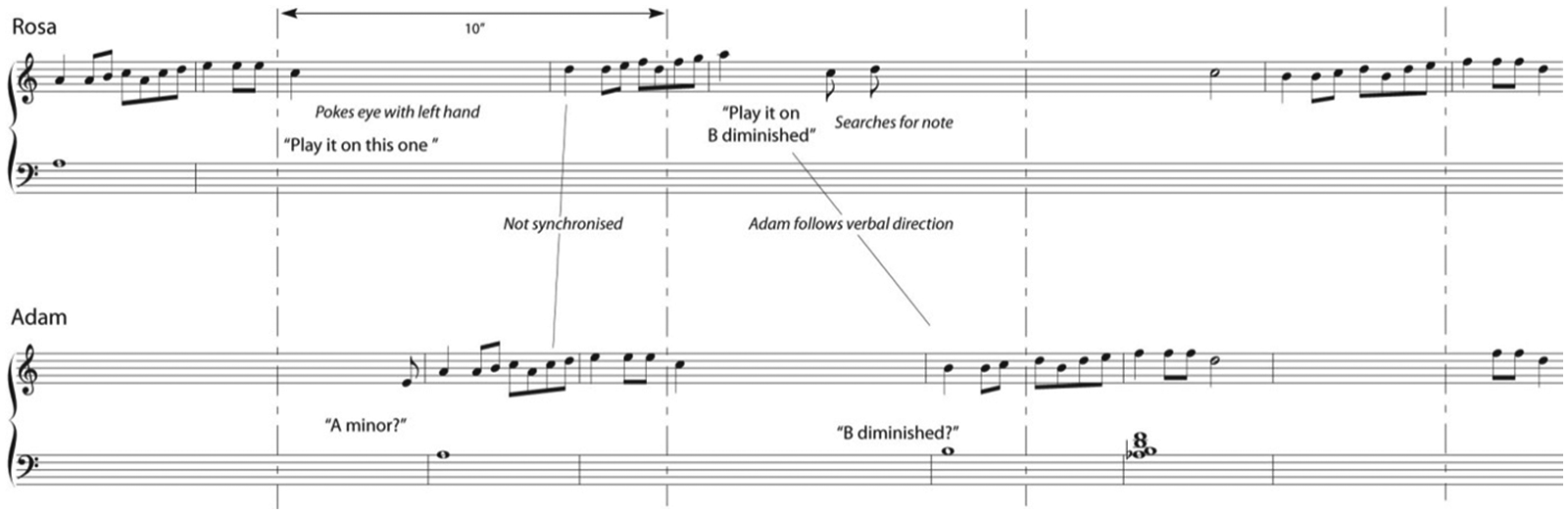
Excerpt from Adam and Rosa’s improvisation on two pianos.
Adam does indeed imitate, note for note, what Rosa has just done, with the addition of an anacrusis. How should this contribution be categorized? On the one hand, it appears as though “MR” would be the appropriate classification, since the motif is repeated “without substantial alteration.” However, MR is defined as “non-transactive,” which would seem to indicate that it is an unsuitable descriptor, since, clearly, a transfer of information in the domain of perceived sound occurred. Perhaps, then, the transactive “MTSO” would be the appropriate label? But this refers to “musical refinements, extensions or elaborations of previously played motifs,” implying a level of transformation beyond Adam’s simple repetition involving the addition of one note. There is one other option: since Adam’s motif at least partly exists in response to Rosa’s verbal direction, “MTRS” may be the most apt categorization. This seems unsatisfactory, though, as it ignores the direct imitation of musical sounds that occurs. Hence, the mutual exclusivity of categories is evidently an issue. Yet, one reason why musical textures – including improvised musical dialogues – are so rich, is because motifs can fulfil a number of functions simultaneously.
Take, for example, Rosa’s next contribution, which overlaps (though is not synchronized) with Adam’s initial statement. Potentially, this exists in imitation both of Rosa’s first motif and Adam’s repetition of it; moreover, it provides material that is subsequently utilized by both parties. That is, there are both transactive and non-transactive sources to which it can reasonably be ascribed, and it functions both transactively and non-transactively as a model for future use by Adam and Rosa. The same applies to Adam’s next phrase, which can be heard as deriving from both his and Rosa’s earlier efforts, as well as existing in response to a direct verbal request (“Play it on B diminished”), and serving to generate further material by both teacher and pupil.
It seemed, therefore, that Miell and MacDonald’s approach could not provide Shibazaki with the type of analysis she required, since it was clear from preliminary trials that children composing in groups produced motifs that were at once imitations of what had gone before as well as providing models for what came next. Moreover, as ideas were frequently be shared by two members of the group or more, it was important to be able to acknowledge the multiple derivation of ideas and to be able to track the dynamic flow of musical influence as it moved around the group. The only extant system that would permit analysis of this kind was thought to be the “zygonic” theory, developed by Adam Ockelford (for example, 1999, 2005, 2006, 2007, 2009a, 2009b), which contends that a sense of derivation of musical material stems from imitation, and enables this to be quantified (2012a). However, in the context of collaborative improvisation, the theory had only been used to analyse interactions that involved two participants. The question was whether it could be extended to interrogate and understand the complex and multifaceted data arising from three, four, five, six or even seven children composing and performing together. Addressing this issue forms one of the chief foci of the current article. We begin by introducing the principles of zygonic theory.
Zygonic theory
Zygonic theory seeks to explain how musical structure is modelled in cognition. It has evolved over the past two decades to become something of an epistemological hybrid, in which the idiographic intuitions characteristic of music theory and analysis are informed by the nomothetic findings proper to cognitive psychology (Cross, 1998; Gjerdingen, 1999, Ockelford, 2009a). Zygonic thinking takes music to be a system of interrelated variables in the domain of perceived sound. Some, like timbre and loudness, gauge perceived qualities of the sonic medium, while others detail its perceived location in time or space; some, such as pitch, pertain to individual notes, while others, including tonality, are characteristic of a group. These variables, which together comprise the “auditory scene” of music (Bregman, 1990), share a fundamental similarity in that each has a number of potential modes of existence, which may be termed “values” (Ockelford, 1991, 1993), whose range in each case represents the freedom of choice open to those striving to create new pieces of music. Conversely, the appearance of a variable may be subject to constraint in a number of ways. For example, the selection of timbre may be determined by the availability of performers, while singers can only produce a limited range of pitches. Then, there may be external influences, such as the cross-media effects of song-texts. All these factors reside within and contribute to the “cognitive environments” of listeners (Sperber & Wilson, 1995, pp. 38ff). However, zygonic theory contends that most – and certainly the most important – perceived sonic restrictions function intramusically. In short, a value may be considered to be constrained if it is reckoned to exist in imitation of another. In the ear of the perceiver, the first value appears to generate the second, or, conversely, the second seems to derive from the first. Since listeners are typically unaware of this hypothesized cognitive activity, it evidently need not operate at a conscious level. Yet, if theory is correct, such activity must be a universal feature of purposeful attention to music, otherwise a sequence of sounds in which no contingencies were perceived would prove just as effective a means of communication as an orderly one, which is not the case.
The cognitive acknowledgement of the apparent derivation of one musical event from another is predicated on the existence of what may be termed “interperspective relationships:” psychological constructs through which, it is hypothesized, incoming perceptual data are compared (cf. Krumhansl, 1990, p. 3). 1 Interperspective relationships may be understood as forms of “link schemata” (Lakoff, 1987, p. 283), which occupy the mental space pertaining to music processing (cf. Fauconnier, 1994; Lakoff, 1987, pp. 281, 282). Such relationships can function in any perceptual domain pertaining to music. In most circumstances they appear to be formulated unthinkingly, passing listeners by as a series of qualitative experiences. However, by employing the metacognitive processes typical of music theory and analysis, we can capture interperspective relationships conceptually, and represent them using symbols such as those shown in Figure 2. Relationships may be assigned values, some of which can be expressed as a difference or ratio, while others necessarily reflect the complex nature of the aspects of perceived sound to which they pertain.
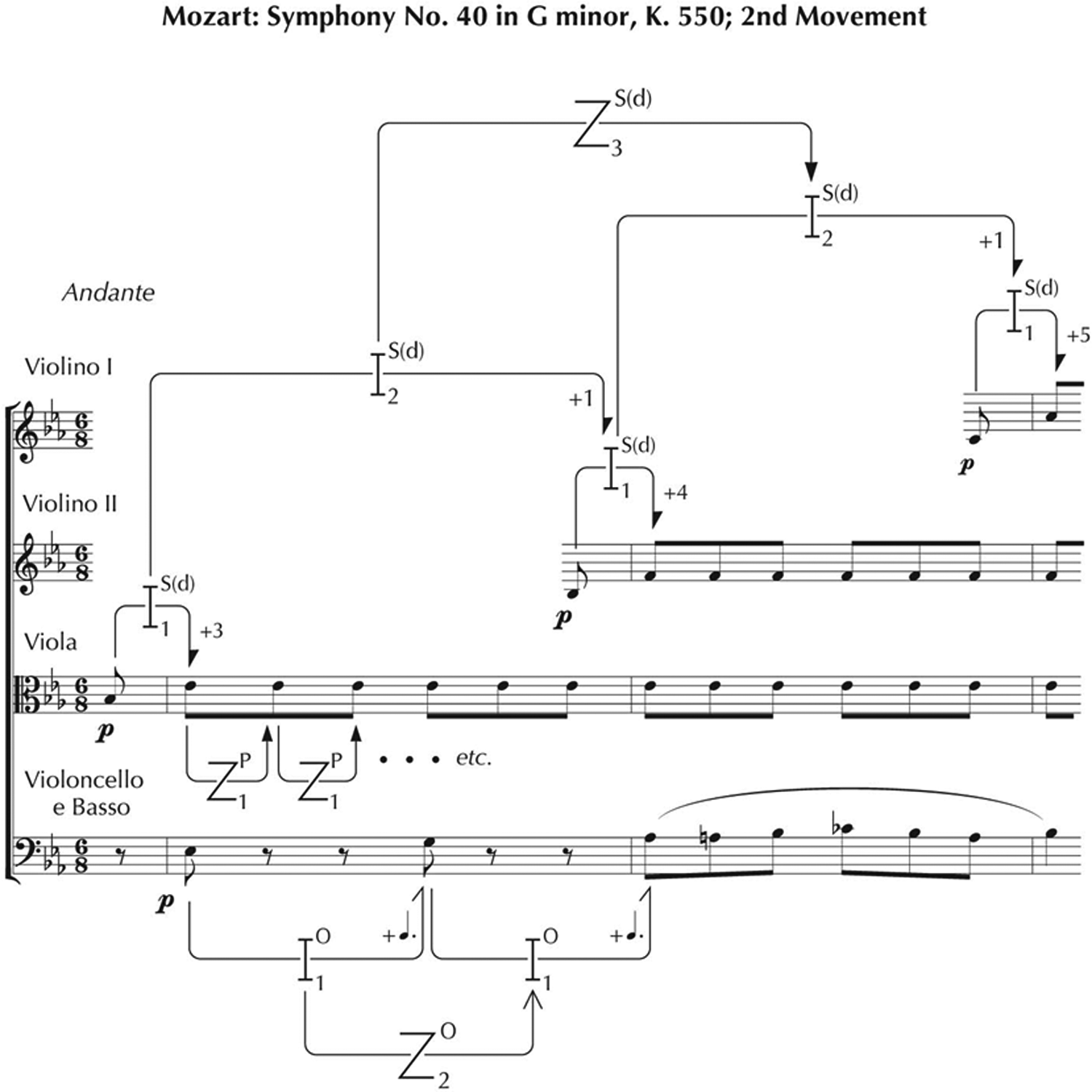
Examples of interperspective and zygonic relationships.
Relationships are shown using an arrow on which the letter “I” (for “interperspective”) is superimposed. Superscripts indicate the perspect concerned, represented by its initial letter or letters, here “S(d)” for “scale degree” and “O” for “onset,” the point in time at which a note begins. Interperspective relationships can exist at different levels, whereby “primary” relationships link perspective values, “secondary” relationships connect primaries, and “tertiary” relationships offer a medium through which “secondaries” can be compared (Ockelford, 2002). The level of a relationship is indicated by the appropriate subscript (here, “1” in the case of the primary relationships of onset, and “1” and “2” pertaining to the primary and secondary relationships of scale degree). The values of the relationships (shown near the arrowhead as +1, +2, + q . etc.) have two components: “polarity” (direction) and “magnitude.”
Interperspective relationships through which derivation is acknowledged cognitively are deemed to be of a particular type that is termed “zygonic” (Ockelford, 1991, pp. 140ff), from the Greek term “zygon” for “yoke,” implying a union of two similar things. Zygonic relationships, or “zygons,” are represented through the use of the letter “Z.” In Figure 2, it is suggested that primary zygons of pitch link the repeated notes in the viola, 2 the phenomenological implication being that each note is felt (albeit nonconsciously in the “typical” listening experience) to derive from the one that precedes. 3 A secondary zygonic relationship of onset is illustrated in the “cello and bass part,” reflecting the fact that the first three notes are equally spaced in time, and that the second inter-onset interval between them may be considered to exist in imitation of the first. This is only one of many examples of the zygonic forces that can be considered to be at work in the realm of perceived time within a texture that, like that of almost all music, is replete with repetition and regularity in the domains of onset, duration and metre. Finally, it is proposed that a tertiary zygon of scale degree connects the two secondary interperspective relationships that express the common difference between the successive melodic intervals with which the entries of the violas, second violins and then the firsts begin.
The zygonic relationships shown in Figure 2 use full arrowheads, which signify relationships between values that are the same, as opposed to the half arrowheads of the interperspective relationships, which are indicative of difference. Zygonic relationships too can make use of half arrowheads, when the values they link are similar rather than identical. Open arrowheads (such as those pertaining to onset in Figure 2), indicate relationships between single values, whereas filled arrowheads link perspective values that persist in time (in Figure 2, those pertaining to pitch and scale degree). More detailed accounts of zygonic theory are to be found in Ockelford (1993, 1999, 2005, 2009b).
The notion of “imitative influence”
Although zygonic theory was originally conceived to explain how music is created and cognized in the contexts of composition, performance and listening, it became evident that the approach of considering how one element of music could be heard as deriving from another was of potential value in other circumstances too, including the analysis of musical memorization (Ockelford, 2011), improvisation (Ockelford, 2012b) and interaction between pairs of participants in the context of music therapy or education (Ockelford, 2006, 2007; Ockelford & Matawa, 2009). In situations such as these, it was felt that it would be particularly helpful to know how strongly one note or cluster of notes was deemed to be derived from another, as this information could potentially shed light, for example, on the efficacy of learning by ear and the precision of a subject’s recall, and the influence (in purely musical terms) of one performer on another in improvisation sessions involving two performers or more.
To clarify just what is meant by “imitative influence,” consider a passage from Bach’s Mass in B Minor: in particular, the point when the soprano and alto enter in the duet Et in Unum (Figure 3). The former appears to influence the latter.
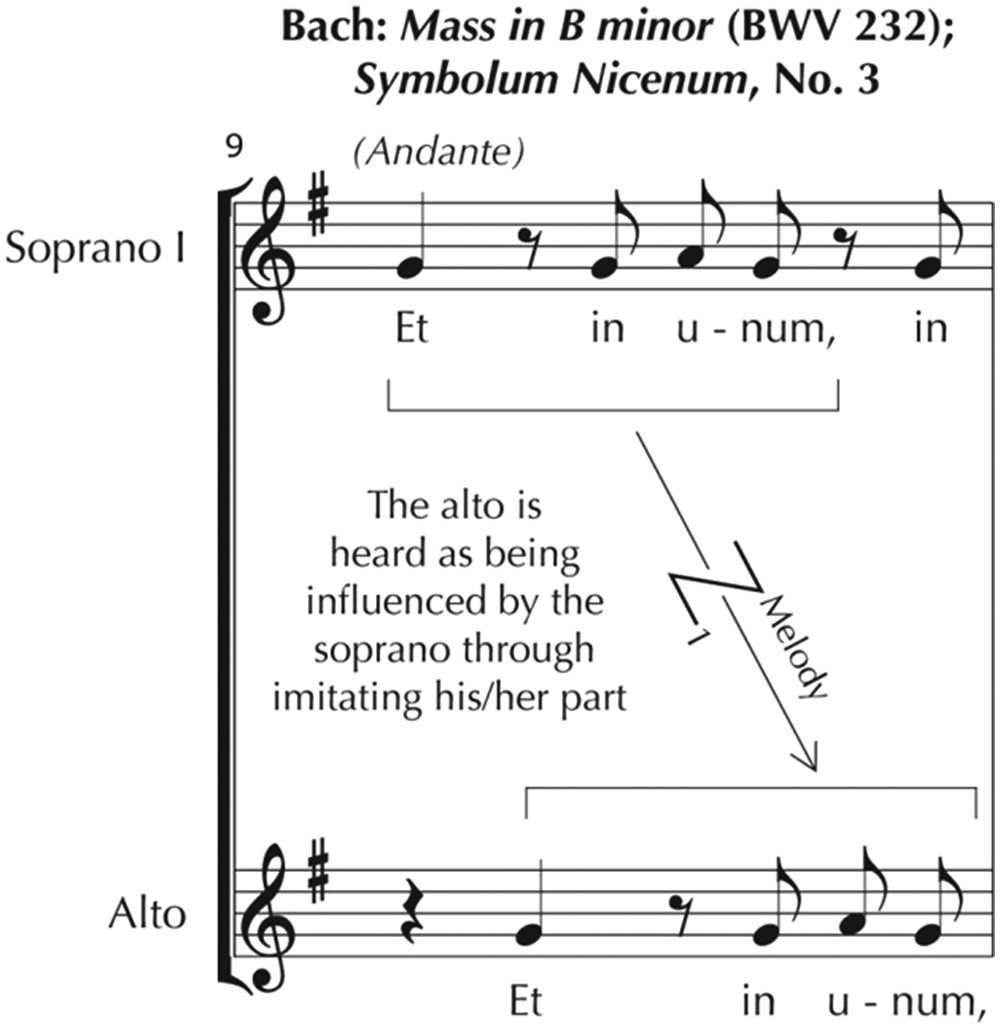
Imitation produces a sense of influence.
A sense of imitative influence can operate in a similar way in the context of improvised musical interactions as well (Ockelford, 2012b). Here (Figure 4), if one performer (“A”) introduces musical material “A(♪)” and a second participant (“B”) imitates it “B(♪),” then there may be a transfer of thinking over and above the purely auditory information that is conveyed: A may be heard to exert an effect on B – to be perceived as influencing B. In phenomenological terms, this influence will be felt from the point at which B’s contribution is recognized as being imitative. Furthermore, if A influences B, then A can be said to control the musical dialogue, to a greater or lesser extent, from the juncture at which the imitation occurs. The nature and perceived strength of such control will depend on the manner in which A’s ideas influence B, and B’s derivation of material other than from A. The extent to which B produces musical ideas that do not stem from A’s contribution is a measure of his or her dialogic autonomy.
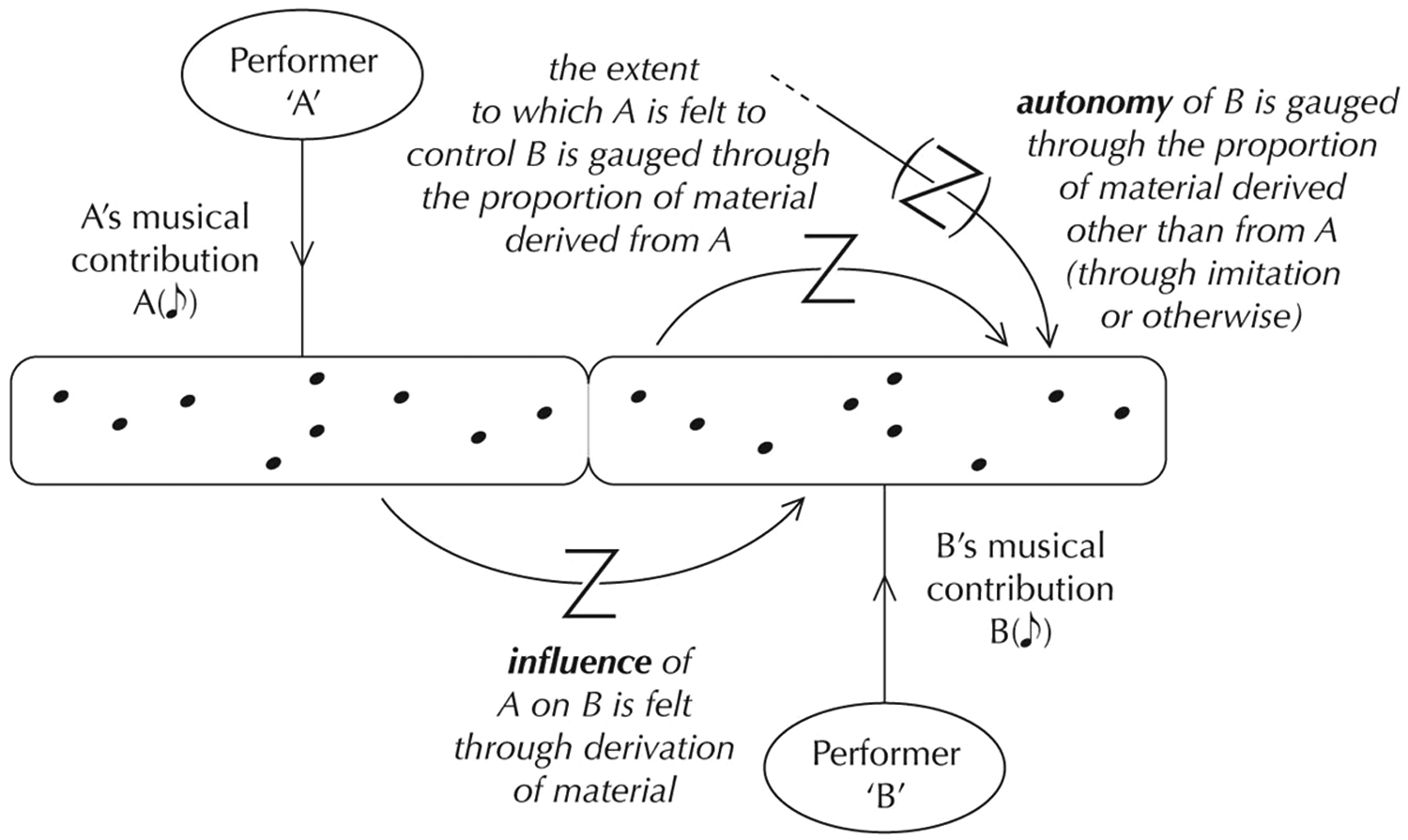
Zygonic model of influence and autonomy occurring in an improvisation involving two performers.
Elsewhere, it is hypothesized that the ratio between B’s control and autonomy is proportional to the ratio between B’s derivation of material from A and from elsewhere (“not A”, or “A”) (Ockelford, 2012b). That is:

As this expression suggests, although control and autonomy are functionally opposite, and while complete control would necessarily imply zero autonomy and vice versa, due to the multidimensional nature of music, the two can coexist in a virtually limitless variety of ways, as we shall see.
Returning now to the influence of A on B, which can be expressed as “Inf (A → B)”: this equates to the amount of control A exerts on B, divided by the amount of control A exerts on B plus B’s autonomy (Ockelford, 2012a). That is:
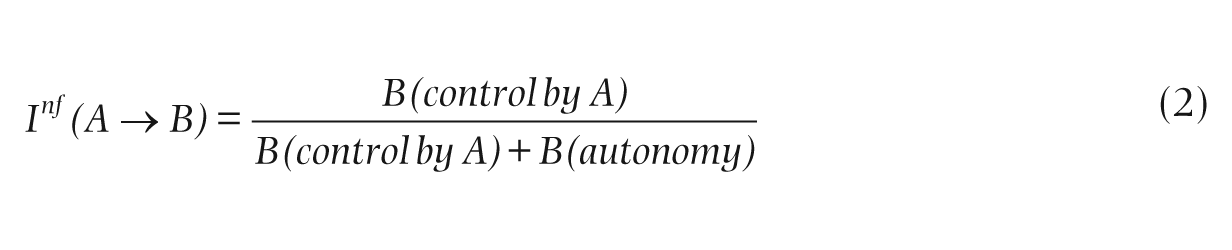
Substituting from Equation (1) gives:

In relation to imitative self-influence, the degree to which an improviser’s ideas derive through imitation of material that he or she produced earlier, the formula becomes:

Here, then, are two equations that, it was believed, would enable Shibazaki to gauge the musical influence exerted between each of the children in the course of one of their compositions in her cross-cultural study.
The cross-cultural study – context
Shibazaki’s (2010) research involved Japanese and English schoolchildren aged 9–11 years. Three schools from each country took part. Working in a total of 18 groups, each comprising four to seven children, 89 pupils were set the task of creating an original piece of music based on predetermined images such as “a journey into space” or “spring.” Class percussion instruments, pitched and non-pitched instruments (such as cabasas, rainsticks, maracas, castanets, bells, cymbals, triangles, snare drums, bongos, agogos, xylophones, glockenspiels) and keyboards were available to the children to make a selection. Participants in each group worked together for three or four lessons of 45 minutes to plan more or less precisely what they were going to do, before performing it for the rest of the class. Pieces lasted on average 2 minutes, the shortest being 20 seconds and the longest 4 minutes.
Zygonic analysis of influence: A worked example
Here is an example of one of the children’s pieces – a performative fusion of composition and improvisation – subject to zygonic analysis to determine the influence of each of the children upon themselves and upon one another. The piece was entitled Fuga in Red (in translation), and was a response to the Japanese teacher’s direction to produce a piece in response to an image of that name. A draft transcription (see Figure 5) was initially produced by the first author from a video recording she had made of the children’s performance. This was verified separately by the second and third authors, and, where necessary, small adjustments were made in the light of subsequent discussion and agreement. For example, although the notes on the tone-chimes resonated throughout the bars in which they occurred, extra-musical information gleaned by the first author indicated that the boys were actually conceiving these are “1, rest, rest, rest,” each equating to a crotchet on the first beat of a 4/4 bar. Hence their transcription as notes a single beat in length. In contrast, the last note of Boy 2’s part was defined as a minim by his saying “3, 4” and then stopping. A comparable process was followed for the other scores that were produced in preparation for analysis.
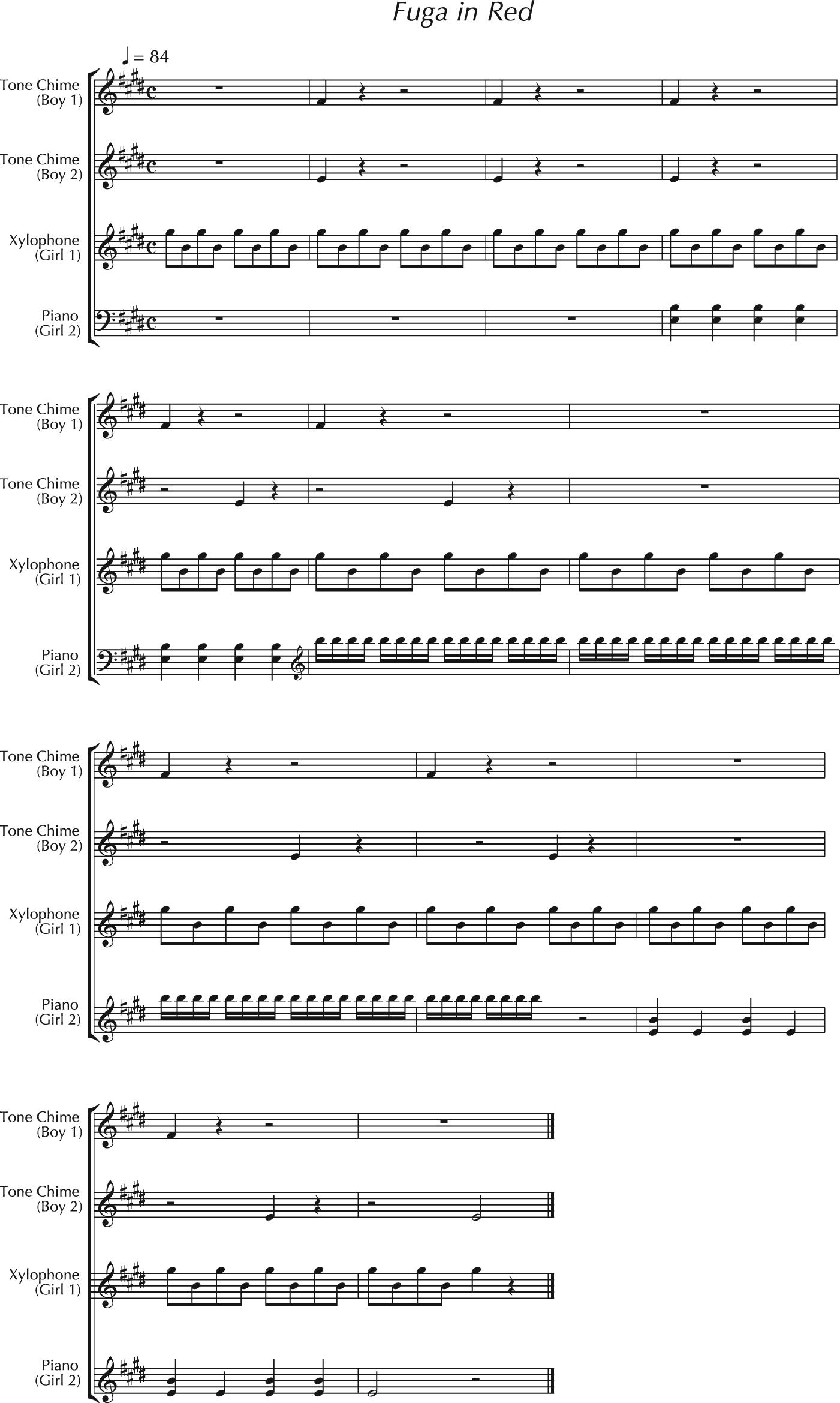
Transccription of Fuga in Red, a performative fusion of composition and improvisation, by four Japanese children.
In terms of zygonic analysis, the procedure used was as follows. First, a decision was made as to the unit of analysis that would be used. This needed to be capable of consistent application throughout all the children’s pieces, and to be comprehensive (so that the impact of all material would be captured). Given the different musical structures and textures that the children employed, ranging from isolated notes to extended phrases and chords, the common denominator was determined to be individual musical events. The first and second authors undertook separate analyses using the “preference” rules set out by Ockelford (2005, p. 125), through which, given the myriad possible structural relationships that exist in any passage of music, the most likely to be perceived can be identified. The preference rules are as follows:
lower ranks of relationship should be preferred to higher;
simpler functions should be preferred to complex;
“perfect” zygons (between identical values) are preferred to “imperfect” (between similar values);
a lower degree of imperfection should be preferred to a higher degree (this has several implications, including the preference for relationships between temporally adjacent values, rather than those that are further separated in time or through the intercalation of other material);
parallel processing (that is involving relationships that are aligned in time) should be preferred to non-parallel, both
within perspective domains (for example, between two identical series of three pitches) and
between them (for instance, in the domains of pitch and perceived time as in identical melodic lines); and
fewer relationships should be preferred to more.
Additionally, where there were areas of disagreement or a lack of certainty, these were discussed with the third author until consensus was achieved. Clearly, the most important thing was that the analyses should, as far as possible, reflect the children’s music-structural intentions, and so the greatest weight was given to the views of the first author, since she had been present when the music was originally performed, and had previously observed the children planning and practising their pieces. Nonetheless, much of what occurred was intuitive (implicit) rather than consciously determined (explicit), and so music-analytical judgements based on the authors’ wider pedagogical experience of working with children also had to be made.
It would be possible to evaluate the pupils’ creations in relation to a number of perceived aspects – “perspects” – of music (see Note 1). However, four features were chosen that were deemed to have the greatest significance in defining musical structure, namely
– pitch,
– melodic/harmonic interval,
– duration, and
– inter-onset interval. (cf. Boulez, 1971, p. 37; Sharpe, 1983)
Clearly, there are other features of the music that could, and did, play a role – including timbre, dynamics and (implied) harmony. But, in this first iteration of the model (principally intended as an illustration of concept), these were discounted for the sake of ease of explanation.
The imitative self-influence of Girl 1
Girl 1 opens the Fuga with a rocking figure on the xylophone. In relation to bar 1, using Equation 4 and the preference rules set out above, the authors arrived at the following mean index of Girl 1’s self-influence (see Figure 6):

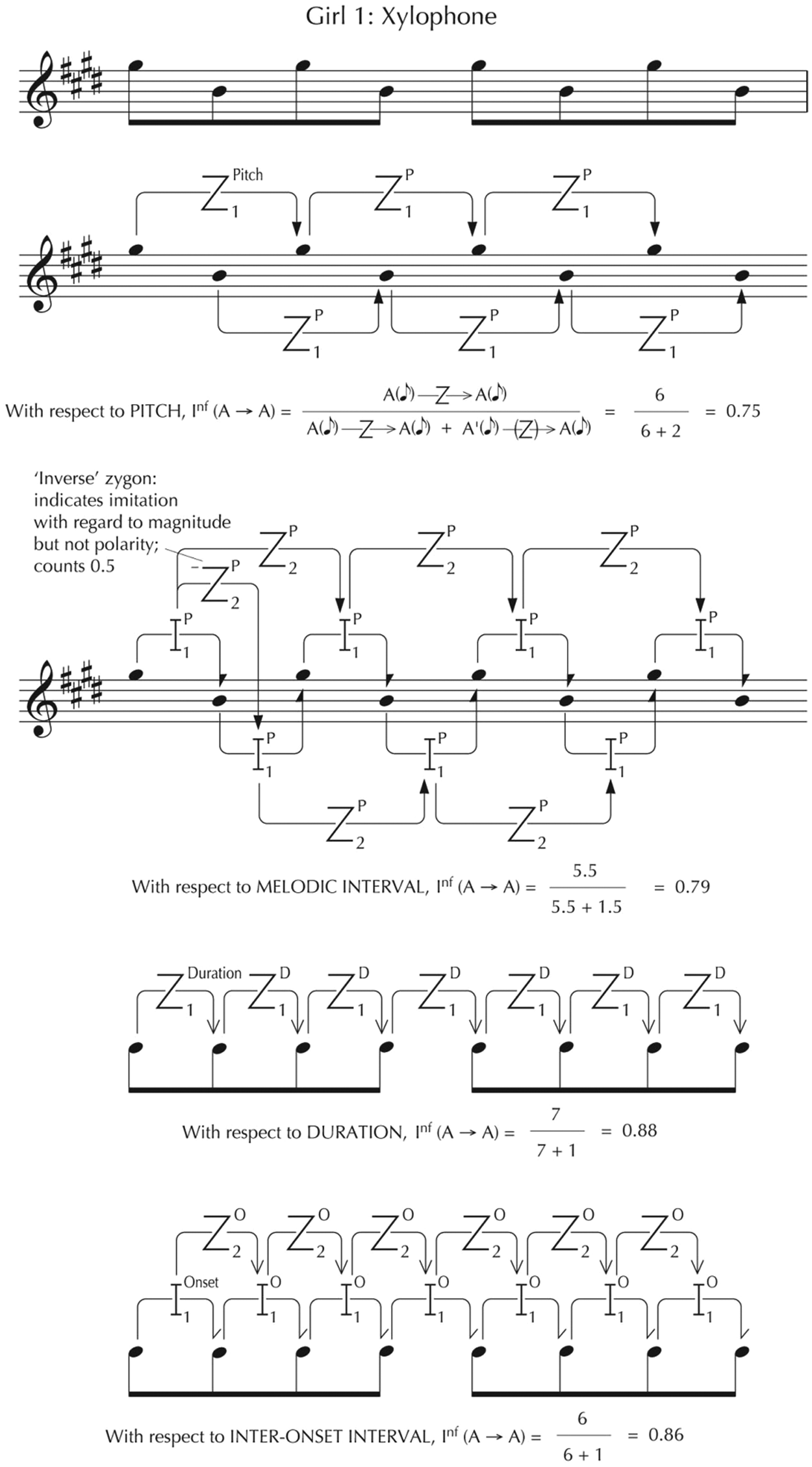
Girl 1: Self-influence functioning in bar 1 of Fuga in Red.
The analytical decision-making process was as follows. With respect to pitch, listening to the excerpt suggested that the second G# exists in imitation of the first, the third in imitation of the second, and the fourth in imitation of the third. Observe that other interpretations were possible. For example, the third pitch could have been heard as deriving from the first, as could the fourth, which could also have been considered to imitate the second. However, for the purposes of our analysis, we consistently chose options according to the preference rules, which could account for the structure that was deemed to be present using the principle of Occam’s razor (to prefer parsimony over complexity) – that were assumed to demand the least cognitive processing. Hence, only those zygonic relationships between successive values that were the same were taken into account (following Preference Rule D). In quantitative terms, this means that there were six pitches (three G#s and three Bs) that can be considered to derive through imitation, and two (a single G# and a B, that occur at the beginning of the sequence of notes) that were not derived imitatively. Hence the proportion of pitches derived imitatively was deemed to be

With melodic intervals (again, see Figure 6) the position is somewhat more complicated. The first interval to occur is a descending melodic 6th from G#5 to B4. The next is the inversion of this, and hence was deemed to exist in imitation of the first through the repetition of magnitude but not polarity, through an “inverse” secondary zygon of pitch. In terms of influence, this is judged to count 0.5, since only one of the two attributes is emulated (cf. Ockelford, 2011). The third interval is the same as the first, and although its derivation could be heard in two ways, as an inversion of the interval that immediately precedes, or in direct imitation of the initial movement from G# to B, the authors’ preferred reading was the latter, in accordance with Preference Rule B – to privilege simpler functions to more complex. Following this principle for the remainder of the excerpt yields a metric of self-imitation of:

(Note that the 1.5 in the denominator of this equation represents the residue of non-imitatively derived values from the total of seven that exist.)
With regard to duration, of the eight identical values, each following the first was deemed to derive through imitation of those that precede. However, Preference Rule D meant that only those between successive values were taken into consideration, since these most economically accounted for the structure present. Hence the strength of self-imitation in this domain was taken to be:

A comparable position was considered to exist in relation to the seven successive identical inter-onset intervals:

Extending these analytic principles to Girl 1’s part as a whole yields indices of musical self-influence as follows:
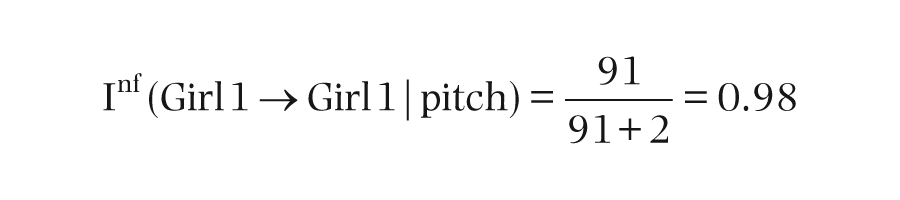

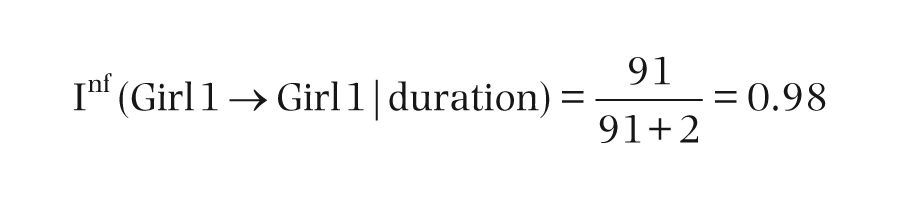

Mean self-influence (across the four perspects) is:

This figure reflects the highly repetitive nature of Girl 1’s contribution.
The imitative self-influence of Boys 1 and 2
Boys 1 and 2 enter at the beginning of bar 2. The nature of their imitative self-influence was the subject of some debate. In terms of pitch, each boy has only one note available – respectively, F# and E – through their choice of tone-chimes. Is it fair to say, therefore, that self-imitation is in play here, since, having selected an instrument with a single pitch, repetition was inevitable? For two reasons, we felt that it is reasonable to argue that the repeated pitches were intended to be heard as deriving from one another through imitation. First, they occur in the context of other parts that exhibit pitch differences as well as repetition, and the sense of imitation that one hears in these strands arguably transfers to the texture as a whole. Second, the boys could have chosen to play two tone chimes or more had they wished to incorporate greater variety in their contributions, and the fact that the pitches were predetermined does not preclude a sense of imitation within the performance.
Clearly, the importance of this topic transcends the particular circumstances described here, and has a wider bearing on the application of zygonic theory to “real life” situations in which music is created, where, in effect, the “degrees of freedom” open to performers may vary according to physical and environmental factors. This issue is considered at length in Ockelford (2012a), where measures of intentionality are developed that vary inversely according to the probability of repetition occurring by chance. However, limitations of space mean that this line of thinking cannot be pursued further in the current article, and we will provisionally accept the argument that primary zygons of pitch can be considered to function between the tones on a one-pitch chime, as shown in Figure 7. Moreover, since the pitches in each part are identical, the melodic intervals between notes (unisons) are the same too and, through the same reasoning, these can be regarded as functioning imitatively. In both cases, Preference Rule D was invoked such that only those zygonic relationships deemed to exist between successive values were taken into account, since these were sufficient to account for the structure perceived to be present.
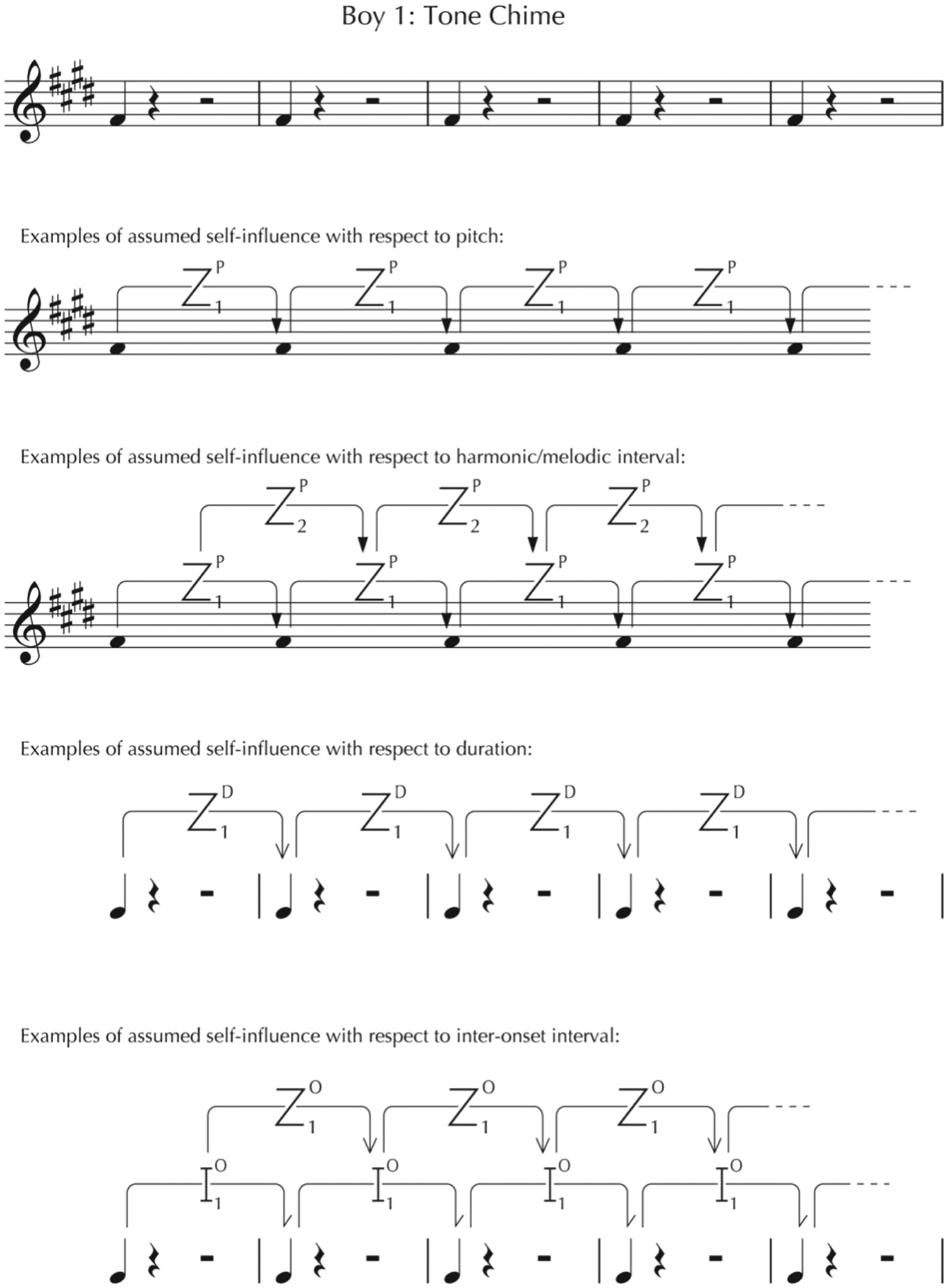
Boys 1 and 2: Examples of self-influence assumed to function in the opening bars of Fuga in Red.
With regard to duration, again, the interpretation of intent is not entirely straightforward, although given the boys’ conception of their contributions as single beats, the authors agreed that it was reasonable to assume the presence of durational imitation. The interpretation of imitation between inter-onset intervals was unambiguous. Again, in both cases, Preference Rule D was used invoked.
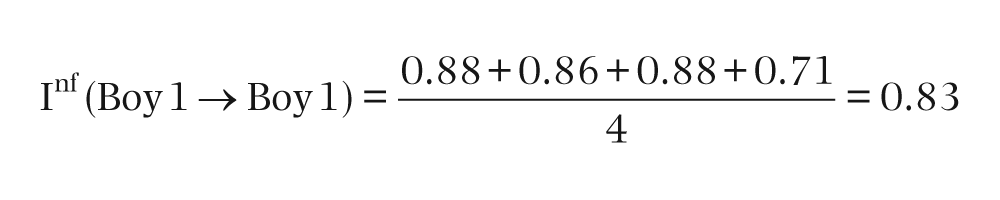
Using the analysis shown in Figure 7, the mean index of self-influence of Boy 1 is:
and of Boy 2:
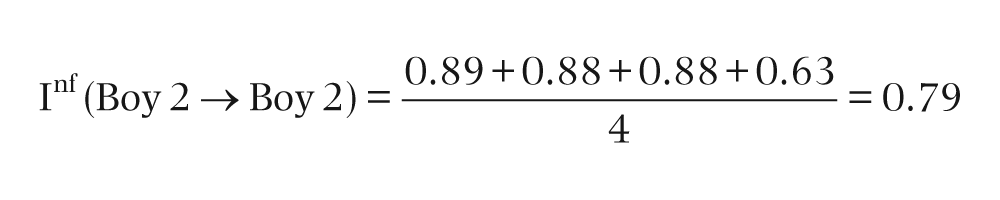
The imitative self-influence of Girl 2
Girl 2 enters last, at the beginning of bar 4, playing E3 and B3 together. A partial zygonic analysis of self-influence is shown in Figure 8. (Note that where a pitch has the same letter-name – also known as chroma or pitch-class – but appears in a different octave, a zygonic relationship between them is judged to have 50% of the derivational strength of a zygon between identical pitches; see Ockelford, 2011.) Following the preference rules, only the “simplest” derivational analysis was used. For example, it could have been argued that the harmonic interval of a perfect fifth (between E and B) is imitated, but this would entail secondary zygons of pitch rather than primary, and was therefore discounted (after Preference Rule A).
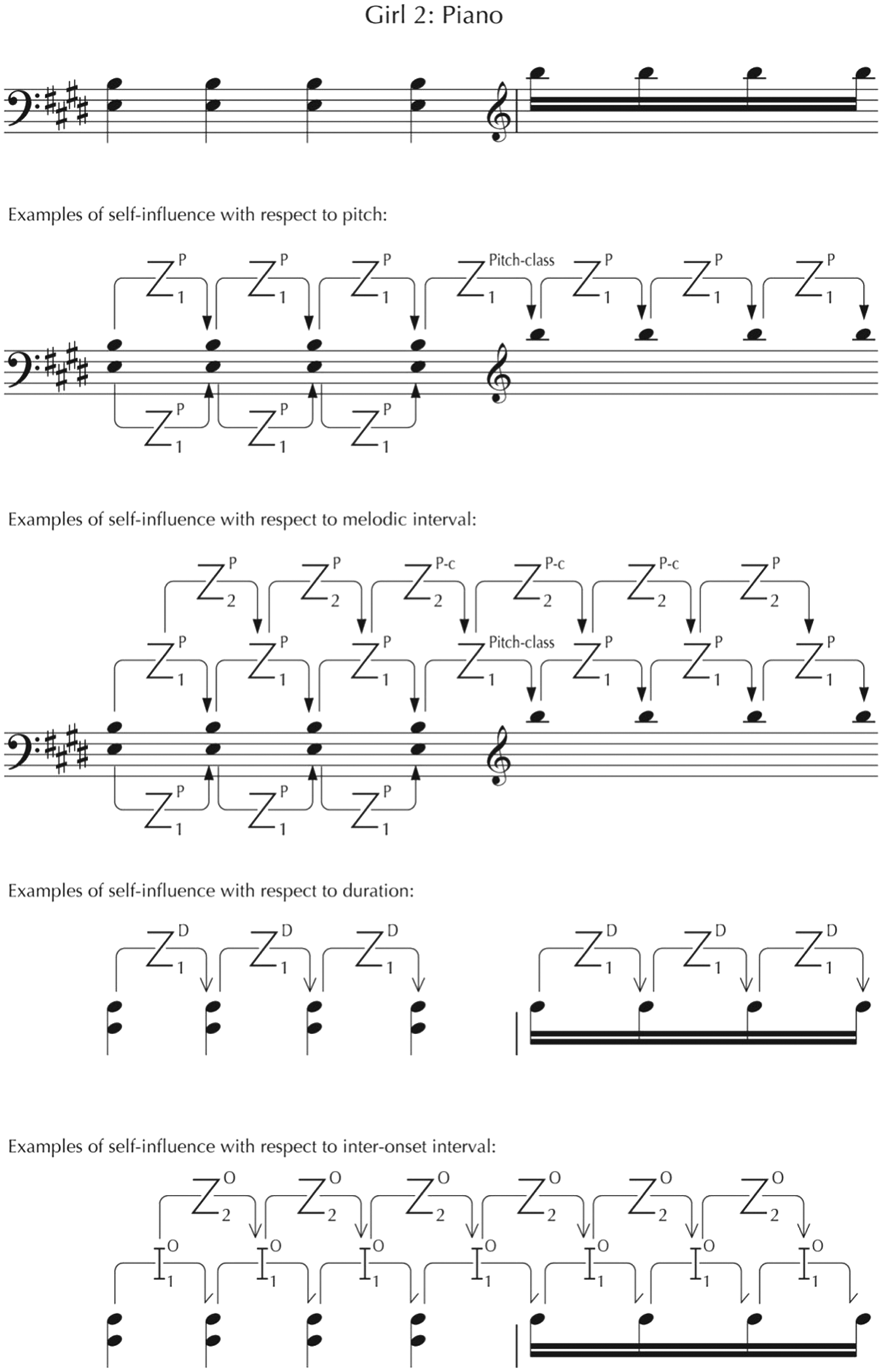
Girl 2: Self-influence assumed to function in bars 5 and 6 of Fuga in Red.
Girl 2’s mean index of imitative self-influence is
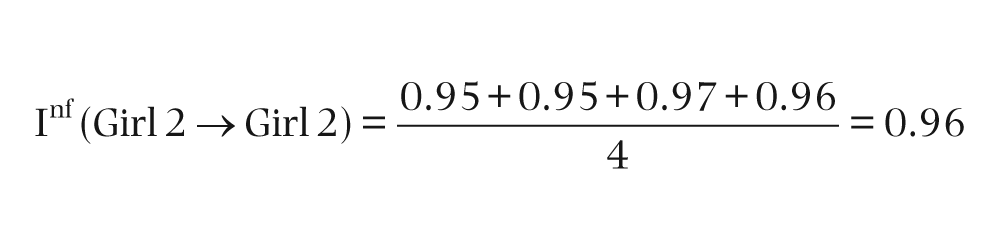
Again, her contribution is highly repetitive.
Moving now to influence by another (Equation 3), since each of the four children potentially has an impact on each of his or her three peers, there are 12 relationships to consider.
The imitative influence of Girl 1 on Boy 1
As the pitches in each part are different, there can be no question of one having an impact on the other. In terms of melodic intervals, however, one or more of the unisons in Girl 1’s part can be considered to influence Boy 1’s use of repeated pitches (see comments above). In the authors’ view, the effect is weak, however, and, it is postulated, serves only to establish the pattern of repetition used by Boy 1, which then appears to be self-sustaining. In the perceived temporal domain, Girl 1’s playing does not influence Boy 1 with respect to duration (since there are no similarities that function imitatively), and, again, there is only a tenuous connection of inter-onset interval, which, it is suggested, works in a similar way to the relationships between pitches identified above: the four-beat gap utilized by Boy 1 is present in Girl 1’s part, though indirectly and, once established, Boy 1’s temporal patterning appears to be maintained through self-influence (see Figure 9). It could be argued, of course, that the influence of Girl 1 continues throughout Boy1’s part, but Preference Rule H – fewer relationships should be preferred more – mitigates against this.
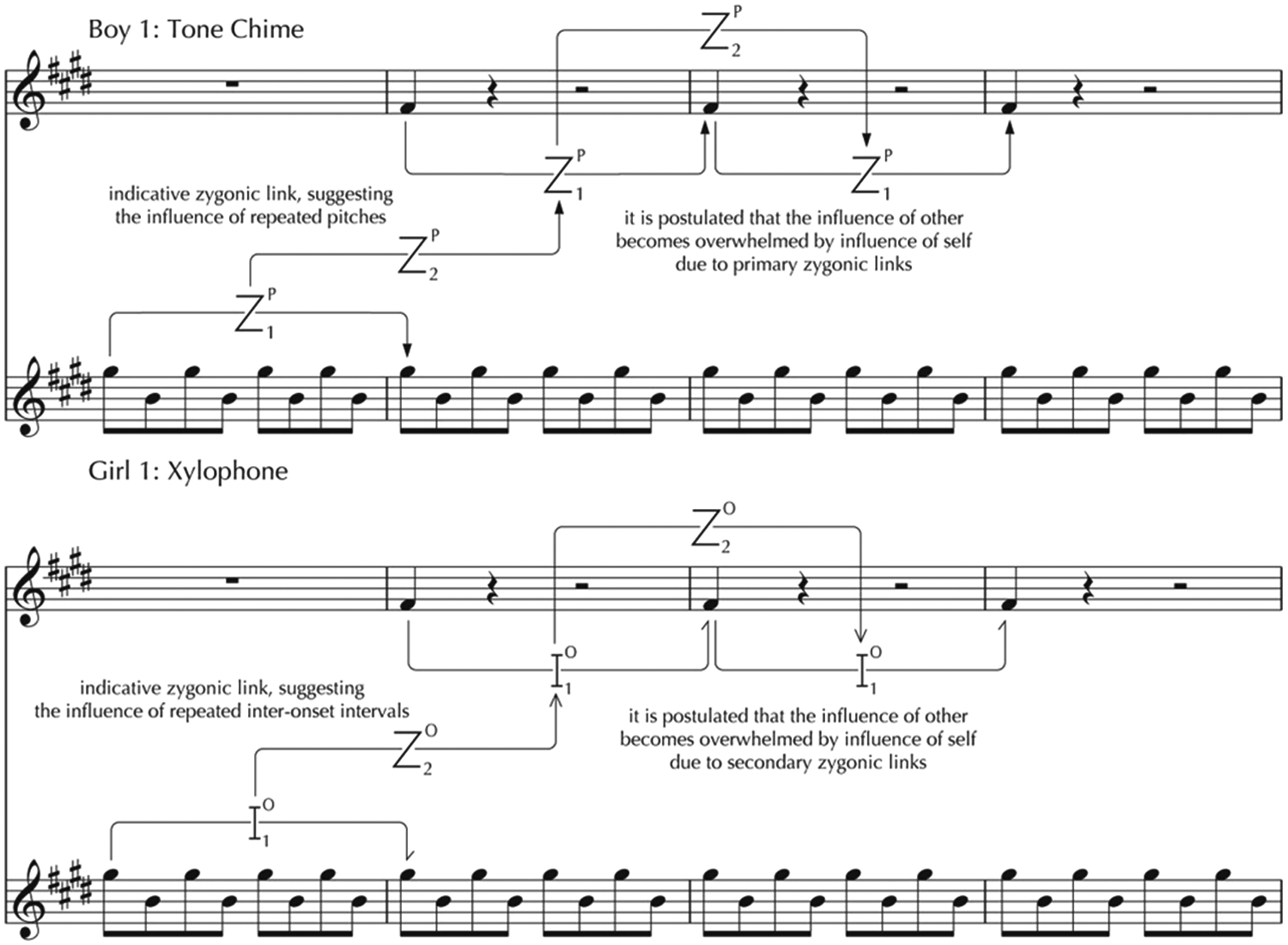
Examples of postulated influence of Girl 1 on Boy 1.
These interpretations can be quantified as follows:


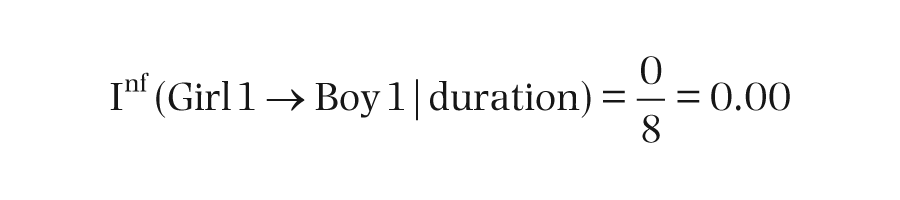
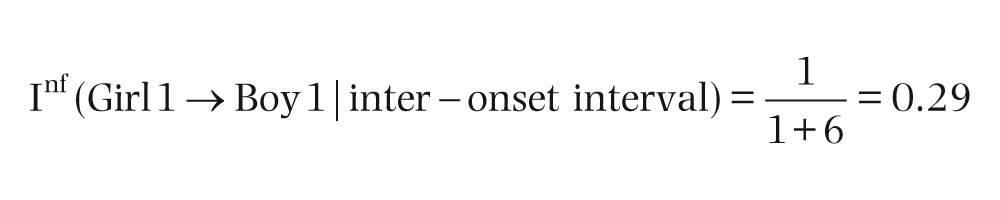
Mean influence (across all four perspects) is:
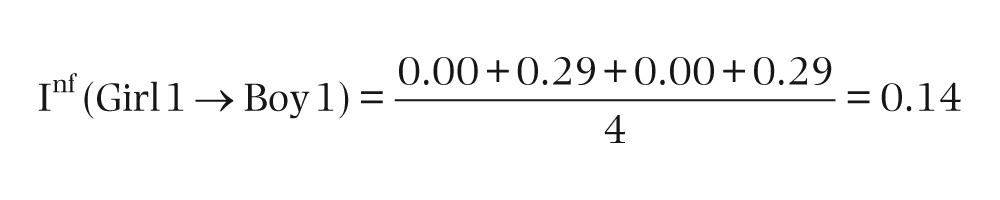
This figure supports the authors’ initial impression that the impact of Girl 1’s playing on Boy 1 is relatively low.
The imitative influence of Girl 1 on Boy 2
The position in relation to Boy 2 is very similar.
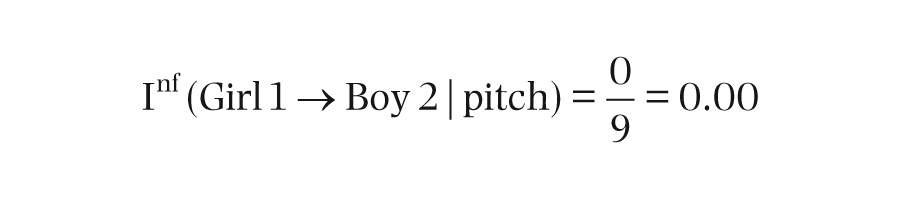

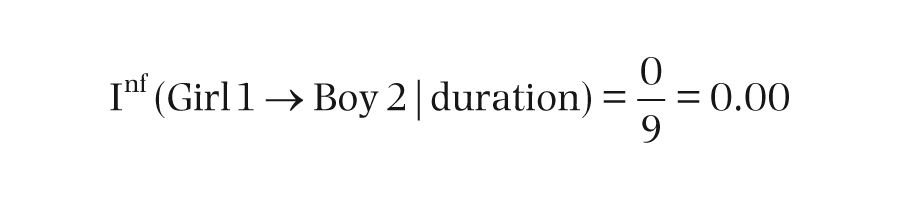
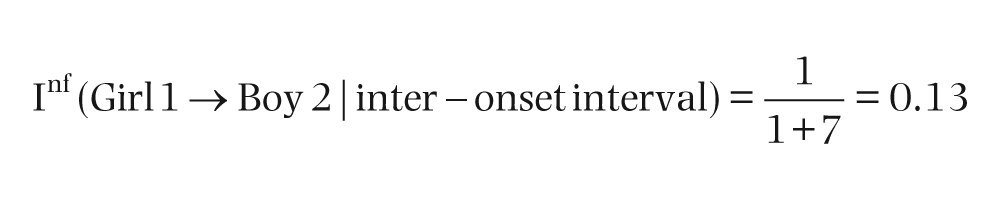
Thus the mean imitative influence (across all four perspects) is held to be:
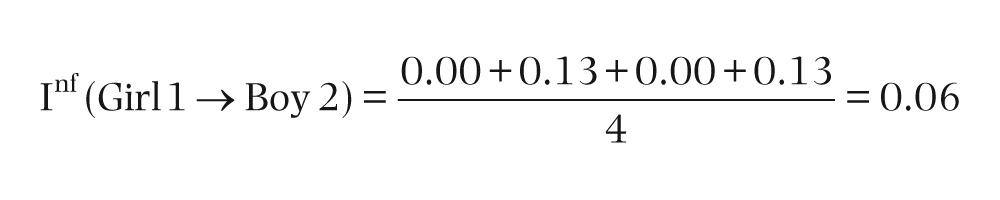
Again, it is apparent that the effect of Girl 1’s playing on Boy 2 is minimal.
The imitative influence of Girl 1 on Girl 2
In terms of pitch, our zygonic analysis suggests that Girl 1 influences Girl 2 through imitation of pitch-class on three occasions (at the beginning of bars 4, 6 and 10), as shown in Figure 10. Here, again, the effect is weak, and, it is postulated, only serves to establish one of the pitches used by Girl 2, which is then self-sustaining through repetition (Preference Rule H). Similarly, the reiteration of pitches in Girl 1’s part can be considered to influence Girl 2’s contribution on three occasions (again, in bars 4, 6 and 10), the first of which is illustrated. There is no imitation of durations. Four inter-onset intervals are potentially derived through imitation, however (see, once more, bars 4, 6 and 10). Again, the first is illustrated in Figure 10.
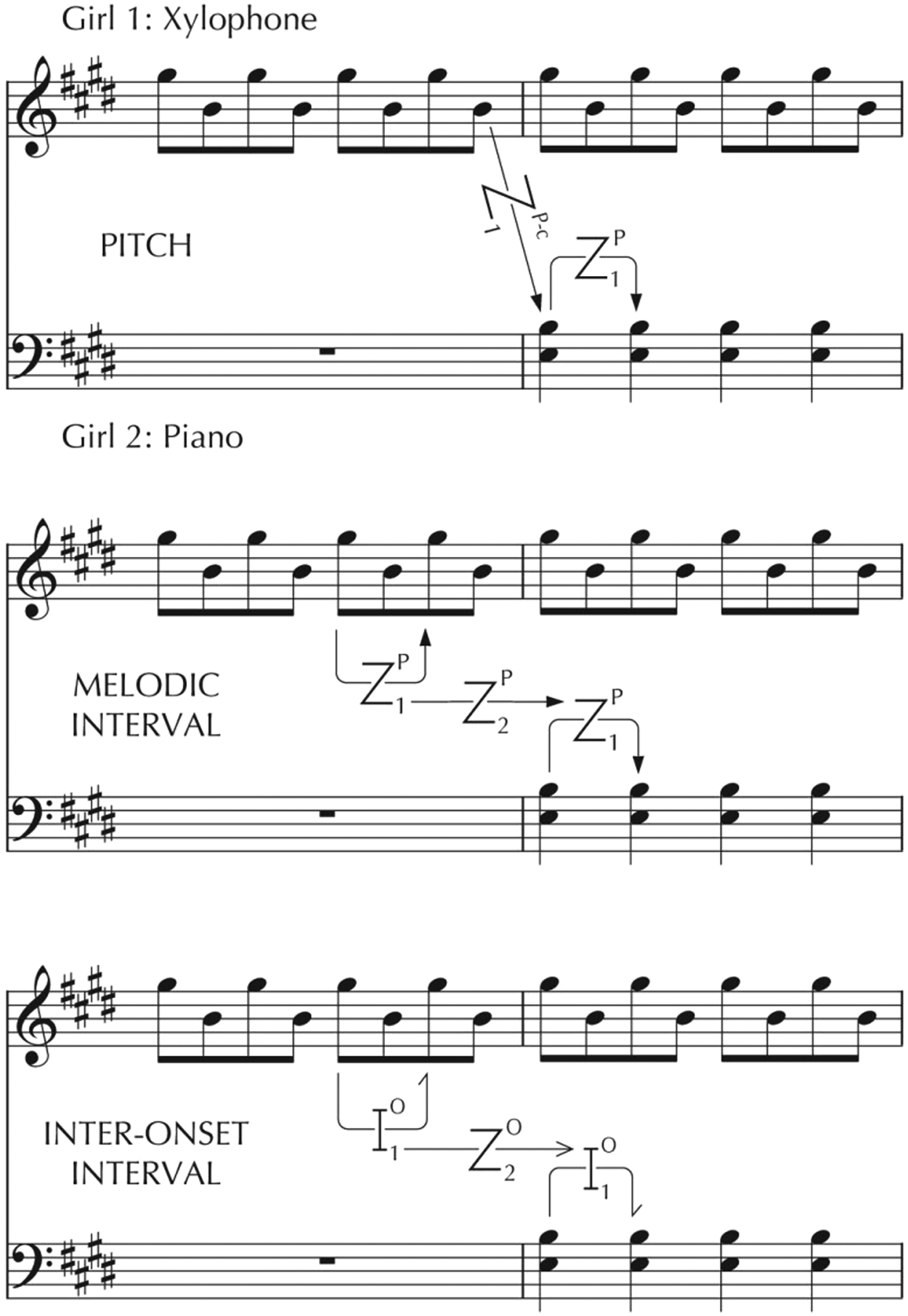
Examples of postulated influence of Girl 1 on Girl 2.
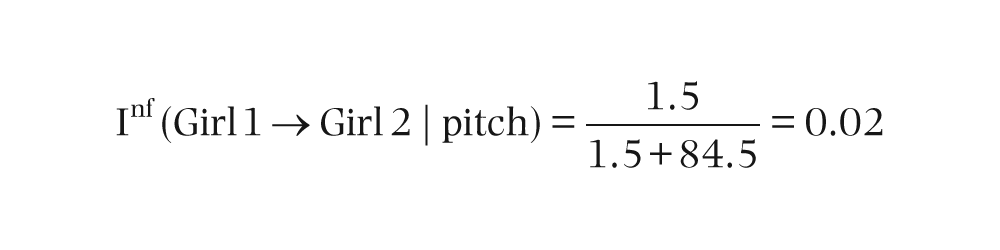



Mean influence (across all four perspects) is:

The imitative influence of Boy 1 on Boy 2
The two parts have no pitches in common, so one cannot be considered to influence the other. With regard to melodic intervals, though, it seemed conceivable to us that the repetition in one line derives, at least in part, from that in the other (see Figure 11). Again, the effect appears to be weak, however, and could only be considered to play a part in establishing the pattern of repetition used by Boy 2, which is subsequently self-sustaining. Similarly, in the perceived temporal domain, Boy 1 could be considered to influence the duration of Boy 2’s second note (an impact that, as we shall see, is potentially mutual), and the inter-onset interval between notes 2 and 3 (Preference Rule G), see Figure 11. The connections between the durations of notes 4, 5, 6, 7 and 8 in each part seem to be more clear-cut, as Boy 2 consistently follows Boy 1, and a similar position exists in relation to the inter-onset intervals between notes 4 and 5 of both boys” parts, and notes 6 and 7.
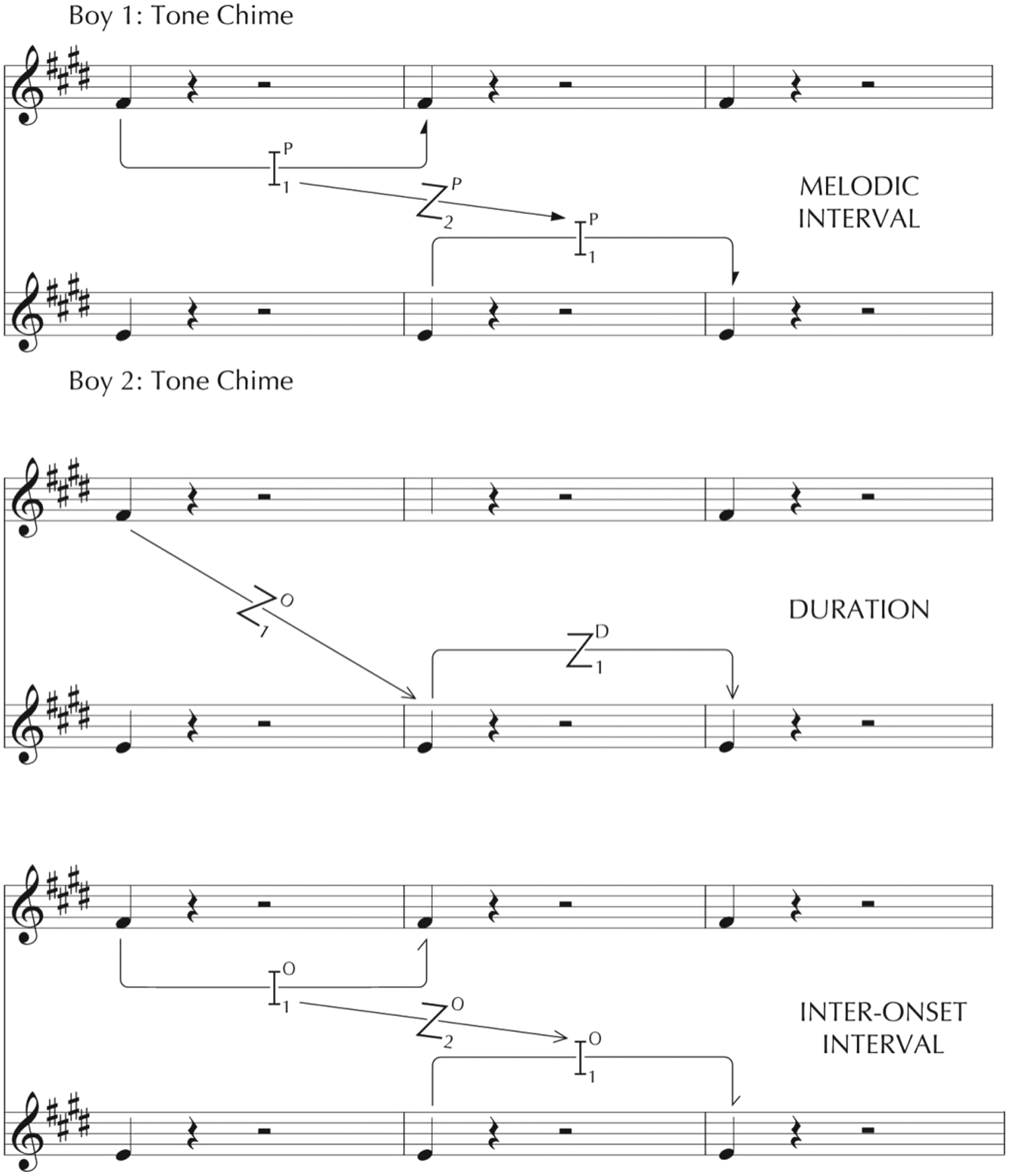
Examples of the postulated influence of Boy 1 on Boy 2.
This analysis can be quantified thus:
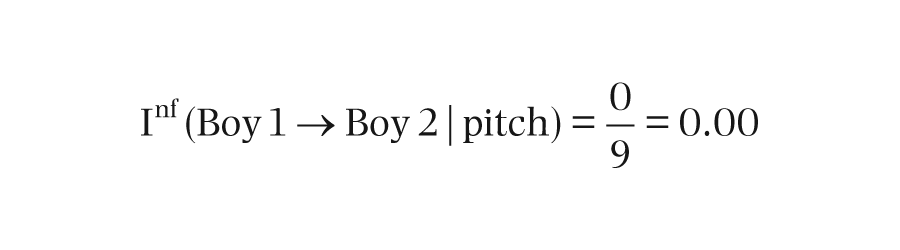



Mean imitative influence (across all four perspects) is:
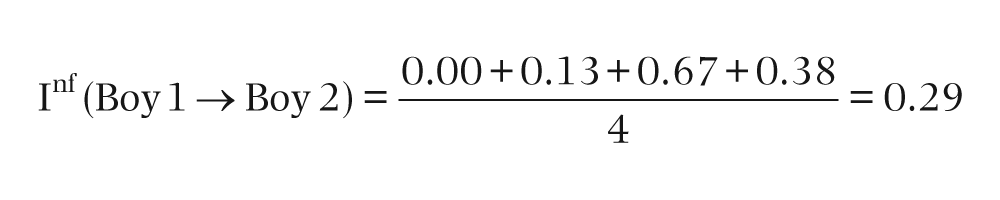
The imitative influence of Boy 1 on Girl 1
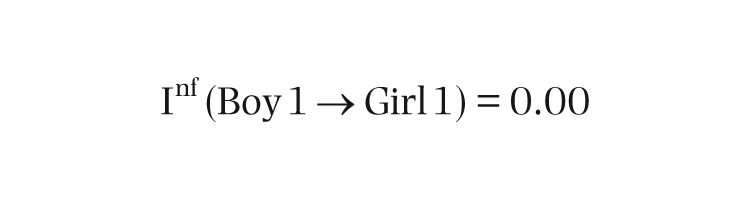
Although some similarities exist in relation to melodic and inter-onset intervals (see above), as Boy 1 enters after Girl 1, there is no sense of influence of the former on the latter. Hence,
The imitative influence of Boy 1 on Girl 2
Here, there appears to be no influence in the domain of pitch, since the parts have no pitches in common, and one does not get a sense that the repetition found in Girl 2’s part derives from Boy 1. It is conceivable that duration is imitated (though see comments above as to the extent that Boy 1’s durations as notated were conceptual rather than perceptual in nature) – see Figure 12 (Preference Rule H). There are no inter-onset intervals in common, however.
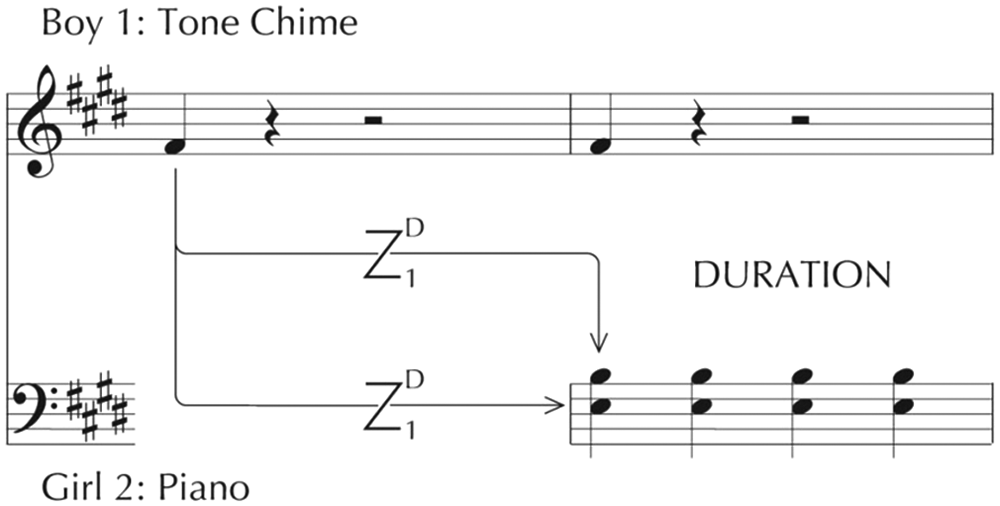
The postulated influence of Boy 1 on Girl 2.
Hence, influence in quantitative terms can be deemed to exist as follows:
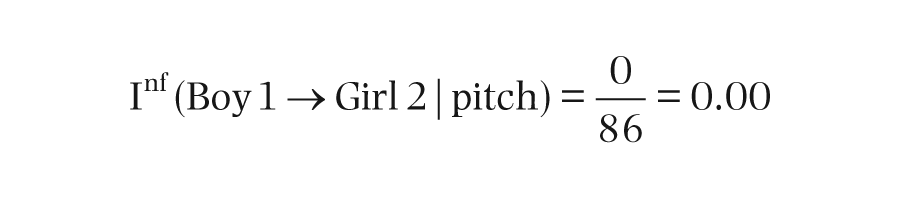

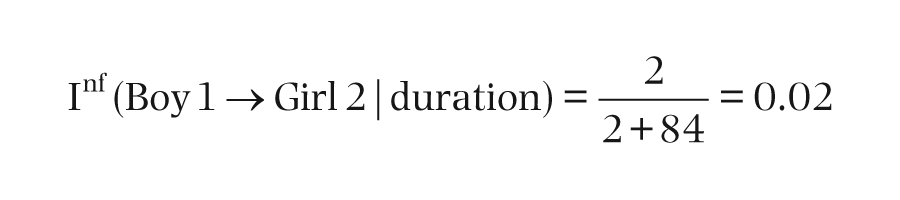
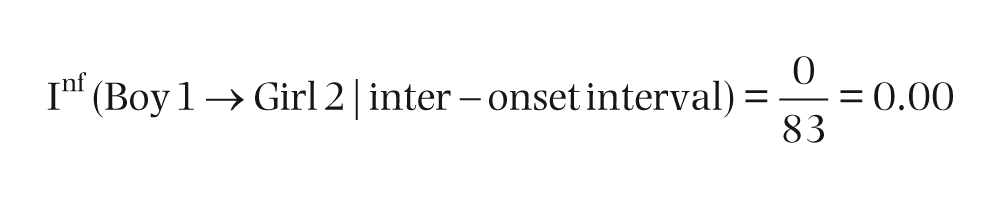
The mean imitative influence (across all four perspects) is:

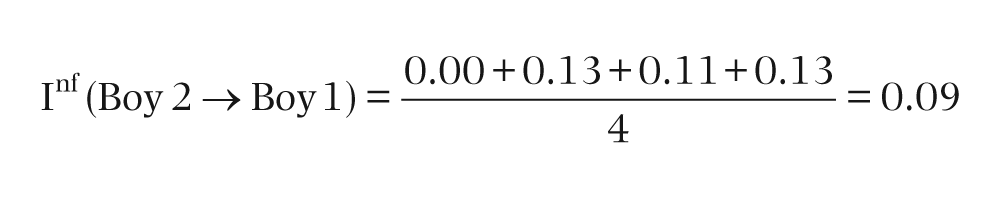
The imitative influence of Boy 2 on Boy 1
Initially, the impact here is assumed to be the same as that pertaining to Boy 1 in relation to Boy 2 (see above), though from bar 5, the mutuality of influence ends as Boy 2 consistently follows Boy 1. This is reflected in quantitative terms as follows:
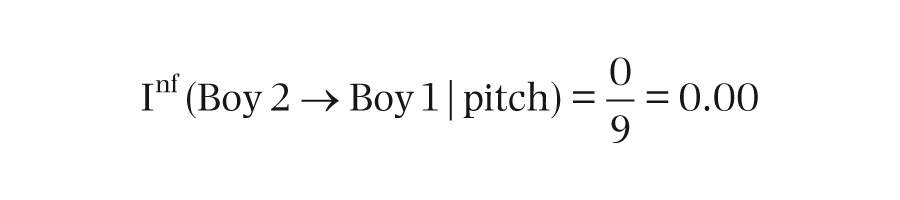

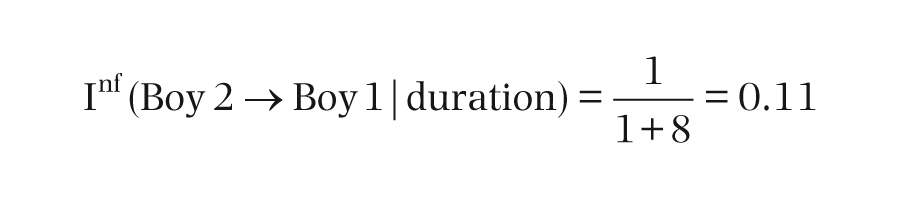
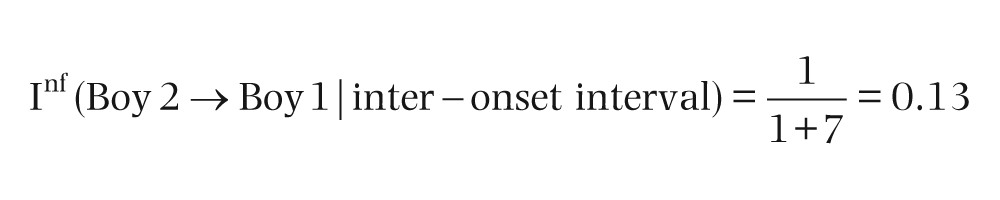
Mean imitative influence (across all four perspects) is:
The imitative influence of Boy 2 on Girl 1
As is the case with Boy 1 and Girl 1, although there are some similarities pertaining to melodic and inter-onset intervals, as Boy 2 begins to play after Girl 1, there is not a sense of imitative influence of the former on the latter.
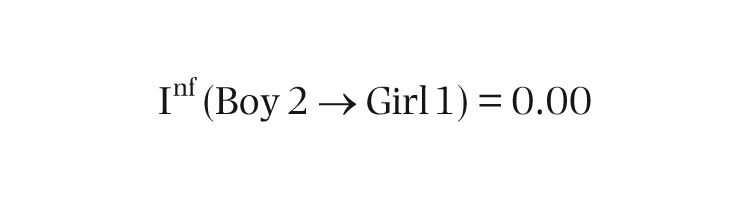
The imitative influence of Boy 2 on Girl 2
There appears to be limited influence in the domain of pitch in bars 3 and 4, and 9 and 10, and, in our opinion, possible initial imitation of melodic interval (see Figure 13). It is conceivable too that duration is replicated on two occasions (though see comments above in relation to Boy 1’s influence on Girl 2 – Preference Rule E).
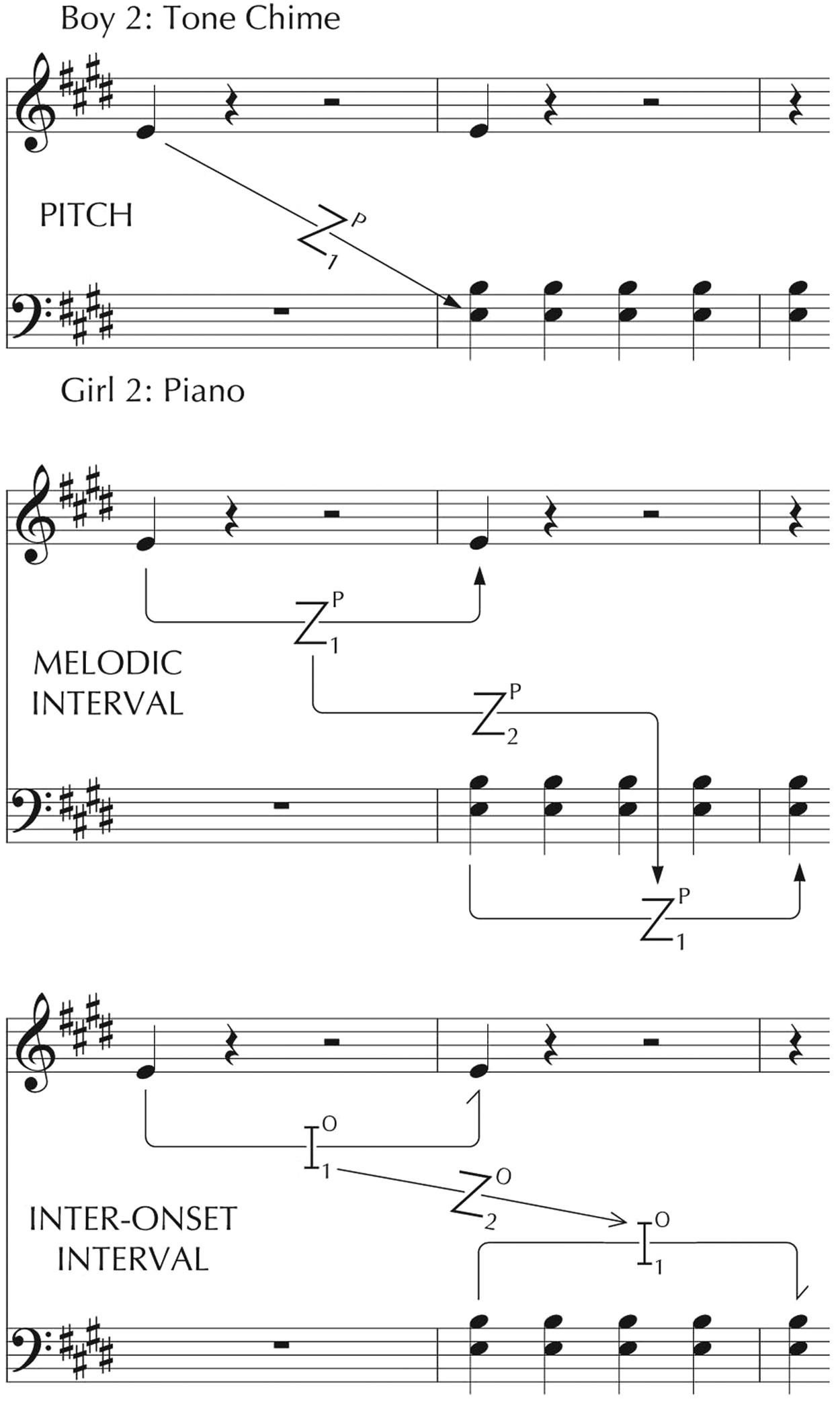
Examples of the postulated influence of Boy 2 on Girl 2.
Quantitatively, the position can be summarized as follows:
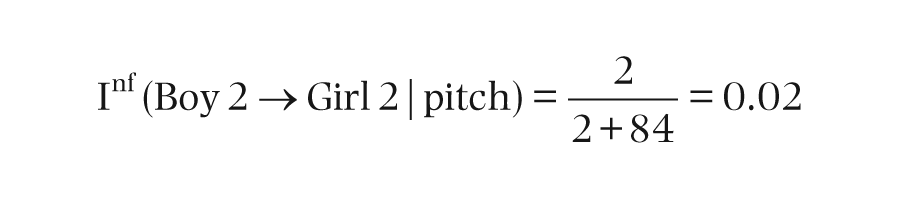

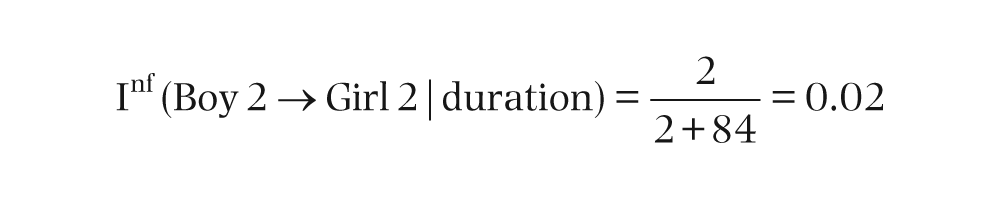
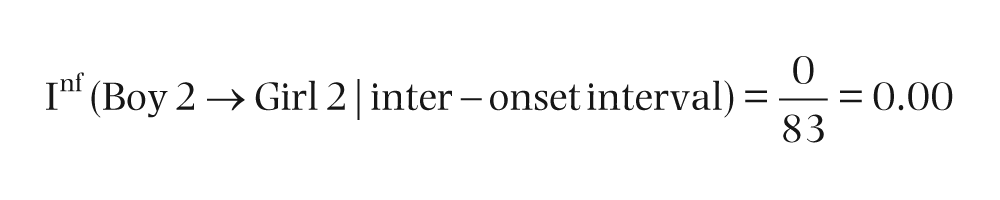
The mean imitative influence (across all four perspects) is:
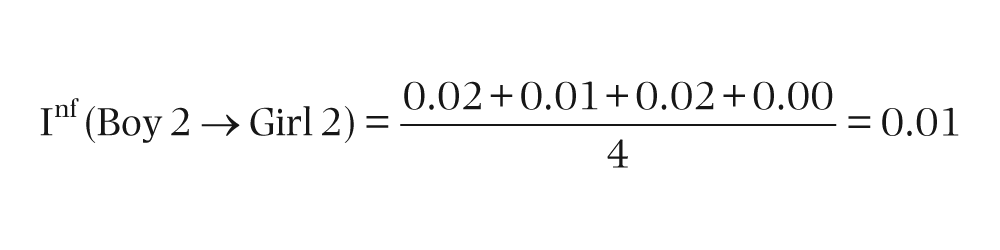
The imitative influence of Girl 2 on Boy 1
Here, there is no sense of imitative influence in the domains of pitch or perceived time. Hence

The imitative influence of Girl 2 on Boy 2
Here the only potential influence appears to be between the final notes of each part in terms of pitch and duration (see Figure 14 – Preference Rule G).
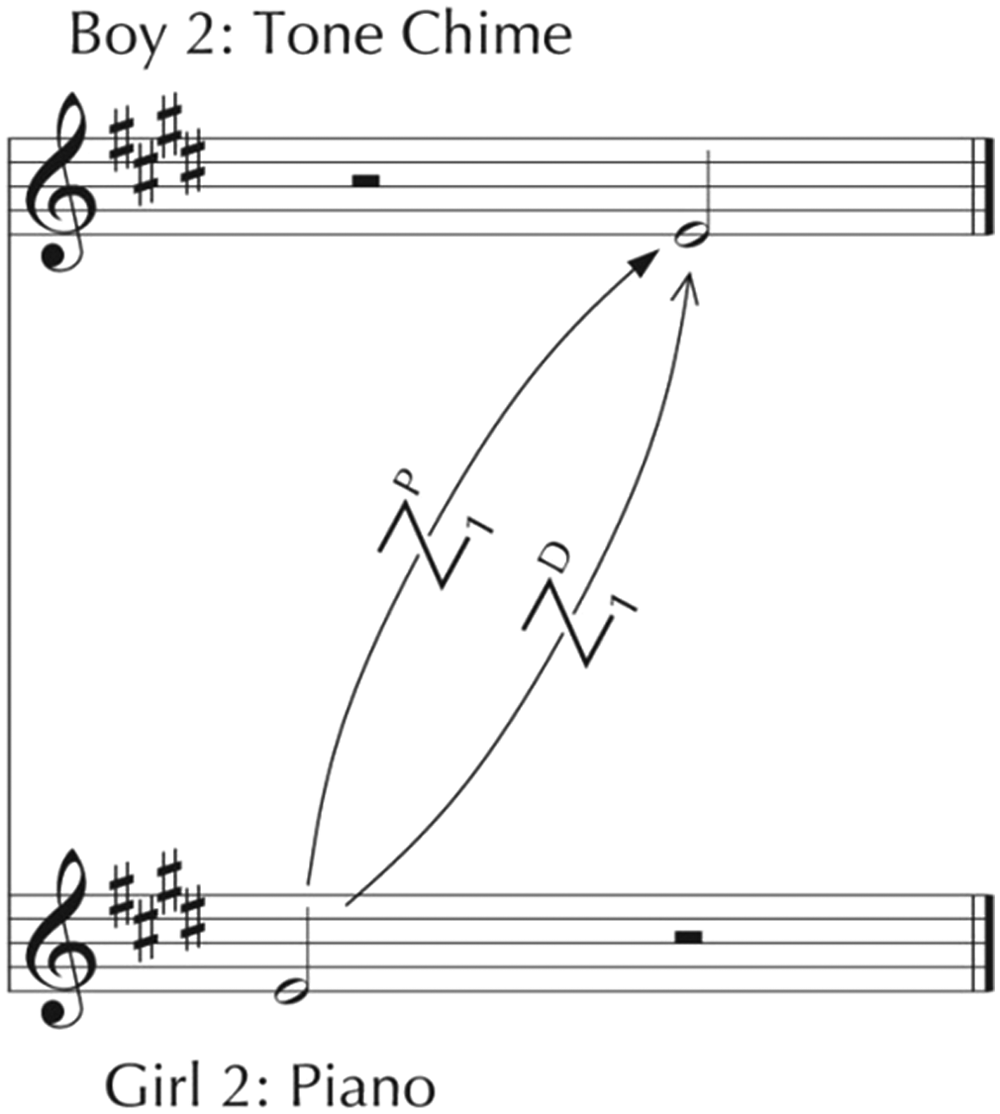
The postulated influence of Girl 2 on Boy 2.
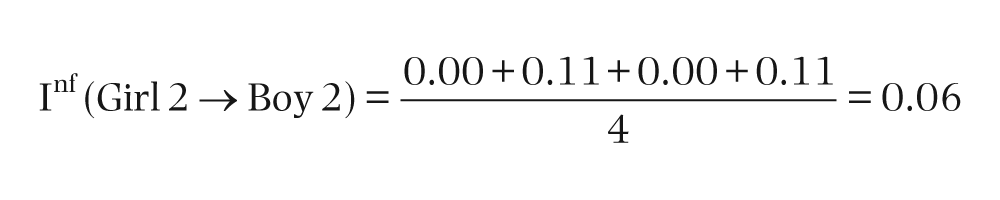
Quantitatively, this yields the following data:
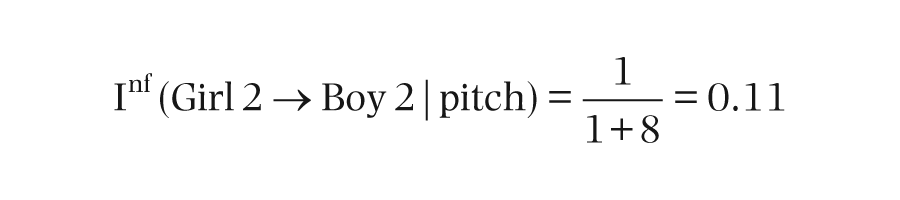

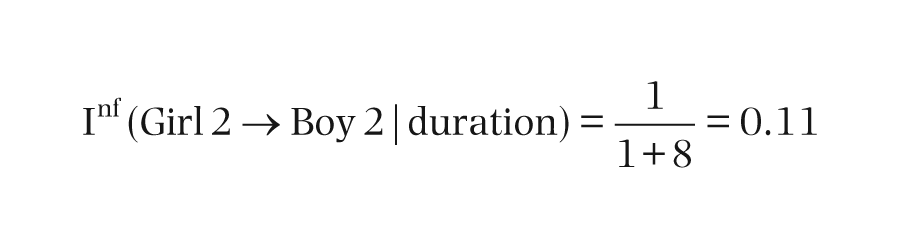
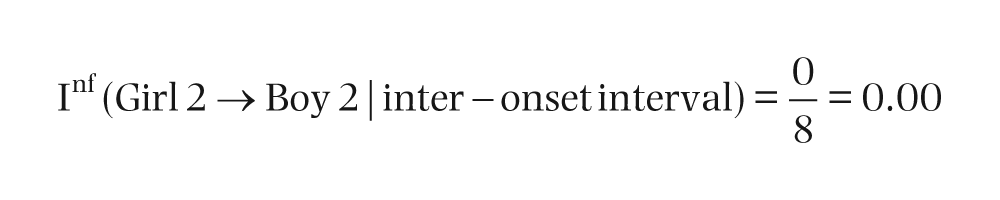
The mean imitative influence (across all four perspects) is:
The imitative influence of Girl 2 on Girl 1
Here, there is no sense of imitative influence in play. Hence

These data can be summarized as shown in Table 1.
Degrees of musical influence postulated to be functioning in Fuga in Red.
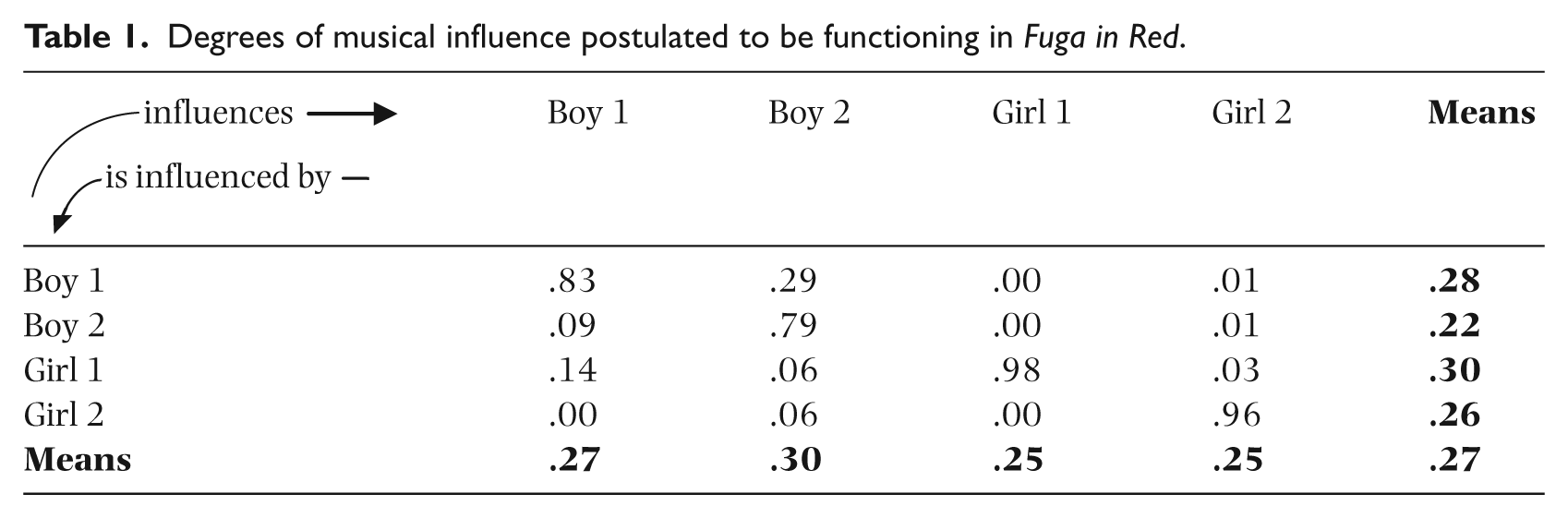
The most striking feature is the marked difference between patterns of imitative self-influence (A → A) and imitative influence by other members of the group (A → B). The means are as follows:
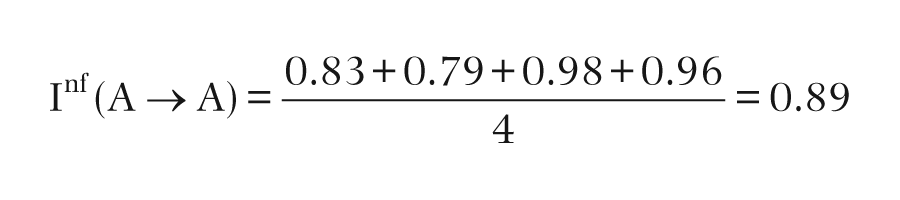
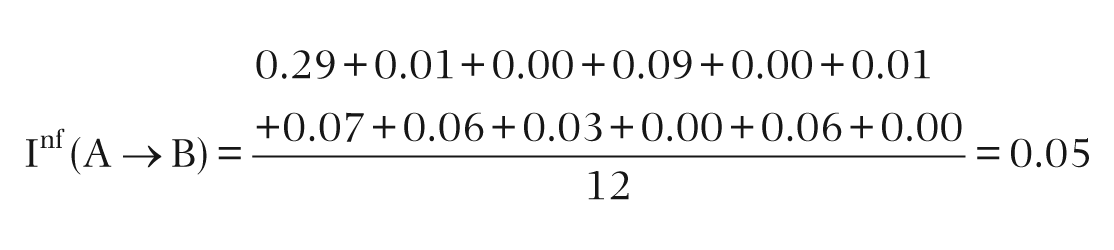
Individual differences are apparent too: for example, the most powerful imitative influence of one child on another is Boy 1 on Boy 2, whereas Girl 1 is not imitatively influenced by anyone other than herself. These trends and differences can be represented visually as follows (Figure 15), where the relative seating positions of the children are reproduced, and the thickness of the lines equates to the degree of influence (cf. Huron, 2006, p. 160; Ockelford, 2006, p. 108).
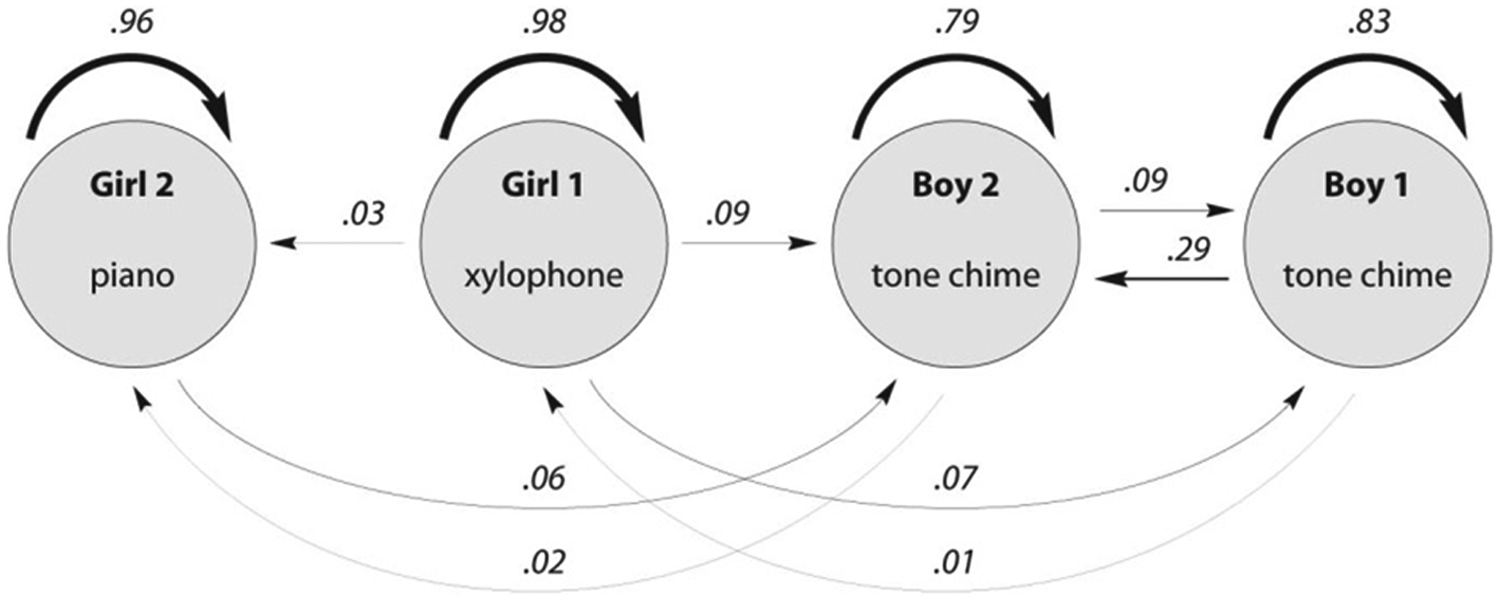
Visual representation of the degrees of musical influence postulated to be functioning in Fuga in Red.
Two further examples (2 and 3) in summary
To give a sense of how the zygonic approach of gauging imitative influence works among other groups that Shibazaki (2010) studied, here are two further examples.
Example 2
This is from an English school, entitled Black Hole: A Journey of Space. See Figure 16.
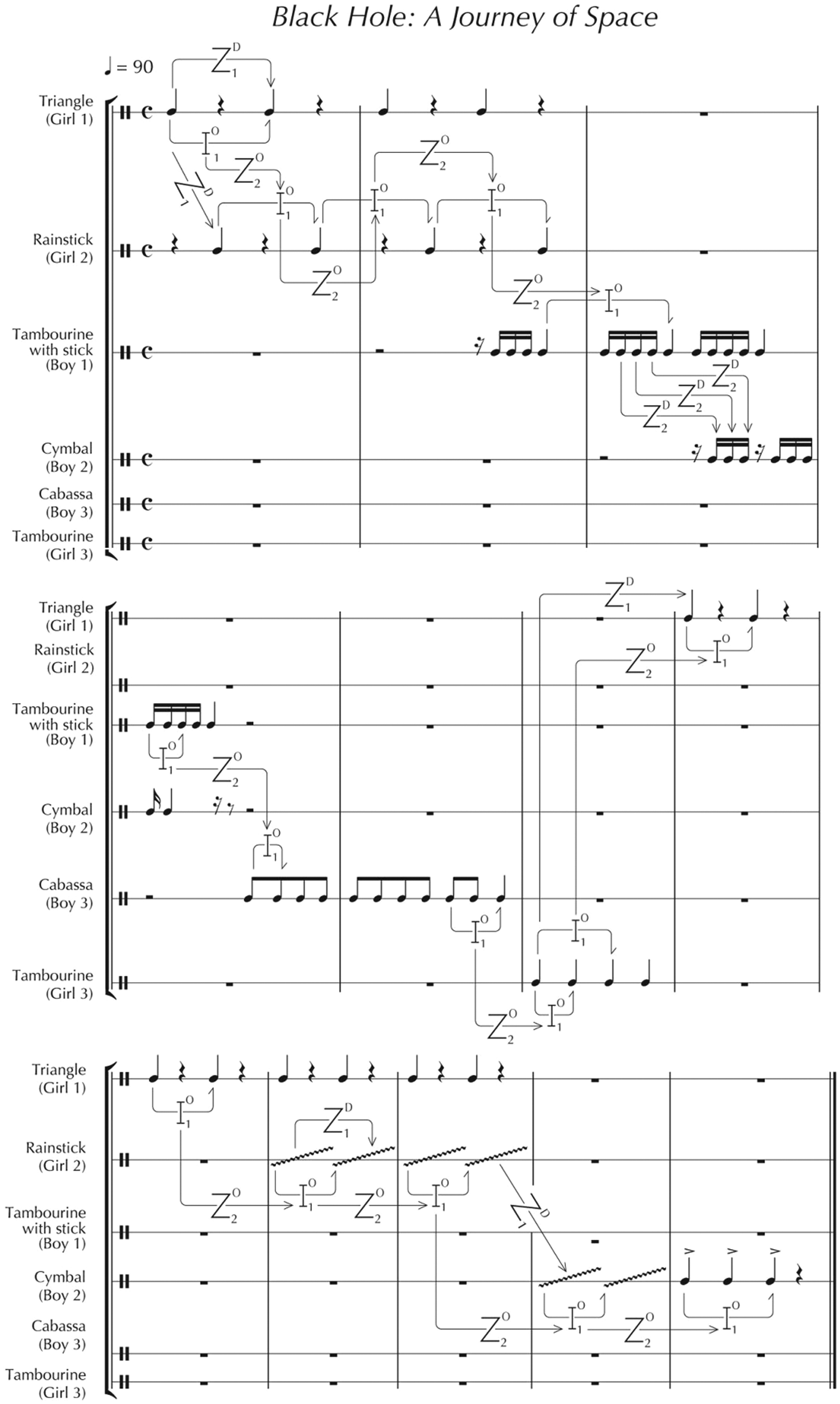
Transcription of Black Hole: A Journey of Space, with examples of zygonic relationships, postulated to be indicative of the musical influences in play within and between the children’s contributions.
Here, pitch is not used as a structural element, so relationships of duration and inter-onset interval prevail. As was the case with Fuga in Red, certain assumptions are made with respect to intended duration, where children were observed to articulate rests verbally (in bars 1 and 2, for instance). Generally speaking, although imitation between parts may initiate patterns (again, as in bars 1 and 2), these are thereafter deemed to be self-sustaining. In bar 3, the three parallel zygonic relationships of duration are a reflection of the analytical belief that the notes to which they pertain in Boy 2’s part are heard as a single Gestalt and enjoy more or less equal perceptual salience. The continuous sounds of the rainstick (Girl 2, bars 9 and 10) are treated as single sustained notes as far as duration is concerned, and are emulated in cymbal tremolandi in bar 11 (Boy 2). Complete analyses of influence by duration and inter-onset interval yield data is displayed in Table 2.
Musical influence in relation to duration and inter-onset interval postulated to be functioning in Black Hole: A Journey of Space.
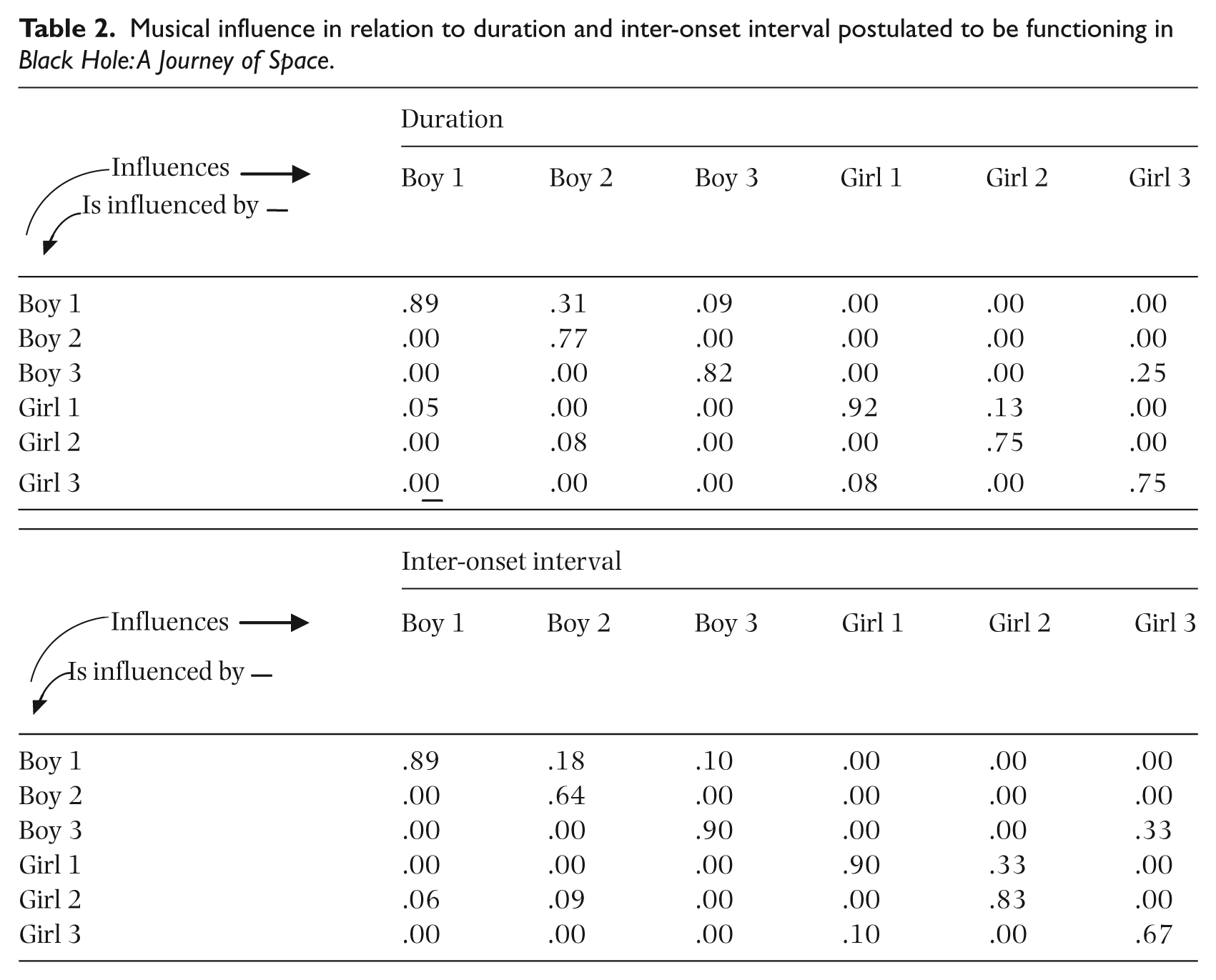
Combining imitative influence in these two domains gives the following set of values (see Table 3).
Mean degrees of musical influence postulated to be functioning in Black Hole: A Journey of Space.
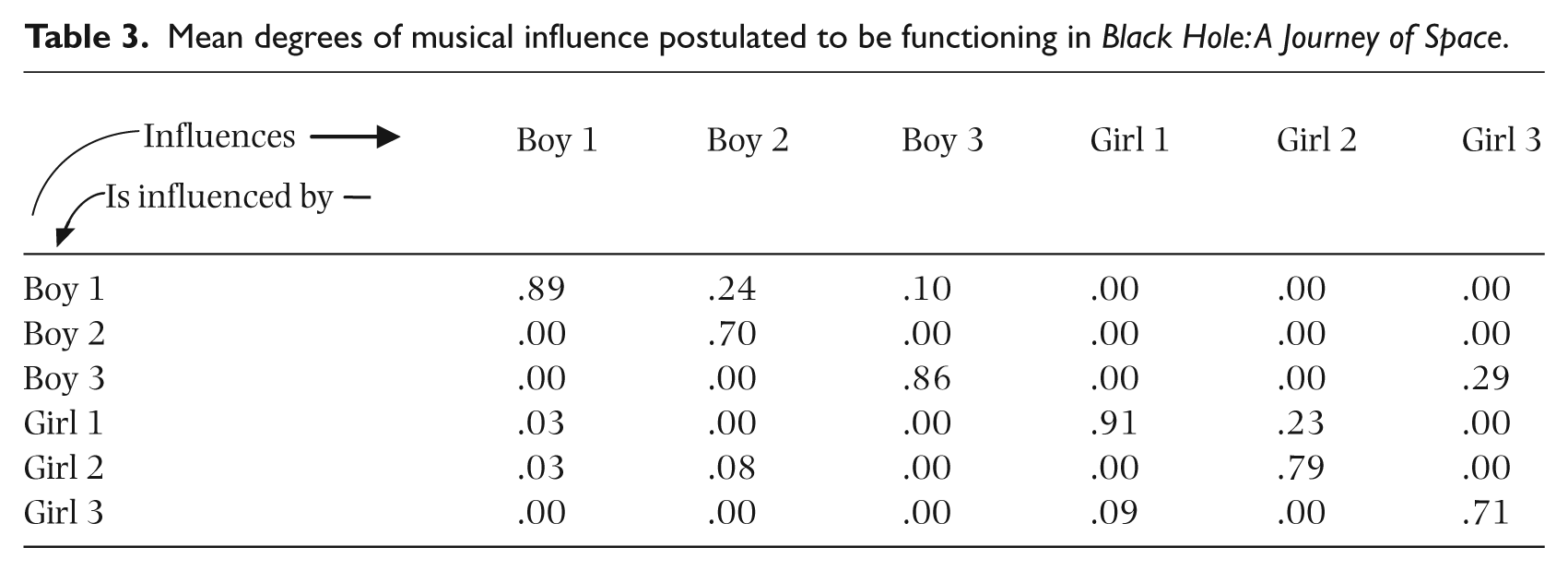
Again, there is a marked difference between patterns of imitative self-influence and influence by other members of the group. The means are as follows:


There is no discernible influence at all operating between 22 of the potential 36 pairs of participants, and three pairs account for 70% of the imitative influence pertaining to between-subject dyads: Boy 1, Boy 2; Boy 3, Girl 3; and Girl 1, Girl 2. In each case, these pairs were sitting next to each other, as the visual representation in Figure 17 shows.
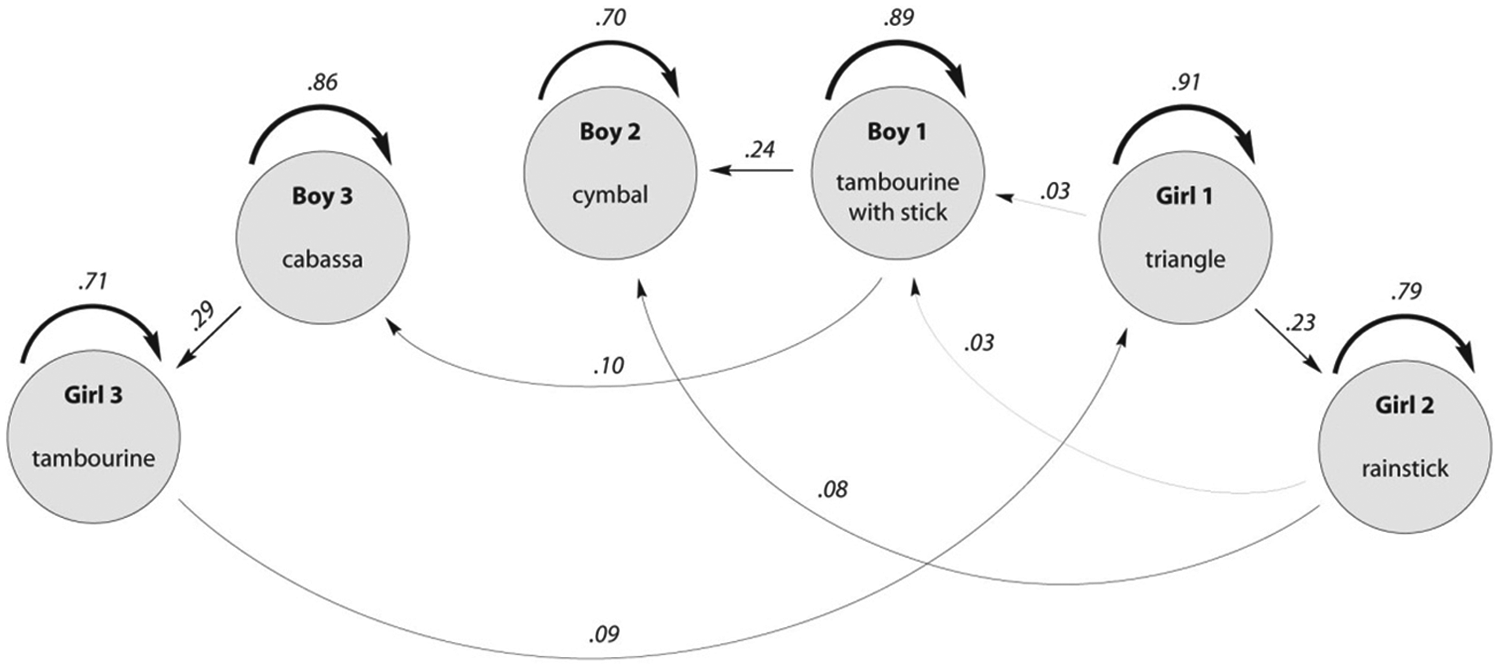
Visual representation of the degrees of musical influence postulated to be functioning in Black Hole: A Journey of Space.
Example 3
This is also from an English school, and is entitled Wave, which was composed and performed by three girls and two boys (see Figure 18).
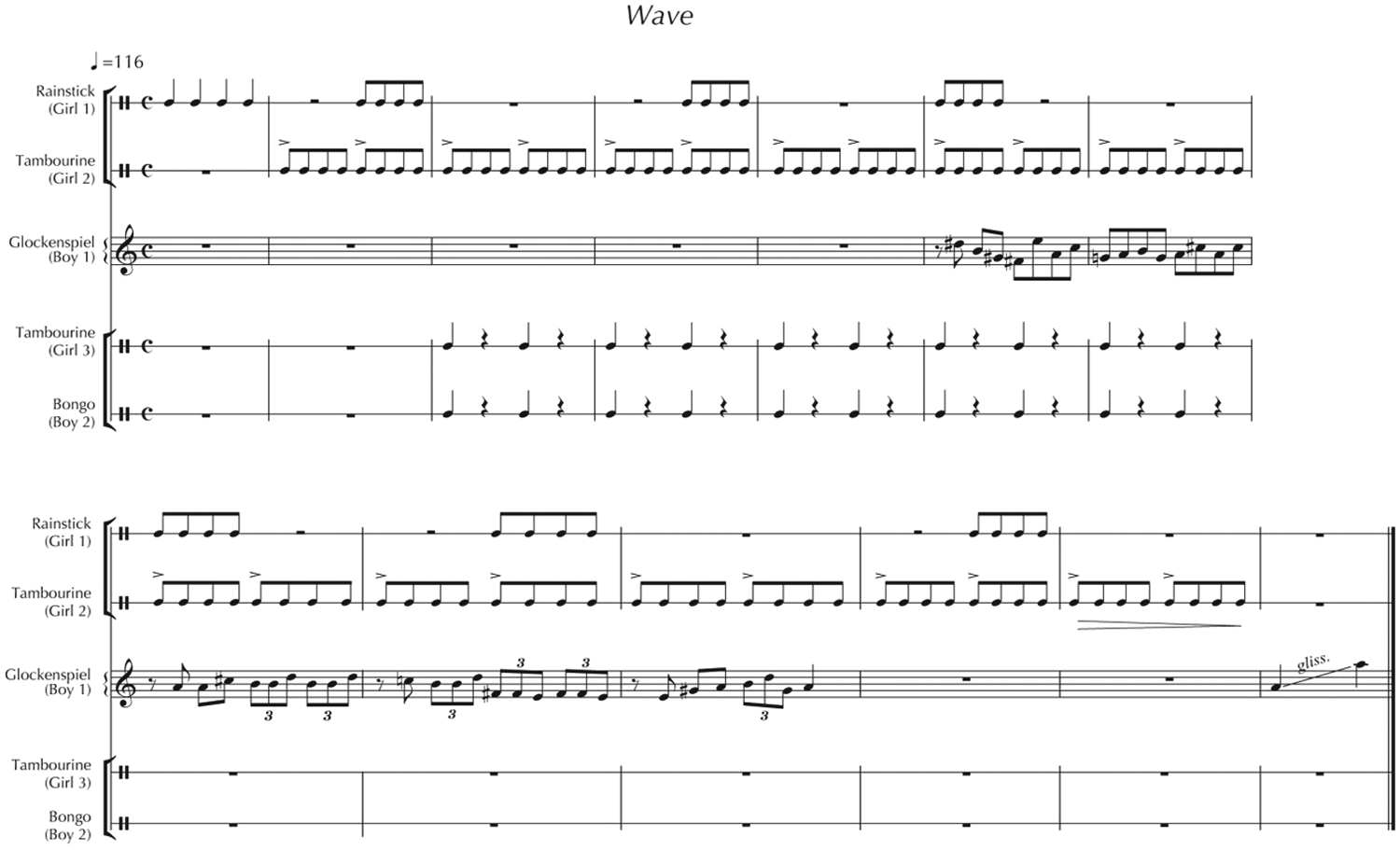
Transcription of Wave.
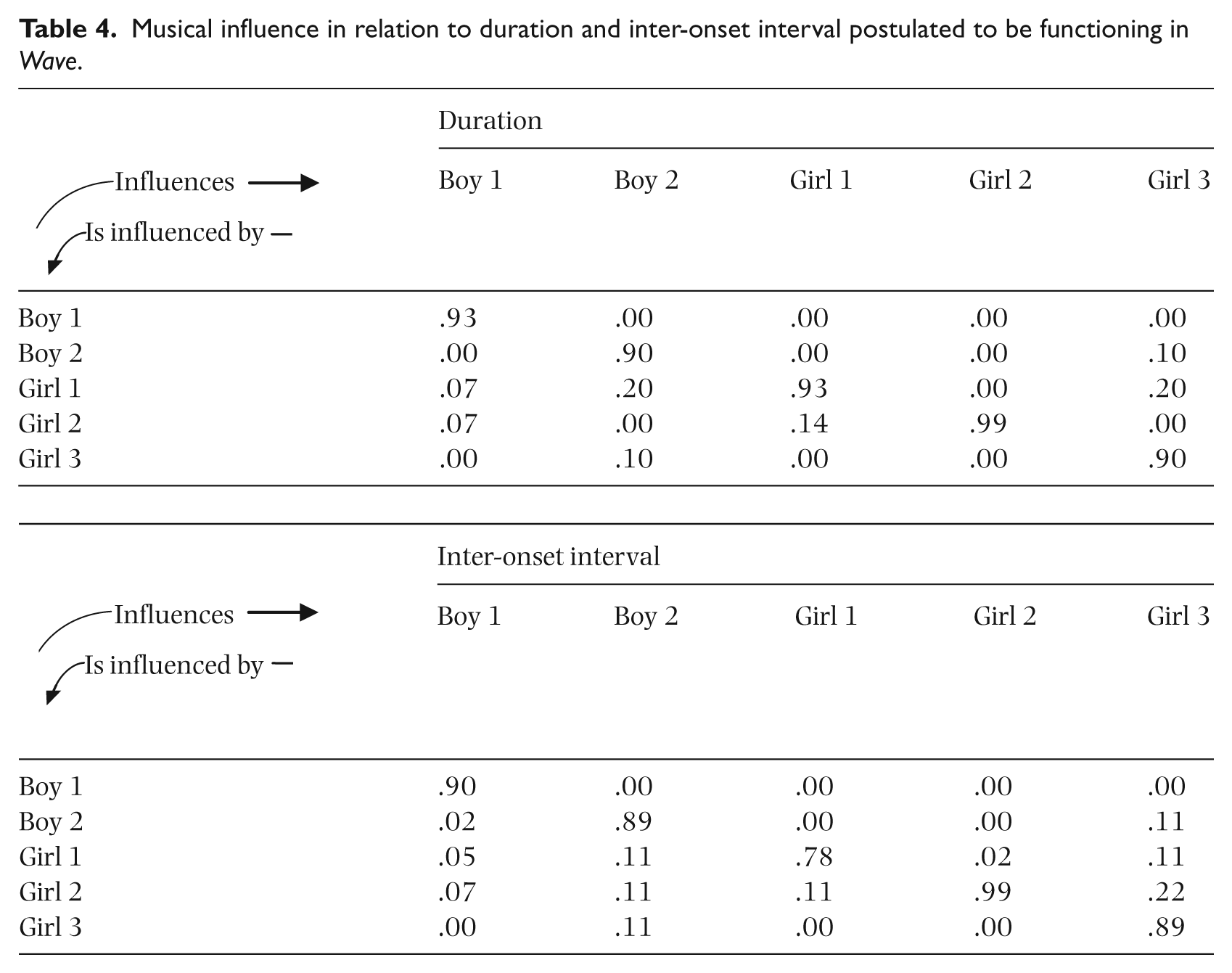
Here, only Boy 1 uses a pitched instrument, so, again, relationships of duration and inter-onset interval are predominant, and the patterns of musical influence thought to function through these are captured in Table 4.
Musical influence in relation to duration and inter-onset interval postulated to be functioning in Wave.
Once more, patterns of imitative self-influence and influence by other members of the group are sharply divergent:


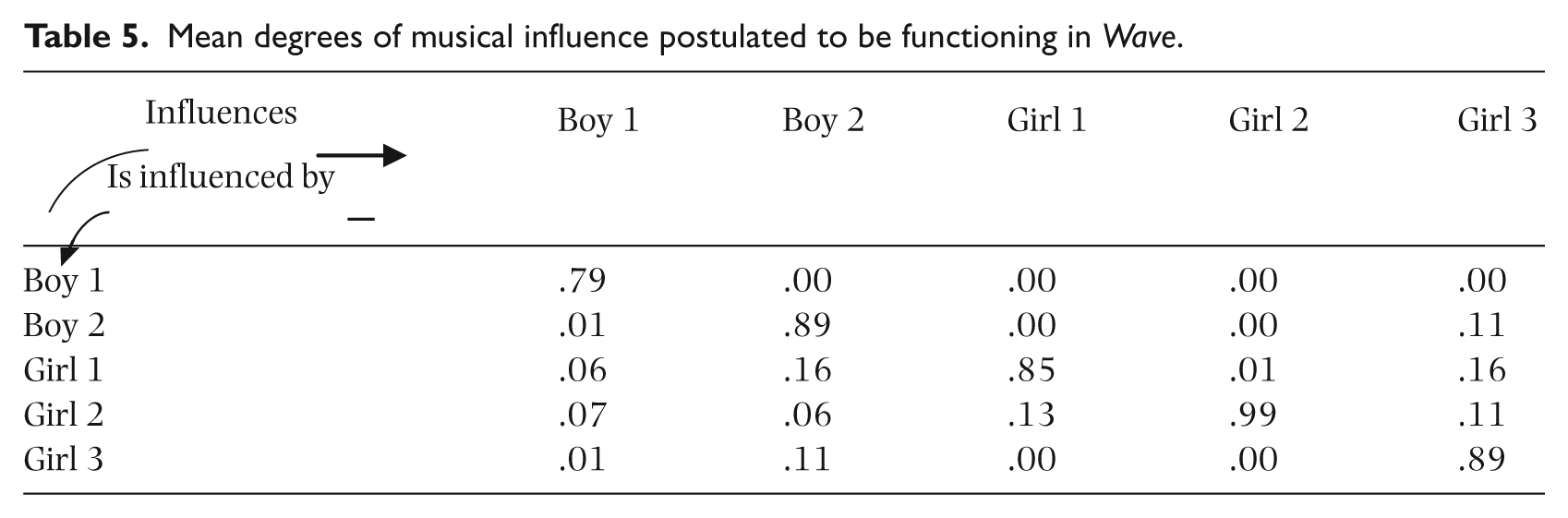
The data in Table 5 show that, in terms of imitative influence, Boy 1’s role was distinct from other members of the group. His soloistic line borrowed rhythmic ideas from his fellow performers, but their accompanying parts were unaffected by his. Of the remaining quartet, Girls 1 and 2 worked as a pair, sharing material, and Girl 3 and Boy 2 did likewise. However, neither pair had a musical impact on the other (see Figure 19).
Mean degrees of musical influence postulated to be functioning in Wave.
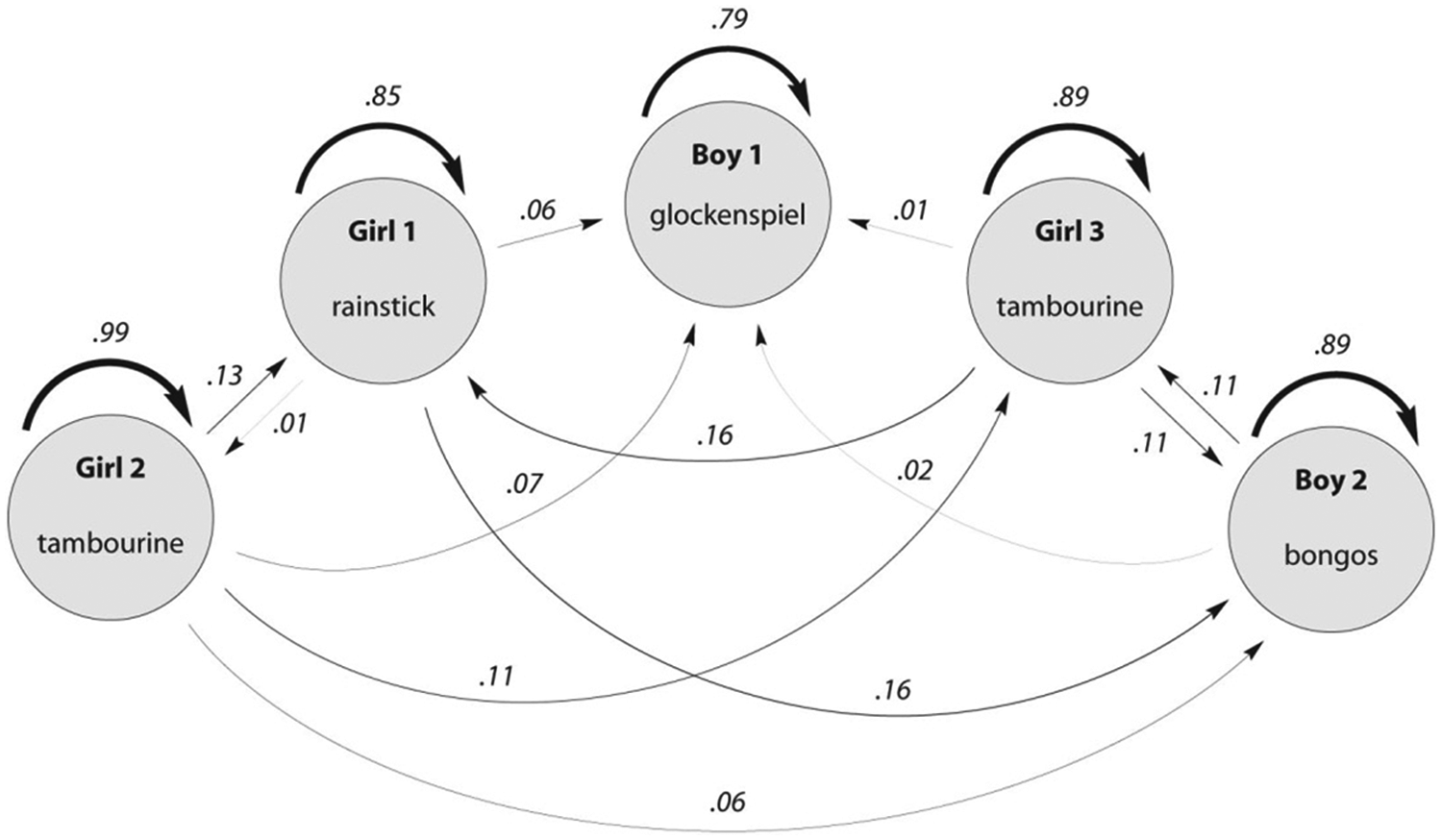
Visual representation of the degrees of musical influence postulated to be functioning in Wave.
Data from the 18 groups
Here, in summary are the data from the 18 groups that Shibazaki (2010) studied: nine from Japan (Table 6) and nine from England (Table 7).
Mean degrees of musical influence postulated to be functioning in the nine Japanese groups (after Shibazaki, 2010).

Mean degrees of musical influence postulated to be functioning in the nine English groups (after Shibazaki, 2010).

Analysis and discussion
Combining data from all 18 groups (nine in England and nine in Japan) by taking means of the imitative influence scores as necessary casts a fascinating light on Shibazaki’s research questions. Her first concern pertained to autonomy and control: to what extent did pupils influence one another through imitating each other’s musical contributions, and to what extent were their contributions formulated through imitative self-influence? The results are as follows:

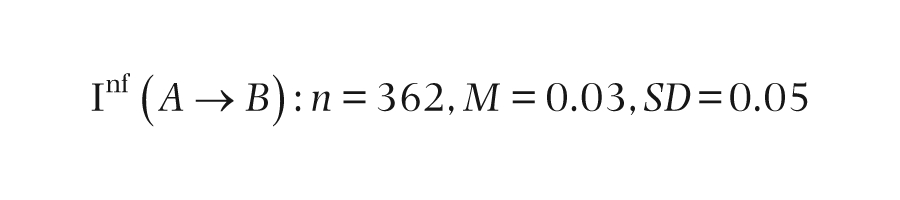
The difference between the two is significant: t(448) = 107.24, p < .001. In summary, pupils’ material was around 30 times more likely to be derived through imitative self-influence than as a result of the imitative influence of others. In either culture, it seems, children are far more likely to “plough their own musical furrows” than to be imitatively influenced by one another.
Turning to Shibazaki’s next question: did this tendency differ between the two countries? In terms of imitative self-influence, the results are as follows:
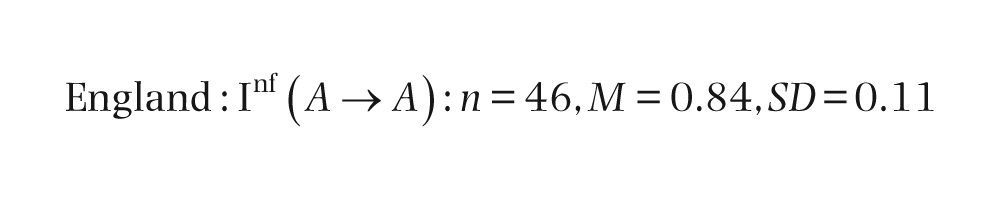

The difference between the two is significant in statistical terms: t(86) = 3.14, p = .002. In Japan, around 7% more of the pupils’ material was derived through self-imitation than in England. 4 This suggests that the musical contributions of English children tended to show greater internal heterogeneity (while those produced by Japanese pupils were more homogeneous). As difference – novelty – is linked to creativity (Boden, 2004), it could be argued that the zygonic measures of imitative self-influence cited above offer inverse proxy indicators of inventiveness, and that, from the figures given, the Japanese children were somewhat more constrained than their English counterparts in the material they devised. Clearly, this is a complex and potentially contentious area that merits future psychological and sociological research.
In relation to “imitative influence by others,” analysis of the data yields the following:
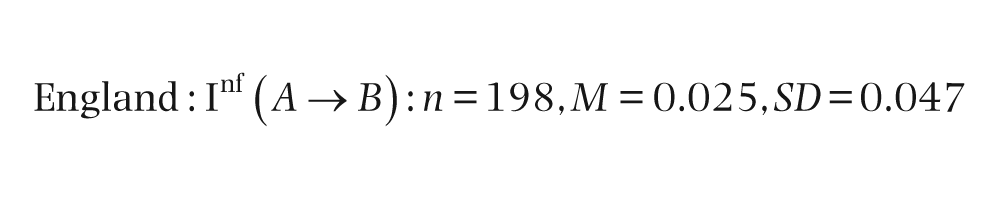
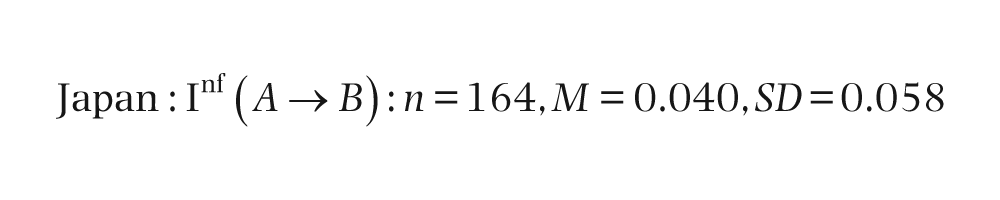
Although both scores are very low, the difference between the two is significant: t(360) = 2.59, p = .009. That is to say, the Japanese pupils were influenced by each other’s musical ideas around 50% more than the English, offering some support to our postulation that the children in a collectivist culture would evince greater interdependence than those where individualism is valued, although, even in Japan, the interaction was surprisingly small. Nonetheless, we believe this to be an important finding, since, for the first time in research of this nature, purely musical analysis of individual human interactions has lent support to macro-social constructs.
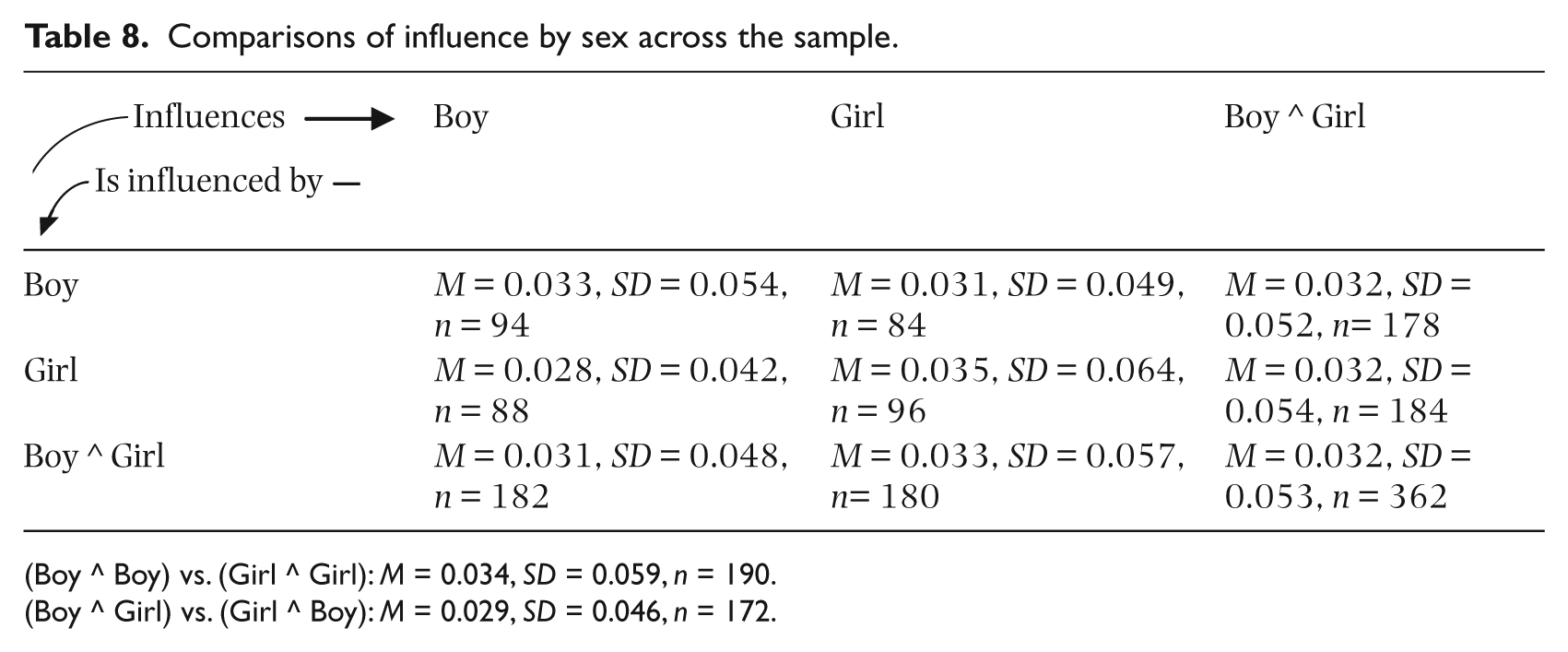
The data are amenable to other analysis too. Take for example, sex. In terms of imitative self-influence, there was no difference between boys and girls across the sample: Girls, M = 0.87, SD = 0.11, n = 35; Boys, M = 0.87, SD = 0.10, n = 43. This high level of similarity was reflected in each country, with Japanese Girls, M = 0.91, SD = 0.08, n = 21, and Japanese Boys, M = 0.90, SD = 0.09, n = 21; and English Girls, M = 0.84, SD = 0.12, n = 24, and English Boys, M = 0.84, SD = 0.10, n = 22. With regard to imitatively influencing others, Table 8 shows the data across both countries.
Comparisons of influence by sex across the sample.
(Boy ^ Boy) vs. (Girl ^ Girl): M = 0.034, SD = 0.059, n = 190.
(Boy ^ Girl) vs. (Girl ^ Boy): M = 0.029, SD = 0.046, n = 172.
None of the differences between categories is statistically significant; indeed, both boys’ and girls’ imitative influence on others is virtually identical, and the degree to which they are influenced by others is very similar. The largest differences are between same-sex and different-sex pairs, with Boy–Boy and Girl–Girl influencing each other more than Boy–Girl and Girl–Boy pairs. Partitioning the data by country (Table 9) shows that most of this difference is attributable to the Japanese children.
Comparisons of influence by gender across the sample between Japan and England.
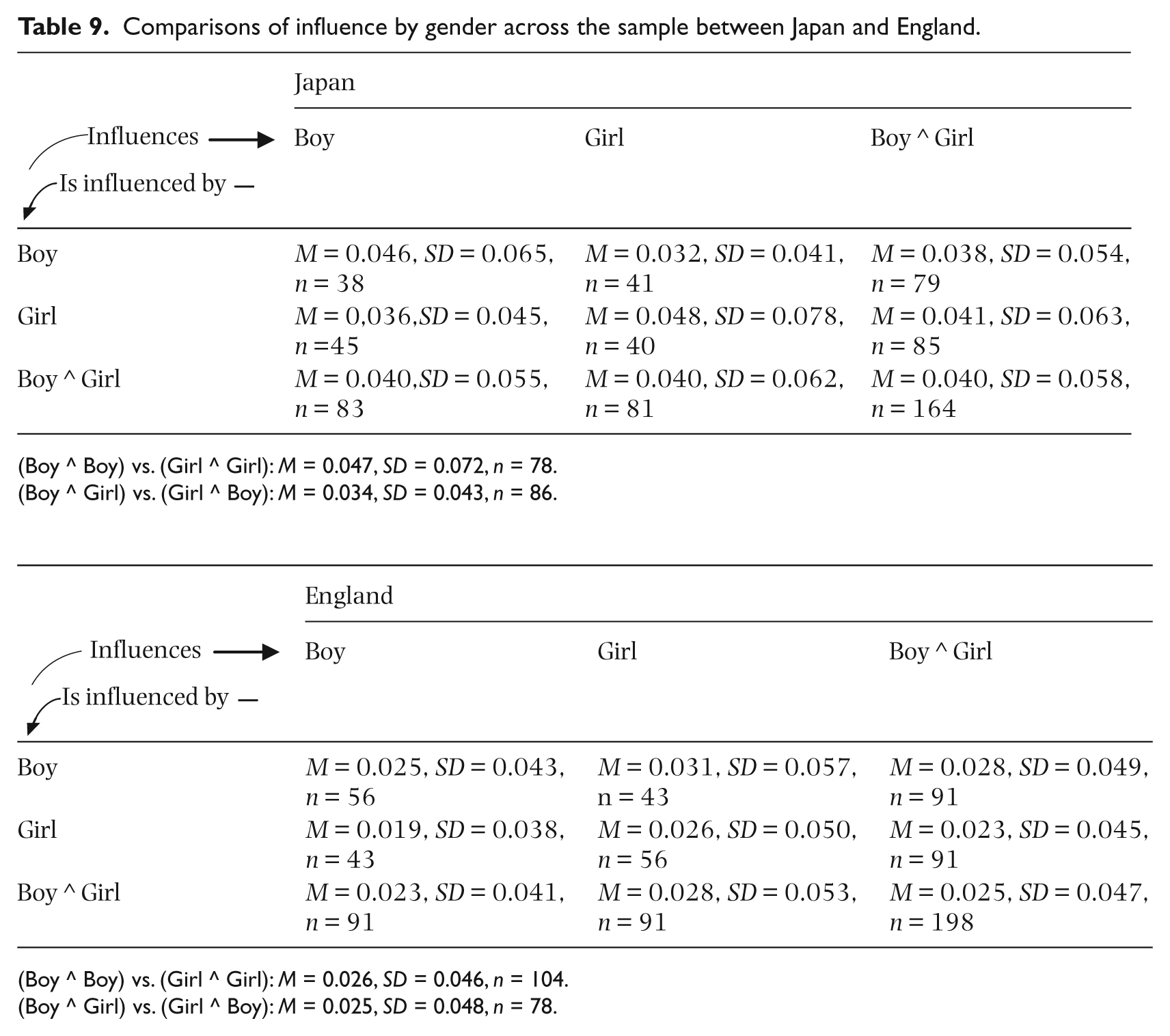
(Boy ^ Boy) vs. (Girl ^ Girl): M = 0.026, SD = 0.046, n = 104.
(Boy ^ Girl) vs. (Girl ^ Boy): M = 0.025, SD = 0.048, n = 78.
The schematic diagrams shown in Figures 15, 17 and 19 permit the impact of relative seating position on musical influence to be examined. Pairs of children sitting within view of each other (adjacent, opposite or obliquely) as opposed to those whose sight of another was obscured, tended to exert a greater imitative influence on one another (M = 0.033, SD = 0.054, n = 295 as opposed to M = 0.029, SD = 0.048, n = 67), although the difference is not significant. The effect was stronger in Japan (pairs who could see each other: M = 0.042, SD = 0.062, n = 120; pairs whose view of each other was obscured: M = 0.034, SD = 0.046, n = 44) than England (M = 0.026, SD = 0.046, n = 175; M = 0.021, SD = 0.052, n = 23), though, again, none of the differences is statistically significant.
Tables 6 and 7 also enable the impact of instrumental choice on imitative influence to be analysed – in particular whether pairs of children playing the same or similar instruments (for example, those with a keyboard or notes disposed as a keyboard, such as xylophones and glockenspiels) tended to interact more than those using different sound-makers. Taking the sample as a whole, the difference in mean imitative influence between the two conditions is significant: t(360) = 3.04, p = .003, with the influence between pairs of children playing the same or similar instruments being M = 0.050, SD = 0.074, n = 66, and that between dyads using different instruments, M = 0.028, SD = 0.046, n = 296. Most of this difference is attributable to the English groups (with the imitative influence between children playing the same or similar instruments being M = 0.058, SD = 0.092, n = 12, and that between pairs with different instruments, M = 0.023, SD = 0.042, n = 186).
Finally, it is of interest to note that Shibazaki (2010) analysed children’s verbal interaction in the preparation of their pieces, and even though, in each group, one child tended to dominate discussion, on many occasions, he or she did not exert most influence musically. That is, there was no necessary relationship between verbal and musical leadership. Moreover, while some children did not contribute to group discussions, they nonetheless exerted significant levels of musical influence. This underlines the danger of relying on verbal data as a proxy measure of musical engagement and interaction – and reinforces the thesis set out by Ockelford (2012a), that music analysis should play a far greater role in much music education, therapy and psychology research.
Conclusion
This article sought to extend the use of “zygonic theory” to gauge imitative influence between groups of primary-aged children creating and performing their own pieces of music. Hence it is an example of work in a new field that has been termed “applied musicology:” the adoption of music-theoretical approaches to interrogate certain music-educational, music-psychological and music-therapeutic concerns (Ockelford, 2012a). The methods that were employed were therefore necessarily exploratory, and the findings must be regarded as provisional, pending verification of the assumptions underlying the design of the research tools that are used and refinements in their application. It may be, for instance, that the balance between structures thought to be indicative of imitative self-influence rather than influence by others was too strongly weighted towards the former, and that further empirical work (that involved, for example, participants reflecting on their own thinking as they reviewed recordings of their efforts) may offer more subtle algorithms for determining just how repetition relates to imitation in group improvisation and performance. Then, the system of analysis could perhaps be simplified, to make it more accessible and practicable for teachers and therapists to use. Conversely, further factors, including dynamics, timbre and (implied) harmonic structure could also be taken into account. The authors acknowledge that, the use of “preference rules” notwithstanding, there is still room for different nuances of interpretation in the analyses that are made. However, we sense that it is at the very points where potential differences of interpretation exist, that some of the most fascinating analytical – and, therefore, musico-social insights – are to be found. Nonetheless the general principles that are set out do seem to be robust, and yield results that are at the very least of potential interest to empirical researchers, theorists and practitioners alike.
The practical limitations of the study reported here need to be acknowledged too: for example, the fact that the mean group size varied somewhat from one country to another, and the lengths of the pieces that the children created differed considerably, may have had an impact on the results (although preliminary analysis suggests that this was probably minimal). Moreover, it was a relatively small sample from which to attempt to draw broader conclusions. Hence, the findings presented here should not be viewed as definitive or an end in themselves, but rather as a spur to further investigation. More detailed work should be undertaken, for example, on the effect of musical influence (by self and others) on creativity; on the impact of mixed-sex and same-sex groups; on the consequences of grouping according to friendship; on the significance of children’s choice of instruments, and to their relative seating positions. Such research would be of immediate and practical value to teachers as well as casting light on wider pedagogical, psychological and sociological issues.
Footnotes
Funding
This research received no specific grant from any funding agency in the public, commercial, or not-for-profit sectors.