







Abstract
Extreme metal and rap music with violent themes are sometimes blamed for eliciting antisocial behaviours, but growing evidence suggests that music with violent themes can have positive emotional, cognitive, and social consequences for fans. We addressed this apparent paradox by comparing how fans of violent and non-violent music respond emotionally to music. We also characterised the psychosocial functions of music for fans of violent and non-violent music, and their passion for music. Fans of violent extreme metal (n=46), violent rap (n=49), and non-violent classical music (n=50) responded to questionnaires evaluating the cognitive (self-reflection, self-regulation) and social (social bonding) functions of their preferred music and the nature of their passion for it. They then listened to four one-minute excerpts of music and rated ten emotional descriptors for each excerpt. The top five emotions reported by the three groups of fans were positive, with empowerment and joy the emotions rated highest. However, compared with classical music fans, fans of violent music assigned significantly lower ratings to positive emotions and higher ratings to negative emotions. Fans of violent music also utilised their preferred music for positive psychosocial functions to a similar or sometimes greater extent than classical fans. Harmonious passion for music predicted positive emotional outcomes for all three groups of fans, whereas obsessive passion predicted negative emotional outcomes. Those high in harmonious passion also tended to use music for cognitive and social functions. We propose that fans of violent music use their preferred music to induce an equal balance of positive and negative emotions.
Introduction
Music is among the most commonly consumed media worldwide (Schäfer et al., 2012; Rideout et al., 2010; Upadhyay et al., 2017; Warburton et al., 2014). People listen to music for enjoyment, but also engage with music to fulfil psychosocial needs and desires. Music may facilitate positive emotions, alleviate negative emotions, express identity, reinforce an affiliation to a certain group, and highlight social events and rituals (Boer & Fischer, 2011; Schäfer et al., 2013; Schäfer et al., 2012). Such positive emotional, cognitive, and social functions are typically investigated using music with positive and uplifting themes (Brattico et al., 2011; Schäfer et al., 2013; Upadhyay et al., 2017). The enjoyment of music with negatively-valenced themes has only begun to receive systematic attention, including sad music (e.g., Eerola et al., 2018; Kawakami et al., 2014; Ladinig et al., 2019; Vuoskoski et al., 2012) and violent music (e.g., Ollivier et al., 2019; Slade et al., 2019; Thompson et al., 2019; Thompson & Olsen, 2018).
Violent music is characterised by lyrics that depict, often using a first-person narrative, violent acts by one or more individuals against others, including rape, murder, and assault (Fried, 2003; Kubrin, 2005). Music with violent themes is predominantly represented by two genres: extreme metal and rap. Whilst not all extreme metal and rap lyrics are violent, these genres have a disproportionally high representation of violent themes. 1 Moreover, extreme metal often includes musical timbres with unnaturally low fundamental frequencies and high levels of distortion, roughness, and intensity that are experienced by listeners as loud, aggressive, and highly arousing (Arnal et al., 2015; Berger & Fales, 2005; Olsen et al., 2018; Tsai et al., 2010; Walser, 2014). Many parents, schools, Government bodies, and other groups have expressed concern about the negative impact of violent themes on the fans of such music (Fried, 2003). Extreme metal bands have been banned from selling and performing their music in multiple countries and have had their music blamed for childhood suicides (Michaels, 2018; Moore, 1996). Such concerns are reinforced by research on the psychological impact of violent media (for reviews see Anderson & Bushman, 2001; 2002; Bushman, 2016; Warburton et al., 2014), despite there being some ambiguity in the interpretation of evidence supporting deleterious psychological effects (e.g., Ferguson, 2007).
Experimental investigations have typically focused on the negative outcomes of engaging with violent music, reporting short-term increases in aggressive and misogynistic cognitions (Anderson et al., 2003; Brummert Lennings & Warburton, 2011; Fischer & Greitemeyer, 2006). However, these studies were conducted using participants who were not fans of violent music and hence did not normally listen to violent music. The reliance on the experiences of non-fans calls into question the ecological validity of such research.
Recent studies have begun to address this gap by investigating the effects of violent music on fans; that is, individuals who explicitly report that they are passionate consumers of musical genres that feature violent themes. Fans of extreme metal report experiencing positive emotions such as empowerment, joy, peace, and wonder to a greater extent than non-fans after listening to short excerpts from extreme metal music (Thompson et al., 2019). Furthermore, Sharman and Dingle (2015) found that following an anger induction procedure, self-selected extreme metal music did not fuel angry feelings in fans as commonly assumed. Instead, the listening experience was associated with a gradual reduction in negative affect.
In short, evidence suggests that music with violent themes can yield positive emotional outcomes for fans, and does not necessarily aggravate feelings of anger. Such findings contrast with the stereotypes and concerns, common among some parents and religious groups, that music with violent themes may reinforce fans’ feelings of anger or other negative emotional states. However, there is limited understanding of the experiences of fans of violent music, and how they compare with the experiences of fans of other genres such as rap and classical music, who are equally passionate about their preferred music.
To address this gap, the present investigation examined the emotional experiences, cognitive functions, and social functions of music engagement for fans of extreme metal music, fans of violent rap music, and fans of non-violent Western classical music. Extreme metal and violent rap were examined because they are distinctive genres of music that both feature violent themes. Western classical music was also included because the psychological impact of this genre of music is well documented and contrasts with the aggressive, unconventional, and subversive nature of extreme metal and rap music.
Emotional Responses to Violent Music
Music has the capacity to induce positive, negative, and mixed emotional responses in listeners (Hunter et al., 2008; Ladinnig & Schellenberg, 2012; Thompson & Ilie, 2011). Although people sometimes seek out negative emotional experiences (Hess, 2014), fans of violent music do not typically listen to music for this purpose (Thompson et al., 2019). Thus, our first hypothesis was that all fan-groups would experience predominantly positive emotions when listening to their preferred music (H1). Given that fans of violent genres explicitly acknowledge the violent nature of their preferred music, a corollary of this hypothesis is that fans of violent music exemplify a misalignment of perceived (violent) and experienced (e.g., joyful, empowering) emotional responses to music (Gabrielsson, 2001; Kallinen & Ravaja, 2006; Schubert, 2007).
We also considered the possibility that fan groups might differ in the magnitude of their experience of positive and negative emotions. For example, positive emotions experienced by fans of violent music might be attenuated relative to the positive emotions experienced by fans of non-violent music, because of the negatively-valenced content of violent music. Thus, we tested the hypothesis that the magnitude of positive emotional experiences will be lower, and the magnitude of negative emotional experiences higher, for fans of extreme metal and fans of violent rap, relative to fans of classical music fans (H2).
Cognitive Functions of Violent Music
Music engagement may also have cognitive functions (Schäfer et al., 2013). Cognitive benefits include the capacity of music to heighten an individual’s concept of self (self-reflection) and to encourage individuals to think about themselves in a new way (self-regulation). The cognitive functions of music have been explored using predominantly conventional genres such as pop and classical music (Schäfer & Sedlmeier, 2009), but Rentfrow and Gosling (2003) found that people with a politically liberal or non-conservative self-view were more likely to enjoy intense and rebellious music (including non-violent rock’n’roll and heavy metal) than those with a politically conservative self-view, who were more likely to enjoy upbeat and conventional music. Furthermore, fans of rap music, broadly construed (i.e., not necessarily violent), reported increases in self-concept, self-awareness, self-esteem, sense of resilience, and self-expression following exposure to this music (Uhlig et al., 2017; Tyson & Porcher, 2012). Thus, we examined whether fans of violent music engage with music because it supports the cognitive functions of self-regulation and self-reflection, and if fans of non-violent music engage with it for similar or different reasons. Research suggests that classical music serves these functions for its fans (Rentfrow & Gosling, 2003; Saarikallio, 2006), but it is unknown whether fans of extreme metal and fans of violent rap music also engage in music listening for such functions. Given societal concerns and research suggesting that violent music has negative consequences, lower ratings on the cognitive function subscales representing self-reflection and self-regulation can be predicted for fans of extreme metal and fans of violent rap, relative to classical music fans (H3). However, if the cognitive functions of music listening are similar for fans of violent and non-violent music, then no differences would be observed between the two groups’ ratings on the cognitive function subscales.
Social Functions of Violent Music
Aside from its emotional impact and cognitive functions, music can be used to nurture social bonds with other fans or members of the same in-group. Music is a common means of identifying mutual interests and may decrease inhibitions and increase feelings of connectedness between people listening to or performing music together (Roberts et al., 2003). Even when listeners are alone, they may feel connected to the feelings or characters portrayed in a song (Gantz et al., 1978). Indeed, music often functions as a social surrogate for social interaction, reminding individuals of meaningful events and significant others (Derrick et al., 2009; Schäfer & Eerola, 2017).
The social functions of music are especially important for niche or underground genres such as extreme metal or rap, which are associated with strong boundaries between in-groups and out-groups (Arnett, 1991; Kahn-Harris, 2007, Thompson & Olsen, 2018). Arnett (1991) surveyed 84 American teenage fans of heavy metal including extreme metal, and over half reported that most of their friends liked this music and the shared interest was integral to their friendship. Moreover, in a survey of 8,700 fans attending a metal music festival, 60% reported that mixing with other fans was the main attraction (Guibert & Guibert, 2016). Similarly, fans of rap music reported increased individual and community empowerment from engagement with this music (Travis & Bowman, 2015). Like extreme metal communities, rap music subcultures often contain strong in-group markers such as distinct dress codes, regional dialects, and the prevalence of groups or crews that enhance in-group social bonds (Kubrin, 2005). Extreme metal and rap music, with their transgressive and countercultural themes, contrast with classical music, a conventional, high-art genre.
Thus, the present study also examined the social functions of extreme metal, violent rap, and classical music. It was hypothesised that fans of extreme metal and fans of violent rap would use music for social bonding to a greater degree than classical fans (H4), reflecting the strong sense of community within extreme metal and violent rap music fan groups.
The Role of Passion
What psychological conditions promote positive emotional, cognitive and social outcomes of engaging with violent music, and do some fans experience negative outcomes? One framework for understanding the benefits and risks for fans of music with violent themes is the Dualistic Model of Passion (Vallerand, 2015; Vallerand et al., 2003). Developed in line with Self-Determination Theory (Ryan & Deci, 2000), the Dualistic Model of Passion proposes that people engage with activities in order to satisfy psychological needs such as autonomy and relatedness to others. In satisfying these needs, activities become self-defining and internalised in an individual’s identity (Vallerand et al., 2003). The model details two types of passionate engagement that are demarcated by the type of internalisation that occurs in identity (Bonneville-Roussy & Vallerand, 2020; Vallerand et al., 2003; 2008).
The first is harmonious passion, where an activity reflects, and is congruent with, a person’s internal aims and goals (Schellenberg et al., 2018). Activities pursued with harmonious passion are autonomously internalised in one’s identity. For example, musicians who experience harmonious passion freely choose to engage in music making for the pleasure they derive from it, without external or internal pressure (Bonneville-Roussy & Vallerand, 2020). This engagement is characterised by a flexible persistence that allows time for both involvement in music that is important to the individual and engagement in other important aspects of life, such as family, physical activity, and other hobbies (Bonneville-Roussy et al., 2011; Vallerand et al., 2003). Harmonious passion has been associated with a broad range of positive adaptive outcomes such as life satisfaction, post-activity satisfaction, autonomy, and a strong sense of self (Curran et al., 2015; Fuster et al., 2014; Vallerand et al., 2008).
Obsessive passion, by contrast, is experienced when a pursuit such as music is driven by both a love of the activity as well as external and internal pressures, such as the need for acceptance and low self-esteem, or in the case of musicians, external pressures from auditions or internal pressures to excel at all costs (Bonneville-Roussy & Vallerand, 2020; Vallerand et al., 2003). This type of passion often leads to rigid persistence and uncontrolled engagement that can have a negative impact on family, health, and day-to-day life (Schellenberg et al., 2018; Vallerand et al., 2008). As such, obsessive passion is associated with maladaptive outcomes such as negative emotions, rumination, aggression, relationship problems, and workaholism (Curran et al., 2015; Lajom et al., 2017; Mageau et al., 2009; Vallerand et al., 2008).
The Dualistic Model of Passion predicts positive and negative outcomes for people such as workers (Vallerand & Houlfort, 2019), students and teachers (Vallerand, 2016), athletes (Vallerand & Verner-Filion, 2020; Vallerand et al., 2008), gamblers (Mageau et al., 2005), computer gamers (Fuster et al., 2014), and musicians (Bonneville-Roussy et al., 2011; Bonneville-Roussy & Vallerand, 2020). Although there is strong evidence to support the Dualistic Model of Passion, it has yet to be applied to fans of music. In the present study we drew upon this model to investigate the extent to which harmonious and obsessive passion are predictors of fans’ positive and negative experiences of music. We hypothesised that for all fan groups, harmonious passion for preferred music would predict positive emotional responses and cognitive and social functions (H5), whereas obsessive passion would predict negative emotions (H6).
By testing these hypotheses, we aimed in the present study to elucidate: (a) the emotional responses of fans of violent and non-violent genres of music as they listened to their preferred music; (b) the functions that music serves for fans of different genres; and (c) the role of harmonious and obsessive passion as predictors of emotional, cognitive, and social functions of music for different groups of fans.
Method
Participants
A total of 172 first-year psychology students participated in the study. Twenty-seven were excluded as they either failed to complete the survey, did not meet the criteria for the fan group they had signed up for, or failed catch trials designed to check whether they were attending to the task. The final sample consisted of 145 participants: 46 fans of extreme metal, 49 fans of violent rap, and 50 fans of classical music, ranging from 18 to 55 years of age. An a priori power analysis indicated that this sample size was adequate to detect modest effect sizes of roughly .35, for a between-subjects design with three groups (Cohen, 1988). Specific demographic information for each experimental group in the study is presented in Table 1. A one-way between-subjects analysis of variance (ANOVA) comparing years of music training yielded no significant difference between groups, F(2, 142) = 2.32, p = .102, η2p = .043. There was a significant effect of group on age, F(2, 142) = 3.23, p = .043, η2p = .032. However, follow-up pairwise comparisons of age with a Bonferroni-adjusted alpha of .017 yielded no significant differences between groups (p values > .023).
Demographic Information.
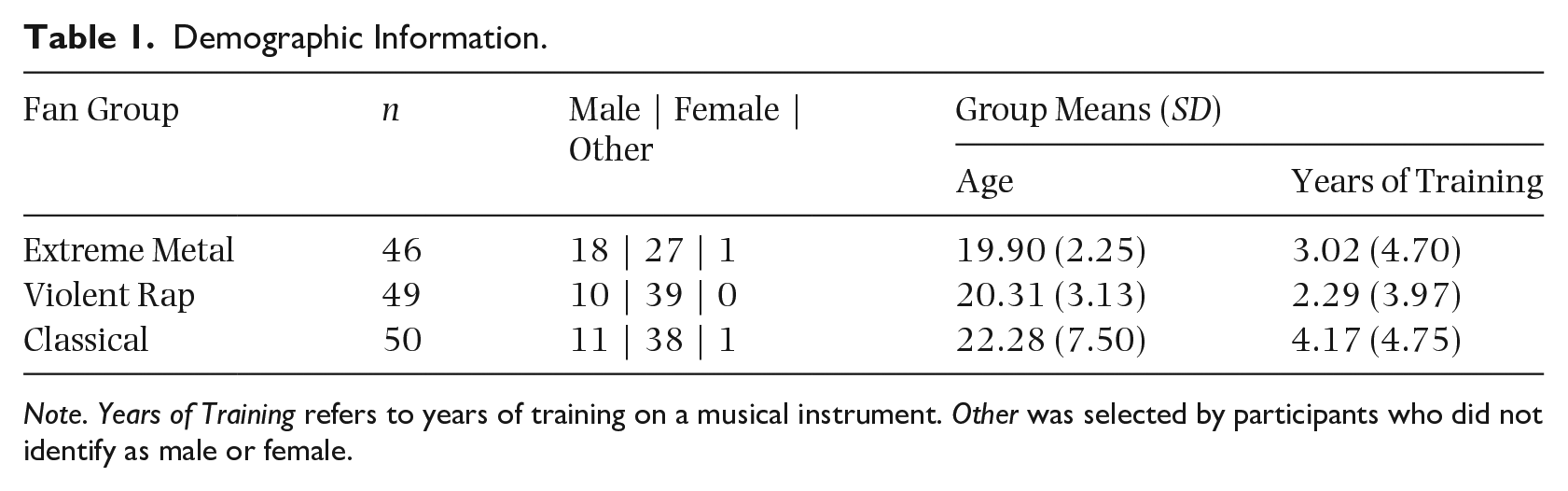
Note. Years of Training refers to years of training on a musical instrument. Other was selected by participants who did not identify as male or female.
Stimuli
The stimuli consisted of three surveys, one for each group of fans. Each survey included a set of rating scales along with eight 60-second audio excerpts taken from popular, commercially-released tracks in each genre. The 24 music excerpts are listed in the Appendix. Music stimuli for the extreme metal fan group were excerpts from extreme metal songs used in Thompson et al. (2019). Songs were identified by searching extreme metal blogs and music websites using the search terms best, top, and most popular extreme metal songs. The selected tracks were released between 1991 and 2015 and appeared on a range of websites; they were therefore deemed sufficiently representative of the genre. The violent rap music excerpts were selected in a similar manner, using keywords such as best violent, popular violent, and most popular violent rap songs. The songs selected appeared on multiple lists on a range of different rap music websites.
The classical music excerpts were selected using a similar procedure, whereby classical music forums and other websites were used to find pieces commonly regarded as the best or most popular. The music was selected from Baroque, Classical, and Romantic eras spanning from 1600 to 1820, and did not contain lyrics. Of the eight excerpts in each genre, participants in each group were randomly assigned to hear four of the eight, with all eight excerpts programmed to be equally distributed across participants in each group.
Measures
Emotional and Experiential Responses to Music
Ten emotion-rating scales were adapted from those used by Vuoskoski et al. (2012, see also Thompson et al., 2019). They consisted of eight items from the Geneva Emotional Music Scale (GEMS-9; Zentner et al., 2008): wonder, transcendence, empowerment, nostalgia, peacefulness, joyful activity, tension, and sadness, and two additional negative categorical emotions of anger and fear. Anger and fear were added because, although they reflect potential emotional responses to music with violent themes, they are not represented in the GEMS. Zentner et al. (2008) acknowledge that emotions such as anger and fear are experienced regularly in daily life, but they were not elicited by music in their study. Importantly, however, genres of music with violent themes were not included in the musical samples used to develop the GEMS subscales, so it is likely that the GEMS does not capture the full range of emotional responses to music. After adding anger and fear, there were six positive emotion items and four negative emotion items. Three experiential response items were also used to measure overall engagement, enjoyment, and magnitude of evoked emotions (defined as the overall magnitude of emotional response). All items were scored on seven-point Likert scales, consistent with the scales employed in Thompson et al. (2019). A binary yes/no question was presented after each excerpt to assess familiarity with the music (0 = unfamiliar, 1 = familiar).
Functions of Music Questionnaire
Three subscales from the Functions of Music Questionnaire (FMQ; Schäfer & Sedlmeier, 2009; Schäfer et al., 2012; Schäfer et al., 2013) were used to assess how participants utilise their preferred genre of music cognitively and socially: Self-Regulation, a subscale pertaining to the use of music to help an individual think differently or in a new way; Self-Reflection, which pertains to helping explore and express one’s identity; and Social Bonding, which involves facilitating social connections. Participants rated their agreement with 16 statements on a 10-point rating scale, from 1 = I do not agree at all to 10 = I totally agree). The FMQ is one of the few music questionnaires to address the social functions of music, which is an important aspect of fans’ engagement with metal music (Guibert & Guibert, 2016). Of the 16 items in the FMQ, three were specific to self-regulation; four were specific to self-reflection; and three were specific to social bonding. Each item was reworded as necessary for each of the three groups of fans. For each of these subscales, the scores were summed and averaged for each participant, with the mean scores used in the analyses. Table 2 shows internal consistency scores for all subscales of the FMQ.
Internal Consistency Coefficients for Each Measure Functions of Music Questionnaire and Passion Scale.
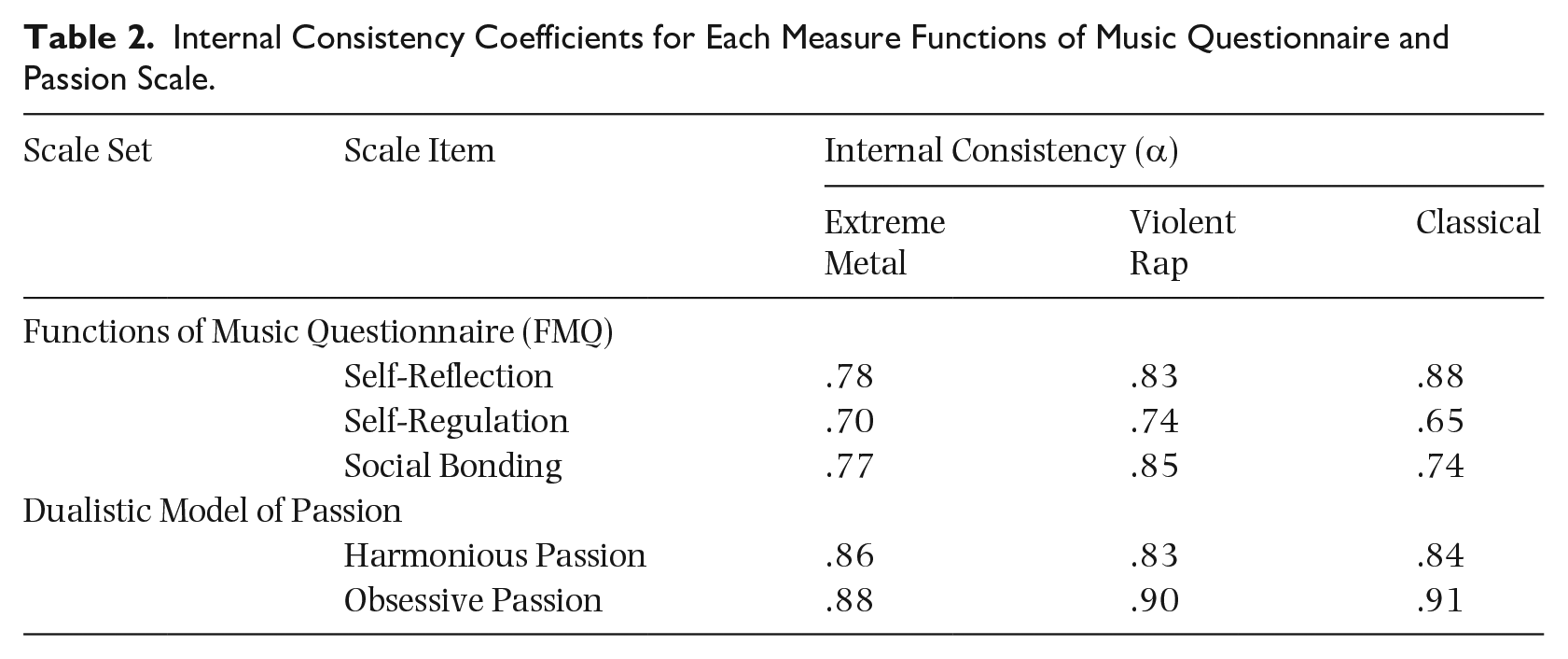
The Passion Scale
The Passion Scale (Marsh et al., 2013; Vallerand et al., 2003) was used to characterise the passion that participants exhibited for their favourite music. Two seven-item subscales measuring harmonious passion and obsessive passion were used. The original wording of the items was adapted to reflect the genre of music specific to each group (e.g., “I cannot live without it” became “I cannot live without classical music”). Items were scored on a seven-point Likert scale ranging from 1 (do not agree at all) to 7 (completely agree). An example of a harmonious passion item was “My extreme metal music listening is in harmony with other activities in my life” and an example of an obsessive passion item was “I have difficulties controlling my urges to listen to extreme metal music.” Although this was the first time the scale had been applied to music listening, previous studies have used the scale with musicians (Bonneville-Roussy et al., 2011; Bonneville-Roussy & Vallerand, 2020) and people taking part in other activities such as athletes, gamblers, and computer gamers (e.g., Fuster et al., 2014; Mageau, et al., 2005; Vallerand et al., 2008). Many studies have reported that the scale has high construct validity on the basis of exploratory and confirmatory factor analysis, as well as very good internal consistency (α between = 0.81 and 0.92; see Vallerand et al., 2003, 2008, 2015). The scale is invariant with respect to sex, language (French and English), and activities (Marsh et al., 2013). Table 2 presents the internal consistency scores for both subscales in the present study.
Procedure
Using an online undergraduate participant recruitment website, fans of extreme metal, rap, or classical music were invited to sign up to complete the extreme metal, rap, or classical music surveys, respectively, in return for course credit. Each survey was presented using the Qualtrics web platform. The inclusion criteria were stated in the title of each survey: that participants must be fans of “extreme metal with violent themes”, “rap music with violent themes”, or “classical music” and a binary yes or no question regarding fan status was placed at the beginning of each survey for confirmation. Furthermore, participants who were unfamiliar with the four excerpts and disliked the four excerpts presented to them in the listening phase of the study were excluded, as it was determined that they did not adequately meet the criterion for being a fan. Participants were not permitted to complete more than one survey.
After giving informed consent, participants completed, first, a demographic questionnaire and, second, the FMQ and Passion Scales. 2 After completing the pre-test subscales, they were informed that the music listening component of the study would begin and they should adjust their device volume to a comfortable level. Next, they listened to the four assigned musical excerpts and were asked to concentrate on the music and attend to the emotions they experienced in response to each excerpt. They then completed the 13 emotional and aesthetic response questions. Finally, they were debriefed, reminded of the psychological resources available to them if they had experienced distress, and thanked. The study took approximately 30 minutes to complete.
Results
Ratings of the primary measures were subjected to ANOVA or ANCOVA, and Bonferroni adjustments were applied to all follow-up comparisons to control Type 1 error rates. Ratings of enjoyment and all emotional responses were examined as primary measures of interest, whereas levels of engagement and familiarity with the music were entered as covariates. This approach was adopted to permit us to estimate differences between the groups for enjoyment and other primary measures, beyond those that could be accounted for by engagement or familiarity, and to assess the potential relevance of engagement and familiarity to such differences.
Emotional and Experiential Responses
Figure 1 displays mean ratings for the top five categorical emotions experienced by fans of extreme metal, violent rap, and classical music, which were all positive. Empowerment and joy were the most salient emotions experienced by all three groups of fans. Our first hypothesis (H1) was thus supported.
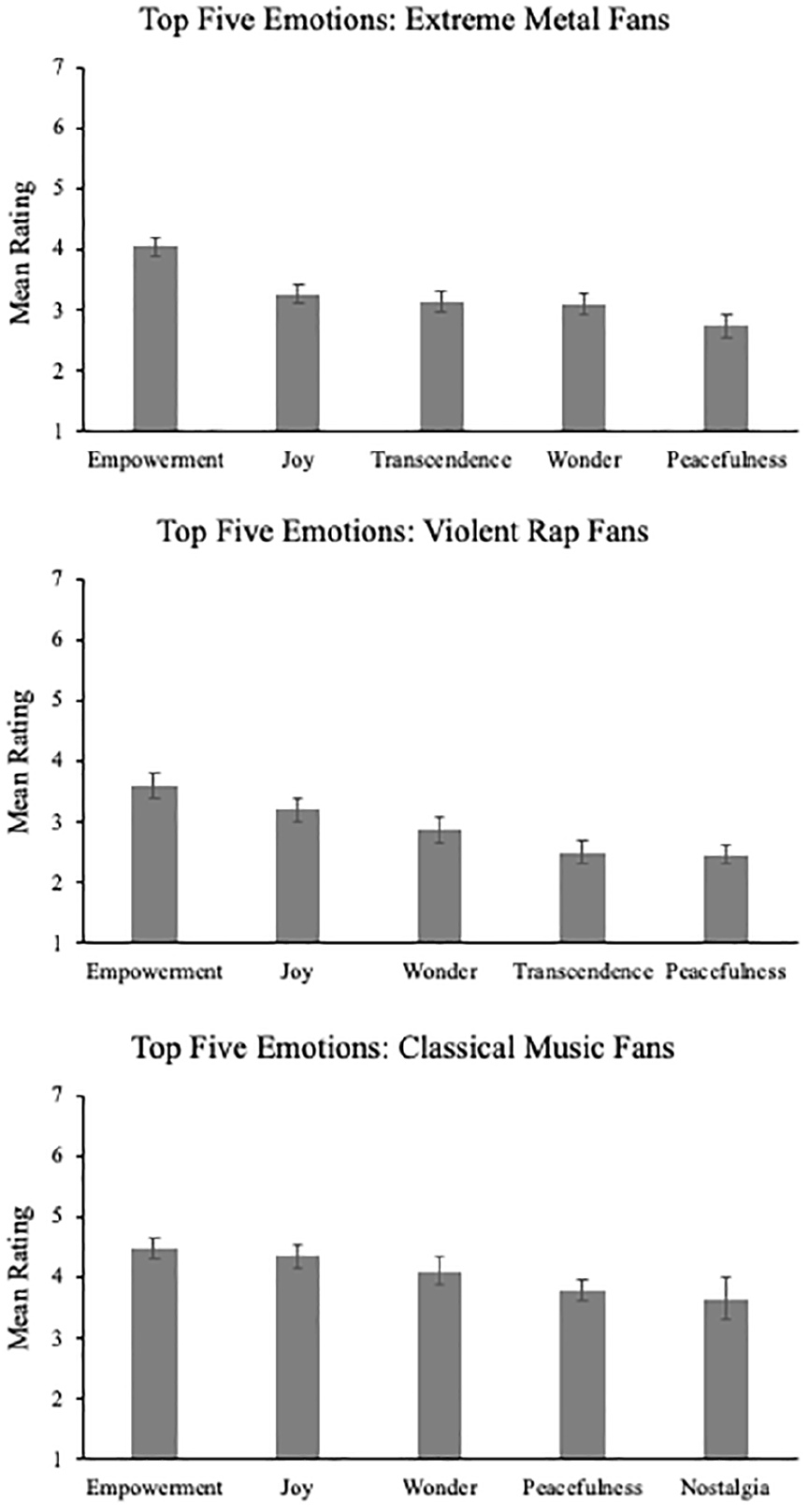
Mean ratings for the five highest rated emotions experienced by fans of extreme metal music (top panel), violent rap music (middle panel), and classical music (bottom panel) while listening to four excerpts of their preferred music genre (extreme metal, violent rap, and classical, respectively). Error bars represent standard error of the mean.
To compare ratings of positive and negative emotions, two composite variables were computed and subjected to statistical analysis. The first included the mean of the six positive emotions and the second included the mean of the four negative emotions. An ANOVA for each group of fans with a new within-subjects Emotional Valence variable (positive and negative) as the dependent measure was then conducted. As shown in Figure 2, there was a significant difference between positive and negative emotions in the extreme metal fan group, F(1,45) = 30.95, p < .001, η2p = .41, the violent rap fan group, F(1,48) = 10.10, p = .003, η2p = .17, and the classical music fan group, F(1,49) = 197.35, p < .001, η2p = .80. In all groups, positive emotions were rated significantly higher than negative emotions.
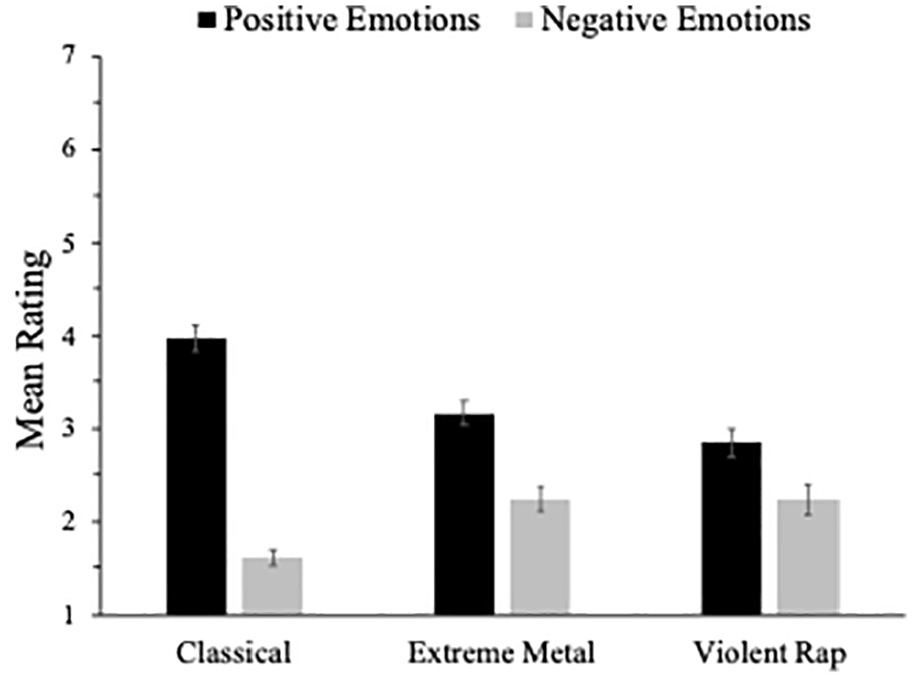
Mean ratings of combined positive emotions and combined negative emotions for each fan group. The scale ranges from a score of 1 to 7 – the greater the score, the greater the strength of emotion. Error bars represent standard error of the mean.
However, there was a larger difference between the means for positive and negative emotions rated by classical music fans than either fans of extreme metal or fans of violent rap. Positive emotions were rated higher by classical music fans (M = 3.98) than fans of extreme metal (M = 3.17) or fans of violent rap (M = 2.85). Conversely, negative emotions were assigned lower ratings by classical music fans (M = 1.61) than fans of extreme metal or fans of violent rap (M = 2.24 for both groups). To investigate these data further, we conducted a 3 × 2 mixed Analysis of Covariance (ANCOVA) with Group as the between-subjects variable and Emotional Valence as the within-subjects variable. Engagement and familiarity were entered as covariates because analyses revealed group differences with respect to those variables (see also, Olsen et al., 2014; van den Bosch et al., 2013). Specifically, there was a significant effect of fan group on ratings of engagement with the music heard by participants, F(2,142) = 13.79, p < .001, η2p = .16, and on ratings of familiarity with the specific music excerpts, F(2,142) = 46.43, p < .001, η2p = .40. Using pairwise comparisons with a Bonferroni-adjusted alpha of .017, classical music fans (M = 5.52, SD = .93) were significantly more engaged with the music than fans of extreme metal (M = 4.52, SD = .98), p < .001, 95% CI [.62, 1.38], and fans of violent rap (M = 4.95, SD = .89), p = .003, 95% CI [.19, .94]. Furthermore, classical music fans reported a significantly greater proportion of familiar excerpts (M = .75, SD = .31) than fans of extreme metal (M = .24, SD = .25), p < .001, 95% CI [.39, .61], and fans of violent rap (M = .33, SD = .26), p < .001, 95% CI [.30, .52].
Results from the 3 × 2 mixed ANCOVA revealed a significant interaction between Group and Emotional Valence, F(2,140) = 13.79, p < .001, η2p = .16. This finding supports our second hypothesis (H2) and suggests a stronger tendency towards positive emotions for classical music fans, relative to fans of extreme metal and violent rap music. In other words, although positive emotions outweighed negative emotions for all groups, classical music fans exhibited the largest difference between positive and negative emotional experiences, and fans of violent rap exhibited the smallest difference. This group difference was also observed for enjoyment. There was a significant main effect of Group on enjoyment ratings beyond what could be explained by the covariates of engagement and familiarity, F(2,142) = 8.09, p < .001. Specifically, the overall enjoyment of the music by fans of violent rap was significantly lower than that of classical music fans (p < .001) and fans of extreme metal (p = .017).
Subsequent ANCOVAs were conducted on individual emotional responses and experiential measures of enjoyment and magnitude of evoked emotions. Inferential statistics associated with these models are presented in Table 3 and descriptive statistics for all dependent measures are displayed in Figure 3. Pairwise comparisons (with adjusted alphas of .017) were conducted for each significant ANCOVA effect reported in Table 3. These results lend further support to the conclusion that fans of violent music experience negative emotions to a greater degree than fans of classical music. Relative to classical music fans, fans of extreme metal and fans of violent rap reported significantly higher ratings of anger and fear than did classical music fans (p-values < .008). Fans of violent rap music also reported significantly higher ratings of sadness than did classical music fans (p = .011).
ANCOVA Inferential Statistics Comparing Fans of Classical, Violent Rap, and Extreme Metal.
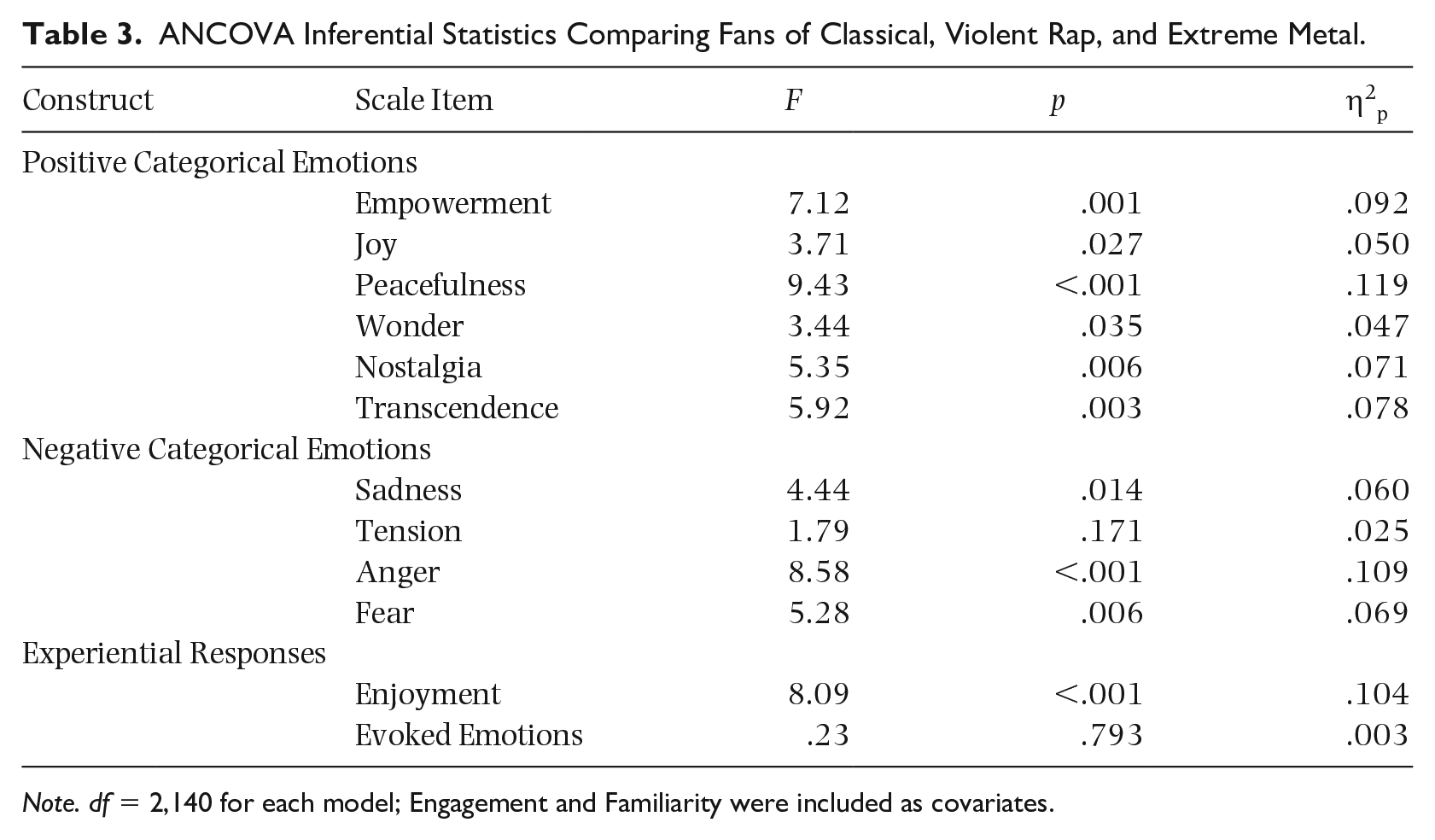
Note. df = 2,140 for each model; Engagement and Familiarity were included as covariates.
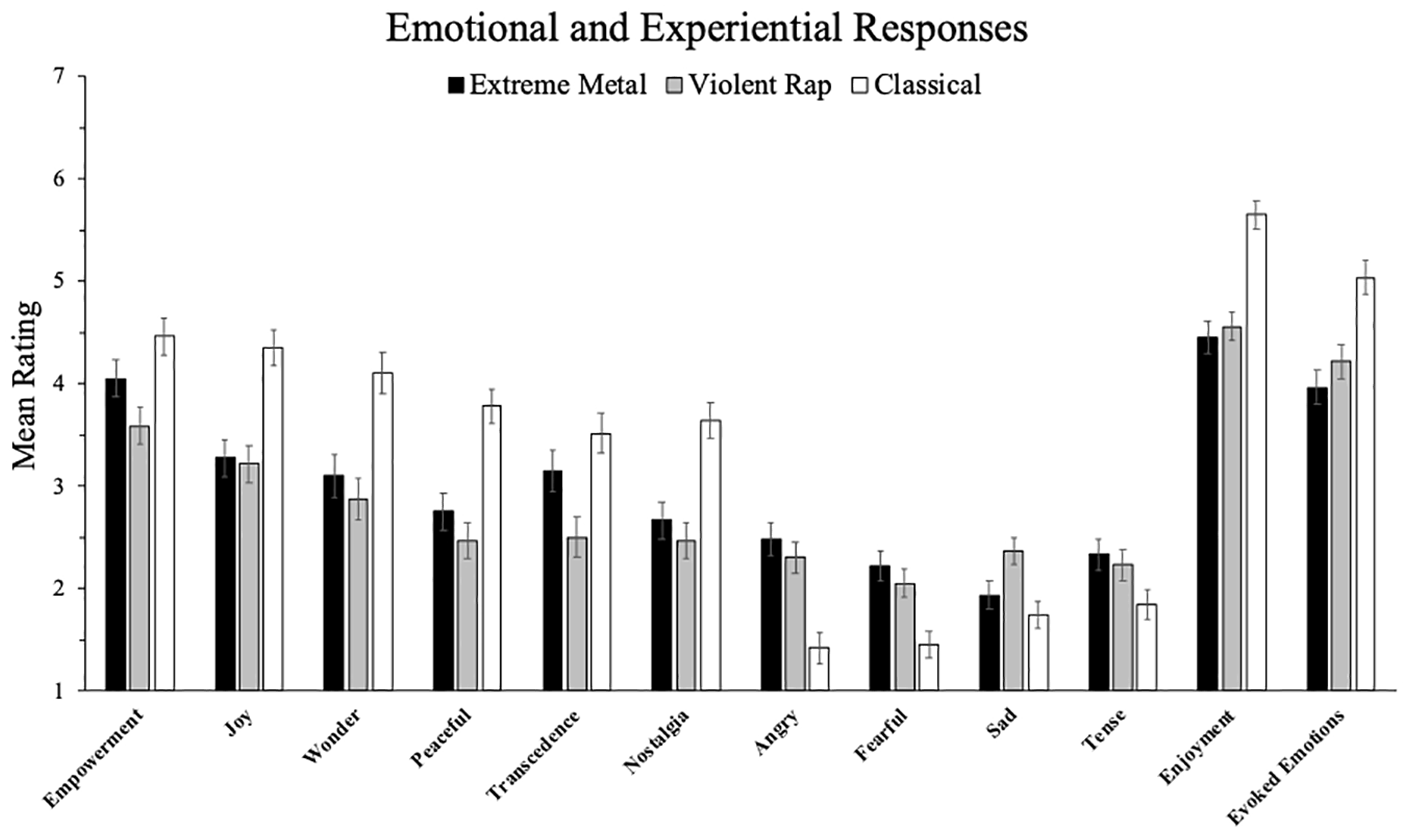
Mean ratings of individual emotional and experiential responses for each fan group. The scale ranges from a score of 1 to 7 – the greater the score, the greater the strength of emotion. Error bars represent standard error of the mean.
The results also support the conclusion that positive emotional experiences are sometimes attenuated for fans of violent music relative to fans of (non-violent) classical music. First, ratings of peacefulness were significantly lower for fans of extreme metal or violent rap music than for fans of classical music (p values < .011). Second, fans of violent rap reported significantly lower ratings of transcendence, nostalgia, and joy than fans of classical music (p values < .013), and lower ratings of transcendence and empowerment than extreme metal fans (p values < .004).
Cognitive Functions of Music
To investigate fans’ cognitive functional use of music (H3), two one-way between-subjects ANOVAs were conducted on the Self-Regulation and Self-Reflection subscales of the FMQ. As can be seen in the top panel of Figure 4, there was a significant effect of fan group on self-regulation, F(2,142) = 8.68, p < .001, η2p = .109. Pairwise comparisons revealed that fans of extreme metal reported using extreme metal for self-regulation to a significantly lower extent than how fans of violent rap used violent rap music, p < .001, 95% CI [.68, 2.13] and classical fans used classical music, p = .001. 95% CI [.52, 1.96]. There were no significant differences between the use of music by fans of violent rap and fans of classical music respectively for self-regulation (p = .642). As can be seen in the middle panel of Figure 4, there was no significant effect of fan group on self-reflection, F(2,142) = 2.65, p = .074, η2p = .036.
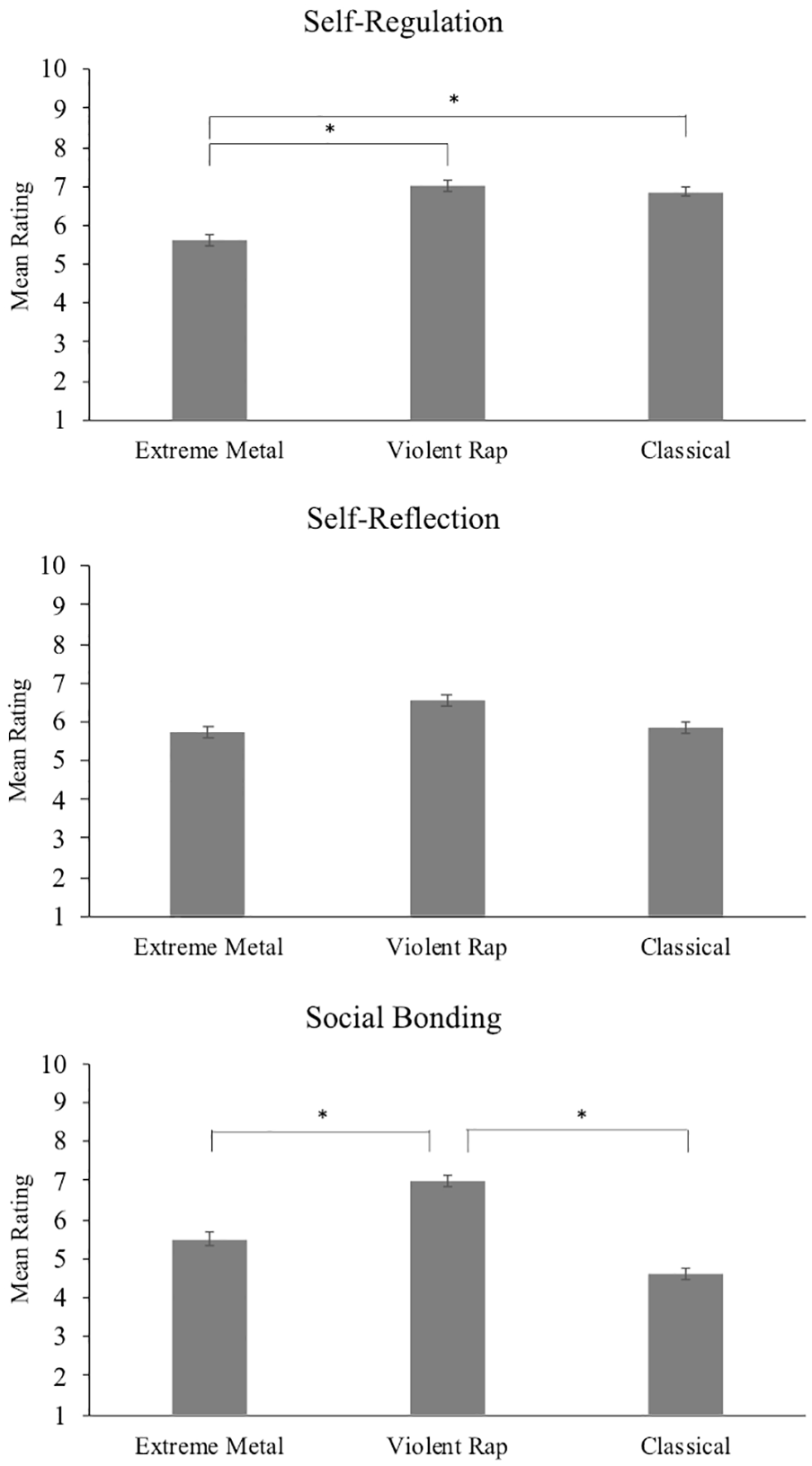
Mean ratings of self-regulation (top panel), self-reflection (middle panel), and social bonding (bottom panel) of the FMQ. The scale ranges from a score of 1 to 10 – the higher the score, the greater the use of self-regulation, self-reflection, or social bonding. Significance indicators report the significant results of pairwise comparisons with Bonferroni adjusted alphas of .017. Error bars represent standard error of the mean. *p ⩽ .001.
Social Functions of Music
A one-way between-subjects ANOVA was conducted on the social-bonding subscale of the FMQ. As can be seen in the bottom panel of Figure 4, there was a significant effect of fan group, F(2,142) = 15.99, p < .001, η2p = .184. Pairwise comparisons revealed that fans of violent rap reported using it for social bonding to a significantly greater extent than fans of extreme metal used extreme metal music, p = .001, 95% CI [.62, 2.32], and classical fans used classical music, p < .001, 95% CI [1.53, 3.20]. There was no significant difference in social bonding between extreme metal fans and classical fans (p = .039). The hypothesis (H4) that violent music fans would report significantly greater ratings of social bonding than classical music fans was therefore supported for fans of violent rap but not for fans of extreme metal.
Passion as a Predictor of Emotional Responses and Functions of Music
To assess potential differences between harmonious and obsessive passion in the three fan groups, two one-way ANOVAs were conducted and yielded no significant effect of fan group on harmonious passion, F(2,142) = 2.347, p = .099, η2p = .032, or obsessive passion, F(2,142) = .594, p = .553, η2p = .008. Next, we investigated the extent to which harmonious and obsessive passion are important predictors of fans’ positive and negative experiences of music by conducting a series of multiple regressions in which ratings of harmonious and obsessive passion, listener engagement, and familiarity were entered as predictors of each of the emotional responses and functions of music for: (a) all fans combined; and (b) fans of violent music exclusively. The first set of analyses was carried out to understand the influence of passion on fans of multiple genres of music, generally, and the second set of analyses was carried out to evaluate, specifically, how passion applies to fans of violent music and whether they differ from the combined sample of participants.
For all three groups of fans, as shown in Table 4, harmonious passion was a significant predictor of the contemplative emotions of wonder, peacefulness, and transcendence, but not nostalgia, empowerment, and joy. Harmonious passion was also a significant predictor of the magnitude of evoked emotions and all three functions of music: self-reflection, self-regulation, and social bonding. Obsessive passion was a significant predictor of the four negative emotions of anger, fear, sadness, and tension, as well as the contemplative emotion of transcendence. It was a significant predictor of two of the three music functions: self-reflection and social bonding. In short, whereas harmonious passion predicted three positive emotional experiences and no negative emotional experiences, obsessive passion predicted all four negative emotional experiences. Both types of passion for music predicted cognitive and social functions. Thus, H5 and H6 were supported by the results of the analysis combining responses from fans of violent and non-violent music.
Harmonious and Obsessive Passion as Predictors of all Fans’ Functional Uses and Emotional/Experiential Responses (n=145).
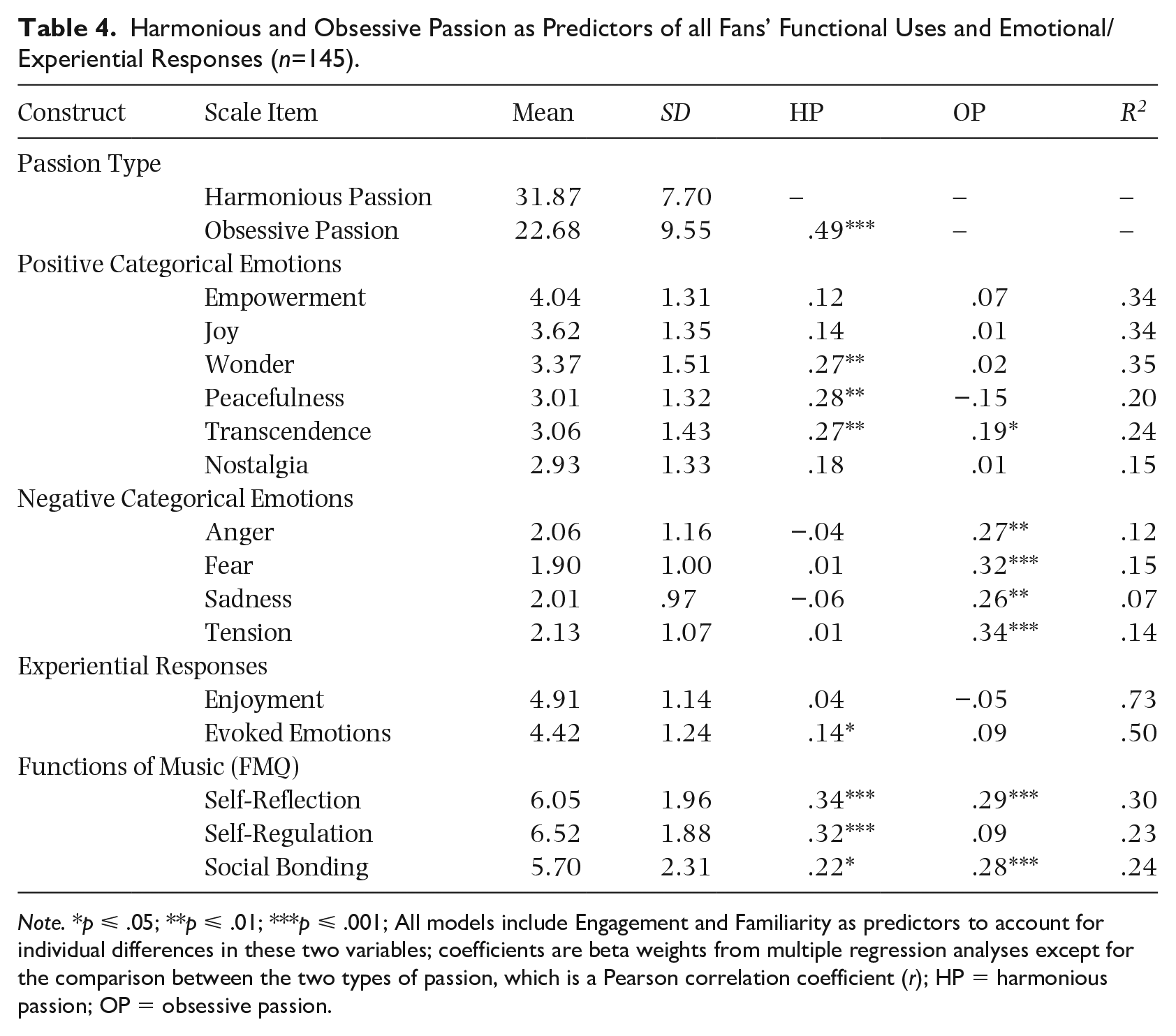
Note. *p ⩽ .05; **p ⩽ .01; ***p ⩽ .001; All models include Engagement and Familiarity as predictors to account for individual differences in these two variables; coefficients are beta weights from multiple regression analyses except for the comparison between the two types of passion, which is a Pearson correlation coefficient (r); HP = harmonious passion; OP = obsessive passion.
For the fans of violent music, as shown in Table 5, harmonious passion was once again a significant predictor of the contemplative emotions of wonder, peacefulness, and transcendence, but also nostalgia. Harmonious passion was again a significant predictor of the magnitude of evoked emotions and all three functions of music. Obsessive passion was a significant predictor of the four negative emotions of anger, fear, sadness, and tension, along with transcendence. Obsessive passion was also a significant predictor of two cognitive functions of music: self-reflection and social bonding. Thus, harmonious passion was strongly associated with positive emotional experiences, obsessive passion was strongly associated with negative emotional experiences, and both types of passion were associated with cognitive and social functions of music. Therefore, H5 and H6 were also supported by the results of the analysis combining responses from fans of violent music only.
Harmonious and Obsessive Passion as Predictors of Functional Uses and Emotional/Experiential Responses in Fans of Violent Music (n=95).

Note. *p ⩽ .05; **p ⩽ .01; ***p ⩽ .001; All models include Engagement and Familiarity as predictors to account for individual differences in these two variables; coefficients are beta weights from multiple regression analyses except for the comparison between the two types of passion, which is a Pearson correlation coefficient (r); HP = harmonious passion; OP = obsessive passion.
Discussion
In the present study we compared the emotional experiences of fans of violent music (extreme metal, violent rap) and non-violent (classical) music as they listened to their preferred music. Participants in the extreme metal, violent rap, and classical music fan groups experienced more positive emotions than negative emotions while listening to music, and the top five emotions experienced by each fan group were positive. These results raise doubts as to the concerns, based on selective evidence, that violent music has an impact on listeners such that it induces feelings of anger or other negative psychological states. Indeed, fans of extreme metal and fans of violent rap assigned higher ratings to peacefulness than anger, and all three groups of fans assigned higher ratings to positive emotions than negative emotions.
These findings replicate and extend the results reported by Thompson et al. (2019), where it was reported that fans of extreme metal music (death metal) experienced positive rather than negative emotional states after listening to excerpts of violent death metal music; they also nominated their top two emotions as empowerment and joy, as did participants in the present study. A limitation of Thompson et al. (2019) was that the comparison group were non-fans of violent music who were not necessarily passionate about any genre of music. It was not possible, therefore, to deduce from the results that the emotional experiences of extreme metal fans are different from those of other music fans. In the present study we addressed this issue by recruiting three groups of fans of different kinds of music who were equally passionate about their preferred music. Our results suggest that fans of two distinct genres of violent music extract positive emotional experiences from violent music, and the emotions they experience are similar to those reported by fans of non-violent classical music.
However, when differences between music engagement and familiarity were controlled, there were statistically significant differences between the fan groups in terms of their positive and negative emotional experiences. Relative to fans of classical music, fans of extreme metal and fans of violent rap music assigned lower ratings to peacefulness and higher ratings to anger and fear. Also, the ratings assigned by fans of violent rap to transcendence, nostalgia, and joy were lower than those assigned to the same emotional experiences by classical music fans. These results suggest that positive and negative emotional responses to music are more equally balanced for fans of violent music than fans of classical music. There are two potential explanations for these differences. First, people who extract aesthetic enjoyment from a balance of positive and negative emotions may seek out musical styles that reflect their penchant for experiencing negative as well as positive emotions. This interpretation aligns with research on the emotional effects of sad music, suggesting that listeners’ responses embrace not only sadness but also a range of positive emotions such as nostalgia, peacefulness, and wonder (Swaminathan & Schellenberg, 2015; Vuoskoski et al., 2012). Hence, when fans of violent genres listen to music, they may explore difficult emotions such as anger or fear while simultaneously experiencing positive emotions.
Alternatively, music with negatively-valenced content could dampen more relaxed and contemplative positive emotions, such as peacefulness, and reinforce negative emotions such as anger and fear. Extreme metal music such as death metal is an example of such music, where dissonant and distorted instrumental textures are coupled with violent lyrics that are delivered in an aggressive growl. Although lyrics were not displayed on the screen during the presentation of the musical stimuli in the present study, extreme metal lyrics are more often intelligible to fans than non-fans due to perceptual learning through repeated exposure to noisy vocalisations (Olsen et al., 2018). Moreover, even if they cannot read or hear specific lyrics, many fans of extreme metal are aware of their violent content, as it is a distinguishing feature of this genre (Kahn-Harris, 2007). Similarly, dark or difficult themes in lyrics of the rap music stimuli may have dampened positive emotional responses, since the non-vocal sonic features of rap music, per se, are not necessarily aggressive or confrontational. One challenge for future researchers will be to disentangle the effects of the instrumental and vocal components of violent and non-violent music genres on listeners’ emotional responses. It would also be worth examining in more detail the various structural and sonic attributes of each genre, such as rhythmic, melodic, and harmonic structure, tempo, average pitch height, and textural density.
Differences were also observed between the emotional experiences of the two groups of fans of violent music. Fans of extreme metal music experienced transcendence and empowerment to a greater extent than fans of violent rap music. The high levels of intensity, tempo, and dissonance in extreme metal music, which are known to elevate physiological arousal, may have reinforced these feelings. More generally, differences between the emotional responses of fans of extreme metal and violent rap may partially reflect the differences between the two genres in terms of their instrumentation and the content of their lyrics – a hypothesis that should be tested in future research.
No significant differences were observed between the three groups of fans’ ratings on the cognitive functions of music (i.e., the FMQ) subscale of Self-Reflection. However, fans of extreme metal reported using their preferred music for self-regulation to a significantly lesser extent than did fans of violent rap and classical music, respectively. The Self-Regulation subscale of the FMQ includes items referring to participants’ use of music to help them relax, forget worries, and think differently or in a new way. It may be that fans of extreme metal music scored lower for self-regulation because they use the music and its lyrics, which are arousing and confrontational, for the purpose of meeting their worries head on rather than for relaxing and forgetting them. Evidence to support this claim can be found in qualitative data reported by Thompson et al. (2019, p.227): for example, one extreme metal fan commented, “When I’m angry, this music brings me to a dark place internally so that I can work through the emotions” and another explained that “[the] music elucidates my current feelings and stresses.” These qualitative findings reflect the Discharge subscale of the Music in Mood Regulation scale (Saarikallio, 2008), whereby negative feelings are attenuated by the act of expressing them. However, more research is needed to address the question of whether discharge is a healthy strategy for fans of music with violent themes.
Differences between the three fan groups’ ratings on the Social Bonding subscale of the FMQ showed that fans of violent rap music use it for social bonding significantly more than extreme metal and classical music fans. According to fans of non-violent rap music, music is important for social connections across a range of cultures (Boer et al., 2011). Furthermore, the strong in-group markers that define rap fans, such as distinct dress codes and the prevalence of crews, accentuate the social nature of the rap music scene and contribute to its social function (Kubrin, 2005). The findings of the present study reinforce previous observations of strong group identity in the rap music community (Kubrin, 2005; Travis, 2013; Travis & Bowman, 2015), and provide further evidence in support of the positive contribution of violent rap music, in particular, to social bonding and cohesion within the fan community. Although social benefits may be conferred by the popularity of music in any genre, we observed no differences between the levels of passion felt by the three groups of fans for their preferred music. Thus, the importance of social bonding for fans of violent rap music revealed by the present study cannot be explained by the popularity of the genre.
Indeed, fans of violent rap reported using music for social bonding to a greater extent than extreme metal fans. Extreme metal music explores themes of aggression, violence, and misogyny that have the potential to strengthen the boundaries between in-groups and out-groups, repelling outsiders while affirming the aesthetic values and feelings of identity and belonging of in-group members (Thompson & Olsen, 2018). Extreme metal fans might therefore be expected to experience strong social bonds. However, the results of the present study suggest that violent rap music has a greater social function than the other genres of music. Given that fans actively engage in the social dimension of music listening at live concerts, a valuable strategy for future research on the social role of violent music would be to observe fans in situ. Such observations could provide insights that cannot be gained from lab- or survey-based research.
In accordance with the Dualistic Model of Passion (Vallerand, 2015; Vallerand et al., 2003), harmonious passion was found to be a significant predictor of the positive emotions of wonder, peacefulness, and transcendence when the three fan groups were combined, and wonder, peacefulness, transcendence, and nostalgia for the fans of violent music only. Harmonious passion was also a predictor of the magnitude of evoked emotions. However, harmonious passion was not a predictor of joy and empowerment for all three groups; there were no differences between them insofar as they experienced these emotions to similar extents when listening to their preferred music. By contrast, the more nuanced, reflective, and contemplative emotions of wonder, peacefulness, transcendence, and nostalgia were more likely to have been experienced by those who approach music with a passion that is harmonious with their internal aims and goals (Vallerand et al., 2003).
Conversely, obsessive passion was a strong predictor of anger, fear, sadness, and tension for fans of both violent and non-violent music. This finding has important implications for understanding why some fans may experience positive outcomes while others may not. Fans who identify with the more obsessive characteristics of passion are more likely to experience negative emotional outcomes than those who identify with the more harmonious characteristics of passion (Vallerand, 2015; Vallerand et al., 2003). In a clinical setting where personalised playlists of negatively-valenced music are used in therapy to help clients work through difficult emotions, it would be useful to screen clients to establish whether their passion is obsessive or harmonious before including such music in a playlist.
Both harmonious and obsessive passion were significant predictors of transcendence for all three groups of fans. Feelings of transcendence may include positive experiences of heightened states of consciousness, but they may also reflect a desire to escape from an undesirable reality – to be outside one’s normal experience – and could therefore reflect qualitatively different kinds of positive emotions that are dependent on individual circumstances. Passion, by definition, is the tendency for people to engage fully with the object of their passion, so if a fan is passionate about music, they experience transcendence by engaging fully with it. Thus, both types of passion produce transcendence, but whether the passion is harmonious or obsessive determines whether other emotional experiences are likely to be positive or negative. In future, researchers should explore the relationship between passion and transcendence, as well as other complex emotions such as nostalgia.
Similarly, both harmonious and obsessive passion were significant predictors of the three cognitive and social functions of music, with the exception of self-regulation, where only harmonious passion was a significant predictor. Self-regulation is closely intertwined with one’s ability to regulate one’s mood and emotions for the purposes of relaxation. It is possible that fans of violent music with high harmonious passion are more likely to use effective strategies for regulating their emotional response to music by focusing on more nuanced positive emotions.
Our findings highlight the importance of including negatively-valenced genres of music such as extreme metal and violent rap when developing models of music and emotion, especially those designed to understand the paradoxical enjoyment of negatively-valenced music (cf., Eerola et al., 2018; Thompson & Olsen, 2018). When determining the emotional responses of fans of music, however, the genre of music is less important than whether a fan’s passion is harmonious or obsessive. Nevertheless, a number of questions remain to be addressed. First, the classical orchestral music used in the non-violent condition of the present study did not include lyrics. To explore the relative influence of violent lyrics and features of music conveying aggression, such as timbre, it would be worth replicating the study with the addition of genres such as opera, which often combines orchestral music and violent themes conveyed by lyrics. Second, research is needed to fully elucidate the psychological mechanisms underlying the use of violent music for positive and negative functions and outcomes. It may be useful to compare fans with non-fans of each genre to distinguish between effects that are unique to fans, relating to their attitudes and passions, and those that arise from music exposure and hence apply to both fans and non-fans. Finally, as the use of violent themes varies in extreme metal and rap music, it will also be important to consider fans of a wider range of violent and non-violent subgenres of extreme metal and rap; to identify the factors that attract fans to violence in music, whether musical, psychological, or related to the lyrics; and to illuminate the potential benefits and risks of harmonious and obsessive passion.
Footnotes
Appendix
Acknowledgements
We thank the members of the Macquarie University Music, Sound, and Performance Research Group for helpful comments on an earlier draft.
Declaration of Conflicting Interests
The author(s) declared no potential conflicts of interest with respect to the research, authorship, and/or publication of this article.
Funding
The author(s) disclosed receipt of the following financial support for the research, authorship, and/or publication of this article: This research was supported by an Australian Research Council Discovery Project grant (DP160101470) held by the fifth author.
