







Abstract
The recent COVID-19 health emergency has forced many music teachers to adopt remote teaching methods. The present paper investigates the practices and strategies used by conservatory-level music teachers to give lessons online in different European countries and the USA. Data from an exploratory qualitative study were collected using semi-structured interviews covering aspects such as curriculum design, lesson implementation, evaluation, examination organization, and time management skills. Interviewees offered rich descriptions of their experiences of teaching both music theory and instrumental lessons. Findings were analyzed using an inductive method, giving rise to the following categories: COVID-19 and the music school, technology, curriculum planning, managing instrumental lessons, examinations, strengths, and limitations. Participants discussed their ability to manage technology, and they employed skills such as flexibility, problem solving, and creativity in their curriculum planning and in using a variety of remote learning tools. They revised curricular activities and online teaching strategies and methods were associated with the musical instruments played. They argued that online teaching was very time consuming (e.g., planning activities, preparing materials, and exploring the new possibilities of technical tools) and that it was stressful to have lost a satisfactory work-life balance. They reported becoming more organized in the management of their activities. Internet platforms were found useful for sharing material, communicating, exchanging messages, and keeping records of all the work done. Participants learnt to use video clips systematically for modelling and teaching. They were aware of the strengths and limitations of e-learning, and they called for more institutional support and opportunities for professional development.
The worldwide health emergency caused by the coronavirus disease—COVID-19—that began in 2019 has imposed very restrictive measures on the vast majority of societies. To avoid mass contagion, governments promulgated administrative measures restricting the free movement of people and social interactions. This had severe consequences for education and schooling (Hodges et al., 2020). Face-to-face teaching activities were banned, and schools of all levels, universities, and conservatories of music were obliged to switch to teaching via e-learning methods (Habe et al., 2021). The main issue is that teachers have been inadequately prepared and supported for online teaching (Daubney & Fautley, 2020).
Many music academies and conservatories have had to make great efforts to move to online teaching because the nature of the subjects taught requires the transmission of both theoretical knowledge and applied skills. Learning music may involve acquiring theoretical knowledge (e.g., solfège, music history) and/or developing performance skills and musicianship (e.g., instrumental skills, expressiveness, ensemble playing). The COVID-19 pandemic has forced music teachers to reorganize their lessons and find novel solutions (Daubney & Fautley, 2020), resulting in a series of interesting case studies that have great value for educational research. The health emergency has provided an extraordinary opportunity for scholars to collect data and shed new light on the underlying processes of online music teaching and learning (Hodges et al., 2020).
This research was guided by the following questions: what perspectives do remote learning tools open up for music teaching and learning? What are teachers’ reactions? What are the strengths and limitations of the extensive use of remote technology in music teaching and learning? The present study used a qualitative methodology, consisting of interviews with music teachers, and aimed to develop themes for reflection on the opportunities offered by e-learning tools. The theoretical framework for this study refers to issues common to online music teaching and learning, with a focus on theory lessons and instrumental lessons.
Background
Today’s Web 2.0 tools have offered considerable support for the growth of distance learning techniques for music education. There have been numerous organizational and pedagogical benefits (Calderón-Garrido et al., 2019). Regarding organization, the advantages embrace elements such as spatial and temporal flexibility: internet access in any part of the world reduces travelling costs and saves time (Lancaster, 2007). A related benefit here is the reduction of personal carbon emissions, as fewer people need to travel. Time management becomes more flexible because many activities need not involve real-time interaction (e.g., forum discussions or wikis) and can be performed at different moments in the day (Biasutti, 2017). Pedagogical benefits include course content tailored to the student’s educational needs, stronger direct interactions between teachers and students, and students who feel encouraged to develop responsibility for their own learning (Biasutti, 2015). Moreover, technological devices offer other advantages for both students and teachers: by reducing time and distance between collaborators, activities such as brainstorming, peer feedback, and the creation of shared virtual settings are facilitated, enhancing creative learning and critical thinking (Mishra et al., 2015; Yalcinalp & Avcı, 2019). Creative learning could be promoted by navigating the complexities of technology to generate or revisit ideas to solve a problem or produce a novel artifact. In this rapidly changing educational landscape, it is essential to master technology and be able to use it wisely rather than be overwhelmed and dominated by it (Tobias, 2012; Wright, 2018).
Two complementary kinds of activity can be considered: synchronous and asynchronous (Biasutti, & Concina, 2020). Synchronous activities encompass real-time actions and the simultaneous interaction of participants during a musical performance, for example. For this to work properly, sharing time together and all being virtually connected at the same moment is essential. Conversely, asynchronous activities involve the elaboration of tasks that can be carried out at different times, without the need for real-time interventions. Asynchronous activities are more versatile than synchronous ones because participants can choose when to connect (Biasutti et al., 2019).
Several formats for e-learning have been developed, including Massive Open Online Courses (MOOCs), which allow open access to learning and unrestricted attendance. MOOCs are accessible worldwide at different levels and for different topics. For example, the Berklee College of Music offers MOOCs in areas such as music technology, music theory, harmony and ear training, the music business and entrepreneurship, music therapy, performance and improvisation, and songwriting.
Despite inevitable difficulties, many music institutions combined different novel approaches to online teaching in an attempt to innovate and improve their offer. Music teaching poses two sets of challenges. The first set is technical: audio quality and signal transmission delay (Koutsoupidou, 2014; Lancaster, 2007); the second is group work and assessment, which are—although linked to technical problems—related to the content of teaching and learning. As Klein and Lewandowski-Cox (2019) assert, “Traditionally, the demands of distance and online learning have meant that group work and assessment can prove challenging” (p. 643). However, several projects have been developed for testing and improving the possibilities for remote performance (e.g., the Lola project, https://lola.conts.it/), creating a set of distance learning modules (e.g., the Swing project, https://www.aec-music.eu/projects/current-projects/swing-2018—2021), and developing an online platform for music distance learning teaching and practice (e.g., the Intermusic project, https://www.aec-music.eu/projects/current-projects/intermusic-). The aims of these projects are modelling and sharing the best practices for musicians as well as offering joint courses and online projects supporting online synchronous singing, instrumental solo performance and chamber group classes.
Technological settings for online music learning are often obstacles to people from poor socio-economic backgrounds or living in remote places where broadband access is not always available. While device costs have plummeted, internet access has become ubiquitous, and free virtual platforms have become available (Randles, 2015), these obstacles remain to be overcome. The diffusion of technology creates advantages and disadvantages. On the one hand, today’s technology is far more affordable, but on the other hand—despite the omnipresence of computers, tablets, and mobiles—there is great variability in software and tools. Online teaching depends on technical resources, and the proliferation of platforms demands rigorous experimentation before selecting the right software and settings. Experimentation is time consuming, but it is essential if the best experience for optimal use of the devices is to be found (Kruse et al., 2013).
Pedagogical aspects must also be considered. For example, adopting innovative teaching methods related to the possibilities that technology offers, may help provide more equal opportunities for learners, broadening access to educational contents and stimulating interdisciplinary collaborations to acquire and develop new knowledge (see Hong, 2014). Delivering online lessons does not mean simply delivering face-to-face classes on camera; rather, it could involve a qualitative change in approach and educational strategies (El-Deghaidy & Nouby, 2008). A number of virtual and technology-enhanced musical activities, accordingly, trade more traditional instructional methods (e.g., those based on imitation) for more learner-centered methodologies that may involve reciprocal interaction, improvisation, or the creative use of technologies (see Biasutti, 2015; Schiavio et al., 2020).
In addition, cooperative learning techniques, such as peer assessment and joint music making, could be applied to enhance students’ online collaboration (see Schiavio et al. 2018; 2019; 2020). However, virtual collaboration is the learning criterion that has to be considered most carefully. For example, only 4.76% of Australian music technology courses incorporated this approach (Klein & Lewandowski-Cox, 2019). In our view, a possible explanation could be that music schools are reluctant to accept change, and that the introduction of new teaching techniques and methodologies takes quite a long time to become established. Another issue is staff preparedness: not all the teachers have adequate educational and technological knowledge to teach online (Daubney & Fautley, 2020). There is a demand for courses on technology for the professional development of music teachers (Vidulin-Orbanić & Duraković, 2011).
Regarding the types of activity that can be carried out online, two main options—each with their own characteristics and problems—can be distinguished: music theory lessons and instrumental lessons. Lessons on theory are currently more widely diffused than instrumental lessons because they are easier to organize and manage (McConville & Murphy, 2017; Riley, 2009).
Teaching music theory online
Several studies have analyzed the teaching and learning processes of online theory lessons and online refresher classes for existing music teachers (see e.g., Biasutti et al., 2019; McConville & Murphy, 2017).
With regard to lessons on theory, a number of universities in the USA have increased their numbers of virtual classes in topics such as musicology, music theory, the fundamentals of music, music appreciation, music education, or music technology (McConville & Murphy, 2017). The most common types of material used in online classes included video and audio samples, website links, slide presentations (e.g., PowerPoint, Keynote, and Prezi presentations), and handouts or written documents (McConville & Murphy, 2017). However, from 2013 to 2016—as assessed in a survey study which involved 58 schools of music in the USA in 2013 and 43 in 2016—there was a change in the percentage of classes that used these types of materials, with increasing use of videos (+11.4%), mobile apps (+6.3%), and social media (+6.1%). Conversely, there were decreases in the use of podcasts (-7.9%), slide presentations (-10.5%), and handouts or written documents (-14.4%). The changes in the use of materials for e-learning may be due to the increasing popularity of web social media, video clips on the internet, and mobile apps, as well as a predilection for more active rather than passive learning methods (McConville, & Murphy, 2017).
Regarding online refresher classes for professionally active music teachers, Biasutti et al. (2019) carried out a study involving 24 participants in professional development activities consisting of asynchronous lessons and face-to-face workshops. Among the positive aspects found were the choice of relevant topics for music teachers and student-centered methodology. The asynchronous format was appreciated because it allowed participants to choose when they did activities, fitting them into their work schedules. Other organizational strengths were time management activities, which balanced the workload over the course’s duration. Regarding technical strengths, participants appreciated the platform’s interactivity and user-friendliness, which supported social elements such as the development of a community of practice where teachers could discuss and share experiences. Conversely, negative aspects included pedagogical, organizational, and technical issues. Pedagogical issues consisted of some overly complex tasks. Organizational issues were mainly due to an overload of activities, whereas technical issues included getting access to the platform itself or mastering the page layout of wiki tools.
Teaching and learning a musical instrument online
Several studies have shown that it is possible to develop musical performance skills in virtual environments, both at the informal and formal levels (Bowman, 2014; Cayari, 2011; Kruse et al., 2013; Ruismäki, et al., 2012; Ruthmann & Hebert, 2012). Regarding informal processes, studies of asynchronous technology examined how a person could learn to play a musical instrument with individual homework (Ruismäki, et al., 2012). For example, the learning strategies of instruction, copying, practicing, playing, and evaluating were observed while participants learned to play an improvised blues with a musical keyboard, in an asynchronous, online, e-learning environment (Seddon & Biasutti, 2009a).
Other studies were carried out in formal educational contexts, examining how technological tools could facilitate music teaching including piano lessons, piano sight-reading skills and trumpet lessons (Dammers, 2009; Kruse et al., 2013; Pike & Shoemaker, 2013). Regarding piano lessons, aspects such as the practicability of online learning at a collegiate level and the strengths and limitations of piano lessons given via Skype as experienced by one student and one instructor were analyzed by Kruse et al. (2013). As they report, the strengths of these lessons included the development of imagination and motivation, a natural feel to lessons, and the mastering of equipment and music; limitations were mainly due to technological issues. Another study by Pike and Shoemaker (2013) examined the effects of distance learning on the acquisition of piano sight-reading skills among 19 beginner piano students split into two groups: (i) the experimental group learning via live online video, and (ii) the control group learning sight-reading using traditional face-to-face methods. No significant differences between the groups were found, suggesting that teaching sight-reading online could be a worthwhile alternative to face-to-face training or a valuable supplement to regular lessons. In similar vein, a case study of nine lessons following an entry level videoconferencing approach using personal computers, webcams, and Skype videoconferencing software was conducted by Dammers (2009). Findings demonstrated that the format was functional on a basic level. However, the limitations of video delay, impersonal dynamics, limited visual controls, restrained movement and sound control presented sufficient challenges that virtual formats appear to be only a supplement for face-to-face lessons. Conventional face-to-face instrumental lessons are based on a one-to-one relationship, which was apparently easily simulated in virtual environments. That said, several studies highlighted a number of issues about synchronous online activities, such as delay and audio quality (Biasutti, 2018; Koutsoupidou, 2014; Lancaster, 2007). Delay depends mostly on technology and broadband internet connection, which enlarged the need for independent student practice in a study by Pike and Shoemaker (2013) focused on online piano lessons. In addition, delays exclude any possibility of performing duets in lessons—a common teaching technique—because synchronization becomes too challenging (Kruse et al., 2013). Audio quality issues could nevertheless be alleviated by using external microphones (Burrack, 2012). The general quality of audio and video has been found to influence instrumental music tuition in areas such as modelling, feedback, and assessment (Burrack 2012; Koutsoupidou, 2014).
Other issues concerning online instrumental lessons were their visual component, posture, and communication. An instrumental lesson requires elements of performance such as posture and finger position to be monitored visually (Pike & Shoemaker, 2013). There are additional specific problems related to the type of instrument, such as bow movements for strings and embouchures for brass and woodwind instruments. Webcams must be placed carefully so that teachers can assess students’ posture in detail (Kruse et al., 2013). Regarding tactile communication, the teacher cannot correct a student’s posture via touch during online lessons, and modelling is the preferred teaching strategy. Other techniques, such as playing pieces for piano using four hands, are essential for demonstrating sound, rhythm, and phrasing, but they are not feasible in virtual environments.
Other research has focused on the tools and resources that might facilitate e-learning. Teachers have employed multimedia materials, such as video clips downloaded from YouTube or other databases (Cayari, 2011; Waldron, 2013), to support music lessons.
Summary of the theoretical background
Despite numerous difficulties, it is possible to learn music theory and acquire important instrumental skills via online lessons. Notably, most of the issues raised to date have been of a technological nature, especially audio quality and real-time synchronization (Koutsoupidou, 2014; Lancaster, 2007). Communication issues have also been reported. In addition, several studies in this area have been carried out in the specific contexts of informal learning (Ruismäki, et al., 2012; Seddon & Biasutti, 2009b) and private lessons (Kruse et al., 2013; Pike & Shoemaker 2013), rather in than more formal settings such as conservatories. Online examinations, which require musicians to demonstrate complex abilities (Antonini Philippe et al., 2020), were not tested. These studies often adopted a case study methodology, involving few participants, which limits the generalizability of their results (Kruse et al., 2013; Pike & Shoemaker, 2013). It should be noted that, to date, conservatories and music schools have not developed large-scale, online music learning activities, although several projects such as Lola, Swing and Intermusic and Open University music modules are in progress.
Method
Aims and research questions
This study aimed to examine the practices and strategies developed by music teachers when they were obliged to move to virtual teaching during the COVID-19 pandemic emergency. We used a qualitative technique based on semi-structured interviews with music teachers in different European countries and the USA. A qualitative methodology, rather than a quantitative approach, was considered best for capturing an overview of the situation and the pedagogical dynamics. Semi-structured interviews were used because they are a versatile method for revealing the overall picture and they place major emphasis on participants’ thoughts and personal experiences. We aimed to distill their perspectives on the potential strengths and limitations of using technology to teach music online, considering both general and applied music lessons. Aspects such as curriculum planning, lesson implementation, assessment, organizing examinations, and time management skills were covered. The driving research questions were:
(1) Which practices and strategies did teachers adopt to give music lessons online?
(2) What are the strengths and limitations of teaching music online?
Participants
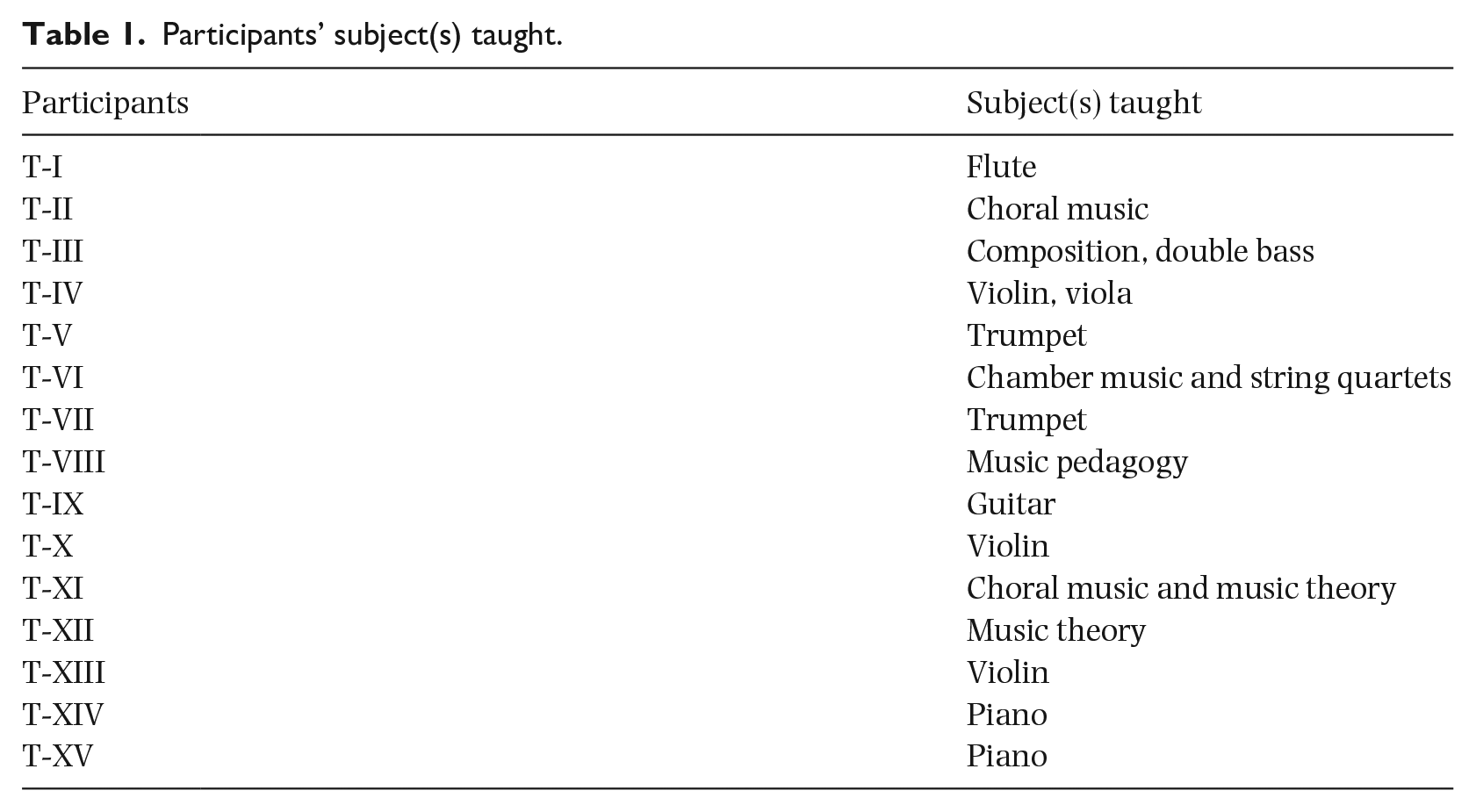
Fifteen (10 male, 5 female) teachers of particular instruments or music theory participated in the study. Participants were aged from 38 to 72 years old (mean age = 56.6 years; SD = 8.6) and all held a music degree in their respective field from a conservatory; they were active teachers in schools of music or higher education institutions in Europe and the USA. A convenience sample was used. Participants were recruited because they were known to be teaching music online and had been identified via personal contacts. They each had at least 15 years’ experience of teaching music (mean years’ experience = 30.7; SD = 10.7), and some of them held relevant positions such as departmental director, director of a school of music, head of technology or of international relations. Participants were teaching piano, strings (violin, viola, and double bass), guitar, wind and brass instruments (flute and trumpet), music pedagogy, music theory, music composition, chamber music and string quartets, and singing and choral music (see Table 1).
Participants’ subject(s) taught.
Semi-structured interview and data collection
The semi-structured interview protocol was designed to highlight participants’ experiences and perceptions of the strengths and limitations of virtual technology tools. Questions focused on their practices during online teaching, with a special emphasis on elements such as curriculum planning, lesson implementation, assessment, examination organization, and time management skills. The full list of questions is presented in Appendix A. The latter also includes an initial section aimed at collecting information about the participant’s background, which was filled out by the interviewer.
Participants responded voluntarily to the semi-structured interview. They were aware that data was to be collected anonymously, and they were encouraged to give accurate answers, which would only be used for research purposes. Data collection was carried out one-to-one via Skype or Zoom meetings, with each interview lasting from 35 to 70 minutes. Interviews were recorded directly onto a computer as .wav files. Interviews were transcribed verbatim, and participants were given the option of reviewing their transcripts to ensure the accuracy of their comments and correct any misrepresentations of their views.
This study was conducted in accordance with the Declaration of Helsinki (World Medical Association, 2013) and the Code of Ethics and Conduct of the British Psychological Society (2009). The University of Graz’s Research Ethics Committee granted ethical approval for data collection, and all subjects gave their informed consent before taking part in the study.
Data analysis
The research team analyzed the collected transcriptions of the semi-structured interviews. An inductive method was used, framed within grounded theory in which codes and categories emerged from the data (Biasutti, 2013). The coding process, using ATLAS.ti 7 software, consisted of two main phases: in Phase 1, transcriptions were examined and segmented; in Phase 2, the list of codes was systematized and organized by category. The coding process began with an immersion phase during which all interview transcripts were read several times to develop a robust familiarity with the data. ATLAS.ti software facilitates the coding process for selecting interview quotations and for the verification process: discernibly different answers were recognized and assigned specific codes. The researchers discussed the data by comparing individual versions and interpretations. Codes and categories were verified during the discussion, and all the researchers agreed on their systematization. In addition, the coding scheme was verified by an independent research assistant who discussed any conflicting results with them until full agreement was obtained by consensus. Participants were anonymized by assigning them a pseudonym ranging from T-I to T-XV.
Results and Discussion
The scheme, with all the categories and codes that emerged from the analysis, is illustrated in Figure 1. The following seven categories were identified:
COVID-19 and the music school (4 codes).
Technology (3 codes).
Curriculum planning (6 codes).
Managing instrumental lessons (7 codes).
Examinations (3 codes).
Strengths (3 codes).
Limitations (3 codes).
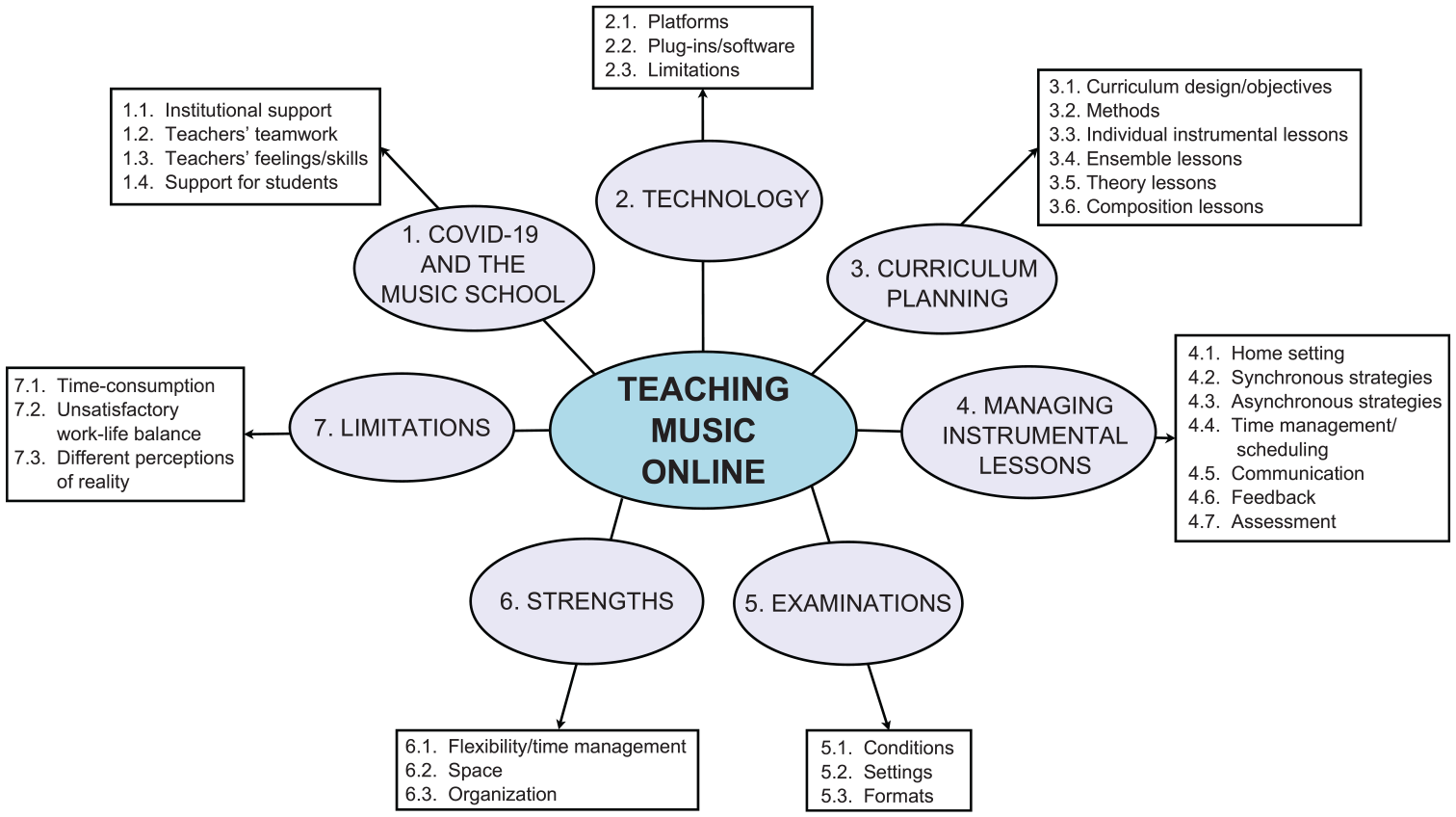
The scheme with all the categories and codes emerged from the analysis of the semi-structured interviews.
COVID-19 and the music school
This category explored how music schools reacted to the lockdown period and reorganized in order to be able to work through it. The four codes were institutional support, teachers’ teamwork, teachers’ feelings/skills, and support for students. Institutions had limited time in which to move to e-learning, and the switch from face-to-face to online lessons was implemented quickly, without an adequate preparation phase. However, many music schools tried to provide e-learning carefully and attentively, which consisted of defining school policies and guidelines for teachers and students. “There was initial chaos. After that, guidelines were made available, and each teacher reorganized their work” (T-VIII). In some cases, platforms had been available for several years, but teachers had not used them; they suddenly had to learn rapidly. Technical support was offered, including technicians to set-up computers so that teachers could work remotely and information on how to use the pertinent platforms. Frequent updates and additional information were provided when necessary. Some basic guidelines included uploading relatively light-weight data files on to platforms in standard formats such as MP3, MP4, PowerPoint, and PDF.
Departmental meetings were held more frequently online, typically once a week, to foster feelings of mutual support among staff members. In other words, their focus was not entirely on real administrative or organizational needs, as one participant reported: It’s voluntary . . . but we’re getting a lot of people . . . We’ll just get online and I’ll see how everybody’s doing and talk. I think it’s important to keep that up because we need to stick with each other and communicate with each other and keep each other informed of what we’re doing and what’s happening. (T-III)
According to another participant, “The pleasure consists in being with your colleagues, that feeling of being part of a community” (T-IV). These quotations demonstrate that departmental meetings had become occasions for fostering relationships and developing a sense of community inside the music school.
Participants stated that their teamwork was based on solidarity, collaboration, helping each other, and sharing practices in how to use technology and manage virtual lessons. “There is more collaboration for timetable organization and lesson content” (T-VI). However, they also reported that, in some cases, the lockdown period was an occasion to isolate more: “For some, it is an opportunity to be more isolated and manage time and things, without networking with colleagues” (T-VIII); “Negatively . . . my impression is that everyone was focused on solving their own problems related to the new situation and had no intention of interacting with other teachers” (T-VIII).
Participants reported feelings of fear, helplessness, disorientation, discomfort, and stress, whereas the lockdown revealed their skills and attributes, including resilience, adaptation, problem solving, and reflection. They were more frequently in touch with students on technical issues, organization, and to provide them with emotional support. The lockdown resulted in a heightened sense of responsibility among both teachers and students, and students expressed their motivation for virtual learning.
Technology
This category was characterized by three codes focused on platforms, plug-ins/software, and limitations. Participants reported that several platforms were available for learning music online, but some of them were not specific and offered limited support for music. Becoming confident in using platforms was very time consuming, as reported by one participant: “At the beginning, it was very hard to understand all the functions and we spent a lot of time in becoming confident with the platforms” (T-XV).
Participants mentioned several plug-ins and pieces of software that were useful to their work, such as the possibility of sharing the screen. However, they wished to see improved tools for teacher-student interaction. Among the limitations reported were the use of low-quality devices such as mobile phones, computers with poor speakers and microphones, and limited bandwidth, which led to signal freezing and poor audio quality.
Curriculum planning
This category comprised the following six codes: curriculum design/objectives, methods, individual instrumental lessons, ensemble lessons, theory lessons, and composition lessons. Teachers had to find solutions to adapt their teaching methods to virtual tools. “Personally, I’ve had to completely rethink my work. Totally. What I’m doing now is never done exactly the same way as before . . . Again, it is much less concrete, much less applied” (T-III); “I had to really completely redesign and rethink the curricula” (T-V). There was a call for more lesson design, with less content and better organization. One participant said, “I have to give less content and wait for returns from others before moving on—that is, making sure it is well understood” (T-II), while according to another, “I needed to carefully prepare my lessons before giving them, perhaps thinking in advance about new pieces to assign and making the corresponding videos” (T-VII). Some teachers spent a lot of time preparing video clips demonstrating posture and aspects such as the embouchure of specific instruments. For example: At first, I prepared a set of pieces in PDF format and a corresponding set of videos specifically made by me. Then I sent them to all of my students, inviting them to study their own pieces. Every student or set of students had a specific piece, according to their own skill. (T-VII)
Goals were designed according to students’ needs and were frequently redefined because students required more time to reach them. In addition, minus-one audio recordings were prepared to allow students to practice ensemble pieces. In other cases, video materials were selected from the internet.
Regarding pedagogical approaches and the use of technology, there was an awareness that new processes were being developed: I think teachers adapt the technology to their way of thinking, to their way of teaching . . . Conversely, it is important to understand the potential of virtual tools: doing online lessons also means changing or adjusting your teaching in accordance with the tools available. (T-I)
Participants explained that they had moved from a nonverbal teaching method, based on modelling and demonstrations, to a verbal method consisting of explaining things orally or in writing. This was not simple because they had to find the correct words for describing processes and behaviors. Educational methods were characterized by a different type of interaction, one grounded in instructions, communicating one command at a time, and remote modelling. Participants also promoted cooperative learning, individualized teaching, and active learning: I also have studio classes where we play for each other, and we do that virtually too. So, I’ll have 20 people there, and they’ll play for each other and comment . . . I think it’s nice for the students to have the simultaneous experience, even if it’s imperfect. (T-IV)
Participants described how individual instrumental lessons were impossible for particular instruments such as the organ, forte-piano, harpsichord, and percussion, and that instruments such as drums, the harp, and the grand piano were not always available in students’ homes. Other limitations included the unfeasibility of teachers playing duets with their students or using the same instrument, for example playing piano pieces with four hands, or at the octave. In addition, it was impossible to accompany students on the piano, which is a common pedagogical method. “I usually do a lot of work in student–teacher duets and small ensemble groups, but now I had to stop that” (T-IX). Individual instrumental lessons had had to be reshaped around these constraints.
Ensemble lessons based on collective performance, such as chamber music, string quartets, choirs, and orchestras, were impossible online. For small groups such as string quartets, an online lesson could be based on individual study followed by a collective online lesson with the four members, which was designed for verifying the study of the individual parts. For chamber music, individual performances with a metronome were planned, with a final audio montage of the separate performances to check intonation and other musical parameters. Unsurprisingly, however, this approach lacked the characteristics of dynamicity, expressivity, and interactivity, all of which are crucial factors for enhancing students’ performance feedback skills. Participants argued that this type of individual practice could only ever be surrogate training and could not completely replace ensemble practice, which is based on the development of processes and skills in synchronization and entrainment.
One participant described their experience of an online choir workshop, reporting that it was very boring and time consuming because each singer repeated their part individually with no opportunities for an ensemble performance. Another participant mentioned that “old choirmasters said that your voice works well inside the section, when you don’t feel that you are singing” (T-II) and this was impossible online. In the case of large ensemble classes, one participant reported that performance lessons had to be completely redesigned, with a different focus and more content involving theory, music analysis, and the history of composers: We completely changed the assignment for chamber music. Since it is Beethoven’s birth year anniversary, they’re reading biographies, listening to recordings, and one teacher will present an analysis for them next week—just different kinds of things consistent with the mission of studying chamber music. (T-IV)
This quotation highlights the change of focus from applied performance skills to the acquisition and development of knowledge.
Participants reported that theory lessons such as music history could be delivered quite well in virtual settings. However, for music education, a virtual setting worked for theory but not for workshops and practice sessions, for example on Orff instruments, which had to be replaced by video analysis. Large live classes of 25 students or more were divided into small online classes of 10 to 12 students.
For composition lessons, participants reported that it was impossible to write in a student’s exercise book or demonstrate face-to-face on the piano. They used different strategies and adapted previously assigned tasks: The students are not working on their pieces and writing actual compositions. I am really working more hypothetically, more critically, giving listening assignments or working on other things. (T-III)
This participant also reported experimenting with collaborative approaches: I’m convening students once a week as a group and I give them a topic. For example, if you took this number of triadic structures, in what other ways could interact them in writing a piece that’s eight bars long, a piece that’s 16 bars long, that’s a minute and a half and we’ll talk about it. (T-III)
These quotations demonstrate that teachers revised tasks and adopted different pedagogical approaches.
Managing instrumental lessons
This category contained the seven codes of home setting, synchronous strategies, asynchronous strategies, time management/scheduling, communication, feedback, and assessment. Participants reported that during virtual teaching, students effectively entered into their homes: “It was like welcoming students in your home and it is very different than teaching in the music school” (T-XV). Setting up an appropriate home setting avoiding noise and distractions was crucial.
Participants reported several synchronous strategies, such as not interrupting students and waiting until the end of a piece before commenting, providing clear explanations, and using modelling: “I want them to play exactly this much and then stop. And then we’re going to talk, because it’s tiring to try to interrupt them all the time” (T-IV). Content had to be clear and focused. In addition, one participant developed a collective online lesson that they named Studio, involving cooperative learning activities with 20 students listening to and commenting on each other’s performances.
Regarding asynchronous strategies, several tasks could be assigned, such as finding videos of well-known performers, listening to other performers’ interpretations, and making a video of one’s own performance. Some participants wrote notes commenting on students’ videos, whereas others commented on the video, live-sharing the screen with their students: I ask them to send me a recording that they’ve made, and then, on Zoom, I share my screen, and then I can stop and start the video and talk about what I’m hearing. Actually, that’s very productive because I can go back and forth. (T-IV)
Time management was challenging because online lessons were shorter than face-to-face lessons and had to be focused and fruitful. One participant argued that “it’s hard to get the students’ attention” (T-VII) and that online attention spans were shorter than in face-to-face activities. Lesson schedules required revisions for several reasons; for example, one cannot play the trumpet or a grand piano at 2 pm in an apartment—one has to wait until 4 pm. In some cases, one-hour lessons were divided into two 30-minute lessons so as to offer students more time to learn. Participants were available during normal lesson times but on more days of the week, and overlapping online activities was an emerging problem.
Online teaching involved somewhat less interaction because of the lack of nonverbal communication, less physical proximity, and reduced eye contact: “There is a lack of physical connection, the lack of being able to see clearly what the student is doing and to be able to interact” (T-V). Furthermore, Another problem is just not being able to touch the student. So, if you’re trying to work out a physical issue, you have to describe it very carefully, and you can show it, but you can’t touch the person. You can explain where the tension is physically, but you have to really get the students to notice it themselves. (T-I)
These quotations highlight the difficulties of online communication and reduced interaction. Participants reported that teaching online was more stressful than teaching face-to-face because constant attention and concentration is required to compensate for the lack of nonverbal communication. The decreased level of empathy and lack of communication were compensated for by more individualized lesson design.
Online feedback was problematic because it was difficult to verify whether the student had understood, and the student’s fingers or posture could not be corrected manually. In face-to-face lessons, feedback occurs in real time, whereas online feedback is less frequent and slow, mediated by the devices used. Sometimes the feeling of not being able to understand each other emerged. Online feedback required more time and was different, with shorter messages, with one command at a time, and with continuous questioning of students.
Participants argued that with the different conditions and contents of music lessons, it was difficult to maintain the same assessment criteria. Although assessment criteria are decided upon by each teacher, it was difficult to evaluate the expressivity and interpretation of online performances. Chamber music and performances with accompaniment were impossible to assess, and different content and musical pieces had to be considered.
Examinations
Participants spoke about issues regarding the contexts, environments, and organization of examinations and conditions, settings, and formats were the three codes. Each institution exercised great autonomy in deciding how to proceed. Wherever possible—for example, for bachelor’s degrees—examinations were postponed to the fall semester. For examinations involving technical aspects such as the performance of fragments of orchestral pieces, teachers reported that they had worked quite well online. Conversely, in examinations where expressive and interpretive elements are crucial, several constraints were highlighted.
Regarding settings, whenever possible, our participants reported that taking examinations at home was considered. However, for instruments such as the organ or percussion (e.g., timpani), not all students have adequate musical instruments at home and performing on an electronic keyboard is not the same as performing on a grand piano available in a conservatory of music. Besides, not every student at home would have the high-quality devices and fast internet necessary for fair real-time examinations. Another possibility was setting up a video and audio studio in the music school where students could come to perform while the examination committee worked remotely. This scenario resolved issues of the quality of the instruments and the audio. Other examinations include such mandatory conditions as 6 to 12 hours of isolation for candidates doing a composition examination—an exercise most often completed within the walls of the music school.
Some schools offered the possibility of taking an examination in the form of a video recording. Although students cannot make takes, they could repeat the performance 1000 times until they reached a satisfactory level. A multi-step interactive examination was also proposed, with students sending in a video recording, waiting for jury assessment, and then having the option of revising their performances. Moreover, the video recording format was considered for entrance auditions, but this is already frequently requested (and used) by several music schools around the world.
Strengths
This category included the three codes of flexibility/time management, space, and organization. Regarding flexibility, participants reported that time management had improved for asynchronous activities, but also as a result of the travelling time saved by both teachers and students.
Regarding space, virtual teaching meant that music schools had more free rooms: My department is big in terms of people, but it’s very small in terms of space . . . we could design . . . many of our music theory classes to be all done online. That would free up an enormous amount of space . . . for ensembles . . . and those classes that need physical connection and direction. (T-III)
Participants reported becoming more organized in the management of their activities. Internet platforms were useful for sharing material, exchanging messages, communicating, and keeping records of all the teaching and work done. Participants learnt to use video clips systematically for modelling and teaching. “I was able to enhance my abilities to search for music online and make instructional videos. I have improved my time management skills” (T-IX); “I discovered the importance of using video material” (T-XIII). They also highlighted the development of strategies for assessing practice through video clips. “I do more written responses, so . . . I’ll make notes in more detail than I would do live” (T-XIII). These notes were useful pedagogical material that could be used in other situations. “Since a lot of the work we do is about very, very fine details, I must try to achieve that” (T-IV). Having materials and video recordings of lessons on an internet platform has advantages for students too because they can use the materials again later to know exactly what was said during the lesson and what was provided as educational material: “The students have all their materials on computer” (T-VII).
Online music teaching itself was considered future-oriented: “Technology can certainly be an advantage, but you must know the technology you are going to use, otherwise it isn’t . . . it could be the future, but we have to improve the technology” (T-XI).
Limitations
The last category included codes for time consumption, unsatisfactory work-life balance, and different perceptions of reality. Participants argued that online teaching was very time consuming with regard to planning activities, preparing teaching materials, and exploring the new possibilities of technical tools. They reported that it was stressful to have lost the separation necessary for a satisfactory work-life balance. They felt that they brought more troubles home with them, that their days were very long and lacked periods of rest, and that they spent all day in front of the computer. During online teaching, impressions on screen could be very different from the reality: I taught a student for a year on Skype before I met her. And when I met her, she was much bigger than I thought and she’d sounded very, very small, and I didn’t know that! It was because she had a terrible violin. That was actually a big lesson for me! (T-IV)
This quotation demonstrates that music teachers should consider their professional perceptions carefully when online.
General Discussion
The present study aimed to investigate the practices and strategies used by music teachers at conservatory-level for giving lessons online. A qualitative analysis of participants’ responses in the context of semi-structured interviews revealed seven main themes related to their institutions, technology, curriculum planning by teachers, lesson implementation, the organization of assessments and examinations, and the strengths and limitations of virtual learning. These themes form an interesting basis for discussion as to the practical means of improving online music teaching, and finding out what teachers have learned from their experiences.
Our first research question asked about the practices and strategies adopted by teachers to give music lessons online. The findings showed that moving to online learning is an opportunity for teachers to adapt their teaching methods to virtual tools and experiment with different pedagogical approaches in line with previous studies (Biasutti et al., 2019; Schiavio et al., 2021). Participants reported having to find solutions for planning, delivering, and reflecting on online lessons. Extensive online music teaching offers an opportunity to expand teachers’ methods of designing curricula and setting goals, and using different methodologies, technological tools, and assessment criteria. Participants reported that they had learned to use virtual tools and introduce multimedia materials into their lessons. Conversely, traditional face-to-face music teaching is based on a one-to-one relationship, and on verbal and nonverbal communication using modelling and practical demonstrations; using this tried-and-tested format there are few alternatives to these strategies. Although participants reported adapting their verbal instructions and assessment, online lessons became more verbal. We can wonder how this relates to teaching approaches and what the consequences are for the students. One issue is concentration, because if teachers use the verbal channel predominantly, students have to be very focused if they are to grasp the teacher’s instructions. In addition, the shift to online learning could strengthen the master-apprentice model, which is often criticized for the lack of autonomy afforded to the student. Students have to be more responsible for their learning while using new technological devices and teachers encourage this process when they ask students to collect additional information and to be independent. Findings provided evidence that participants were able to encourage online music learning by adapting the content of their teaching and developing personalized materials, reflecting the findings an earlier study by Kruse et al. (2013). Strategies and methods for online teaching were connected to the musical instruments they played and taught, in line with findings of studies by Dammers, (2009) and Pike and Shoemaker (2013). Participants were clearly focused on students’ needs and promoting students’ success. Cooperative learning and individualized teaching were some of the approaches they adopted.
Our second research question concerned the strengths and limitations of teaching music online. The findings indicate that teachers are aware of the strengths and limitations of e-learning, generally, although they have different opinions regarding its effectiveness for learning music online (Ruismäki et al., 2012). All the participants recognized the value of technological tools for remote teaching (as reported by Bowman, 2014; Dammers, 2009), but they highlighted their limitations for online lessons, which included constraints on simultaneous real-time performances (in agreement with Daubney & Fautley, 2020; Koutsoupidou, 2014), communication, and feedback (in agreement with Kruse et al., 2013; Pike & Shoemaker, 2013). There was variability in participants’ final judgments. Some acknowledged that certain students had obtained better results and had improved significantly more during the period of online learning than they had with face-to-face teaching; others saw online teaching as an unmitigated disaster, regarding it as just a way of doing something to keep busy. The latter group saw more disadvantages than advantages and wanted to return to traditional face-to-face lessons as soon as possible.
This study has implications for instrumental music education post-pandemic. Participants recognized that online teaching involved considerable efforts of organization, concentration and creativity, although it guaranteed continuity and results for a school year that otherwise risked abrupt interruption if not curtailment. In line with previous findings (Daubney & Fautley, 2020), participants in this study reported having acquired tools that could be useful when returning to face-to-face teaching. Participants demonstrated that they could manage technological tools, and they had employed skills such as flexibility, problem solving, and creativity in curriculum planning and the use of virtual tools (Biasutti et al., 2019). One of the biggest problems raised was synchronous musical activity and the impossibility of simultaneous online ensemble performance. The core barriers to real-time, online performance are audio quality and signal transmission delay, and the proposed technological solutions are still unsatisfactory (Koutsoupidou, 2014; Lancaster, 2007). Technical problems such as the speed of broadband internet connections and the platforms supporting online music teaching have to be addressed as crucial components of its success (Burrack, 2012; Kruse et al., 2013). However, it seems that promising results are coming from current ongoing projects such as Lola, Swing, and Intermusic.
When students practice playing their musical instruments or singing, they must refine not only the movements of their bodies and fingers but also their cognitive strategies for moving in a complex and well-coordinated fashion. The prime issue is that musical skills are developed through group practice, and until group practice can be brought up to a satisfactory level in virtual environments, teaching music online will be limited.
Another implication for instrumental music education post-pandemic is that participants acknowledged the potential value of virtual learning tools for other aspects of music education, such as developing a community of practice for sharing pedagogical approaches and educational strategies with their peers (Biasutti et al., 2019). They also called for more support from their institutions and greater opportunities for professional development, which underlines music teachers’ positive attitude towards their work and their sense of deep involvement with their profession.
The present study had some limitations. First, the focus on specific issues in the interview questions could have biased the participants’ answers. Second, the interviews were carried out with a small group of participants not wholly representative of music teachers worldwide. Third, the qualitative approach adopted does not enable the findings to be generalized. They nevertheless provide a useful platform for discussing issues of interest to all music teachers having to give lessons in virtual settings, and it is hoped that they will inspire novel research on these issues in future.
Conclusions
In a very short time, the COVID-19 pandemic set off a whole series of innovative transformations in the educational landscape. Hodges et al. (2020) discuss the difference between emergency remote teaching and online learning, arguing that well-planned online learning experiences are meaningfully different from courses offered online in response to a crisis or disaster. However, our findings have provided specific insights on the ability of music teachers to give music lessons in virtual settings, offering some fascinating implications for online education more generally. One of the main results of the study is that all the participants were able to react to the situation and develop new educational strategies by testing various online platforms and adapting or adopting new pedagogical practices (Biasutti et al., 2019). Online music teaching offers the opportunity to redefine such educational principles as curriculum design, goal setting, methodologies, basic technological tools, and evaluation criteria.
Although limited to the sample of participants we have interviewed, the findings of this study have implications for future research into online music teaching and learning and suggest that additional study in this field is needed. For example, future studies may recruit more teachers from additional countries and continents in order to develop broader international comparisons. A second option might involve the development of some more quantitative research. Semi-structured interviews provided us with a broad overview of the issues that teachers face during their virtual classes and the strategies and practices they adopt to try to overcome them. The qualitative data we have reported in this paper could be employed to design a quantitative questionnaire, reaching a significantly higher number of participants, inspiring a more comprehensive assessment of the characteristics of online music teaching.
